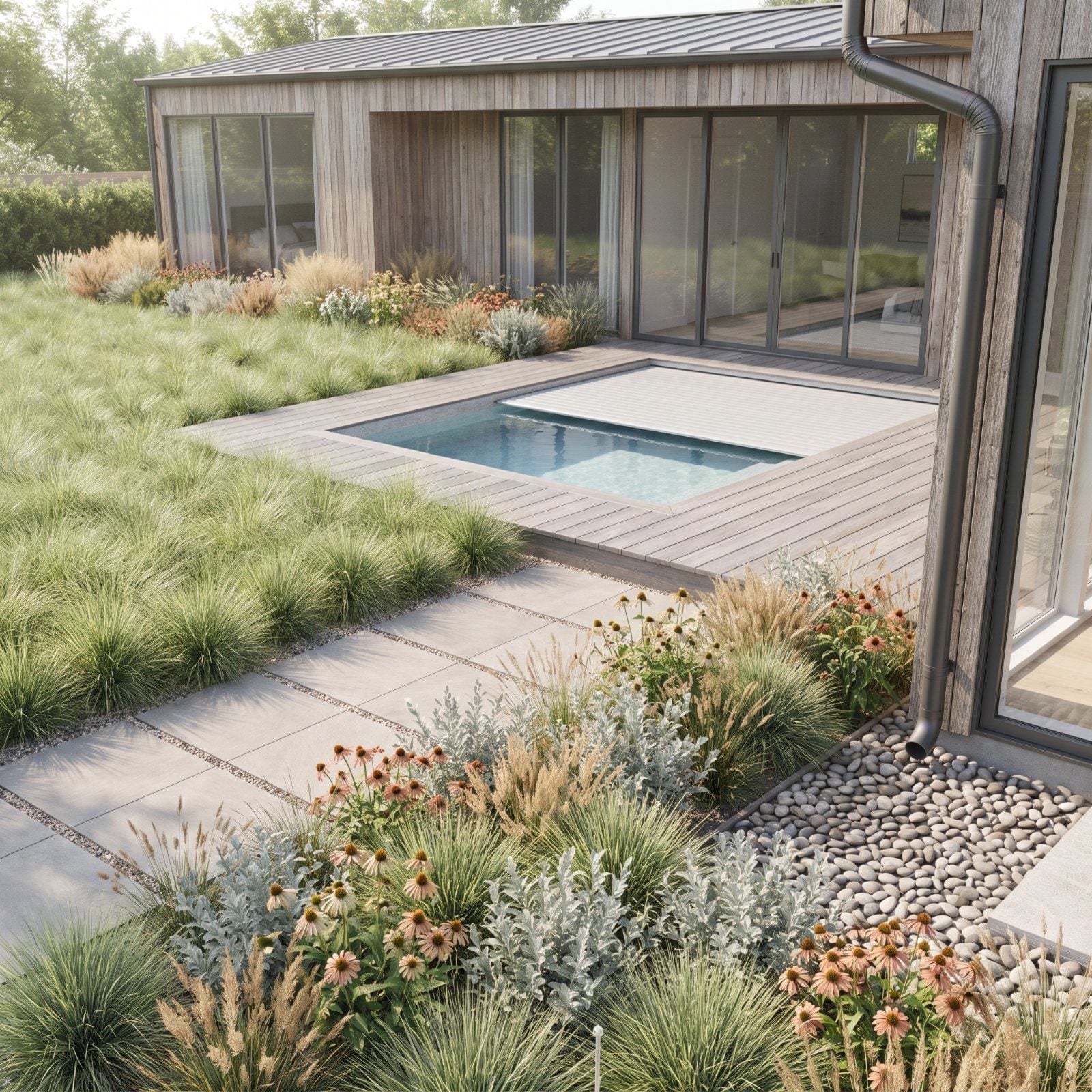
🔥 Would you like to save this?
The weekend mow is dying, and nobody’s crying about it. Yards gaining ground right now ask for less of everything: less water, less fuel, less pruning, less seasonal hauling of covers and furniture into the garage. What’s replacing all that effort isn’t plastic turf over a slab of concrete. It’s smarter planting, discreet sensors, and surfaces built to shrug off weather for decades. We pulled together the features showing up on drawing boards and in front yards headed into 2027 — the ones built for people who’d rather sit in the garden than fight it.
46. No-Mow Native Sedge Lawns
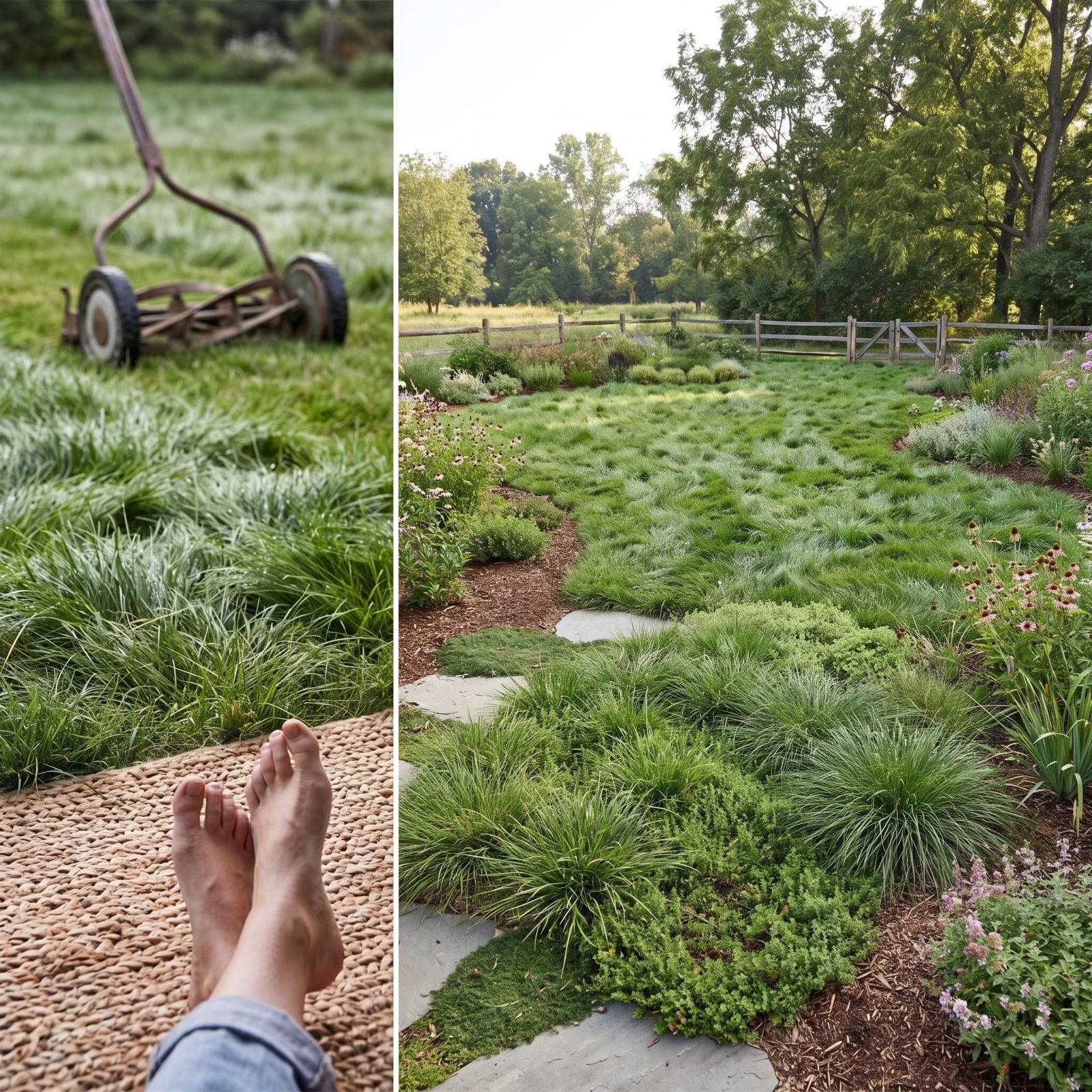
The sedge lawn is the quiet revolt against the Saturday mow. Native Carex grows low and soft, rarely tops ankle height, and needs little more than an occasional pass with a quiet push reel mower — so you get the green carpet without the fuel, the noise, or the weekly obligation.
In order to come up with the very specific design ideas, we create most designs with the assistance of state-of-the-art AI interior design software. Also, assume links that take you off the site are affiliate links such as links to Amazon. this means we may earn a commission if you buy something.
What makes it work is the texture. Left unmown, fine sedge falls into gentle waves instead of the stiff flat buzz-cut of turf, so the whole yard reads relaxed rather than manicured. It drinks far less water once established, and in a lot of regions it stays green while the lawn next door goes brown and crispy by August.
45. AI-Enhanced Irrigation With Soil-Moisture Sensors
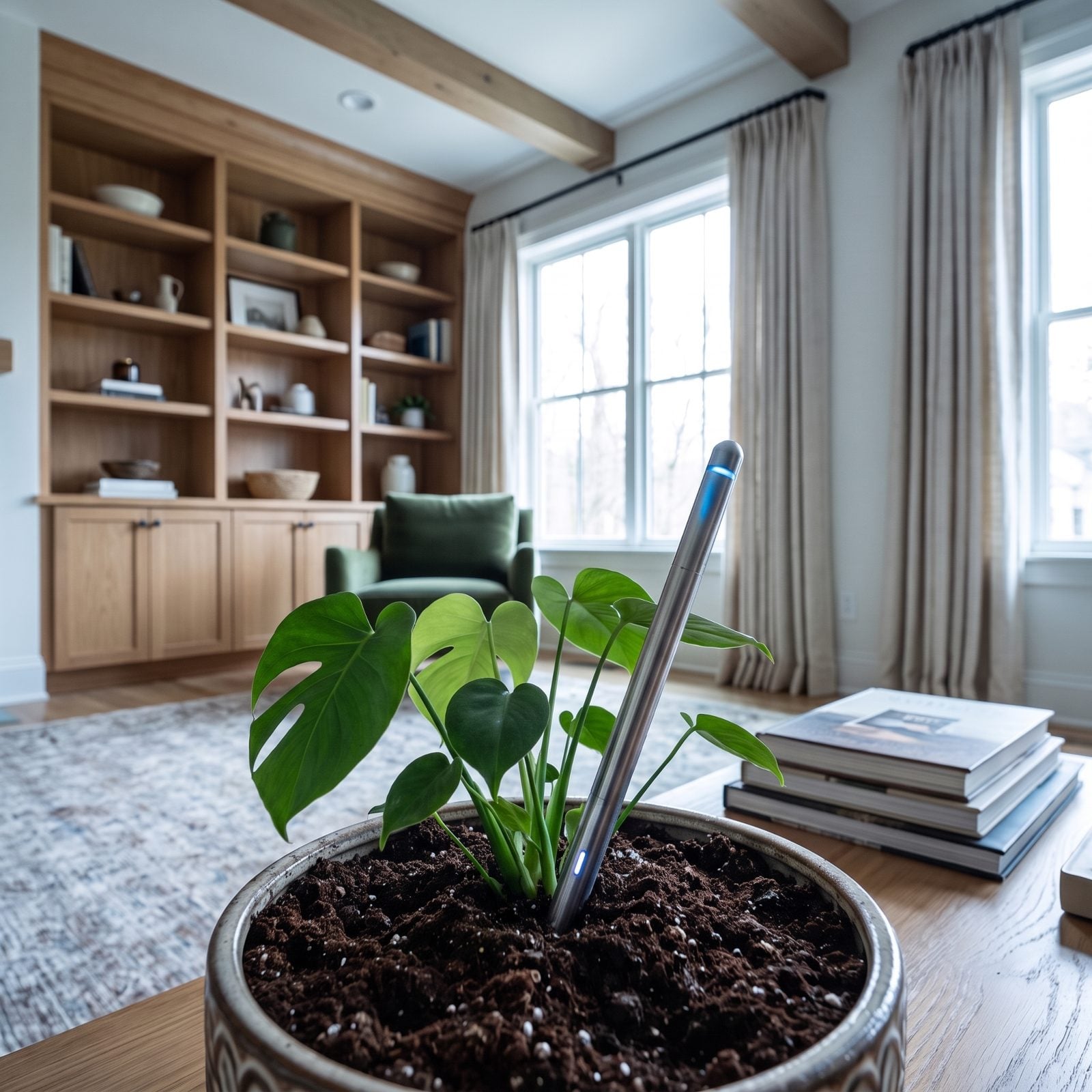
Watering schedules were always dumb. They say water on a set day whether the pot dried out or not, pouring water onto soil that’s already soaked. The new systems read the soil instead of the clock.
A slim probe pushed into the soil tracks actual moisture and feeds readings to an app that decides when and how much to water. Pair that with local weather data like rainfall forecasts and the system tells you to hold off instead of drowning an already-wet bed — the exact thing you’ve watched a well-meaning houseguest do at least once, probably while you were out walking the dog.
44. Permeable Paver Patios
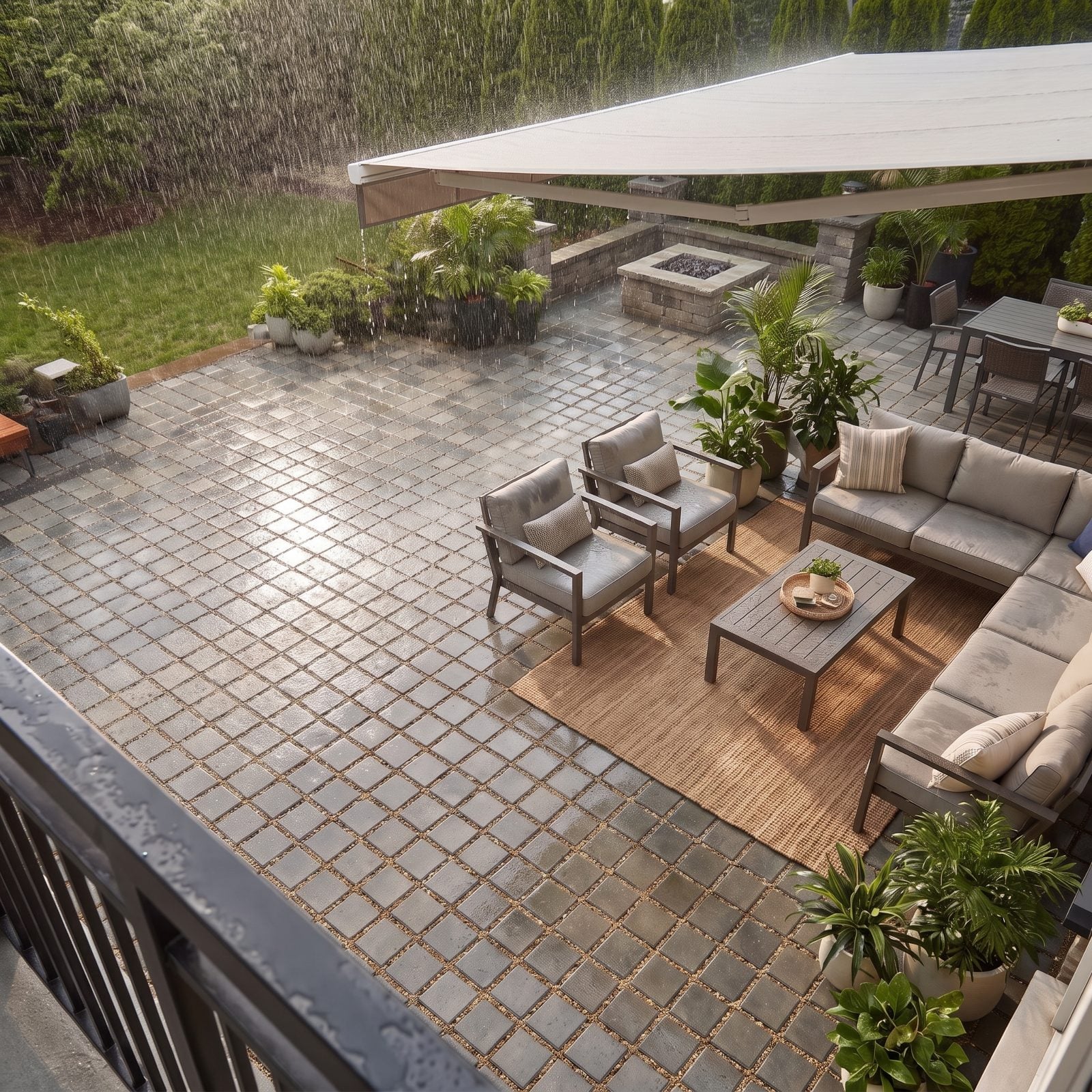
Water has to go somewhere. A solid concrete slab sends it sheeting toward your foundation or the street. Permeable pavers let it drop straight through the gaps and into the ground where it belongs.
The gravel-filled joints handle drainage, which means no puddles after a storm and far less of the slimy green film that turns solid patios slippery and gross. The look stays tidy without reading cold, especially in cool grey tones paired with a slatted grey coffee table and a jute rug.
43. Preplanned Native Plant Communities
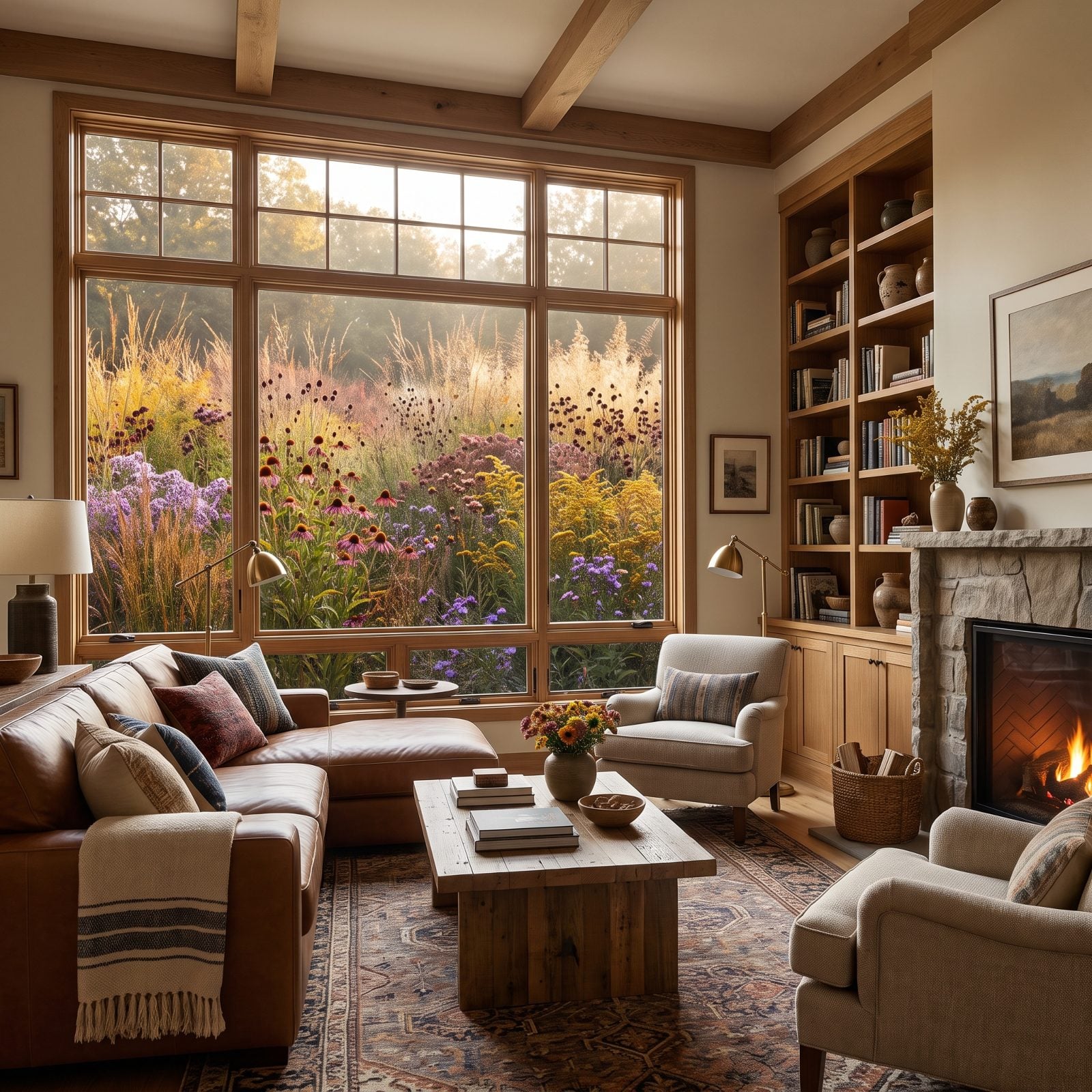
Buying one of everything at the nursery and hoping it works out — we’ve all done it, and we’ve all watched half of it die by July. The smarter move coming into 2027 is the preplanned plant community: a set of natives chosen to grow together, cover the ground, and lean on each other.
Because the plants are matched to each other and to your region, they fill in, shade out weeds, and stop fighting over the same water. Less gapping, less replacement, less bare dirt begging for weeds. Same instinct behind a good backyard garden makeover: pick pieces that talk to each other instead of one loud thing shouting down everything around it.
42. Gravel Gardens With Structural Plants

A gravel garden is the low-effort flip side of a flower bed. Plants sit in a deep layer of gravel that keeps their crowns dry, suppresses weeds, and holds just enough moisture at the roots. Once things settle in, you water almost never.
The trick is picking structural plants — agave, fescue, yucca, verbascum — shapes strong enough to hold their own even when grouped closely. Layer them like a sculpture collection, tall columns at the back and low globes and rosettes in front. Each one earns its spot, and the gravel does the mulching, the weed control, and the drainage all at once.
Layered by height, tall columns behind and low rosettes in front, a crowd of bold plants reads as a design rather than a mess.
41. Compact Pools With Automatic Covers and Robotic Cleaners
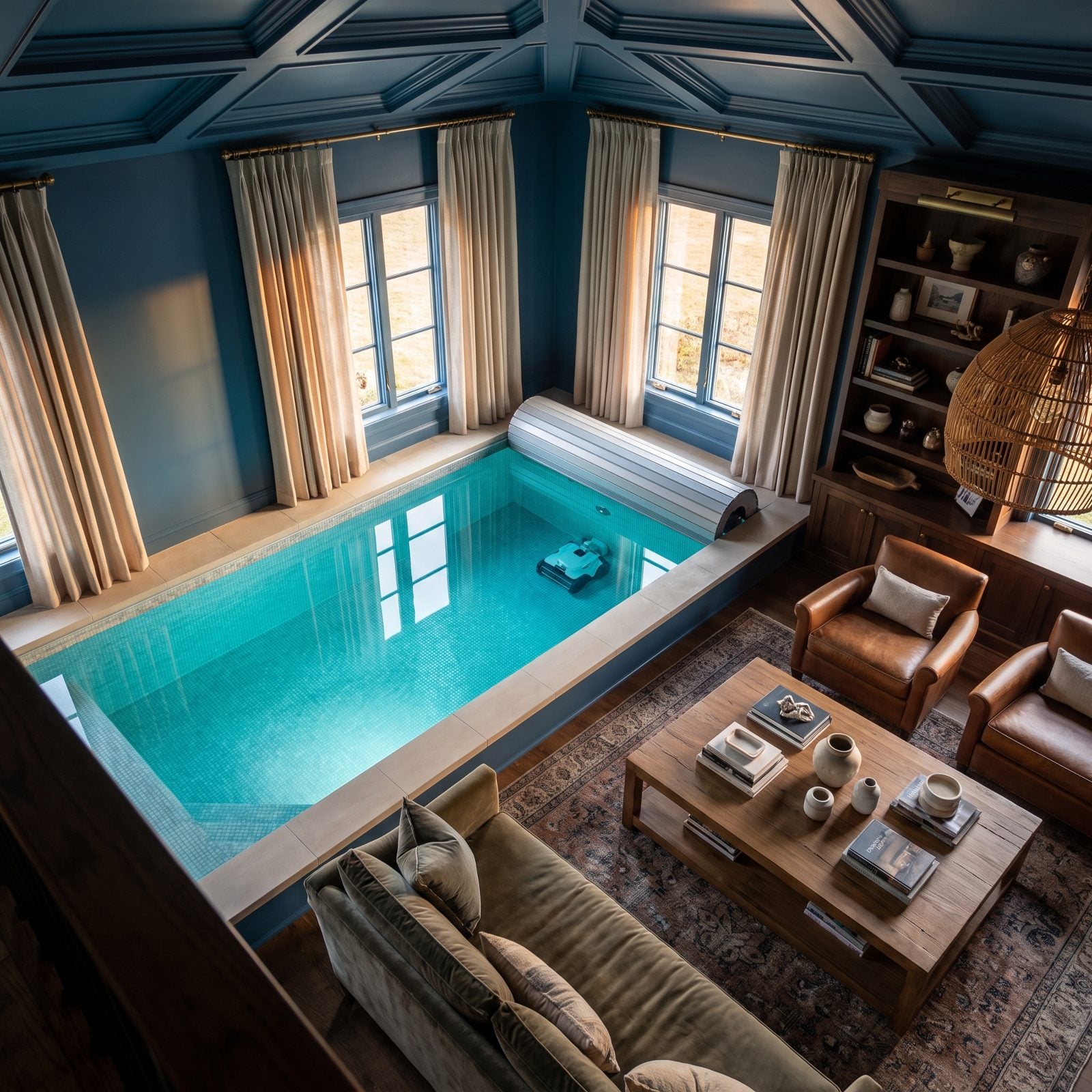
Big pools are a second job. The compact plunge pool is the answer for anyone who wants the water without the maintenance treadmill.
An automatic cover slides over it in seconds, cutting evaporation, keeping dust out, and holding heat so you heat less. A robotic cleaner crawls the floor on its own schedule while you do literally anything else. Smaller water volume means less to filter, less to chemically balance, less to warm. The whole thing asks for a fraction of the upkeep a full-size pool demands — and it’s compact enough to fit a small yard, steps from the back door.
40. Gutter-Fed Rain Gardens
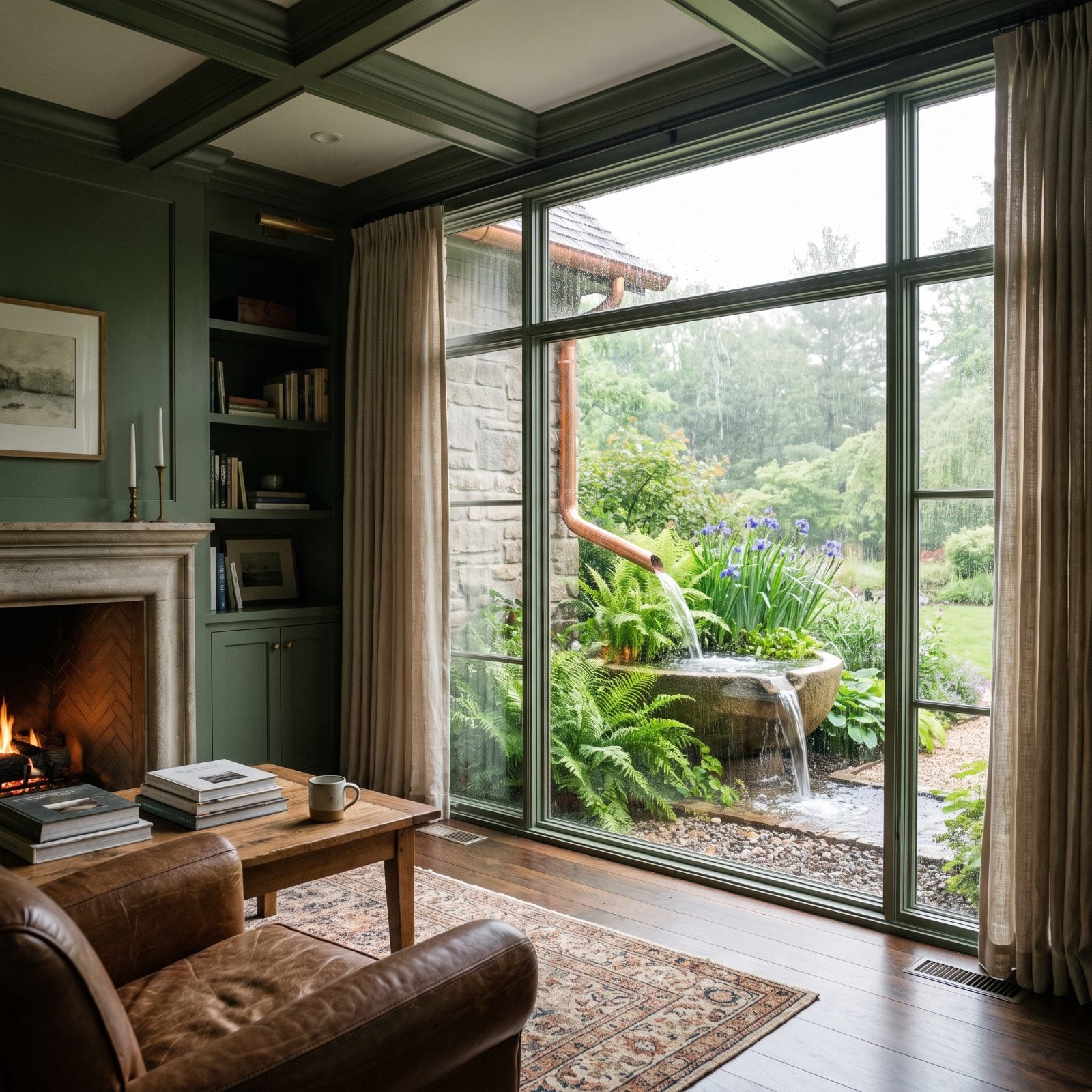
Your downspout dumps hundreds of gallons every storm, usually straight onto the lawn or down the drive where it does nothing good. A rain garden catches that flow in a shallow planted basin and lets it soak in slowly.
Plant it with moisture-tough natives like blue flag iris and rushes and you get a lush pocket that thrives on exactly the water you used to lose. No watering, because the roof feeds it. Less runoff pooling against the foundation. One of those features that quietly solves a drainage headache while looking like you planned it for beauty all along.
39. Self-Cleaning Composite Decking
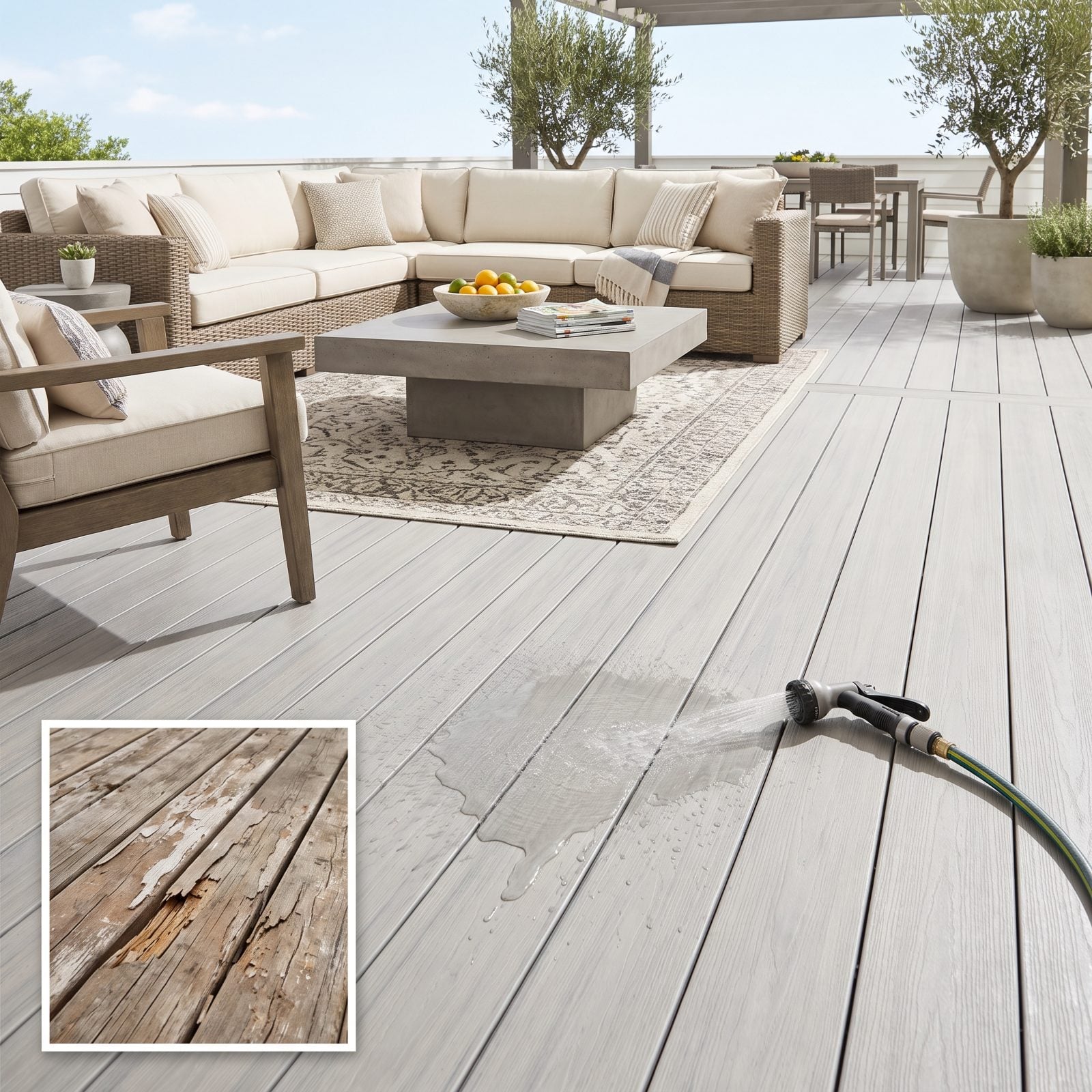
Wood decks are a maintenance promise you make to yourself and break by year three. The sanding, the staining, the splinters, the one board that always rots first. Capped composite skips all of it.
The newest boards carry a sealed cap that sheds mildew, resists staining, and rinses clean with a hose — no annual refinishing ritual required. The wood-grain texture has gotten good enough that from the lounge chair you’d struggle to tell. You keep the look and the feel of timber, and you get your weekends back.
38. Long-Life Porcelain Outdoor Pavers
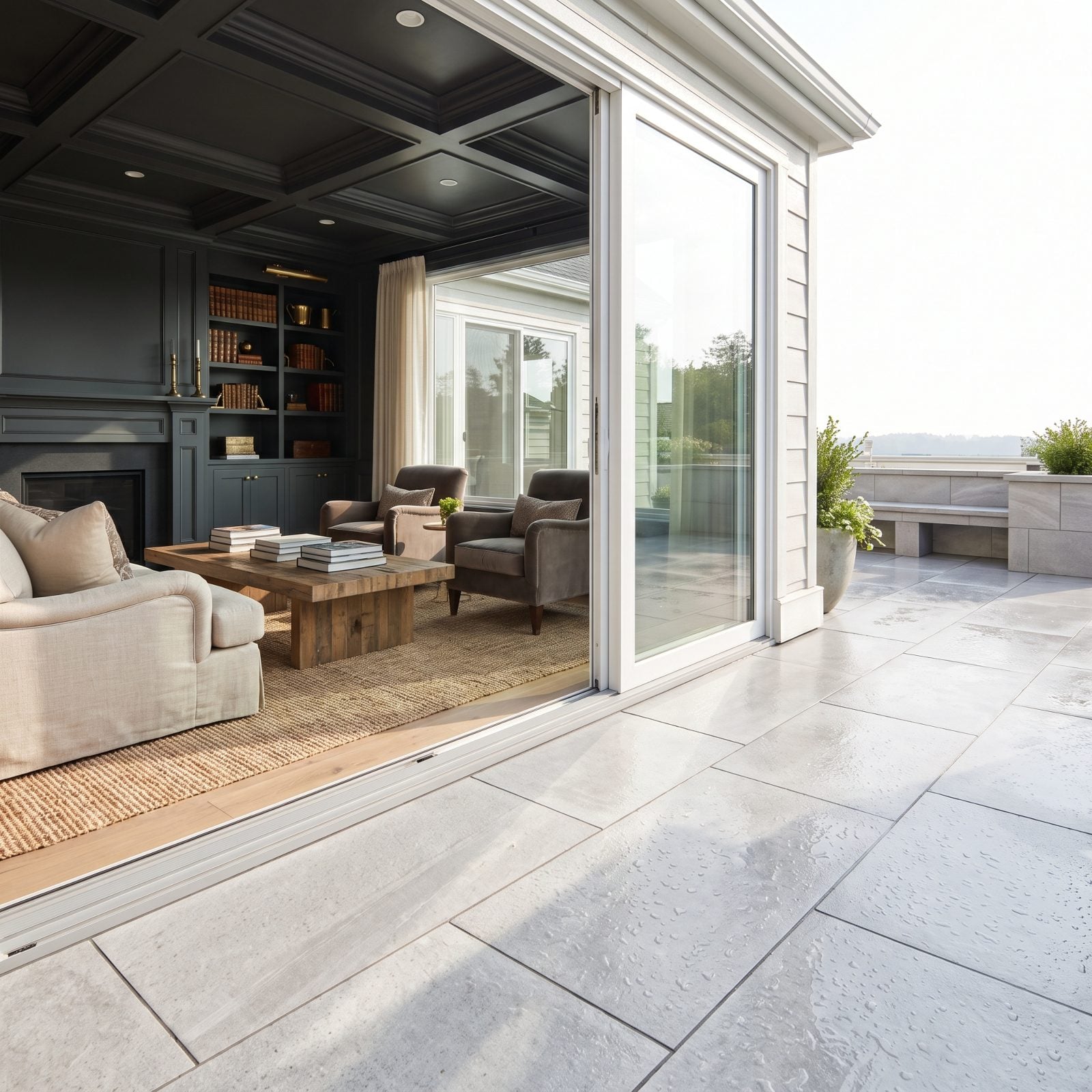
Natural stone is lovely and high-maintenance. It stains, it etches, it needs sealing, and it fades. Porcelain pavers fake the stone look and refuse to do any of that.
They don’t absorb water, so freeze-thaw can’t crack them, and they don’t fade in UV. Wine, grease, pollen — it all wipes off, because nothing penetrates the surface. Large-format tiles mean fewer joints to weed, and the color you buy is the color you keep. For a terrace that sees sun, rain, and the occasional spill, this is the surface that stops asking you for anything.
37. Mulch-Free Dense Planting
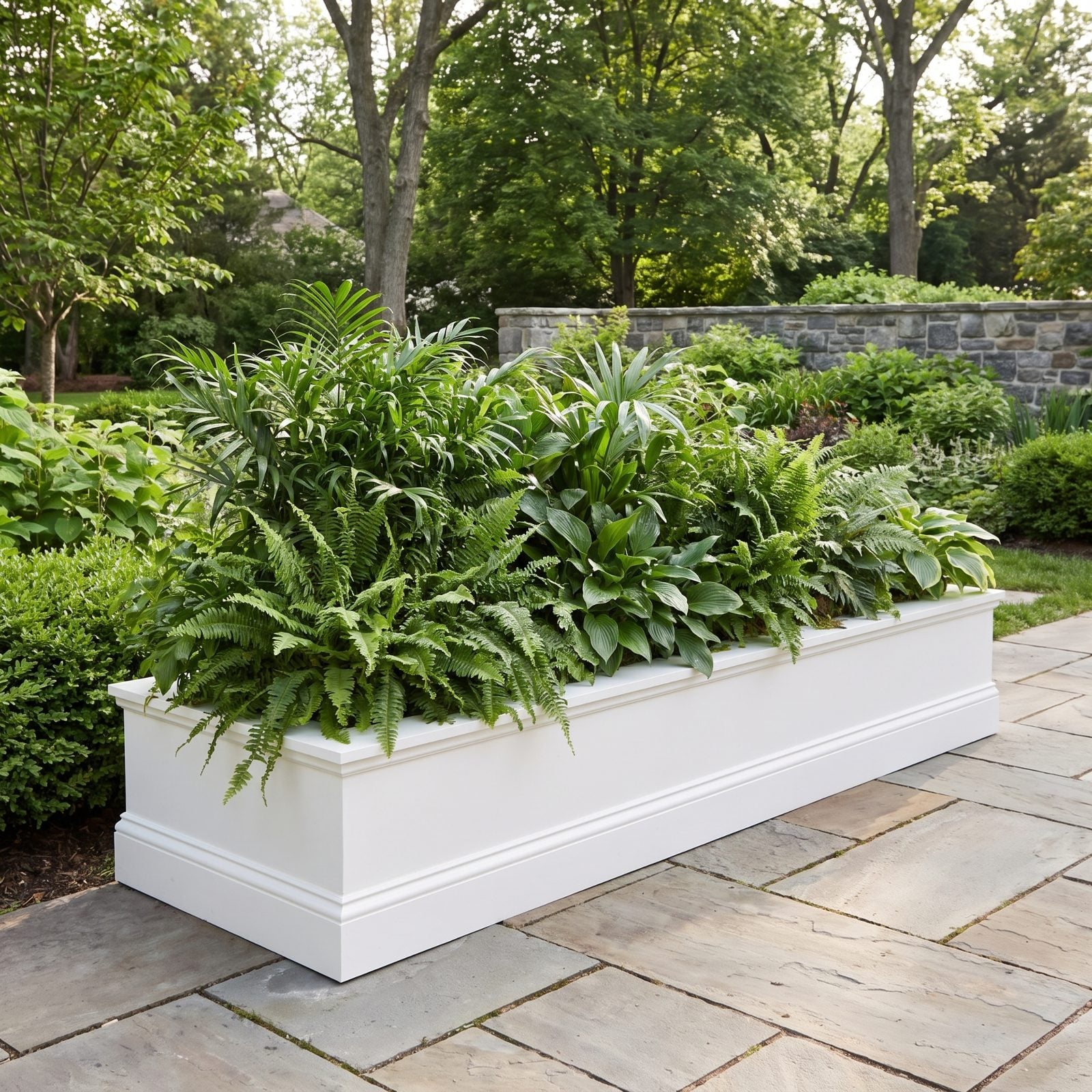
Every spring, the same chore: buy mulch, haul mulch, spread mulch, watch it wash away, repeat next year. Dense planting shrinks the whole ritual to one last bag or two, spread just while the plants fill in.
Instead of bare soil buried under bark year after year, you tuck a thin starter layer of mulch around new plantings and let living plants take over the ground — low, spreading plants like ferns and hostas knitting together under taller palms. The foliage shades the soil, blocks weed seeds from germinating, and holds moisture the way a mulch layer only tries to. It’s a green quilt that soon takes over mulch’s whole job for free and gets better every year instead of decaying into nothing. That same layering logic that makes a sage den design feel full and considered works outdoors too.
36. Climate-Adapted Planting Zones
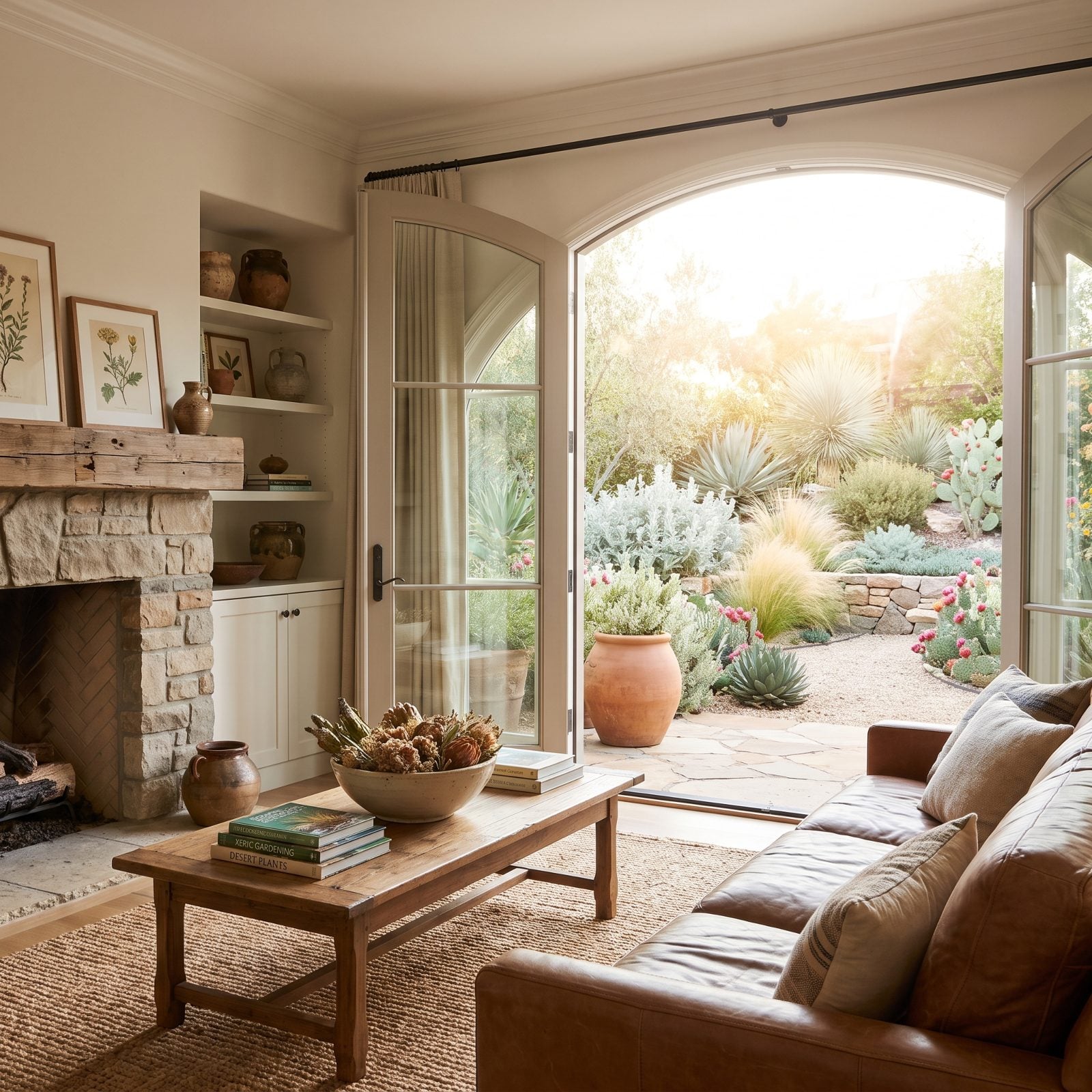
The old approach fought the climate. You picked plants you loved and then spent every weekend keeping them alive against the odds. The new approach reads the site first, grouping plants by exactly how much heat and water each one can take, so the thirsty things cluster where runoff collects and the tough stuff bakes happily in the gravel.
Agave and red yucca near the house. Blue fescue drifting into the path. Nothing here needs a hose dragged across the lawn at dusk.
35. Native Clover Lawn Blends

Grass is a high-maintenance houseguest that never leaves. It wants mowing, feeding, watering, and it sulks the second you ignore it. A clover rug doesn’t play that game.
A clover lawn dotted with white and purple blossoms stays low underfoot, needs far less water than grass, and shrugs off foot traffic. You mow it occasionally instead of every Saturday, and it holds its green long after the regular lawn next door has gone the color of a paper bag.
34. Modular Raised Beds With Water Reservoirs
🔥 Would you like to save this?
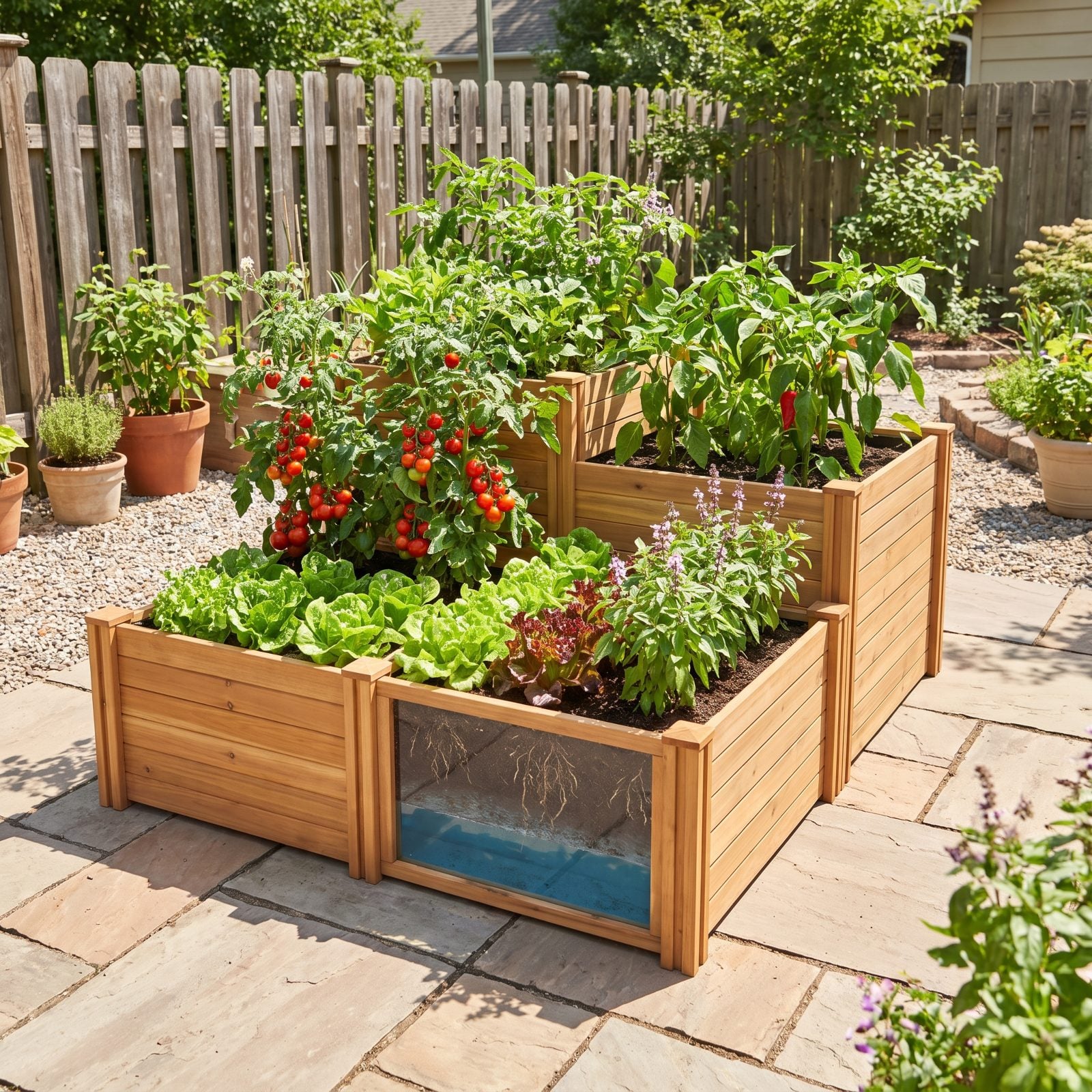
Inconsistent watering kills more vegetables than any pest or frost ever manages. Forget one hot July weekend and the whole bed gives up on you. These modular beds solve that exact problem.
A reservoir sits in the base, and plants wick up what they need between fill-ups, so a bed can go days without attention and still look alive when you get back. The light, honey-toned wooden plank boxes fit together in whatever grid your yard allows — which matters if you’ve got an awkward sloped corner nobody ever knew what to do with.
33. Recirculating Pondless Waterfalls
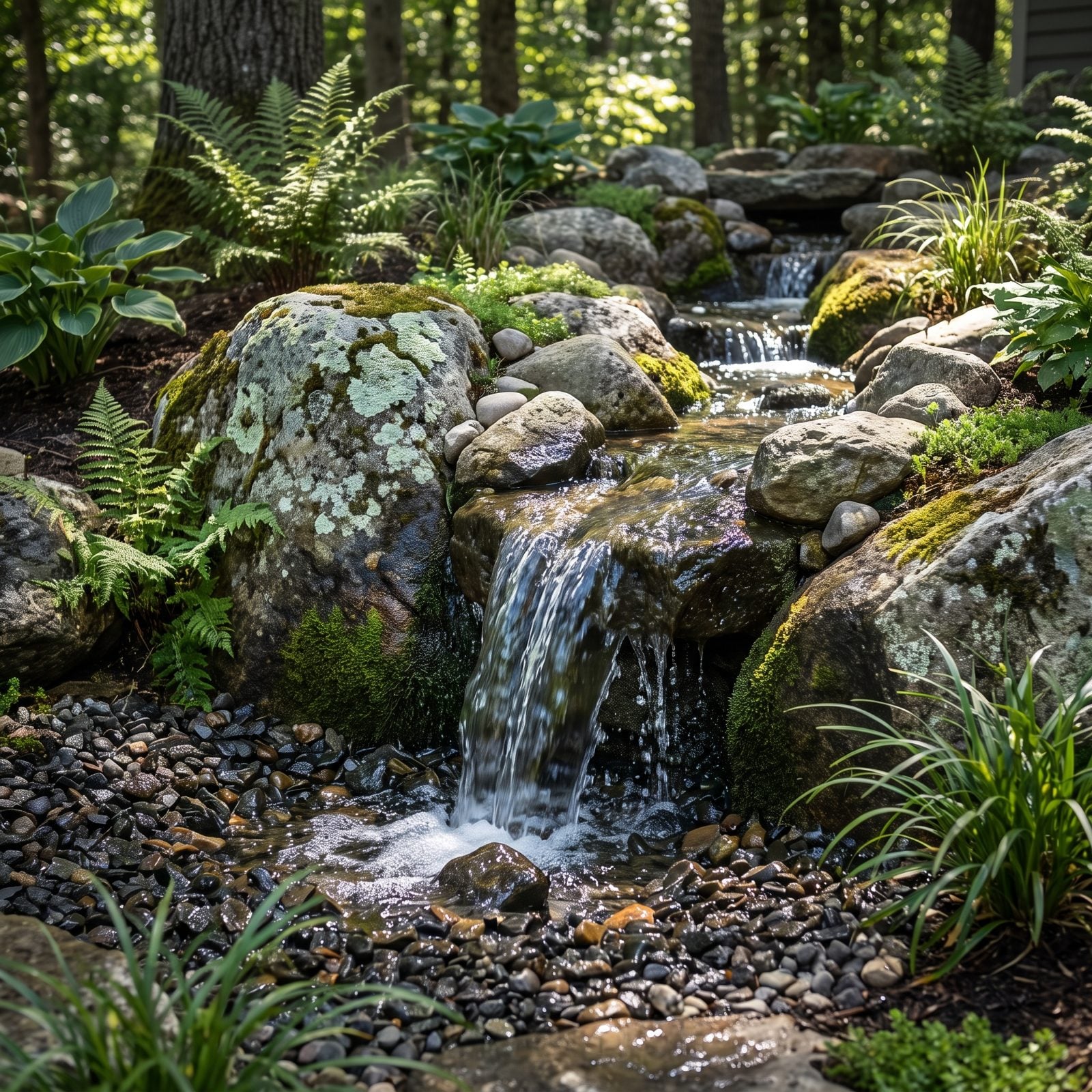
You get the sound of water without the maintenance of a pond. No algae skimming, no fish to overwinter, no murky green soup by August.
The water disappears beneath a bed of loose river stones, cycles back through a concealed pump, and tumbles over the stone again. Nothing stands open to collect leaves or breed mosquitoes. In a humid climate where a regular pond turns into a second job, this is the version that actually gets used.
32. Powder-Coated Metal Landscape Edging
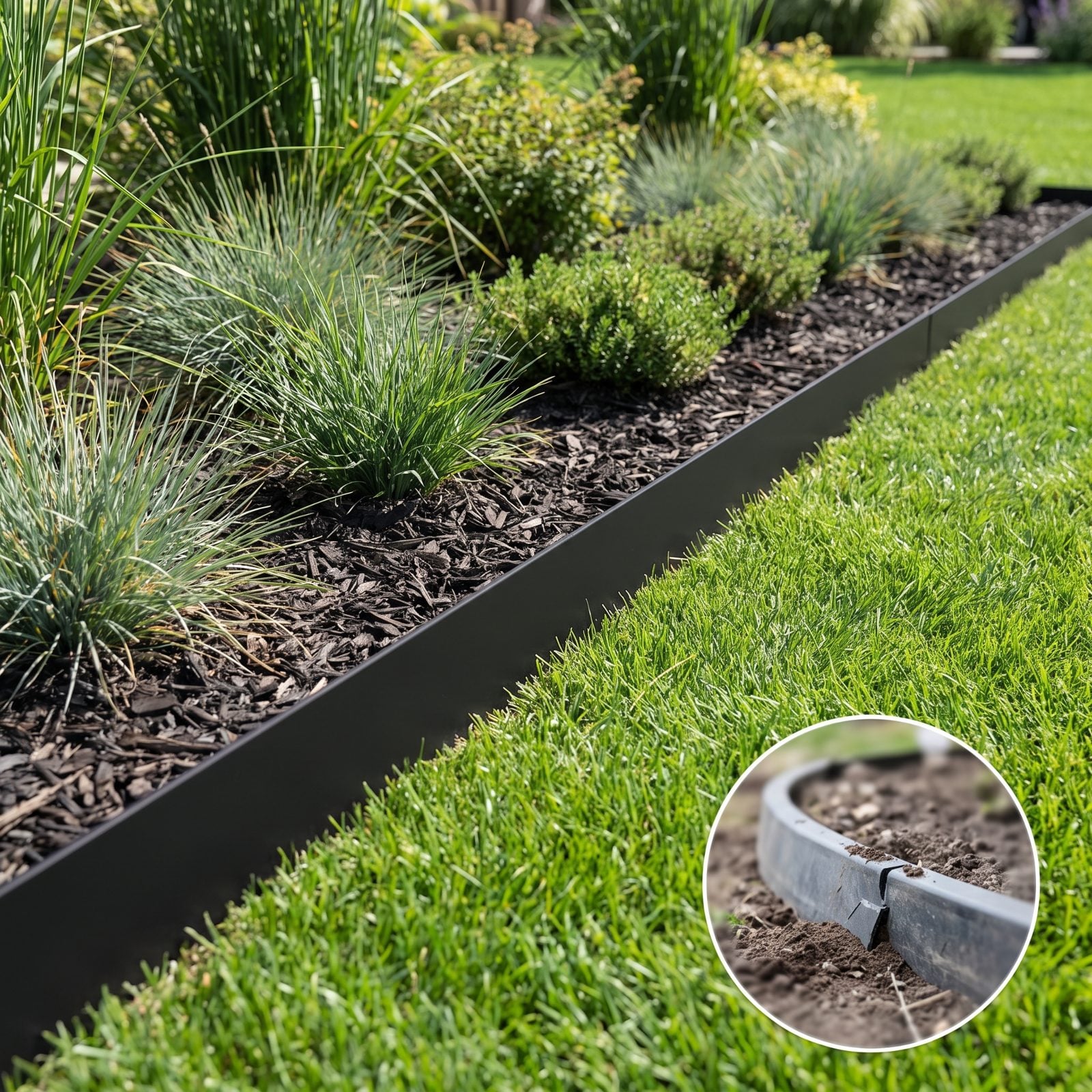
That wobbly plastic edging you fought into the ground last spring is already heaving up out of the soil. Cheap edging is a false economy.
Powder-coated steel lays a clean, permanent line between gravel and bed, and it stays put through freeze-thaw cycles that buckle the plastic stuff inside a single season. The matte finish shrugs off rust. Once it’s in, the yard looks edited rather than overgrown — and you’ve handed yourself one less chore for about a decade.
31. Evergreen Ground-Cover Carpets
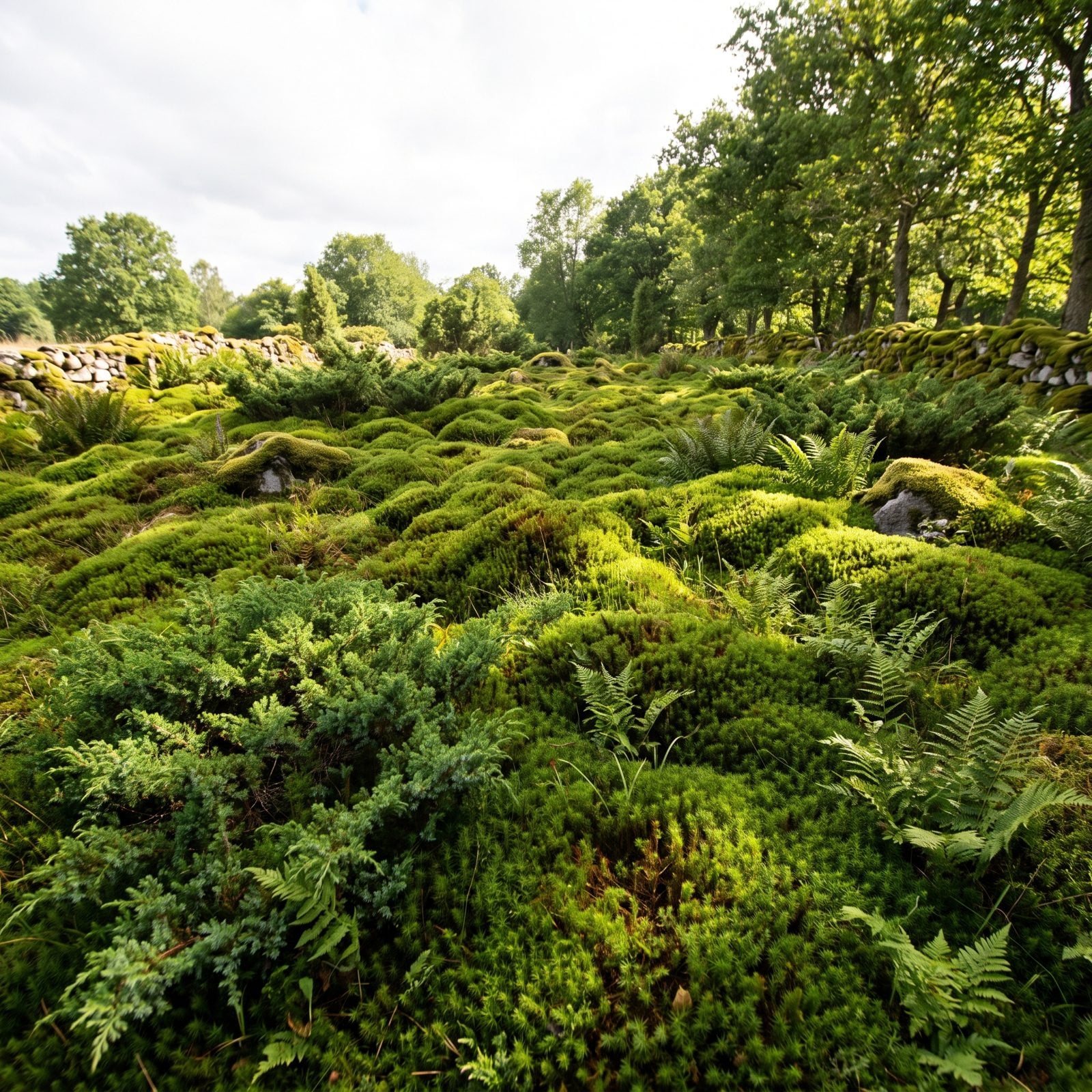
A rug is temporary by design. You buy it, lay it, and watch it fade and wear thin until you’re buying another one. Evergreen ground cover answers the same need, permanently.
Cushion moss and low, juniper-like evergreens knit into a dense living carpet that softens every footstep and holds its color straight through winter. Spread edge to edge, right up to the stone walls, this fills every gap. And you stop patching bare spots entirely, which after a few years is real money and real weekends back in your pocket.
30. UV-Resistant Recycled-Composite Fencing
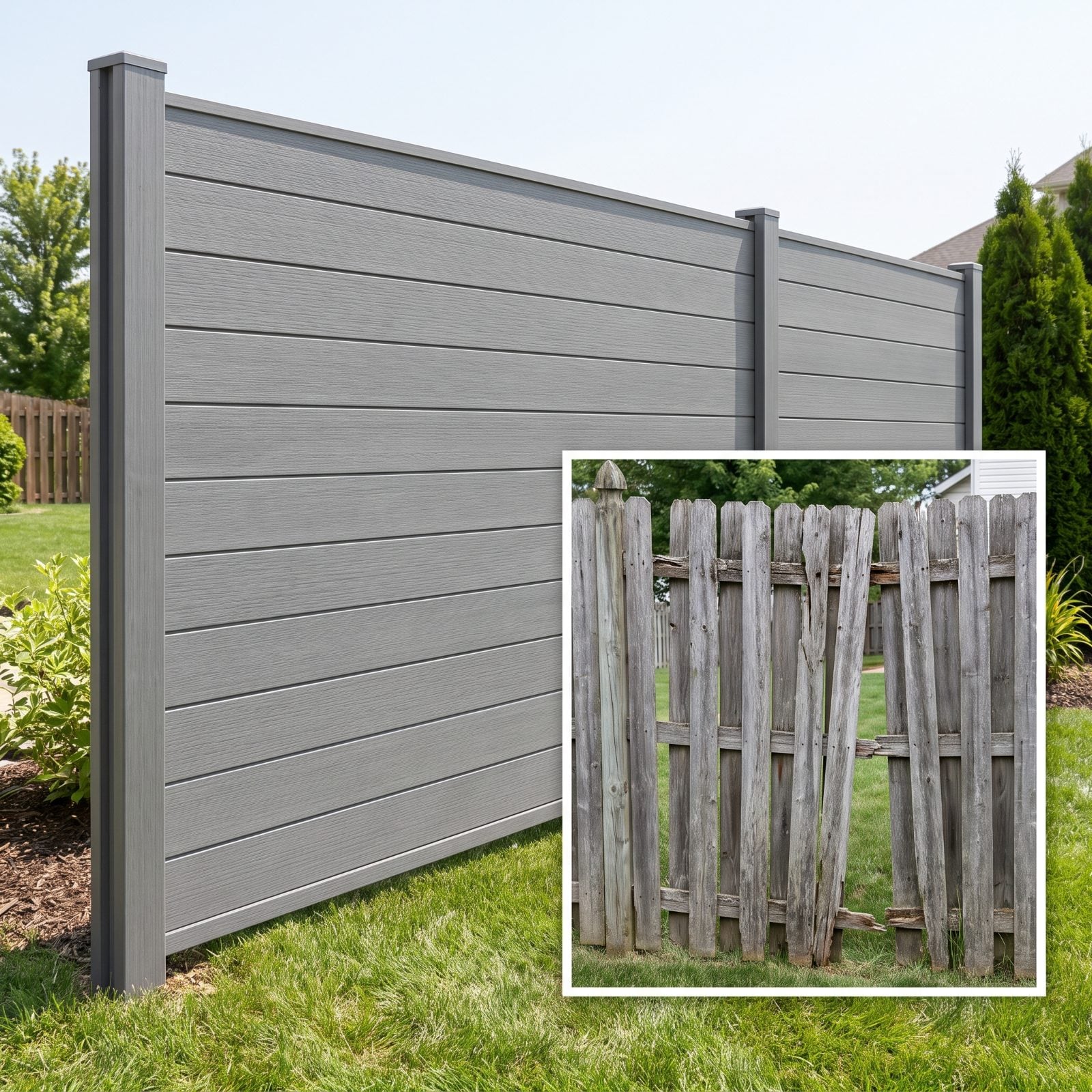
Wood fencing is a slow-motion chore. Seal it, watch it grey, sand it, seal it again, then watch a picket rot out at the base anyway.
UV-resistant composite skips the whole cycle. Made from recycled wood fiber and plastic, it holds its cool grey tone through years of hard sun without the staining weekend you’ve come to dread. In a brutal climate like Texas, where a cedar fence fades to driftwood in two summers, the composite just sits there looking the same.
29. Slow-Growing Dwarf Conifers

That leafy shrub you planted a few years ago has swallowed the view from the window and needs cutting back twice a year. Dwarf conifers never put you in that position.
They grow a few inches a year and keep a tidy shape on their own. A dwarf Alberta spruce stays a dwarf Alberta spruce. Plant a few in a bed outside the window, top the soil with pale grey gravel, mix in blue and golden foliage, and the view is basically done — no shearing, no pruning shears, no annual battle to stop a plant from swallowing the window.
28. Remote-Controlled Louvered Pergolas
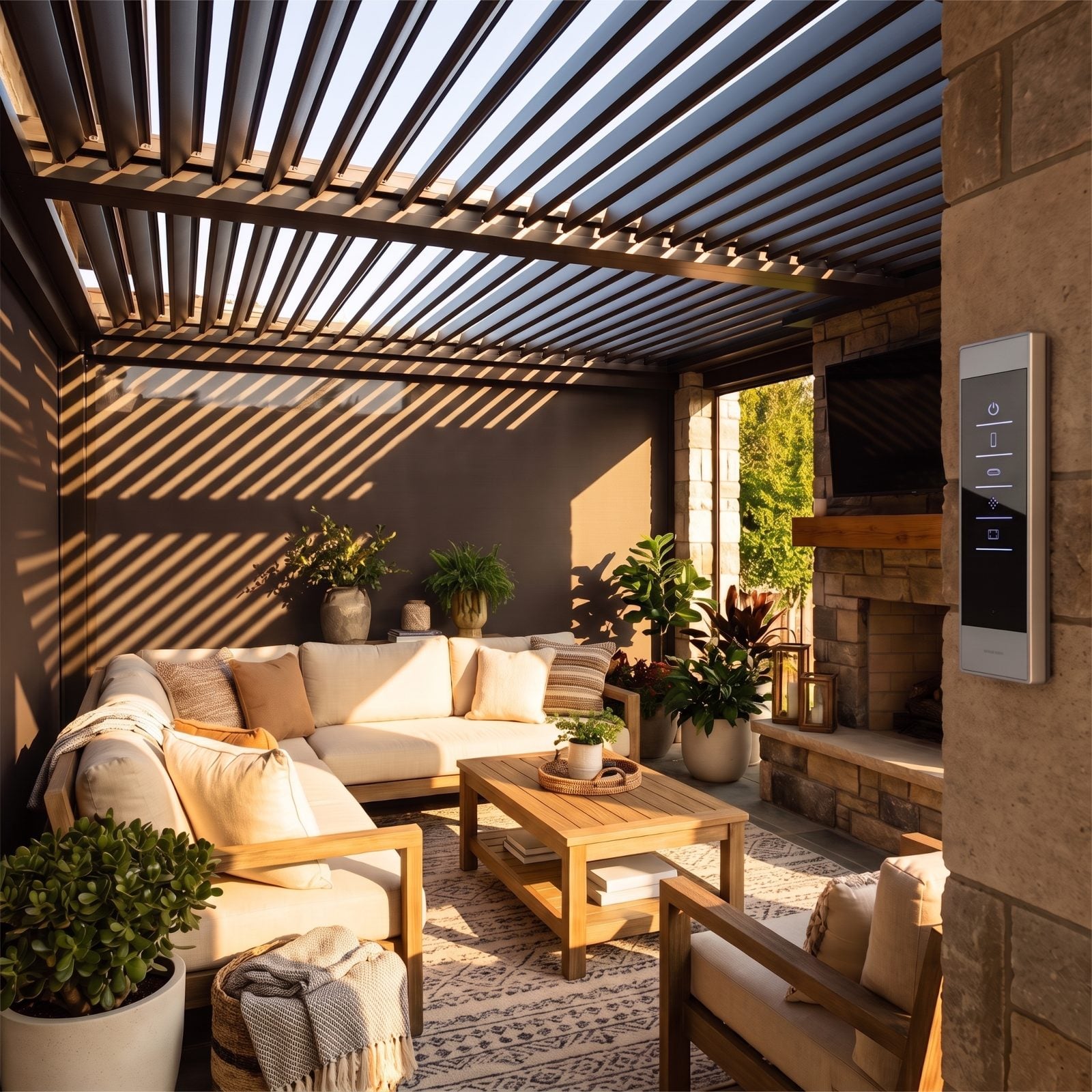
The old shade fix was a canvas awning you cranked out by hand, left up too long, then took down soaking wet to dry in the garage every fall. The louvered pergola retires all of that.
Aluminum louvers pivot by remote to let sun in or shut it out, and the rain sensor closes them for you when the sky opens. The powder-coated frame doesn’t fade and never needs storing, while a built-in LED strip lighting run keeps the patio usable after dark. Pair it with a cream outdoor sectional with a light wood frame and a slatted teak coffee table, and the space works whether it’s blazing or drizzling.
27. Low-Litter Shade Trees That Skip the Fall Cleanup

The real cost of a shade tree isn’t the tree. It’s the weekends you lose raking under it. Low-litter species like evergreen magnolia, certain male ginkgos, and sterile honey locust cultivars drop almost nothing, which is why they keep showing up in yards built for people who’d rather sit in the shade than clean up after it.
The broad-leaved tree here carries a full, dense canopy, yet the mowed lawn underneath stays green right up to the mulch ring at its trunk. That’s the quiet win — a shade tree that doesn’t kill the lawn below it.
26. Prefab Corten Steel Planters You Install in an Afternoon
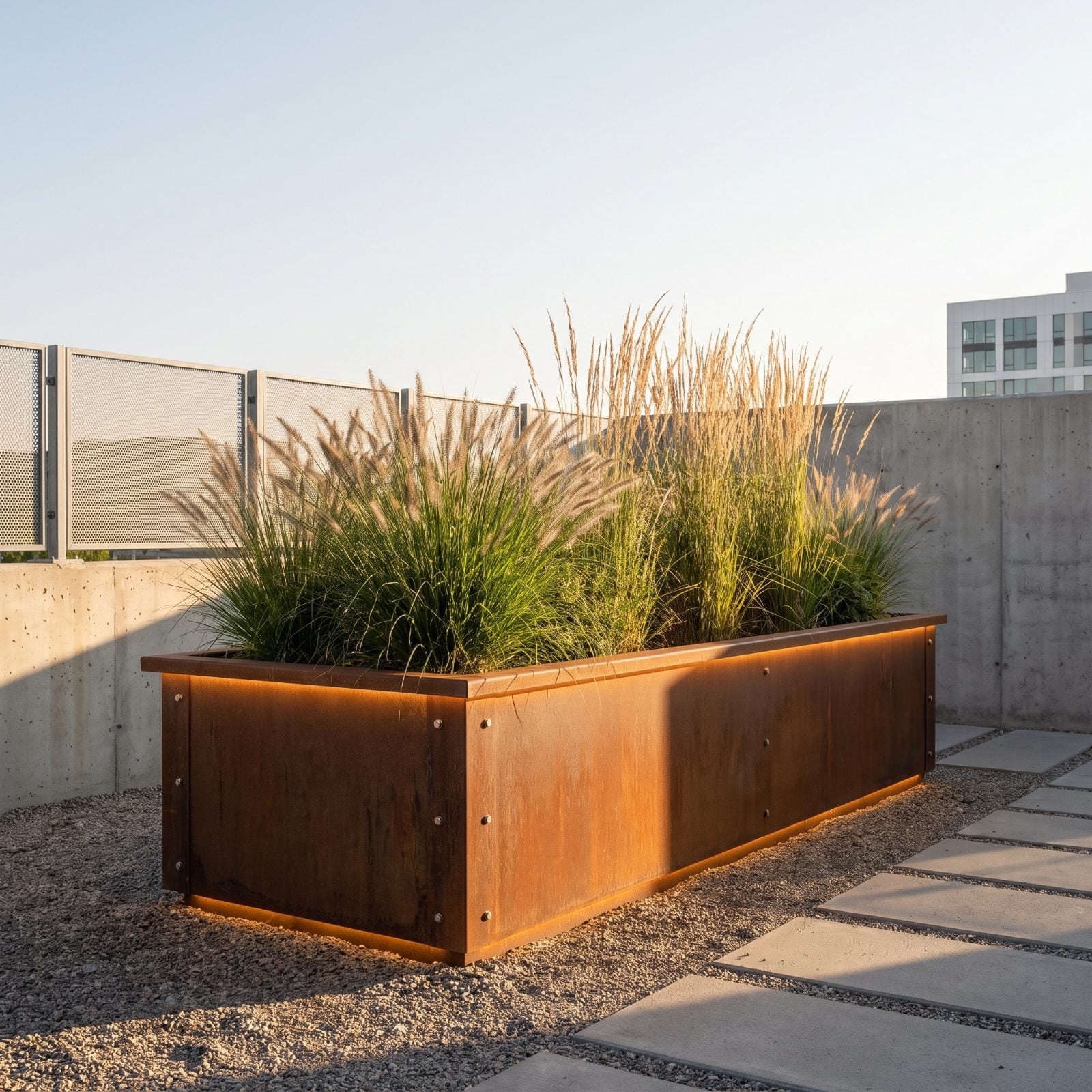
Weathering steel used to mean a fabricator, a welder, and a six-week wait. Now it ships flat and bolts together with an Allen key.
The rust is the finish. It forms a stable patina that protects the steel underneath, so you never paint, seal, or stain it again. Set the planter, fill it, walk away for a decade. These rust Corten steel planters pair well with the loose, grassy planting that shrugs off neglect.
25. Cool Pavers That Stay Walkable in August

Dark pavers in a hot climate are a trap. They look sharp in the catalog and burn your feet by two in the afternoon.
Heat-reflective pavers flip that. The pale, mineral-based surface bounces solar radiation instead of soaking it up, so the patio stays cool enough to cross barefoot in high summer. In desert and southern yards especially, they’re becoming the default rather than the splurge. You lay them once, they don’t fade, there’s no urgent resealing schedule, and they keep the whole patio microclimate a few degrees friendlier.
24. Mosquito-Screen Pavilions That Give You the Yard Back at Dusk
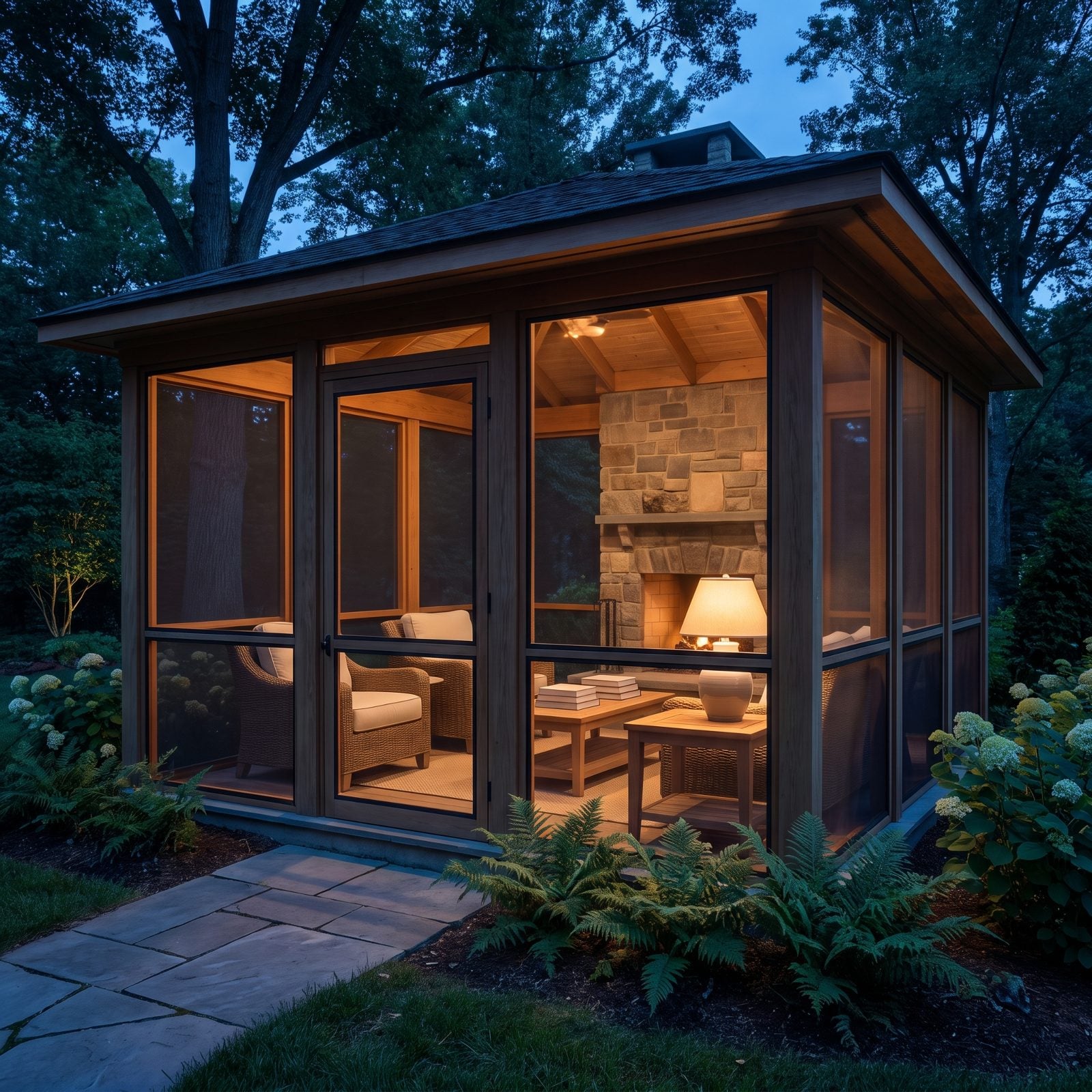
In the humid South, dusk is when the yard goes quiet and everyone goes inside. Mosquitoes run the evening shift.
A freestanding screened pavilion out in the garden hands that time back. Fine black mesh on a timber frame disappears to the eye but holds the bugs off, so the brown wicker armchairs with cream cushions by the stone fireplace stay usable from seven until midnight without a single citronella candle. No zapper humming in the corner, no spray — just a pocket of yard you can actually sit in. Pair it with a gray wicker lounge chair and you’ve got a room that works every night of the season.
23. Wildlife Ponds That Run Without a Pump
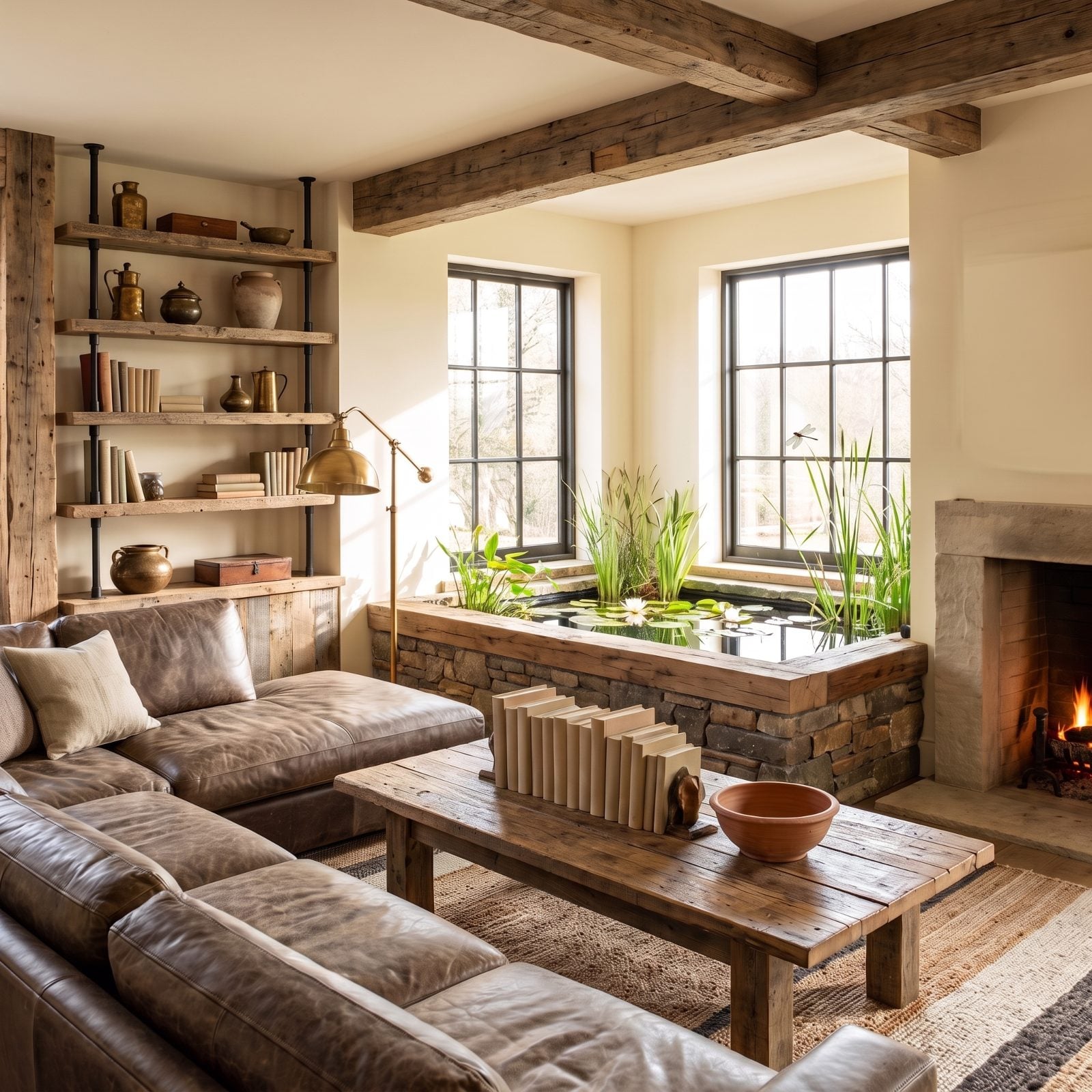
It’s easy to assume a pond means a pump, a filter, and a yearly fight with algae. It doesn’t have to.
A balanced wildlife pond runs on plants. Submerged oxygenators and marginal iris handle the filtering that would otherwise get outsourced to a machine — no electricity, no pump to prime in spring, nothing to winterize. The raised stone surround with its timber edge lets it sit right beneath a window, lilies and reeds in view from the sofa, which is half the point.
These keep gaining ground because they ask almost nothing after year one. The ecosystem runs itself.
22. Outdoor Fabrics That Live Outside All Year
🔥 Would you like to save this?
The old ritual: haul the cushions in before every rain, store them all winter, pull them back out in May smelling faintly of the garage.
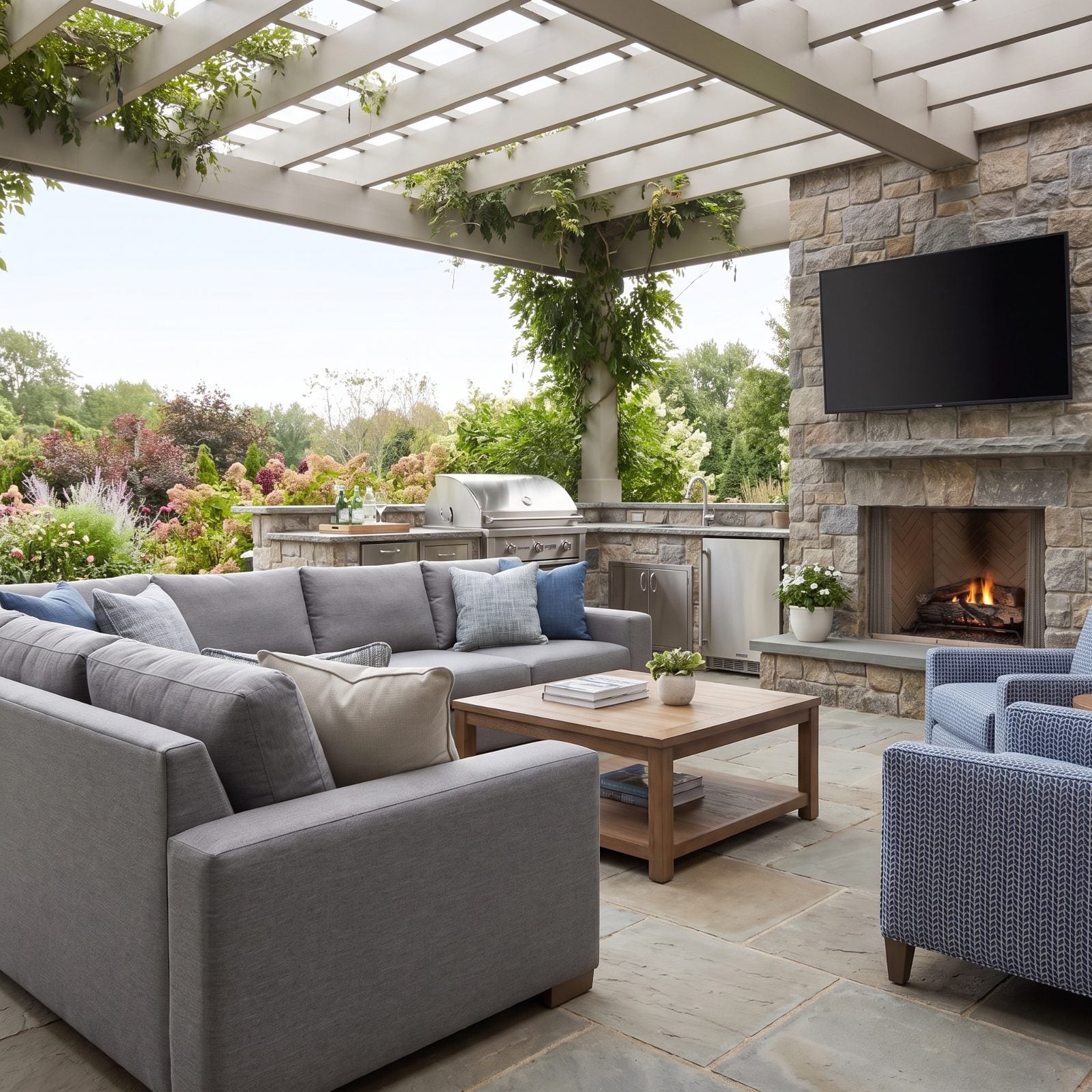
Solution-dyed acrylic and newer weatherproof weaves kill that ritual. The color goes all the way through the fiber instead of sitting on top, so they don’t fade, mildew, or hold water. You leave them out — rain, sun, frost, all of it. This all-weather performance fabric on the gray sectional, paired with gray, beige and navy pillows, carries the same soft hand as indoor fabric, which is the part that finally sold me.
21. Built-In Watering Stations That End the Tangled-Hose Era
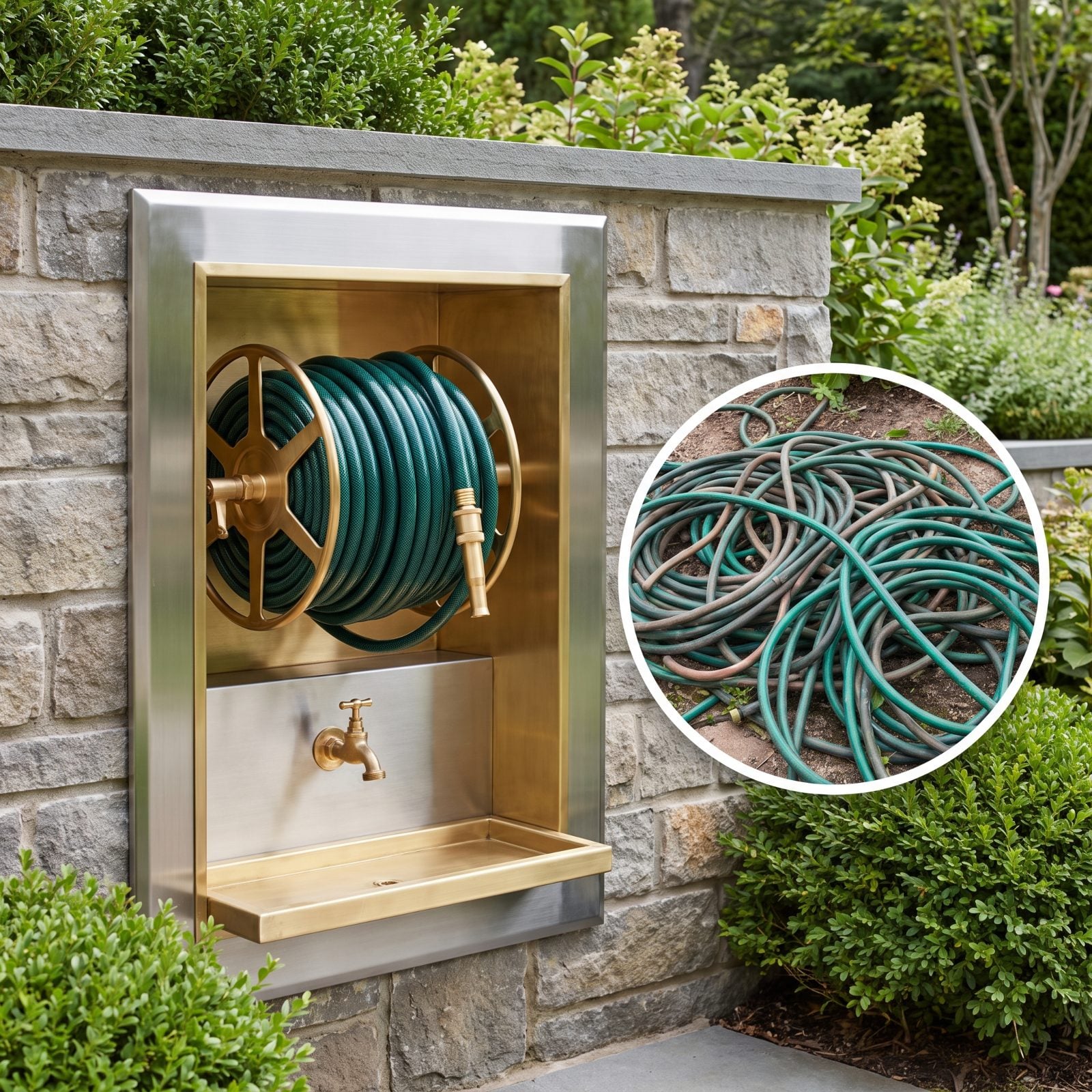
You know the hose — coiled in a heap by the spigot, kinked in three places, the one you fight with every single time.
Built-in watering stations retire it. The reel recesses into a brass-lined niche in the stone garden wall, the spigot sits at a sane height, and a brass ledge below catches the drips so nothing ends up on the floor. Add cabinets above and below and everything else disappears behind closed doors. A small thing that removes a daily irritation — which is exactly the kind of upgrade people keep choosing.
20. Fire-Resistant Gardens That Earn Their Defensible Space

In fire country, the yard is the first line of defense. Dense foundation shrubs are a liability dressed up as landscaping.
Defensible-space gardens space out fire-resistant plants — lavender, sage, succulents — over gravel beds that won’t carry flame. The zone closest to the house stays mineral: stone, not bark mulch. It reads as intentional desert-modern planting rather than a safety compromise, and it needs very little water or pruning once established.
Practical design, doing double duty. Looks calm and considered, buys the house real protection.
19. Salt-Tolerant Planting for the Strip Between Curb and Sidewalk
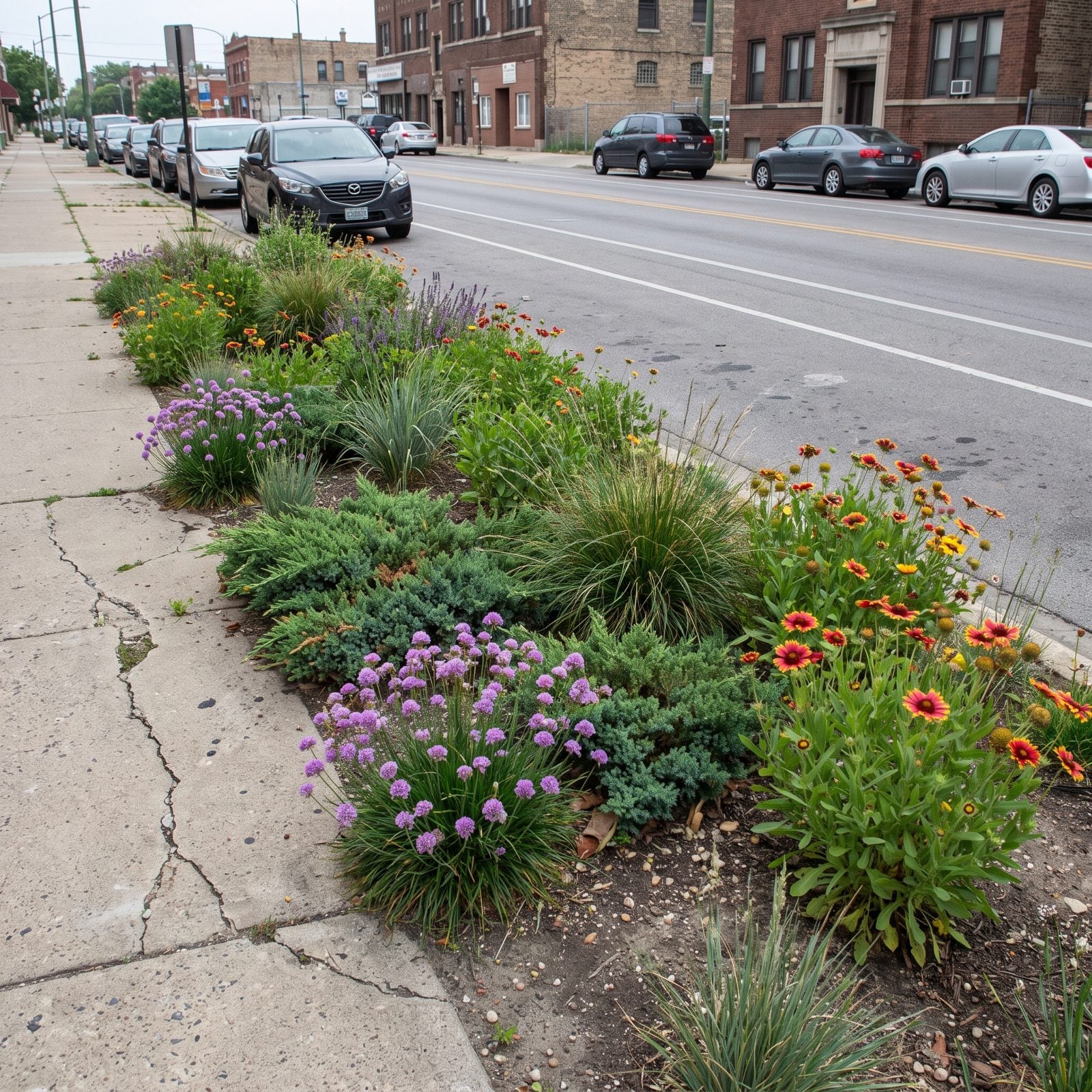
The parking strip is where plants go to die. Road salt, foot traffic, dog traffic, reflected heat, and a soil that’s basically compacted gravel.
Salt-tolerant planting finally takes that strip seriously. Sea thrift, daylilies, tough ornamental grasses, and low junipers shrug off the winter salt spray that would scorch anything else by March. Once they root in, they ask for nothing — no reseeding every spring, no patching the dead spots road crews leave behind.
18. Floodable Lawns That Double as Stormwater Sponges
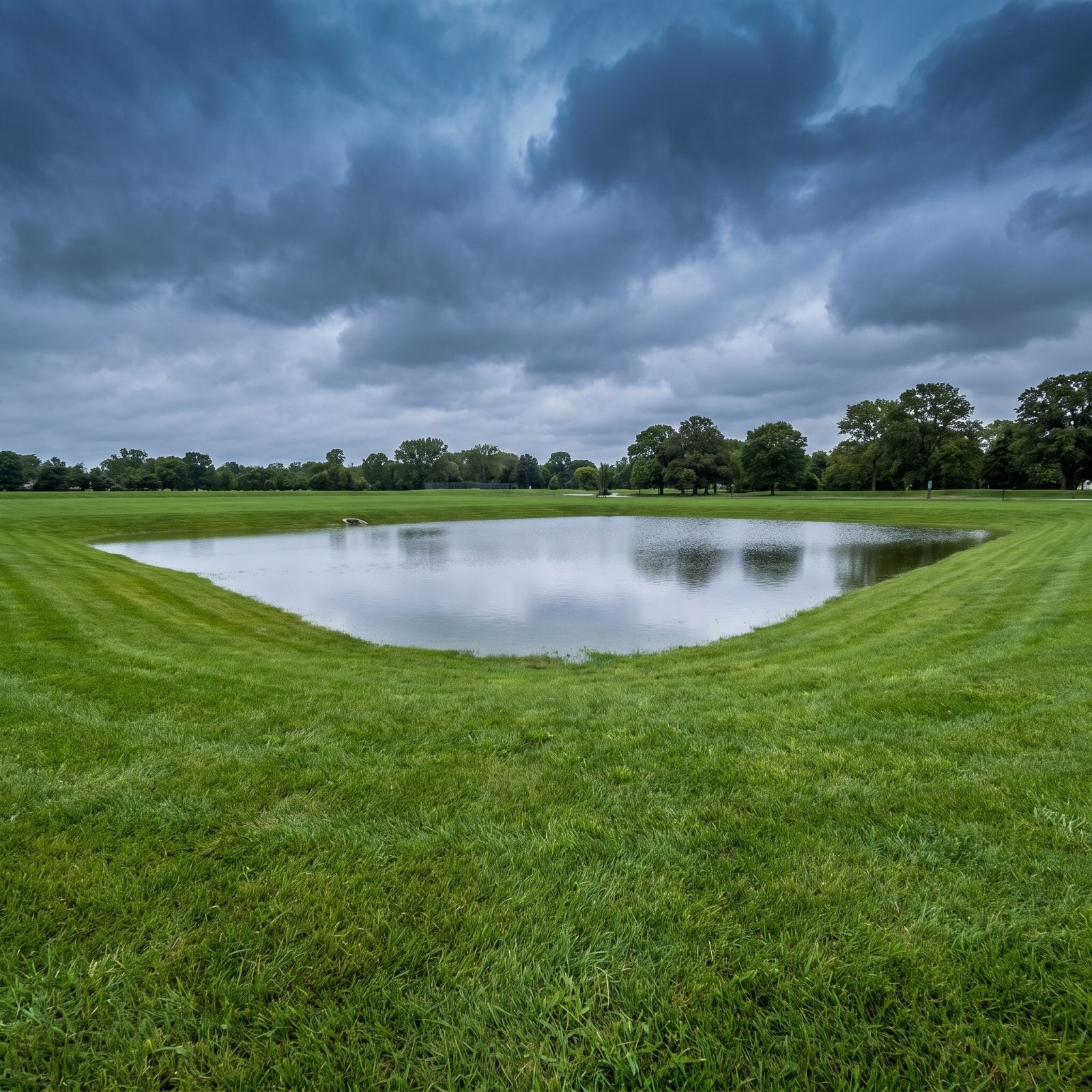
A lawn can do more than hold a soccer game. It can hold a storm.
Floodable recreation lawns are graded into a shallow dish that fills during heavy rain and drains within hours, keeping the runoff on your property instead of dumping it into an overwhelmed street drain. The rest of the time it’s just a lawn — flat, green, usable. The shallow dish does the real work when the sky opens up.
As rainfall gets flashier, this quietly becomes one of the smartest moves a yard can make. And nobody standing on it would ever know.
17. Stackable Modular Retaining Systems
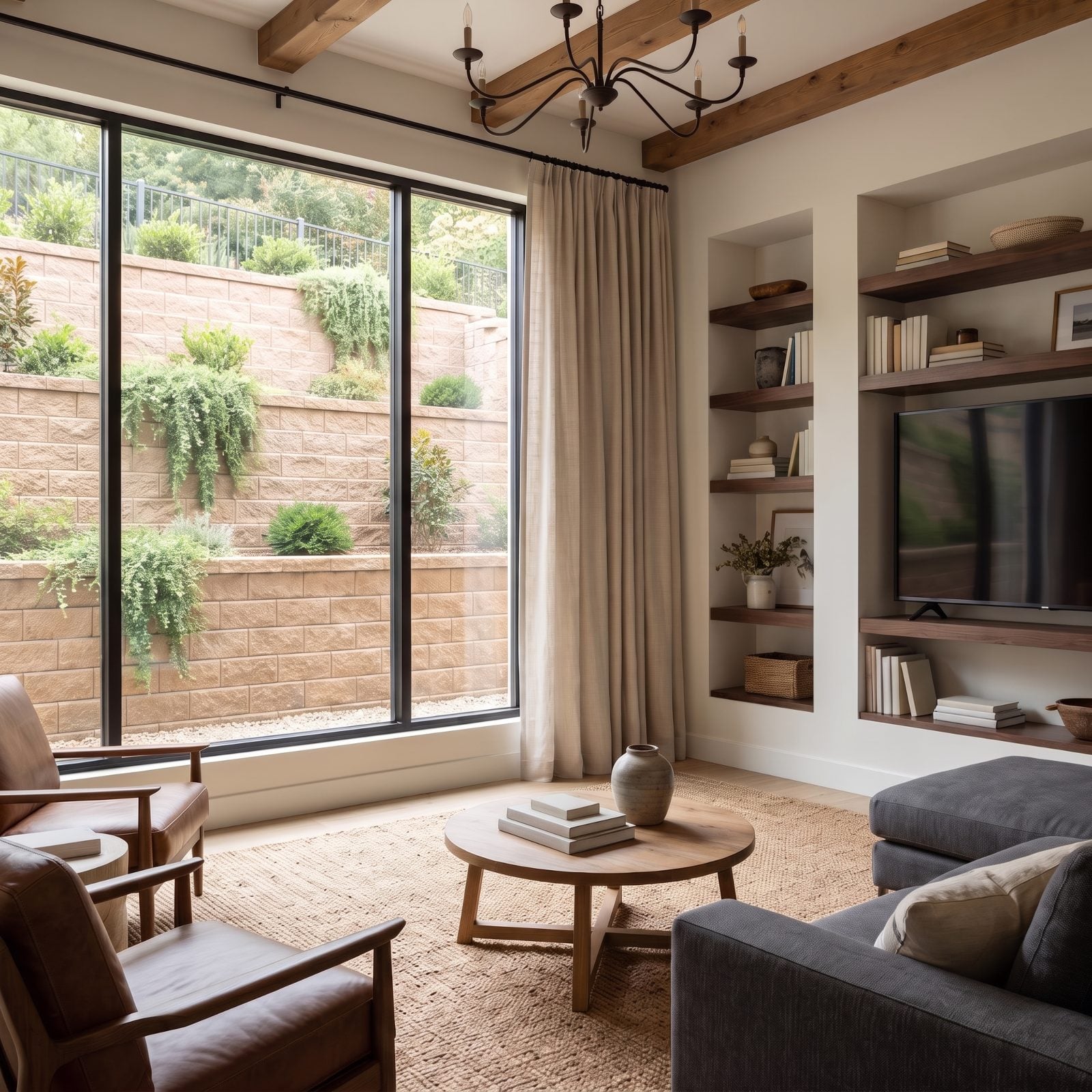
The old way of building a terraced retaining wall outside a lower-level window meant a contractor, rebar, and a concrete truck idling in your driveway for a week. These interlocking blocks skip most of that. They dry-stack without mortar, step back in terraced tiers up the slope outside the window, and the soil beds atop each tier turn shrubs and trailing vines into a garden view from the room itself.
What makes the 2027 version worth watching is the planting lip built right into the cap. Trailing ivy spills over the face and softens it, which the old grey retaining walls never managed.
16. Smart Dark-Sky Solar Lighting Zones

Look up in most suburbs and you can’t find a single star, because all those floodlights pointed sideways wash the whole sky out. Dark-sky solar zones fix that by aiming path lights down, keeping any tree uplighting low and soft, shielding the bulb, and running on a small panel that charges all day and dims itself after midnight.
The warm amber tone matters more than people expect. It keeps the light from reading clinical, and it doesn’t pull a cloud of insects to your back door the way cold white does.
15. Resin-Bound Gravel Walkways

Loose gravel is charming for about two weeks. Then it’s in your lawn, in your shoes, and scattered across the driveway every time a car turns around. Resin-bound gravel keeps the look and kills the headache: the stones get mixed into a clear binder before laying, so the finished surface stays flat, drains straight through, and never needs raking back into place.
14. Preassembled Outdoor Room Pods
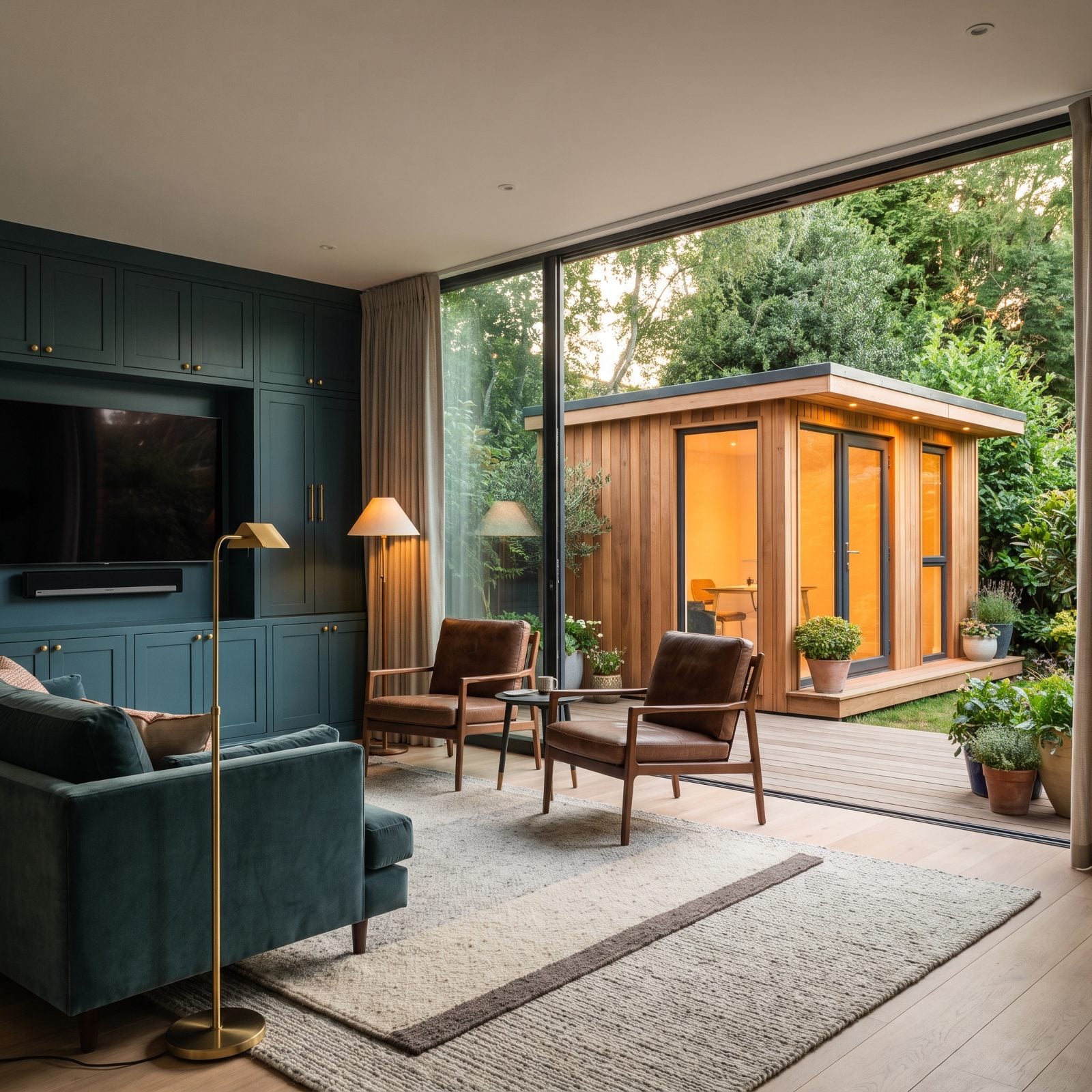
Building a backyard studio used to mean permits, a foundation, and a contractor you’d see more than your in-laws. The pod version arrives on a flatbed, gets craned onto a small deck, and plugs in. Insulated walls, glass front, electric heat already fitted.
What’s driving the interest for 2027 is less about the home-office pitch and more about the maintenance. Sealed cedar cladding, a flat roof you never climb, no lawn underneath to mow. It’s a room that asks nothing of you once it lands.
13. Dry-Laid Stone Patios With Planted Joints
🔥 Would you like to save this?
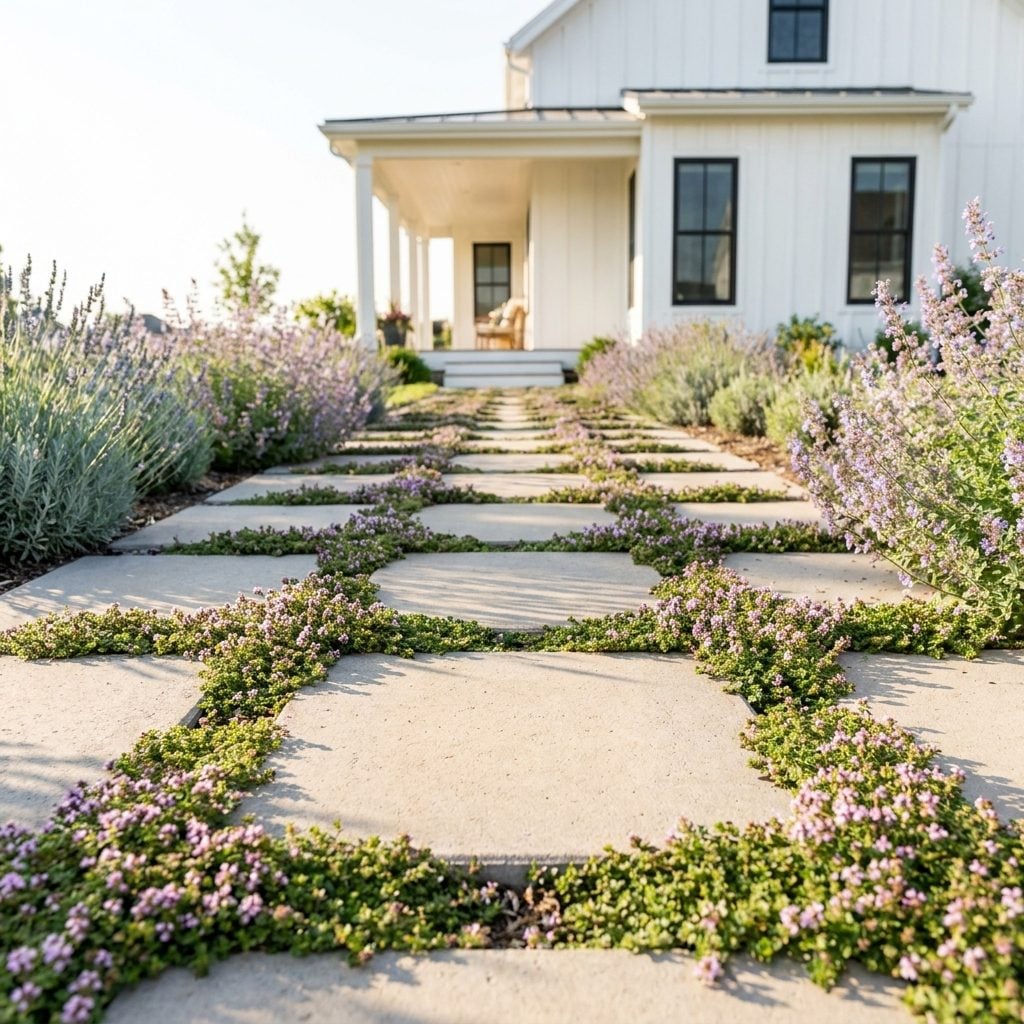
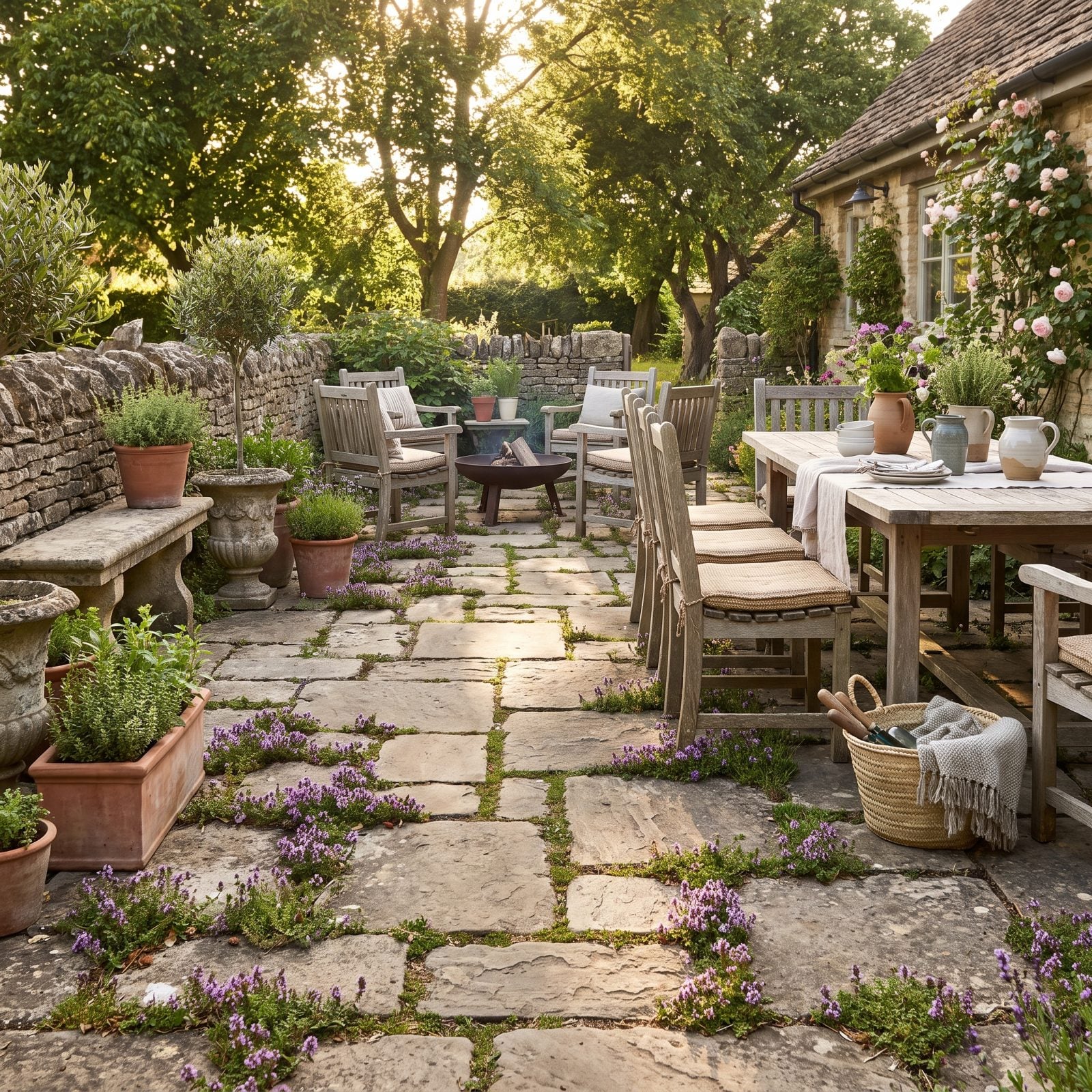
A mortared patio cracks when the ground moves, and then you’re staring at a fault line for years. Dry-laid stone sits loose on a sand bed, so it flexes with frost instead of fighting it. The planted joints are the clever part: low thyme and moss fill the gaps, so no weeds muscle in and nothing needs scraping out every spring.
Step on the thyme and it releases a scent. Small thing. But it’s what people remember about a garden long after they’ve forgotten the furniture.
12. Long-Blooming Sterile Perennial Borders
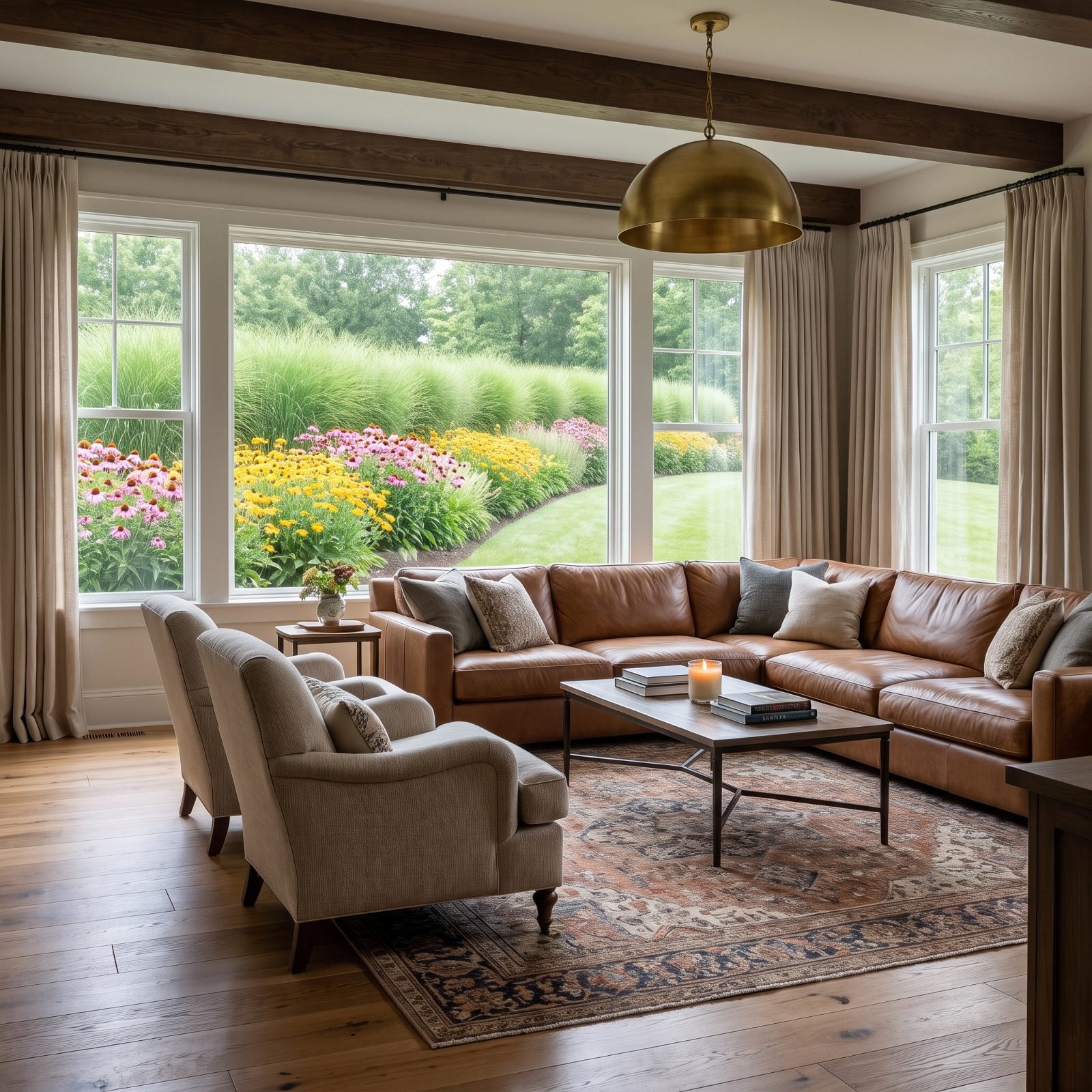
Here’s the gardening secret nobody puts on the plant tag: half your weeding is just last year’s flowers reseeding where you didn’t want them. Sterile perennial cultivars don’t set seed, so they bloom harder and longer — the plant isn’t wasting energy making offspring — and they stay exactly where you planted them.
The result is a border that looks full from May to October with none of the deadheading or the thug plants that take over by August.
11. Evergreen Privacy Screens Requiring Minimal Shearing

A sheared hedge is a commitment to a ladder and a trimmer twice a year for the rest of your life. Columnar evergreens that hold their own narrow shape skip all of it. They grow up, not out, so the screen stays tight without anyone correcting it.
Plant them close and in a few seasons you’ve got a wall between you and the neighbors — one that never needs the flat-top haircut a privet demands.
10. Retractable Shade Sails With Wind Sensors
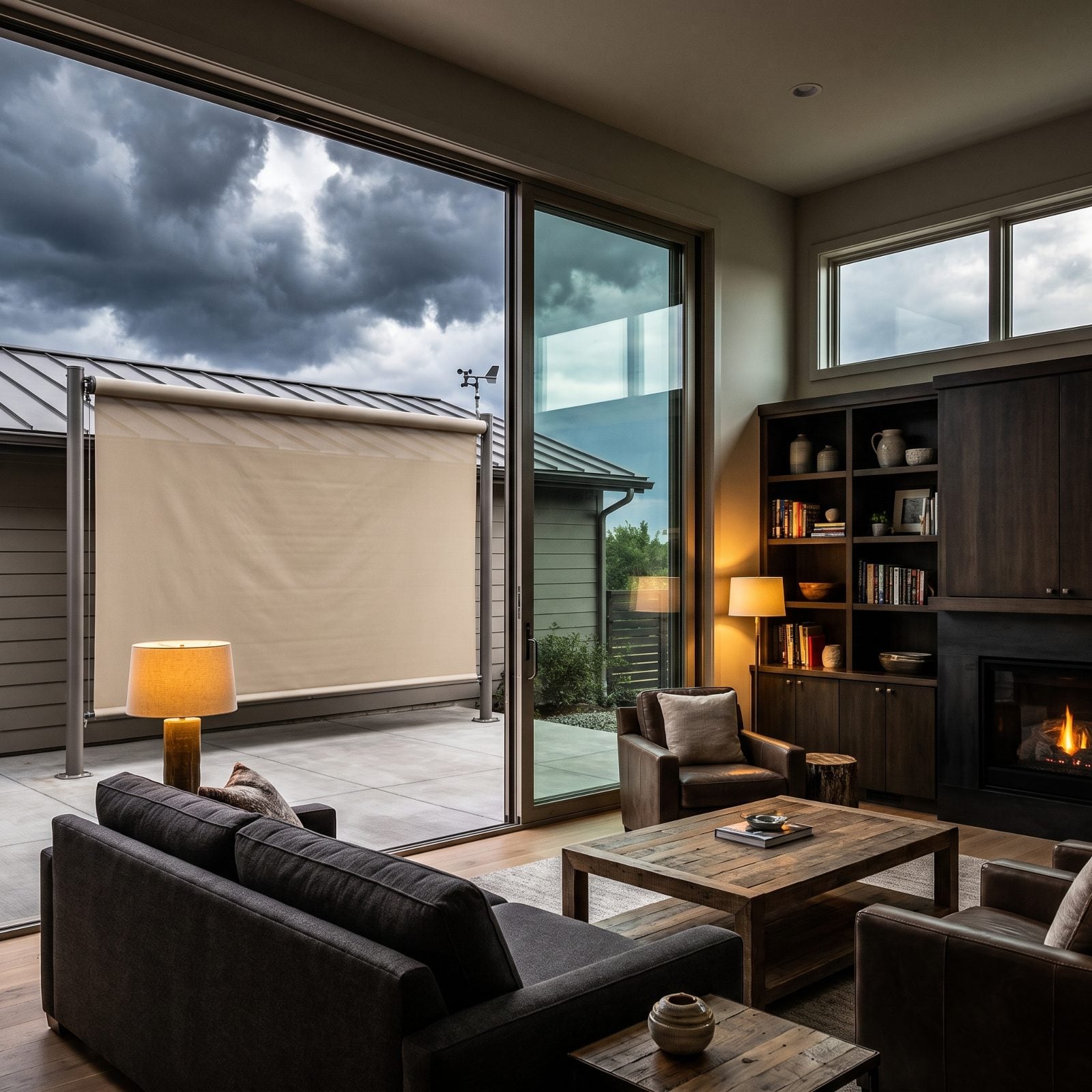
Everyone who’s owned a shade sail has the same memory: the morning after a storm, untangling a sail that wrapped itself around a tree. The 2027 systems close that chapter. A small wind sensor on the post retracts the fabric automatically when gusts pick up, then rolls it back out once the air settles.
9. Low-Smoke Electric Fire Features

Wood fires are great until the chimney backdrafts and everyone’s eyes are streaming. Electric flame features give you the amber glow and the warmth with no smoke, no ash to shovel, and no bans when the air-quality alerts hit — which is half of winter now in a lot of places.
The flame tech has gotten good. From across the patio, you honestly can’t tell it isn’t burning something.
8. Frost-Proof Outdoor Kitchens
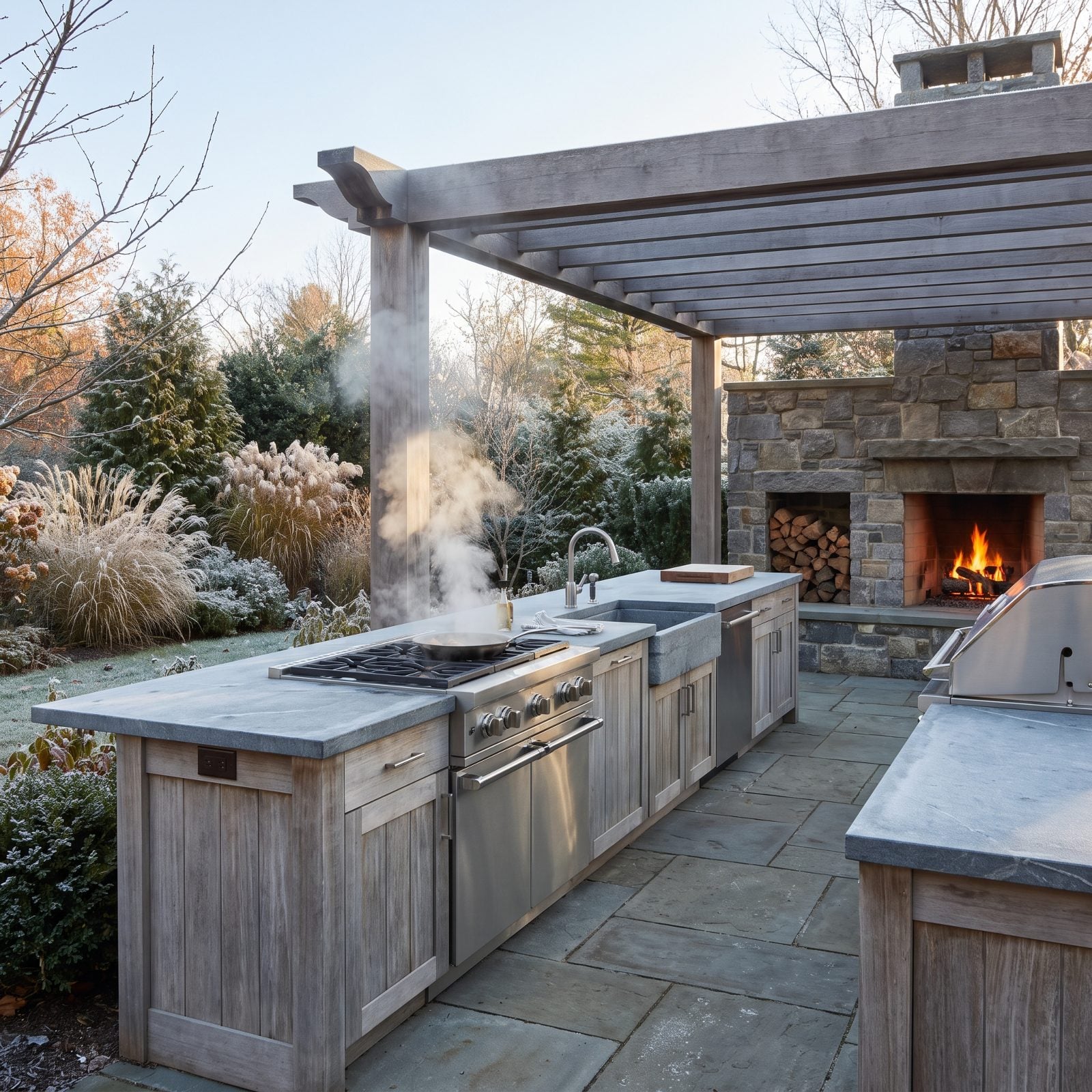
Most outdoor kitchens are a summer-only affair. Come October, you’re draining lines, hauling in the grill, and covering everything in tarps that blow off by December. Frost-proof builds end the seasonal teardown, because the cabinetry, counters, and plumbing are all rated for freeze-thaw and stay put through winter.
The appliance run is the heart of it. A weatherproof stainless refrigerator, a built-in grill and oven, and a sealed dishwasher drawer all live outside year-round. The concrete counters shrug off the freeze cycles that crack ordinary stone, and the frost-free faucet means no burst-pipe surprise in spring.
The best outdoor kitchen is the one you never have to put away.
For a cold-climate yard, that’s the whole pitch. Cook out on a clear November afternoon, close the lid, walk inside. Nothing to winterize, nothing to cram into a garage that’s already full.
7. Under-Deck Water-Capture Systems
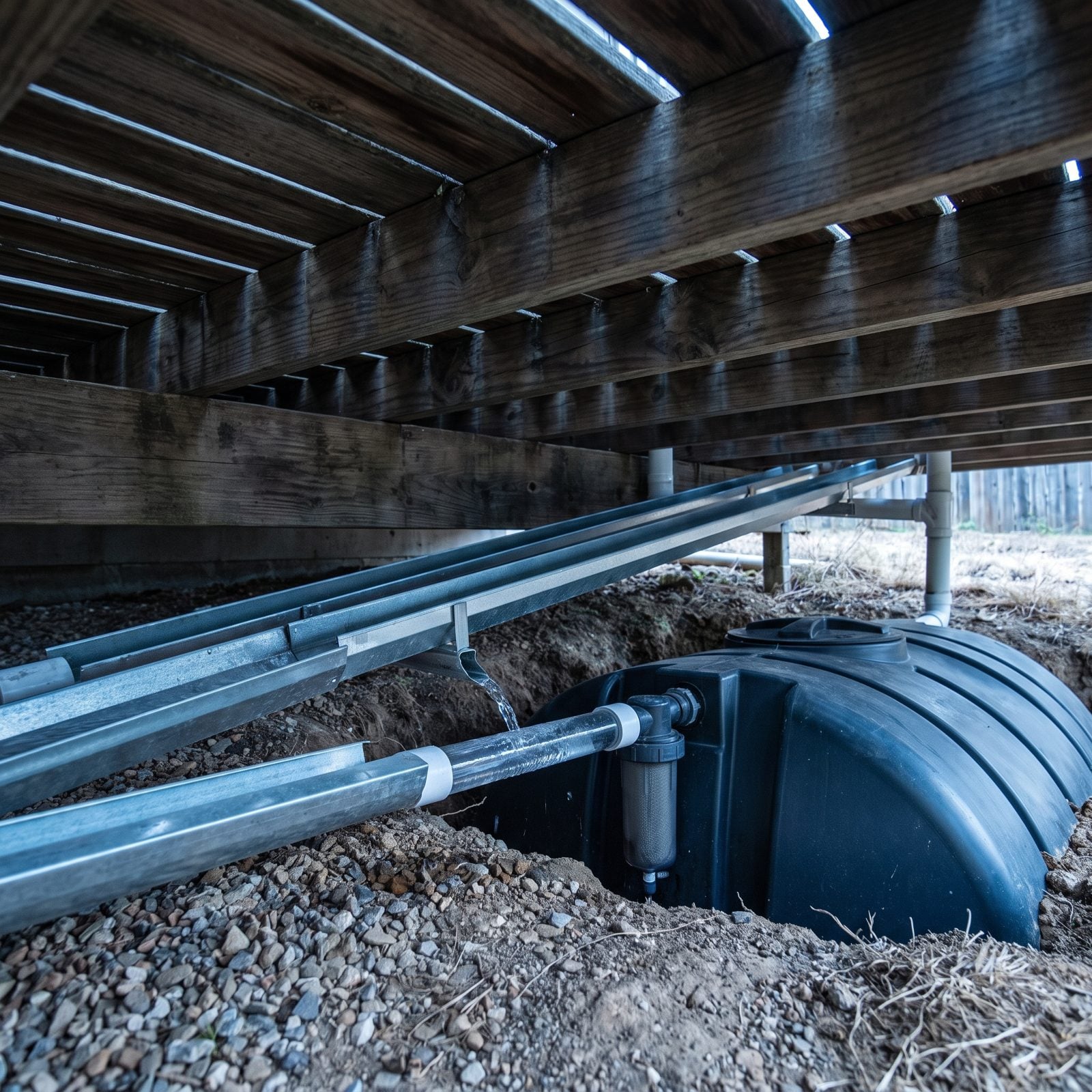
The deck you already walk on is also a roof. Water drips between the boards, lands in gutters angled beneath the deck, and runs through piping into a tank tucked under the deck instead of pooling in the lawn and quietly rotting your joists.
Ignore under-deck drainage and you pay for it with a soggy strip of grass that never dries out. So catch the water. You get dry storage below and a reservoir for the dry months, and in a wet-climate yard that beats a rain barrel by a mile.
6. Native Hedge Mixes Replacing Formal Hedges
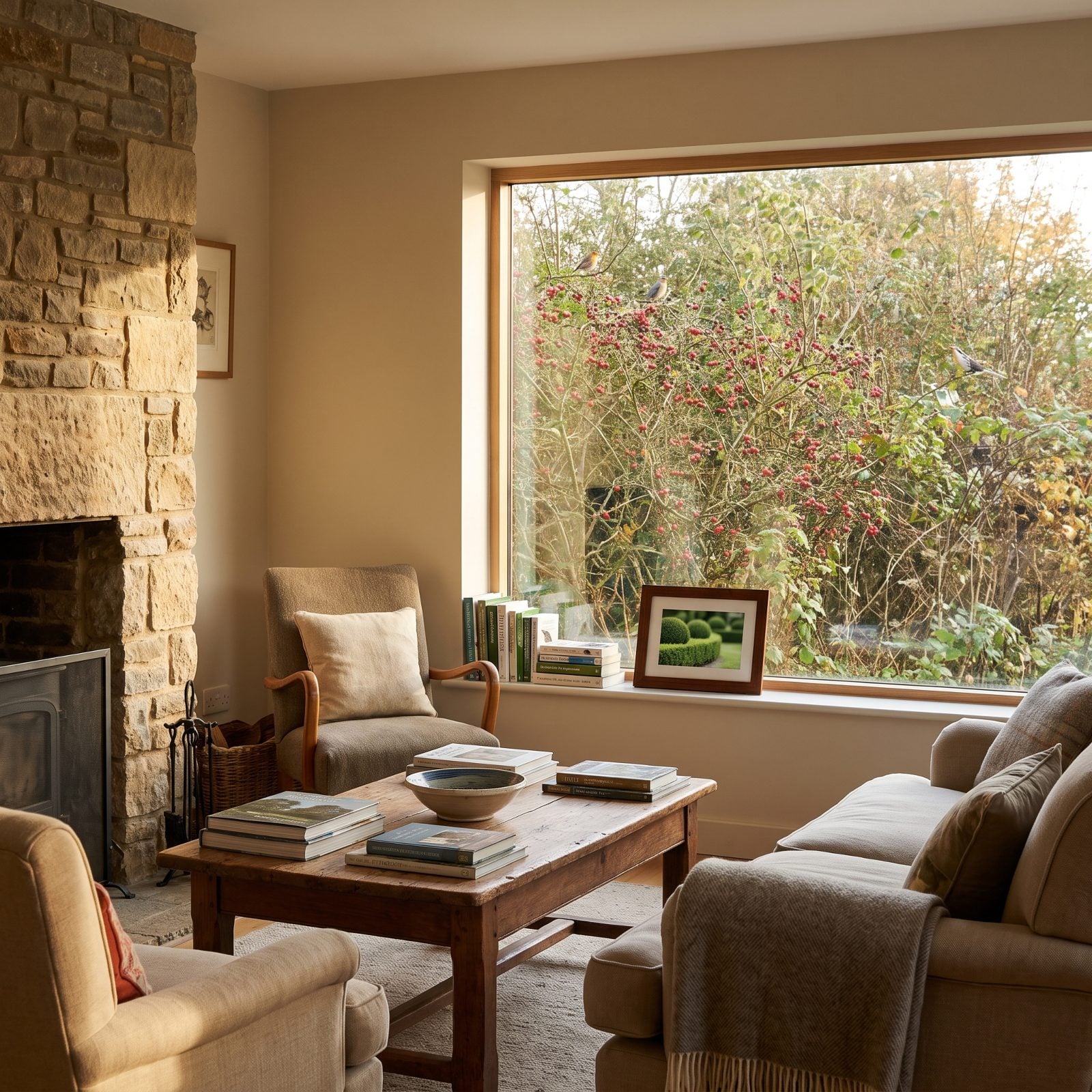
A clipped boxwood wall looks sharp in June, and it demands a trimmer three times a season to stay that way. Swap it for a mix of serviceberry, ninebark, and red-twig dogwood, and the maintenance drops to almost nothing.
The mixed native hedge grows into its own shape rather than fighting you for one. Spring flowers. Birds in fall. A slow turn to copper before the leaves drop. You give up the crisp formal line, and what you get back is a hedge that changes every month and never once asks for the trimmer.
5. Ground-Level Decks Without Rail Maintenance
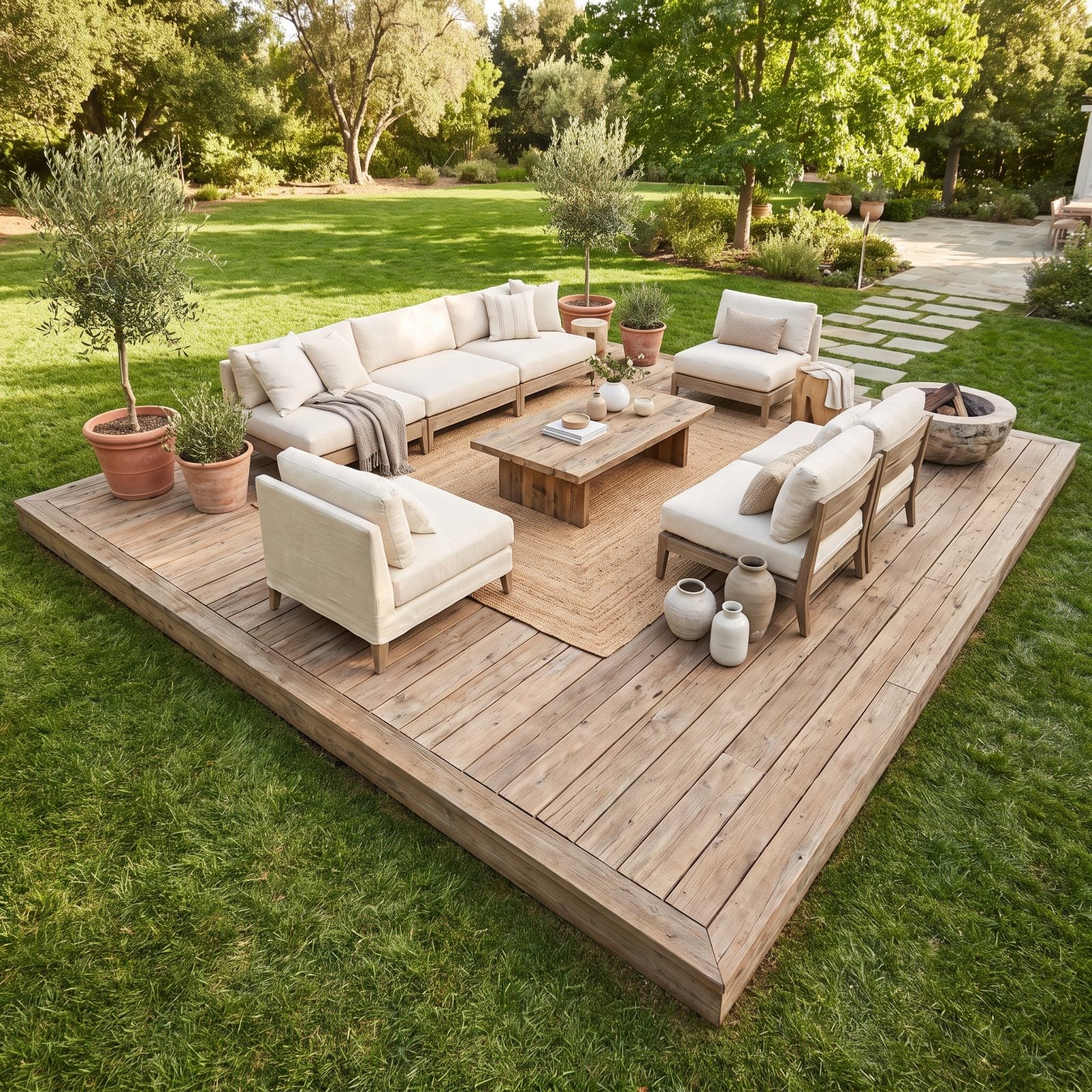
Railings fail first. Sun splits the caps, fasteners back out, and every few years you’re sanding and resealing a hundred linear feet of spindles nobody enjoys sanding.
Drop the whole deck to ground level and the railing requirement disappears along with it. What’s left reads like a platform floating on the lawn — a low, clean fascia meeting the grass, nothing to catch leaves or rot. Add a low stone fire bowl and the deck stops being a thing bolted onto the yard and just becomes the yard.
4. Recycled Marine-Plastic Outdoor Furniture
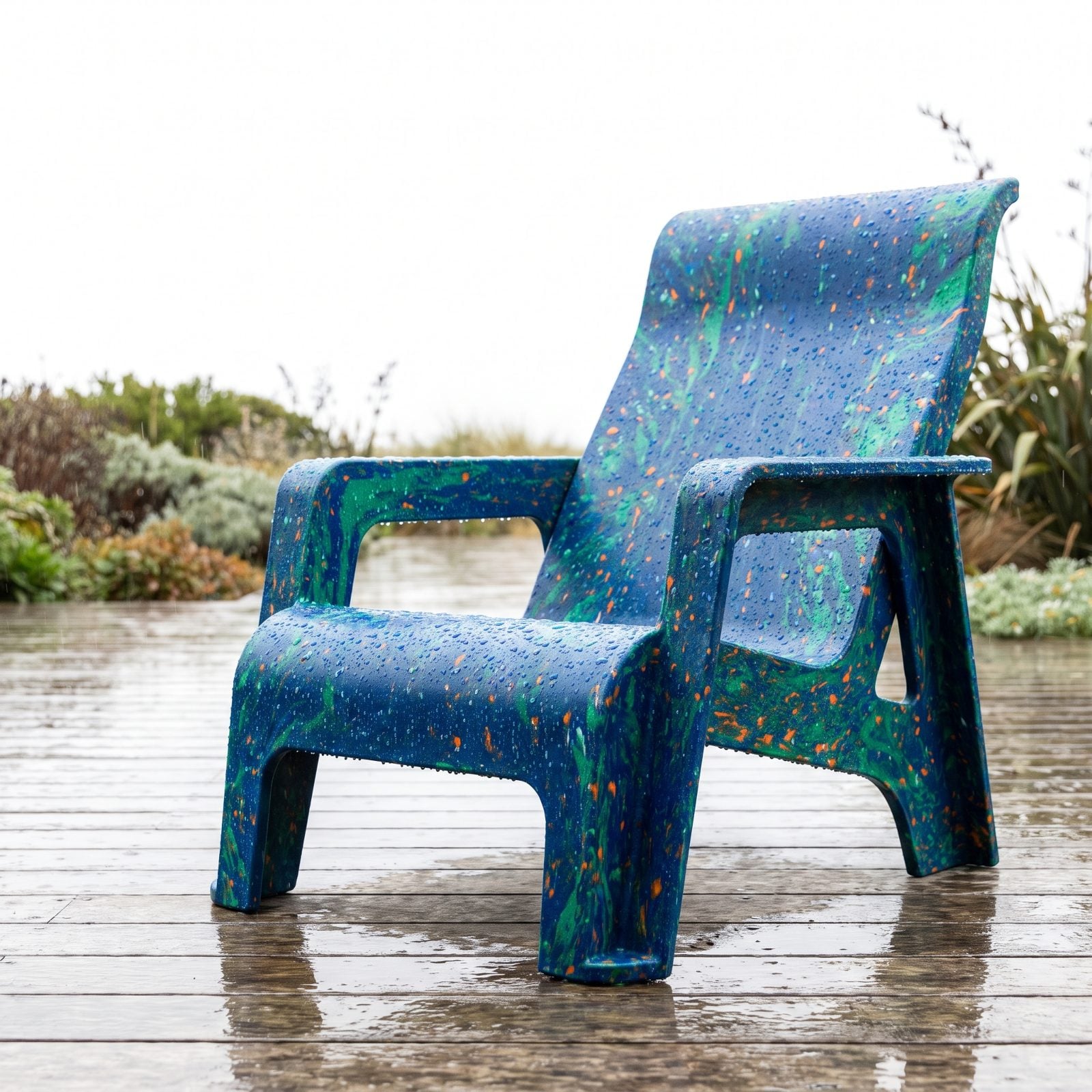
Most outdoor furniture spends winter in a garage because you can’t leave it out. Recycled marine-plastic pieces end that ritual for good.
They’re made from fishing nets and bottles hauled out of the ocean, then molded into slats that won’t fade, won’t rot, and don’t care if you forget them under a nor’easter. Hose them off in spring and they look exactly like last year. A blue, green and orange speckled Adirondack chair, left out on a rain-soaked wooden deck, carries that salt-air ease into the yard, minus the annual drag to the shed.
3. Precast Concrete Seat Walls

A seat wall is furniture that never moves, never fades, and never has to be reupholstered. Precast concrete makes it cheap enough to actually build.
One curved run pulls triple duty. It seats a crowd, wraps around a fire bowl, and draws the edge of a gathering space, with a few throw pillows and blankets the only soft touch it needs. Honed greige warms in the low afternoon sun pouring through the windows and shrugs off heat from the fire without complaint. You pour it once and then forget it’s there, which is about the nicest thing I can say about any built-in.
2. Integrated Charging Lockers for Yard Equipment
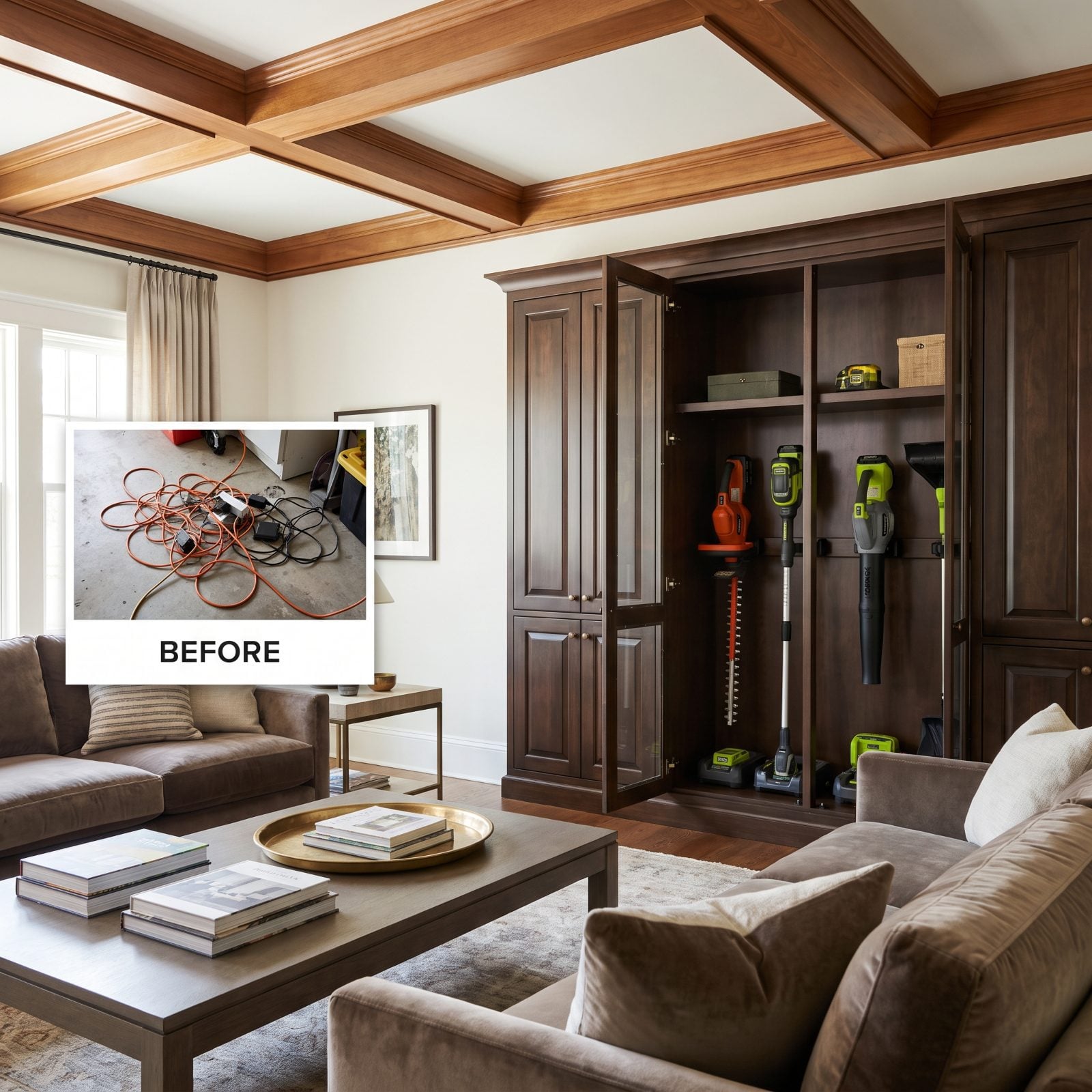
Battery yard tools solved the gas-can mess and promptly created a new one: chargers spilling across the garage floor, half of them dead the minute you need them.
The fix turning up in newer homes is a charging locker built right into garage cabinetry. Tools dock upright on wall rails above their chargers. They charge overnight off a single cable run. And they sit behind glass-paneled and raised-panel wood doors instead of underfoot. Hedge trimmer, string trimmer, blower — all of it lives indoors, charged and out of sight.
1. Shallow Swales That Replace Drainage Pipes
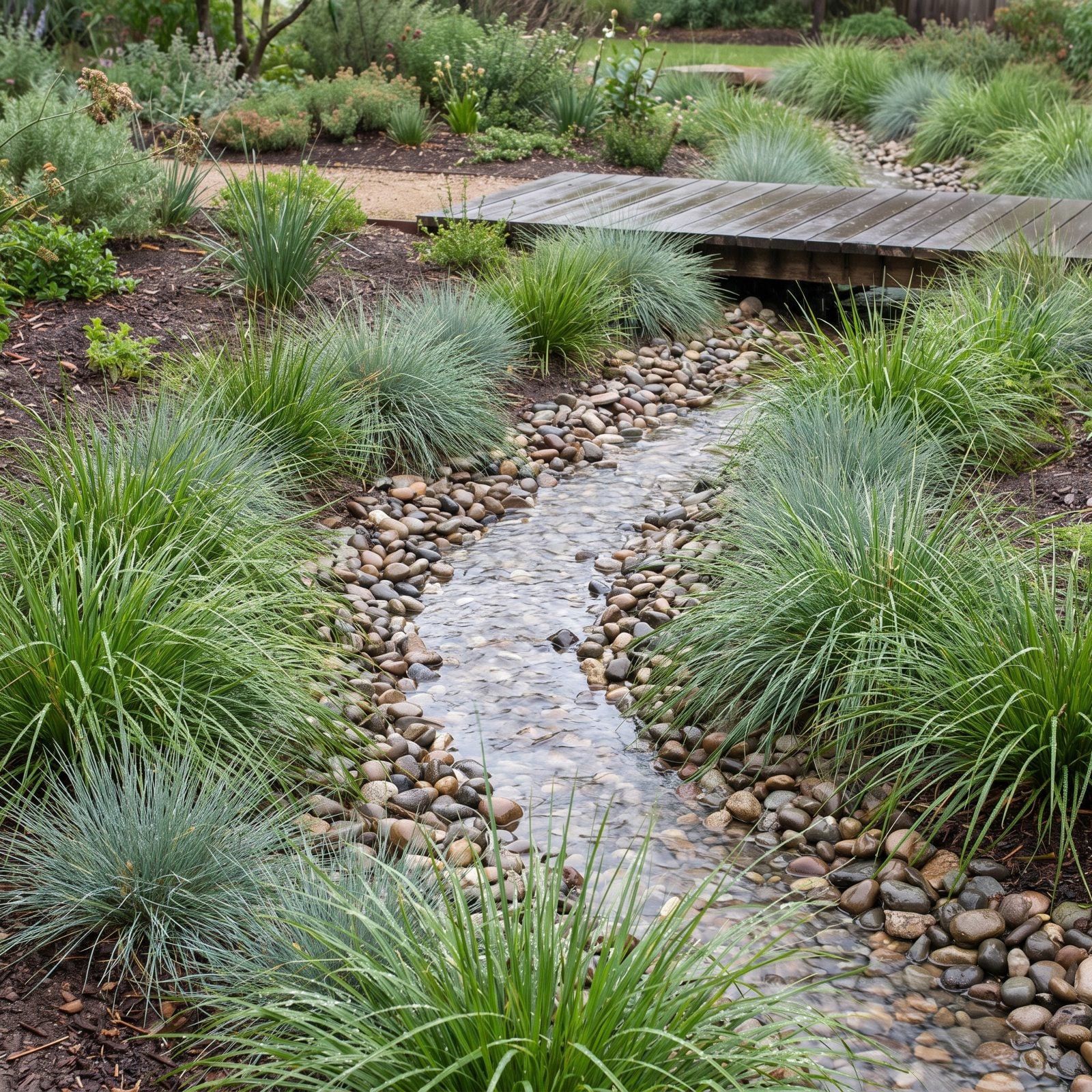
Buried drainage pipe stays invisible right up until the day it clogs, and then it’s a backhoe and a ruined weekend. A swale does the same job out in the open, where you can watch it work.
It’s really just a shallow planted channel that walks rainwater slowly across the yard and lets most of it soak into the planted beds on the way. Edge the banks with river rock, fill the center with smooth stones for the water to run over, plant the beds with sedges and blue fescue, and it reads as a garden feature instead of plumbing. Nothing to clear. Nothing to dig up. And after a hard storm it looks its absolute best — honestly, of everything here, it’s the one that gives back the most for doing the least.