
Emerald is a magnificent color for an earring and a considerably more dangerous proposition for forty feet of cabinetry. Sapphire can turn positively nightclub under the wrong lighting, while garnet has the unfortunate potential to suggest the interior of a velvet jewelry box. These are shades with enormous decorative appetites. The question is what to put around them.
In order to come up with the very specific design ideas, we create most designs with the assistance of state-of-the-art AI interior design software. Also, assume links that take you off the site are affiliate links such as links to Amazon. this means we may earn a commission if you buy something.
Patinated bronze has a wonderful way of taking the aristocratic edge off emerald lacquer. Honed travertine brings a geological dignity to even the most extravagant citrine, while walnut has a depth of its own that makes it an equal partner to sapphire. The relationship between a strong shade and its neighbors is far more interesting than the hue itself. A jeweler understands this instinctively: the setting is part of the stone’s beauty.
The results are kitchens of extraordinary architectural ambition. Bronze folds into angular islands, amethyst migrates from the cabinetry to the ceiling, and copper develops a patina as intricate as veined marble. Even the narrowest brass seam acquires significance against an uninterrupted expanse of garnet. The distinction between gaudy and gorgeous can come down to a quarter of an inch of metal.
37. When the Bronze Island Takes Its Geometry From the Ceiling
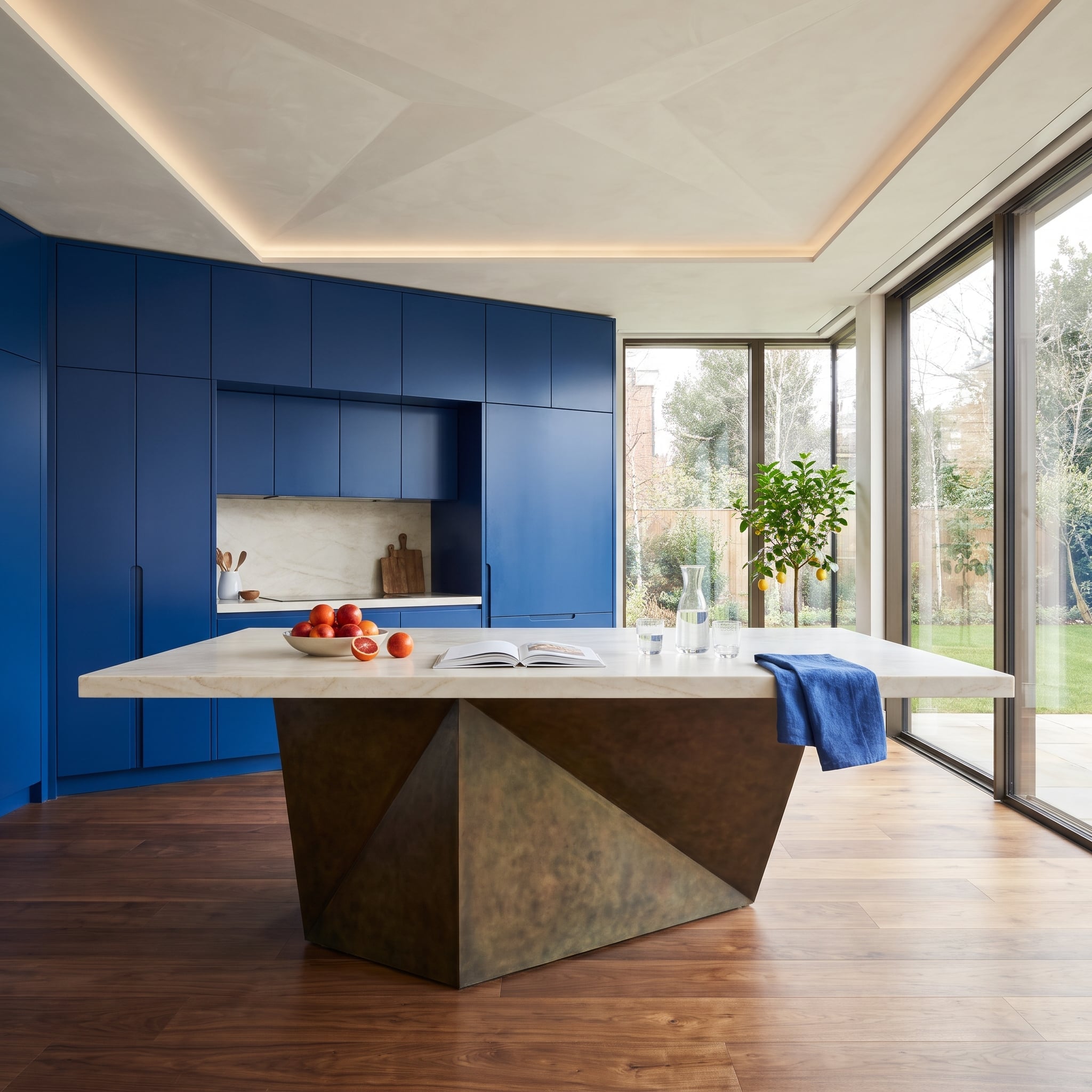
Triangular planes in the patinated bronze island answer the folds overhead. Matte sapphire cabinetry supplies the deep blue backdrop for this exercise in geometry, while walnut underfoot takes the edge off the angular architecture.
36. Rose Glass and Garnet With a Streak of Bronze
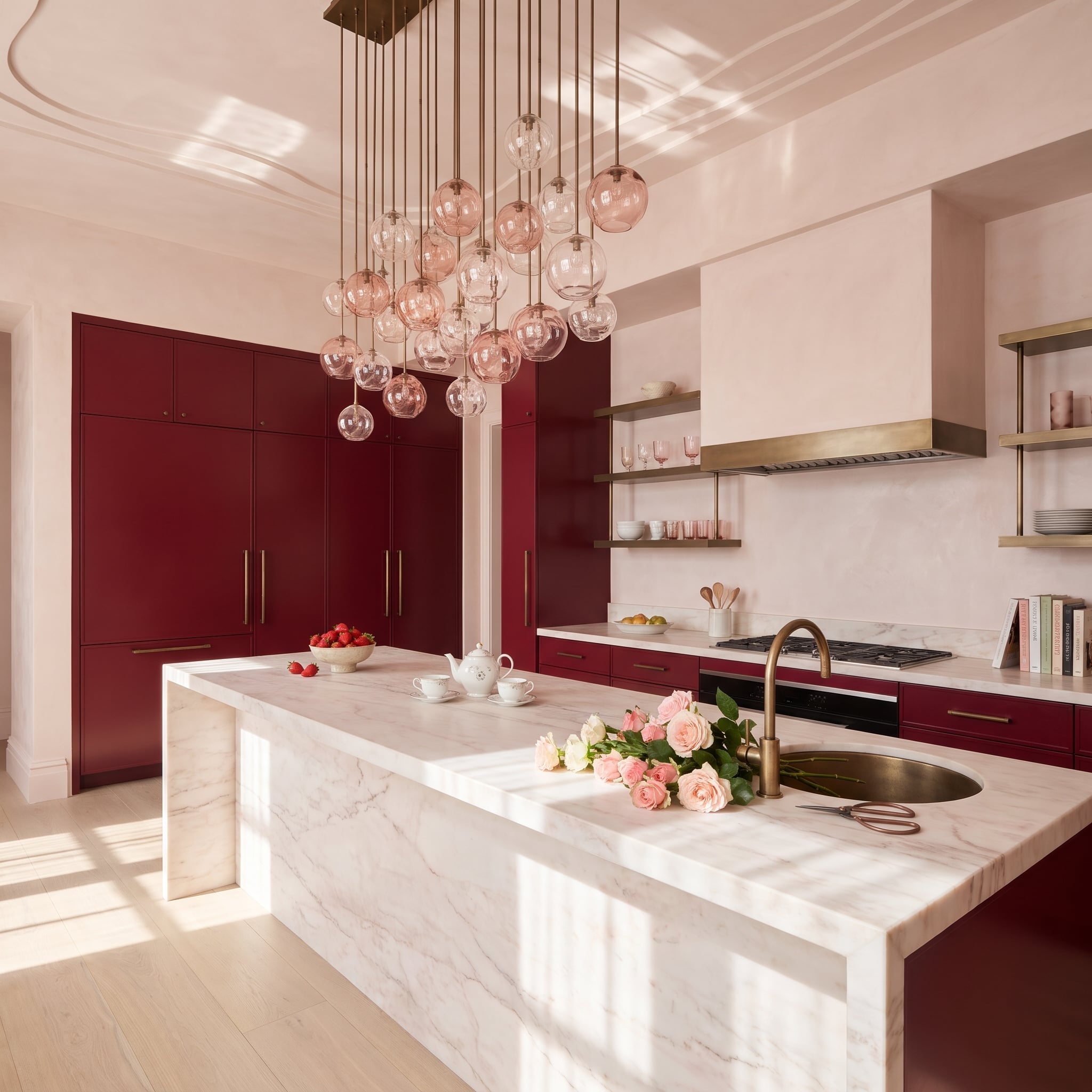
A constellation of rose-tinted globes hangs over garnet refrigerator panels and rose-veined marble. Pink plaster pushes the palette toward the romantic; the dark bronze sink and faucet bring a welcome note of severity.
35. Emerald Lacquer Framed in an Architecture of Travertine
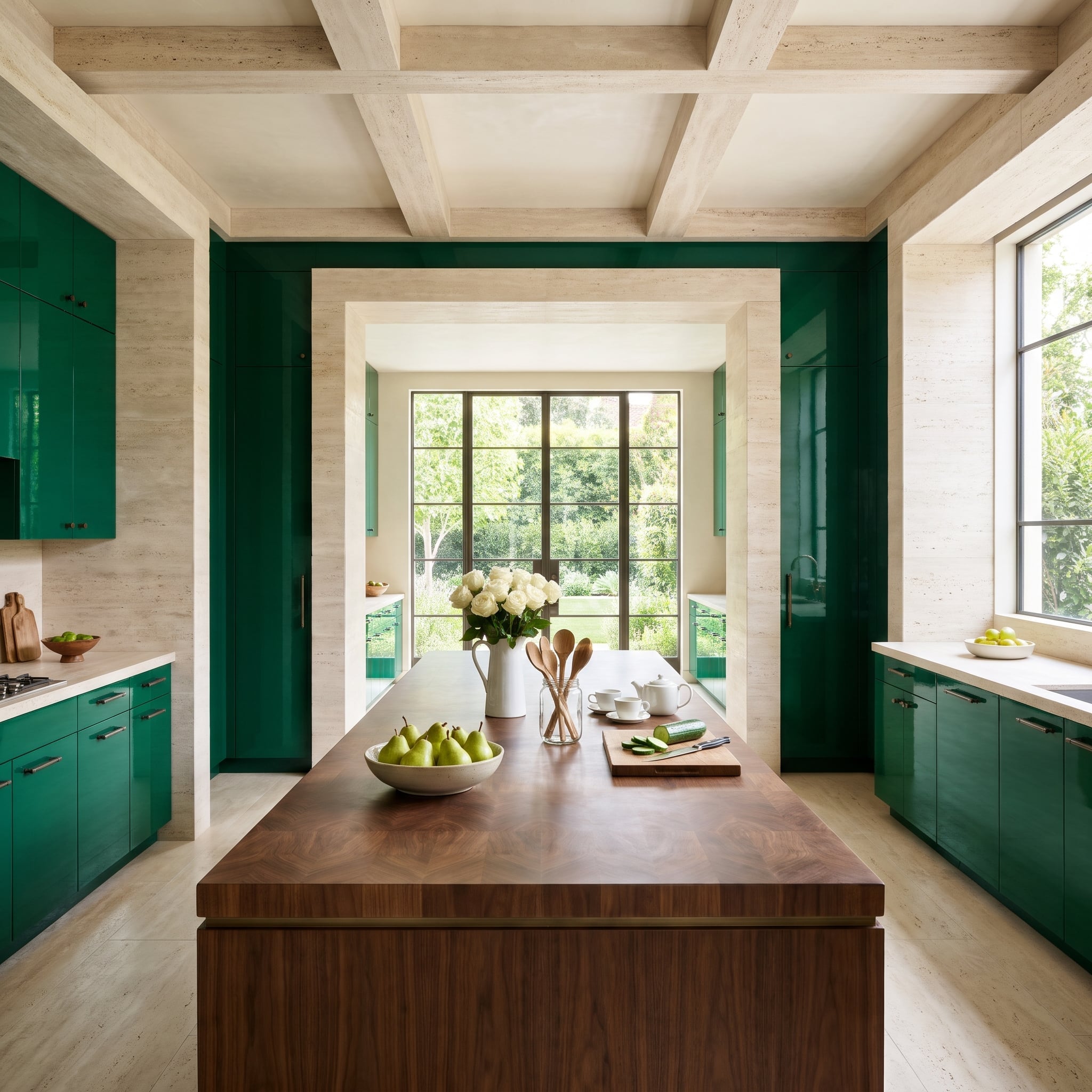
Travertine extends from the floor to the walls, beams and paired portals, giving the glossy green cabinets a monumental setting. The end-grain walnut island breaks the stone’s sweeping lines into a fine mosaic of wood.
With so much stone in view, a narrow brass reveal beneath the walnut is all the ornament the island needs.
34. Citrine Takes on Black Marble and Weathered Copper
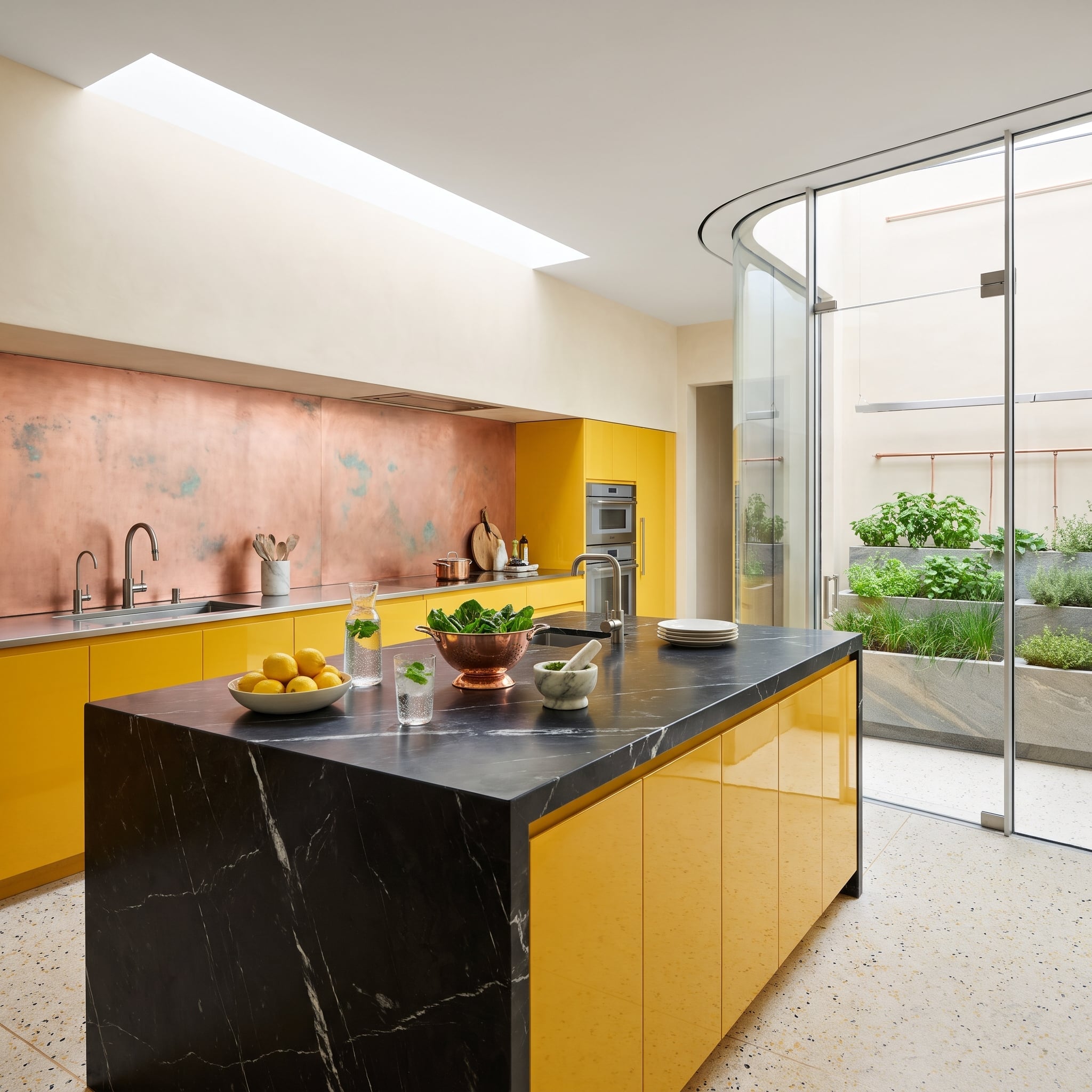
Blue-green patina across the copper backsplash tempers the intensity of the yellow lacquer. Black marble with white veining makes the island a graphic centerpiece, while herbs beyond the curved glazing supply a more delicate shade of green.
33. Amethyst Lacquer Finds Its Match in Tarnished Metal
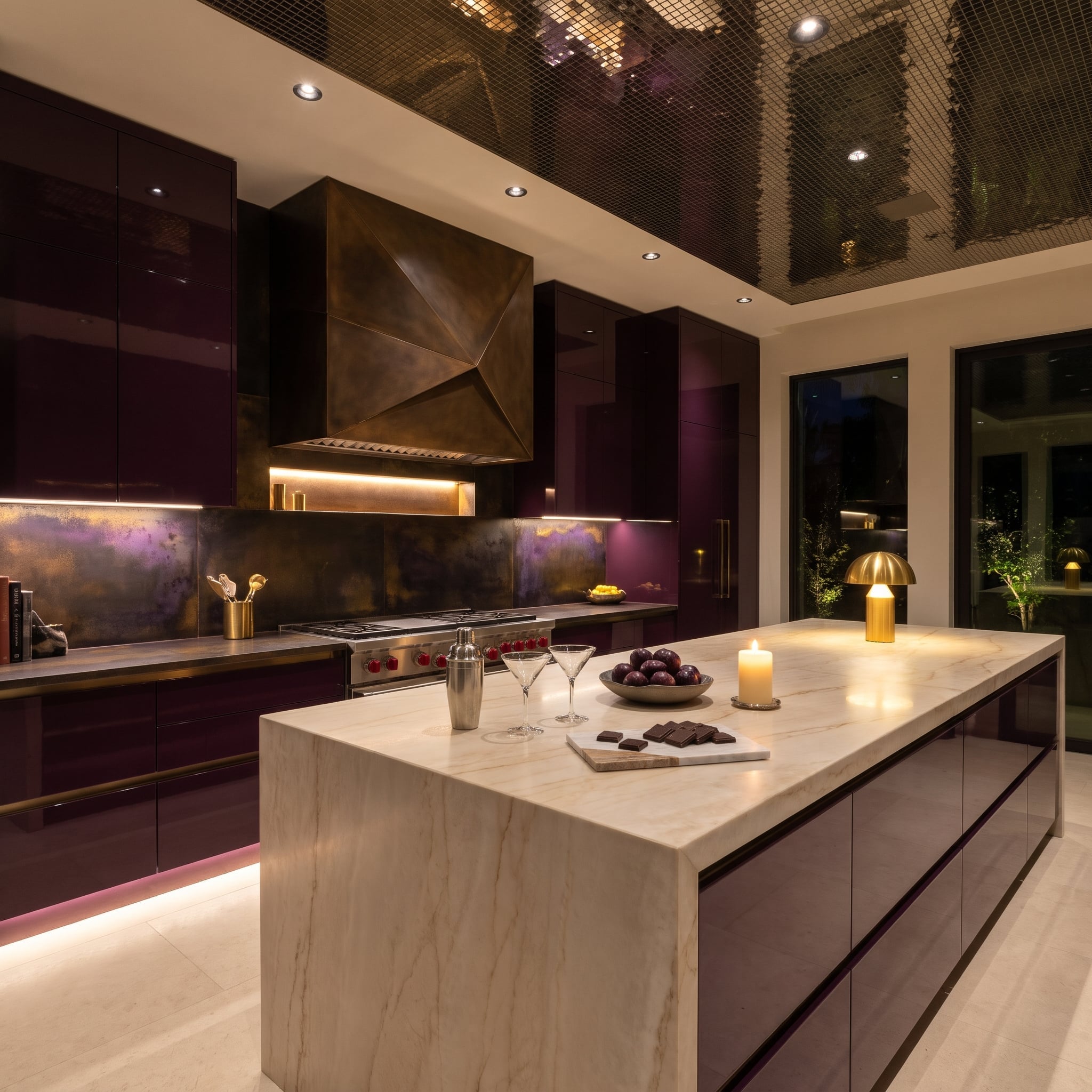
Violet traces in the metal backsplash turn up again in the glossy amethyst cabinets. Above the range, downlights strike the triangular planes of a faceted bronze hood at different angles.
Pale veined stone brings some relief from the darker walls. The pink toe-kick lighting is one flourish too many.
32. Where the Oxblood Island Becomes a Sapphire Velvet Banquette
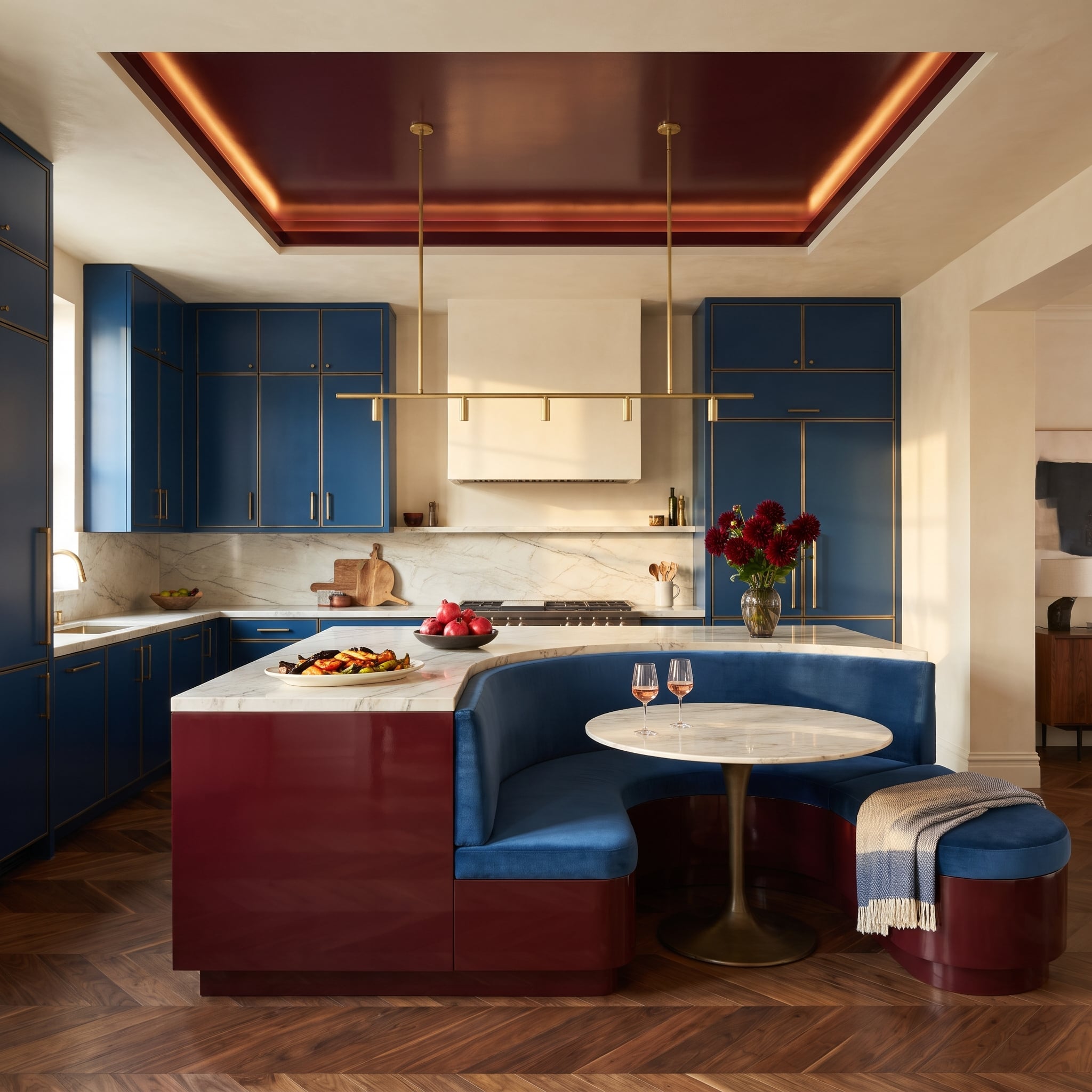
Oxblood lacquer continues from the island into the curved banquette base, making the cooking and dining zones part of the same piece of joinery. Sapphire velvet softens the booth around a marble tulip table.
Burgundy overhead and blue cabinetry carry those two colors through the room. Fine brass detailing links the furniture with the lighting.
31. Ruby Reeding Meets a Blackened-Steel Cooking Wall
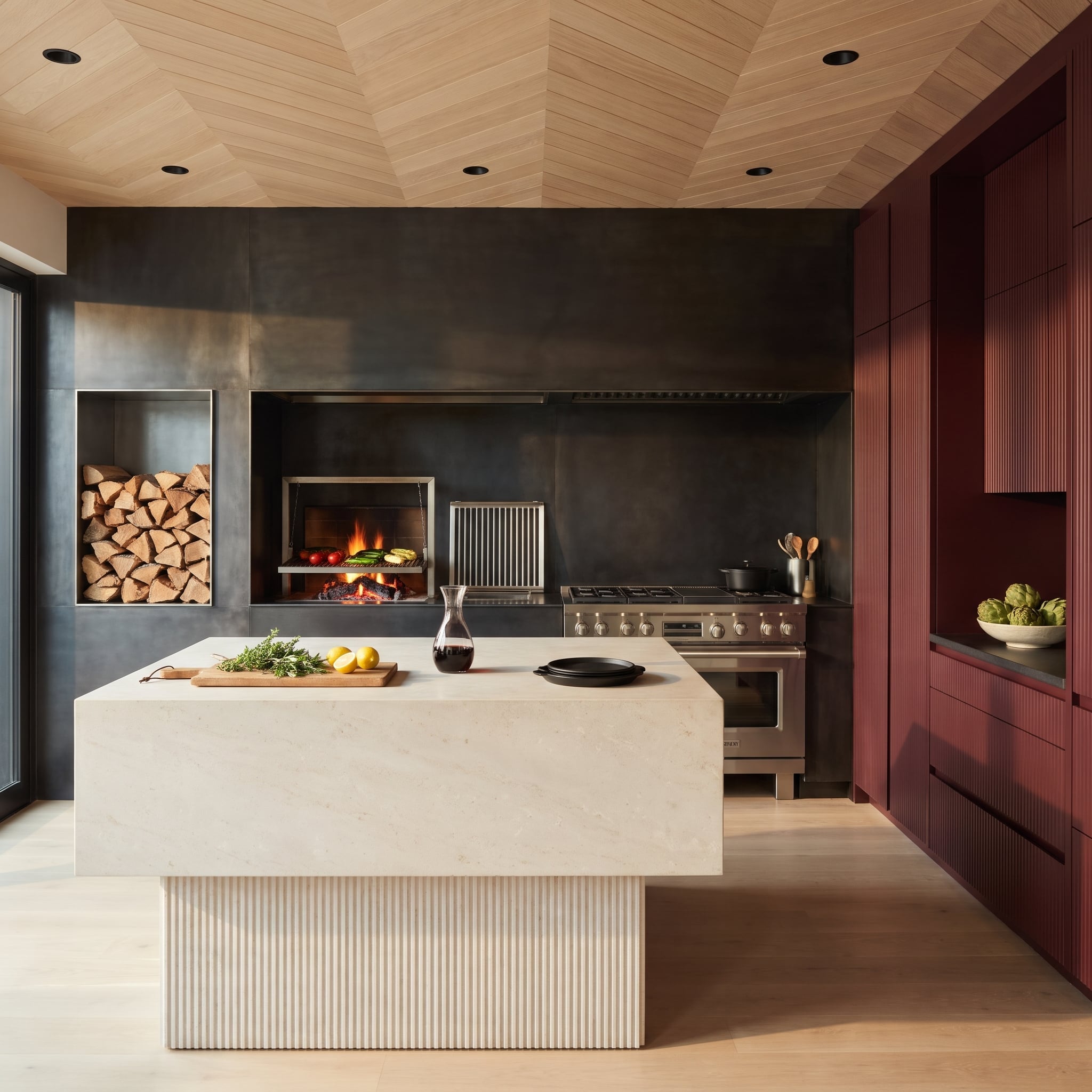
A chain-hung grill and a steel-lined firewood niche bring the visual grit of an industrial kitchen. Ruby reeded cabinets across the room have a finer vertical rhythm, repeated in the cream-colored island base.
White oak overhead lightens the blackened steel. For an indoor live-fire installation, proper ventilation and fire-safe construction and clearances, including for stored logs, are essential.
30. Backlit Onyx Gives Emerald Lacquer an After-Dark Rival
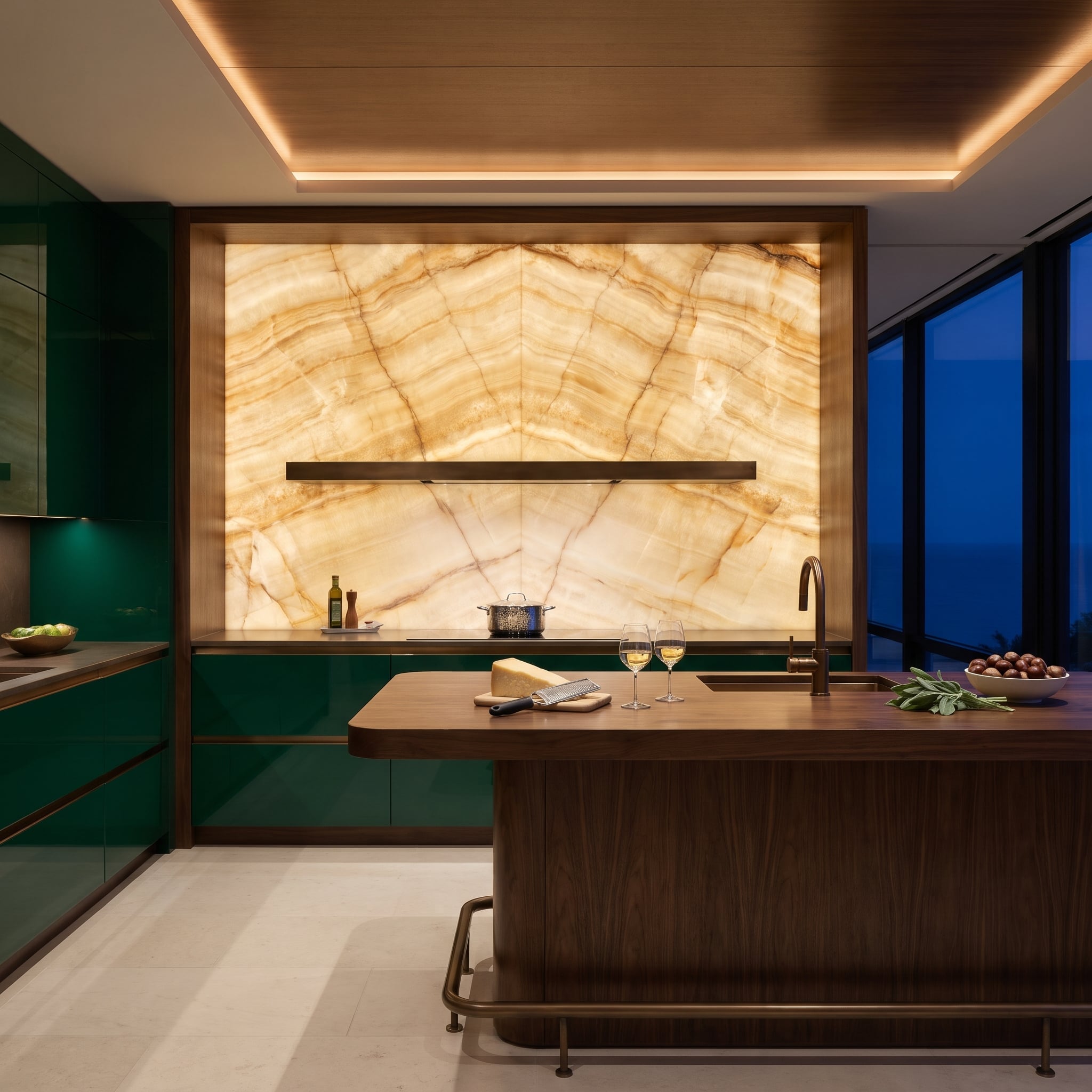
Amber light travels through the mirrored veins of bookmatched onyx, outshining even the emerald cabinets. The rounded walnut bar is deliberately less showy, with a bronze foot rail lending its curves the character of traditional bar furniture.
29. Carnelian Lacquer and a Walnut Ceiling With Bread on Display
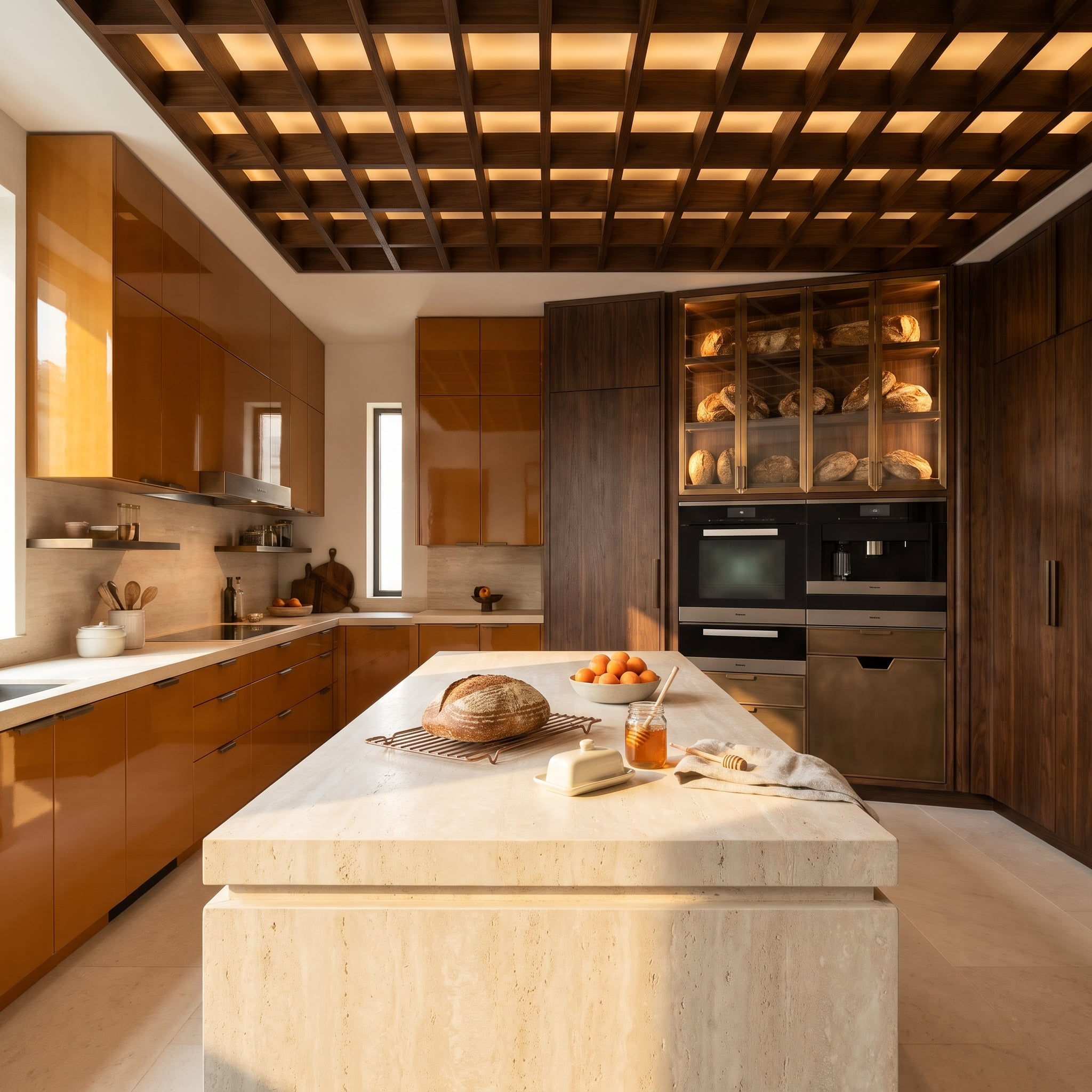
Sourdough gets unusually glamorous quarters above the ovens, behind bronze-framed glass. The carnelian cabinets flash orange beneath a walnut ceiling grid, while the island is an austere block of travertine.
Warm light inside the display makes the bread and the timber ceiling part of the same amber palette after dark.
28. Verdigris Copper Beneath an Oval Skylight
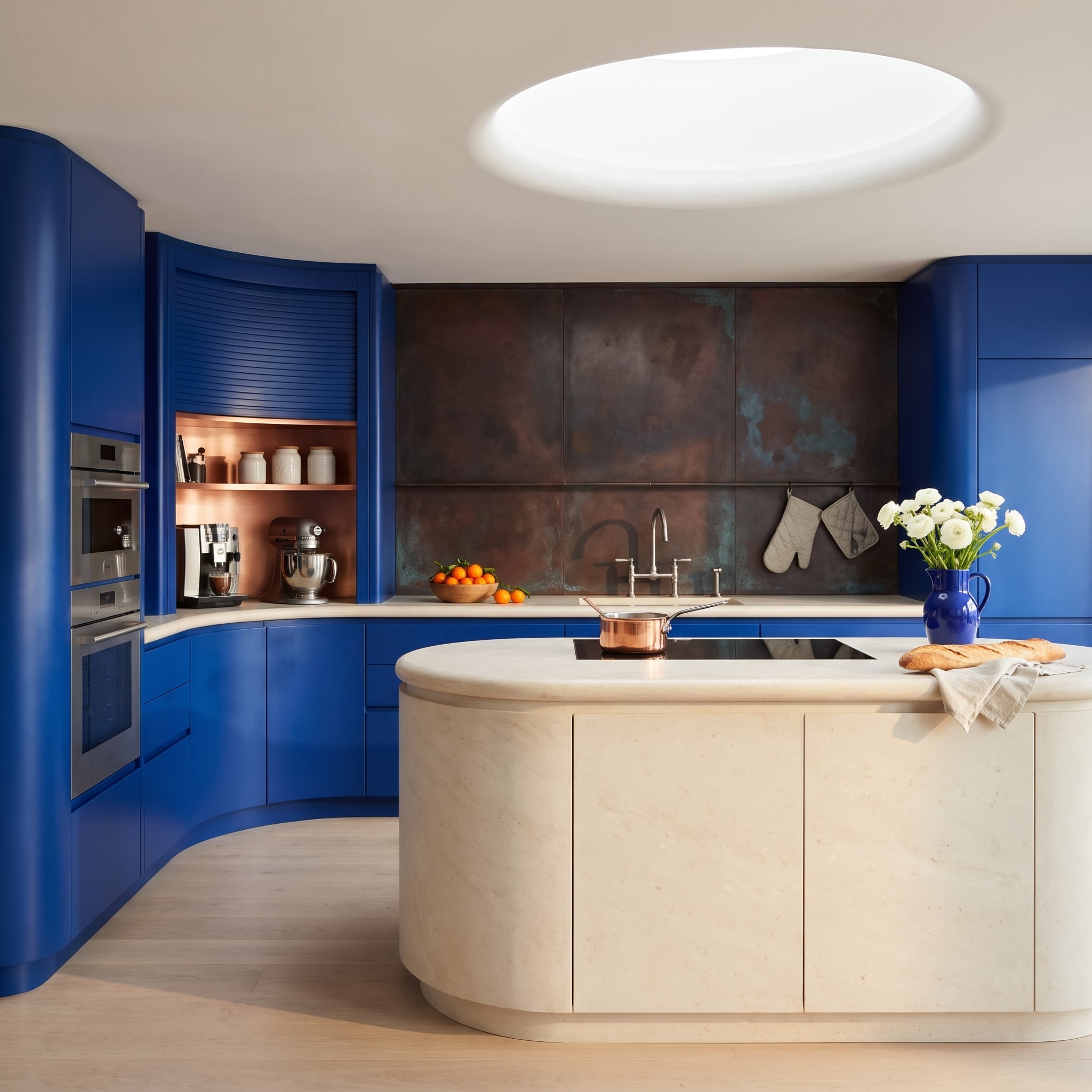
Blue-green patina mottles the copper backsplash behind smooth blue cabinetry. The pill-shaped island and oval skylight share a silhouette, a neat correspondence between the plan and the ceiling.
A tambour appliance garage opens without swinging doors across the work area. Heat-producing appliances still need the ventilation and clearances specified for their use.
27. The Most Audacious Color in This Kitchen Is on the Ceiling
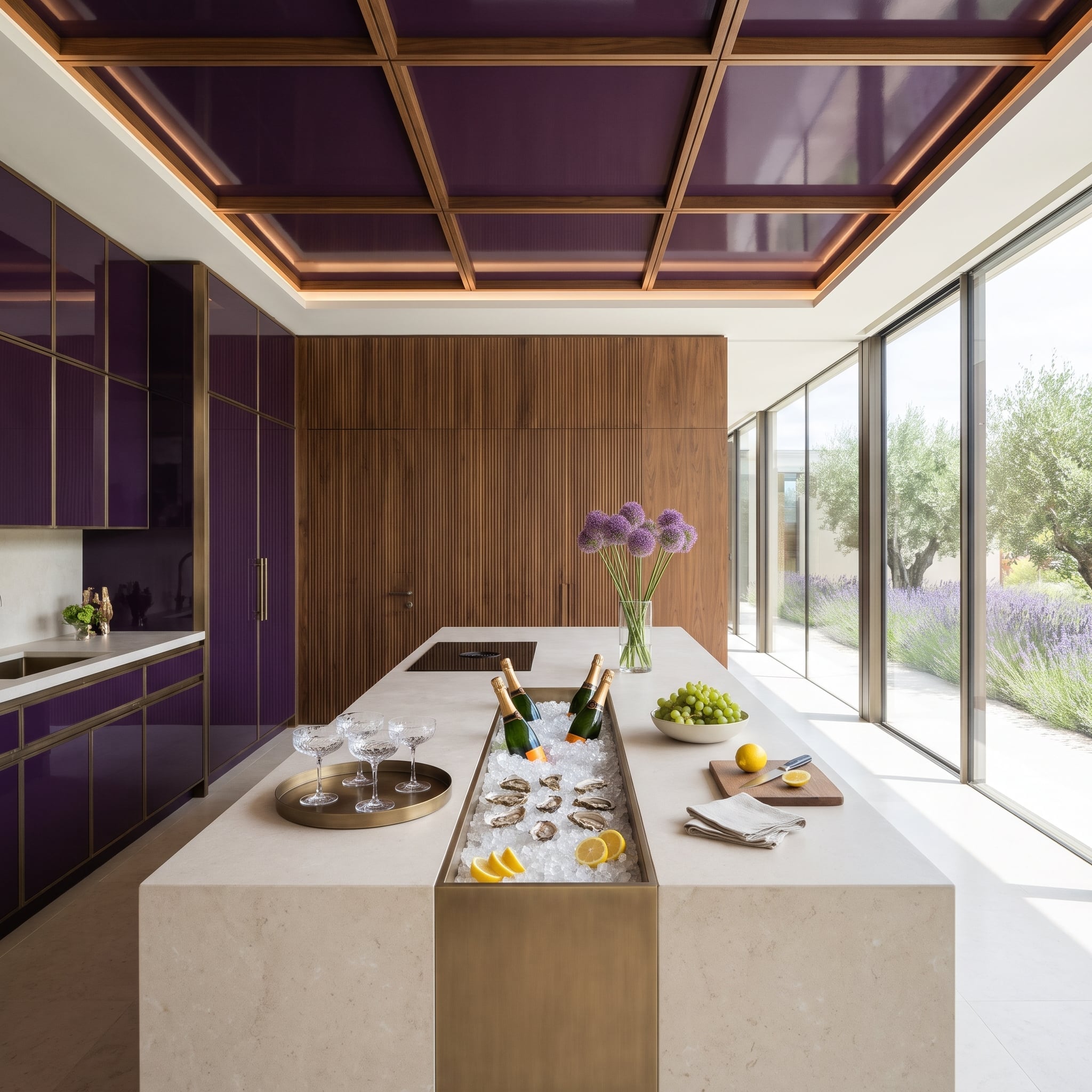
Violet lacquer fills the ceiling coffers, with walnut borders and concealed warm lighting accentuating the depth of each panel. Lavender beyond the glass repeats the overhead color in a softer register.
A bronze-toned trough down the limestone island turns it into a serving station for champagne and oysters. The idea calls for a drained, food-safe insert suitable for contact with ice and seafood.
26. Behind Blackened Steel, Another Shade of Emerald
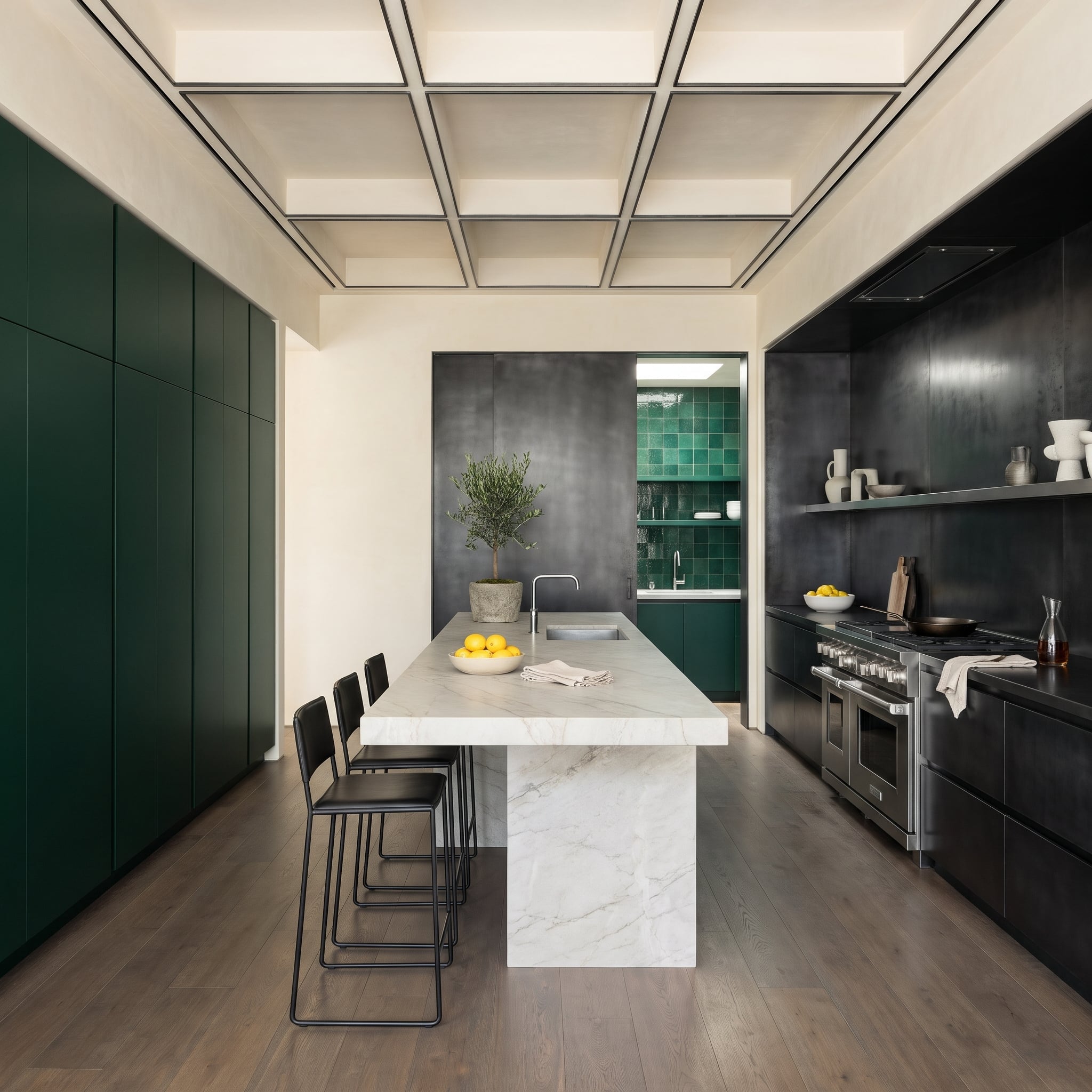
Blackened steel covers the range wall and the oversized sliding panel. Beyond it, a skylight illuminates glossy green square tiles in a scullery with a markedly different character from the matte emerald main kitchen.
Dark ceiling trim continues the steel detailing overhead. The thick island slab appears almost cantilevered over its narrower stone support.
25. Burgundy Window Frames and a Ceiling Without a Hanging Hood
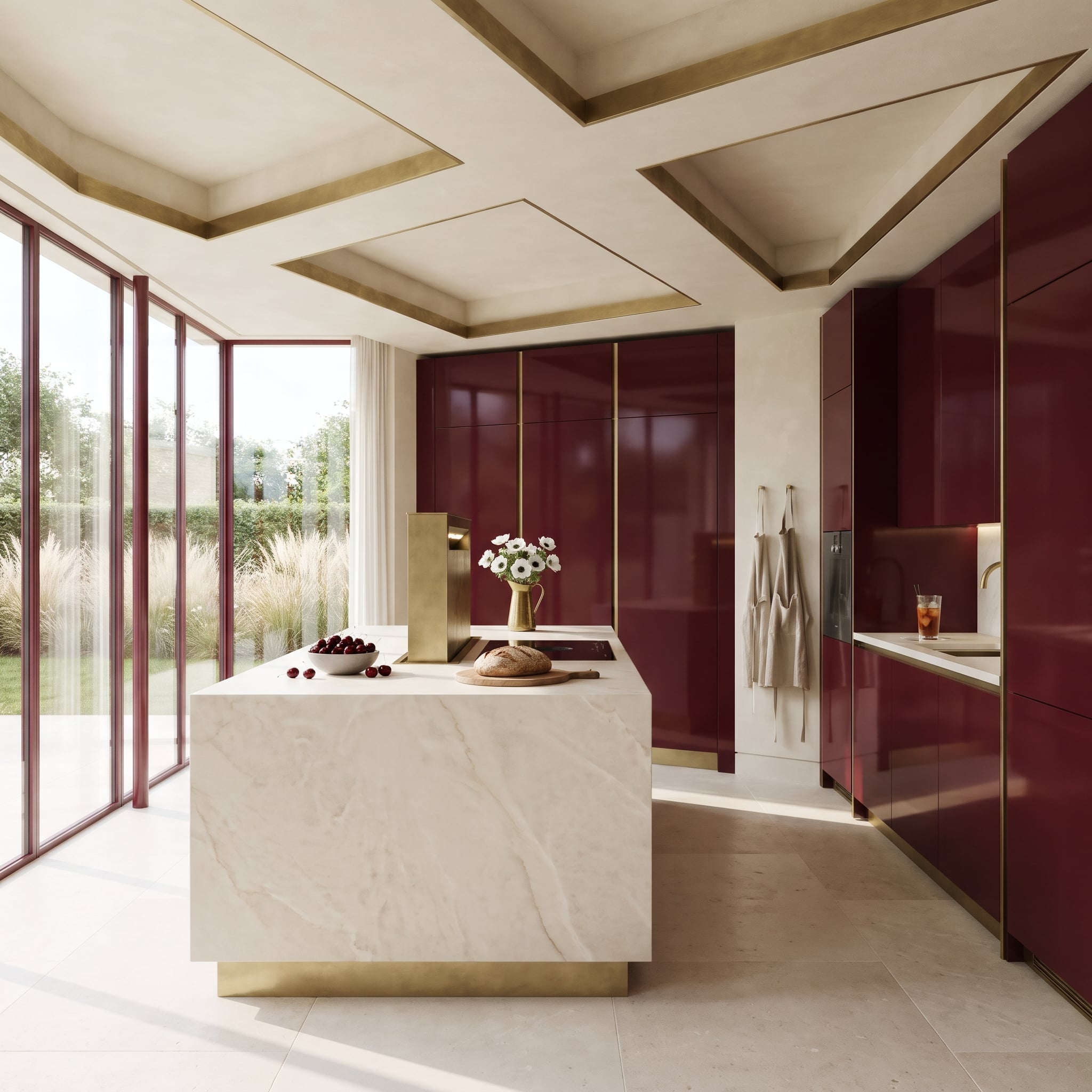
Deep red window mullions carry the cabinet color right across the garden-facing elevation. Brass seams between the tall doors reappear around the angled ceiling trays.
A pop-up downdraft in the island leaves the ceiling unobstructed. Below, the set-back brass-finished base makes a substantial marble block appear lighter.
24. Honed Travertine Takes the Shine off Cobalt Gloss
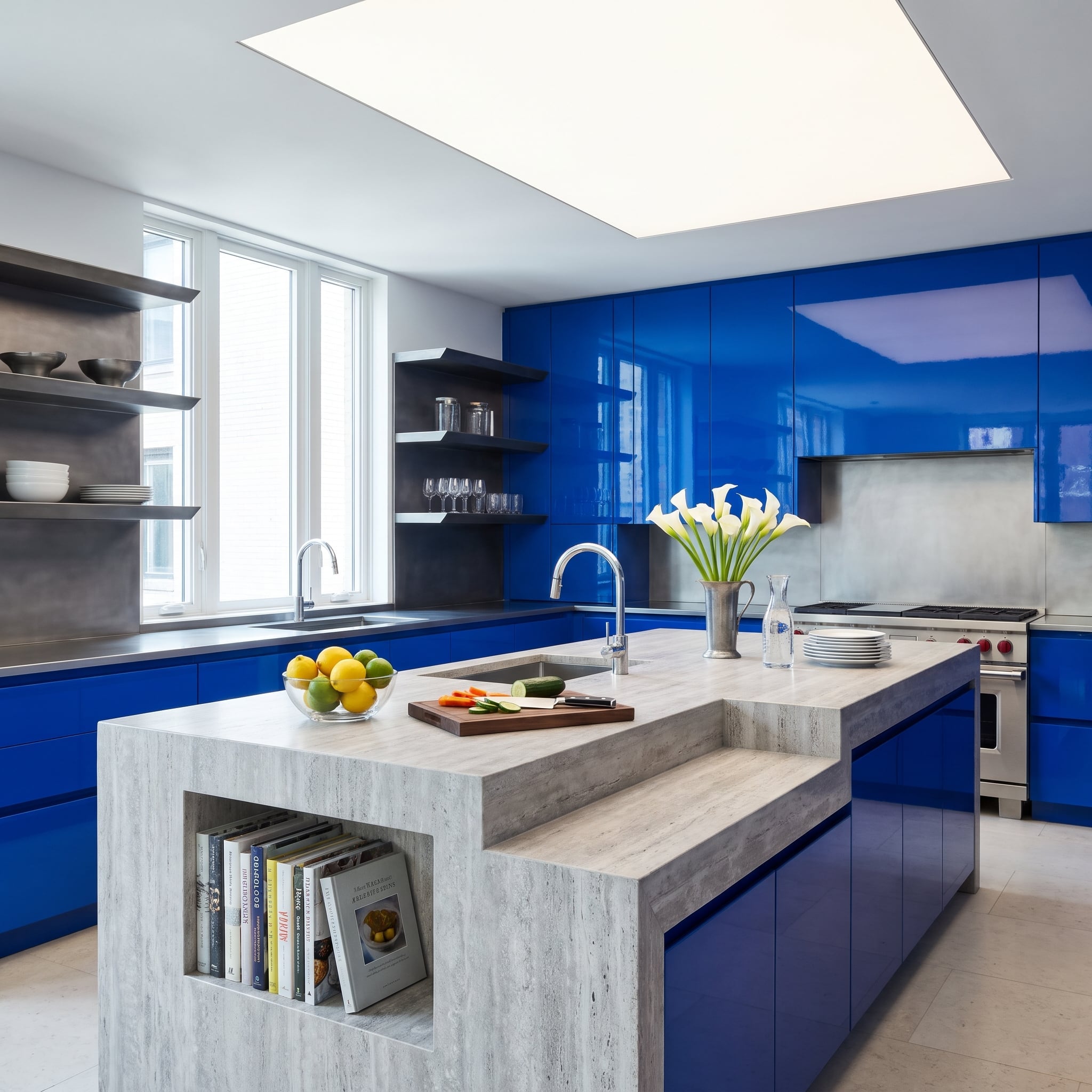
Vein-cut travertine wraps the island ends and hollows into a cookbook niche. Its honed surface is a tactile relief from the reflective cobalt cabinet fronts.
Brushed stainless steel near the sink and range adds a distinctly utilitarian note. Three finishes, three degrees of reflectivity, and not a competing pattern in sight.
23. Topaz Lacquer Facing an Olive Courtyard
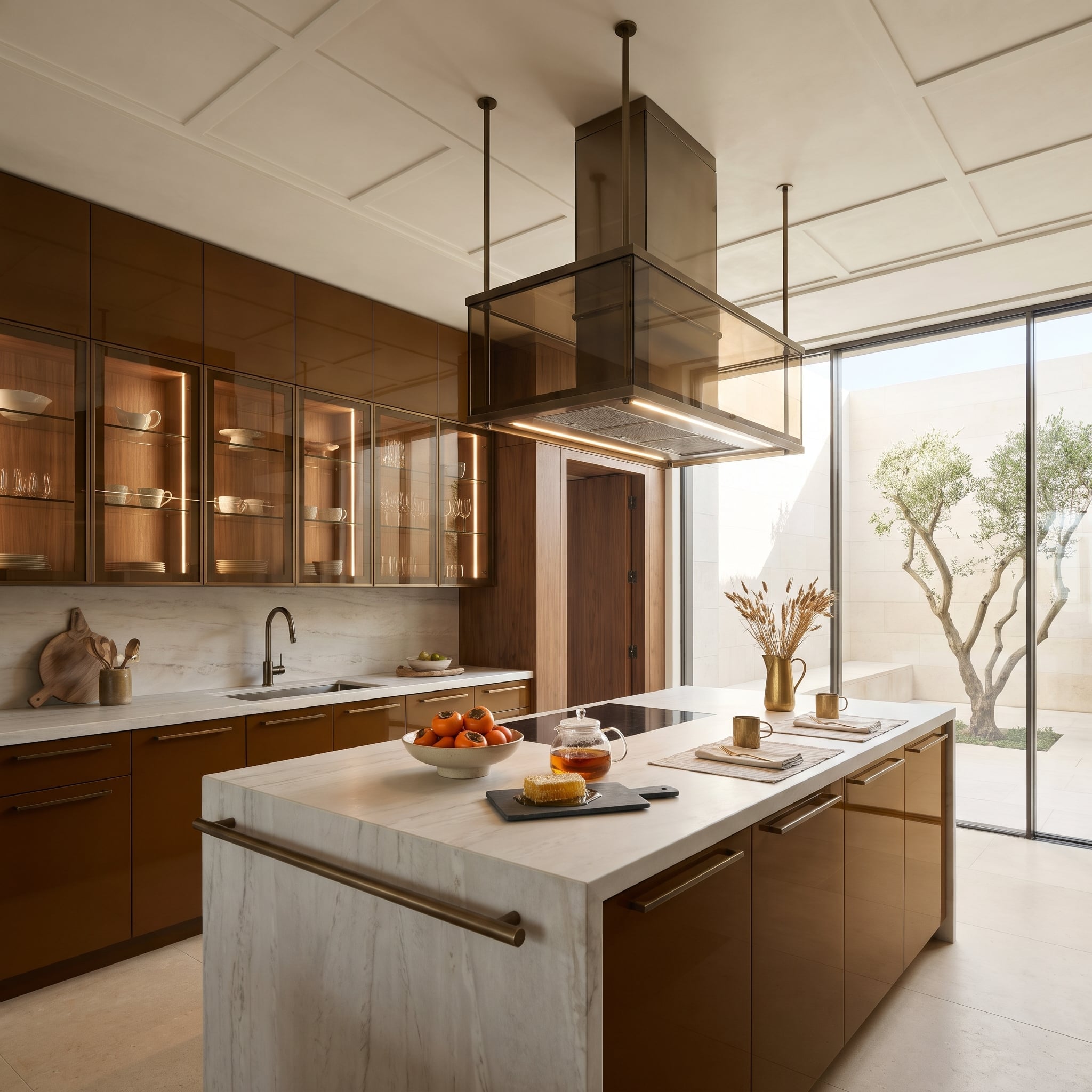
Cognac-colored cabinets catch the courtyard daylight and scatter amber reflections through the room. A suspended smoked-glass hood leaves much of the olive tree visible through the glazed wall.
Vertical LEDs illuminate walnut-lined upper cabinets behind bronze-framed glass. The palette is exceptionally warm without losing its daylight clarity.
22. A Green Stone Waterfall Against Fluted Aubergine
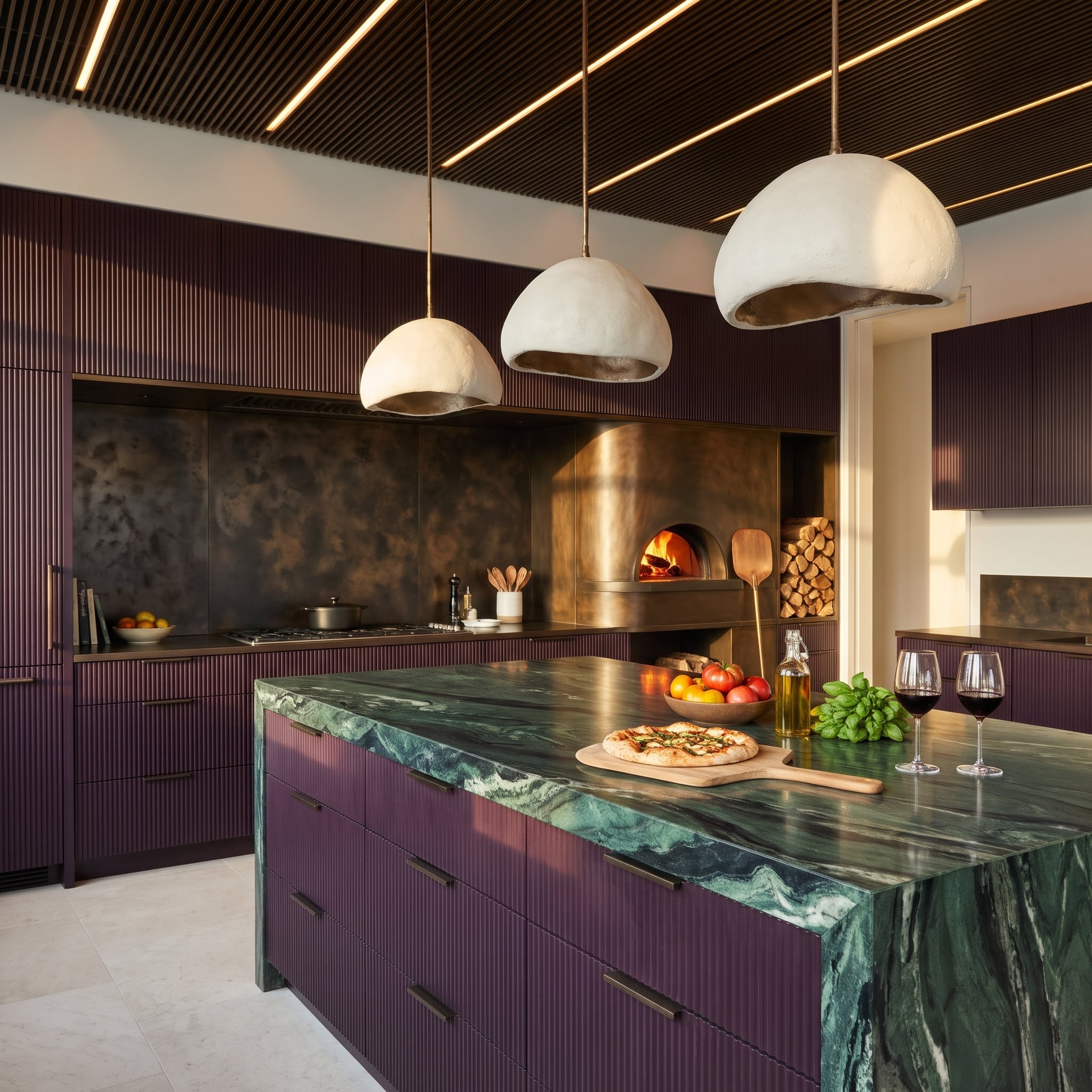
White veins race across the green island and down its waterfall ends, sweeping across the fine vertical rhythm of the aubergine cabinets.
A bronze-clad dome oven sits in a dedicated niche beside stacked logs. Chalky plaster pendants with metallic interiors are the rare irregular shapes in a room dominated by ribs and polished stone.
21. Three Cabinet Colors, Three Glass Pendant Clusters
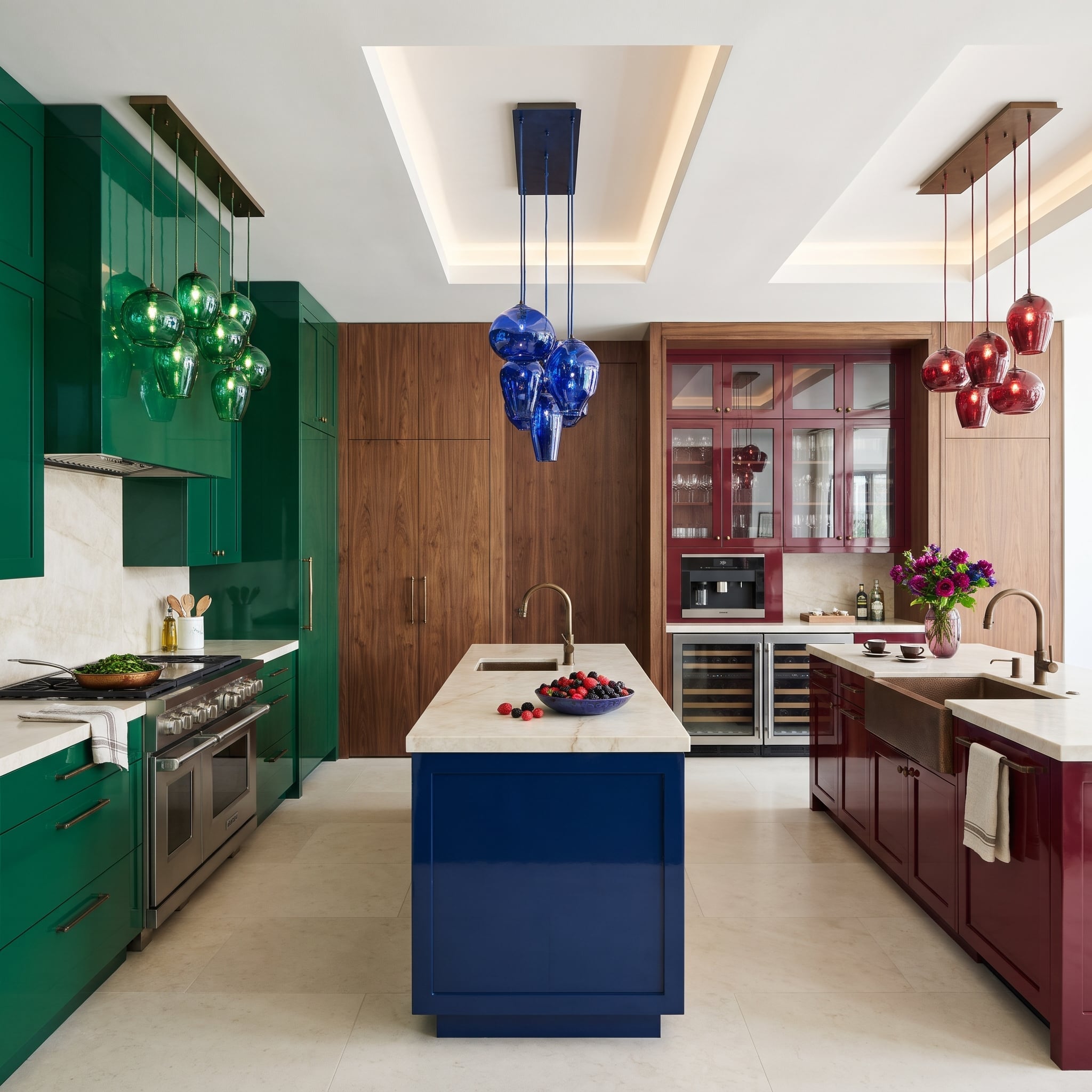
Green glass hangs above the emerald range wall, cobalt above the navy island and garnet above the prep island with its hammered copper sink. The lighting distinguishes three separate work zones by color alone.
Full-height walnut panels run behind the saturated colors, an unbroken architectural thread through an exceptionally busy palette.
20. Celadon Ceramics in a Bronze Room Divider
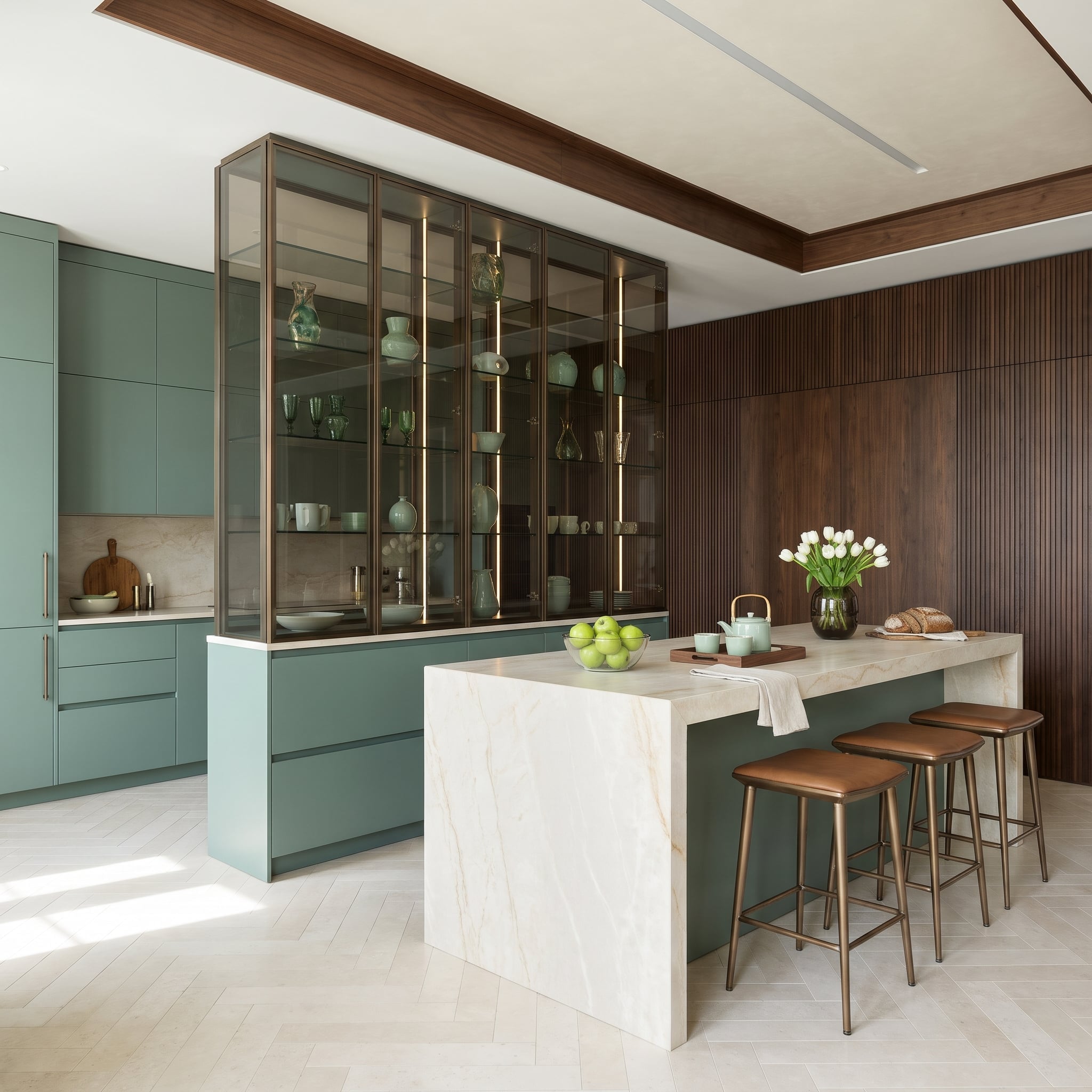
A bronze-framed vitrine rises from green cabinetry, dividing the kitchen without an opaque wall. Celadon ceramics range through delicate shades of green, with daylight visible through the display toward the fluted walnut beyond.
19. An Onyx Ceiling Gives Oxblood Lacquer Its Golden Hour
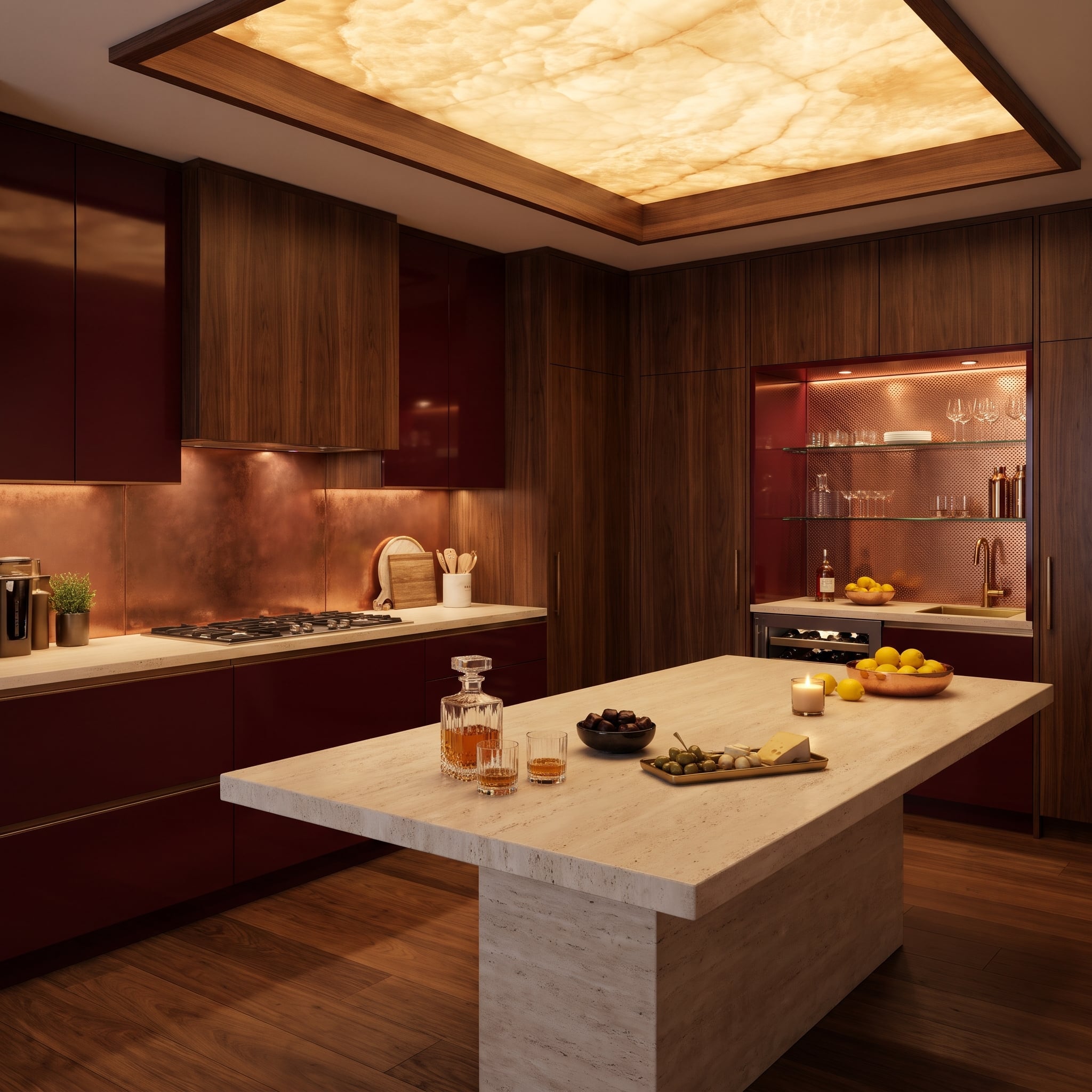
An illuminated onyx panel takes the place of a conventional chandelier, spreading amber light across glossy oxblood doors. Aged copper at the backsplash and bar keeps the light in the same warm register.
Pale travertine gives the eye a rest at the island. The ceiling is the decorative light source; separate task lighting remains important for food preparation.
18. Teal Lacquer and Bronze Above a Lower Travertine Dining Table
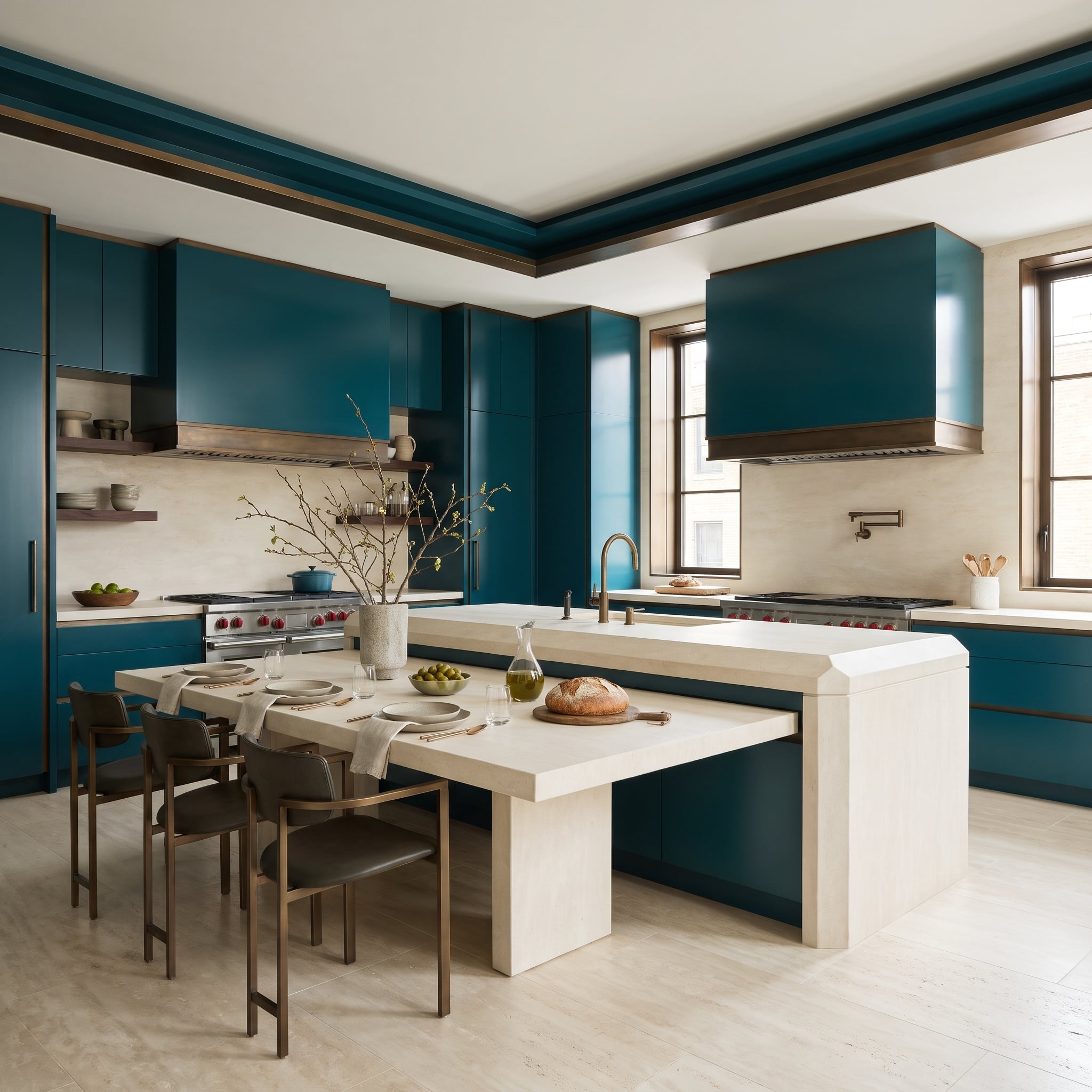
A lower travertine table extends from the chamfered island, trading counter stools for a proper dining-height surface. Bronze bands across the hood and ceiling warm the teal lacquer.
The change of height is a practical distinction as well as a sculptural one, separating the place to prepare dinner from the place to linger over it.
17. Behind a Wall of Matte Mulberry, a Cheese and Wine Larder
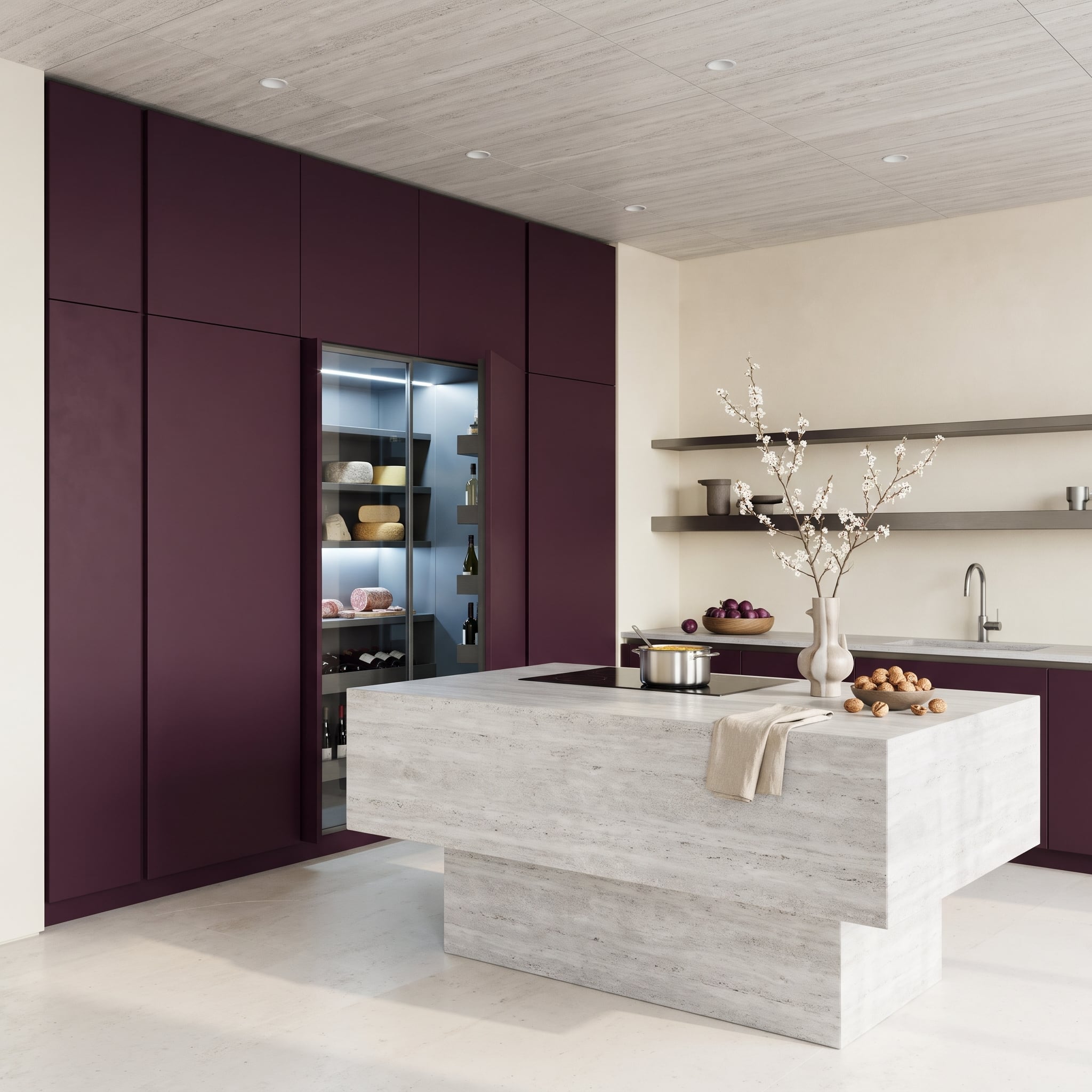
Handleless mulberry doors form a continuous wall until pocket panels reveal glass-fronted storage for cheese and wine. Actual cheese aging and wine storage may require independently controlled conditions.
The island’s pale stone and generous toe recess relieve the imposing wall of dark cabinetry. The matte finish is a shrewd choice on a surface this large: far fewer distracting reflections.
16. Brass Ceiling Lines Draw the Eye Toward a Courtyard Maple
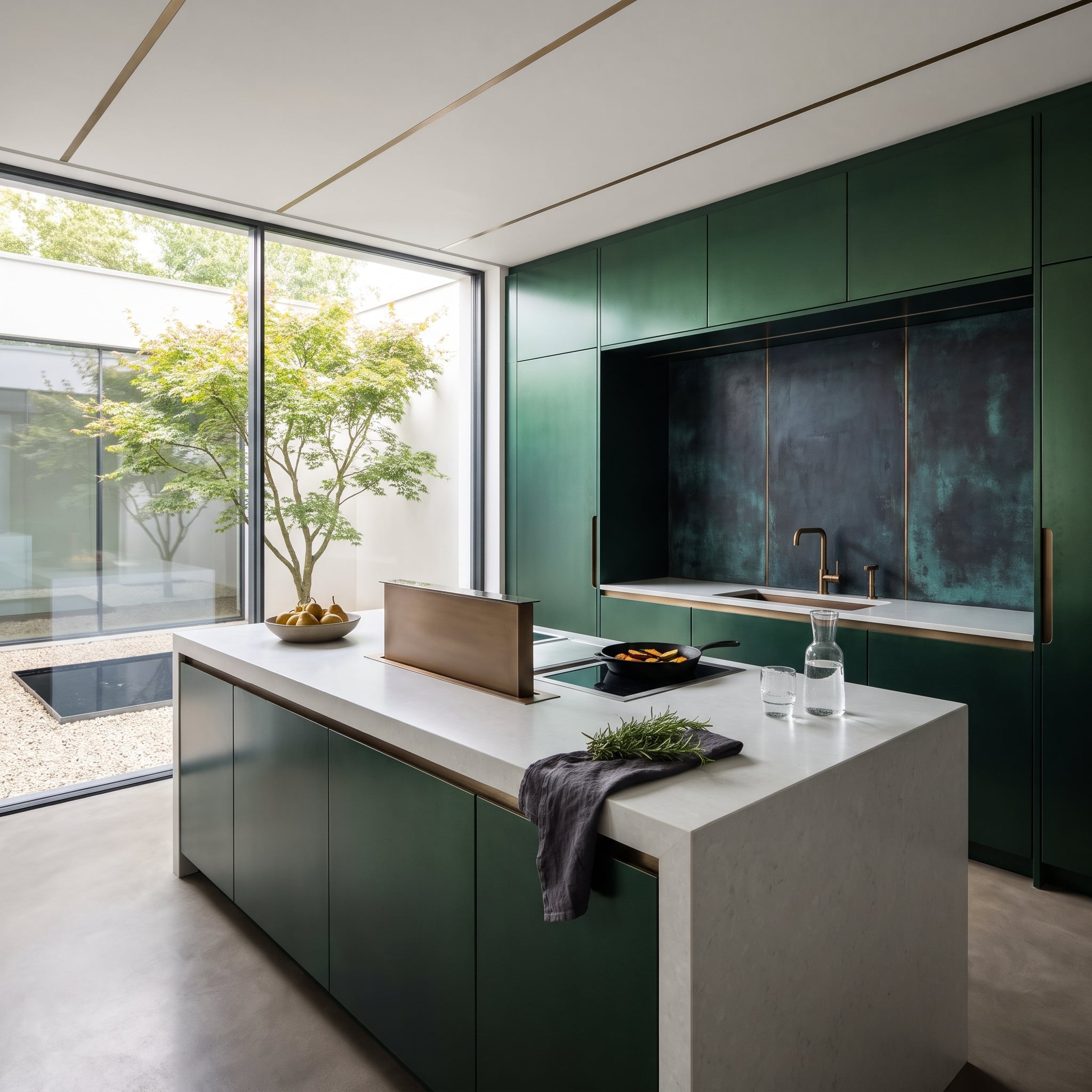
Thin brass strips lead the eye straight toward the Japanese maple beyond the glazing. Its changing foliage offers a seasonal counterpoint to the permanent green of the emerald millwork.
Blue-black oxidized metal lines the sink alcove, with bronze seams that echo the faucet. A pale stone waterfall island is the sharpest break from the dark cabinetry.
15. A Bronze-Framed Display Cuts Into a Garnet Kitchen’s Marble Island
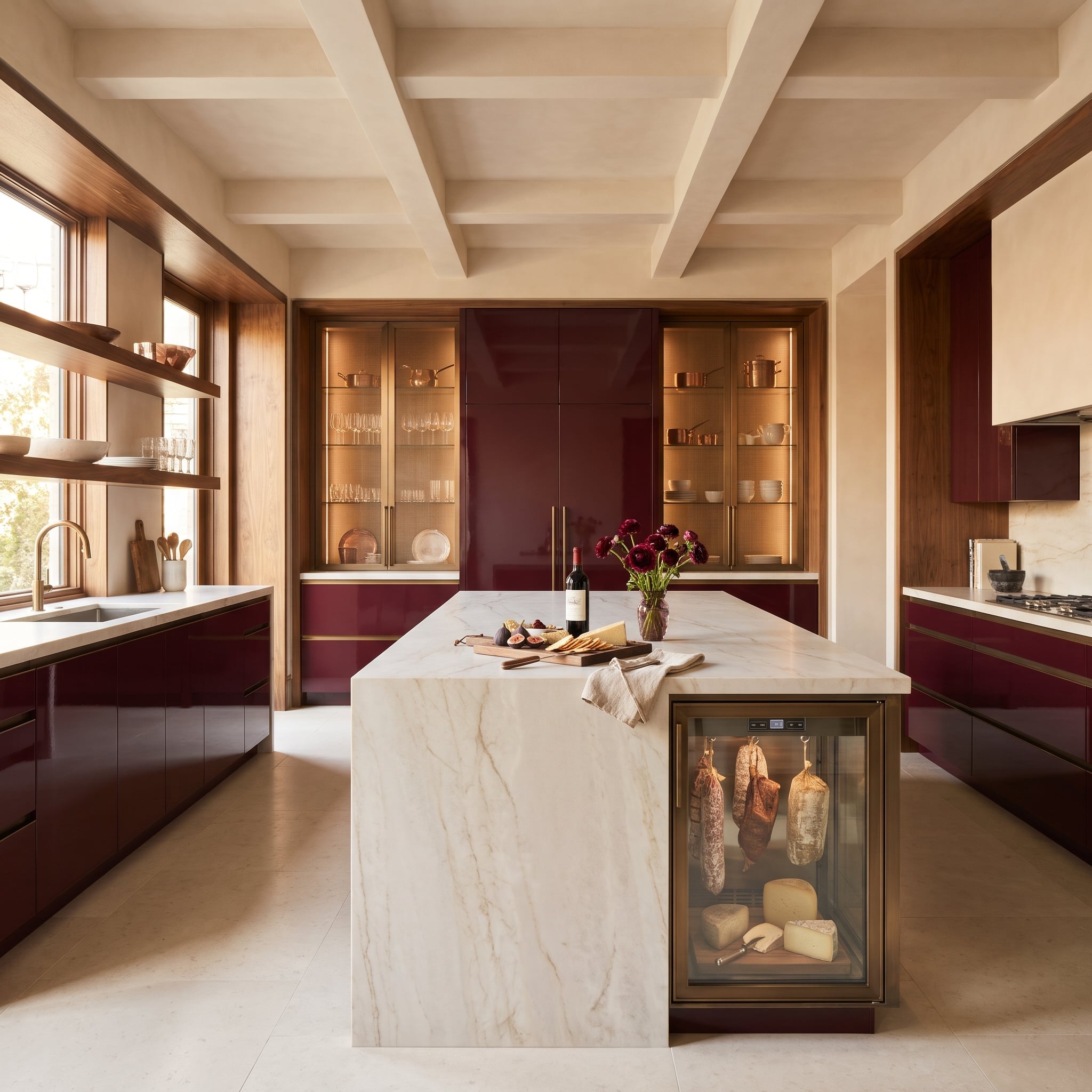
Behind bronze-framed glass, hanging salami occupies a surprising recess in the marble waterfall island. The display breaks up the massive stone volume without disturbing the garnet backdrop.
A transparent recess is an intriguing alternative to another bank of drawers. If used for curing, the compartment would need dedicated temperature, humidity and airflow controls.
14. Amber Light Beneath Fluted Walnut in a Sapphire Kitchen
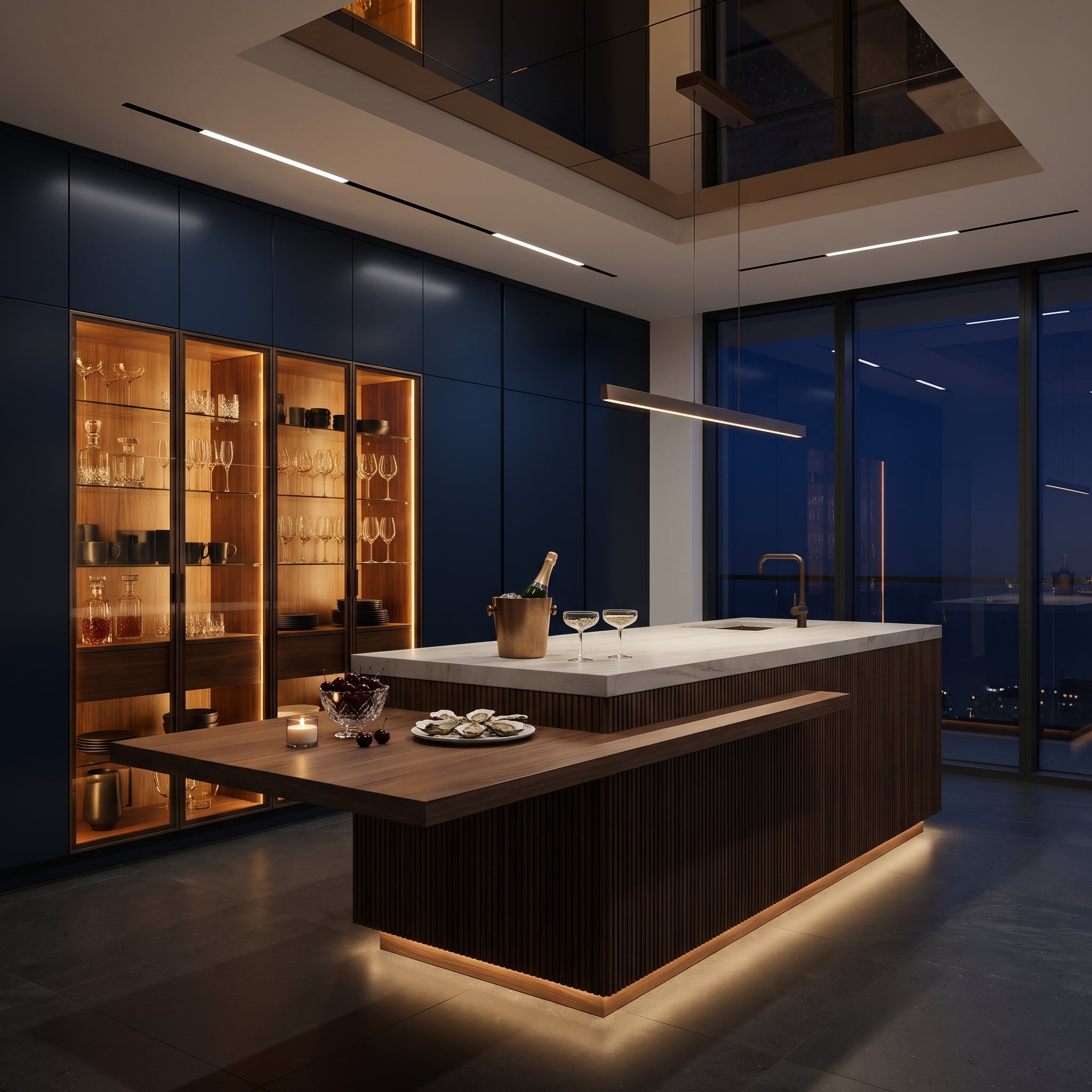
Concealed light grazes the charcoal floor beneath the fluted walnut island. Matte sapphire cabinetry recedes behind bronze-framed glass doors, while a mirrored ceiling tray prolongs the play of reflections.
The darkest point in the room is also its most theatrical: the narrow shadow line beneath the island, edged in amber.
13. Green Marble Drops to Pastry Height Under a Ruby Ceiling
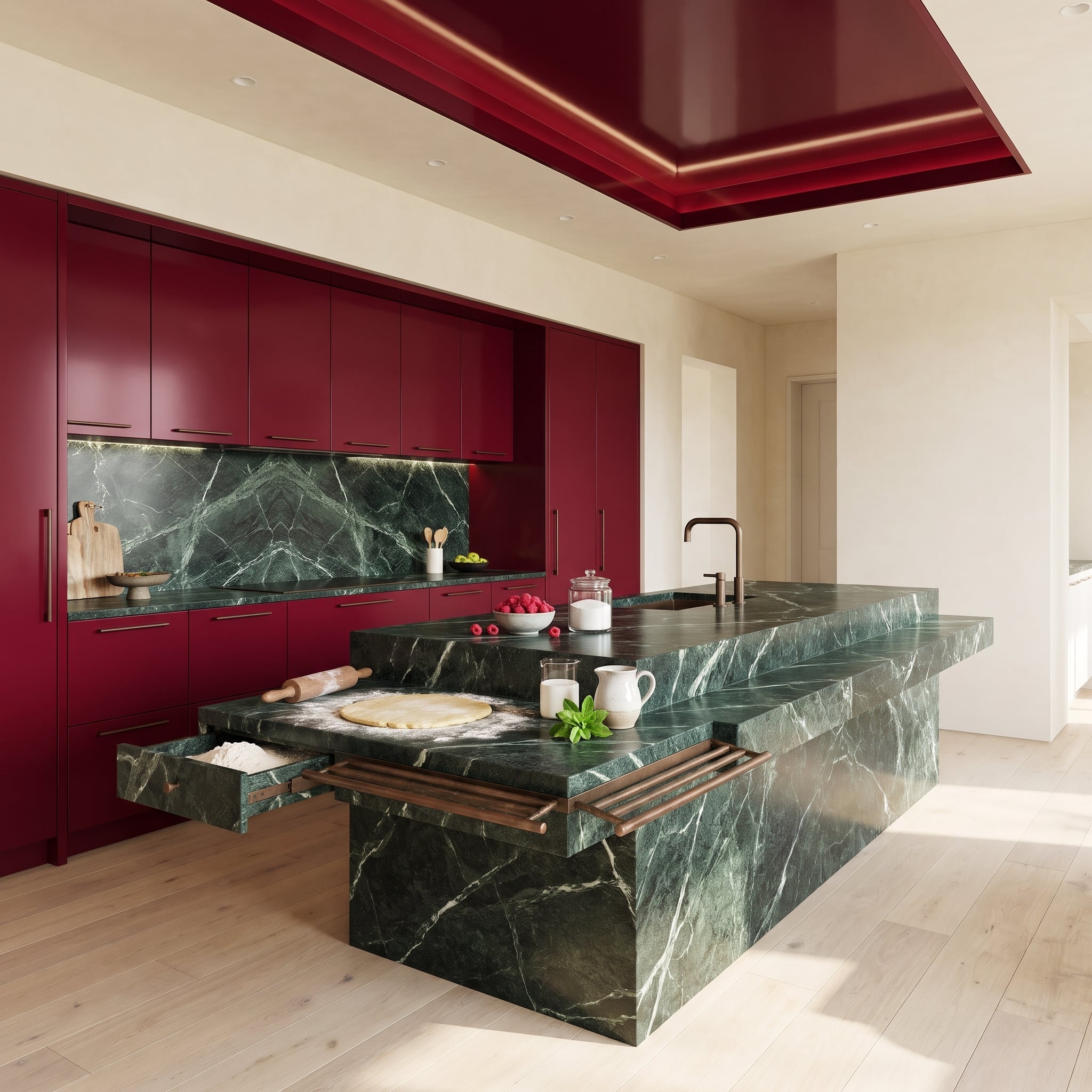
A stepped green marble island incorporates a lower pastry surface and a stone-faced storage drawer. Bronze towel rails trace the edge beneath the slab.
Matte garnet doors and a glossy red ceiling frame the green stone. A lower counter is useful for rolling dough when its height suits the cook; here, that ergonomic move also changes the island’s silhouette.
12. Sapphire Cabinetry Meets a Backsplash That Refuses to Stay Blue
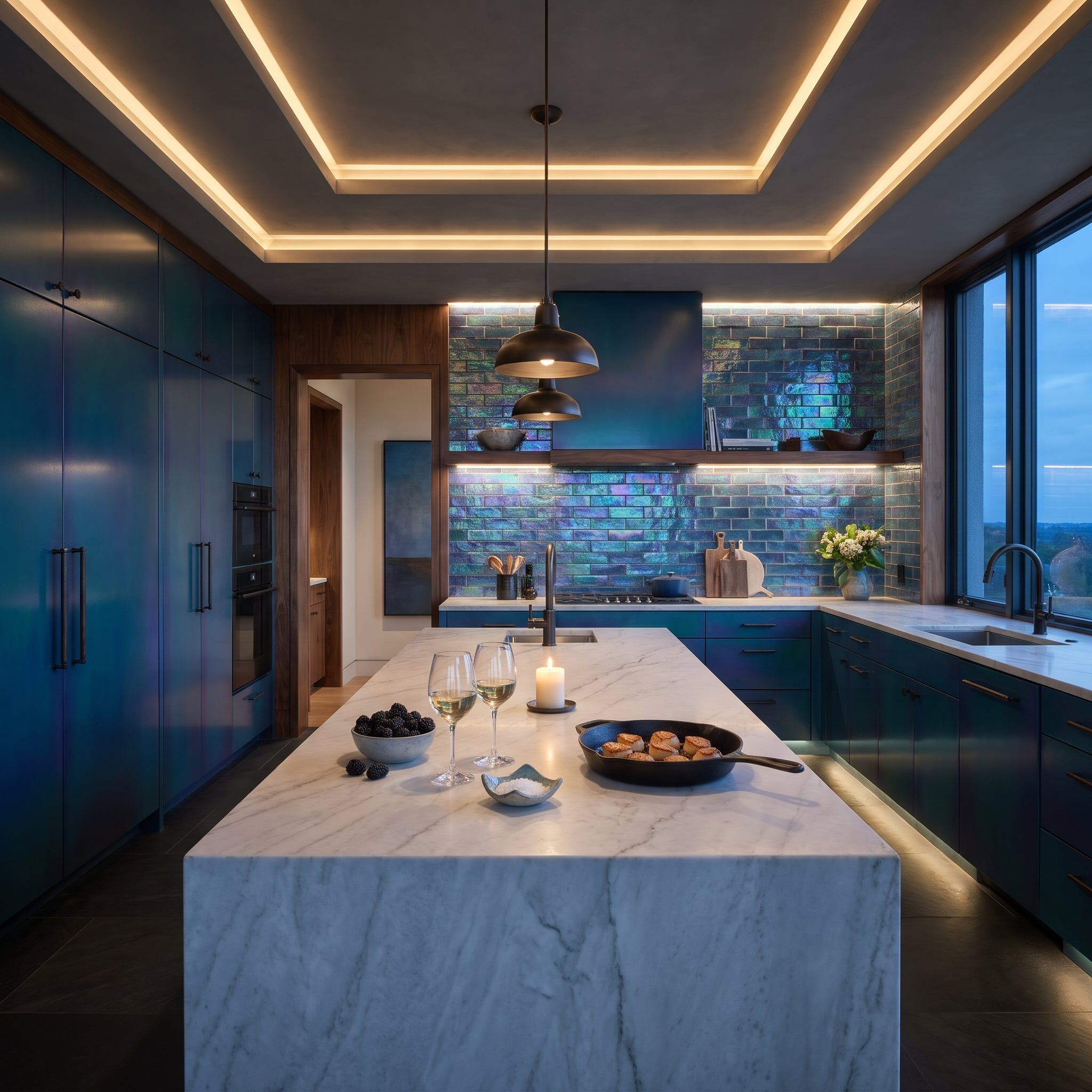
Teal and violet flicker across the iridescent glass backsplash under the shelf lights. Walnut around the doorway and shelf is an interruption in the blue, its grain a welcome change from the shimmering surfaces.
The white marble waterfall island looks almost icy by comparison. The drama belongs to the glass, not to another loudly patterned stone.
11. The Walnut Doors Fold Back and Emerald Takes Over
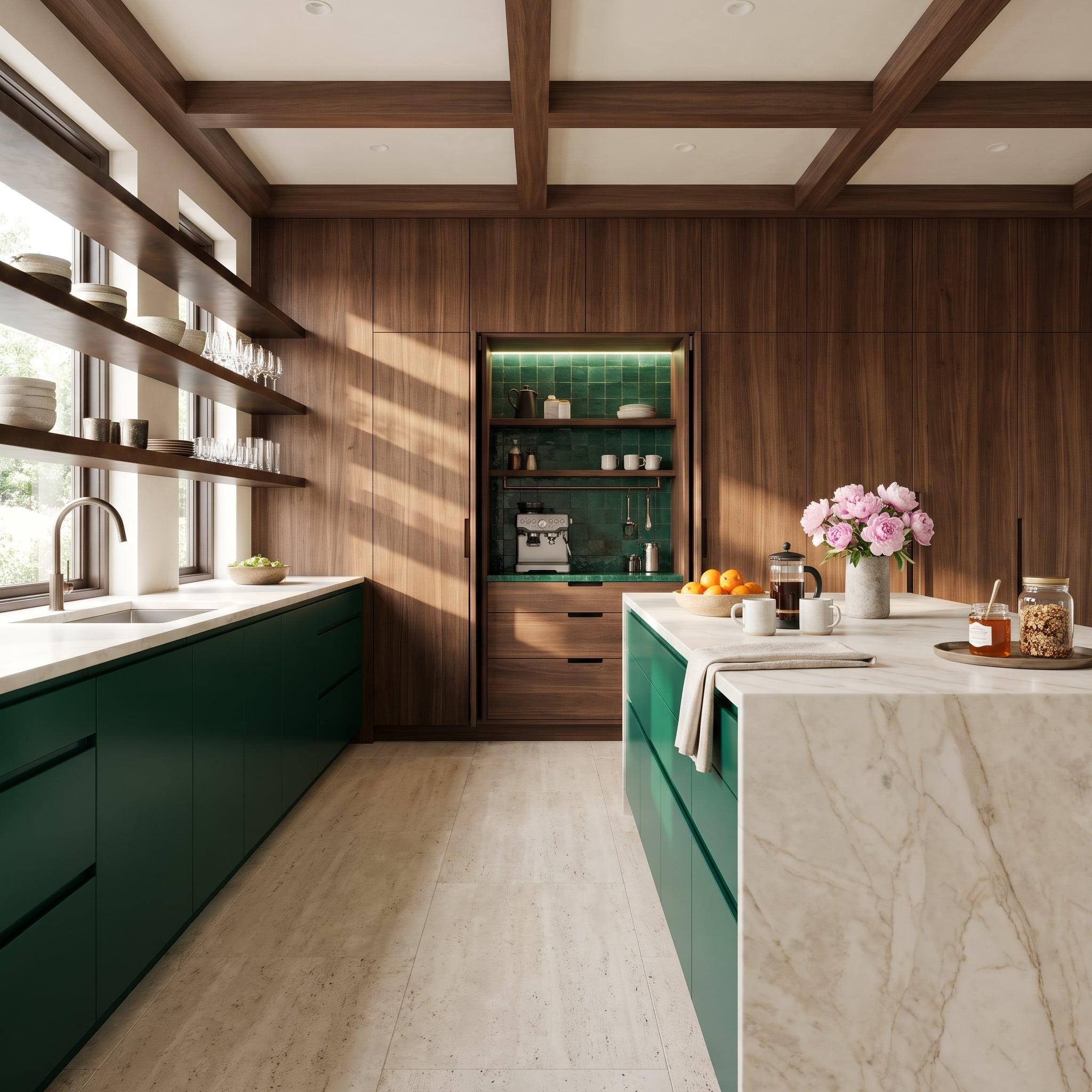
Folding cabinet doors reveal a coffee nook lined with glossy green zellige. Each uneven tile catches the light differently, an animated surface amid the matte emerald cabinets and uninterrupted walnut wall.
Closed, the doors conceal the brightest green in the room. Open, they turn a modest recess into a concentrated burst of color.
10. A Wine Cellar in View Beneath Garnet Cabinetry
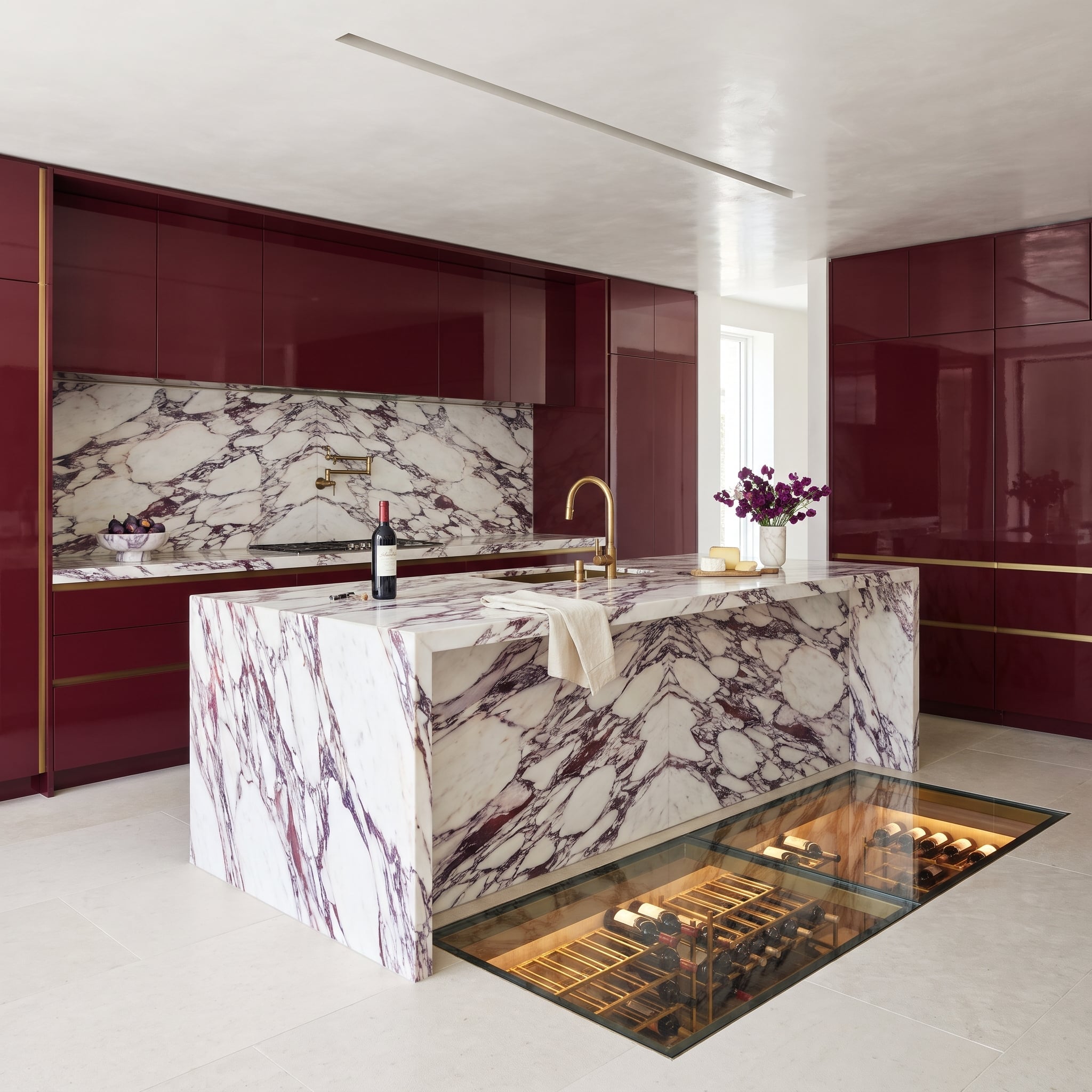
Garnet cabinets and violet-veined marble share a wine-red undertone. An illuminated glass floor hatch puts the bottles themselves into the palette.
Bookmatched slabs meet in a chevron along the island, with similar symmetry behind the brass pot filler. A floor-level display this daring depends on engineered, load-rated glazing.
9. Plum Cabinetry Beneath a Floating Glass Display
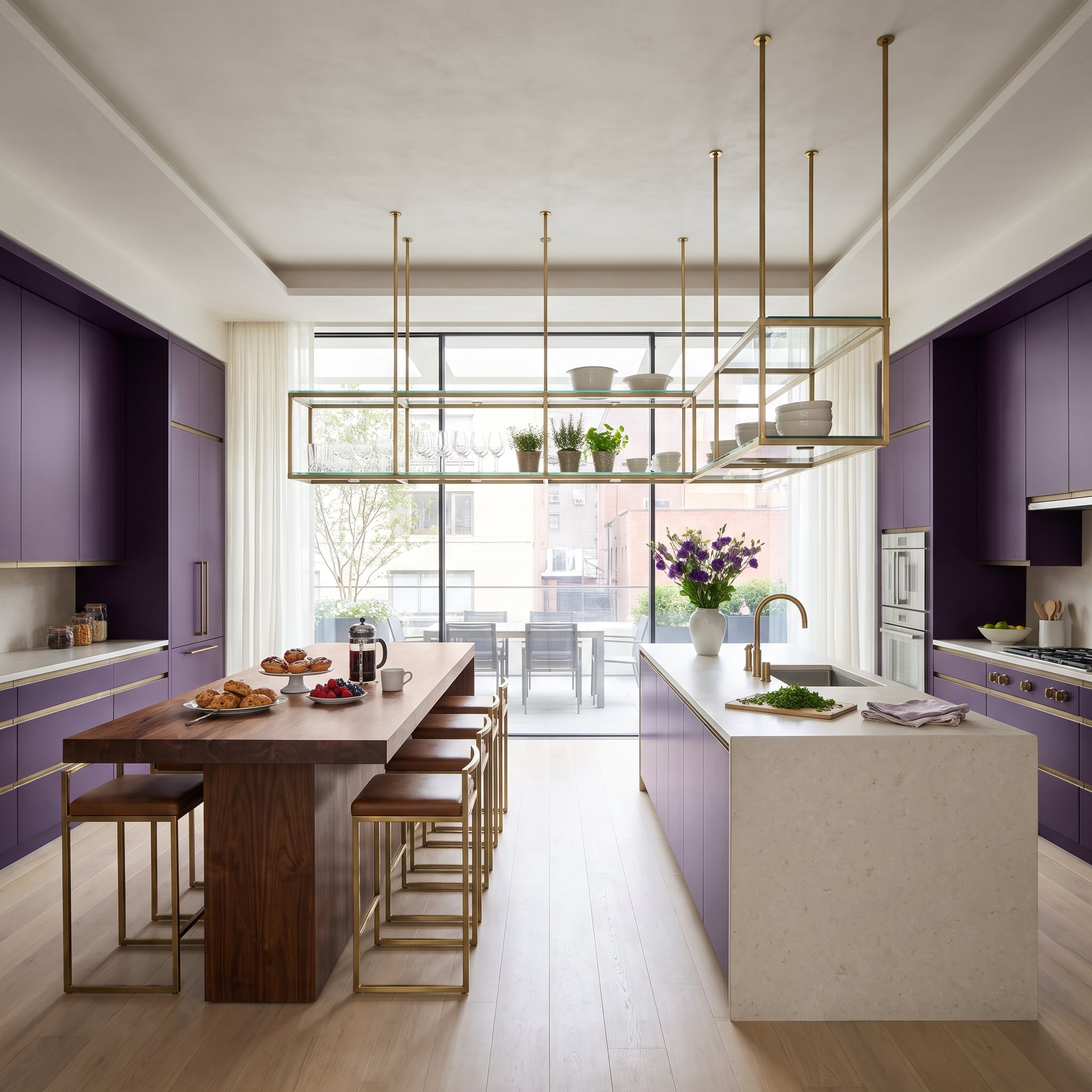
Brass rods suspend an L-shaped glass display in front of the window wall, allowing daylight through the stemware, herbs and bowls. Narrow brass strips mark the matte plum drawer fronts.
Two islands divide the room’s duties: walnut for casual seating, pale stone for preparation. The airy suspended shelving needs secure, load-rated supports, however weightless it looks.
8. A Brass-Lined Herb Garden Inside a Marble Island
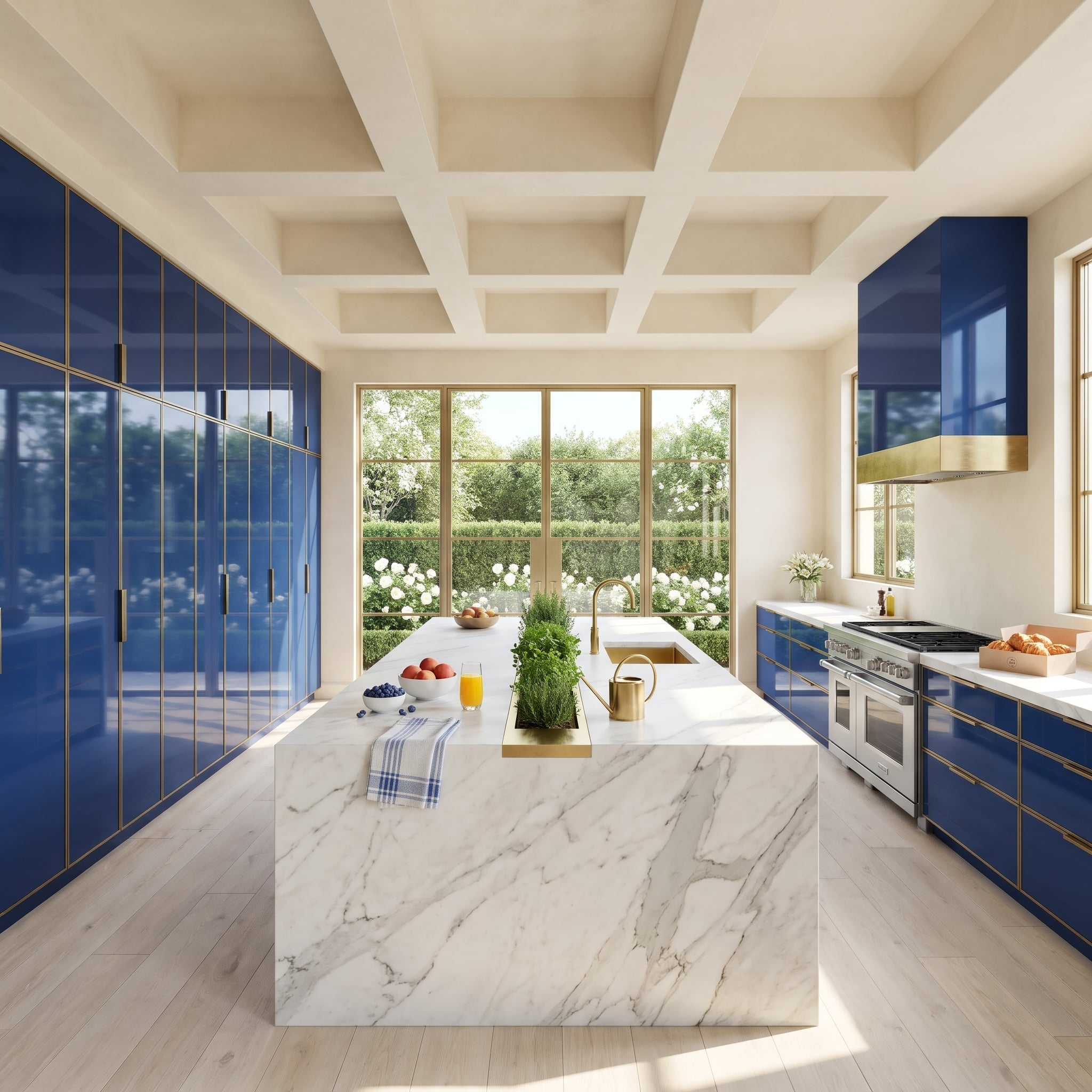
A brass-lined herb trough runs along the marble island near the sink. The foliage brings the garden’s green inside the brass-framed doors.
Thin gold lines trace the glossy blue cabinetry, and a brushed-brass hood anchors the cooking zone. A waterproof, properly drained planter makes the garden feature practical as well as decorative.
7. Gold Veins, Garnet Gloss and a Recessed Brass Base
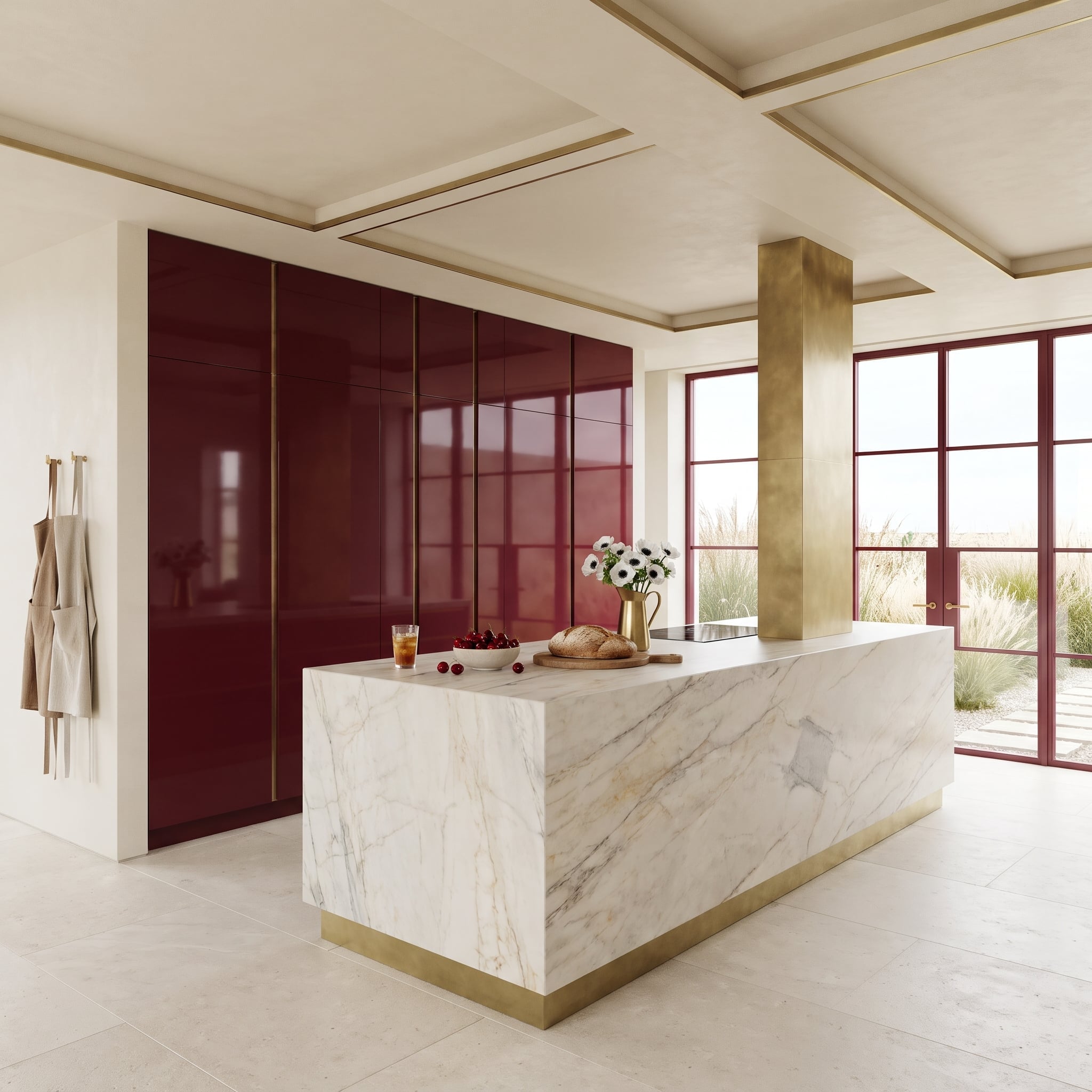
A set-back brass base casts a deep shadow beneath the marble island. Gold veins in the stone echo the brass-clad element above the cooktop and the metallic trim around the ceiling coffers.
The window grid appears again in the glossy garnet cabinetry, a crisp vertical pattern behind the massive horizontal slab.
6. Green Marble Shelves and a Ceiling That Mirrors the Pendants
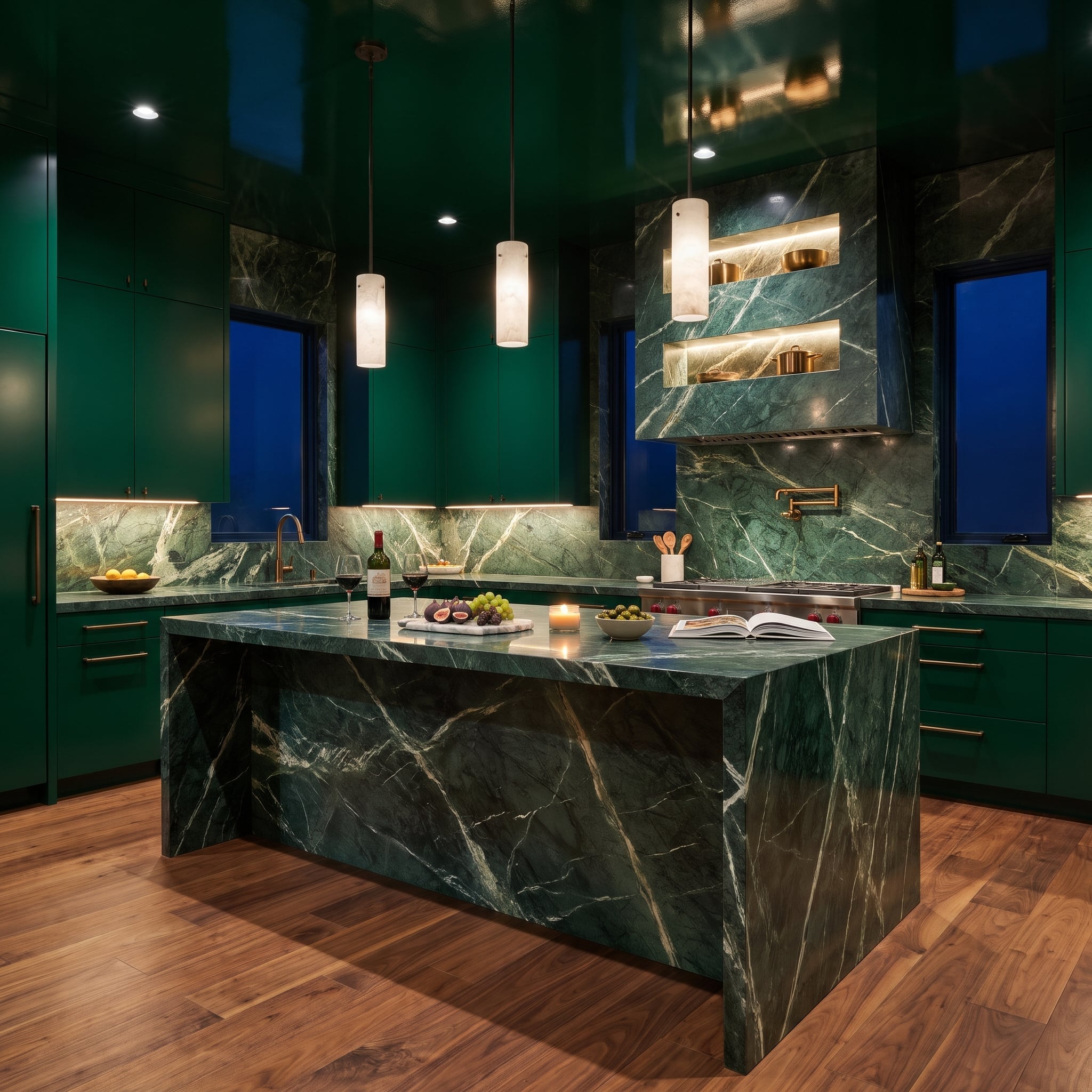
Illuminated shelves within the green marble hood break up the expanse of stone. Overhead, a glossy emerald ceiling reflects the alabaster pendants, unlike the matte cabinet doors below.
Veins running across the waterfall island make a freer pattern beside the disciplined lines of the walnut detailing.
5. A Carved Limestone Hood Set Into Navy Cabinetry
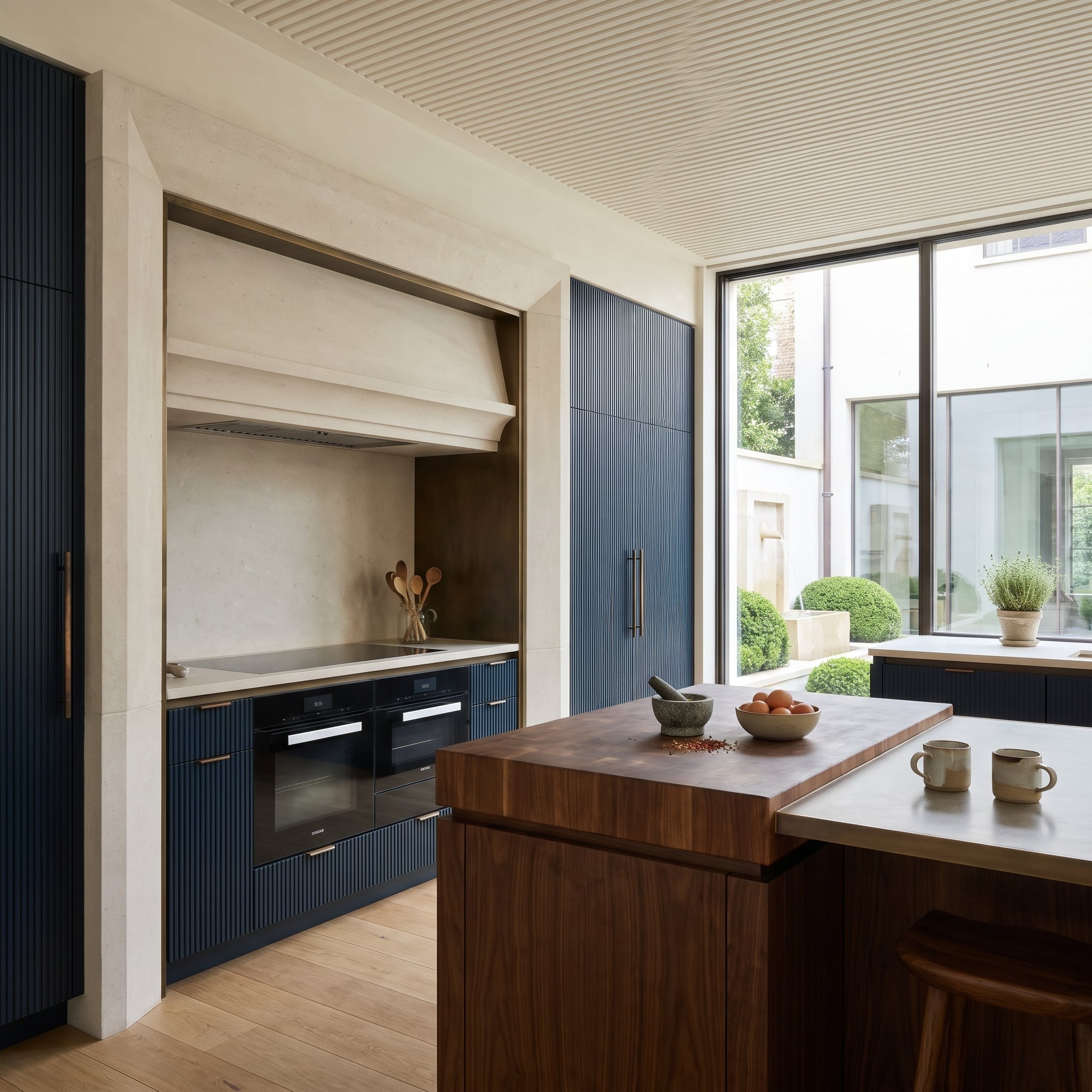
A beveled limestone surround frames the cooking alcove, with a hood in the same stone and bronze lining along the edges. Fine reeding on the navy cabinets makes the broad stone surround look even more substantial.
Two ovens flank the working area, and a stepped end-grain walnut island with a metal dining ledge takes the material palette into the center of the room. Here the continuous limestone backsplash and hood are an architectural feature, not separate fittings.
4. Who Said a Kitchen Island Had to Run Straight?
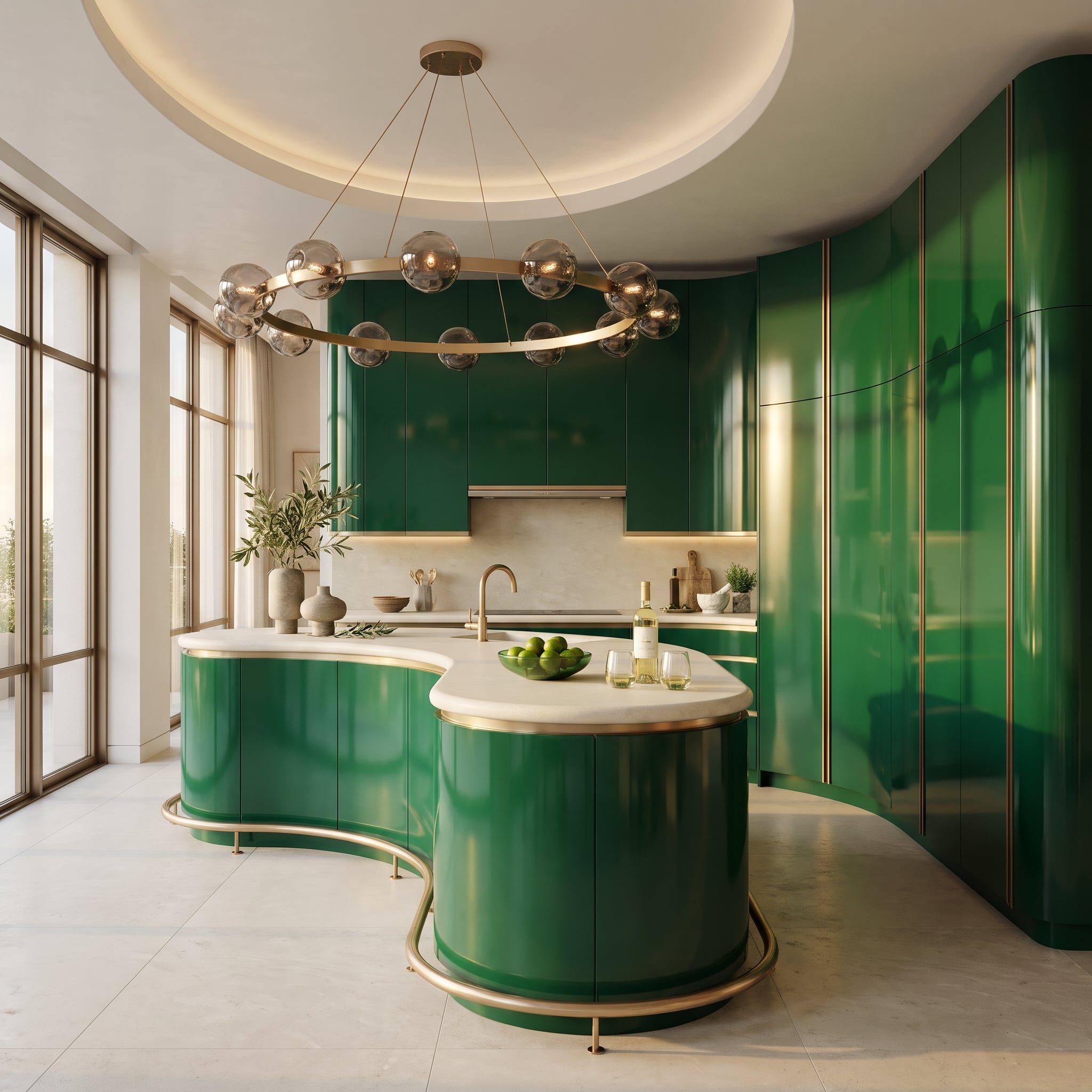
An S-shaped island sends a brass foot rail snaking around its sculptural outline. An oval ceiling tray answers the curve on a larger scale.
Tall emerald cabinets hold a strict vertical line along the wall. Fine brass reveals divide the lacquer into narrow fields, making the island’s curves all the more conspicuous.
3. One Illuminated Walnut Niche in a Wall of Sapphire
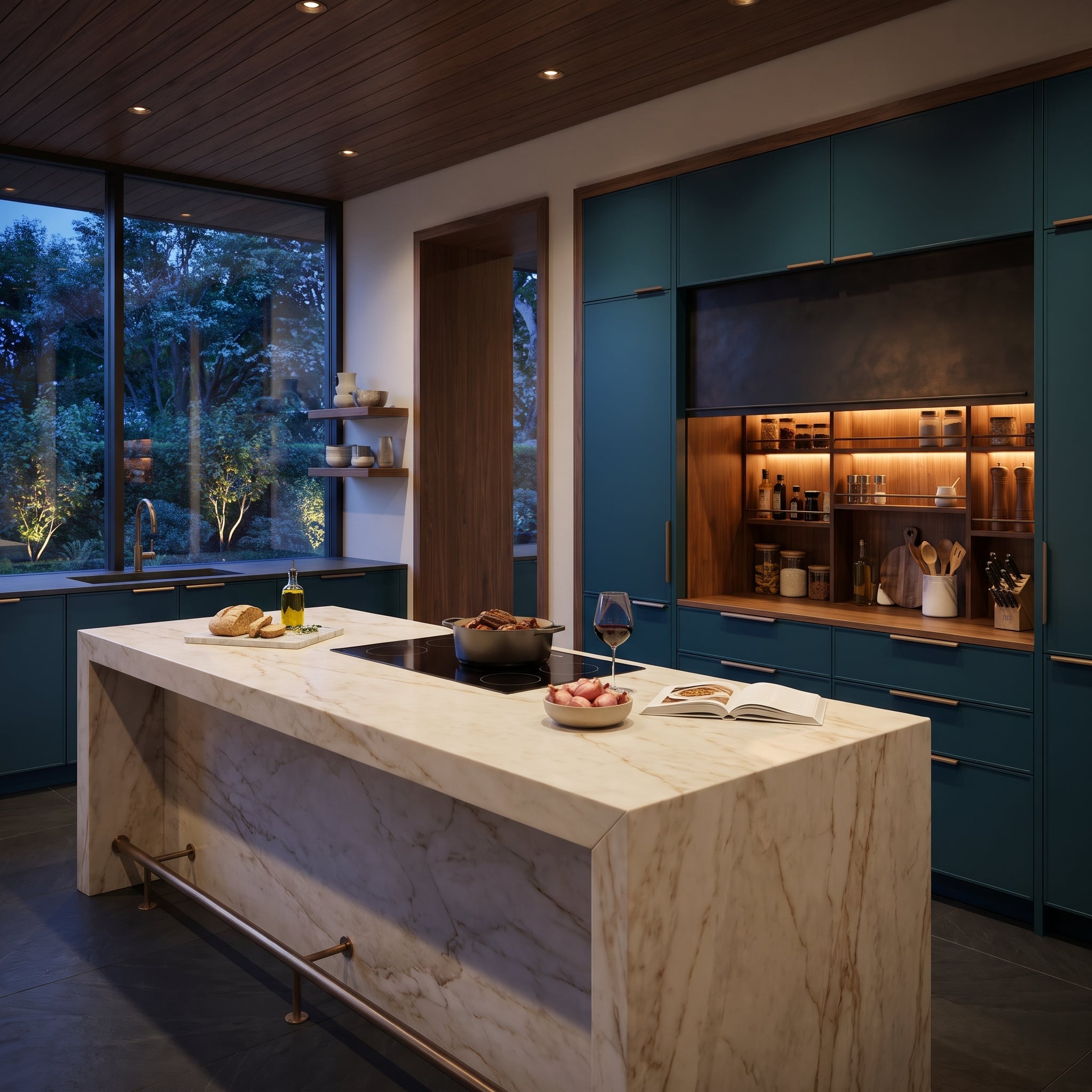
A lift-up panel opens onto an illuminated walnut recess in the matte sapphire cabinets. Gold veins in the island marble return that warm note to the center of the room.
The securely anchored bronze foot rail borrows its character from traditional bar furniture. Slim cabinet pulls repeat the metal on a much smaller scale.
2. Reeded Emerald, Polished Copper and a Walnut Garden Ledge
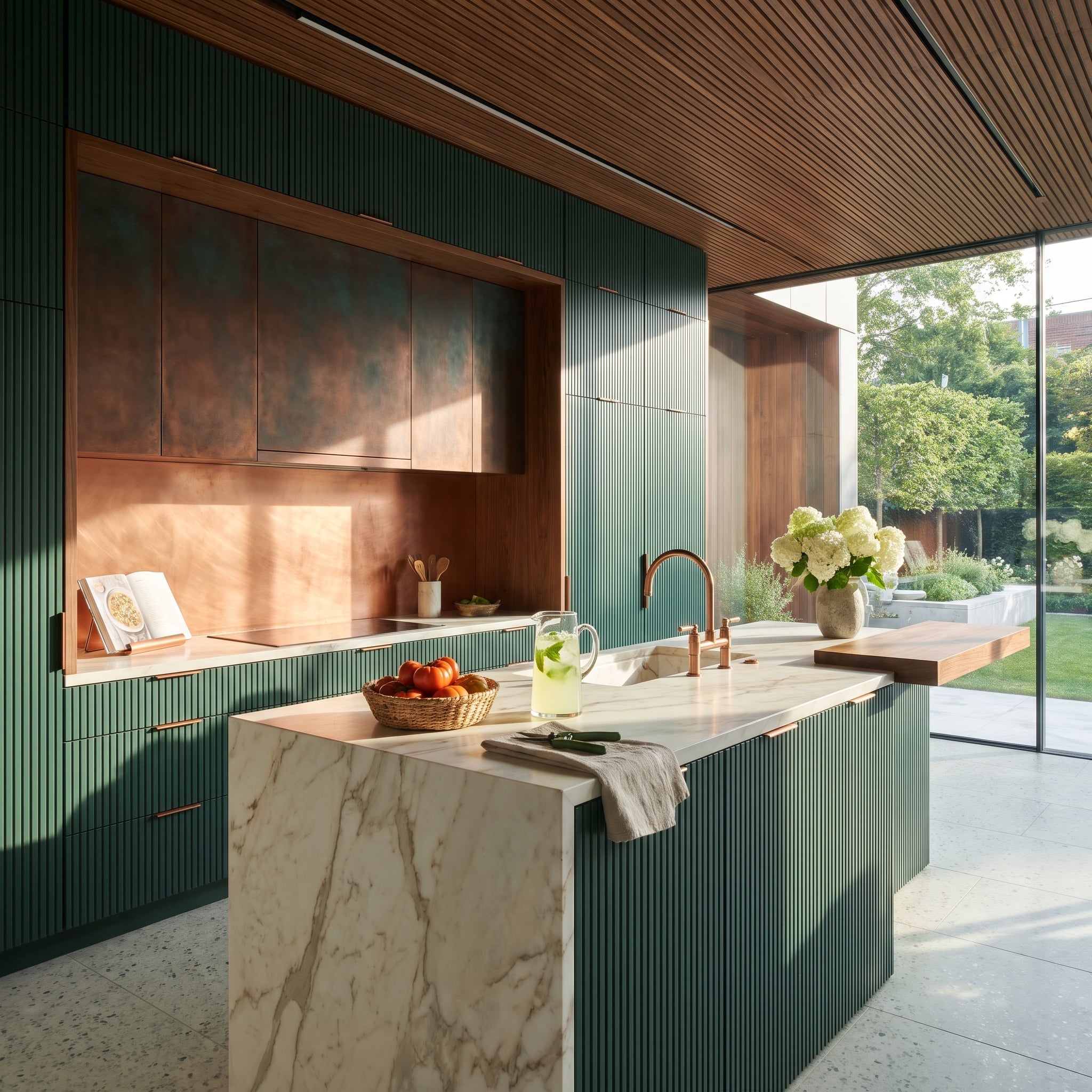
Low sunlight traces the vertical ribs of the emerald doors and warms the polished copper backsplash within its walnut surround.
A thick walnut extension projects from the stone island toward the garden glazing, giving the island the character of furniture. The copper bridge faucet returns the warmth of the backsplash to the work surface.
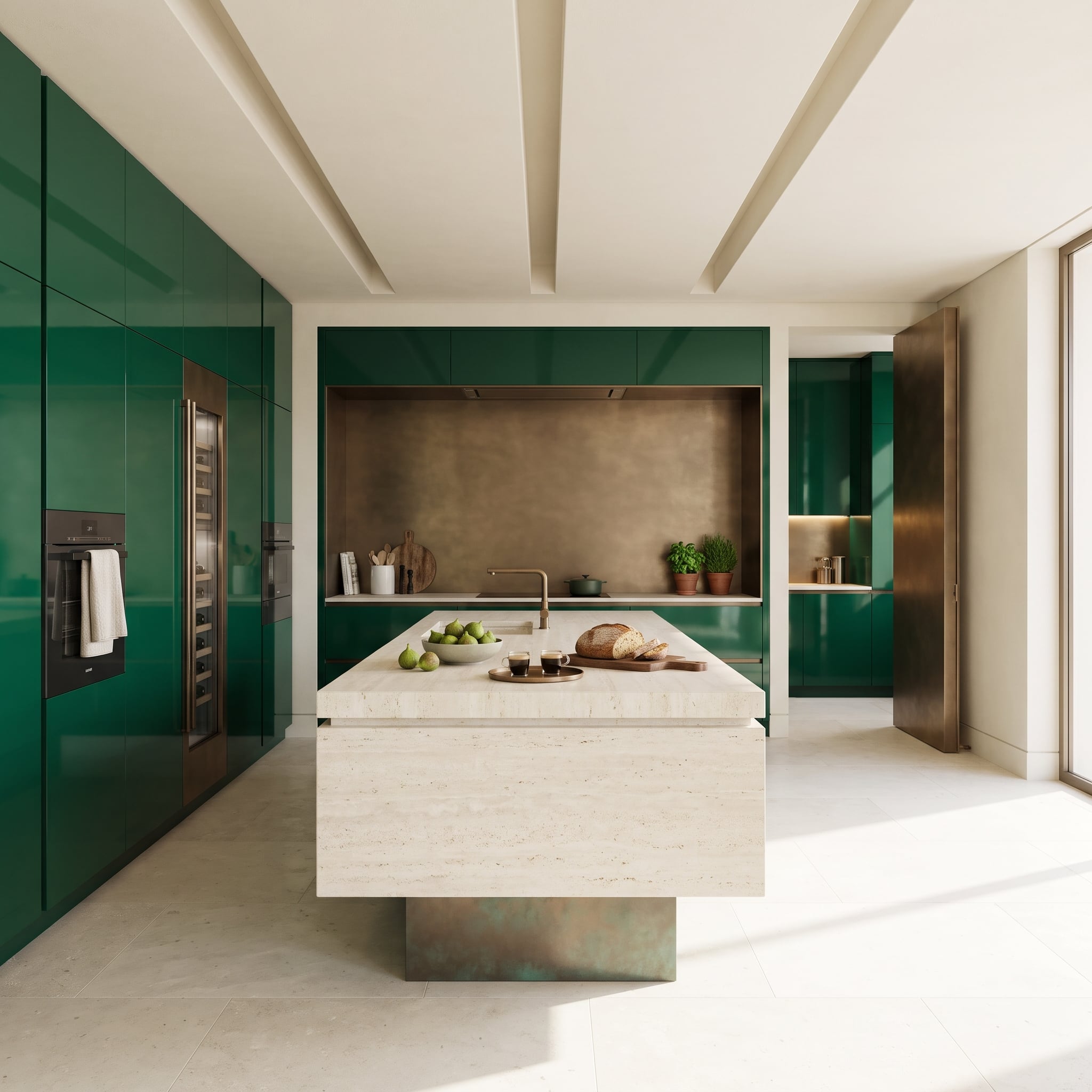
1. How a Verdigris Plinth Makes Monumental Travertine Look Weightless
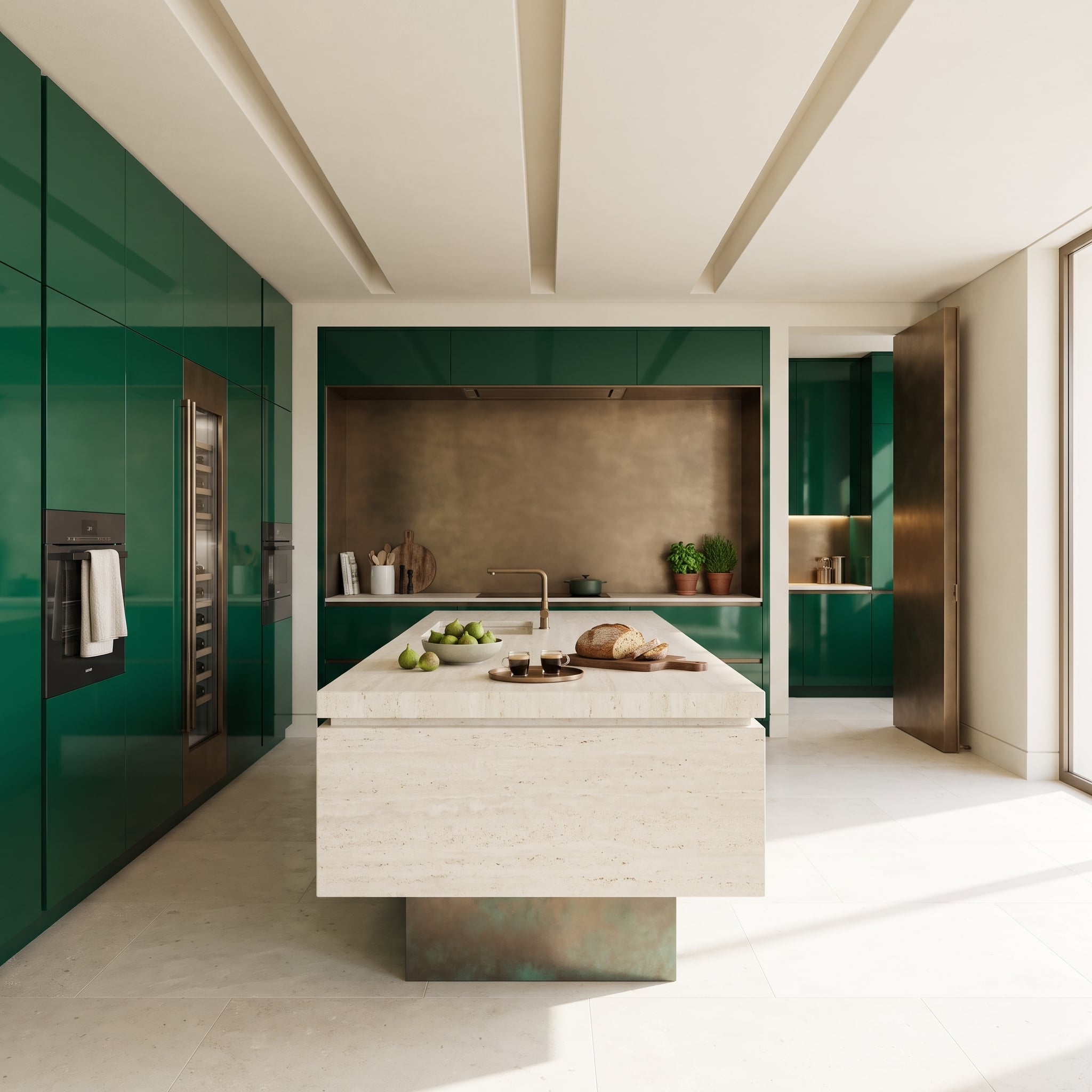
A deep shadow under the enormous travertine island gives the block the illusion of weightlessness. The recessed verdigris-toned support, with its mottled finish, is a different proposition from the immaculate emerald lacquer behind it.
Bronze lines the sink alcove, frames the wine column and clads the tall pivot door to the scullery. Open, that door reveals another illuminated recess. The richness of this kitchen comes as much from what has been carved away as from what has been added.