🔥 Would you like to save this?
The best kitchens don’t announce themselves. You notice them by what stops happening. No more bending double to load the bottom rack, no more shuffling a hot pan across the room hunting for somewhere to set it down, no more digging blind into the black hole behind the cabinet doors. These are the decisions that never make it onto the mood board, and they’re the ones you’ll thank yourself for a hundred times a week. Here are 49 kitchen decisions that make cooking, prepping, storing, and cleaning up feel like less of a fight.
49. Deep Drawers Instead of Lower Cabinets With Doors
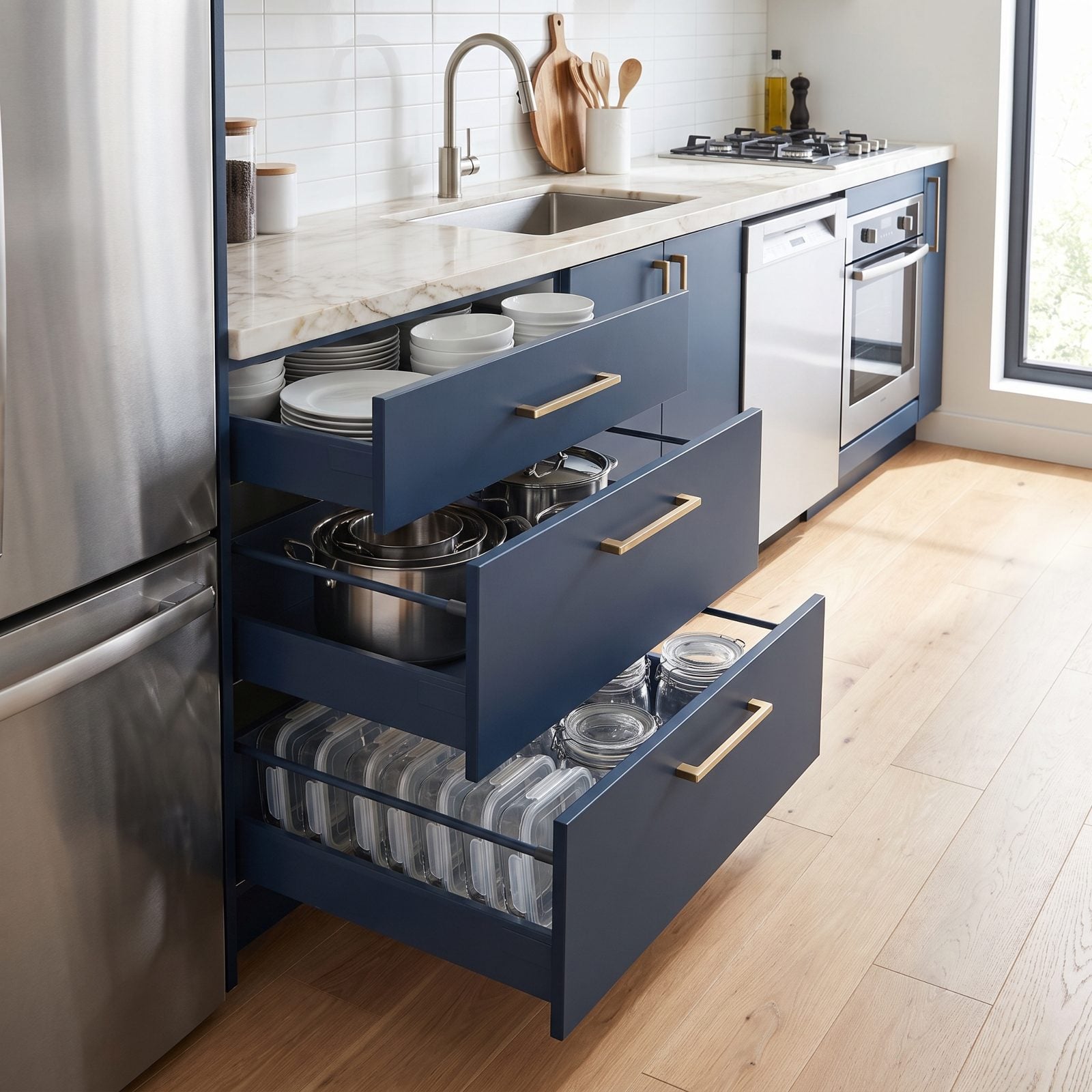
Doors make you kneel, peer, and reach into the dark. Deep drawers bring everything to you. Pull one out and the whole contents rise into the light: pots stacked front to back, lids standing on edge, nothing hiding behind anything.
In order to come up with the very specific design ideas, we create most designs with the assistance of state-of-the-art AI interior design software. Also, assume links that take you off the site are affiliate links such as links to Amazon. this means we may earn a commission if you buy something.
I fought this switch for years because door cabinets are cheaper. Then I lived with a set of navy blue deep drawers and never wanted to open a base cabinet again. Your knees will send a thank-you note.
48. Dishwasher Installed at Waist Level to Eliminate Constant Bending
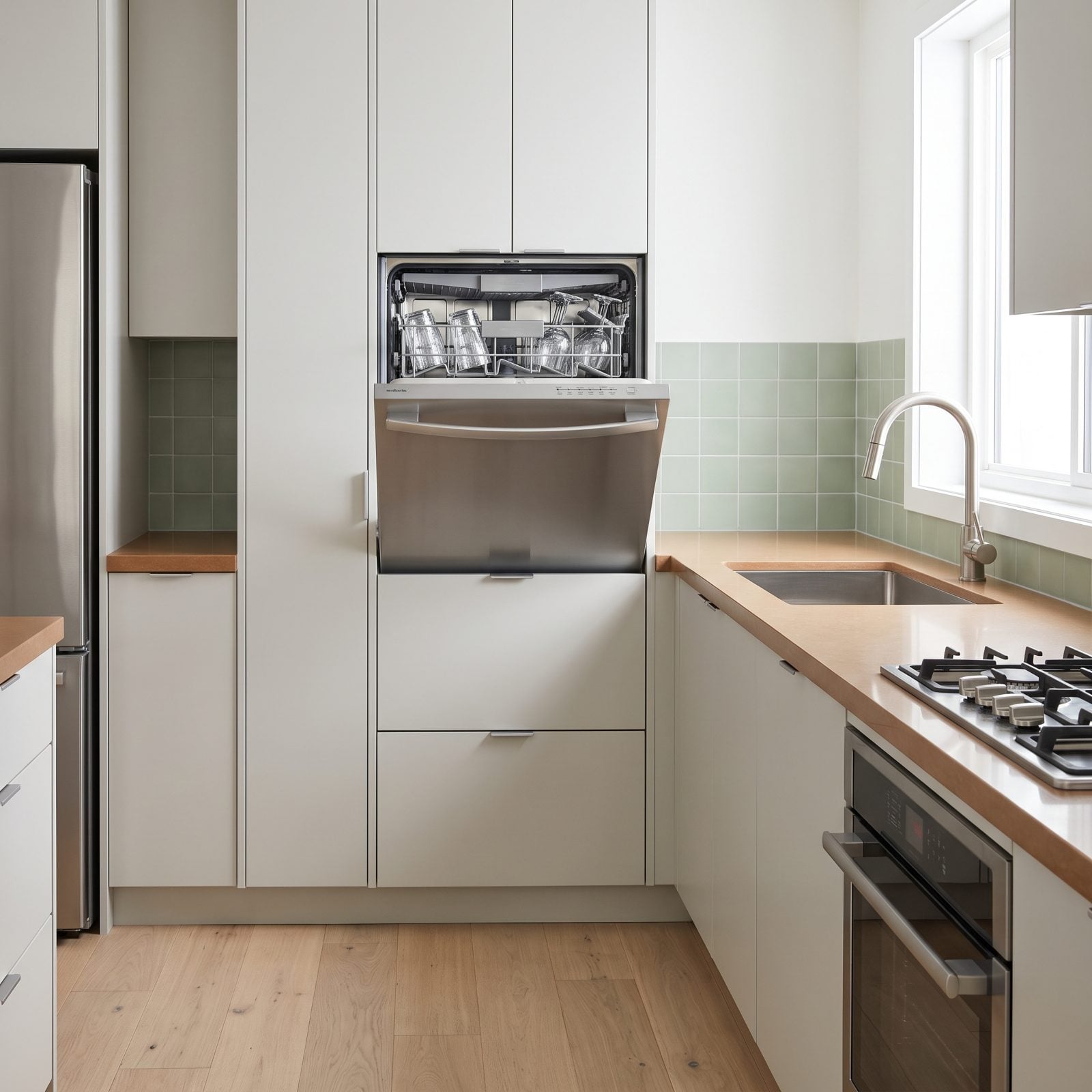
Lift the dishwasher off the floor and the whole rhythm of cleanup changes. Instead of folding at the waist and lowering plates down to ankle height, you load it standing nearly upright. Backs love it. So do the people who unload it after a big meal.
Built-in ovens have been raised for the same reason for decades. Took the industry an absurdly long time to apply the same logic to the machine you bend over most.
47. Dishwasher Positioned Directly Beside the Sink
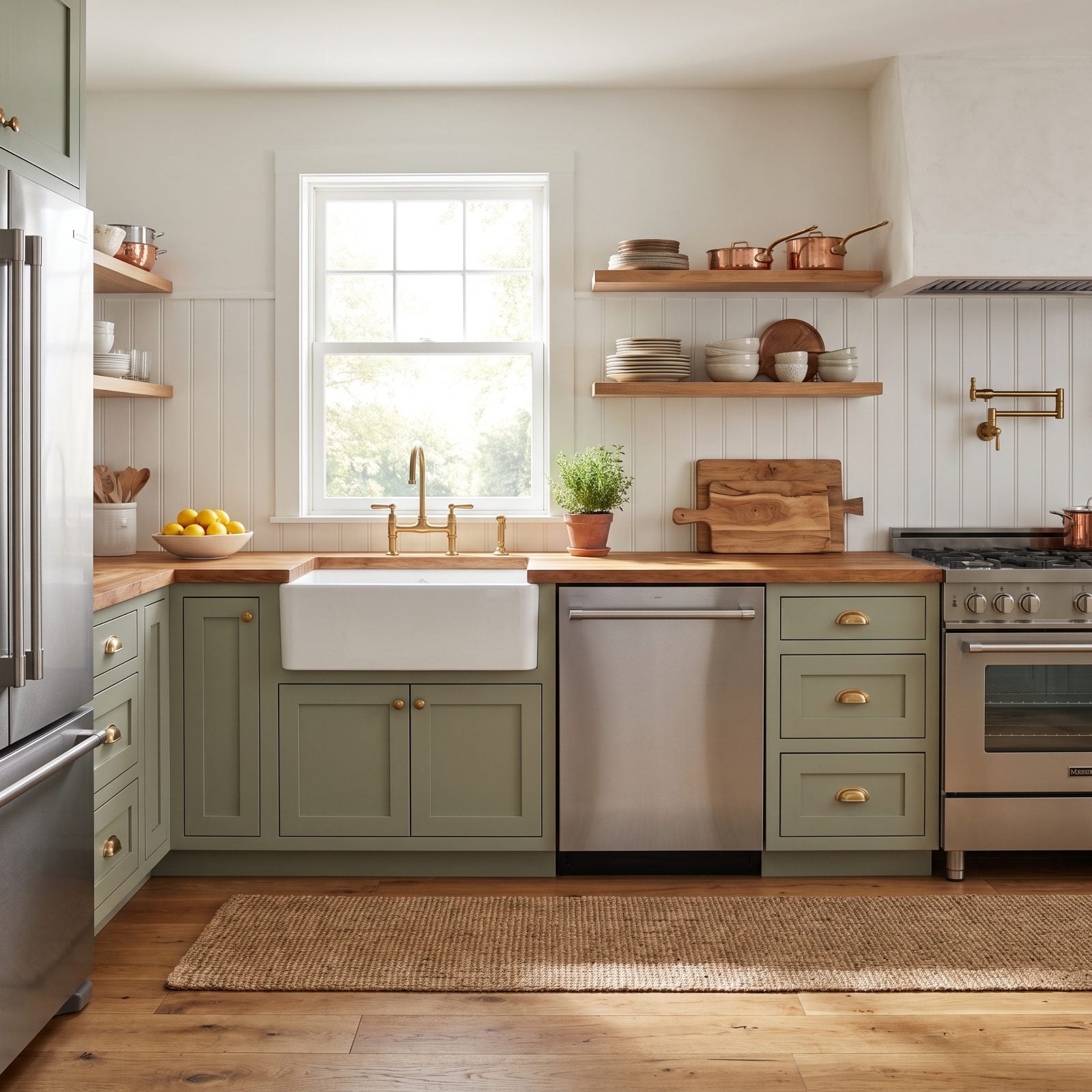
Rinse, pivot, load. That’s the whole move when the dishwasher sits directly beside the sink, and it saves you from tracking water across the floor with every plate.
Leave six inches of counter between them and you’ve added a drip trail plus an extra half-step to every single dish, multiplied by three meals a day. The layout that looks fine on paper costs you real effort in the actual kitchen.
46. Pull-Out Trash and Recycling Beside the Main Prep Area
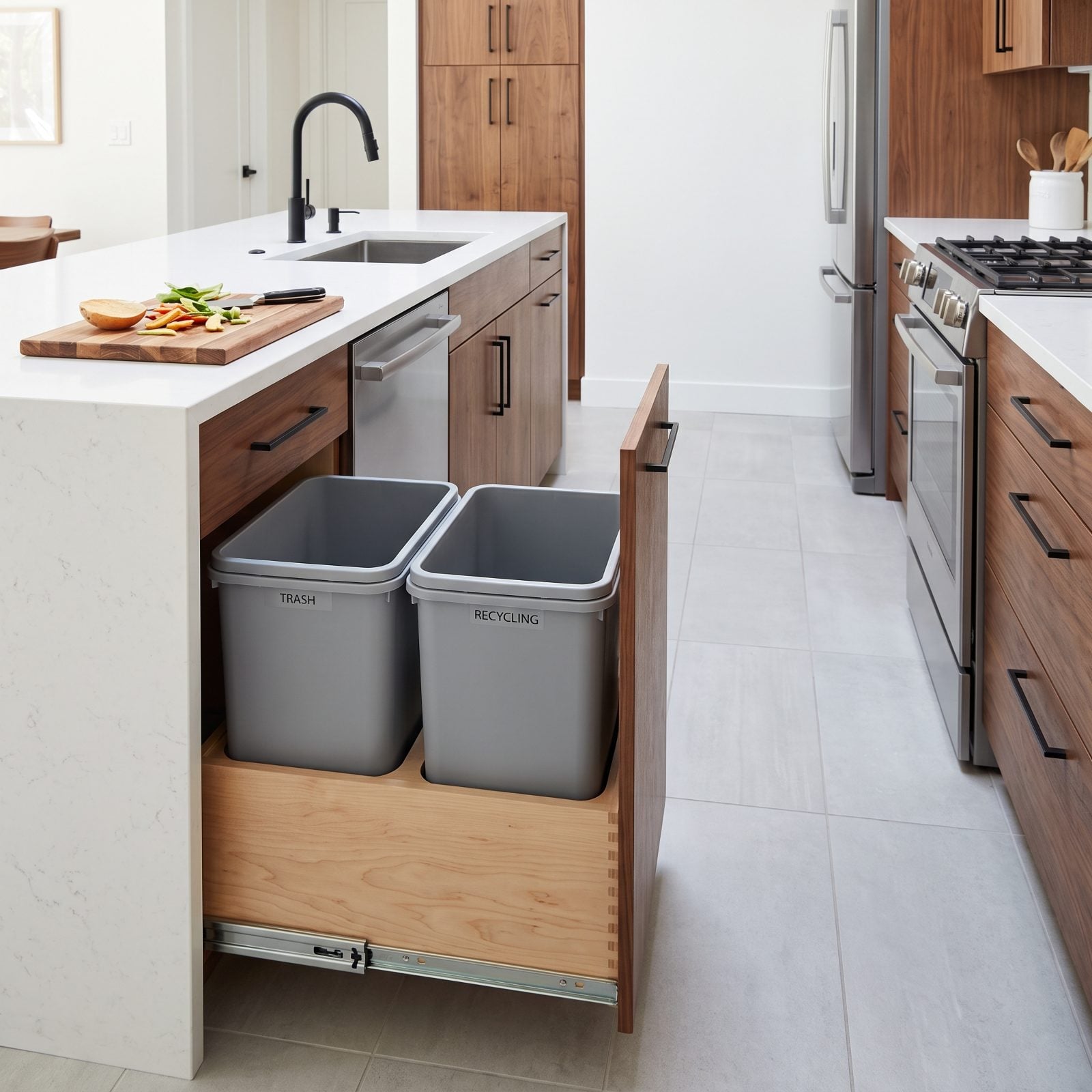
This really should be #1. We have this setup and it’s fantastic. Scraps go straight down. No trek across the kitchen, no drips on the floor, no lid to lift with an elbow because both hands are full of onion skins.
The single best spot for pull-out bins is directly under or beside your main cutting surface. Waste gets generated there, so that’s where the bins belong. A trash can parked across the room is a design that never watched anyone actually cook.
45. A Large Uninterrupted Prep Surface Between the Sink and Cooktop
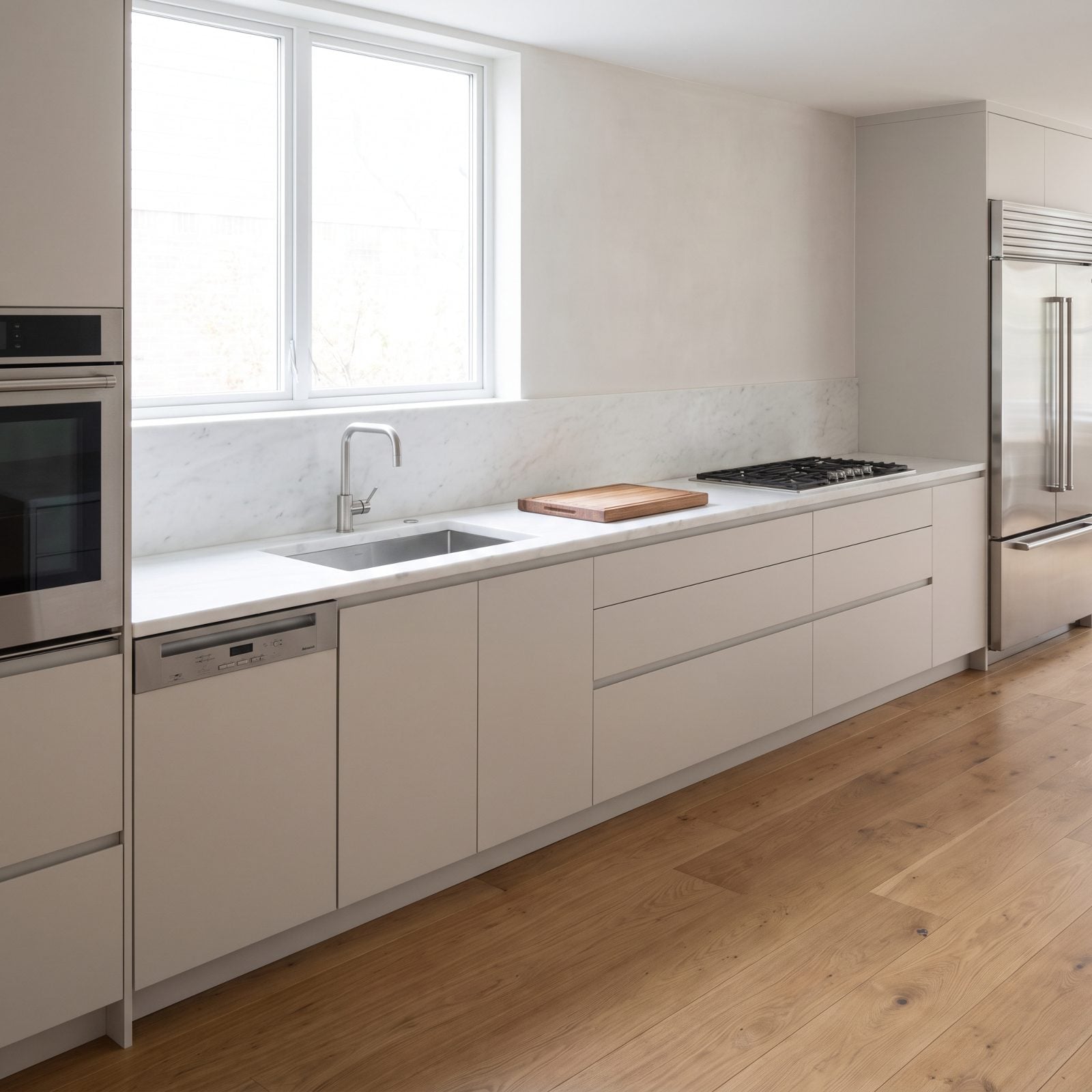
This is the most valuable real estate in any kitchen, and most people surrender it to a knife block and a fruit bowl.
Wash a vegetable, walk two steps, chop it, walk two steps, cook it. With the sink and cooktop sitting at either end of a clear counter, the whole prep-to-pan sequence flows in a straight line. Break that run with a microwave garage or a stand mixer and you’ve amputated the one surface you use most.
44. Counter Space on Both Sides of the Range
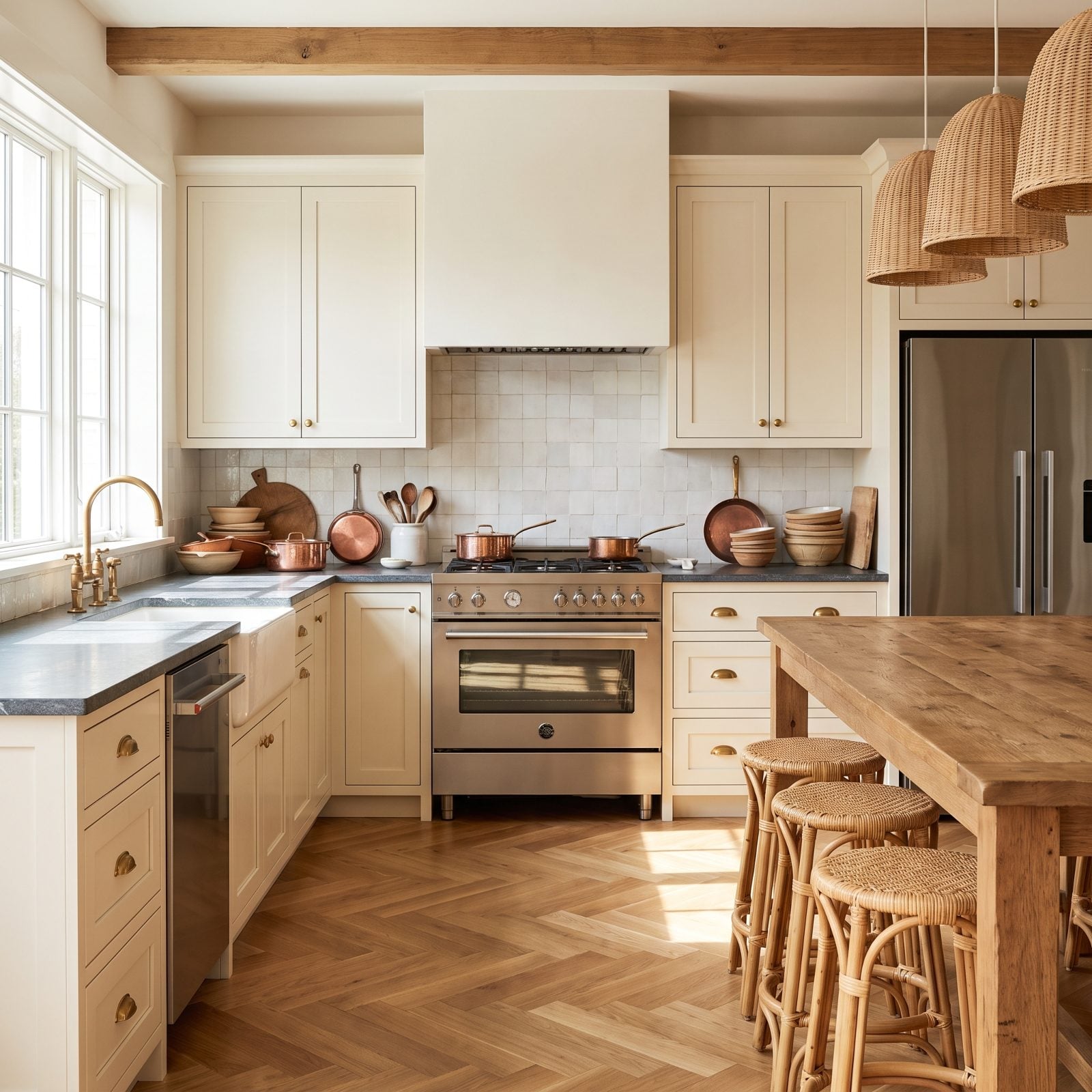
A range shoved into a corner is a daily aggravation. You need somewhere to set the spoon, the platter, the pan you just pulled off the heat, and you need it on both sides.
Landing space to the left and right of the burners means you’re never juggling hot cookware over an empty void. Fifteen inches minimum on each side. More if you actually cook.
43. A Landing Zone Directly Beside the Refrigerator
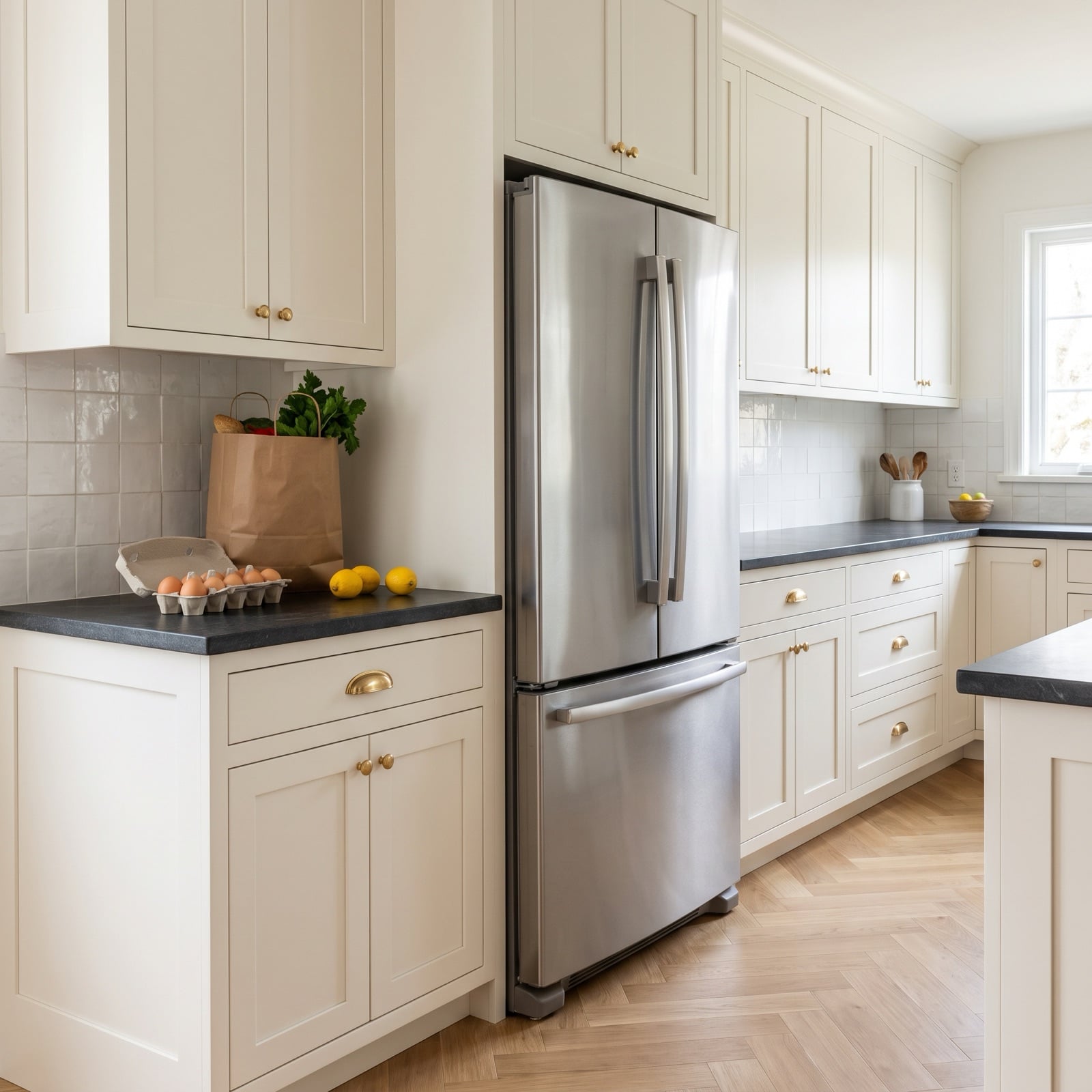
Ever come home, open the fridge, and realize there’s nowhere to set the groceries? A refrigerator that opens onto a wall or an empty corner forces you to shuttle everything to the far counter and back.
Give it a landing counter right beside it. You set the bags down once, unload straight into the fridge, done. That same surface catches whatever you pull out for a meal so it isn’t balanced on your forearm. This small strip earns its keep, a lot like the drop-and-go logic of a good gray mudroom design at the front door.
42. A Landing Surface Beside the Oven for Hot Pans
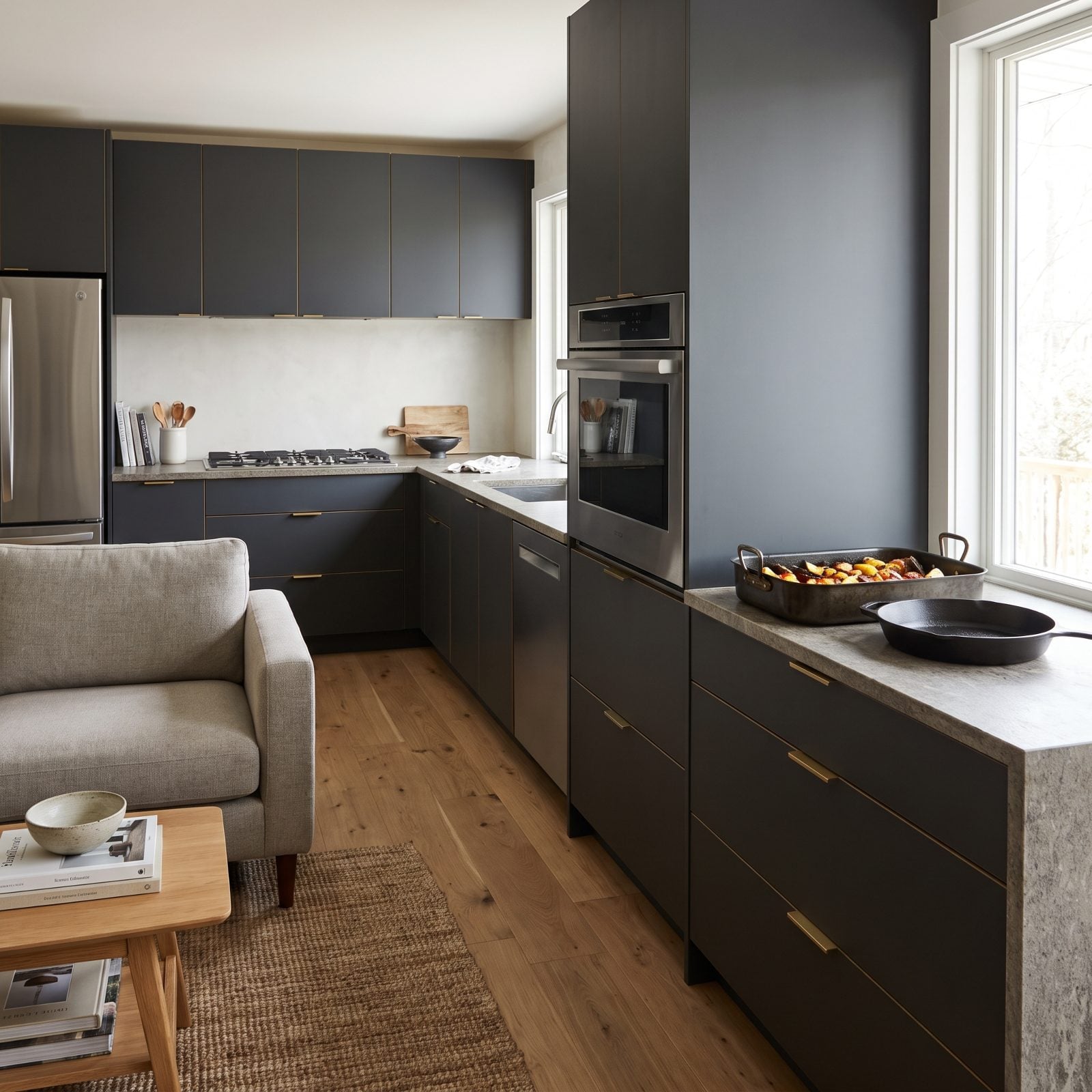
Pull a heavy roasting pan out of a screaming-hot oven and you have about three seconds to decide where it goes. If the answer is “carry it across the room,” that’s a burn or a dropped dinner waiting to happen.
A stretch of stone counter right next to the oven gives you a heatproof place to set it down immediately. Granite, quartz, and soapstone all shrug off a hot pan. Just don’t spec that landing spot in butcher block and expect it to survive.
41. Pots and Pans Stored Directly Beneath the Cooktop
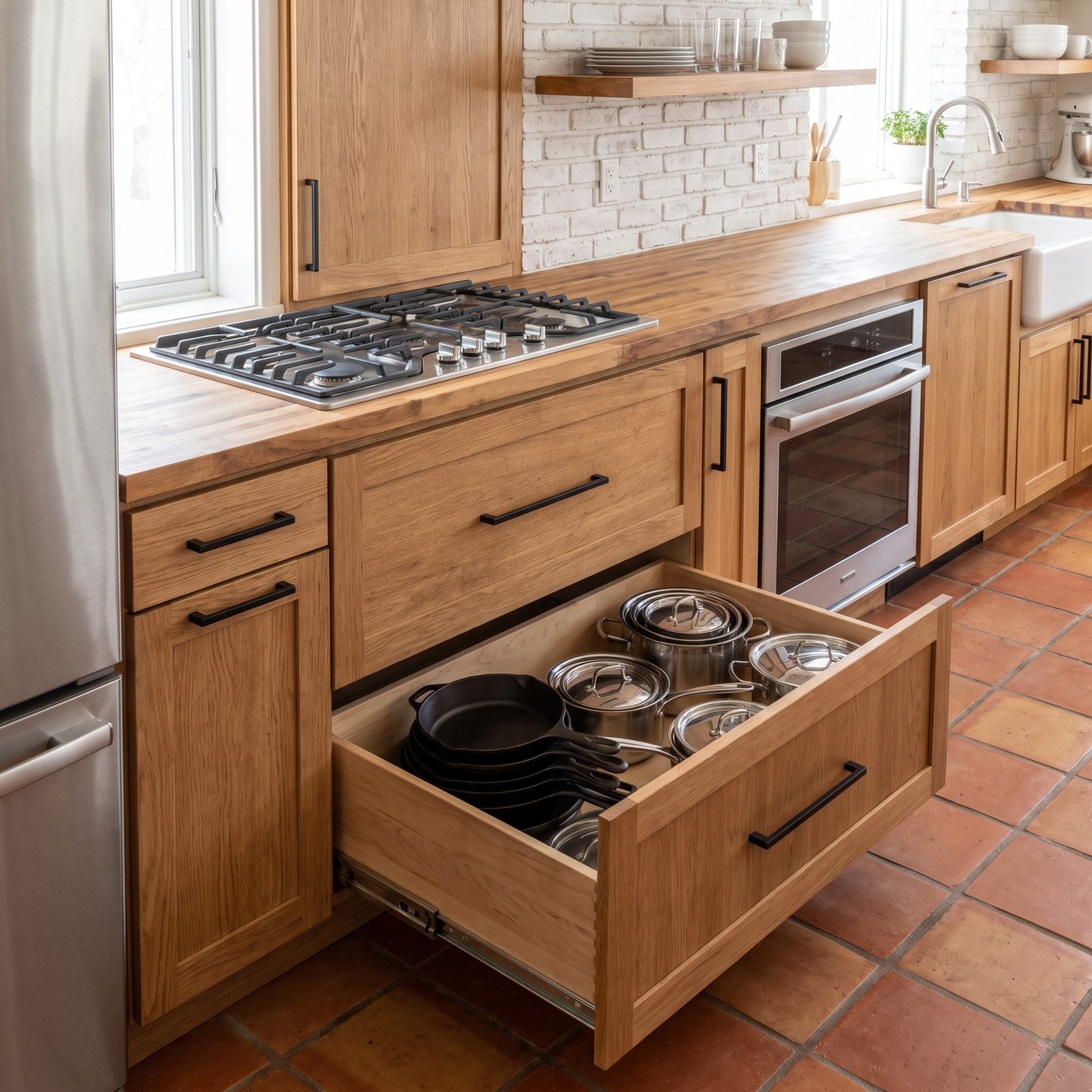
Store the pans where you cook with them. Sounds obvious. Yet somehow half the kitchens I’ve stood in keep the pots at the opposite end of the room from the burners.
A deep drawer directly under the cooktop puts every pan a single reach away. Skillet in hand before the oil’s even warm, dirty pot back in place the second it’s dry. No hauling heavy cast iron across the kitchen twice a meal. Fewer steps, fewer clangs, less effort baked into every dish you make.
40. Cooking Utensils Stored in a Drawer Beside the Range
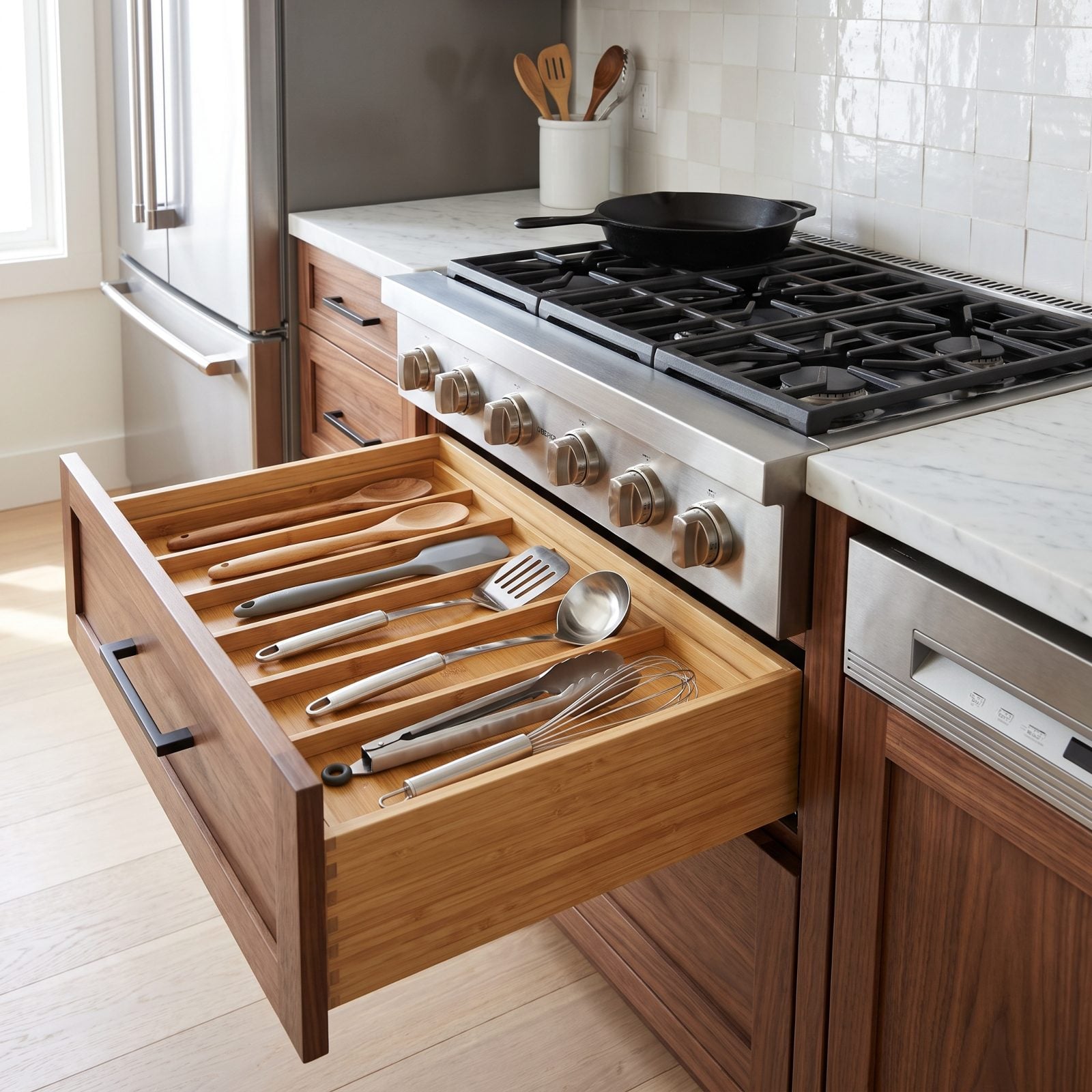
Reaching clear across the kitchen mid-stir, with a hot pan going, is exactly how you end up with a scorched sauce and a mess on the floor. Utensils in the drawer right next to the range fix that. Open, grab, flip, done — all within a single step of the burner.
Lay them flat in a bamboo drawer organizer rather than jamming them upright into a crock where the ladle swallows everything behind it. Flat storage means you see every tool at a glance.
39. Spices Stored Within Arm’s Reach of the Cooking Zone
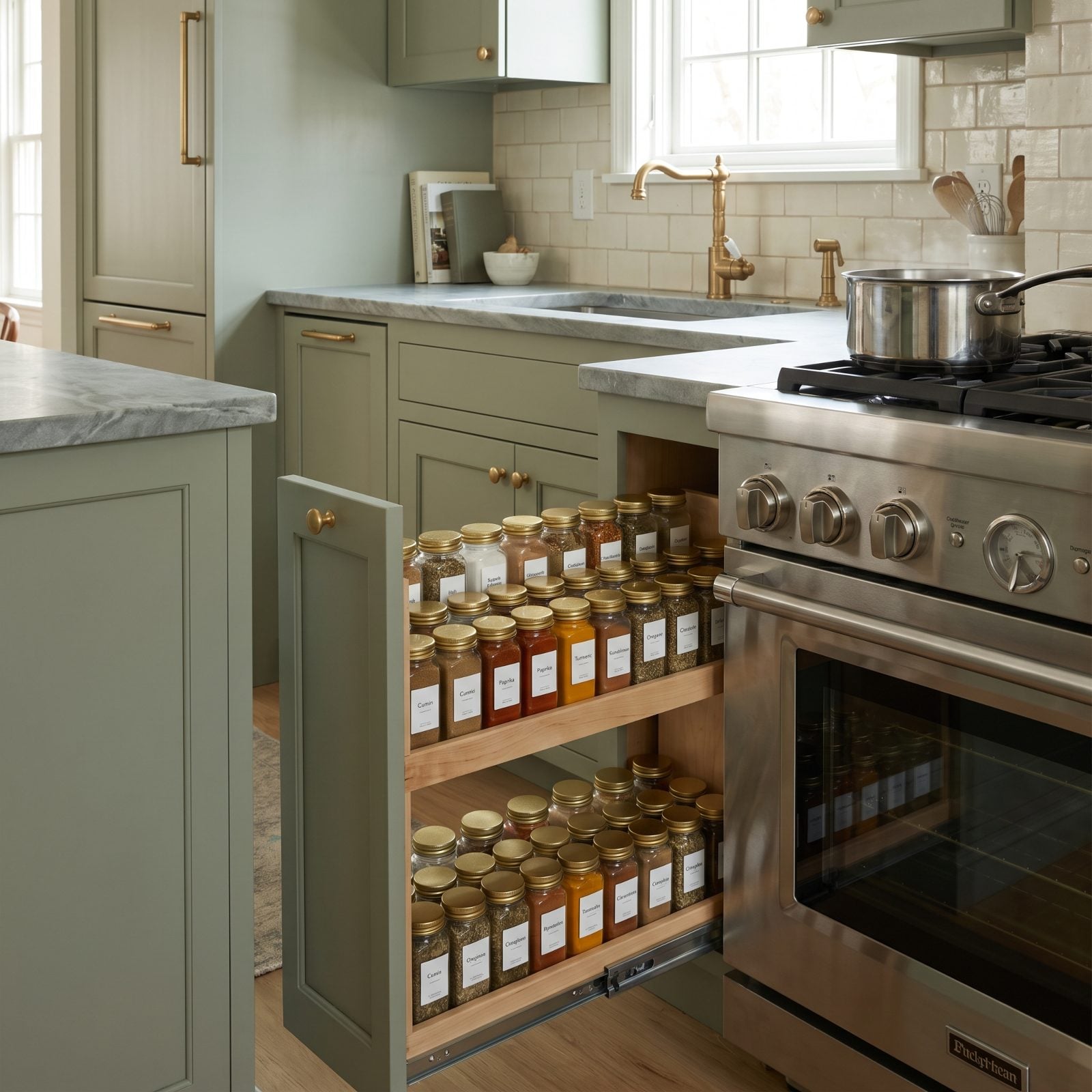
The recipe says a pinch of cumin. Yours is in a cabinet across the room, hiding behind the cereal, so you skip it. Multiply that little surrender across every meal and you’re eating blander food than you ever intended to make.
So keep the spices you reach for most beside the burner. A narrow pull-out or a shallow drawer holds the whole collection with labels up — no digging, no knocking over the paprika to find the oregano.
38. Knives Stored Beside the Main Cutting Area
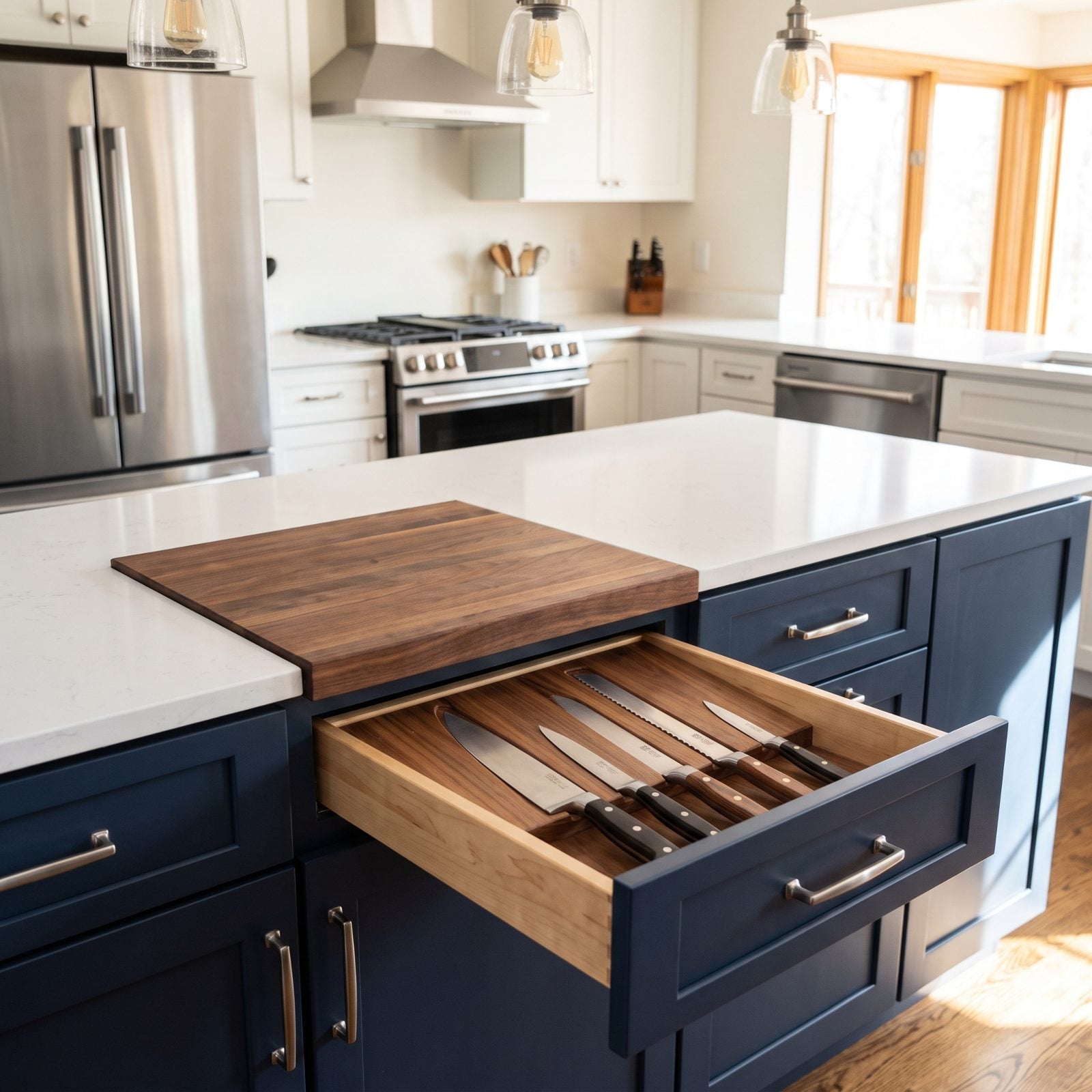
A magnetic strip on the far wall photographs beautifully. In practice, though, you’re walking a naked blade across the room every single time you need it, which is how accidents happen. Store knives beside the board and that whole handling problem simply evaporates.
An in-drawer dock keeps edges protected and out of sight — calmer to look at than a countertop block bristling with steel.
37. Cutting Boards Stored Vertically Beside the Prep Counter
🔥 Would you like to save this?
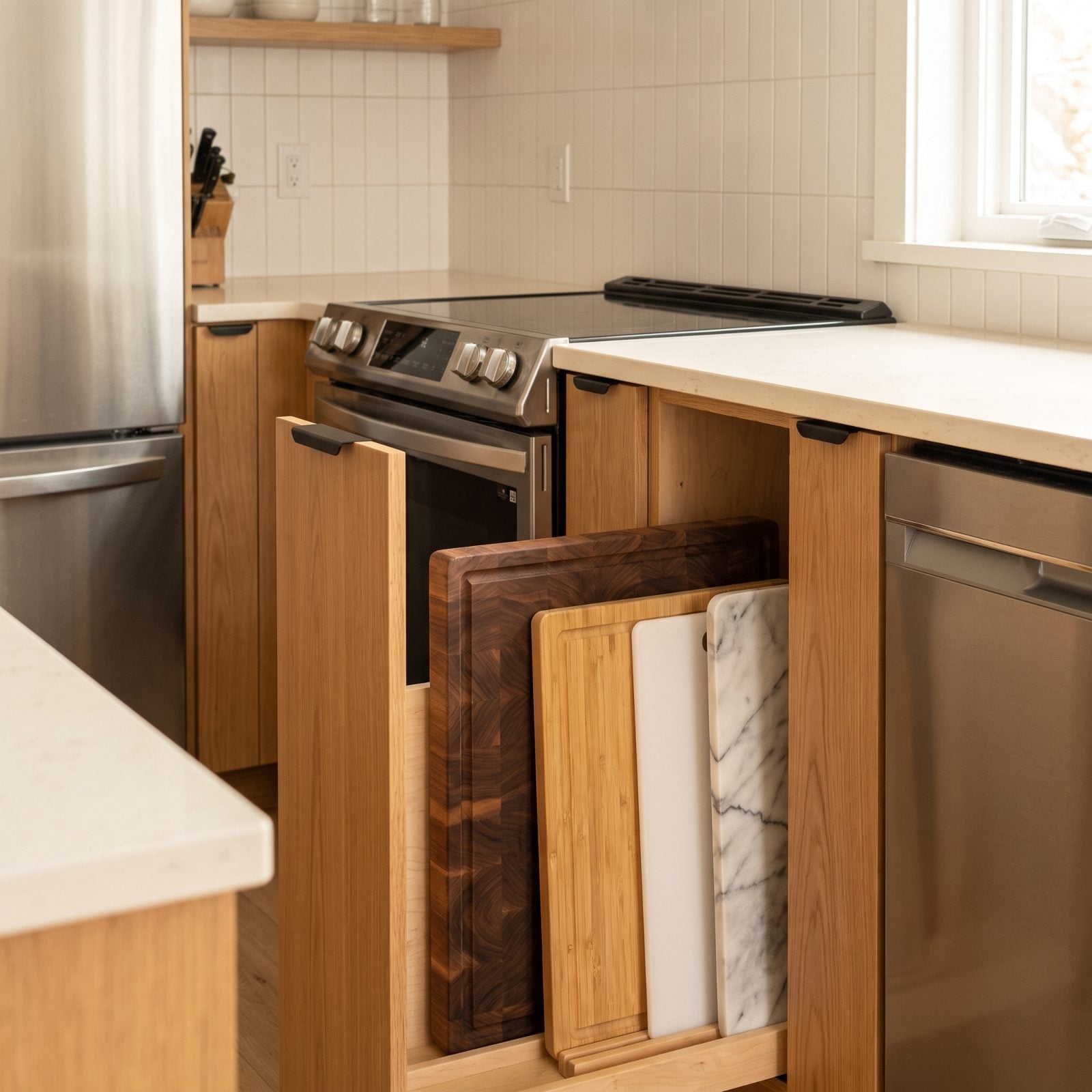
Stacked flat, cutting boards become a Jenga tower. You want the small one, it’s at the bottom, and the whole pile slides sideways onto the counter. Stand them upright in a dedicated slot instead, and you pull the exact board you need with one hand.
Filing them vertically also lets them dry on both faces, which matters more than most people think for wood.
36. Vertical Dividers for Baking Sheets, Trays, and Cutting Boards
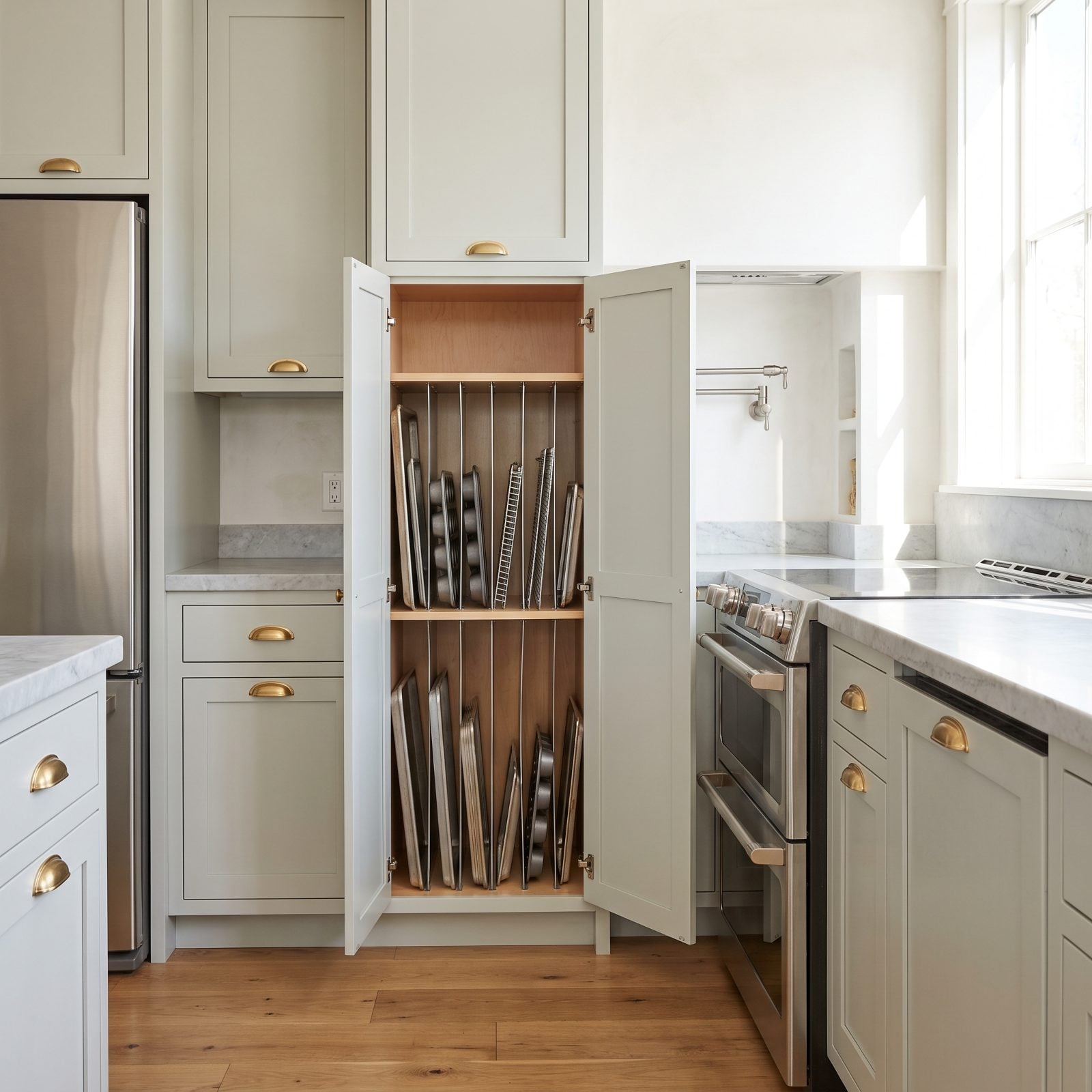
Baking sheets stacked in a pile are the whole reason people dread pulling out the roasting pan — every removal is a metallic avalanche. Vertical dividers turn that racket into a filing system.
- You grab one tray without disturbing the rest.
- Everything gets its own address, so nothing goes missing.
- The cabinet holds more, since upright packs denser than stacked.
And cheap wire dividers do the job. You really don’t need the custom joinery to get the payoff.
35. A Pull-Out Pantry That Lets You See Everything at Once
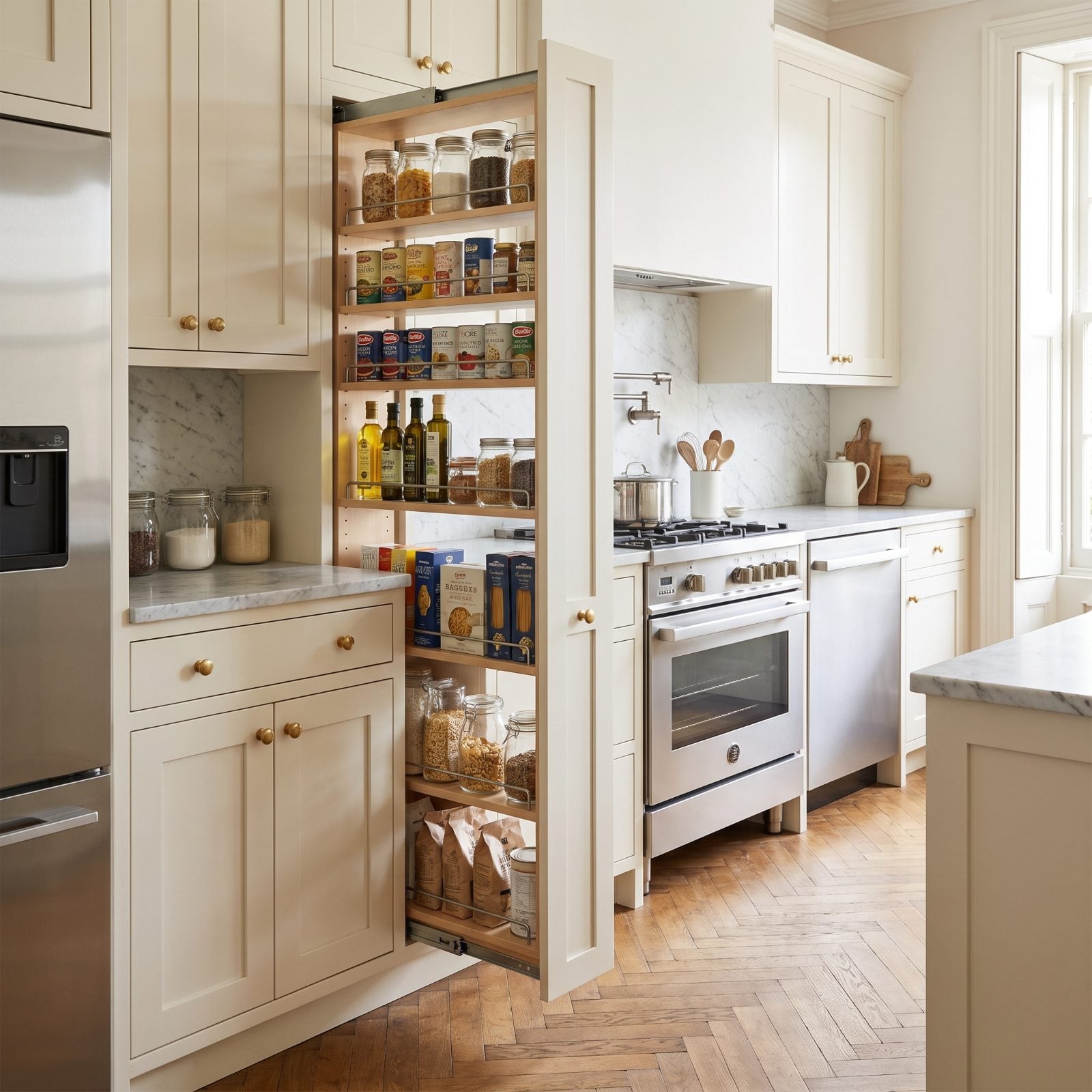
Deep pantry cabinets are where food goes to be forgotten. You buy a second jar of tahini because the first one is lost somewhere behind the flour. A pull-out pantry ends the whole cycle — slide it out and both faces present their entire inventory right at eye level. No reaching into a dark cave, no archaeology.
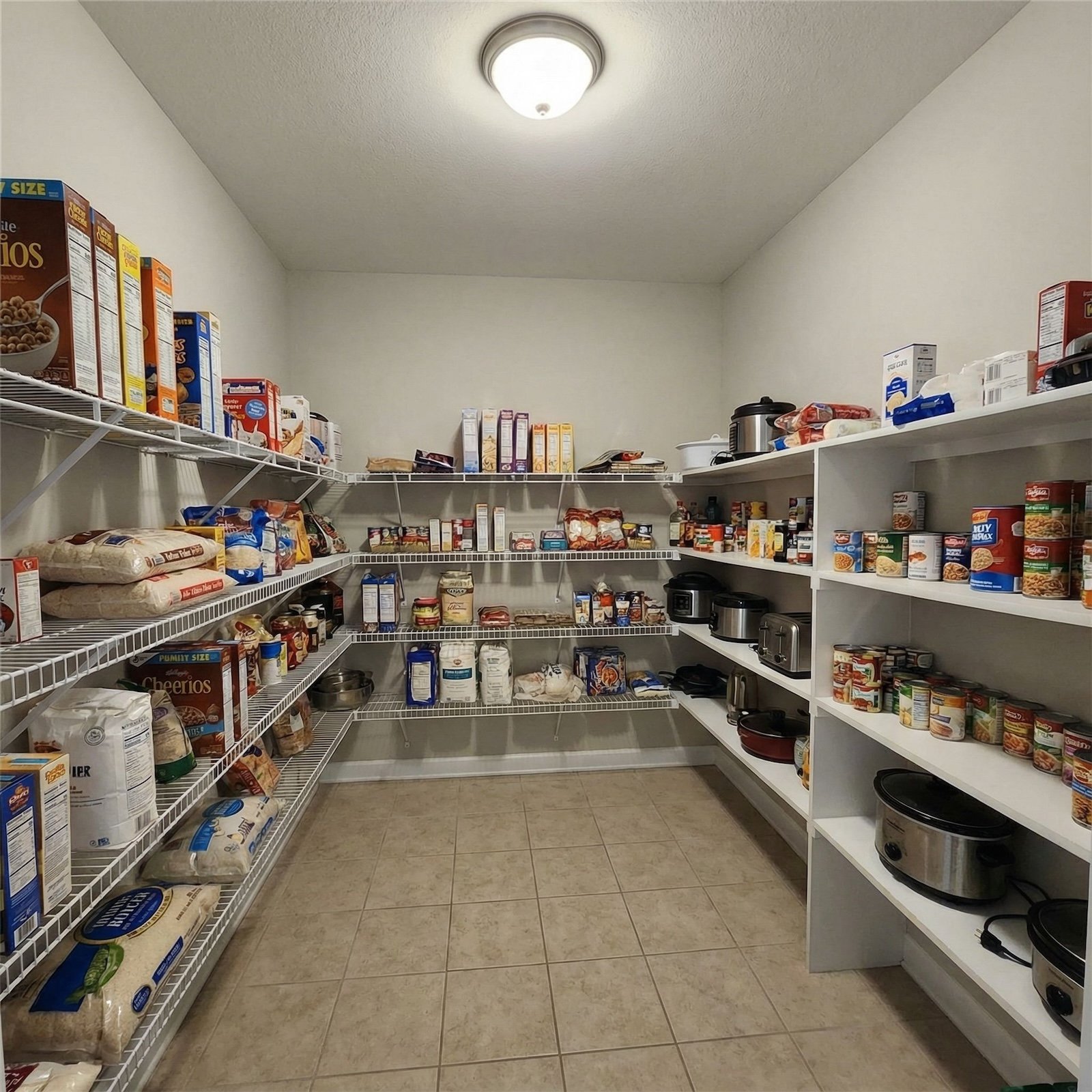
Planning a fuller boho pantry design? This same slide-out logic scales up beautifully to a walk-in.
34. Shallow Pantry Shelves So Food Doesn’t Disappear at the Back
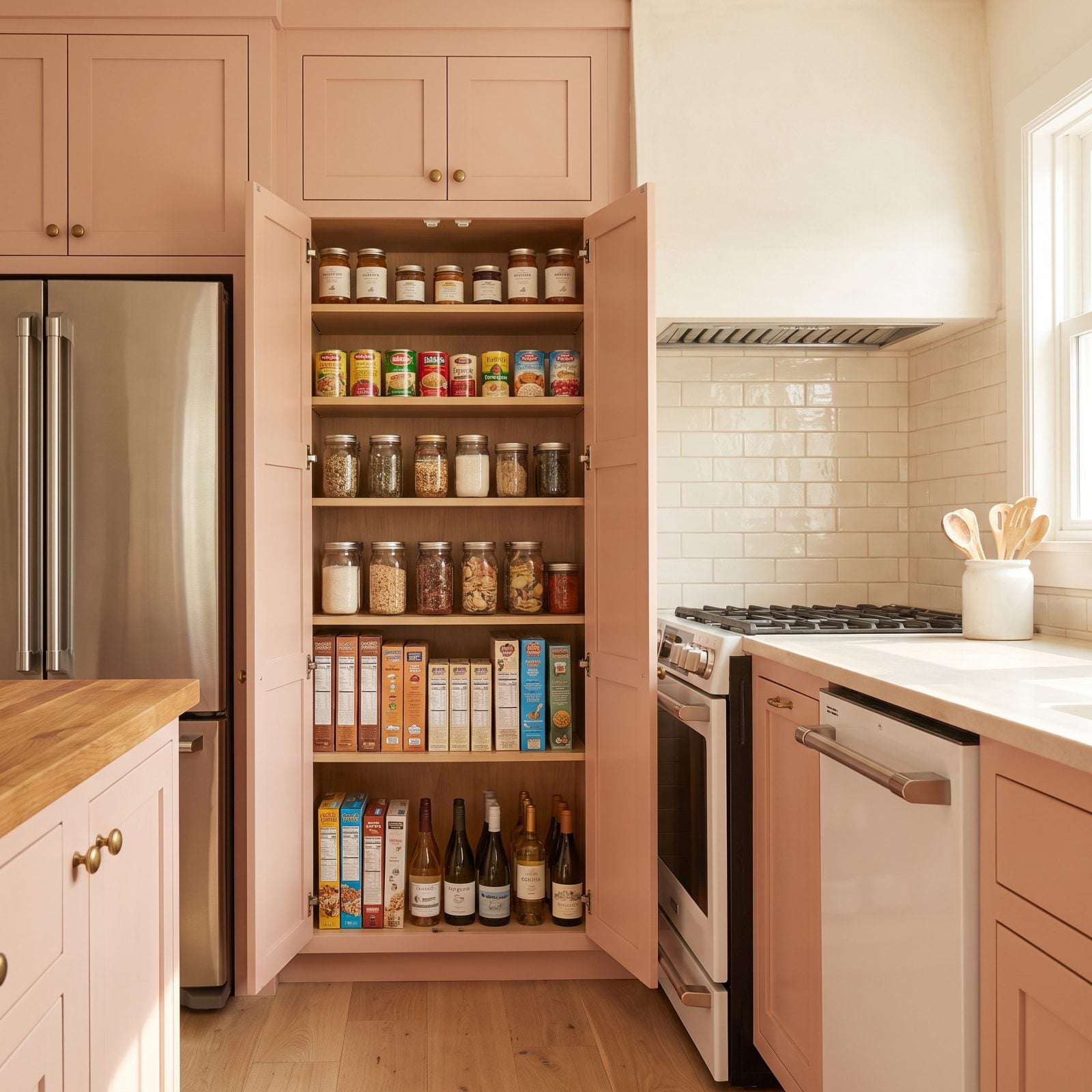
I lost a jar of capers for two years in a deep pantry once. Found it during a move. Shallow shelves fix this for good by flatly refusing to let anything hide behind anything else — one row deep, and a single glance tells you exactly what you own.
Deeper shelves feel like more storage. But half of it is dead space you never actually see into.
33. Frequently Used Ingredients Stored Between Waist and Eye Level
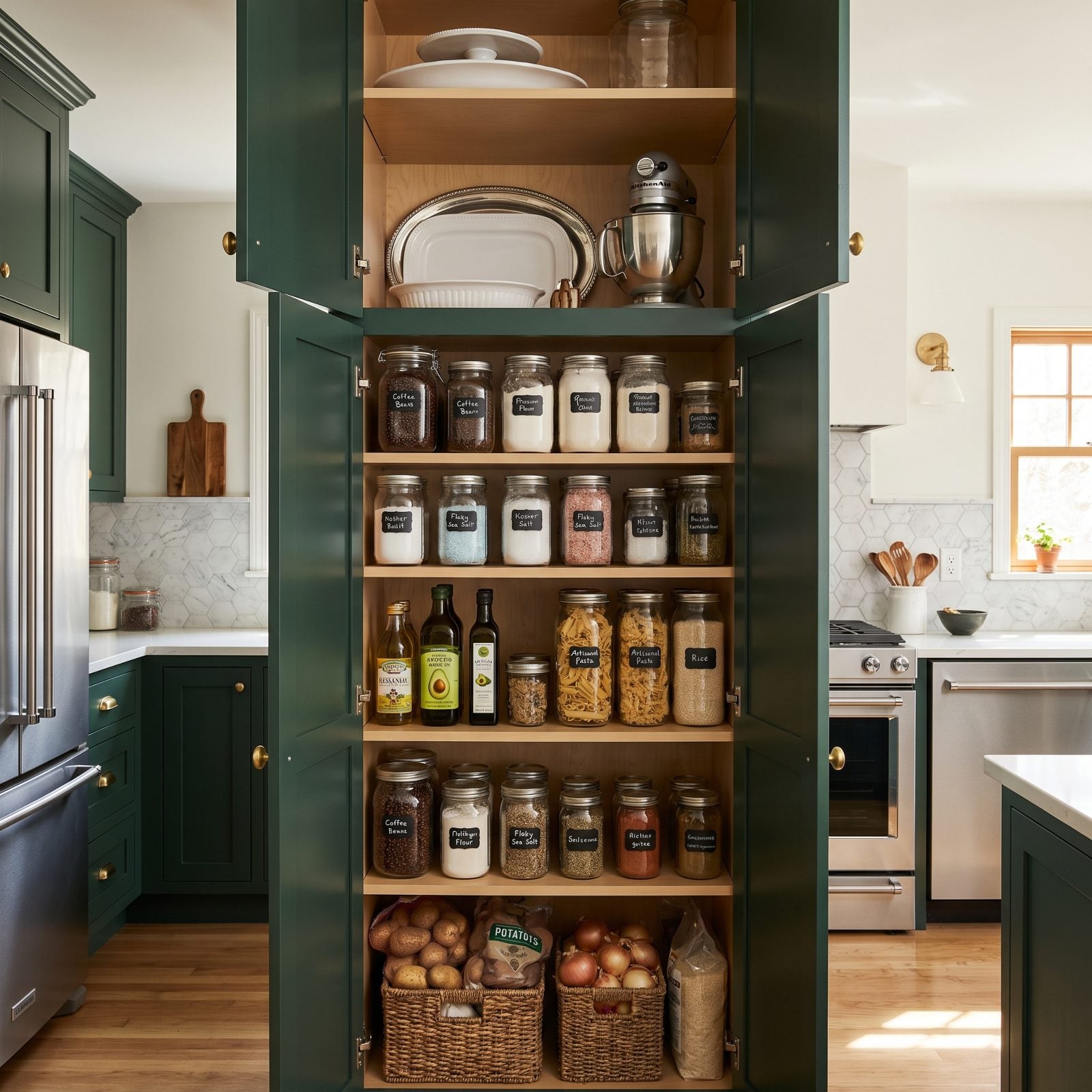
Your body has a lazy zone, and it sits between your waist and your eyes. That’s where the things you handle daily belong. Squatting for the everyday olive oil, or stretching overhead for the coffee, is a small tax you quietly pay every single morning.
Save that golden middle band for the stuff you grab constantly. Send the holiday roasting pan and the once-a-year bundt tin up top and down low where they belong.
32. Frequently Used Dishes Stored Close to the Dishwasher
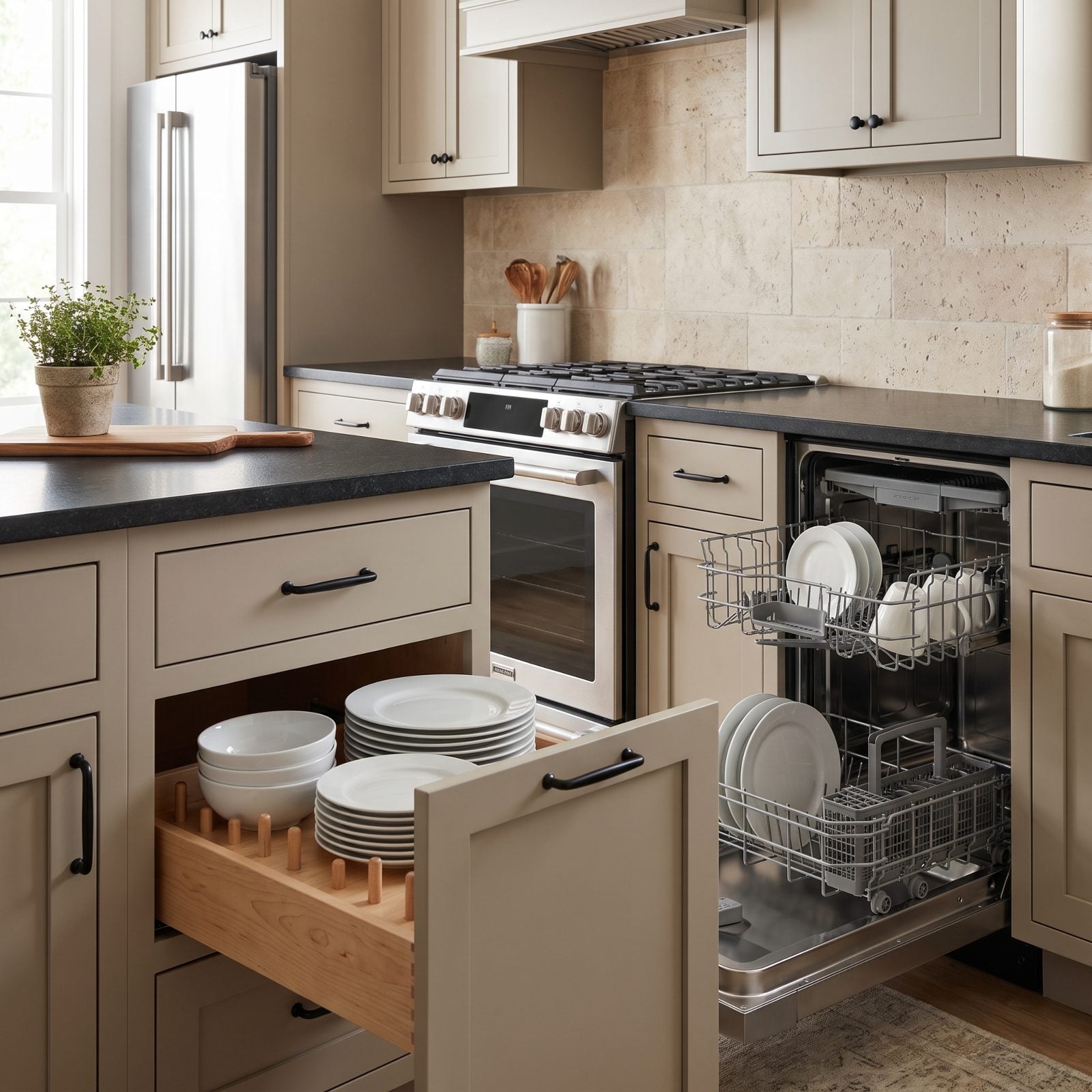
Unloading the dishwasher is the chore everyone puts off, and half the reason is the walk. Clean plates go here, clean bowls go way over there, all scattered across the kitchen. Store your everyday dishes in the cabinet right beside the machine and the unload turns into a quick pivot instead of a route.
Grab, turn, stack, close. That’s the whole job.
31. Everyday Glasses Stored Near the Refrigerator
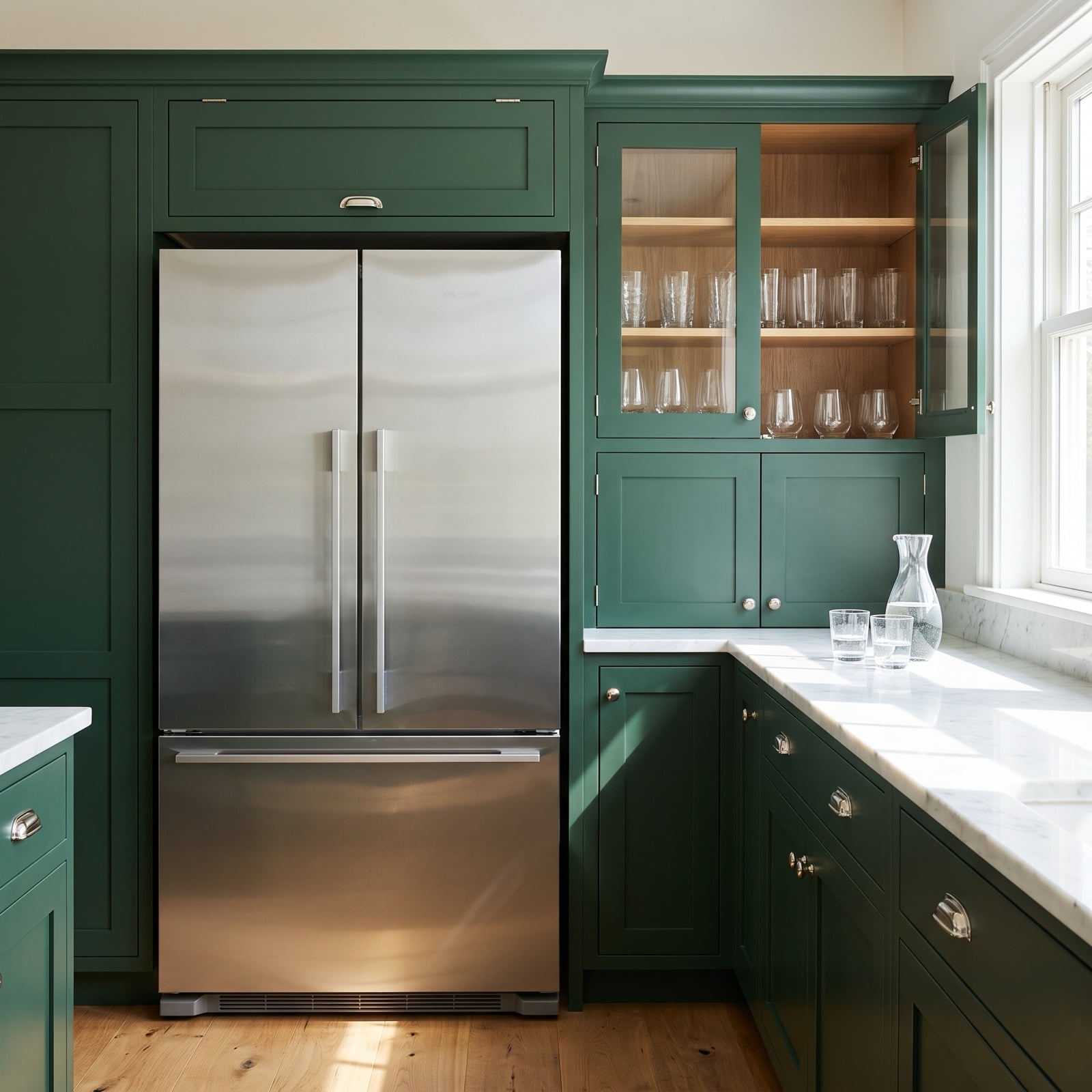
Fetching a glass of water shouldn’t take two trips across the room. Put the everyday glasses in the cabinet next to the fridge and the errand collapses into one spot: open cabinet, grab glass, fill at the door.
Small thing, sure. But it happens over and over, day after day — multiply those saved steps across a year and you’ll see why the pros park glasses right at the water source. Same instinct that makes a well-planned blue entryway design put the hooks where you already drop your keys. Reading your own habits back to yourself is the whole game here.
30. Silverware Stored Near Both the Dishwasher and Dining Area
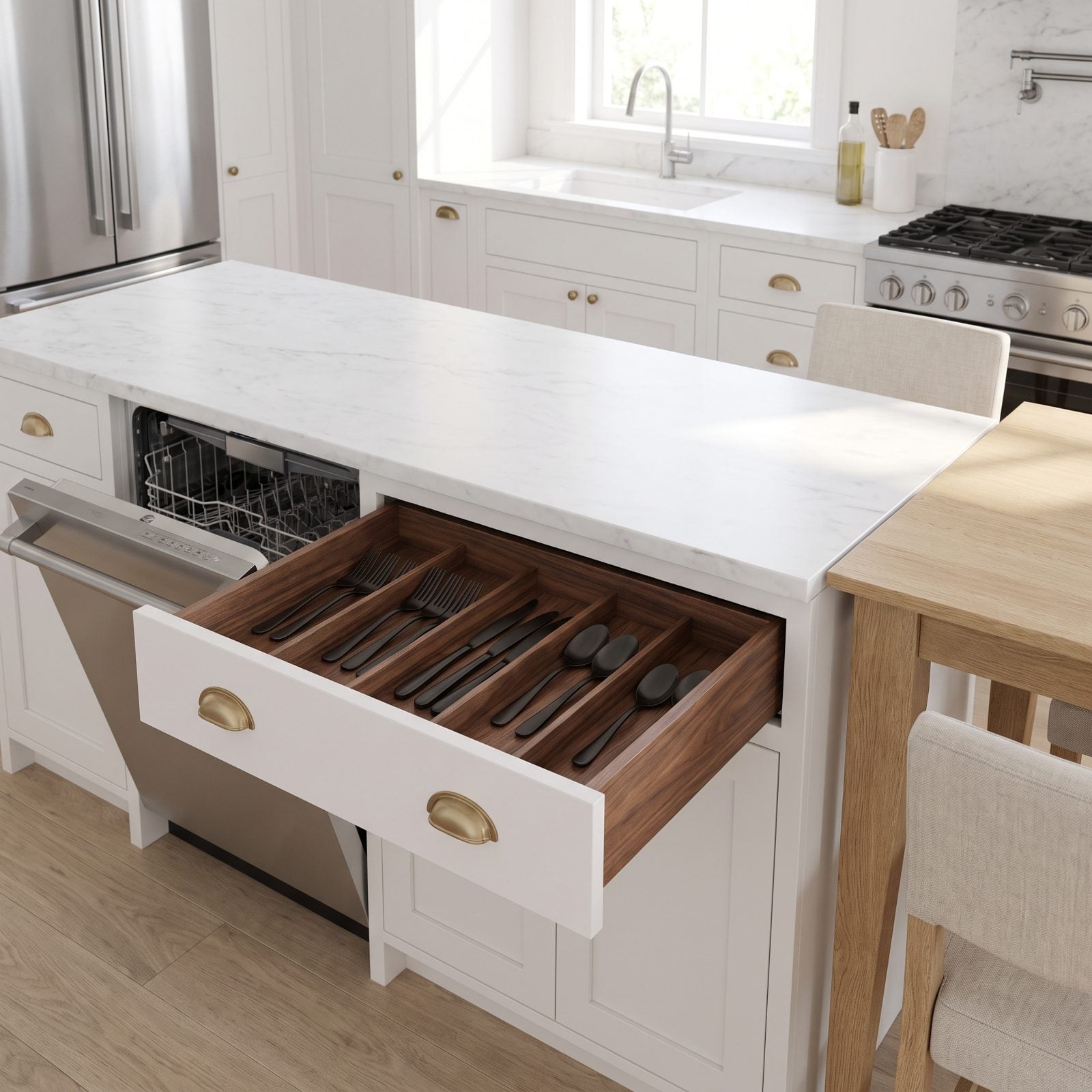
Put the flatware where the two jobs happen. Emptying the dishwasher and setting the table both pull from the same drawer, so that drawer should sit between the two. Unload in one motion, set the table in another, and never again walk across the room with a fistful of forks.
The walnut organizer here keeps the matte black flatware in tidy lanes. Sounds fussy — until you clock that a jumbled drawer costs you three seconds every single time you open it, which over a year adds up to a small, stupid tax on your patience.
29. Food-Storage Containers and Lids Stored Together in a Dedicated Drawer
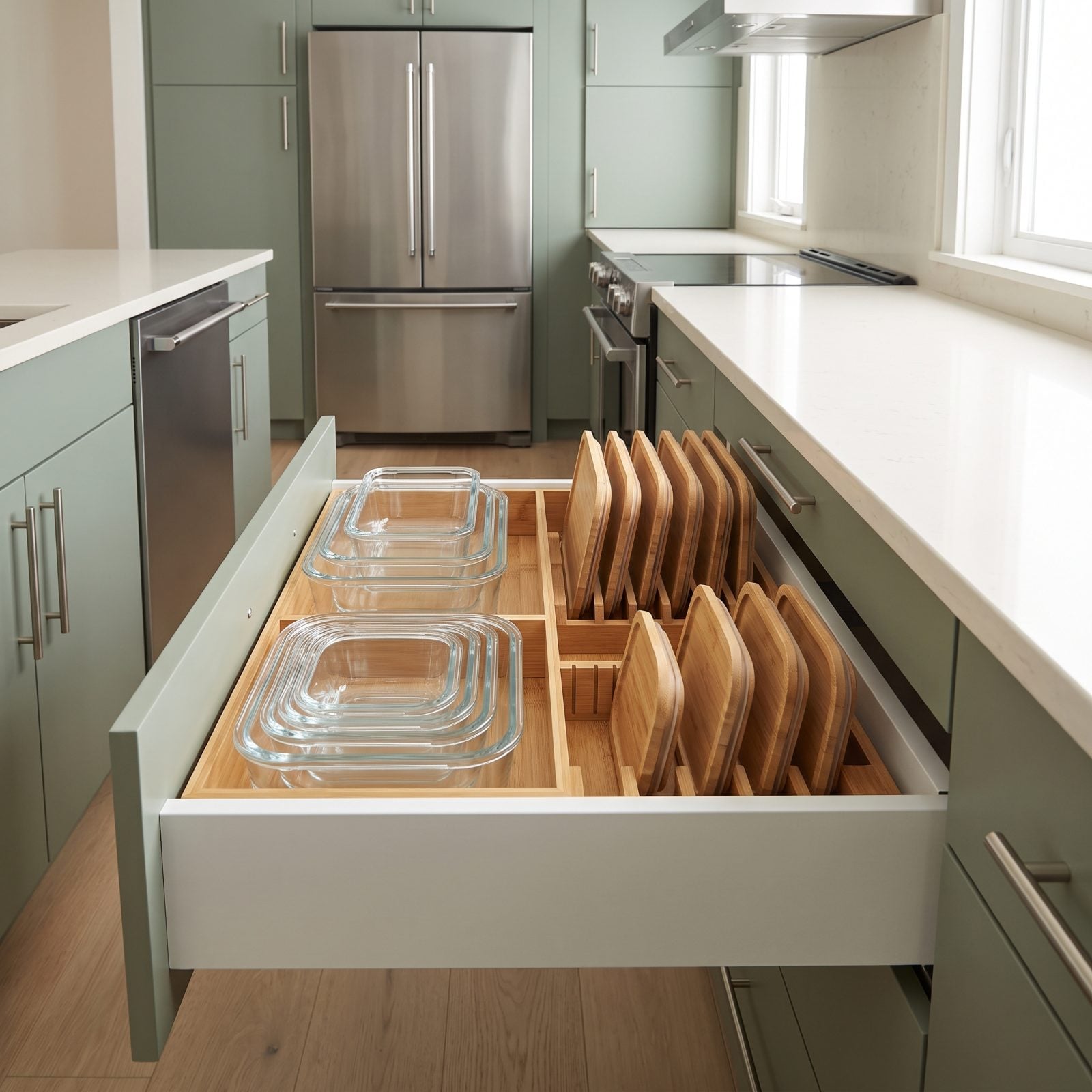
Lids belong with the containers they close. Store them apart and you end up hovering a rectangular base over a drawer full of round lids at 9pm, quietly losing your mind.
This drawer fixes it with upright bamboo dividers that stand the lids like files, sorted by size, right beside the bases. Grab a container, grab its match, done. I fought this setup for years because it felt like overkill. It isn’t. Best fifteen minutes I ever spent on a drawer, and I don’t say that about drawers.
28. Food-Storage Containers Stored Close to the Refrigerator
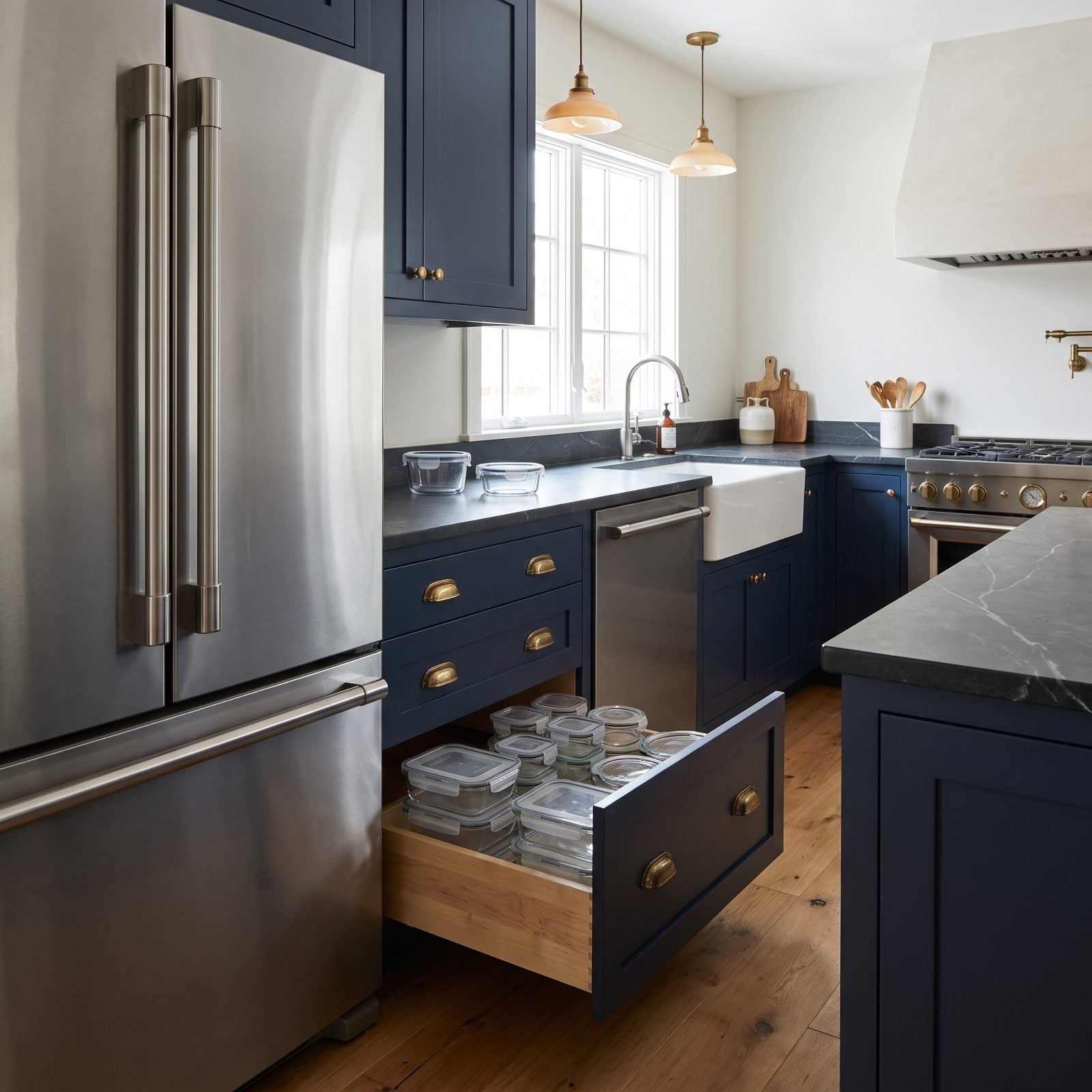
The math is simple. You open the fridge, you have leftovers, you need a container. If the containers live across the kitchen, that’s an extra trip every time — and if they live in the drawer beside the fridge, it isn’t.
See that landing counter in charcoal soapstone? It hands you a spot to set the pot and the open container while you spoon dinner in, right where the whole task already happens.
27. A Shallow Drawer Dedicated to Foil, Parchment, Bags, and Wraps
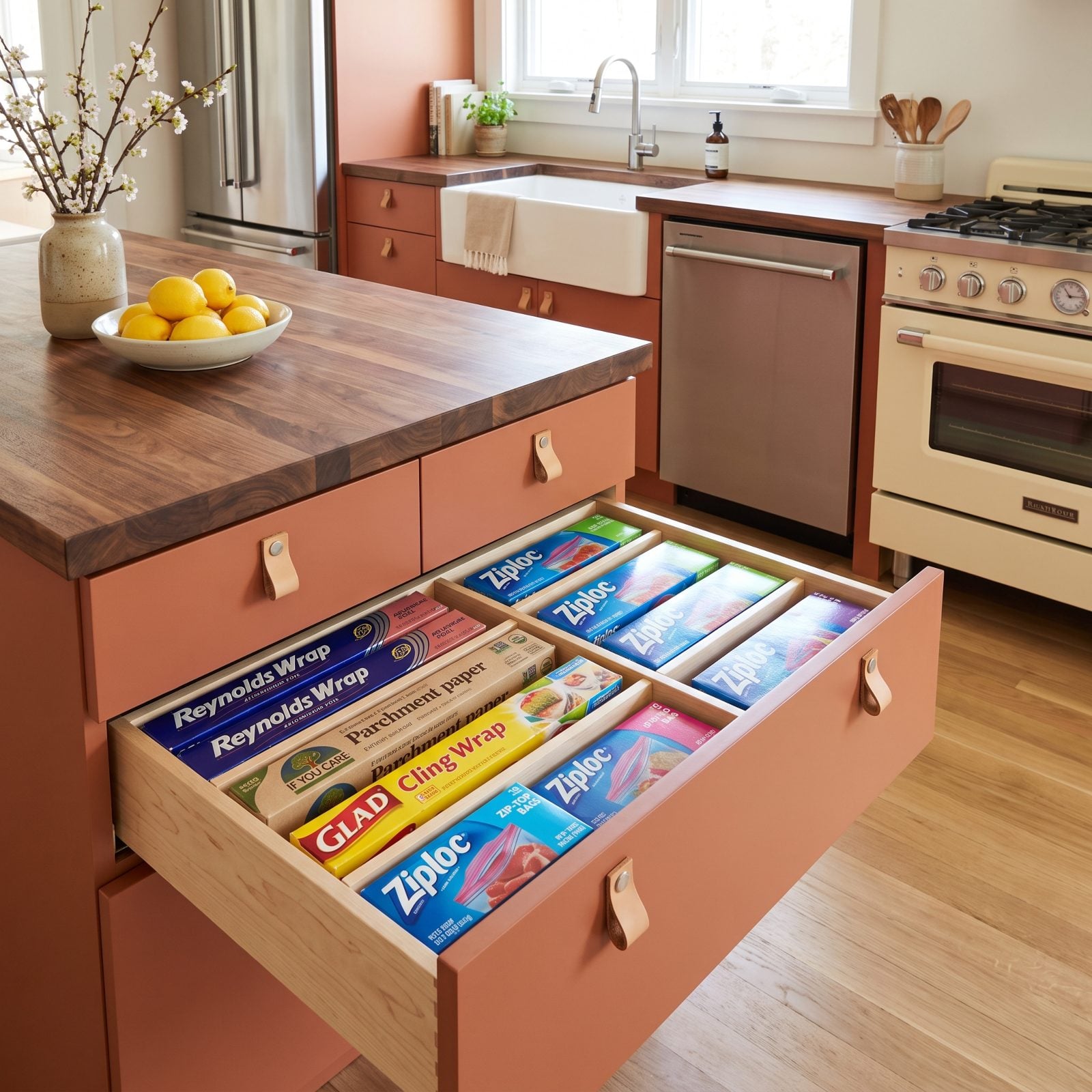
Wraps and bags are the junk drawer’s favorite hostages. Foil folds, parchment slides, and somehow the plastic wrap box always ends up crushed under a pot lid.
Give them a shallow drawer of their own, laid flat in maple dividers, and you grab the right box without excavating. Shallow is the whole trick. Deep drawers bury this stuff; a shallow one shows every box in a single glance.
26. A Large Single-Bowl Sink That Can Fit Sheet Pans and Large Pots
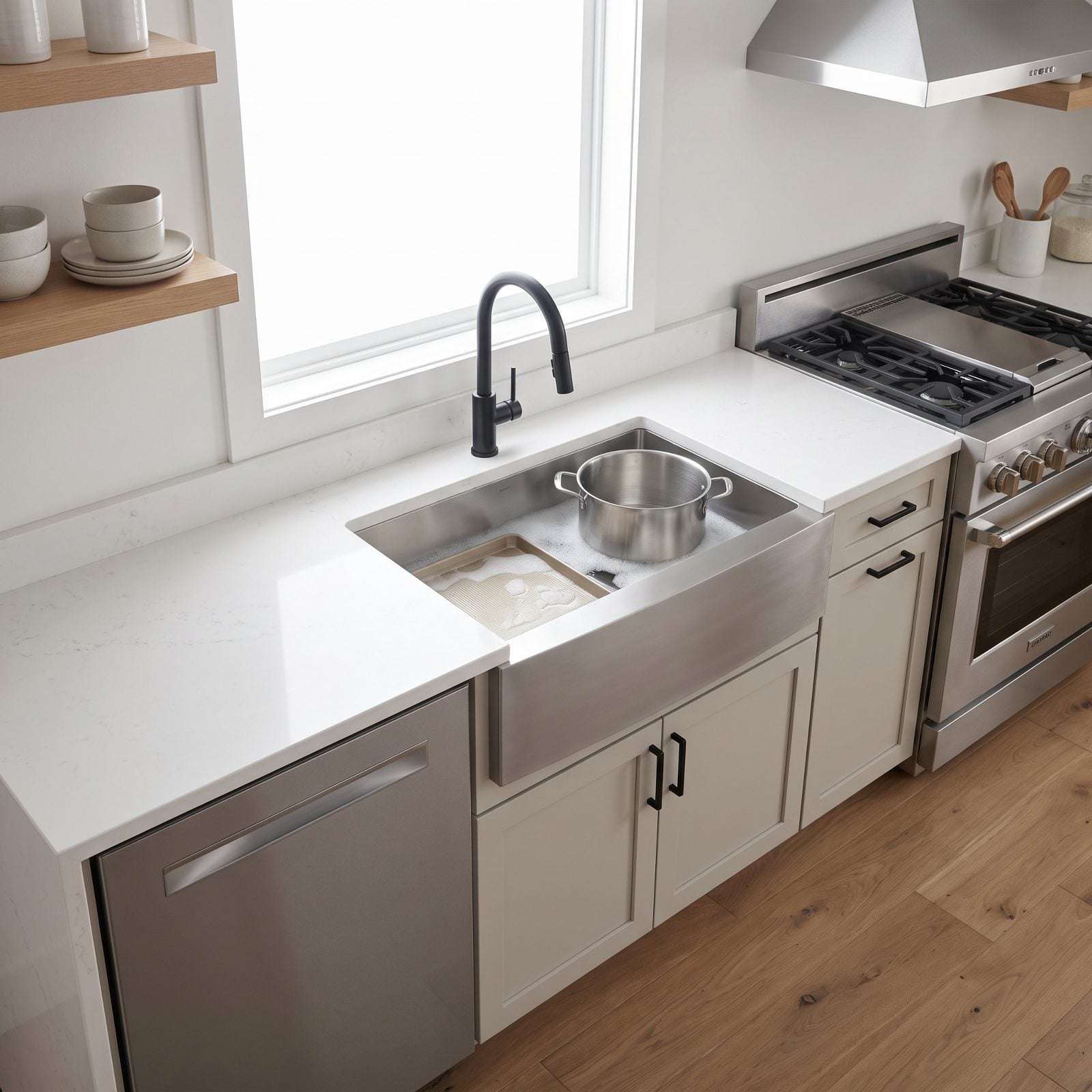
Divided sinks look tidy in the showroom, then betray you the second you own a sheet pan. Neither side fits the big stuff, so you’re scrubbing at an angle with water going everywhere.
A single large bowl swallows a full sheet pan, a stockpot, a roasting rack — all lying flat. Cleanup stops being a wrestling match.
25. An Undermount Sink That Lets You Sweep Crumbs Directly Into It
🔥 Would you like to save this?
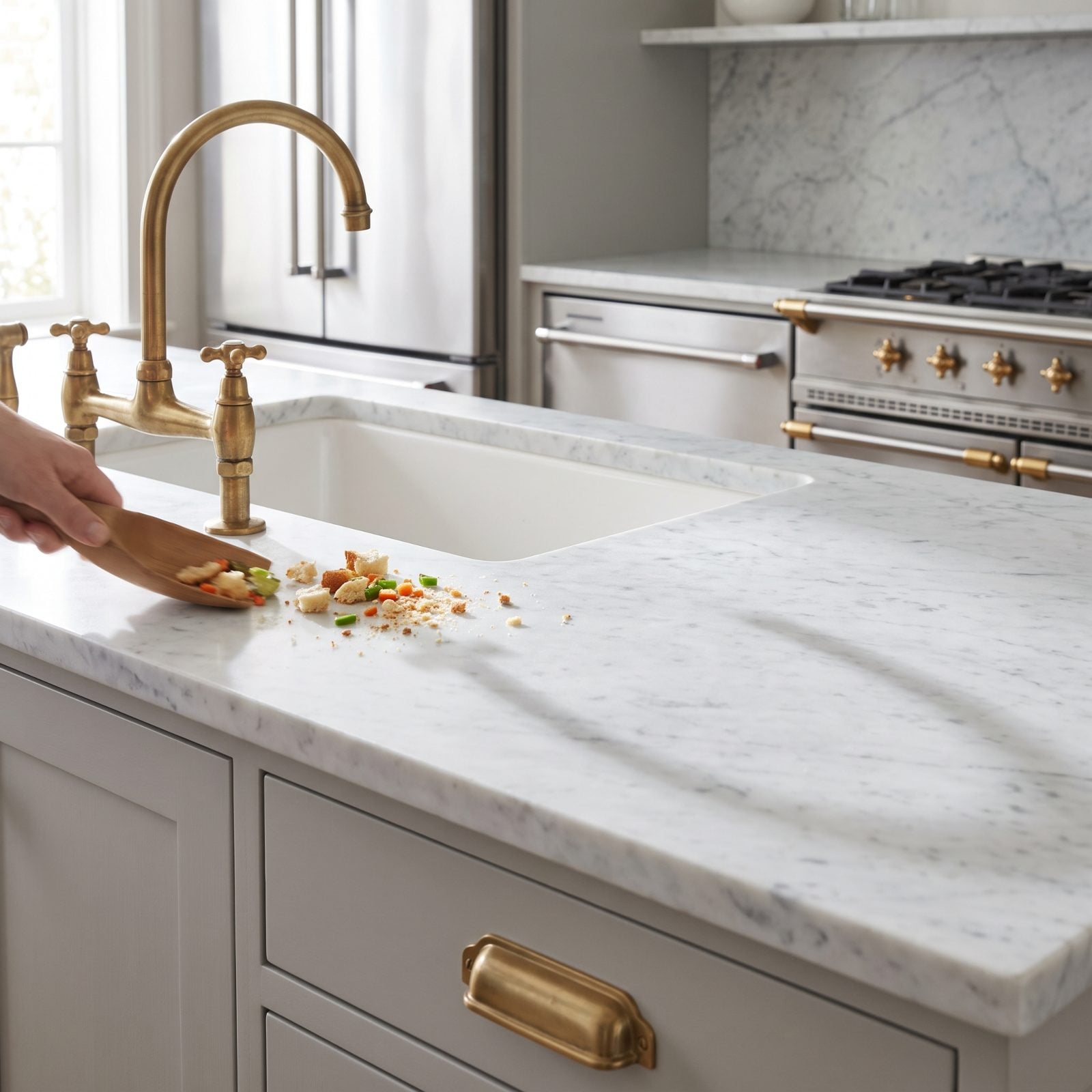
The lip on a drop-in sink is a crumb dam. Everything you sweep toward it stops dead at the rim, and you’re stuck pinching debris off the counter into your palm like some kind of animal.
An undermount runs the counter flush into the basin. One swipe with your hand or a cloth and the whole mess drops straight down. Small detail — but you’ll notice it three times a day for as long as you live there.
24. A Pull-Down Faucet Sprayer for Rinsing Large Pots and the Sink
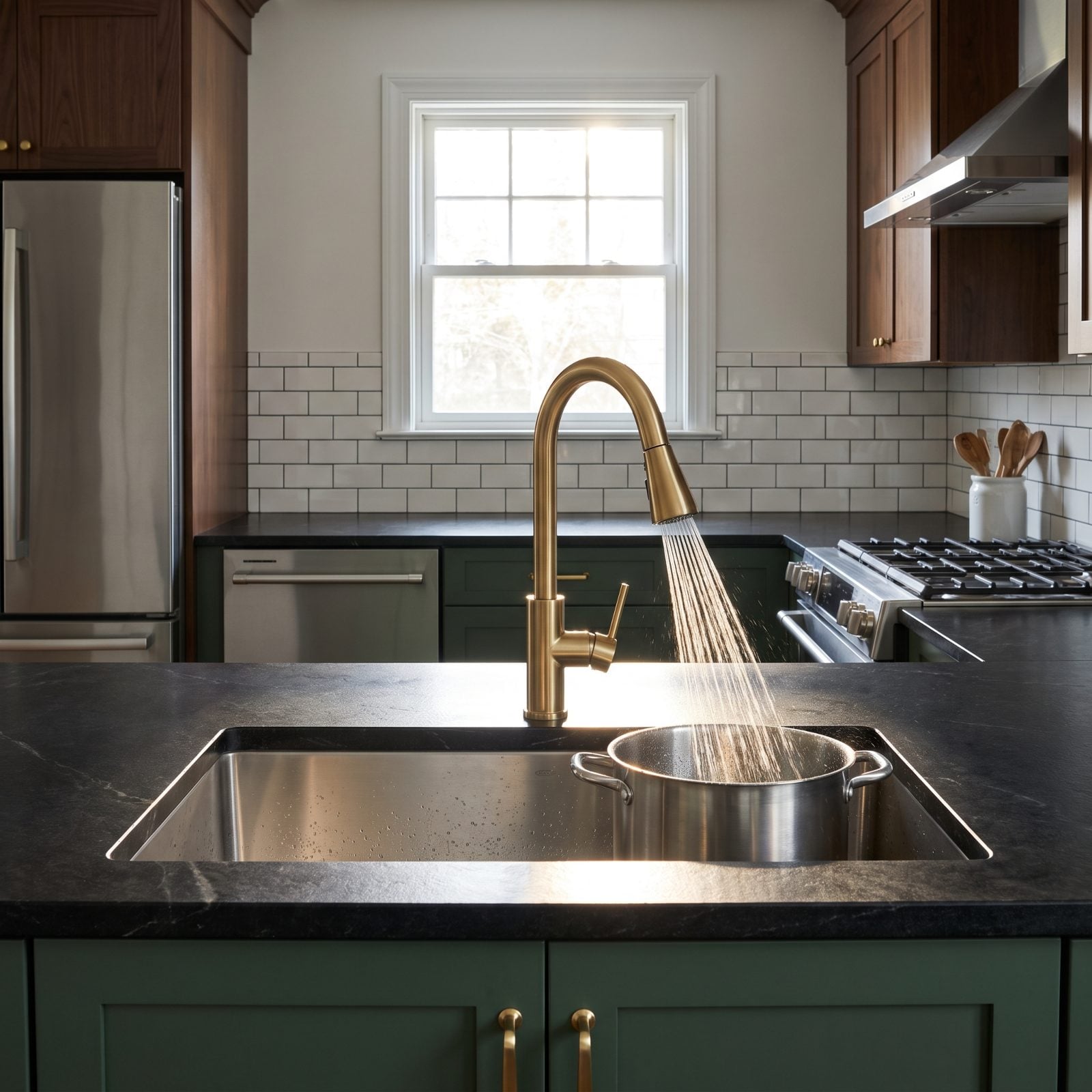
A fixed faucet only cleans what you can hold under it. A pull-down sprayer goes where the mess actually is: the far corner of the sink, the bottom of a stockpot, the crud welded to a colander.
This brushed gold pull-down faucet pairs with a deep single bowl, so you rinse the whole basin clean in one pass. No more spinning a big pot under a stationary stream, hoping you got the back of it.
23. A Touchless or Foot-Activated Faucet
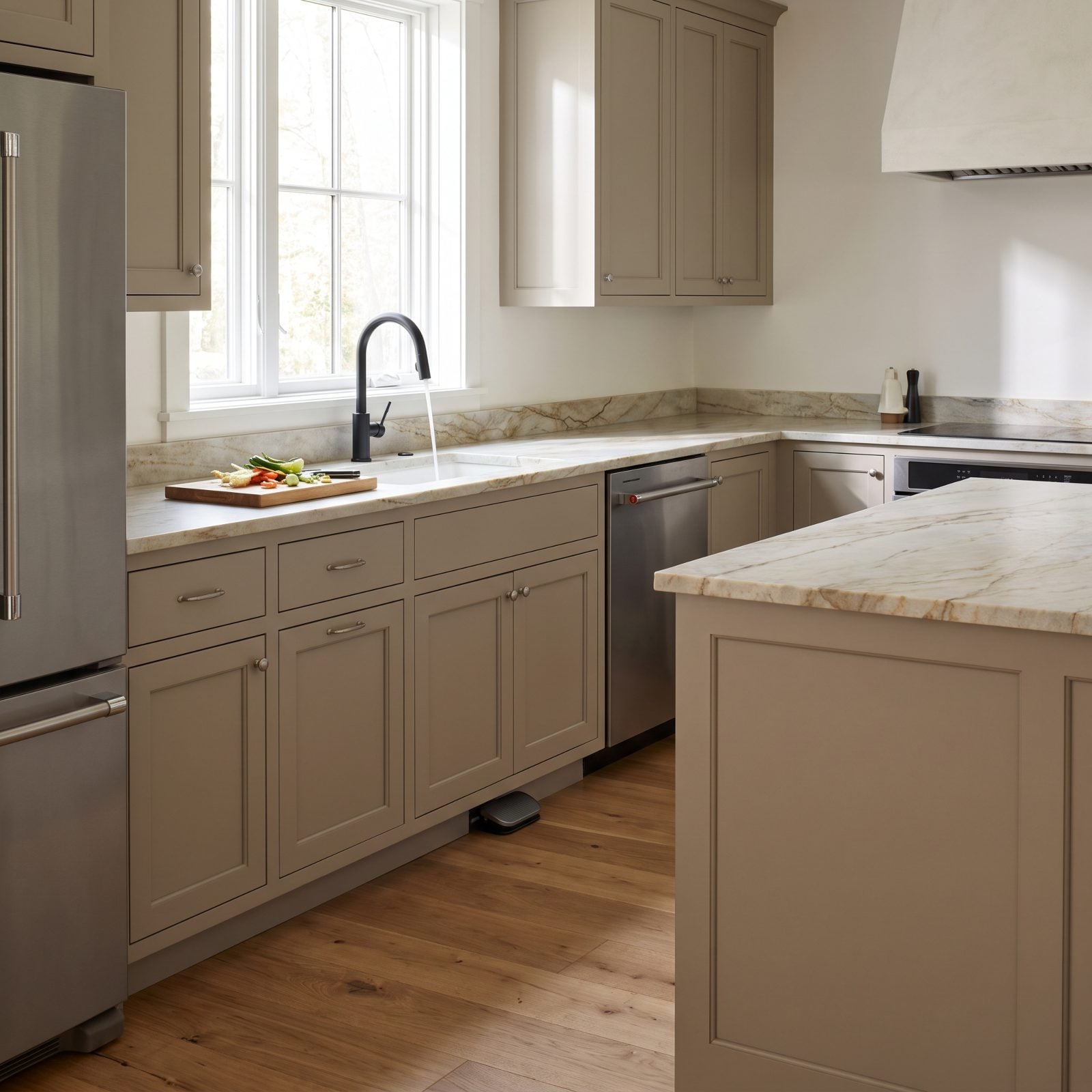
Raw chicken hands and a faucet handle are a bad pairing. Every touch you skip is a surface you don’t have to scrub down later.
Touchless faucets flick on with a wave; a foot pedal frees both hands entirely. You rinse, you soap, you cut the water without smearing anything onto the fixture. The hygiene case makes itself. The quieter payoff? Never scrubbing chicken juice off a handle after dinner again.
22. A Prep Sink on a Large Island
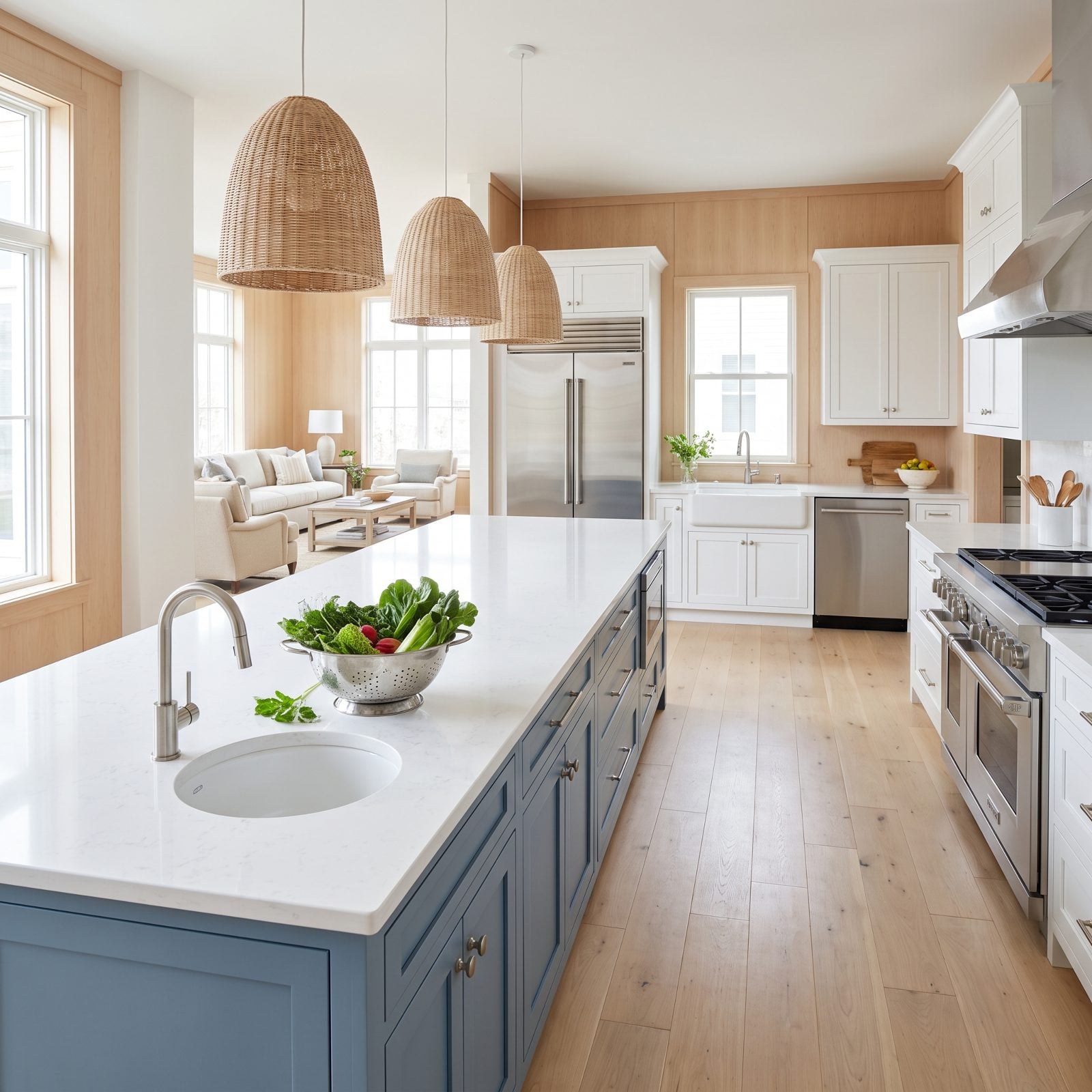
One sink means one cook at a time — or a lot of polite waiting. Add a prep sink to the island and the island becomes its own station: rinse produce, fill a pot, drain pasta, all while somebody else works the main sink.
Two wet zones, two cooks, no low-grade turf war over the faucet. On a big island, that’s the line between a genuine work surface and a very large, very useless countertop.
21. A Compost Bin Built Directly Into the Prep Zone
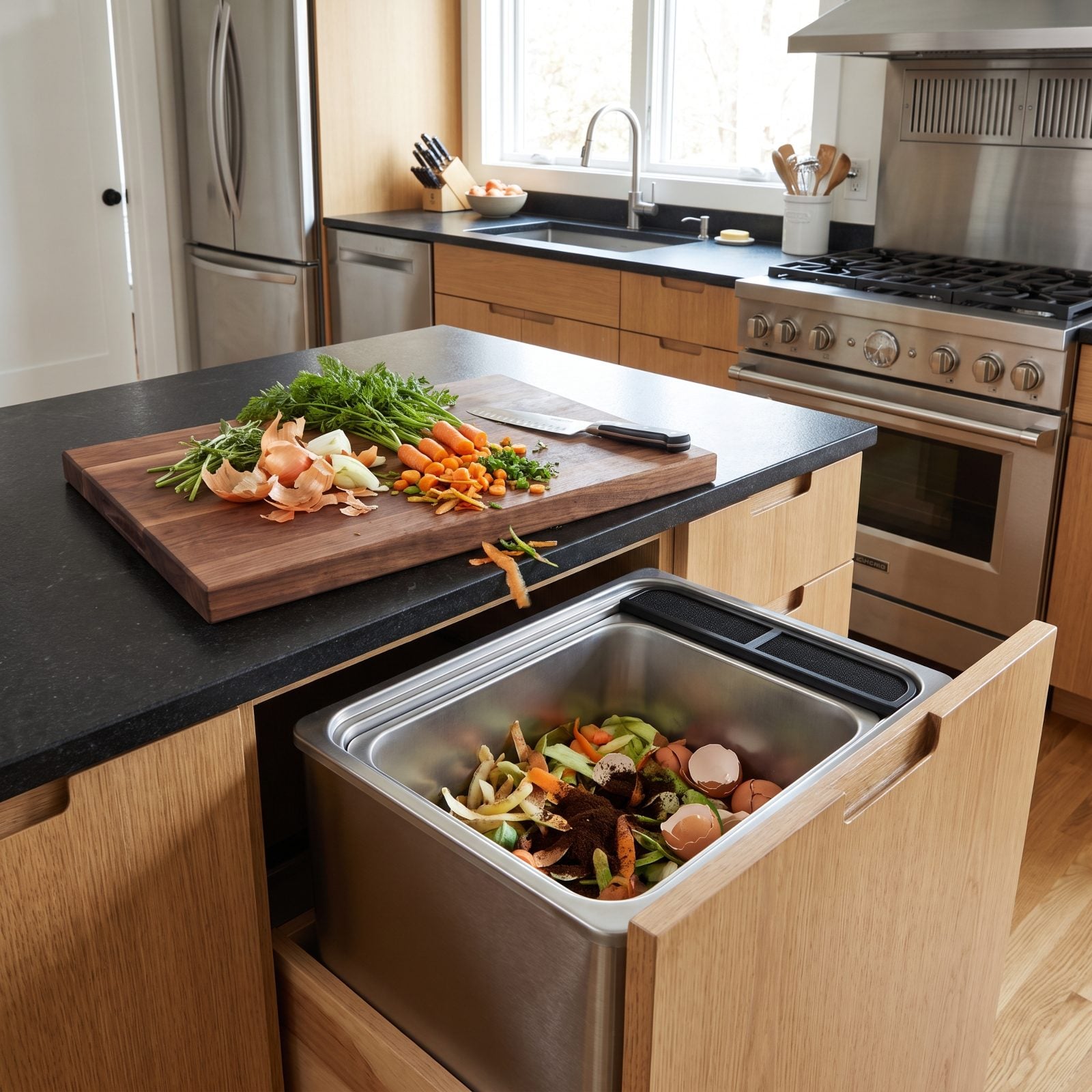
Composting dies on friction. A bin under the sink, behind a door, three feet from the cutting board? You’ll use it for a week, then quietly give up.
Build the bin into the prep zone, right under where you chop, and scraps sweep off the board and straight down — no bending, no separate trip, no lidded pail growing a fruit-fly colony on the counter. The charcoal-filter lid handles the smell, which is the part everyone worries about and nobody should.
20. Cleaning Supplies in a Pull-Out Beside or Beneath the Sink
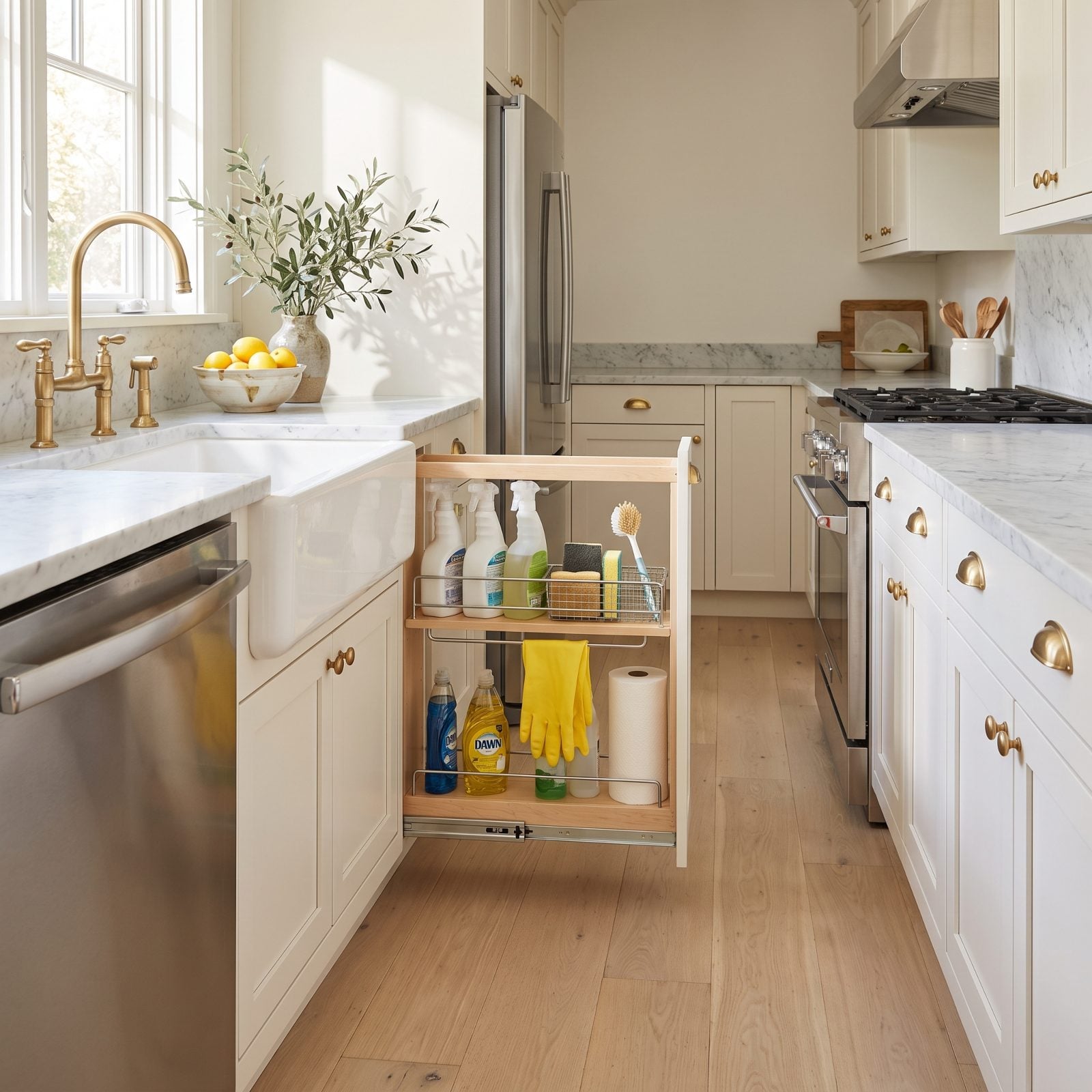
Bending under the sink to fish for a spray bottle behind the garbage disposal pipes is a small daily irritation that adds up fast. A slim vertical pull-out fixes it by bringing everything upright and into the light the second you tug the handle.
Put it right where the mess happens, and cleanup becomes a reflex instead of a hunt. Spray bottles stand at attention, the sponge caddy stops leaking under the pipe, and you quit losing gloves to that dark corner nobody can reach.
19. Dish Towels Stored Immediately Beside the Sink
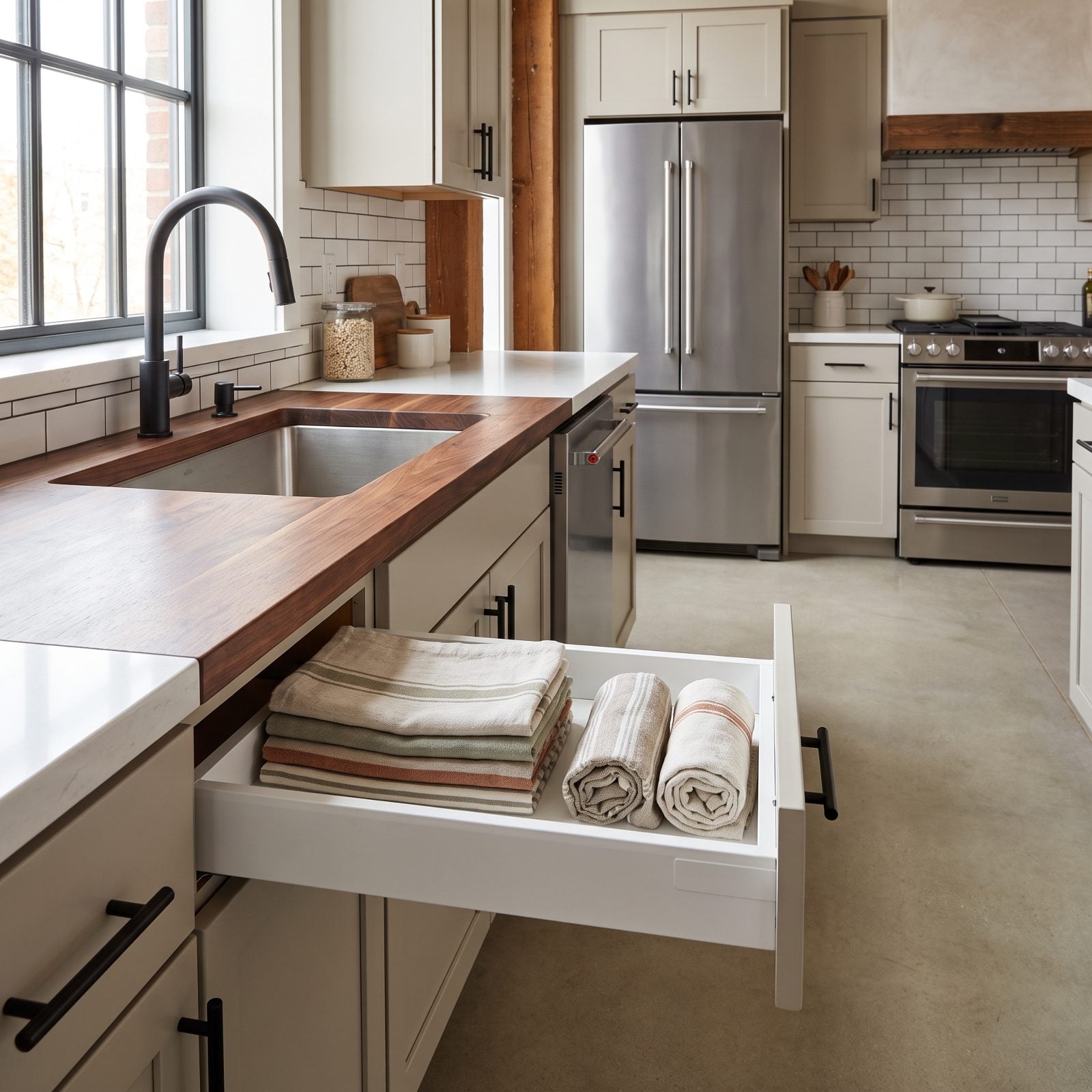
Wet hands and a towel three steps away is how you end up dripping across the floor twice a day. Keep the towels in a shallow drawer within arm’s reach of the faucet and that whole problem disappears.
18. Under-Cabinet Lighting Over Every Major Work Surface
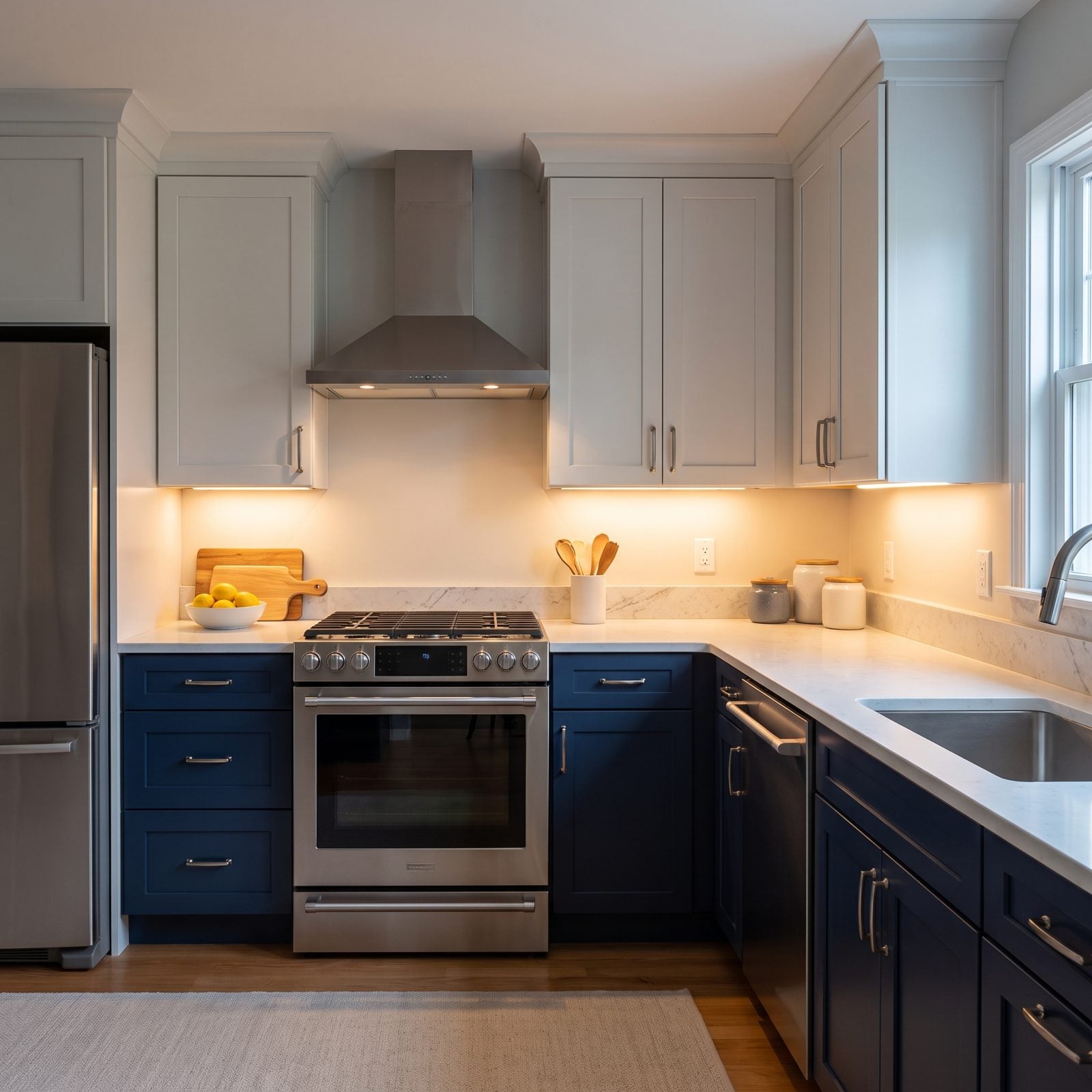
Your own body throws a shadow over the cutting board every time you stand at the counter. Overhead lights sit behind you, so the knife works in the dark.
Run continuous strips over the prep zone, the sink, and beside the cooktop, and that shadow is gone for good. You see what you’re chopping, you catch the grime you’d otherwise miss, and prep speeds up because you’re not squinting.
17. Outlets Positioned Exactly Where Countertop Appliances Are Used
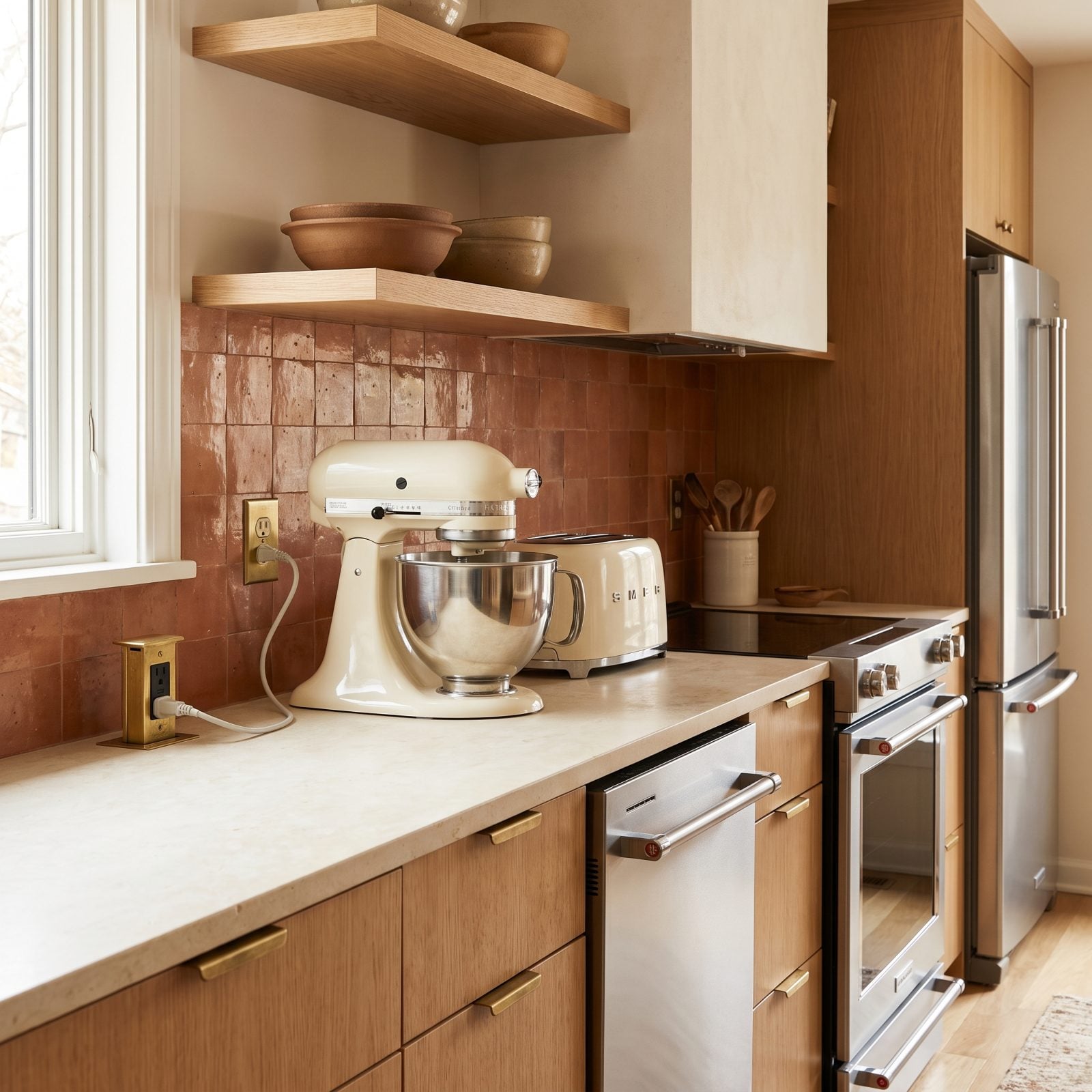
Nobody thinks about outlet placement until they’re stretching a blender cord across the whole counter to reach the one plug near the fridge. Then they think about it every single morning.
Map your outlets to where you actually use appliances. The toaster gets a plug behind it, the mixer corner gets its own, and a pop-up outlet in the island earns its keep on the days you prep there.
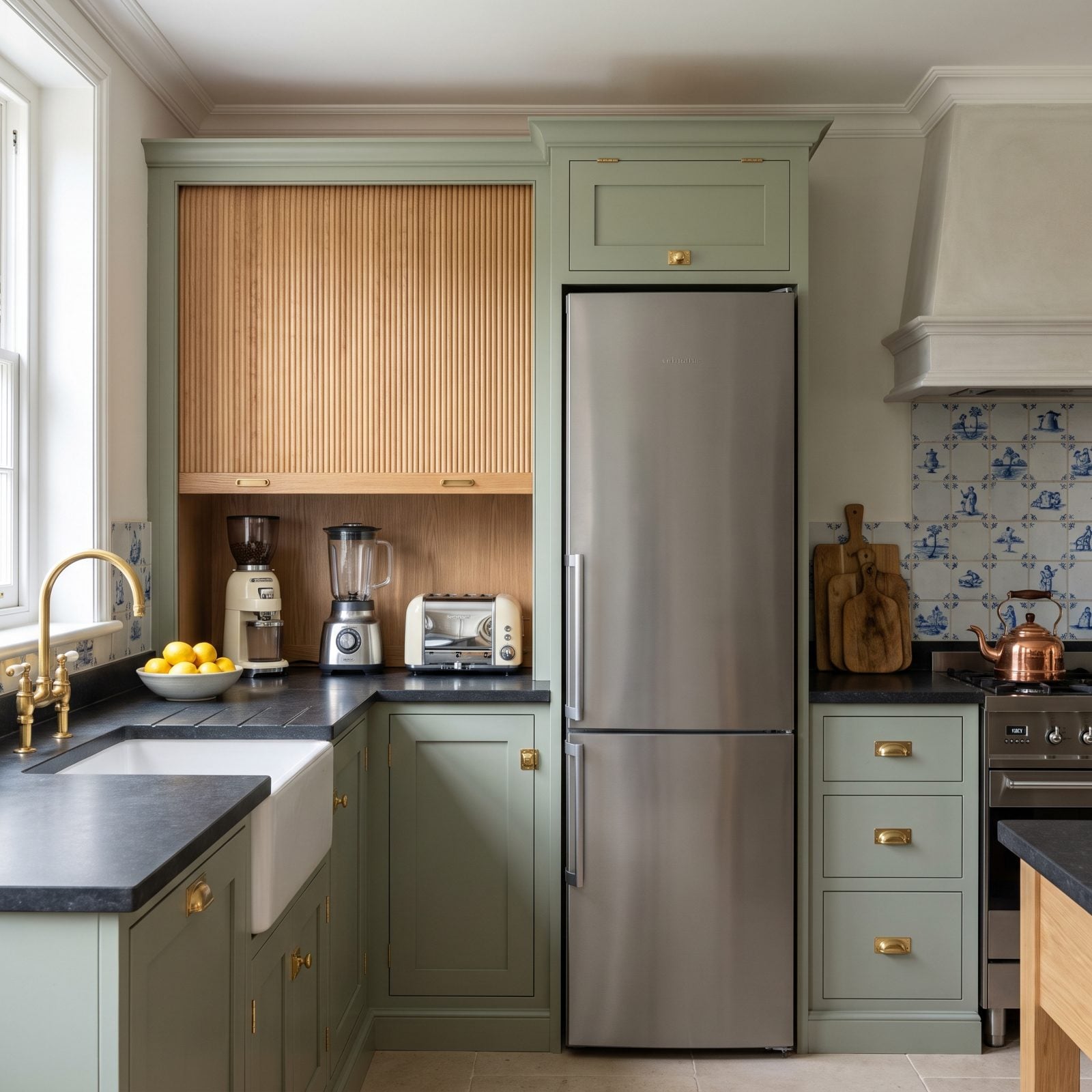
16. An Appliance Garage for Frequently Used Small Appliances
🔥 Would you like to save this?
A tambour-door garage hides the toaster, the grinder, and the blender at counter level, then hides them again when you’re done. Lift the door and they’re plugged in and ready; roll it down and the counter looks clean.
The real win is that you stop lifting them in and out of a deep cabinet. They live on the counter. They just live behind a door.
15. A Microwave Drawer Instead of an Over-the-Range Microwave
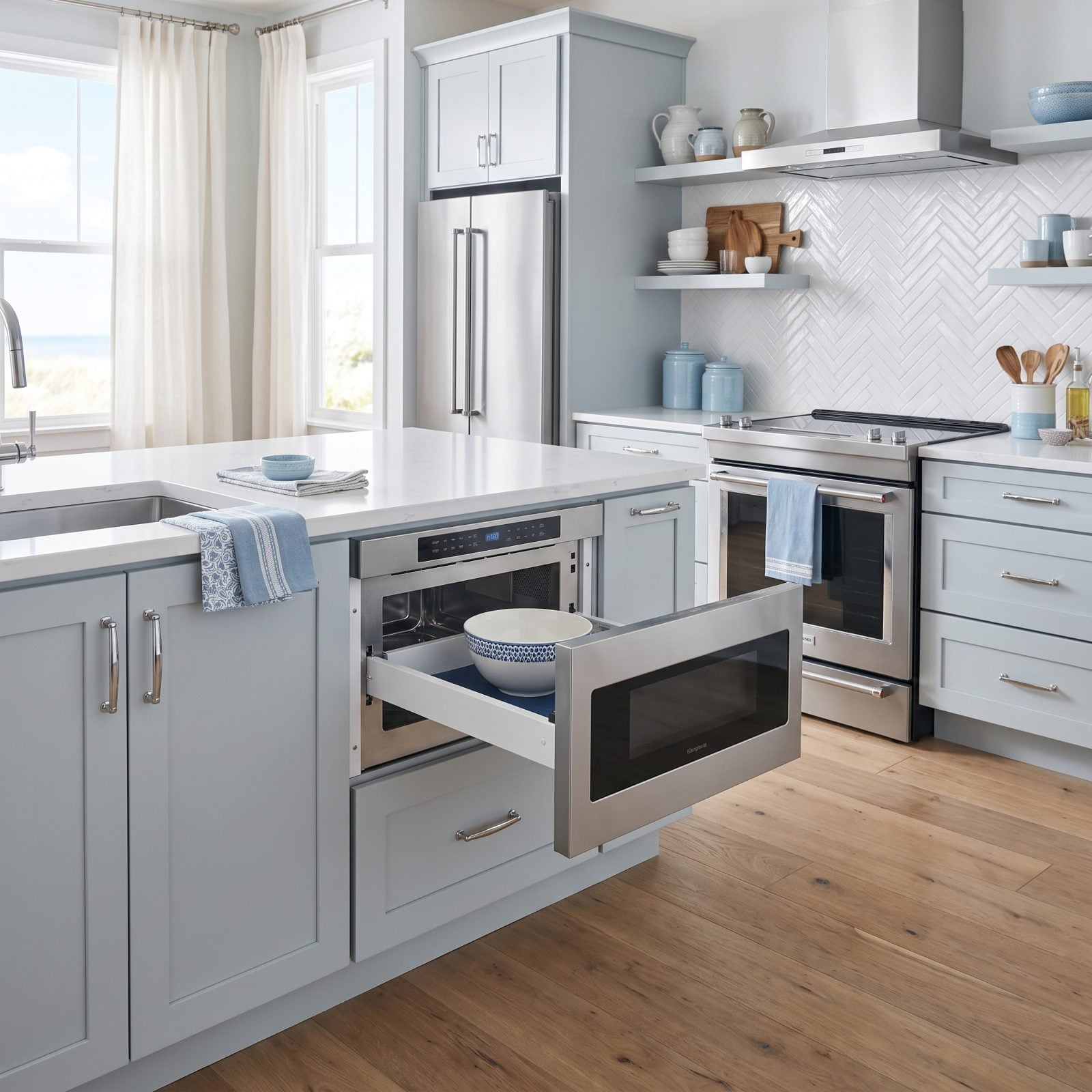
Reaching over a hot pot to pull a bowl of soup down from a microwave mounted above the range is a burn waiting to happen. I’ve watched it nearly happen more times than I can count.
A microwave drawer drops the whole thing to hip height in the island or a base cabinet. You slide it open, look straight down into it, and lift out at counter level instead of over your head. Bonus: it clears the wall above the cooktop for a proper hood, which your ventilation will thank you for.
The over-the-range microwave is the most awkward appliance in the average kitchen, and almost nobody questions it.
14. Wall Ovens Installed at a Comfortable Standing Height
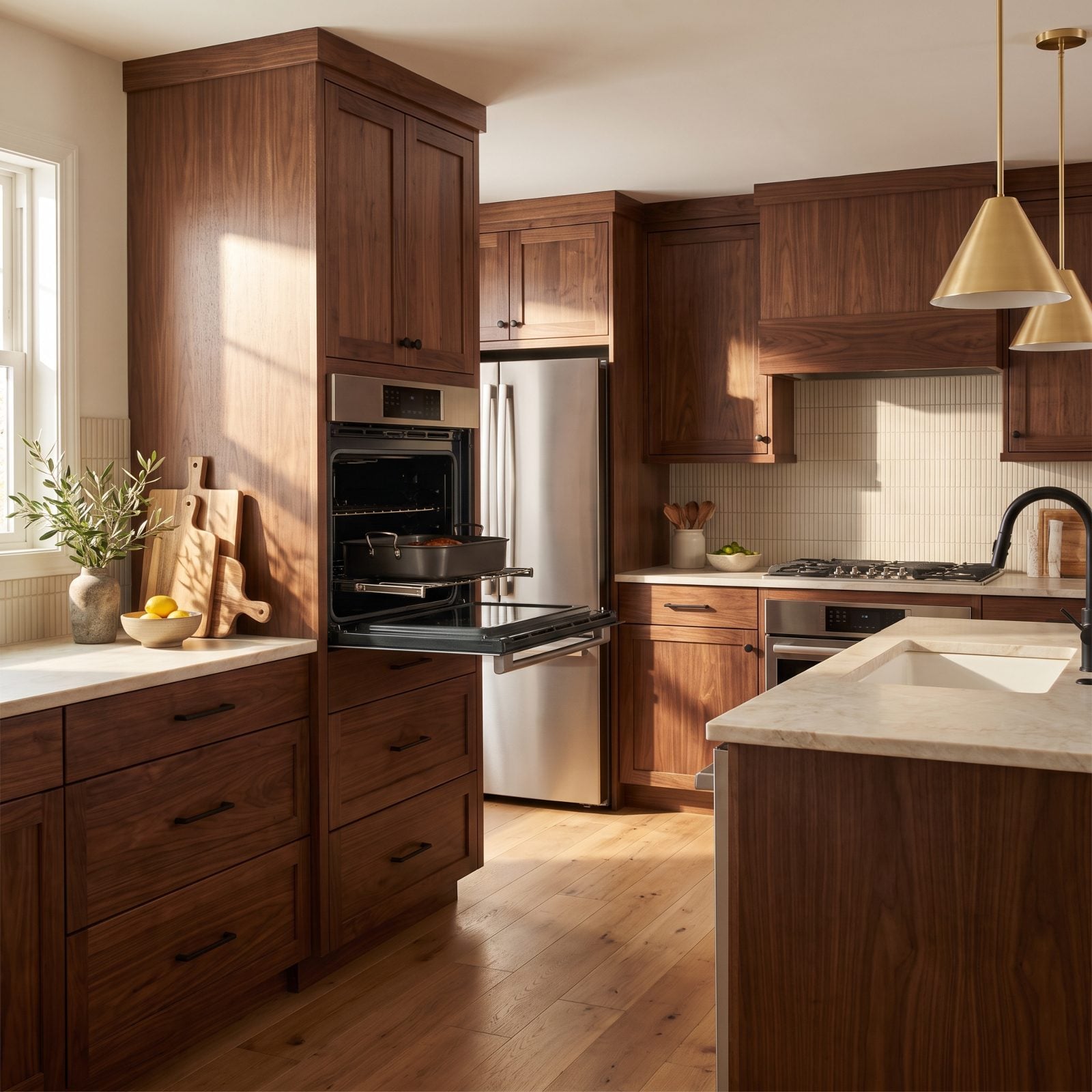
Crouching to check a roast in a floor-level range oven is the kind of thing that stops being funny around your fortieth birthday. Your knees keep score.
Set a wall oven so the cavity lands near hip height and you slide the pan in and out standing straight up. No bending, no reaching into a low box with a heavy tray, none of the oven-mitt gymnastics over a hot door at ankle level.
13. Heavy Appliances Stored Between Knee and Shoulder Height
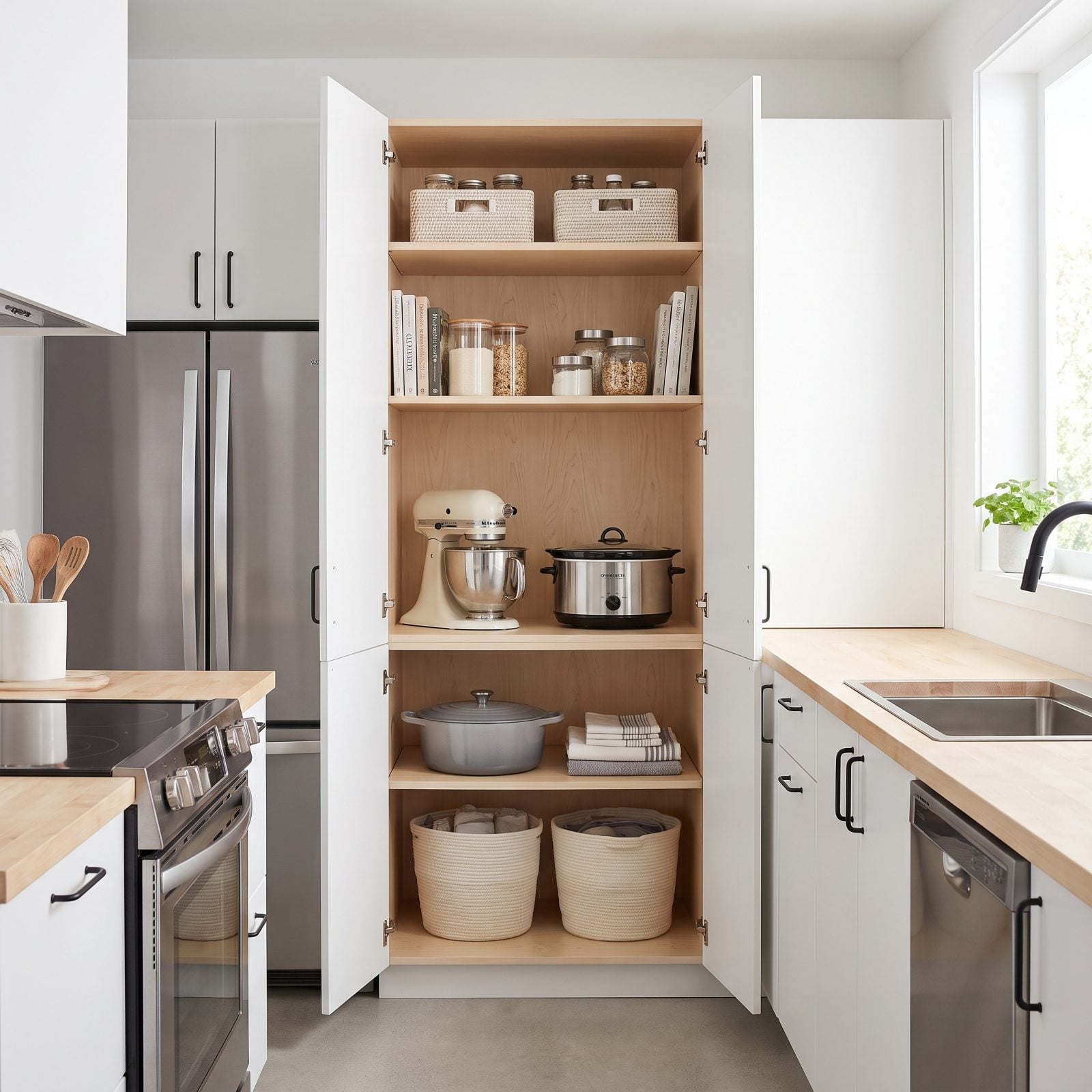
The stand mixer belongs where you can grab it without a squat or a stretch, which means the shelf between your knees and your shoulders.
Put the heavy stuff in that middle band. Save the top for light plastic bins and the bottom for things that don’t weigh much either. Nobody should be hoisting a ten-pound Dutch oven down from over their head, or hauling it up from the floor.
12. A Pull-Out Shelf for Heavy Appliances Instead of Lifting Them From a Cabinet
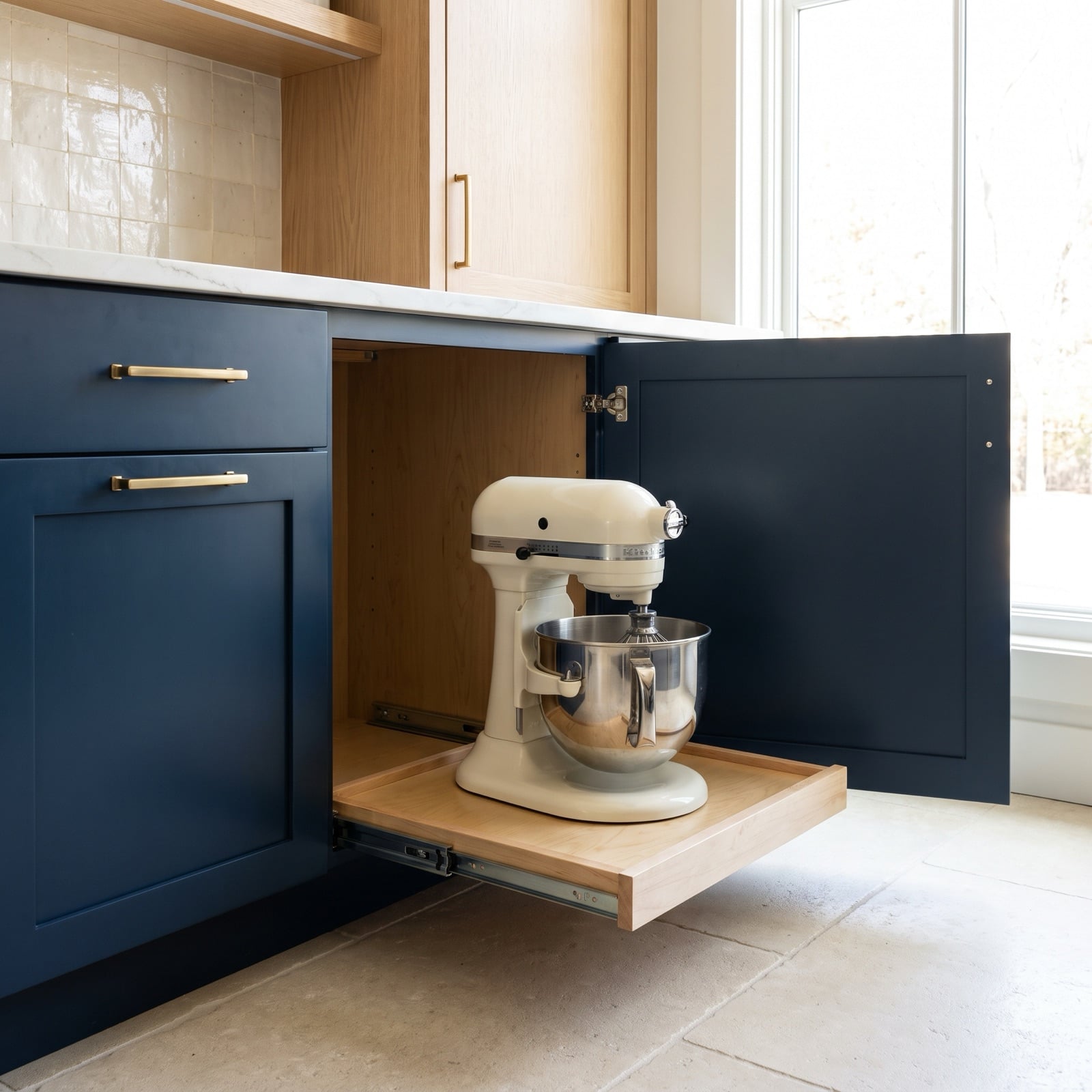
A heavy-rated pull-out shelf glides the stand mixer out of the cabinet and toward you, so you never lift it out at all. Use it right there on the extended shelf, or slide it forward, lift once, and set it on the adjacent counter.
The mechanism carries the weight your back used to. That’s the reason to bother with it.
11. A Dedicated Coffee Station Outside the Main Cooking Zone
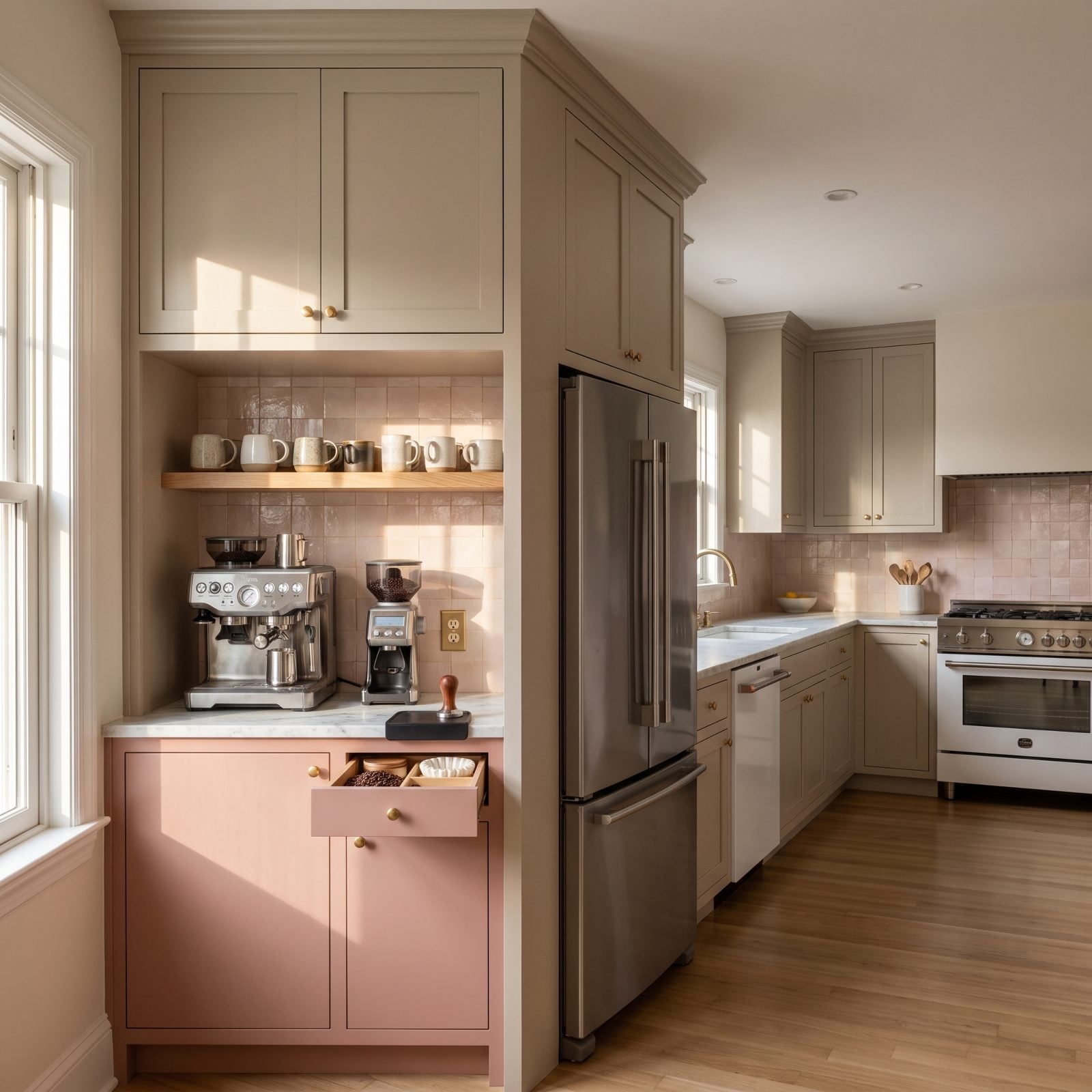
Coffee and cooking fight over the same counter every morning, and coffee always loses when someone’s frying eggs six inches away. Pull the whole ritual into its own corner and the traffic jam ends.
Give it a grinder, the machine, mugs on an open shelf, a drawer for beans, and its own outlet. Now the person making pour-over isn’t dodging the person cracking eggs, and the cook keeps the range zone to themselves. A soft pink kitchen accent on the niche cabinets makes the station feel like a little separate room tucked inside the bigger one.
10. A Refrigerator Positioned So Other People Can Access It Without Entering the Cooking Zone
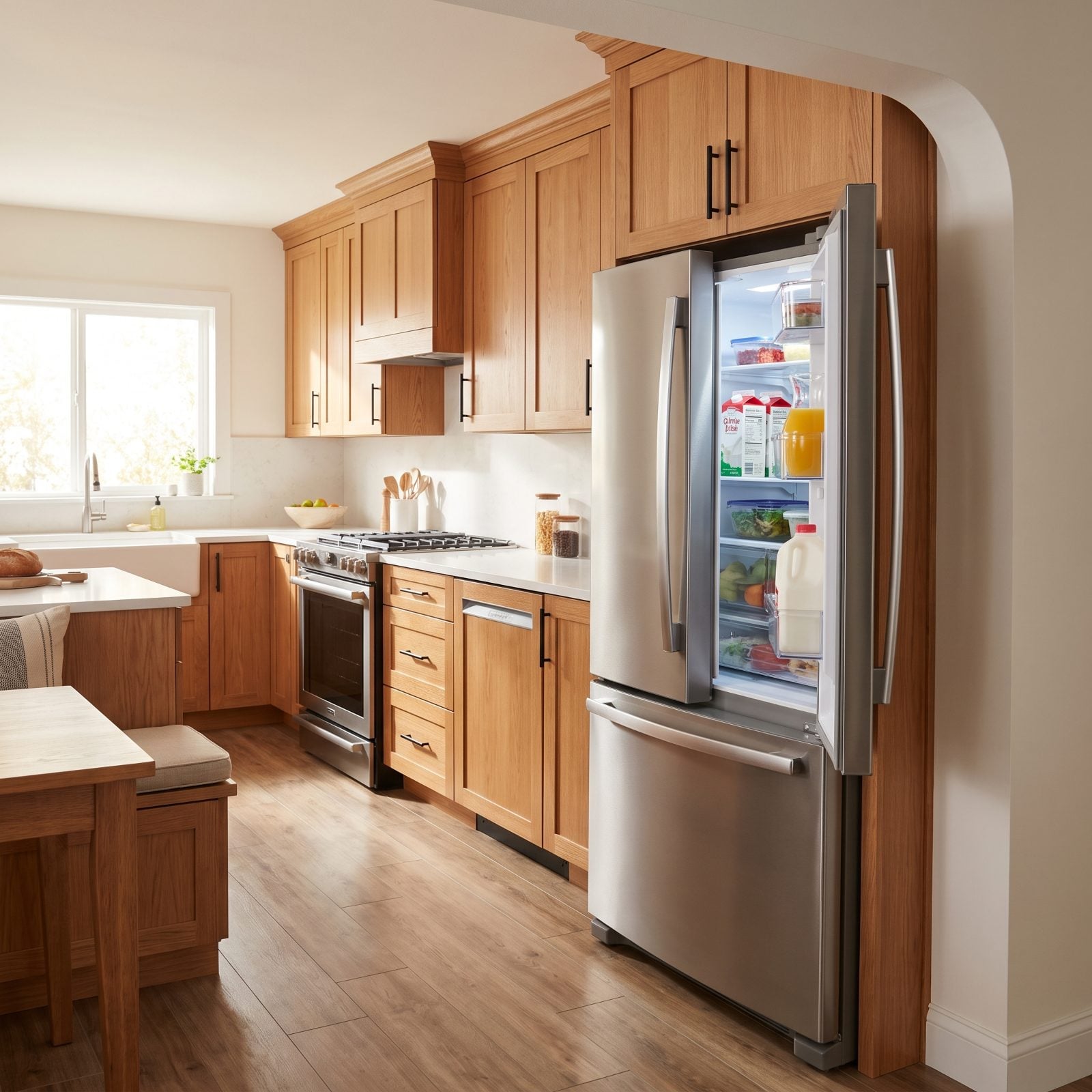
Nothing derails a dinner faster than three people reaching past you for the fridge while a pan spits oil behind you. Push the refrigerator to the edge of the kitchen, near the doorway, and the traffic sorts itself out. Kids grab juice, guests grab a beer, and none of them steps into your six square feet of chaos.
Watch the swing radius. Give the door room to open toward the open floor instead of the cooking lane, and you stop bumping elbows for good.
9. A Beverage Refrigerator Outside the Primary Cooking Area
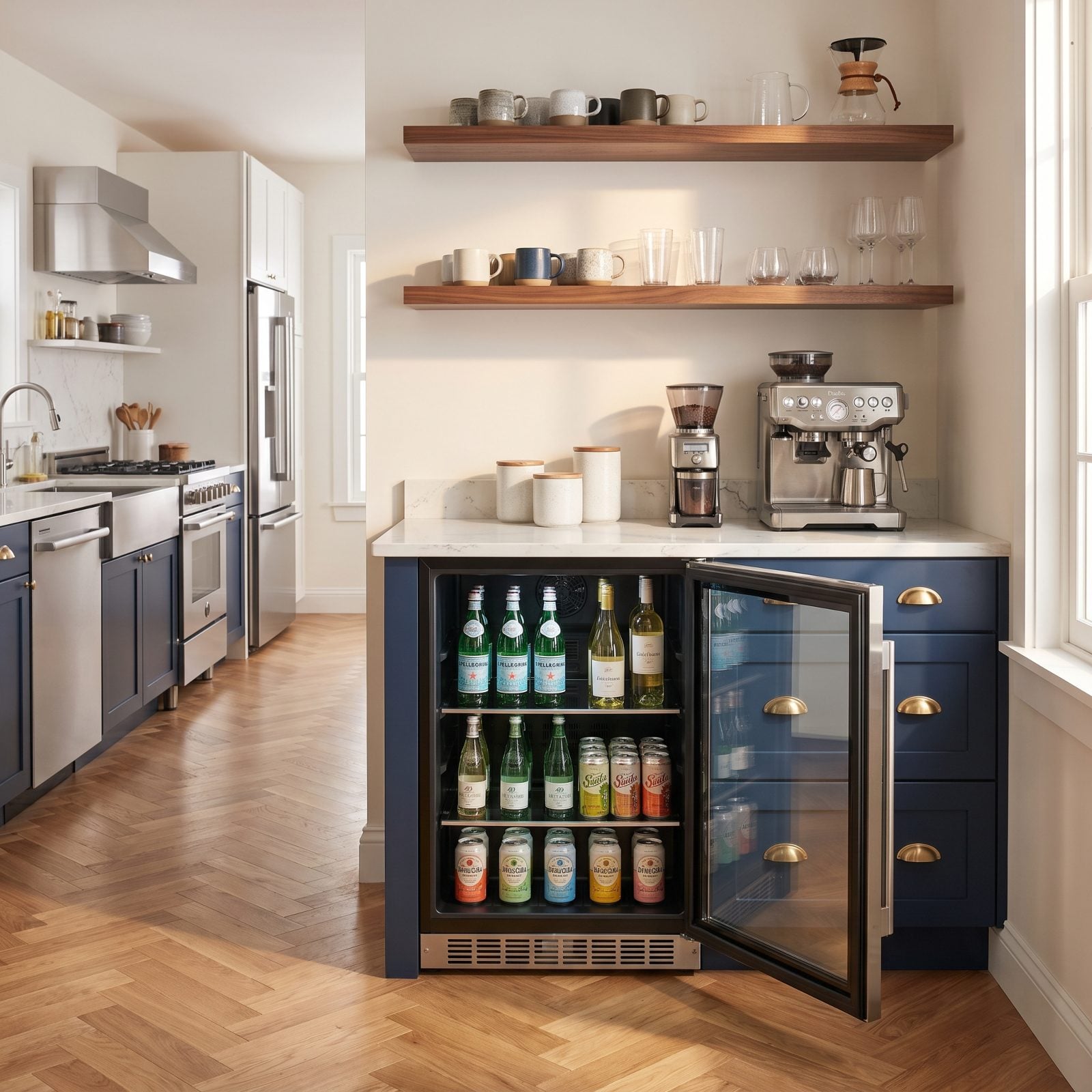
Give drinks their own address. A beverage fridge tucked into a side counter, well away from the stove, means every refill happens outside the hot zone. The cook keeps the range while everybody else gets a self-serve bar.
Pair it with a small landing counter and a shelf of glasses, and you’ve built a station that runs itself during a party. I’ve watched hosts spend an entire evening never once being asked where the wine is. Success looks like being left alone to cook.
8. A Pantry Located Close to Where Groceries Enter the Kitchen
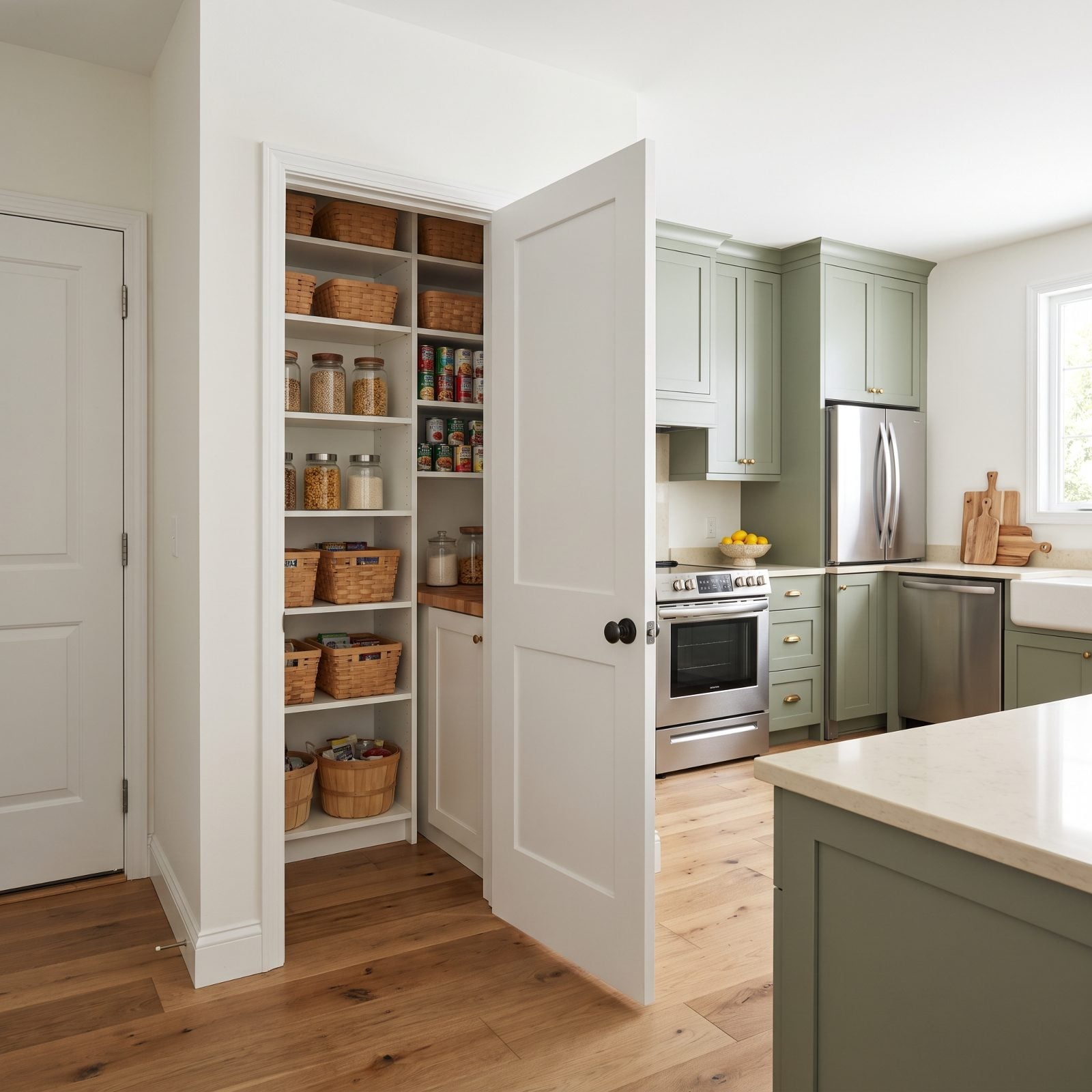
The shortest walk in the kitchen should be from the door to the pantry. Groceries are heaviest the moment they arrive, and every extra step across the room with a bag cutting into your fingers is a step you’ll resent by the fifth trip.
Put the pantry near the entry from the garage or driveway and unloading turns into a two-minute job instead of a marathon. Bags down, shelves stocked, done. A little inside counter to set things on while you sort helps too. Want proof storage can look good? This boho pantry design pulls it off.
7. A Dedicated Counter for Unloading Groceries
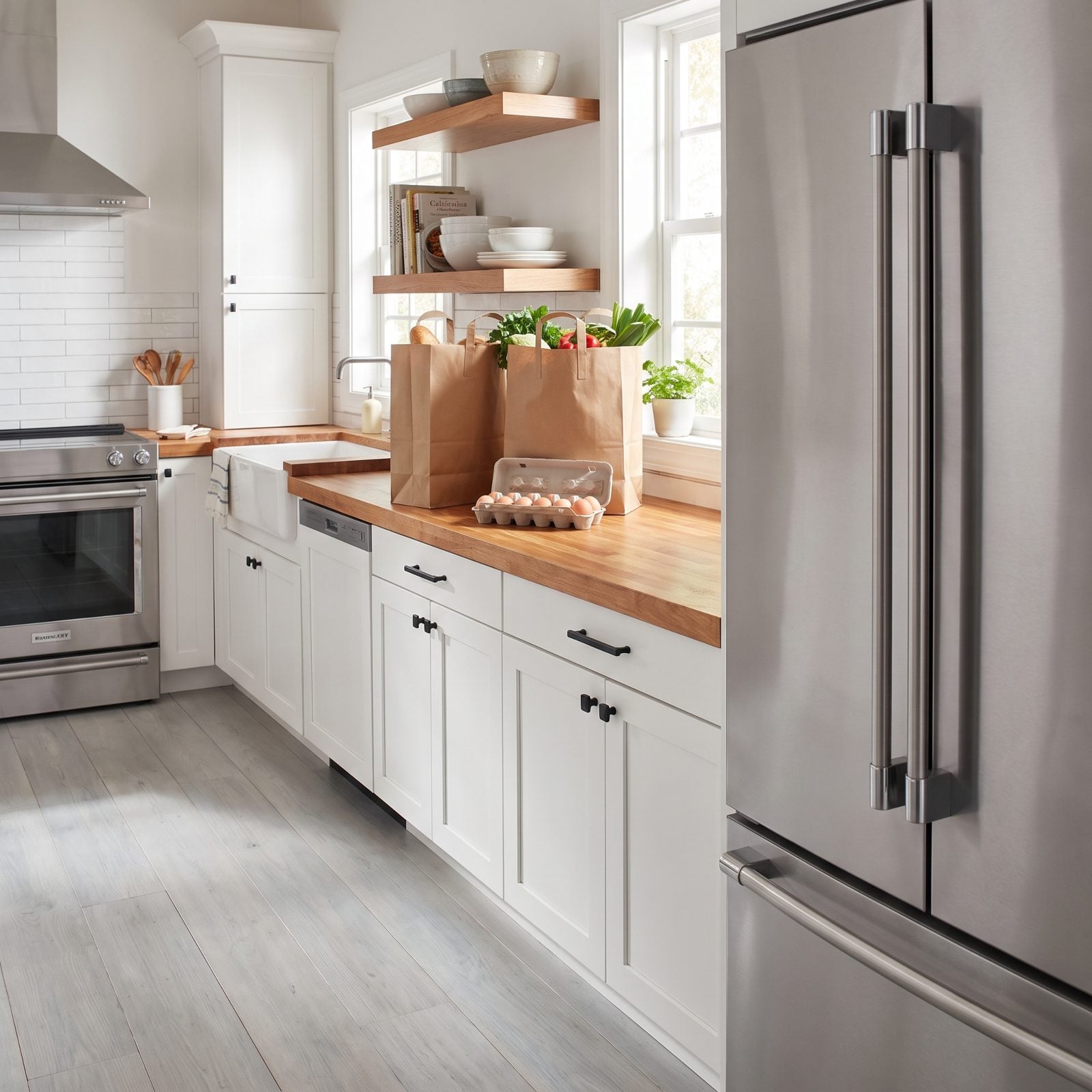
Keep one length of counter permanently clear, right next to the fridge. That’s your landing pad. Bags come off your arms, hit the counter, and you sort straight into the refrigerator without hunting for a free surface.
Most kitchens fail here. Every inch gets colonized by the toaster, the mail, the fruit bowl, that one appliance you used once and never again. Fight for the empty stretch anyway. Your back will thank you.
6. A Wide Aisle Between the Island and Main Cabinet Run
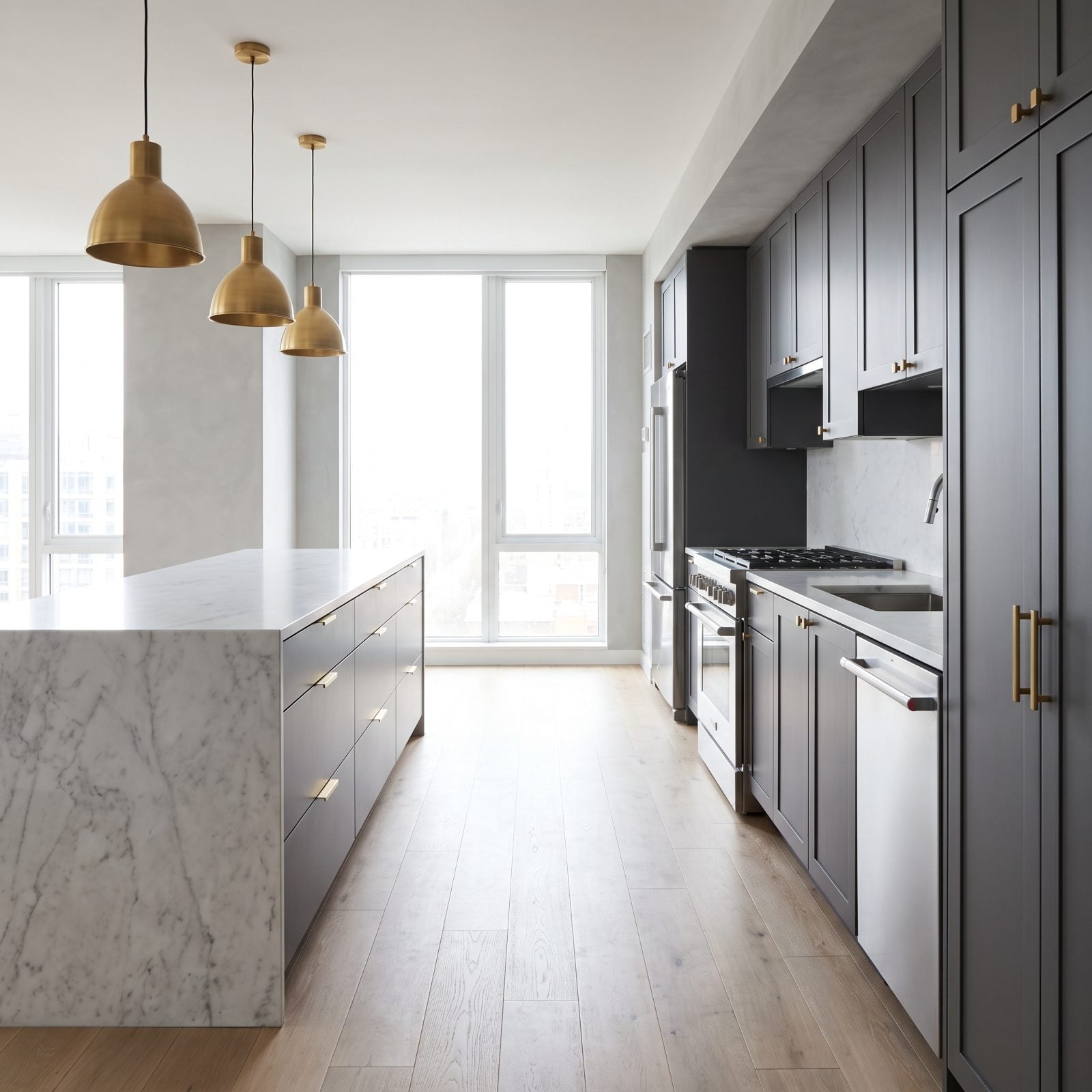
Skimp on the aisle and you’ll feel it every day. Two cooks in a narrow galley become a slow-motion collision, and the second you open a dishwasher door across from open drawers, nobody can move.
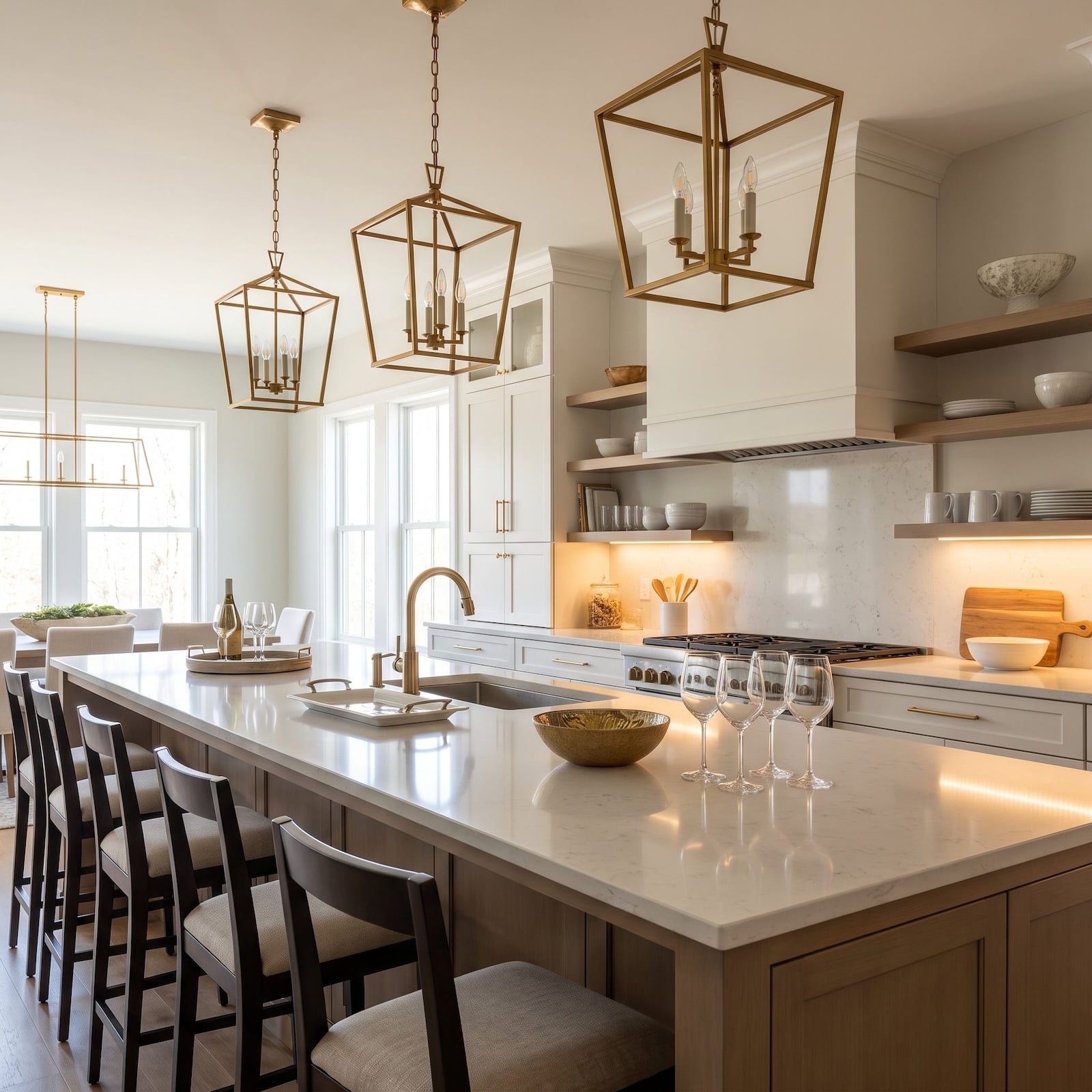
Give yourself at least 42 inches between the island and the cabinets. More if two people cook. You get room to bend into the oven, swing a drawer wide, and let someone squeeze past with a hot pot. The brass pendant lights overhead mark the walkway without crowding it.
5. Island Seating Positioned on the Non-Working Side
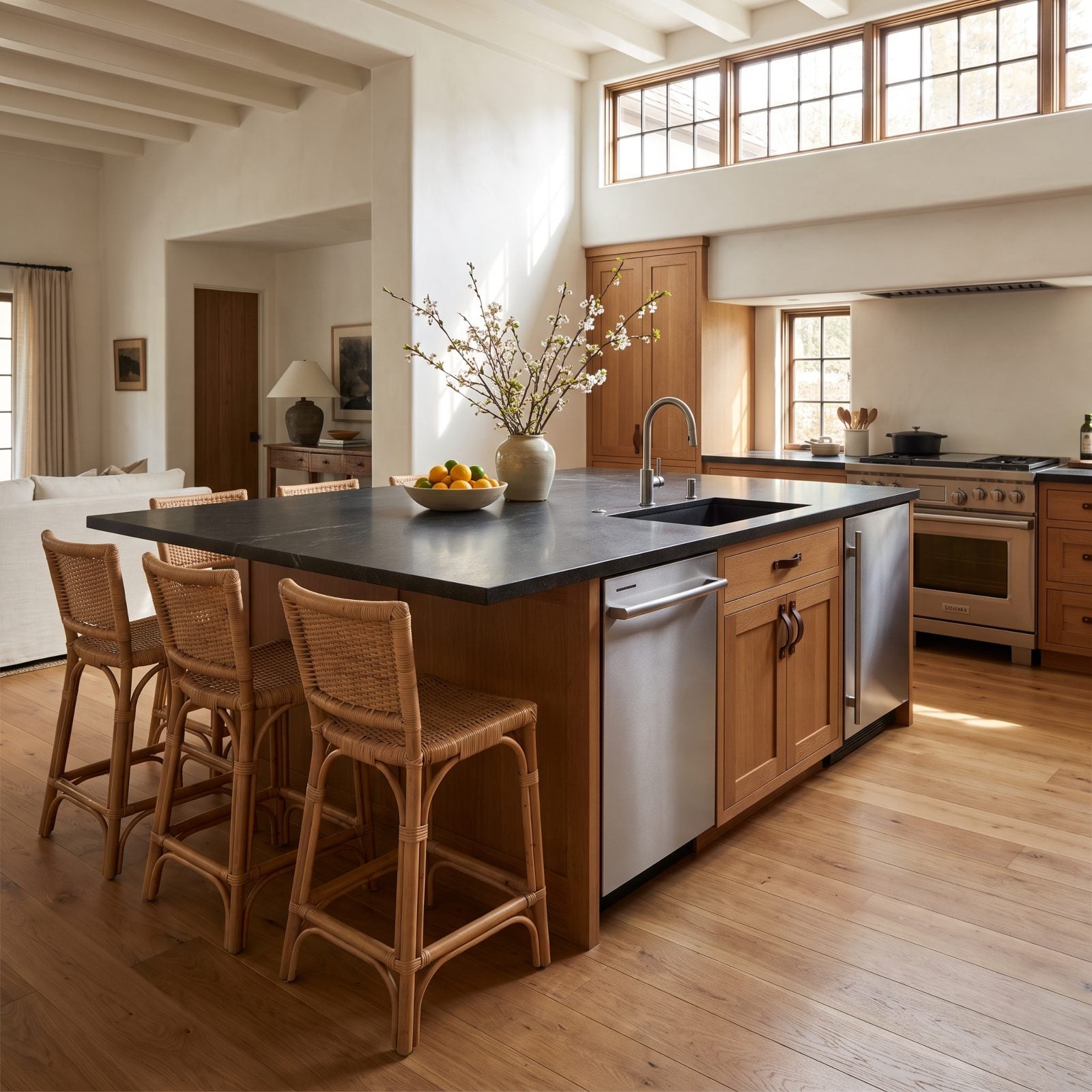
Seat people where the cook isn’t. Put the stools on the far side of the island, backs to the open room, and the prep side stays clear for chopping, plating, and the general mess of getting dinner out.
The seated crowd faces you. You face the range. Nobody’s knees are jammed under your cutting board. It’s a small orientation choice that keeps conversation flowing and knives away from elbows. Rattan stools with a low back, like these rattan counter stools, keep the sightlines open too.
4. An Island Positioned So It Doesn’t Obstruct the Sink-Fridge-Cooktop Workflow
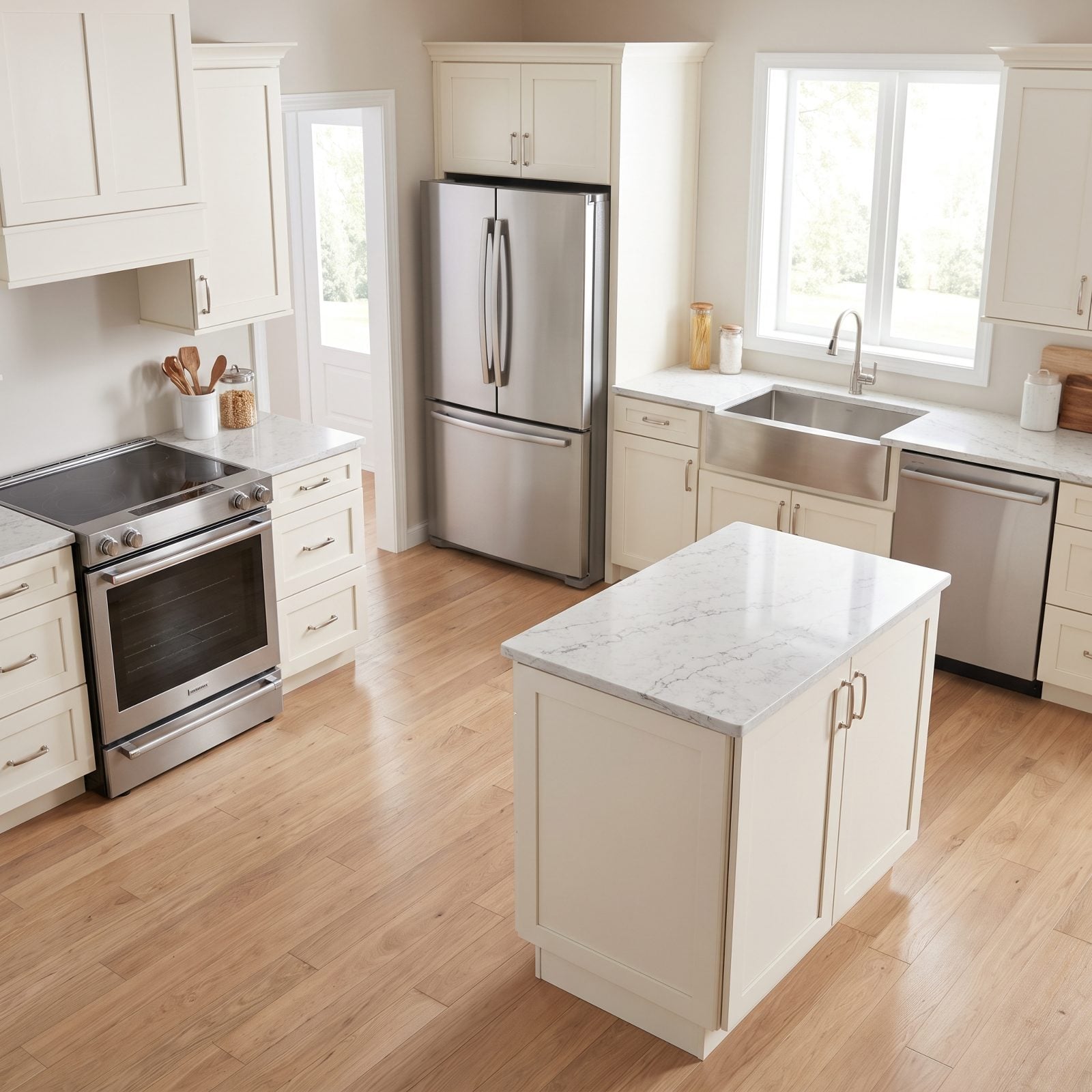
Your feet already know the route: fridge, sink, stove, repeat. That triangle carries the busiest traffic in the house, and an island dropped in the middle of it turns every meal into an obstacle course.
Set the island to the side of the flow, not across it. You still get the extra prep surface and storage, but the walk from the fridge to the cooktop stays a straight shot. Test it before the cabinets go in. Walk the path with your eyes half closed, and if you’d clip a corner, shift the island.
The best islands add surface without adding steps.
3. A Powerful Range Hood That Vents Outdoors
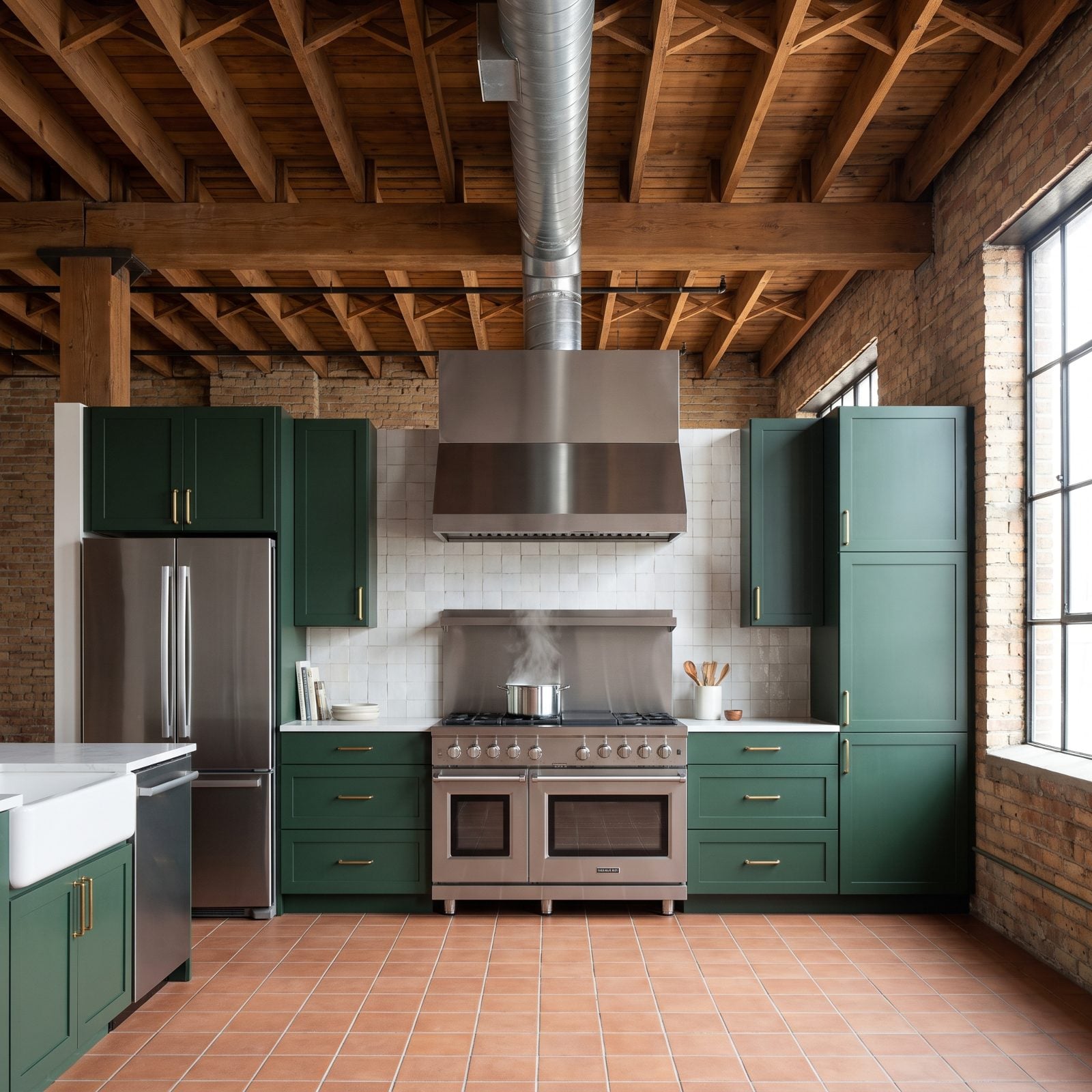
A recirculating hood is a fan that pretends to work. It sucks air up, runs it through a filter, then blows it right back at your face. Grease film settles on the cabinets and last night’s fish clings to the throw pillows in the next room.
Duct it outside. A real hood, sized to the range and vented through the wall or roof, pulls smoke, steam, and grease clean out of the house. Sear a steak without setting off the alarm. Fry without regret.
2. Induction Cooking for Fast Heating and Easy Cleanup
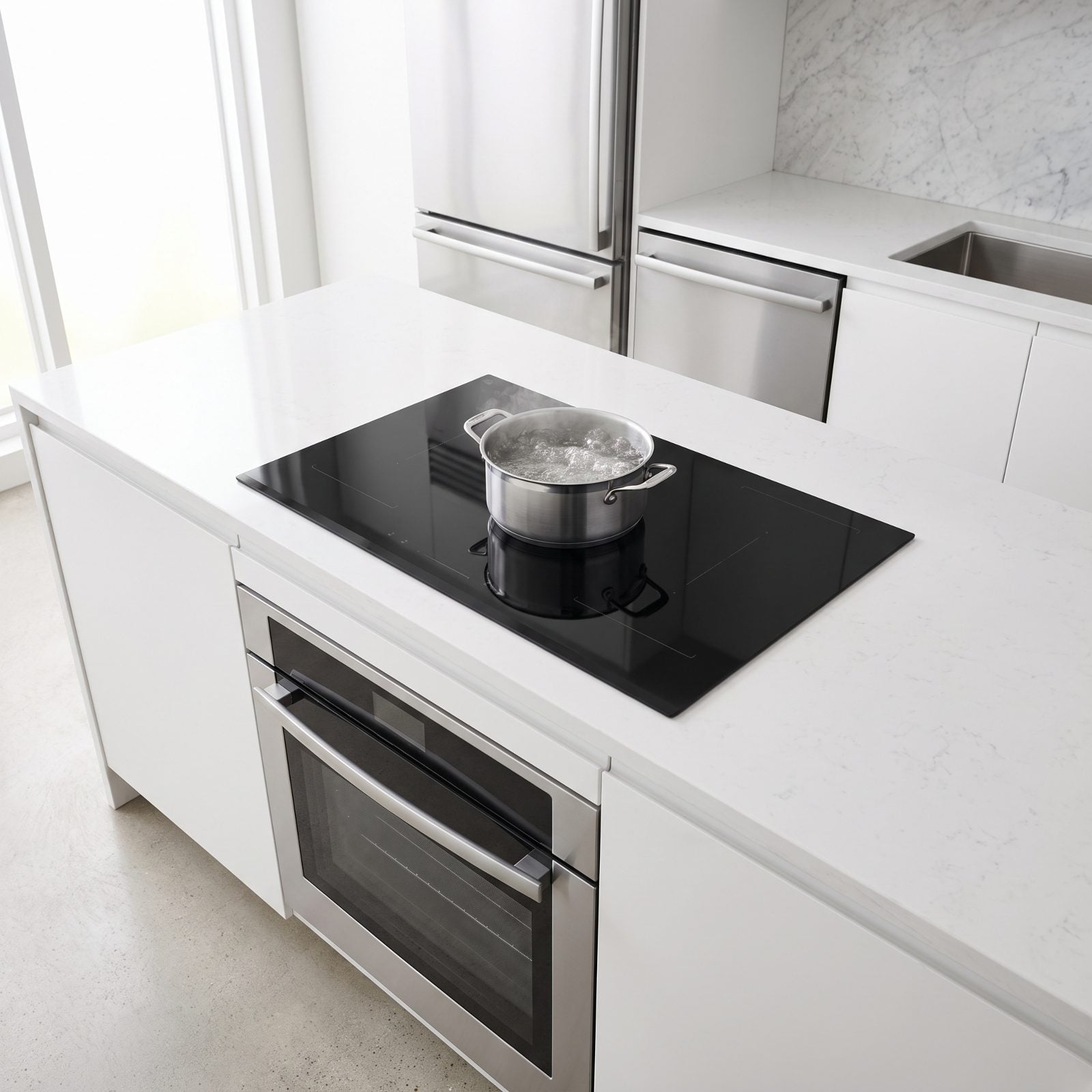
Water boils fast. That’s the headline. The rest is cleanup.
Induction heats the pan, not the surface, so a spill doesn’t bake onto the glass. When you’re done, one swipe with a cloth and the cooktop looks untouched. No grates to scrub, no drip pans to soak overnight.
I resisted induction for years because I liked the drama of a flame. Then I cooked on one for a week and never looked back. The speed alone earns its keep.
1. A Kitchen Organized Around the Actual Cooking Sequence: Store → Wash → Prep → Cook → Serve → Clean
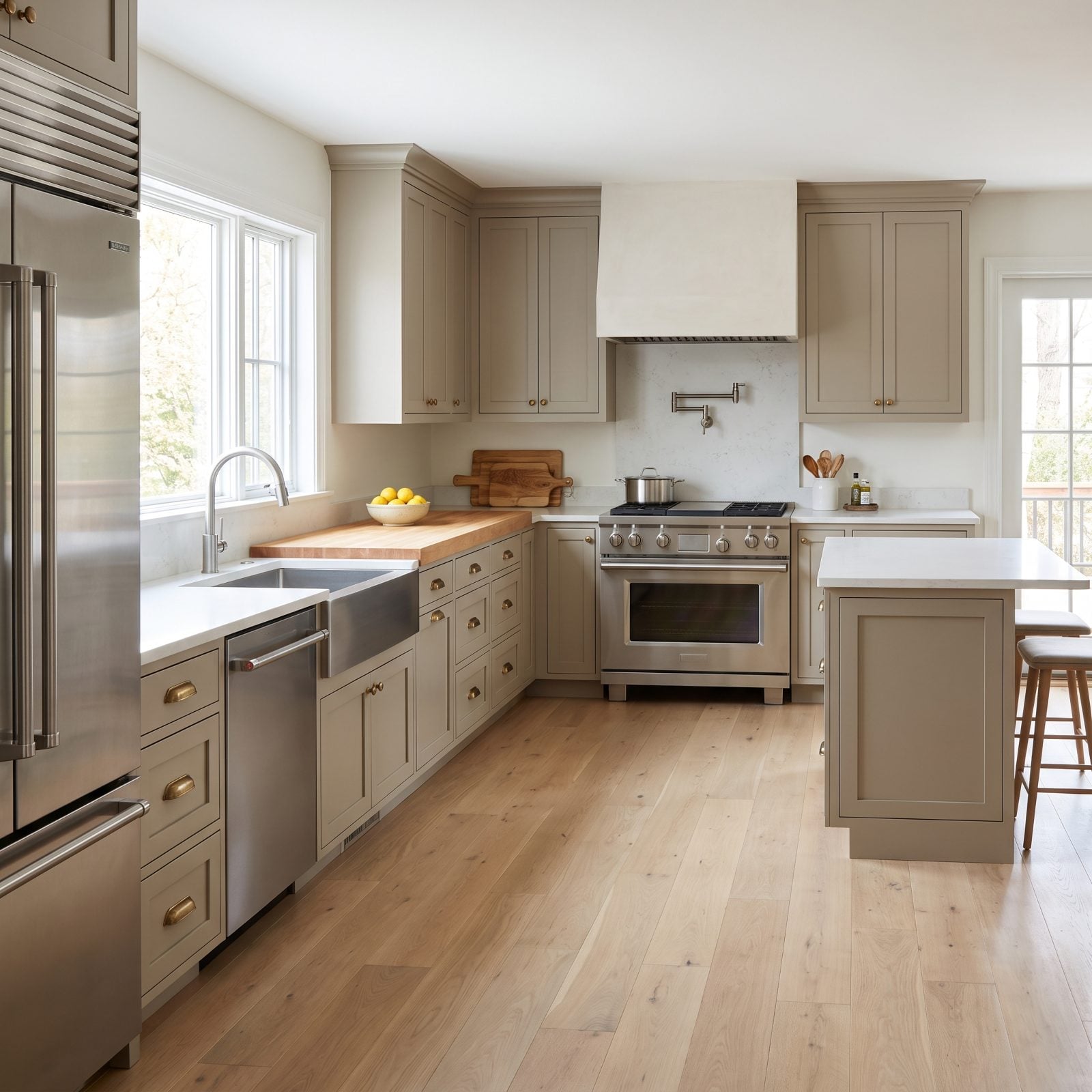
Cooking is a sequence, not a scatter. You store the food, wash it, prep it, cook it, plate it, then clean up. Lay the kitchen out in that exact order and the crisscrossing stops.
Fridge, then sink, then a clear prep counter, then the range, then a spot to plate near the table. Move left to right the way the meal actually moves. Once you’ve cooked in a kitchen built this way, the old zigzag layout feels absurd, like driving to the store the long way for no reason.
Everything else on this list is a version of this one idea: put things where the work happens.