🔥 Would you like to save this?
A kitchen counter is a confession nobody means to write. You don’t decide what lands there. It just accumulates, object by object, until the surface becomes a map of how you actually live, not how you’d describe it to a guest.
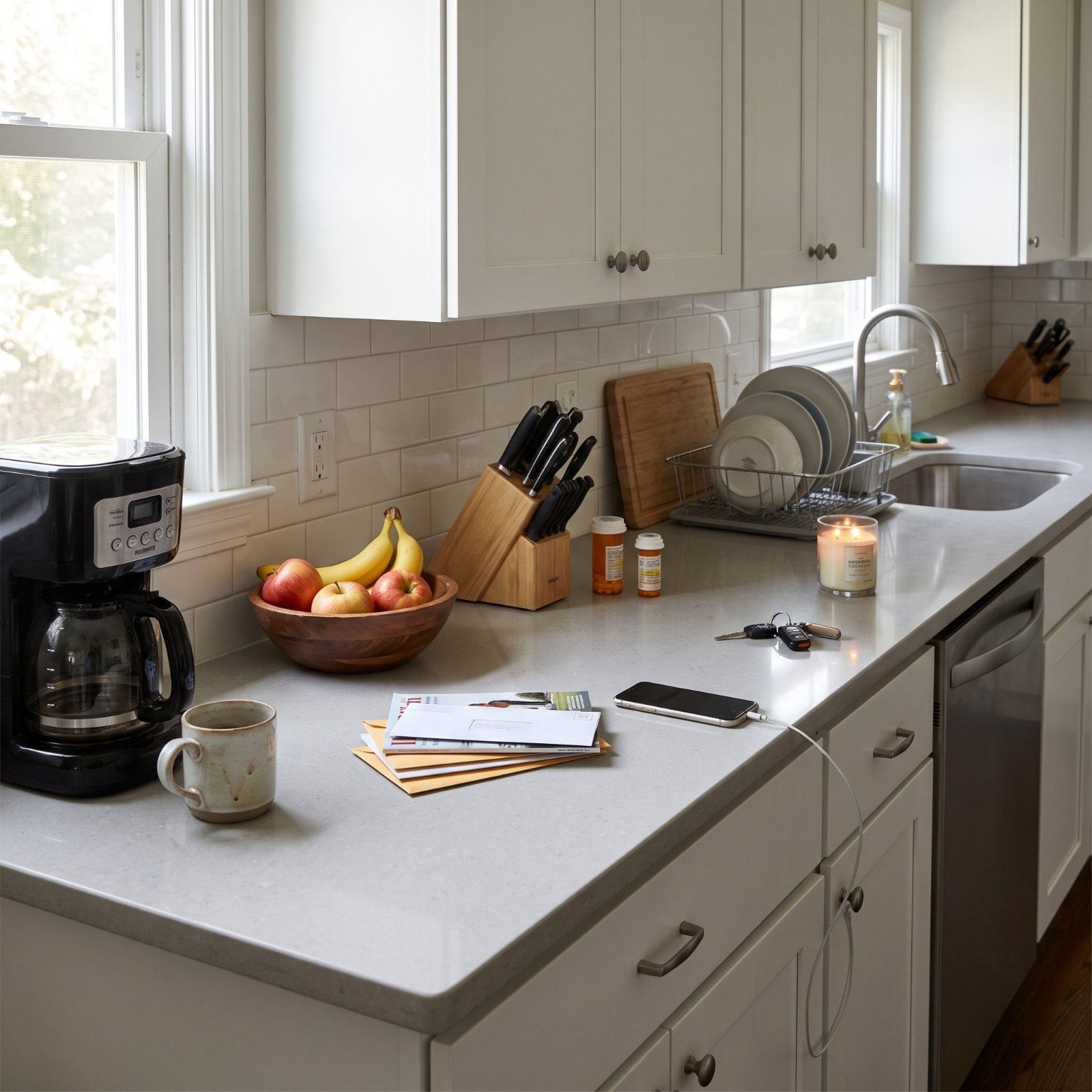
Psychologists who study home environments have a quiet little secret: the stuff you leave out says more than the stuff you put away. The pill bottle by the toaster. The mail you keep meaning to open. The bowl of fruit that’s either full or long gone. Each one is a tiny data point about your stress, your routines, who holds the power in your house, and what you wish you had time for.
In order to come up with the very specific design ideas, we create most designs with the assistance of state-of-the-art AI interior design software. Also, assume links that take you off the site are affiliate links such as links to Amazon. this means we may earn a commission if you buy something.
We went looking at these everyday counter clues and what the research says they reveal. Some of it is charming. Some of it stings a little. All of it is you.
17. The Appliance That Reveals Who Actually Runs the House
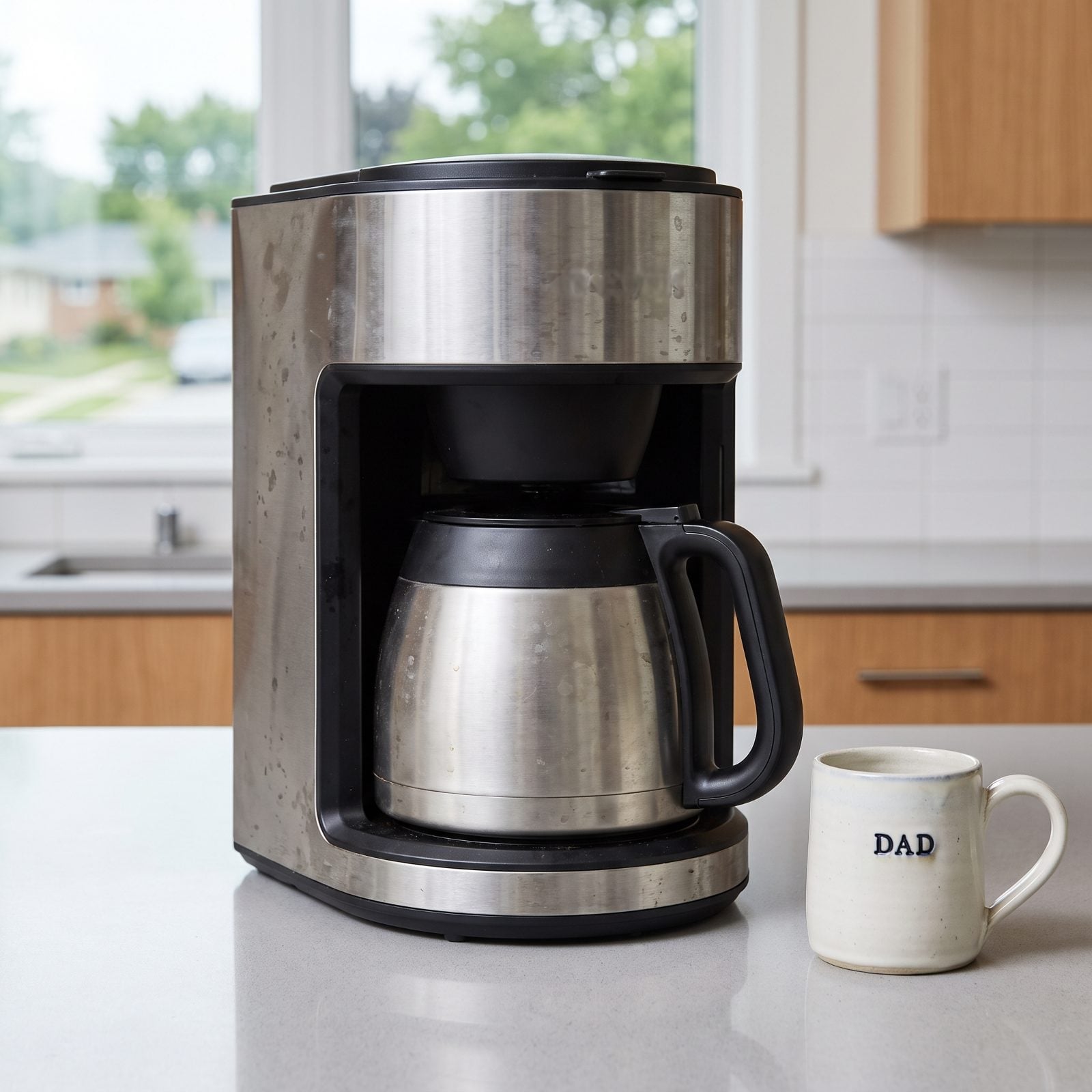
Walk into any kitchen and look at the busiest appliance on the counter. The coffee maker with one person’s preferred pod stocked beside it. The kettle positioned for a right-handed reach. The stand mixer that lives out because somebody bakes every Sunday. These aren’t random placements. They map to the person who holds the household together in their head.
Researchers call it the mental load, and the data is lopsided. A review of 31 studies in Frontiers in Psychology confirmed women carry the greater share of the cognitive work behind a running home, and that imbalance tracks with real emotional cost. Source One sociologist found that in 80% of heterosexual couples she interviewed, women handled most of the planning and monitoring. Source
The appliance left out is a monument to that labor. It sits where it sits because one brain decided it should, then defended that decision against entropy a hundred times. Check a neutral kitchen makeover and you’ll spot the same tell every time.
16. Why the Spot Nearest the Coffee Maker Tells the Truth About Your Mornings
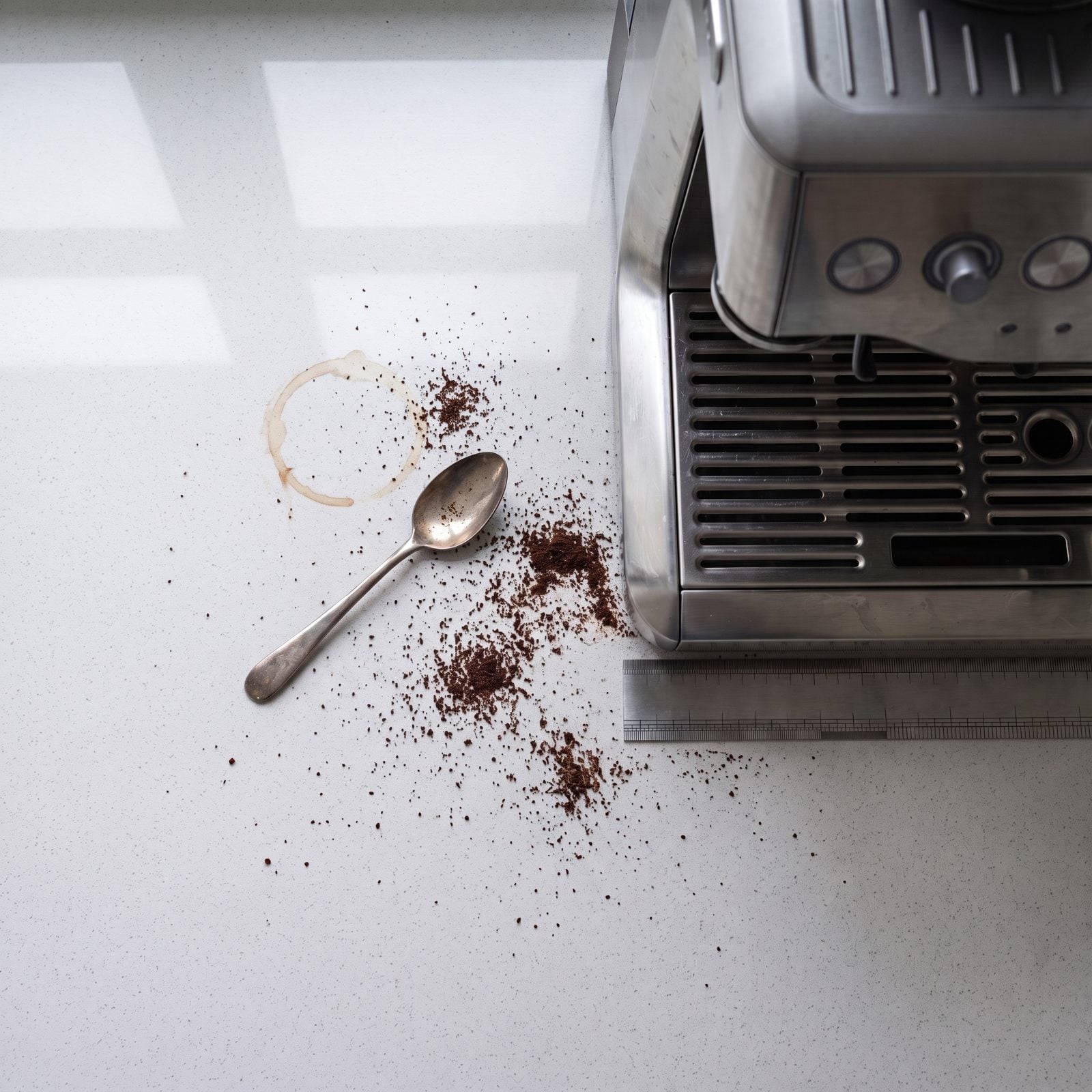
The eighteen inches of counter beside your coffee maker is the most honest real estate in your house. Nothing decorative survives there. Whatever sits in that zone is what your actual mornings require, stripped of aspiration.
A travel mug drying upside down means you drink and run. A pill organizer means your day starts with a system. A stack of vitamins, a protein shaker, a kid’s water bottle waiting to be filled. That little strip records your real routine, not the one you’d describe to a stranger.
Why does it cluster there? Cortisol. In a relaxed person, the stress hormone peaks in the morning to get the body moving, then tapers off. Source So you front-load the hardest logistics into the window when your brain is most primed to execute. You park the essentials where the first ritual of the day already happens.
It’s efficient. It’s also a confession. Scanning a few compact small kitchen inspiration layouts, you’ll notice the coffee zone is always the first thing to earn its square footage.
15. The Pile of Mail That Secretly Measures Your Stress Levels
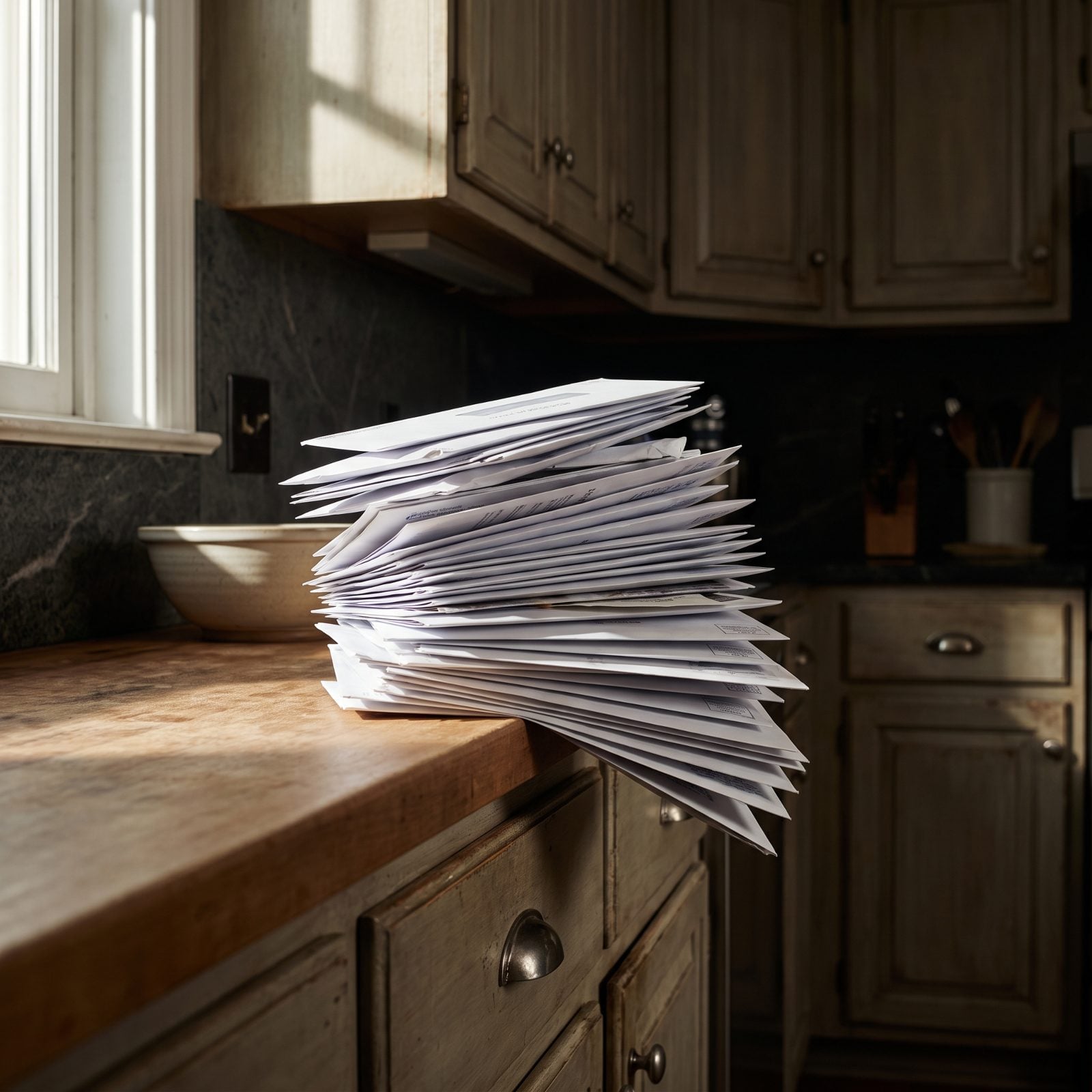
You know the pile. It starts as one envelope set down “just for now.” Then it breeds. A catalog, a school form, a bill you don’t want to open, a birthday card you keep meaning to send. Within two weeks it’s a small paper glacier migrating across the counter.
That pile is a stress gauge, and your body treats it like one. A landmark 2010 study of dual-income families found that people who described their homes as cluttered or “full of unfinished projects” had unhealthy daily cortisol patterns, and the effect hit women hardest. Source A paper pile is unfinished business made visible. Every envelope is a tiny open loop your brain refuses to close.
Neuroscience research from Princeton adds the second layer: visual clutter competes for your attention, so a mound of mail quietly taxes your focus even when you’re not looking at it. Source
Most of us have let this pile grow for weeks at a time, so this isn’t a scolding. But here’s the honest math: the pile isn’t the problem. It’s the receipt for the problem.
14. What a Bowl of Fruit Says About How Safe You Feel at Home
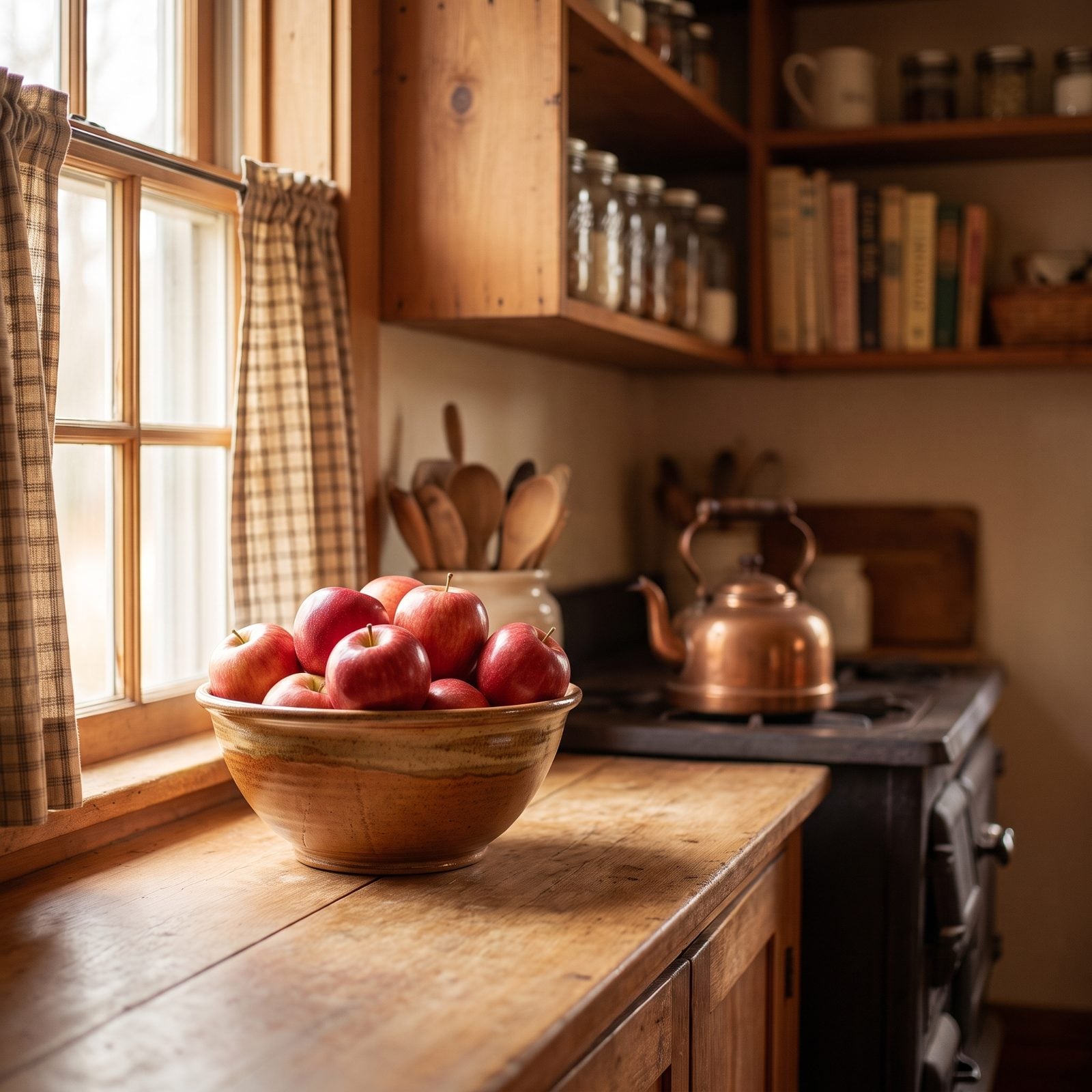
A bowl of apples on the counter looks like décor. It’s actually a quiet signal about control, routine, and whether your home environment is working for you or against you.
Cornell researchers photographed more than 200 kitchens in Syracuse and matched what sat on the counter to the weight of the adults living there. The pattern was blunt. Source Women who kept a fruit bowl in view weighed about 13 pounds less than neighbors who didn’t. Keep a cereal box out instead and the number flipped the other way, by roughly 20 pounds.
The lead researcher summed it up as the “see-food diet.” You eat what you see. Source A fruit bowl isn’t willpower. It’s a person engineering their environment so the easy choice is the good one. That’s someone who feels settled enough to plan ahead rather than just survive the week.
Place a bowl of citrus on a sun-washed counter and the whole room reads calmer. You’ll see the trick repeated across mediterranean kitchen designs, where fresh fruit is practically a fixture.
13. The Reason Open Pill Bottles End Up Where You Can See Them

Prescription bottles belong in a cabinet. So why do they end up clustered by the sink, lids off, lined up like tiny soldiers? The answer is the same instinct that keeps the fruit bowl out, pointed at a harder subject.
Visibility drives behavior. The Cornell food work proved that what sits in your sightline gets acted on, while what’s tucked away gets forgotten. Source With medication, forgetting isn’t an inconvenience. It’s a missed dose. So people override the tidy instinct and leave the bottles out where the morning routine will trip over them on purpose.
There’s a quieter story in that lineup too. One bottle means a minor thing. A row of them, maybe a weekly organizer beside the vitamins, maps a household managing a real condition, probably on a fixed schedule someone works to protect. It’s the mental load again, made physical.
Nobody decorates with pill bottles. They stay out because hiding them feels like a risk, and that calculation says more about a household’s priorities than any backsplash ever could.
12. The Knife Block Clue That Signals How Often You Actually Cook
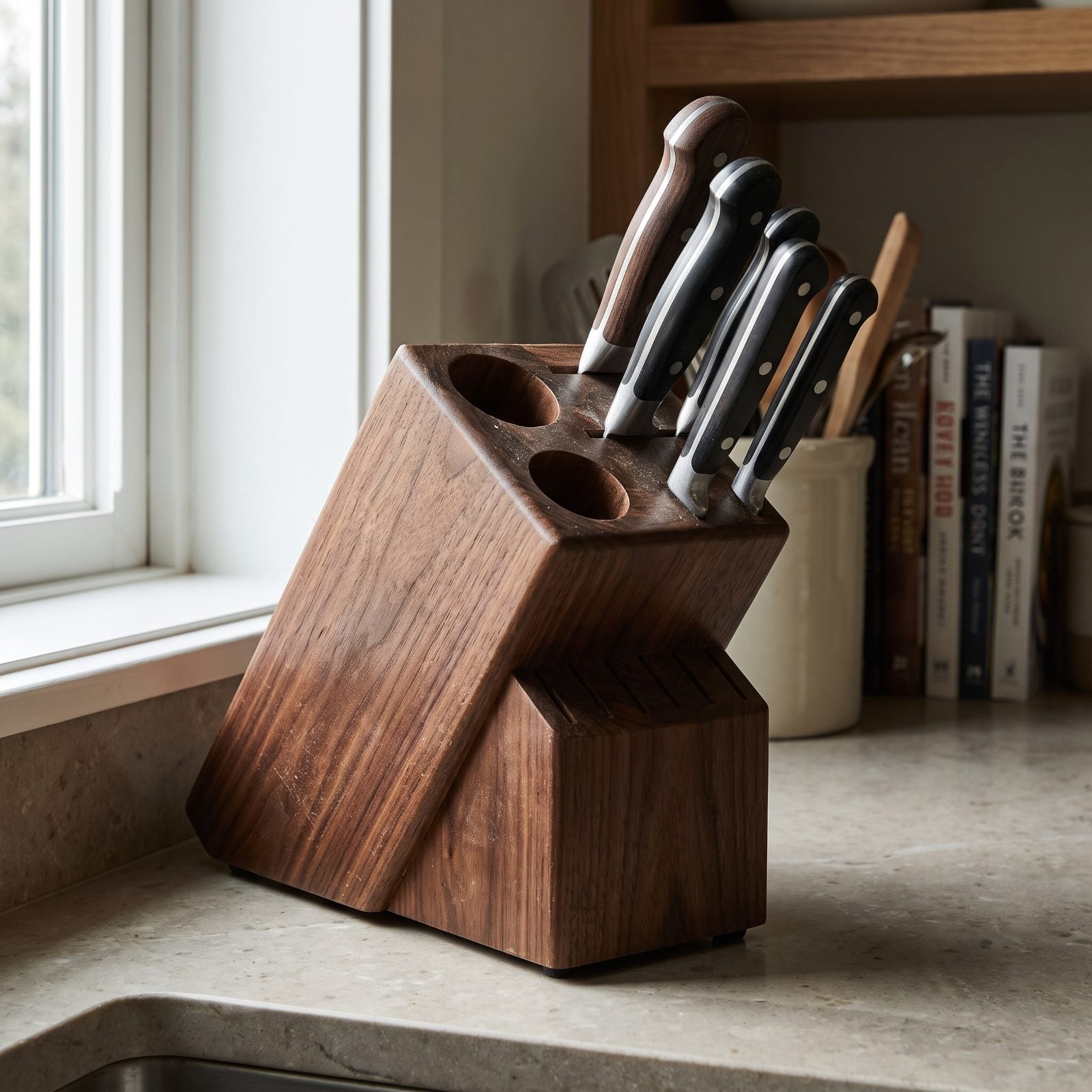
Look at the knife block, not the knives. Specifically, look at which slots are empty because those blades are in the dish rack, and which hold knives that haven’t moved since the set was unboxed.
A worn cutting board, a chef’s knife out and drying, a crock of oil beside the stove with a drip down the side. That’s a kitchen in use. A block with every handle flush and a layer of dust on the santoku tells a different story.
The numbers back up the suspicion that we cook less than we imagine. Americans now cook an average of 3.6 times per week, and roughly 70% of meals are eaten outside the home. Source Attitude matters too: one survey found 45% of Americans say they dislike cooking and only 10% love it. Source
So the daily-use knife, the one with a worn edge living in the rack, is a rarer signal than the showroom block suggests. It marks a household that genuinely cooks, not one that owns the equipment for cooking.
11. Why a Charging Phone on the Counter Means More Than You Think
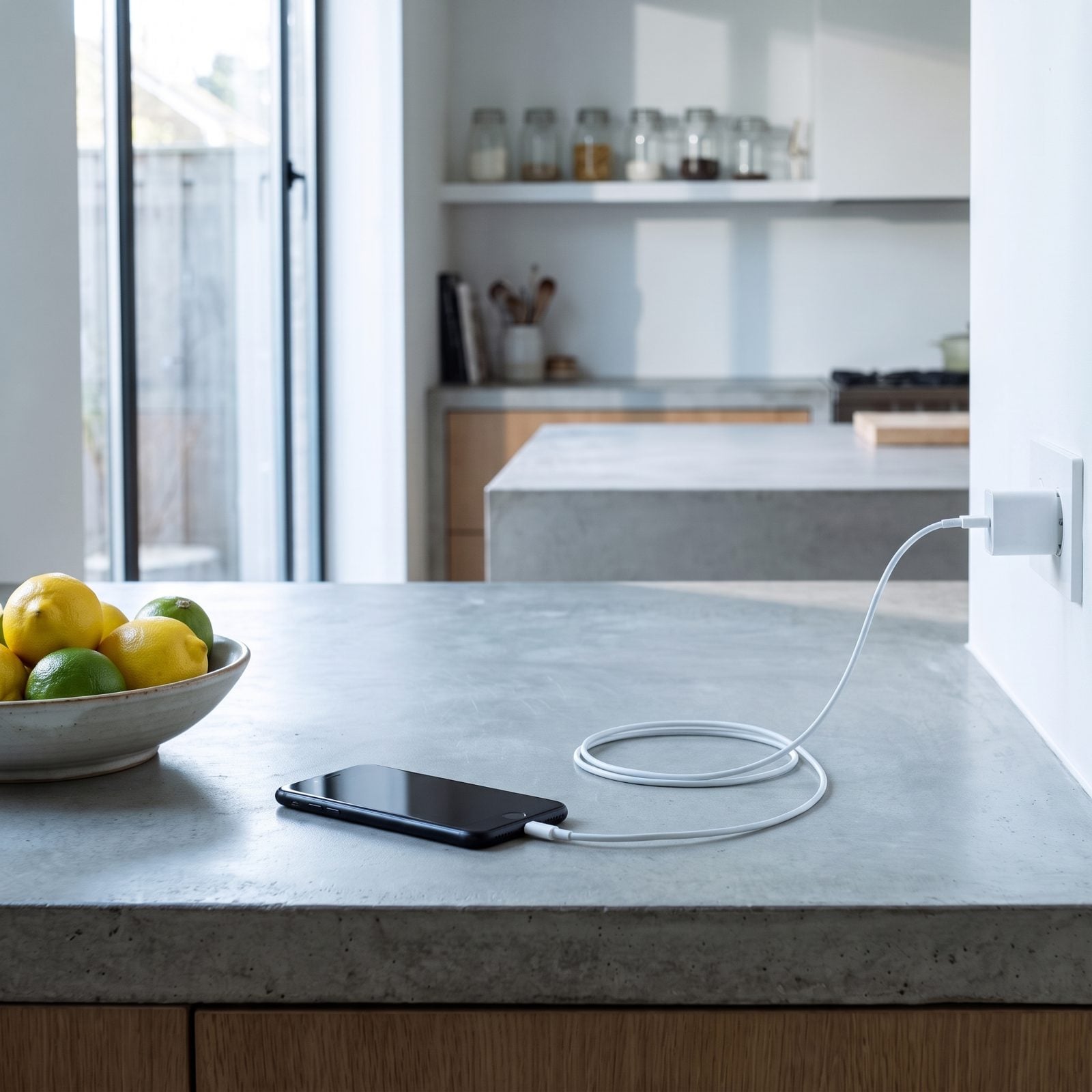
The phone face-up beside the fruit bowl, cable snaking to the outlet, is the most modern object in the room and the most revealing. Its exact location on the counter maps where the household actually lives.
A phone charging in the kitchen means the kitchen is command central. It’s where people pass through, check messages, confirm the pickup time, look up the recipe. But that habit carries a hidden cost most people never clock. A 2017 study out of the University of Texas at Austin found that the mere presence of your own smartphone, even face-down and switched off, drains cognitive capacity. Source
The researchers called it brain drain. Your mind spends energy not looking at the phone, and that resisting eats the attention you’d otherwise have for the person across the counter or the pot on the stove. The effect was strongest for people most attached to their devices. Source
So the charging phone isn’t neutral. Its spot tells you where the household gathers, and its presence quietly taxes everyone gathered there. A small aside worth flagging: this is also why AI design tools now suggest dedicated “drop zones” away from cooking areas. The machines noticed the pattern before most of us did.
10. The Single Object That Marks the Border Between Chaos and Control
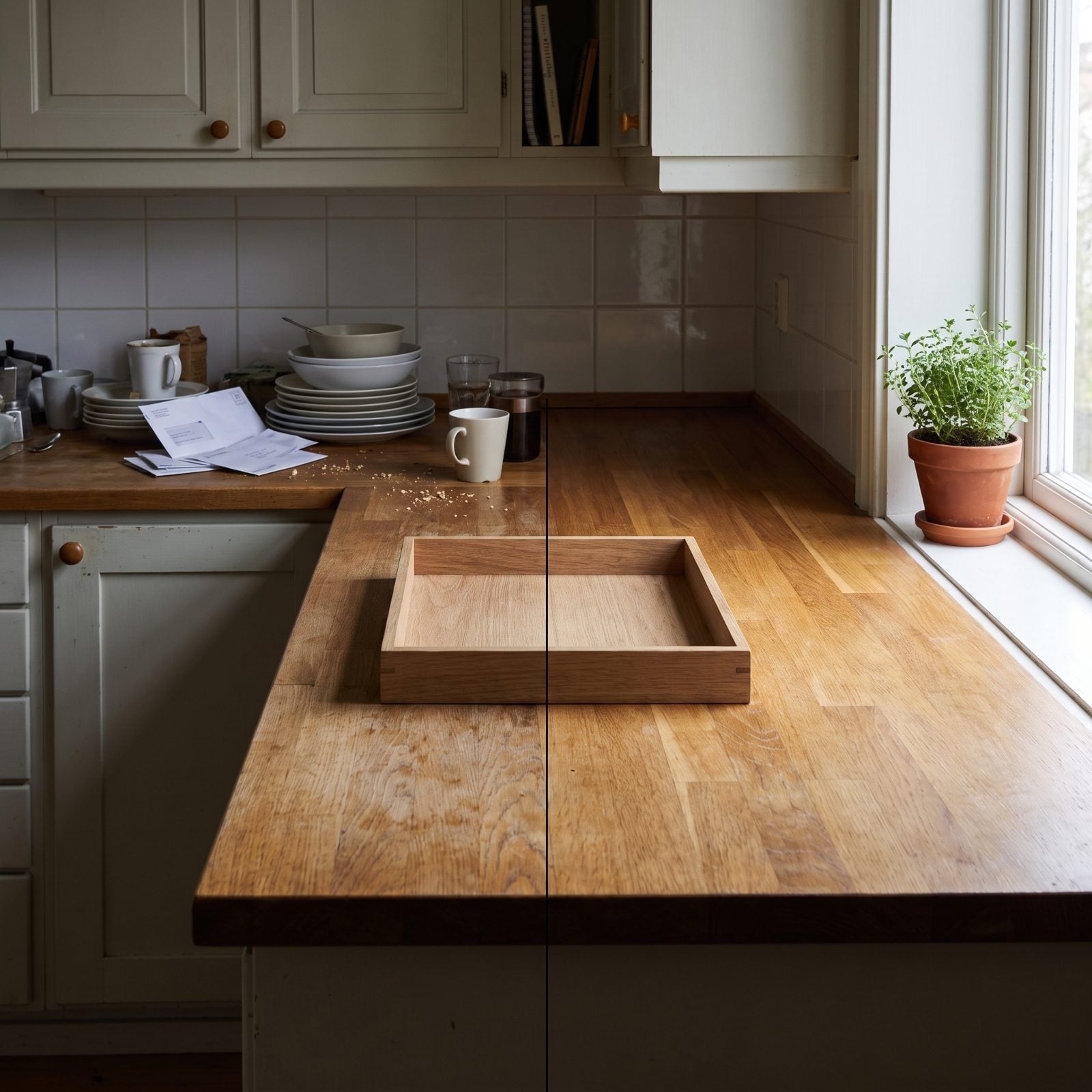
Here’s the thing the whole counter has been hinting at. In most kitchens there’s one object that acts as a dam. A tray. A basket. A single catchall bowl by the door. Everything on one side of it is intentional. Everything that drifts past it becomes the pile.
That object is a psychological border, and it does real work. The 2010 family study found that wives with higher “stressful home” scores grew more depressed as the day wore on, while homes described as restful produced healthier cortisol curves. Source The border object decides which side of that line your counter falls on.
It works because it gives transient stuff a home. Keys, receipts, the mail, the charger. Contained, they read as order. Spreading, they read as unfinished work, and your brain logs the difference in seconds. Source
So the real tell isn’t whether a counter is clean. It’s whether there’s a designated edge holding the line. A wooden woven catchall tray or a shallow brass entryway bowl does more for a household’s daily stress than a full remodel. One object. One decision, made once, defended daily. That’s the whole game.
9. What the Height of Your Clutter Reveals About Decision Fatigue
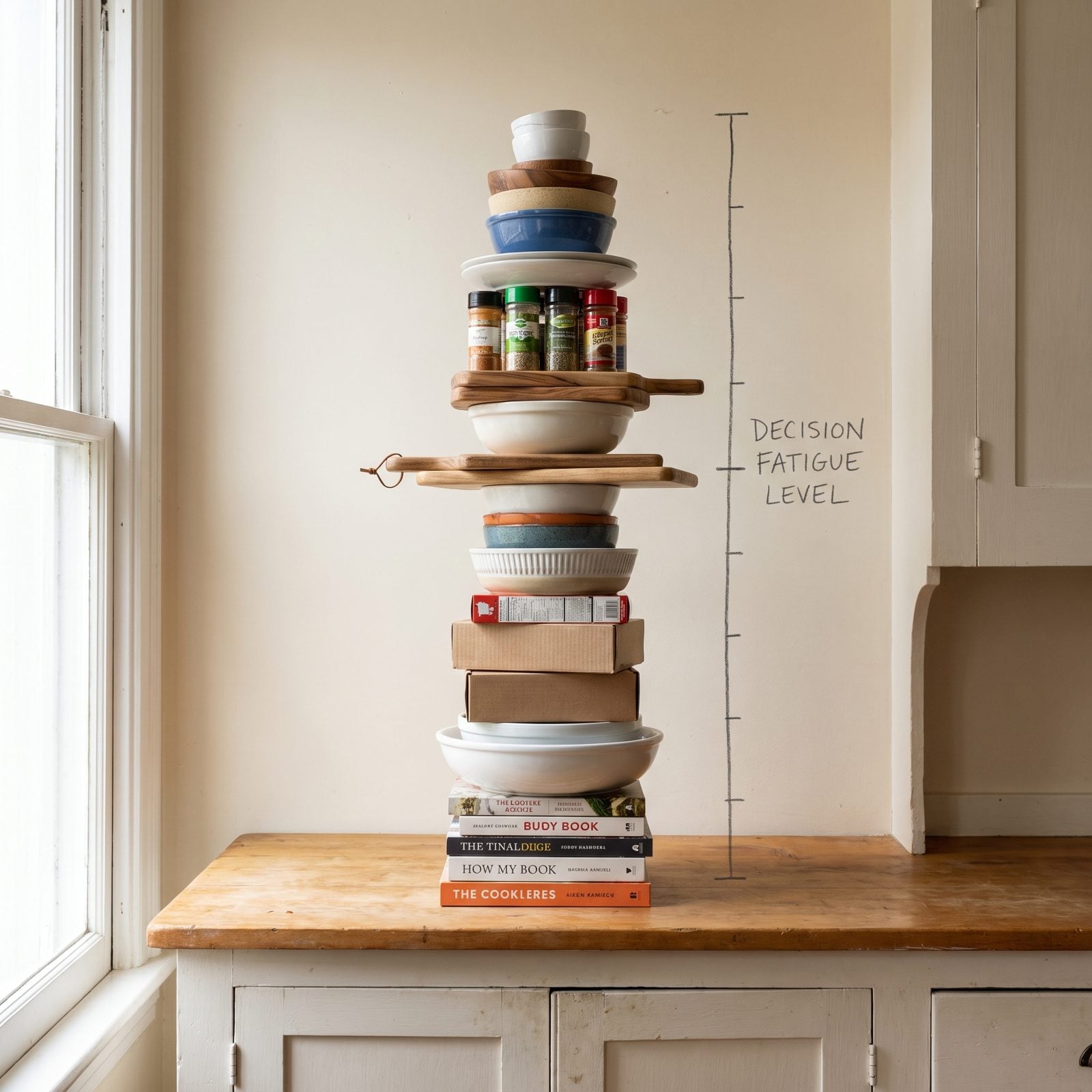
Every object sitting on your counter is a decision you haven’t finished making. The unopened mail. The vitamin bottle. The phone charger with no home. Each one is a tiny open loop asking, keep me, move me, or deal with me later? And later keeps winning.
Psychologists call this decision fatigue: the mind’s willpower runs down like a phone battery, and after a full day of choices, the ability to decide simply quits. The concept traces back to Roy Baumeister’s research on ego depletion, where self-regulation behaves as a finite resource that drains with sustained use (Source). The taller the pile, the more decisions got deferred.
Here’s the loop that makes it worse. Clutter itself raises cognitive load, which burns the very fuel you’d need to clear it. Visual noise forces your brain to process irrelevant stimuli and slow down decision-making (Source). So the pile grows because you’re tired, and you’re tired partly because of the pile.
8. The Cutting Board Left Out That Betrays Your Real Eating Habits
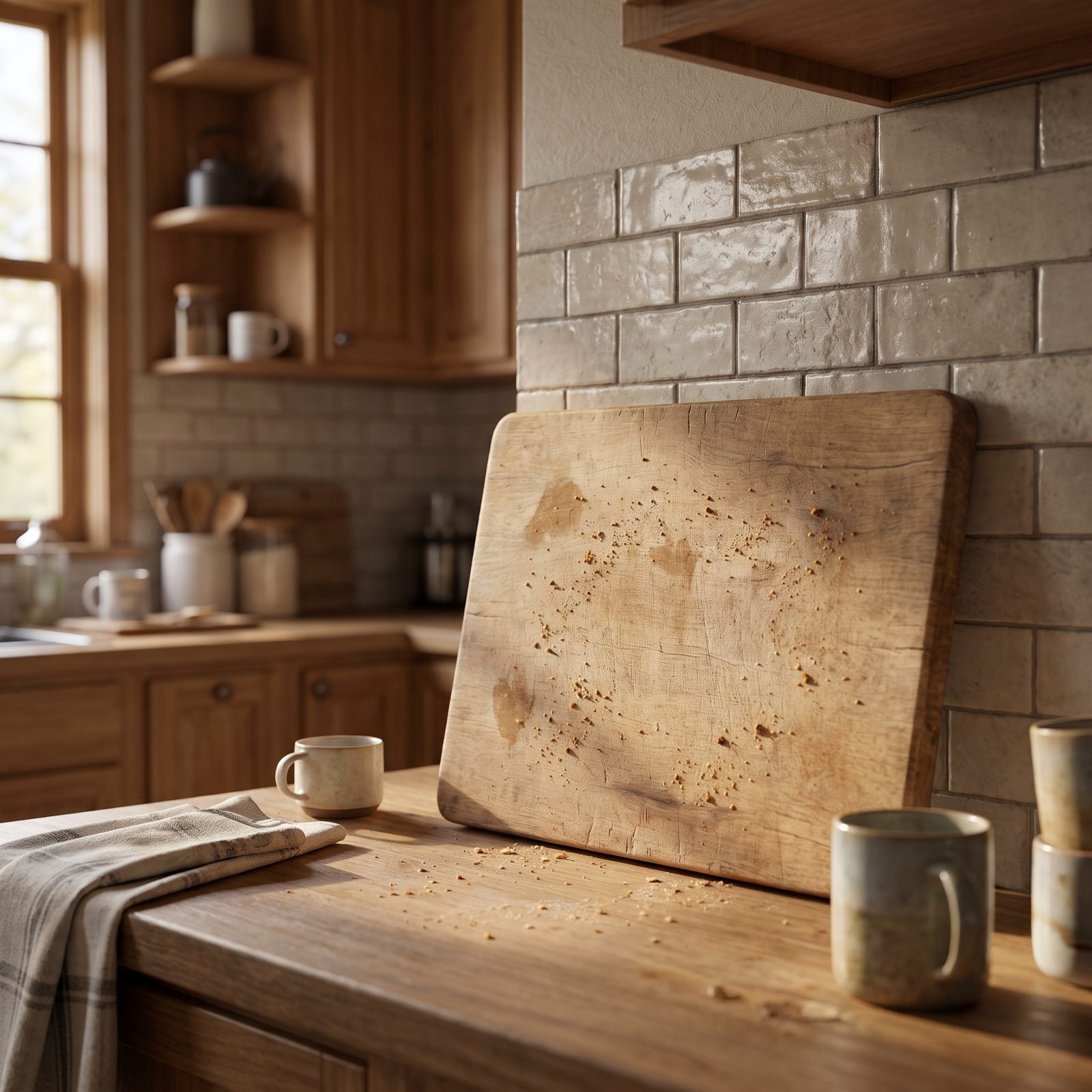
A cutting board left standing against the backsplash tells the truth that your fridge photos won’t. It’s the one tool that only comes out when someone actually cooks, and where it lives says everything about how often that happens.
Look at what’s near it. A board with a faint onion smell and knife scars running edge to edge belongs to a household that chops most nights. A pristine bamboo board doubling as a decorative prop belongs to one that orders in and means to do better. The staging gap between the kitchen we perform and the kitchen we use is real, and researchers who studied how people relate to their kitchen objects as identity work (Source) found that the stuff we display often represents the cook we want to be more than the one we are.
Plenty of boards sit out for a month, clean, like a promise someone keeps almost making.
If you want the honest version of your eating habits, don’t check the pantry. Check whether the board is scarred.
7. Why the Junk Drawer Spilling Onto the Counter Is a Confession
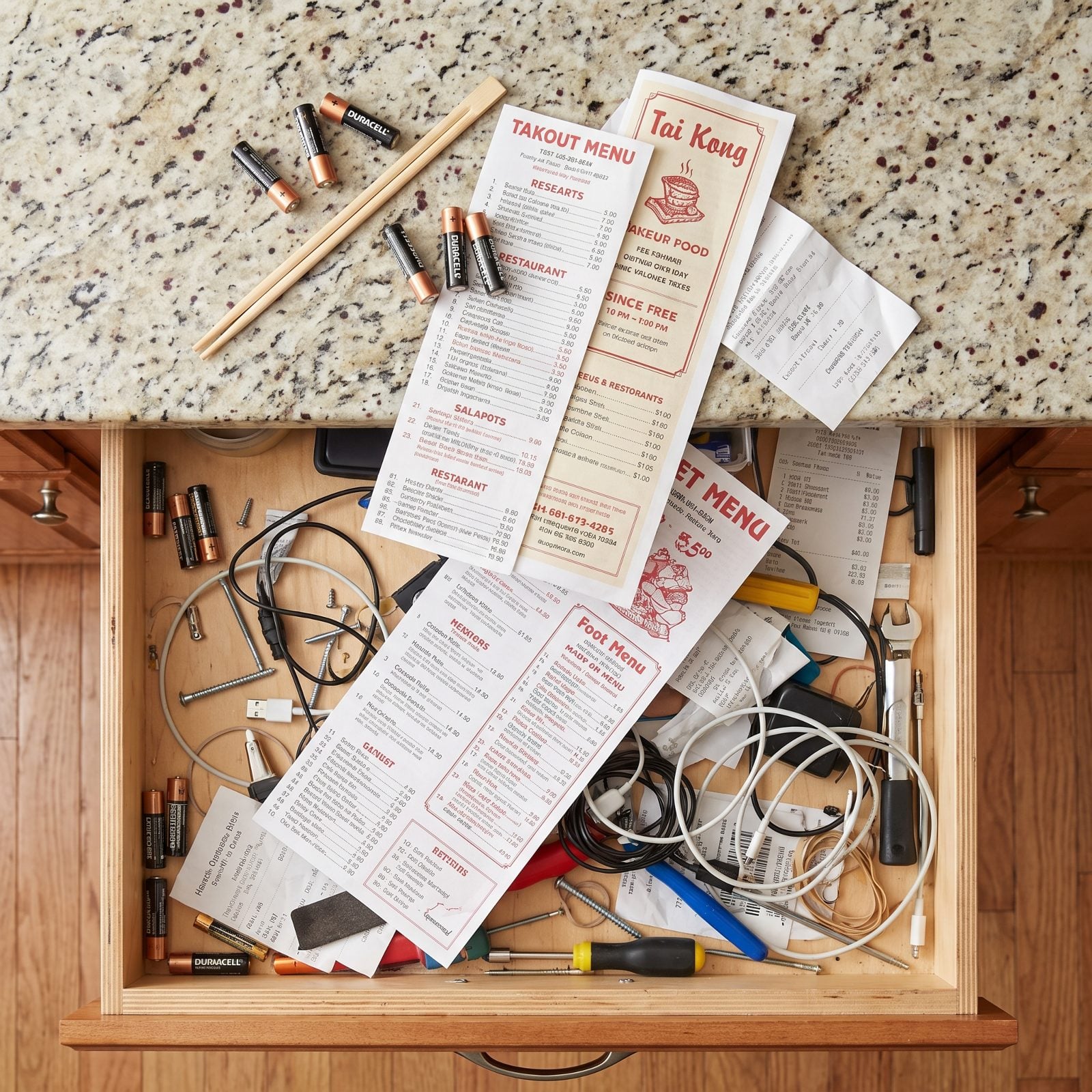
There’s always one drawer. Batteries, rubber bands, a single chopstick, three takeout menus, a screwdriver nobody remembers buying. And when it stops closing, the overflow lands on the counter, which is the moment the household quietly admits it ran out of room for the undecided.
The junk drawer is where objects go when they have no category. Each one dodged a decision at the door, and the counter spill is that backlog breaking containment. The Zeigarnik effect explains part of the pull (Source): your brain keeps unfinished tasks nagging in the background, and every orphaned object is an unfinished task you can see.
Nobody feels neutral about this drawer. It’s the household’s subconscious, the place where good intentions go to wait their turn. The spill isn’t failure. It’s honesty about how many small loose ends a family actually carries at once.
6. The Water Glass Collection That Exposes Who Lives Here
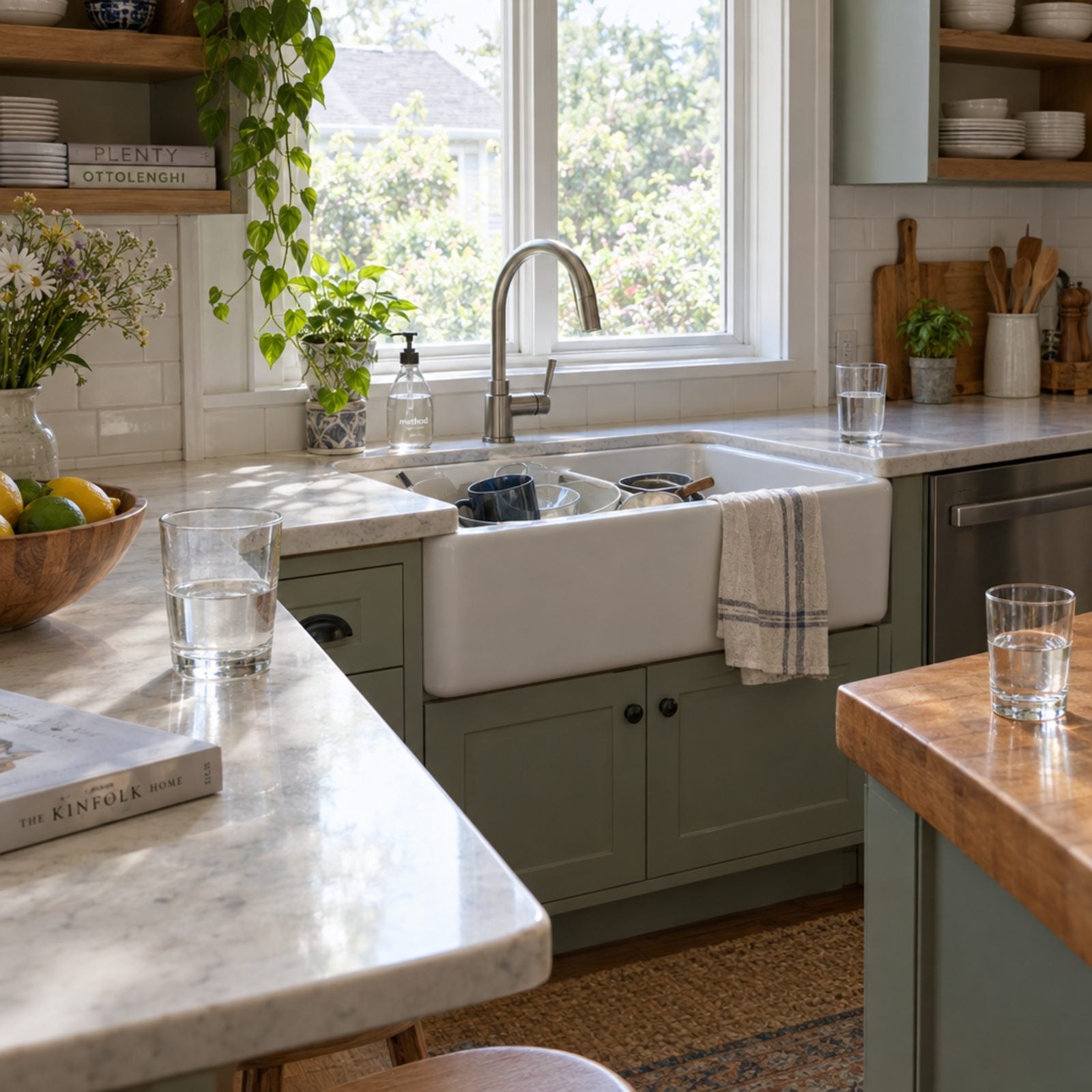
Count the glasses by the sink. Three half-full tumblers, each on a different surface, is a dead giveaway: this is a house with people who claim a glass, set it down, forget it, and grab a fresh one an hour later.
The pattern maps the household. One mug and one glass means a solo routine running on autopilot. A rotating herd of cups scattered across counters, nightstands, and the coffee table usually means kids, or at least more than one adult operating on separate schedules. Those clusters form through context-dependent habit. We abandon a glass wherever a different activity begins, and the next drink gets fetched in whatever room the next activity starts. Behavior research shows habits lock to a stable cue of place, time, or routine (Source), so each person’s glasses trace their personal loop through the house.
5. What a Stack of Cookbooks Nobody Opens Says About Your Aspirations
🔥 Would you like to save this?
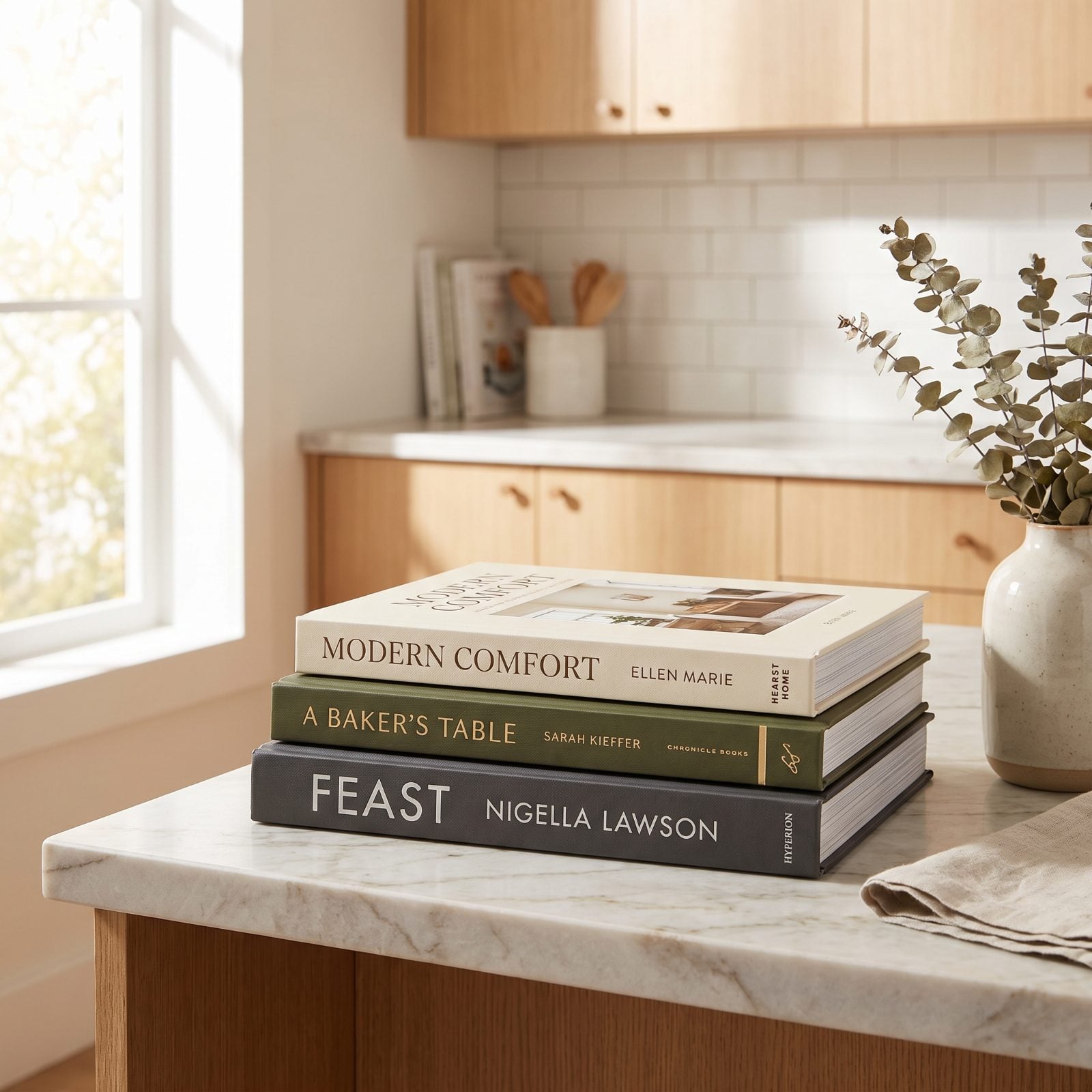
The spines are clean. The pages don’t fall open anywhere. That stack of cookbooks on the counter isn’t a reference library. It’s a vision board you can cook from, in theory.
We buy the aspirational self and set it where we’ll see it. Researchers studying favorite cookbooks found the genre works as a stylized, aspirational representation of culinary culture (Source), and that the pleasure of owning and leafing through them can quietly replace the act of cooking from them. The object stands in for the ambition.
Consumer psychologists have a name for the broader pattern. The intention-behavior gap describes how people’s stated goals routinely fail to become actions, with one study finding that a third of highly concerned consumers couldn’t translate concern into behavior (Source). The cookbook is the concern. The takeout container in the trash is the behavior.
None of this is a character flaw. The stack is a note from the person you keep meaning to become, left somewhere you’ll pass it every day.
4. The Reason Car Keys Always Land in the Same Six Inches
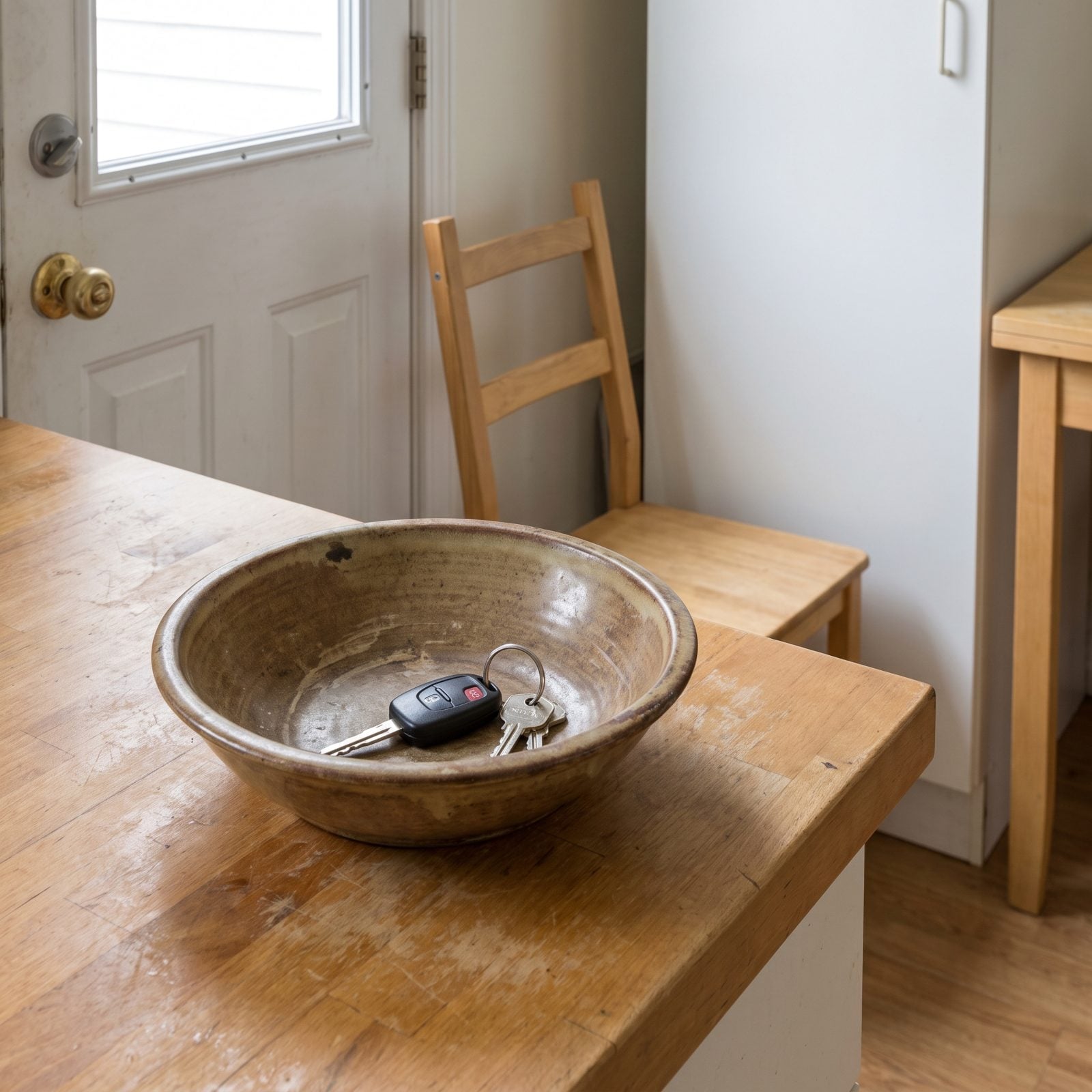
You don’t decide where to put the keys. Your hand does it before you’re fully through the door, dropping them in the same small patch of counter every single time.
That’s context-dependent memory running the show. Your brain binds an object to the environment where you use it, so the doorway becomes a retrieval cue that both triggers the drop and, later, helps you find them. The classic demonstration is Godden and Baddeley’s 1975 study, where divers recalled word lists best in the same environment where they’d learned them (Source). Place cues the memory.
The flip side is why losing keys feels maddening. Break the routine, set them down somewhere new, and the usual cue goes silent. There’s even a reason the kitchen counter is a terrible permanent spot. A surface used for forty different tasks is tied to so much that it can’t single out any one memory (Source), a trap called cue overload. A dedicated hook by the door cues one thing and one thing only.
3. Why the Dish Rack Full of Clean Plates Is a Tiny Act of Rebellion
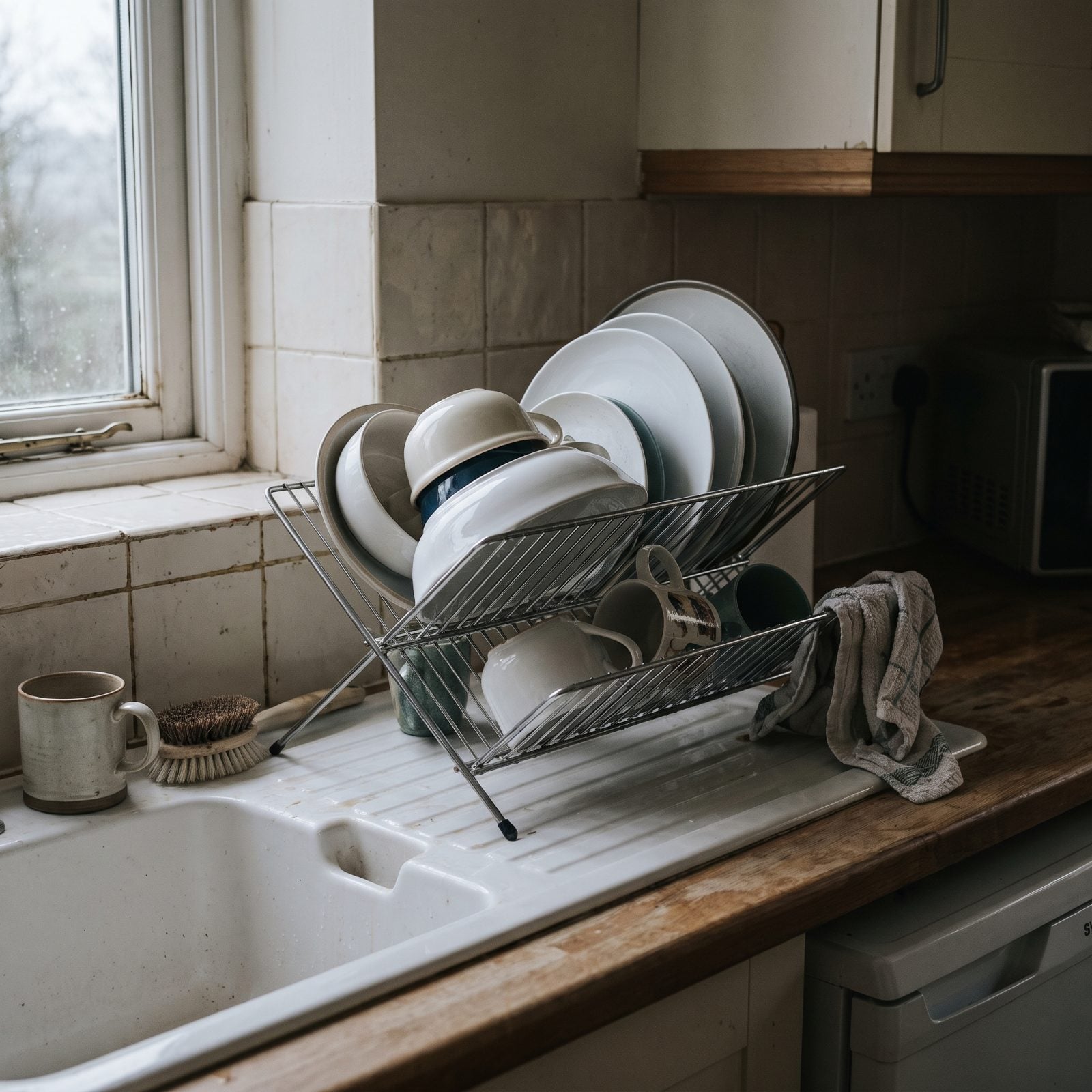
The dishes are clean. They’ve been clean since yesterday. And nobody has put them away, because the rack has quietly become the cabinet.
This one looks like laziness and isn’t, quite. Putting dishes away is a decision with no reward, the kind of low-stakes chore that gets shed first when willpower runs thin. Decision fatigue hits exactly these tasks, because a depleted mind prefers the default and postpones anything optional (Source). Leaving them in the rack is the default.
There’s a logic underneath it too. If you use the same eight plates in rotation, the rack is just a staging area, and moving them to a shelf only to move them back is a round trip your brain correctly flags as pointless. It’s less rebellion than quiet efficiency wearing a guilty face. The household decided, without a meeting, that the dish rack is close enough.
2. The Snack Zone That Maps Out the Youngest Person in the House
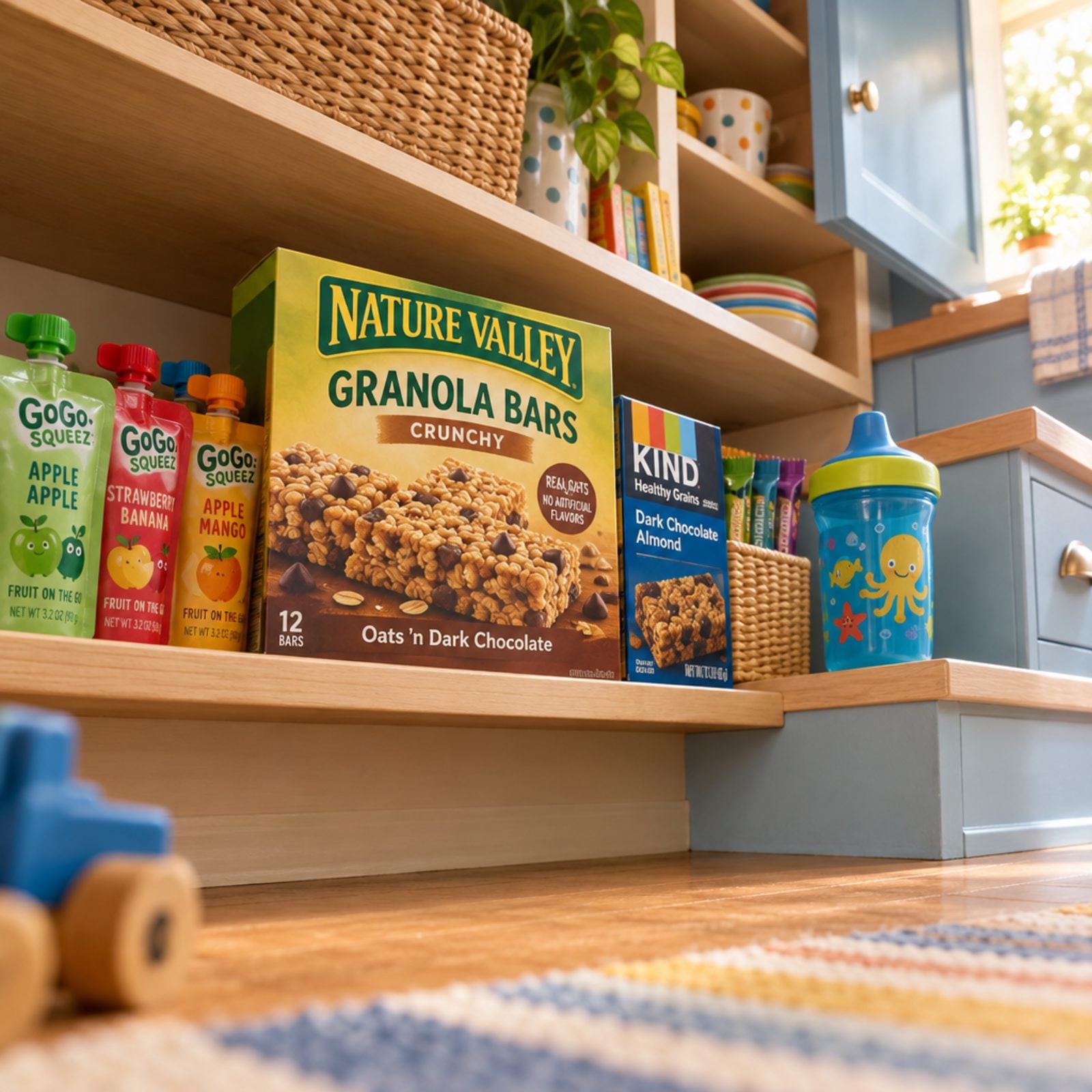
There’s a spot on the counter you can read like a growth chart. A low row of fruit pouches and granola bars, a small basket of snack bars, a sippy cup standing at the end of the line. Follow the height of the snacks and you’ll find the age of the youngest person in the house.
Everything in that zone is positioned for small reach. Parents arrange the kitchen around their kids without ever consciously designing it, because toddlers run on routine and a predictable cue keeps everyone sane. Habit research shows automatic behaviors form when an action repeats against a stable cue of place and time (Source), and a fixed snack spot is that cue made physical. The kid learns where the snacks live, and the counter reorganizes itself to meet them.
Watch it migrate over the years. The sippy cup becomes a water bottle. The fruit snacks become protein bars shoved toward the back. The snack zone grows up right alongside the person it was built for.
1. What the Scented Candle by the Sink Is Really Trying to Hide
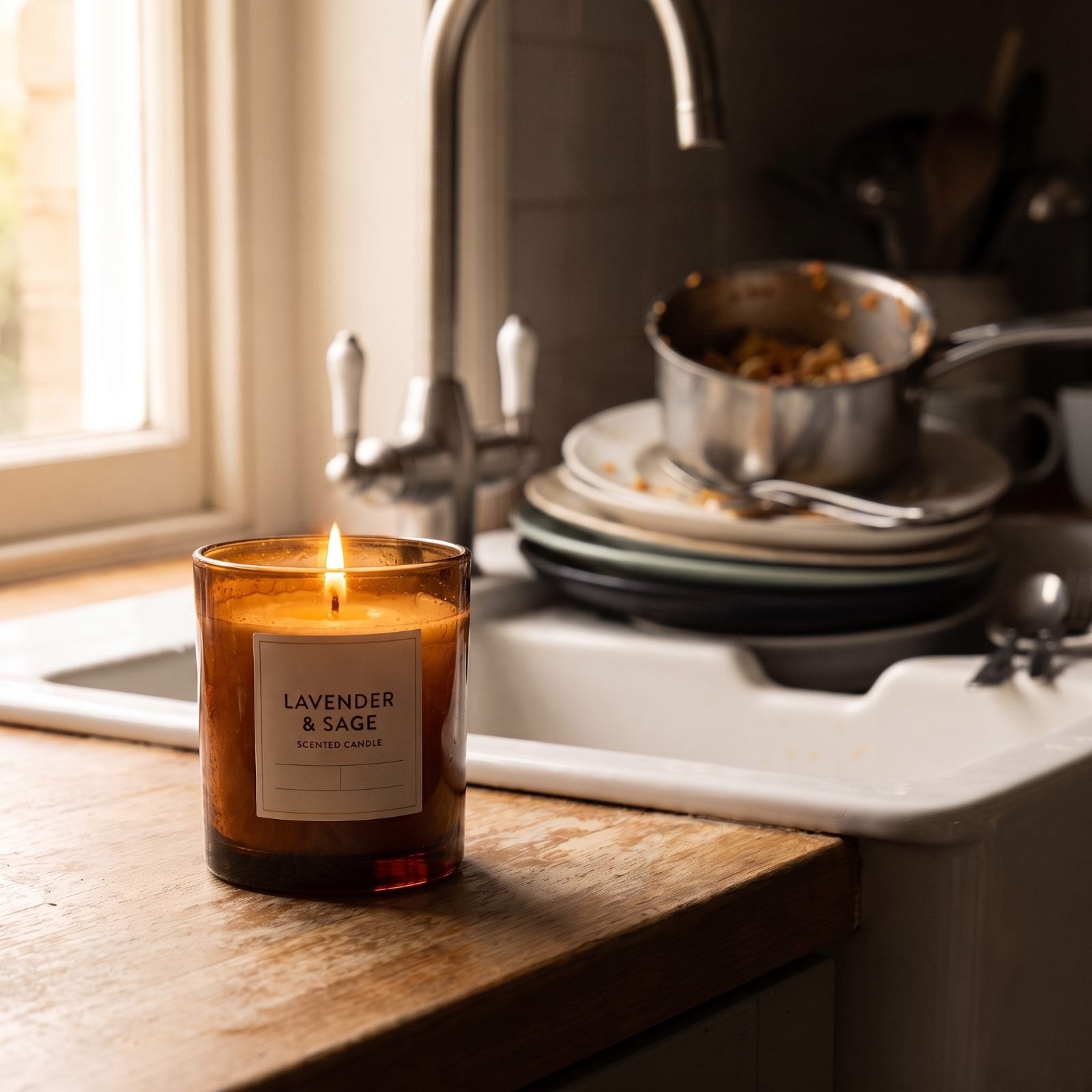
Look at where the candle sits. Not the mantel. Not the bathroom. The counter, within arm’s reach of the sink, usually next to a stack of dishes that didn’t make it in last night. That placement tells on the whole household. A candle living by the sink isn’t decor. It’s a tool, kept where the problem is.
The problem is grease. Last night’s garlic, the fish from Tuesday, the trash that should’ve gone out. Bright citrus candles get reached for because sharp notes cut through acrid cooking smells better than heavy sweet ones, and lemon tends to do the heavy lifting against fish or garlic. So the candle is quietly running defense on a kitchen that gets used hard.
But here’s the part that makes it interesting. Smell hits the amygdala, the brain’s emotional memory center, the instant you inhale, which is why a scent can shift your mood before you’ve consciously registered it. Source
So the candle does two jobs at once. It covers the evidence of a busy, well-fed house, and it buys back the feeling of calm that the mess chipped away. Lavender and vanilla are reached for again and again because they’re associated with lowering stress hormones like cortisol. Source
There’s one catch nobody admits. Burn the same scent all day and your nose stops detecting it entirely, which is why the counter candle is usually lit fresh right before people arrive. That timing is the tell. The candle isn’t for the household. It’s for the audience.
The Bottom Line
Here’s what your counter actually knows: it’s the one surface where you stop performing. Every object you leave there is a decision you made when no one was watching and you didn’t have the energy to pretend otherwise, which is exactly why it’s more honest than anything you’d ever say out loud in a session. Tonight, look at your counter not as a mess to clean, but as a message you left yourself, and ask what it’s been trying to tell you.