🔥 Would you like to save this?
Open the drawer. The one by the fridge or the one in the hallway, the one nobody talks about but everyone has. Look at what’s in there. Not the useful stuff. The stuff you can’t explain. The single earring. The battery you’re not sure works. The birthday card from 2011.
In order to come up with the very specific design ideas, we create most designs with the assistance of state-of-the-art AI interior design software. Also, assume links that take you off the site are affiliate links such as links to Amazon. this means we may earn a commission if you buy something.
That drawer is a confession. It’s the part of your house you never staged, never styled, never showed anyone on purpose. Which is exactly why it tells the truth about who raised you and how. Every rubber band ball, every dead pen, every mystery key is a small inheritance from someone who taught you what was worth keeping and what wasn’t.
Here are 21 of those tells, and what they may say about the household rules you absorbed without realizing it.
Why Some People Keep Batteries They’ll Never Test
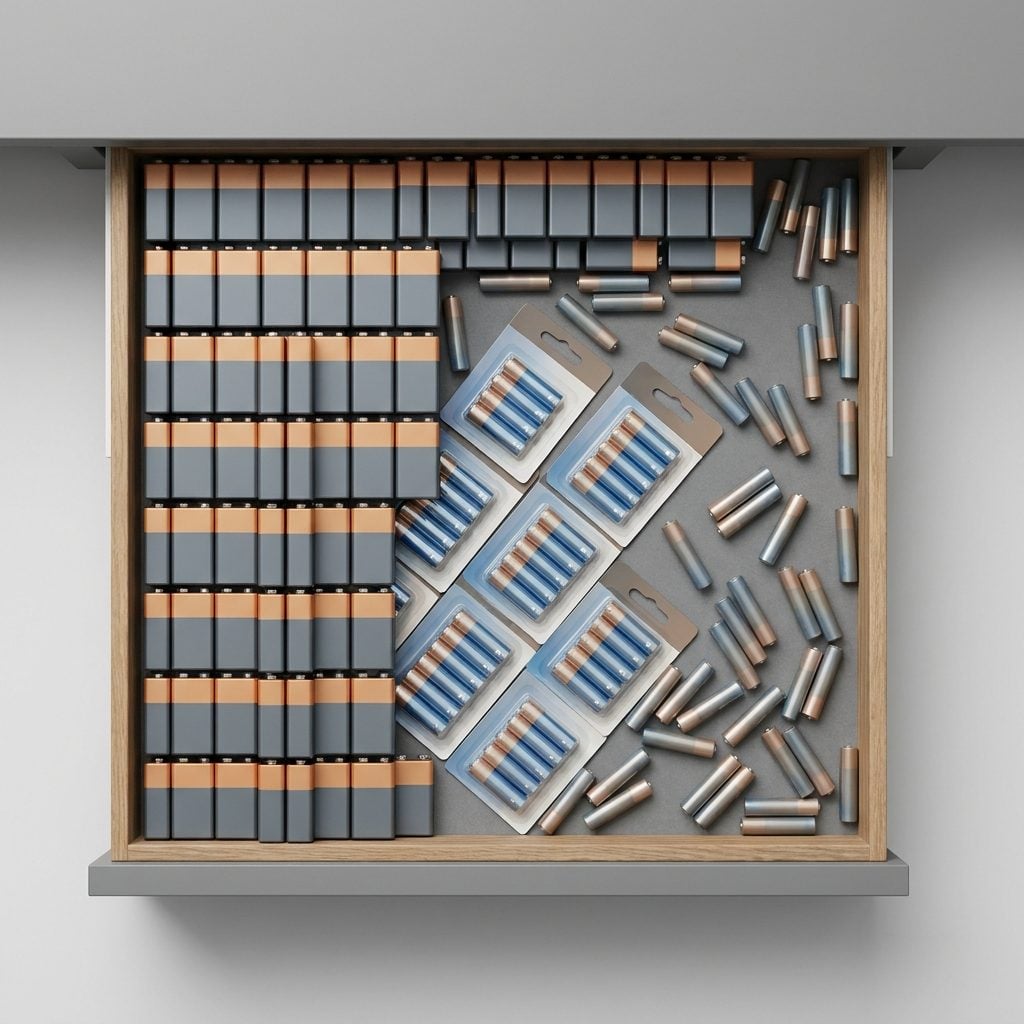
Count them sometime. Nine-volts stacked like a small brick wall. AAs still in the pack. AAAs loose and rolling. A single D battery with no known appliance in the entire home.
Growing up around repeated warnings and contingency planning can teach a person to feel calmer when basic supplies are close at hand. A study of children and their parents found that exposure to anxious modelling and threat-focused information was associated with stronger biases toward interpreting ambiguous situations as risky. Source
Brain-imaging research also suggests that anxious temperament can run through families, although that does not make a drawer full of batteries a biological inheritance. Source
The Takeout Sauce Packets That Can Carry an Old Rule About Waste
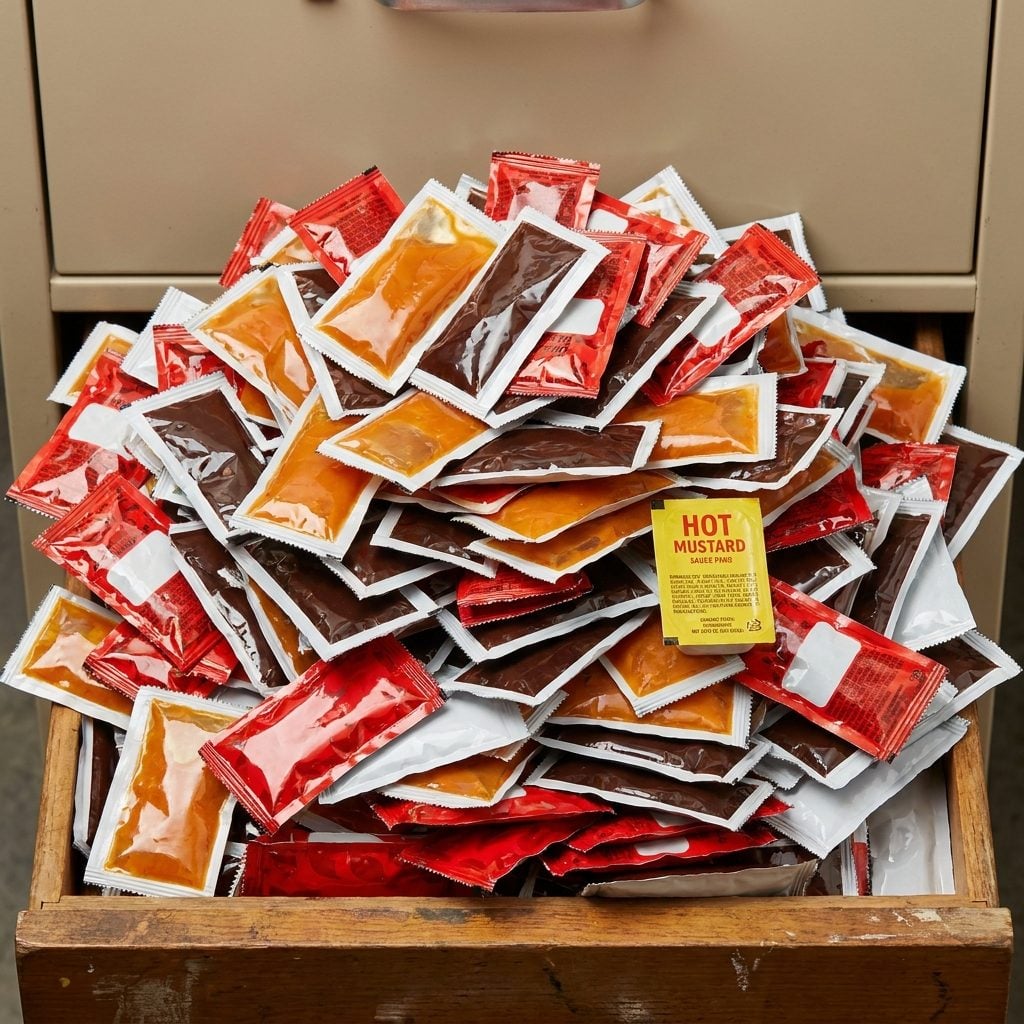
Duck sauce. Soy sauce. Three ketchups from a drive-thru you don’t remember visiting. A single packet of hot mustard so old it may have historical value.
Nobody plans a sauce packet collection. It accumulates in households where someone grew up hearing a version of “don’t throw that away, it’s still good.” Research on childhood food insecurity has documented lasting effects on the way some adults think about food, availability and waste. Source
A free packet of soy sauce is still usable. For someone trained to see edible things as resources rather than clutter, that can be reason enough to file it away for later.
What Twist Ties Say About the Person Who Taught You to Save Everything
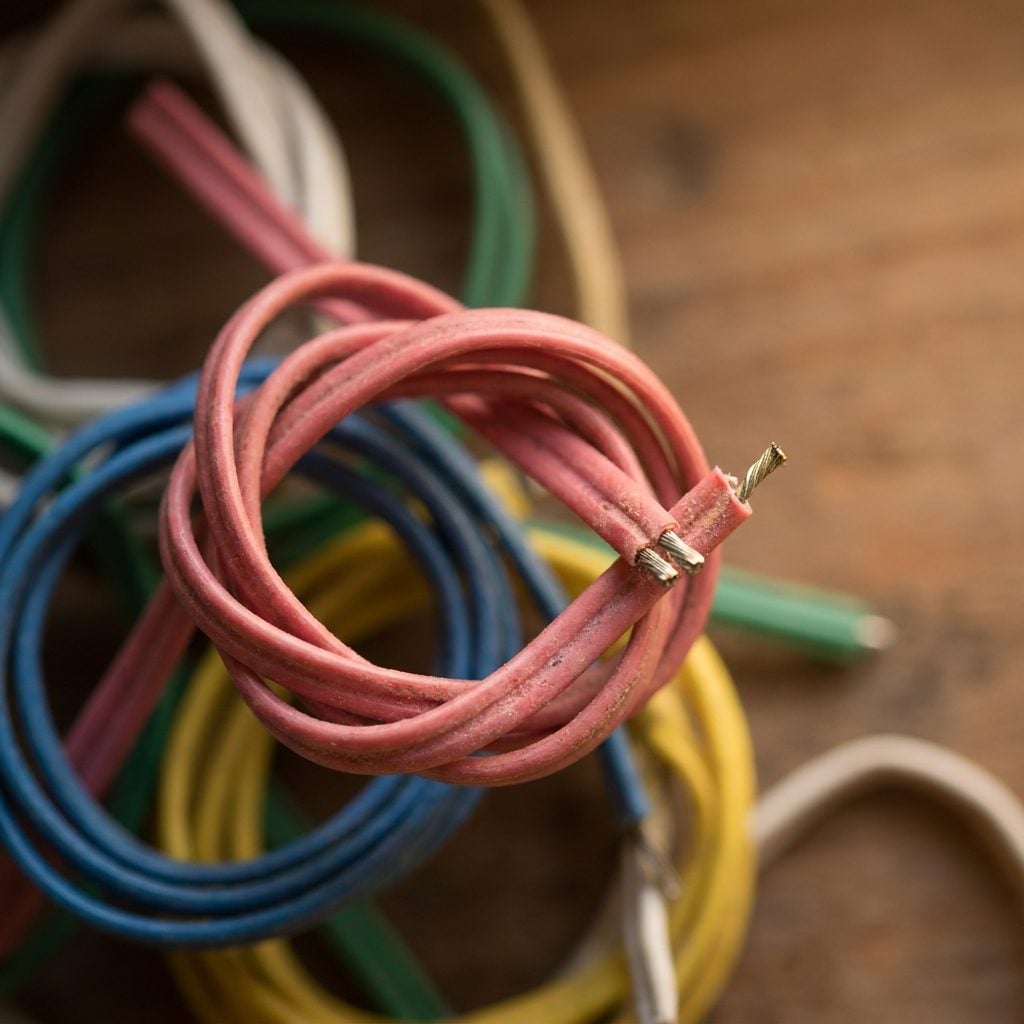
A tangle of them. Paper-wrapped wire in green, white, brown, and that indeterminate faded color that used to be red. Some still curled from the loaves of bread they came off of. One or two knotted, for reasons unknown, into tiny bows.
Twist ties are the smallest possible thing to keep. That’s the whole point. Saving them isn’t rational, it’s ritual, and the ritual usually traces back to one specific person. Clinical research on hoarding behaviors notes that many people who save excessively report learning the behavior directly from a parent, watching it modeled year after year until it stopped feeling like a choice and started feeling like being a responsible adult.
The Screwdriver You Can’t Explain and the Person You’re Still Copying
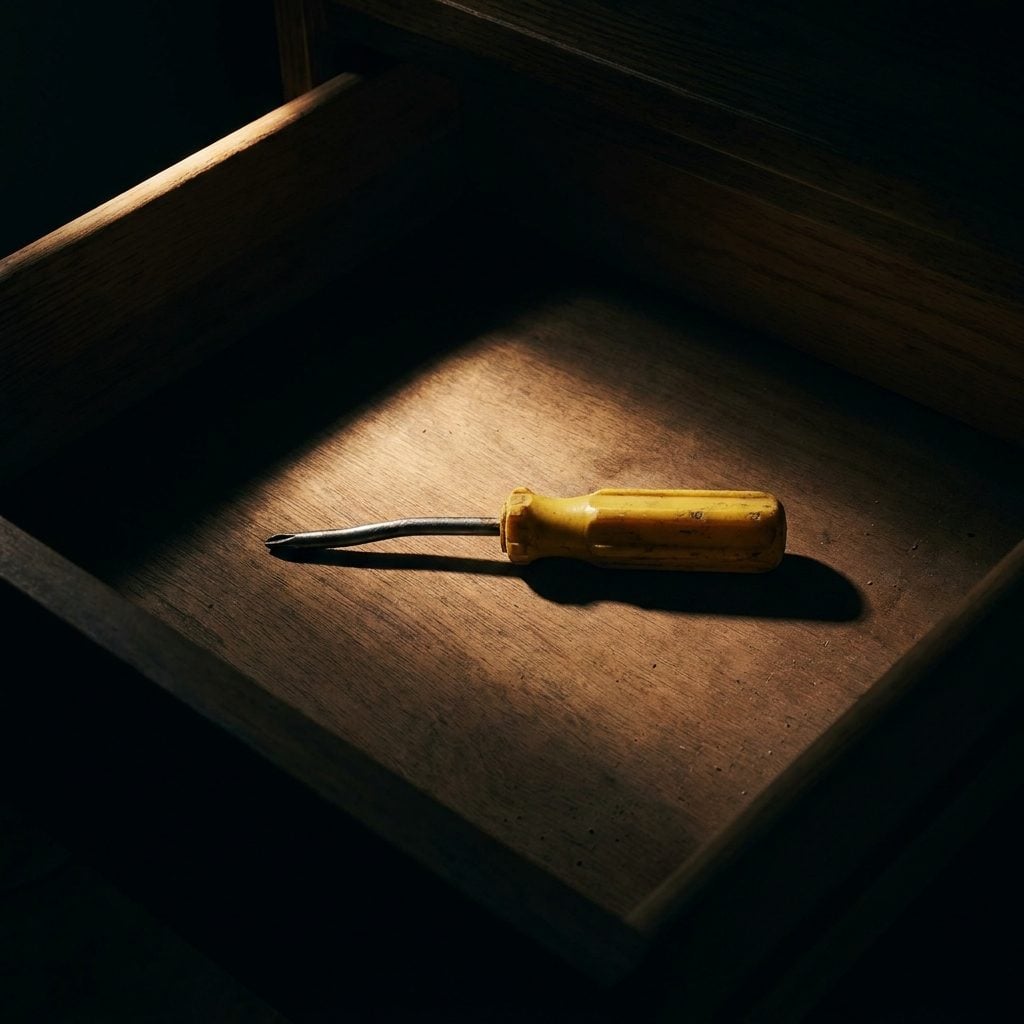
Phillips head. Yellow handle. Slightly bent tip. You didn’t buy it. You don’t know when it arrived. You have never once used it and you will not throw it out.
Somewhere in the drawer, many people have one tool that seems to belong to a ghost. A father, mother, step-parent, aunt, uncle or grandparent fixed things, expected tools to remain useful, and left behind the physical evidence of that expectation.
The screwdriver isn’t a tool. It’s a permission slip. As long as it’s in the drawer, you are still the kind of person who could, in theory, fix the thing.
Why Some Families Treat Every Old Charger as Potentially Useful
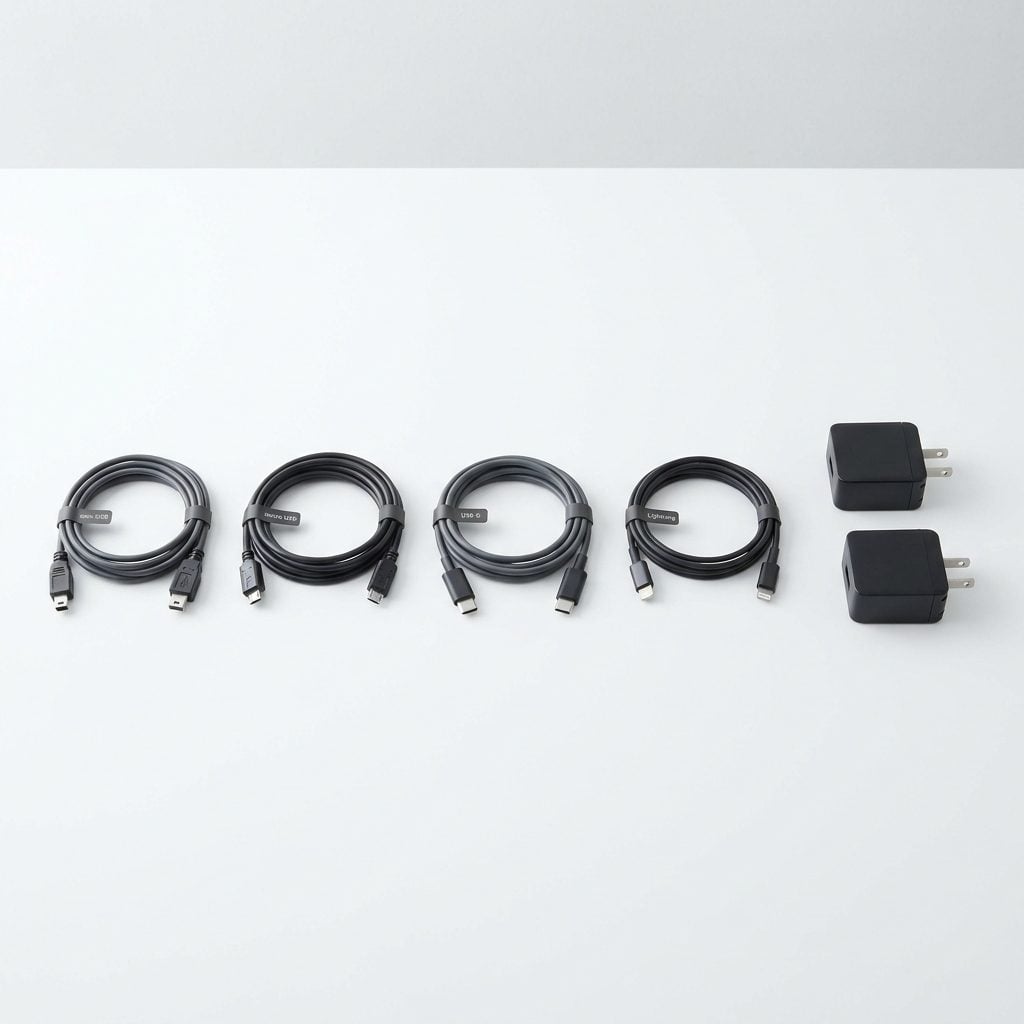
Mini-USB. Micro-USB. USB-C. Lightning. Two power bricks for laptops you no longer own. A cord for a camera that was discontinued in 2011. All of it, coiled, kept.
Research suggests that financial-saving habits can persist culturally across generations in some immigrant families. Source That does not explain every cable drawer, but it may help explain why discarding something that still works can feel wasteful even after its original device is gone.
The old cord remains a tiny contingency plan. It costs nothing to keep, might become useful again, and carries the familiar household rule that working objects should not be discarded casually. The cable stays.
The Birthday Card Buried Under Batteries and What It Refuses to Let Go Of
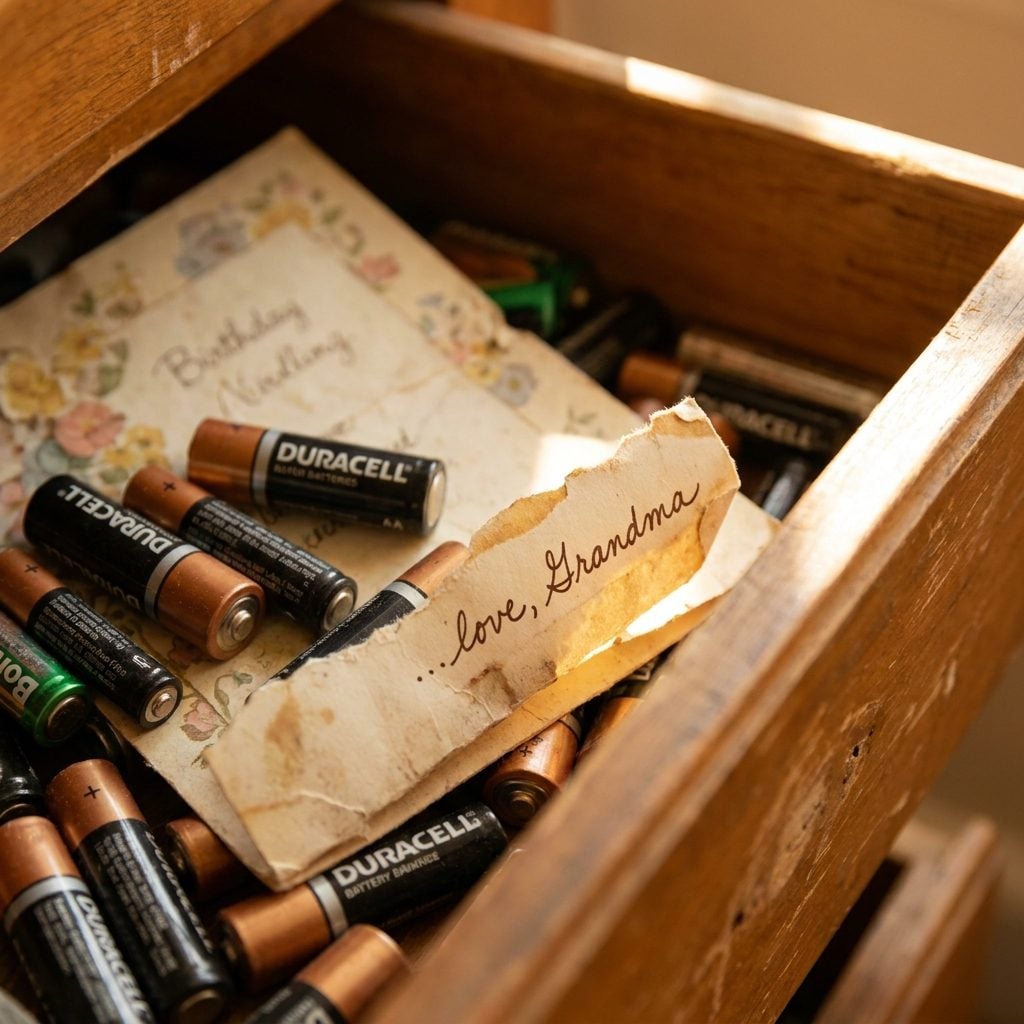
You know the card. Somebody’s handwriting you’d recognize in the dark. A joke that isn’t funny to anyone else. Maybe a folded twenty from a grandparent who’s been gone six years.
It shouldn’t be in the junk drawer. There’s no logical filing system that puts it there. But there it is, wedged between the batteries and a broken pair of scissors, because putting it in a memory box would mean deciding it was over.
Research on hoarding disorder distinguishes sentimental saving from utility saving, and notes that items are kept partly for practical reasons and partly because of an emotional connection the owner isn’t fully aware of. Source The junk drawer is where those two categories bleed into each other. The card stays close to daily life, because the person who wrote it should have.
What a Drawer Full of Pens That Don’t Work Says About Being Told Not to Waste
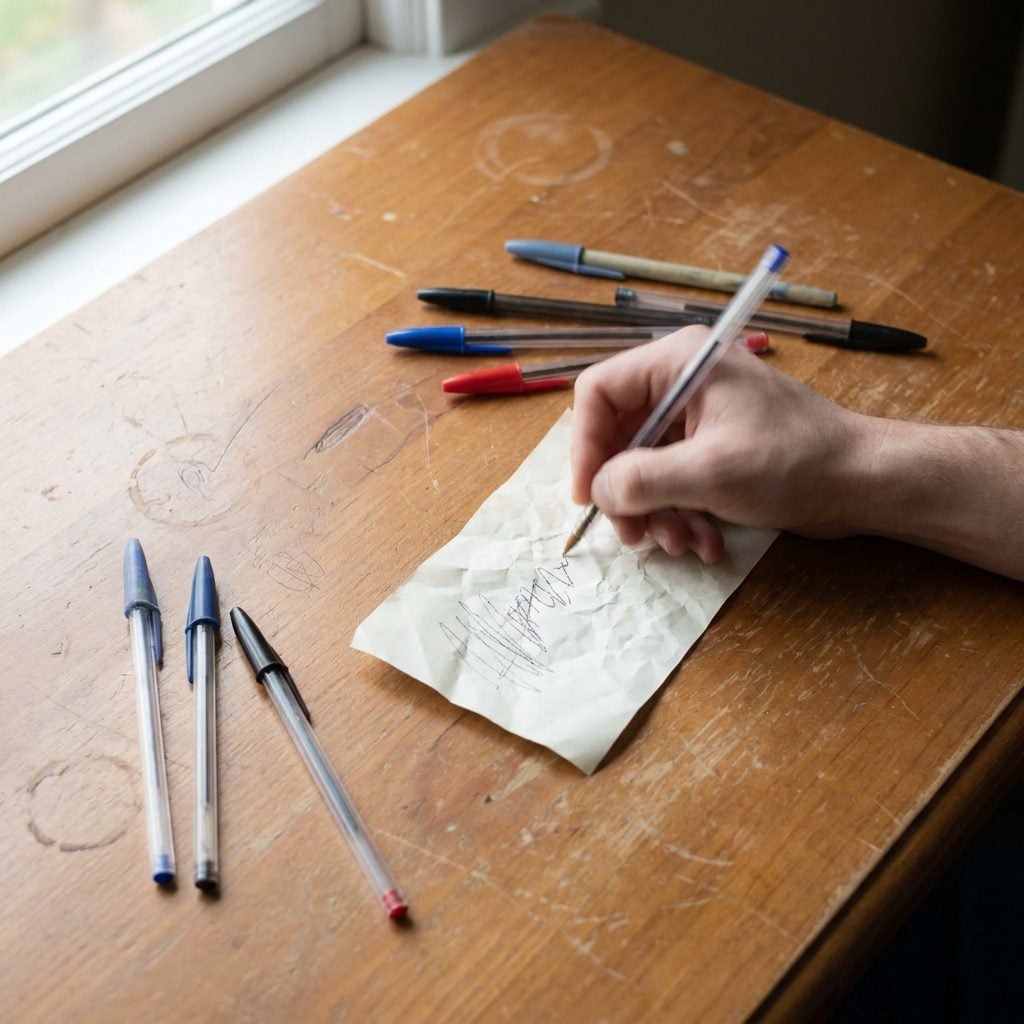
Test one. Doesn’t work. Put it back. Test another. Doesn’t work. Put it back. This is a ritual, not a search.
Kids raised by parents who watched every dollar internalize a rule that outlives the reason for it: don’t throw things out until you’re sure. A theoretical review on thrift and psychological well-being found that thrifty behaviors sometimes satisfy real needs for security and competence, and sometimes calcify into habits that no longer serve the person doing them. Source The dead pen drawer is the calcified version.
The pen doesn’t work. You know it doesn’t work. Throwing it out would take less than a second. But somewhere behind the reach for the trash can there’s a voice, usually a specific one, saying something about waste. So the pen goes back in. And so does the next one. And the drawer keeps its shape.
The Loose Buttons That Suggest Your Mother Believed in a Future You Didn’t
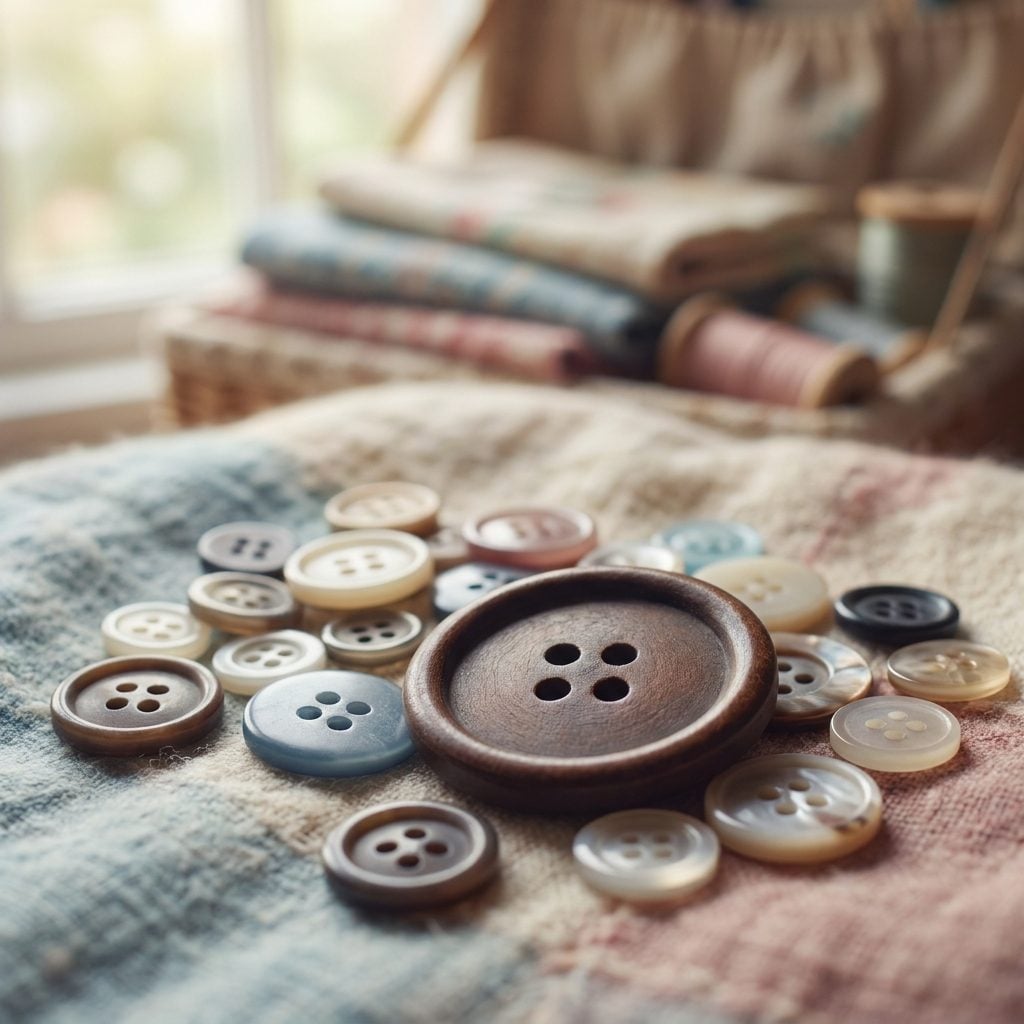
Open the drawer. Count the buttons. Three from a coat you stopped wearing in 2011. One from a shirt that belonged to a man you no longer speak to. A cluster still threaded onto their original cardboard tag, because your mother taught you that the spares matter more than the garment.
She wasn’t wrong, exactly. She was preparing you for a future where things came apart and nobody was coming to fix them but you. Research has linked childhood environmental unpredictability with greater adult hoarding tendencies, although a few loose buttons are not evidence of a disorder. Source The more ordinary explanation is learned behaviour: grow up around careful people and you may carry their rules forward, whether or not the lean years were ever yours.
The buttons stay because throwing them out would feel a little like throwing out her worldview. And on some quiet level, you’re not sure yet whether she was wrong.
The Two-of-Everything Habit That Can Begin in a Two-Home Childhood
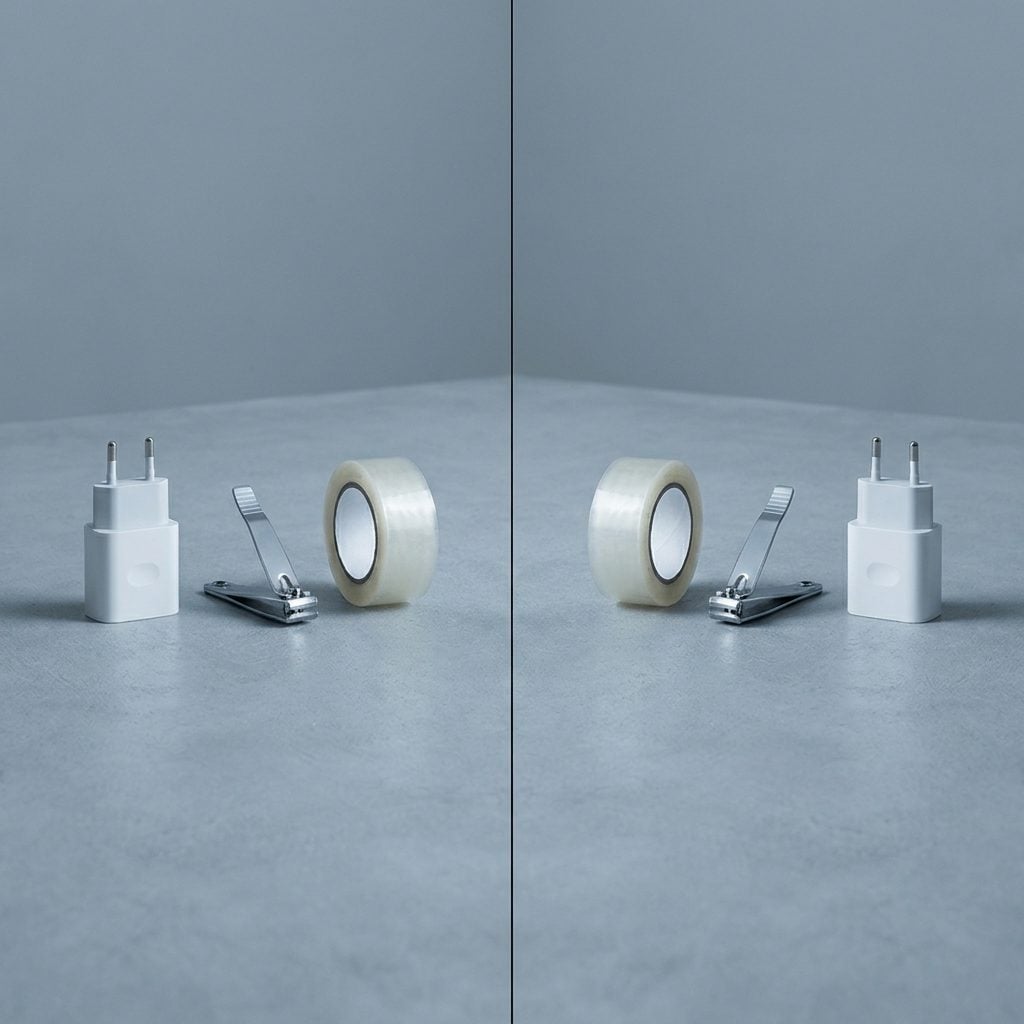
Two phone chargers. Two nail clippers. Two rolls of tape when one would do fine. You don’t remember buying most of them and you’d swear you’re not the kind of person who overprepares.
You are, though. You learned it early. Kids who moved between two houses had to become logistics managers before they learned long division, tracking which retainer was at Dad’s and which library book was at Mom’s, absorbing the quiet humiliation of forgetting the soccer cleats at the wrong address. Family therapists note that children of split households are expected to manage their belongings between two homes and often get blamed when something is left behind Source. Mediators routinely advise parents to duplicate the important items outright, precisely because a single misplaced object can derail a whole weekend Source.
That practical solution can sometimes linger as an adult preference for duplicates: never be caught in the wrong place without the thing you need. The drawer holds the ghost of that childhood arithmetic. It may have started as simple logistics.
The Foreign Coins That Betray a Household That Talked About Someday
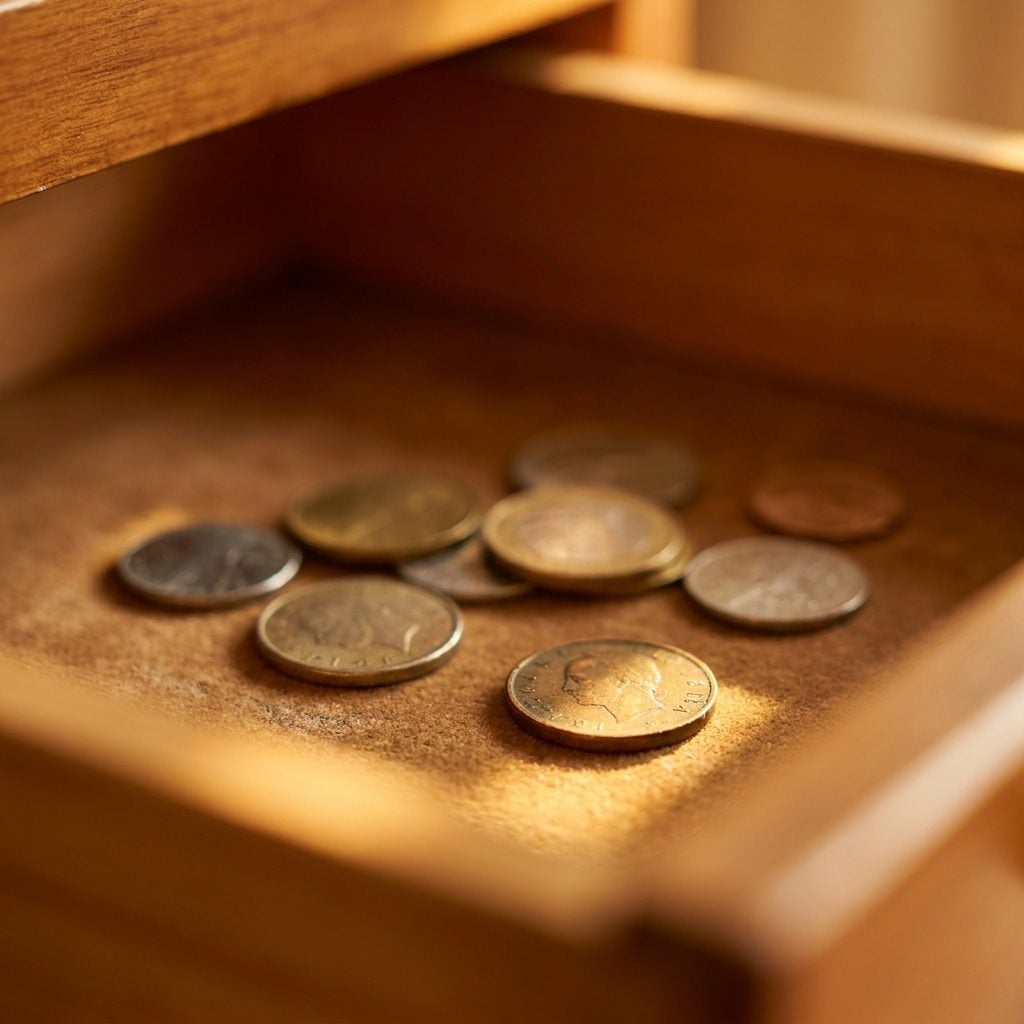
Open the drawer of someone who grew up hearing “when we finally go to Italy” and you’ll find them. A 50 lire. A single euro from a trip that happened, or a trip that was always about to. Coins are the cheapest souvenir on earth, which is exactly why they survive. Nobody throws them out. Nobody spends them either.
Psychologists call these external memory cues, physical objects that trigger the sensory memory of a place. But the coins in a junk drawer are doing something more specific. They’re the residue of longing, kept by the person who was raised to believe travel was significant, whether it happened often or almost never.
What the Manual for a Blender You No Longer Own Says About Order
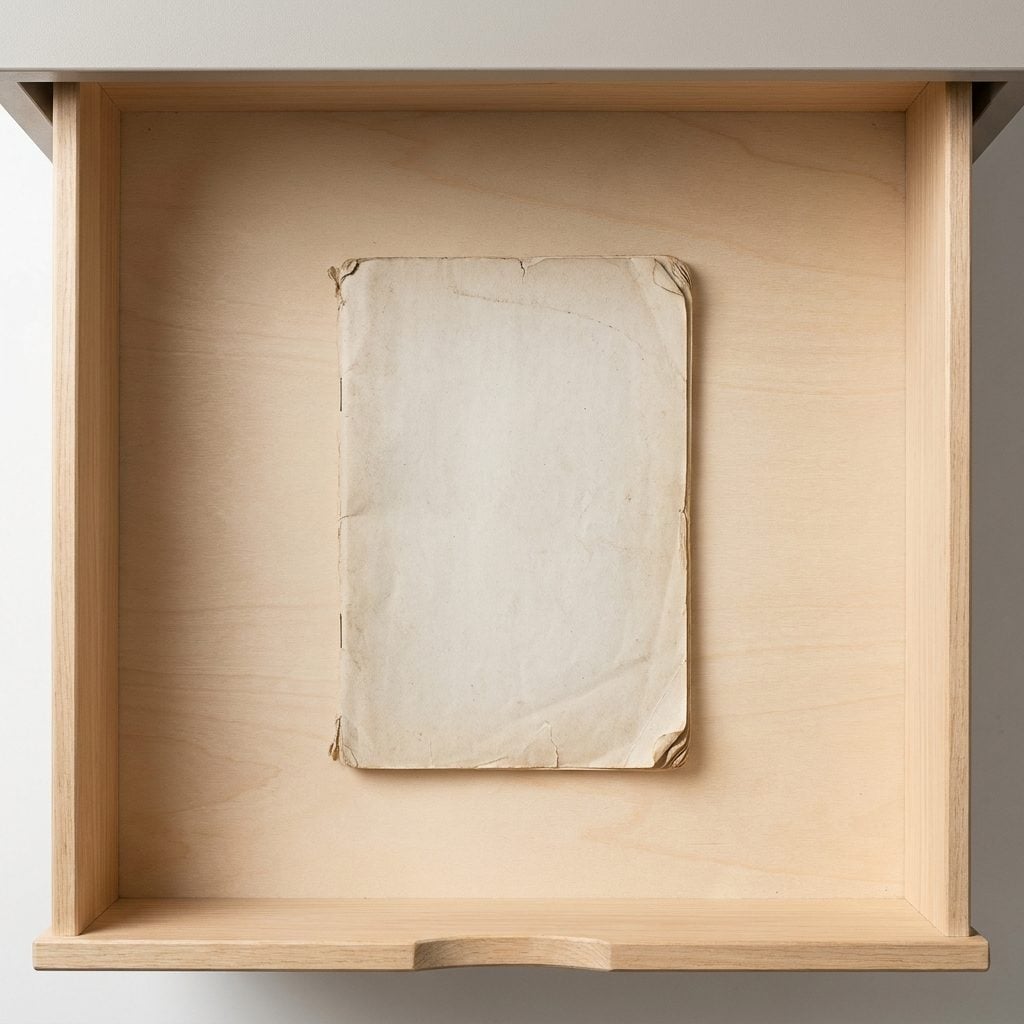
The blender broke in 2017. The manual is still in the drawer.
This isn’t laziness. It’s a specific kind of upbringing, one where paperwork equaled proof, where throwing away documentation felt like tempting fate. Kids raised by parents who filed everything learn that paper is protection. The manual stays because the manual might be needed, and needing something you threw out is a small betrayal of your own past self.
There’s also the sunk cost of comprehension. You read the manual once. You understood the pulse setting. Discarding it means admitting the whole apparatus is gone, including the small pride of having been the person who knew how it worked. Research on scarcity-shaped behaviors suggests that people raised around resource anxiety often over-preserve documentation as a hedge against future loss. The blender is gone. The reassurance is still there, tucked behind the batteries.
The Safety Pin Collection and the Silent Language of Preparedness
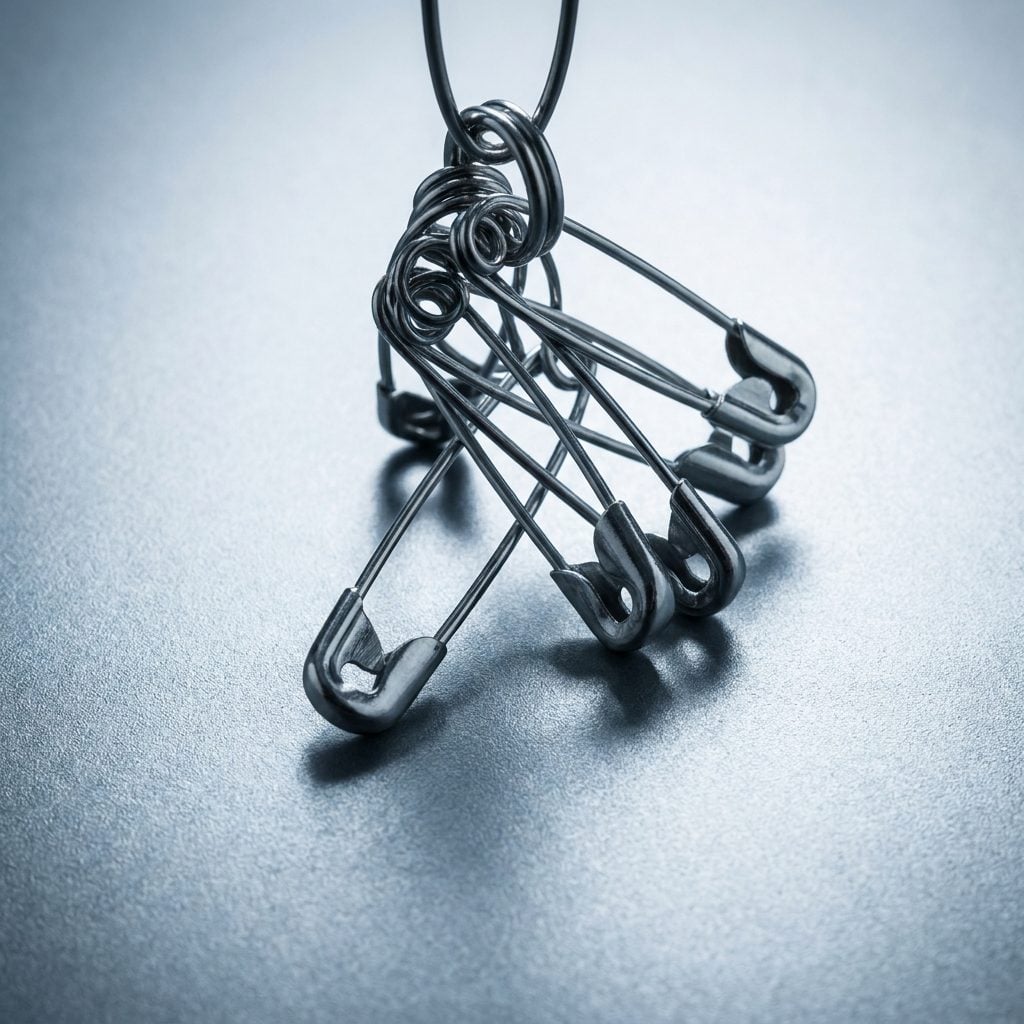
Nobody buys safety pins in bulk. They accumulate. One from a dry cleaner. Three from the back of a new shirt. A dozen from a bridesmaid dress emergency in 2011.
The person who keeps them all was raised by someone who believed a hem could fail at any moment, and that a woman who couldn’t fix it herself was in trouble. It’s a preparedness language older than most of us realize, passed down through hands that mended and pinned and made do.
Safety pins in a junk drawer can carry the residue of a childhood where competence was quiet and constant, where a parent resolved small crises without fanfare. Research has linked chaotic childhood environments with later insecurity and poorer mental health. Keeping tiny emergency supplies is one possible response—not proof of that history, but a habit that can make preparedness feel reassuring.
The pins stay. So do the batteries and the flashlight that has not been tested in six years. Just in case.
The Expired Coupons That Reveal a Parent Who Counted Every Dollar Out Loud
🔥 Would you like to save this?
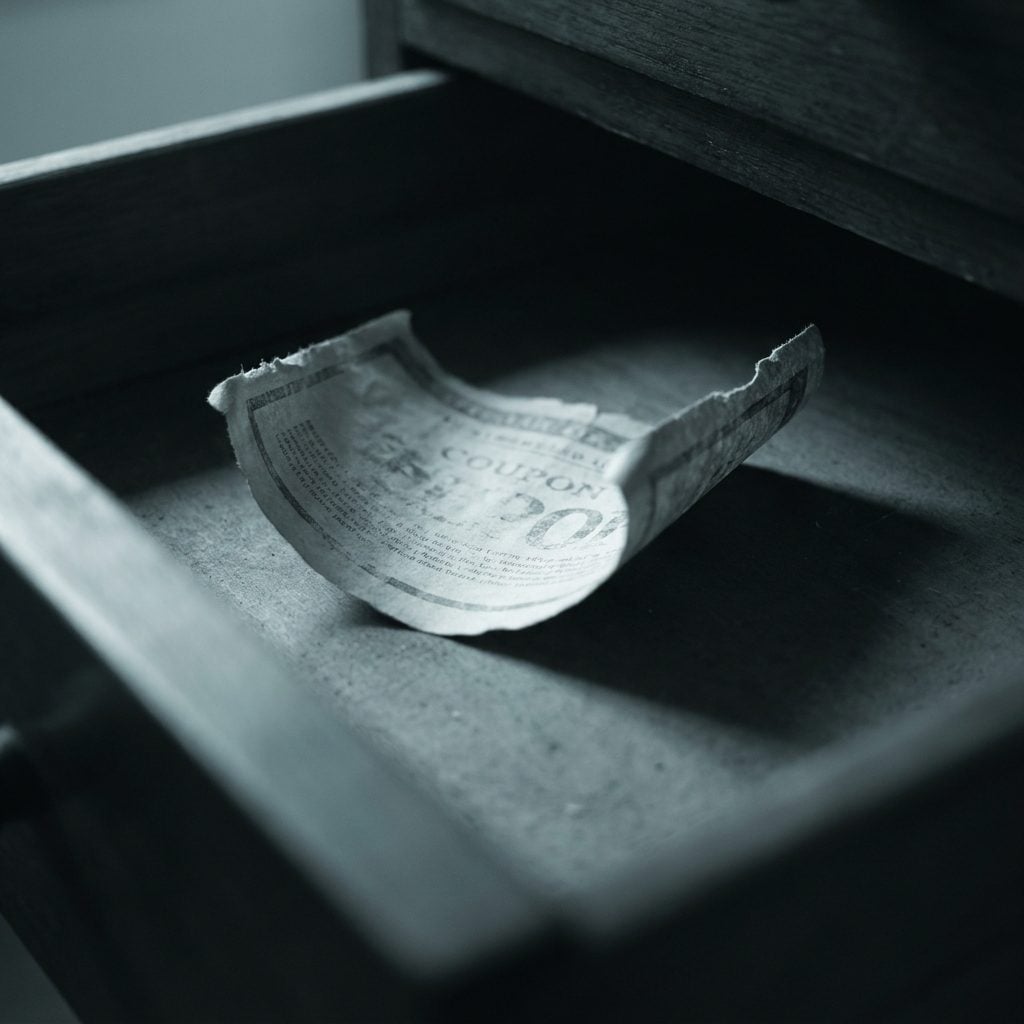
A dollar off paper towels. Expired in 2019. Still in the drawer.
This one hurts a little. The person who keeps expired coupons was almost always raised by someone who counted at the register. Not silently. Out loud. Kids raised in households where money was named, subtracted, and worried over in real time often grow into adults who cannot bring themselves to throw out a coupon, even a dead one. The coupon is a symbol. Tossing it feels like throwing out effort itself.
Psychologists Sendhil Mullainathan and Eldar Shafir’s research on scarcity mindset describes how scarcity can capture attention and consume mental bandwidth while resources feel limited. A person who grew up watching a parent do mental math in the cereal aisle may carry some of those habits forward. The coupons in the drawer are not really saving money anymore. They are preserving the effort that once went into finding them.
What Loose Keys to Forgotten Locks Say About the Homes You’ve Left

Nobody keeps a key on purpose. They just don’t throw it away.
A key to your first apartment. A key to your mother’s back door before she moved. A key to a bike lock you cut off yourself in 2015. They sit in the drawer because a key that once opened something feels like it still means something, even after the door is gone.
For someone who moved often or left home young, those loose keys can become small markers of places that no longer belong to them. Research on possessions and memory suggests that people sometimes keep objects because discarding them can feel like discarding the self that used them. A key to a lock you no longer own is still a key to a version of you.
The Half-Used Hotel Notepad and the Trip That Meant More Than You Expected
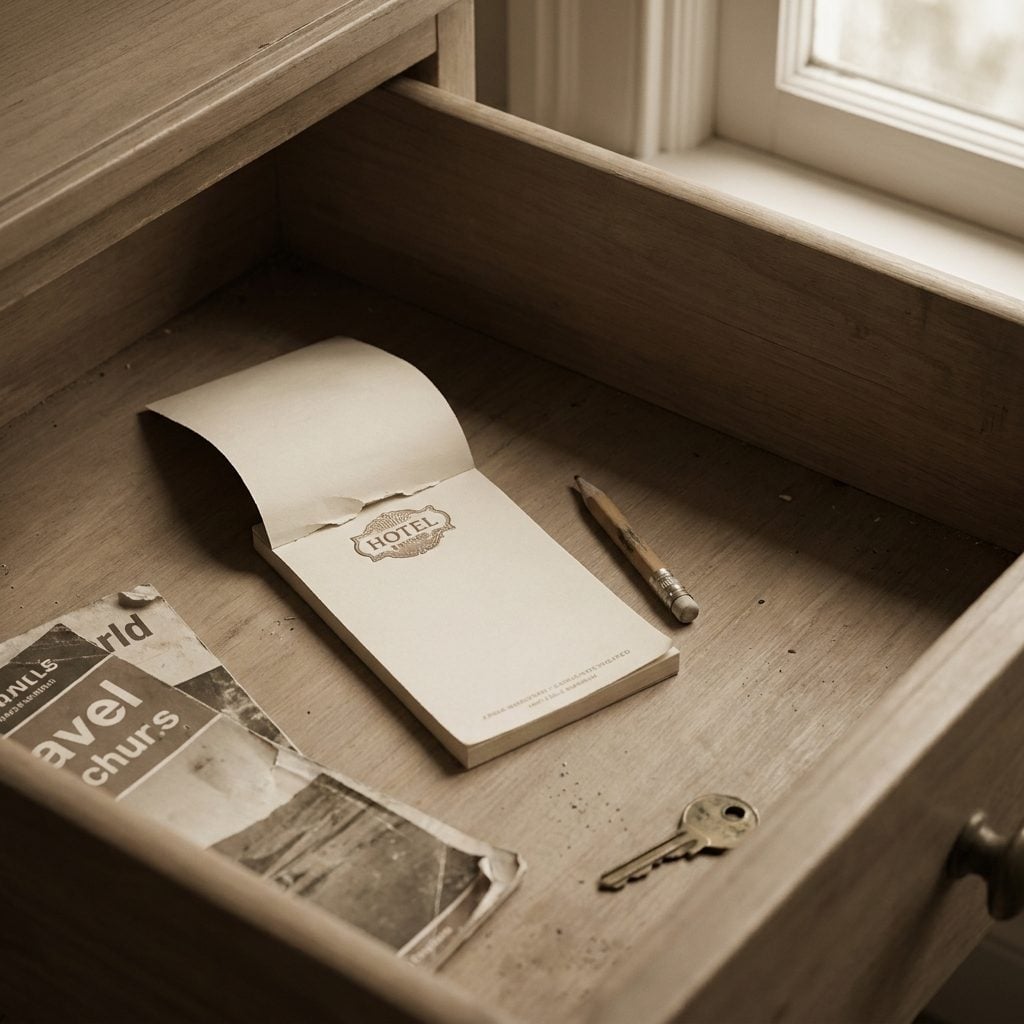
The hotel notepad is a specific object. Small. Cheap paper. A logo at the top from a chain you stayed at once, for a reason you might not want to name.
People who keep hotel notepads are often people who took a trip that mattered more than the trip itself. A funeral out of state. A weekend away that saved a marriage or ended one. A conference where you met someone. The notepad becomes evidence of a threshold moment, disguised as a functional object. You use it for grocery lists now. But every time you tear off a page, you’re standing in that lobby again.
The notepad you cannot throw out is doing quiet work. It is holding a chapter you were not planning to write down but could not quite leave behind either.
The cheapest souvenirs are the ones that survive the longest, because they were never valuable enough to protect and never useless enough to discard.
The Alphabetized Junk Drawer and the Need to Control One Small Space
This is the tell that surprises people the most.
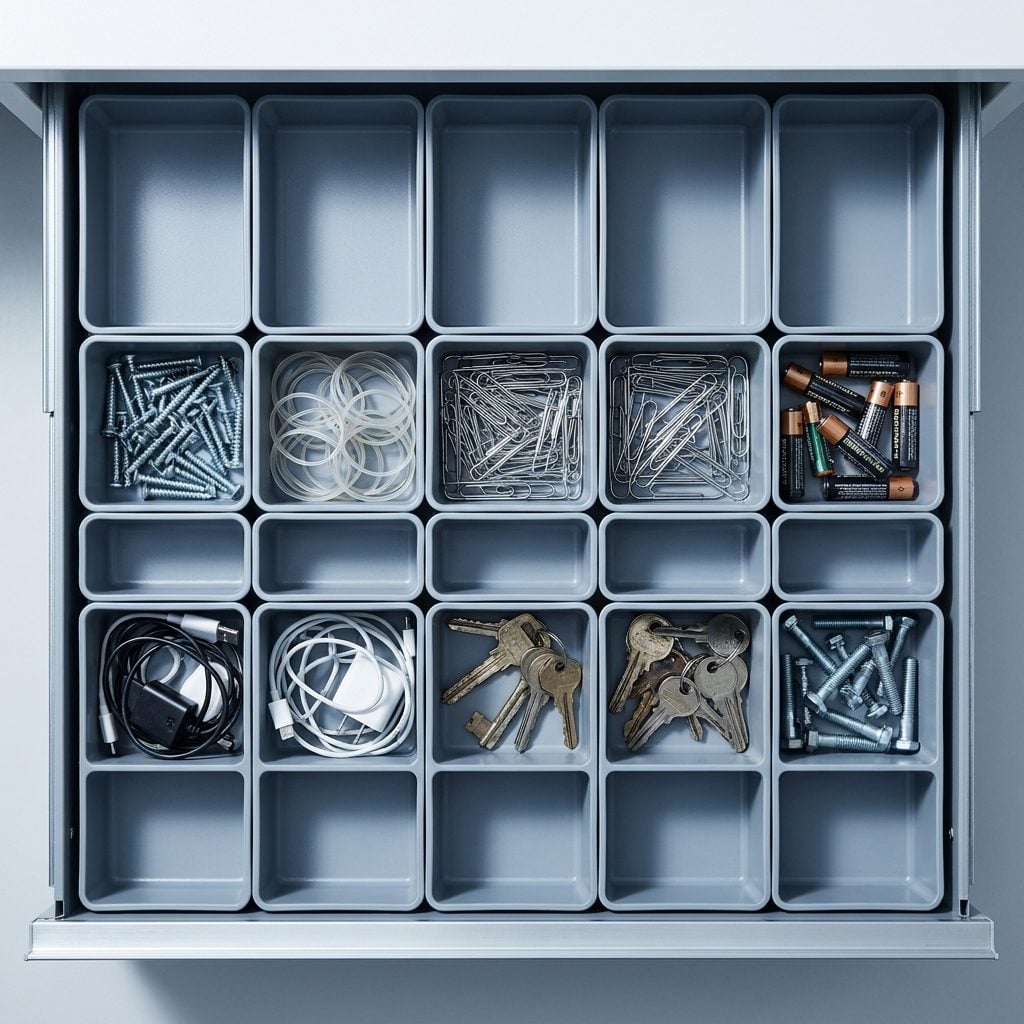
You’d expect the child of a hoarder to become a hoarder. Sometimes they do. But often, the opposite. The kid who grew up unable to find a clean fork becomes the adult whose junk drawer has a labeled tray for paperclips.
A summary of twin research reported that childhood household chaos was associated with poorer later mental health even after researchers accounted for genetic and environmental confounding. One possible response to an unpredictable childhood is to seek unusually tight control over small personal spaces. If the larger world felt unreliable, a drawer can become a small kingdom of predictability. It is yours. It stays where you put it.
The alphabetized junk drawer is not about neatness. It’s about sovereignty. It’s the smallest possible room in the house where nothing has ever gone wrong. And if you’ve read this far, you already know which kind of drawer is yours.
The Rubber Bands from Produce and the Grandmother Who Never Threw Anything Away
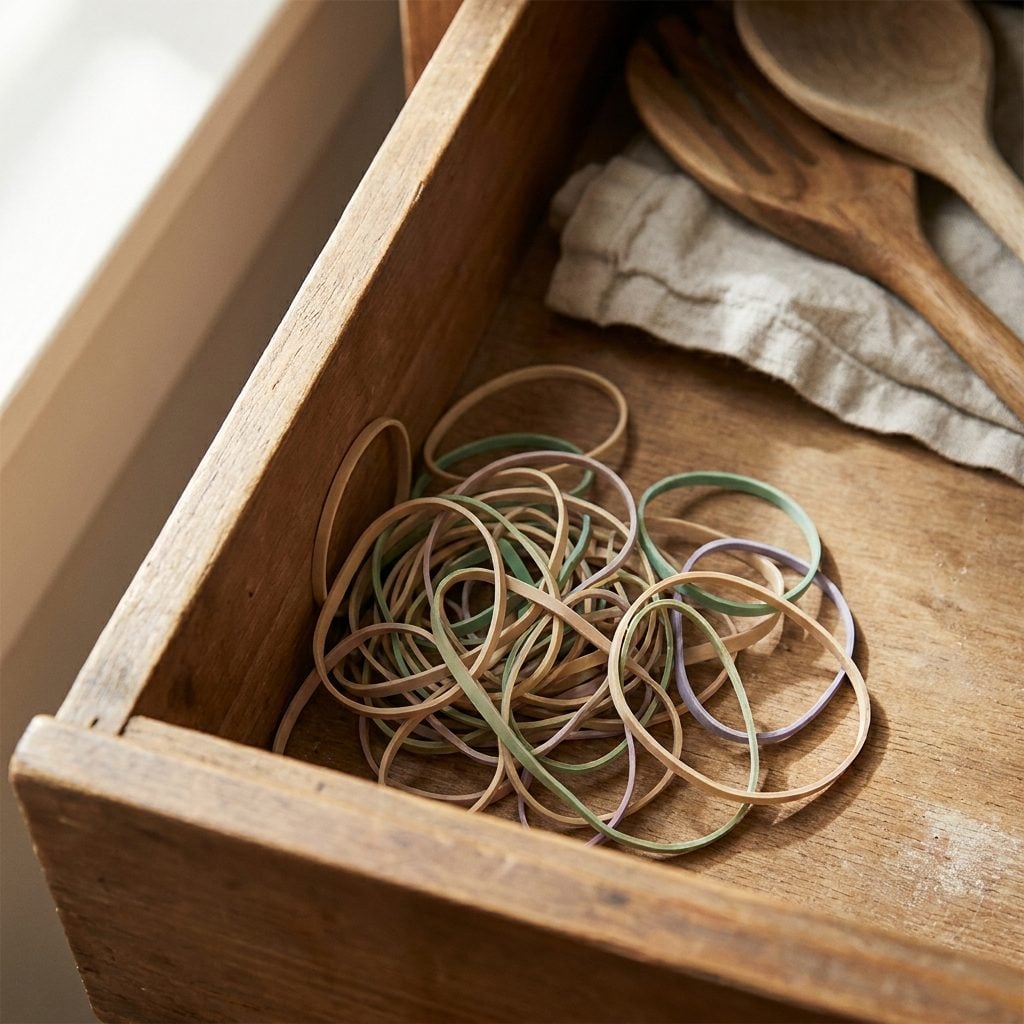
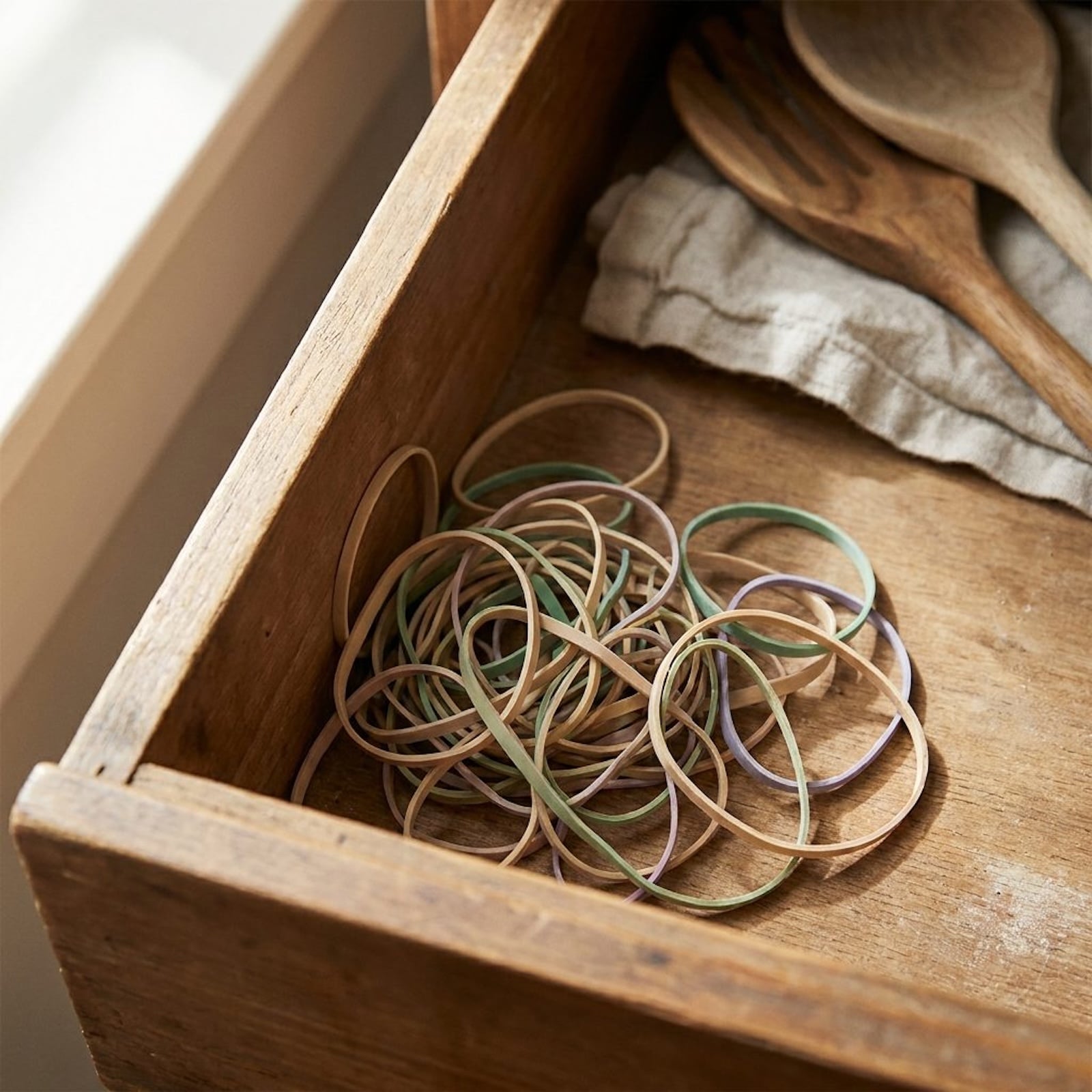
Open the drawer. Count the rubber bands. If there are more than ten, and at least three of them came off broccoli stems or a bunch of asparagus, you were raised by someone who lived through a shortage they never talked about.
Not necessarily the Depression. Could be a war. Could be an immigration. Could be a divorce that turned a two-income household into a one-income one overnight. The economics differ. The lesson lands the same: a rubber band is not garbage. A rubber band is a rubber band you don’t have to buy.
Researchers who study hoarding-adjacent behaviour sometimes distinguish excessive accumulation from ordinary or adaptive saving—the person who stocks up when things are free or discounted and actually uses them before they degrade. Source That describes many people with a rubber-band collection. Not pathology. Just training.
The training itself can be modelled across generations. Source You saved the band because your mother saved the band because her mother saved the band. Somewhere back there, someone may actually have needed it.
What a Drawer Without Tape Says About the Way You Were Taught to Ask for Help
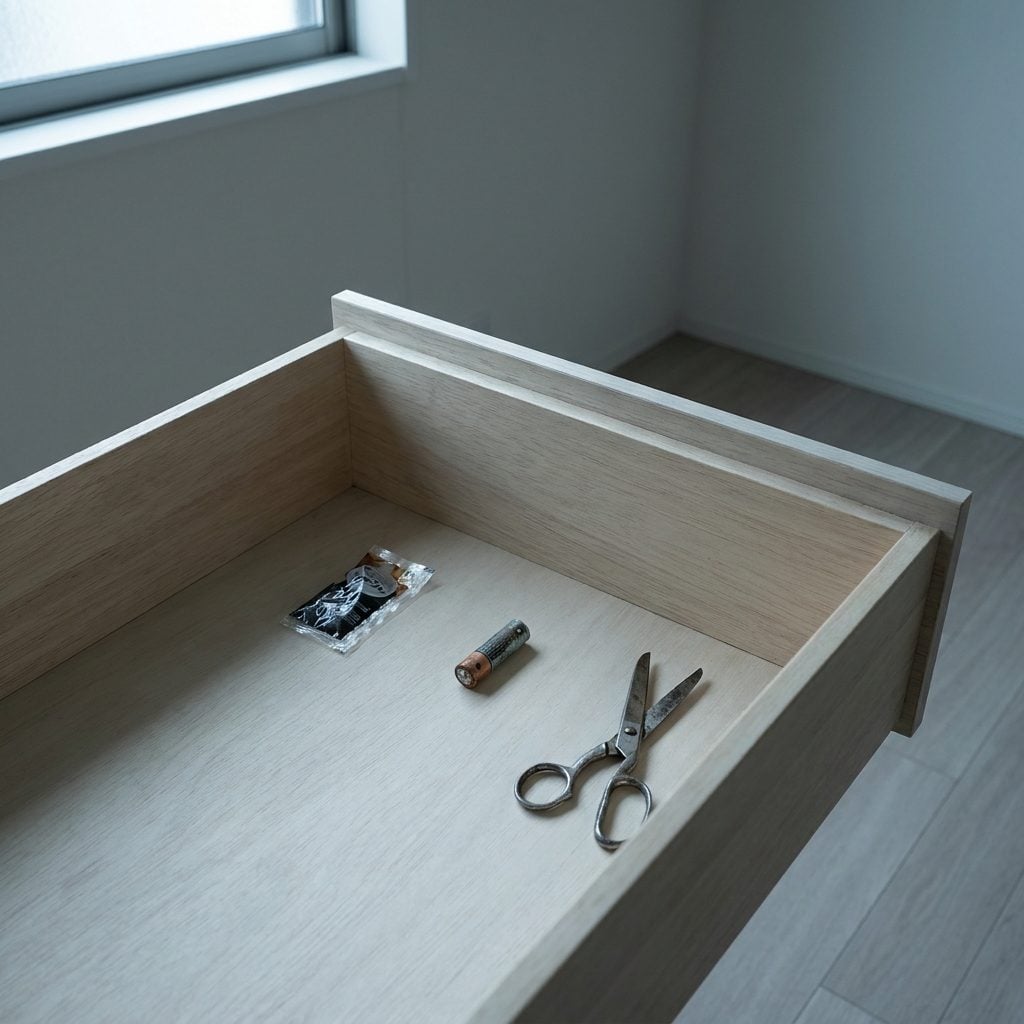
No tape. No scissors that actually cut. No screwdriver. A drawer that contains soy sauce packets and a dead battery and nothing else useful.
A drawer without useful tools can come from very different homes. In one, adults fixed everything themselves and rarely let the child try. In another, broken things simply stayed broken until they were replaced or forgotten.
Either experience can leave an adult less confident about small repairs, although the contents of one drawer cannot diagnose learned helplessness. That term describes a broader pattern in which repeated experiences teach someone that their effort does not change the outcome. Source
An empty utility drawer may simply say that repair was never part of this person’s household language. They call someone, postpone the job or live with the loose cabinet door for eleven months.
The opposite drawer—the one packed with hex keys, picture wire and three sizes of tape—may belong to someone who was encouraged to attempt small jobs early. Different childhood. Different drawer.
The Matchbook From a Restaurant That Closed in 1994 and the Story You Still Tell
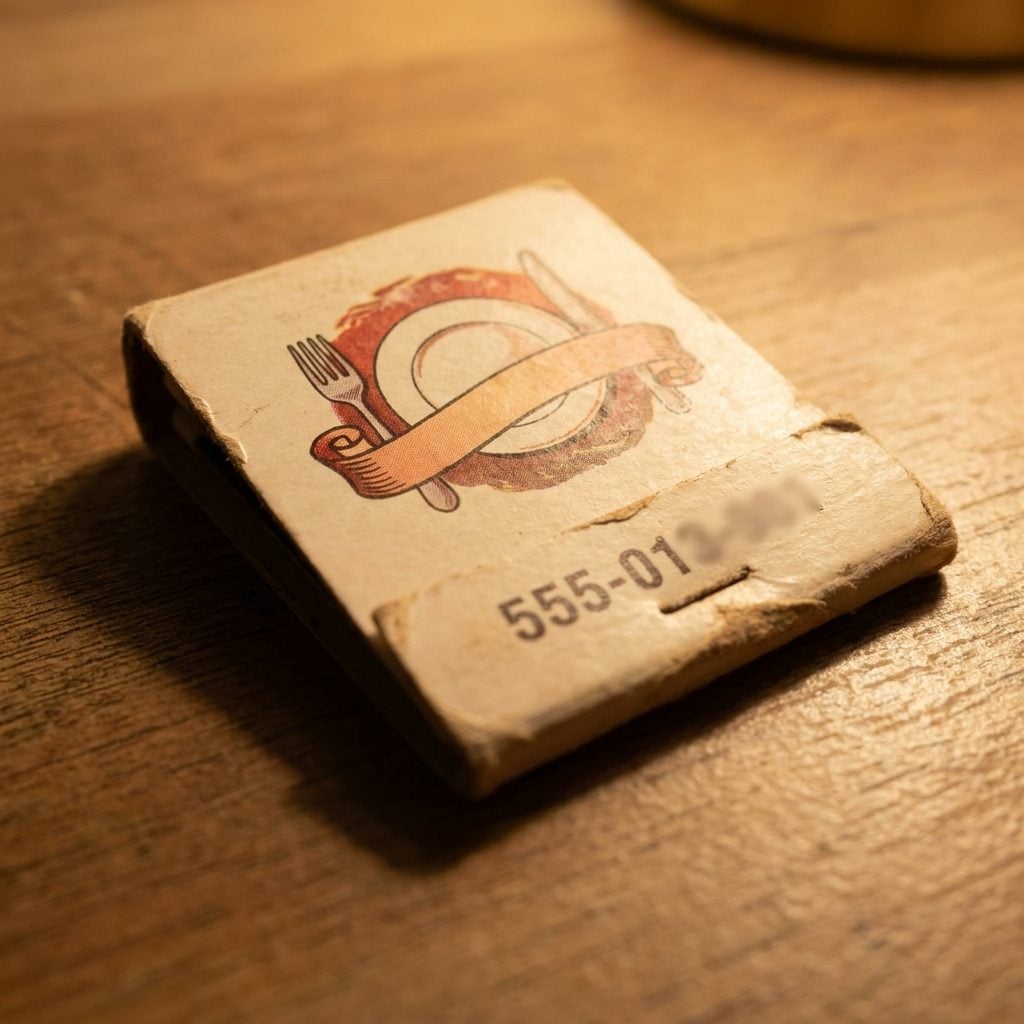
You don’t smoke. You’ve never smoked. And yet the matchbook is still there, cardboard soft at the corners, the phone number on the back missing an area code because the area code hadn’t split yet.
The matchbook isn’t kindling. It’s a bookmark for a night you don’t want to lose. Research on autobiographical memory suggests that physical objects can serve as powerful retrieval cues, bringing back the sights, smells and feelings attached to a particular moment. Source
Which is why the matchbook survives every move. It’s the anchor to a table you sat at, a person you sat across from, a version of yourself that hadn’t happened to you yet.
The Single Chopstick and the Optimism That Its Partner Will Turn Up
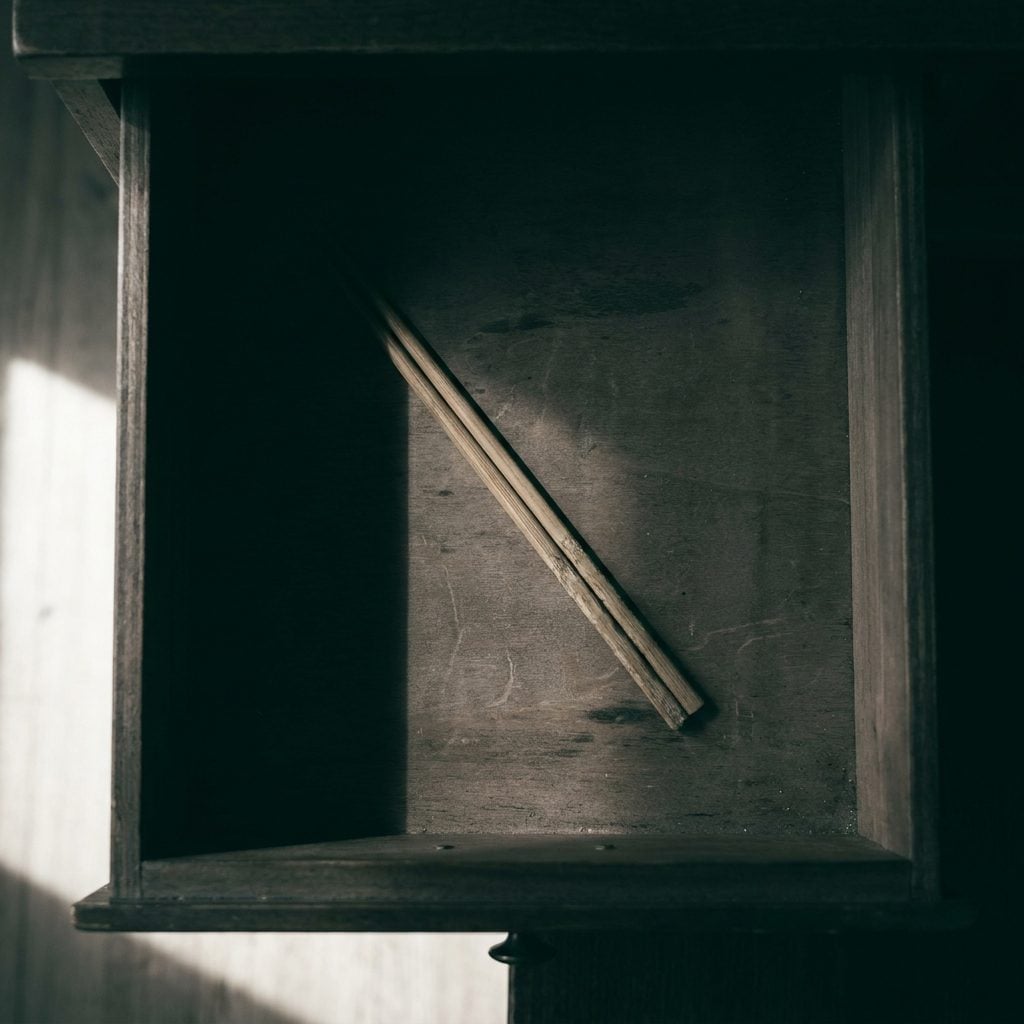
One chopstick. Just the one. Its partner has been missing for years and you have not, at any point, considered throwing this one out.
You’ve stopped registering it. That’s the tell.
The chopstick isn’t sentimental. It’s something quieter: a low-grade optimism that its partner might still turn up. A refusal to close the file.
Households that discarded quickly (the pen without a cap, the sock without a match) taught you objects had one job and lost it when they failed at it. Households that kept the orphan taught you completion was a matter of time, that things came back, that giving up on the small stuff was a kind of moral failure. You’re still running that program. The chopstick is proof.
The Drawer You Won’t Let Anyone Else Open and the Privacy You Were Never Given
Everyone in the house knows the drawer. Nobody opens it.
Or, differently, everyone in the house opens every drawer and you learned early that nothing you owned was ever really yours.
For someone who grew up without much physical privacy—siblings sharing rooms, parents reading the diary, a household where the door did not lock—a drawer, shelf or corner of a closet can become a small territory that feels entirely their own. Writing on attachment and possessions describes keepsake spaces as one way people externalize identity and hold parts of the self somewhere safe. Source
The junk drawer is a strange candidate for a sanctuary. It’s not locked. It’s not hidden. What makes it private is the social contract you built around it, and the way your body tenses a little when someone reaches for the handle without asking.
The drawer isn’t hiding secrets. It’s holding a small, portable version of the boundary you weren’t allowed to have when you were nine.
The Bottom Line
Here’s what the drawer actually reveals: families pass down tiny rules about usefulness, waste, memory and preparedness. Some began in genuine scarcity. Others came from sentiment, habit or the simple belief that something might be useful again. Long after anyone remembers who made the rule, the object remains—waiting in the dark beside a battery nobody has tested.