
🔥 Would you like to save this?
Lemon oil and hot dishwater. A chamois squeaking across a chrome faucet. The scrape of a corn broom over linoleum while the coffee was still perking. Somewhere a wringer washer was already thumping, sheets were snapping on a clothesline, and a woman was polishing something nobody else in the house had noticed was dull.
The postwar home ran on rules that were rarely written down because everybody seemed to know them already. Beds made every morning. Dishes washed before anyone got comfortable. Towels straightened, ashtrays emptied, counters cleared, rugs beaten, silver polished, and the living room kept ready for company that might never actually arrive. Housekeeping wasn’t just about dirt. It was about order, thrift, reputation, self-respect, and the unsettling possibility that a neighbor might notice your porch before you did.
In order to come up with the very specific design ideas, we create most designs with the assistance of state-of-the-art AI interior design software. Also, assume links that take you off the site are affiliate links such as links to Amazon. this means we may earn a commission if you buy something.
Some of those rules were brutally practical. Others turned ordinary dust into a referendum on character. A few now seem exhausting enough to qualify as a second job. Yet plenty survived because they worked, or because they became so deeply wired into family life that decades later you can still hear somebody’s voice when you walk past an unmade bed or leave a glass sitting naked on a good wood table.
Here are 35 housekeeping rules from the 1950s home that helped keep everything gleaming, company-ready, and just slightly afraid of being caught with crumbs on the floor.
35. Make the Bed Every Morning
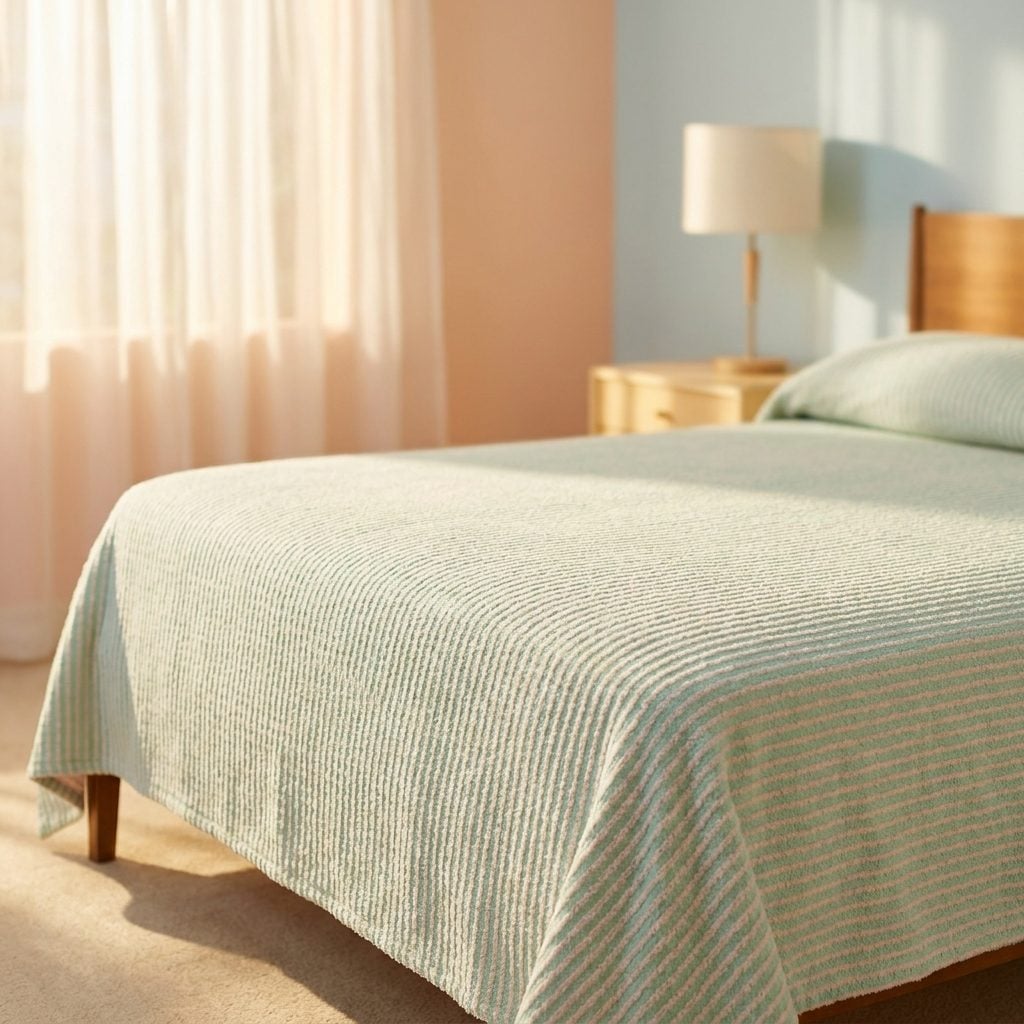
The rule wasn’t really about the bed. It set the tone for the whole day. A made bed meant the house was awake and in order and you weren’t the type to let things slide. Mothers said it flat: sometime before the morning got away from you, the bed got made.
There’s practical logic buried in it. Smoothing a chenille spread over a full bed took little time, gave the bedroom an immediate reset, and delivered one visible job finished before the day had properly started.
34. Never Leave Dirty Dishes Overnight
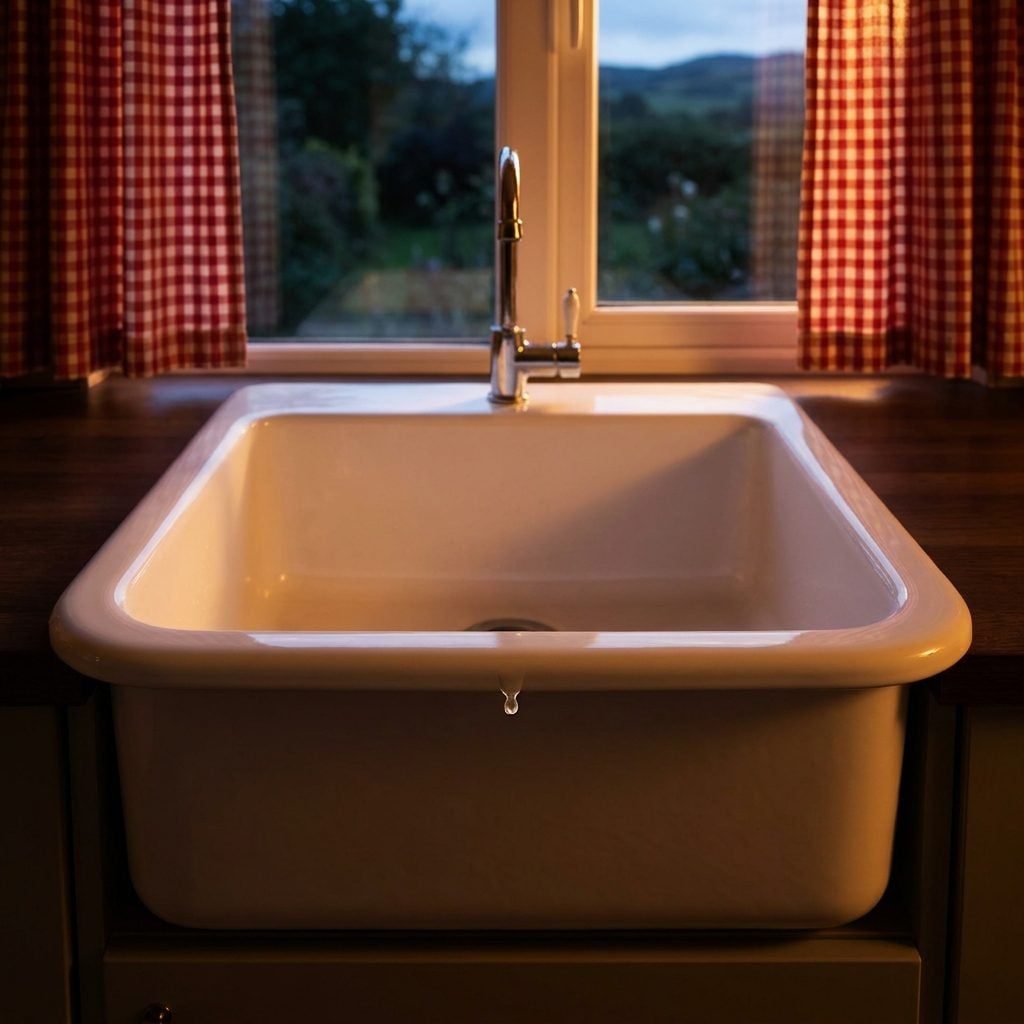
Leaving dishes in the sink overnight was practically a moral failing. The reasoning was practical before it was proud: food dried onto plates turned stubborn, and a warm kitchen with scraps sitting out was an invitation to pests.
So the last act of the evening was the sink emptied and wiped, the towel hung to dry. You went to bed with nothing waiting for you. That part still holds up. Waking to a clean sink is a considerably better opening scene than facing last night’s gravy.
33. Dry and Put Dishes Away Instead of Leaving Them Out
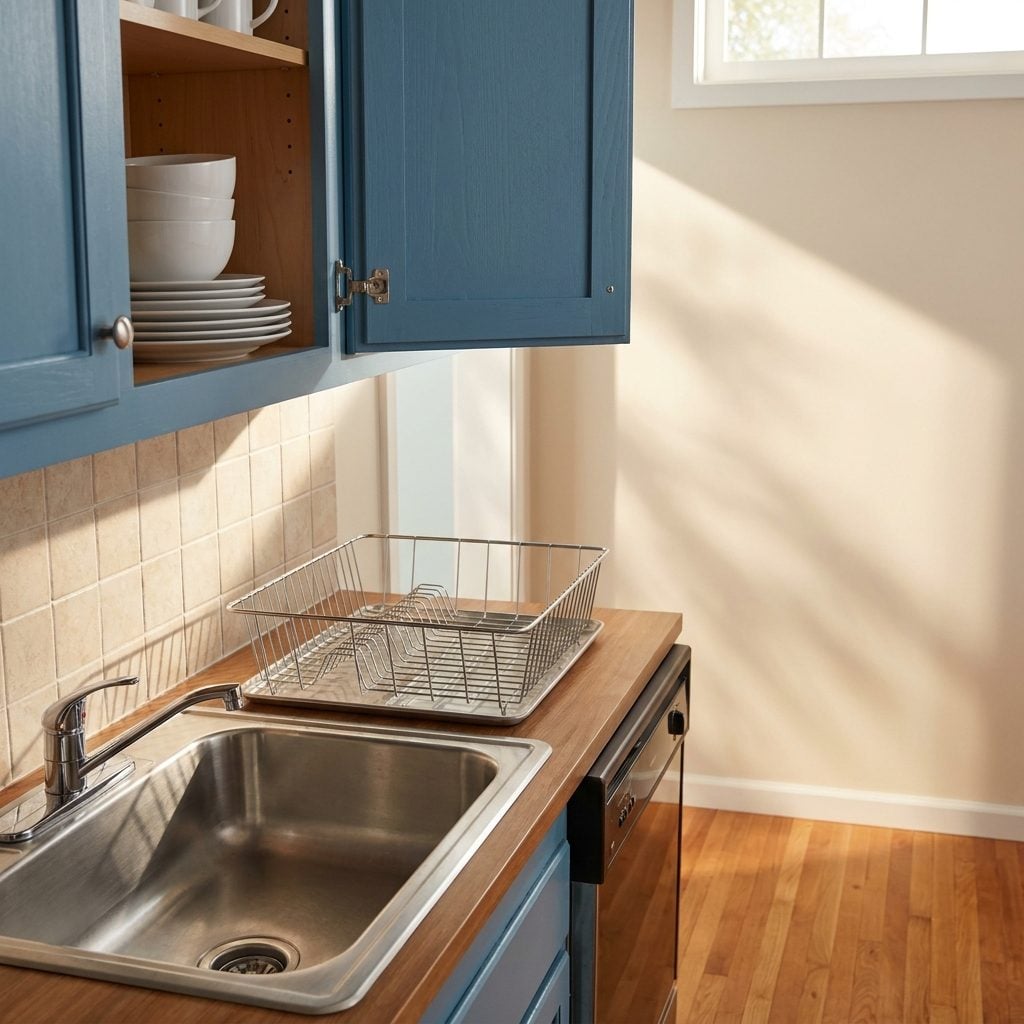
A drying rack sitting full all afternoon was considered lazy, plain and simple. The job wasn’t finished until every plate was back on its shelf and the towel folded over the oven handle.
There was a small satisfaction in the clean ending. An empty counter meant the previous meal had disappeared completely instead of lingering in plain sight for another three hours.
32. Wipe the Kitchen Table After Every Meal
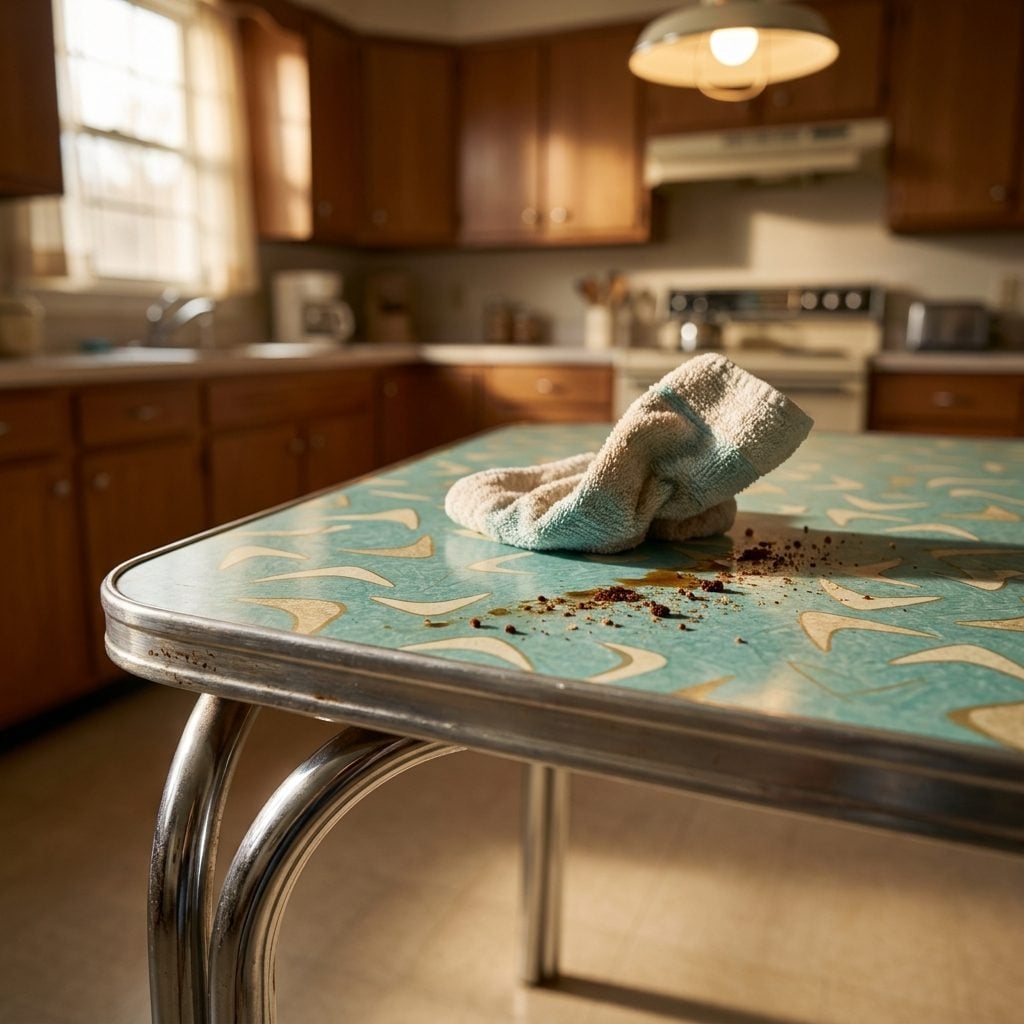
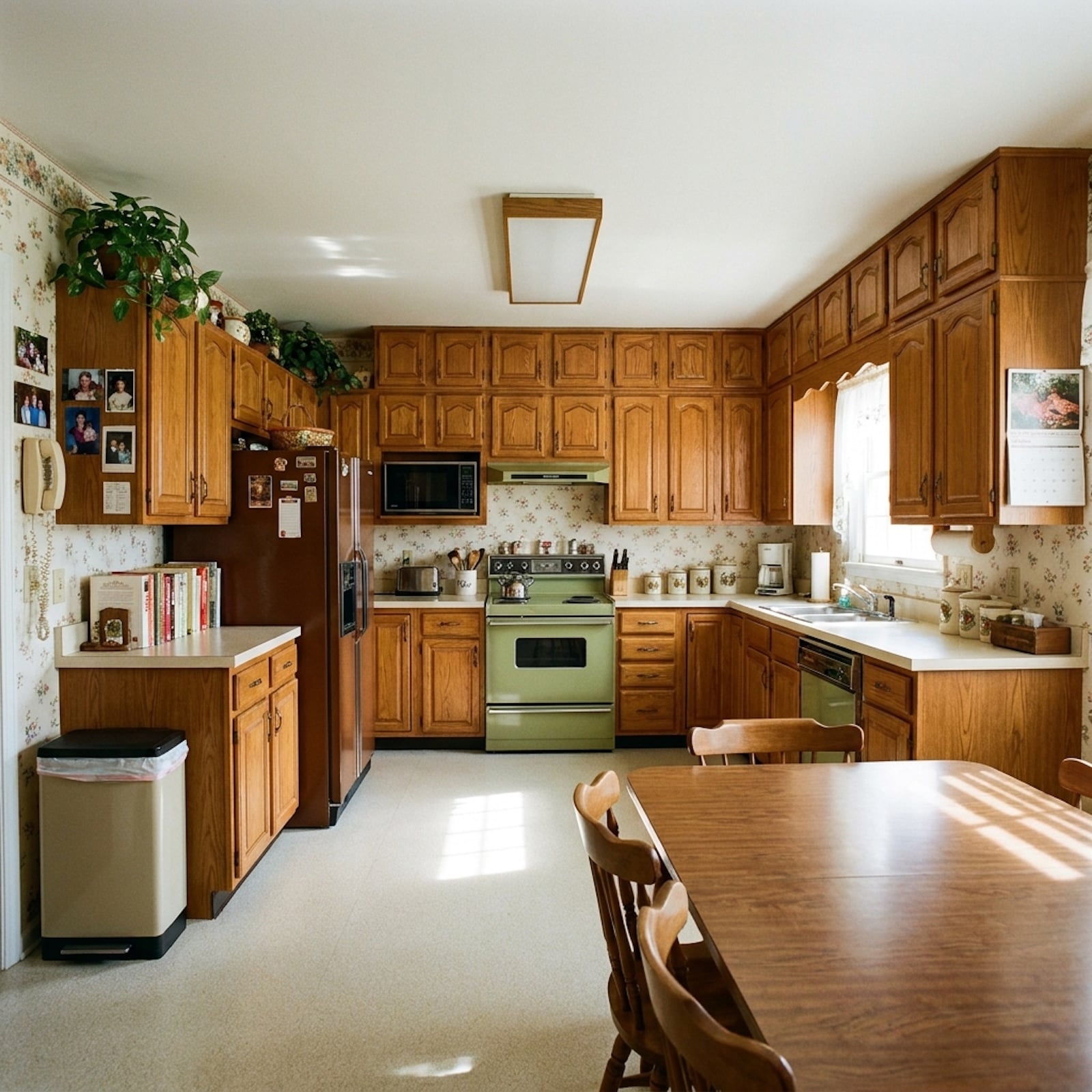
The damp cloth lived within arm’s reach and came out the second the last fork went down. Crumbs, a ring from a sweating glass, a smear of jam from a kid who ate in a hurry — all of it gone in one pass across the Formica.
A wiped table was ready for whatever came next: homework, sewing, a hand of cards, the next meal. The kitchen table did everything in those homes, so it never got to stay dirty for long.
31. Clean the Sink Until It Shines
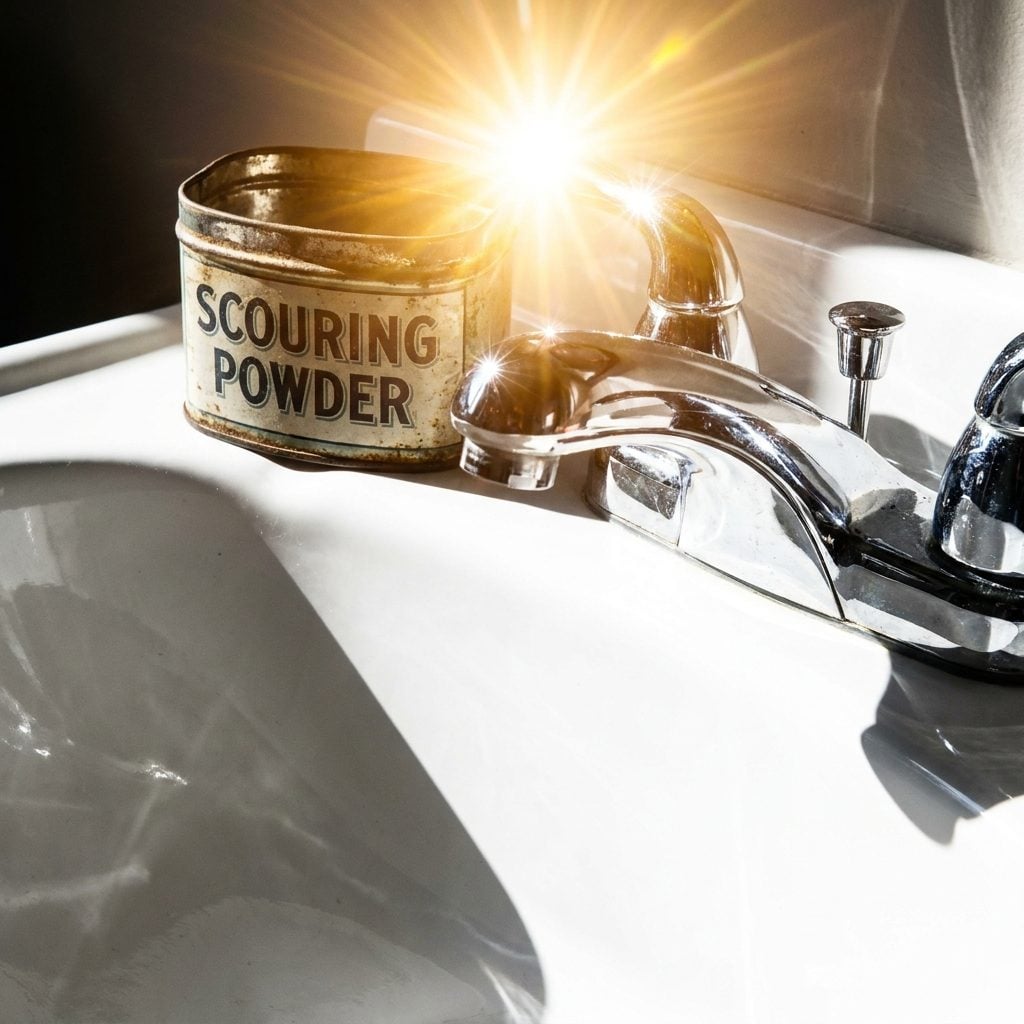
A sink that merely worked wasn’t good enough. It had to shine. Porcelain scrubbed white with scouring powder, chrome faucet buffed until you could see the window in it.
This was the finishing touch, the last five minutes of the routine, and it separated a clean kitchen from a truly spotless one. A gleaming sink told anyone who walked in that the room had been attended to right down to the hardware.
Modern kitchens might lean on stainless steel and a squeeze of dish soap, but the instinct hasn’t budged. A shiny sink still makes the whole room look cleaner than it probably is.
30. Wipe the Stove After Every Use
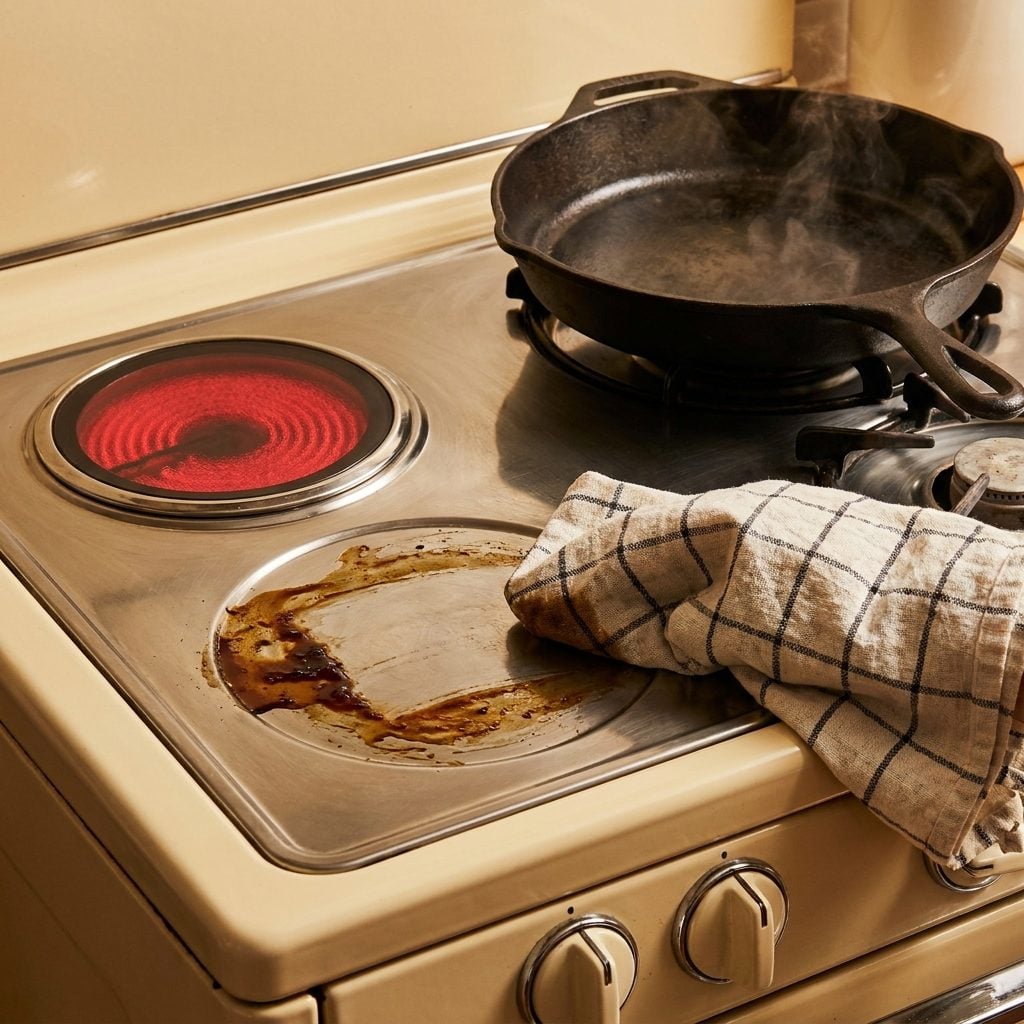
Bacon grease that hit an enameled stovetop and cooled into a hard spatter was the enemy. So once the surface was cool enough to wipe safely, the cloth came out before the mess had time to harden.
You could tell a lot about a kitchen by its stove. A gleaming range with polished chrome trim suggested somebody stayed ahead of the mess, while a week’s worth of splatter announced exactly how long it had been ignored.
29. Sweep the Kitchen Floor Every Day
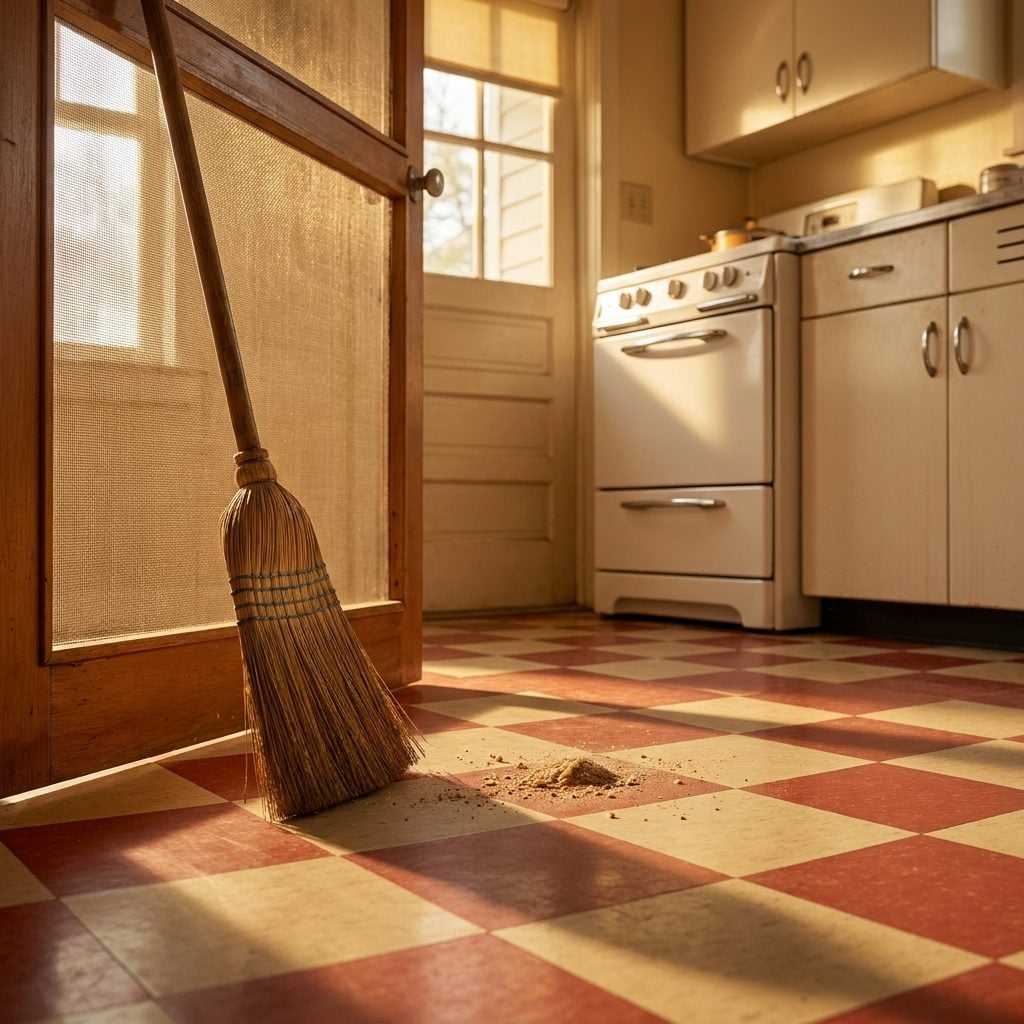
The corn broom lived in the corner by the back door, and it saw action constantly — often after breakfast or supper, sometimes both. The kitchen floor caught everything: crumbs, dropped peas, a trail of flour, whatever the kids tracked in.
Daily sweeping kept loose dirt from grinding into the vinyl or traveling into the rest of the house. It was less about staging a major clean than refusing to let yesterday’s debris join today’s.
28. Mop Before the Floor Looks Dirty
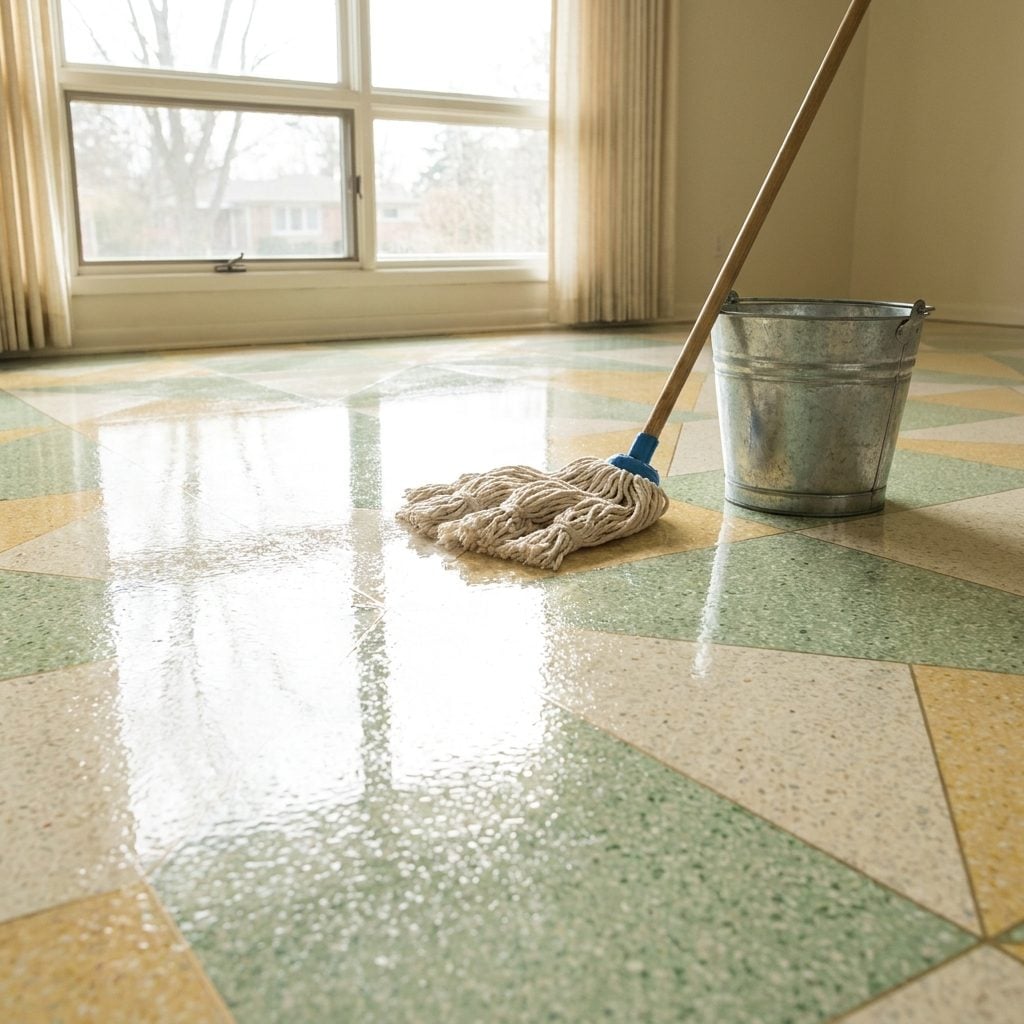
Here’s where the 1950s housekeeper really left the rest of us behind. She didn’t necessarily wait for the floor to announce that it was dirty. Mopping belonged to the schedule.
A floor you can see is dirty has already gone too long.
The theory was simple: visible grime meant dirt had already settled into the surface and dulled the finish. Mop regularly and the vinyl never got the chance to reach that stage. It’s a level of discipline most of us admire far more than we practice.
27. Keep Kitchen Counters Completely Clear
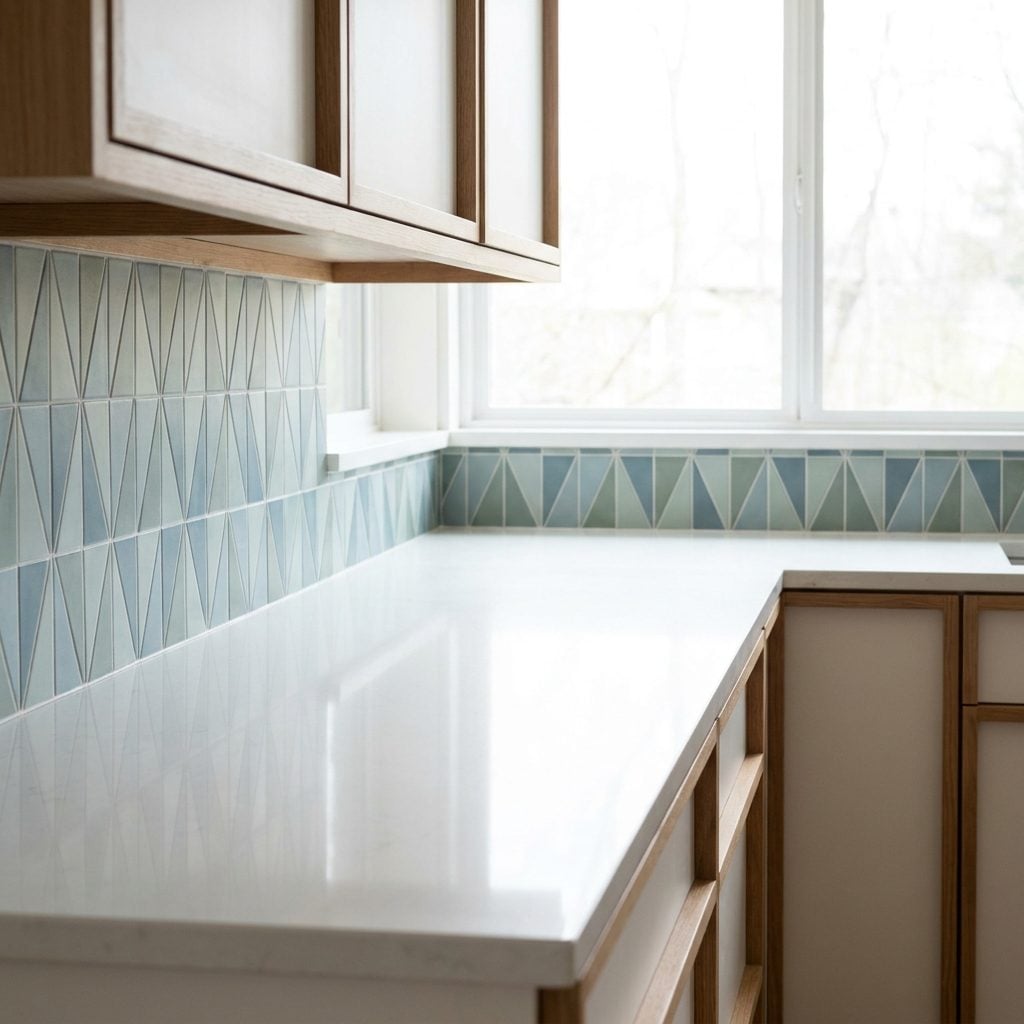
The counter was for working, not storing. Once the cooking was done and the dishes away, the surface went back to bare Formica, maybe with a canister set and percolator earning permanent residency.
A clear counter was the whole philosophy in one glance. Everything had a home in a cabinet or drawer, and everything went back to it. Nothing sat around gathering dust simply because nobody knew where else to put it.
We’ve drifted far from this one, with our stand mixers, knife blocks, chargers, and mail piles. But walk into a kitchen with genuinely empty counters and the difference is immediate. The whole workspace suddenly looks larger.
26. Put Everything Back in Its Proper Place
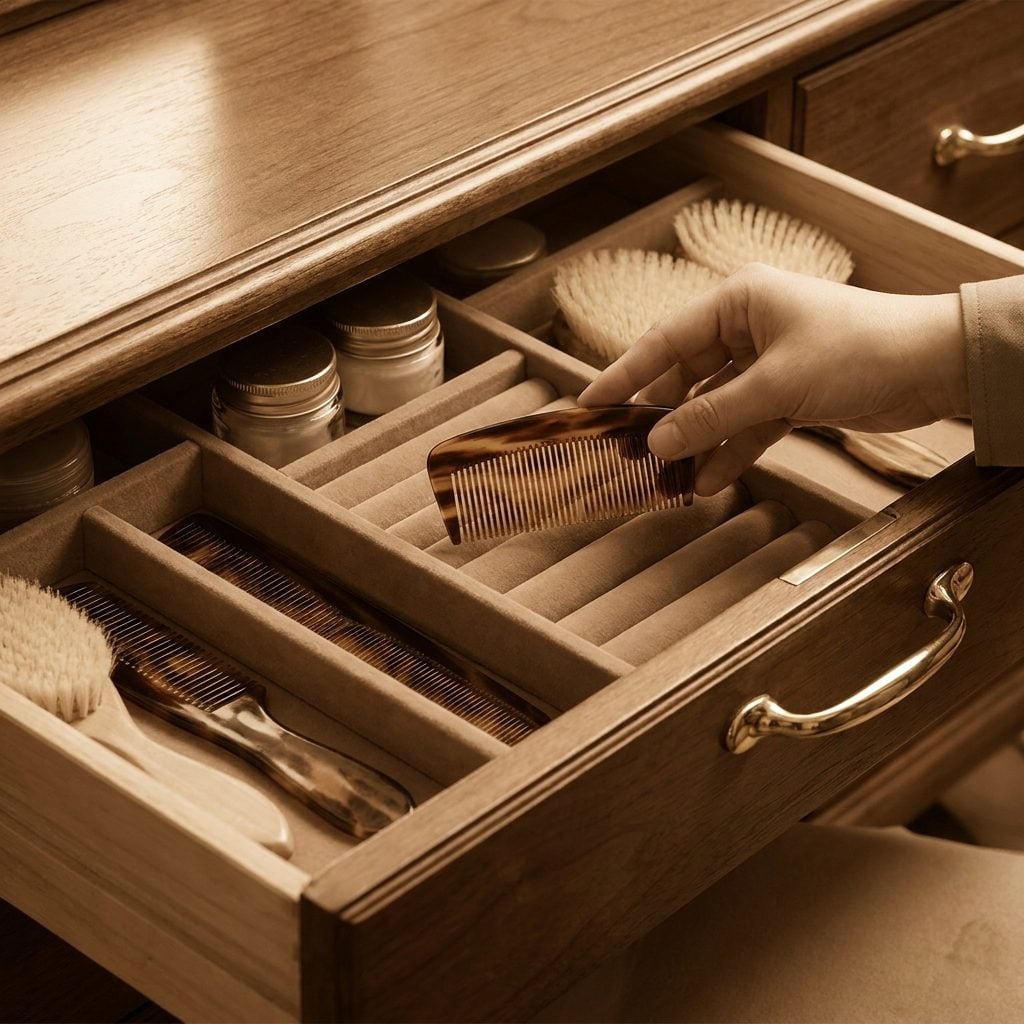
A place for everything, and everything back in its place before you sat down. That was the system. The scissors had a drawer. The comb had a spot. The sewing basket closed when the sewing stopped.
The real advantage wasn’t perfection; it was retrieval. Nobody wasted ten minutes hunting for something that had been abandoned wherever it was last used. Kids learned the rule early, sometimes at the wrong end of a raised eyebrow.
25. Never Let the Laundry Pile Up
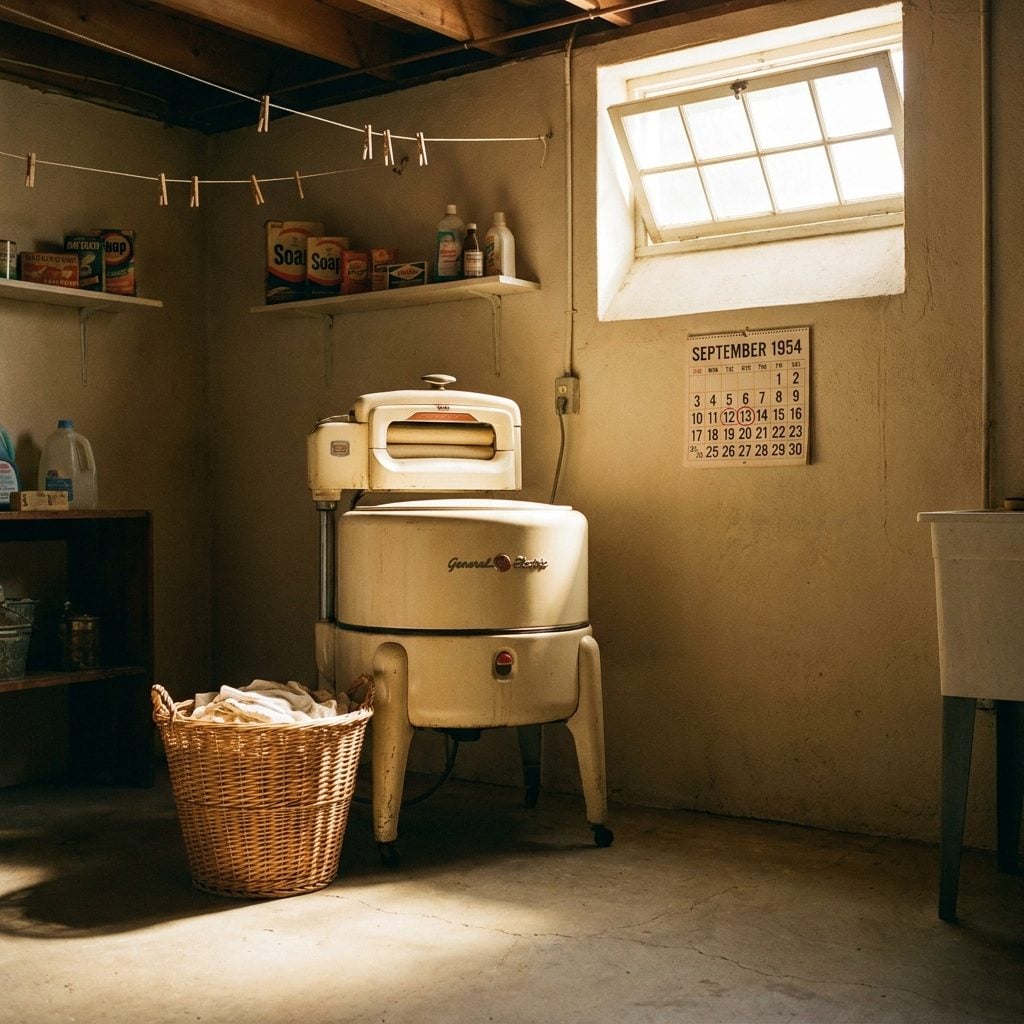
Monday had a long history as wash day, and plenty of households still organized laundry around a fixed weekly routine. With a wringer washer, tubs, baskets, and a clothesline involved, this was not a load tossed in during a commercial break.
Falling behind could turn one day’s labor into several days of catching up. The rule became simple: keep the laundry moving before the pile began reproducing in the corner.
24. Hang the Laundry Outside Whenever the Weather Allowed
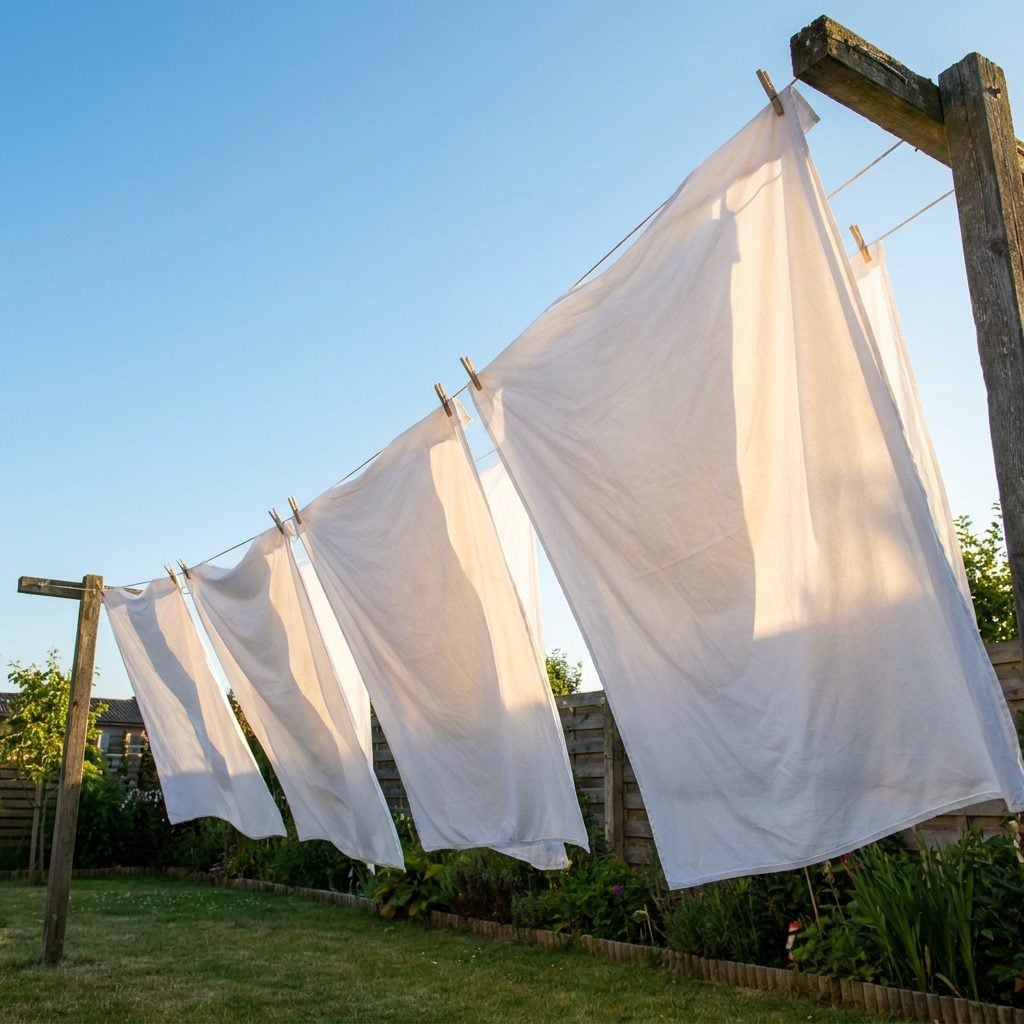
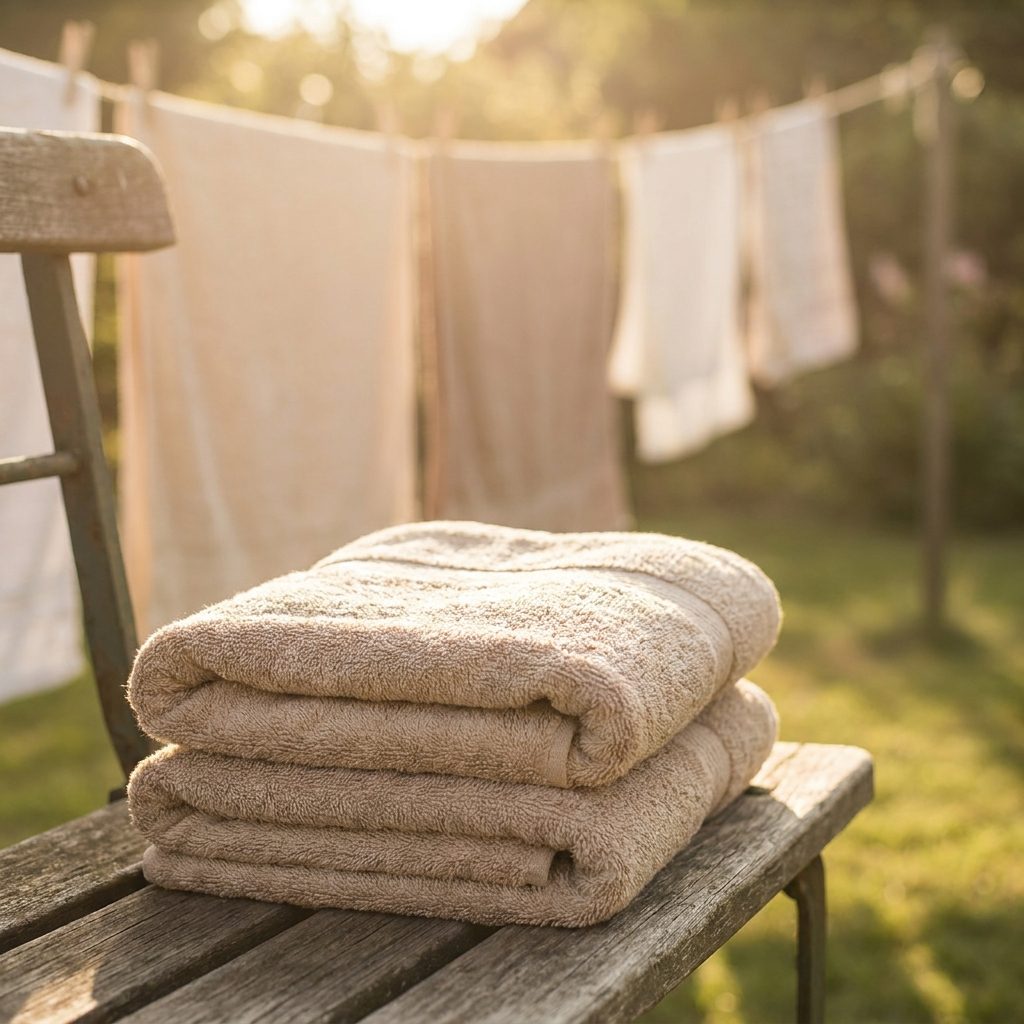
Nothing smelled like a bedsheet dried in open air. Anyone who lived it will tell you no dryer sheet ever came close, and that clean outdoor scent was the reward for hauling a heavy basket across the yard and pinning everything in a dead-straight line.
Sunlight helped brighten whites and freshen fabrics for free. Thrift and vanity met on the clothesline, because a beautifully pinned row of sheets also happened to be visible to half the neighborhood.
23. Fold the Clothes the Moment They Were Dry
🔥 Would you like to save this?
The trick was catching everything straight off the line. Fold a towel before it got crushed beneath half a basket of laundry and you had fewer deep creases waiting for you later.
Speed was the whole point. A basket of dry laundry left overnight had a peculiar ability to become tomorrow’s problem before tomorrow had even started. Fold it now and the job stayed small.
22. Iron Anything That Looked Even Slightly Wrinkled
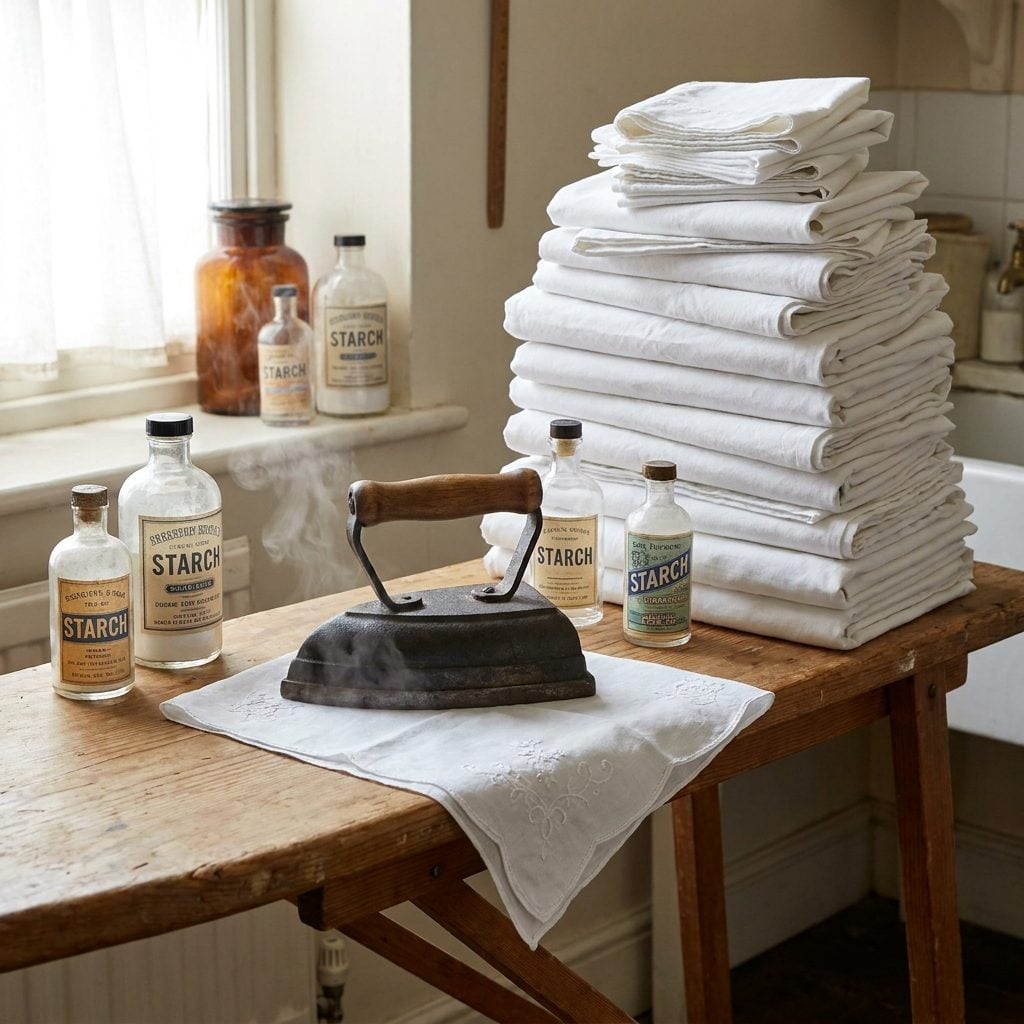
They ironed things nobody would ever see. Handkerchiefs. Pillowcases. Underwear, in some houses, and I’m not exaggerating. A wrinkle got treated like a personal failing, and the iron was heavy, hot, and unforgiving.
If your iron didn’t supply its own steam, you dampened the laundry by hand and worked carefully so nothing scorched. Slow, exacting, and oddly meditative. There’s still a case to be made that no wrinkle-release spray has ever matched a sharply pressed cotton shirt. That same affection for old-fashioned domestic polish still turns up in today’s farmhouse-inspired rooms, even if nobody is volunteering to iron the pillowcases.
21. Change the Bed Linens on the Same Day Every Week
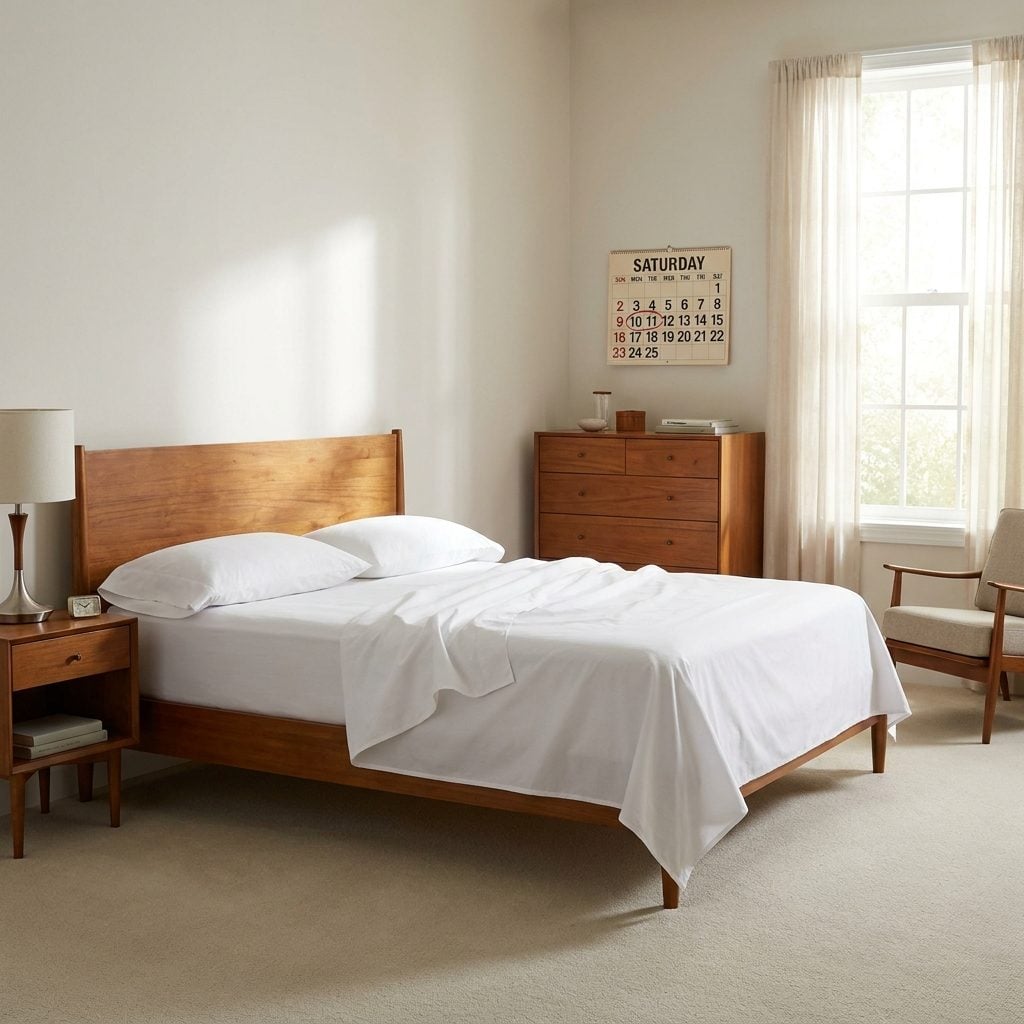
Many households gave bed linens a fixed day each week. Whatever day the family chose, the important part was that it stayed put. Nobody had to inspect the pillowcase on Wednesday and begin negotiations with themselves.
Climbing into a bed made up with freshly laundered sheets was one of the small reliable pleasures of the routine. You knew it was coming, and it delivered every time.
20. Air the Beds Out Before Making Them
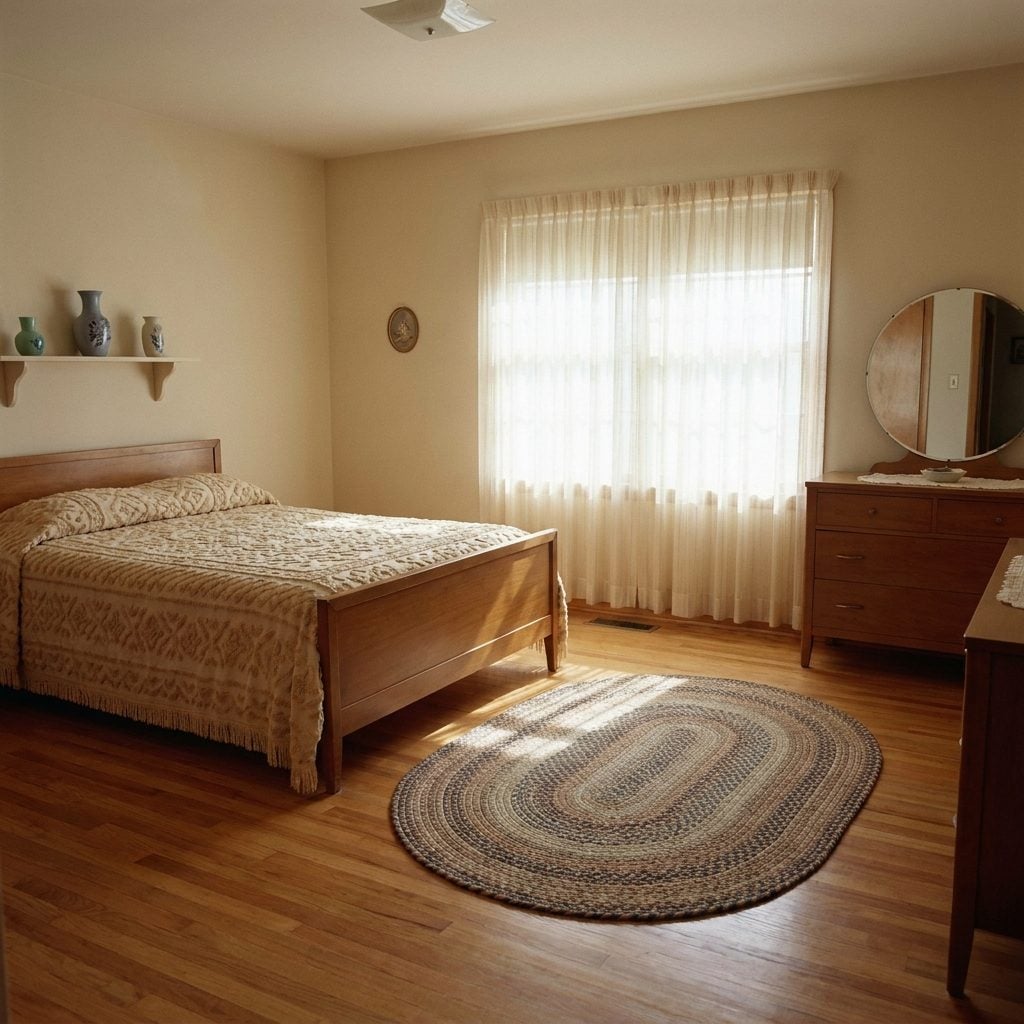
You didn’t necessarily make the bed the instant your feet hit the floor. Covers were pulled back, a window might be opened, and the bedding got a little time to air.
A night’s sleep leaves moisture in bedding, so allowing some of it to dissipate before pulling everything tightly together had a practical basis. The ritual may have faded, but giving a warm bed a little breathing room still makes remarkably good sense.
19. Dust Every Piece of Furniture Every Week, No Excuses
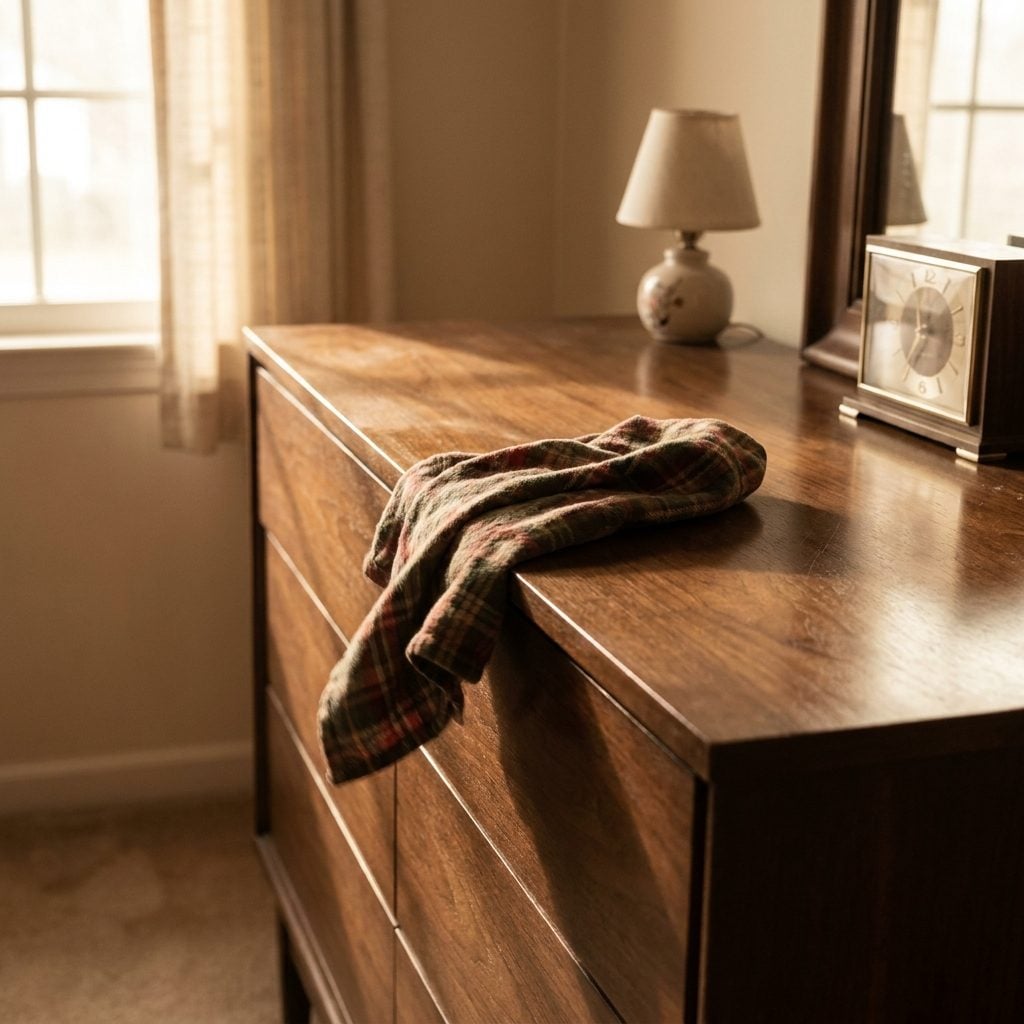
Dusting had a weapon of choice: a soft cloth, usually flannel, run over every flat surface in the house whether it looked desperate or not. Coal heating, fireplaces, smoking, open windows, and less tightly sealed houses could all contribute to a dirtier indoor environment than many homes experience today.
Run a finger along the mantel, find a gray streak, and you’d feel it. Some of that pressure was theater. But a genuinely dust-free room does look sharper and brighter. The same urge to make a room feel finished survives in elaborate spaces like a polished home theater; only the objects collecting the dust have changed.
18. Polish the Wood Furniture Until It Gleamed
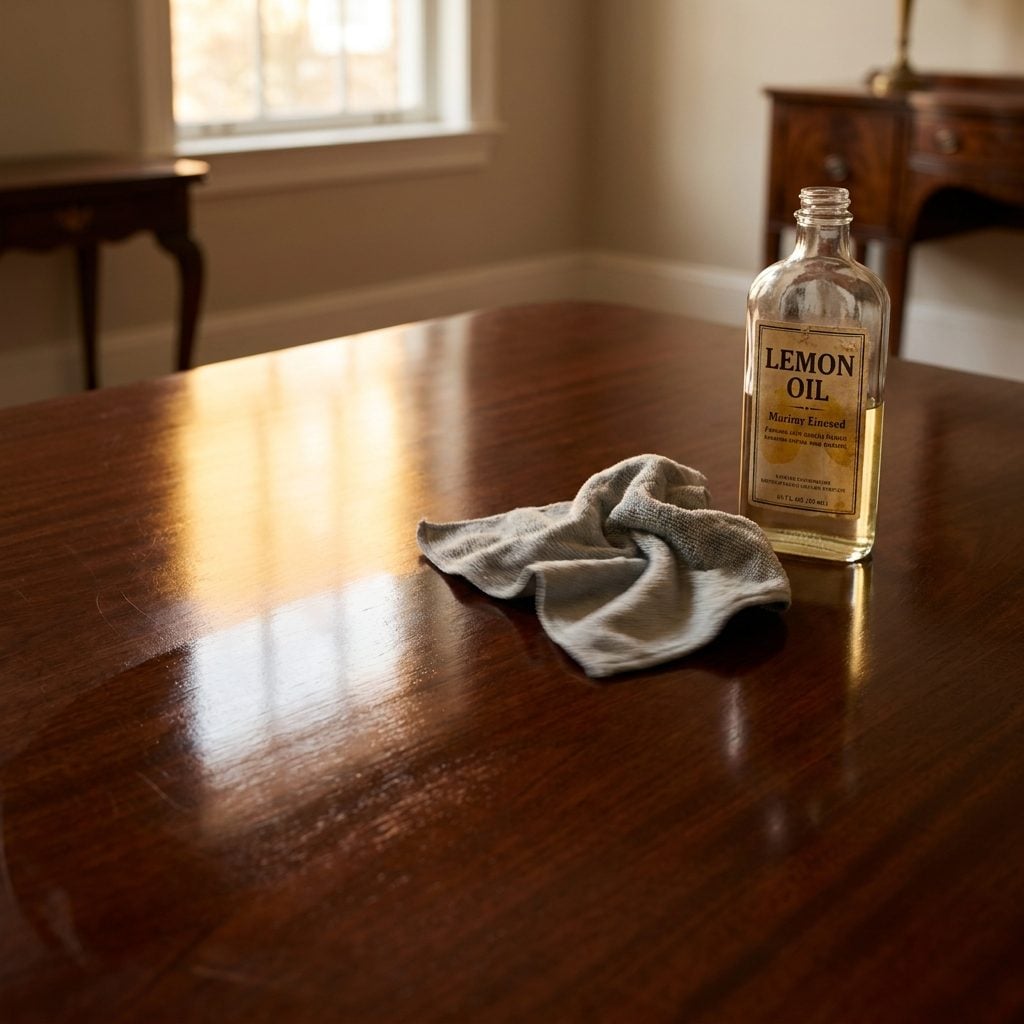
The whole house smelled of lemon oil on polishing day. That scent meant company was expected, or at least that standards were being upheld. Paste wax went on with one rag and got buffed with another until the walnut threw back a soft reflection.
Good furniture represented a serious household purchase and was expected to last. Protecting the finish wasn’t merely cosmetic; it was part of taking care of something people hoped to keep for years.
17. Vacuum on a Schedule, Not When You Spot Crumbs
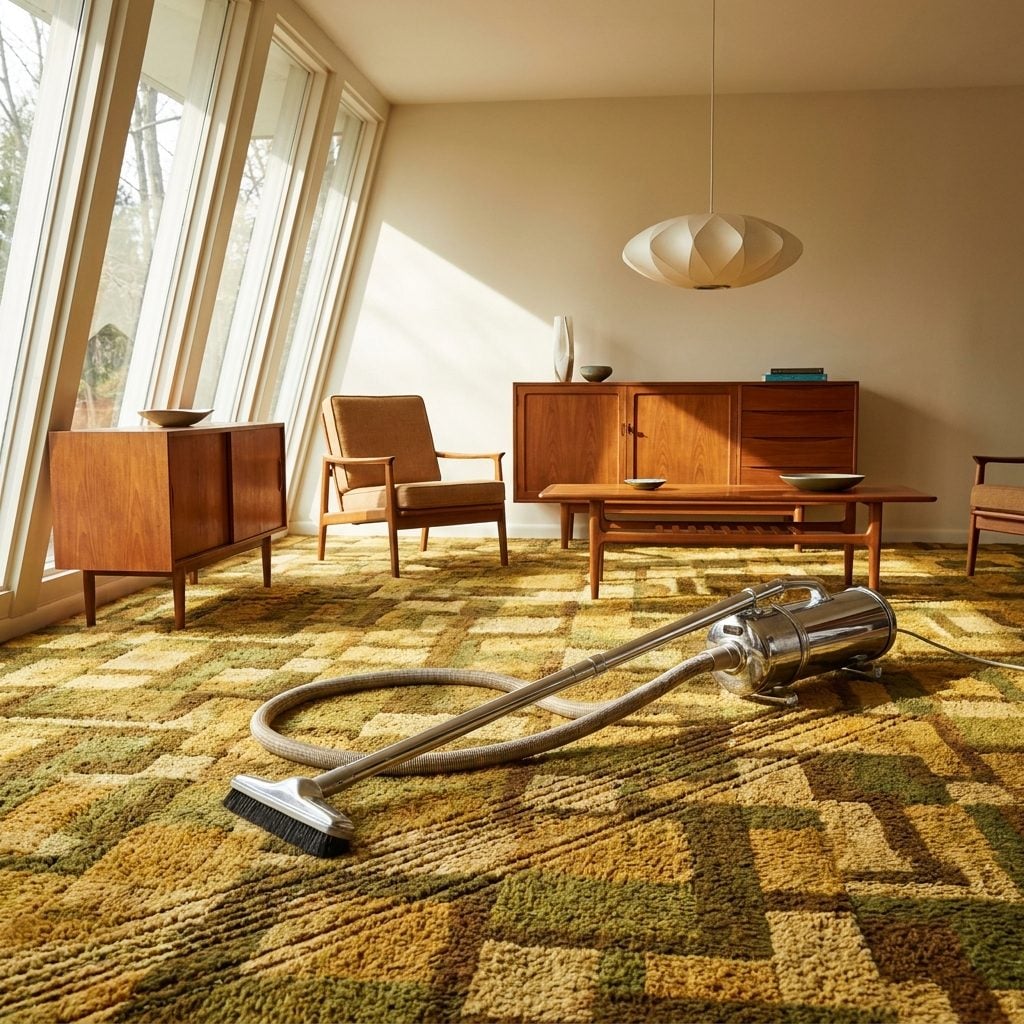
Waiting until the carpet looked dirty was already too late. That was the thinking. By the time grit became obvious on the surface, plenty of it had already worked down into the pile.
So the vacuum came out on schedule, not only when somebody spotted crumbs. Bonus: those crisp parallel lines pressed into the carpet were a quiet flex. A freshly tracked room announced that somebody had just finished without requiring a sign.
16. Take the Rugs Outside for a Good Shaking (or a Proper Beating)
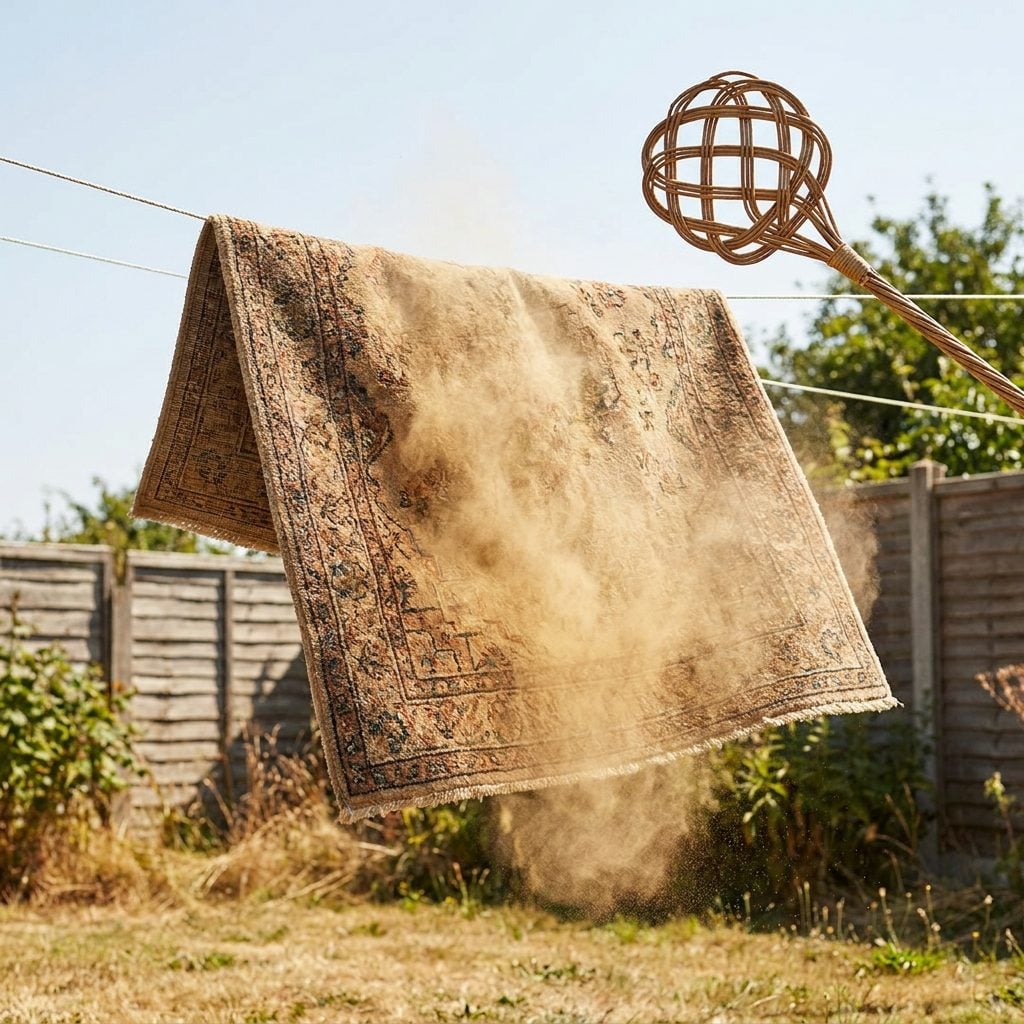
Saturday might begin with the thump of a rug getting the daylights knocked out of it. You hauled the runner or smaller rug outside, draped it over a line or rail, and went at it with a wicker beater until the cloud finally stopped rising. The amount of dust a wool rug could hide was genuinely alarming.
Electric vacuums were already common by the 1950s, but older cleaning habits did not vanish the moment somebody plugged one in. Plenty of households still shook or beat rugs outdoors, especially smaller pieces that could be carried easily.
15. Sweep the Front Porch and Steps Like the Neighbors Were Watching (They Were)
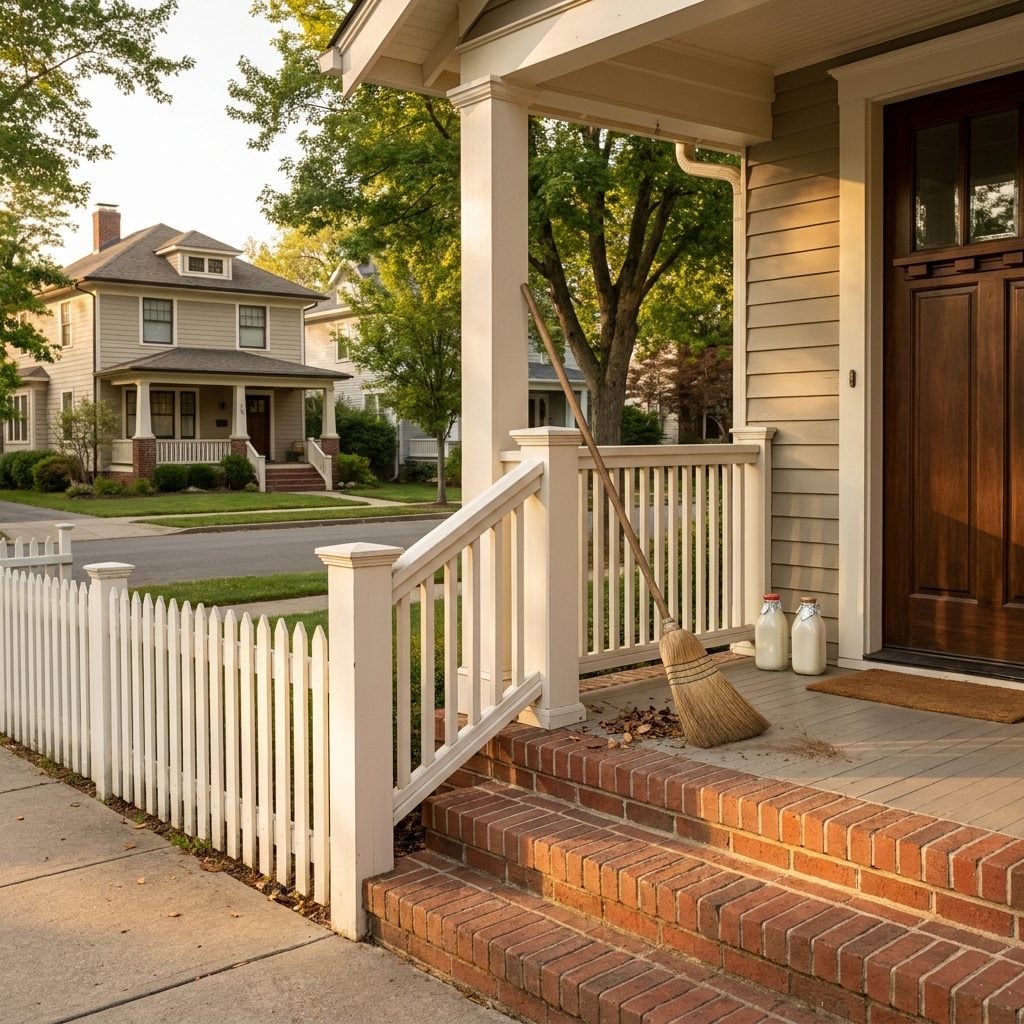
The porch was the handshake. Before anyone reached your door, the steps had already told them something about the people inside — and you knew it.
So the corn broom came out regularly. You swept the boards, chased leaves off the treads, and knocked cobwebs out of the corner by the porch light. A few minutes made the whole entrance look attended to. That appetite for a cared-for, welcoming home still turns up in today’s farmhouse-inspired interiors; the old porch broom was simply the first line of defense.
14. Wash the Windows Until Not a Single Streak Survived

Vinegar in the bucket, crumpled newspaper instead of a rag, and then the real test: step back, tilt your head, hunt for the one streak still catching the light. Found it? Back you went.
Newspaper became a favorite because it didn’t leave the same lint as some cloths, and generations of cleaners swore the paper and ink helped cut through film. Whatever combination deserved the credit, the ritual survived because a streak-free pane made the whole room look brighter.
13. The Sills, the Tracks, the Frames: The Places Nobody Sees but Everyone Checks
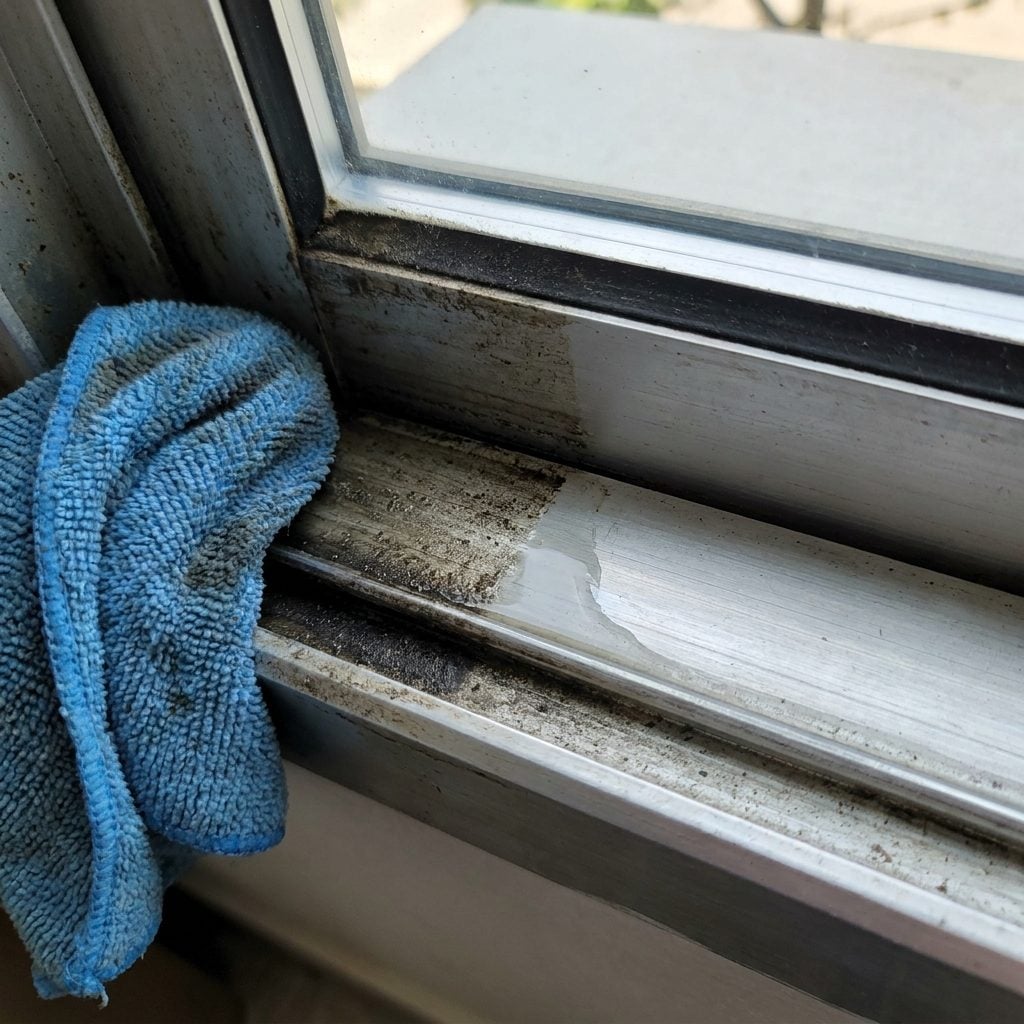
A clean pane of glass sitting above a filthy track fooled nobody, and the woman running the house knew it. Out came the old toothbrush for corners, a damp cloth for the sill, and whatever narrow cleaning tool could get safely into the grooves.
Here was the difference between washing the window and actually cleaning the window. The glass got the glory. The sill and track were where the evidence accumulated.
12. Dust the Venetian Blinds One Slat at a Time
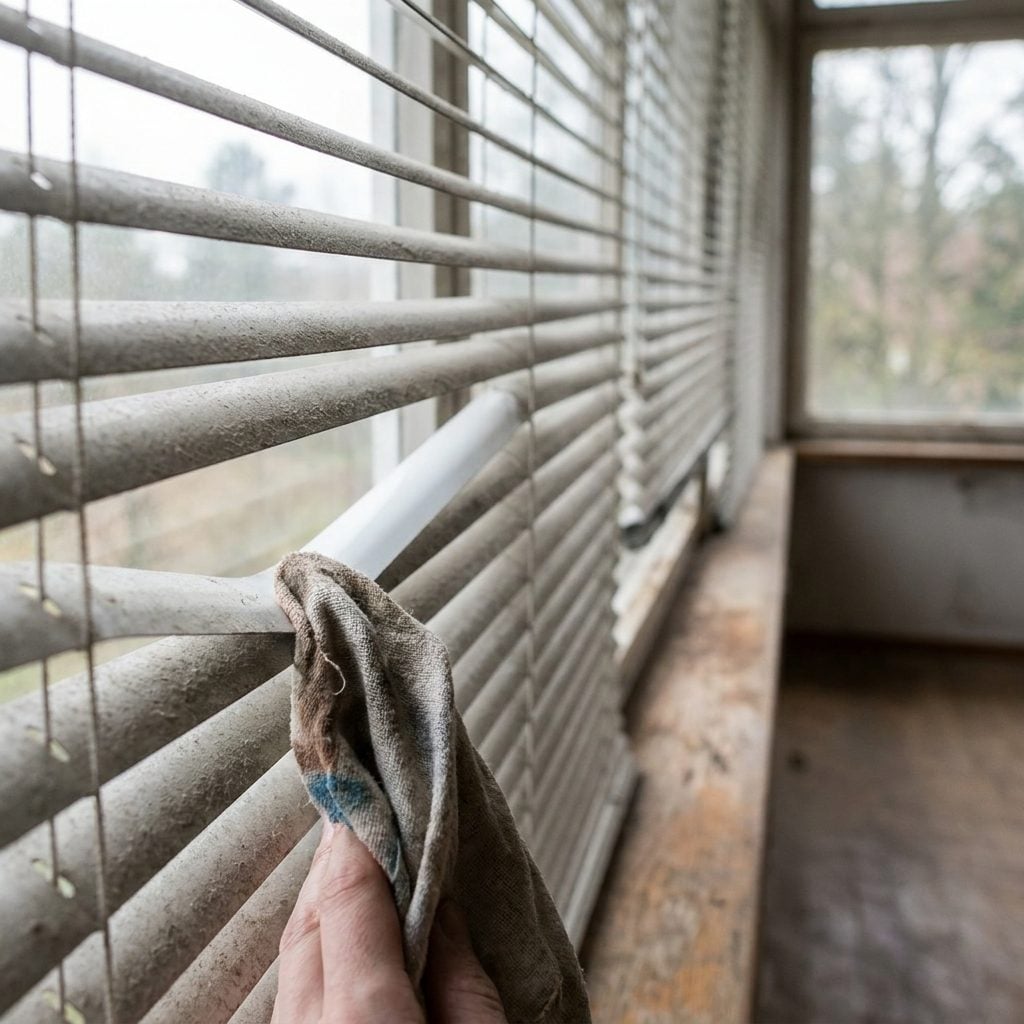
Nothing in the house tested patience like Venetian blinds. Each slat, top and bottom, carried its own thin gray ledge of dust, and nobody ever found a shortcut that was quite as satisfying as getting every one.
Some households used cotton gloves for the job — dampened so you could pinch a slat and run your fingers along it. Slow going. But clean blinds threw the light in crisp stripes, and once you’d seen the difference it was hard to pretend you hadn’t.
11. Scrub the Tub Before a Ring Ever Had the Chance to Set
🔥 Would you like to save this?
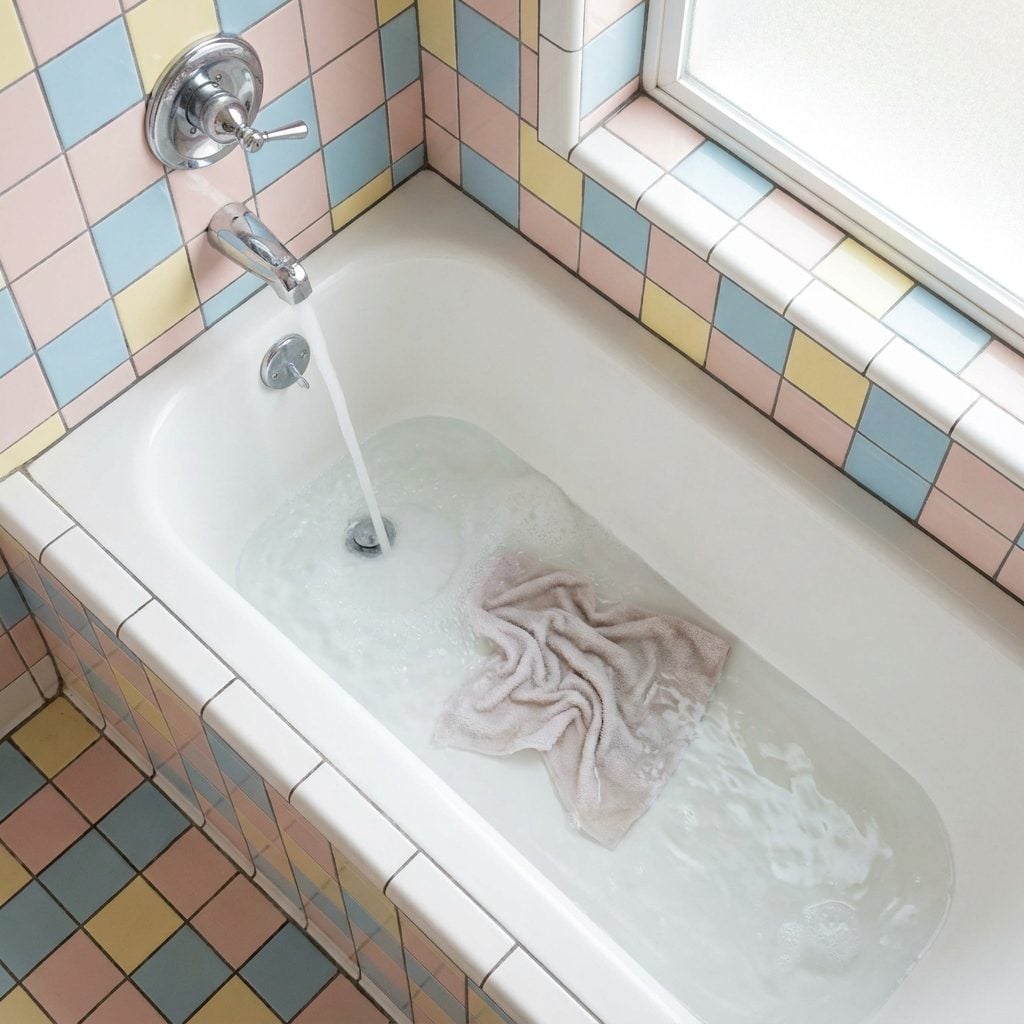
The rule was speed. You rinsed the tub after the bath drained, before soap film and bath oil dried into that stubborn gray ring around the porcelain. Wait and it became a project. Catch it early and the job was considerably smaller.
Bon Ami and Old Dutch were familiar names in households of the period. A little cleaning powder, some elbow grease, a rinse, and the tub came back bright enough to make even a small bathroom feel freshly reset.
10. Clean the Toilet on a Fixed Day, No Matter What
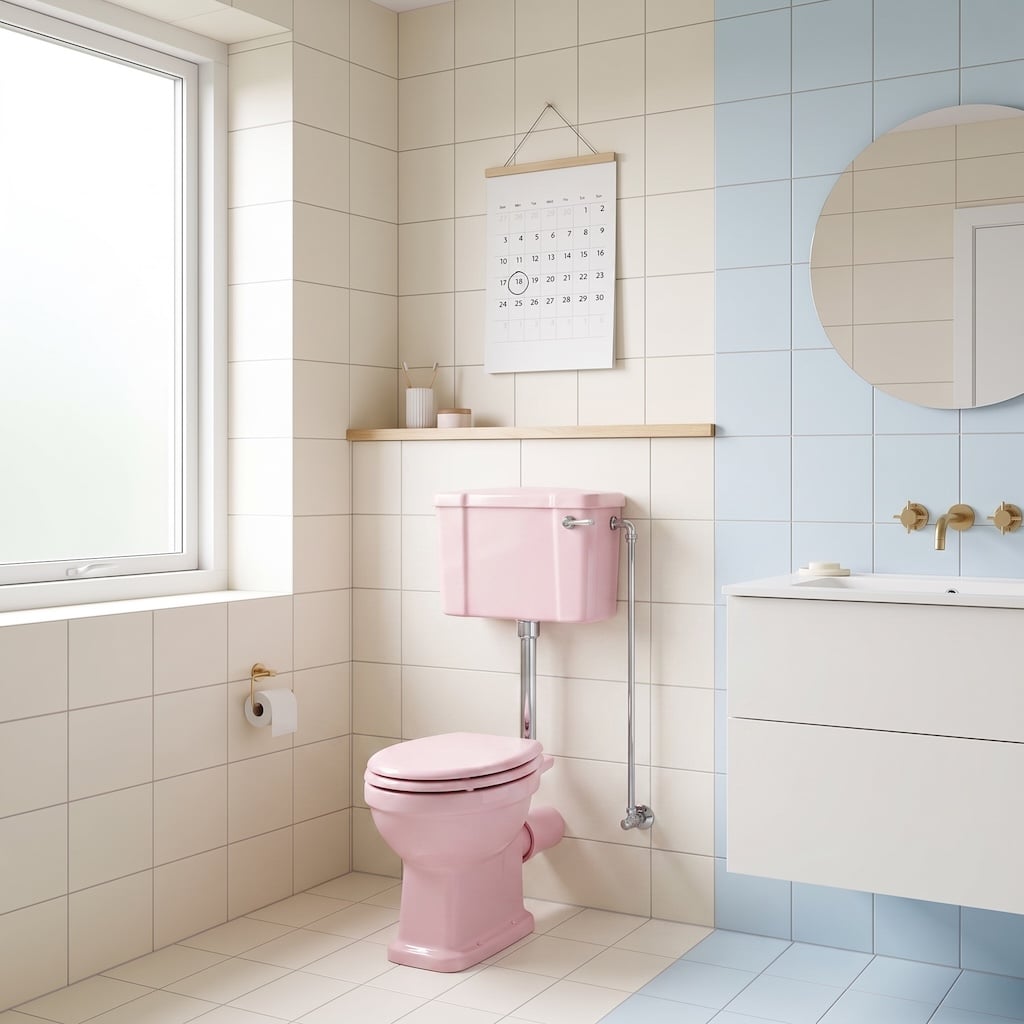
Some households assigned the toilet a regular day and stuck to it. The point wasn’t whether that day happened to be Friday, Monday, or something else. The point was refusing to wait until the bowl itself submitted a written complaint.
Once the chore belonged to a specific day, nobody had to renegotiate it every week. The calendar had already settled the argument.
9. Hang the Towels Straight and Even After Every Single Use
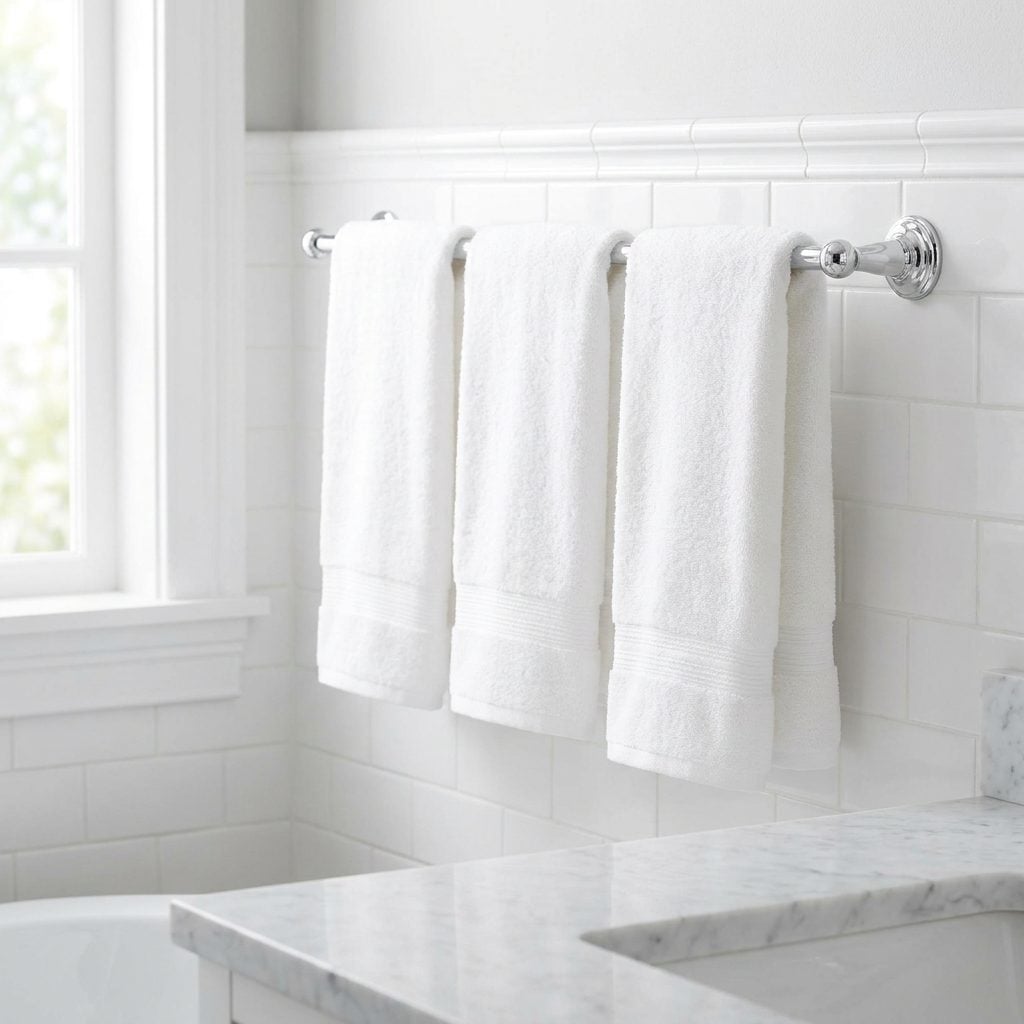
A towel flung over the bar in a damp lump was a small crime. It got straightened, spread so air could reach it, and lined up neatly enough that the bathroom looked reset rather than recently escaped from.
The practical benefit was drying. A towel with room for air circulation dries better than one bunched into a wet wad. The visual payoff came free: straighten two towels and a lived-in bathroom suddenly looks much more civilized.
8. Empty the Wastebaskets Ahead of the Overflow
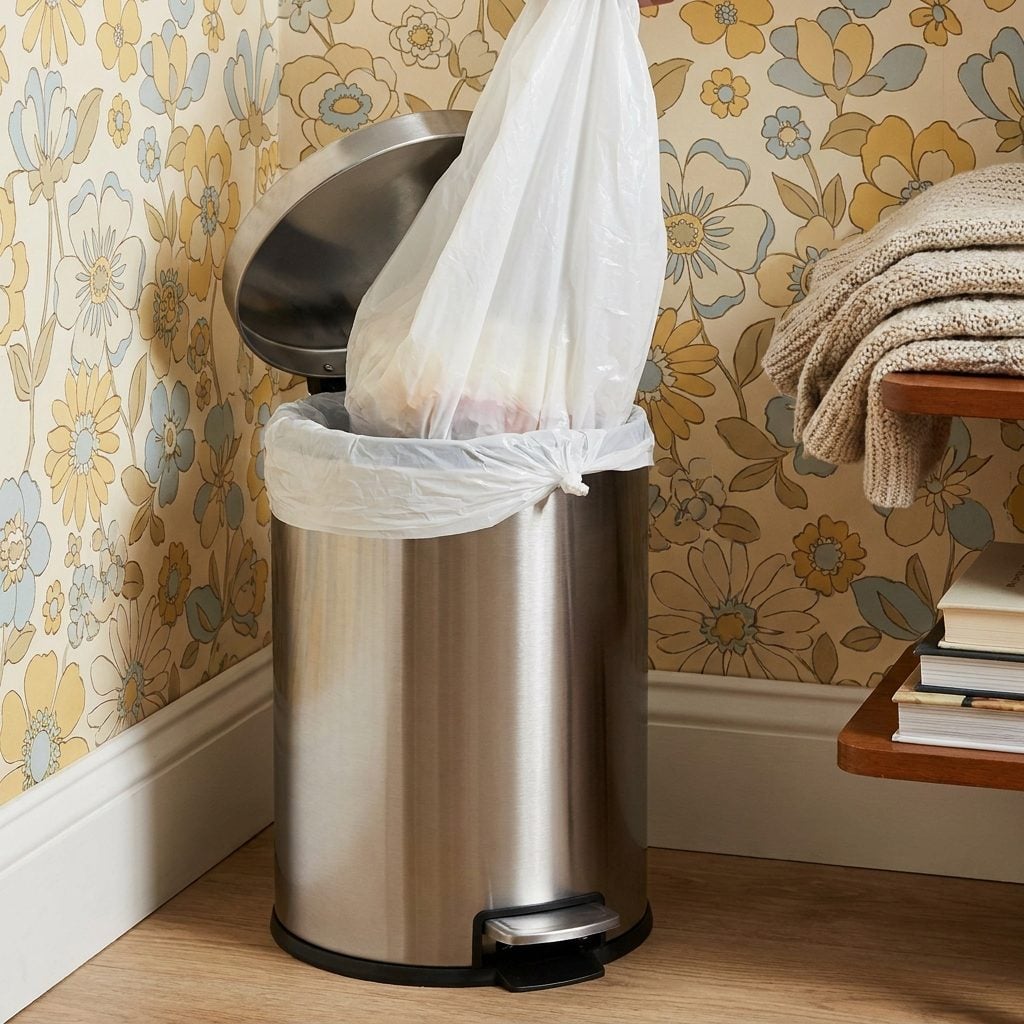
There was a rhythm to it. Wastebaskets got emptied before they filled, not after crumpled paper began cresting over the rim. The metal one in the bedroom, the wicker basket by the desk, the little bin in the bathroom — all of them disappeared into the larger trash before they became noticeable.
An overflowing bin is still one of the fastest ways to make a clean room look neglected. You can vacuum, dust, and make the bed, then one heaping wastebasket undoes the whole presentation in a glance.
7. Never Walk Past Something That Belonged Somewhere Else
This was the traveling version of “a place for everything.” If you were headed from the living room to the kitchen and a coffee cup was sitting beside you, it came along. Passing the stairs with a toy in your hand? Drop it where it belonged on the way.
That’s how clutter was intercepted before it became a pile. Nobody needed to stop the day for a major pickup because small objects were constantly migrating home.
A tidy house was rarely the result of one big effort. It was a thousand small ones nobody counted.
Grab it, put it away, keep moving. The habit got drilled in so early that plenty of people still can’t cross a room empty-handed when something nearby belongs somewhere else.
6. Keep the Formal Living Room Ready for Company at All Times

There was a room in plenty of postwar homes that nobody actually lived in. The formal living room stayed pristine in case the pastor, the boss, relatives, or neighbors dropped by. Cushions plumped. Nothing out of place. A candy dish that somehow remained full.
Kids learned early that this was not the room for fort construction. The whole arrangement said something about a household willing to sacrifice a surprisingly large chunk of square footage in the name of being ready when the doorbell rang.
5. Protect the Good Furniture From Everyday Wear
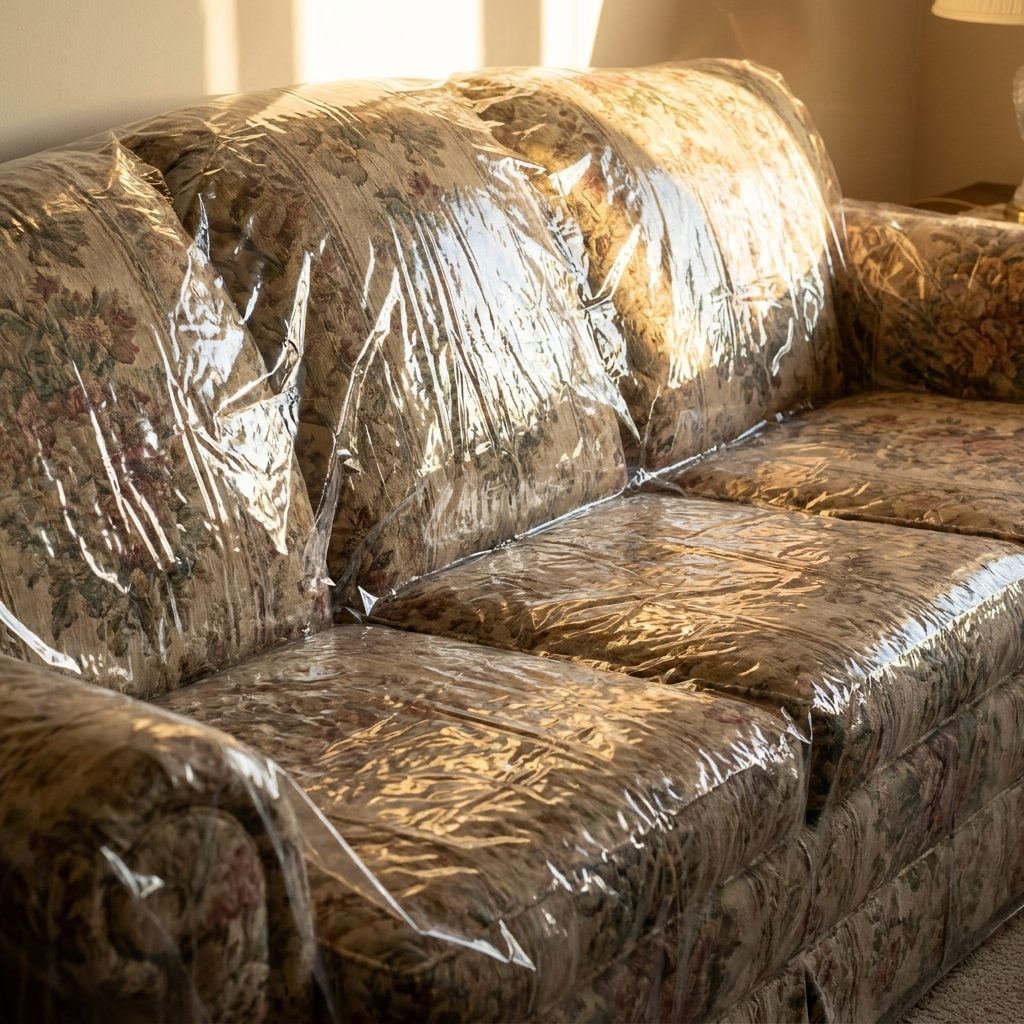
Ah, the plastic slipcover. Anyone who grew up sticking to a vinyl-wrapped couch in July remembers the particular misery of it. The logic was simple: furniture represented a major purchase, sometimes bought on installment, and people expected it to last.
So the brocade went under fitted plastic and runners crossed the good rug. The furniture could remain remarkably fresh for years, which was the entire point, even if sitting on it occasionally felt like visiting a museum with very strict upholstery rules.
4. Reach for a Coaster Before a Glass Ever Touched the Wood
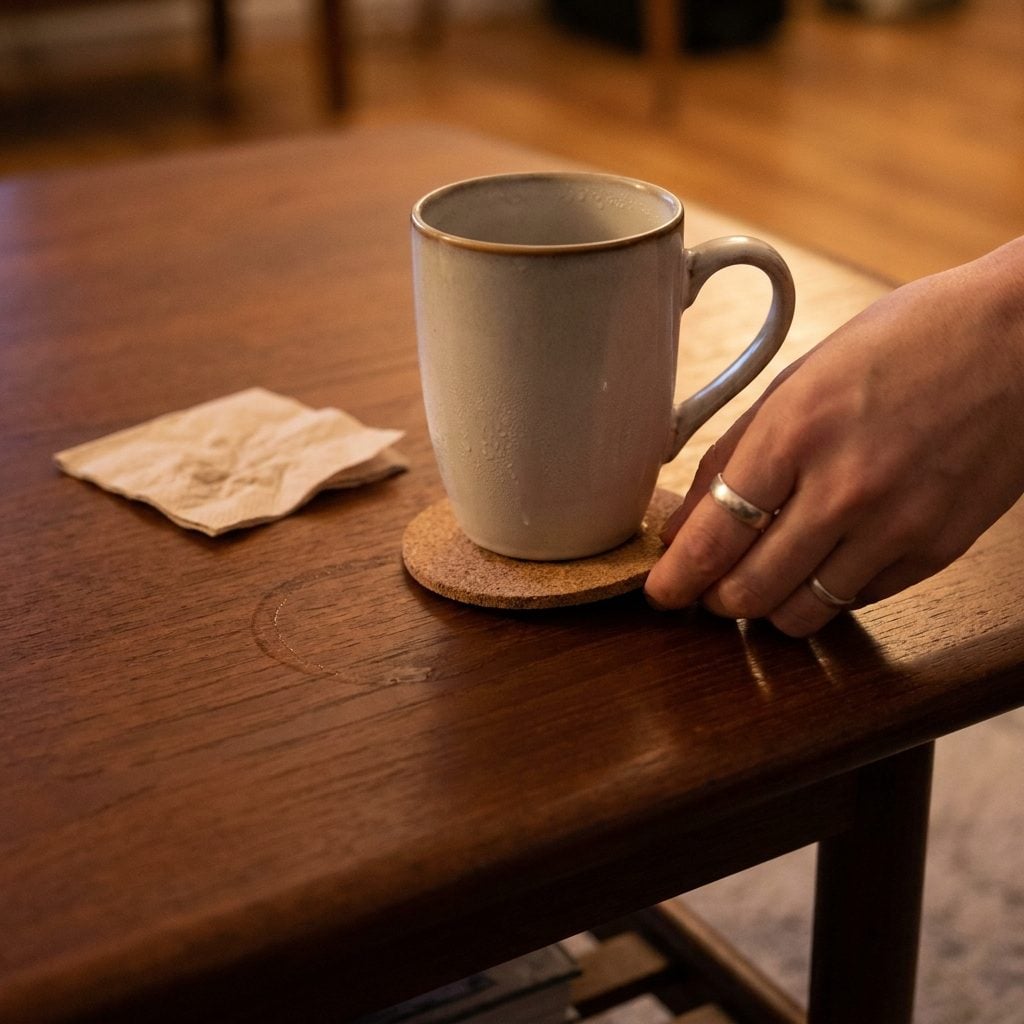
A water ring on the good coffee table was practically a moral failing. Reaching for a coaster before the glass touched finished wood became a reflex drilled in so young that plenty of people still hunt for one automatically.
Wood finishes could mark, haze, or stain from moisture, and removing a pale ring afterward was considerably more trouble than preventing one. Small habit, large payoff. Even the little brass coaster holder looked like somebody had planned ahead.
3. Save the Bigger Cleaning for the End of the Week
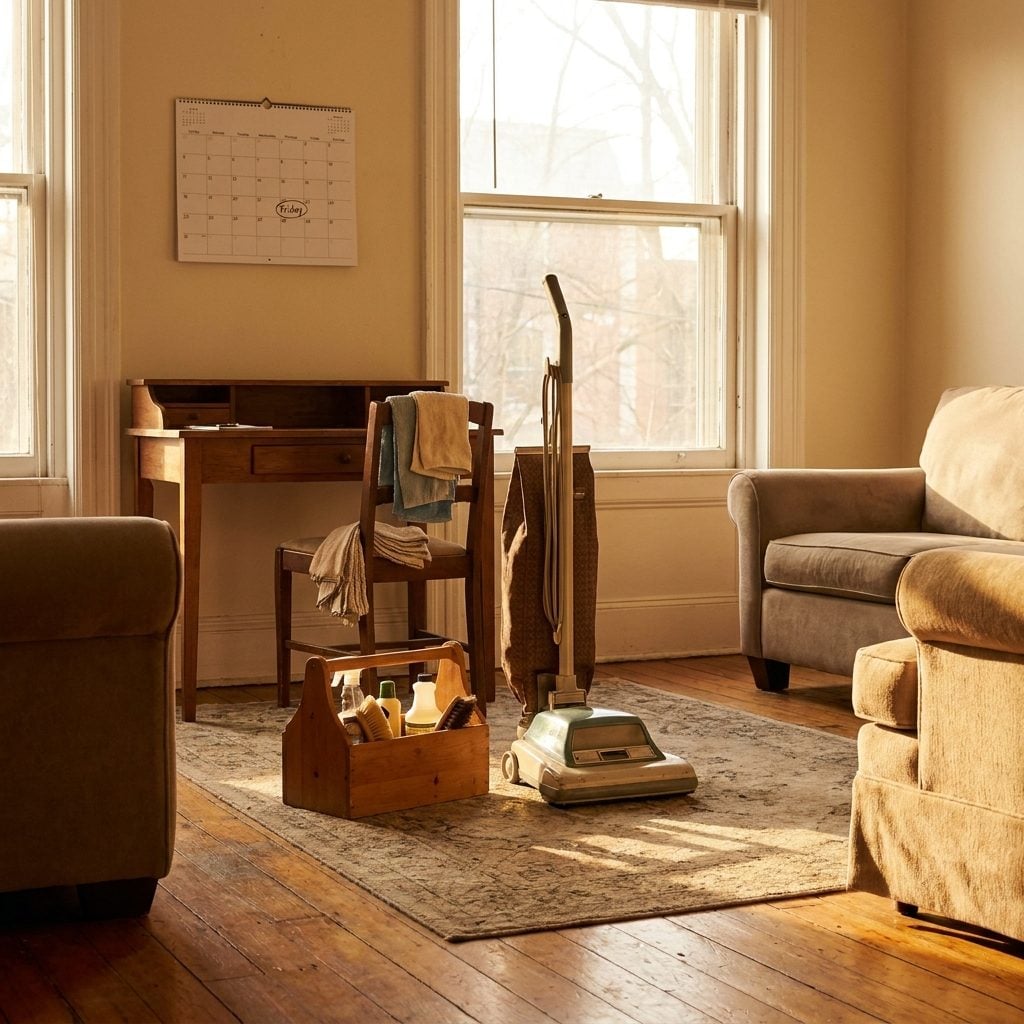
Daily tidying kept things afloat, but many households saved heavier jobs for a regular cleaning day toward the end of the week. Then the vacuum came out, the linoleum got mopped, and surfaces that didn’t need daily attention finally got their turn.
The beauty of the system was separation. Everyday upkeep prevented chaos; the weekly clean handled the jobs that required more time. Nobody had to pretend the entire house needed dismantling and rebuilding every morning.
2. Scrub the Whole House Top to Bottom Before Company Arrived
🔥 Would you like to save this?
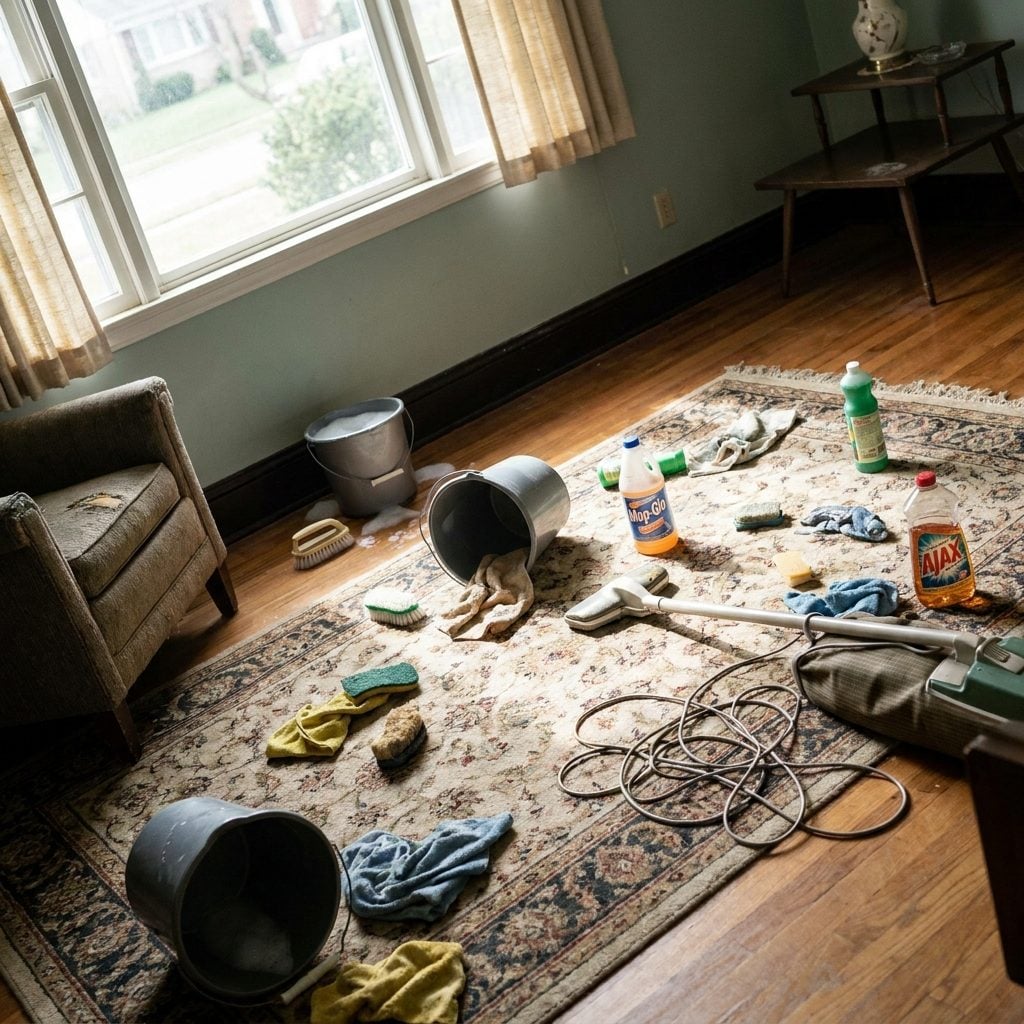
Company coming over triggered a cleaning frenzy that bordered on theatrical. Baseboards nobody expected a guest to inspect got wiped, silver got polished, and the carpet acquired those tidy parallel lines that announced a house at its absolute best.
The stakes felt larger because entertaining happened at home so often and domestic standards were visible in a way they aren’t when everyone meets at a restaurant. A dusty sideboard or cloudy glass could feel like a judgment on the entire operation.
Overkill? Certainly. But there’s a real pleasure in a home dressed for its big moment, and plenty of people still feel the old reflex the instant somebody says, “We’re stopping by.”
1. Put the Living Room to Bed Before You Went
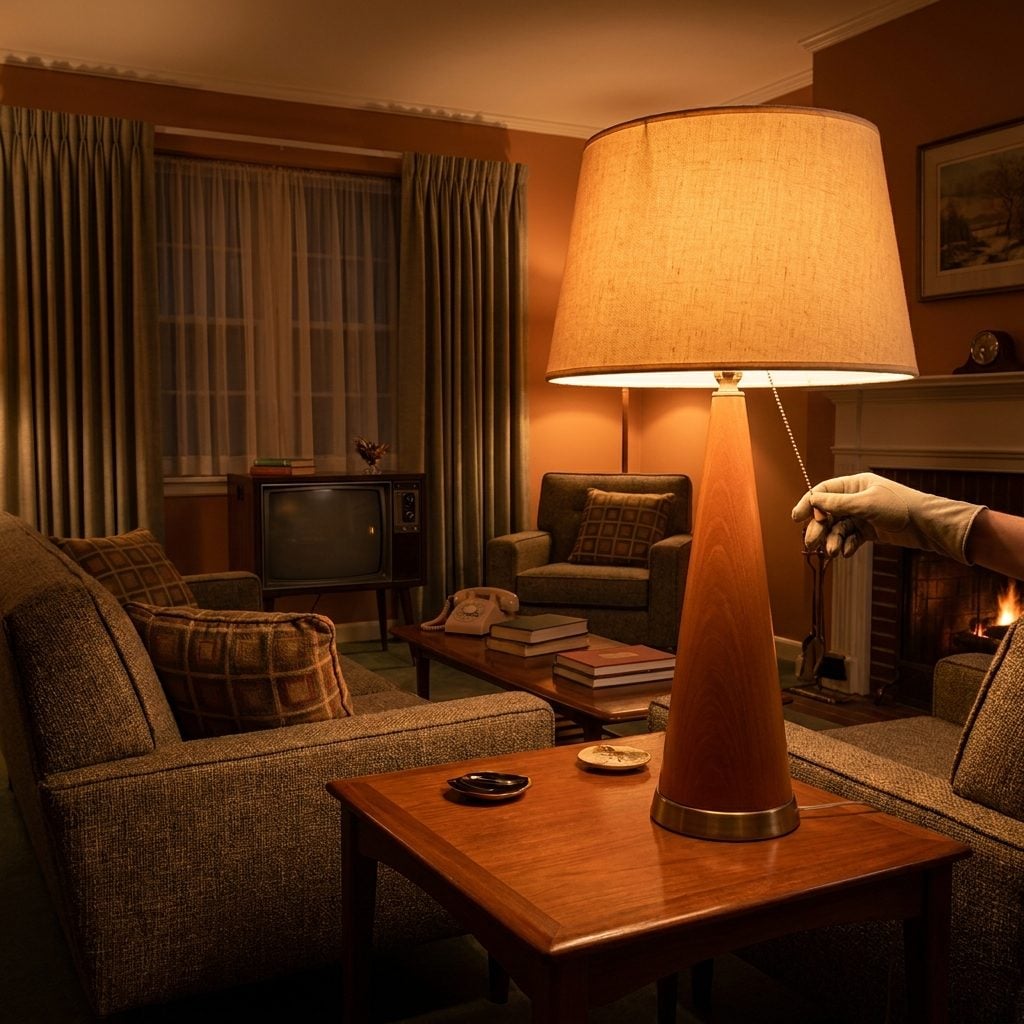
Before the lamp went off, the living room got put to bed too. Cushions squared. Ashtrays emptied. Magazines stacked. The afghan folded over the sofa arm. Toys gathered. Whatever the evening had knocked loose went back where morning expected to find it.
The ritual wasn’t a deep clean. It was a reset. Five minutes at night meant the first room you walked into the next morning wasn’t already asking something from you.
There’s quiet wisdom in that one. A tidy living room at sunrise doesn’t solve the day ahead, but at least it doesn’t begin by handing you yesterday.