🔥 Would you like to save this?
Somewhere between the hum of the window fan and the clink of a casserole dish hitting the Formica, a whole code of conduct ran the American home. You didn’t argue with it. You didn’t even think about it — you just knew where the line was, and what happened if you crossed it. The furniture had rules, the dinner table had rules, and so did the front door. Most of them are gone now, and we barely noticed them leave. The ones below will bring every single one rushing back.
28. Shoes Came Off at the Front Door, No Exceptions
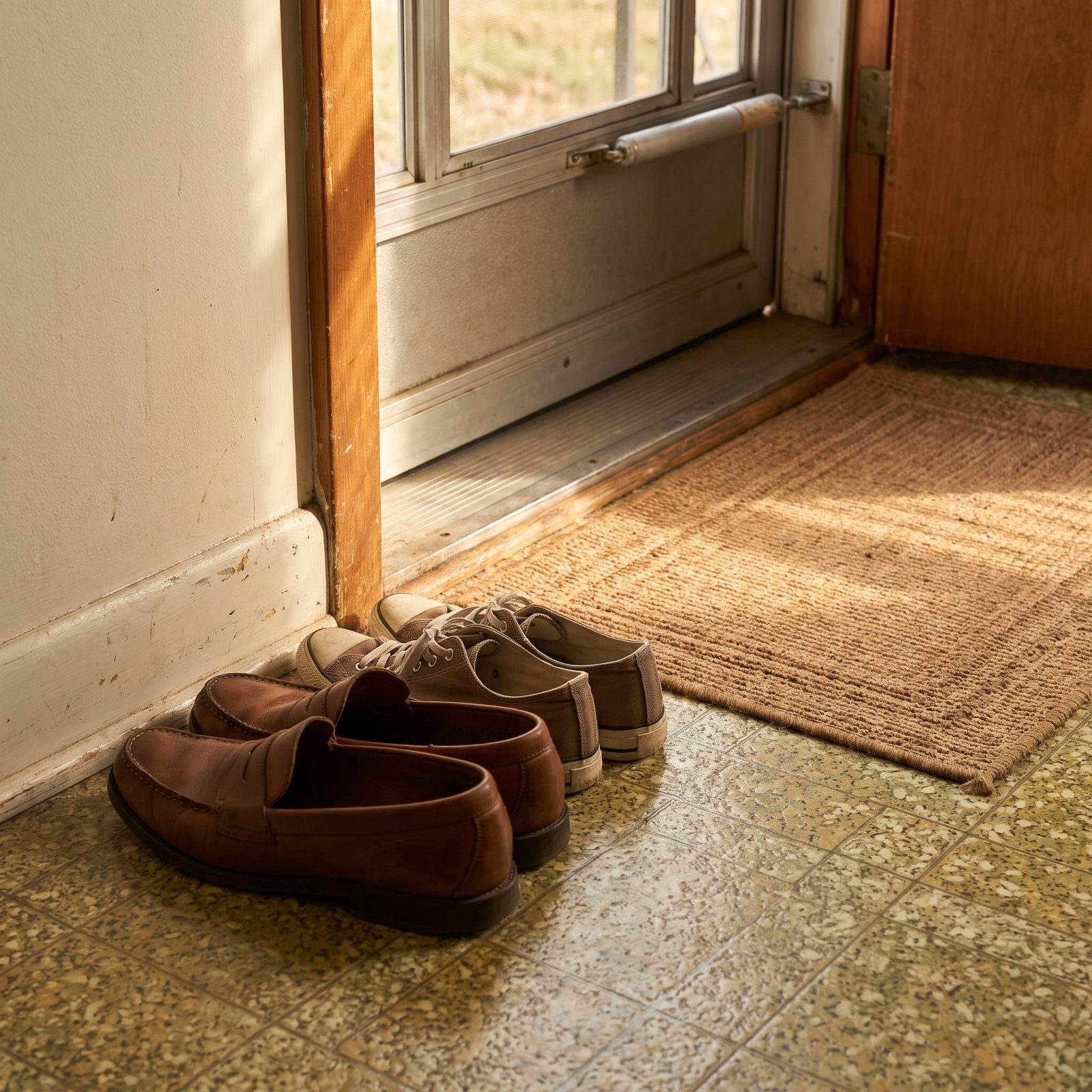
The thud of the storm door, then the ritual: heels off, toes braced against the opposite shoe, a little hop-shuffle to free your feet before a single sock hit the carpet. Nobody explained why. You just understood that the floors in this house were sacred and your sneakers were the enemy.
In order to come up with the very specific design ideas, we create most designs with the assistance of state-of-the-art AI interior design software. Also, assume links that take you off the site are affiliate links such as links to Amazon. this means we may earn a commission if you buy something.
Mothers kept those floors like a part-time job, and shoes dragged in the world’s grit. So the shoes stayed by the door, lined up like soldiers, and you padded around in socks that slid gloriously on waxed linoleum.
27. The Good Living Room Was a Kids-Free Zone
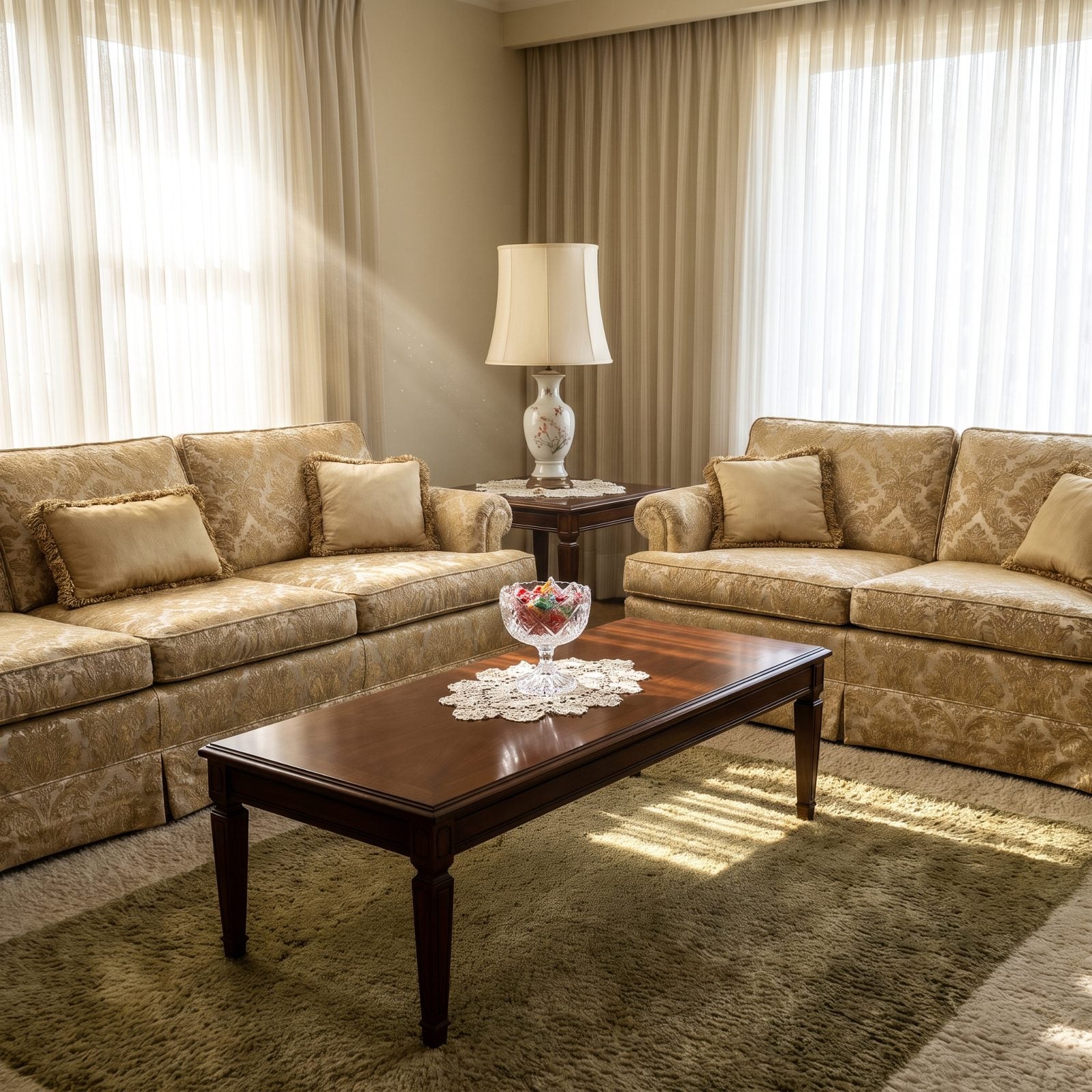
Every house had one, and you weren’t allowed in it. The front room with the matching sofa set, the crystal candy dish holding ancient ribbon candy nobody ate, and the plush carpet that showed every footprint. It existed for one reason: company.
You could look. You could not touch. The curio cabinet glittered with figurines you’d never once seen held, and the whole room sat in a kind of suspended animation, waiting for the pastor or the relatives to arrive and justify its existence.
Want to see how differently we treat these spaces now? A modern red bedroom makeover would have given the matriarch a heart attack. The good room didn’t do bold. It did untouchable.
What Our Readers Say
- When Home Stratosphere readers loved a living room and tapped a reason, “cosy” topped the list at 29%, just ahead of overall style.
- When our readers disliked a living room, the top reason was “not my style,” with “too cold” and “too busy” close behind.
From Home Stratosphere reader polls and votes.
26. Clear Plastic Slipcovers Entombed the Sofa
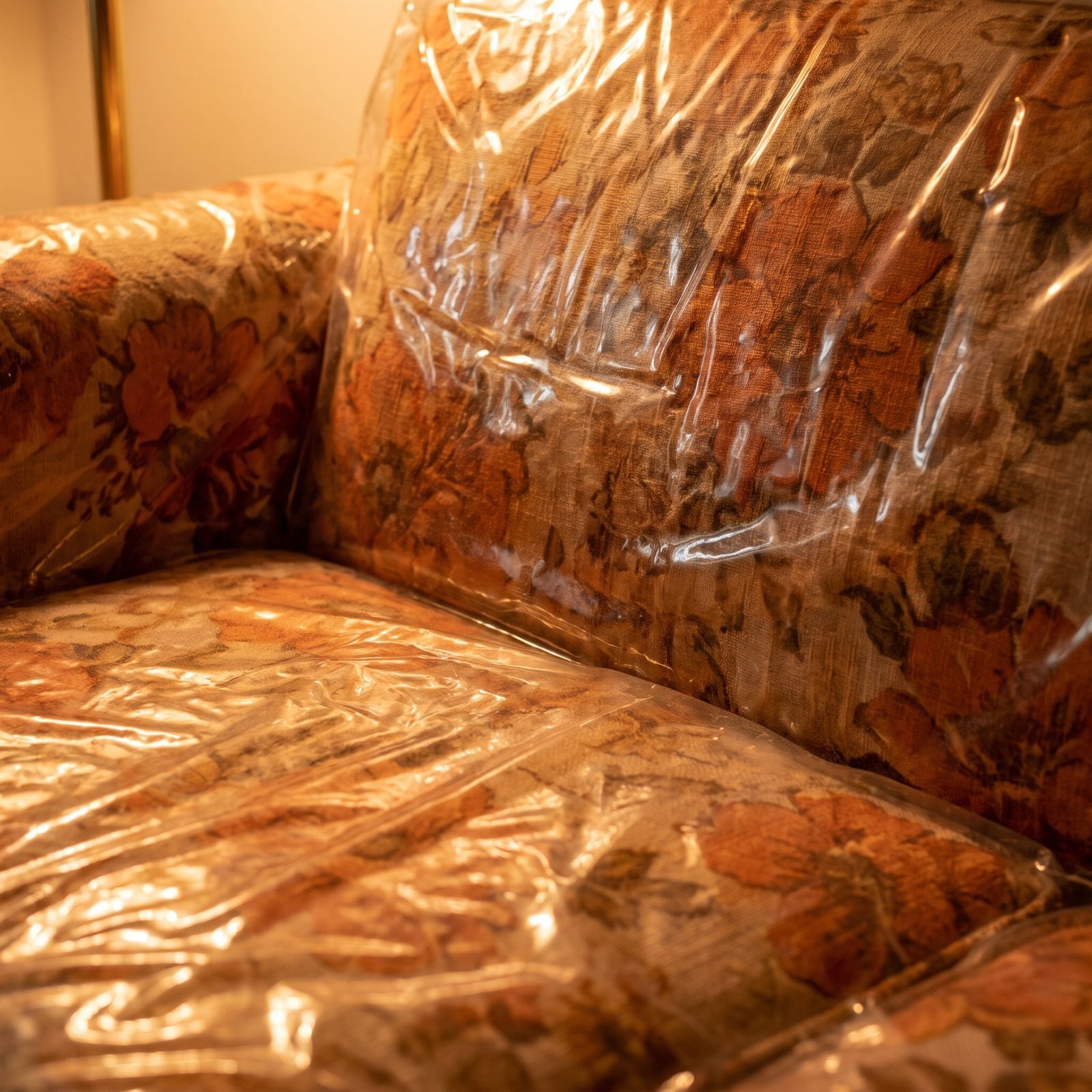
You sat down and the sofa greeted you with a loud crinkle and a slow, sticky grip on the back of your bare legs. In summer, peeling yourself off that plastic was a whole event. In winter, it was cold as a windshield.
The furniture was expensive and it was going to outlive everyone, which was precisely the point. Under that vinyl armor, the brocade stayed showroom-perfect for twenty years. You never actually saw the sofa — you saw the idea of the sofa, preserved for a future that never quite arrived.
25. The Plastic Runner Guarded the Good Carpet
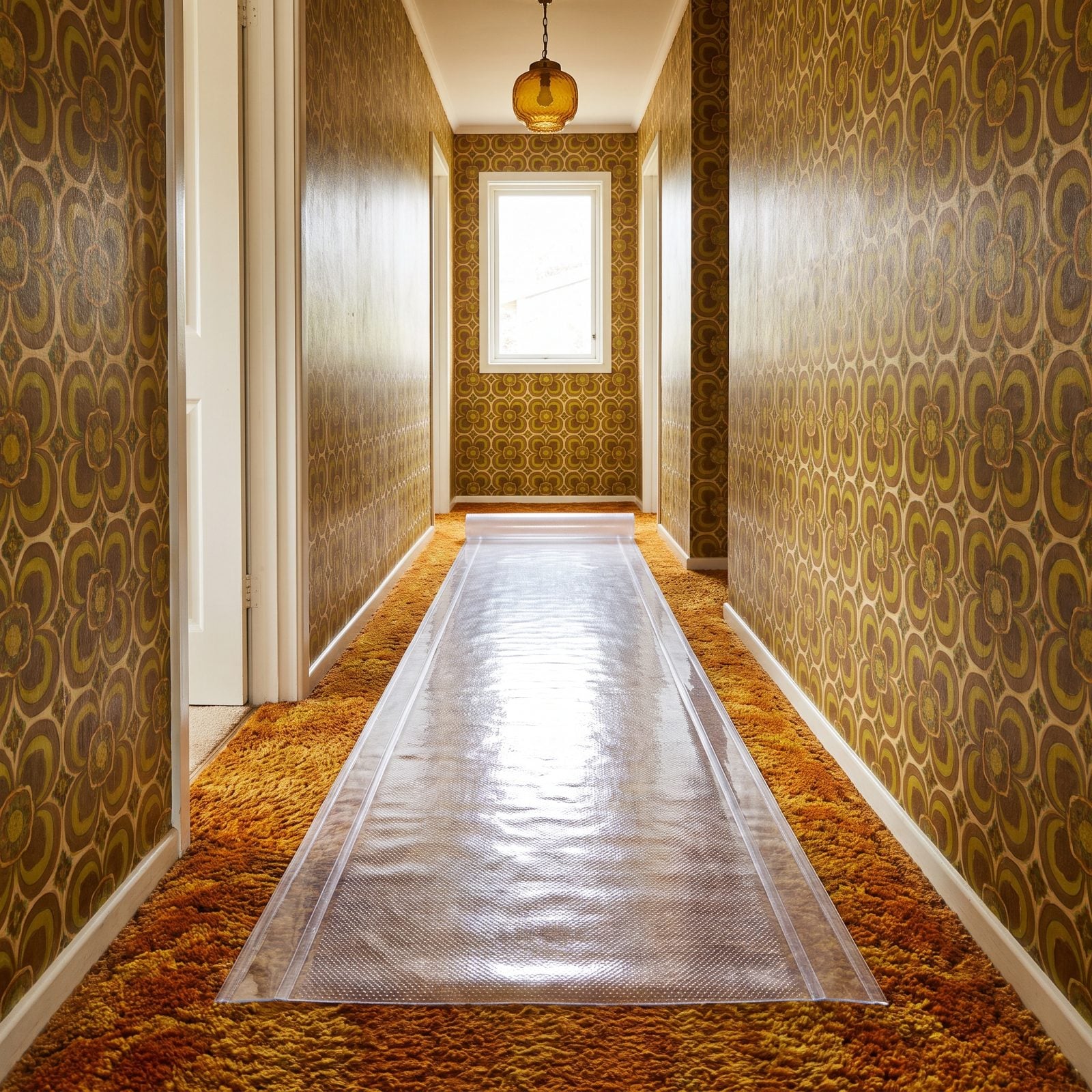
A clear plastic path snaked from the front door through the hall and into the good room, and you stayed on it like your life depended on it. Step off the runner onto the actual carpet and you’d hear your name said in two sharp syllables from the other room.
That glossy, rippled plastic, smooth as spilled water and finished with a raised bound edge, lay tight over the pile. The message was plain enough: the carpet is for guests, and you are not a guest.
Today, patterned rugs win easily: in our reader polls, 69% chose a patterned rug over a solid one.
24. Hats Came Off the Second You Sat Down to Eat
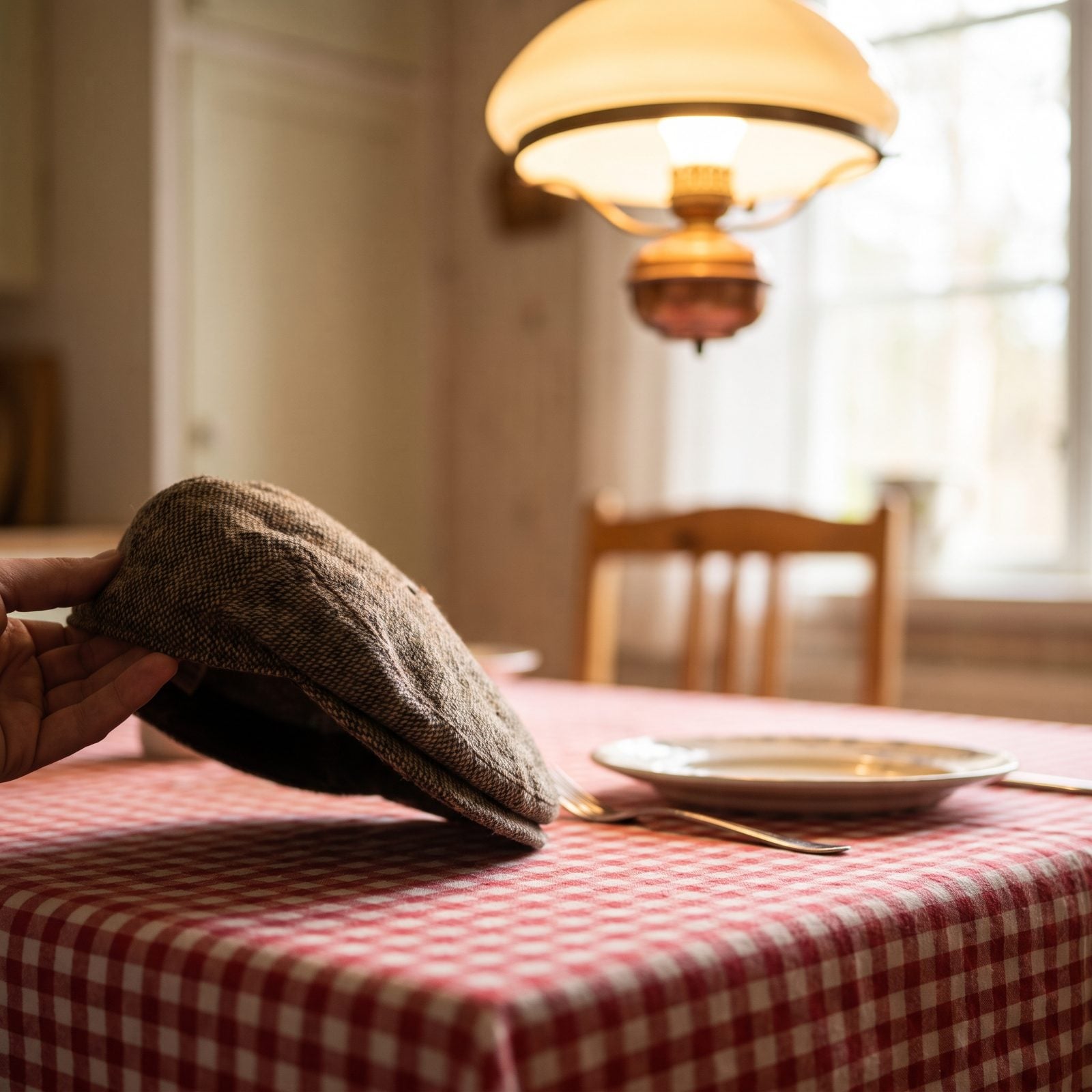
Walk to the table with your cap on and watch your father’s eyebrow go up. That was the whole warning. You whipped the hat off and set it down on the tablecloth beside your plate, because a hat on your head at the table ranked right up there with spitting on the floor.
Men had worn hats for a century, and the rules for removing them were practically a moral system. Indoors, off. At a meal, off before you sat down. Nobody wrote it down, and everyone knew it anyway.
23. Dinner Happened at the Same Hour, All Together
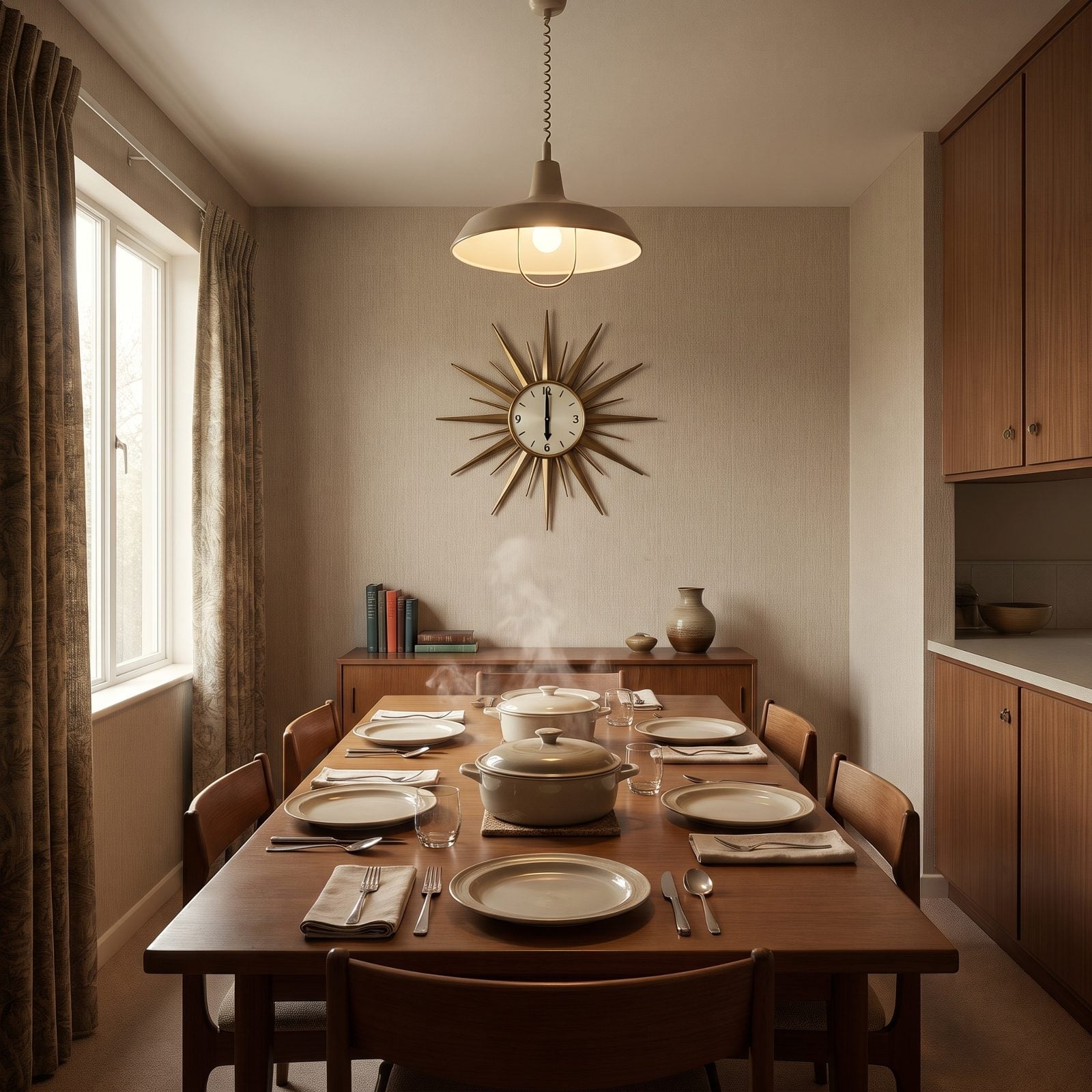
Six o’clock meant six o’clock. The whole family dropped into chairs at the same moment, every night, because dinner wasn’t a thing you grabbed — it was a place you had to be. You could set a watch by it.
No staggered plates eaten over the sink. No one off in another room. Everybody showed up, elbows (mostly) off the table, and the day got hashed out between bites of pot roast.
The table was where the family found out what happened to each other that day. Nothing has quite replaced it.
22. Nobody Answered the Phone During Supper
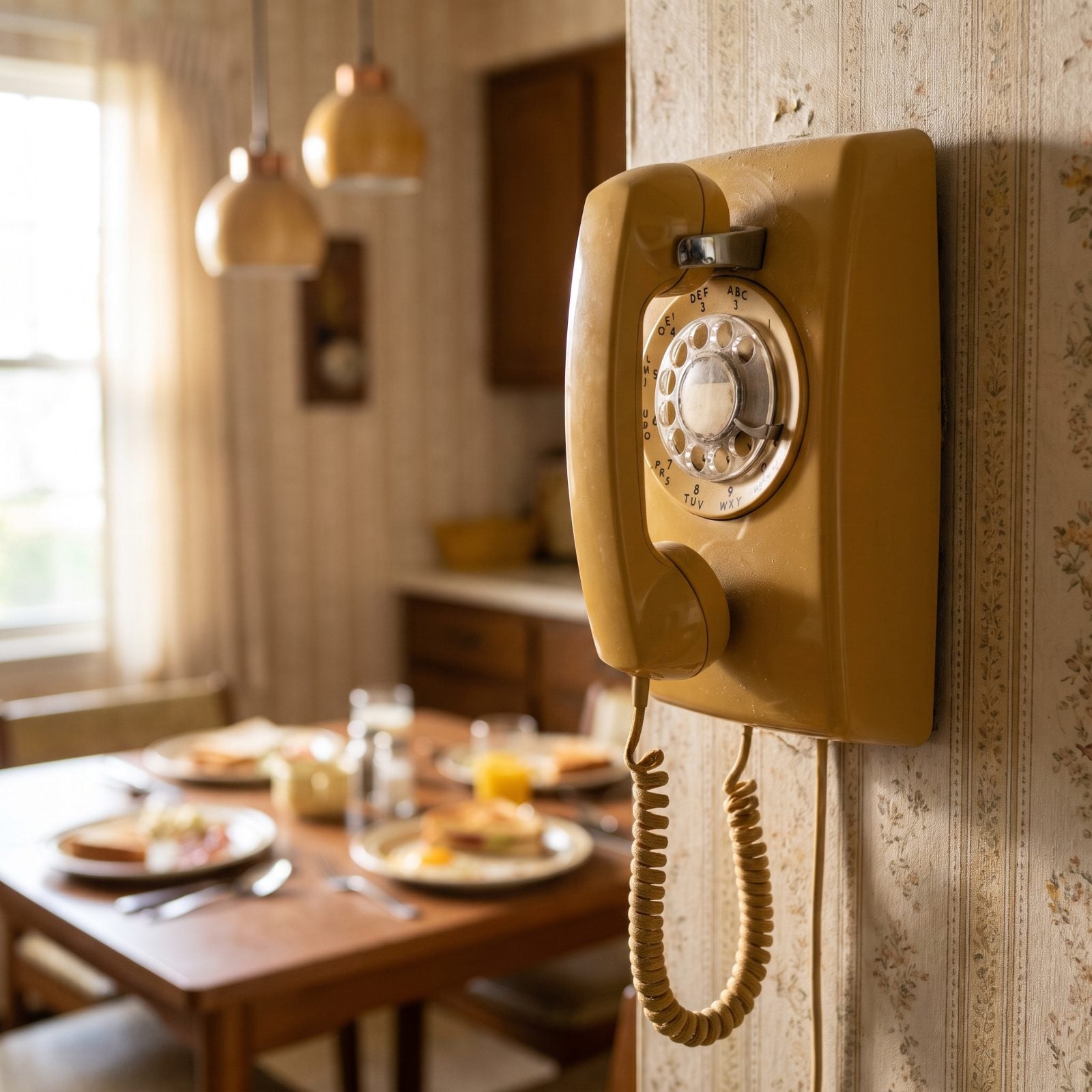
The phone could ring itself hoarse on the kitchen wall and nobody moved a muscle. It rang, and rang, and the family kept eating like it was a bird outside the window. Supper was a closed door.
There was only one phone, bolted to the wall with that coiled cord that stretched only so far, and whoever was calling could call back. The idea that a ringing phone demanded instant obedience hadn’t been invented yet. That particular tyranny was still decades off.
21. Elbows Off the Table, Please
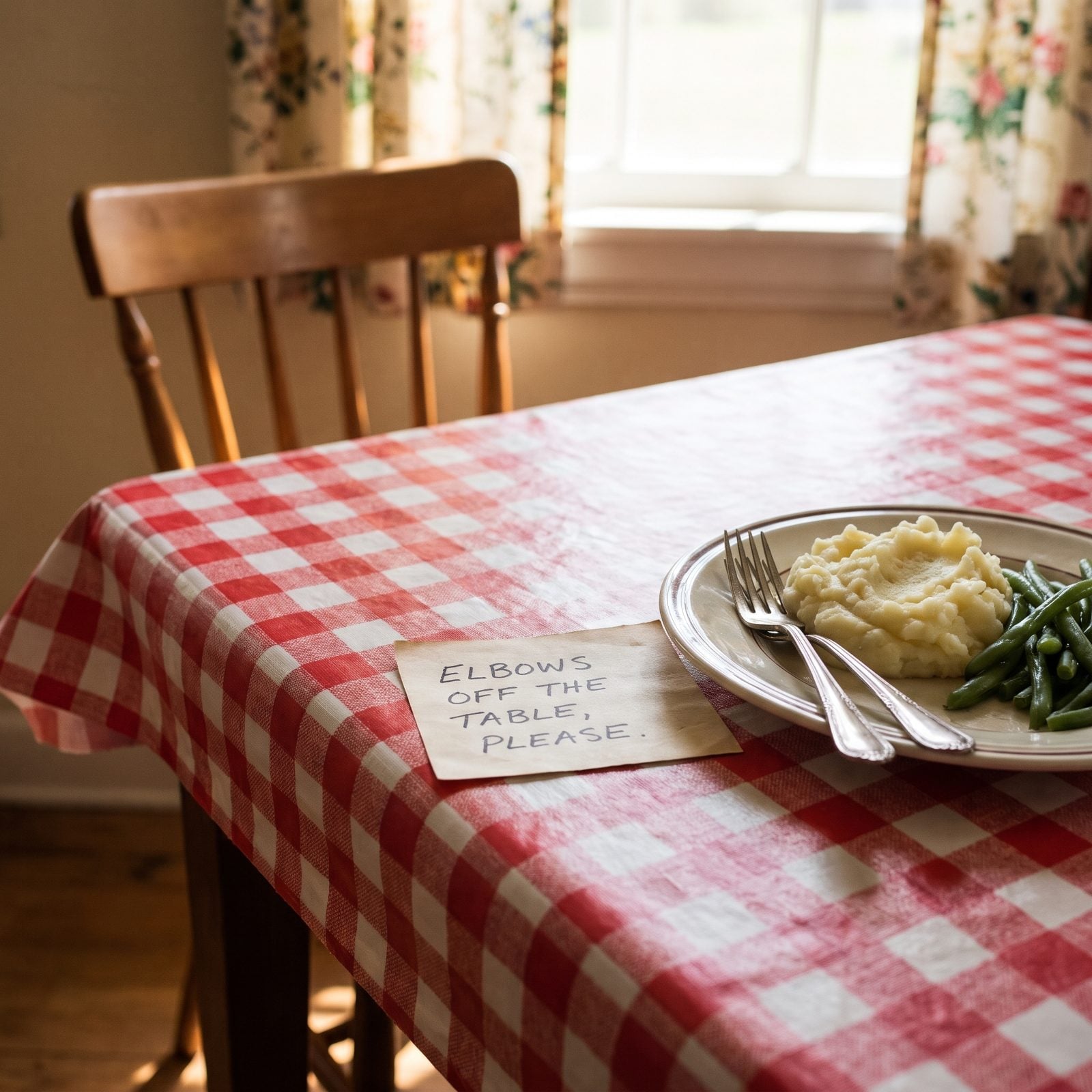
You planted your elbows to lean in and reach the mashed potatoes, and from across the table came the quiet correction before your skin even touched the cloth. Elbows off. Sit up. The whole posture of a meal doubled as a lesson in manners.
It sounds fussy now, but it kept everyone sitting like company was watching, even when it wasn’t. Table manners were a kind of daily rehearsal for the wider world, drilled over meatloaf until they stuck for life.
20. You Asked to Be Excused Before You Left
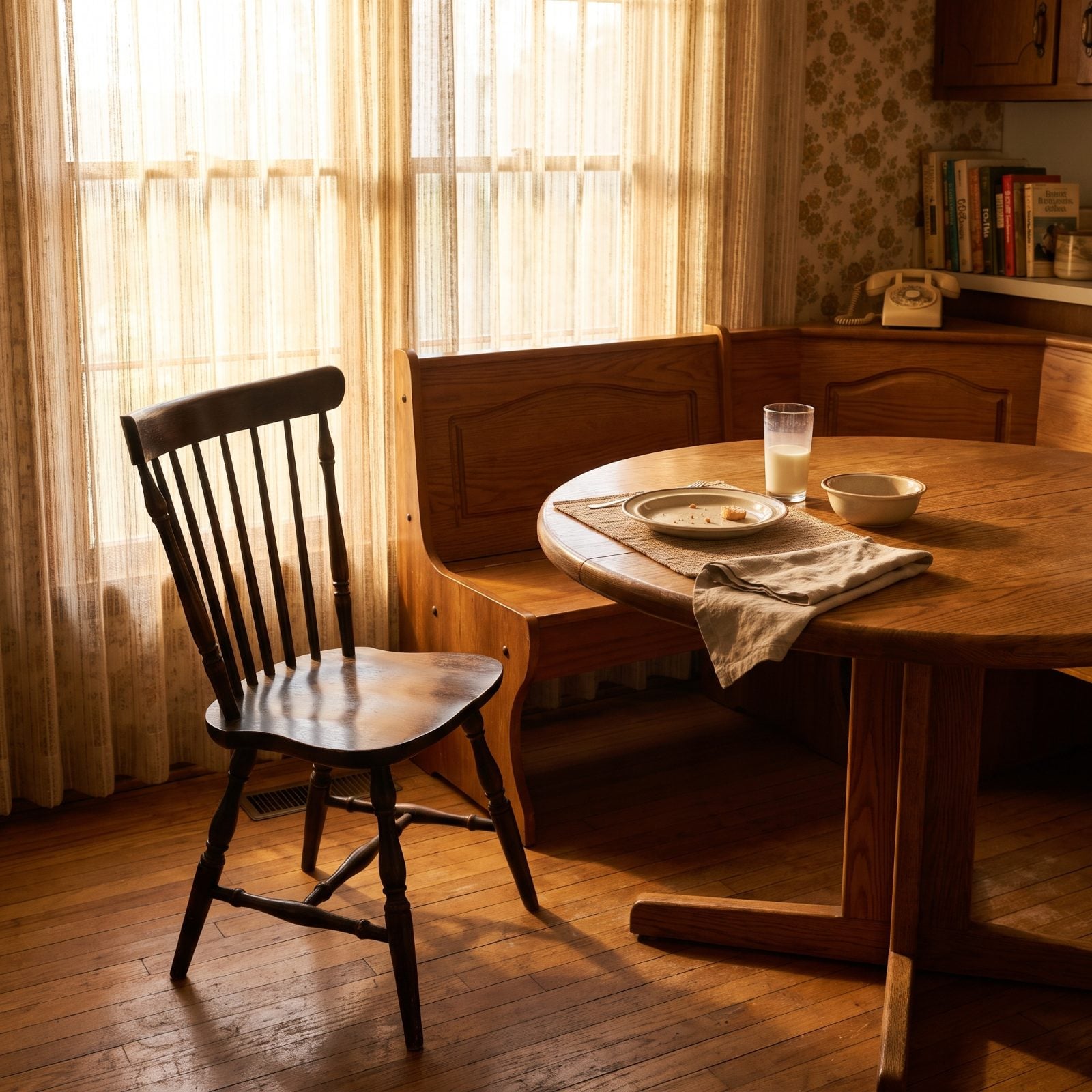
You couldn’t just bolt from the table when you’d had enough. You waited, caught your father’s eye, and said the magic words: may I be excused? Permission granted, you were free. Permission withheld, you sat back down and waited.
The rule drew a clean boundary around the meal. It had a start, it had an end, and the family decided when that end arrived — not some restless kid with somewhere else to be.
19. Clean Your Plate, Then You Get Dessert
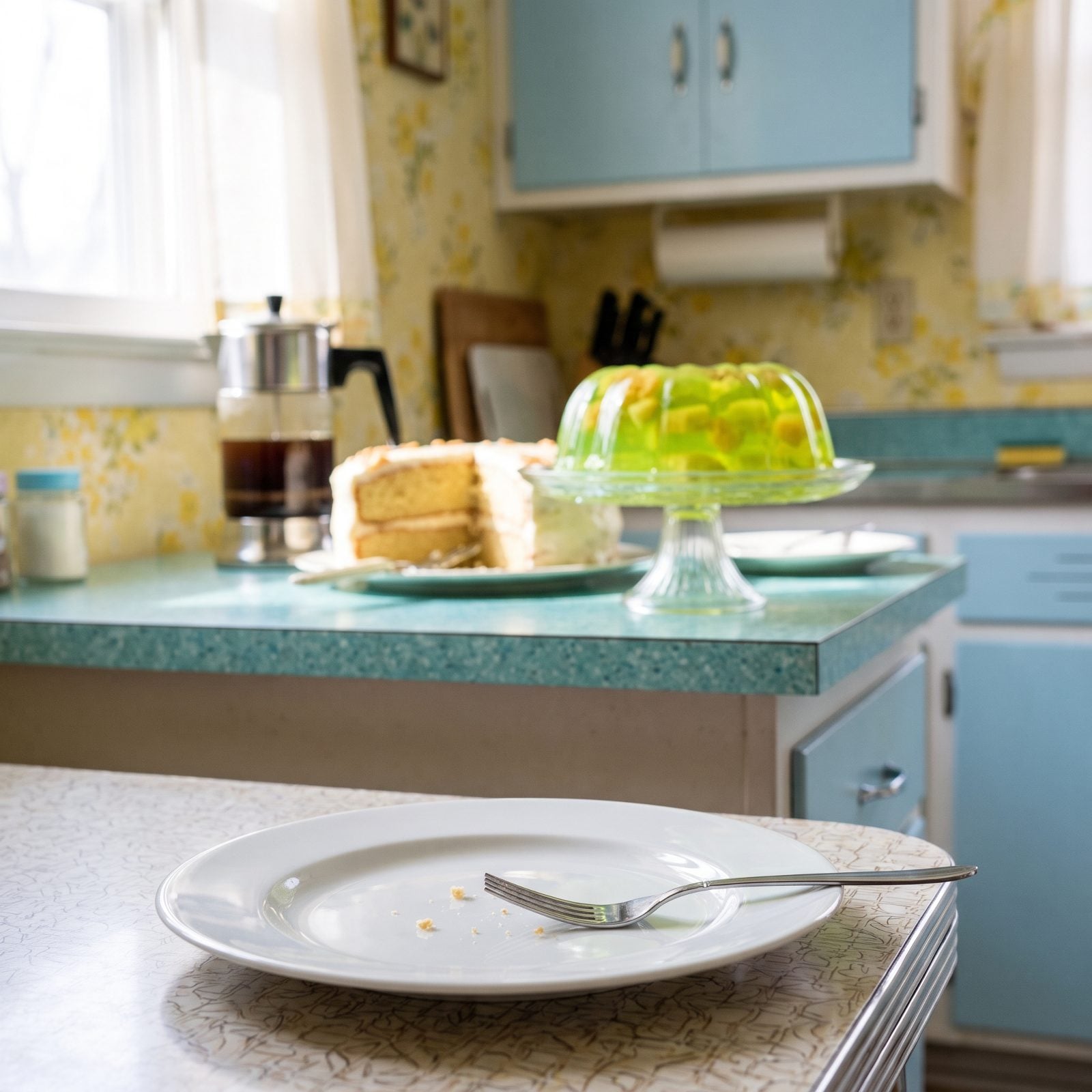
There it sat on the counter: a slice of cake, a bowl of Jell-O with fruit suspended in it, or a scoop of ice cream going soft. And between you and it lay a small gray mound of lima beans you had been pushing around your plate for twenty minutes.
The deal was non-negotiable. Clean plate first, dessert second. No partial credit. Kids of this era learned to swallow things they hated while staring longingly at the reward across the room, and honestly, it built a certain character.
Food wasn’t wasted in these houses. Parents who’d lived through lean years meant it when they said finish what’s on your plate. The empty plate wasn’t about control — it was about remembering what scarcity felt like.
18. The TV Stayed Dark Until the Homework Was Done
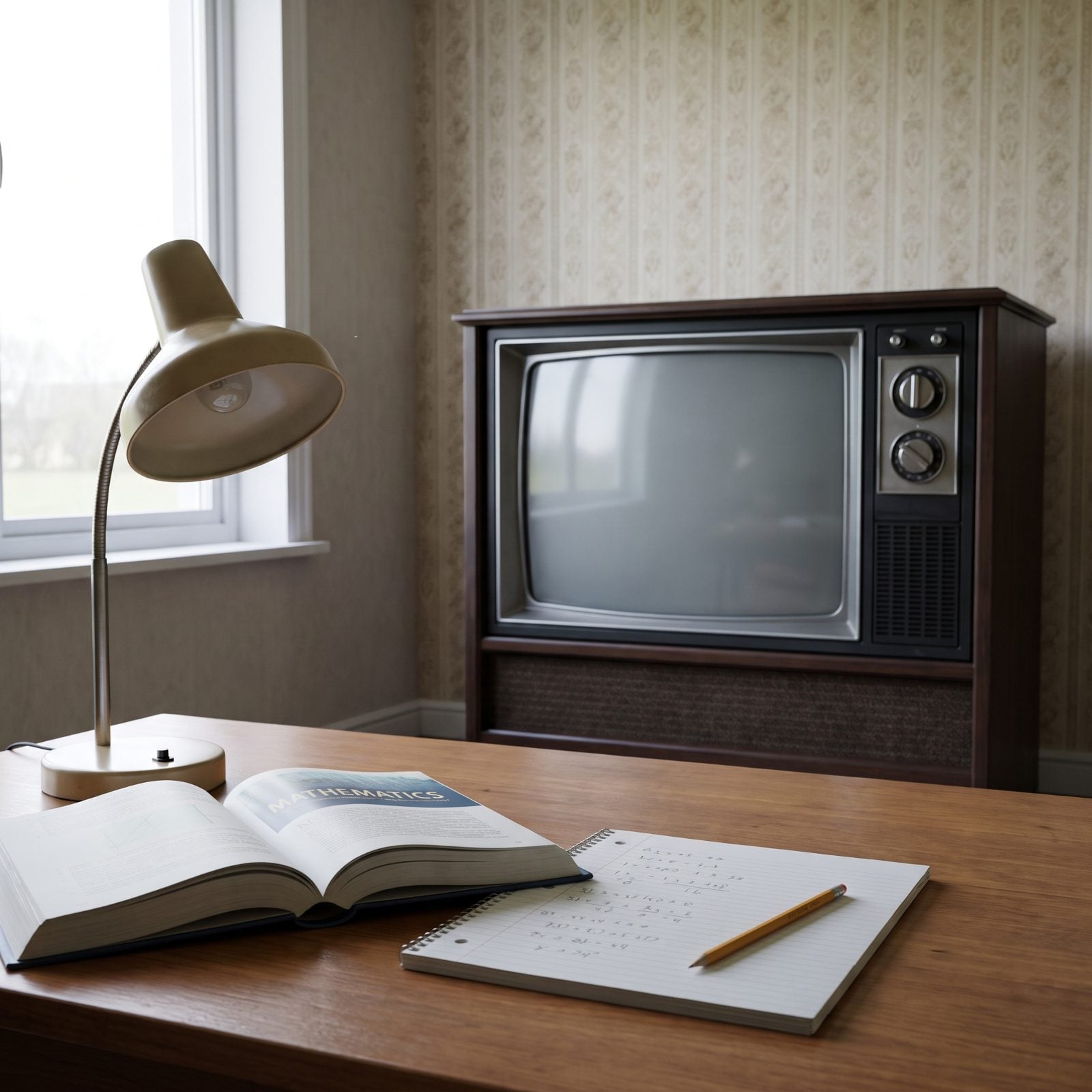
The set didn’t come on until the long division was finished, and everyone knew it. You could hear it humming to life the moment the last worksheet hit the table, like the house rewarded you for showing up.
No negotiating. No “just one show first.” The television lived on the far side of your responsibilities, and getting there felt like earning your way through a locked door. Kids today do homework with three screens glowing, and it’s hard not to think the old way understood something about focus the rest of us forgot.
17. One Television for the Entire Family to Share
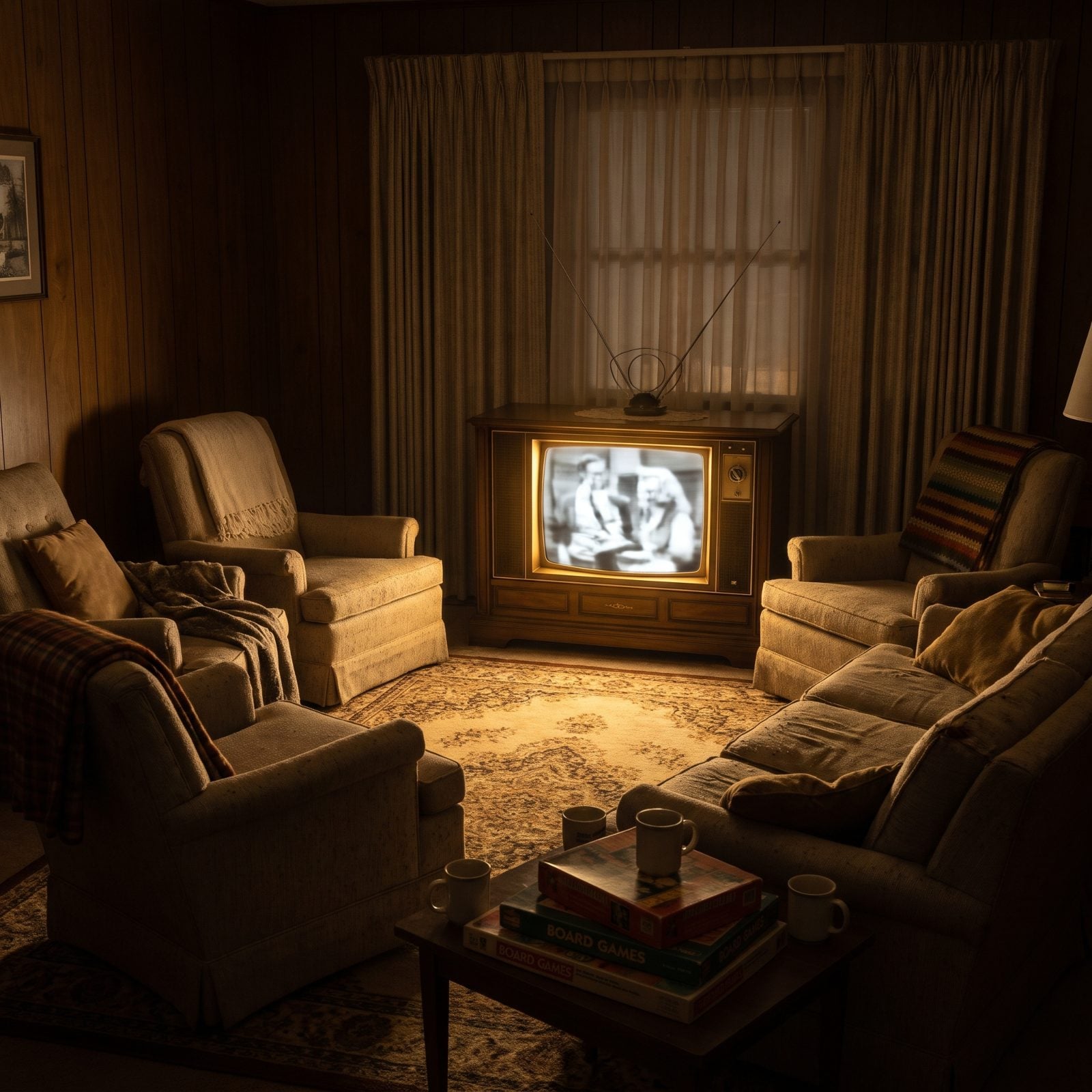
One set, one screen, one decision about what the family watched, and it usually went to whoever held the most authority or made the most noise.
So you negotiated and compromised and sat through your father’s westerns because that’s what was on, and sometimes you ended up loving them. The single television dragged the whole family into the same room at the same hour, elbows close, arguing over the dial. There’s a reason people remember those nights so vividly. Shared screens made shared memories, and the house felt full in a way four separate devices in four separate rooms never quite manages.
16. Nobody Touched the Thermostat But Dad
🔥 Would you like to save this?
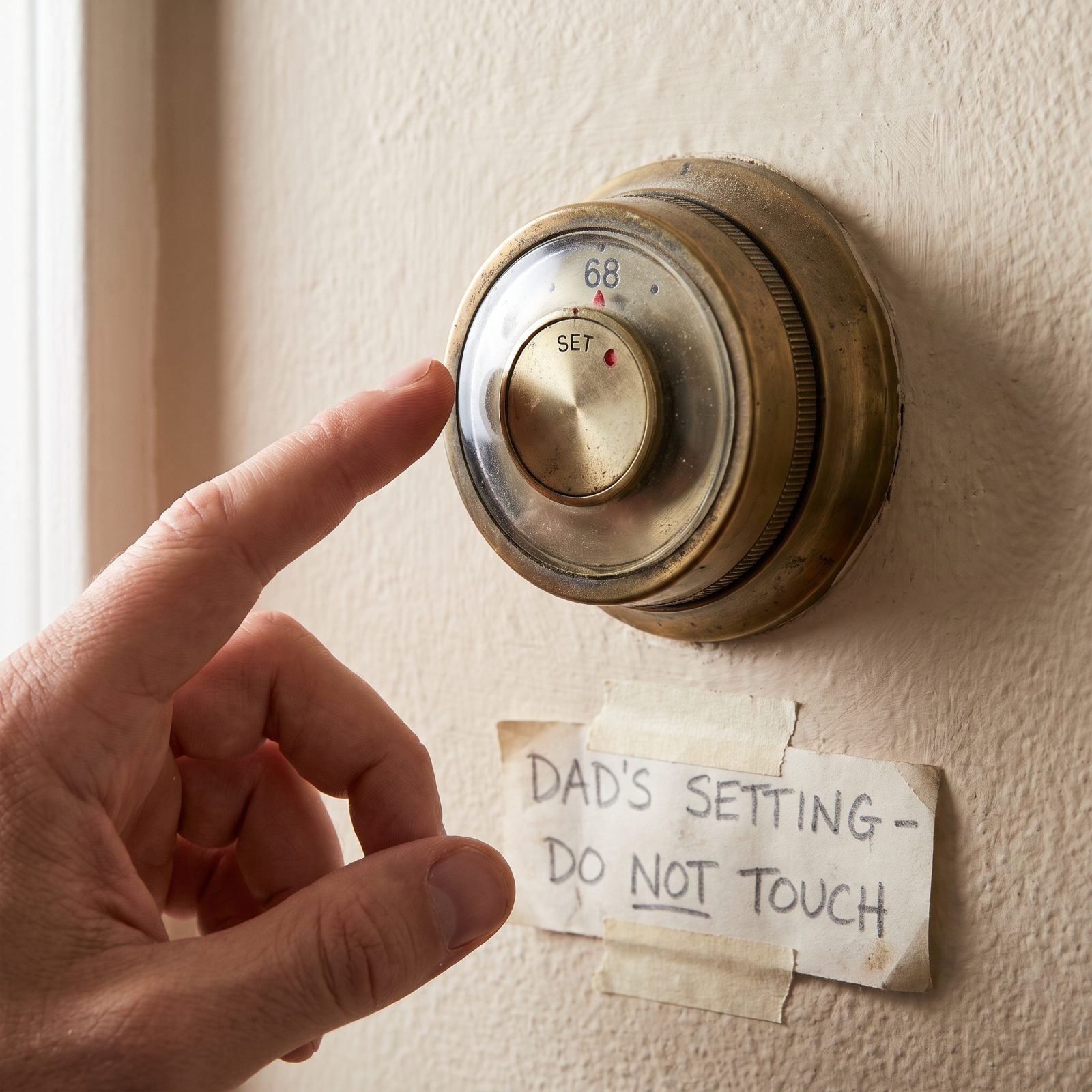
That little dial on the wall had a guardian, and it wasn’t you. Touching it was a declared act of war. Sixty-eight degrees in winter, and if you were cold you could put on a sweater, a reply delivered roughly four thousand times across a childhood.
The thermostat held the budget hostage. Every click up was money out the door, and the man of the house had done the math. You learned to layer, to grab the afghan, to huddle. Plenty of grown adults still feel a small jolt of guilt reaching for a thermostat in someone else’s home. Some rules burrow in and never leave.
15. Turn Off the Lights When You Leave a Room
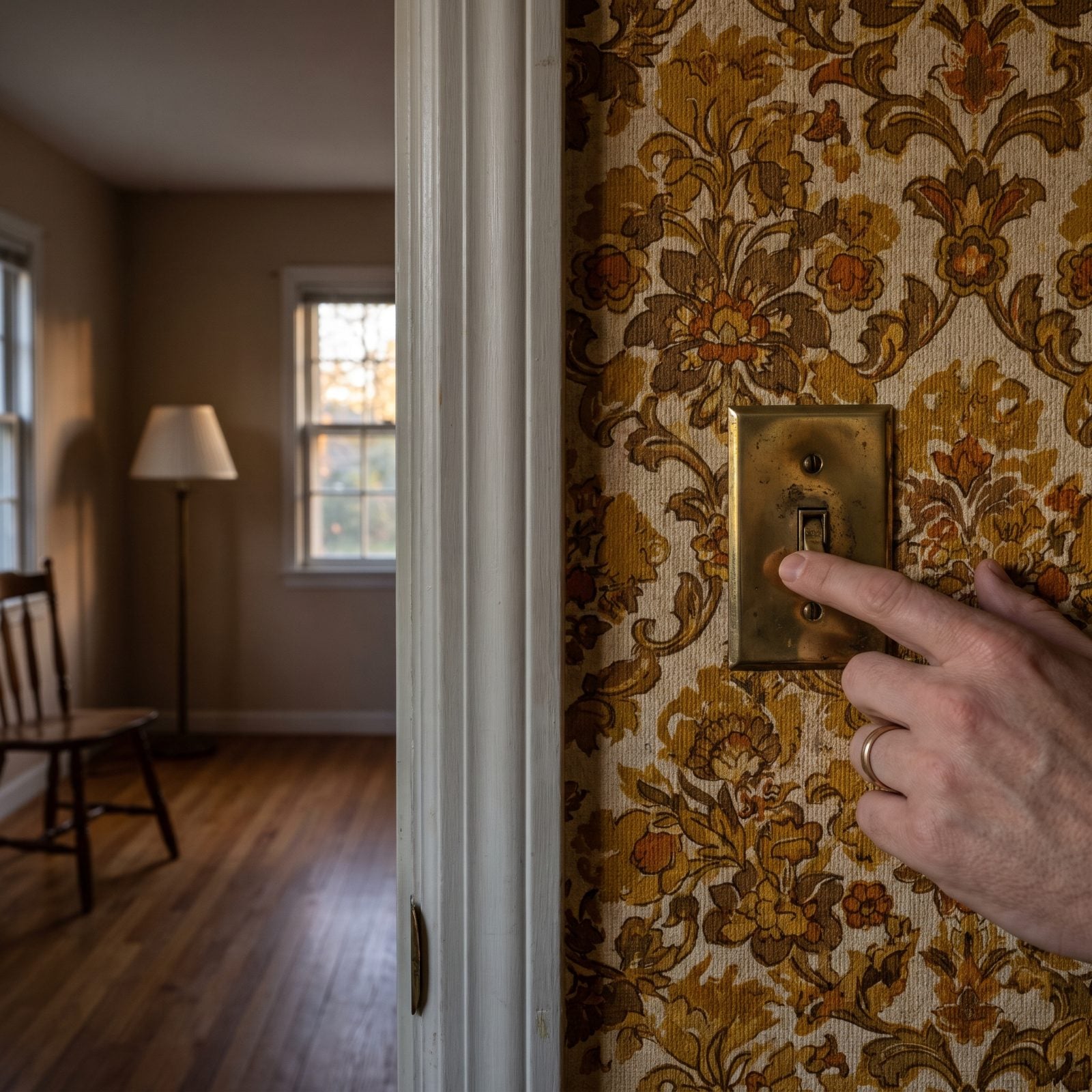
“Were you born in a barn?” Every unattended light drew that line. The lights-off rule was gospel in households where the electric bill arrived like a monthly verdict.
You trained yourself to slap the switch on your way out of any room until it became reflex, a body memory so deep that grown adults still do it without a thought. A room left glowing was a small betrayal of everyone watching the pennies. Frugality wasn’t a lifestyle choice back then. It was just how a house got run.
14. No Long-Distance Calls Without Permission First
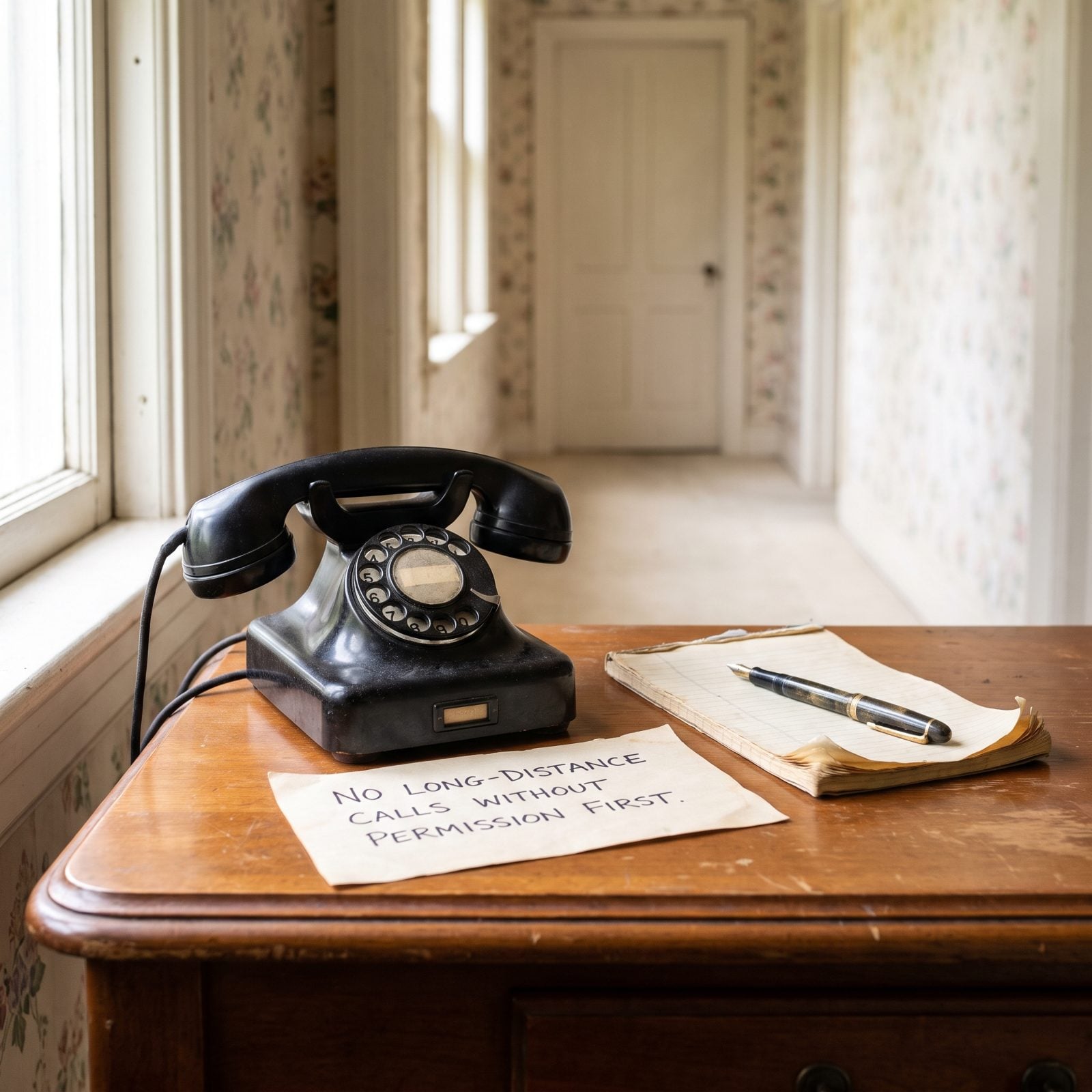
Calling your cousin two states over cost real money, billed by the minute like it was gold. A long-distance call was an event, planned, approved, and timed.
You asked first and kept it short while someone stood nearby reminding you this was costing a fortune, the meter running the whole time. Then the itemized bill arrived and got scrutinized line by line, every out-of-town number accounted for. The coiled cord stretched as far as it could reach, which was never quite into the next room where you actually wanted privacy. Cell phones made distance free and the whole ritual evaporated overnight.
13. Everything Got Line-Dried on the Backyard Clothesline
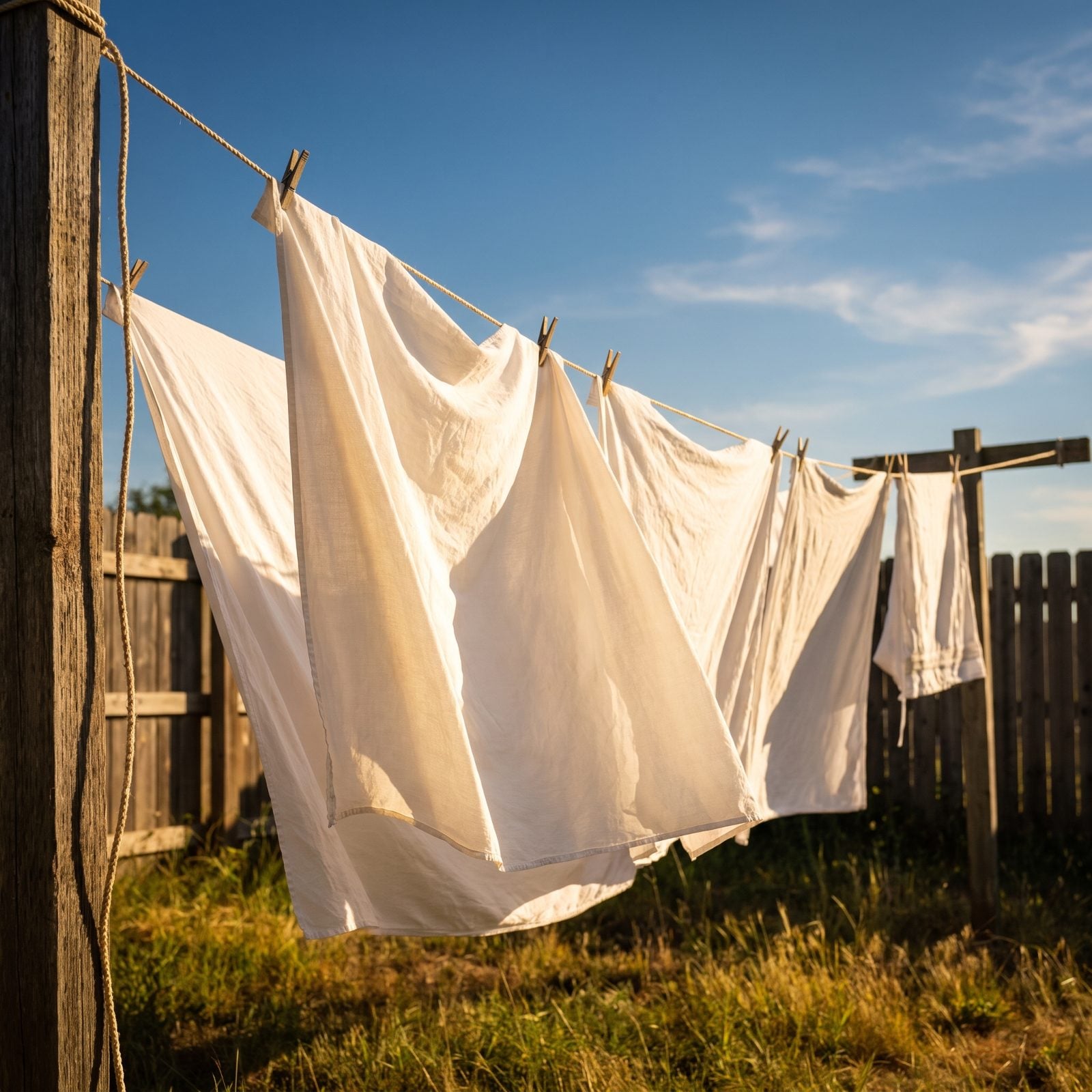
The dryer existed, but running it was a luxury, so the clothes went out on the line. No store-bought scent matches a bedsheet dried in open air. People spent decades trying to bottle it and never came close.
Monday was wash day. The backyard filled with billowing white and a clothespin bag pinned to the hip, stiff towels that could exfoliate a knee, frozen trousers in January that stood up on their own, the whole choreography of pinning and gathering before the rain came. Modern mid-century backyard makeover plans leave out the clothesline now, and something about the yard feels quieter for it.
Bottled scents still divide people: when our readers picked which home scent they would buy, warm and fresh came out a near coin toss.
12. Sunday Belonged to Church and the Family Dinner
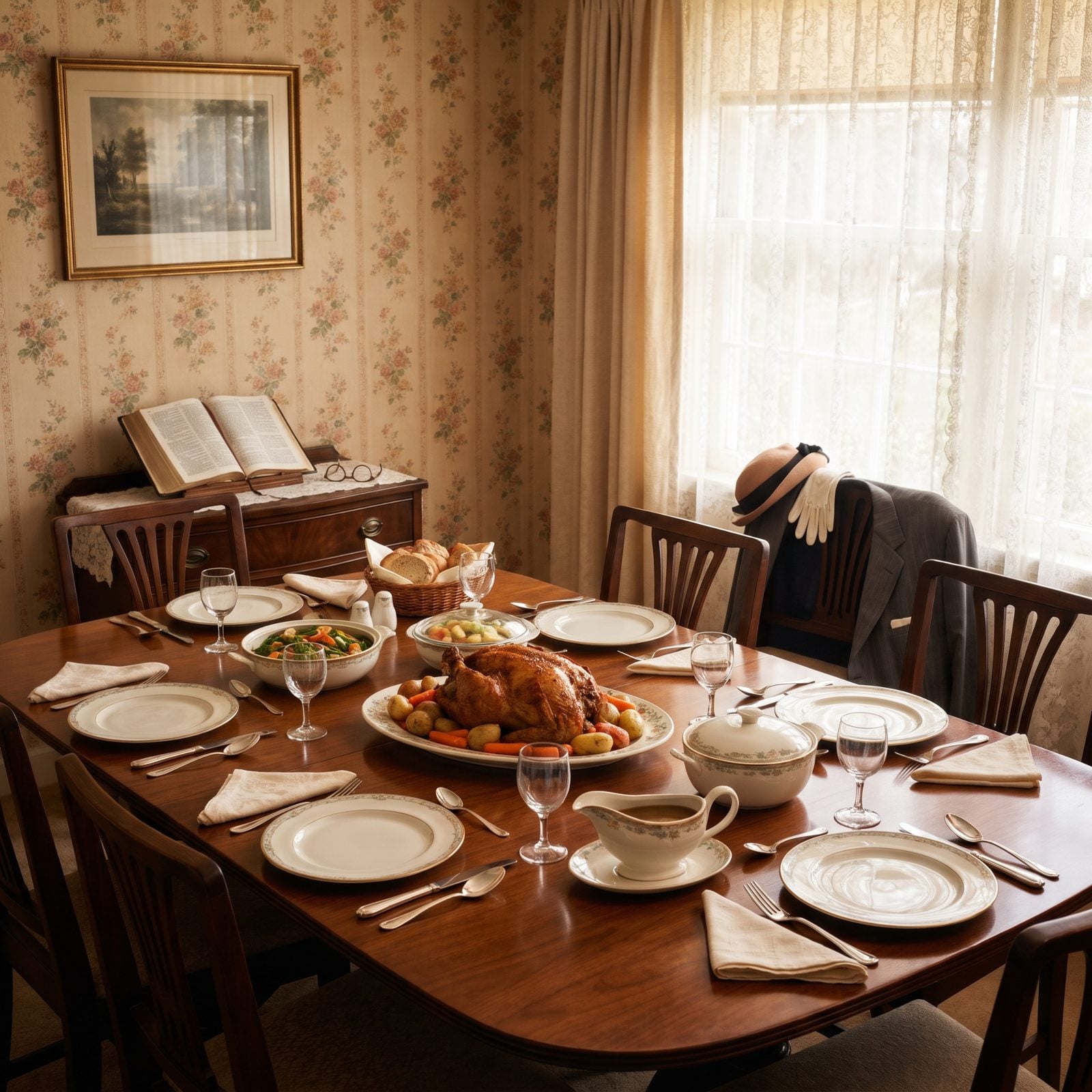
Sunday had a shape, and nobody wandered outside it. Church in the morning, then home to a dinner that had been cooking since before the sermon started.
The good clothes stayed on through the meal. Everyone sat at the same table at the same hour, no exceptions, no plates carried off to bedrooms, and the whole day slowed to the pace of a roast and a long afternoon. Stores were closed, so there was nowhere to rush off to anyway. That enforced stillness gave families something we now scramble to recreate with scheduled “quality time.” Back then it was just Sunday, and it arrived every single week without anyone planning a thing.
11. Company Got the Good Dishes and the Good Towels
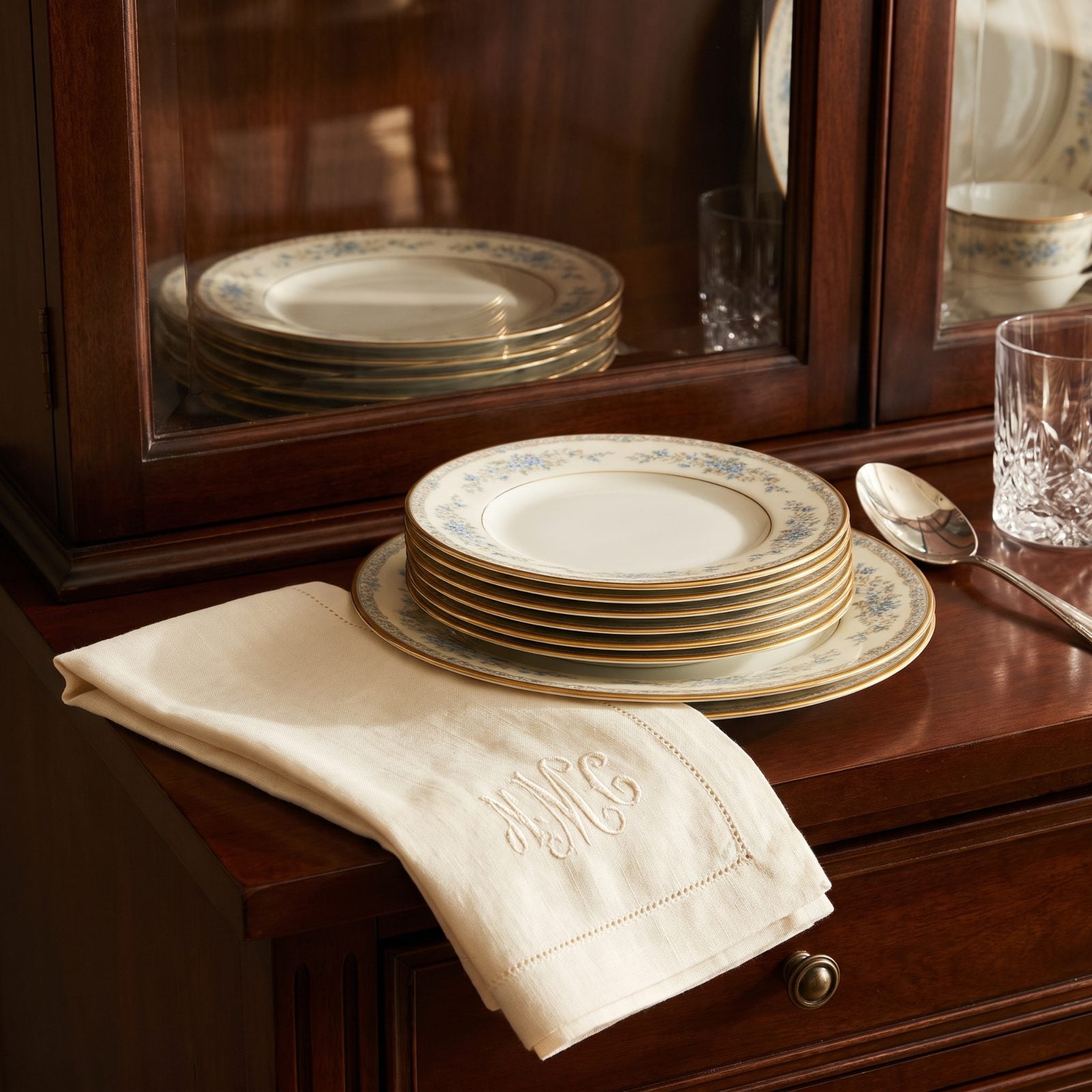
Behind the glass doors of the china cabinet lived a whole dinner set nobody ate off. It waited, year after year, for company important enough to justify it.
Same went for the good towels in the bathroom, the ones you were forbidden to actually dry your hands on. When company arrived, the china came down, the embroidered towels came out, and the house performed its Sunday best. There was a tenderness to saving the finest things to honor a guest. These days we use the good stuff daily or own nothing worth saving, and it’s hard to say which habit is easier to defend. A little ceremony never hurt a home.
10. Beds Made Every Morning, No Exceptions
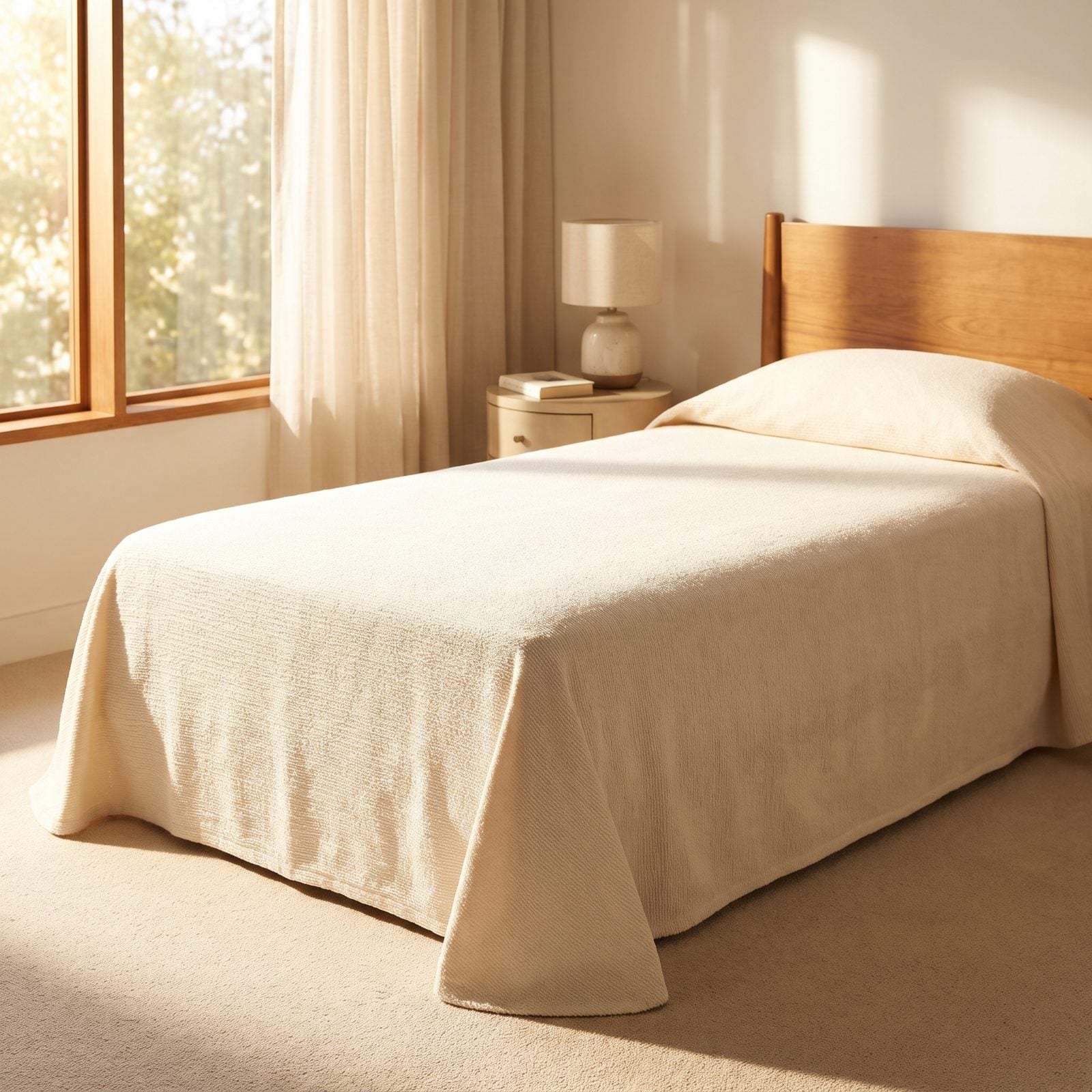
Before breakfast, before anything, the bed got made. Sheets pulled taut, corners tucked military-tight, the spread smoothed without a wrinkle. First job of the day, non-negotiable.
A made bed signaled a house in order and a child who knew how to carry themselves. Leave it rumpled and you’d hear about it, every time. The logic ran deeper than tidiness. Start the day by finishing one task well, and you set the tone for everything after. Plenty of people still swear by it, and the red bedroom makeover crowd knows a crisp bedspread anchors a whole room. Some rules were right all along.
9. You Had Play Clothes, and You Changed Into Them the Second You Got Home
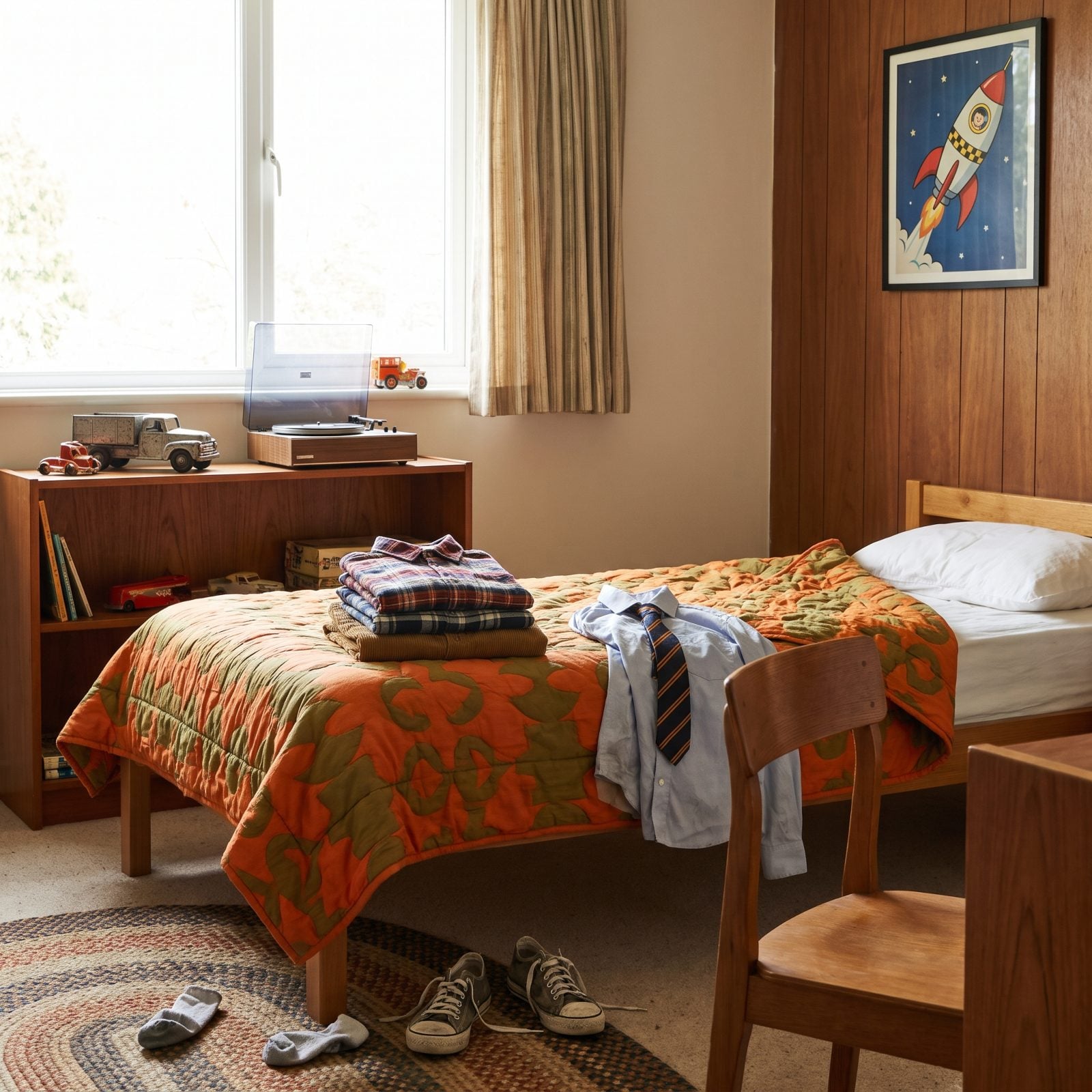
The rule was ironclad. School clothes came off the moment you walked through the door, folded or hung, and the play clothes went on. The good stuff cost money, and money did not grow on the backyard elm.
Kids grew out of everything in a season, so a shirt had to survive two or three children before it earned retirement. Grass stains on the good trousers meant a lecture, and nobody wanted the lecture.
That wardrobe triage has mostly vanished. Clothes are cheaper now, and the whole notion that one outfit is for climbing fences while another is for being seen in public has quietly faded out.
8. Every Jar, Bag, and Square of Foil Got a Second Life
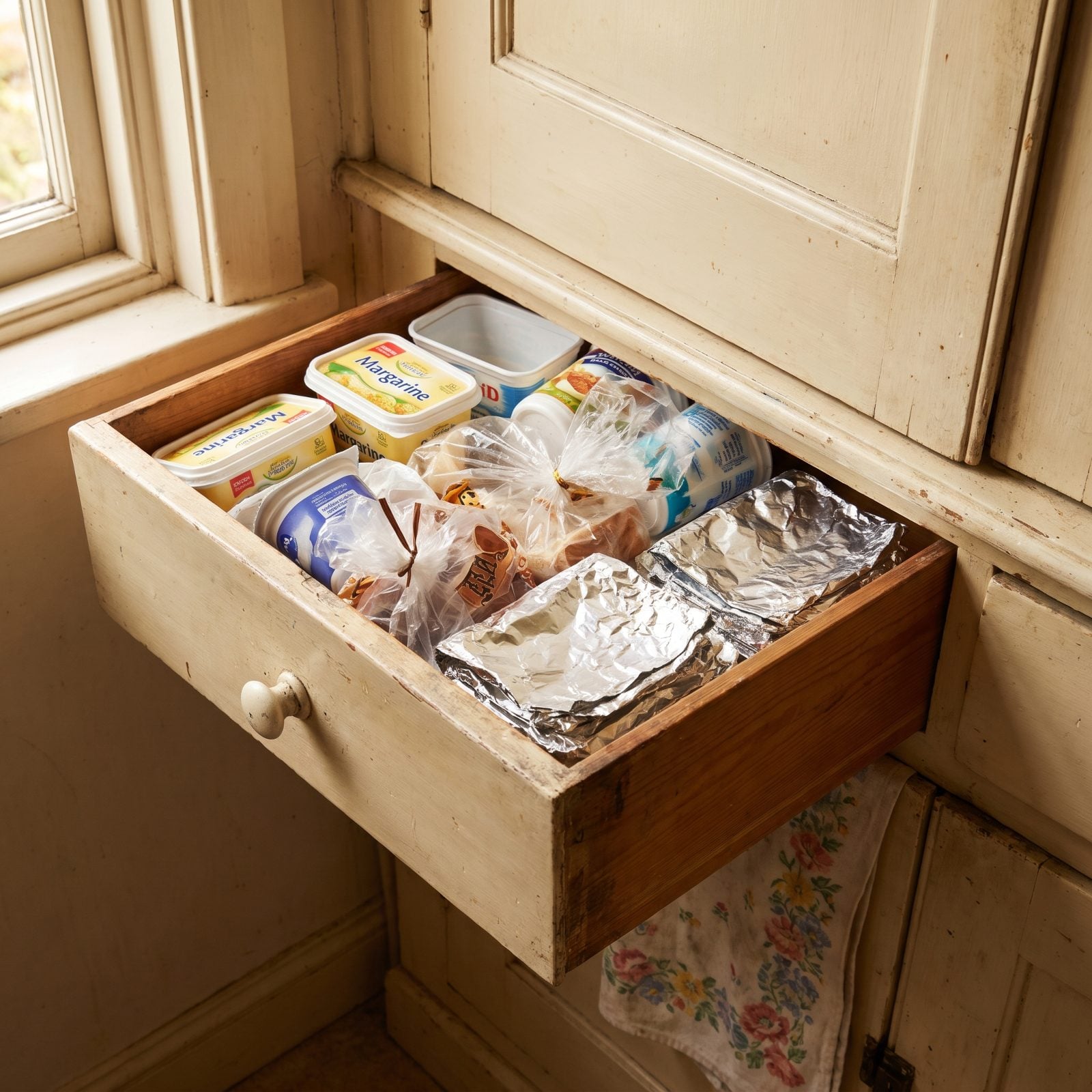
Nothing left the house without a fight. Bread bags got shaken out and reused, butter tubs became Tupperware before Tupperware, and the margarine container in the fridge held leftover chili — you learned that the hard way.
A jar of bacon grease lived by the stove, and it was not garbage. It was an ingredient. Foil got rinsed, dried, and folded for a second run, while the rubber bands collected on the kitchen doorknob into a ball the size of a grapefruit.
This was Depression logic handed down to people who had lived through rationing. Throwing out something useful felt close to a moral failing. The habit faded as packaging got cheaper and recycling bins took over the guilt.
7. Children Were Seen and Not Heard at the Grown-Ups’ Table
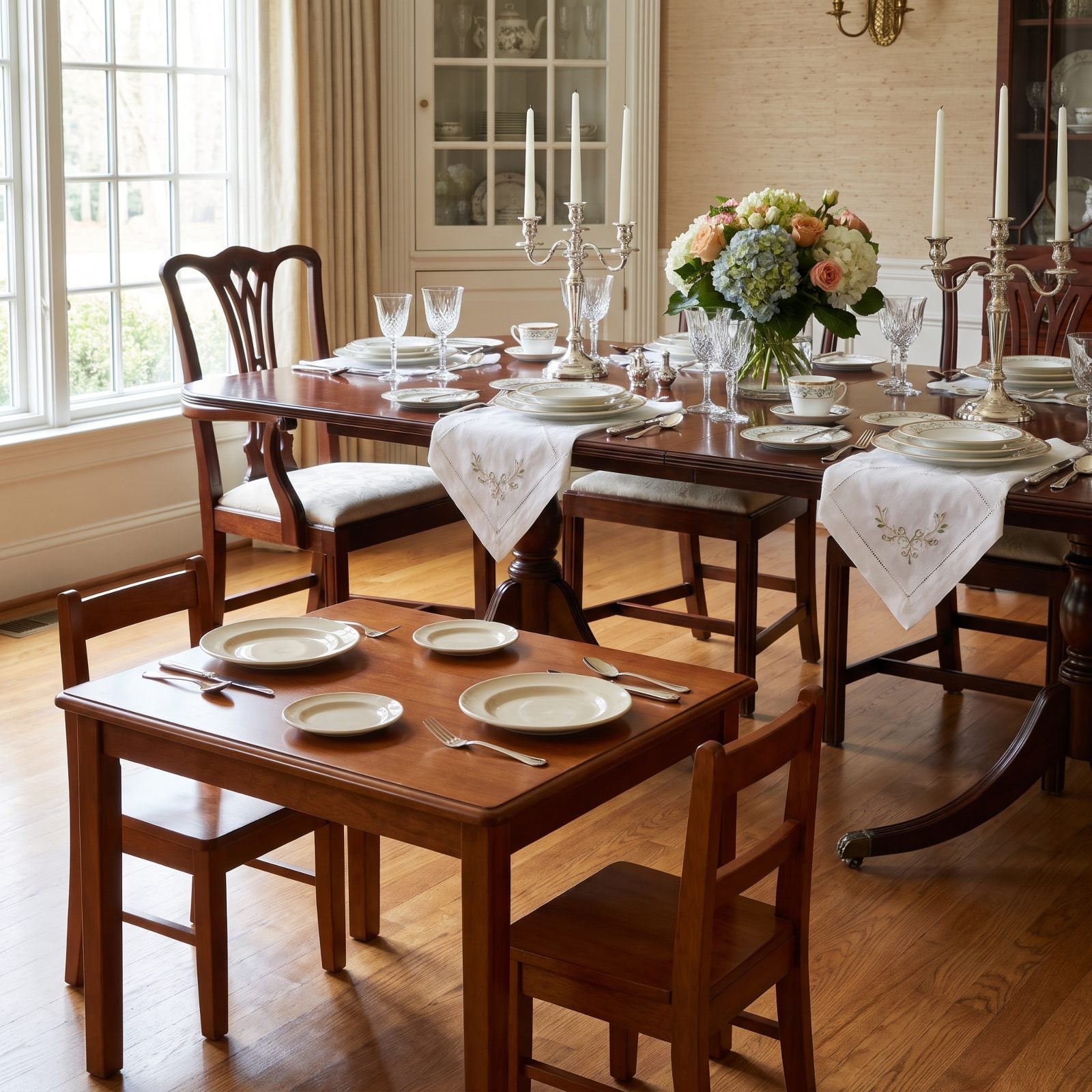
The phrase got repeated so often it practically hung on the wall. When adults were talking, children listened. You did not interrupt, you did not pipe up with your opinion on the roast, and you certainly did not announce you were bored.
Dinner with guests meant sitting up straight and speaking only when spoken to. A kid who held it together through a long adult conversation earned a nod, which in that era counted as high praise.
The whole thing has reversed. These days the dinner table often revolves around what the kids have to say, and most families call that progress.
6. You Answered the Phone With the Family Name, Clear as a Bell
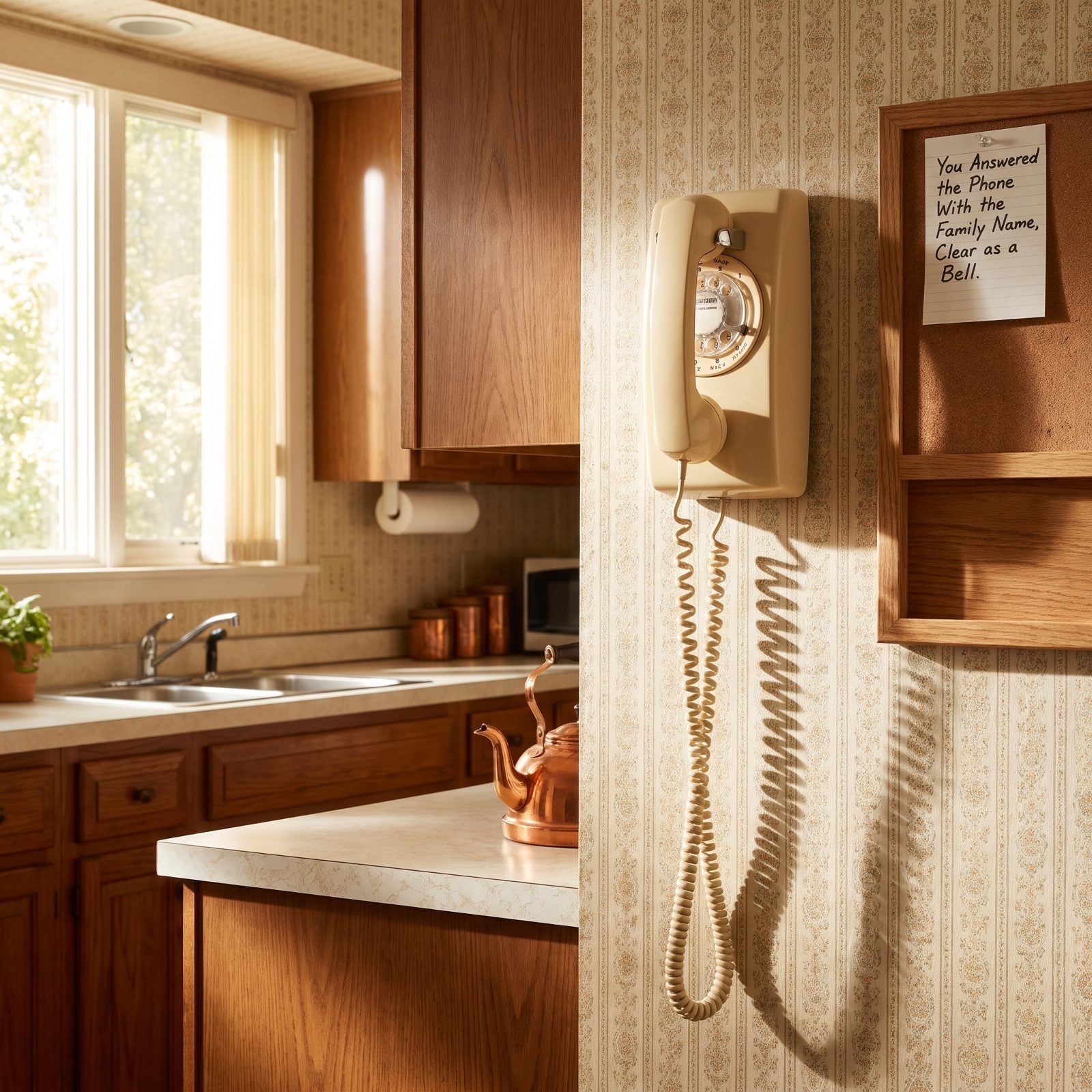
The phone rang, and you did not just grunt “hello.” You said “Peterson residence,” bright and polite, because you had no idea who was on the other end and your mother was listening from the kitchen.
There was one phone, usually bolted to the wall, with a cord long enough to let you pace exactly as far as the pantry. A call was a shared household event, and everyone within earshot knew your business.
That little ritual of answering with the family name died with caller ID. Now your phone tells you who it is before you pick up, and half the time you let it go to voicemail anyway.
5. Feet Stayed Off the Furniture, No Exceptions
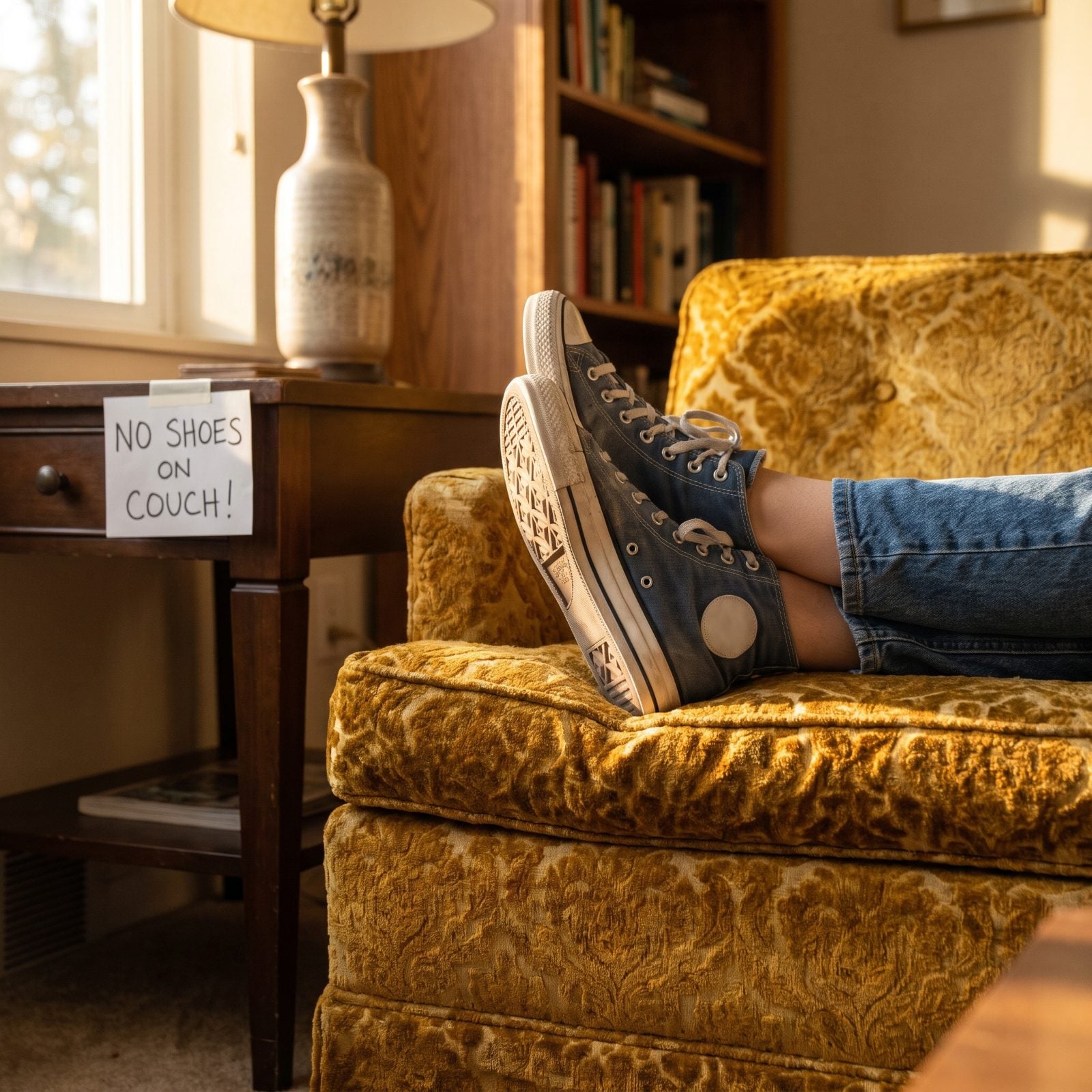
Shoes on the couch was a crime punishable by a sharp voice from across the room. That furniture represented a serious purchase, often bought on time payments, and it was meant to last fifteen years minimum.
You sat properly. Feet on the floor, no sprawling, no sliding down into a slouch, and absolutely no sneakers up on the cushions. The armrests sometimes wore crocheted doilies just to fend off the wear.
Compare that to today’s deep sectionals built for the opposite — designed so you can fold your whole body onto them. The furniture itself got a lot more forgiving.
4. Saturday Morning Meant Dusting and the Roar of the Vacuum
🔥 Would you like to save this?
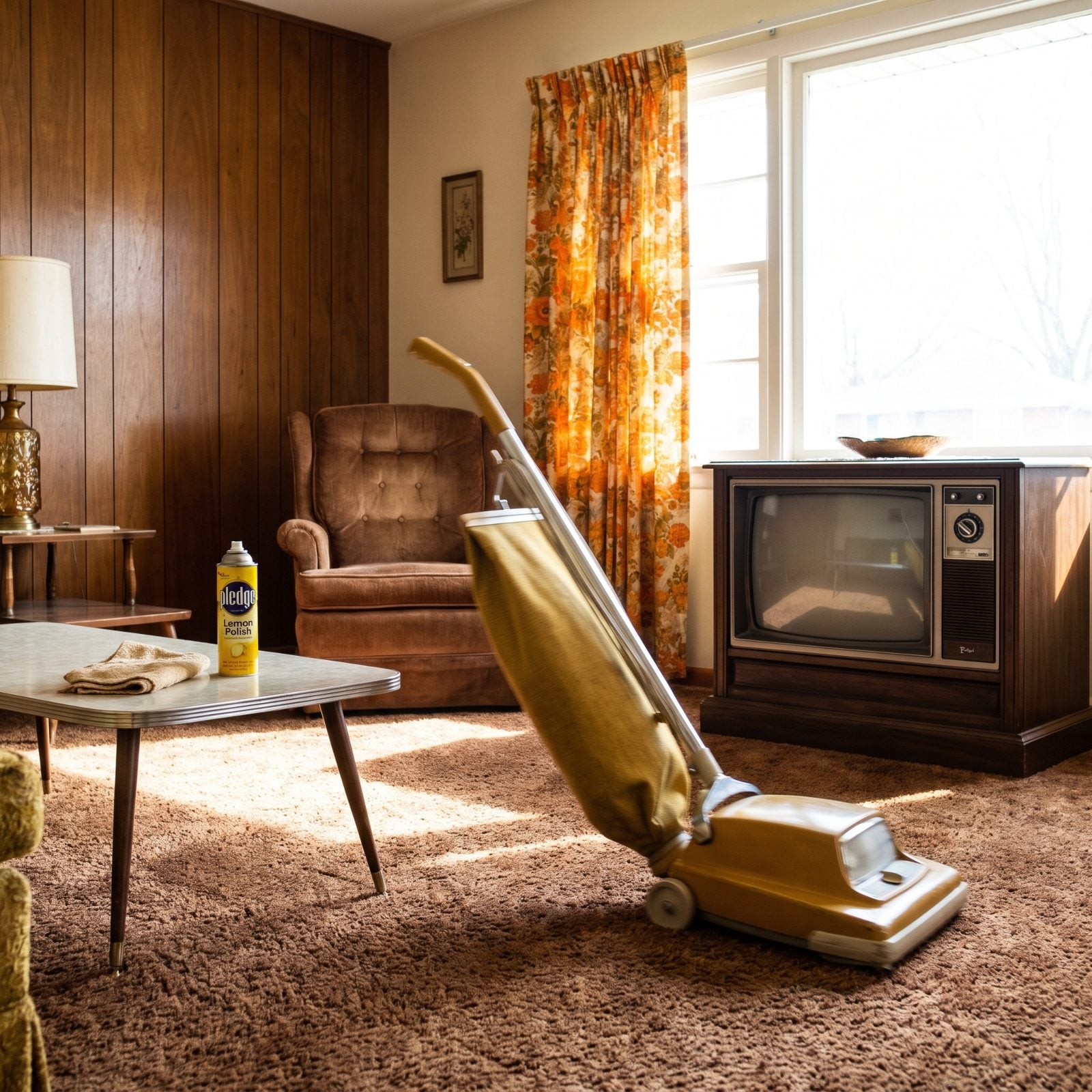
Saturday did not mean sleeping in. It meant the whole house got attacked — beds stripped, furniture polished with lemon oil, rugs beaten or vacuumed until the pile stood up straight.
The vacuum fired up early, usually before you wanted to be awake, and the smell of Pledge drifted through every room. Chores were assigned, not optional, and you did not get your Saturday back until the baseboards passed inspection.
That weekly deep clean as a non-negotiable family event has loosened considerably. Cleaning now happens in scattered ten-minute bursts between other things, and devoting a whole morning to it feels almost quaint. If you want the full ritual, a mid-century backyard makeover brings back that era’s pride in a well-kept home.
3. Please and Thank You Got Said at Every Single Meal
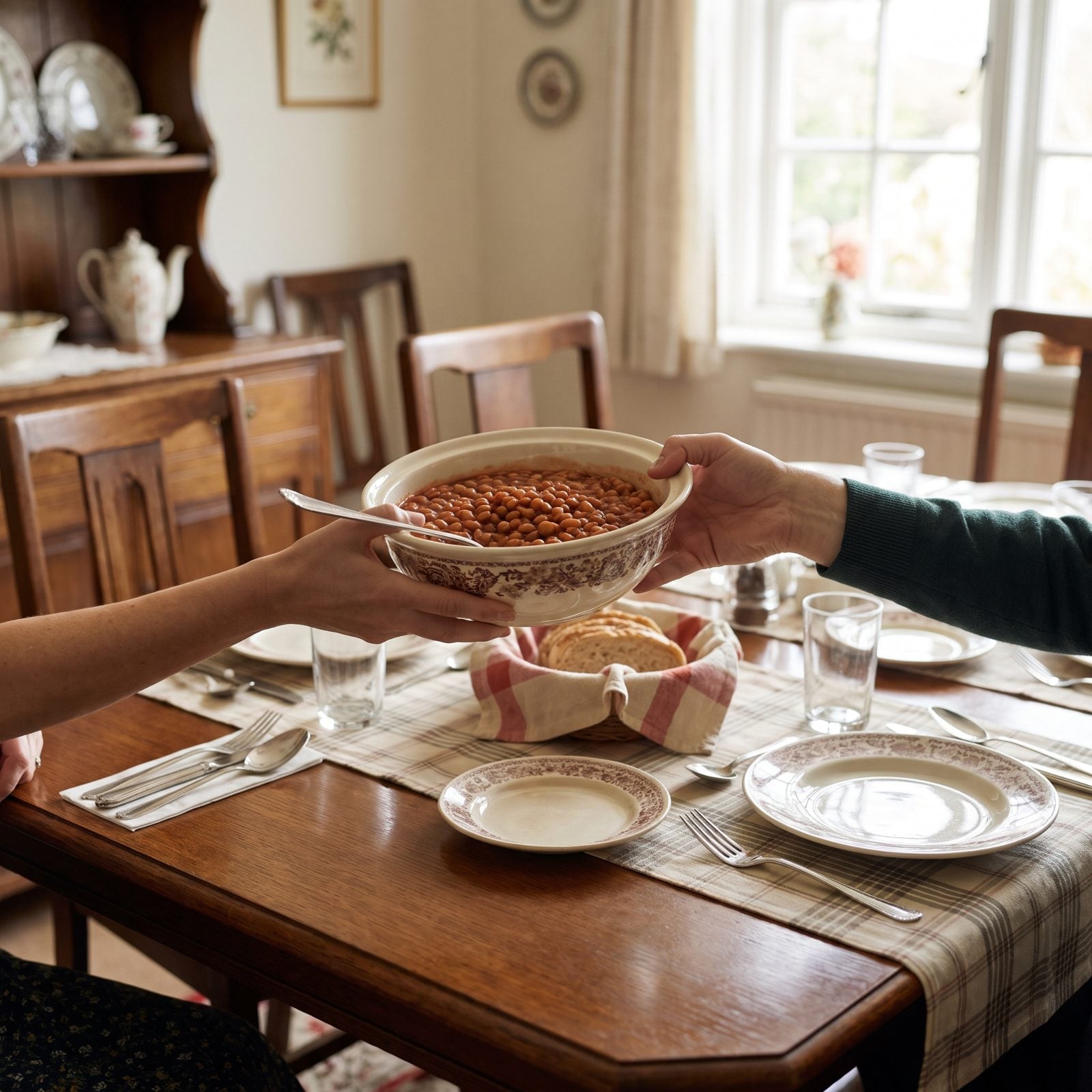
You did not reach across the table and grab the potatoes. You asked. “Please pass the beans,” followed by a “thank you” that was not optional. Forget one and you got a pointed look that said try again.
Manners were drilled daily, not saved for company. Elbows off the table, napkin in your lap, and you waited until everyone was served before lifting your fork.
The everyday formality of it has softened in most homes. The politeness survives, but that near-military attention to every please and thank you has loosened its grip.
2. Snacking Before Dinner Was a Crime Against Your Appetite
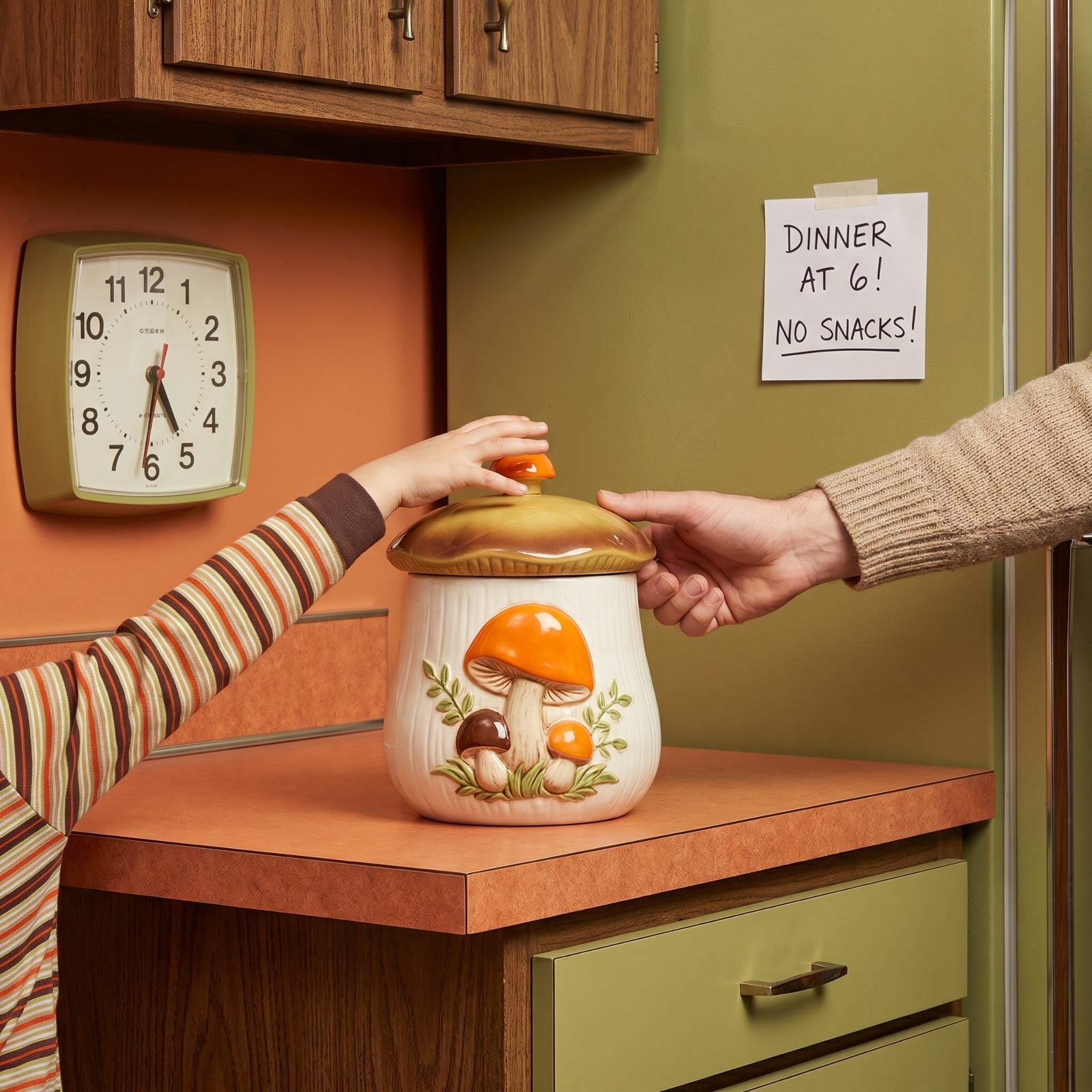
The phrase was burned into memory: “You’ll spoil your appetite.” Reaching for a cookie at five o’clock got you a swift block and a reminder that dinner was in an hour.
Meals happened at set times, and the stretch before dinner was a protected zone. Hungry? Good. That meant you would actually eat what was put in front of you, which mattered in a house where food was not wasted.
Grazing all day is practically the norm now — snack drawers, protein bars, a fridge stocked for constant access. Guarding your appetite for one big meal has quietly slipped away.
1. You Washed Your Hands Before You Sat Down, Every Time
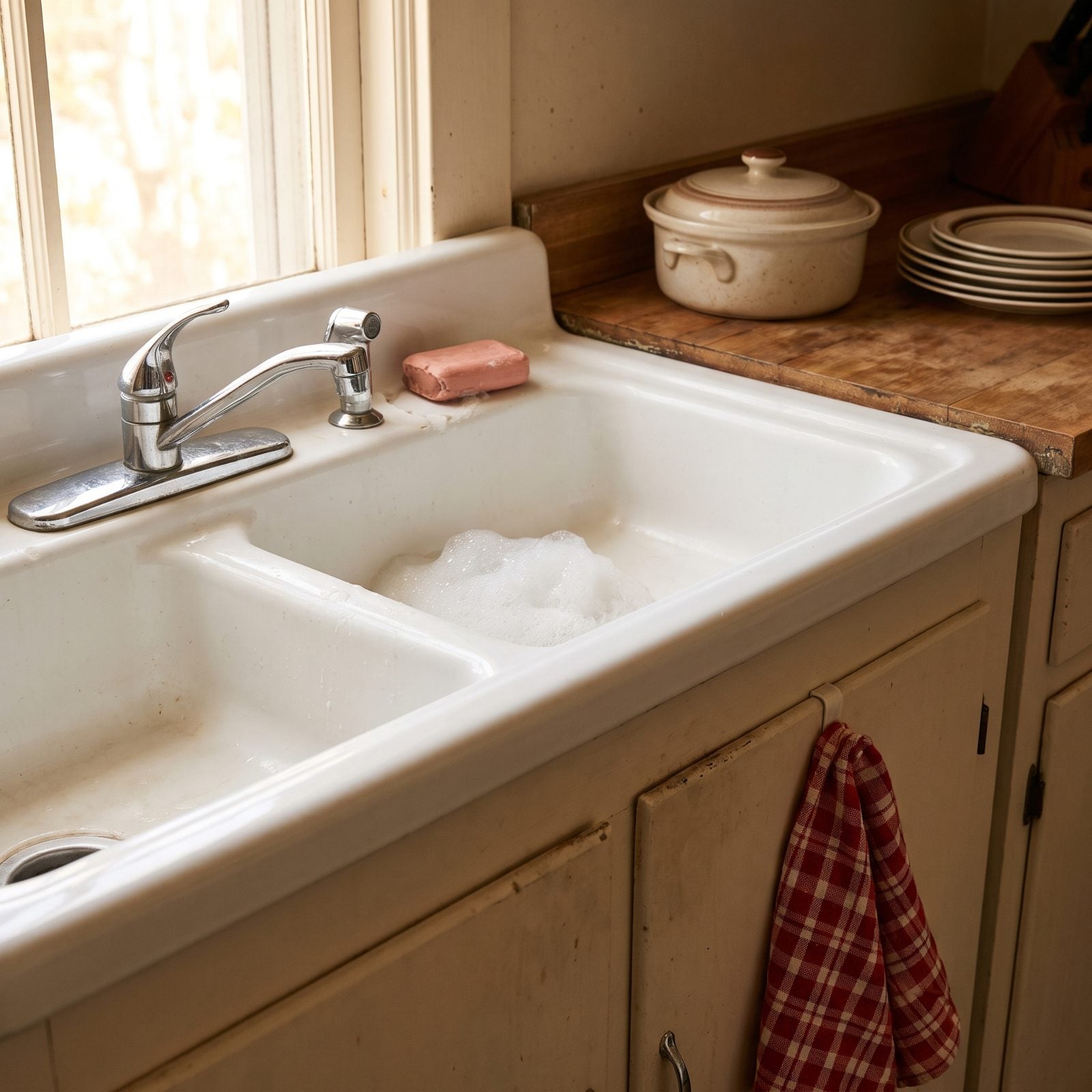
Before you so much as pulled out your chair, you marched to the sink. No excuses, no shortcuts, no wiping them on your pants and calling it done — soap, water, and clean hands presented for inspection if a parent looked suspicious.
It was the last checkpoint before the meal, as automatic as saying grace. Kids who tried to sneak to the table got sent straight back.
Of all the old rules, this one aged best. We never really dropped it. But the ironclad version of it — hands held up for mom’s approval — belongs to a time when the whole day ran on a stricter clock.