
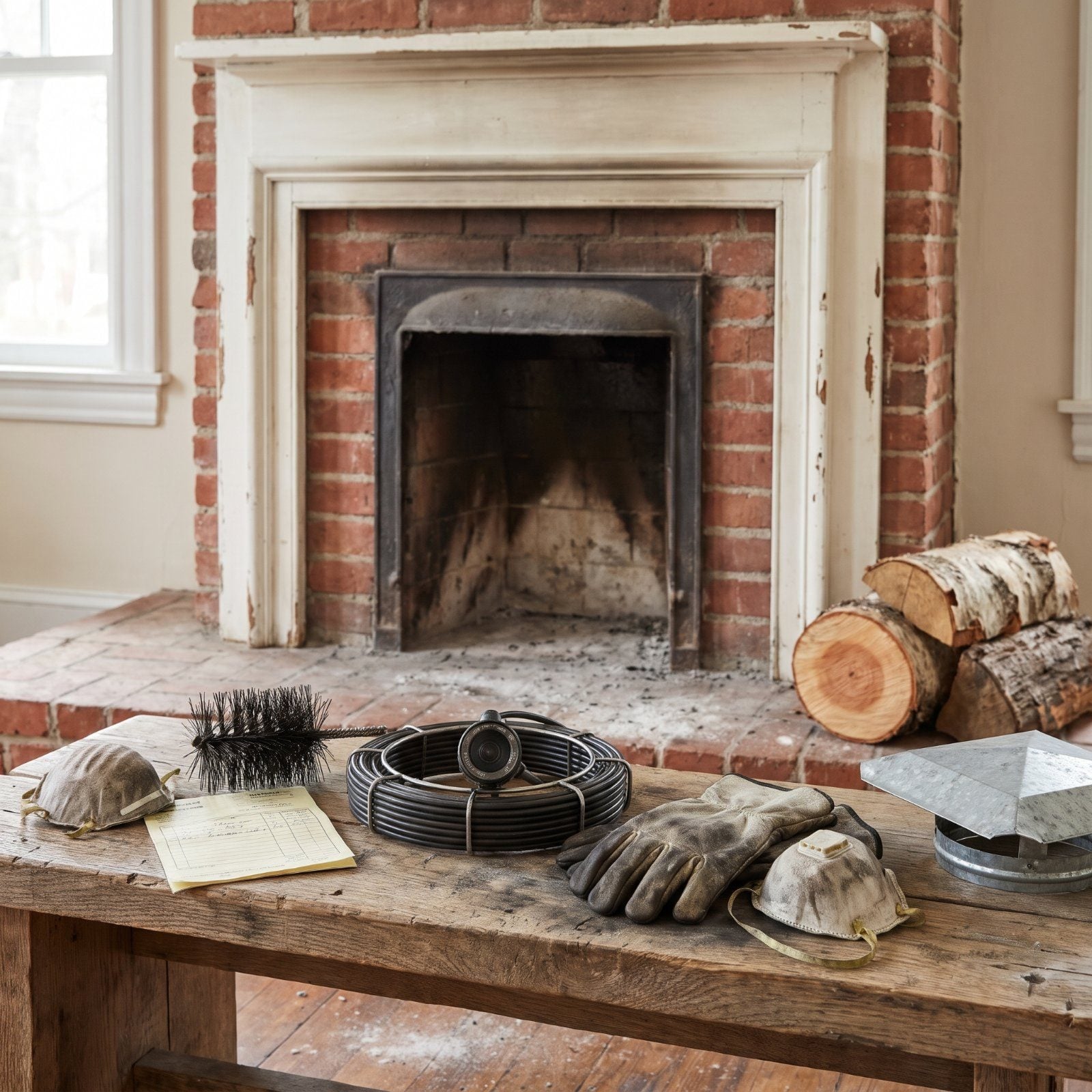
The fireplace was the reason you fell for the house. That brick hearth, the promise of cold Sunday mornings and the smell of woodsmoke. Then you light the first fire, the chimney breathes smoke back into the room, and you learn fast that a working fireplace is a machine with a maintenance schedule. The surprises arrive in order: inspection, then repair, then the bill you didn’t budget for. These are the costs hiding behind the charm — the ones your home inspector mentioned in a single line you skimmed right past.
40. The Level II Chimney Inspection Right After Closing
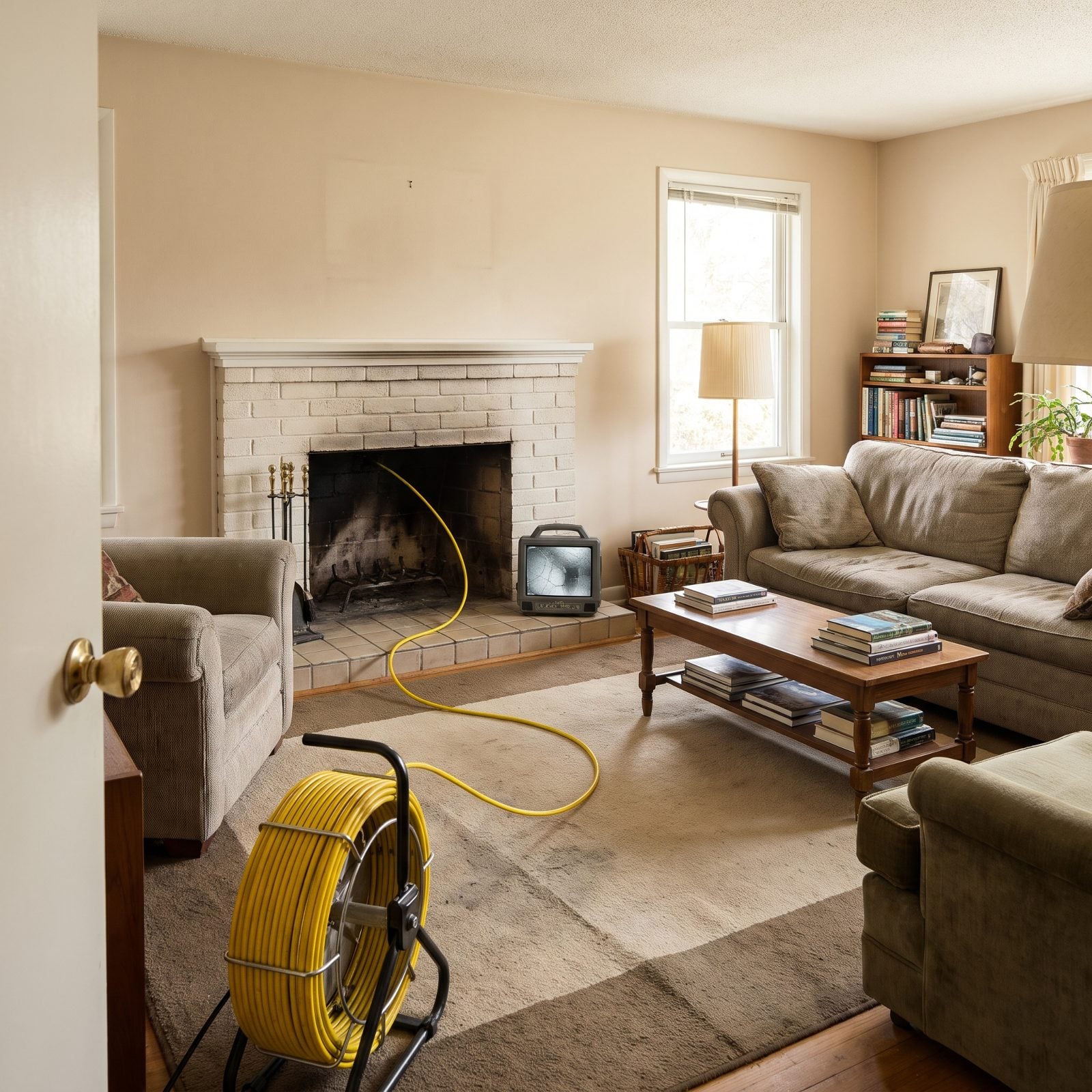
A standard home inspection looks at the fireplace the way you glance at a stranger’s shoes. Quick. Surface-level. It does not send a camera up the flue.
In order to come up with the very specific design ideas, we create most designs with the assistance of state-of-the-art AI interior design software. Also, assume links that take you off the site are affiliate links such as links to Amazon. this means we may earn a commission if you buy something.
A Level II inspection does, and it’s the one the national fire codes call for after a property changes hands. Expect a few hundred dollars for someone to run a camera the full height of the chimney and tell you whether the liner is intact or quietly cracked behind sound-looking brick. I skipped this once on a rental and paid for it later in a way that was not cheap.
What Our Readers Say
- Bedroom photos with a fireplace got more hearts from Home Stratosphere readers than the other images in the same articles, 70% versus 52%.
- When our readers loved an interior and tapped a reason, “cosy” came out on top at 26%, just ahead of overall style.
From Home Stratosphere reader polls and votes.
39. A Full Chimney Liner Replacement
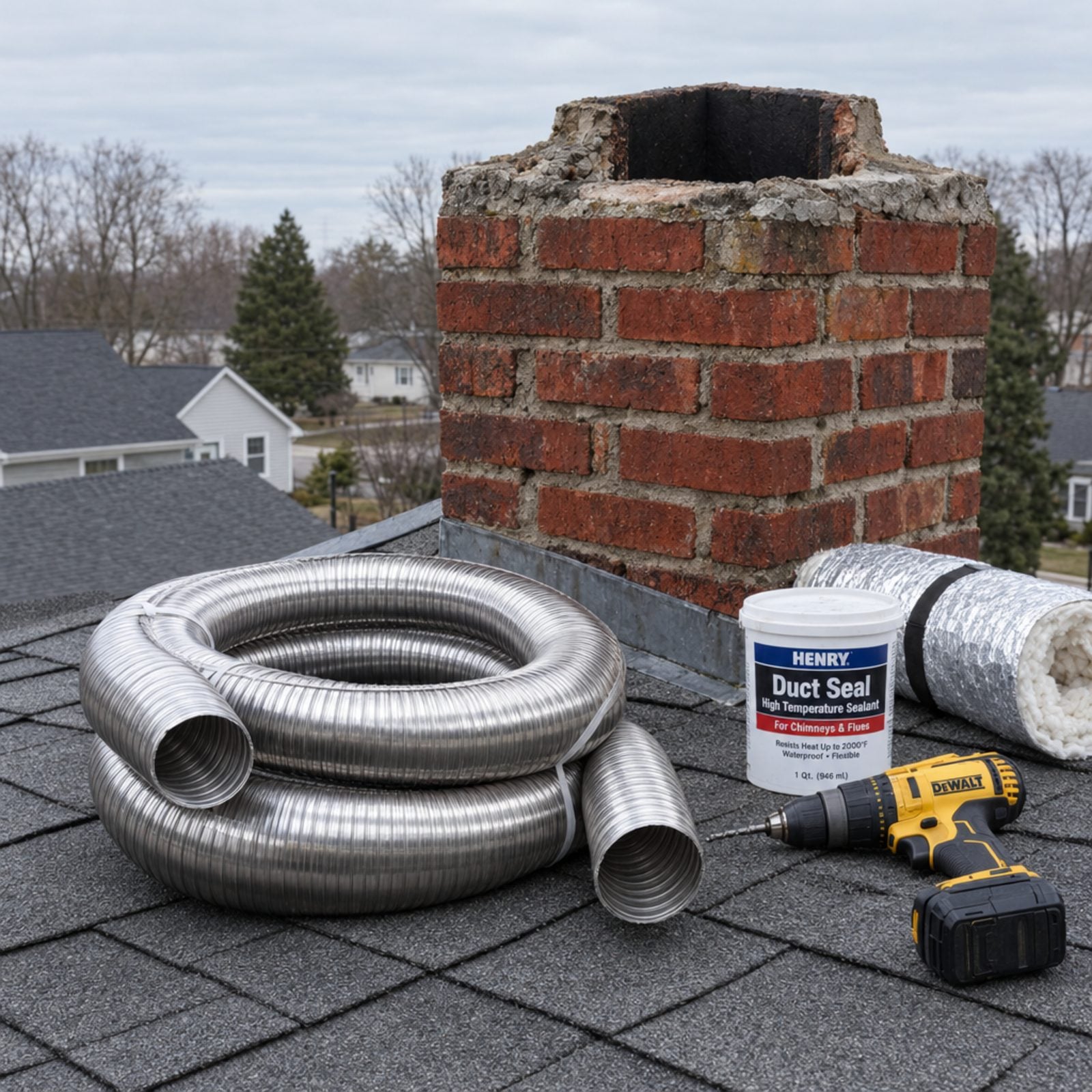
This is the one that makes people wince. A deteriorated or missing liner is not a maybe-someday fix — it’s the thing standing between a contained fire and smoke leaking into your bedroom walls.
A new stainless steel liner, insulated and fitted top to bottom, runs into the thousands depending on the height of the stack and how awkward the access is. Clay tile relining costs even more. And if you’re already pulling the liner, this is when some owners look at black fireplace inserts instead, since an insert’s own full-height liner can take the place of the failing one.
38. Annual Chimney Sweeping, Every Single Year You Burn
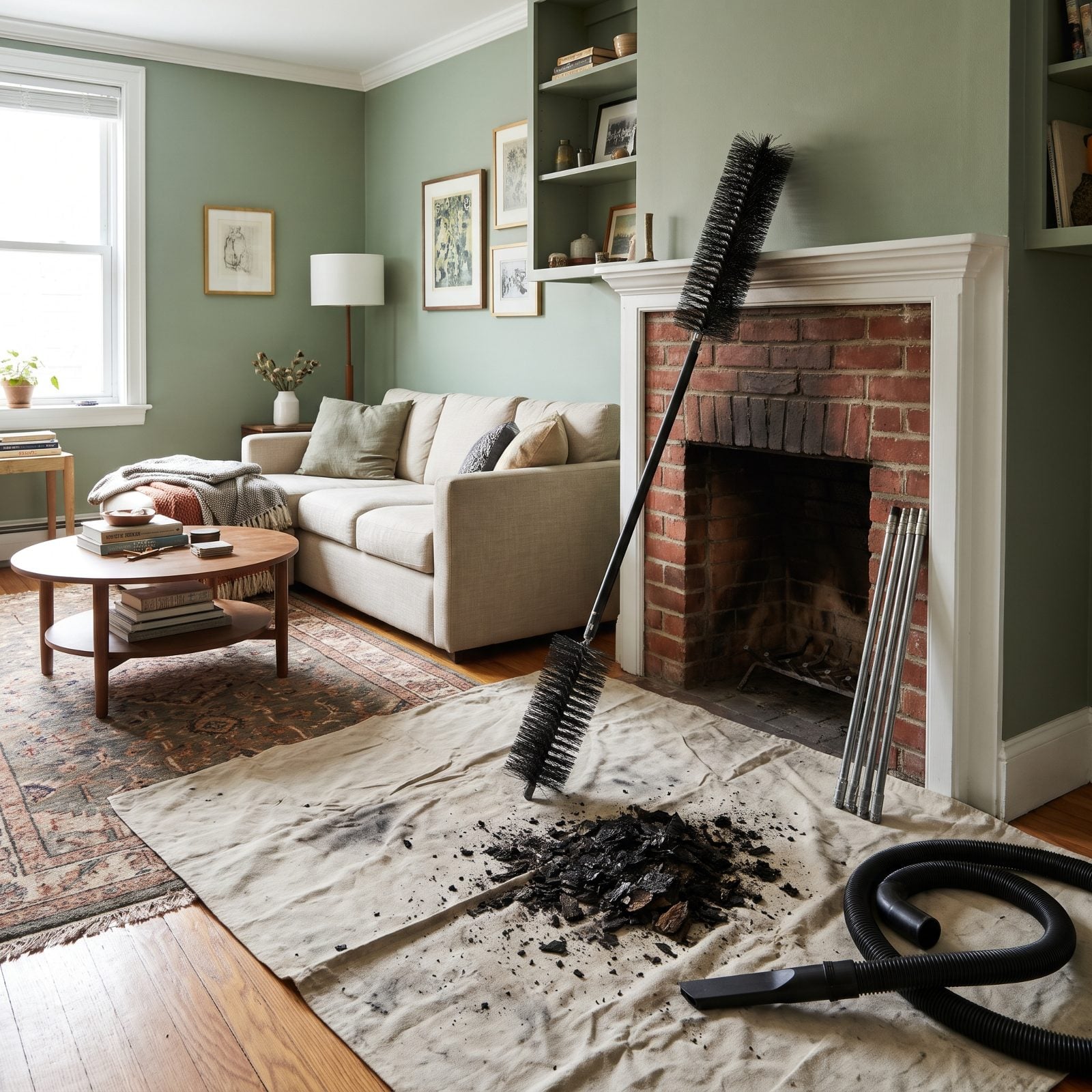
Burn wood regularly and you’re committing to a yearly appointment, not a one-time one. The sweep is the tune-up that keeps your fireplace the romantic feature you bought instead of the fire hazard it slowly becomes.
A sweep usually lands somewhere in the low-to-mid hundreds. Cheap, compared to everything else on this list. The people who skip it are the ones who end up on the glazed-creosote item below.
37. The Specialized Removal of Glazed Creosote
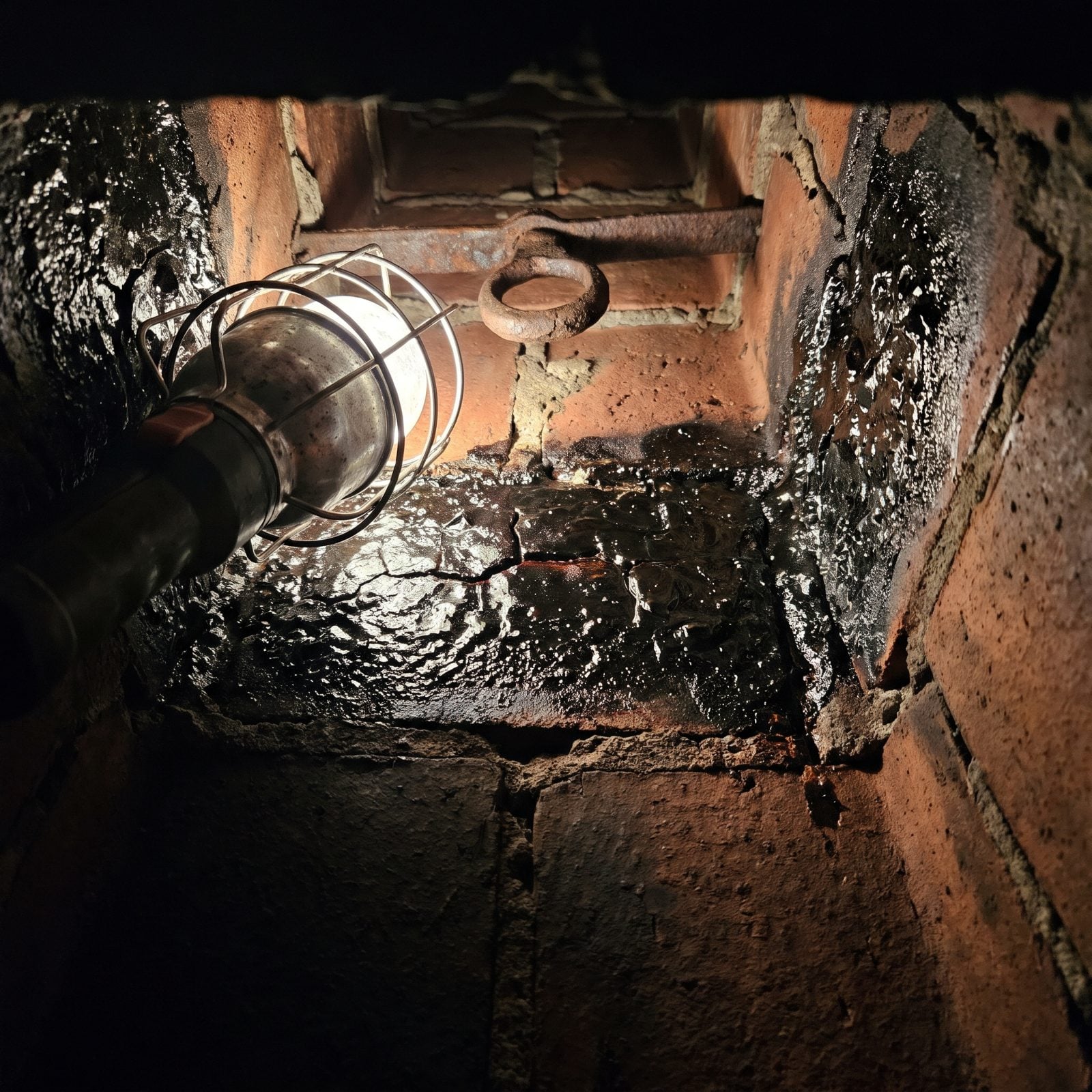
Glazed creosote is what happens when the sweeping didn’t. It’s the third stage of buildup, baked hard and shiny onto the flue walls like black glass.
A regular brush won’t touch it. Removal means chemical treatments, rotary chains, or specialized heads, and it’s priced accordingly. Worse, glazed creosote is the single biggest cause of chimney fires. You are paying premium rates to remove the thing that could have burned your house down.
36. Repointing the Deteriorated Mortar Joints
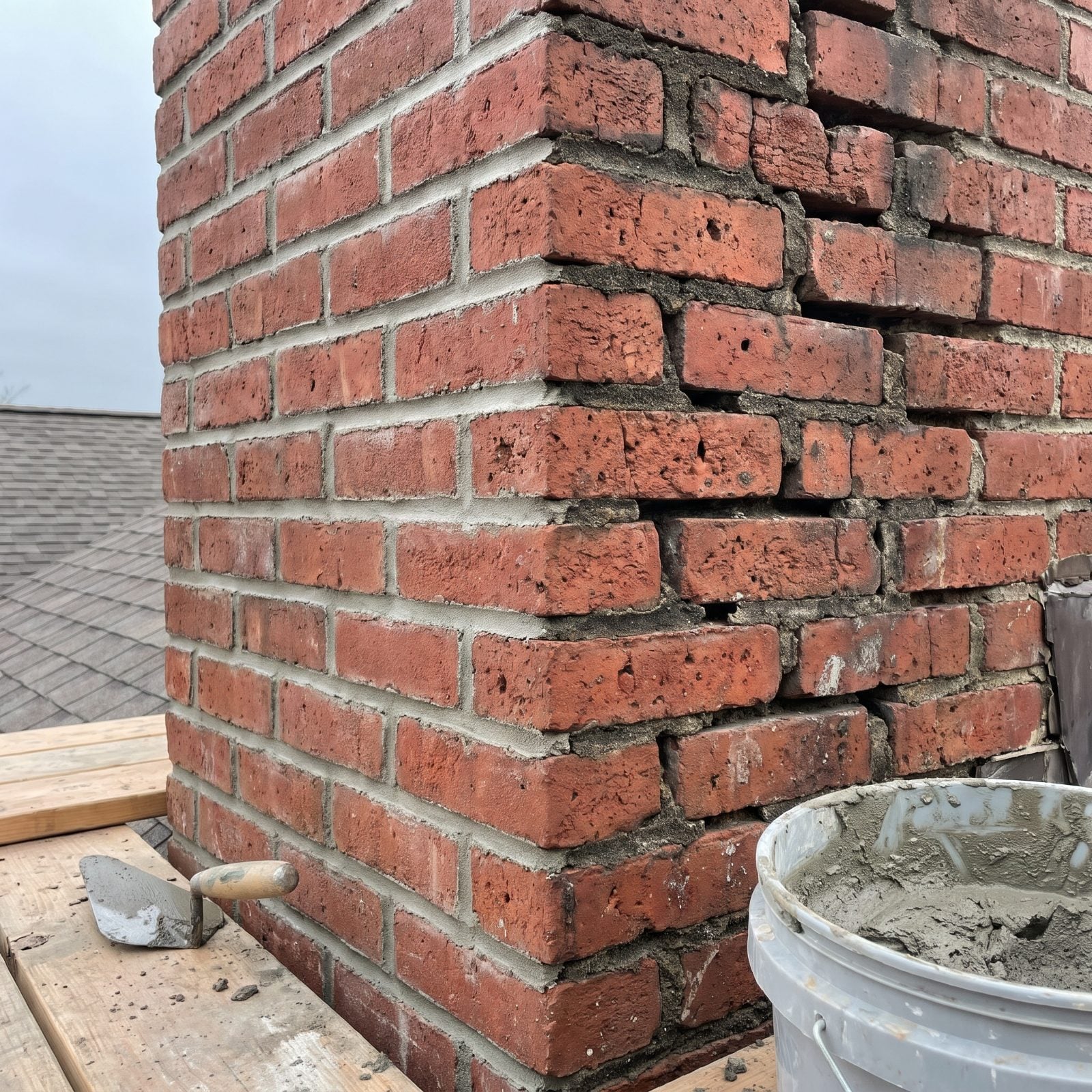
Look up at an old chimney and you’ll often see the mortar has quietly washed away between the bricks. Years of rain, freeze, thaw, repeat.
Repointing means raking out the failing joints and packing in fresh mortar, usually priced per section and climbing fast once scaffolding gets involved. Neglect it and water gets in, bricks loosen, and you’re not repointing anymore — you’re rebuilding. There’s a cosmetic payoff too, since crisp joints are what make neutral fireplace designs read as intentional rather than tired.
35. Rebuilding the Cracked Chimney Crown
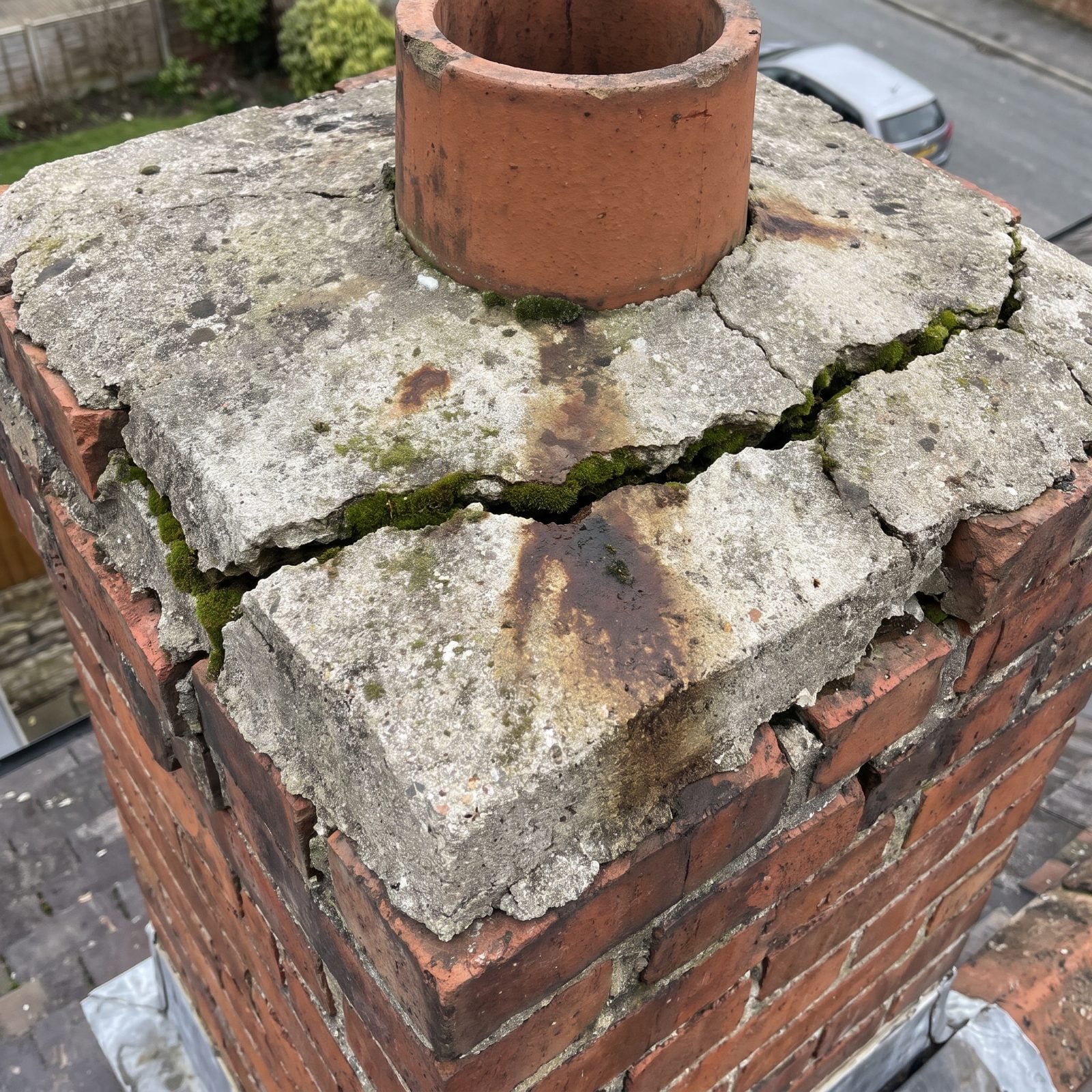
The crown is the concrete slab capping the very top of the chimney, sloped to shed rain. Nobody thinks about it until it cracks.
Once it does, water pours straight down into the masonry and the freeze-thaw damage compounds every single winter. A rebuild or a proper crown coat isn’t glamorous, and the ladder-and-harness labor is where the number climbs. It’s still far cheaper than the full stack repair a failed crown eventually guarantees.
34. Replacing the Chimney Cap and Adding a Spark Arrestor
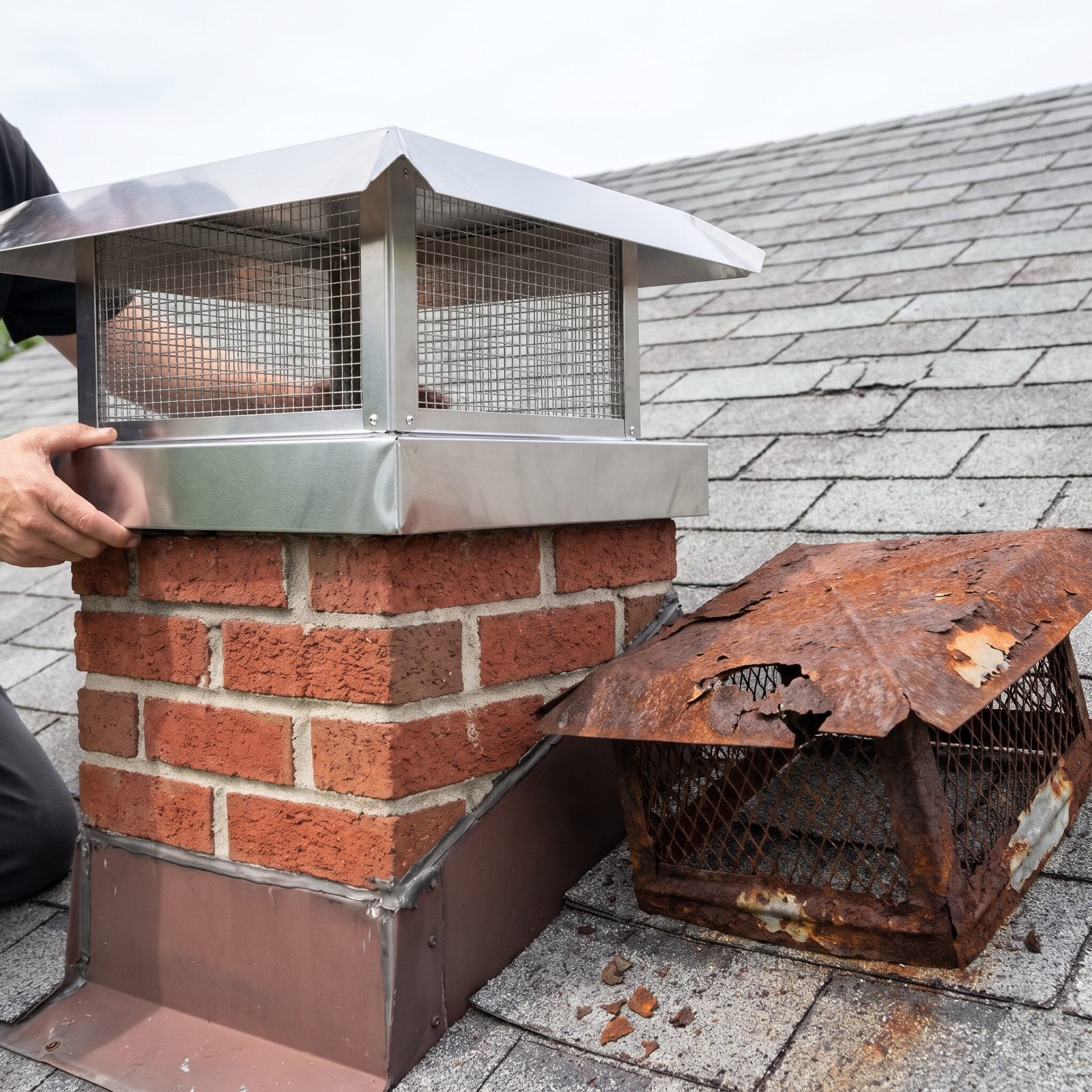
Small part, outsized job. The cap keeps rain, leaves, and the occasional nesting bird out of your flue, and the spark arrestor keeps burning embers from drifting onto your roof.
The hardware itself is modest. The cost is the person who has to get up there safely to install it. Go a few seasons without one and you’ll find out exactly what a chimney full of acorns and a squirrel smells like the night you light it.
33. Freeing a Stuck or Warped Throat Damper
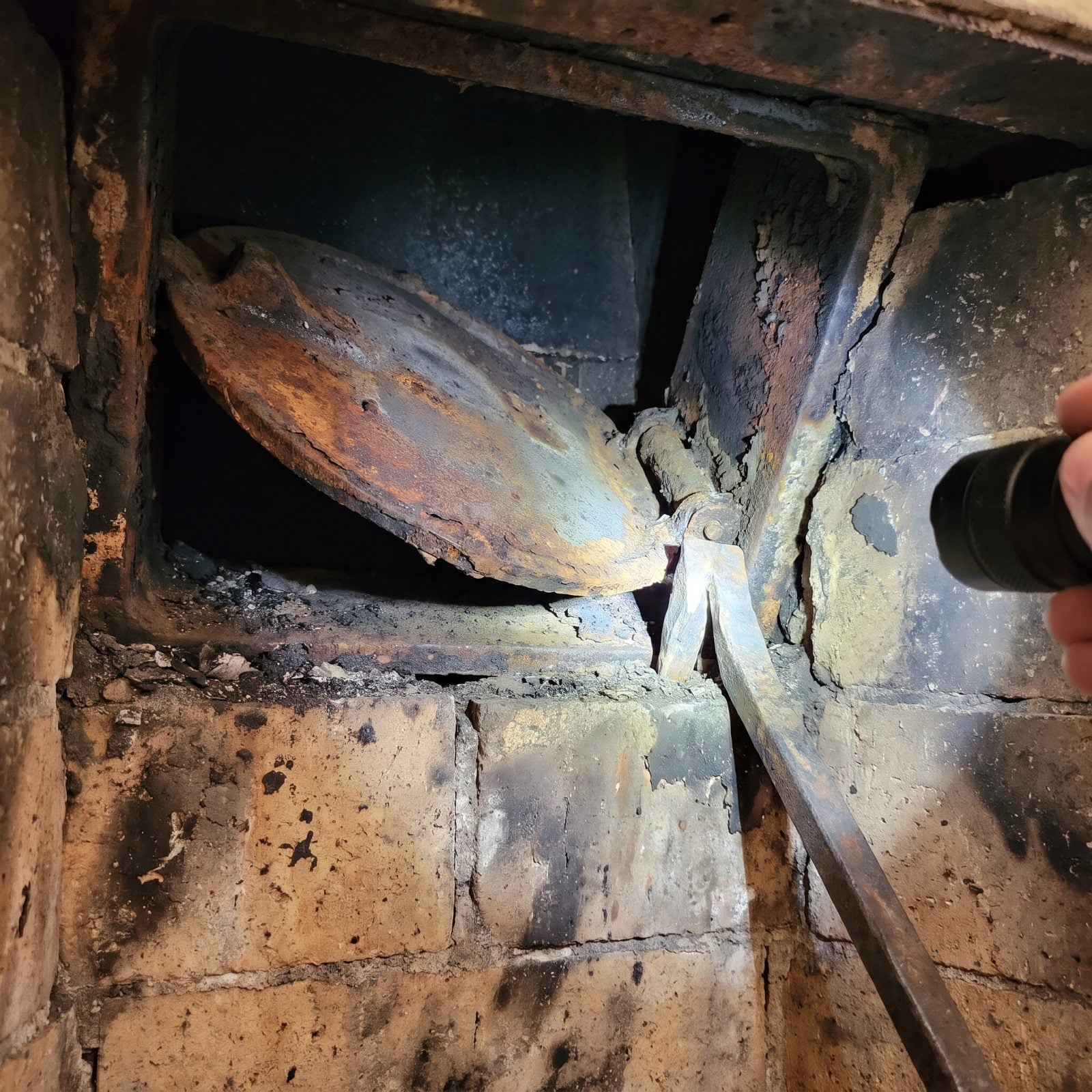
The damper is the metal flap that opens to let smoke out and closes to keep your heated air in. Over years of heat cycling, it warps, rusts, and eventually seizes.
A stuck-open damper is money flying up the flue all winter. A stuck-closed one fills the room with smoke the moment you light a match. Replacement sometimes means a top-mounted damper instead — pricier, but easier to reach. Either way, it’s the repair most people discover on the coldest night of the year.
32. Parging an Unsealed Smoke Chamber
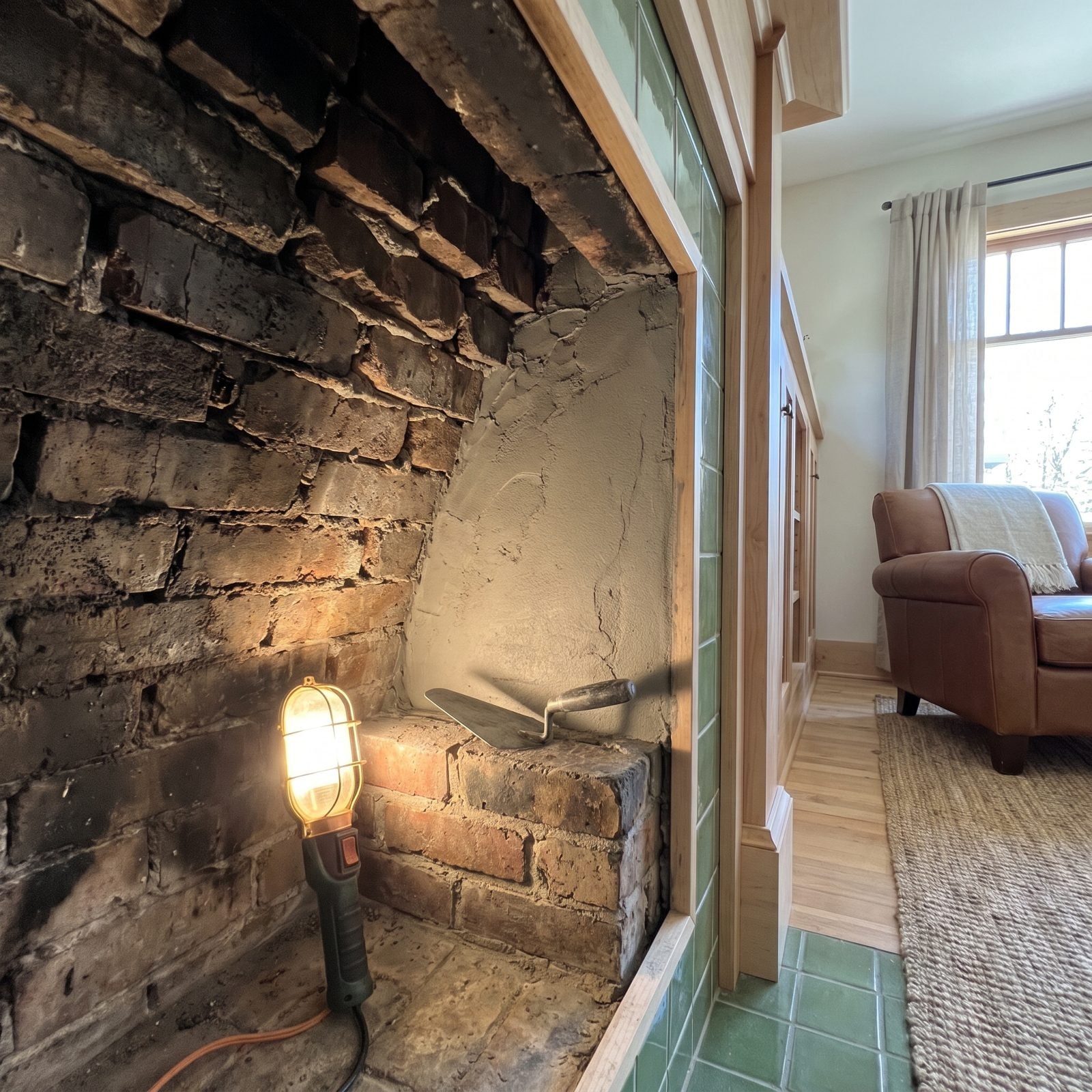
Here’s one you’ve probably never heard of, and that’s exactly why it bites. The smoke chamber is the funnel between your firebox and the flue, and in older homes it was often left as rough, stepped brick.
Those jagged corbels catch creosote and slow the draft, which means more smoke in your room and more buildup to burn. Parging smooths the whole chamber with a heat-rated coat so smoke flows clean. It’s done by hand in a cramped space, it’s slow, and almost nobody budgets for it until a chimney pro points up and shows them.
31. Repairing Cracked Mortar and Broken Firebricks Inside the Firebox
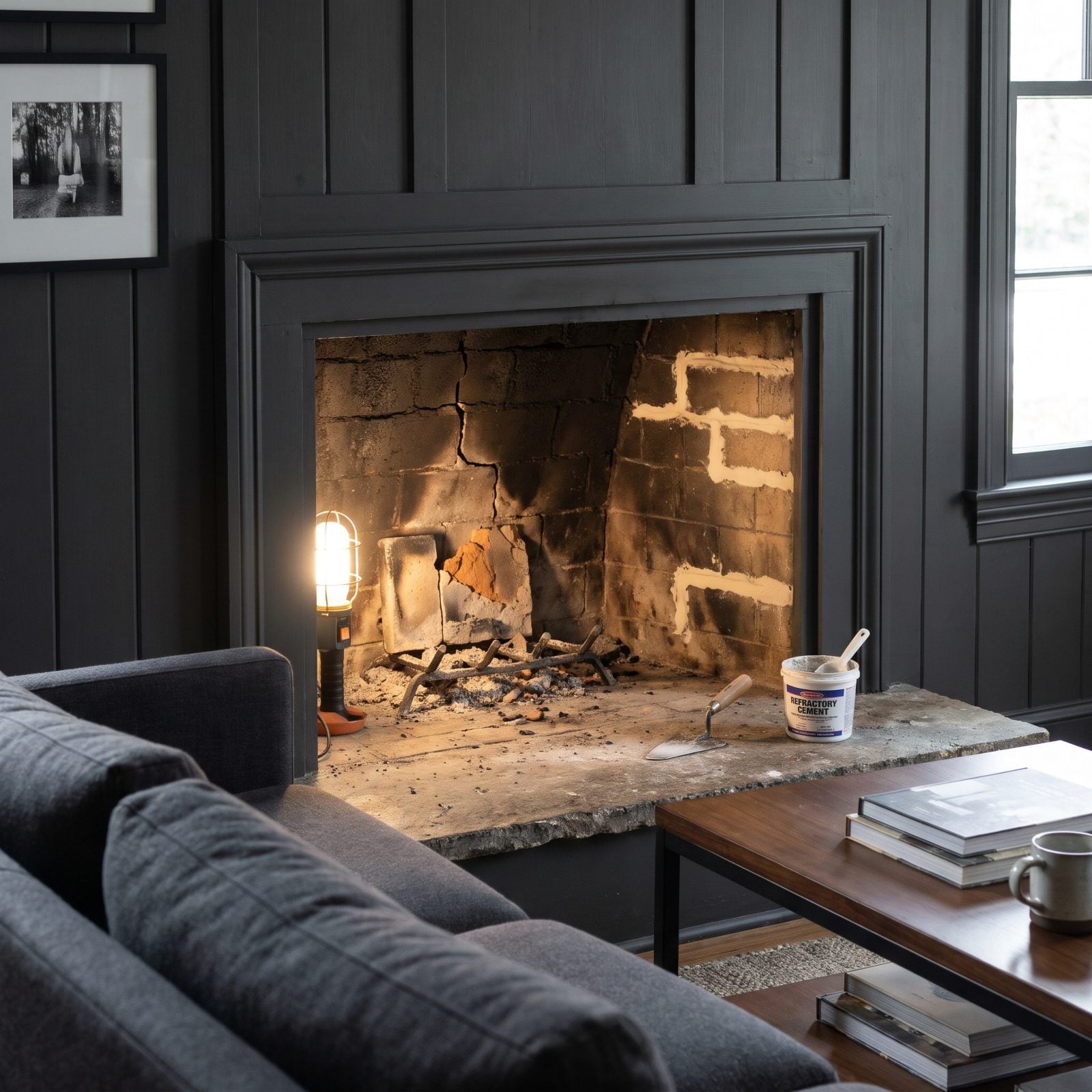
The firebricks and the mortar between them are the only thing protecting the combustible framing of your house from direct fire. When they crack and the joints open up, that protection is gone.
Spot repairs with refractory mortar are affordable. A full firebox relay is not, especially once the damage runs deep. Nail a tidy firebox and you can start thinking about the fun part again — the mid-century fireplace ideas and finishes, instead of whether the back wall is sound.
The charm got you in the door. The maintenance schedule is what you actually signed up for.
Add it all up and a wood-burning fireplace is less a feature than a small, demanding appliance with a chimney on top. Worth it, if you go in knowing. Brutal, if you don’t.
30. Extending an Undersized Hearth
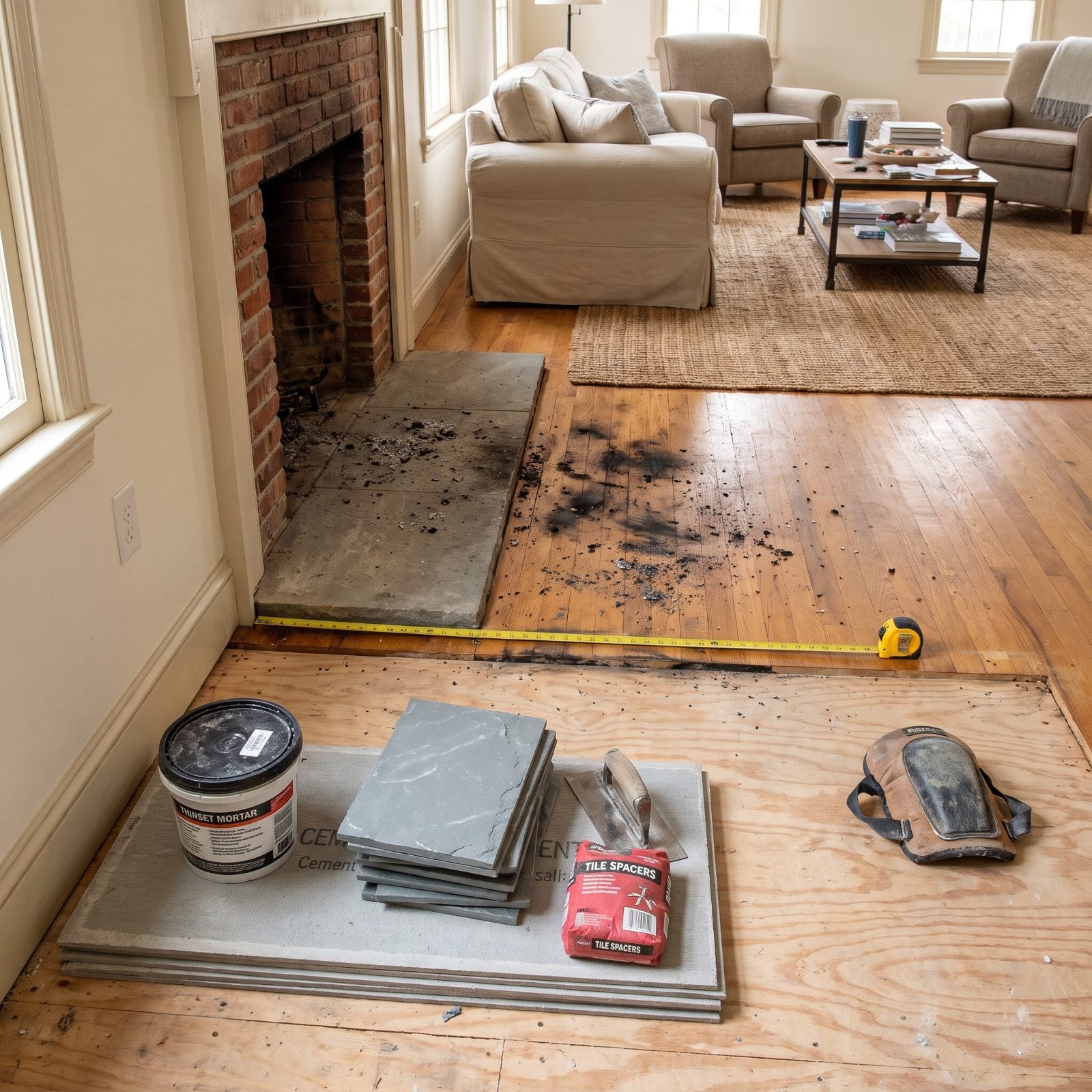
A hearth that stops twelve inches short of code is the kind of problem you only notice the day an ember rolls past the edge and lands where it shouldn’t. Most old fireboxes got hearths sized for a different era of enforcement, and bringing one up to spec means tearing into flooring you probably just refinished.
The slate extension here isn’t decorative — it’s the non-combustible buffer that stops a stray coal from finding your subfloor. Good big fireplace ideas account for this clearance before the first log ever burns.
29. Correcting Unsafe Mantel Clearances
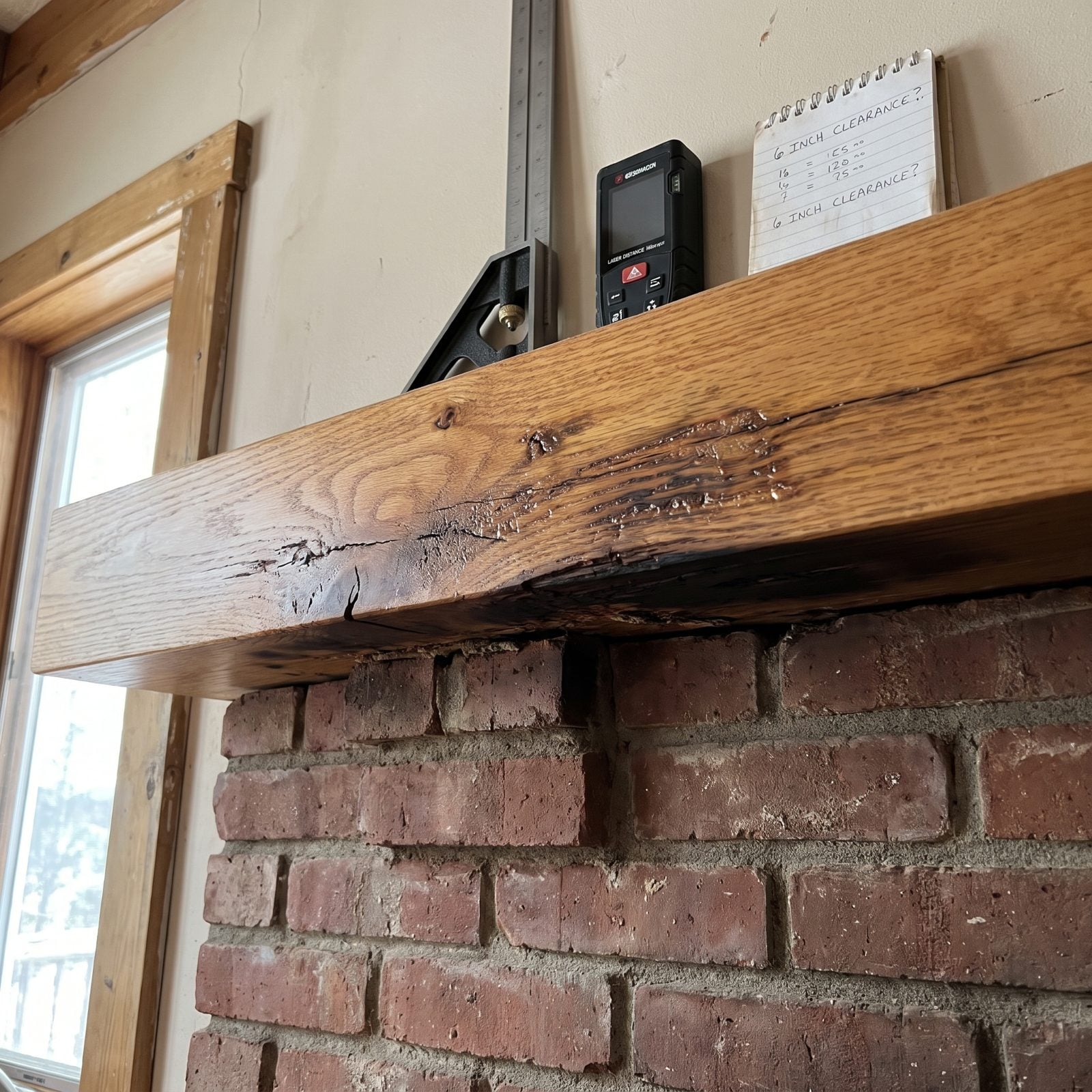
That scorch line under the mantel beam is the fireplace telling you it sits too close to the fire. Combustible mantels have minimum clearances for a reason, and plenty of older homes ignored them entirely.
Fixing it usually means raising the mantel, swapping in a non-combustible shelf, or adding a heat shield — none of it glamorous, all of it better than a slow char turning into a fast one. I’ve seen oak mantels that looked fine until someone touched the underside and found it crumbling like burnt toast.
28. Raising a Chimney That Is Too Short
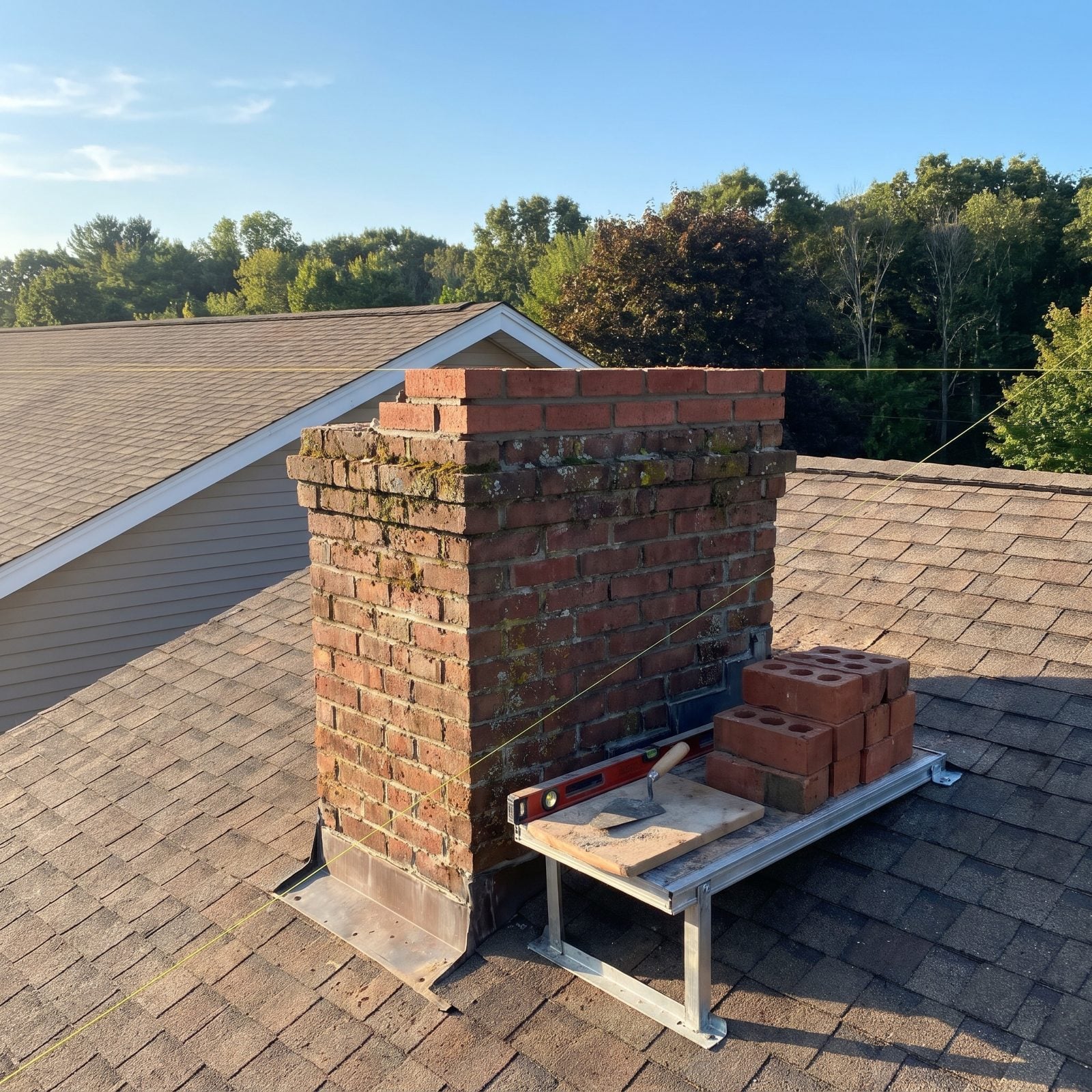
Smoke that rolls back into the room usually means your chimney lost a height contest. The three-two-ten rule exists because physics is stubborn: a flue has to clear the roofline by enough margin to draft properly.
Nearby trees, a new addition, even a neighbor’s roofline can rob your chimney of clearance it had decades ago. Adding courses of brick restores the draw, and it costs more than you’d think because every bit of it happens on a roof.
27. Repairing Leaking Chimney Flashing
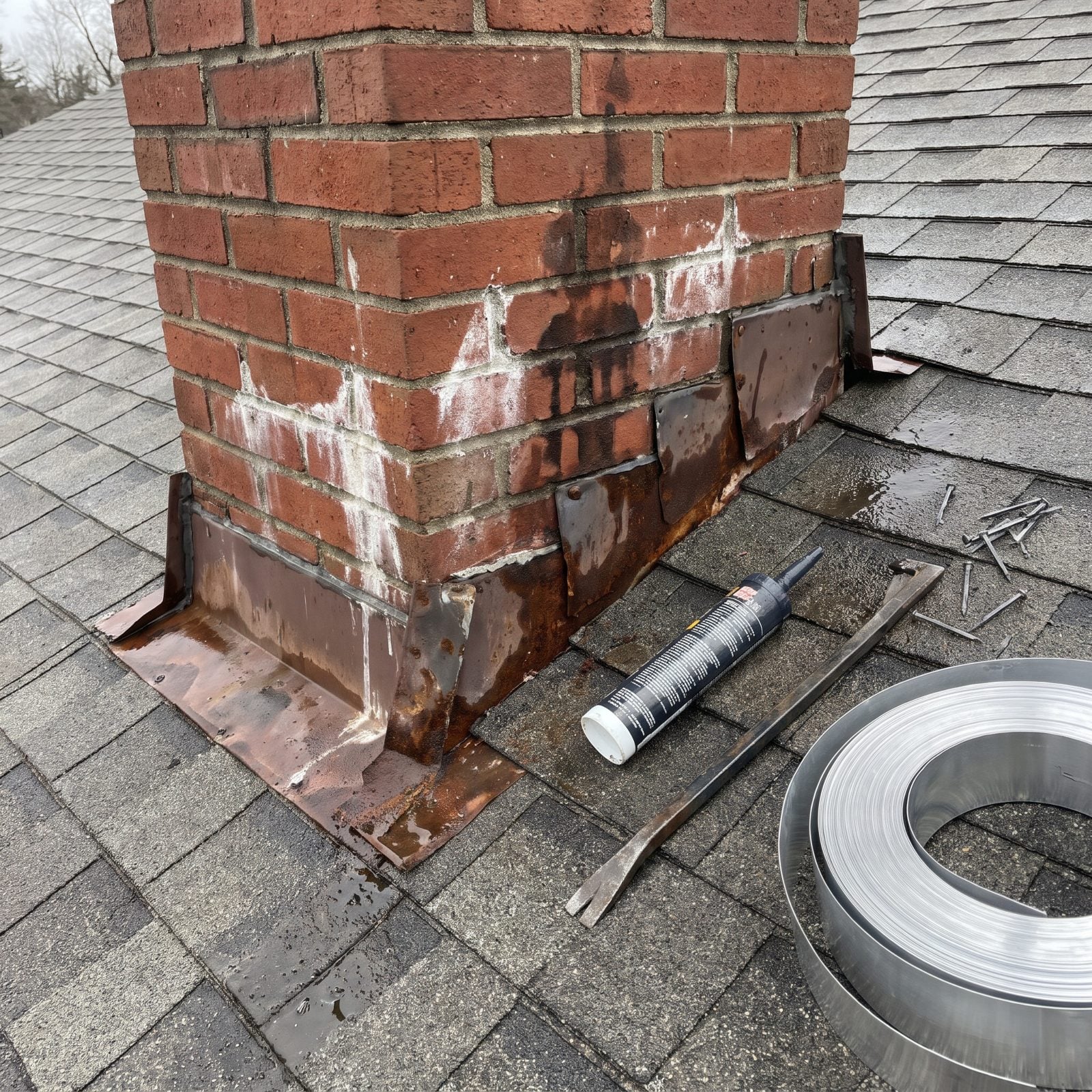
Flashing is the thin metal collar where the chimney punches through the roof. When it fails, water finds its way inside with no hurry at all, and you often spot it first as a brown stain on a ceiling nowhere near the fireplace.
That rust streak down the brick in this shot is the giveaway. Leave it, and the leak rots framing, soaks insulation, and quietly feeds mold behind drywall. New flashing is cheap next to the drywall and joists it saves.
26. Scaffolding for High-Chimney Repairs
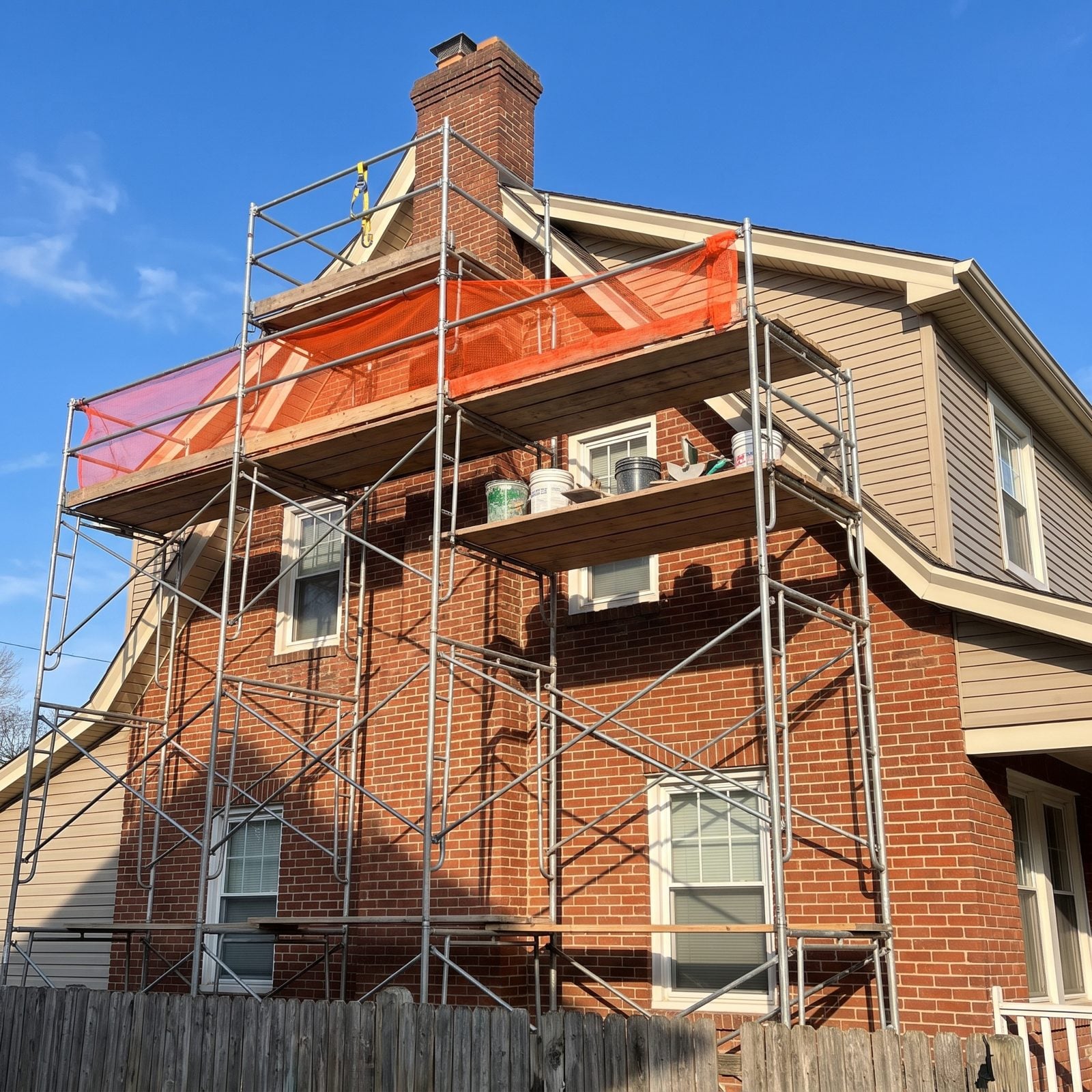
Nobody mentions this when they quote you a chimney repair: the fix might be small, but reaching it isn’t. A crack you could patch in an hour at ground level becomes a scaffolding rental, a setup crew, and a safety plan once it’s forty feet up.
Scaffolding often costs more than the actual masonry. That’s not a markup — it’s the price of letting someone work on a two-story stack without falling off it.
The repair is cheap. The ladder to the repair is not.
25. A Structural Engineer for a Leaning Chimney
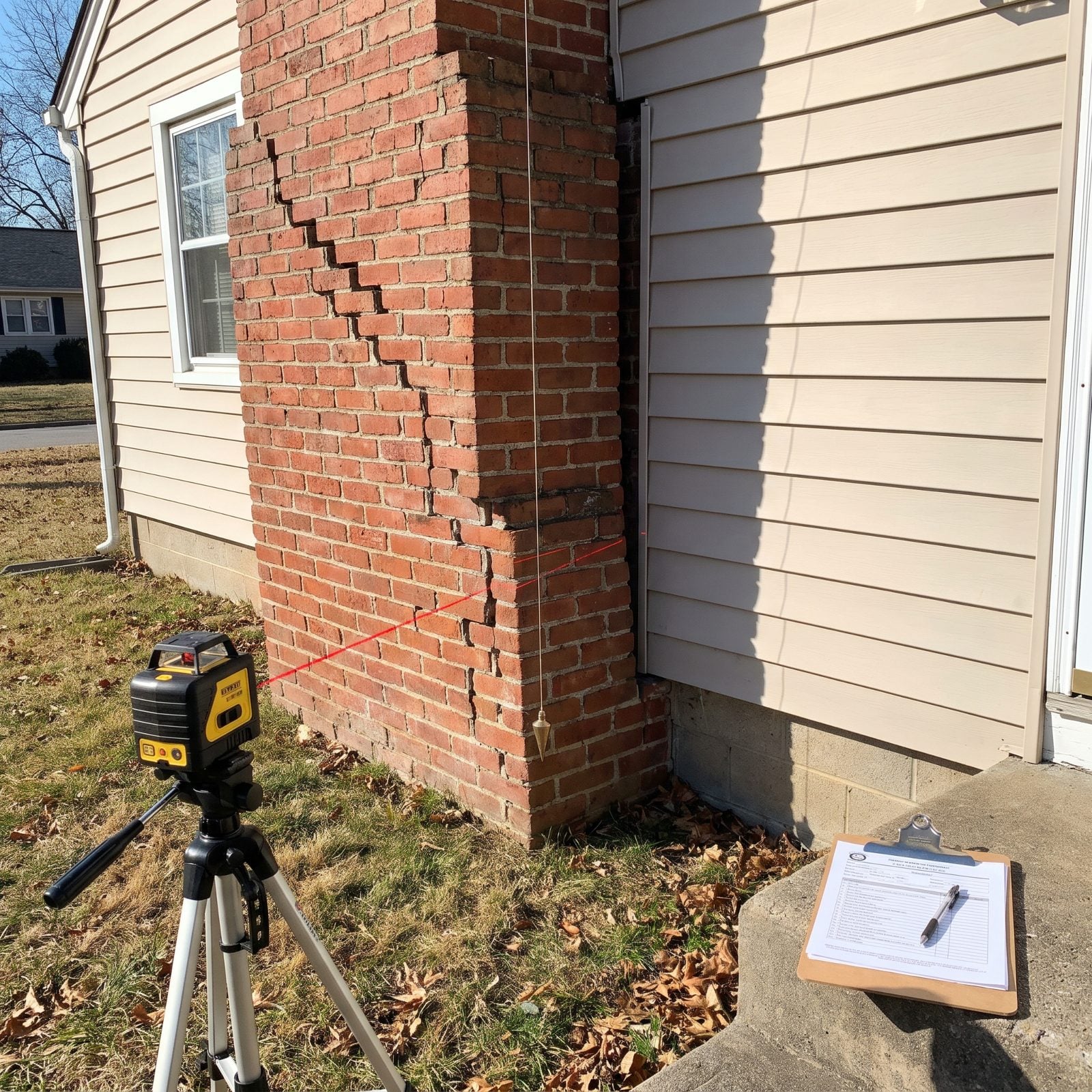
A chimney pulling away from the house isn’t a cosmetic quirk. It’s a few tons of masonry announcing that its footing failed, the gap between brick and siding only grows, and guessing at the cause is a bad bet.
A structural engineer tells you whether it’s settlement, a cracked footing, or soil movement, and whether the thing can be stabilized or has to come down. You pay for the report. What you’re really paying for is not having a chimney crash through your roof during the next storm.
24. Partial Demolition of an Unsafe Chimney Stack
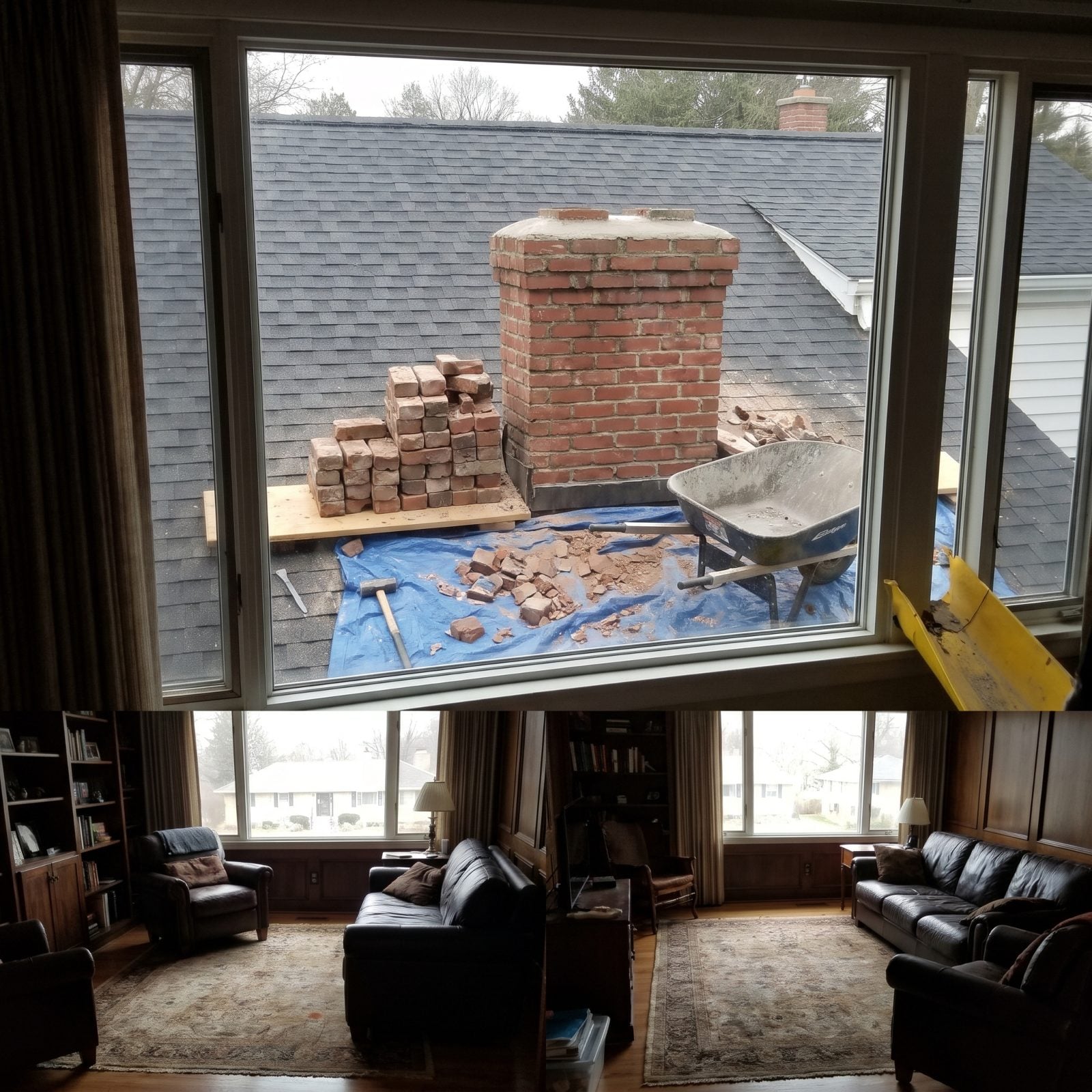
Sometimes the engineer hands you the answer nobody wants: the top of the stack has to go. Partial demolition takes a chimney that’s cracked, leaning, or spalling beyond repair down to a safe height, then caps what remains.
It’s cleaner than a full teardown and cheaper too. But it changes the roofline, generates a startling amount of rubble, and often means you’ve lost the fireplace below unless you rebuild. A cozy wood-paneled living room, with its leather armchairs and the fireplace tucked at its edge, can lose that hearth fast when the stack above it fails inspection.
23. Removing Squirrels, Bats, or Raccoons From the Flue
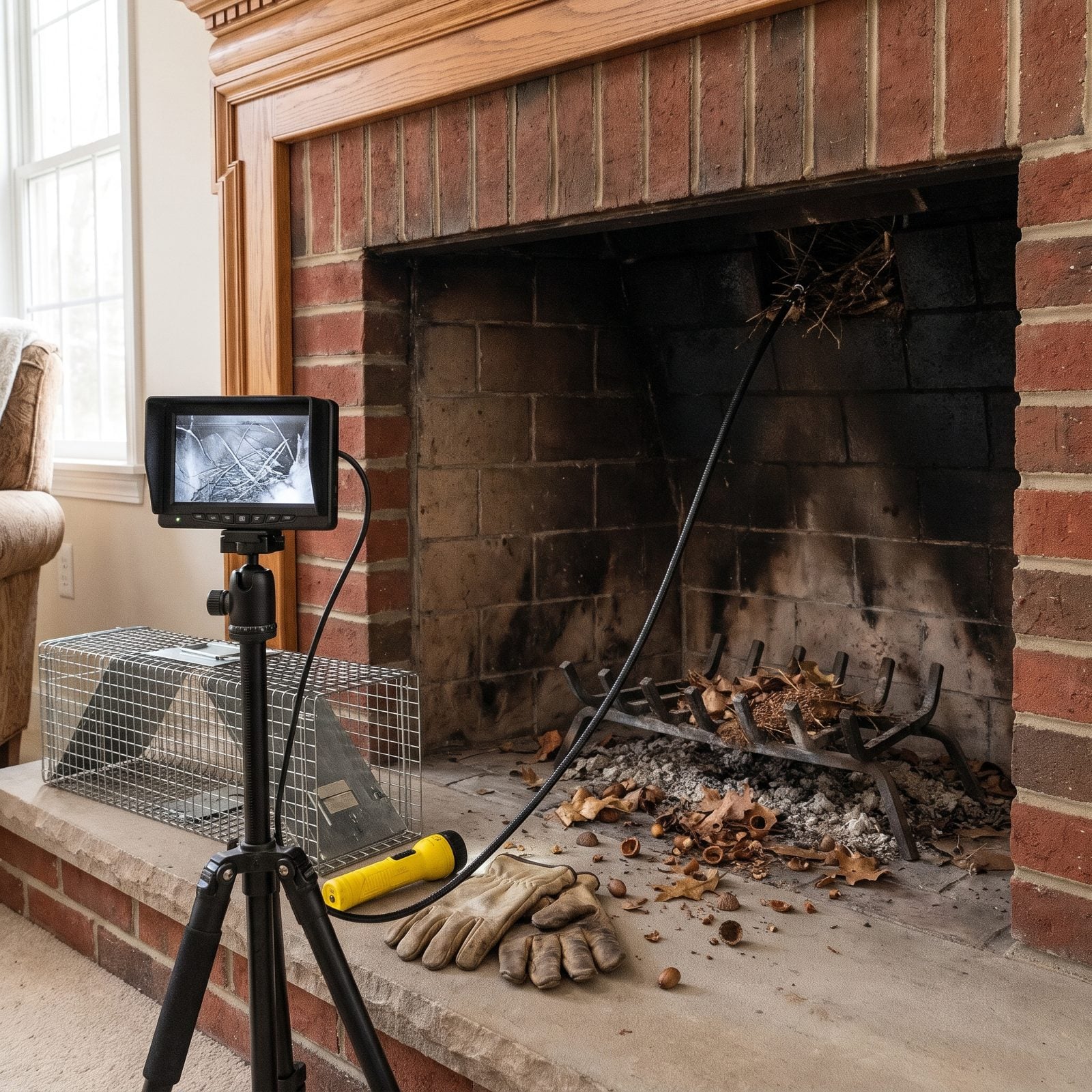
A scratching sound in the chimney at dusk is rarely your imagination. Flues are dark, warm, and vertical, which to a raccoon or a colony of bats reads as premium real estate.
Removal has to be humane and, with bats, legally timed around breeding seasons — which is where it gets expensive. Then you’re repairing the nesting damage and installing the cap you should have had all along.
22. Asbestos Abatement Around an Older Fireplace
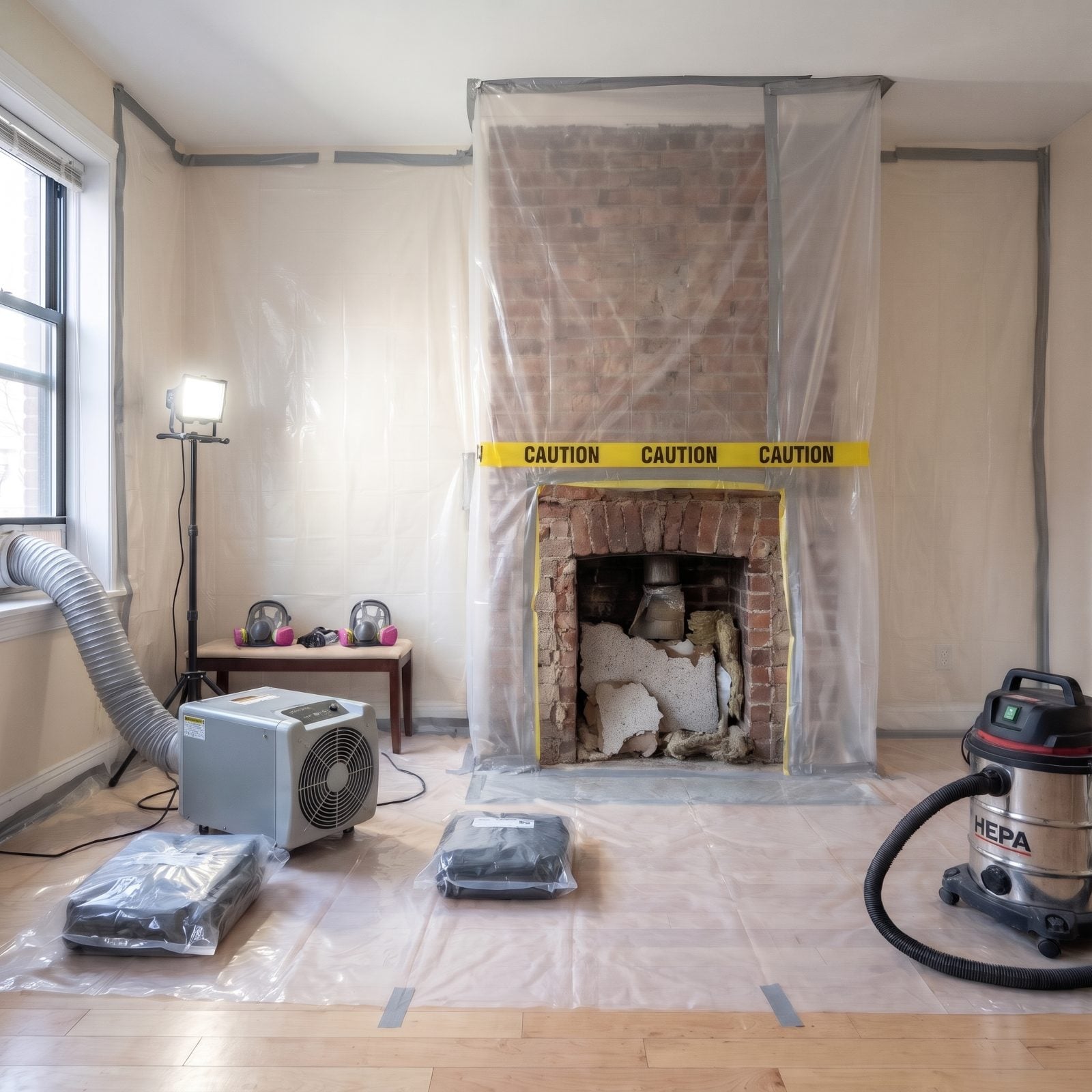
Older fireplaces hide their worst surprises inside the surround. Mid-century homes used asbestos in millboard, flue insulation, and even some old hearth materials, and disturbing it during any repair turns a simple job into a regulated one.
You can’t legally wave this off or sweep it up yourself. Licensed abatement means containment — plastic sheeting taped over the chimney breast, with the damaged firebox surround cut open so the broken millboard and insulation can be removed — plus negative air pressure, HEPA everything, and certified disposal — the single line item that can double a fireplace project out of nowhere.
The frustrating part? The material is often harmless sitting still. The moment a renovation disturbs it, you own the whole protocol.
21. Permits for Structural Fireplace Work
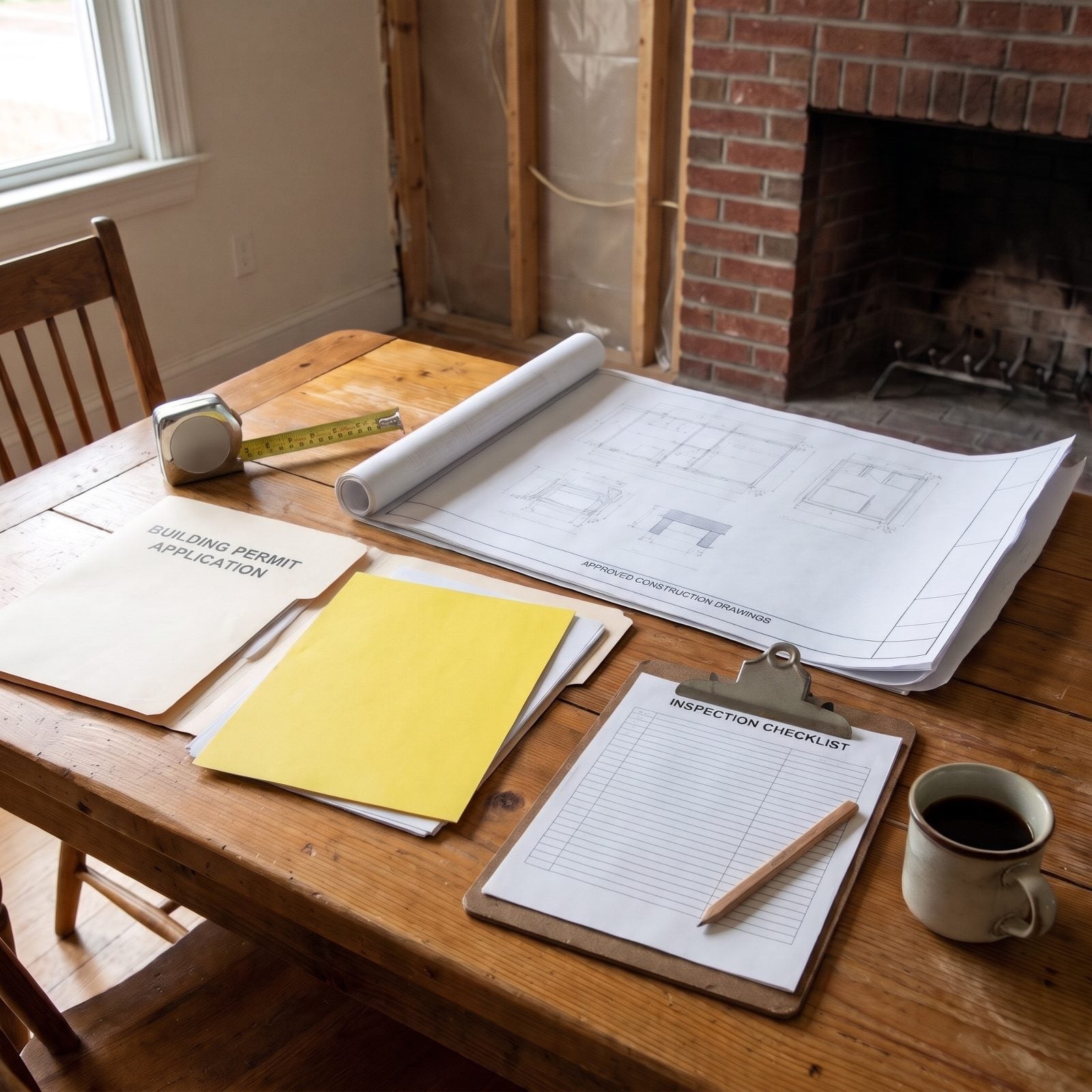
The least exciting cost is also the one that stops a sale cold. Structural fireplace work — rebuilt stacks, new liners, hearth enlargements — almost always needs a permit and an inspection sign-off.
Skip it and you’ve got unpermitted work that surfaces the day you list the house, right when a buyer’s inspector goes looking. Budgeting neutral fireplace designs or any update means penciling in the paperwork alongside the masonry.
Pull the permit. It’s the cheapest insurance in this entire list, and the only one that protects your closing.
20. Upgrades Required by Local Wood-Smoke Regulations
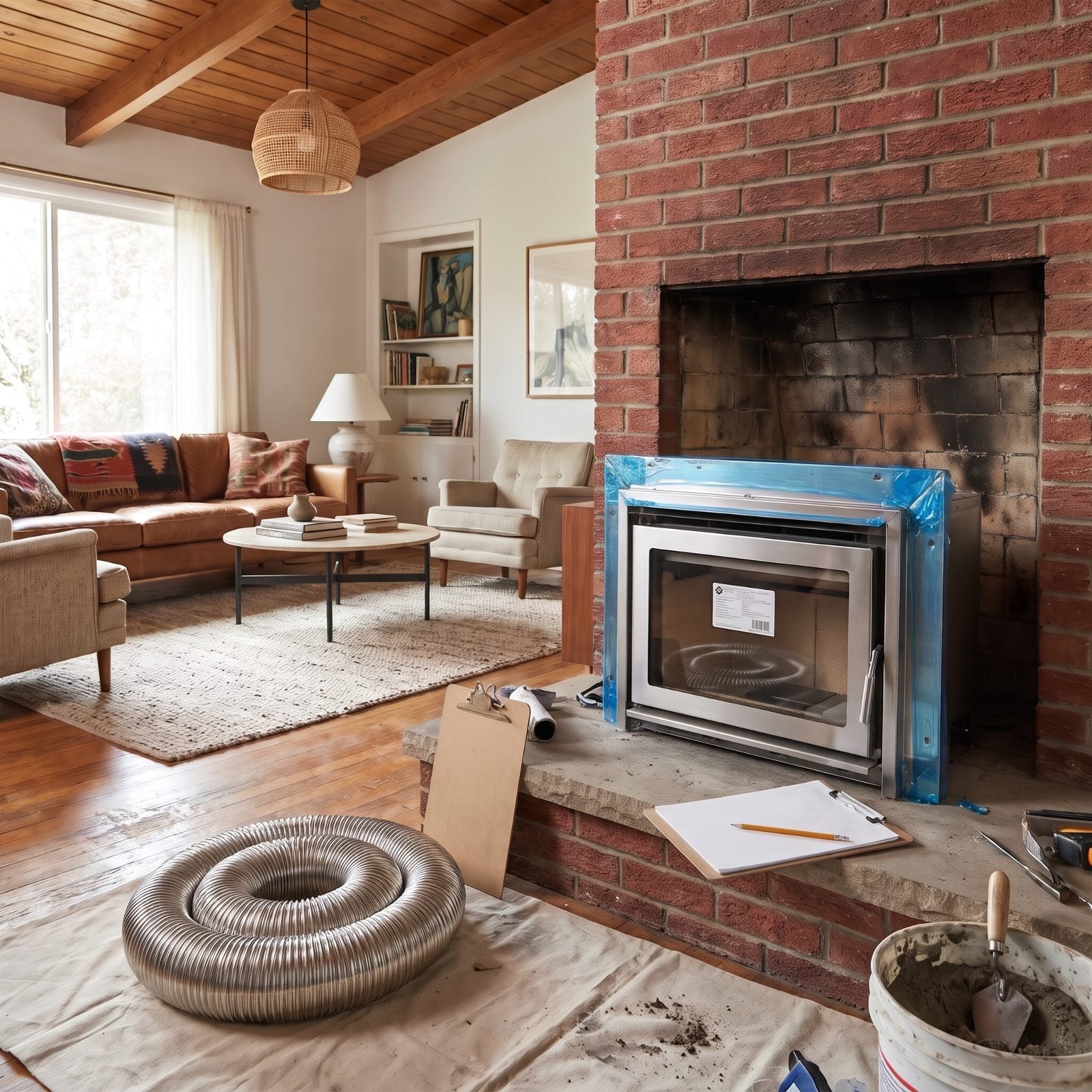
Local air-quality boards have gotten specific about what you can burn and how. If your town sits in a wood-smoke restriction zone, that open masonry fireplace you love may need a certified insert or a full flue reline before you light another log.
The retrofit is where the money goes. An EPA-rated insert, a new insulated liner, firebrick repair, and the permit to cover it all — none of it shows up in the listing when you buy the house. It shows up the first winter you get a notice taped to your door.
19. A Higher Homeowners Insurance Premium
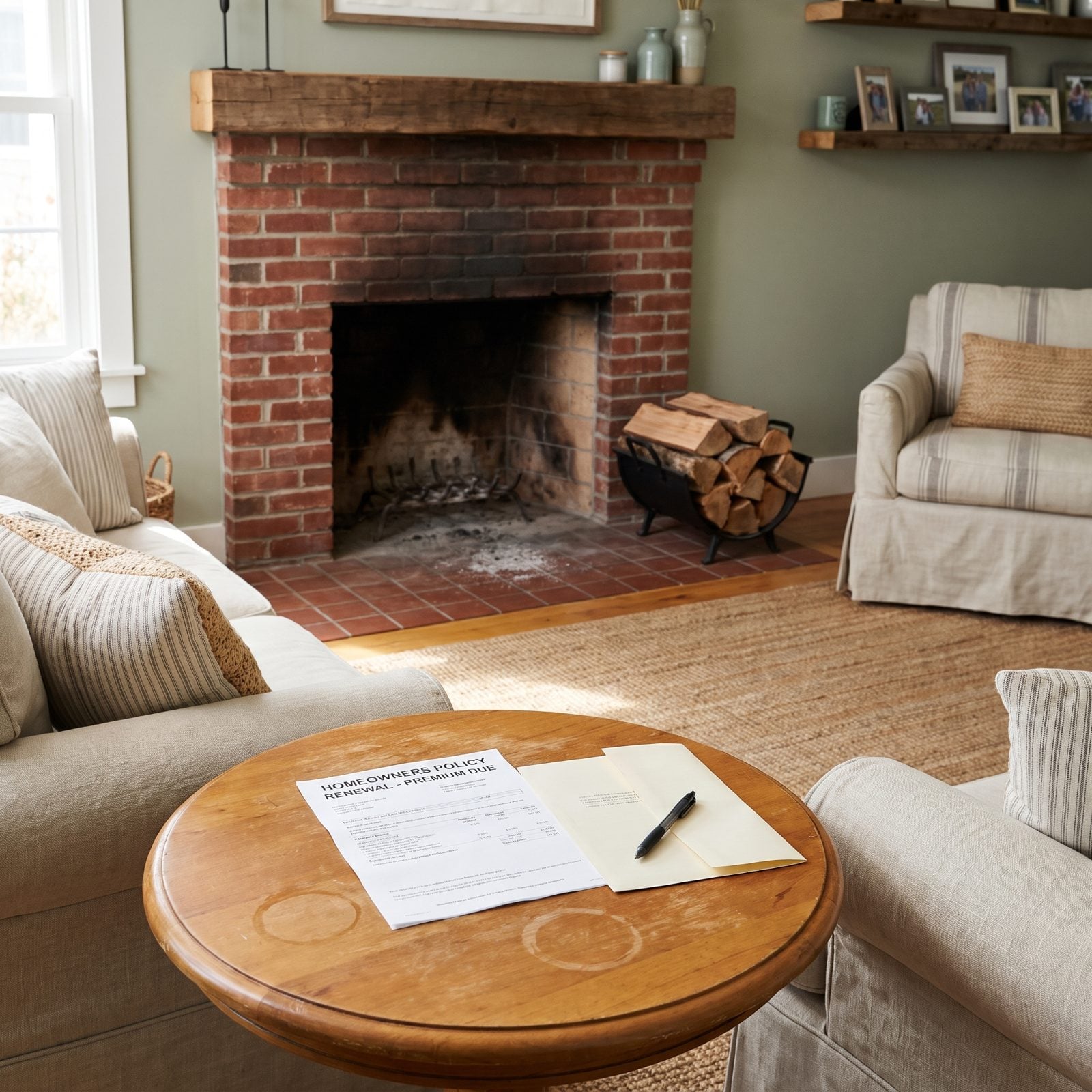
Insurers price risk, and an active wood-burning fireplace is risk sitting right in your living room. Many carriers nudge your premium up the moment you disclose one — and some require you to disclose it, or they can deny a claim later.
It’s not a huge line item. It’s a quiet one, a little more every year, forever, as long as you keep burning. The black fireplace look may be trending, but the carrier doesn’t care how it photographs.
18. A Fireplace Safety Certificate Required by the Insurer
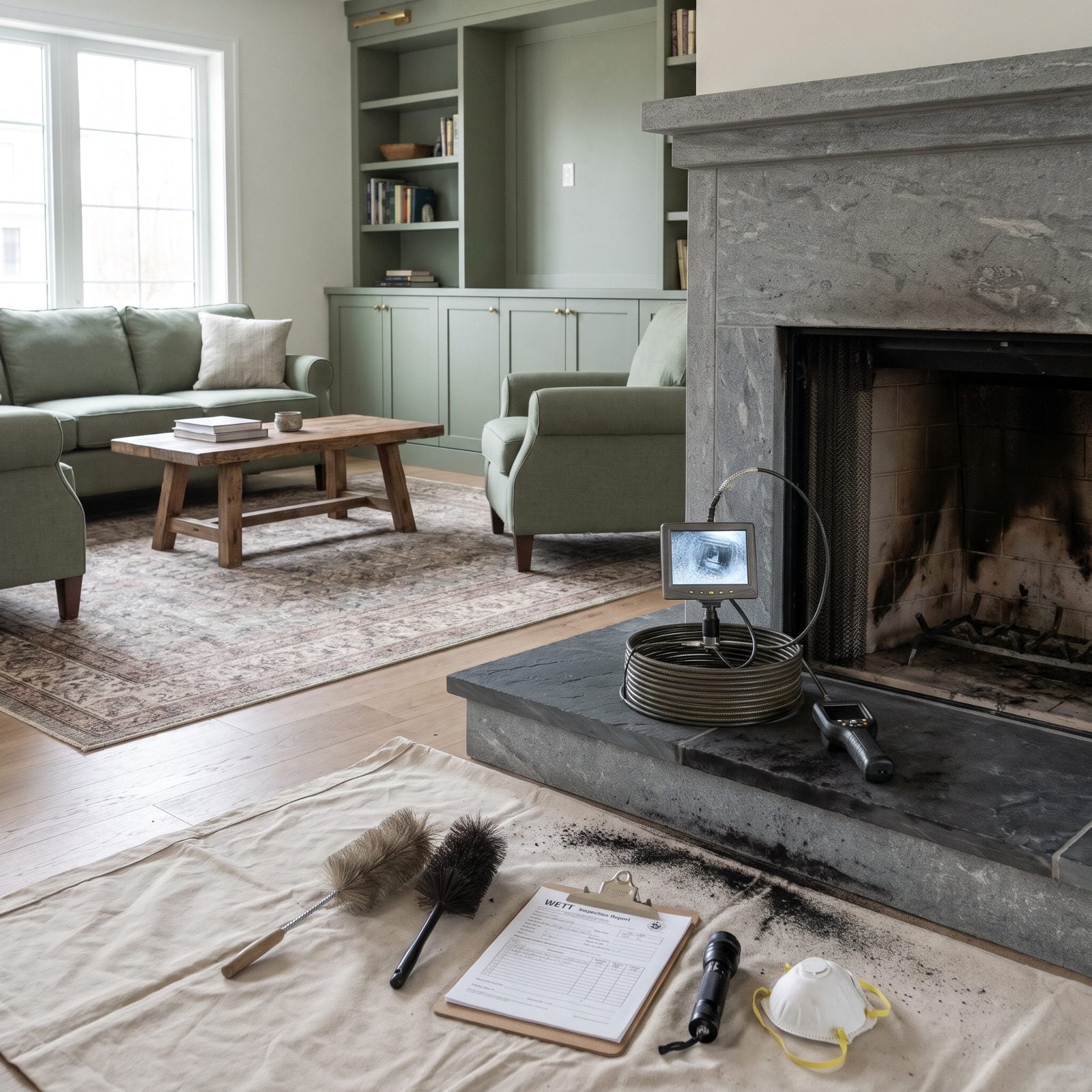
Ask your carrier about coverage and you may hear a term you didn’t expect: a safety certificate. In parts of Canada and the US, insurers want proof a certified inspector signed off on your wood-burning setup before they’ll write or renew the policy.
The inspection runs a camera up the flue, checks clearances, and documents creosote buildup. Pass it and you get the paper. Fail it, and you’re looking at repairs before the policy funds.
17. The Annual Cost of Seasoned Firewood
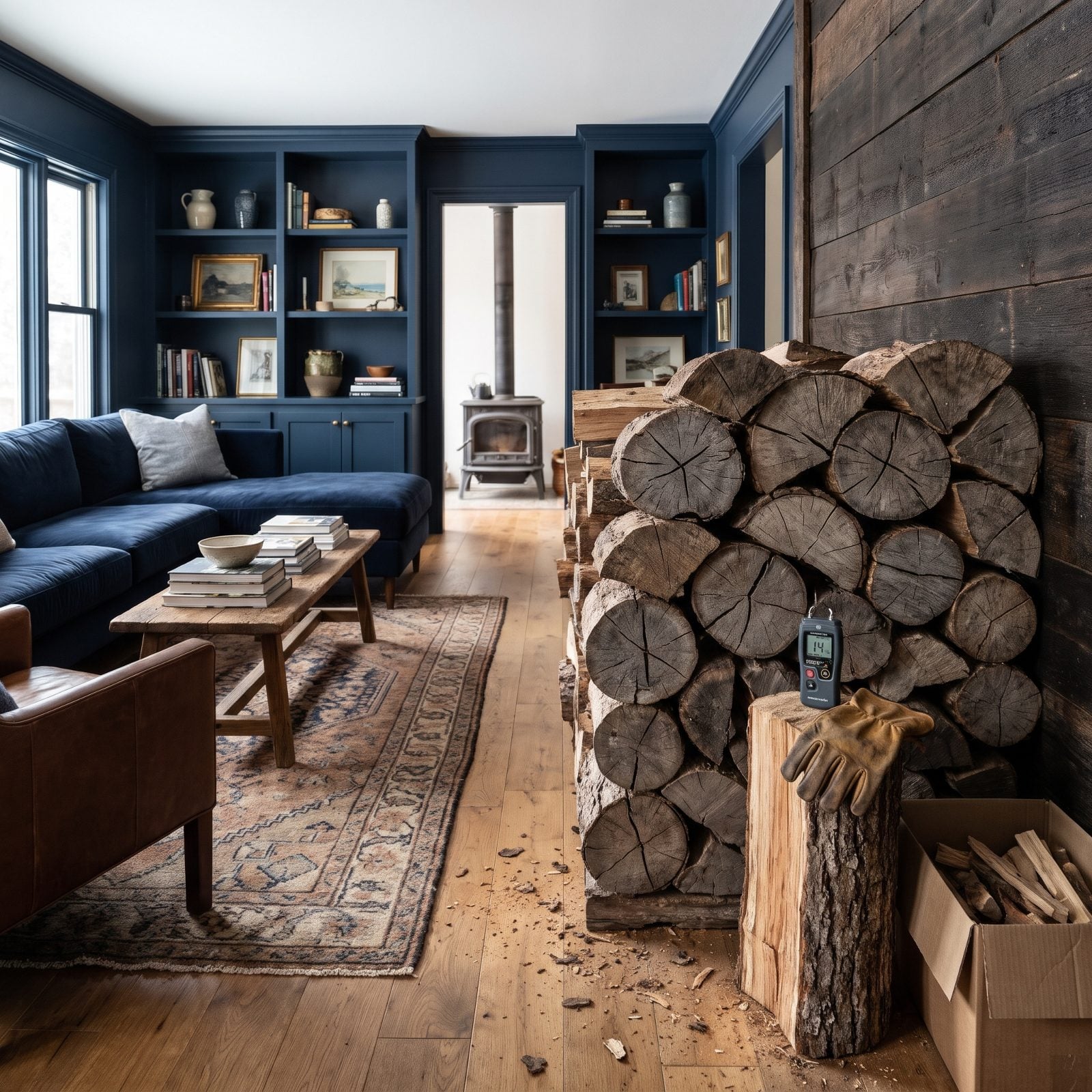
A cord of properly seasoned hardwood costs real money, and a household that burns regularly goes through more than one in a winter. Green wood is cheaper, sure — but burn it and you choke the room and gum up the flue, so you pay for dry or you pay for the mess later.
The price swings with your region, the species, and how early you order. Oak and hickory cost more than softwoods and are worth every penny. Budget for it the way you budget for heating oil. That’s exactly what it is.
16. Firewood Delivery Surcharges
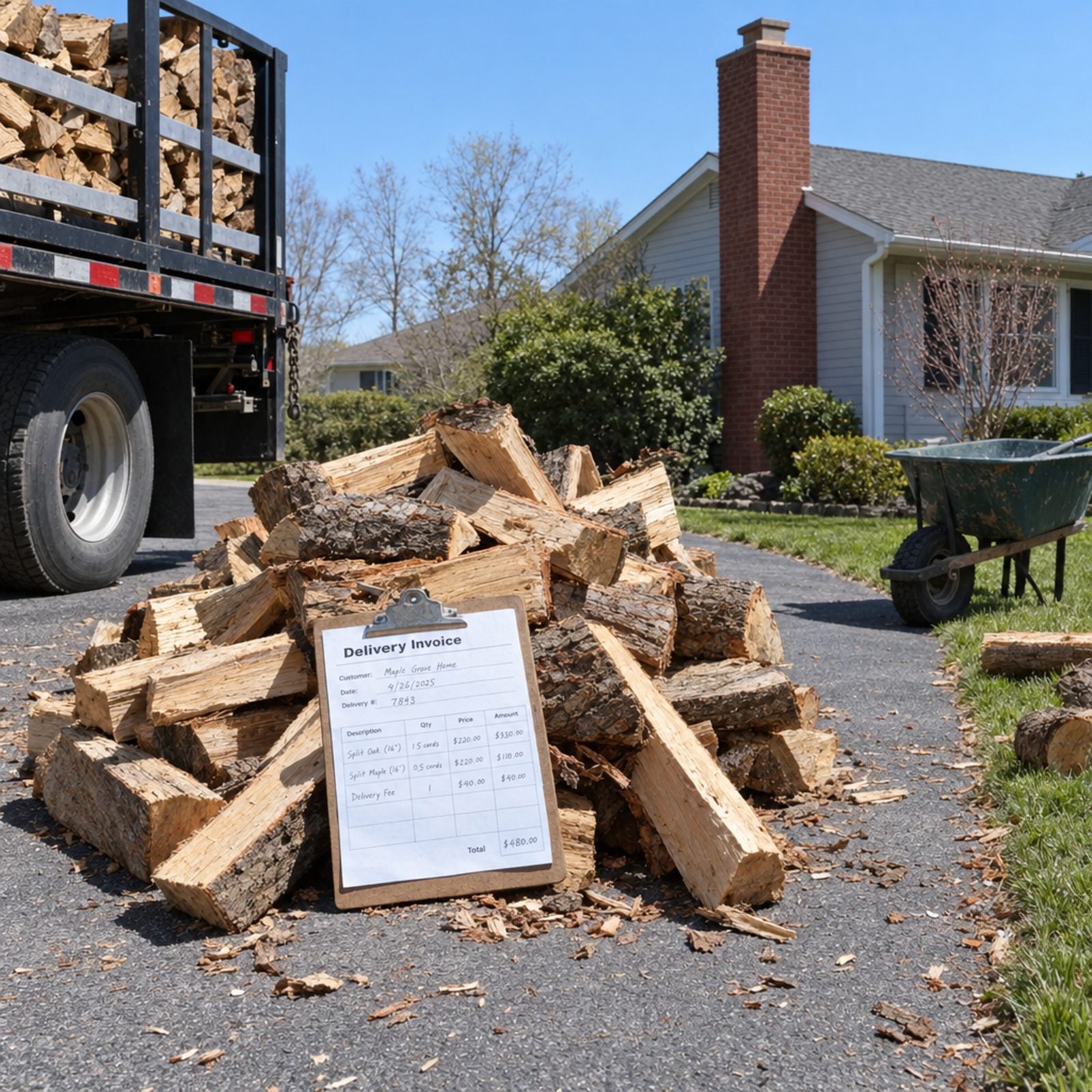
The cord price is only the start. Delivery adds a fee, and if you live past a certain radius, it climbs.
Want it stacked instead of dumped in a heap on the driveway? That’s extra. Want it carried around back because the gate’s too narrow for the truck? Extra again. The log pile looks simple sitting there — but getting it to that spot had three separate charges attached.
15. Building Weatherproof Firewood Storage
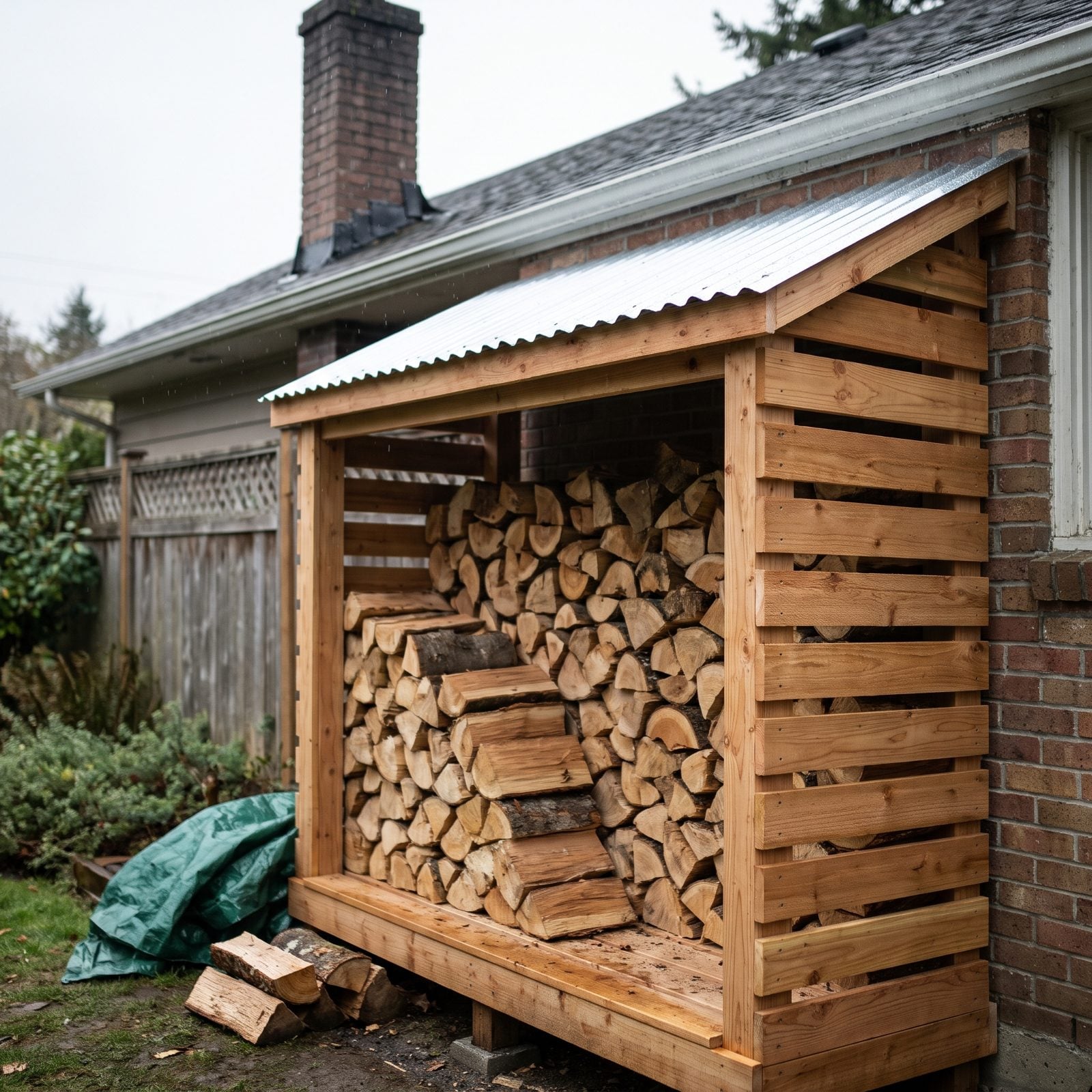
Firewood left in the open goes bad. It soaks up rain, grows mold, draws insects, and never dries the way it needs to. So you build it a home.
A proper woodshed means a raised base off the ground, a corrugated metal roof that sheds the rain, and slatted sides for airflow — cedar framing, an open front, a green tarp and a few loose logs waiting at its feet. You’re building a lean-to for logs set well away from the house, and here’s the kicker: the lumber for that shed sometimes costs more than a season of the wood going inside it.
14. Hours Spent Hauling, Splitting, and Tending Wood
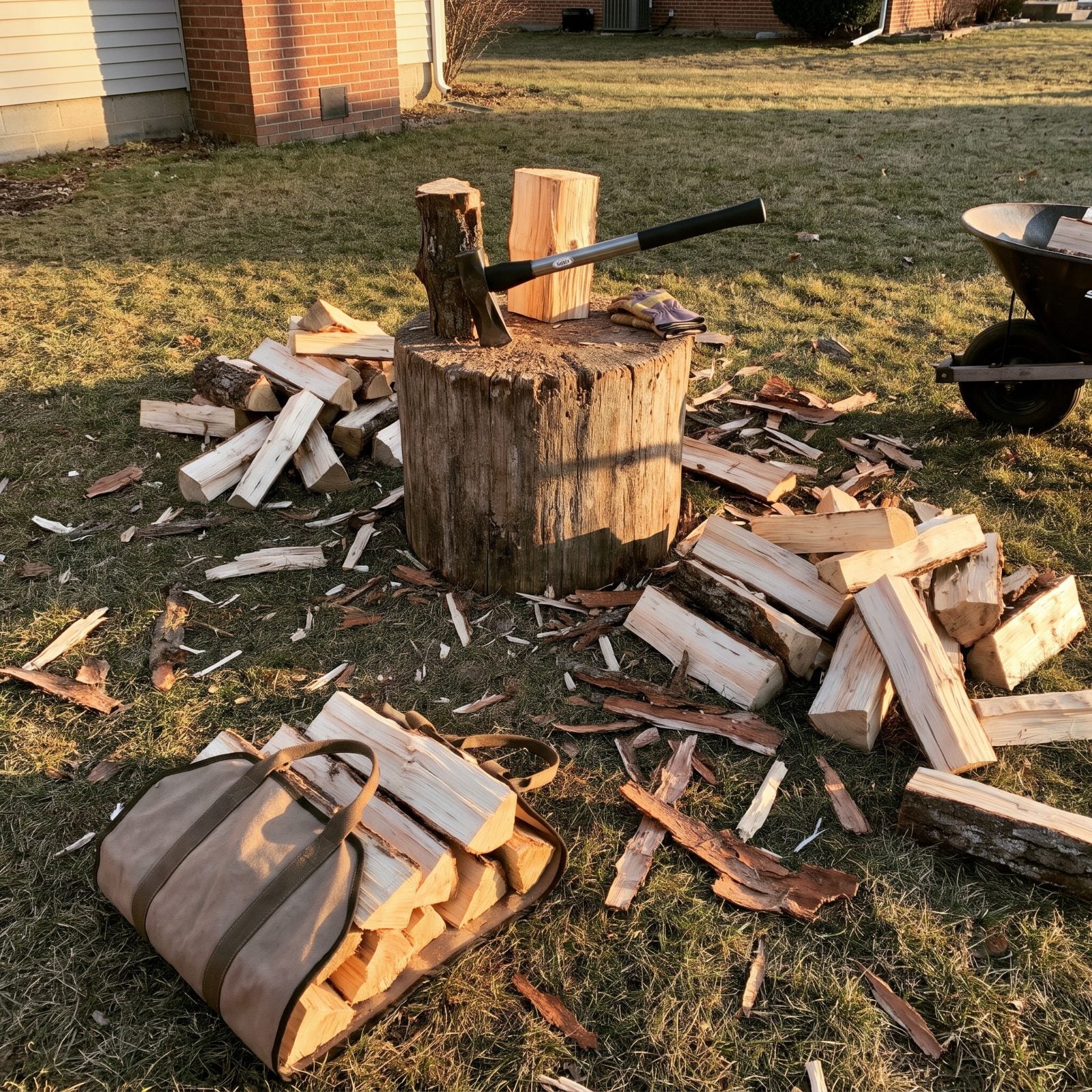
Nobody puts a price on your Saturday. But a wood fire runs on it.
Hauling the delivery to the shed, splitting what came too big, carrying armloads inside, laying the fire, tending it, clearing the grate the next morning, hauling out the ash — it eats up hours every single week of the burning season. Gas and electric heat ask for none of that. A thermostat and a tap, done. If you love the ritual, those hours are the whole reason you’re here. If you don’t, they’re a second job you never applied for.
13. Termite Treatment After Storing Firewood Too Close
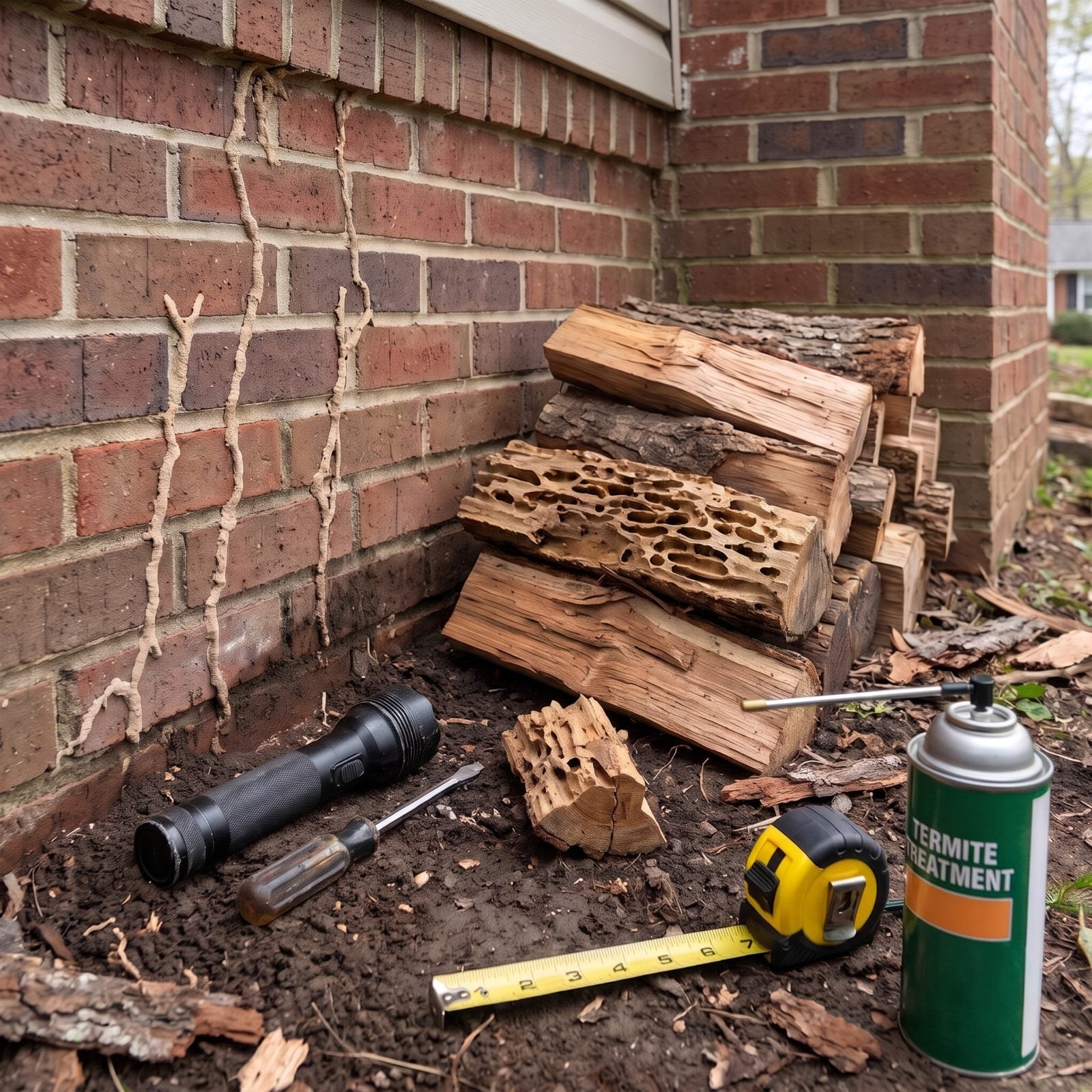
Stack firewood against the house and you’ve built termites a ramp. Logs touching the foundation hold moisture, hide the soil, and give the colony a bridge straight into your framing.
By the time you spot the mud tubes, the treatment isn’t cheap and the damage may already be done. Keep the pile well off the house and up off the ground. I’ve watched people learn this the expensive way, and the expensive way involves a pest contract and a structural inspection.
12. Constant Cleanup of Bark, Chips, Ash, and Wood Dust
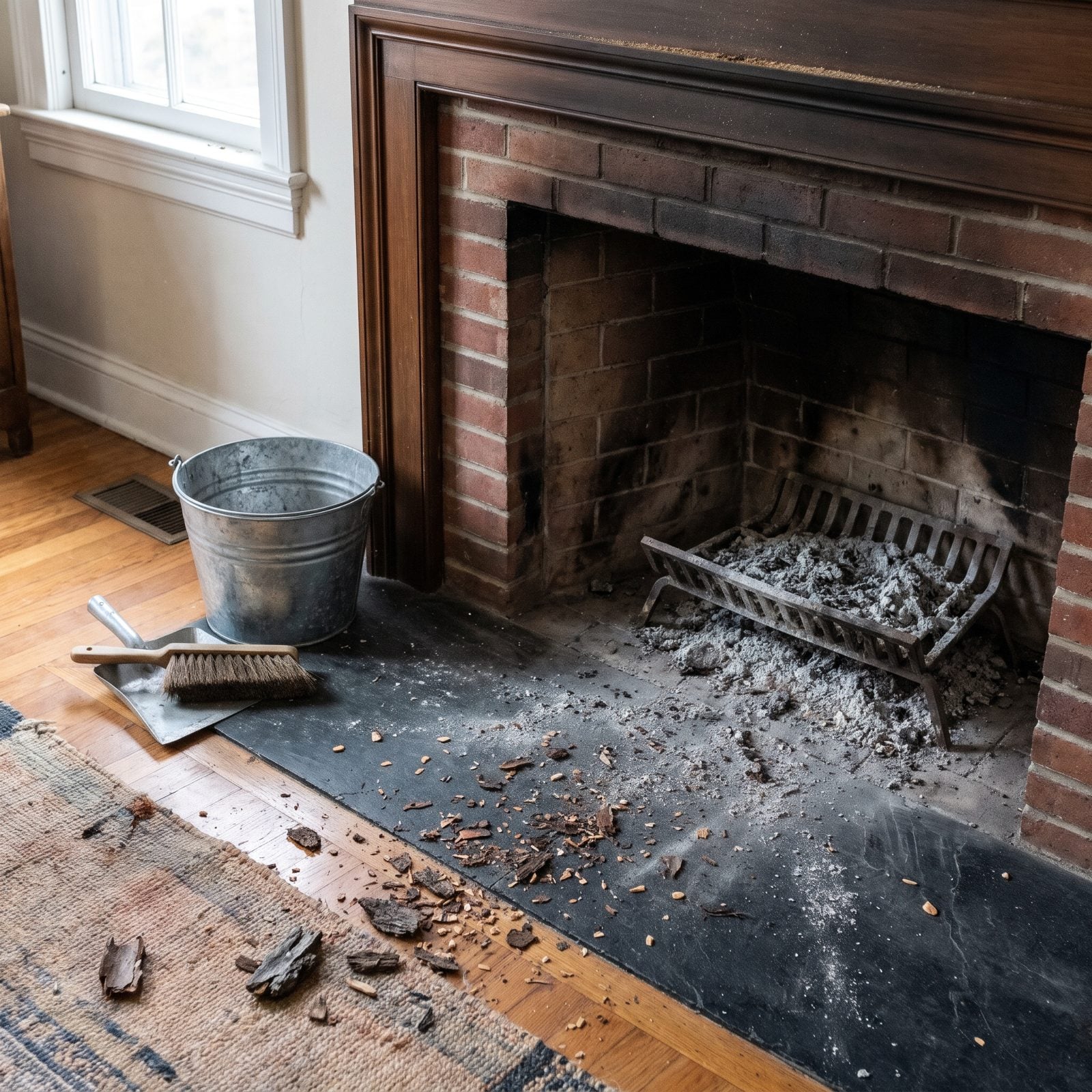
Every log sheds something on the way to the fire. Bark flakes off in the carry, chips drop by the hearth, ash drifts out when you open the grate, and a fine wood dust settles on the mantel that you’ll find again on your fingertip a week later.
It never fully stops. You sweep the hearth, and tomorrow there’s more. A neutral fireplace design actually hides this better than a dark one, where every speck of pale ash shows up like chalk on a blackboard.
11. More Frequent HVAC Filter Replacement
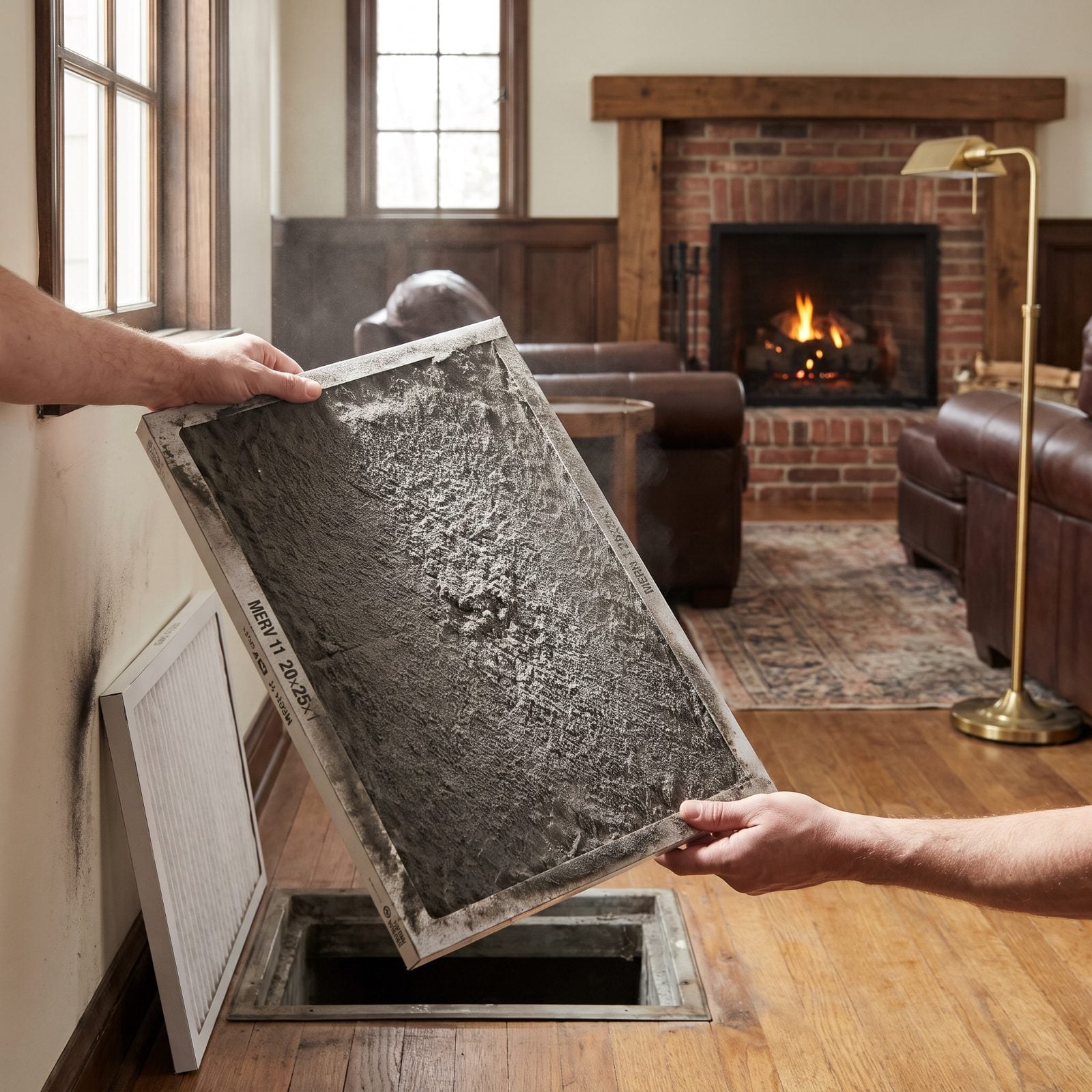
Wood smoke doesn’t stay in the chimney. Fine particulate drifts into the room, rides the air currents, and your furnace pulls it straight through the return, sometimes leaving a dark soot streak on the wall above the grille.
So the filter clogs faster. One that would coast through a non-burning house looks blackened and caked with soot in a fraction of the time when the fire runs nightly. You swap them more often, and the finer-rated filters that actually catch the soot cost more per swap.
10. A HEPA Air Purifier for Fine Smoke Particles
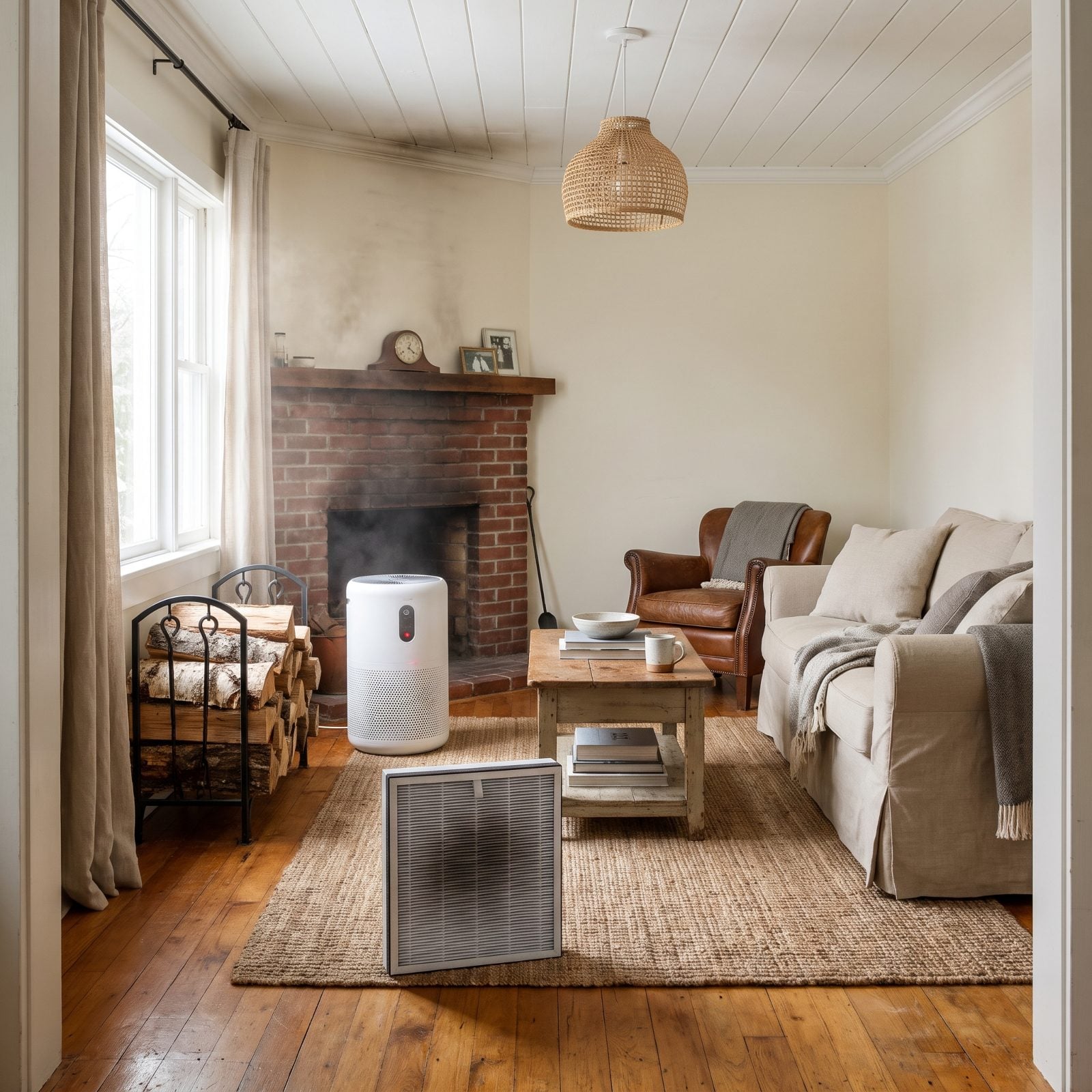
Burn seasoned oak all winter and you learn the smell gets into everything — the curtains, the couch, the back of your throat on a still night.
It’s the fine particles you can’t see that make a decent HEPA unit stop being optional. Expect to run it hard during burning season, and expect the filter to come out gray in a month. Replacements aren’t free, and the good ones aren’t cheap.
9. Repainting Soot-Stained Walls and Ceilings
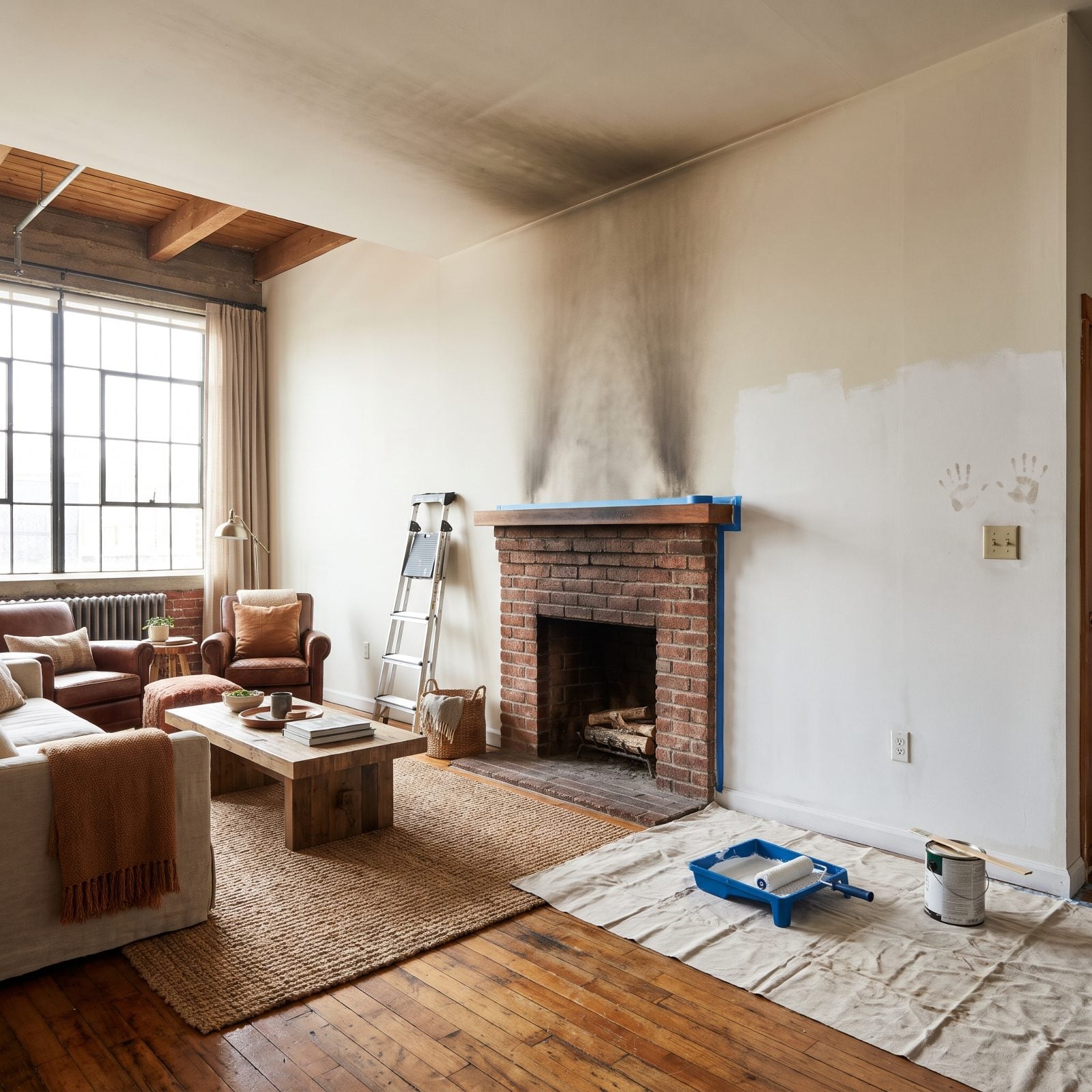
Soot doesn’t stay near the fire. It drifts, climbs the wall above the mantel, and settles into the ceiling in a gray halo you stop noticing — until you move a picture frame and find the clean square behind it.
Here’s the part that catches people off guard: you can’t just paint over it. Soot is oily, so roll latex straight onto it and the stain bleeds through within weeks. You need a stain-blocking primer first, sometimes two coats, which is why repainting a fireplace wall runs more than repainting a bedroom of the same size. Going for a dark fireplace look anyway? The staining hides better, but the work doesn’t disappear.
8. Repairing Ember Burns in Wood Flooring
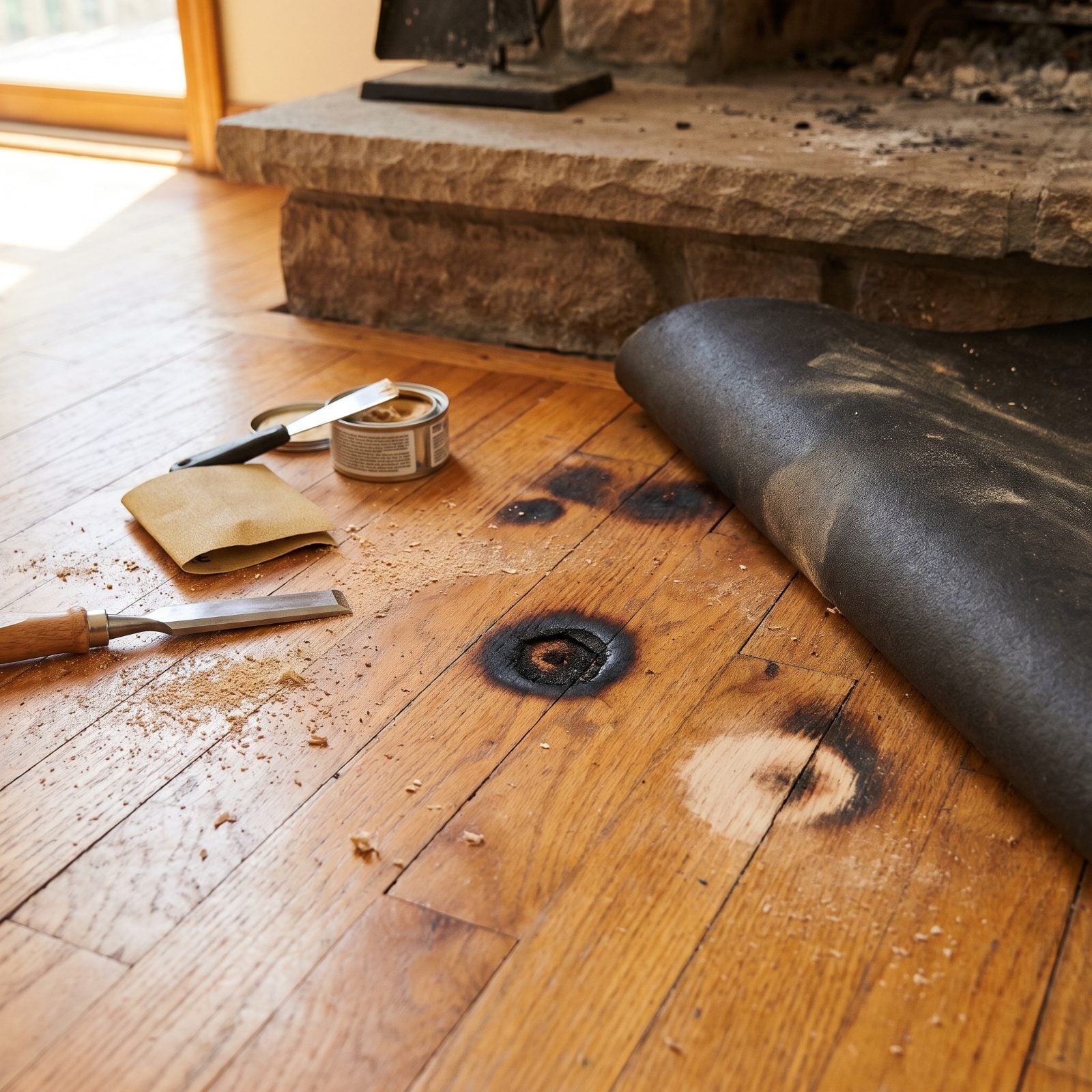
One popping log. One spark that clears the hearth. And then one tiny black crater in the floorboard that you’ll see every single time you walk past it.
Ember burns are the quiet tax on an open fire. Minor ones sand and fill. The deep ones mean cutting out a board and weaving in a new piece, then matching stain on wood that’s aged a decade — which almost never lands on the first try. A hearth rug helps. Sparks are just annoyingly good at finding the gap.
7. Carbon Monoxide Alarms on Every Required Level
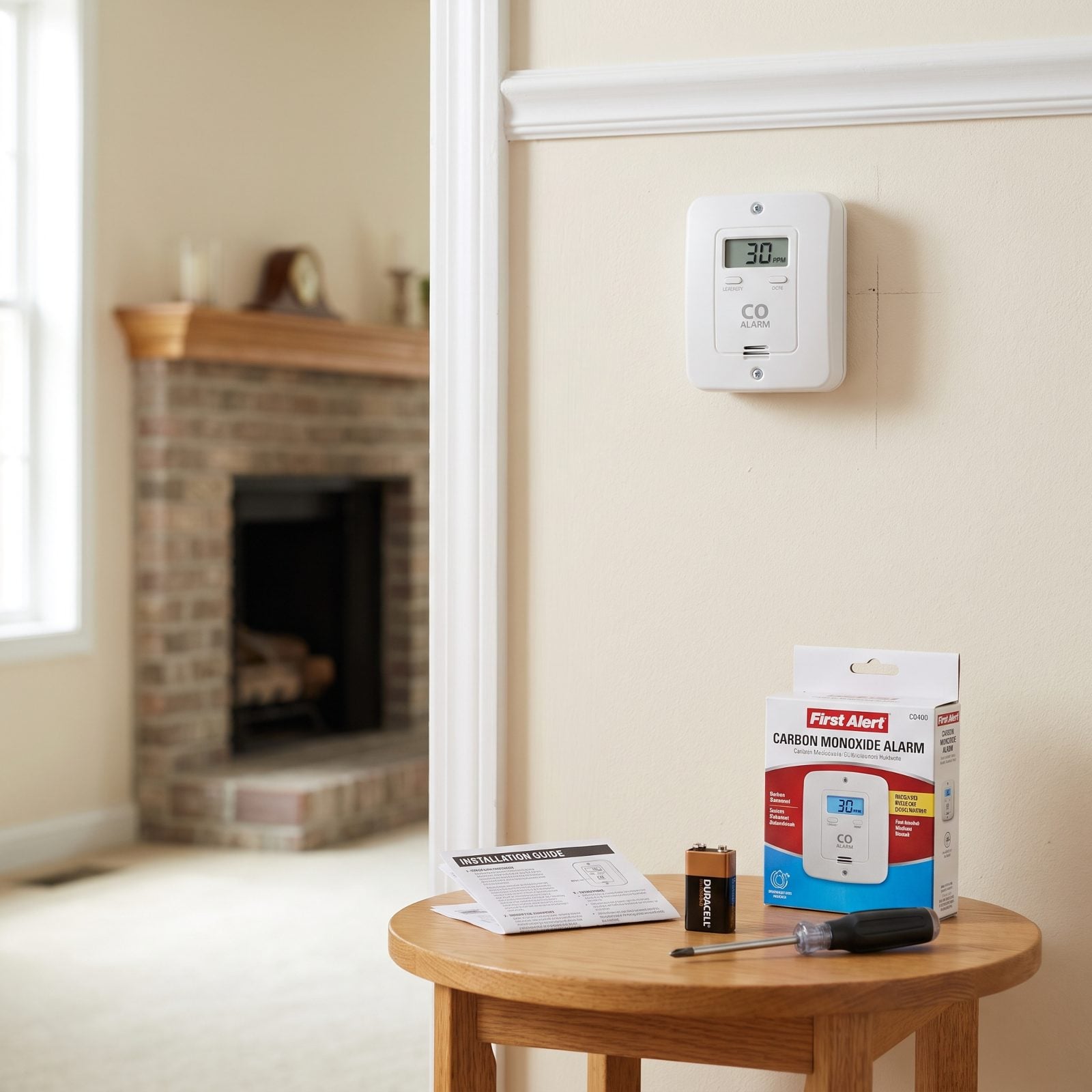
A wood fire that doesn’t vent right pushes carbon monoxide back into the room. You won’t smell it. You won’t see it. That’s the entire danger.
Code in most places wants an alarm on every level and near sleeping areas, which for a two-story house means several units — and they don’t last forever. The sensors expire around seven years in, and you replace the whole unit when they do.
6. Installing a Dedicated Outside-Air Supply
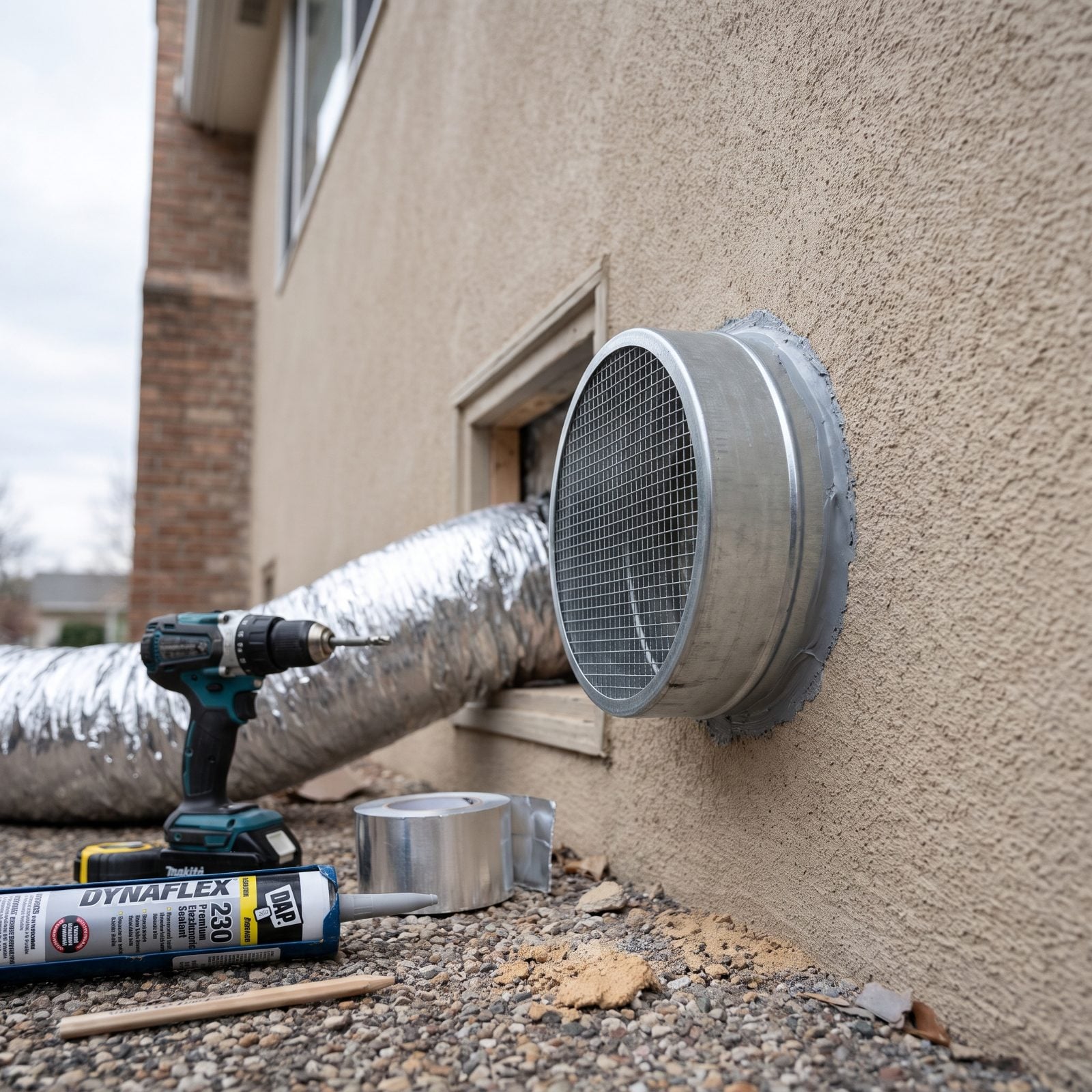
Your fireplace needs air to burn, and if it can’t pull it from outside, it pulls it from your house. That means warm, heated air going up the chimney and cold replacement air dragging in through every gap in your walls.
A dedicated outside-air supply fixes the physics. A screened exterior vent brings in outdoor air, and an insulated flex duct, fed through its own framed opening in the wall, carries air to the firebox, so the fire breathes outdoor air instead of your living room. Retrofitting one into existing masonry means cutting through wall or foundation — not a weekend job, and not a cheap one.
5. A Professional Draft and Backdraft Test
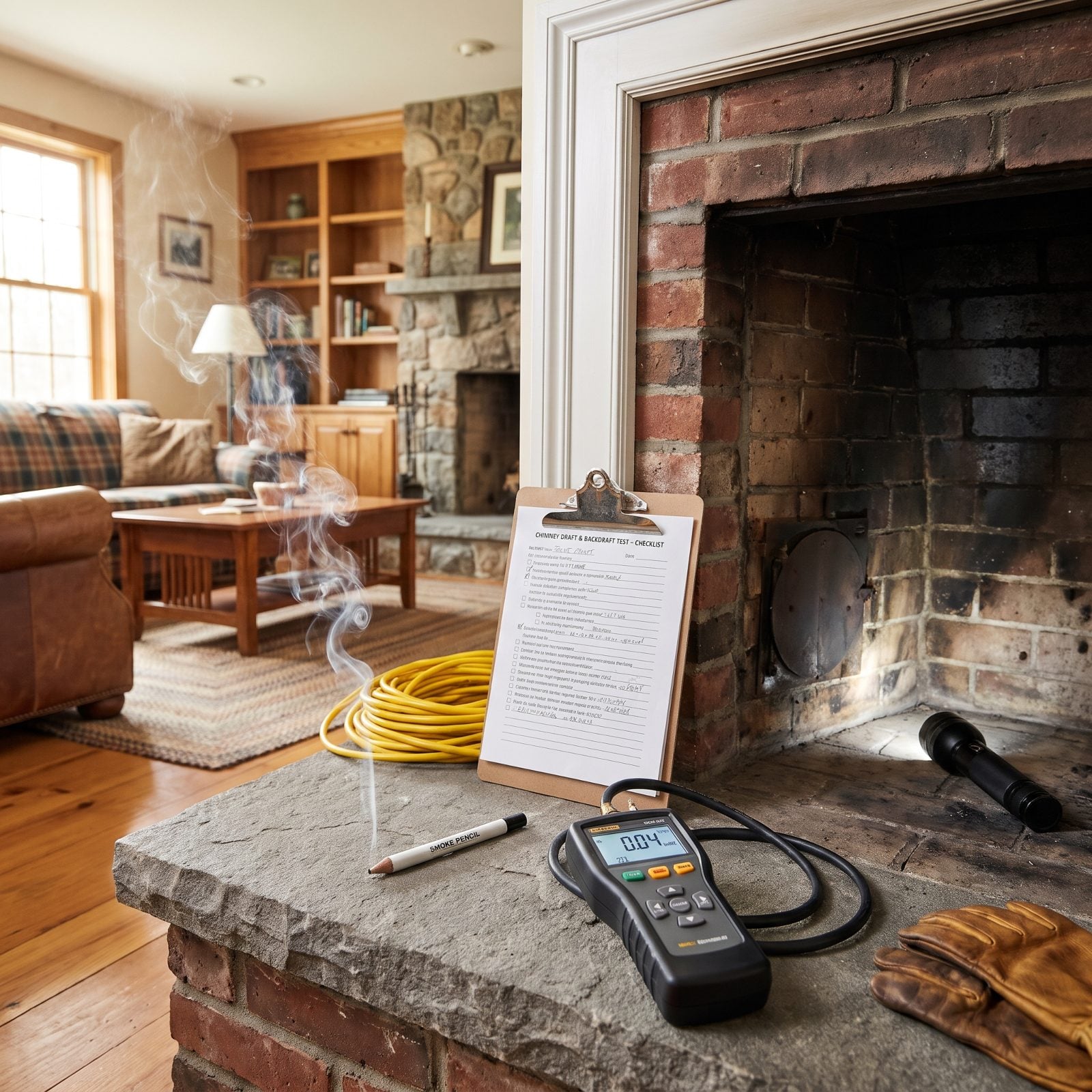
A fireplace can look perfect and still draft like a broken straw. Cold flue, tight house, wind over the roofline — and suddenly smoke rolls into the room instead of up the chimney.
The backdraft test checks which way the air actually moves under real conditions. A tech uses smoke and a manometer to prove the flue pulls the way it should. Worth paying for before you spend a whole winter blaming the firewood.
4. Running the Furnace Because the Fireplace Heats Unevenly
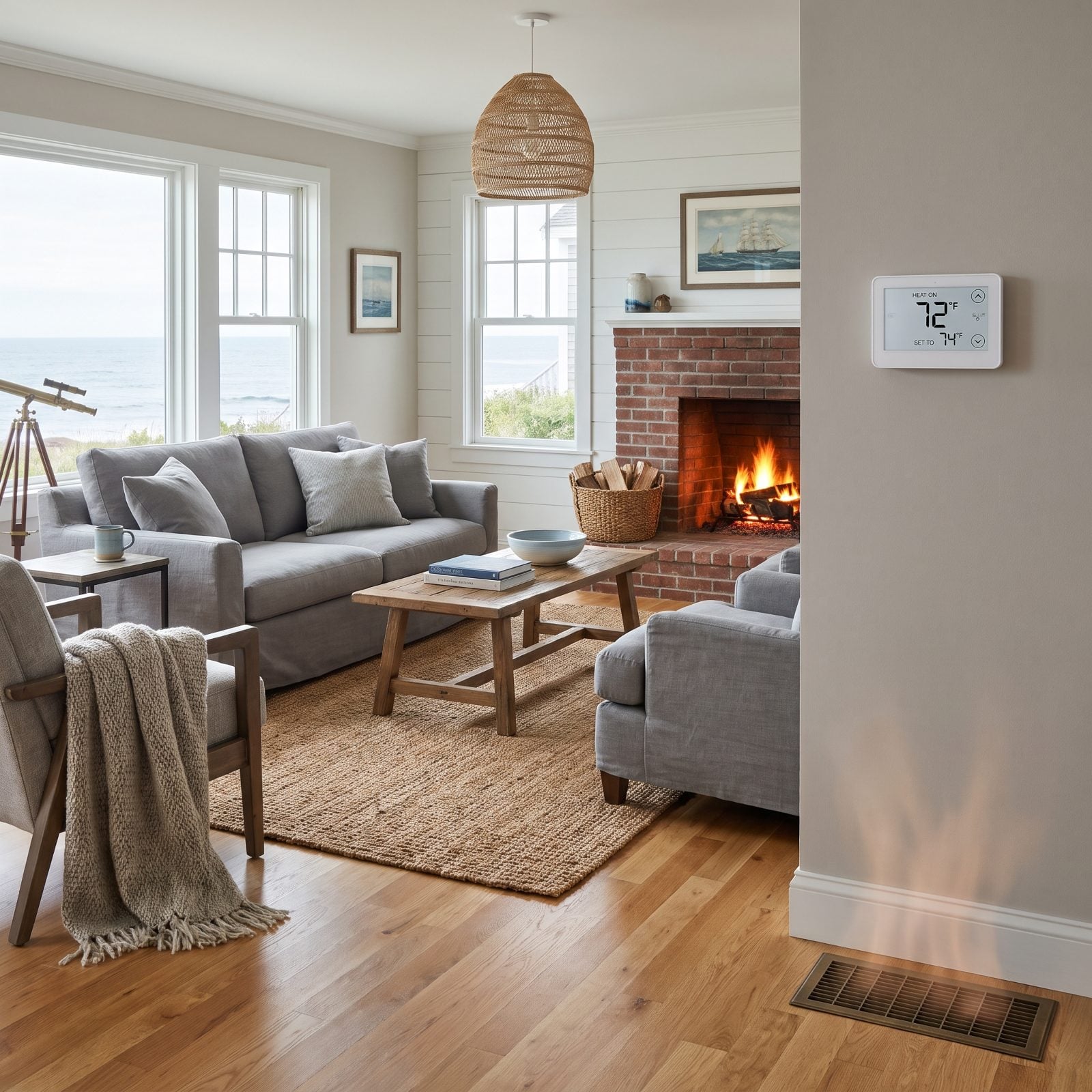
The dirty secret of the open fireplace: it roasts whoever’s sitting three feet from it and does almost nothing for the bedroom down the hall.
Most of the heat goes straight up the chimney, and the rest stays local. So the thermostat in the cold part of the house kicks the furnace on anyway, and now you’re running two heat sources at once — burning wood for the ambiance and gas for the actual warmth. An open fire is closer to a campfire with a roof than a furnace. The bill reflects it.
3. Interior Repairs After Chimney Water Intrusion
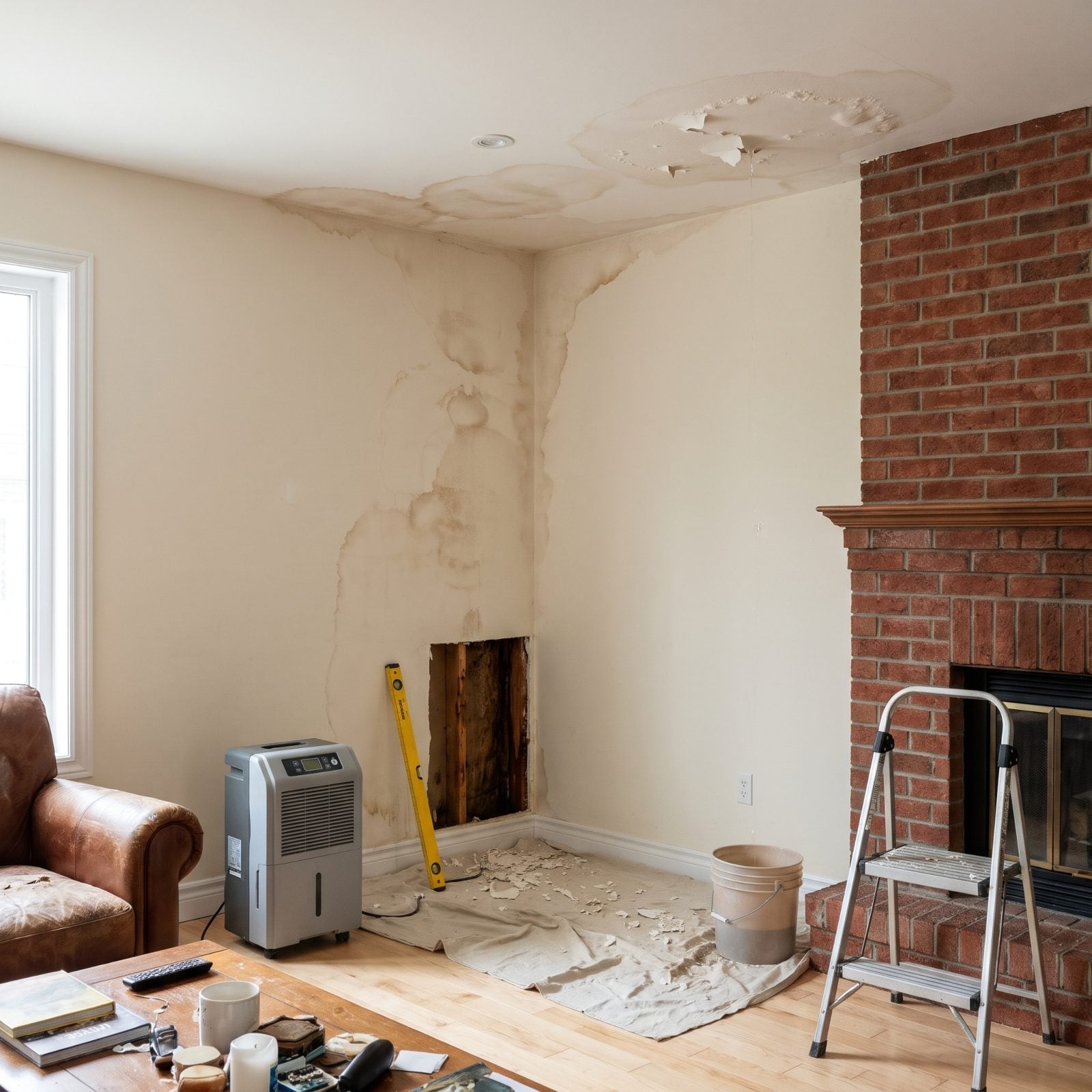
Water finds the chimney first. Cracked crown, failed flashing, a missing cap — rain works its way down the masonry and into the wall it shares with your living room.
By the time that brown ring shows up on the ceiling, the damage behind the drywall is already weeks old. Repairs mean drying out framing, cutting out ruined board, and repainting, plus fixing the actual leak up top so it doesn’t come straight back. A soot-darkened black fireplace surround might hide the staining down low, but water damage higher on the wall shows no mercy.
2. The Deductible and Repairs After a Chimney Fire
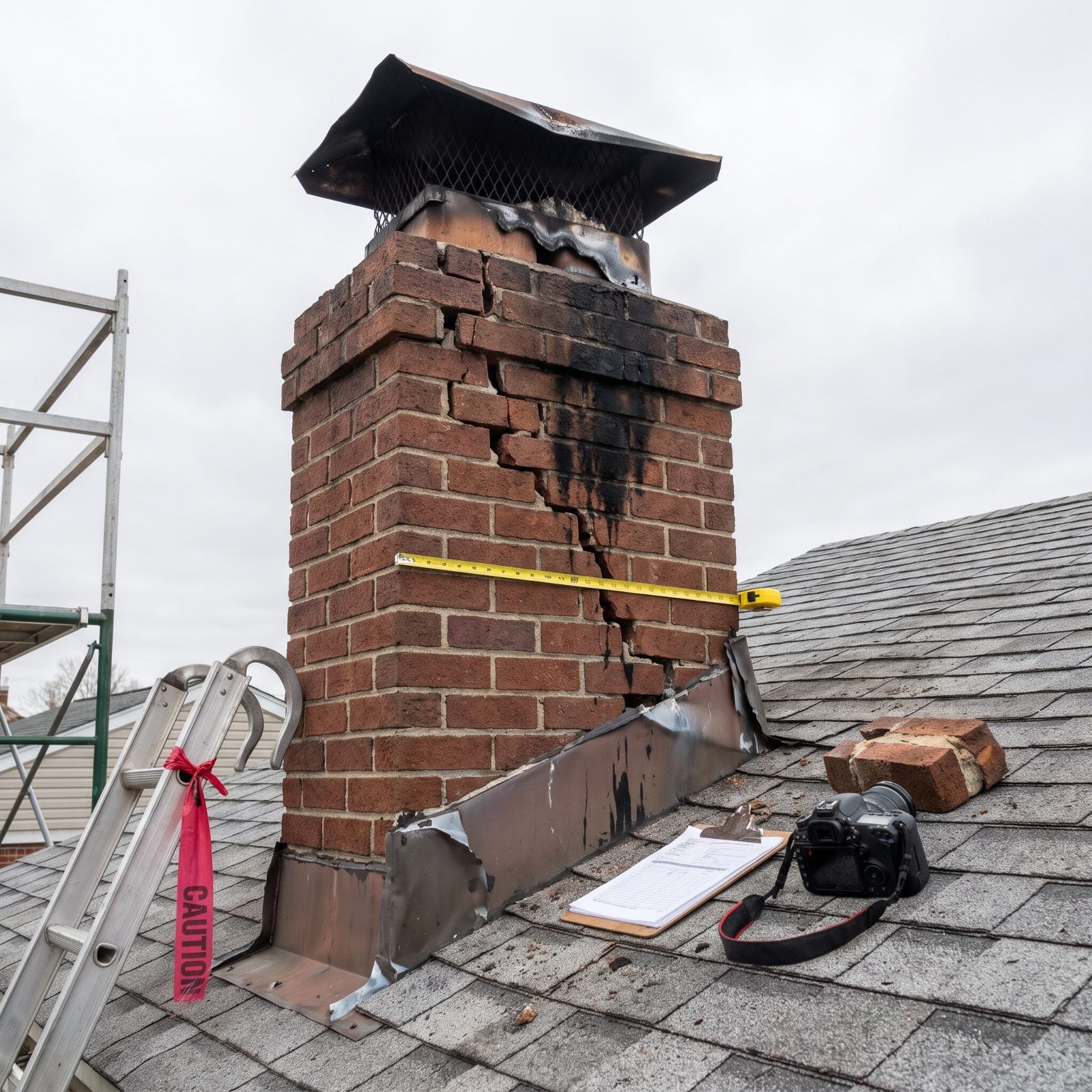
A chimney fire is fast and loud — a roar like a freight train inside the wall — and then it’s over in minutes. The damage it leaves behind is neither fast nor cheap.
Creosote ignites inside the flue and burns hot enough to crack the liner, warp the cap, and spall the brick. Homeowner’s insurance usually covers it, but you pay the deductible first, and the bill for a relined or rebuilt flue runs high. The real sting isn’t just this one fire. An unlined, cracked chimney can’t legally be used again until it’s fixed, so you’re not burning another log until the check clears and the mason finishes.
1. The Fireplace Insert You Buy to Finally Get Some Heat
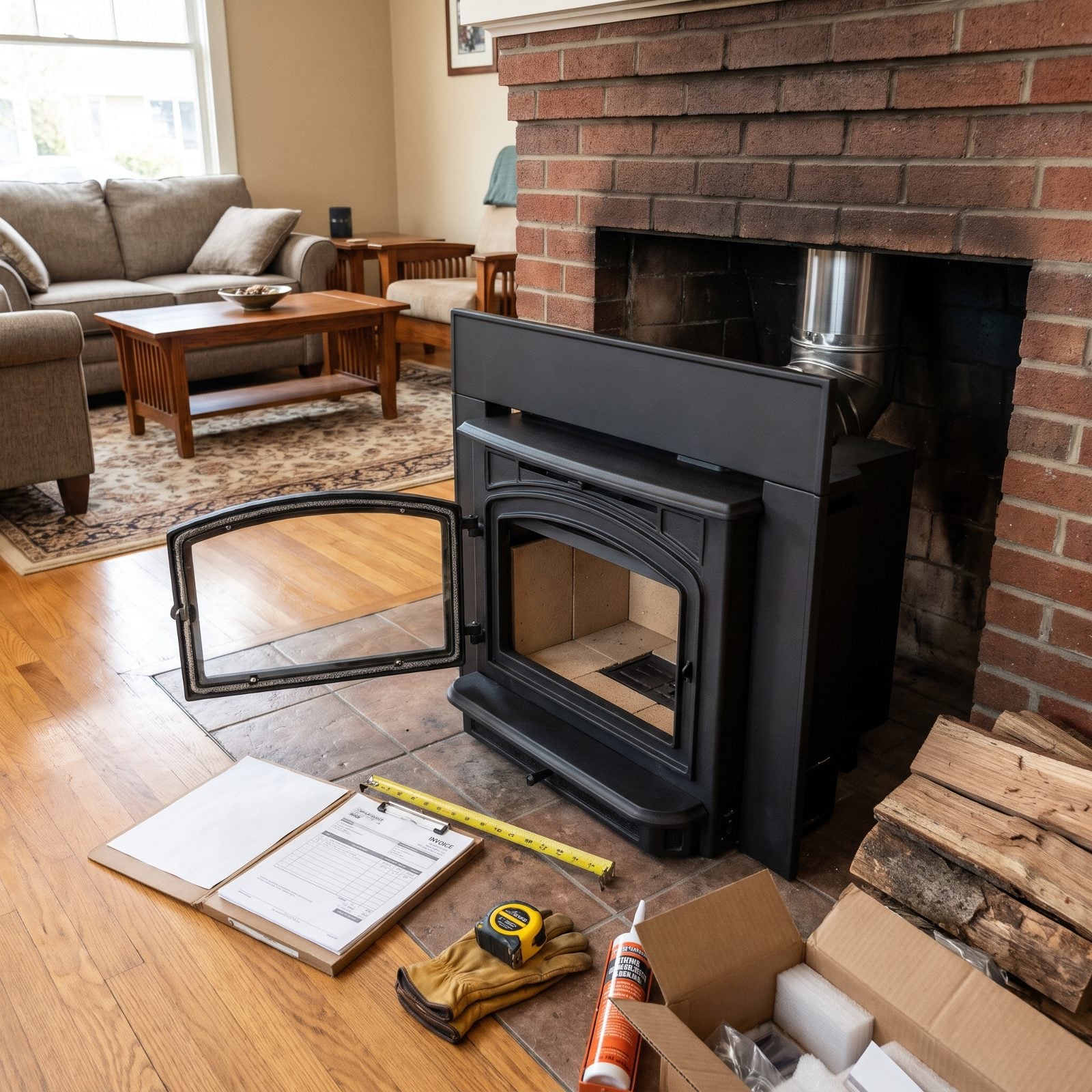
An open fireplace throws most of its heat straight up the chimney. You stand in front of it, your face roasts while your back stays cold, and the furnace keeps right on running anyway. Nobody mentions this before you fall for the crackle.
So you buy the insert, a sealed steel or cast-iron box that sits on the hearth in front of the old opening, bulking out past the brick surround, and actually pushes warmth into the room. Good move. But the box is the cheap part. The install is where it gets real: a new stainless flue liner running the full height of the chimney, sealant rated for serious heat, and a crew that actually knows what they’re doing. You’re not buying an appliance so much as retrofitting a hole in your house that was never meant to be efficient in the first place.
Want the look without this particular headache? The mid-century fireplace ideas worth stealing lean on the mantel and the surround to carry the visual weight instead.