
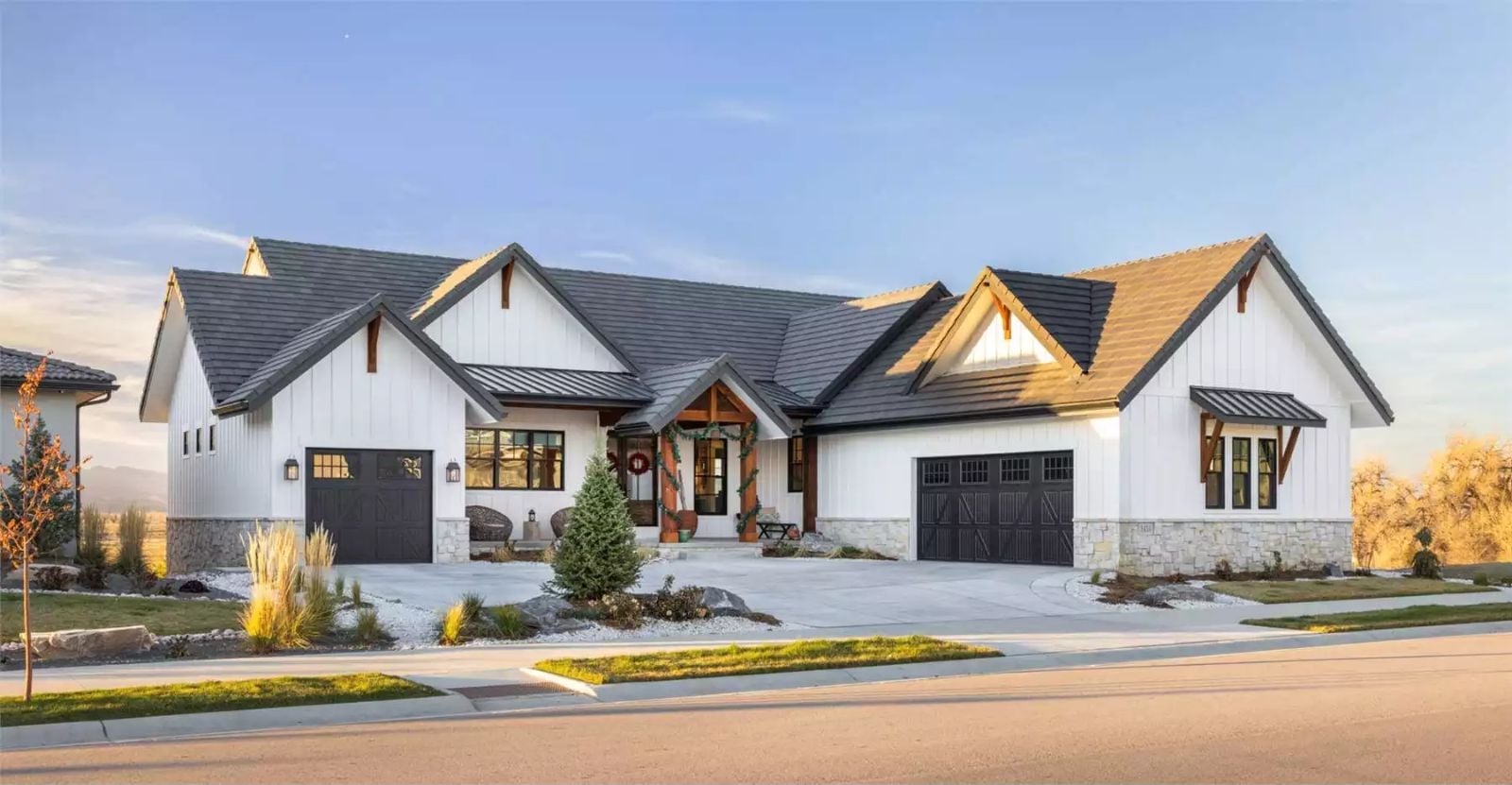
There’s a certain kind of house where the generations don’t collide so much as coexist — where the in-laws have their own door, their own morning routine, and no reason to announce themselves before noon. The Harriston Hills is built for exactly that arrangement, with a walkout basement that functions as a self-contained wing, a main floor laid out to keep daily life from piling up in one room, and a kitchen big enough that two people can be cooking in it without anyone having to explain what they’re making.
Specifications
- Sq. Ft.: 2,848
- Bedrooms: 2
- Bathrooms: 2.5
Floor Plan – Main Floor
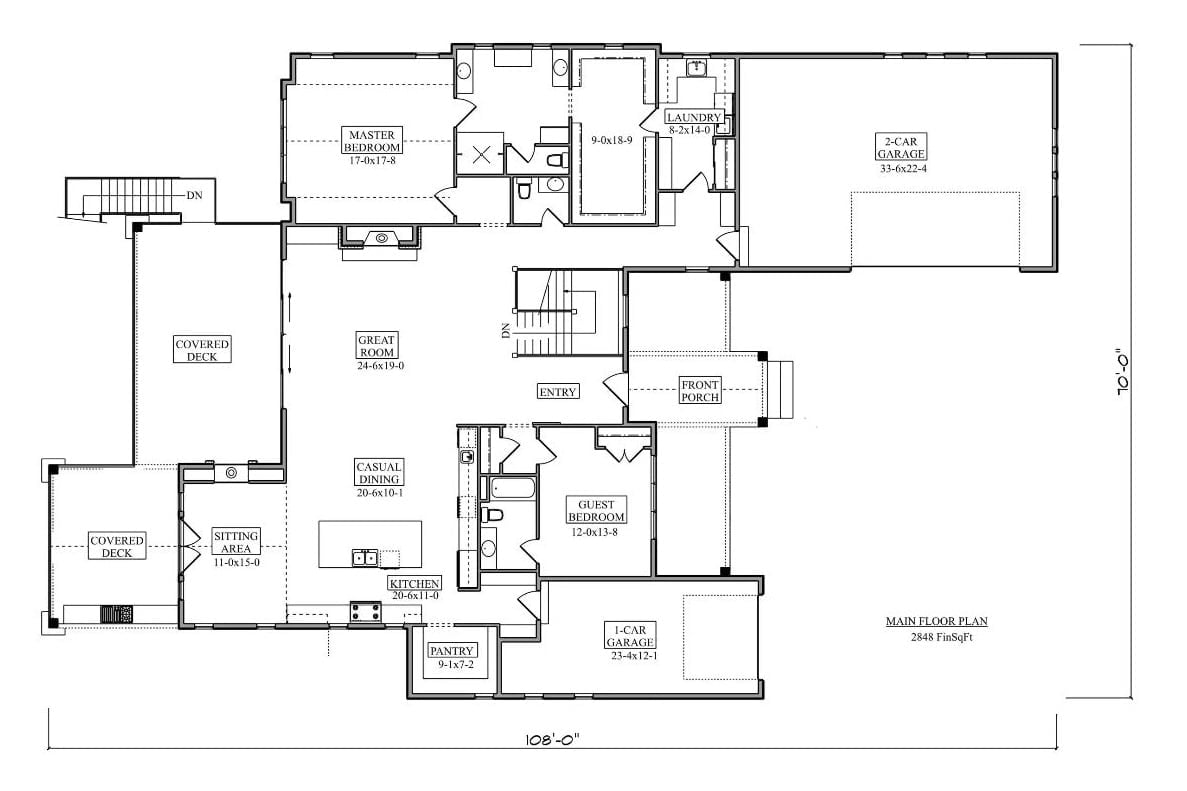
The main floor puts 2,848 finished square feet to work: master suite, guest bedroom, great room, casual dining, kitchen with pantry, laundry, and a split garage setup with a two-car on one end and a one-car on the other. Two covered decks extend off the rear, which is where you’ll actually want to be on a good evening.
Floor Plan – Basement
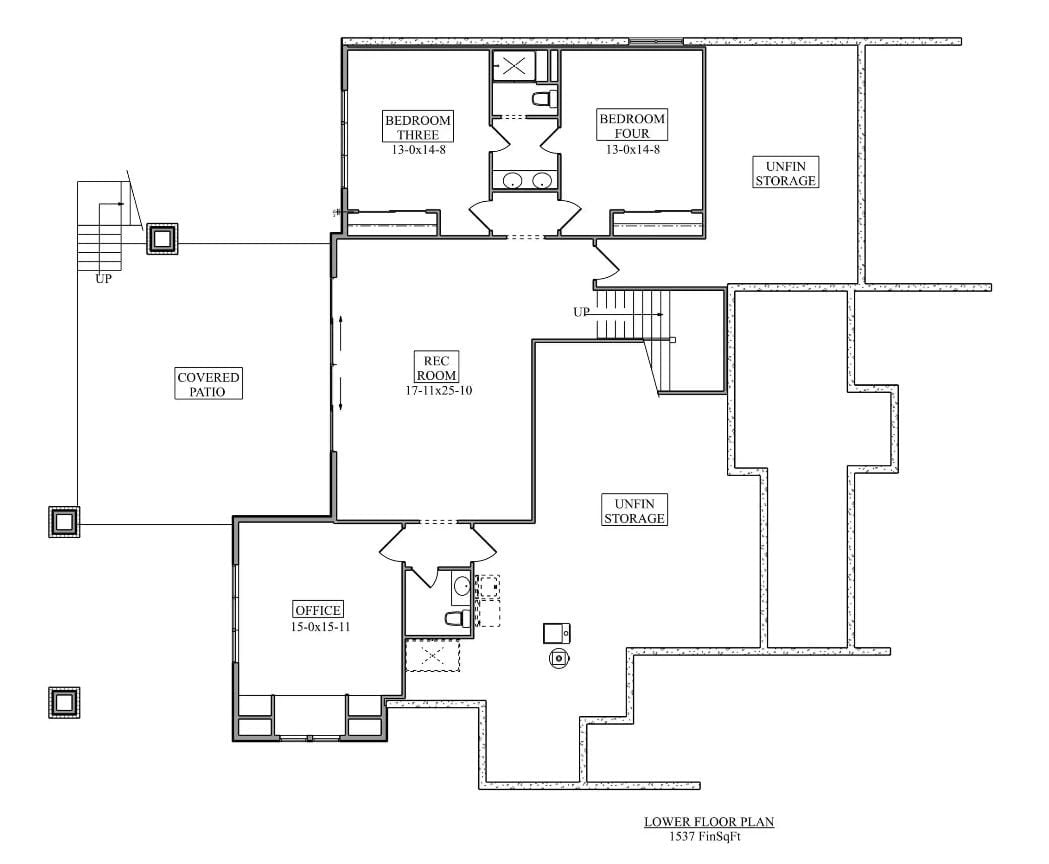
Bedrooms Three and Four share a jack-and-jill bath on the upper level. Downstairs, the rec room runs close to 26 feet deep — genuinely usable square footage, not a glorified hallway. An office and half bath sit near the walkout to the covered patio below, and two unfinished storage zones leave room for the plan to evolve. Stairs connect from two separate locations, which matters more than it sounds once you’re actually living in the house.
Warm Timber and White Board-and-Batten on a Sloped Lot That Actually Works
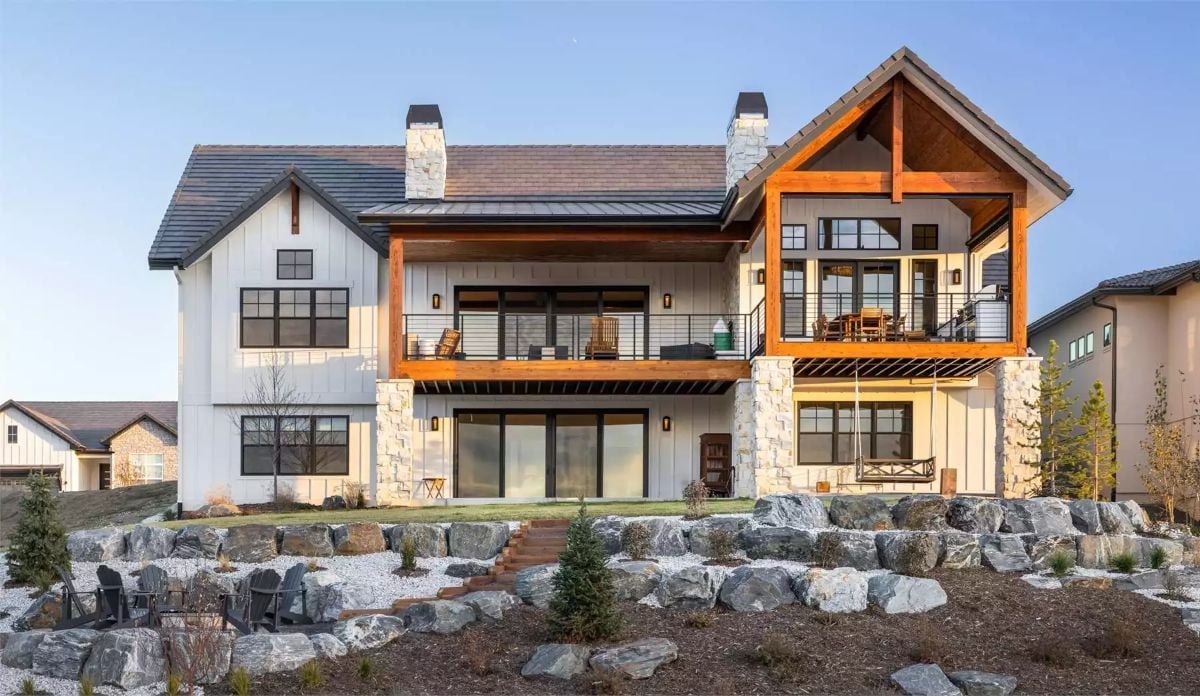
Heavy timber framing on the gabled upper deck is the standout move. Stone columns anchor both corners at grade level, and the walkout lower level opens through wide sliding doors to a terraced yard lined with boulders — the kind of landscaping that takes a tricky slope and makes it look deliberate. That porch swing tucked under the right-side overhang is a nice touch nobody asked for but everyone will use.
Gold Console, Dark Wood Door, and an Orchid Painting That Anchors Everything
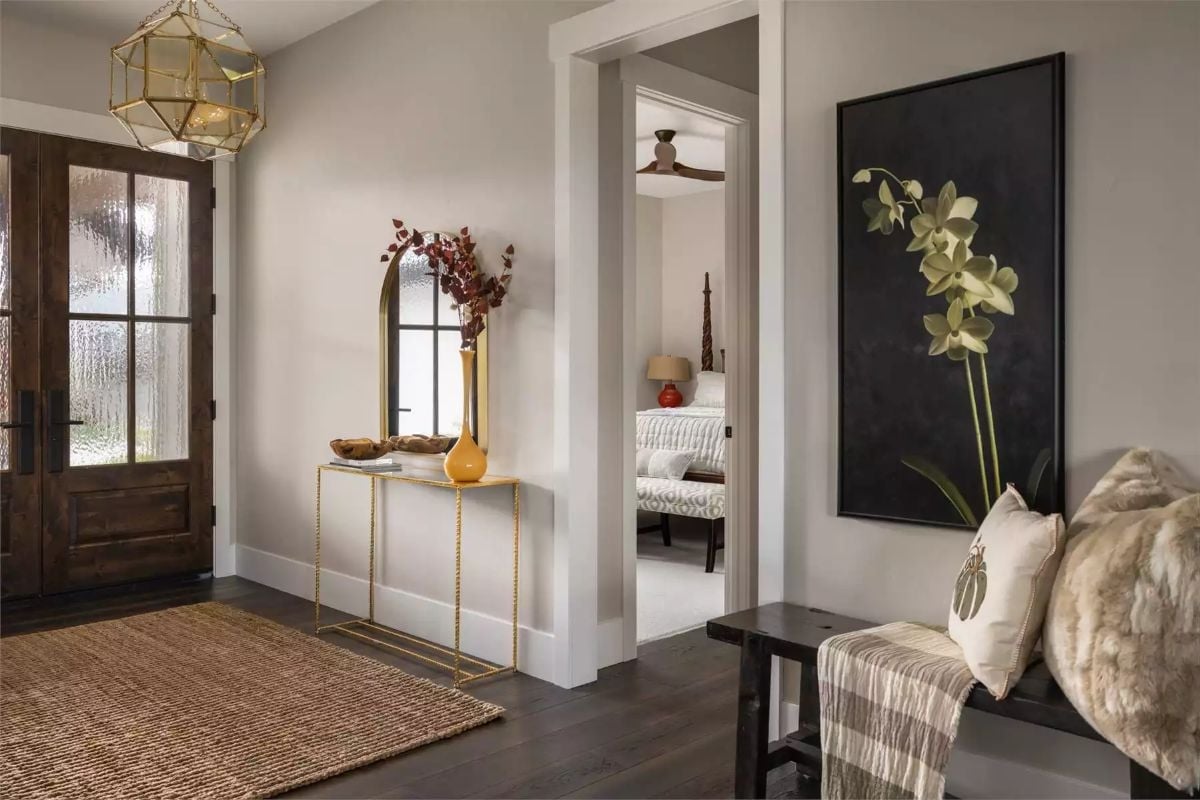
An amber vase, arched gold mirror, and woven jute rug set a warm tone before anyone gets past the front door. The large-format orchid painting on black carries the right wall entirely on its own.
Editor’s Note: That arched mirror is doing real work here — bouncing light off the textured glass door panels and making the entry feel considerably deeper than it is. Composed without feeling staged, which is harder to pull off than it looks.
Cream Sectional, Wood Beam, and a Fireplace That Actually Gets Used
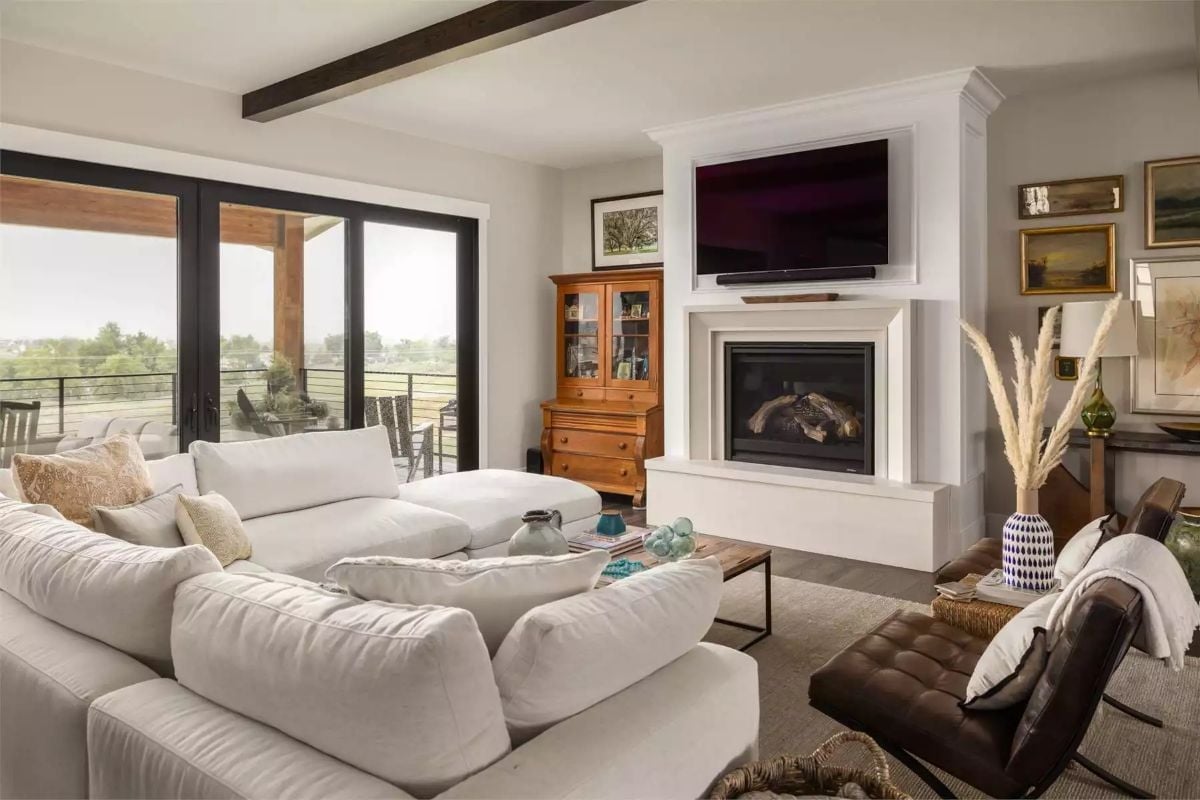
Pampas grass in a blue-dotted vase adds just enough texture to keep the white-on-white palette from going flat. The TV sits flush inside a built-in surround above the gas fireplace, so the wall stays clean rather than becoming a cable management problem. Glass doors to the deck pull natural light deep into the room without competing with anything else going on in here.
Why It Works: Orienting the sectional with its back to the entry and its face toward both the fireplace and the deck view means the room reads well from multiple angles, not just the obvious one. The leather lounge chair in the corner gives whoever gets displaced from the main couch somewhere worth sitting — which in a multigenerational house happens more than you’d think.
Cane Barstools, Dark Ceiling Beams, and a Dining Table That Seats the Whole Extended Family
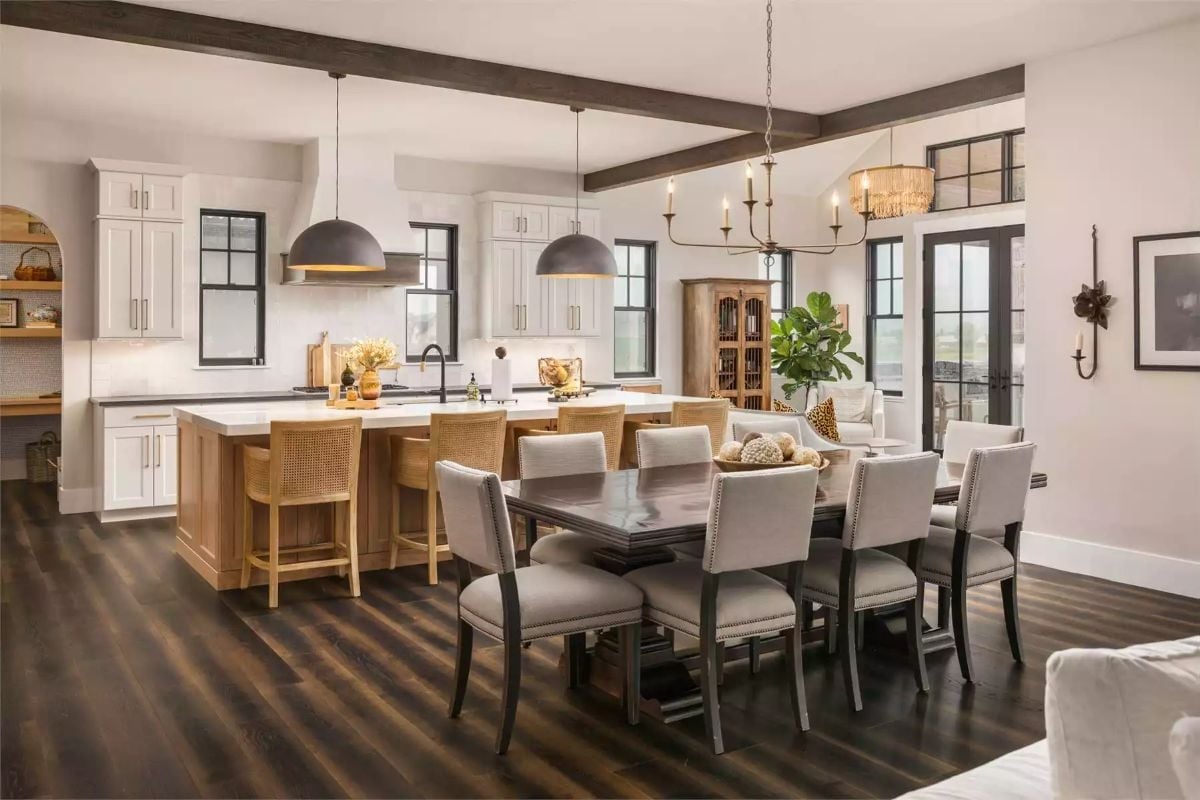
Matching pendants over the island keep the kitchen grounded while a candelabra chandelier signals the shift to dining territory — two different moods in one open room, cleanly divided by lighting alone. Dark wide-plank floors run through both zones without interruption. The fiddle-leaf fig in the corner is earning its place. And the cane-back barstools bring in a woven texture the upholstered dining chairs don’t offer, which is exactly why you need both.
Cane-back barstools at the island pull in texture that the upholstered dining chairs don’t offer.
Leopard Pillows and Light Oak in a Kitchen That Refuses to Play It Safe
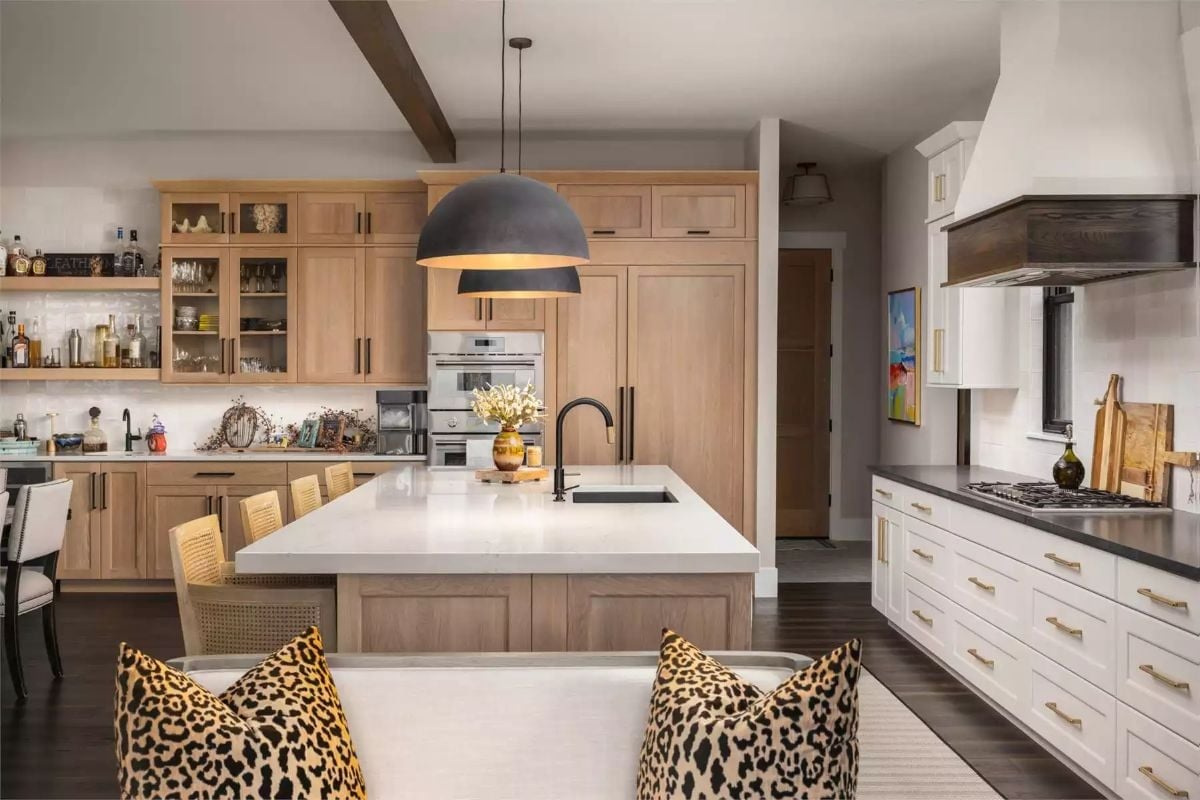
Light oak cabinetry runs the full perimeter, but the real tension is between the matte black dome pendant and the brass hardware on the white cabinet run along the right wall. Two different hardware finishes, two different cabinet colors — and it holds together. The leopard pillows on the banquette seat aren’t subtle. They don’t need to be.
Two Kitchens in One Layout
The right wall functions almost as a separate prep zone, with its own cooktop, a dark countertop, and a range hood finished in what looks like stained oak. That surface reads harder and darker than the marble island across from it, which draws a natural line between cooking and serving without a single wall doing the work. It’s a smarter division than most open kitchens manage.
Greige Vanity and Penny Tile in an En Suite That Connects Without Competing
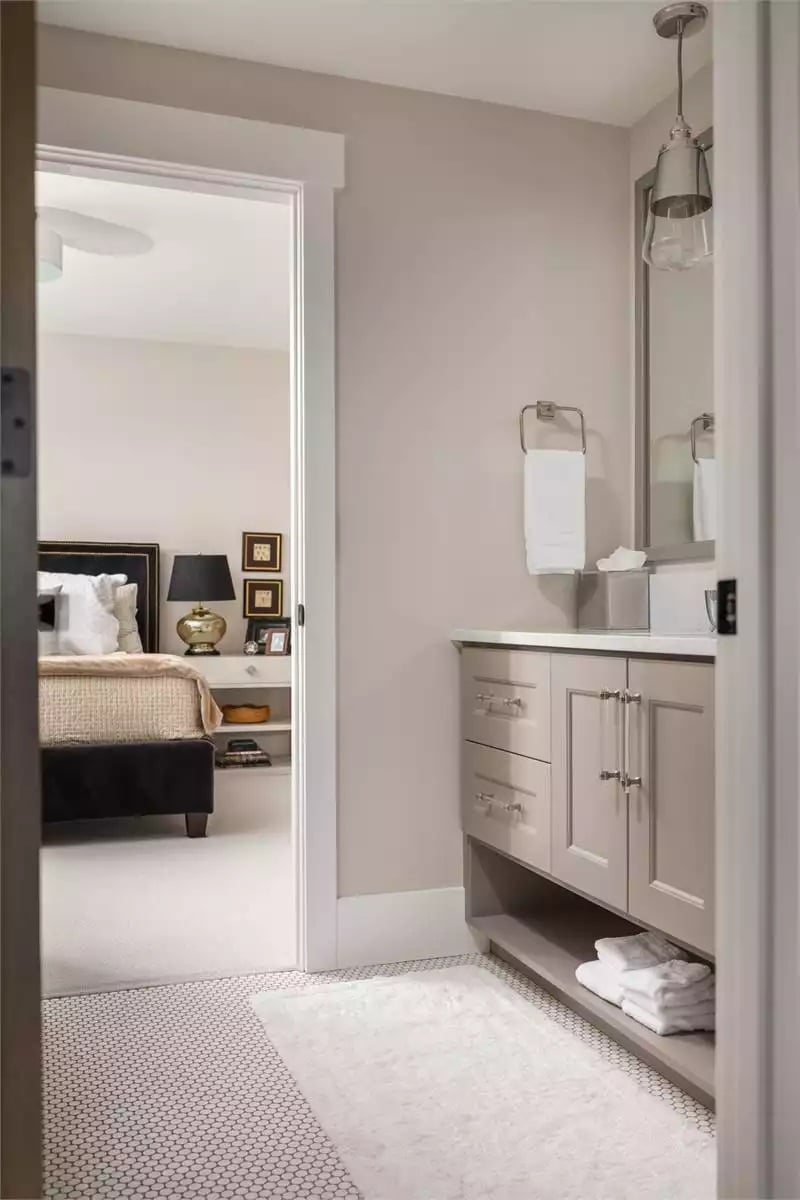
Greige cabinetry with polished nickel pulls keeps the vanity grounded. Open shelving below holds rolled towels — practical, not precious. The pendant overhead reads more like a kitchen fixture than a bathroom one, and somehow that’s exactly why it works.
Ask Yourself: If your bathroom connects directly to the bedroom, do the finishes feel like a continuation or a collision? Greige cabinetry bridges those two rooms here without forcing an exact match. It’s worth checking whether your hardware finish is doing the same quiet work — or just getting ignored.
Pin It
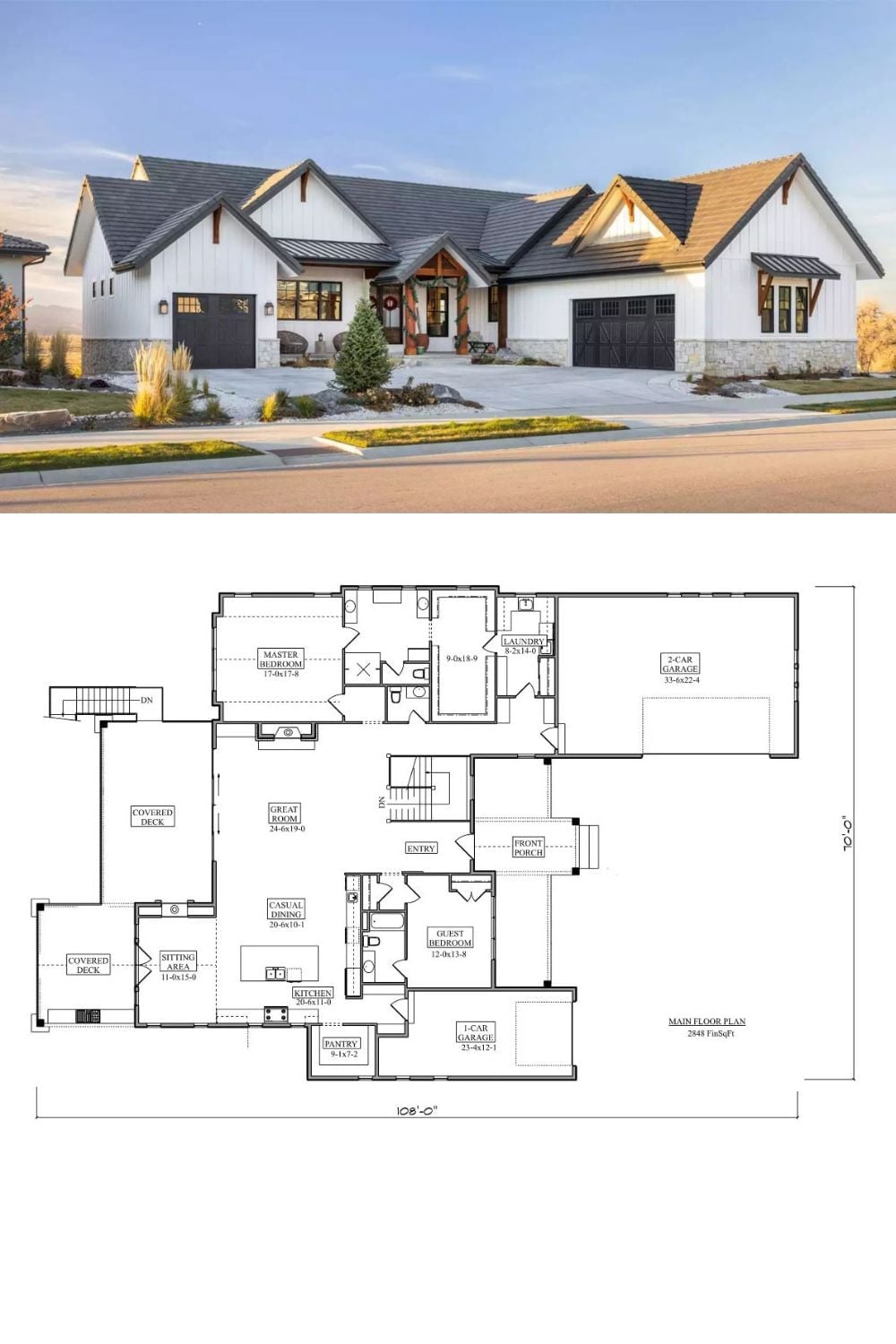
The exterior shows a modern farmhouse with white board-and-batten siding, stone accents, and three gabled rooflines pulling the facade together. Below it, the main floor plan lays out 2,848 square feet: master bedroom, guest bedroom, great room, kitchen with pantry, casual dining, sitting area, covered decks, laundry, and that split two-car plus one-car garage configuration on opposite ends of the front.
Trend Alert: Split-garage layouts — a two-car bay on one end of the facade, a one-car on the other — are showing up more in modern farmhouse designs because they break the visual mass of the frontage without giving up any parking. Garages have a way of eating a home’s face whole, and this is one of the cleaner solutions to that problem.