🔥 Would you like to save this?
Most people buy a tree, drag it home, and then figure out where it fits. Backwards. The trees that stop you cold are the ones that look like the architect drew them in — a fir that climbs with a double-height wall, a pencil tree slotting into a bay window like it was milled to match. Scale, silhouette, the spot it stands, even the ornament size: all of it answering to the beams and arches and stairs already in the room. Here are ten trees that treat the architecture as a partner instead of a backdrop.
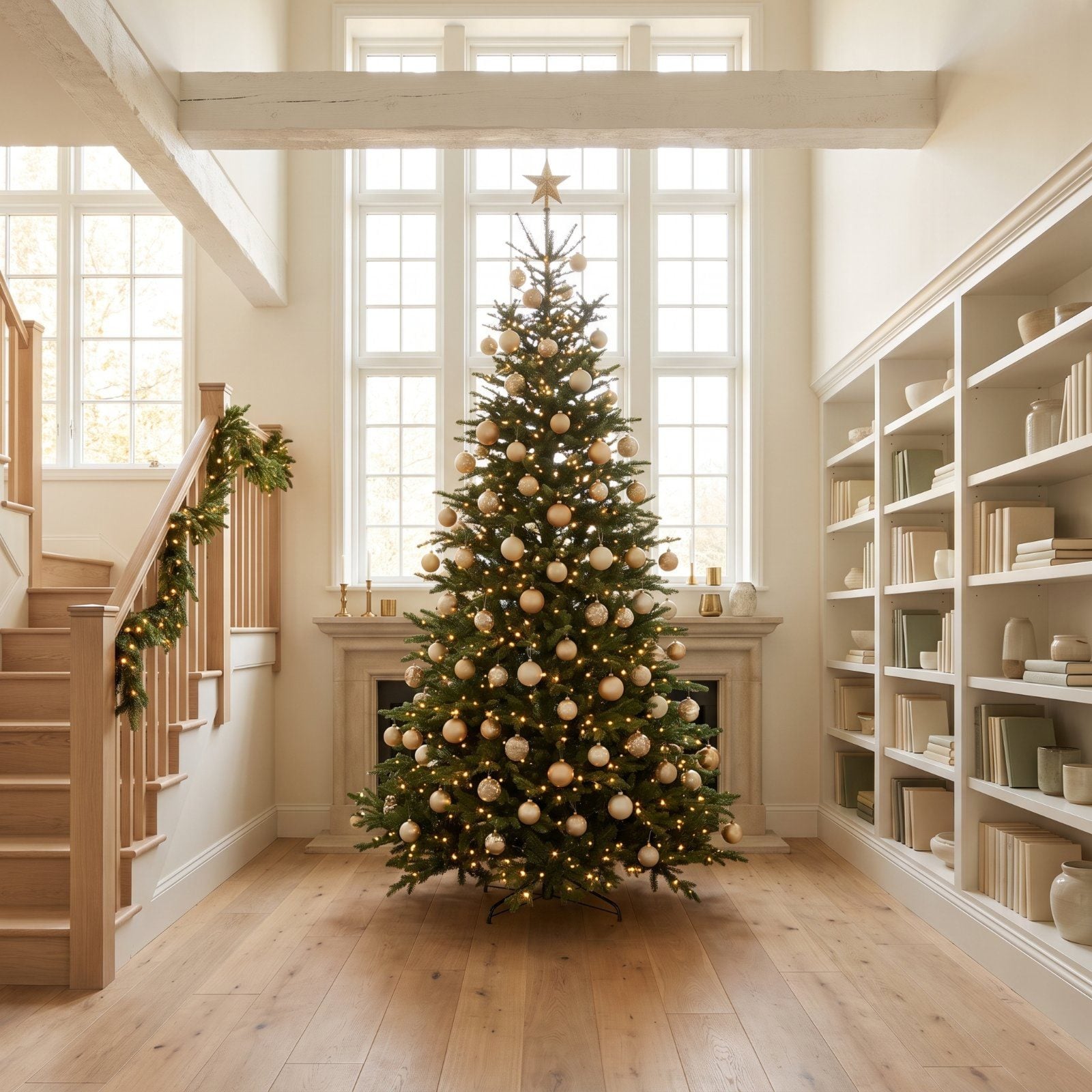
38. The Soaring Fir Built for a Double-Height Great Room
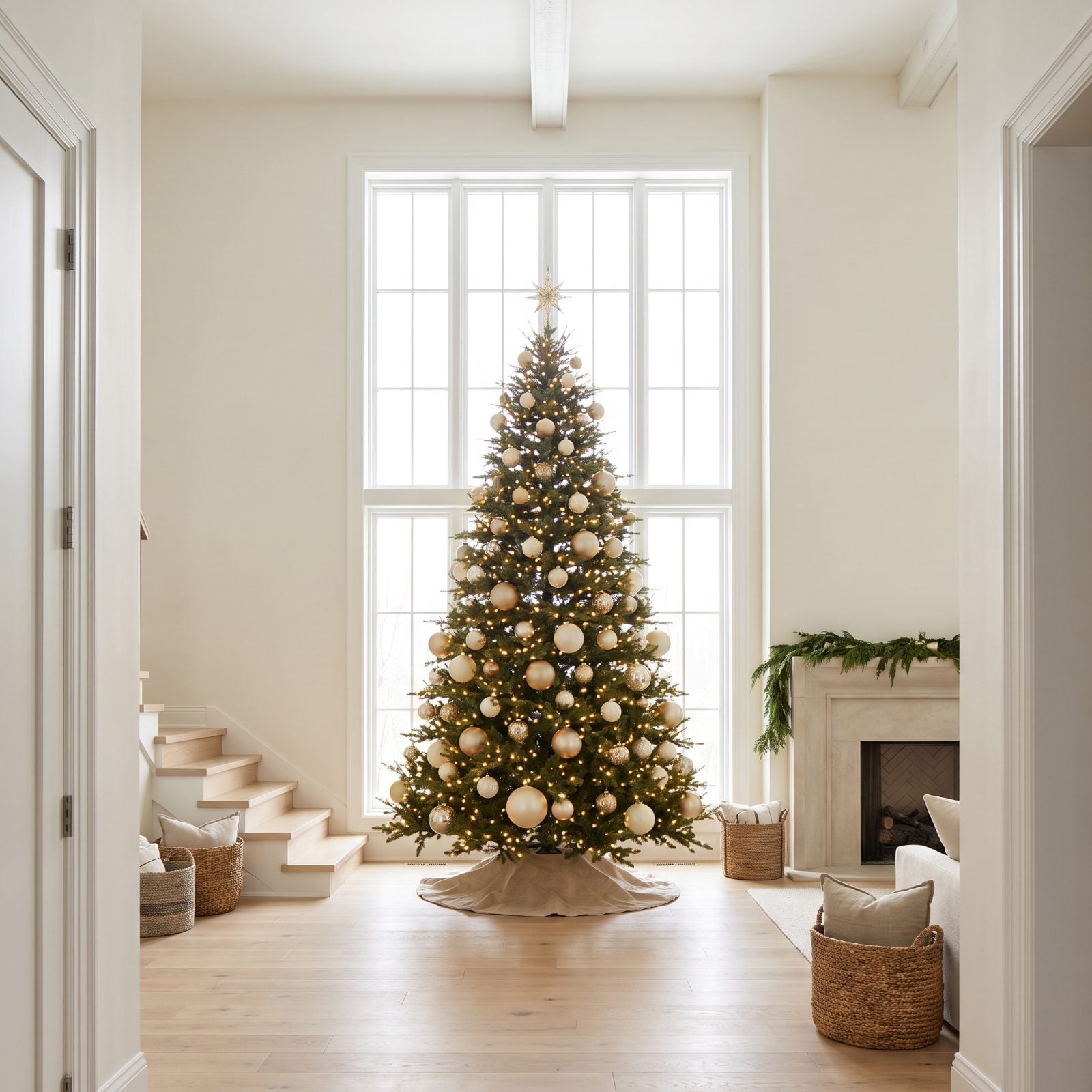
A short tree in a two-story room looks like a mistake nobody wanted to admit. This one reads the ceiling and answers it. At sixteen feet the fir fills the vertical the window wall opened up, so the eye travels top to bottom instead of stalling halfway.
In order to come up with the very specific design ideas, we create most designs with the assistance of state-of-the-art AI interior design software. Also, assume links that take you off the site are affiliate links such as links to Amazon. this means we may earn a commission if you buy something.
The ornaments graduate larger toward the base, which keeps the whole thing from looking top-heavy under all that height. Those oversized gold glass ornaments read from across the room, and across a room this big that’s the only scale that earns its keep.
37. The Broad Tree Centered Under a Palladian Window
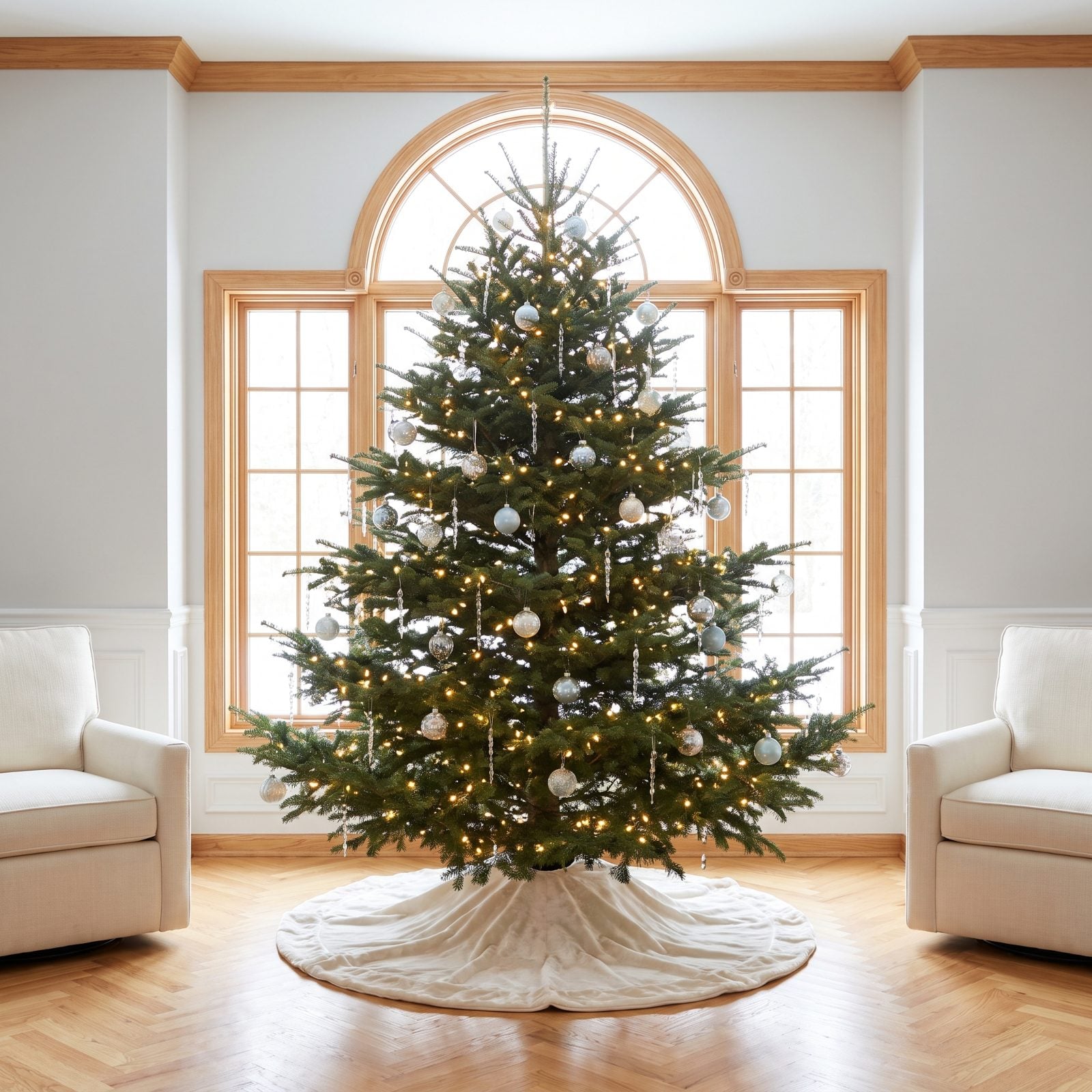
The round top of a Palladian window wants a round-topped tree underneath it. Match those two curves and the whole wall clicks into one shape.
A broad full fir does the job a skinny one can’t here, filling the horizontal span between the flanking panes so tree and window read as a single centered picture. The crystal icicle ornaments catch the light coming through the glass. Silver and pale blue keep it cool and quiet, which is exactly what a formal arched window asks for.
36. The Cedar That Follows the Pitch of an A-Frame
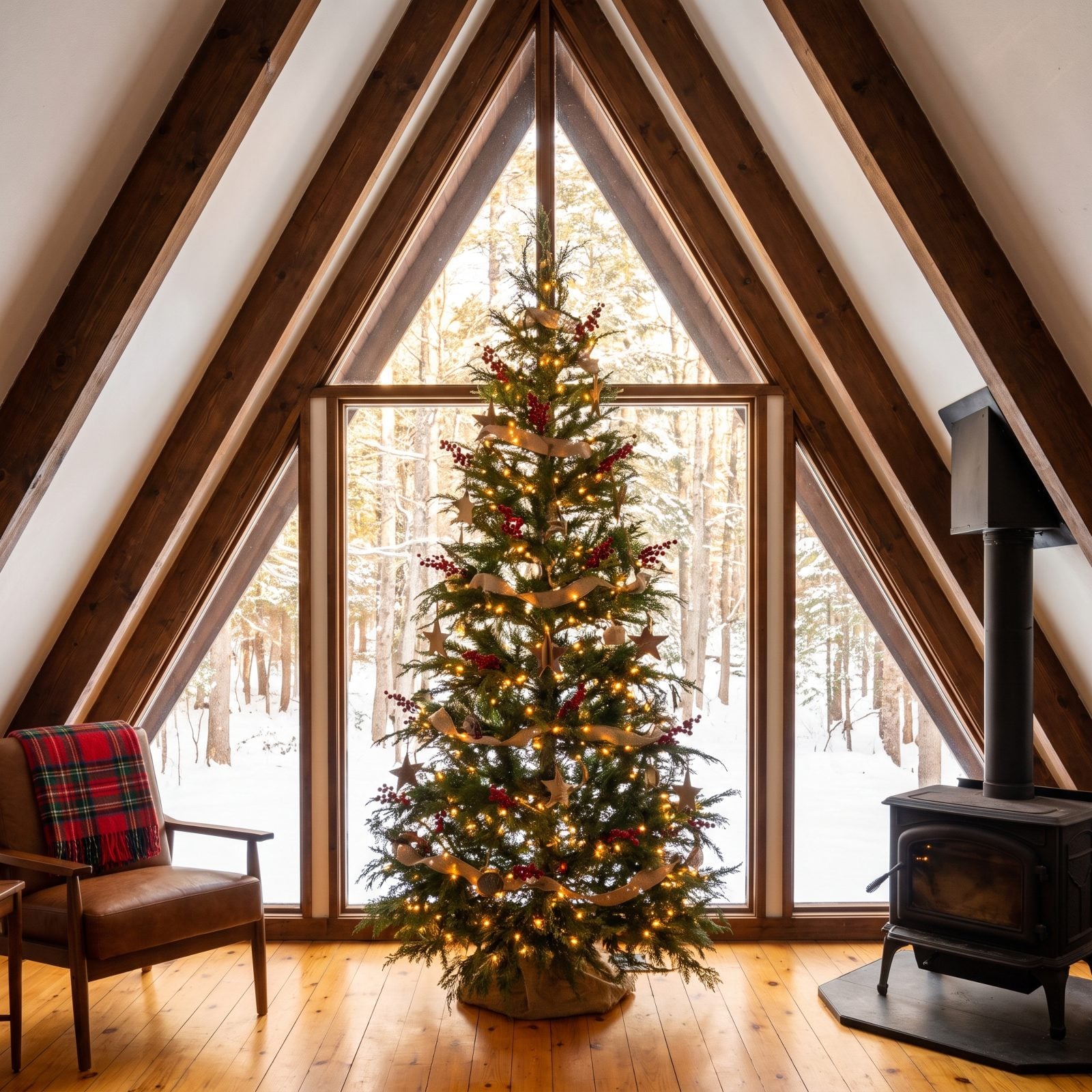
An A-frame is already a Christmas tree made of lumber. So you put a tree inside it that rhymes with the roof.
The cedar’s narrow outline tracks the steep pitch of the gable — two triangles nested against the glass. Keep the decoration rustic to match the cabin bones: red berry clusters, wooden stars, burlap ribbon. A full dense tree would fight the roofline here. The slim one agrees with it.
35. The Sculptural White Tree That Echoes a Spiral Staircase
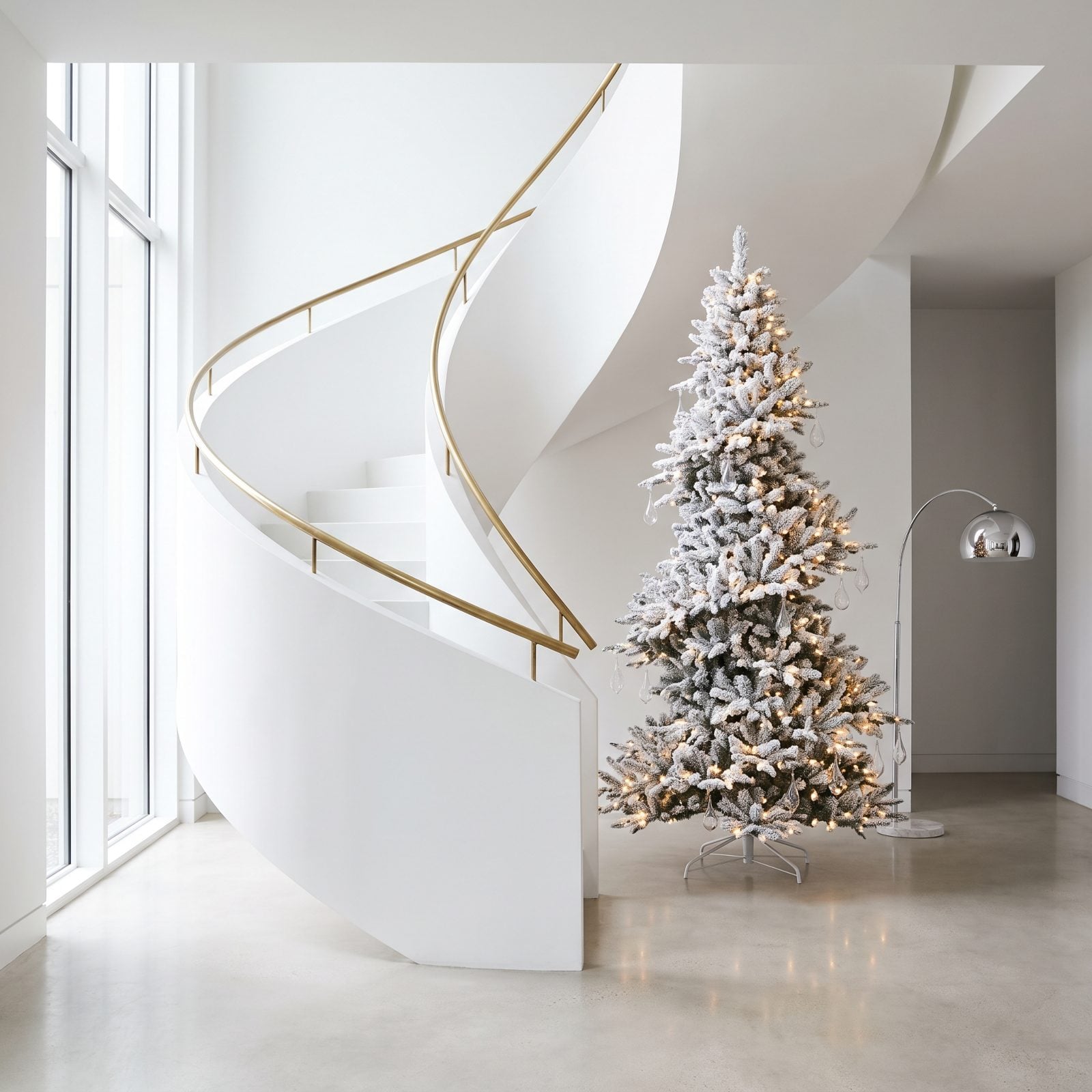
Put a white flocked tree next to a white spiral staircase and the two forms start talking. Both twist upward. Both are sculpture.
The trick is restraint. Clear teardrop ornaments and warm white lights, nothing more, so the tree’s loose spiraling shape stays the point. Pile it with tinsel and you bury the one thing worth seeing. The brass floor lamp nearby picks up the warm metal of the stair rail and keeps the whole corner from going cold and clinical.
34. The Pencil Tree Slotted Into a Victorian Bay Window
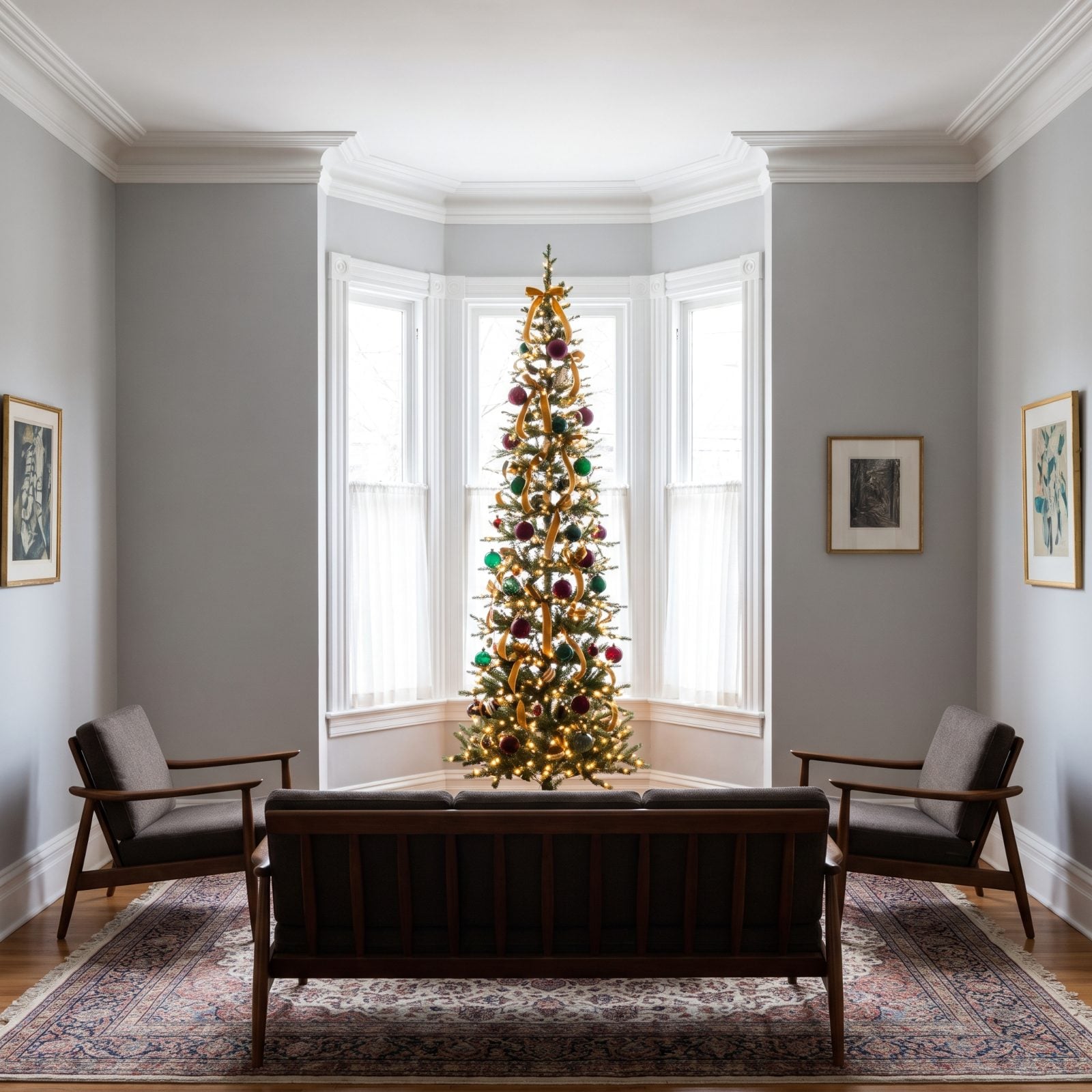
Victorian bay windows are all verticals — tall thin panes, slim mullions, the whole thing reaching up. A fat tree jammed in there blocks the light and wrecks the proportion. A pencil tree does the opposite.
Its narrow column matches those thin panes and tucks into the bay without crowding it. Jewel-tone vintage glass ornaments in garnet and emerald suit the era, and the sheer curtains behind let daylight glow right through the branches.
33. The Rustic Fir Aligned With Exposed Timber Rafters
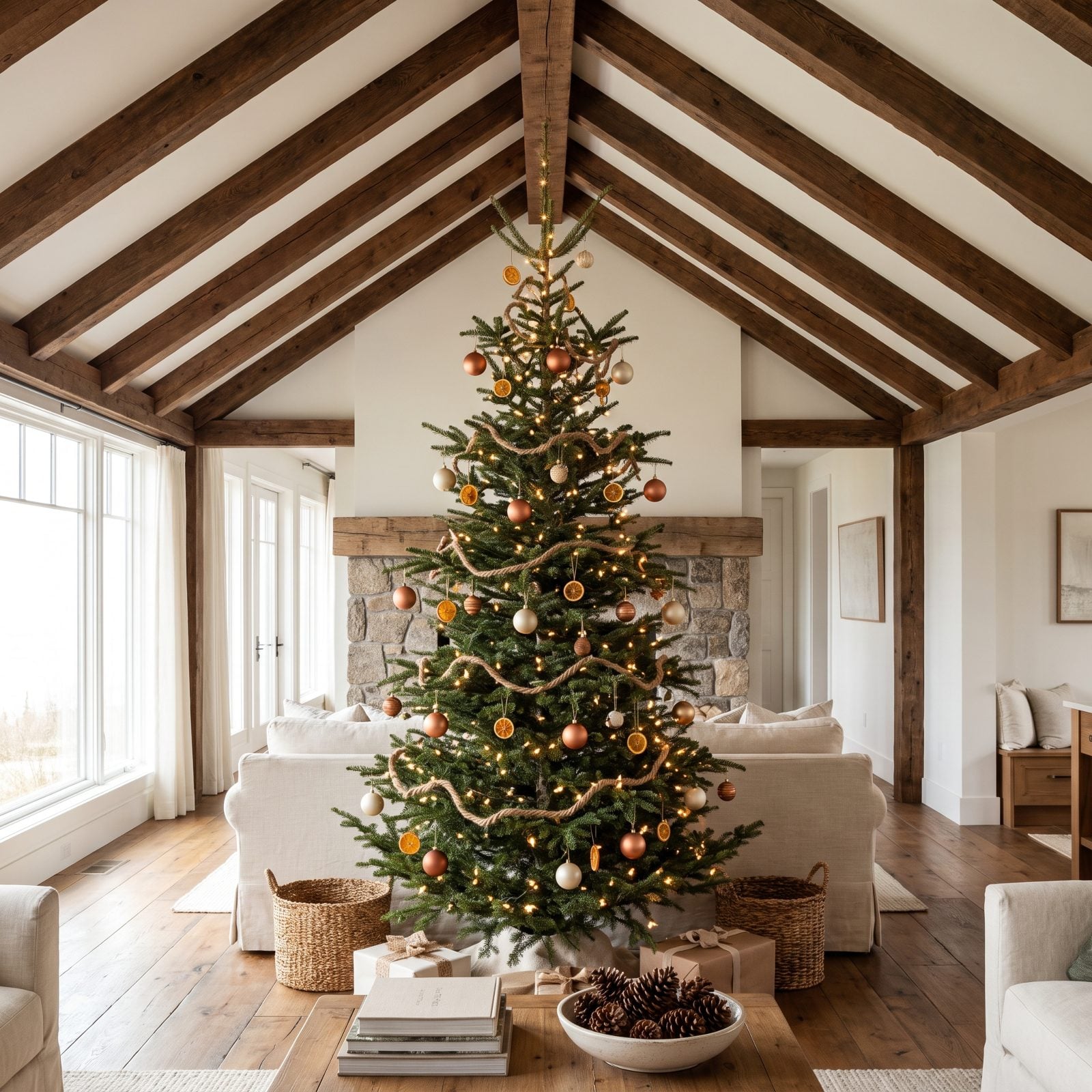
That ridge beam overhead is the room’s spine. Line the tree’s peak up with it and suddenly the whole ceiling reads as deliberate.
A rustic fir belongs under heavy timber, and the ornament palette agrees: matte copper, cream, dried orange slices, jute garland. Nothing shiny or synthetic to clash with the raw grain above. Same logic drives a country mudroom decor scheme, where the architecture sets the palette and everything else falls in behind it.
32. The Tree Centered on a Coffered Ceiling Grid
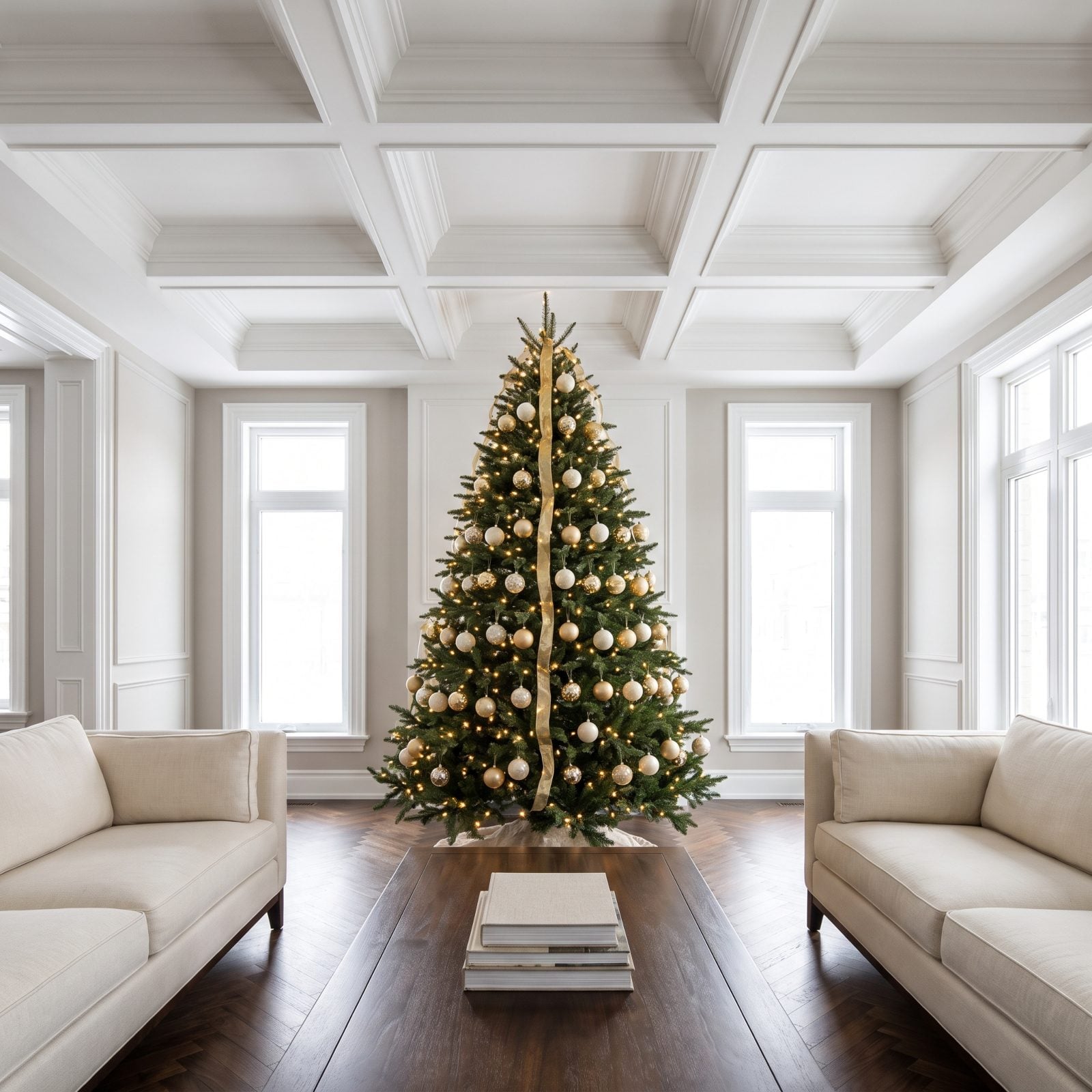
A coffered ceiling is a grid, and grids beg for a center. Stand the tree so its tip aims straight at the middle coffer and the room snaps to attention.
Order calls for order. Gold and ivory ornaments go in tidy rows rather than scattered, echoing the clean squares overhead. A messy tree under all that geometry just picks a fight with its own backdrop.
31. The Tree Framed Exactly by Built-In Library Shelves
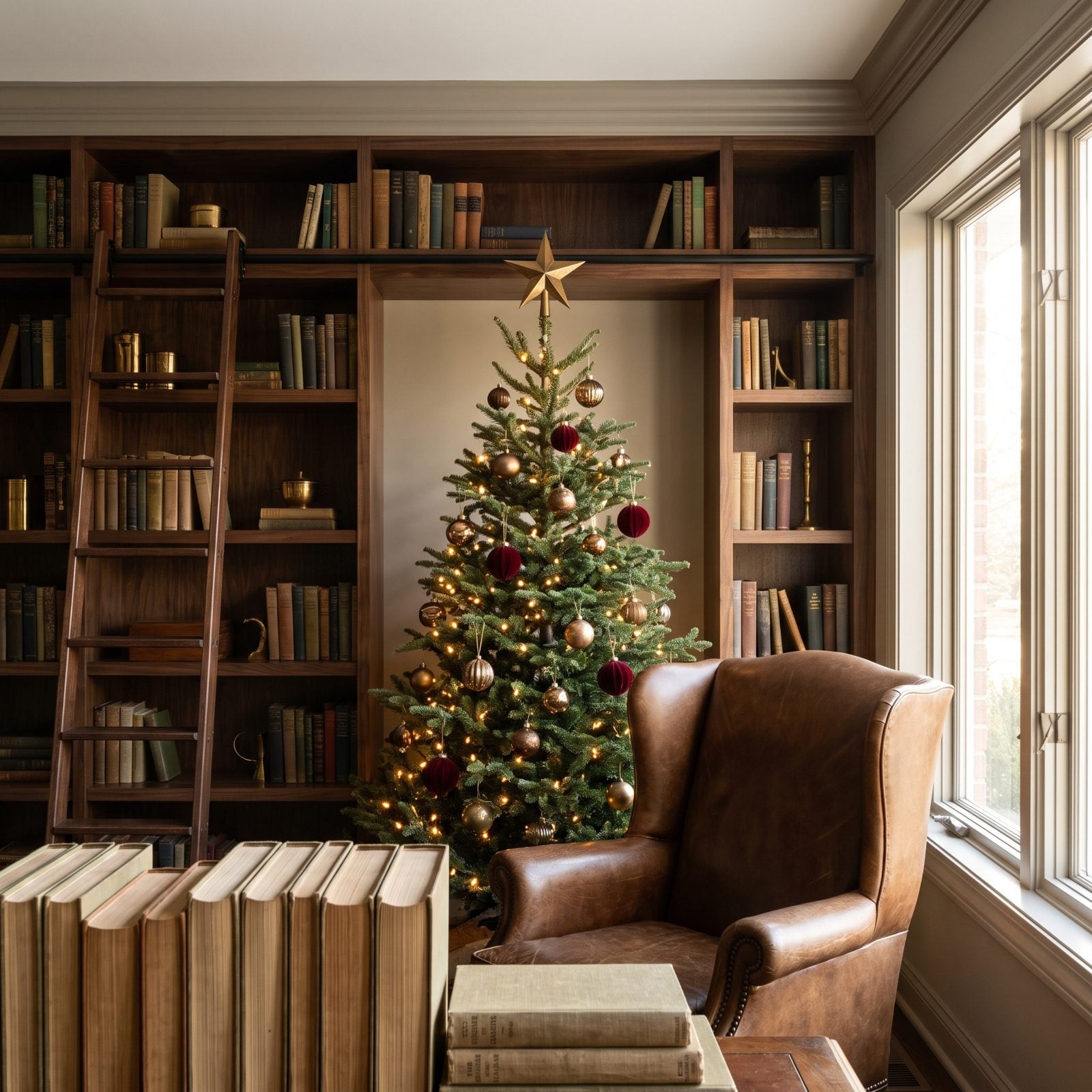
The shelves already drew the frame. Put the tree inside it and let the built-ins do the staging.
Height is what makes or breaks this one — the brass star should land right at the top shelf line so the tree looks built in rather than parked in front. Antique brass and deep red ornaments pull from the walnut and leather already in the room, and warm white lights keep everything readable against all those dark book spines.
30. The Tree Framed by a Tudor Arch and Leaded-Glass Windows
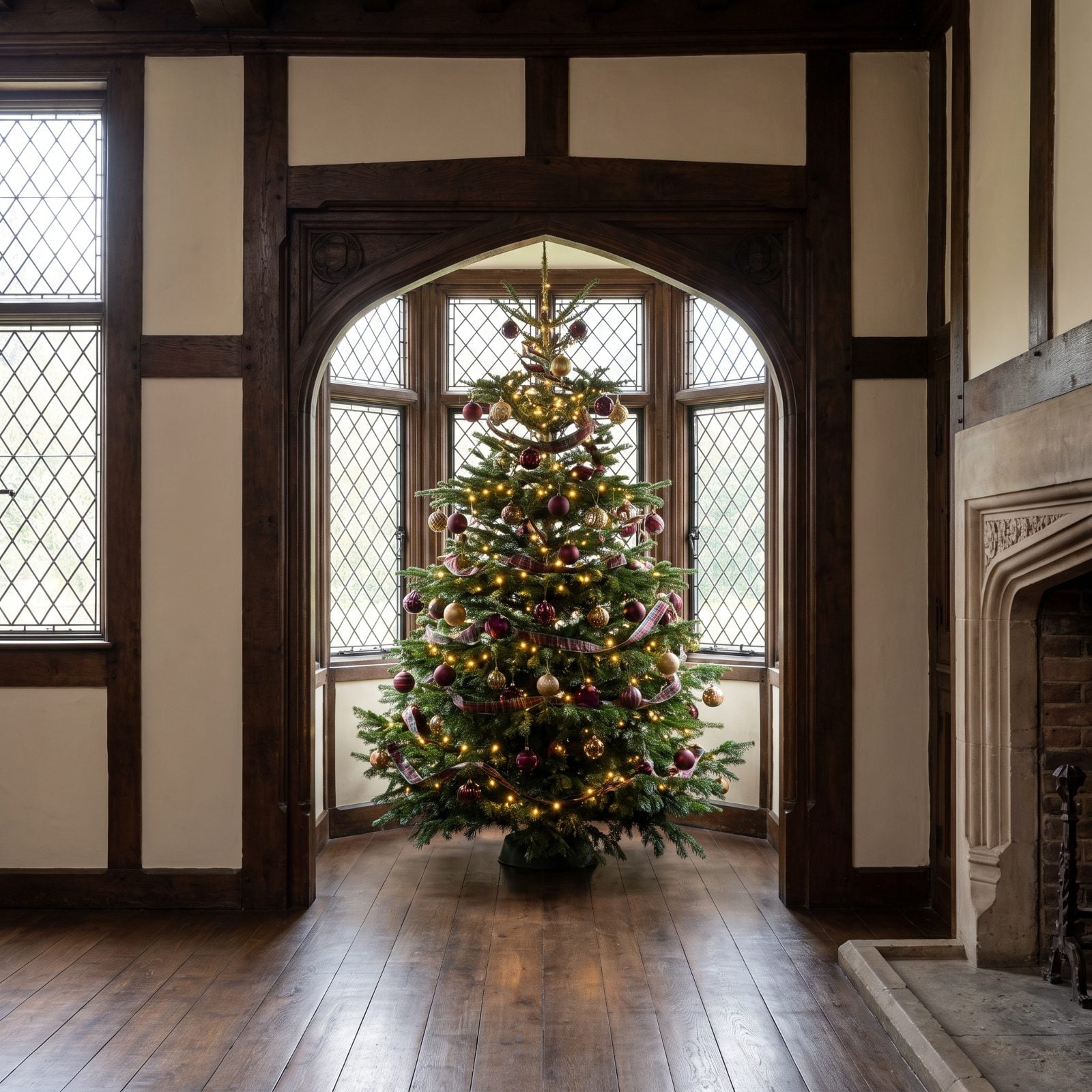
A Tudor arch comes to a soft point at the top. Center a round-topped fir inside it and the crown tucks neatly under that point, so arch and tree read as one framed picture.
Those leaded diamond panes on either side set the mood, so the ornaments lean old — burgundy and gold glass, tartan ribbon, nothing modern. Place it any other way and you throw away the whole reason the arch was worth having.
The architecture already made the frame. Your only job is to stand the tree inside it.
29. The Sparse Tree for a Minimalist Concrete Room
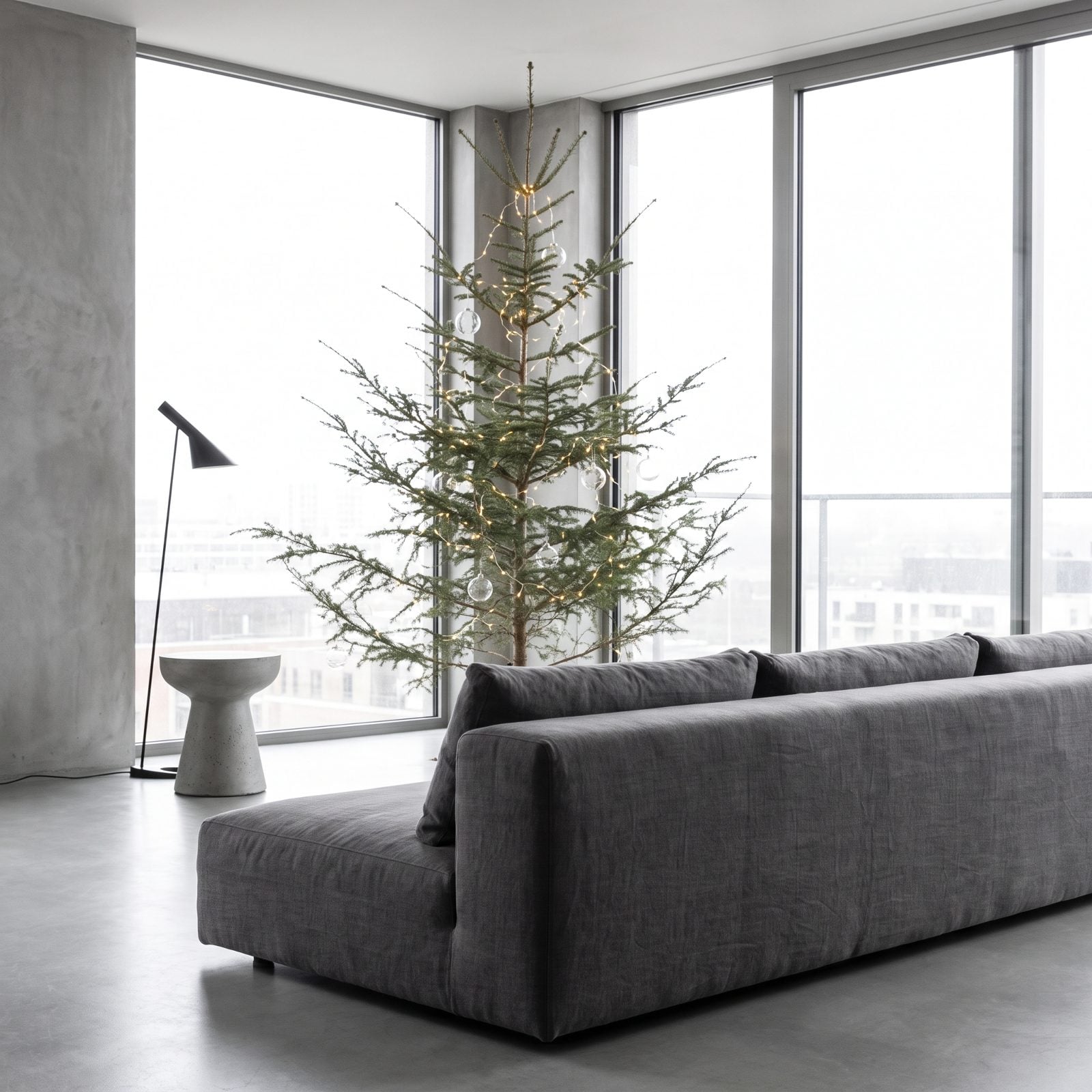
Concrete rooms live on restraint, and a stuffed, glittering tree would break the spell instantly. A sparse one keeps the pact.
Open branches, a single strand of warm light, a few clear ornaments. The gaps between the branches matter as much as the branches themselves, same as the empty floor the concrete room already trades on. I know the loaded-to-bursting tree is everyone’s default. But in a room this quiet, the half-empty tree is the braver and better call.
28. A Natural Fir Framed by a Stone Lodge Fireplace
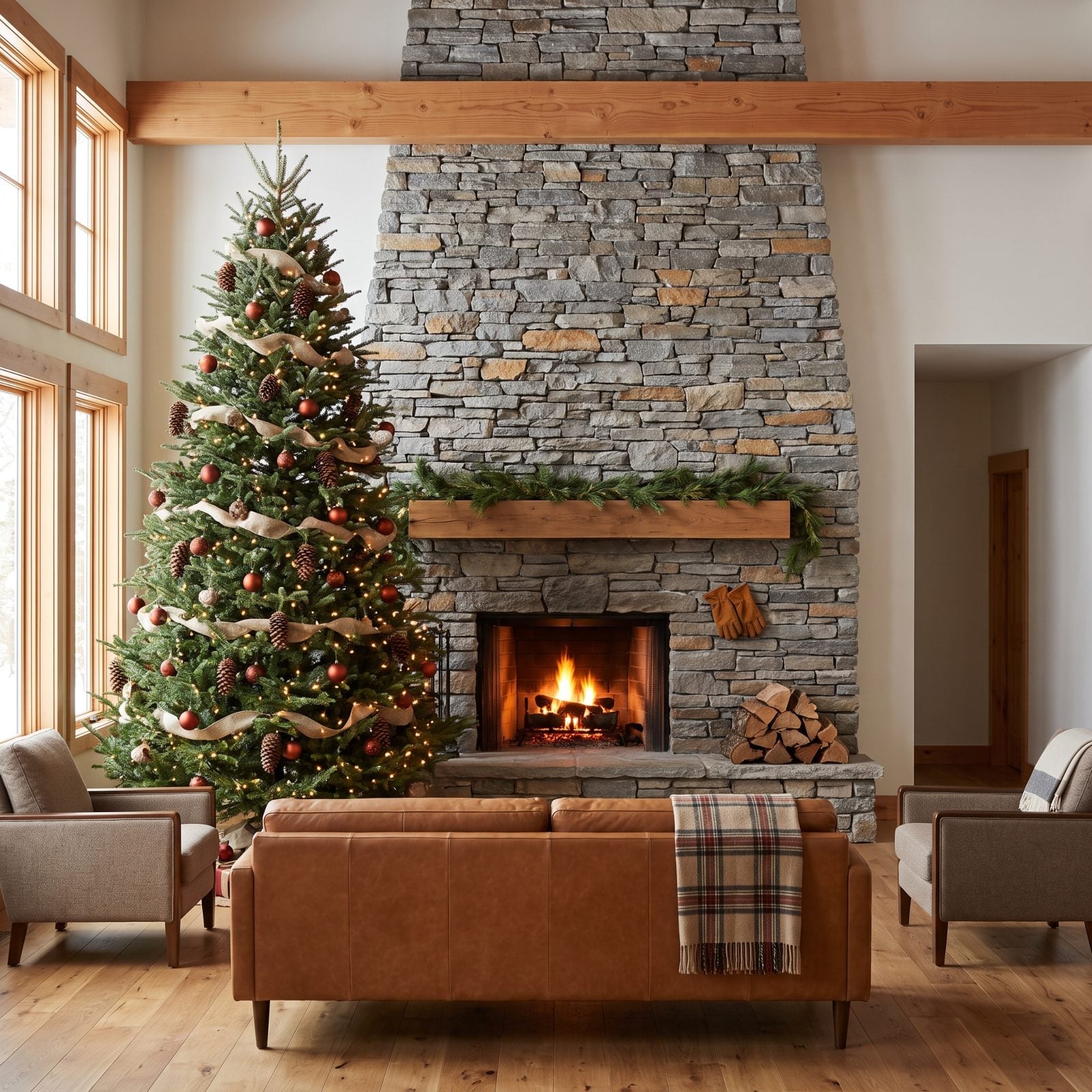
The win here is restraint. That stacked fieldstone runs floor to ceiling, so the fir had to answer with equal heft, which it does: broad base, full shoulders, a silhouette as rough as the stone beside it.
Ornaments stay quiet on purpose. Matte pinecones, rust-red glass, burlap ribbon. Anything glossier would fight the stone and lose, and the tree stops just under the lowest ceiling beam so nothing feels crammed.
27. A Silver Tree Reflecting a Midcentury Glass-Walled Room
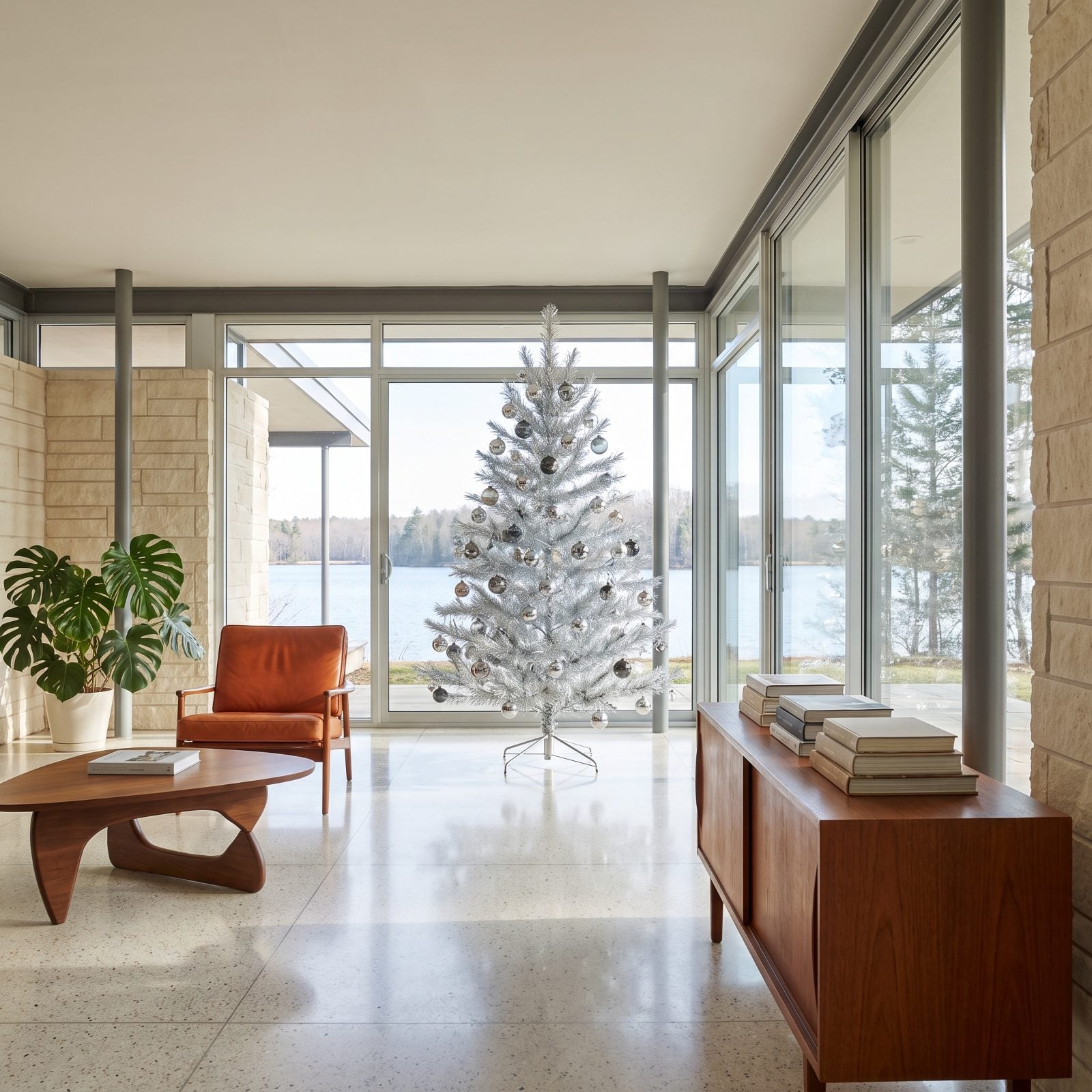
Aluminum against glass. The whole trick is reflection.
That silver tree isn’t trying to look real, and good thing, because next to those clean post-and-beam lines a natural fir would read as a mistake. The metallic needles bounce midday light straight back into the glass wall, so you get the tree twice. Smoke-glass baubles and thin silver tinsel keep everything in the same cool family as the walnut credenza and terrazzo floor.
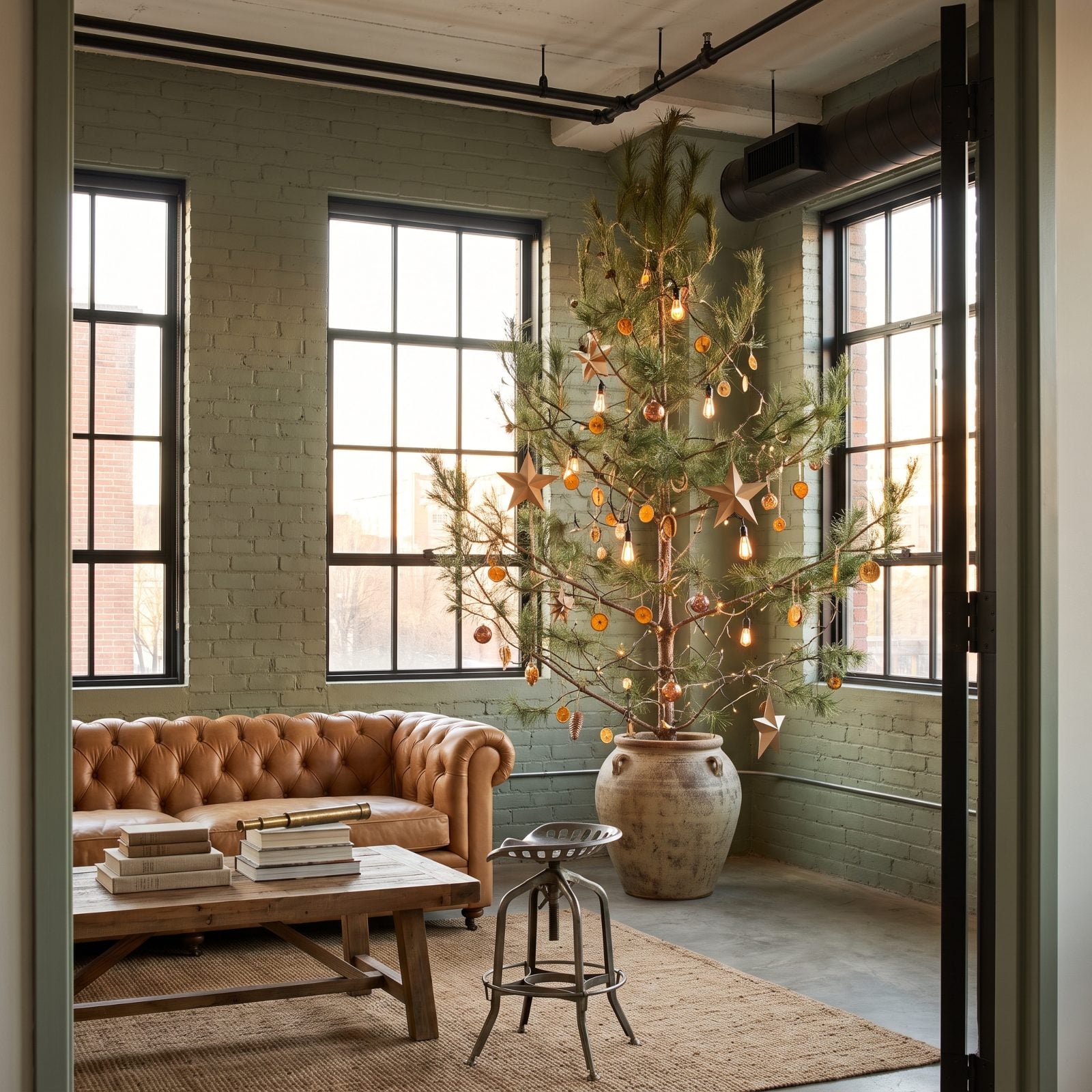
26. A Loose Woodland Tree Softening an Industrial Brick Loft
🔥 Would you like to save this?
A loft is all hard lines. Brick, steel, concrete, ductwork running overhead like exposed bones.
So you don’t bring in a dense, manicured tree. You bring in a loose woodland pine with gaps you can see through, and those gaps do the softening a sofa and a rug can’t. Dried orange slices, kraft-paper stars, Edison bulbs throwing amber light off the brick. Industrial spaces take warmth beautifully, the same way a bare industrial porch decor setup loosens up with a single string of lights. Set between two black steel-framed windows, the airy tree becomes the one wild thing in a very square room.
25. A Fan-Shaped Branch Tree Echoing an Art Nouveau Window
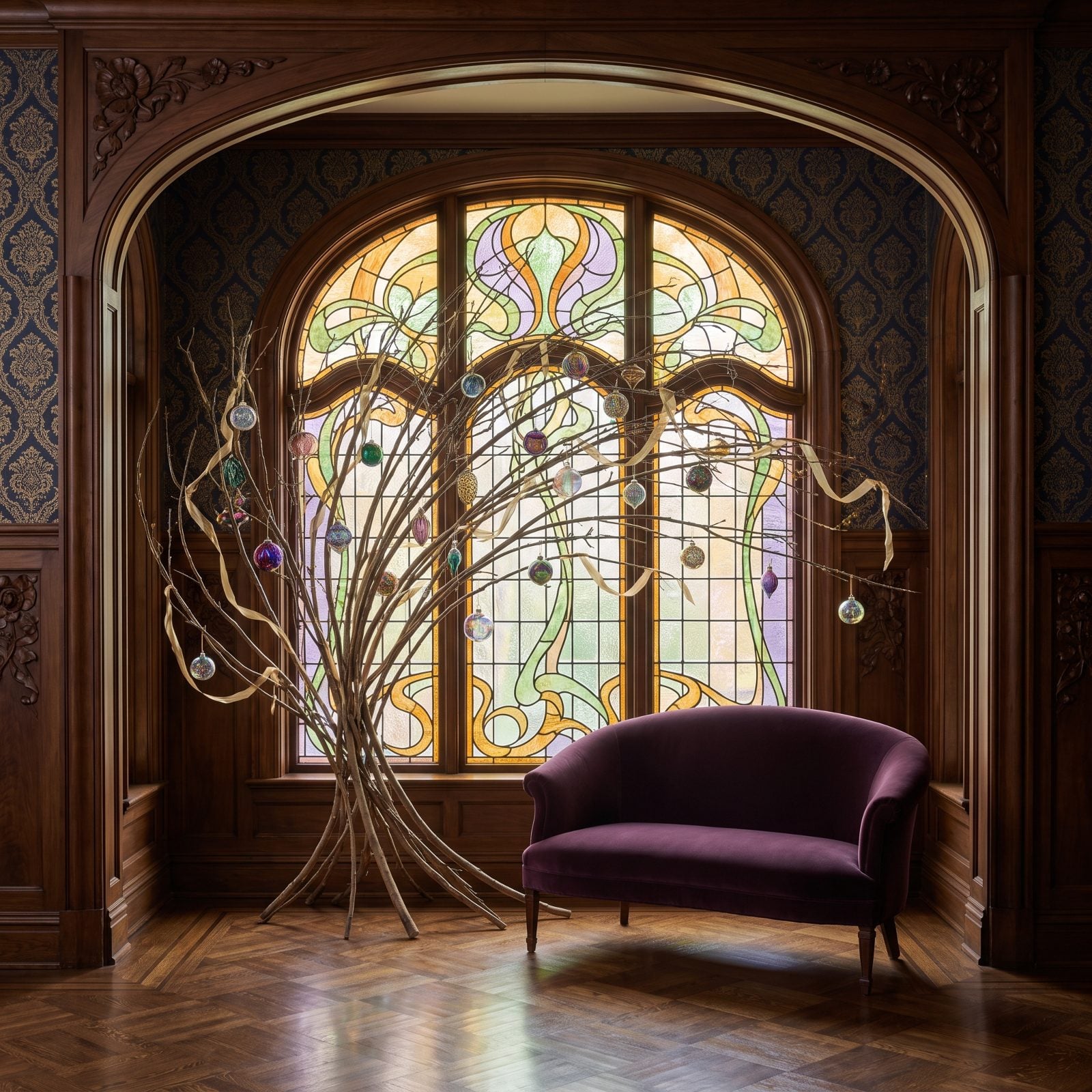
Art Nouveau never met a straight line it liked. Everything curves, fans, whips outward like something growing.
So the tree curves too. Fanned branches sweep up and out to echo the whiplash lines in the stained glass, and the gold ribbon trails in loops instead of tidy horizontal bands. Jewel-tone hand-blown ornaments pull the amber, moss, and lilac right out of the window glass and scatter it across the branches. Afternoon light drops colored patches onto the parquet. The whole corner reads like one continuous idea.
24. A Tree Placed on the Axis of an Enfilade Doorway
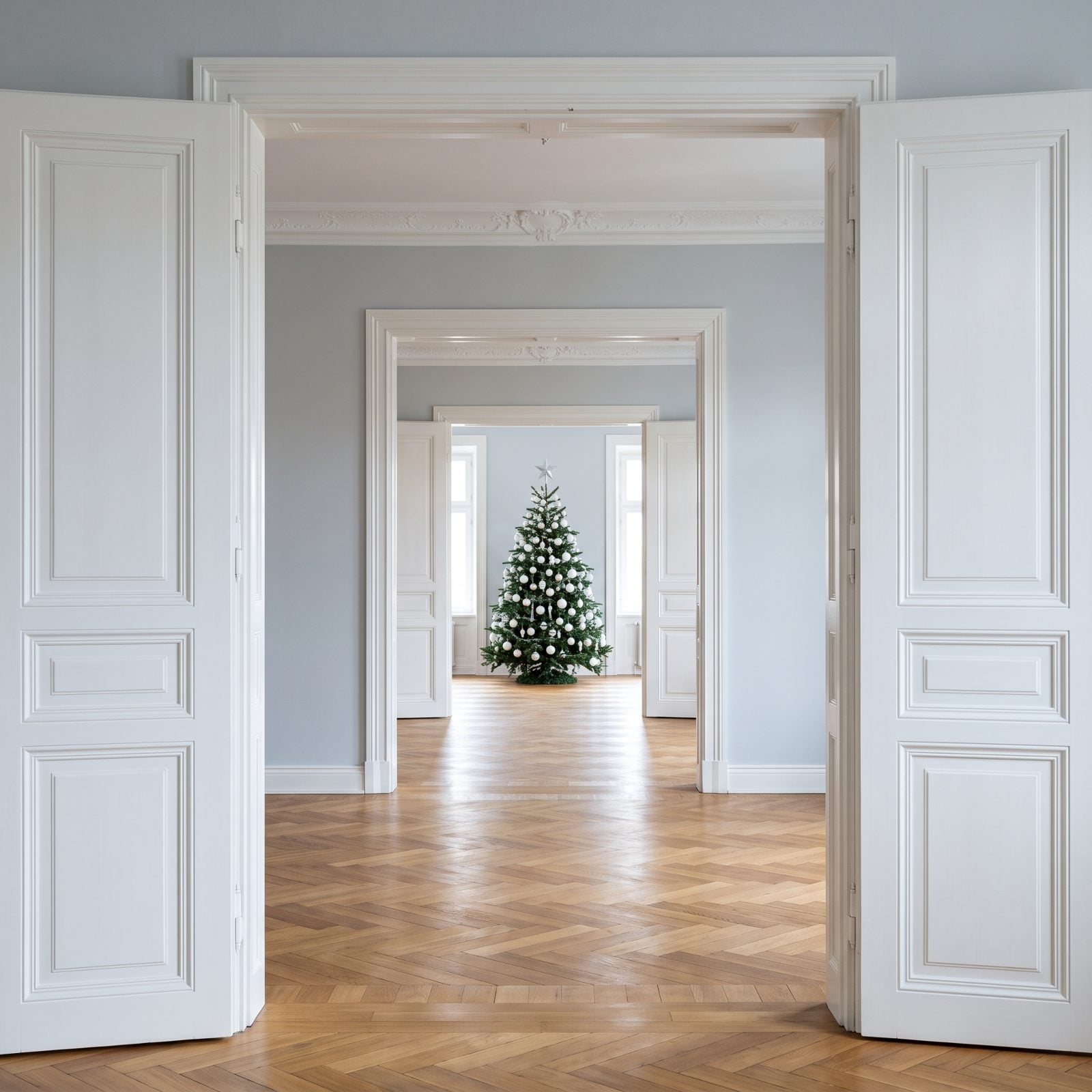
Here’s a trick older than the tree itself. An enfilade lines doorways up on a single axis, and your eye runs straight down it whether you want it to or not.
Put the tree at the end of that run, dead center, and every doorframe becomes a frame around it. Symmetry handles the rest: white and silver ornaments, a topper aligned to the center line, nothing off-balance. The building built the composition. The tree just stood where it was told.
23. A Cedar Tree Suited to an Arts and Crafts Inglenook
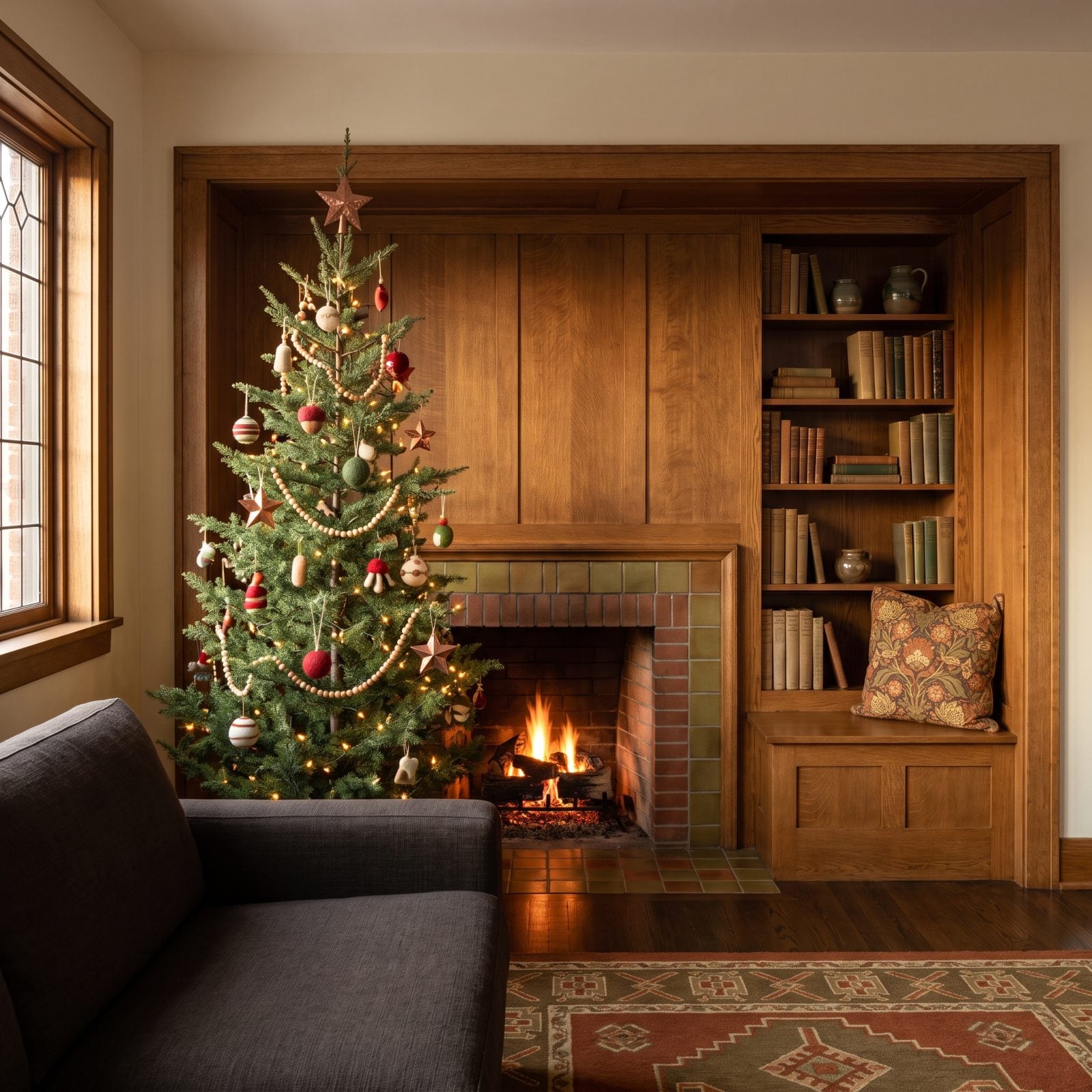
Scale is everything in an inglenook. That recessed alcove is deliberately snug, built-in oak benches hugging a small hearth, so a towering tree would blow the whole intimate mood.
A trim cedar keeps the proportions honest. Handmade ornaments do the rest: felted wool, wooden beads, copper stars, exactly the kind of decoration the Arts and Crafts crowd actually believed in.
Honest materials, handmade ornaments, nothing pretending to be fancier than it is. That’s the whole Arts and Crafts creed on a tree.
22. A Snow-Dusted Tree Mirroring an Alpine Chalet Interior
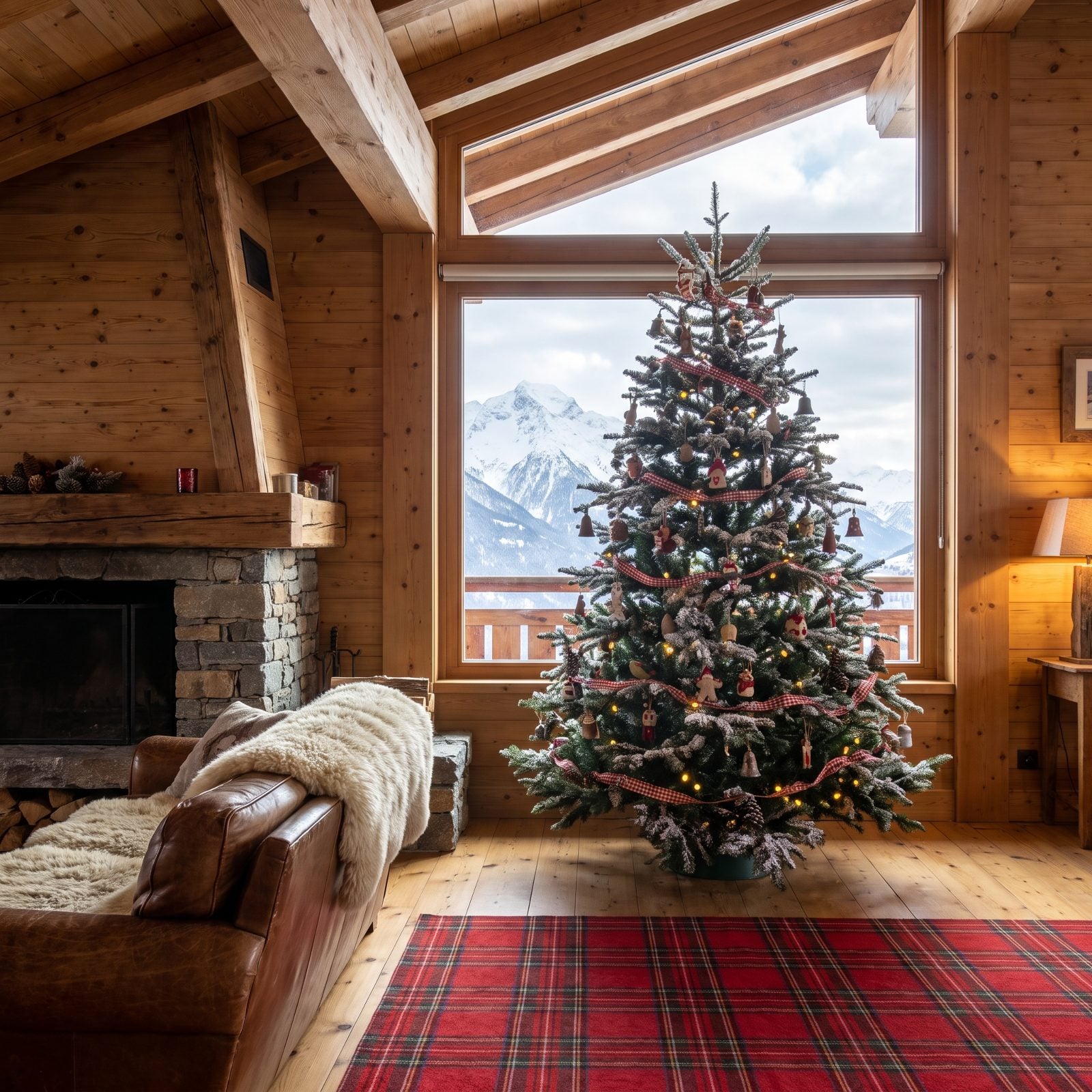
The flocking isn’t a gimmick here. It’s the room talking to the window.
Snow on the tree, snow on the peaks outside, and suddenly the glass stops being a wall and starts being part of the decoration. Honey-toned pine planking warms everything the cold outdoor light tries to cool. Red-and-white check ribbon, wooden figures, small bells. Want to push the warmth further? Pile on sheepskin throws and a plaid wool rug, the same layering logic behind good scandinavian workshop decor. A flocked tree would look odd in a sunny city flat. Up here it looks inevitable.
21. A Geometric Wooden Tree Inside a Bauhaus-Inspired Room
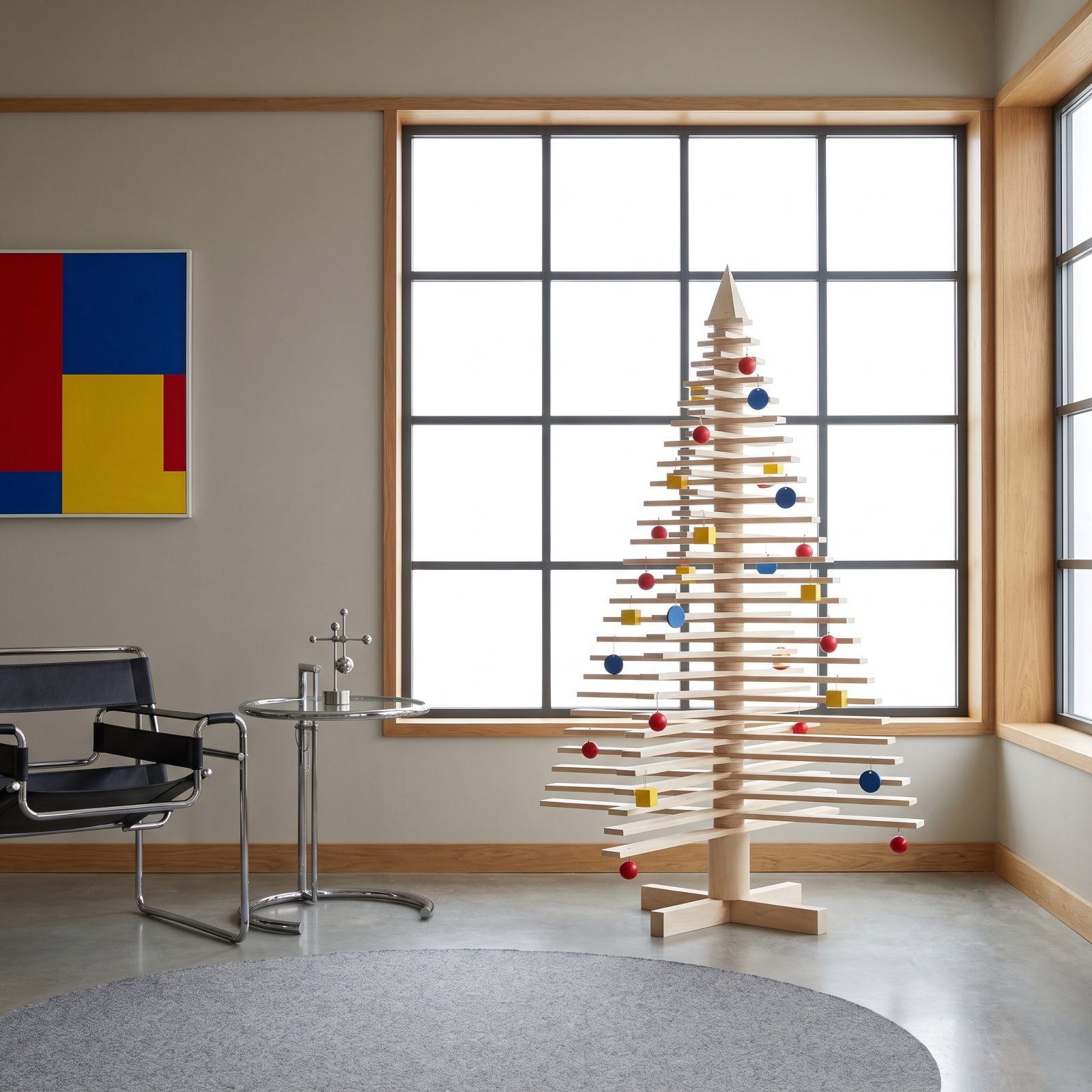
Bauhaus had rules. Form follows function, no ornament for ornament’s sake, geometry over sentiment. A fluffy green fir breaks every one of them.
A flat-slat birch tree doesn’t. Its stacked triangle is pure geometry, and the only decoration allowed is a few primary-colored shapes, red spheres, yellow cubes, blue discs, lifted straight from the painting on the wall. Against tubular steel and polished concrete, it looks less like a Christmas tree and more like a piece the room was always meant to have.
20. A Rounded Tree Balancing an Art Deco Room’s Curves
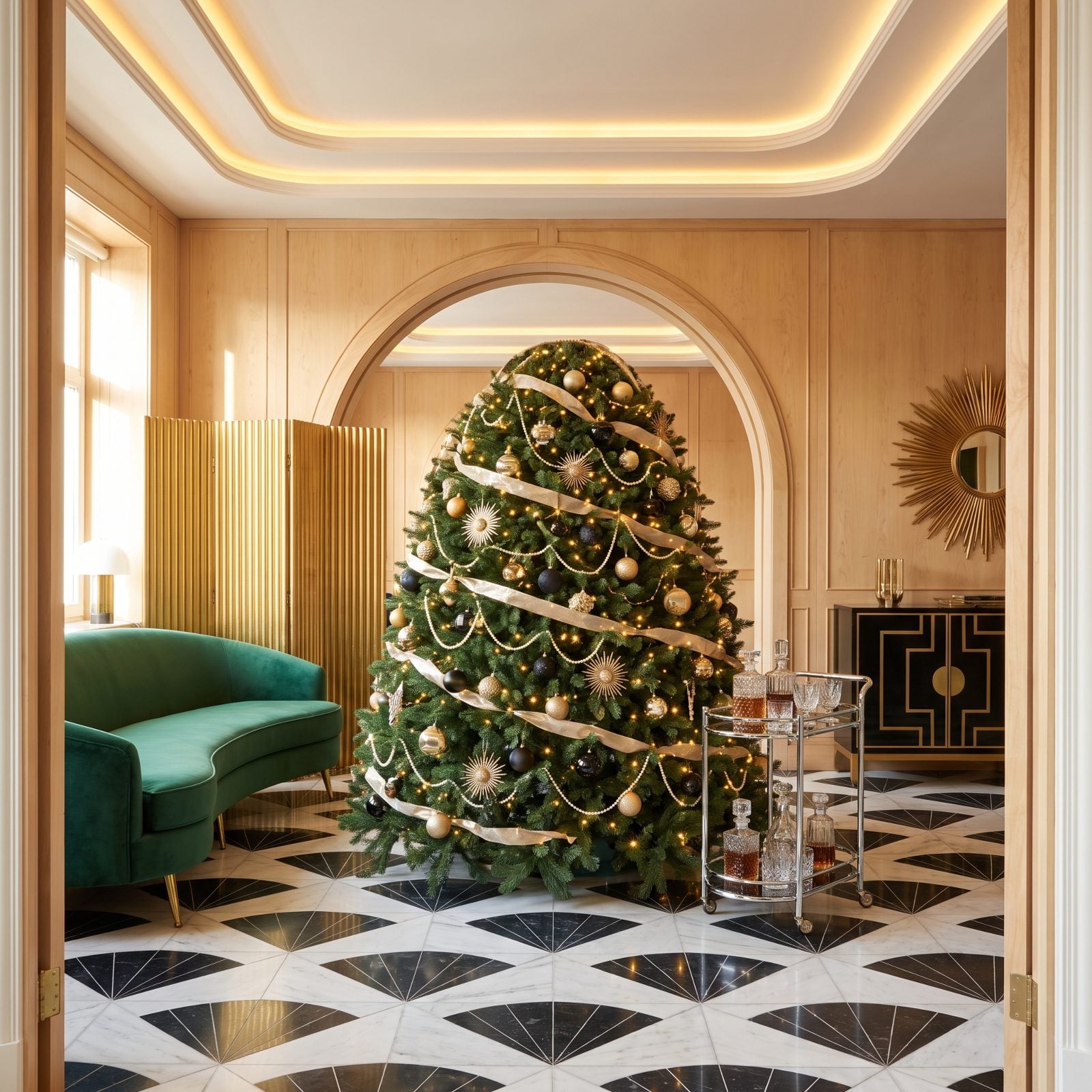
Deco loves a curve. Stepped coves, sweeping arches, a rounded velvet sofa that could be a wave frozen mid-roll.
So the tree goes rounded too, a soft domed silhouette instead of the usual sharp cone, so it belongs to the same family as the room around it. Then the glamour: gold and black baubles, sunburst ornaments, strings of pearls, champagne ribbon. It nods to the same high-shine confidence you see in glam kitchen decor. Against black-and-white marble and that emerald sofa, the tree becomes one more polished object in a very polished space.
19. A Restrained Fir Complementing Japanese-Inspired Joinery
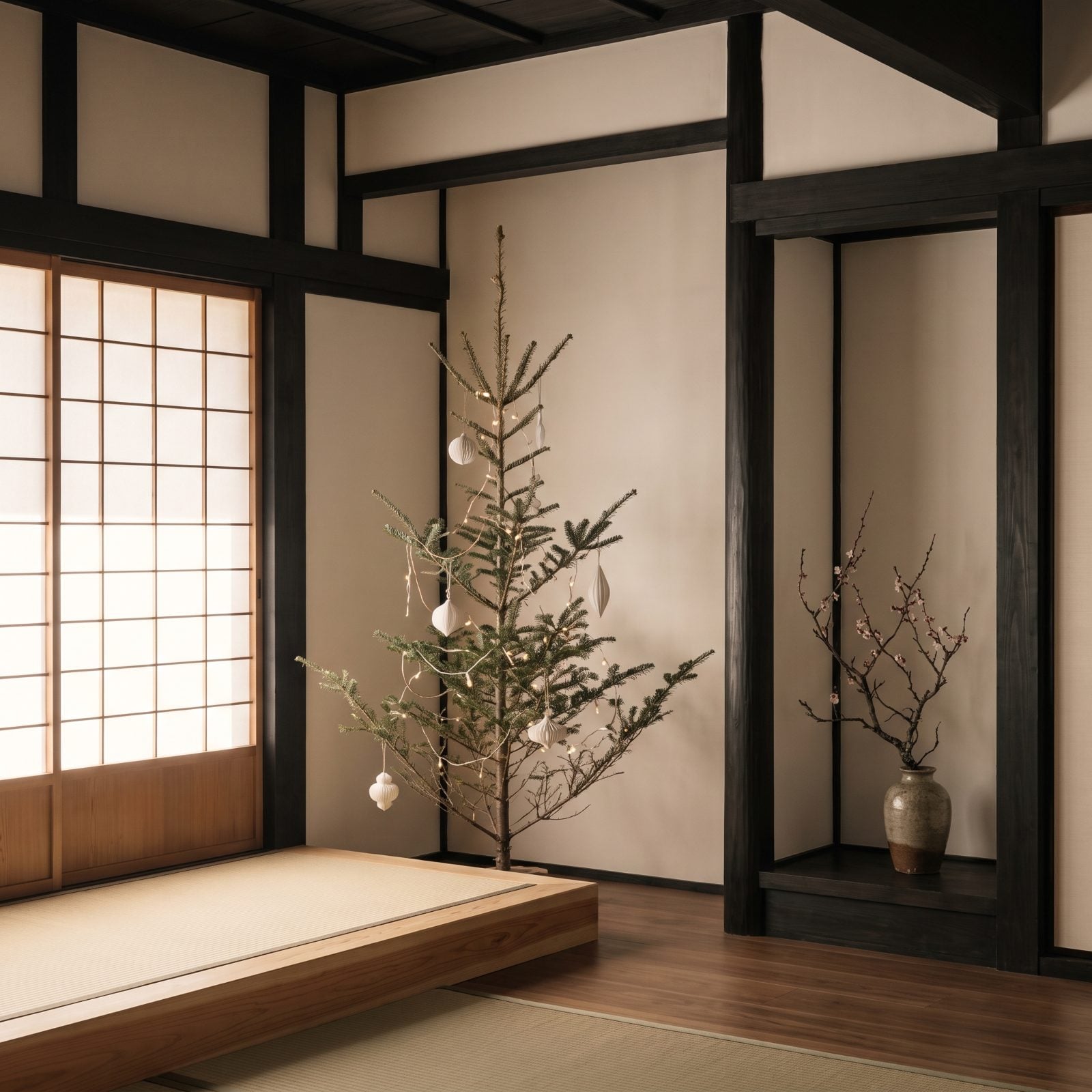
Less tree. On purpose.
Japanese joinery is about showing the honest structure of wood, the joints, the grain, nothing hidden. A dense, over-decorated fir would shout in a room that whispers. So this one stays slender and mostly bare, a few matte paper ornaments and thin twine, letting the natural branch shape read as clearly as the beams around it. Shoji paper softens the daylight into something even and quiet. The empty space between the branches matters as much as the branches do.
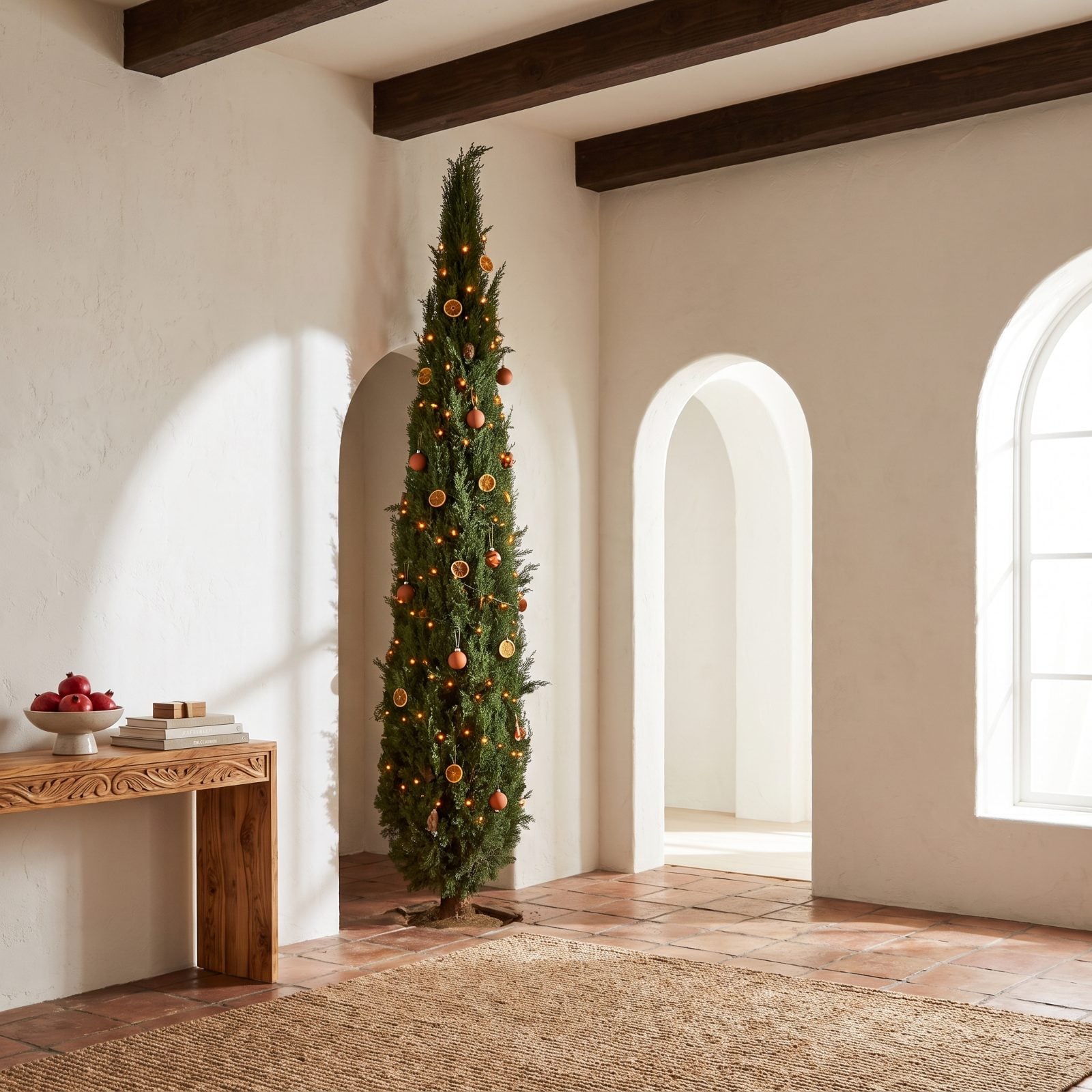
18. A Narrow Cypress That Mirrors Mediterranean Arches
17. A Traditional Fir Framed by Ornate Victorian Moldings
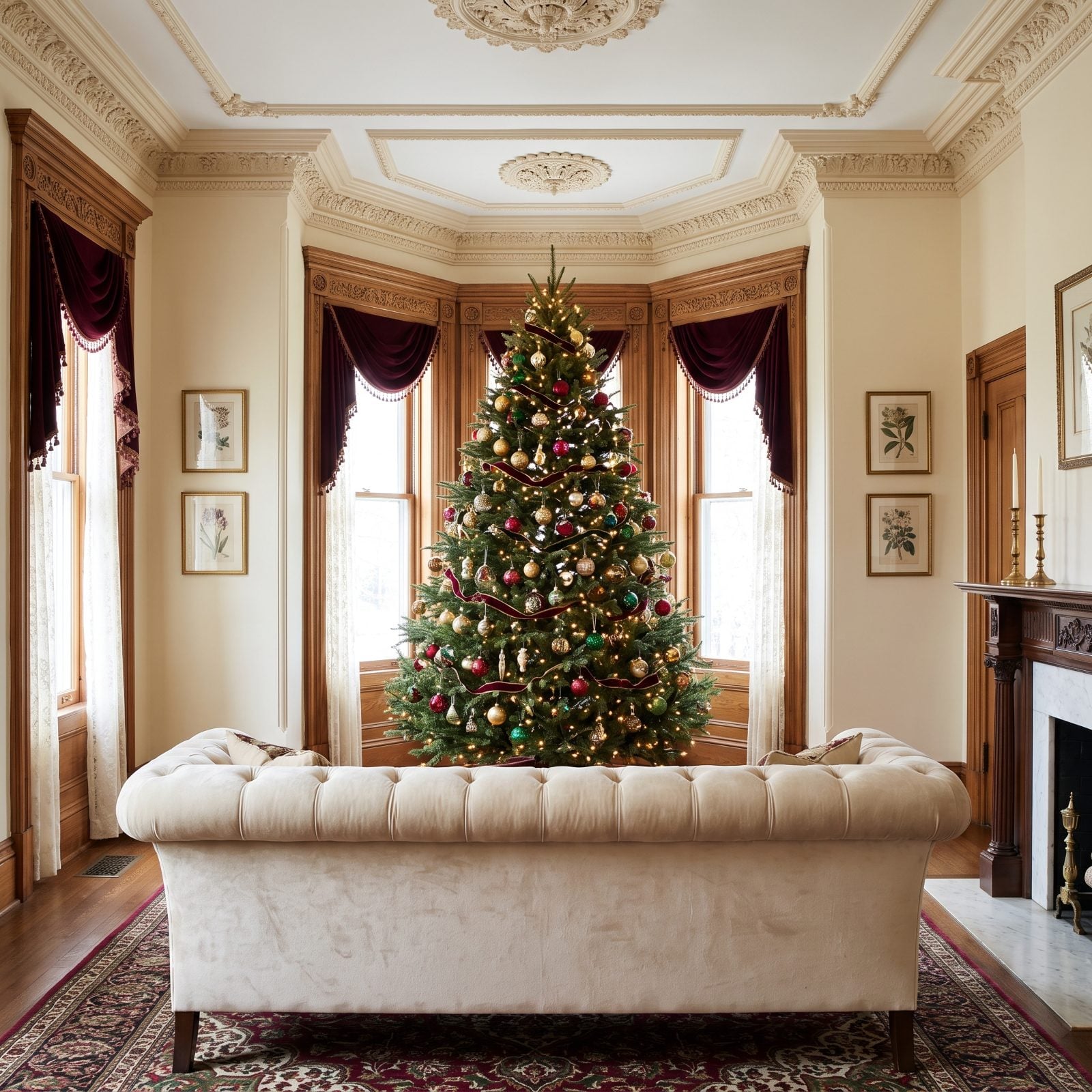
The tree doesn’t fight the moldings here. It finishes them. All that carved plaster overhead was built for abundance, and a sparse minimalist tree would have looked lost. So the fir gets dressed to the gills in antique glass and velvet ribbon, meeting the ornate ceiling on its own terms.
Tuck it into the bay window recess and the carved frame does half the styling for you. The cranberry velvet ribbon picks up the burgundy drapery without matching it exactly — close, not identical, which is the whole trick.
16. A Matched Pair Framing a Grand Arched Doorway
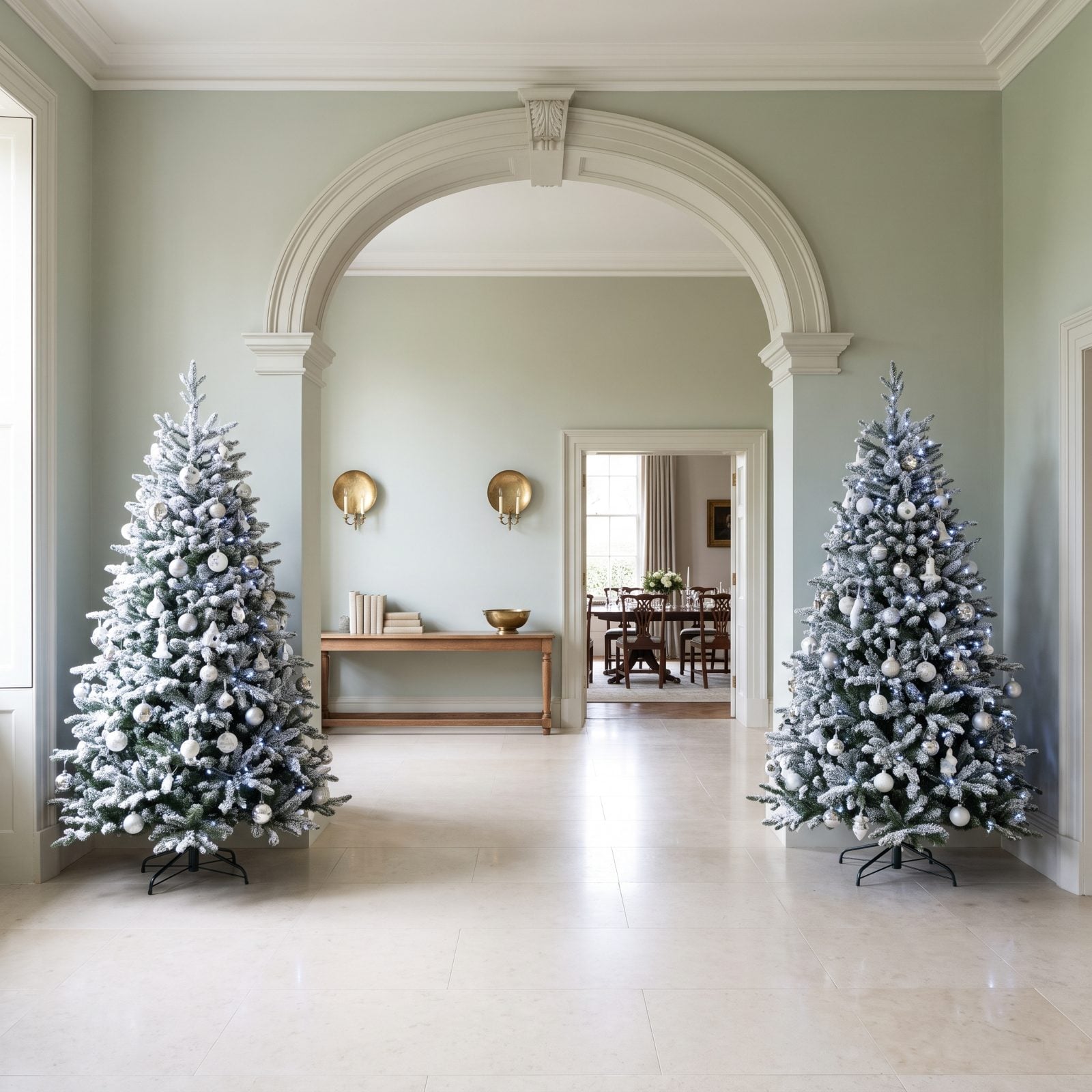
Symmetry is the easiest way to make a doorway feel like an event. Two matched trees flanking an arch read as columns, and your eye travels straight through the opening to whatever waits on the other side.
The pair works because they’re decorated identically — same silver-and-white scheme, same density, same height. One slightly fuller tree would wreck the illusion. And the brass wall sconces on either side push the mirror effect further.
15. A Towering Tree Rising Through an Open Stairwell
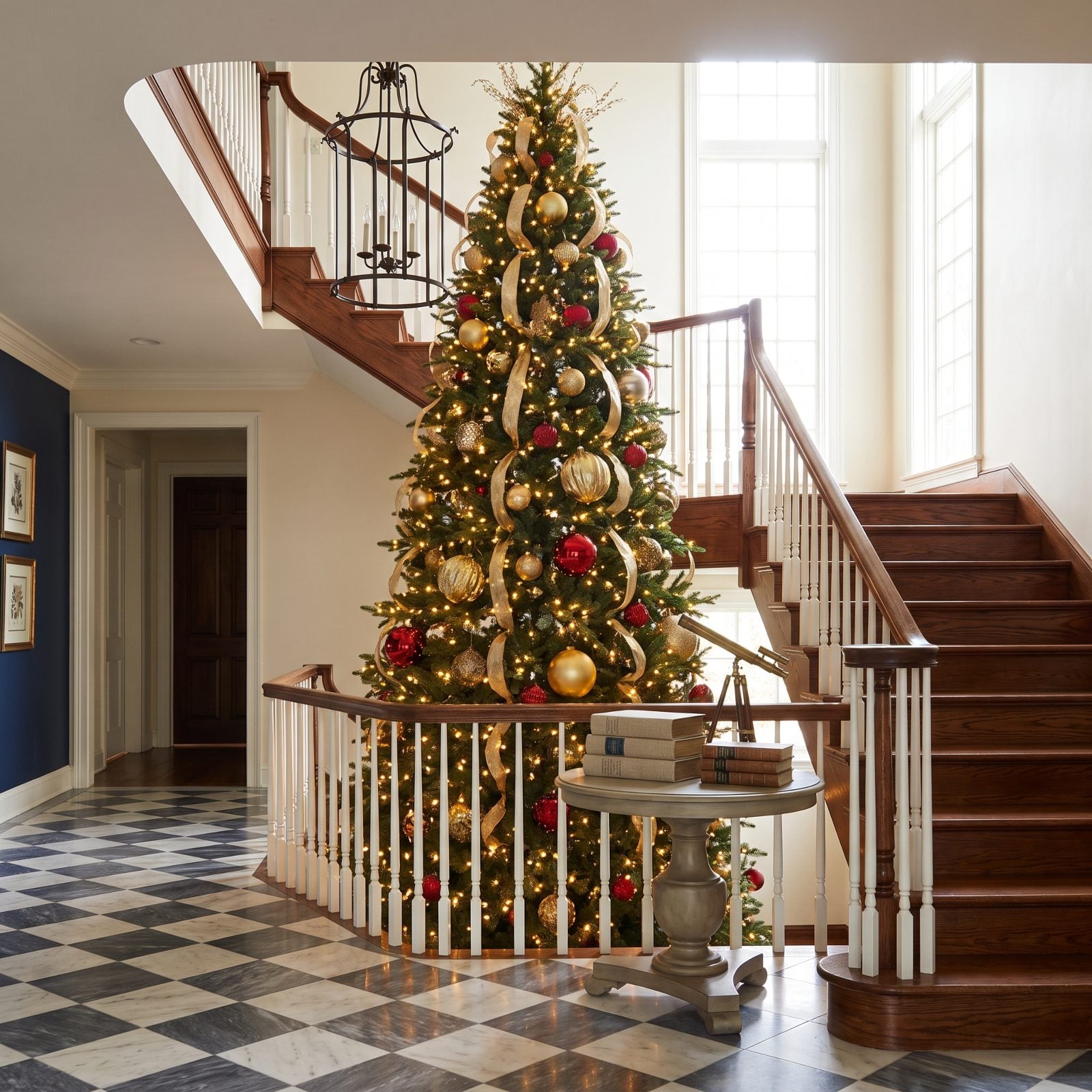
A stairwell void is a gift, and most people waste it. Here the tree claims the full double-height drop, so it reads one way from the entry floor and another entirely from the upper landing.
The spiraling ribbon is the smart move. It pulls your eye up the trunk the same way the staircase pulls you up the wall, and the two spirals end up talking to each other.
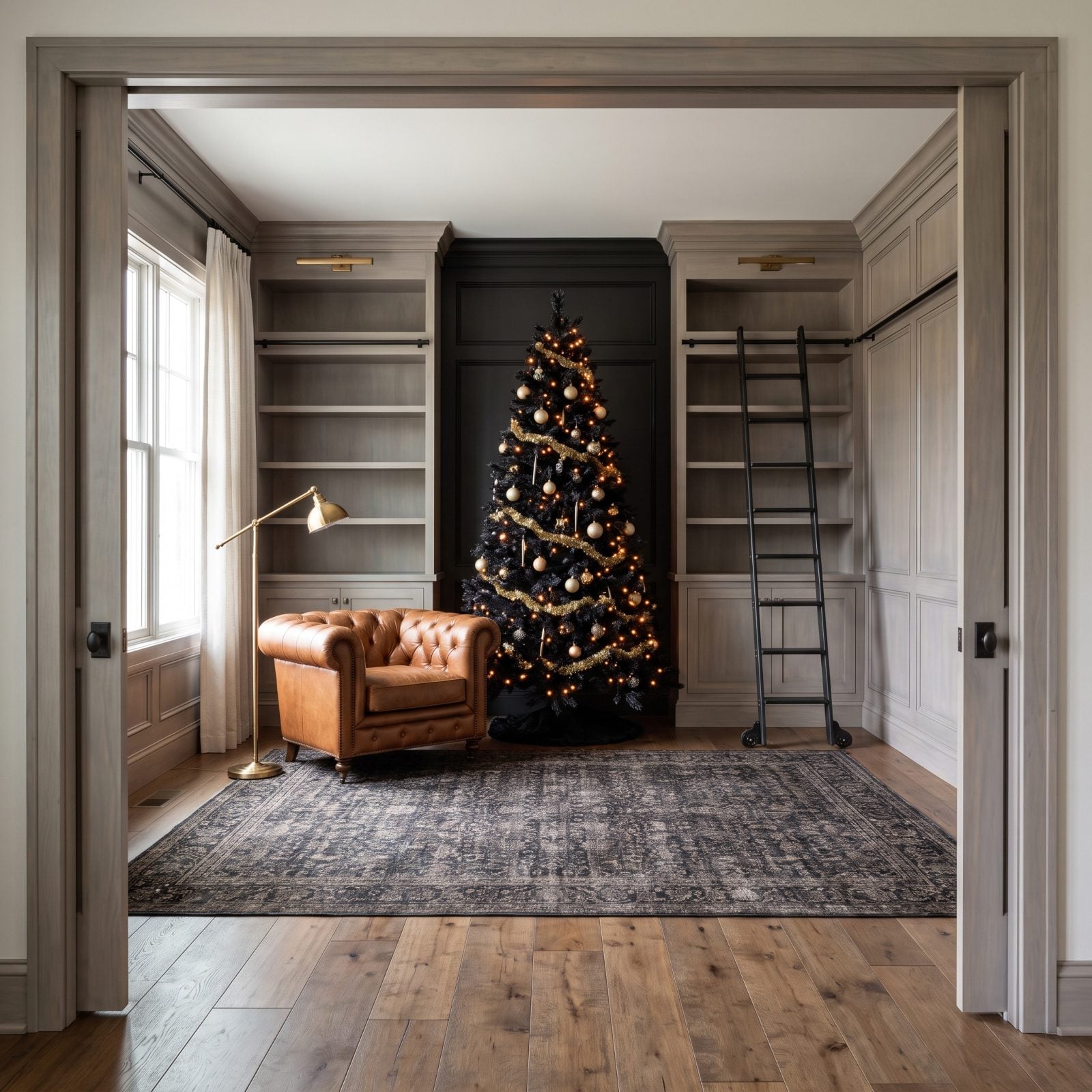
14. A Black Tree Dissolving Into a Dark-Paneled Library
🔥 Would you like to save this?
A black tree in a bright white room shouts for attention. Against dark walnut paneling it looks like it grew there instead.
That’s the play. The tree recedes into the shelving, so what you actually see is the floating brass ornaments and amber lights hovering in the dark. Set a cognac leather Chesterfield armchair beside it and the whole corner reads like a scene from some old gentlemen’s club.
13. A Low, Spreading Tree Under a Beamed Cottage Ceiling
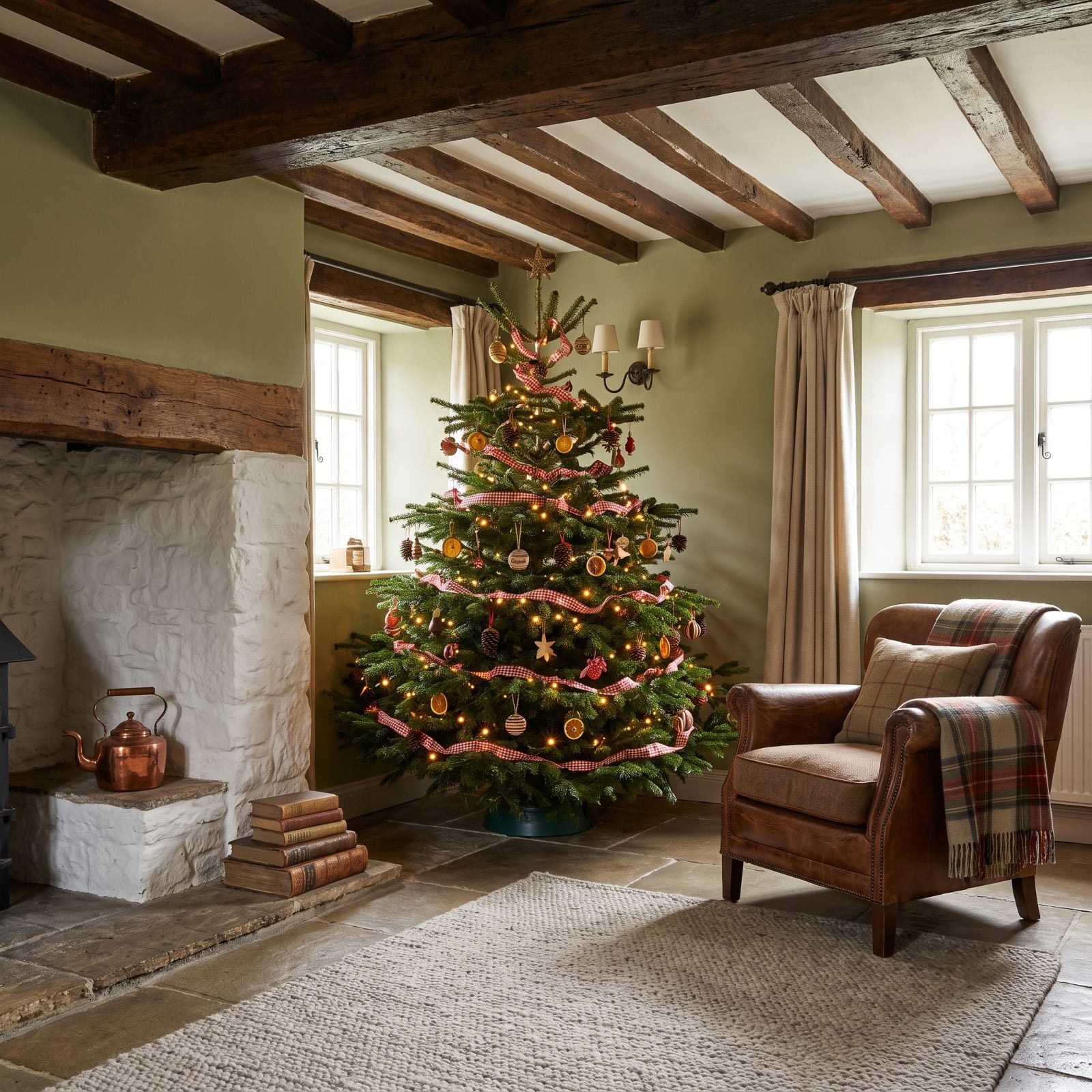
Low ceiling, low tree. A tall skinny fir jammed under these oak beams would look apologetic, but a short spreading one fills the horizontal space instead, and suddenly the room sits right.
Gingham ribbon and wooden ornaments keep it humble, which is exactly what a cottage wants — nobody’s trying to be grand here. If you love this snug energy, the same instinct runs through plenty of country mudroom decor.
12. A Half-Tree Fitted Against a Shallow Apartment Wall
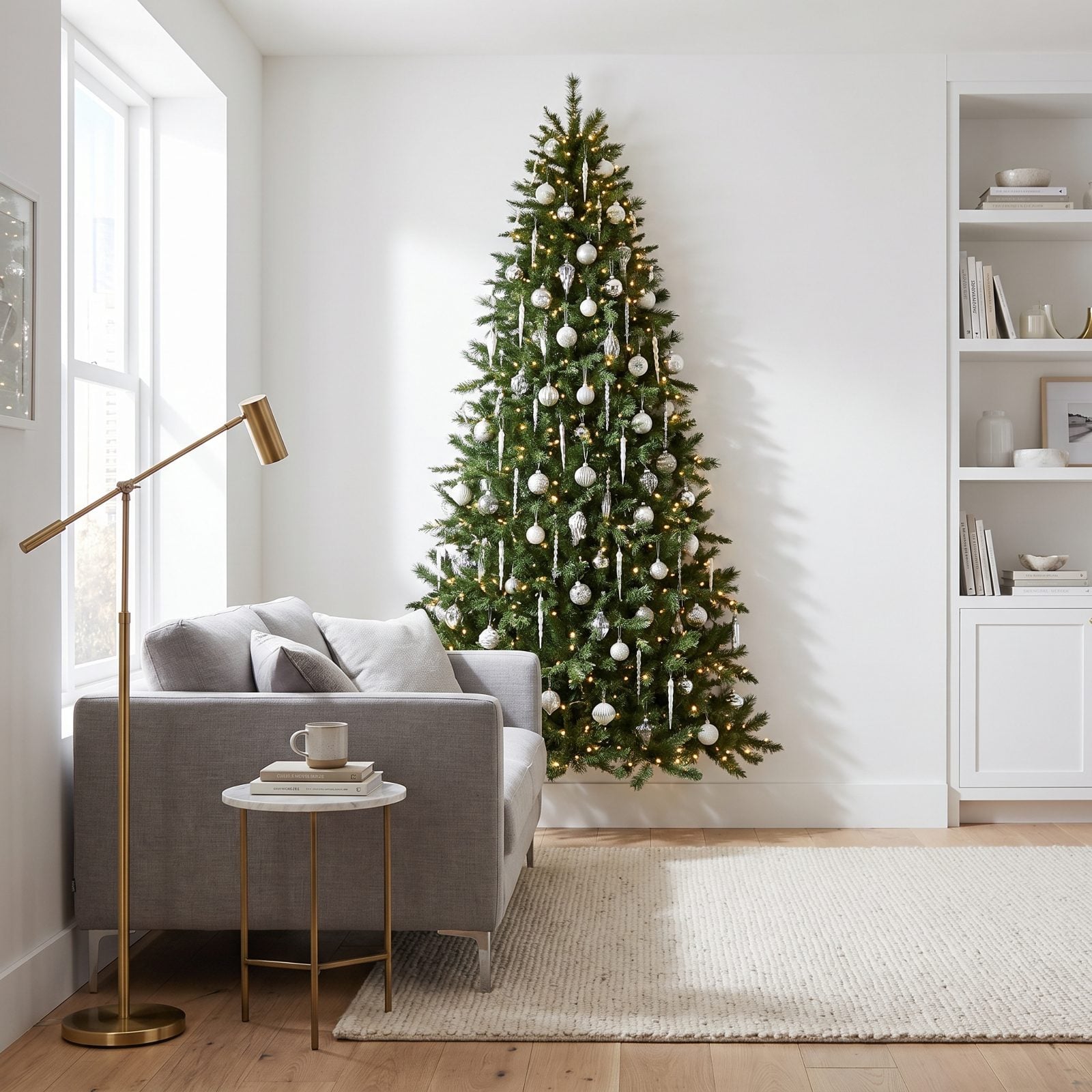
Half the tree, all of the effect. A flat-backed tree pressed to the wall gives you a full festive front while reclaiming the floor depth a round tree would eat up.
Brilliant for tight layouts. Flanked by a window and a bookshelf, it reads as built-in rather than squeezed-in. There’s a whole school of clever space-saving ideas worth stealing from good small kitchen decor, too.
11. An Asymmetrical Tree That Follows a Sloped Attic Ceiling
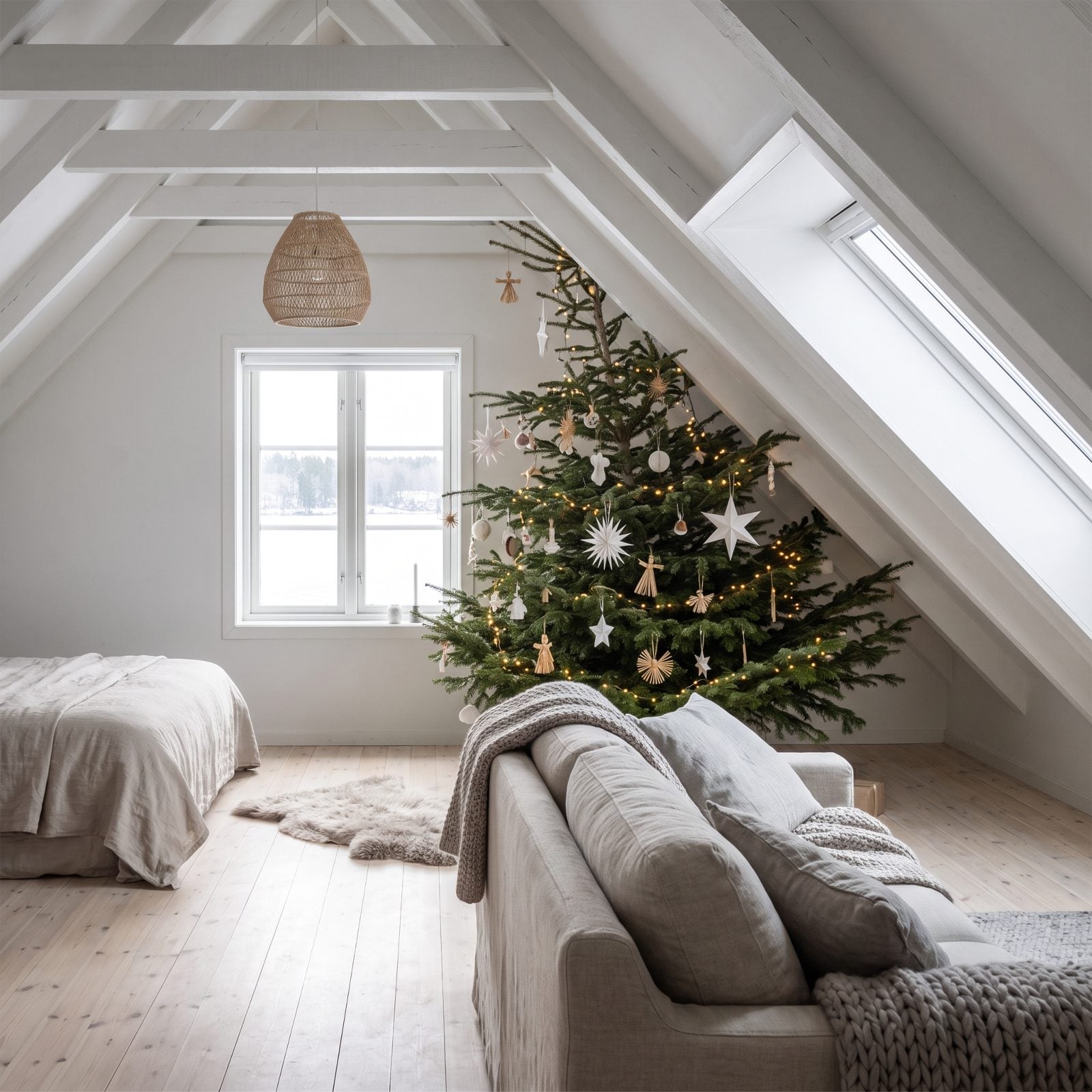
An attic slope defeats a perfect cone. So stop fighting it.
The irregular, fuller-on-one-side tree tucks into the angle where the ceiling drops, and that wild silhouette suddenly looks deliberate against the pitch of the rafters. The Nordic styling — paper stars, straw figures, loose warm white string lights — suits the pared-back loft. It’s the same restraint you see in clever scandinavian workshop decor, where the quiet is the whole point.
10. A Petite Tree Tucked Into a Craftsman Window Seat
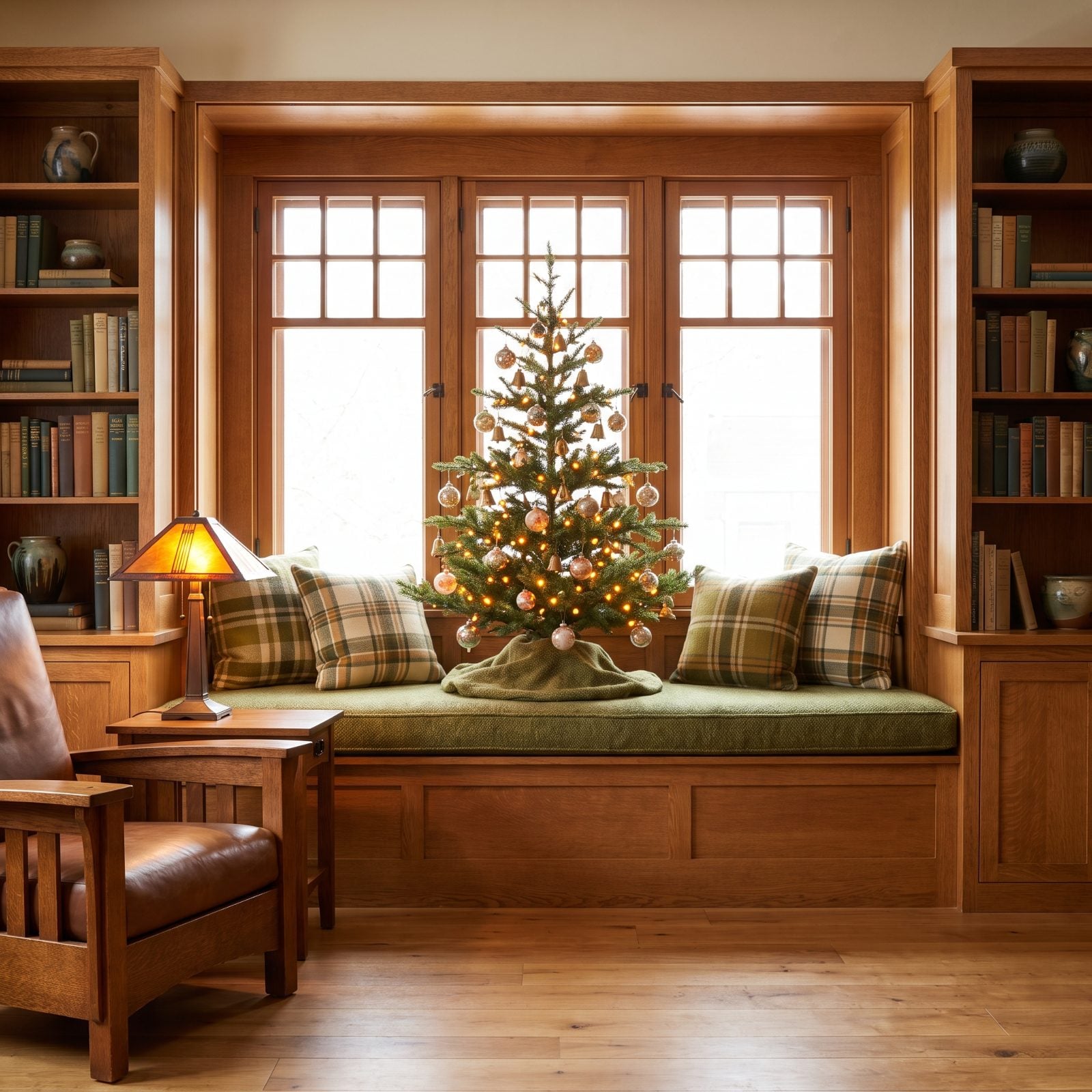
Scale is everything in a nook. A full-size tree would bully this window seat, but a petite tabletop fir sitting on the cushion actually belongs to it.
The amber-and-brass palette leans straight into the Craftsman wood tones, so the tree reads as part of the architecture rather than a seasonal guest dropping by. Those moss-green plaid wool pillows tie the cushion to the needles. Honestly, a window seat this good barely needs help.
9. A Delicate Birch Tree Suited to a Glass Conservatory
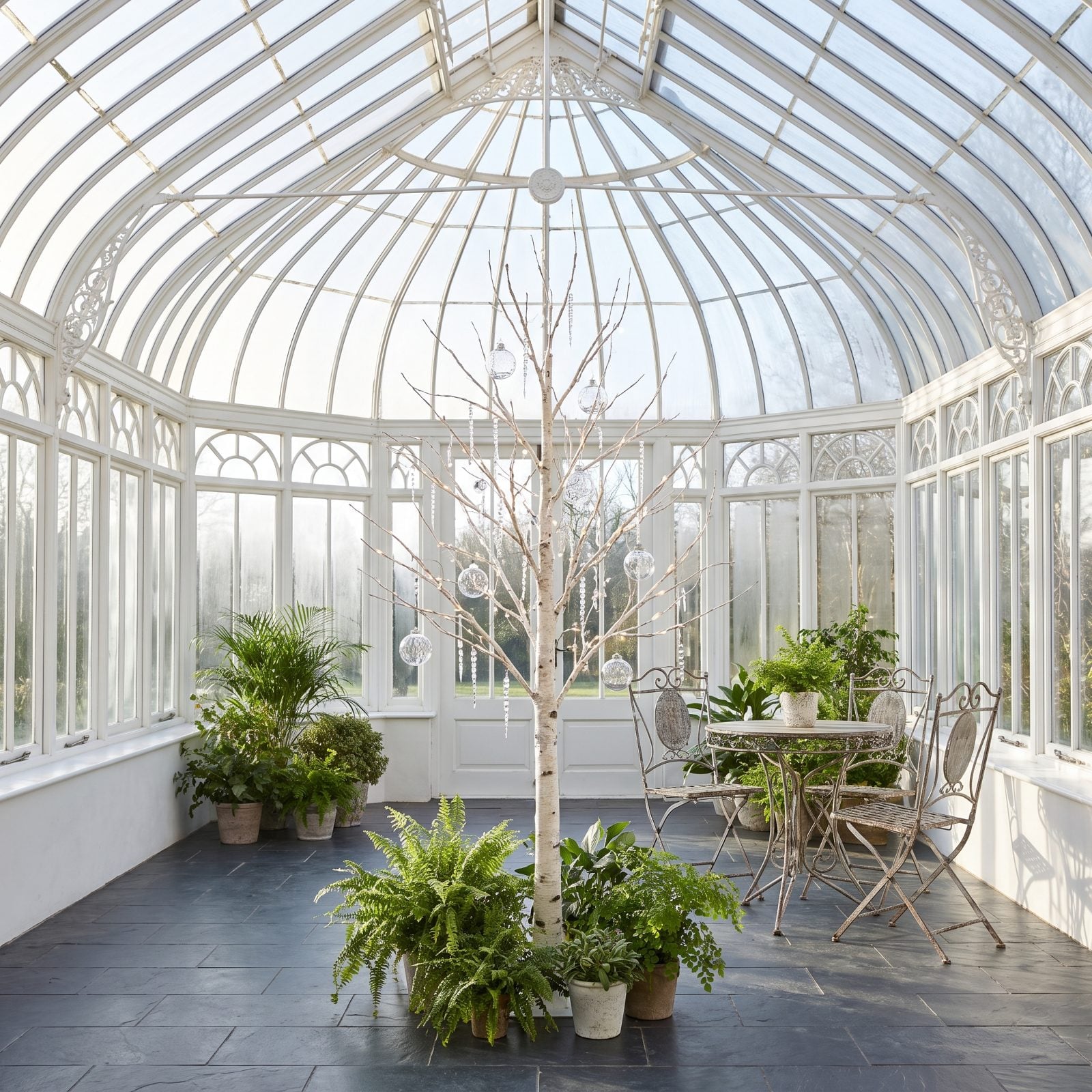
A heavy flocked fir in a glass room blocks the one thing the room is for: light.
A slender birch solves it. Thin branches and sparse foliage let daylight pour straight through, and the pale bark lines up with the white iron glazing bars like they were drawn by the same hand. Dress it only in clear glass and crystal so nothing competes with the view. The same light-first logic shows up in a good country balcony decor setup. I’ll take a tree I can see the garden through over a solid wall of needles any day.
8. A Broad Fir Filling a Deep Recessed Wall Niche
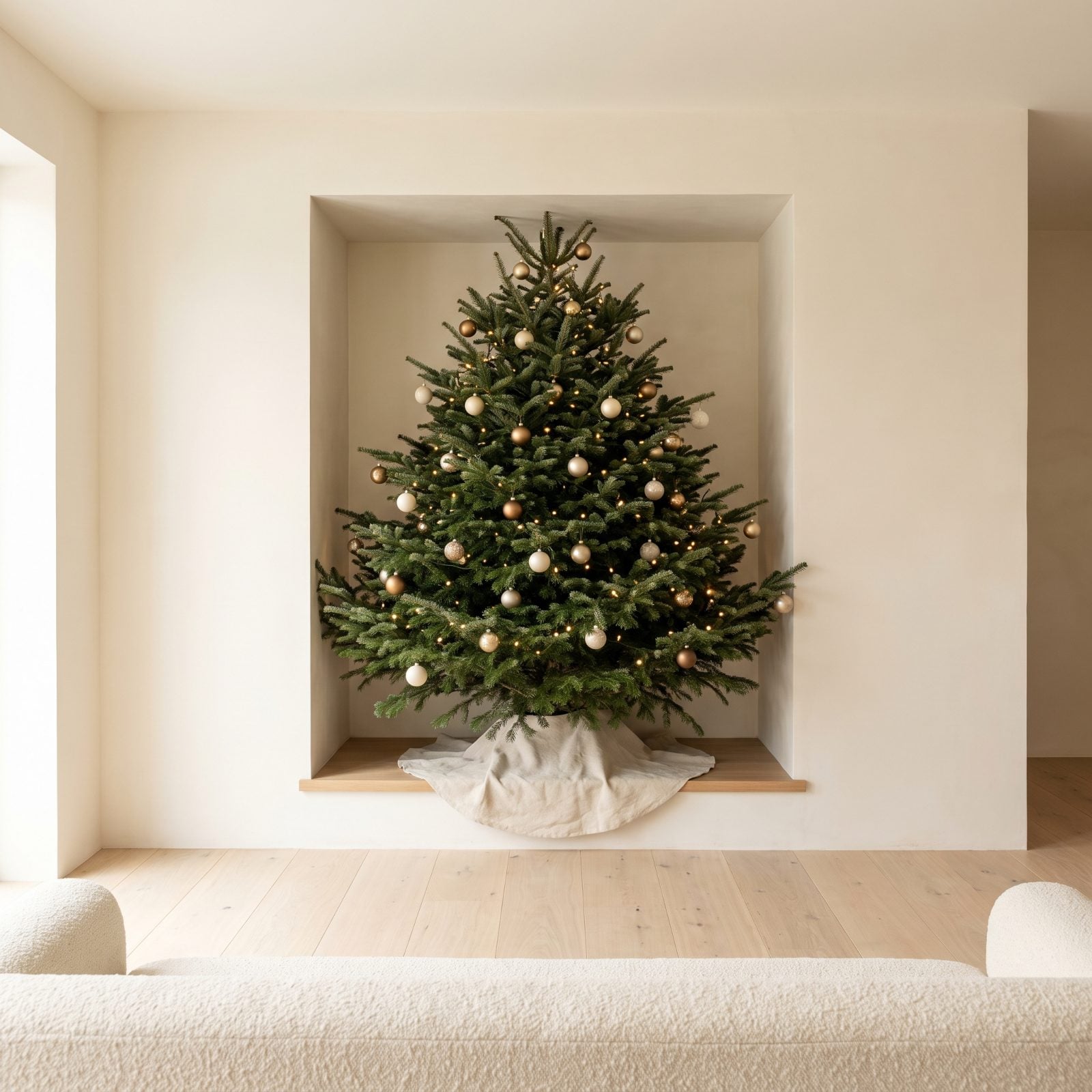
The whole trick here is letting the niche do the framing. A recessed alcove turns a tree into an installation, and a broad fir is the only shape that actually fills the width without looking like it’s floating in dead space. Match the silhouette to the rectangle and the wall reads as if someone built it for exactly this.
Matte brass ornaments against ivory plaster keep it calm. No sparkle fighting the clean walls.
7. A Slim Tree Aligned With a Row of Steel-Framed Windows
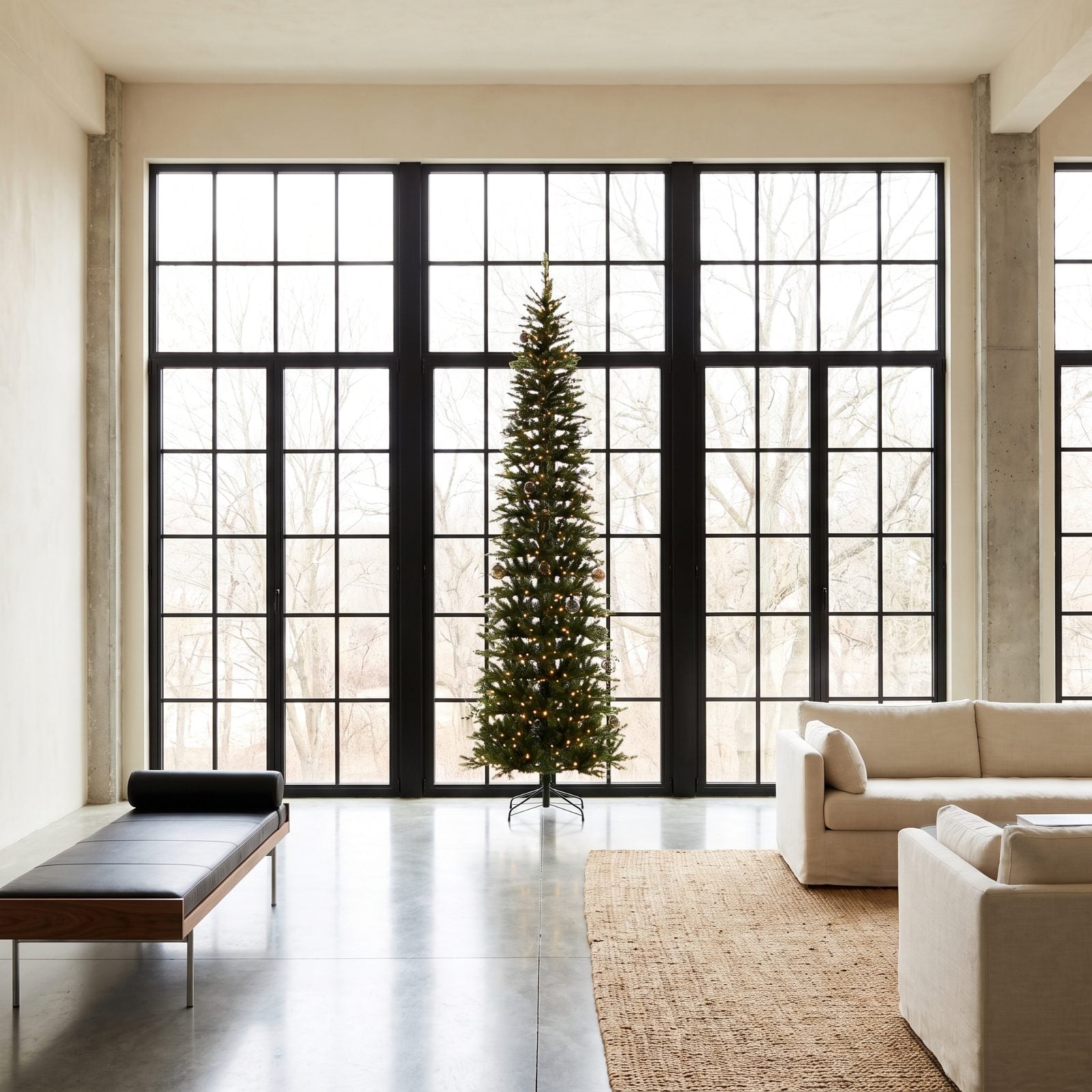
Steel-framed windows are already a grid of skinny verticals, so drop a fat tree in front of them and you’ve picked a fight. A pencil-slim tree picks up the rhythm of the mullions instead and keeps the whole wall reading as one vertical pattern.
Line it up on a mullion, not between two. That one choice separates looks-planned from looks-dumped-there. Works a treat in loft spaces that already lean toward the industrial porch decor cousins waiting outside the door.
6. A Grand Tree Scaled to a Beaux-Arts Entrance Hall
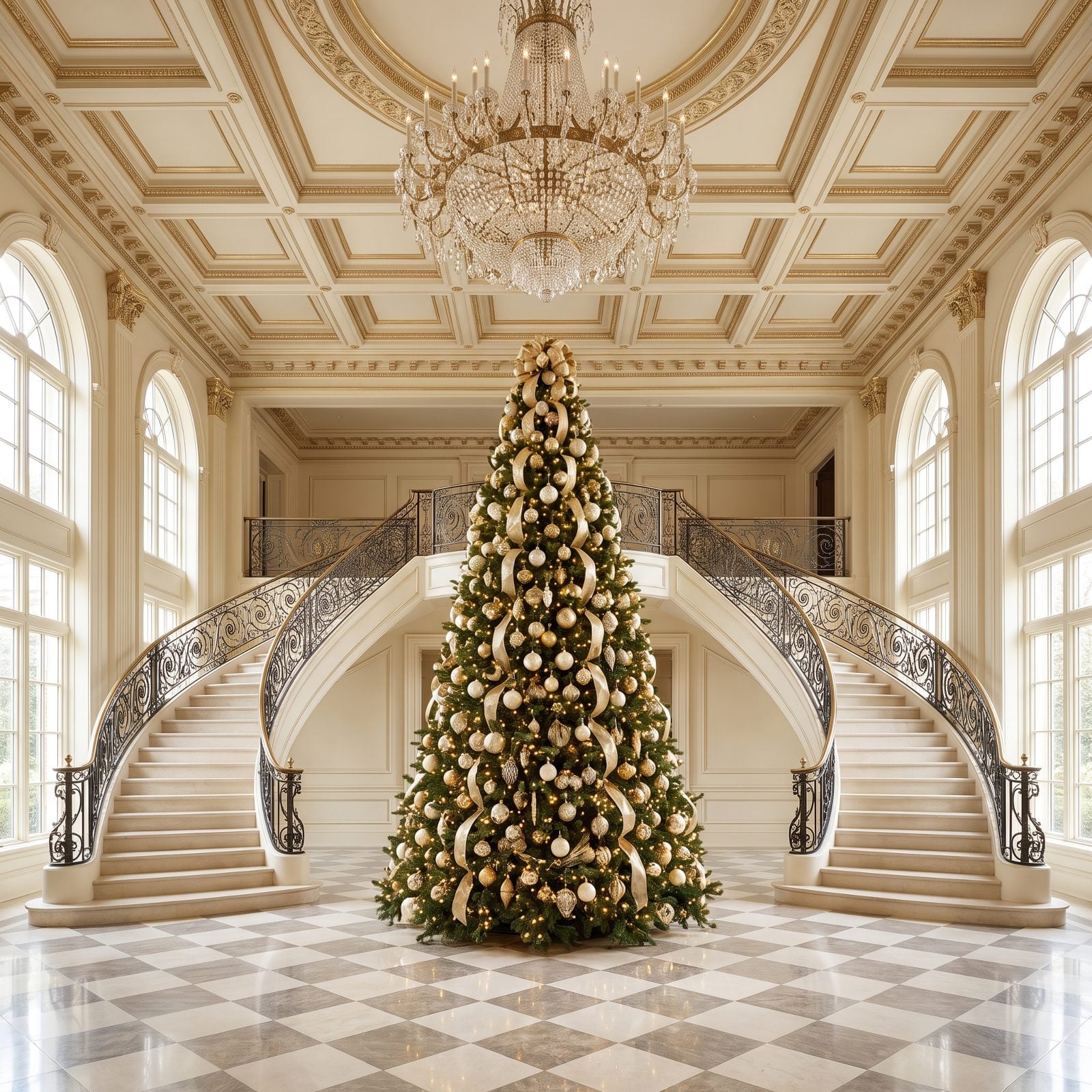
Scale is the entire game in a room like this. A Beaux-Arts hall was built to make you feel small, so a modest tree sitting under a sixteen-foot ceiling just looks apologetic. The tree has to answer the architecture — tip reaching toward the landing, width holding the center of that marble floor.
Gold and ivory ornaments echo the gilded plaster overhead, and the wide ribbon cascades repeat the curve of the twin staircases, so the tree seems to have grown out of the building rather than arrived in a van. Go big. The room wins every time you hesitate.
5. A Terraced Tree Echoing Stepped Contemporary Architecture
🔥 Would you like to save this?
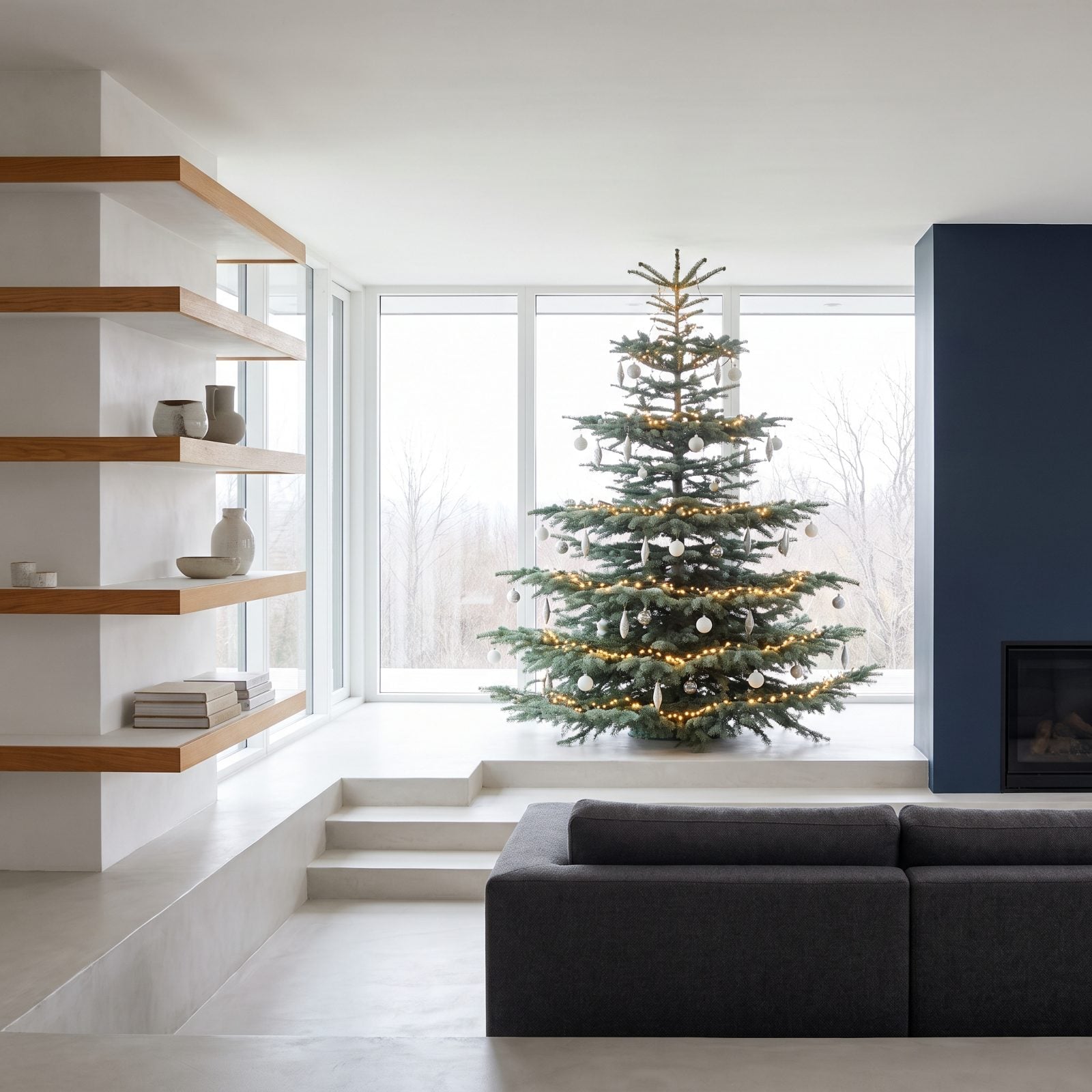
A terraced tree is a quiet rebellion against the classic cone, and it only earns its keep in a room that’s already stepping and staggering. Here the pruned tiers line up with the split-level floor and the staggered plaster shelving, so your eye reads one repeated horizontal idea from top to bottom.
Horizontal light strands on each tier do the heavy lifting. They pull your gaze across, not up.
4. A Tree Nestled Beneath an Under-Stair Arch
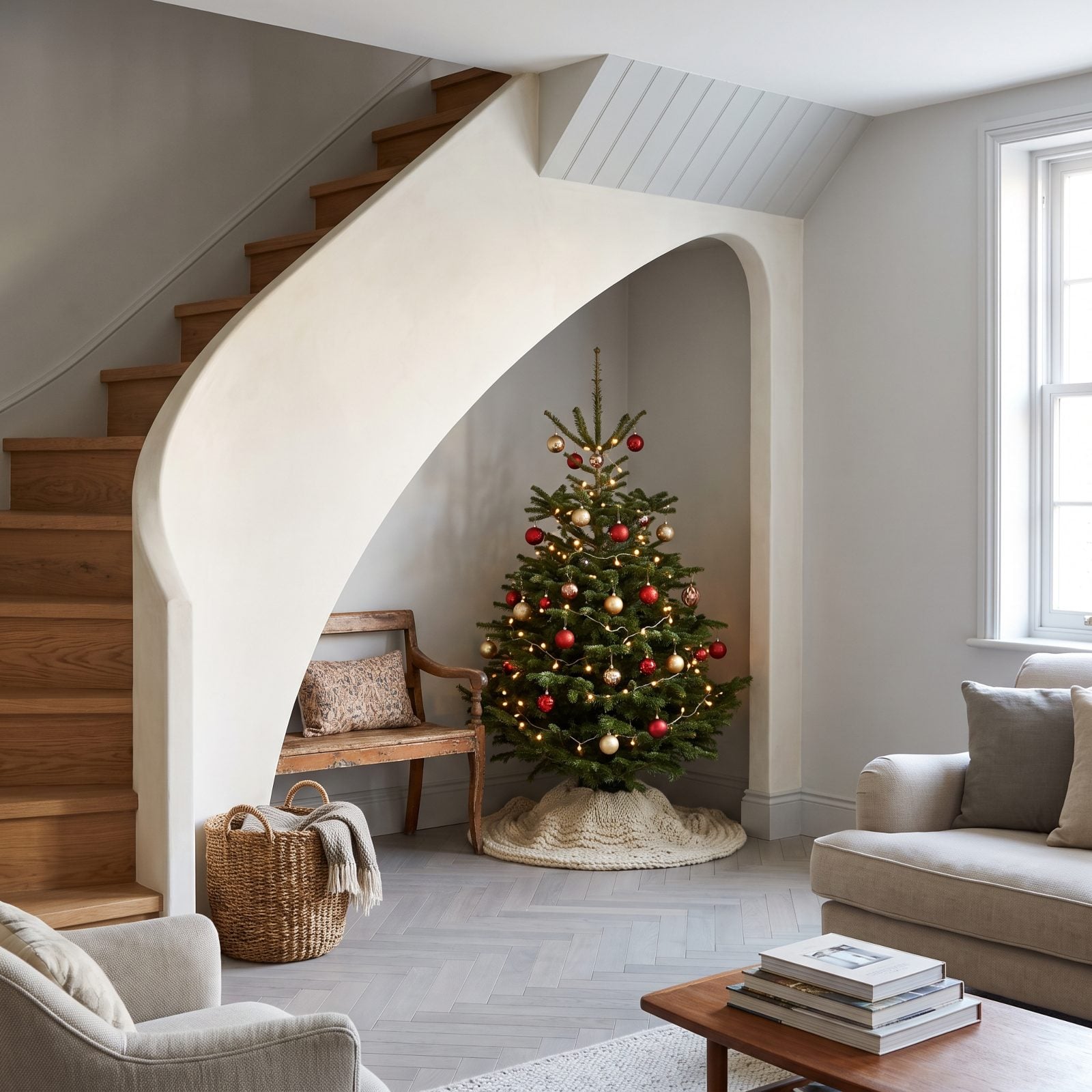
Under-stair space is usually where good intentions go to die — a basket of shoes, a lost umbrella, a vacuum nobody admits to owning. Put a small tapered tree there instead and let its tip chase the rising line of the arch.
The shape match is everything. A symmetrical cone fights the diagonal, while a slightly leaning, asymmetric fir just settles in. Warm red and gold glass ornaments keep the nook glowing instead of cluttered.
3. A Columnar Tree Aligned With Fluted Wall Detailing
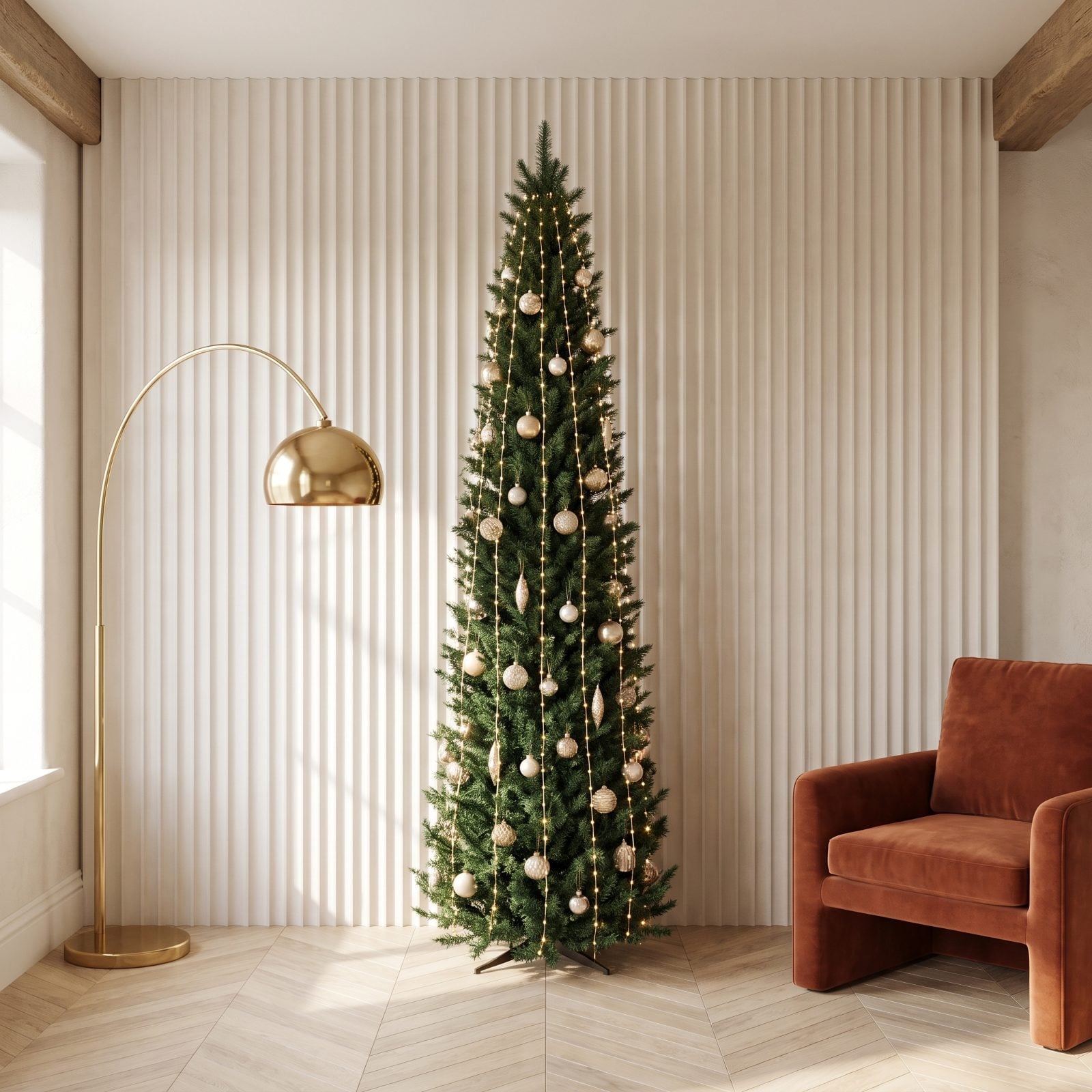
Fluted walls are having a real moment, and a columnar tree is the one shape that speaks their language. Set the narrow vertical tree against the reeded grooves and the two forms rhyme, grooves and branches running the same direction top to bottom.
Vertical light strands push that reading further. Horizontal garland here would wreck it — don’t even try. The champagne-gold ornaments against warm white plaster borrow a little of that polished glam kitchen decor restraint, and the rust velvet chair keeps the whole thing from going cold and clinical.
2. A Floor-Skimming Tree Matched to a Sunken Conversation Pit
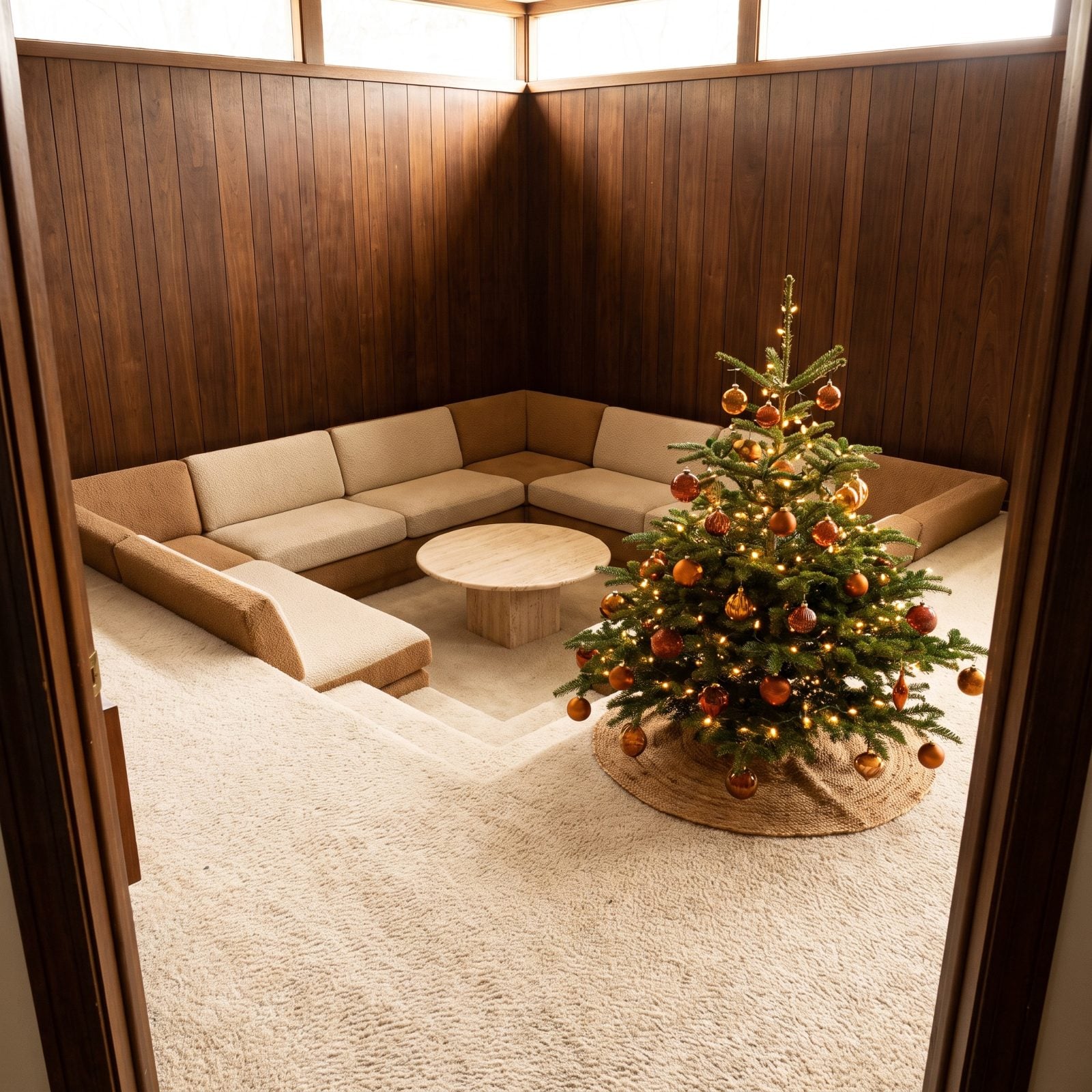
A conversation pit is architecture that insists everything stays low and horizontal. Stand a towering tree at its edge and you’ve broken the spell entirely. A broad, floor-skimming tree keeps your sightline flat, its lowest branches spreading across the step so it reads at eye level with whoever’s sunk into the cushions.
Amber and burnt-orange ornaments pull straight from the camel and walnut palette. The woven jute skirt keeps it earthy, right at home in a pit built for sprawling.
1. A Conical Tree Fitted Precisely Inside a Turret Room
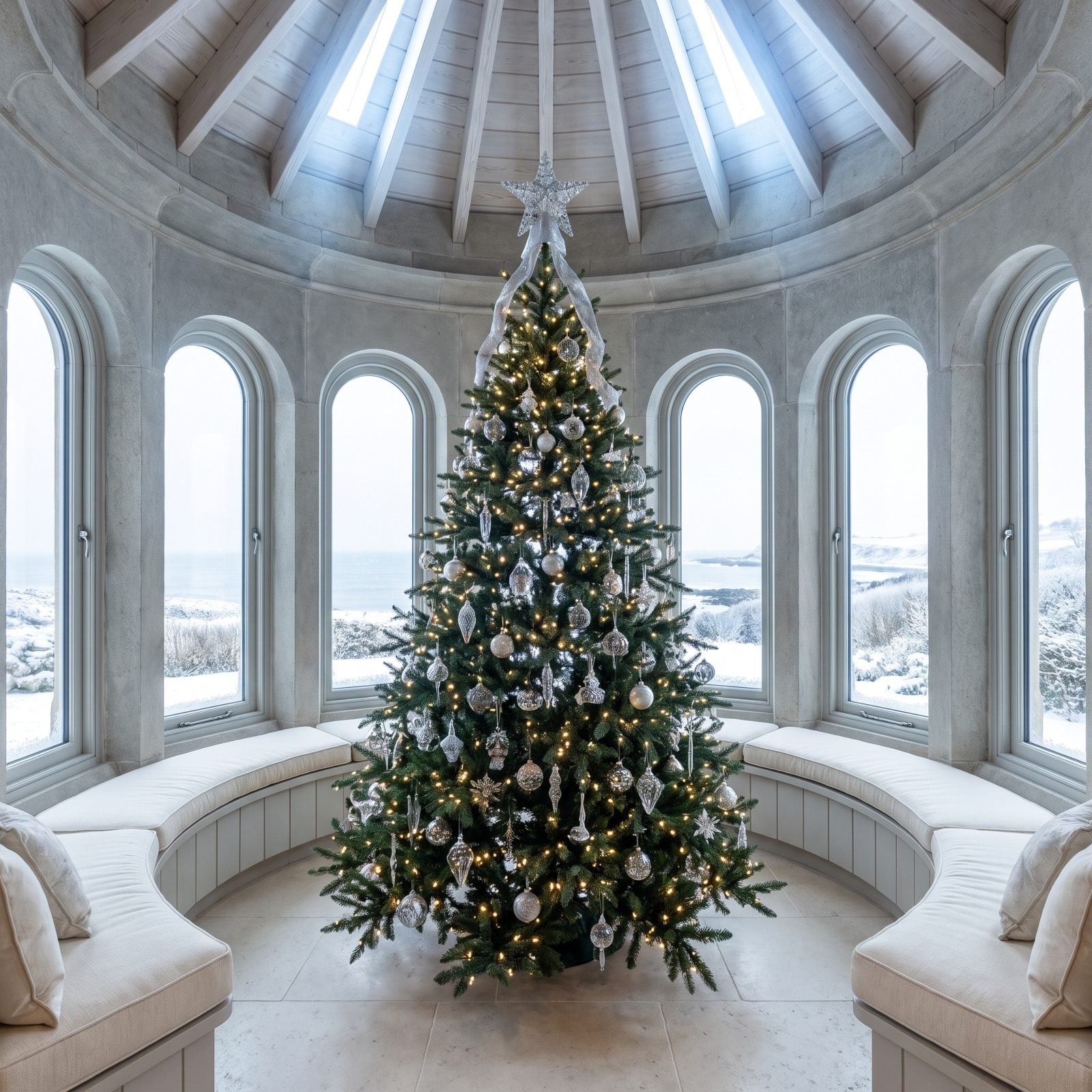
Here’s the one case where the most clichéd tree shape turns out to be exactly right. A turret’s conical roof is already a cone pointing at the sky. Set a symmetrical conical tree dead center and the two shapes mirror each other, tip under tip.
Centering is non-negotiable in a round room — there’s no corner to cheat it into. The icy silver and crystal ornaments play off the cool stone, and the curved window seat wraps the whole thing like a frame.
In a round room, symmetry isn’t a choice. It’s the only thing that reads as calm.