🔥 Would you like to save this?
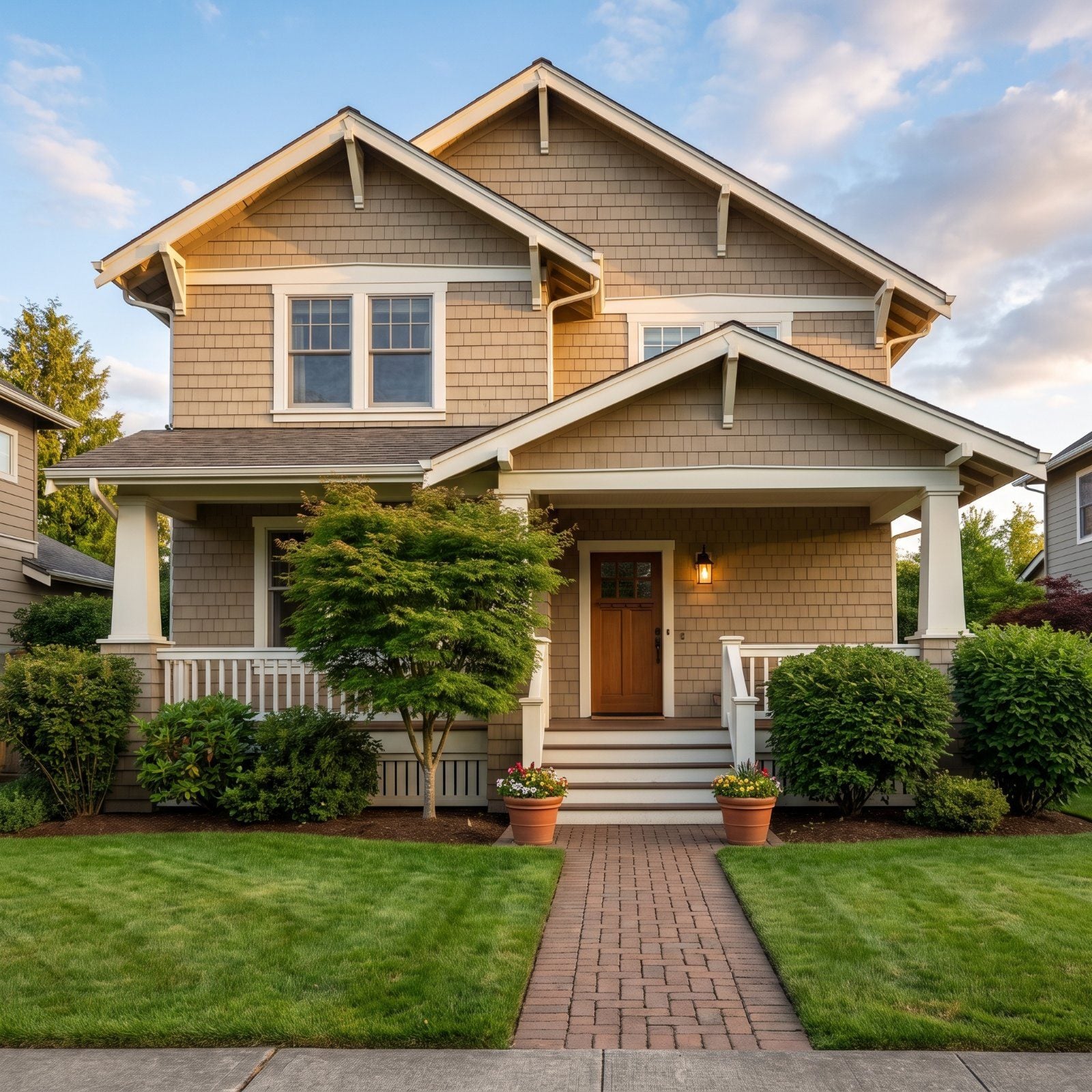
A stranger needs about seven seconds standing on your porch to decide who lives behind the door. They haven’t met you. They’ve read the paint, the handle, the dead geranium you keep meaning to deal with, and the mat you bought three years ago. And they’ve already filed you.
None of this is conscious. The brain sorts a facade the way it sorts a face, fast and without permission, pulling on thousands of years of reading shelter for danger and status. A color can lower a visitor’s guard. A smudged handle can say more than the paint ever could. A wreath can reveal, oddly, who really runs the house inside.
In order to come up with the very specific design ideas, we create most designs with the assistance of state-of-the-art AI interior design software. Also, assume links that take you off the site are affiliate links such as links to Amazon. this means we may earn a commission if you buy something.
We looked at a range of specific front-door choices and what each one quietly broadcasts. Some of these will make you want to step outside and look at your own door with new eyes. You should.
The Door Color Strangers Trust Before They’ve Met You
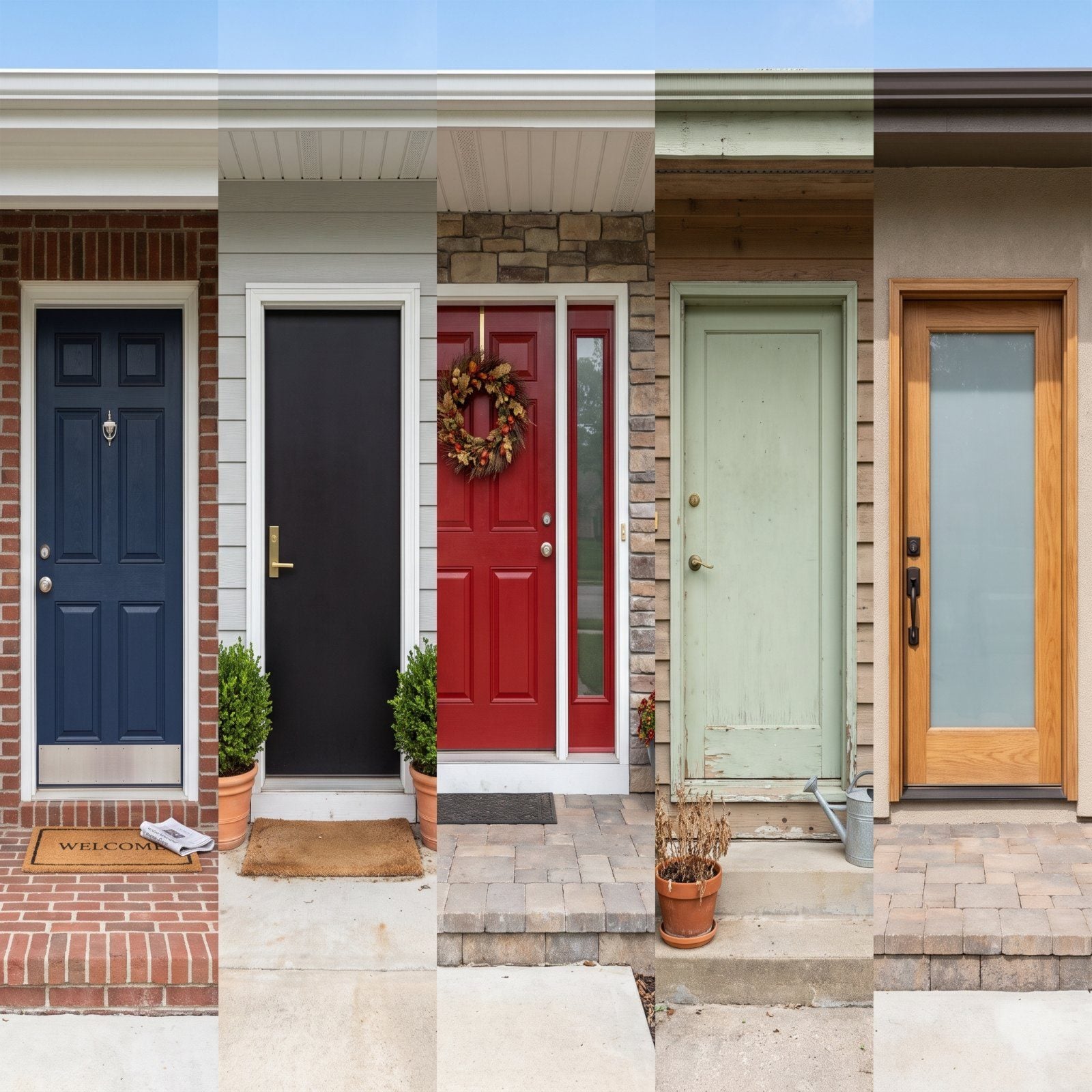
Stand at the curb of a street you’ve never visited. In under two minutes, your brain has already filed every house into a category, and most of that filing happens before you’ve read a single door number. Research out of the University of Winnipeg found people Source form an opinion about a property within 90 seconds, and the lion’s share of that judgment rides on color alone.
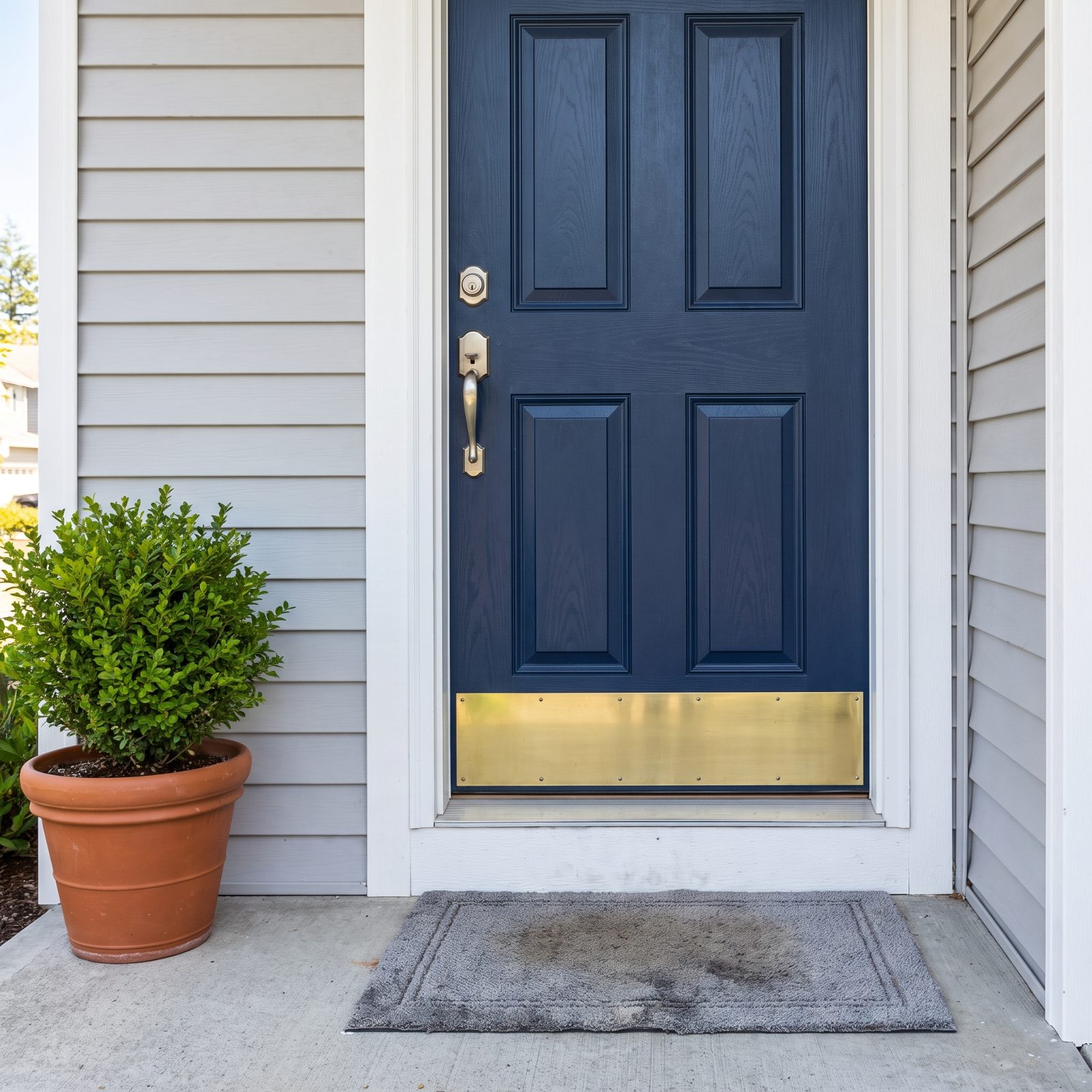
Navy does something specific to people. It reads as considered without reading as cold. Source agents note that a deep navy door suggests a homeowner who cares about design and detail, which quietly raises a stranger’s confidence in the whole house. Trust isn’t loud. It’s the color that says stable before it says anything else.
Why a Freshly Painted Threshold Reads as Honesty
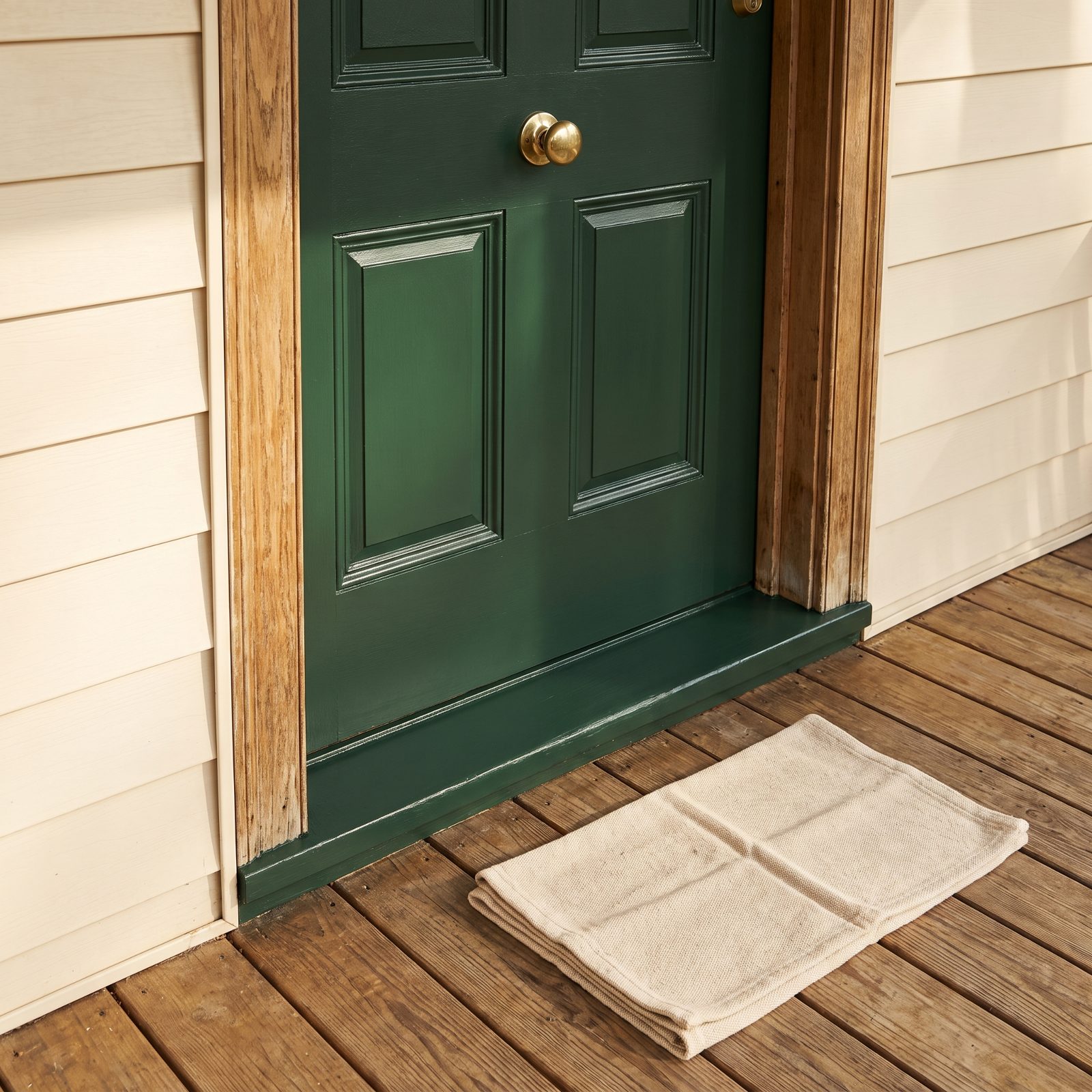
Chipped paint tells a story nobody wants to hear. You’ve stood on a porch where the door’s edge had flaked down to bare wood and the weatherstripping had curled, and before anyone answered, you’d already decided something about the people inside. Not cruelly. Just instantly.
A clean, freshly painted threshold works the opposite way. Source design researchers call this the seven-second verdict, and visible signs of upkeep feed straight into a subconscious sense of trust. The logic the brain runs is simple and a little unfair: if they took care of the part I can see, they probably took care of the parts I can’t. A crisp coat of paint reads as a household that doesn’t cut corners, because the paint itself is the first corner most people cut. If you want to borrow the welcome of a fresh coat for the whole porch, a pink front porch or a repaint of the trim does more heavy lifting than any decoration.
The Hardware Finish That Quietly Whispers ‘Old Money’
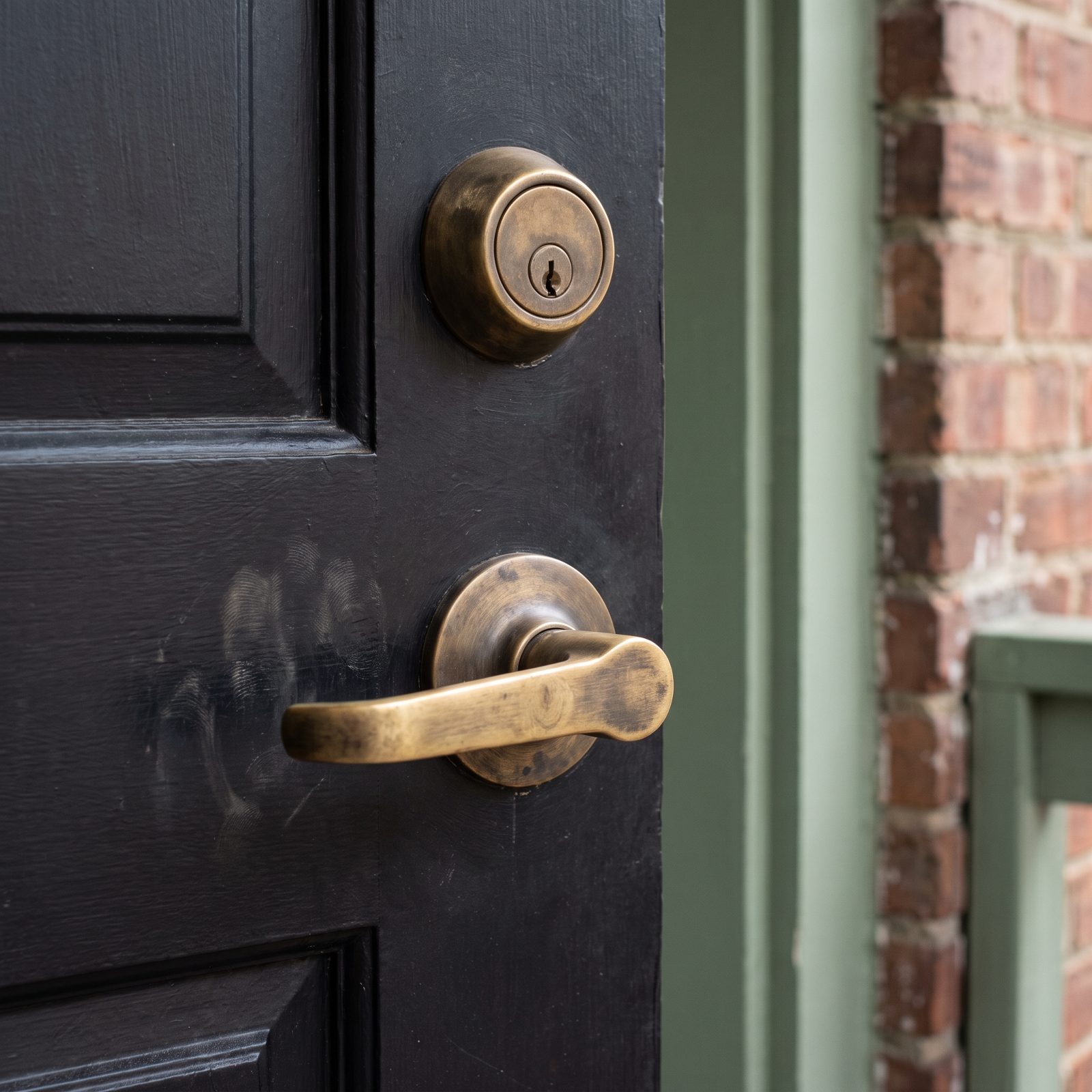
Shiny hardware tries. Old money never tries. The finish that signals inherited wealth isn’t the one gleaming under a protective coat. It’s the one that’s been left alone long enough to go dull and streaky on its own.
Unlacquered brass is the tell. Out of the box it’s bright, but with no sealant over it, Source it darkens and develops a patina that makes each piece one of a kind. That patina is the whole point. It reads as time, and time is the one thing new money can’t buy at the store. Interior designers chasing the look call it heirloom energy, the Source impression that a piece has passed through generations rather than arrived in a box last Tuesday.
Plenty of people get this wrong, polishing the brass back to bright and fighting the patina like it was dirt. It wasn’t dirt. It was the finish doing exactly what the expensive houses let it do.
What a Wreath Says About Who’s Really In Charge Inside
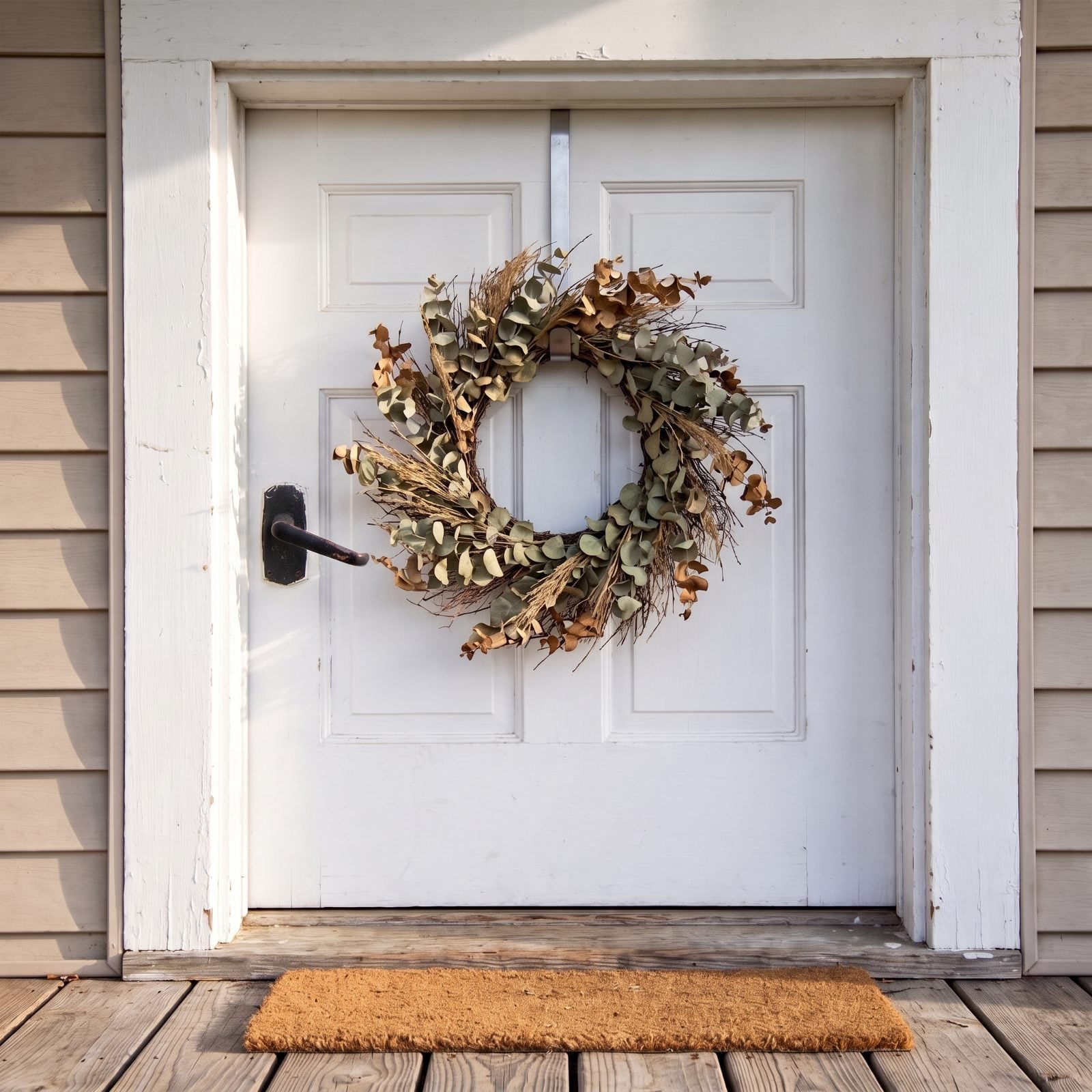
There’s always one person in a household who hangs the wreath. And that person is making a declaration, whether they mean to or not.
A wreath is the one piece of a facade that gets swapped with the seasons, which means it broadcasts that someone inside is tracking time, tending the entry, and thinking about how the house greets the world. It’s the doorstep equivalent of a handwritten note. Design researchers describe the front door as Source the transition point between the public world and the private sanctuary, and the wreath is the household’s chosen signature on that line. Fresh eucalyptus in June, a dried-grass ring in October, nothing in January because life got busy. Every version tells you something.
The person who changes the wreath is usually the person who runs the rhythm of the house. Not always loudly. But they’re the one keeping the calendar the rest of the family forgets. If that’s your corner of the house, a country mudroom decor setup gives the seasonal swaps a proper staging spot.
The One Thing on a Doorstep That Signals ‘They Pay Attention’
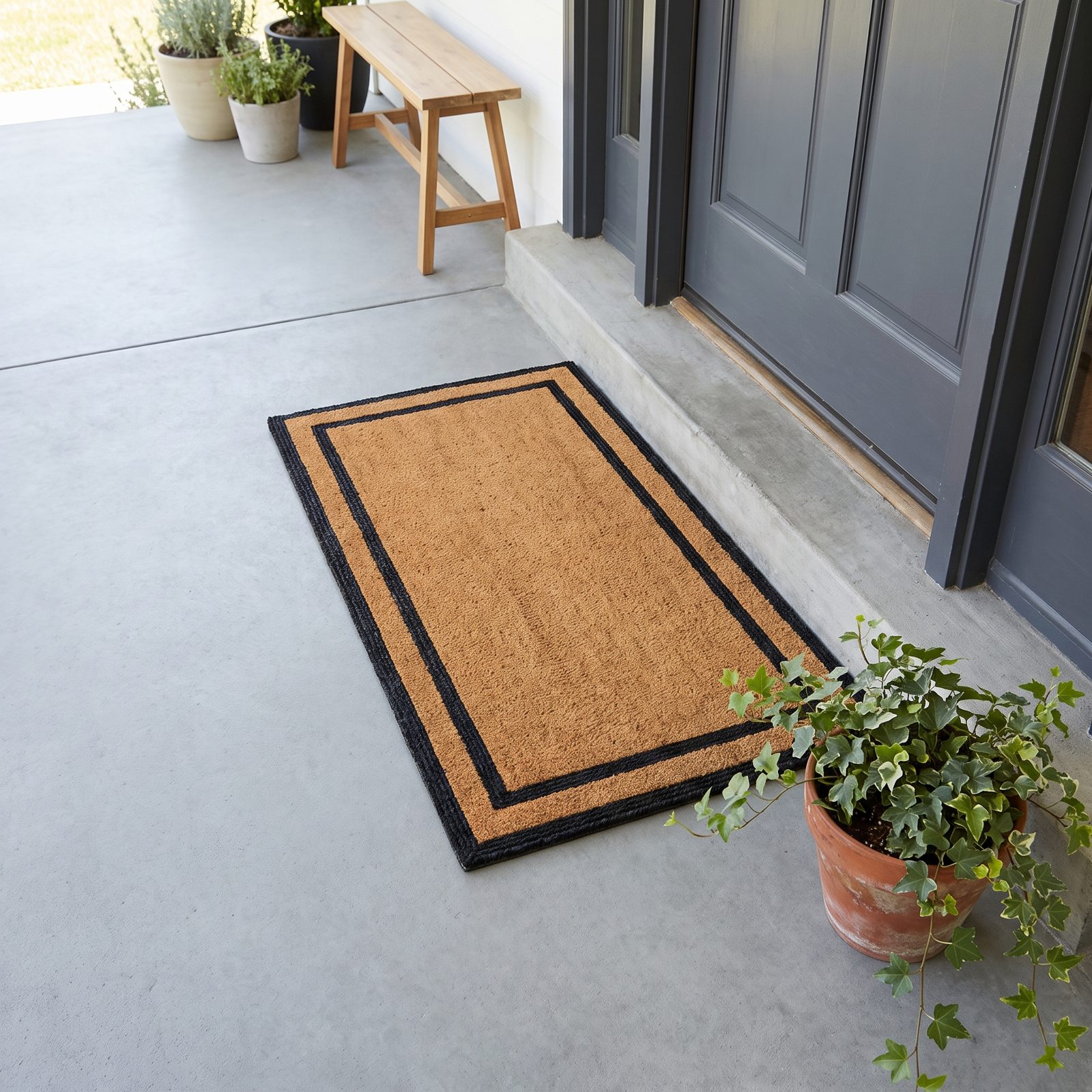
Not the biggest planter. Not the brightest color. It’s the doormat, and specifically whether it’s been placed with any care at all.
A mat squared to the threshold, clean enough that you’d actually wipe your feet, swapped out before it rotted into a gray pancake: that tiny choice tells a visitor the household notices small things. And the brain extrapolates wildly from small things. Researchers point to Source visual cues of diligent maintenance as the exact signals that build a subconscious sense of trust in a home before anyone steps inside.
Here’s the mildly cranky part. A grimy, curled-up doormat undoes a thousand-dollar door. I will die on this hill. You can have the navy paint and the aged brass, and a sad mat at the bottom cancels all of it, because it’s the one object a visitor’s eyes land on while they wait for the door to open.
Why Glass Panels Make a House Feel Safer, Not Less
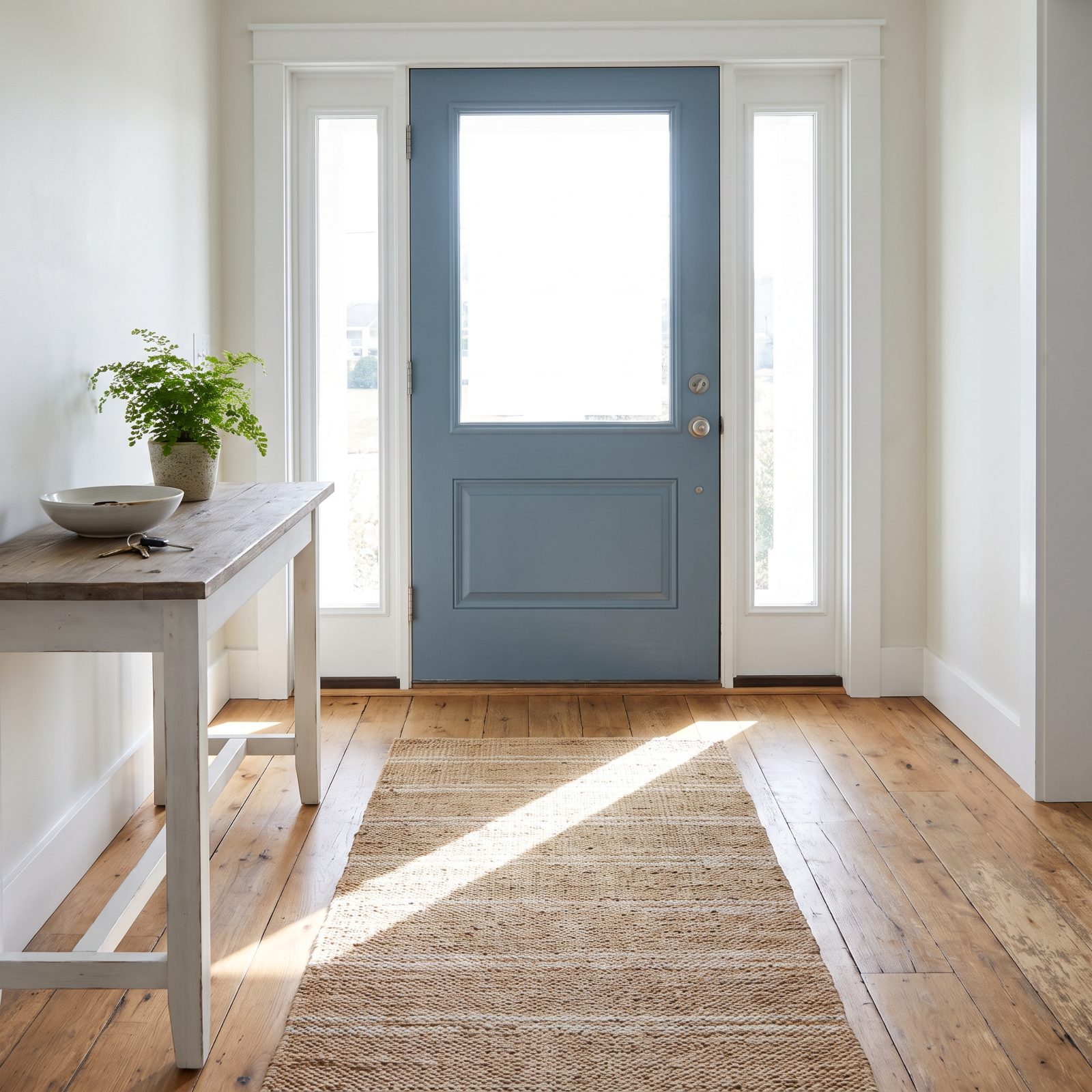
You’d think a door with glass in it would read as vulnerable. More glass, less barrier, easier to break. The eye says the opposite, and the eye wins.
This runs on prospect-refuge theory, the old idea that humans feel safest when they can see out without being fully exposed. A sidelight or a glazed upper panel lets a household see who’s approaching, and it lets daylight into the entry, and brightness itself registers as safety. Source design research ties a bright, clean, fresh entryway directly to that gut-level sense of security a dark, sealed box never delivers.
A solid slab of a door with no glass can read as a bunker, a place bracing for something. A door that lets light through reads as a house with nothing to hide. The paradox holds: the version that looks more open is the one that feels more protected.
The Symmetry Trick That Makes a Facade Feel Honest
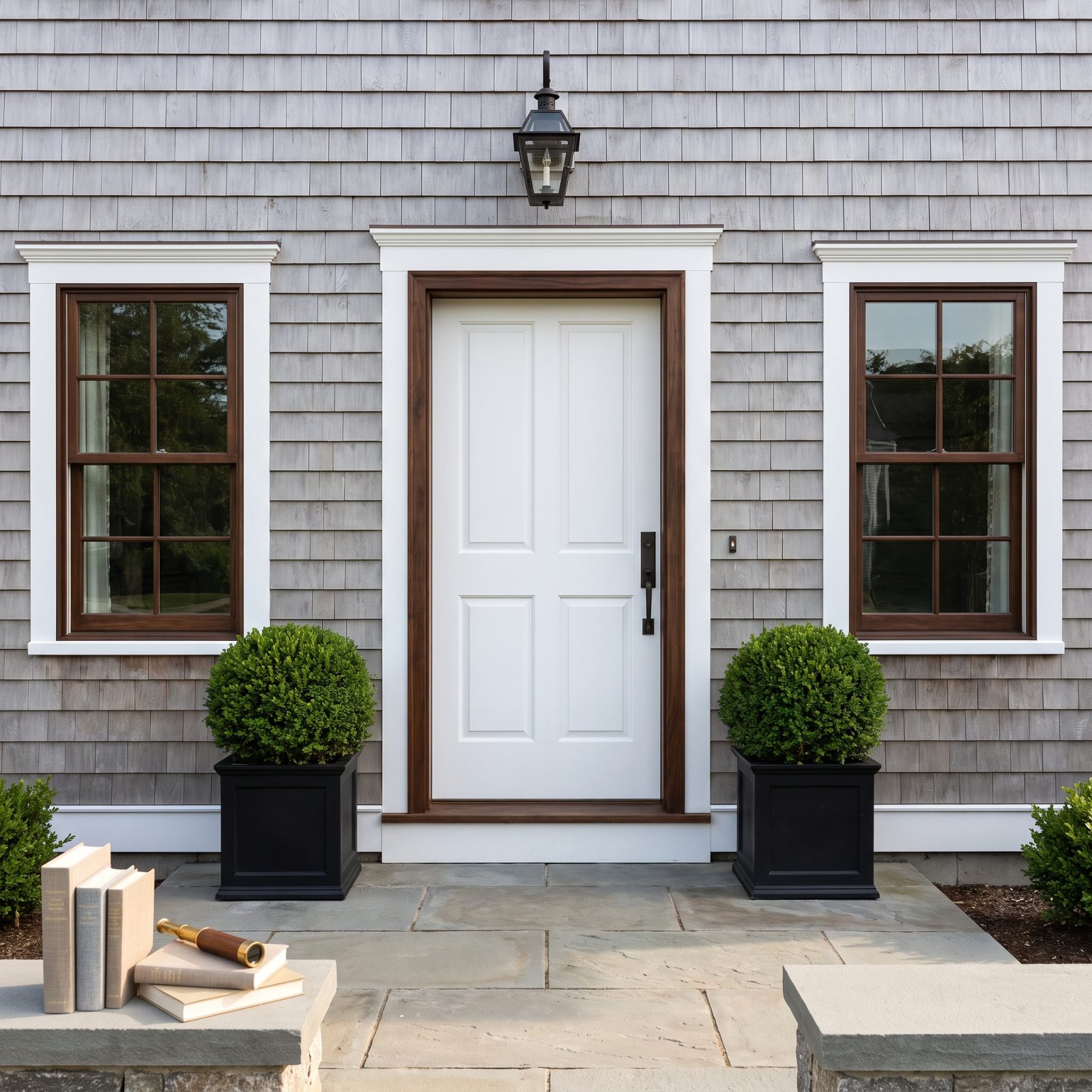
A matched pair of planters. A light fixture centered dead-on over the door. Two windows balanced on either side. Your eye relaxes at that facade and you probably can’t say why.
You can thank a few hundred thousand years of wiring. Studies on faces found that Source attractiveness rose when symmetry increased and dropped when it was reduced, and a Source review across cultures found the preference shows up early in development and travels across populations, which points to something biological rather than learned. We read symmetry as a sign of health and order in a face, and the brain doesn’t bother drawing a hard line between a face and a facade.
What a balanced entry quietly tells a visitor
- Nothing was neglected. Both sides got the same care.
- The household has a plan. Symmetry is intention made visible.
- There’s nothing lopsided to hide, so the whole face reads as straightforward.
Worth saying: newer cross-cultural work has muddied the symmetry story for faces specifically, with some studies finding it matters less than averageness. But for the flat plane of a house front, the pull toward balance is hard to argue with.
Red Doors and the Ancient Fear They Secretly Soothe
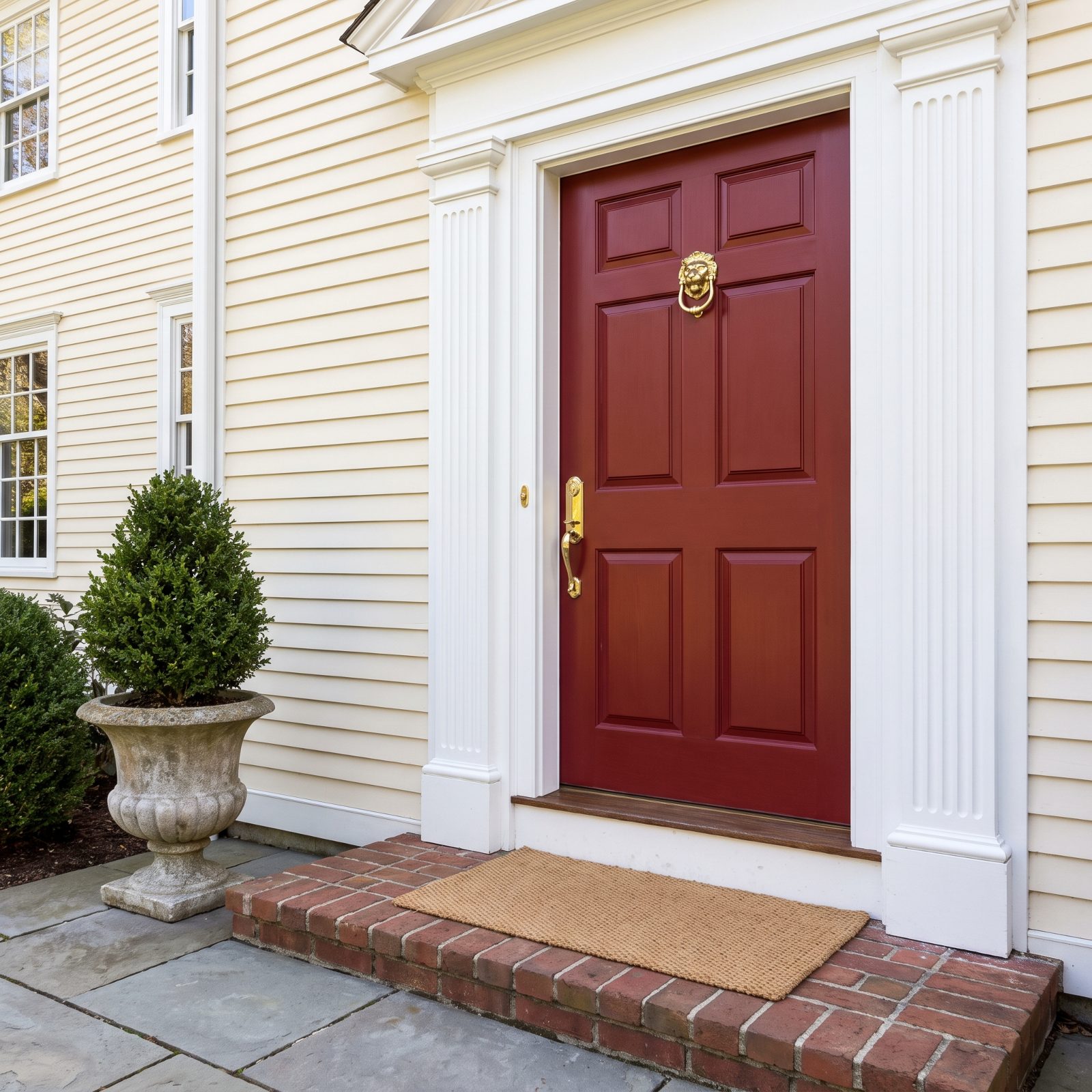
A red door is one of the oldest messages a house can send, and it was answering a fear long before it was answering a design brief.
Trace it back far enough and the red door is about protection from something out there in the dark. In the Old Testament, Source the Israelites marked their doors with lamb’s blood to be passed over by the angel of death. Centuries later Catholic churches painted their doors red to stand for the blood of Christ, marking the ground beyond as sanctuary. In feng shui, Source the entry is the mouth of chi, and red is considered the color of protection that keeps harmful energy from crossing the threshold.
Then there’s the warmer thread. In early American tradition, Source a red door told a tired traveler this was a house where you could rest for the night. Same color, two jobs: keep the danger out, wave the welcome in. That double duty is why a red door still lands as both bold and reassuring, and why homes with red doors in one analysis Source sold faster than average.
The Smudged Handle That Tells You More Than the Paint Job
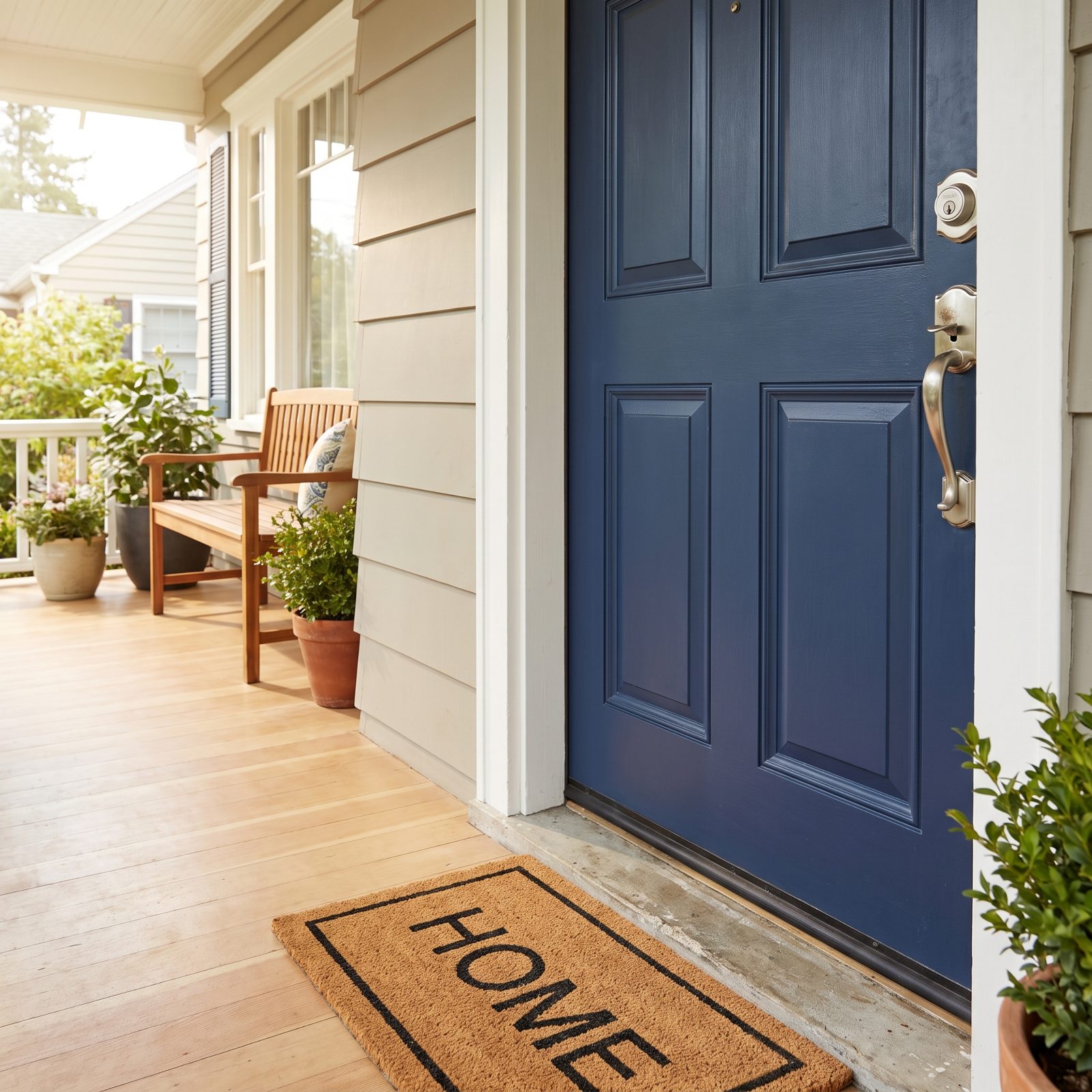
You notice it before you ring the bell. A lever worn to a dull shine where thumbs have landed ten thousand times, or a brass knob gone chalky green at the edges. The handle is the one piece of a front door a stranger actually touches, and your brain treats touch-points as honesty signals. A door can be freshly painted and still broadcast neglect if the hardware is loose, tarnished, or sticky.
This is thin-slicing at work. Research out of Princeton found people form judgments of trustworthiness and competence in as little as Source 100 milliseconds, and those judgments barely budge with more time. The handle gives your eyes a head start. A well-kept brass door handle that someone clearly keeps clean reads as a household that sweats the small stuff.
Here’s the thing nobody admits. A clean handle and a wiped-down kickplate do more for a first impression than a weekend of repainting.
Why a Dead Potted Plant Costs You More Than You Think
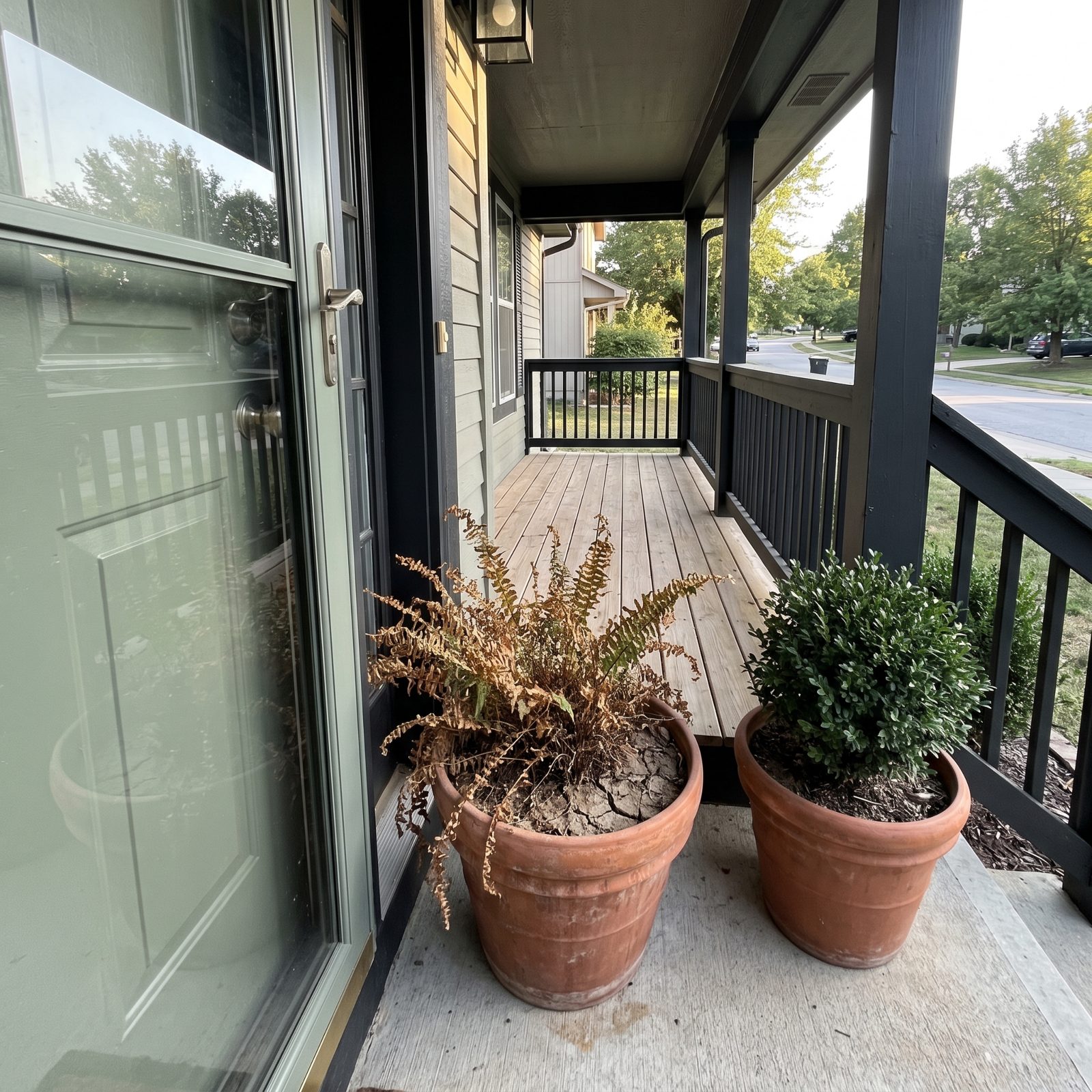
A brown fern in a cracked pot by the step does something strange to a visitor. It subtracts points you didn’t know you had. One dead plant reads louder than three healthy ones, because the eye snags on the thing that’s wrong.
Greenery on a porch signals attention and care, and a plant that’s clearly been abandoned signals the opposite. A STIHL survey found that Source 86 percent of adults equate someone’s ability to keep up their yard with their ability to care, full stop. People read a withered plant as a small window into how the household runs. Harsh, maybe. But it’s how we’re wired.
Swap the casualty for something hard to kill. A boxwood in a clean planter, a snake plant, anything you won’t forget to water. If you want it to actually feel alive year-round, lean into layered tropical front porch greenery that reads lush without demanding much. I say this as someone who has killed a fair number of ferns. The pot is not the problem. You are.
The Doormat Message Your Brain Decodes in Half a Second
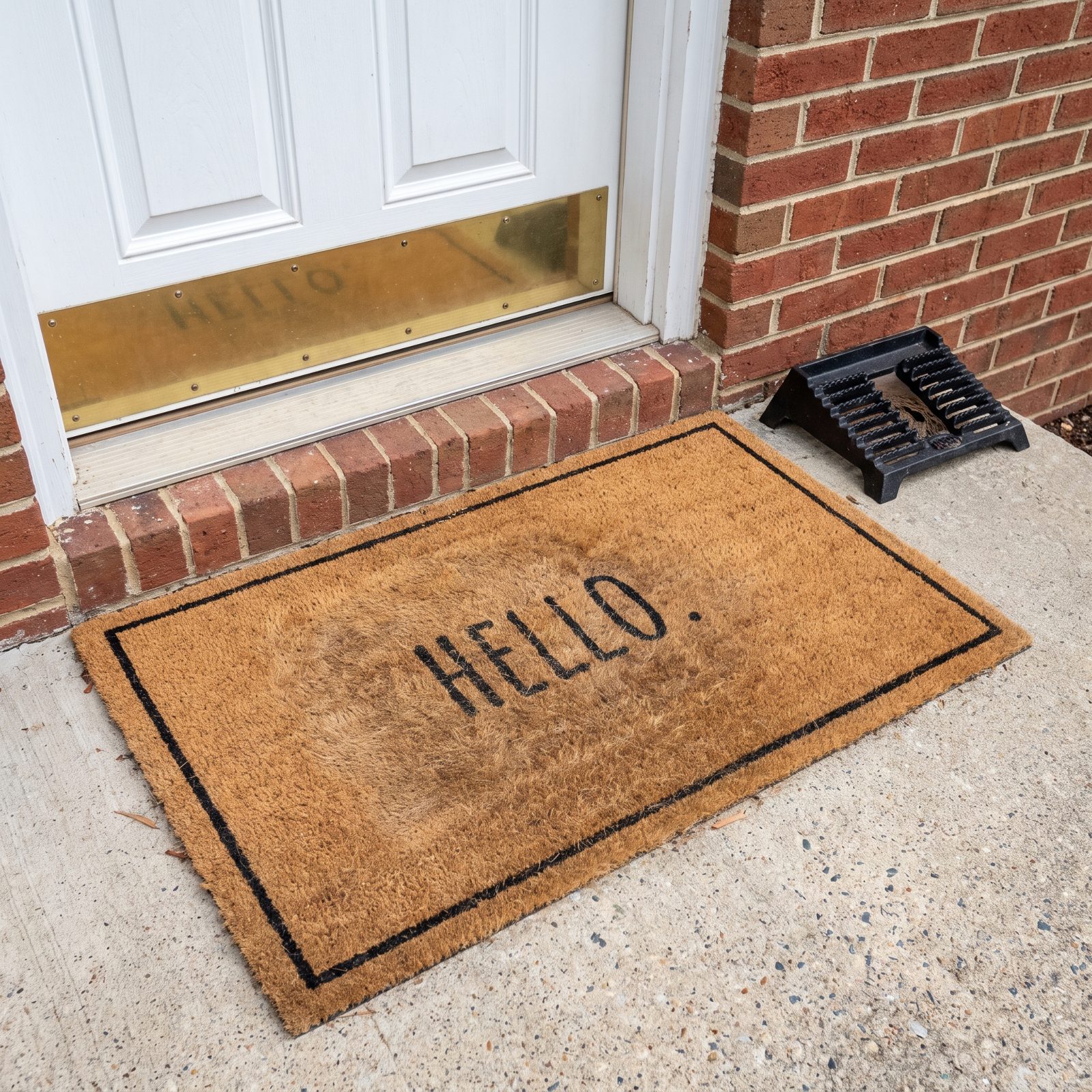
A doormat is a tiny billboard, and you read it faster than you read a face. “Hello,” “Go Away,” a monogram, a pineapple, a pattern of nothing at all. Each one lands before you’ve finished stepping onto it.
Your brain runs these snap reads constantly. Psychologists call it thin-slicing, and the classic work by Nalini Ambady showed observers could predict a teacher’s end-of-semester ratings from a silent two-second clip, with longer clips adding almost nothing Source. A doormat is your home’s two-second clip. A jute mat with a plain border says understated. A “Hey There” mat in script says approachable. A novelty slogan says this household wants you to laugh before you knock.
The mistake is a mat that contradicts the door. A formal black door over a cartoon cat mat creates a tiny mismatch your eye catches and can’t explain. A simple coir doormat rarely fights with anything. Pick the message on purpose, or the mat picks it for you.
What an Oversized Door Does to a Visitor’s Posture
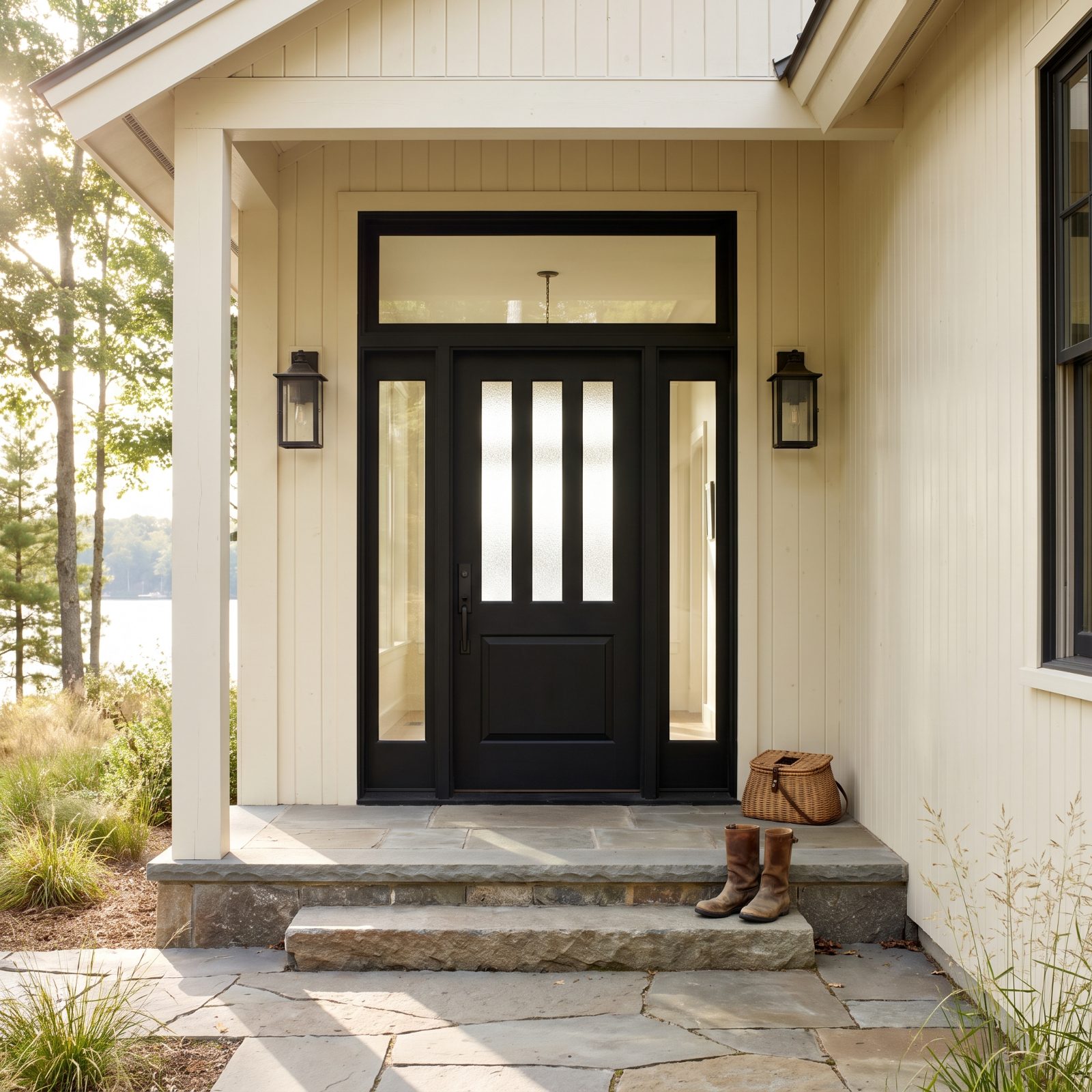
Stand in front of an eight-foot door with a transom window above it and you’ll catch yourself doing something. You slow down. You square up. Maybe you reach to smooth your shirt. A tall door changes how you carry your body before you’ve even knocked.
Scale is a status signal, and we respond to it physically. A door that’s taller and wider than you expect reads as deliberate, as a household that chose grandeur over builder-standard. Curb appeal researchers have tied these exterior cues directly to perceived value. A University of Texas at Arlington study found exterior presentation can swing a home’s sale price by as much as Source 7 percent, and scale is part of that read.
You don’t need a mansion to borrow the effect. A taller storm door, a transom, a bold black front door with vertical lines, all push the eye up. The door grows in the mind even when the opening stays the same.
The Peeling Paint Everyone Reads as a Private Struggle
🔥 Would you like to save this?
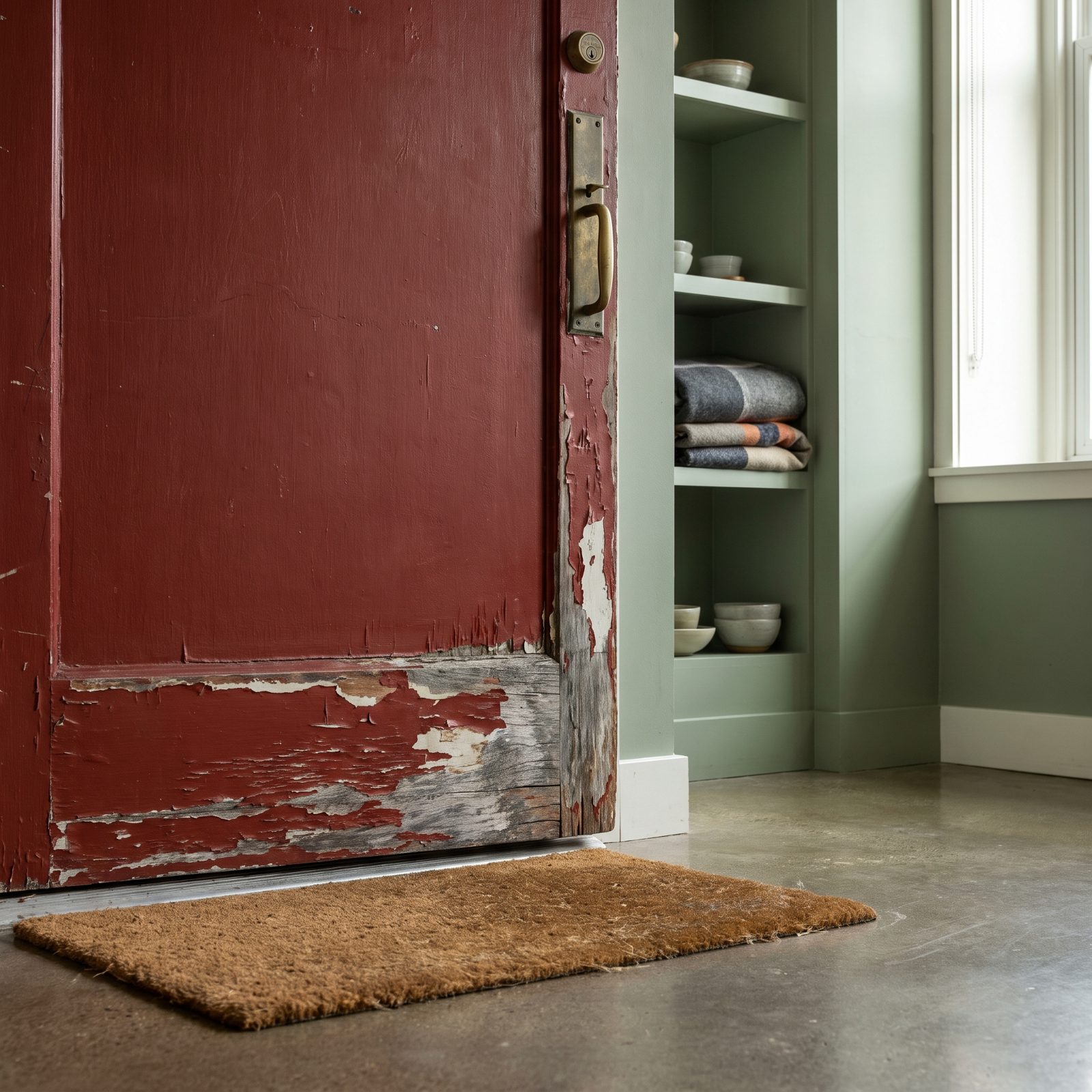
Peeling paint tells a story nobody asked it to tell. A strip curling off the door frame, bare wood showing at the bottom rail, and the visitor’s mind quietly fills in the blanks. Busy. Stretched thin. Something going on.
This is the broken windows effect, scaled down to a single house. Wilson and Kelling’s 1982 theory argued that visible signs of disorder signal that Source nobody is minding the place, and people read that message fast. One peeling door doesn’t mean anyone’s struggling. But the eye doesn’t deal in fairness. It deals in signals, and flaking paint is a loud one.
The fix is almost insultingly cheap. A pint of exterior enamel and a free Saturday. Scrape, sand the edge smooth, prime the bare spots, two coats. A exterior door paint in a saturated color buys you more goodwill than almost any other hour you’ll spend outside your house. I’ll die on this hill: a fresh door beats a new mailbox every time.
Why Matte Black Doors Make You Assume Someone Has Taste
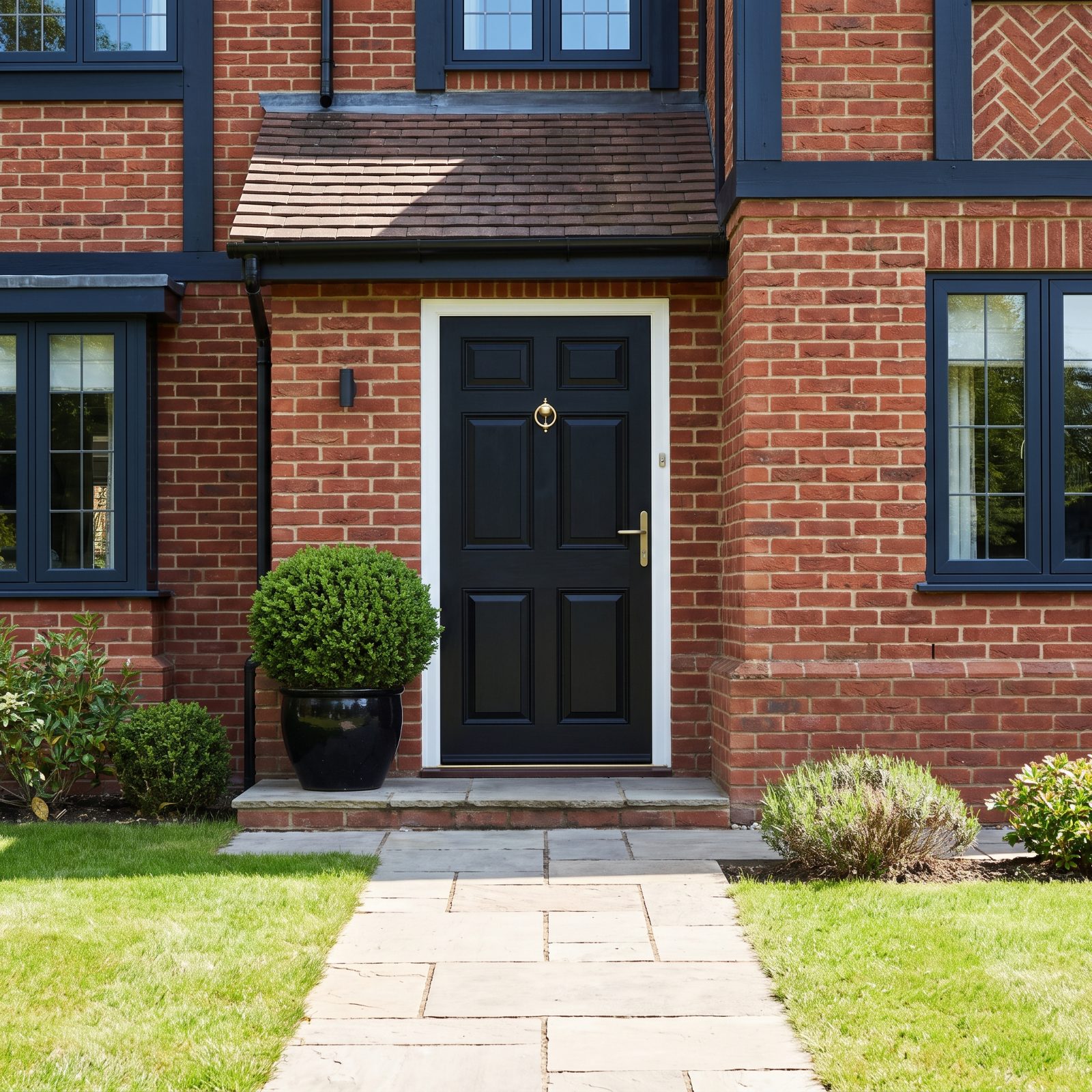
Matte black does something odd. It reads as a decision. Glossy white can happen by default, by whatever the builder had on the truck. Flat black almost never happens by accident, and your brain knows it.
Neutral and restrained exterior colors signal cleanliness, sophistication, and a kind of quiet confidence, and homes in that register tend to Source move faster and closer to asking. Black sits at the top of that hierarchy because it absorbs rather than shouts. It implies the owner trusts the architecture to carry itself.
- It hides smudges and weather better than pale colors, so it stays looking intentional.
- It frames brass or nickel hardware with high contrast, which the eye reads as crisp.
- It’s a color most people are slightly afraid to commit to, so committing reads as confidence.
Pair it with a brass door knocker and the whole entry snaps into place. Restraint, it turns out, is the loudest flex there is.
The Porch Light That Changes How Welcome You Feel
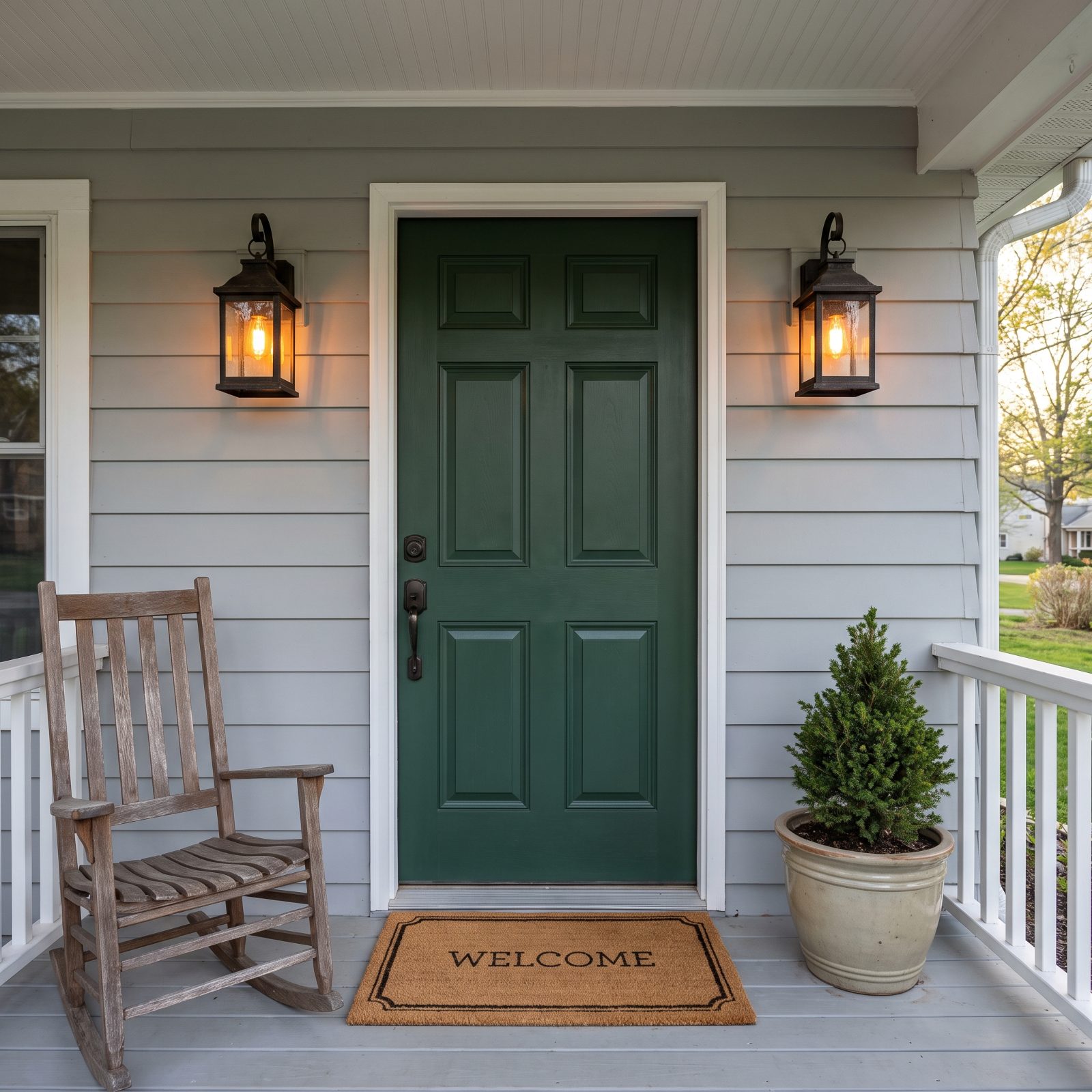
Two houses, same door, same mat. One has a cool blue-white bulb humming over the step. The other has a soft warm-white one. You feel more welcome at the second before you can say why.
It’s the color temperature, and the research is unusually clear here. A large PLOS ONE study across three cities found that lighting perceived as warm generated higher feelings of safety than lighting perceived as cold Source. A separate arboretum experiment found people were over 30 percent more likely to report feeling safe under warm white light than under amber, and brighter, even light beat dim light by a wide margin Source. Warm and well-lit is the combination your nervous system reads as “you’re expected here.”
Swap that harsh 5000K bulb for a 2700K one and the whole entry changes character. A warm led bulb costs a few dollars. It’s the cheapest hospitality upgrade in the house.
The Lived-In Clue That Beats a Showroom Every Time
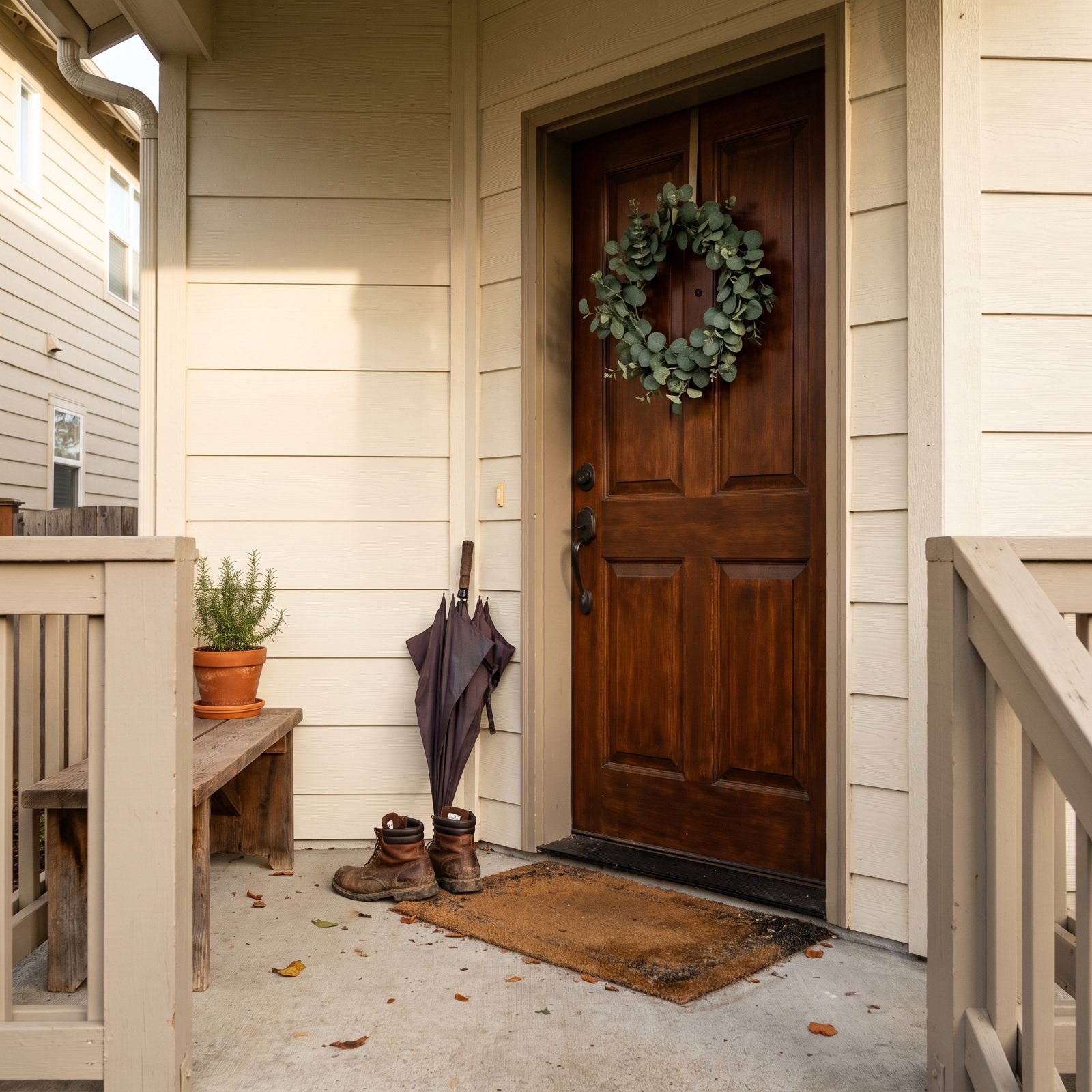
You know the entry that looks like a catalog page. The symmetrical planters, the untouched mat, the wreath hung dead center. It’s correct. And something about it keeps you at arm’s length.
Now picture the other one. A pair of muddy boots by the step, a folded umbrella leaning in the corner, a seasonal wreath slightly off-center because someone actually hung it in a hurry. That entry pulls you in. Thin-slicing research shows people read genuine behavioral signals with real accuracy, not just surface polish Source, and the 2026 Thumbtack Curb Appeal Report found homeowners are now leaning hard into personalization and emotional connection over sterile resale perfection Source.
A showroom entry says a stager was here. A lived-in one says people are. Hang a eucalyptus wreath, leave the boots, let it breathe. The goal was never to look staged. It was to look like somebody you’d want to know lives behind that door. So what’s yours saying right now.
The Bottom Line
Here’s what strangers actually read: not the color, the hardware, or the wreath, but whether you care. Every detail they decode collapses into one judgment made in seconds, this is a person who tends to things, or one who lets them slip. So walk up to your own door tomorrow as if you’ve never seen it before, and ask what it’s quietly telling everyone who already has.