🔥 Would you like to save this?
Every December, a perfectly good mantel gets buried alive. You start with one nice piece of garland. Then a wreath, then candles, and more candles, and a nutcracker army, and by the time you step back it looks like a Christmas store threw up on your fireplace. Cozy is restraint. Cluttered is what happens when you can’t stop. So before you drape a single strand of pine, look at the mistakes that quietly wreck a mantel every year. You’ve probably made half of them.
33. Garland So Thick It Swallows the Entire Mantel
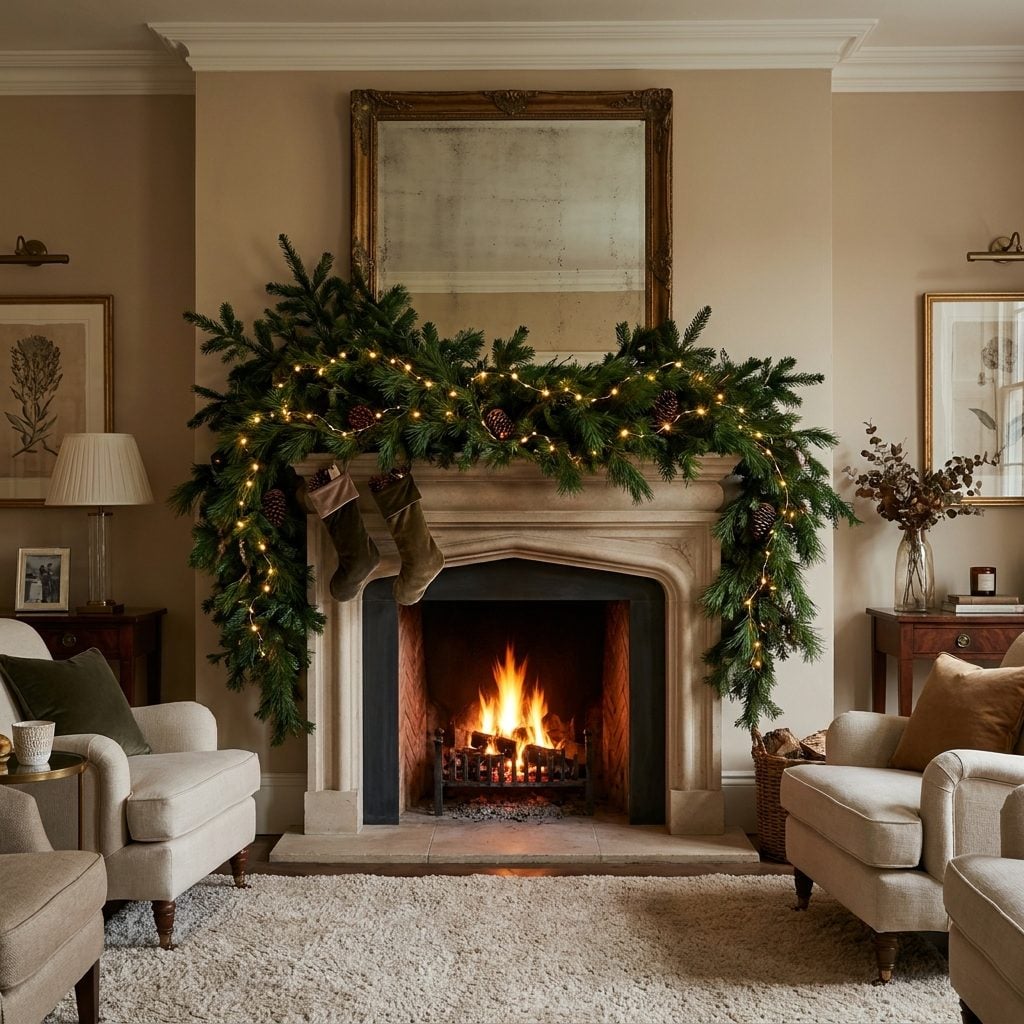
A thick garland feels generous in the store. On the mantel it just eats everything. The wood disappears, the mirror above it disappears, and suddenly your fireplace looks like it grew a hedge overnight.
In order to come up with the very specific design ideas, we create most designs with the assistance of state-of-the-art AI interior design software. Also, assume links that take you off the site are affiliate links such as links to Amazon. this means we may earn a commission if you buy something.
A mantel needs to read as a shelf, which means you should still see the surface under all that green. A slim cedar or eucalyptus green cedar garland that lets the wood peek through does more with less. The empty space around the greenery is what sells it.
32. Too Many Different Types of Greenery Mixed Together

Five kinds of greenery on one mantel is not lush, it’s confused. Pine, magnolia, eucalyptus, boxwood, and fern all pulling in different directions makes your eye bounce around with nowhere to land.
Pick two. Maybe three if one is just an accent. A base of one green, a secondary texture, done. Restraint here reads as taste, not laziness. And I promise nobody has ever walked into a room and thought, this mantel needed more varieties of leaf.
31. Decorations Covering Every Inch of Available Space
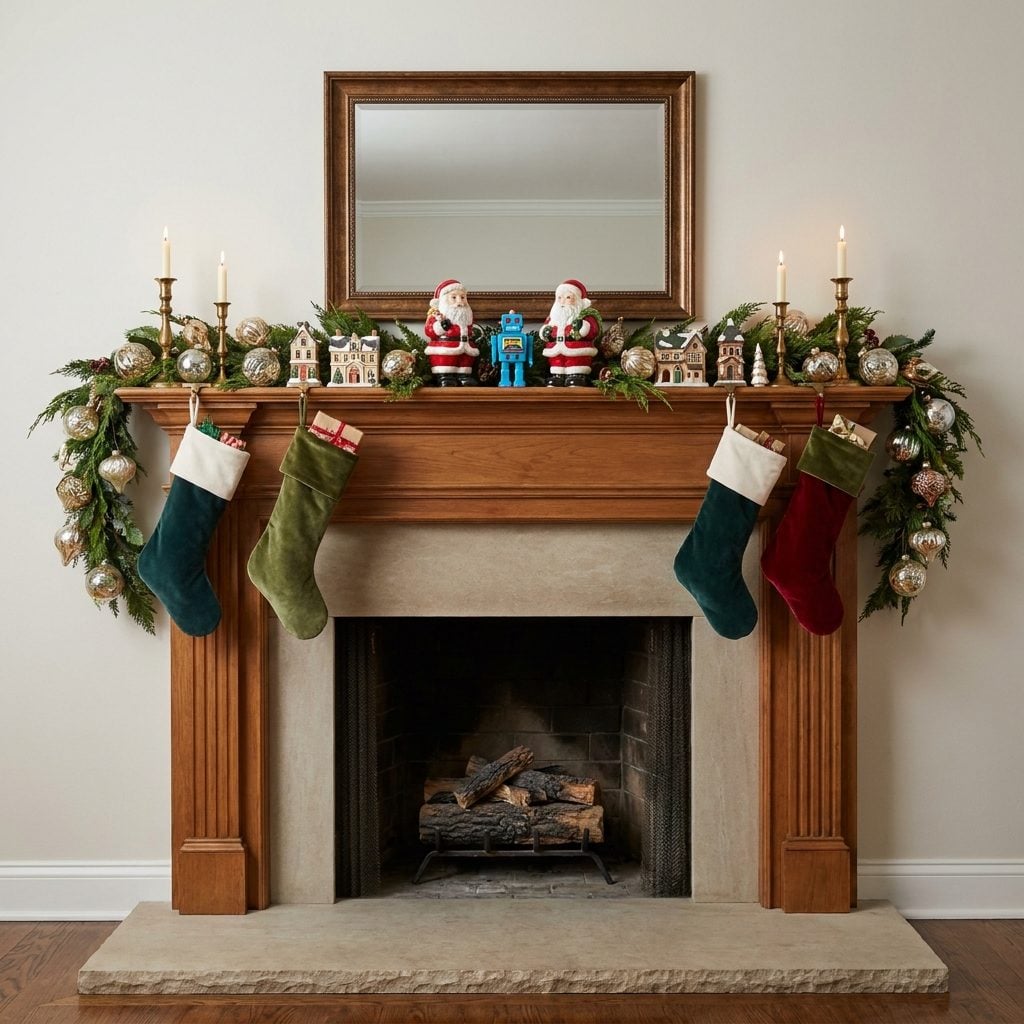
The instinct is to fill the whole shelf. Fight it. When every inch holds something, nothing gets to be the star, and a row of small objects packed shoulder to shoulder just reads as visual static.
Group in odd numbers with real gaps between clusters. Three things with space around them beats twelve things touching. Give your ceramic village room to breathe and it suddenly looks like a display instead of a crowded shelf.
30. Stockings Competing With an Already-Busy Mantel
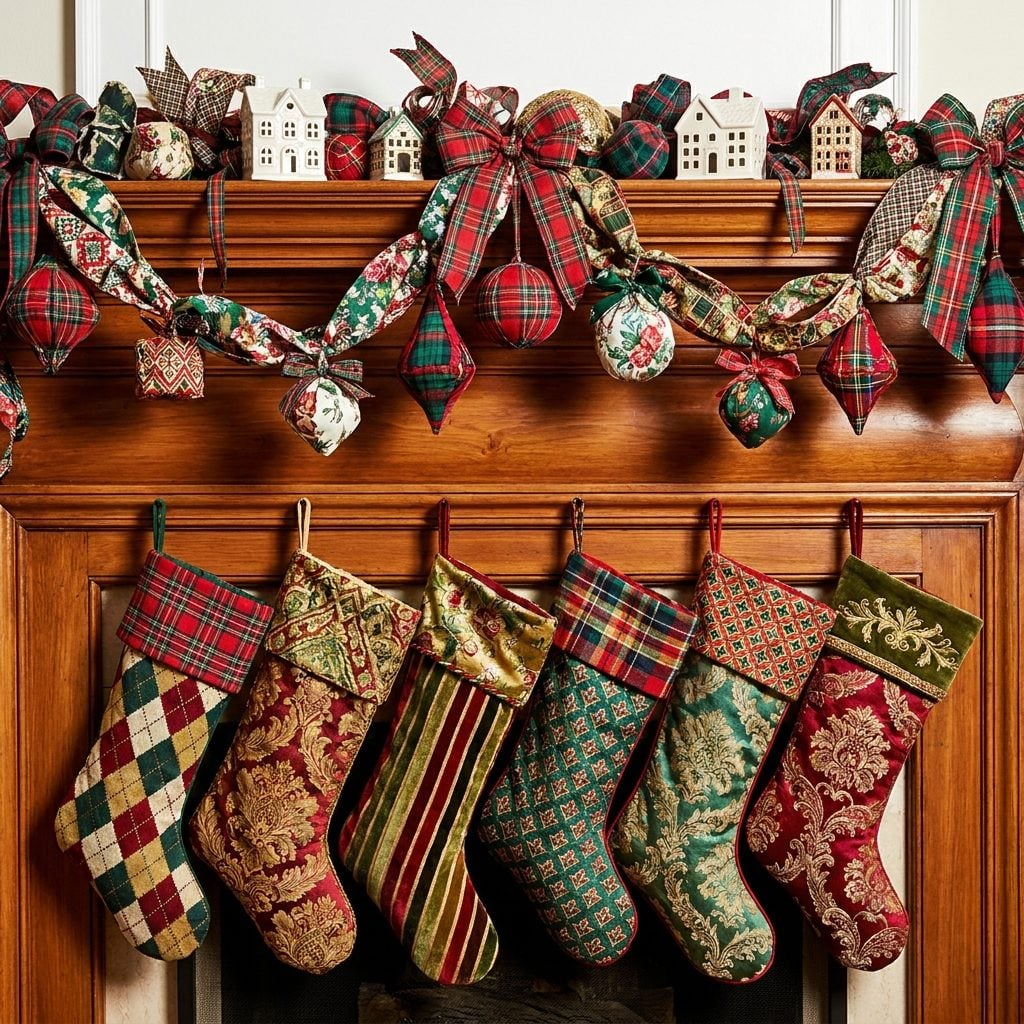
Stockings and a loaded mantel are two loud people talking at once. If the top of your mantel is already full of pattern and color, the stockings need to shut up.
Go plain. Solid knit cream knit stockings or simple linen ones in one repeating color. When the mantel is busy, the stockings play the quiet part; when the mantel is minimal, then you can let the stockings carry the pattern. One of them has to be the calm one.
29. Garland Hanging So Low It Crowds the Fireplace Opening
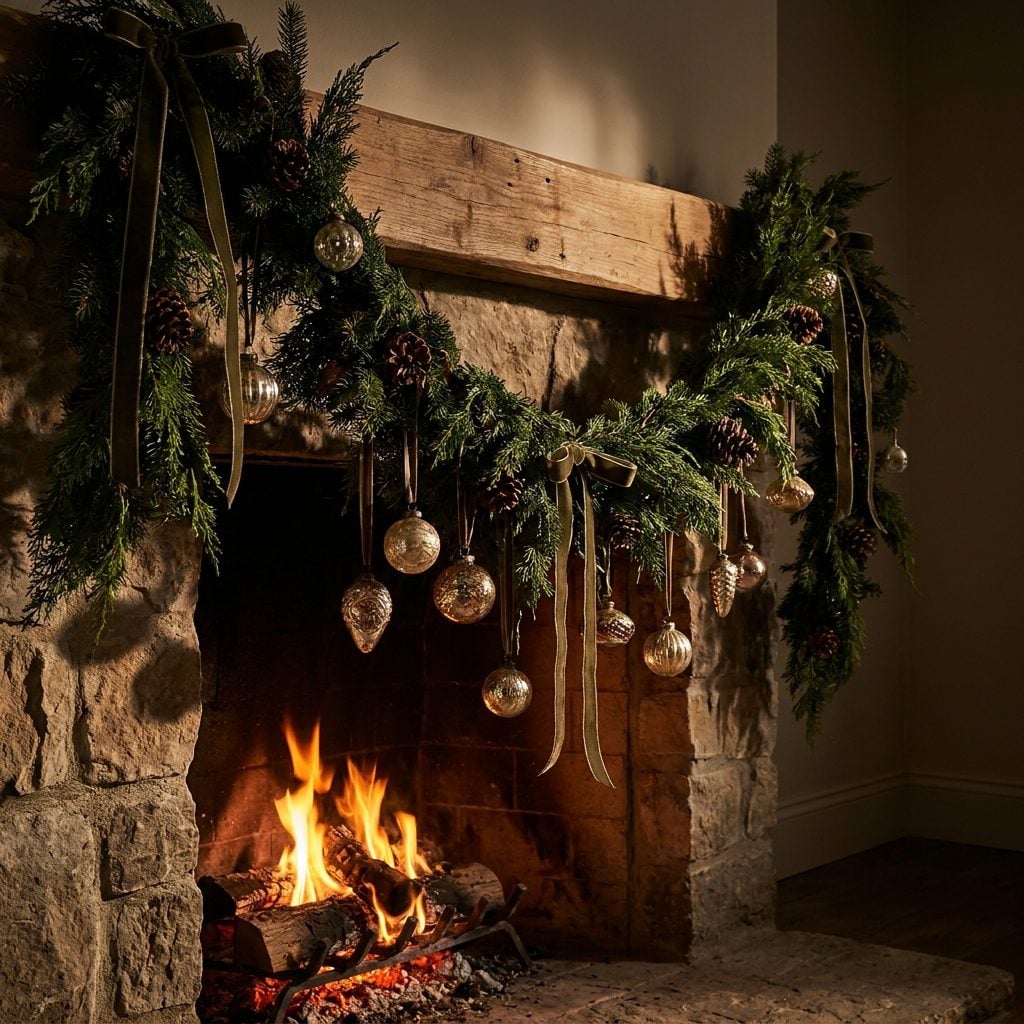
A long draping swag looks romantic until it dangles right down toward the flames. Beyond the obvious fire hazard, it crowds the opening and makes the whole fireplace feel top-heavy and drooping.
Keep the tails short and controlled. The garland should frame the fireplace, not curtain it off. A little swag has charm. A lot looks like the greenery is melting off the shelf — and it’s a genuine safety issue you don’t want to ignore.
28. Too Many Candlesticks at Different Heights
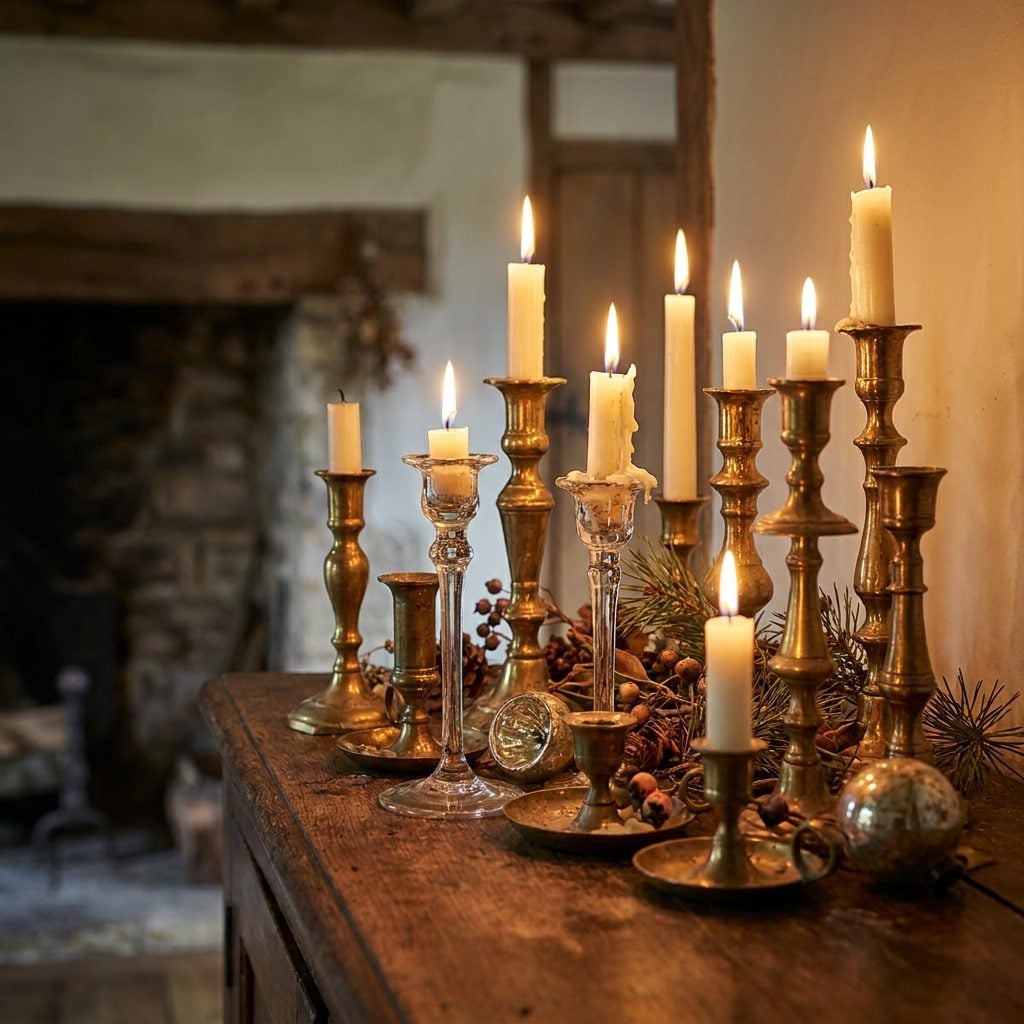
Candlelight is the fastest way to make a mantel feel cozy. Nine mismatched candlesticks is the fastest way to undo it.
Mixed heights work when there’s a plan behind them. A cluster of three in graduated heights, all the same finish, holds together as one composition; eight in random sizes and metals reads as a garage sale. Pick a family — all brass candlesticks, or all glass — and group them tight instead of spreading them across the whole shelf. Repetition is what makes variety look deliberate.
27. A Giant Wreath Overpowering a Small Fireplace
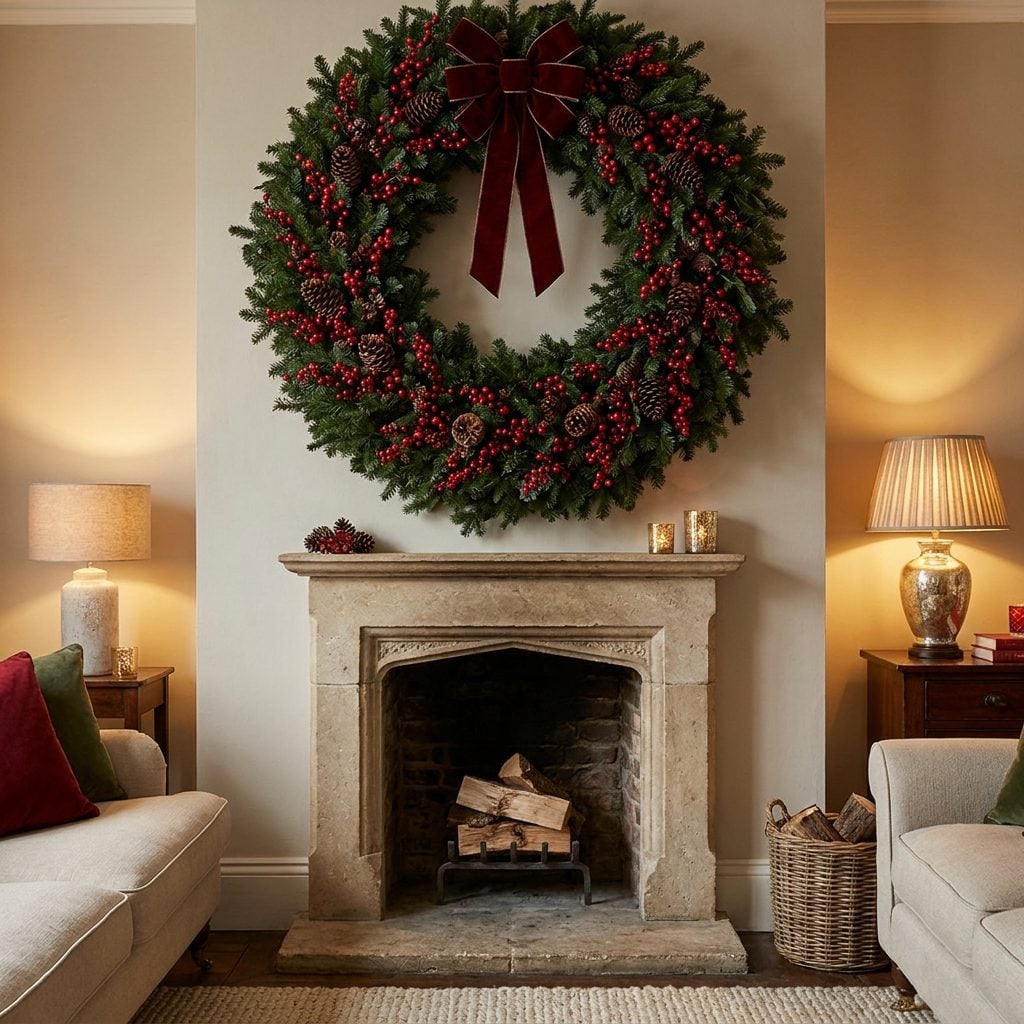
A huge wreath on a small fireplace is like a hat two sizes too big. It draws attention to exactly the wrong thing, and the fireplace shrinks under it.
Scale is everything here. Size the wreath to the width of the mantel below, and roughly two-thirds of that width is a safe target. Anything that spills past the edges or crowds the ceiling breaks the balance instantly. Smaller and correct beats big and wrong every single time.
26. A Tiny Wreath Floating Above a Large Mantel
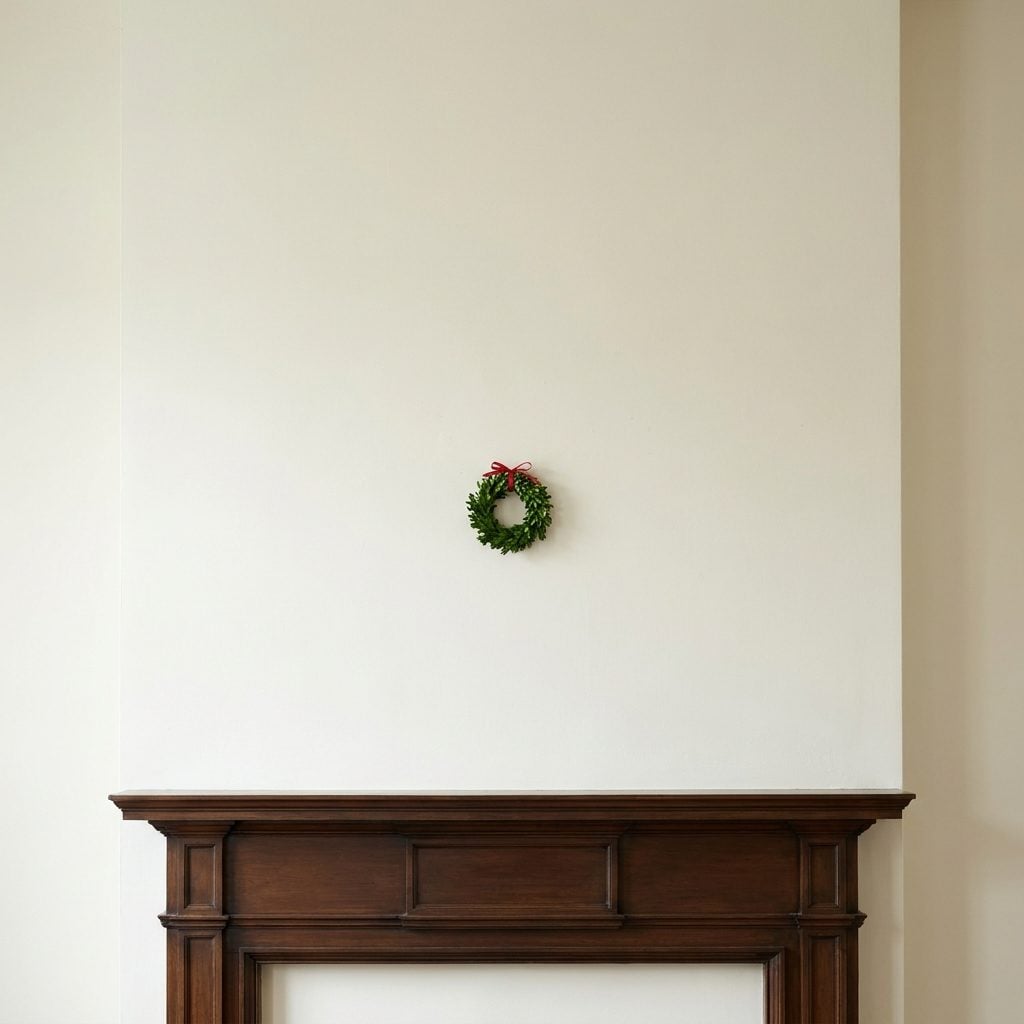
The opposite problem, and just as awkward. A small wreath on a big wall looks like a postage stamp on a billboard, and all that empty space around it makes the thing feel forgotten rather than intentional.
So either size up the wreath or build around it. Flank the small ring with garland, tall branches in urns, or a pair of framed prints to fill the visual weight. A grand fireplace needs a grand gesture, not a lonely little circle drifting in the middle of nowhere.
25. Oversized Decorations Blocking the Artwork or Mirror
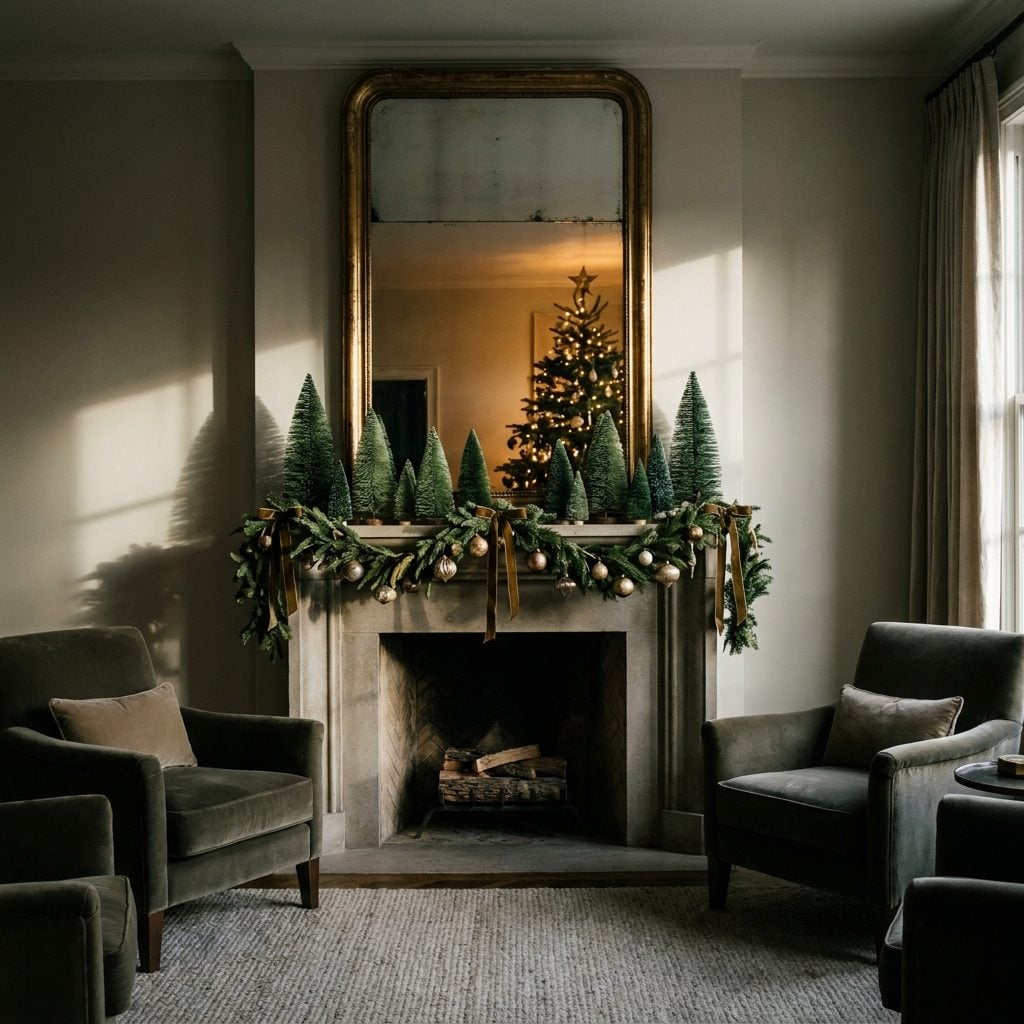
You spent good money on that mirror or that piece of art. Then December comes and you bury it behind bottle-brush trees. Now the best thing above your mantel is invisible for six weeks.
Decorate around the focal point, not on top of it. Let a mirror reflect the candlelight, let a painting stay visible above a low garland. The reflection alone doubles your greenery and your glow. Covering it up is one of those mistakes you don’t notice until you take everything down and remember the room used to look better.
24. Christmas Décor Fighting With the Everyday Décor Left Behind
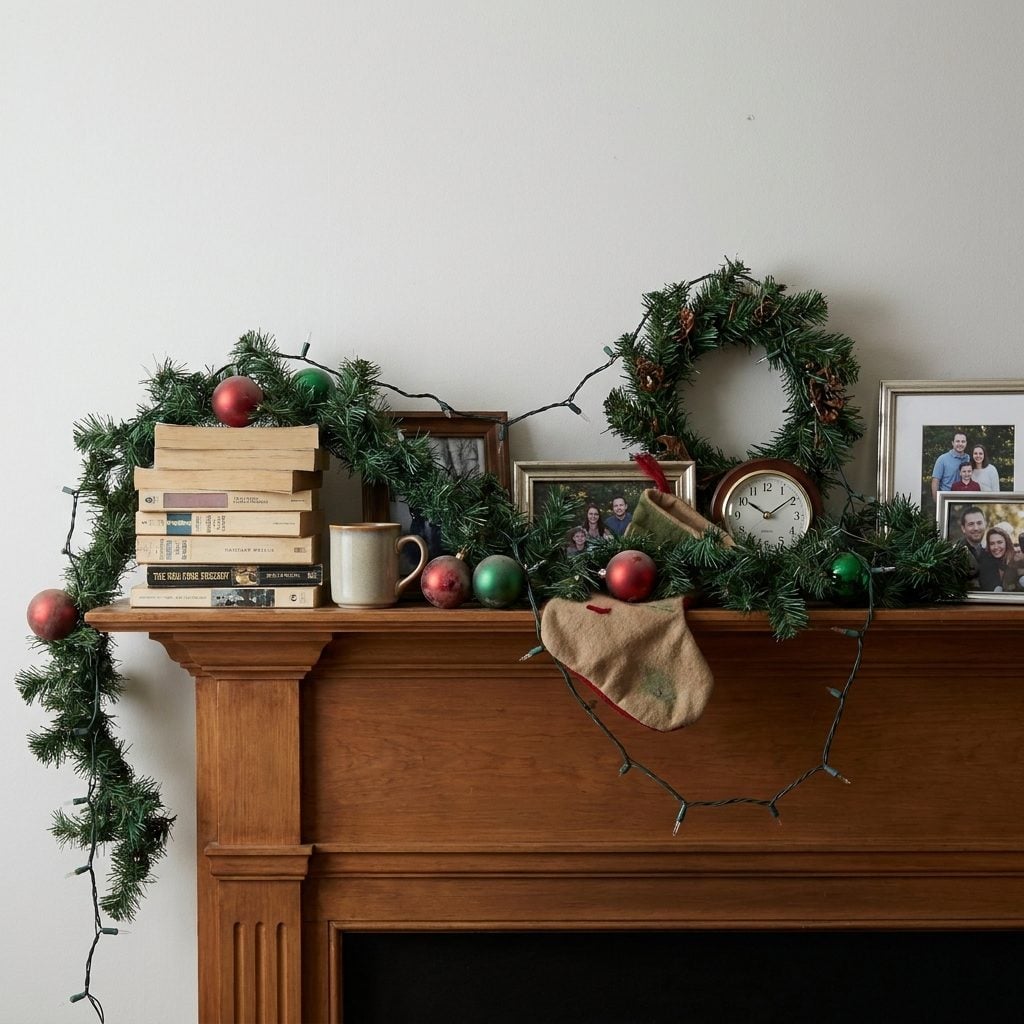
This is the sneaky one. You don’t add clutter on purpose — you just pile Christmas on top of what was already there. The photos, the vase, the little sculpture, all of it still sitting there while garland weaves around them.
Clear the shelf first. All of it. Then decorate from an empty mantel like a blank canvas. The year-round pieces go in a box for a month, and they’ll feel fresh again in January.
23. Forcing Every Family Stocking Into Perfect Symmetry
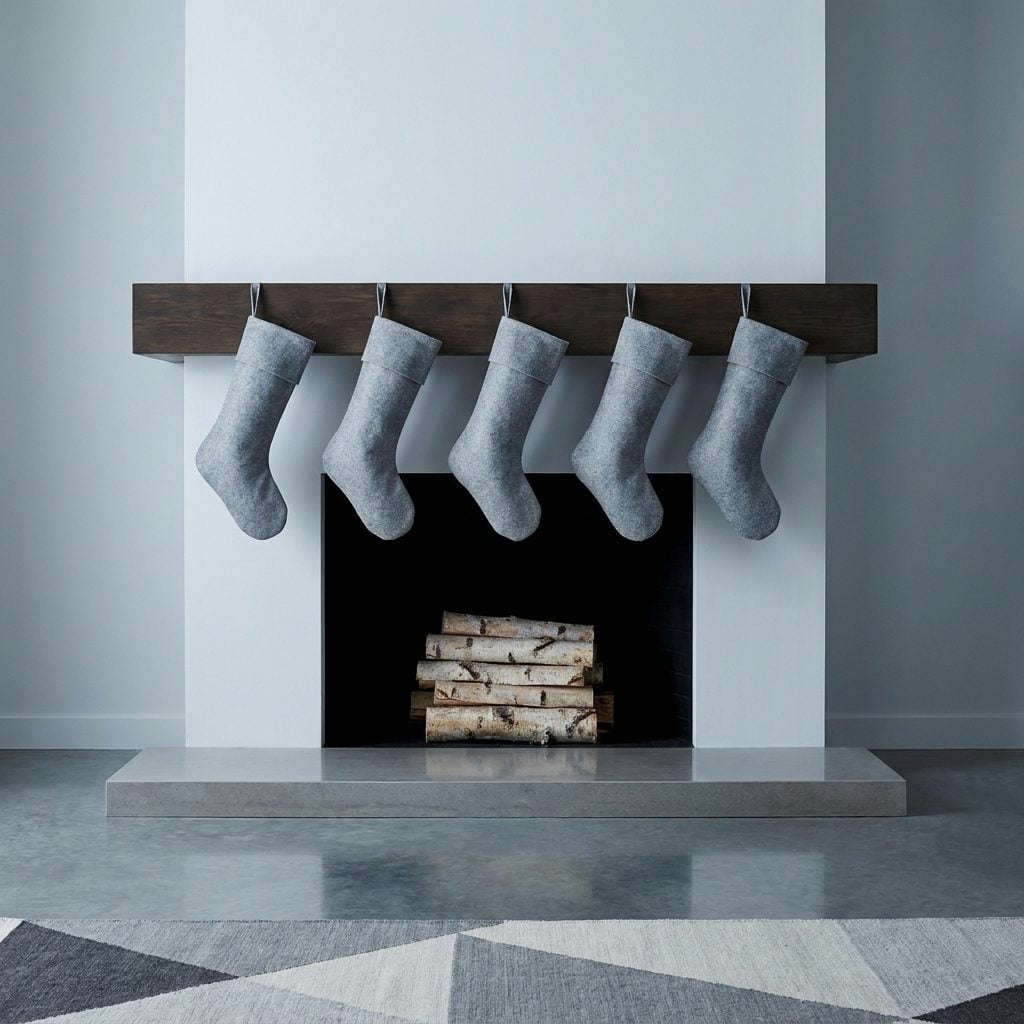
A mantel is not a spreadsheet. When every stocking hangs at the exact same length, spaced with a ruler, you’ve built a display rather than a home where people actually live.
Real families have five names of different lengths and personalities that refuse to line up, so let the stockings wander a little. Stagger the heights, mix the sizes, let one droop lower because someone crammed it full. That small imperfection is what tells a visitor somebody loves this house.
22. A Marching Line of Miniature Christmas Trees
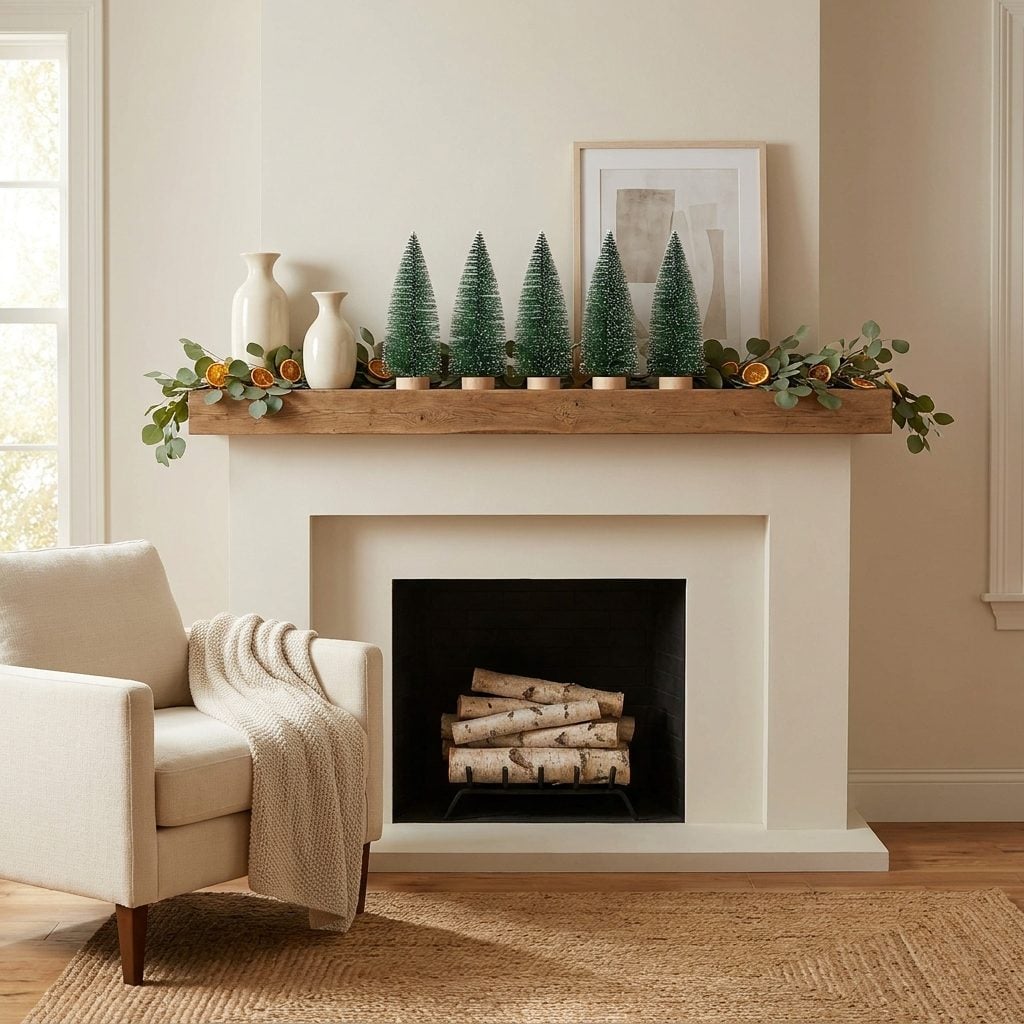
One little tree is charming. A forest of nine in a rigid row is the checkout display at a garden center.
The trouble is repetition without rhythm. Identical objects lined up shoulder to shoulder flatten the eye, and nothing gets to be the star because everything shouts the same note at the same volume. Keep two, maybe three, and vary the heights dramatically: one tall one off-center, a couple of shorter ones clustered nearby, some open space breathing between them. A trio with room around it beats a battalion.
21. Using Every Christmas Color You Own at Once
🔥 Would you like to save this?
Every color is a color you don’t get to build a palette around, and that’s exactly the problem. When red, green, gold, blue, purple, and pink all fight for the same square foot, your eye has nowhere to rest.
Choose two or three and commit. Classic red and green with white, or something quieter: gold, cream, and forest green. A tight palette looks expensive because restraint always does.
20. Mixing Warm White and Cool White Bulbs in the Same Garland
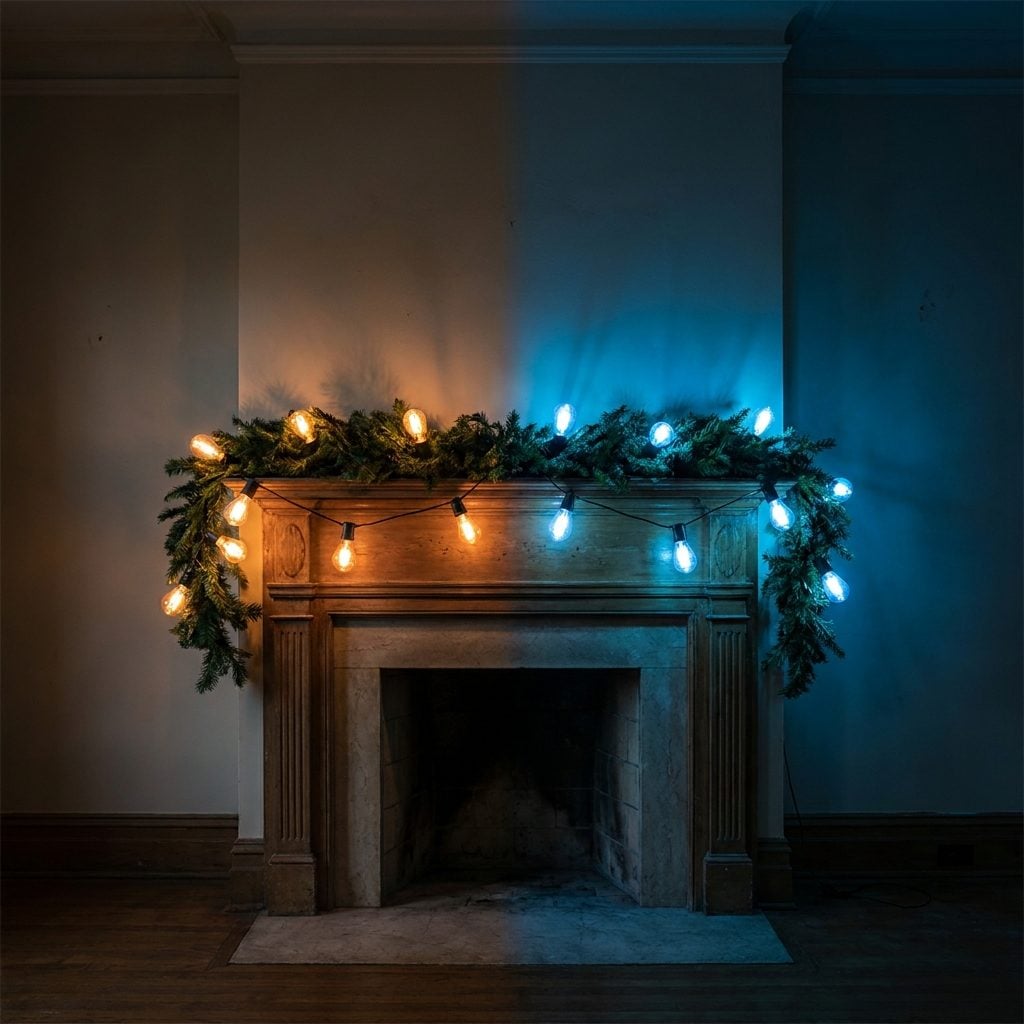
You hang two strings that looked identical in the box, plug them in, and suddenly one half of your garland glows amber and the other glows hospital blue.
Warm white and cool white don’t blend. They compete, and the eye catches the seam instantly. Before you decorate, plug in every strand and check the temperature. Match them all warm for a cozy fireside feel, or all cool for a crisp modern look. Just never both.
19. Letting Light Cords Snake Across the Mantel in Plain View
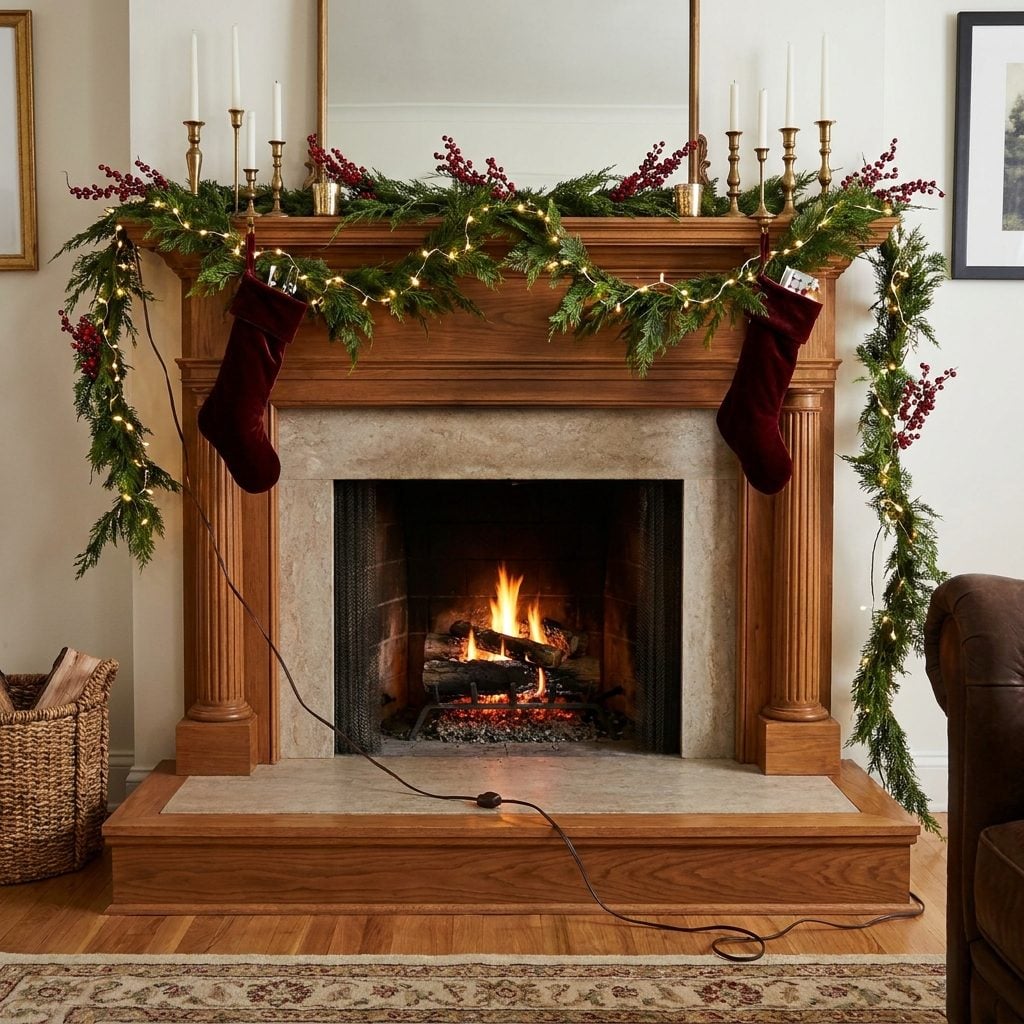
Nothing undoes a careful setup faster than a cord looping across the front of the mantel like a stray shoelace.
Tuck every wire deep into the garland greenery, run it along the back edge, and use small clear command hooks under the mantel lip to guide it down to the outlet. Green floral tape works for the stubborn stretches. The goal is light that seems to come from nowhere.
18. Battery Packs Perched Out in the Open
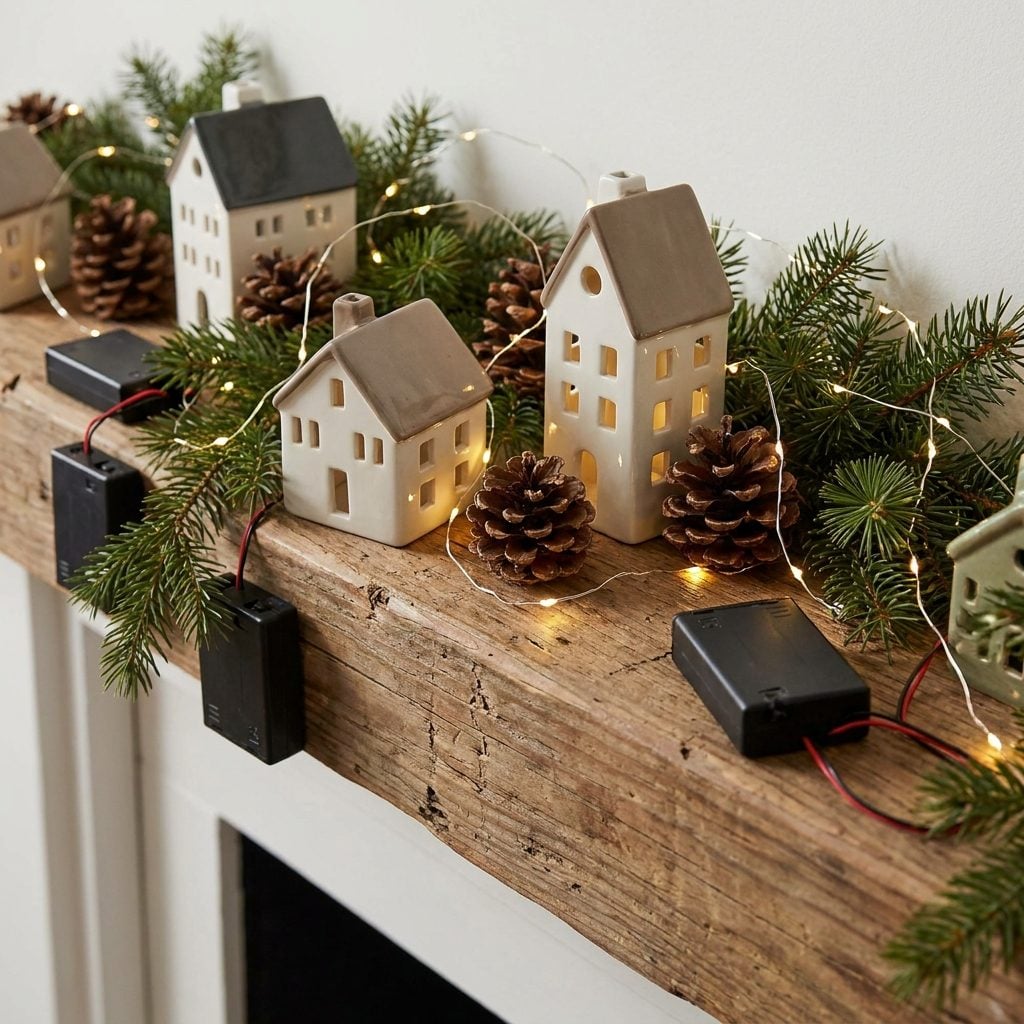
Battery-operated fairy lights are a gift. Battery packs sitting out like little plastic barnacles are not.
Hide them behind a candle cluster, inside a decorative box, under a fold of garland, or nestled into a stocking. If your mantel runs deep, push them to the very back where they vanish behind the greenery. A two-second tuck is the whole difference between magic and someone’s junk drawer.
17. Garland That Quits Before It Reaches the Ends
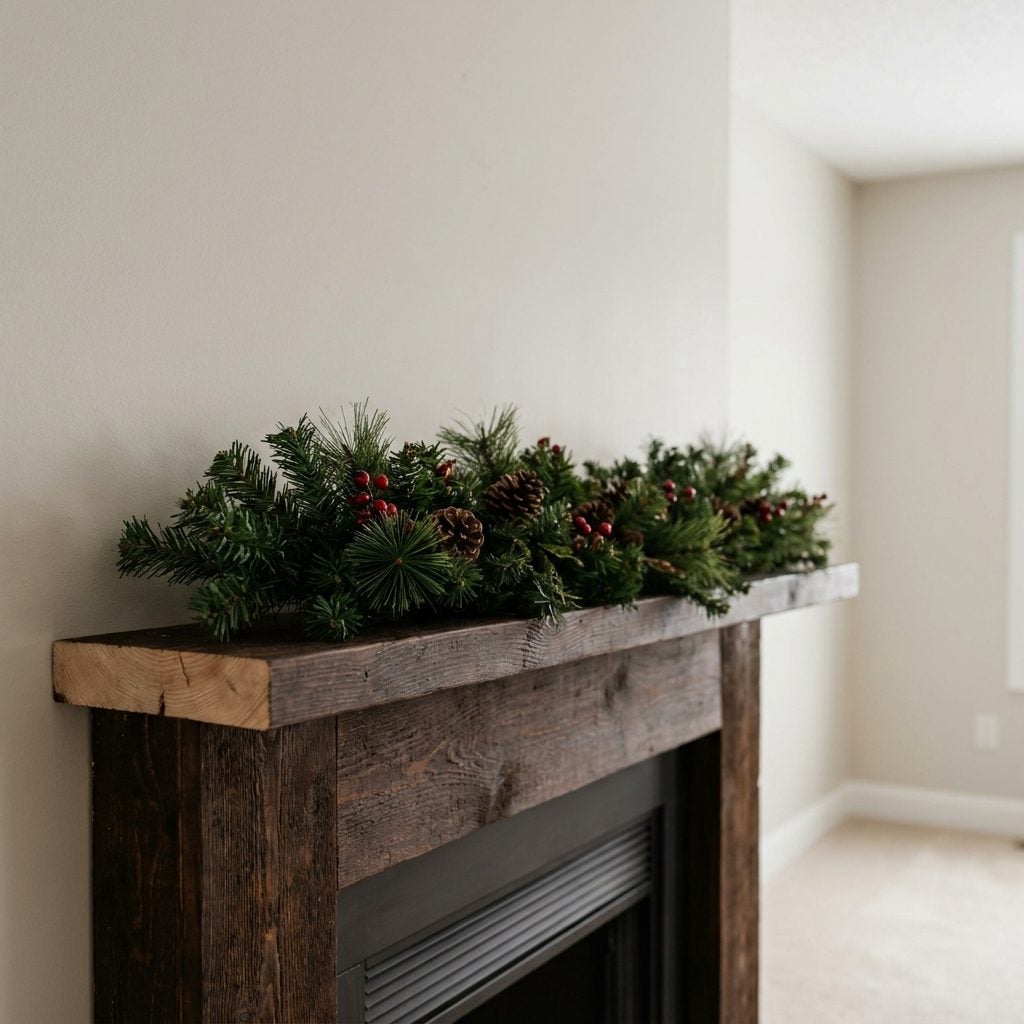
A garland that stops six inches shy of each end looks like it gave up. The eye reads those bare corners as unfinished, and the whole mantel tilts off balance.
Buy longer than you think you need, then let the ends drape and cascade over the sides. That soft downward spill at each corner is what makes it look styled rather than measured short. And if your garland genuinely won’t reach? Anchor the ends with candlesticks or a lantern so the stopping point feels like a decision.
16. Symmetry So Perfect It Reads Like a Showroom Display
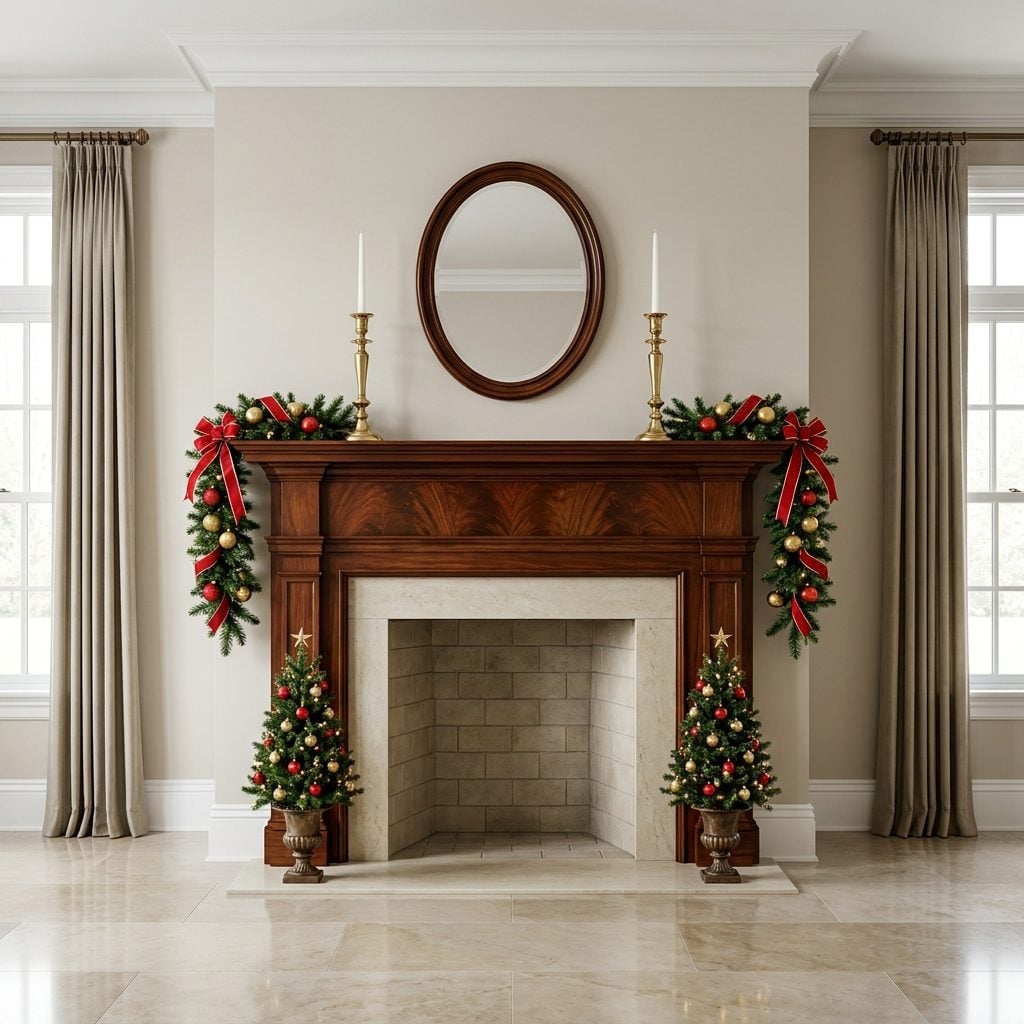
Perfect symmetry is the trap that gets the tidy people, and I say that as one of them. Matching everything on both sides feels safe, controlled, done right. It also looks like a furniture store vignette nobody has ever touched.
Aim for balance instead of mirror-image. Balance means the visual weight feels even without every piece being duplicated: a tall lantern on one side answered by a cluster of three shorter ornaments on the other. Different objects, similar heft.
That little lopsidedness is the whole secret to a mantel that looks like a person made it. Group things in odd numbers, let heights wander, leave one small gap. Cozy lives in the imperfection. Alright, go rearrange one side.
15. Completely Random Asymmetry That Looks Accidental
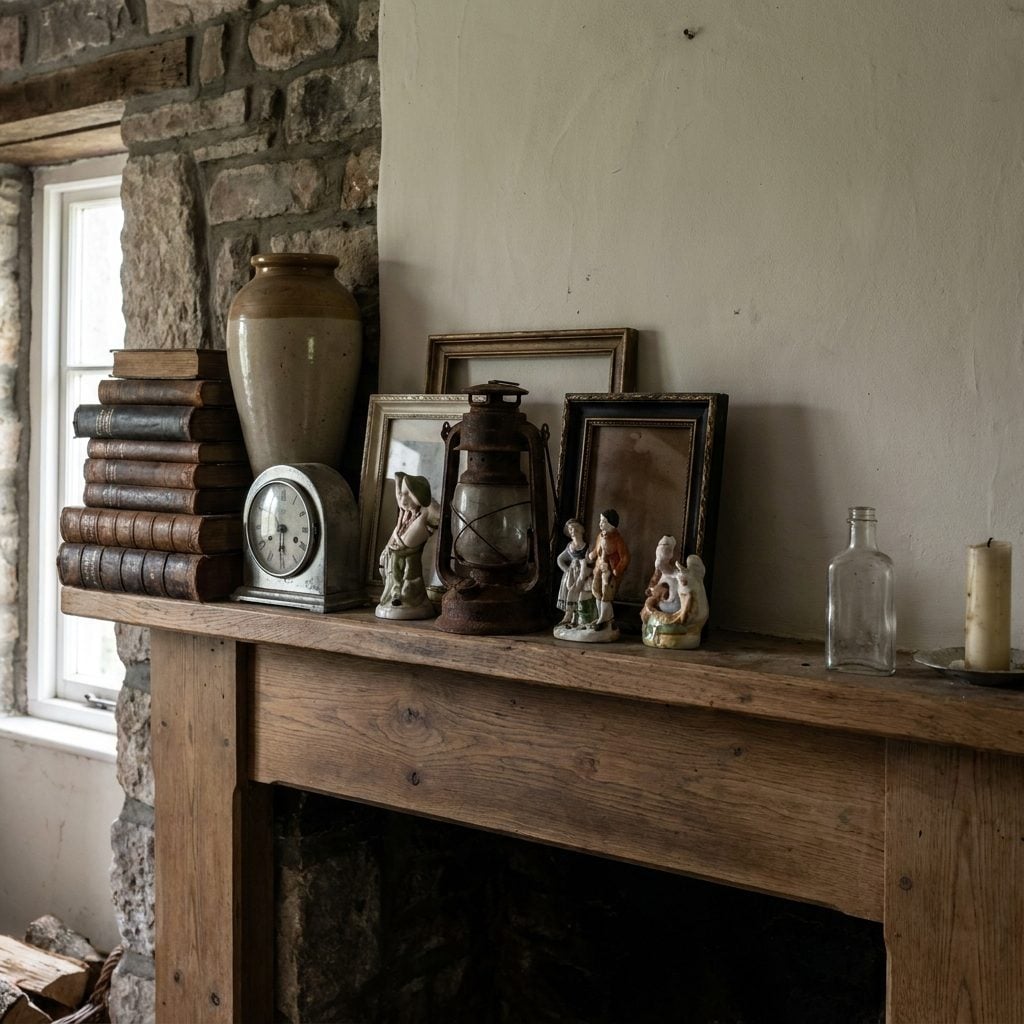
Asymmetry works. Random doesn’t. Your eye clocks the difference instantly, even if your brain can’t name why. When everything piles up on one side because that’s where your hand happened to land, the mantel reads as unfinished rather than styled.
Real asymmetric balance is about visual weight, not object count. A single tall branch on one side holds its own against a cluster of three shorter pieces opposite it. Picture a seesaw: the heavy thing sits closer to the middle while the light stuff spreads toward the edge.
14. Every Decoration Sitting at the Exact Same Height
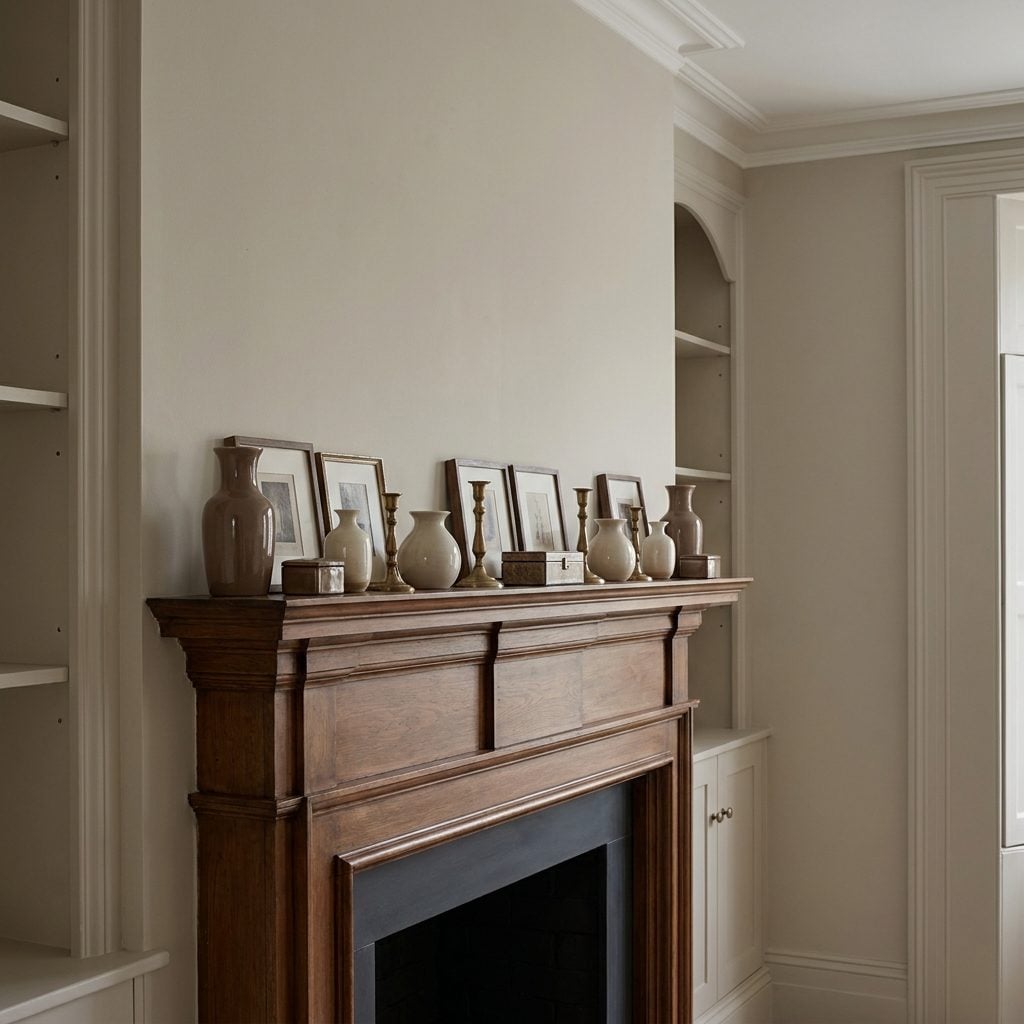
A flat line across the top of your mantel is the visual equivalent of a monotone voice. Technically fine. Nothing to hold onto.
Christmas decor lives or dies on rhythm — tall candlestick, short pinecone, medium book stack, tall branch, up and down like a skyline. When everything hits the same altitude, the eye slides right off and finds nothing to rest on.
So vary heights in threes at minimum, and let a couple of pieces genuinely tower over the rest. A tall pair of brass candlesticks next to a low bowl of ornaments does more than a dozen mid-height objects ever will.
13. No Empty Space Anywhere for the Eye to Rest
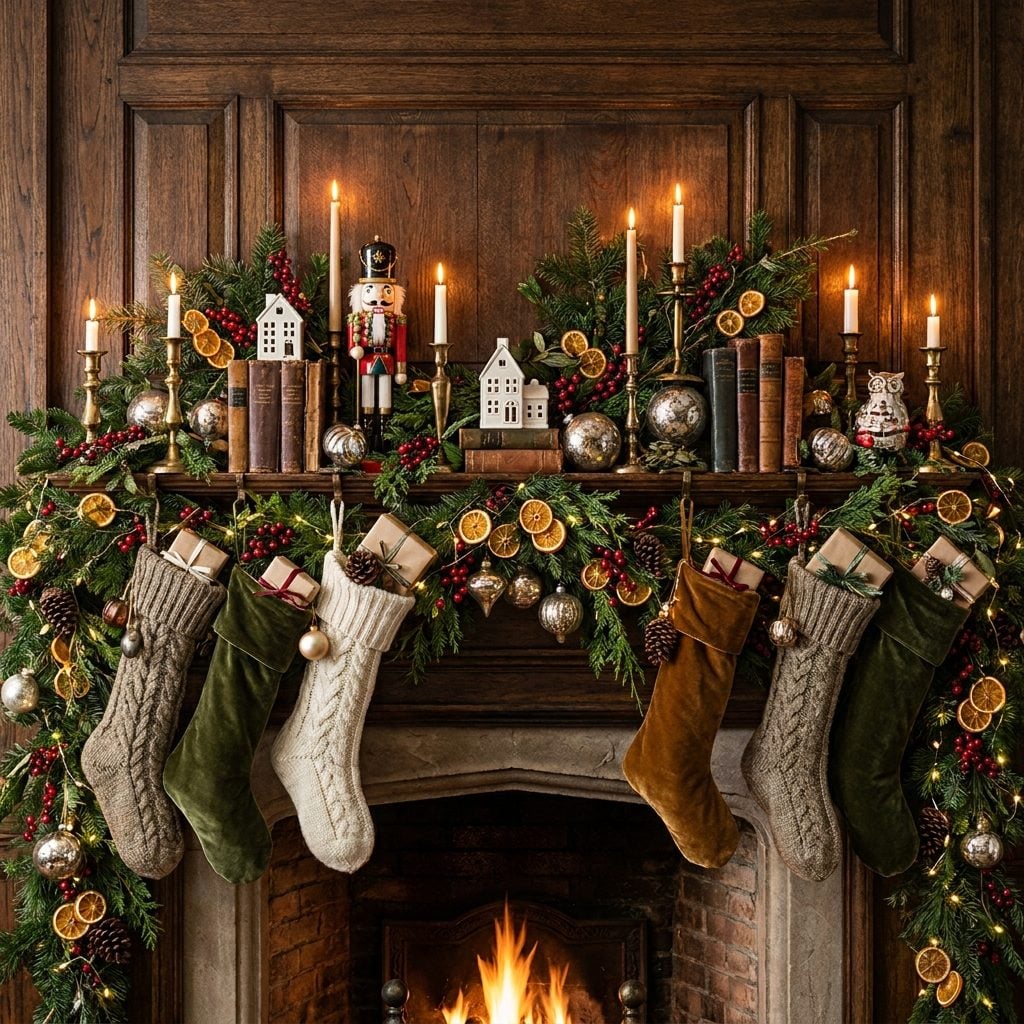
Negative space isn’t wasted space. It’s the pause that makes everything else legible.
Fill every inch and the eye has nowhere to land, nothing to prioritize, each object canceling out the one beside it until the whole mantel becomes texture instead of a composition.
Leave gaps on purpose — a stretch of bare mantel, a clear patch of garland. Those quiet zones let your best pieces read as intentional. Restraint is the hardest part of holiday decorating and the fastest way to look like you knew what you were doing.
12. Ornaments Stuffed Into Every Gap in the Garland
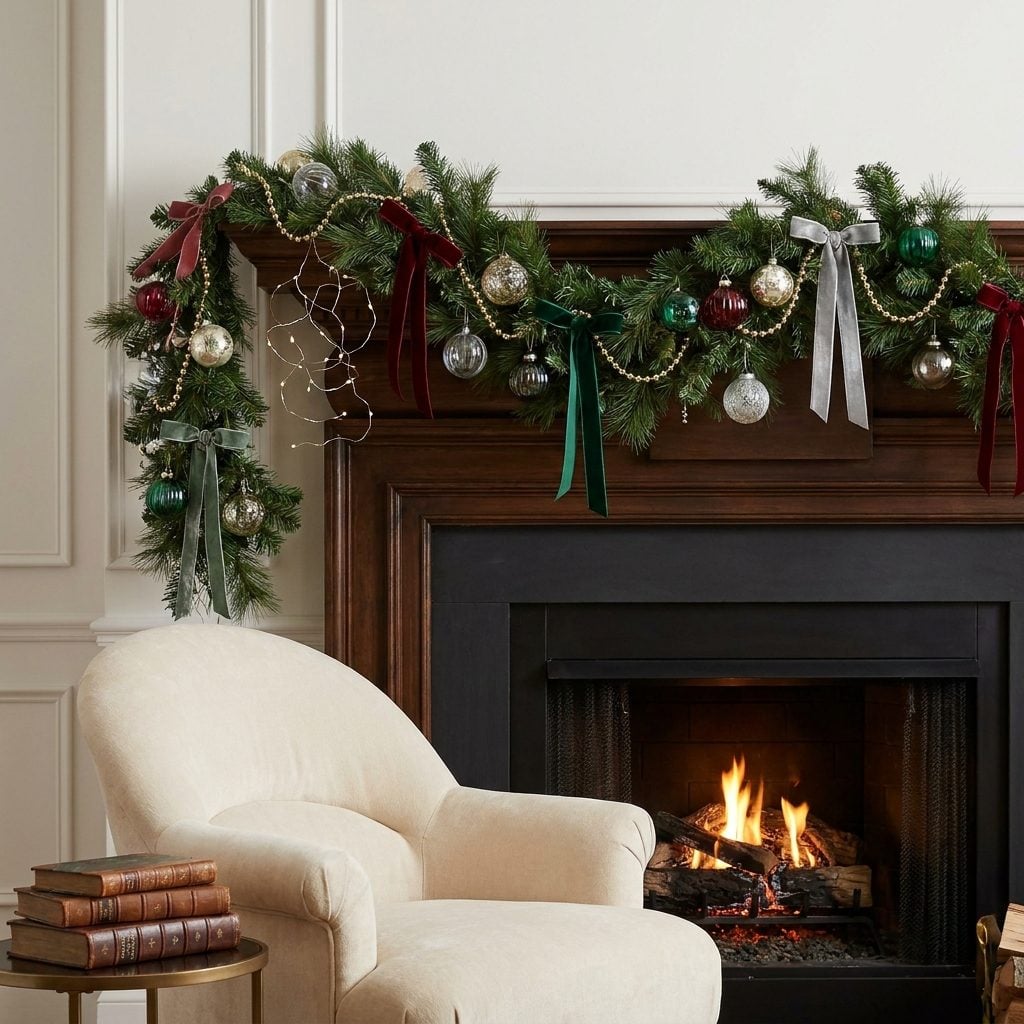
A garland studded with a few ornaments looks jeweled. A garland where every gap is plugged looks like a bead curtain.
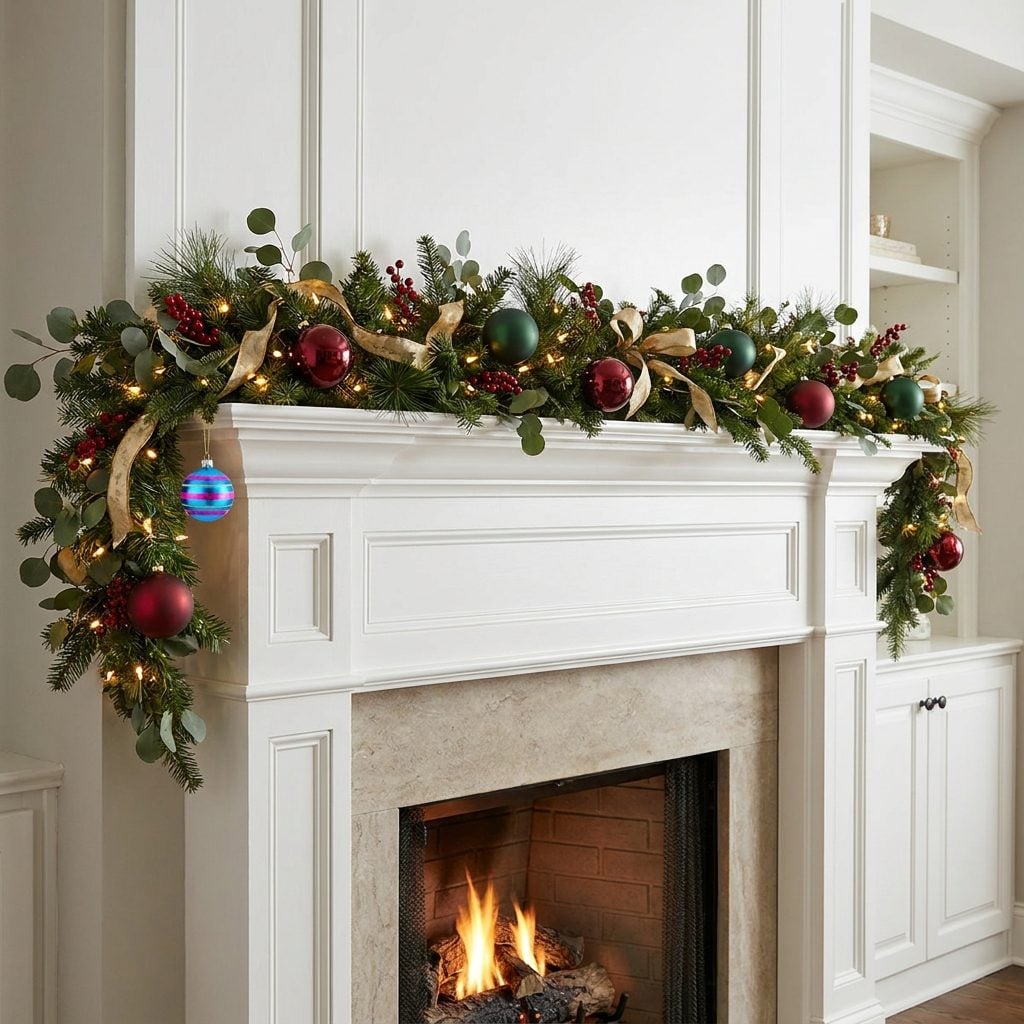
The greenery is the point. Those cedar tips, the pine needles, the shape and shadow of real branches — that’s the texture doing the work. Bury it under baubles and you’ve traded something organic for something that reads as plastic even when it isn’t.
Cluster three or five ornaments in a couple of spots. Let the rest of the garland breathe. Odd numbers, tight groups, plenty of green in between.
11. Too Many Bows Competing for Attention
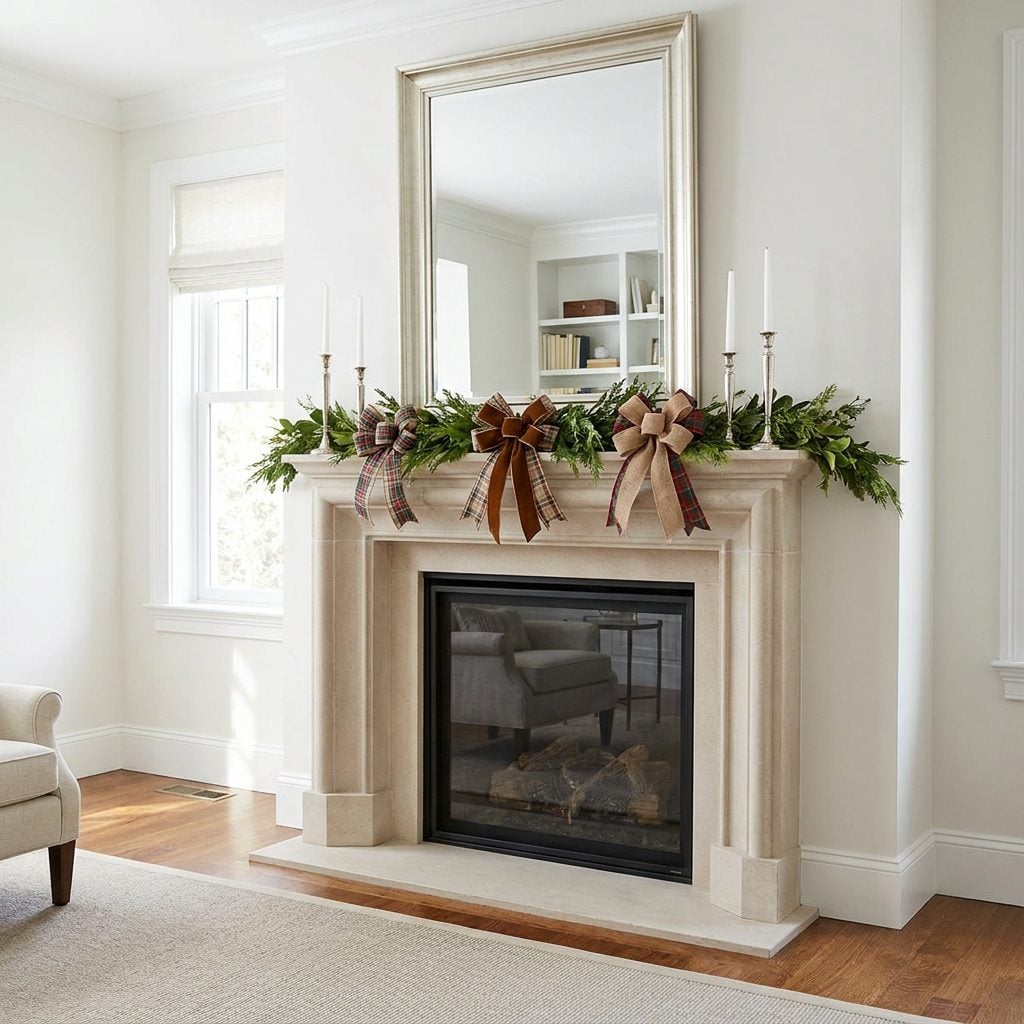
Bows are punctuation. And you don’t end every word with an exclamation point.
One good statement bow gives your mantel a focal point. Line up seven of them and none of them mean anything anymore — the eye can’t pick a hero, so it gives up and sees noise.
Pick one spot for a proper bow, maybe an oversized one at a corner or dead center, and let it be the star. Love ribbon? Use trailing tails instead of more bows. A little goes a long, long way here.
10. Ribbon Wrapped So Heavily It Hides the Greenery

Ribbon woven through garland should peek, not smother. Spiral it end to end in tight bands and you’ve turned lush greenery into a wrapped package.
Weave loosely instead. Tuck the ribbon in and out so it disappears into the branches and re-emerges, catching light in a few places, letting the fir stay the star while the ribbon plays supporting role. A wide velvet ribbon looks richest when you see only glimpses of it, not the whole length.
9. Stockings Hung at Uneven, Awkward Intervals

🔥 Would you like to save this?
Uneven stocking spacing nags at people without them knowing why. Two crammed together, then a yawning gap, then two more drifting off, and the eye keeps trying to find the pattern and keeps failing.
Measure it. Actually measure it. Divide the mantel width, mark equal intervals, hang from those points, and match the top heights while you’re at it. Boring advice, sure — but a straight, evenly spaced row reads as calm and cared for, which is the whole feeling you’re after.
8. Stocking Holders That Become More Noticeable Than the Stockings
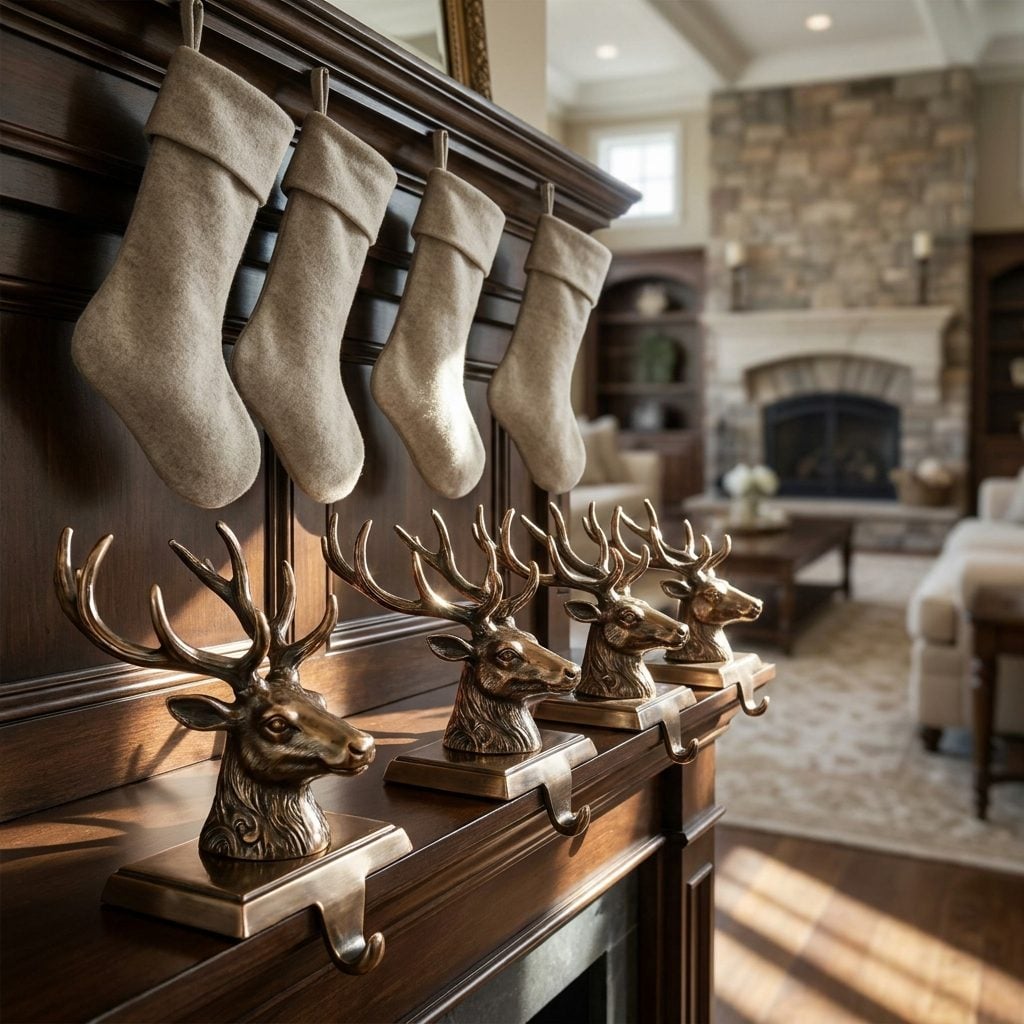
Nobody’s mantel goal was to showcase the hardware.
Those heavy metal reindeer and glittering snowflake holders were meant to hold stockings out of sight, and instead they’re the loudest thing on the mantel. When the holder outshines the stocking, the whole arrangement feels top-heavy and cheap.
Go simple: slim, matte, low-profile holders in a finish that recedes. Or hide them entirely behind the garland. Better yet, use small removable hooks under the mantel lip so the stockings hang clean with no visible hardware at all.
7. Decorations That Are Too Small for the Scale of the Fireplace
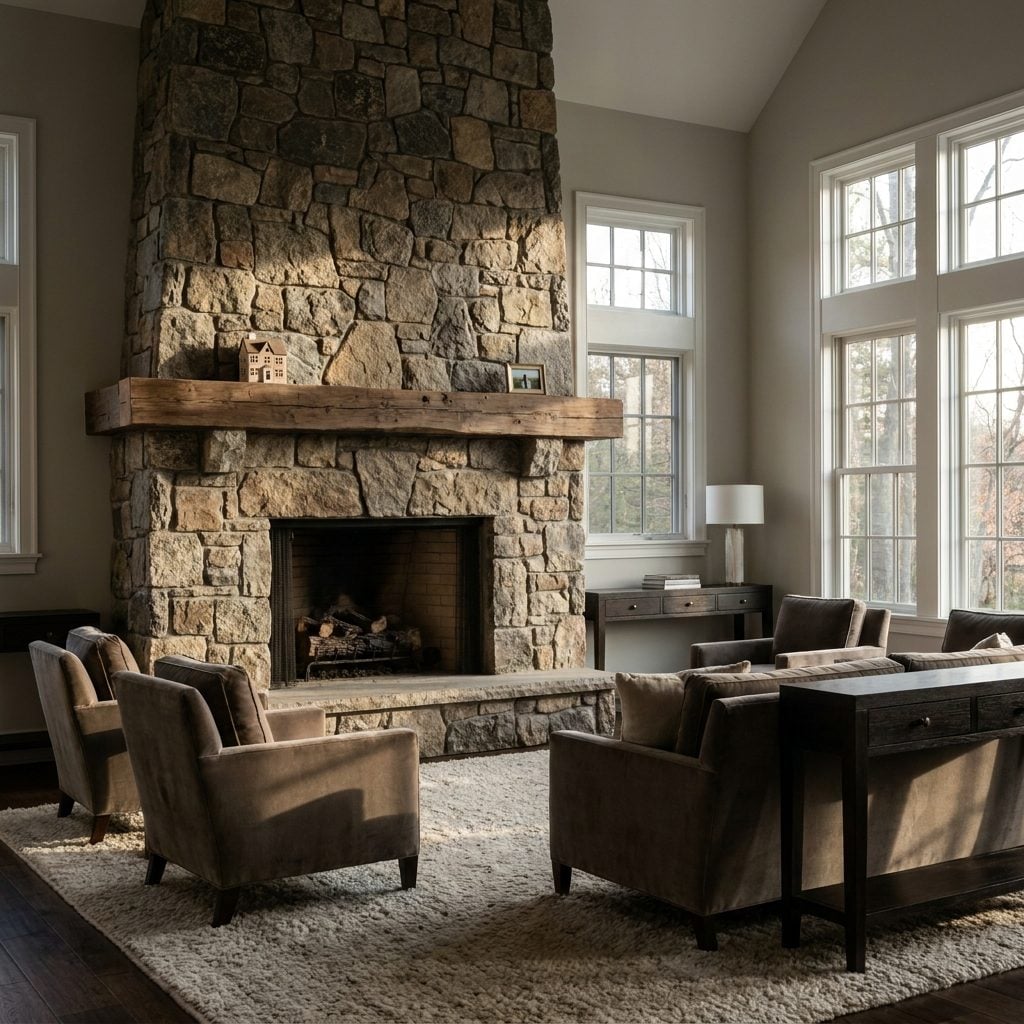
Scale is the mistake almost nobody catches until it’s pointed out. A grand stone fireplace needs grand decor, and a few dainty votives on a massive mantel look like crumbs on a dining table.
Match the drama of your surround with oversized lanterns, a tall branch arrangement, a wide swag of dense garland — big pieces that hold their own against all that stone or brick. If you love the look of a warm, layered red kitchen design, apply the same scale logic here: the bigger the room’s bones, the bolder your pieces need to be.
6. Oversized Nutcrackers Standing Guard at Both Ends of the Mantel
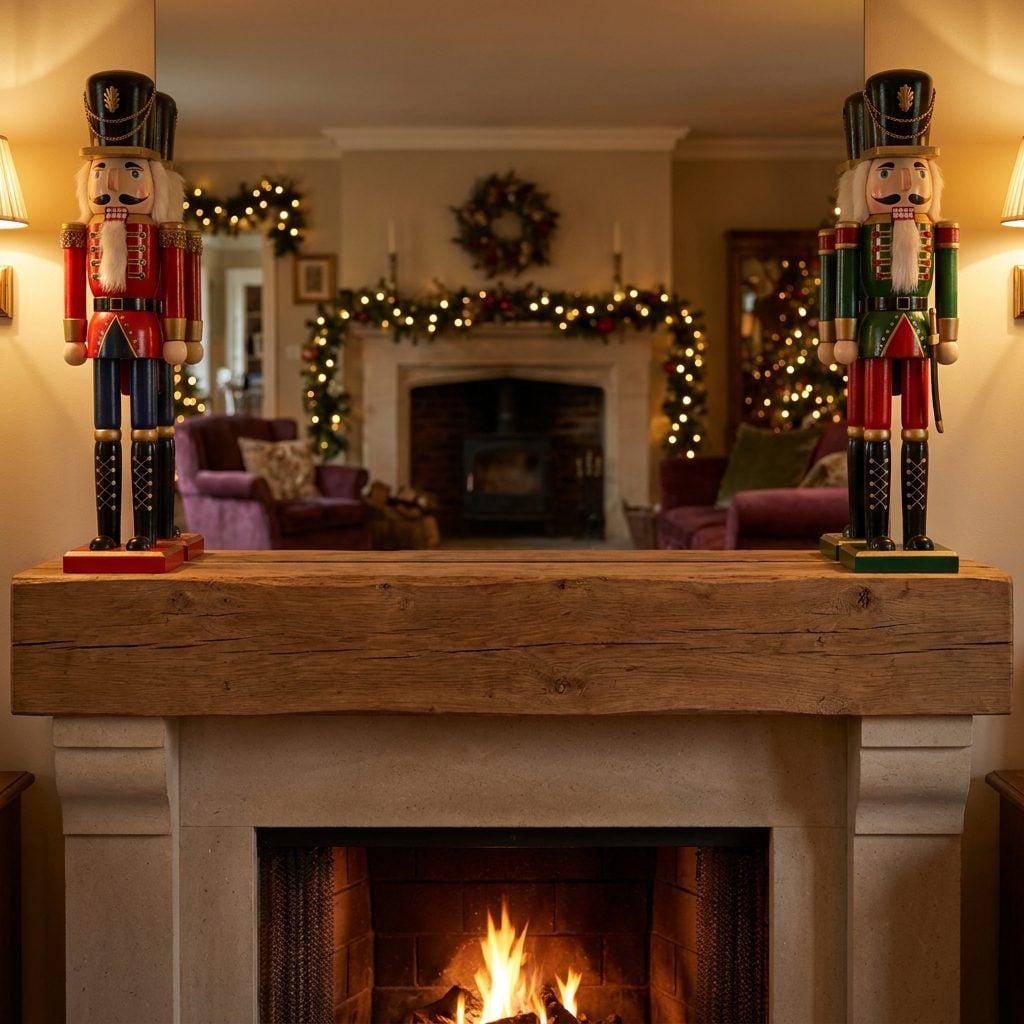
Put a big nutcracker at each end and suddenly your mantel has corners instead of a center. The eye bounces left, bounces right, then gives up trying to find the middle.
Symmetry sounds safe, and usually it is. But when both anchors are loud, matching, and two feet tall, they cancel each other out and drag the whole display down to floor-soldier duty, so nothing in the middle stands a chance.
Love the nutcrackers? Plenty of people do. Use one. Set it off-center, let it lean against the greenery, and balance the other side with a shorter cluster. One tall figure reads as intentional. Two matching ones read as a store display that wandered home.
5. A Christmas Sign Hijacking the Whole Focal Point
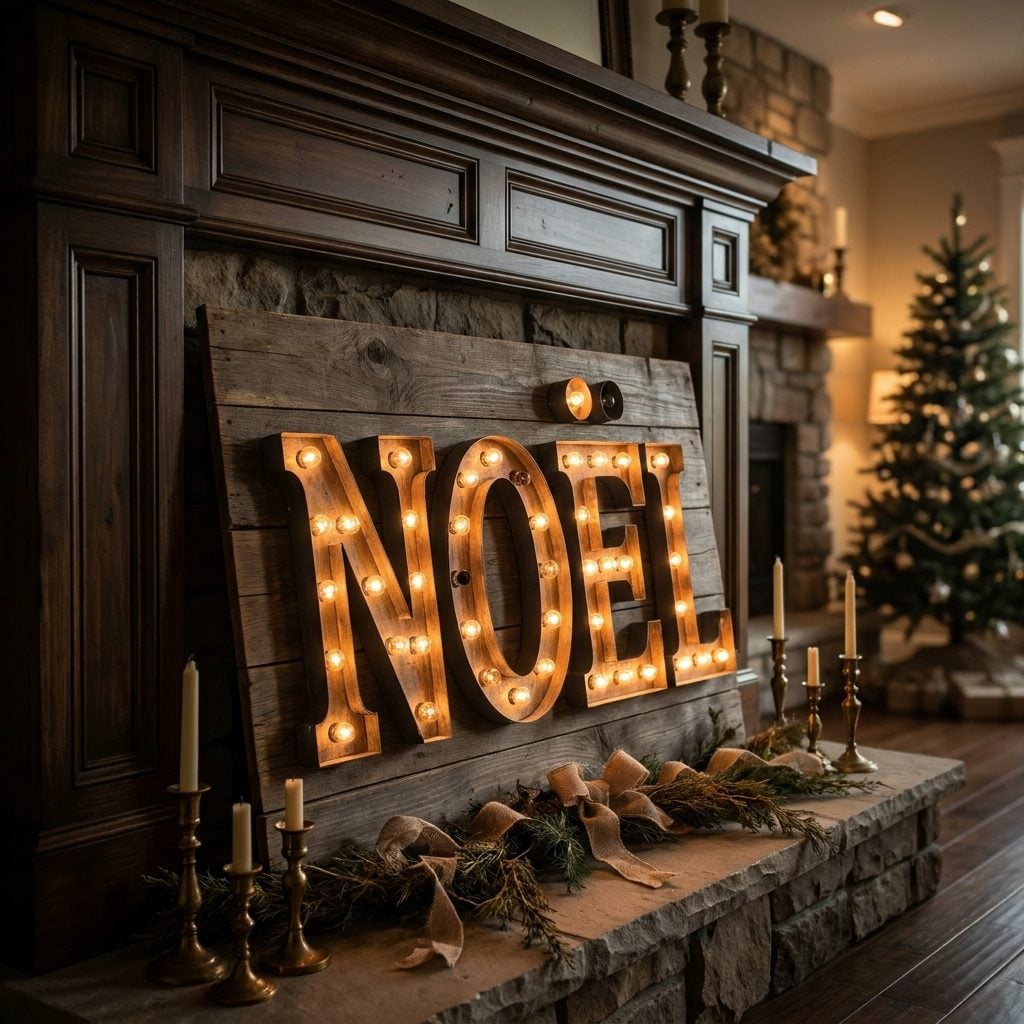
A big lettered sign propped dead center does one thing: it turns your mantel into a billboard. Everything else becomes background for the announcement.
The sign itself is fine. Scale and placement are the culprits. A word this size at eye level pulls focus the way a headline does on a page, and your greenery, candles, and stockings all shrink into supporting roles for a sentence nobody needed spelled out.
Layer it instead. Rest a smaller sign at an angle, half-tucked behind a candlestick or a sprig of eucalyptus, so it whispers rather than shouts. Or skip words entirely and let a vintage frame or a piece of winter art carry the center. Your mantel can be festive without a caption.
4. Too Many Signs, Words, and Painted Sayings Competing for Airtime
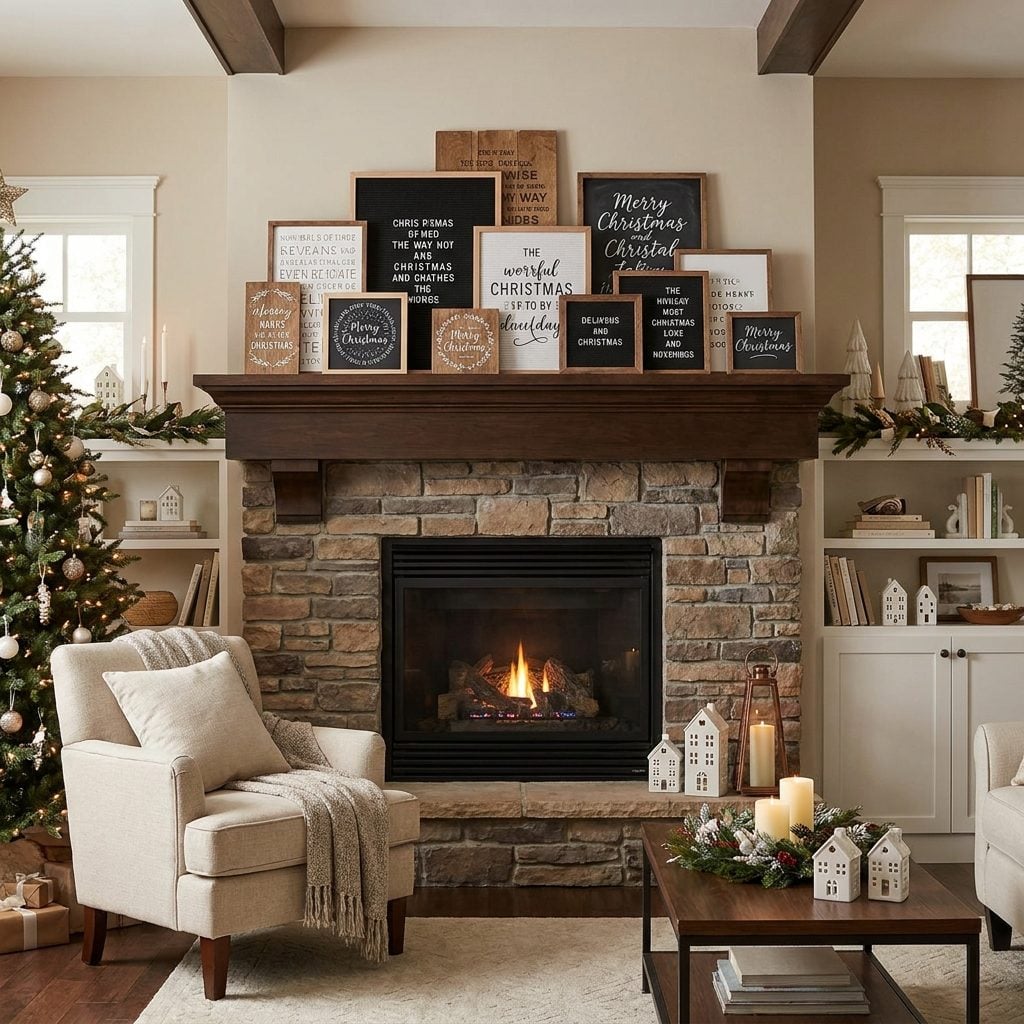
Your brain reads words before it sees anything else. So five signs means five separate reading assignments before you’ve even noticed the greenery.
One phrase is charming. Five turns your fireplace into a bulletin board, and the cozy you were after gets buried under vocabulary.
Pick your single favorite and retire the rest, or move them to a hallway gallery wall where they can breathe. A mantel wants texture and light, not a paragraph. I say this as someone who once owned four signs and genuinely thought that counted as restraint.
3. Bright Plastic Decorations Crashing an Otherwise Natural Mantel

Real cedar, brass candlesticks, and then three glossy plastic baubles catching the light like traffic cones. The eye goes straight to the fake, every single time.
Materials talk to each other. Matte greenery, aged metal, and natural wood share a language of texture and depth, and shiny injection-molded plastic interrupts that conversation like a car alarm. The finish gives it away before the shape does.
Fixing it costs almost nothing. Swap the plastic for glass ornaments, painted wood, or dried orange slices. Even matte-finish picks blend better than anything with a wet-look shine. And if you want more warmth in the room while you’re at it, that green velvet sofa is already pulling serious weight, so a few natural touches on the mantel let it lead.
2. Flocked Garland Shedding Fake Snow All Over the Hearth
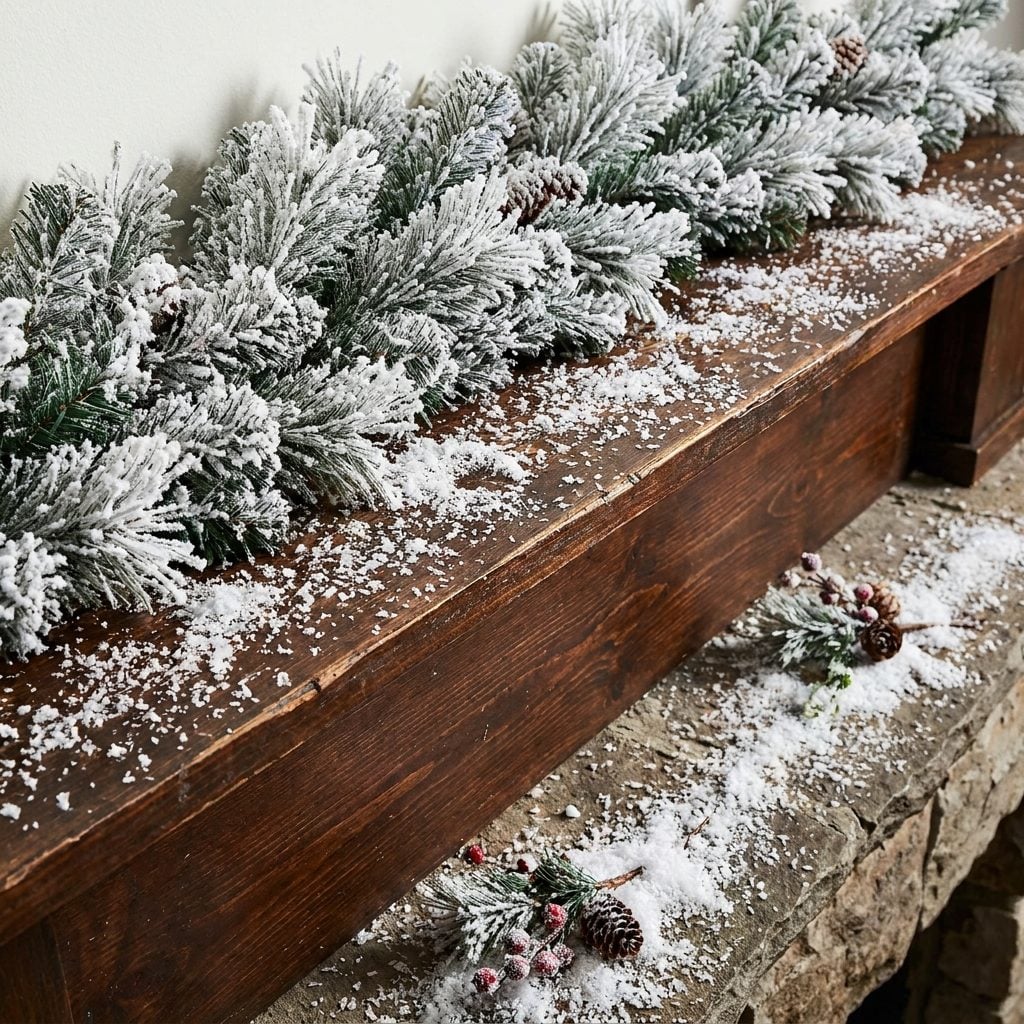
Flocked garland photographs like a dream and lives like a nightmare. Within a week that snowy fluff is on your mantel, your hearth, your throw blanket, and somehow in your coffee.
The mess is only half of it. Those shed flakes read as debris, which quietly undoes the tidy, layered look you built.
Want the snowy feel without the fallout? Go for lightly flocked tips instead of a full coat, or fake it altogether with white berries and frosted eucalyptus that actually stay put. Your future self, the one not crouched over the hearth with a vacuum on December 3rd, will thank you.
1. One Garland Stuffed With Every Pinecone, Berry, and Pick You Own
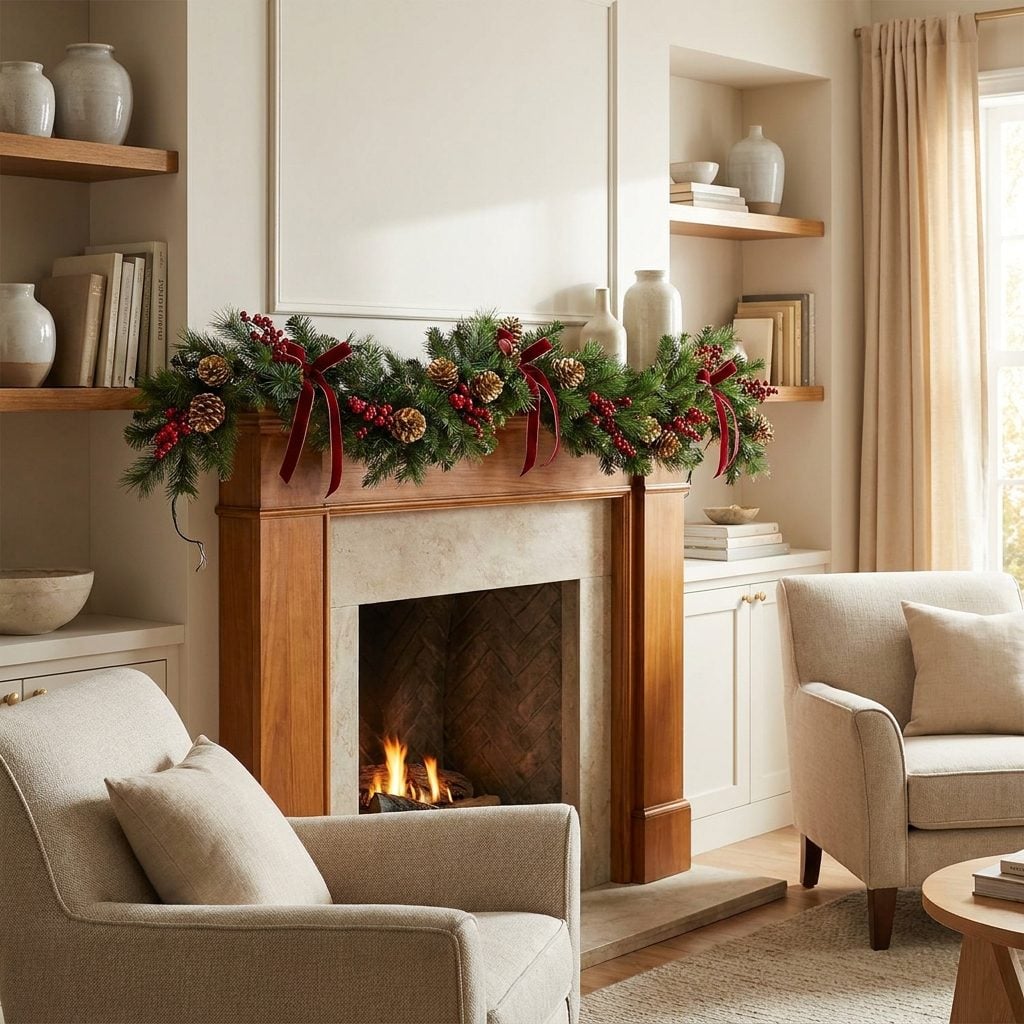
More stuff does not mean more festive. Cram every pinecone, berry spray, and gold pick into one garland and it stops reading as decoration and starts reading as storage.
The base greenery disappears. Your eye can’t find a resting point, so the whole thing hums with a low-grade busyness that never quite settles into cozy.
Restraint is the trick nobody mentions. Space your accents in loose clusters of three, leave real gaps of plain green between them, and let the garland actually look like a garland. A few strong moments beat forty small ones. Go pull half of it back off. You’ll see the difference instantly.