🔥 Would you like to save this?
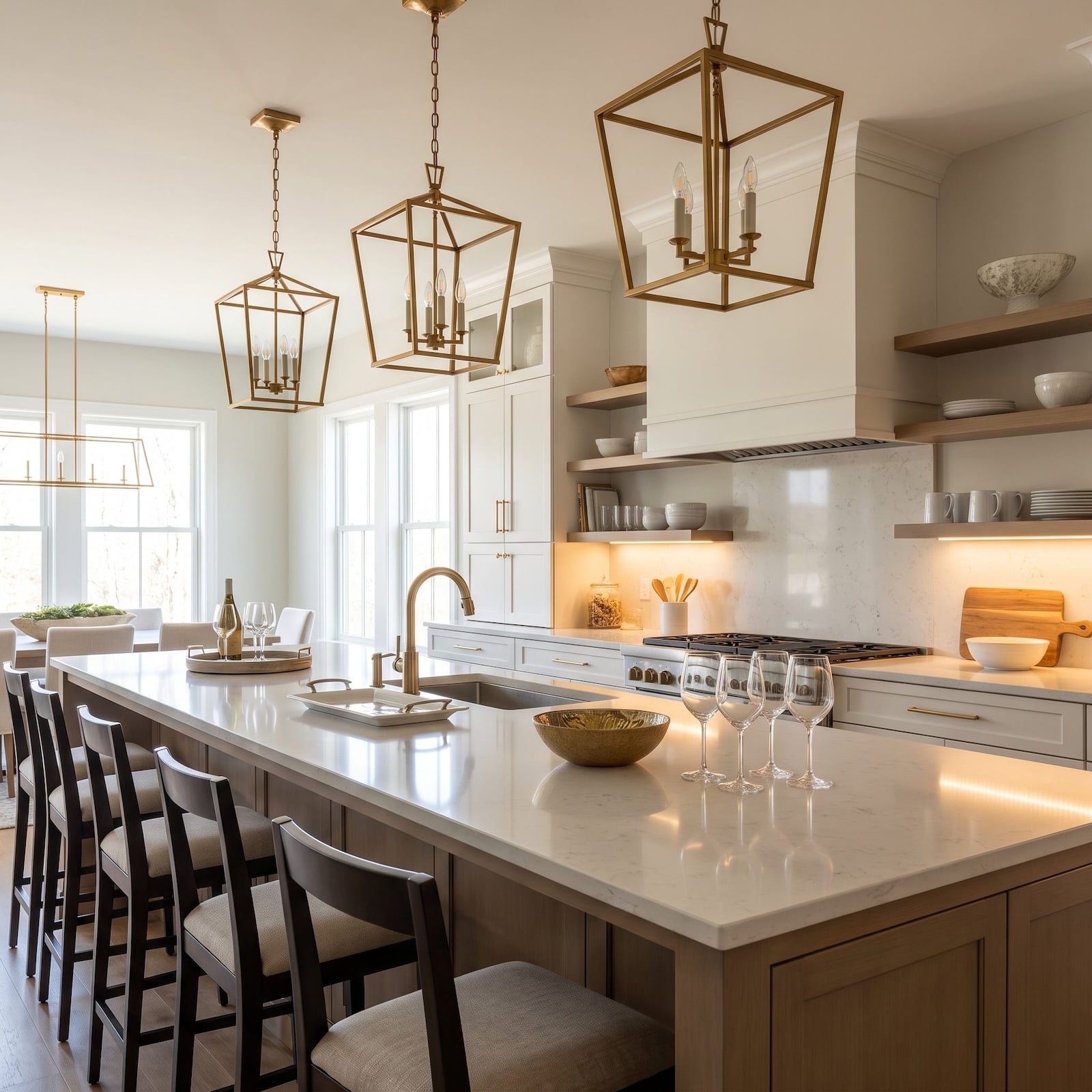
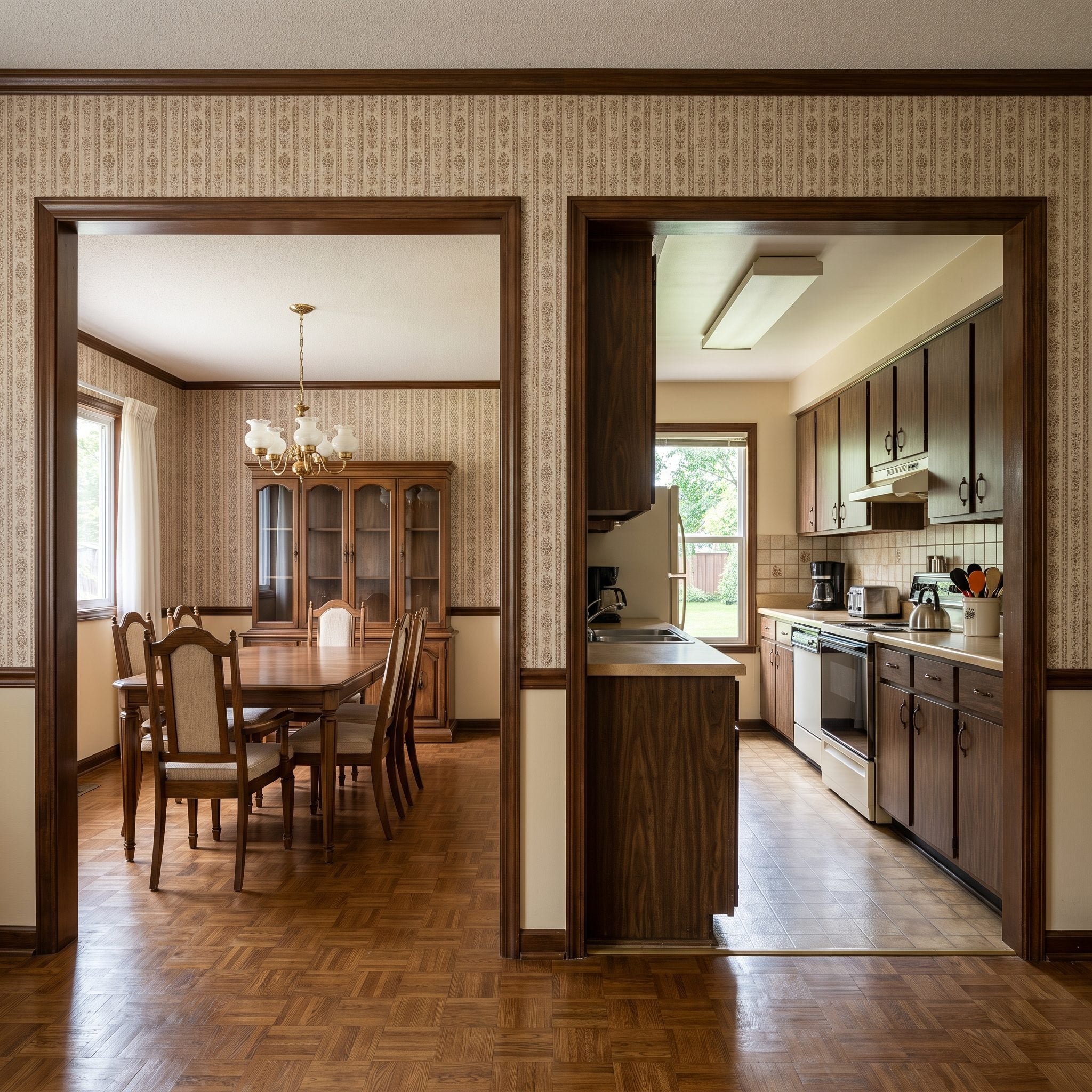
The kitchen wasn’t ugly. That was almost the problem. Ugly gives you permission to tear everything out. This one just sat there in oak and beige, competent but joyless, the kind of room that could make unloading groceries feel like the beginning of a shift. Cooking in it felt like clocking in.
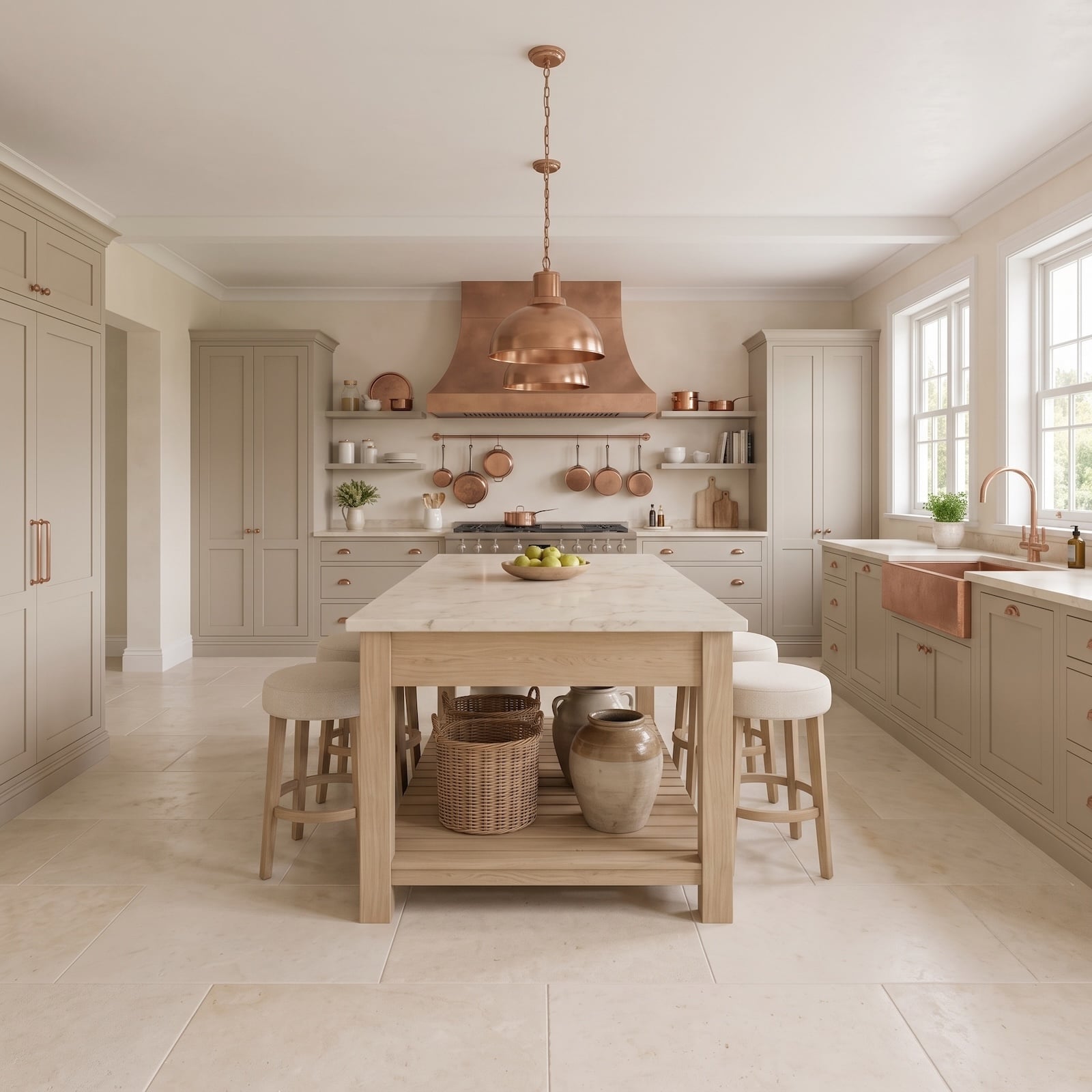
Cream and copper change the temperature without turning the room sugary or theatrical. Cream takes the glare out of hard surfaces; copper brings warmth, reflection and just enough age to keep all that pale stone from feeling antiseptic. The combination can go quiet with plaster and oak or wildly architectural with a metal portal, sculptural island or entire copper wall.
In order to come up with the very specific design ideas, we create most designs with the assistance of state-of-the-art AI interior design software. Also, assume links that take you off the site are affiliate links such as links to Amazon. this means we may earn a commission if you buy something.
These 39 redesigns take that same starting problem in different directions: arches, worktables, banquettes, glass pantries, open shelving, social islands, copper ceilings and rooms that finally make sitting down feel as important as cooking. The best ones don’t merely decorate the kitchen. They change what the room asks you to do once you’re inside it.
39. Soft Arches in Copper and Cream
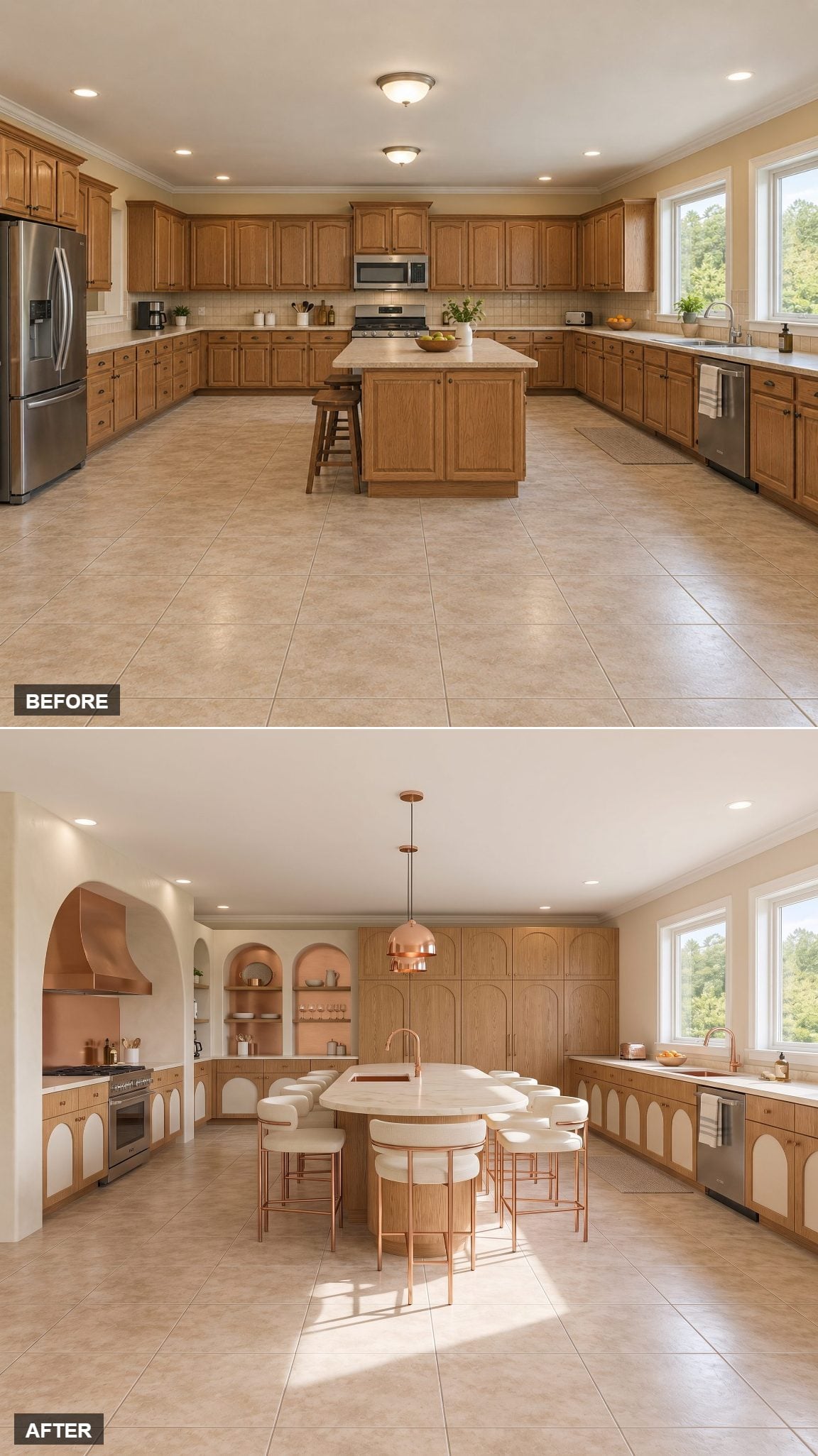
Repeat one shape and a room finds its rhythm. Here it’s the arch—echoed in the range alcove, the open-shelving cutouts and the curve of the hood.
Cream plaster walls, rounded corners and warm marble take the edge off all the cabinetry geometry. The arches bring an older architectural language into a thoroughly modern kitchen, softening the sightlines without making the room precious.
38. No Island, All Table, Total Reset
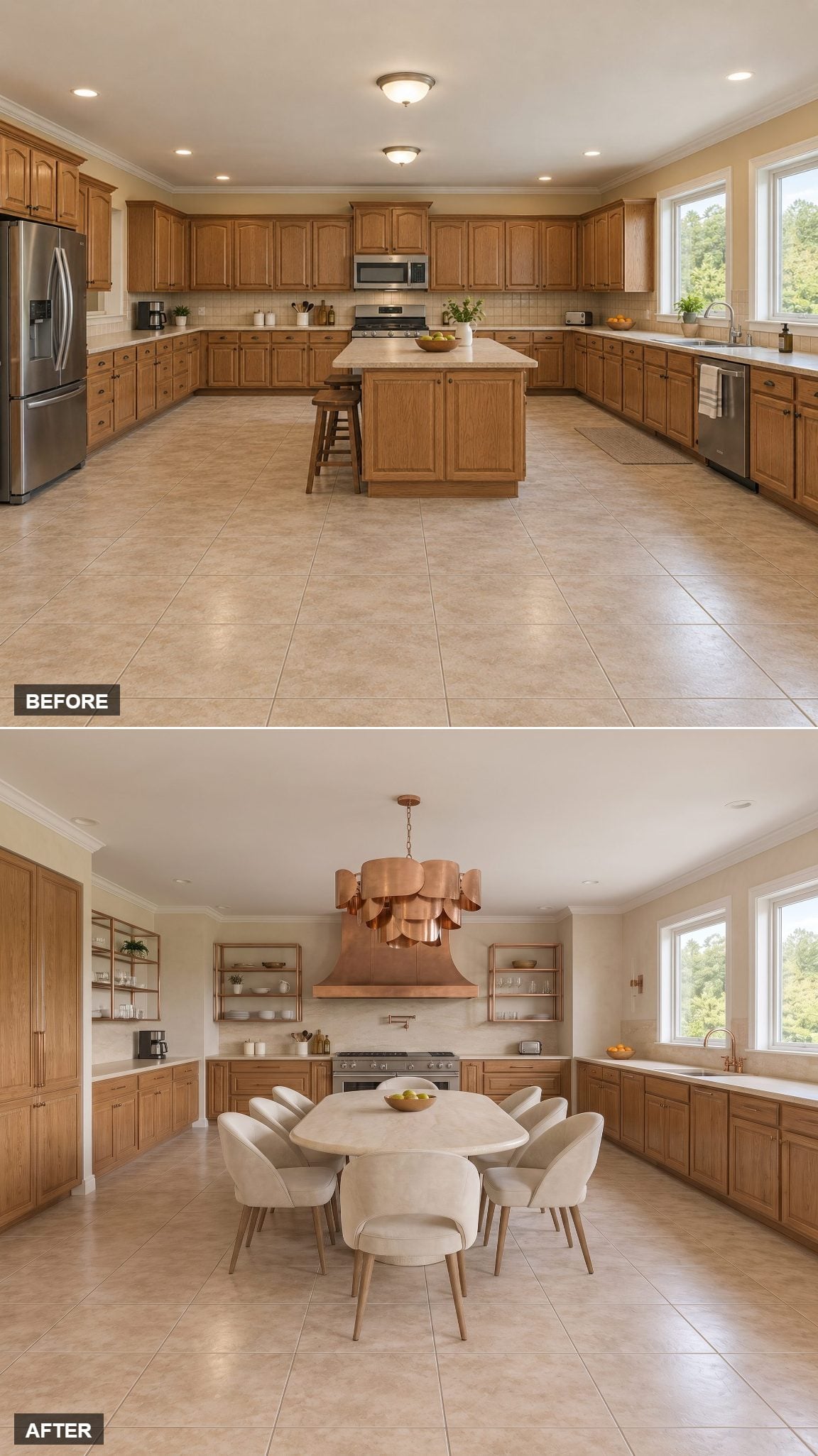
Islands aren’t the law.
Here the middle of the room goes to a proper dining table: oak with copper legs, enough space to pull out a chair and actually walk behind it. Cream cabinetry lines the perimeter, marble counters stay out of the way, and a wide brushed pendant floats overhead like a small sun.
For a kitchen that once felt like a chore, removing the workstation from the center makes a surprisingly emotional point. Sit down. Stay awhile. This room is allowed to be for you too.
37. The Monumental Copper Portal Over the Range
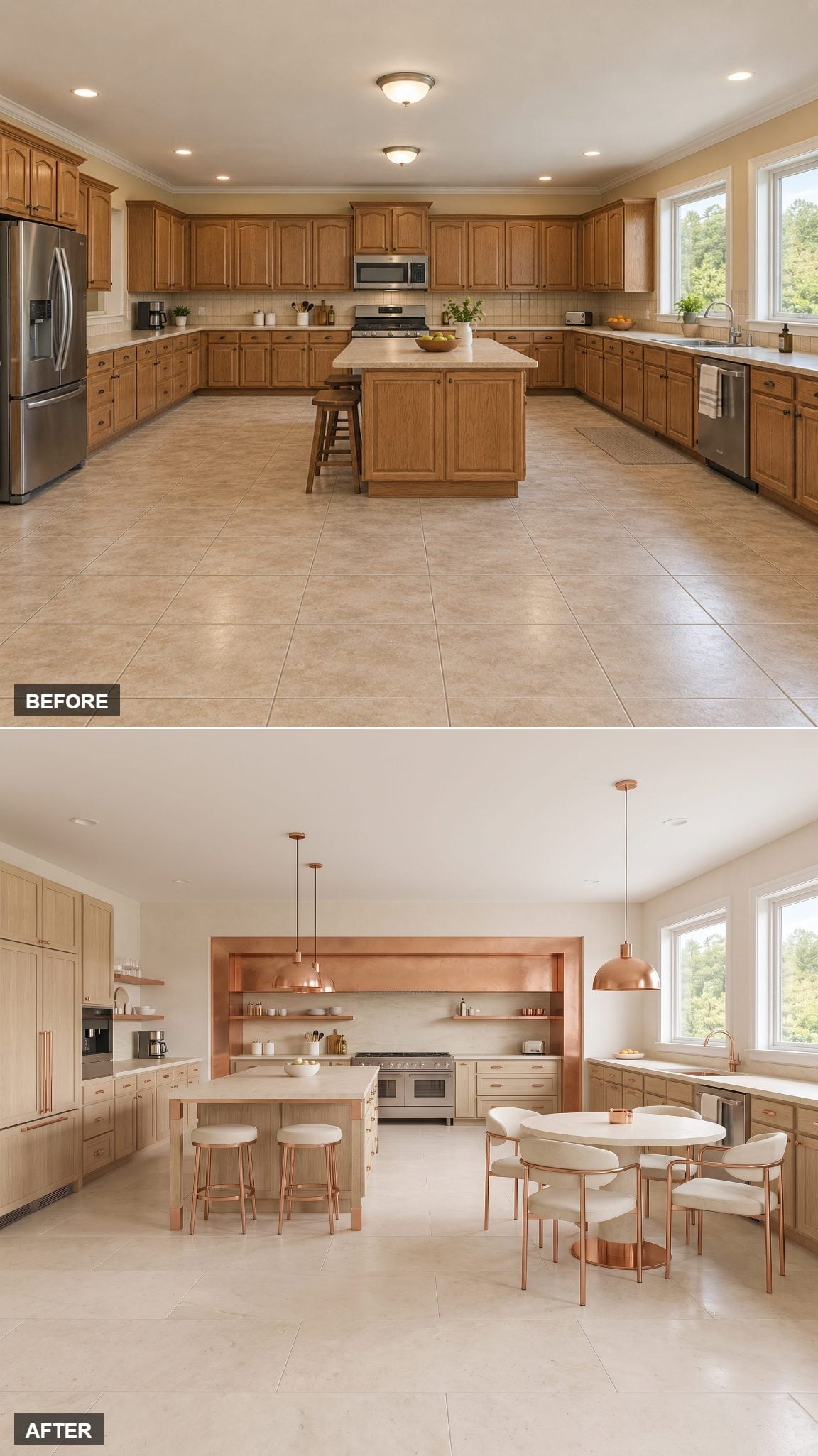
You’ve seen a range wall that’s just cabinetry with a hood attached. This isn’t that.
A broad copper portal frames the entire cooking zone, arching over the range like the mouth of a hearth. Hood, backsplash and shelving all sit inside the same architectural gesture, while plain cream cabinetry on either side wisely declines to compete.
The move works because the copper isn’t scattered around as decoration. It has one job, one location and enough scale to make the cooking wall feel built rather than accessorized.
36. Copper-Framed Glass Pantry Steals the Show
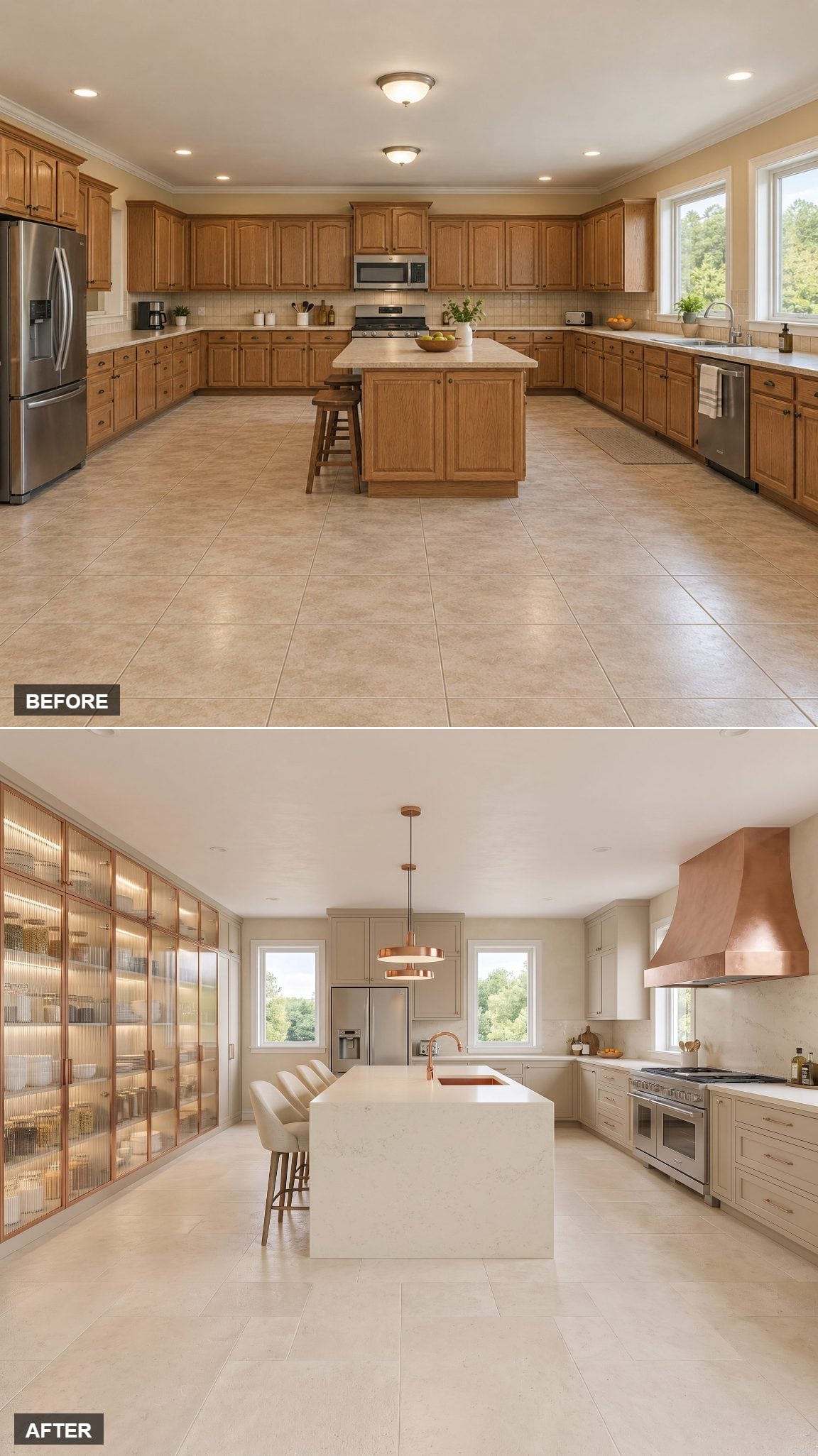
Storage doesn’t have to disappear behind a solid door. A floor-to-ceiling copper-framed glass pantry turns dishes, glassware and serving pieces into part of the room.
The rest of the cabinetry stays quiet and cream so the slender metal mullions can carry the ornament. Afternoon light catches those lines and suddenly the pantry behaves almost like a display cabinet built at architectural scale.
35. The Oversized Square Island Everyone Ends Up Around
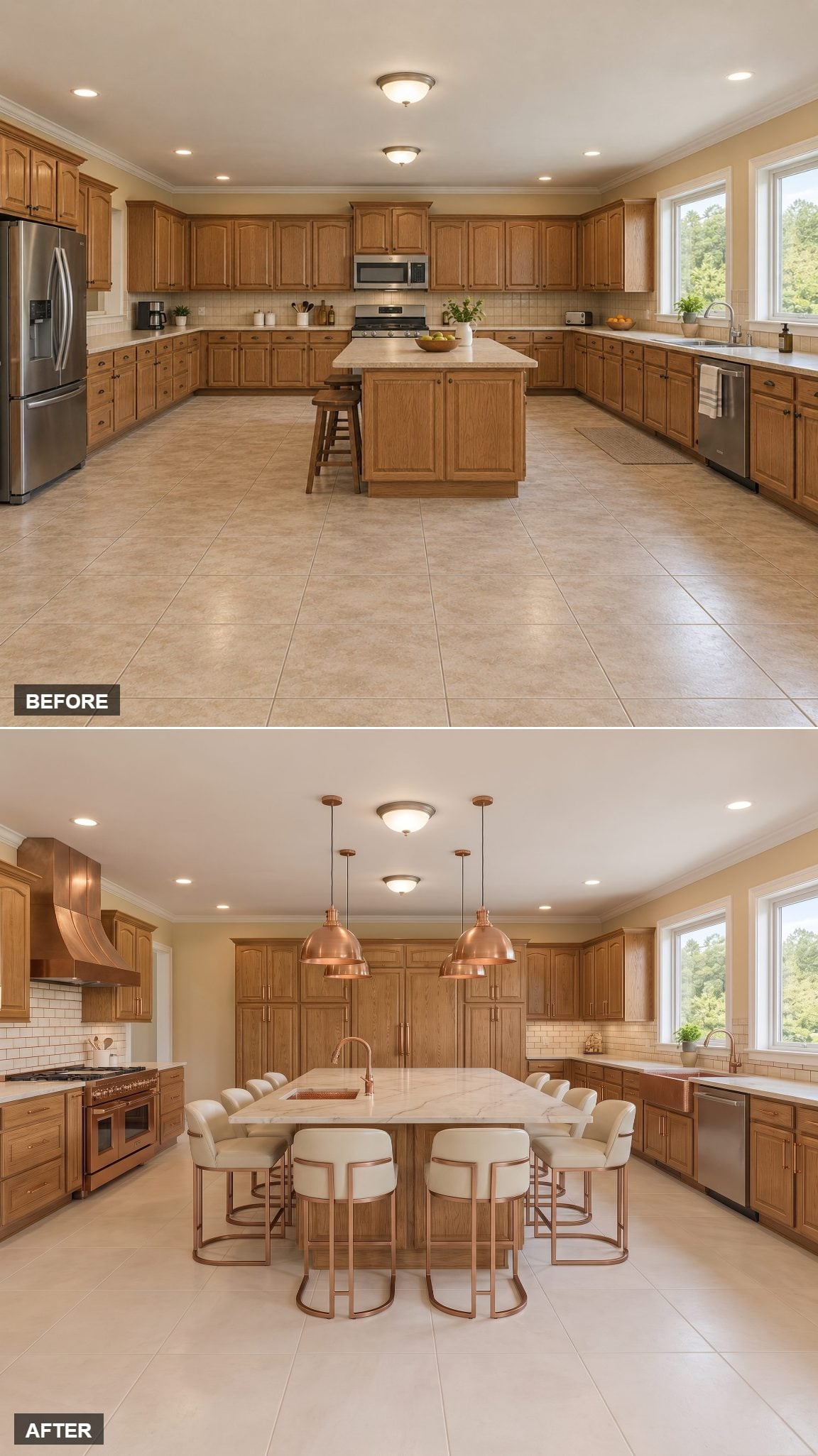
Big square island. Cream stone top. Copper stools turning two sides into a social corner. The recipe is almost suspiciously simple.
A square island can work beautifully when the room has enough circulation around it because seating doesn’t have to march down one long edge. People can face one another across a corner while the center remains useful for serving, homework or a spectacular amount of takeout.
Copper pendants mark the island from above and the pale perimeter stays visually quiet. The kitchen gets a center without needing that center to behave like a runway.
34. Travertine Everywhere, Copper Mesh Where It Counts
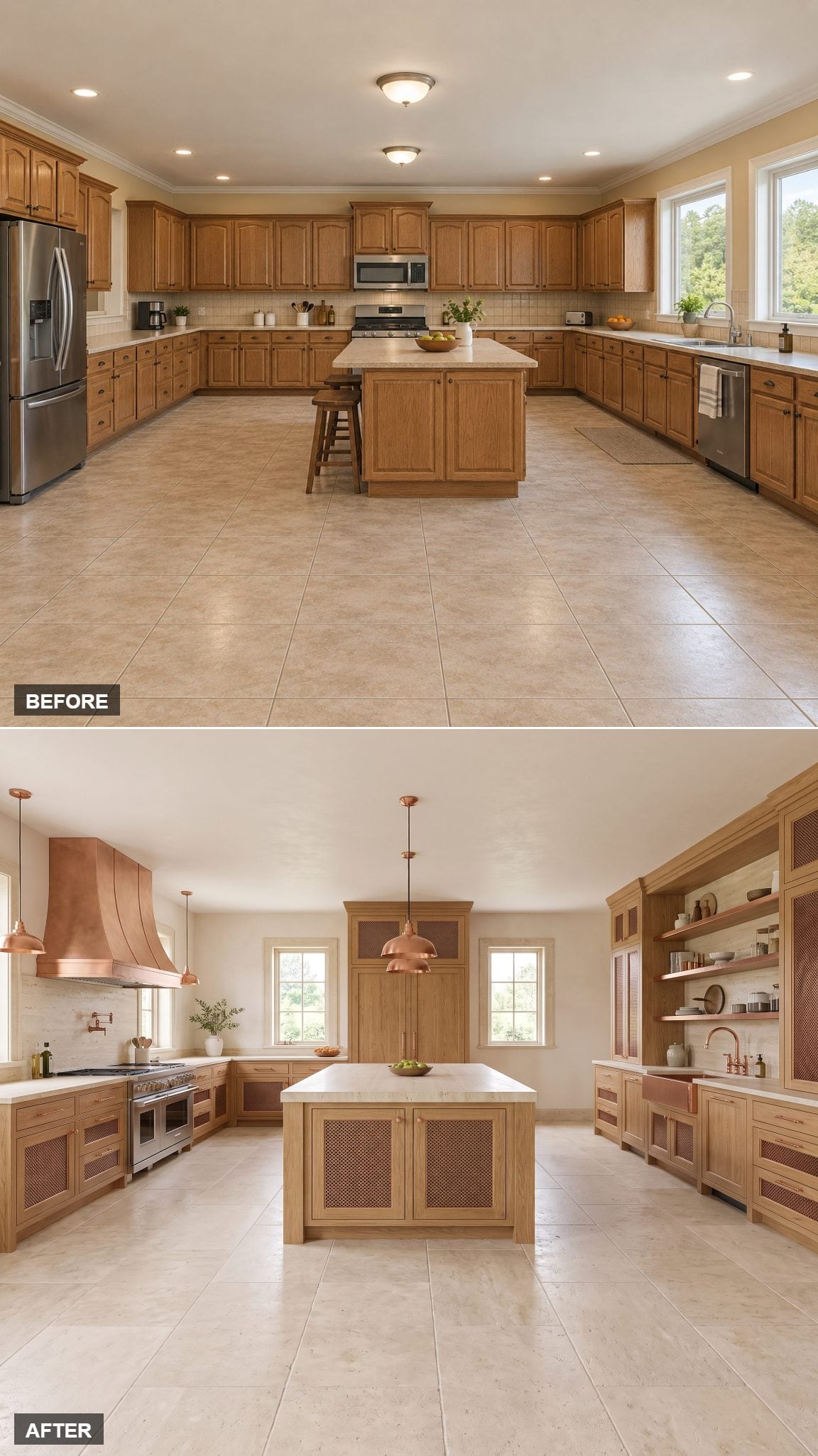
Travertine brings the warmth before a single metal detail arrives. Cream-colored stone runs across the counters and up the backsplash in broad slabs, its pits and tonal movement keeping the pale palette from becoming blank.
The copper mesh cabinet fronts are the sly move. Woven metal lets the shelves register behind it without exposing everything completely, catching light somewhere between a solid door and open shelving.
Use that kind of detail sparingly and it can give the glam kitchen decor a custom edge without turning every cabinet into a performance.
33. The Island That Floats on a Copper Plinth
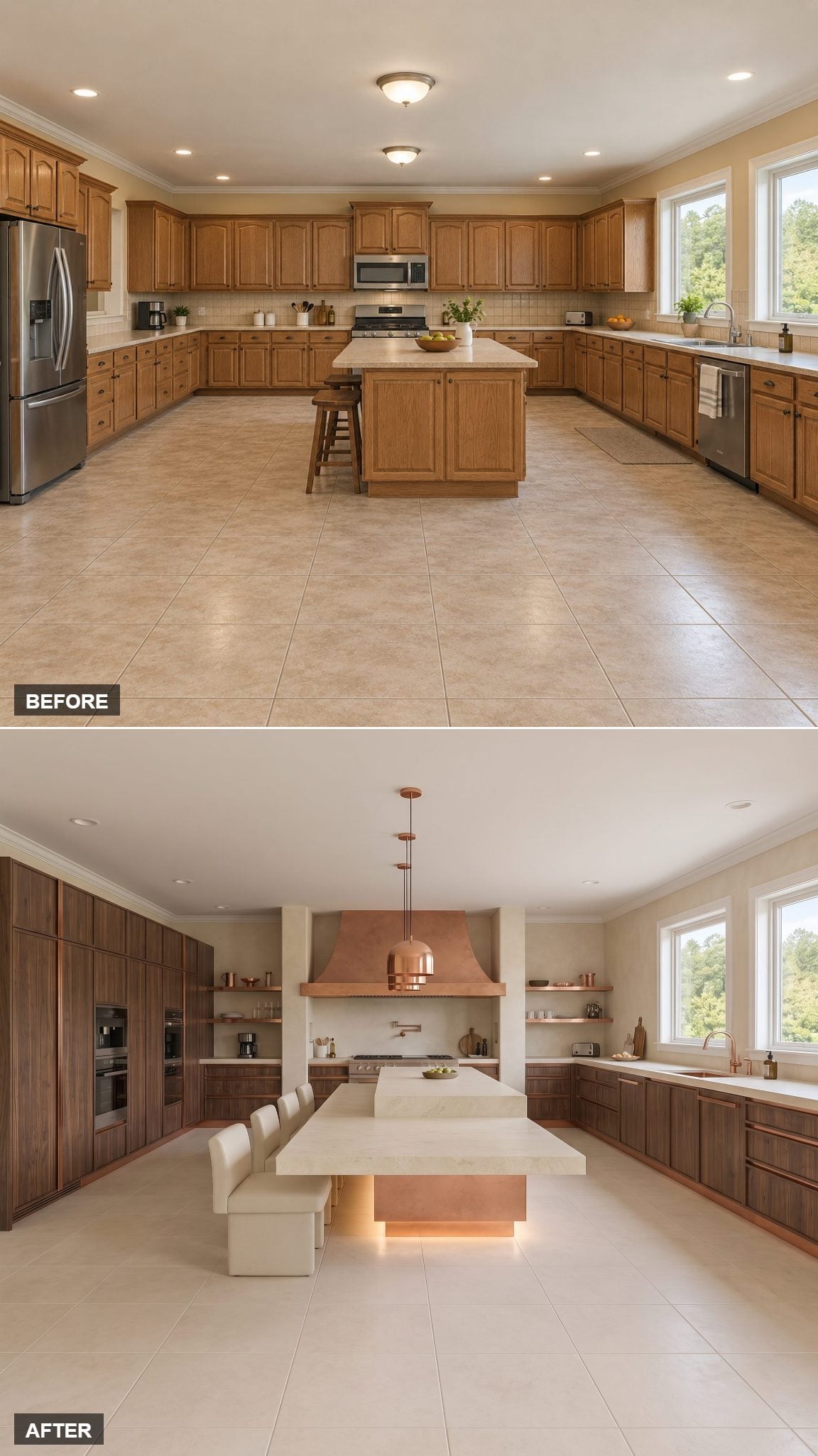
A cream stone island appears to hover above the floor, lifted on a recessed copper plinth that catches the light underneath. It’s a magician’s trick executed with a shadow gap and a strip of warm metal.
The perimeter cabinetry remains grounded and cream, which makes the island feel less like another bank of cabinets and more like a single piece of sculpture. The cream marble island gets the mass; the copper base gives that mass somewhere to disappear.
32. Peninsula Plus a Banquette You Won’t Want to Leave

A curved breakfast banquette in warm linen takes possession of the window wall and changes the room’s priorities immediately.
A cream peninsula extends the working counter without swallowing the seating area. Copper sconces glow low over the bench, and the kitchen suddenly contains a place with no culinary assignment whatsoever.
This is where morning coffee stretches into an hour nobody planned.
31. The Full-Width Copper Backsplash Moment
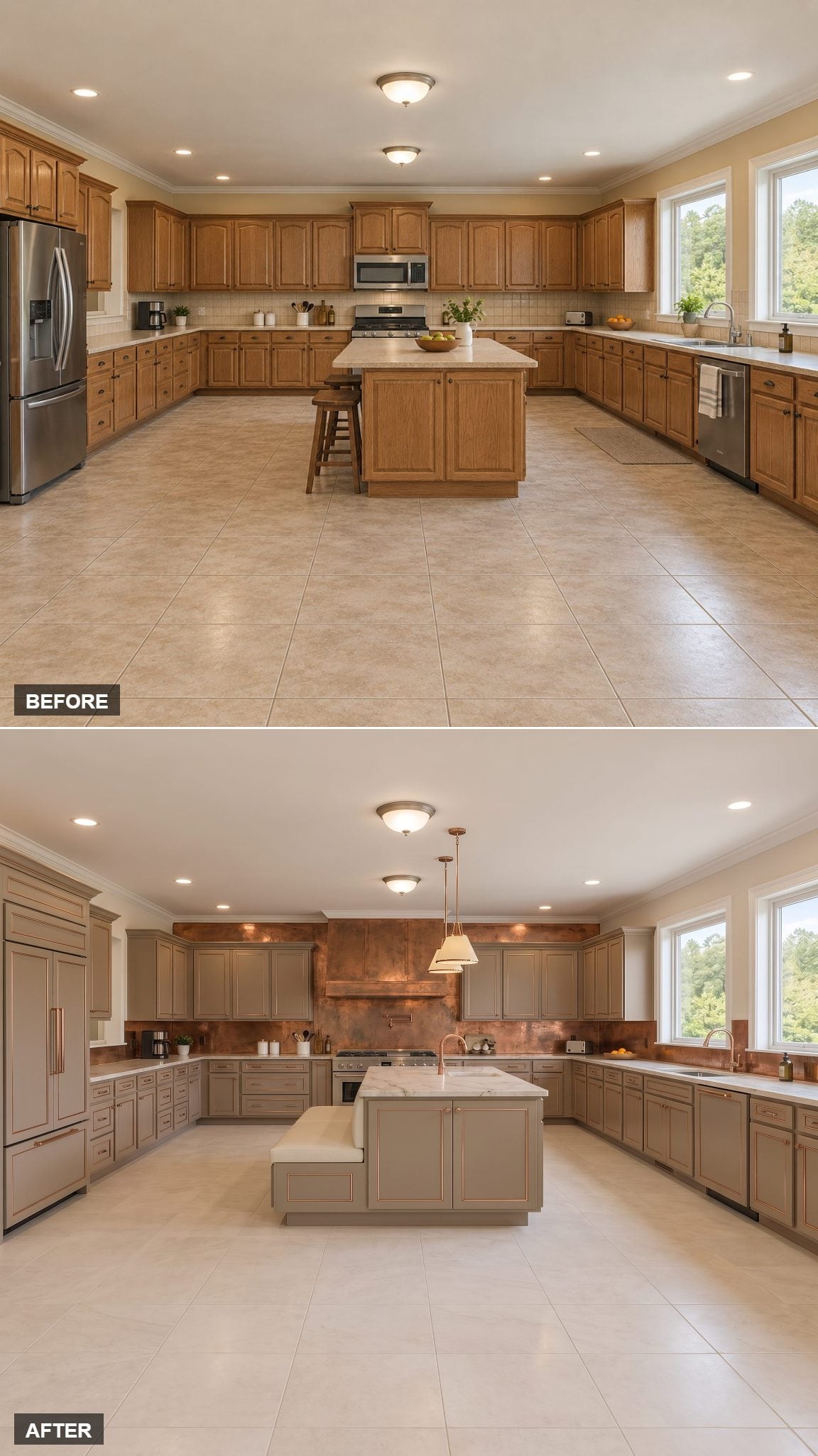
Instead of treating the backsplash like background, this kitchen gives one entire counter wall to hammered copper.
Light scatters across the irregular surface while cream cabinets and pale stone act as the frame. The copper-trimmed range lands in the middle without needing another pattern, tile border or decorative insert to announce it.
30. European Worktable Kitchen, Cream and Copper Edition
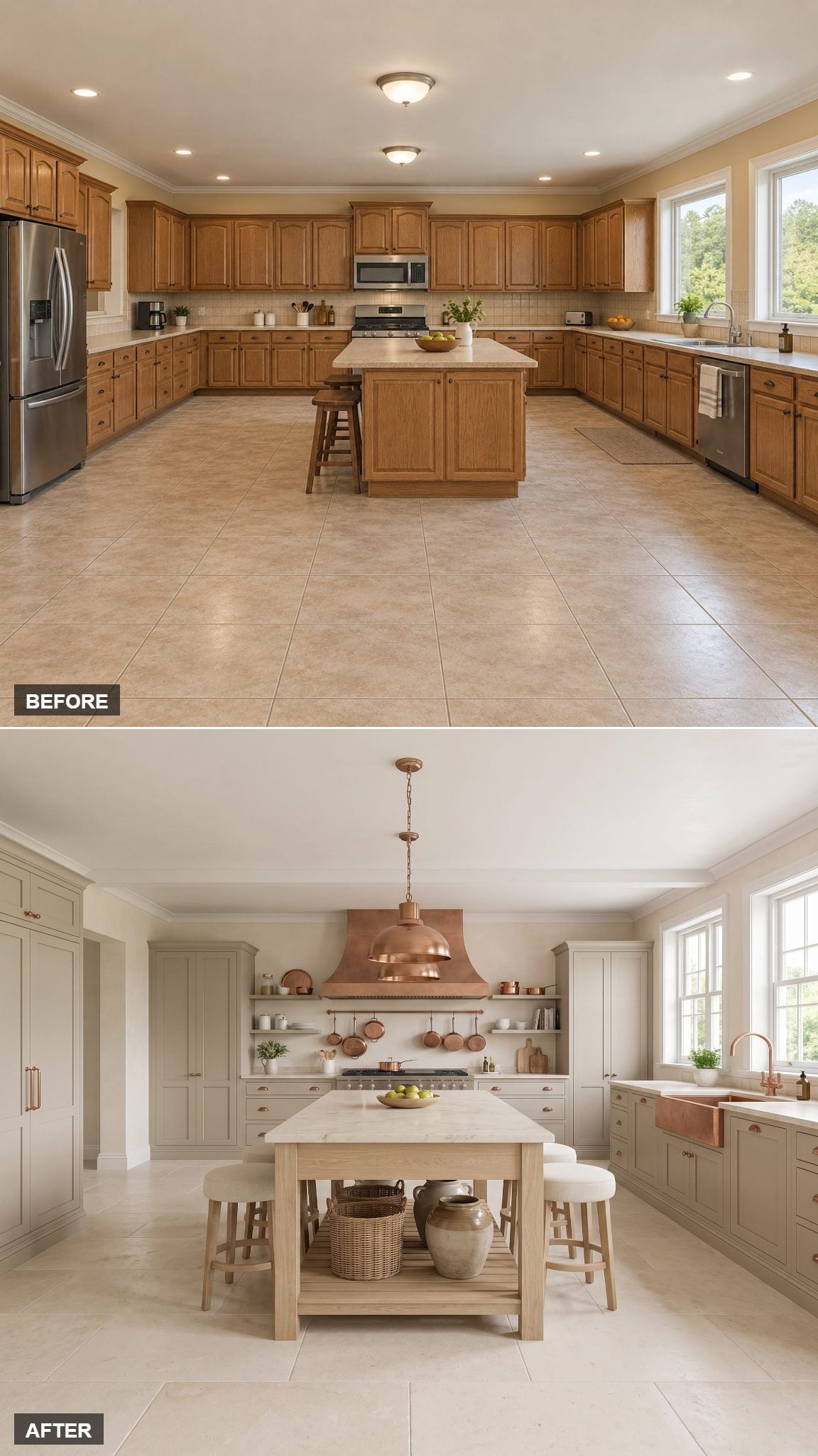
Freestanding beats built-in here. Instead of another boxed island, an oak worktable takes the center—copper legs, a thick marble slab on top, the spirit of an old pastry kitchen translated into cleaner lines.
Cream cabinets stay on the walls, with copper rails and a hanging rack of pots adding the utilitarian sparkle. A stainless range and dishwasher slip in without demanding camouflage.
It feels like a room assembled over time rather than a showroom installed on Tuesday.
29. A Chef’s U-Shaped Work Zone With a Lounge in the Middle
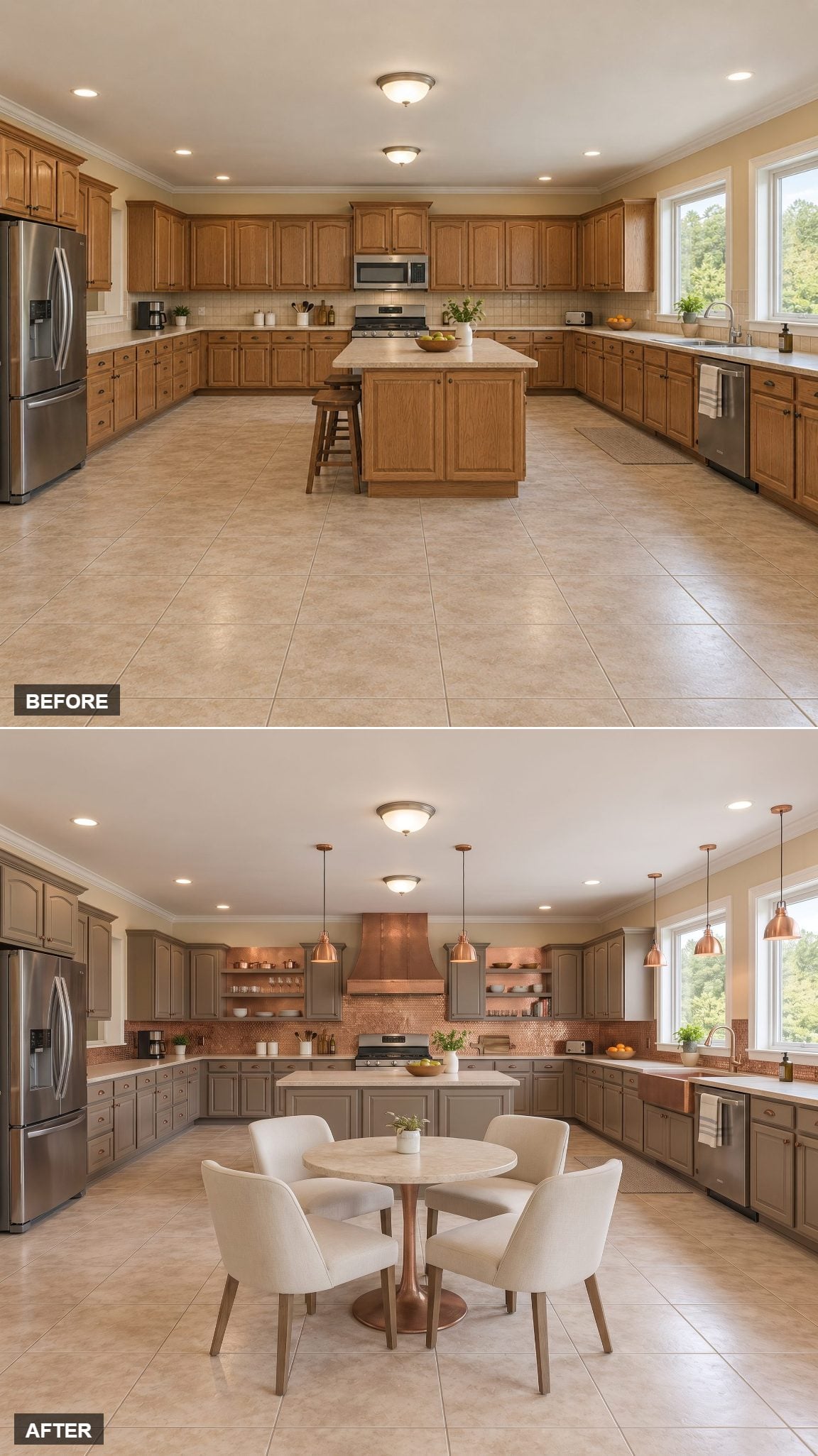
This one hands the cook a cockpit without letting the room become a command center.
A U-shaped run of cream cabinetry wraps three sides of the work zone, bringing the sink, appliances and storage into a compact relationship. The middle is left open enough for a small lounge rather than another cabinet block.
Copper on the hood and drawer pulls warms all that pale cabinetry, while the seating gives the room somewhere to go once the knife is put down.
28. Cream Terrazzo and Copper That’s Already Earned Its Patina
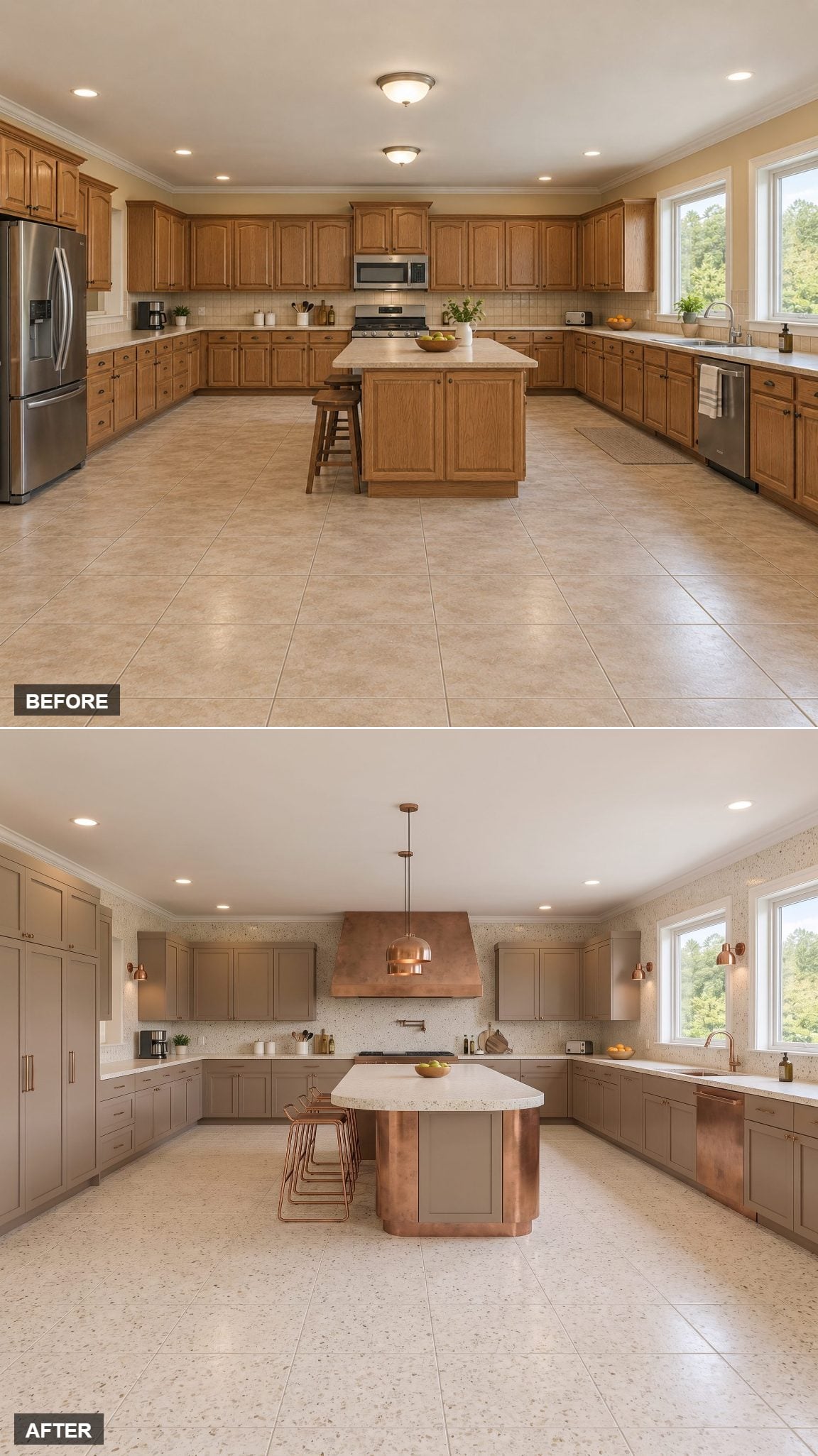
Shiny copper is easy. Patinated copper takes nerve. This kitchen goes for the aged version: warm browns drifting toward soft green, metal that looks as though it already has stories.
Cream terrazzo counters answer with flecks of stone and aggregate, preventing the material palette from becoming too solemn. The result feels collected rather than pristine.
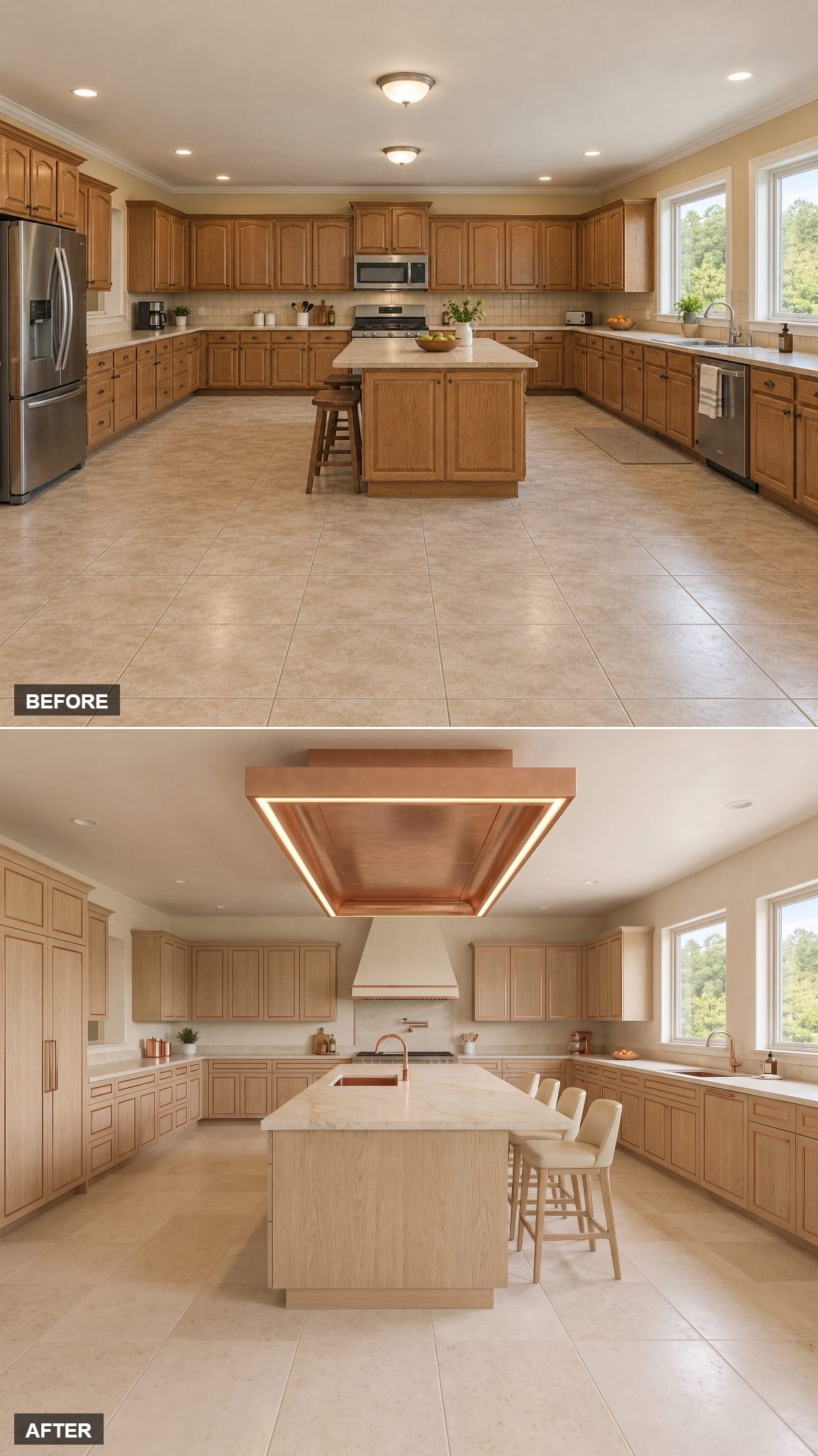
27. Pale Oak Island Under a Copper Ceiling
🔥 Would you like to save this?
Most kitchens spend every design dollar below eye level. This one remembers the ceiling exists.
A recessed copper panel floats above a pale oak island, reflecting warm light onto the cream cabinetry and marble below. The oak keeps the room grounded while the copper overhead creates the surprise.
Look up and there’s an actual reason to keep looking.
26. From Oak Box to Double-Island Party Headquarters
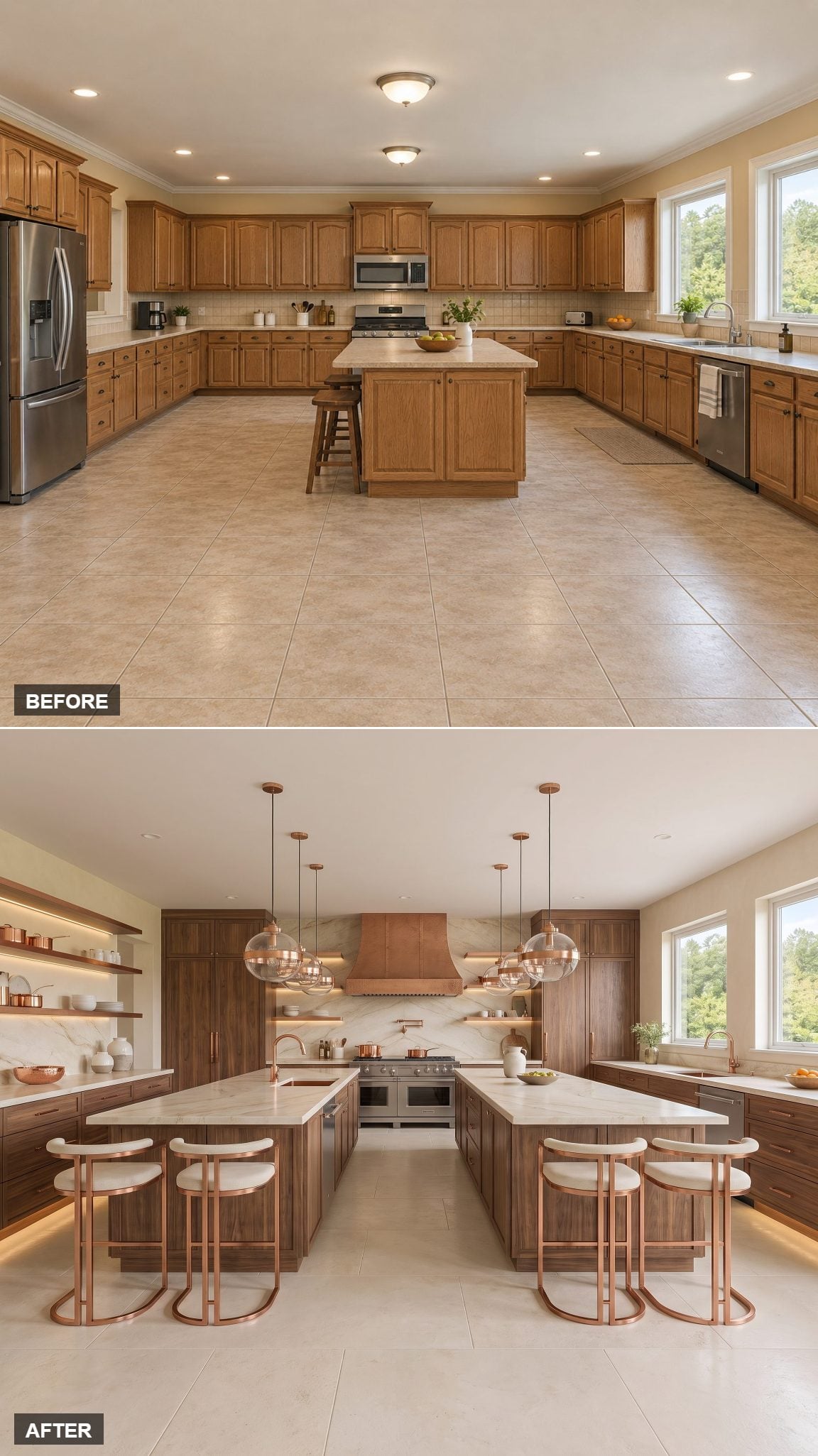
Two islands are ridiculous right up until the room is large enough and each one has a job.
Cream Shaker cabinetry runs the perimeter under honed marble tops and brushed copper pulls. One island handles prep; the other gets the glasses, stools and people leaning on their elbows. A row of copper pendant lights stitches them together overhead.
25. Mushroom and Oak With a Sculptural Copper Hood
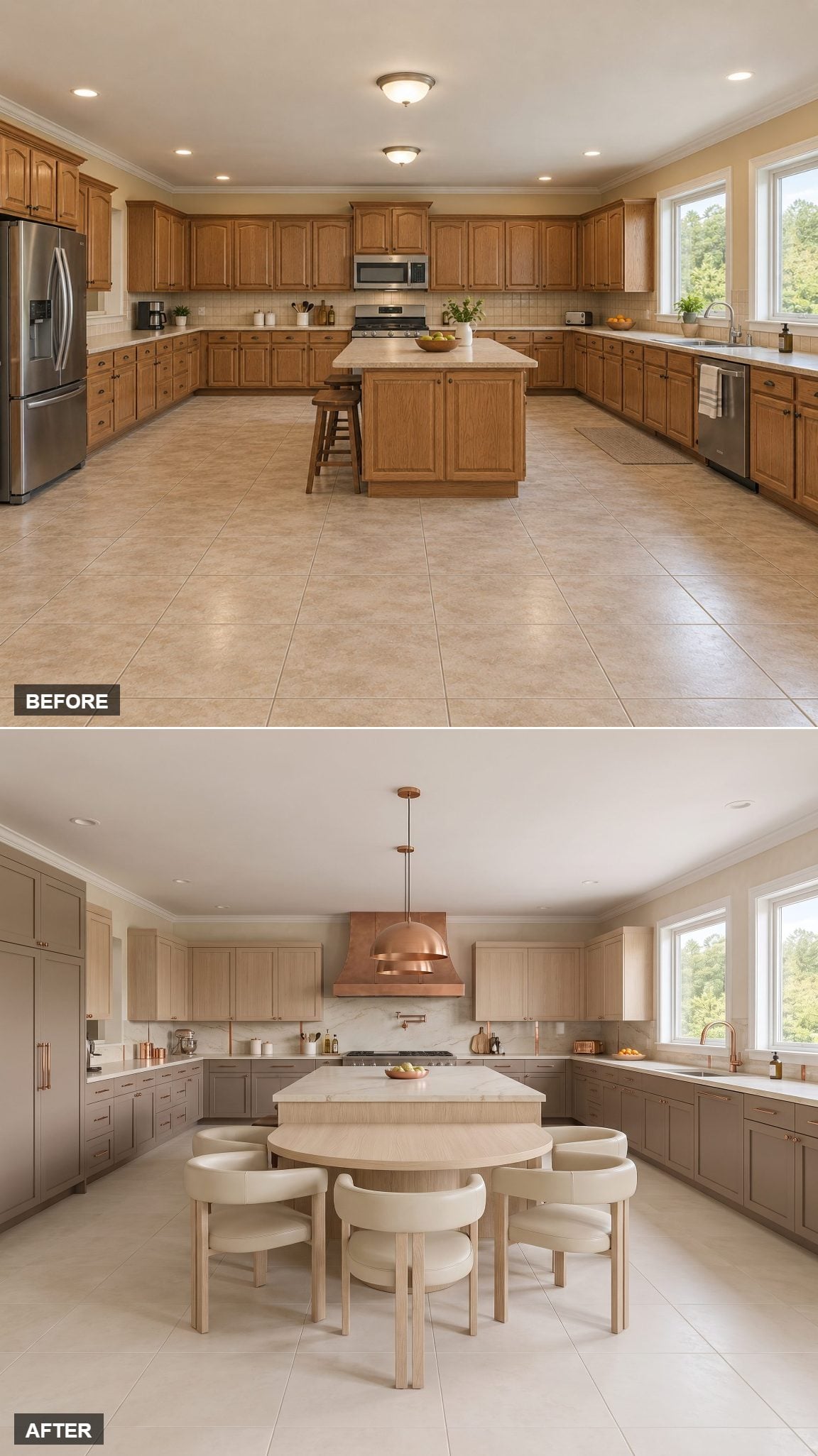
Two quiet tones set the stage. Warm mushroom-gray lower cabinets ground the room, oak uppers bring visible grain, and the copper hood arrives overhead like a piece somebody commissioned rather than selected from aisle seven.
Burnished copper works especially well against creamy neutrals and warm wood because all three live in related territory without matching exactly. The metal gets to glow; the oak keeps it from becoming jewelry-store shiny.
24. The Copper-Framed Island Pavilion
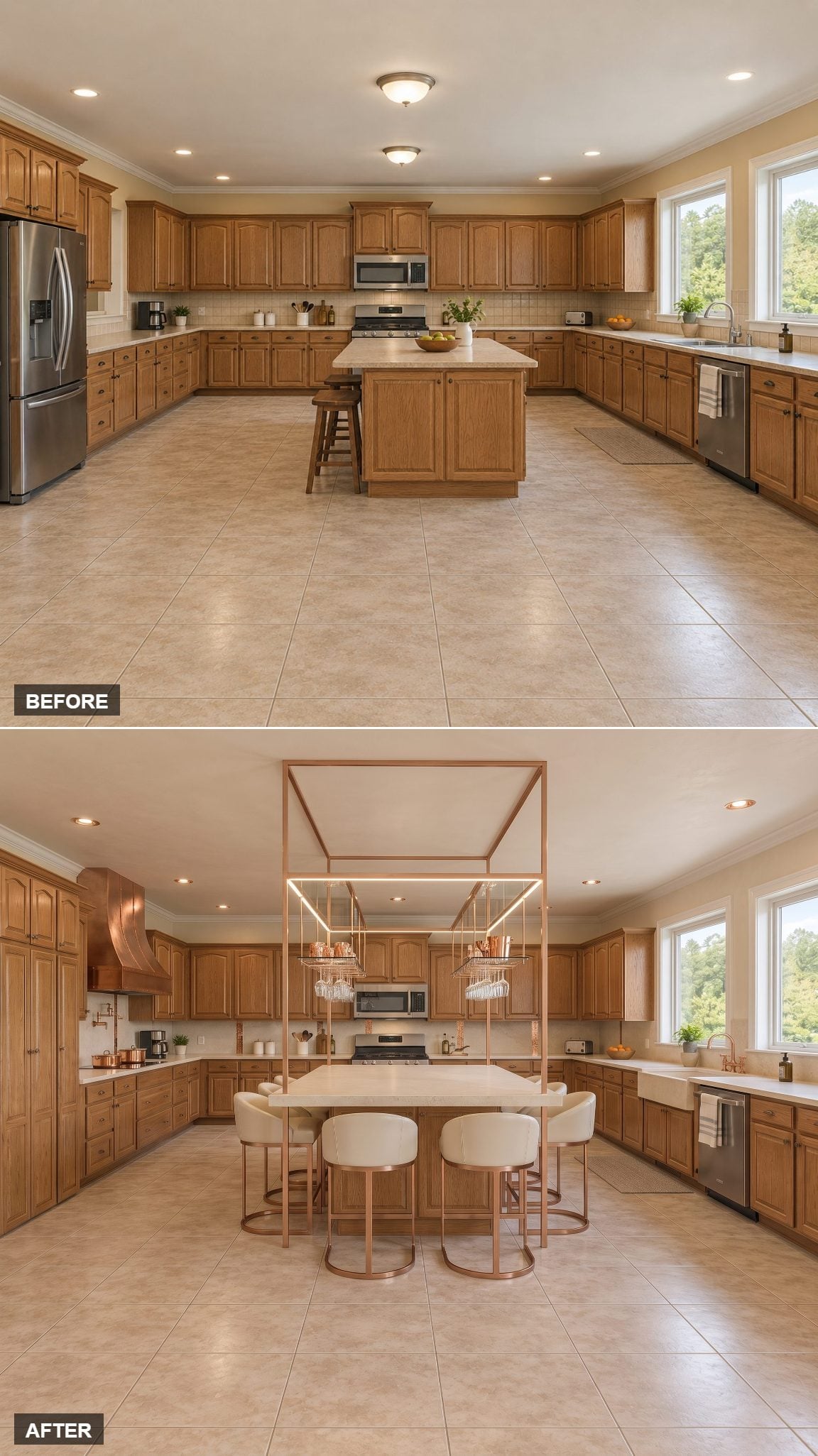
Here the island gets outlined rather than clad. A cream base sits inside a slim copper frame, with the metal tracing the edges beneath a marble top like piping on a beautifully cut jacket.
Restraint is the point. Copper appears only where it can sharpen the silhouette. The cream carries the visual mass and the frame turns that mass into an object.
It’s the kind of glam kitchen decor that looks expensive because somebody knew exactly where to stop.
23. From Marooned Island to Window-Side Breakfast Bar
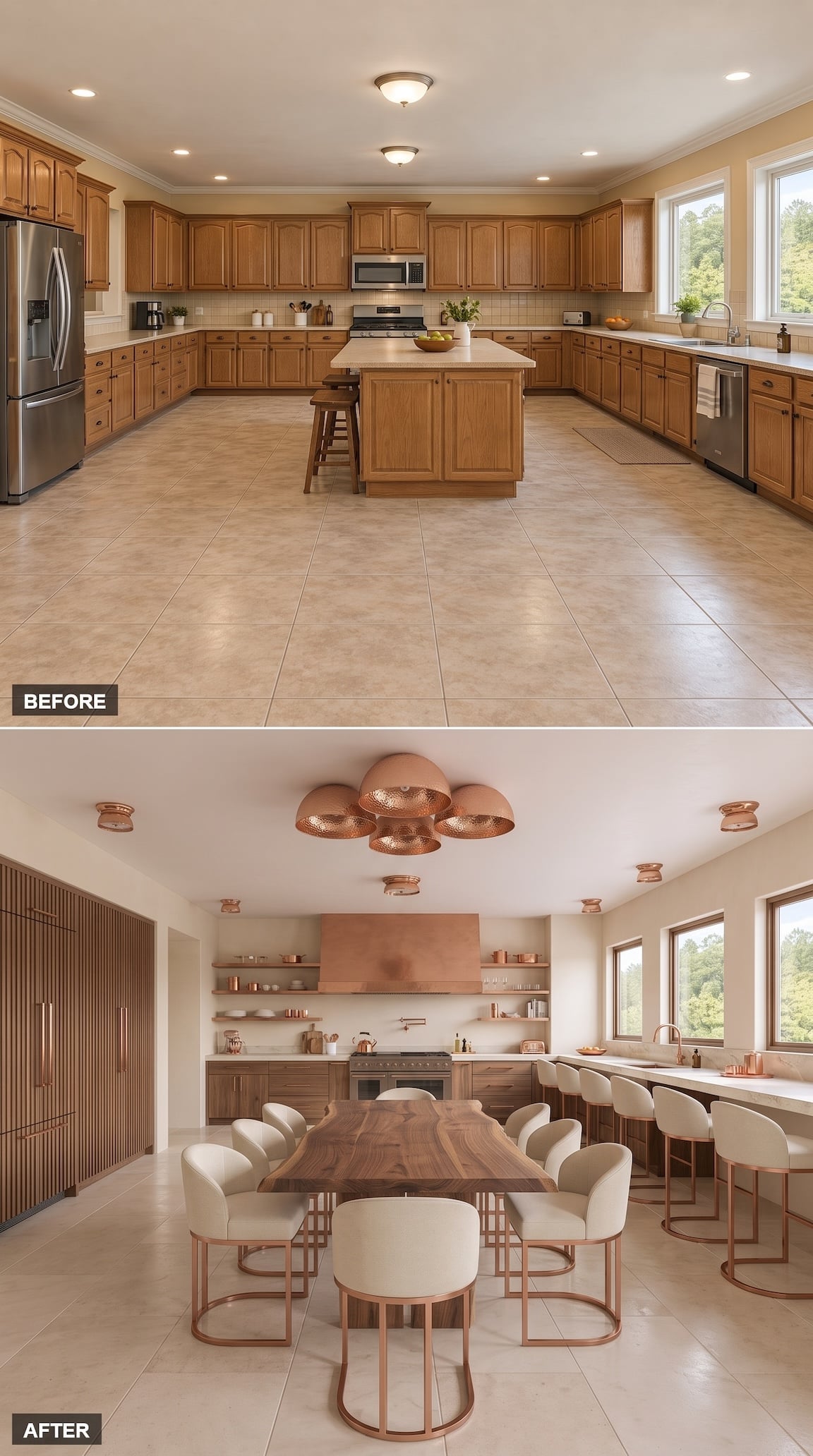
Some narrow kitchens gain more from an open center than another block of cabinetry.
Here a long breakfast bar runs beneath the window instead, with cream storage below, pale marble above and copper stools tucked neatly underneath. The center aisle stays clear while the seating claims the best natural light in the room.
Morning coffee gets the window. The circulation gets everything else.
22. Cream Stone Island Against a Walnut Wall
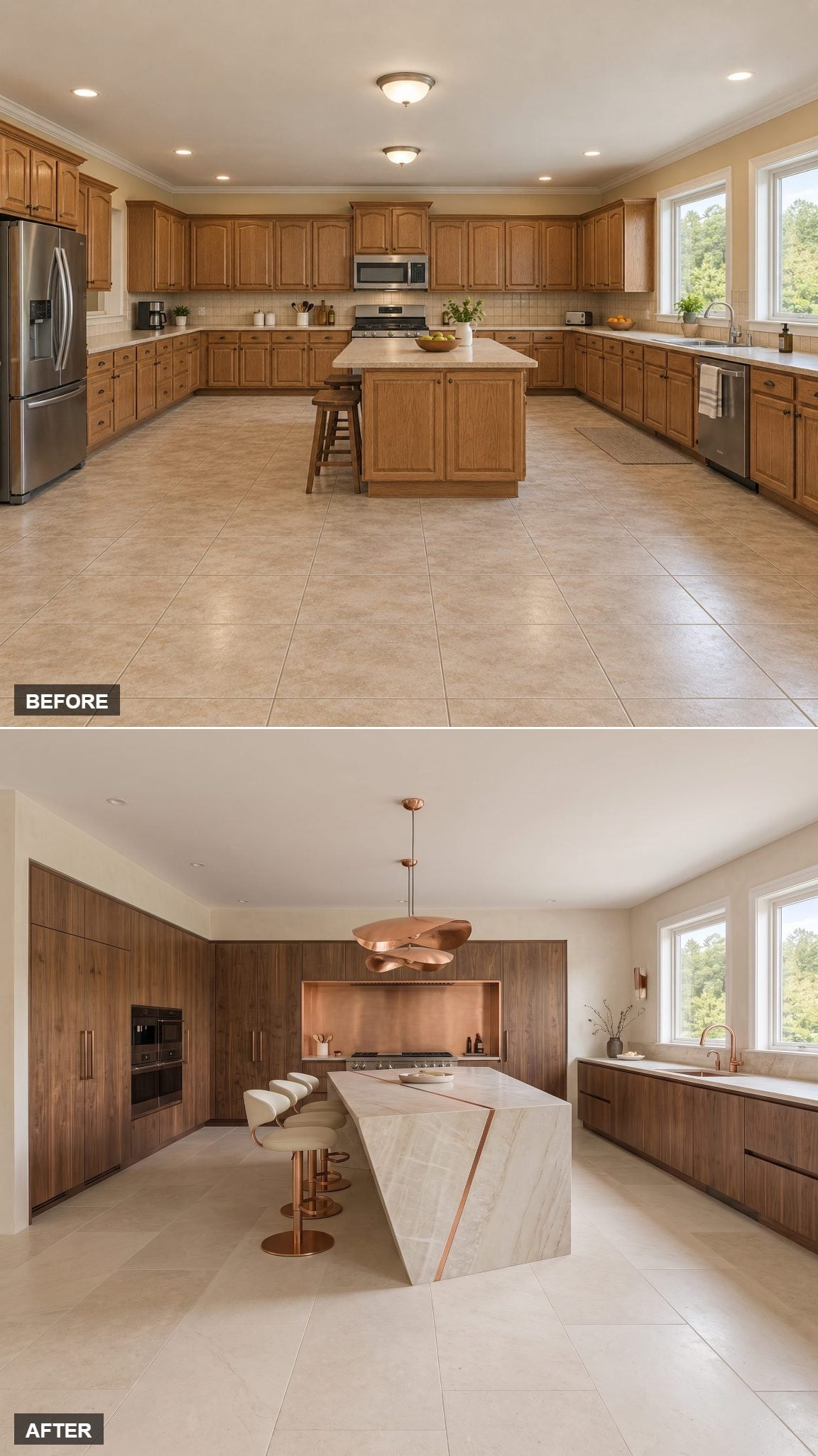
Warmth on warmth, with contrast coming from depth rather than temperature.
A sculptural cream stone island occupies the center, its veining drifting through the slab like slow smoke. Behind it, a full wall of walnut cabinetry creates a deep, continuous backdrop.
Copper hardware and a slim faucet bridge the pale stone and dark timber. Appliances disappear into the walnut run where possible, allowing the grain to remain the real wall treatment.
21. When the Island Itself Is Made of Copper
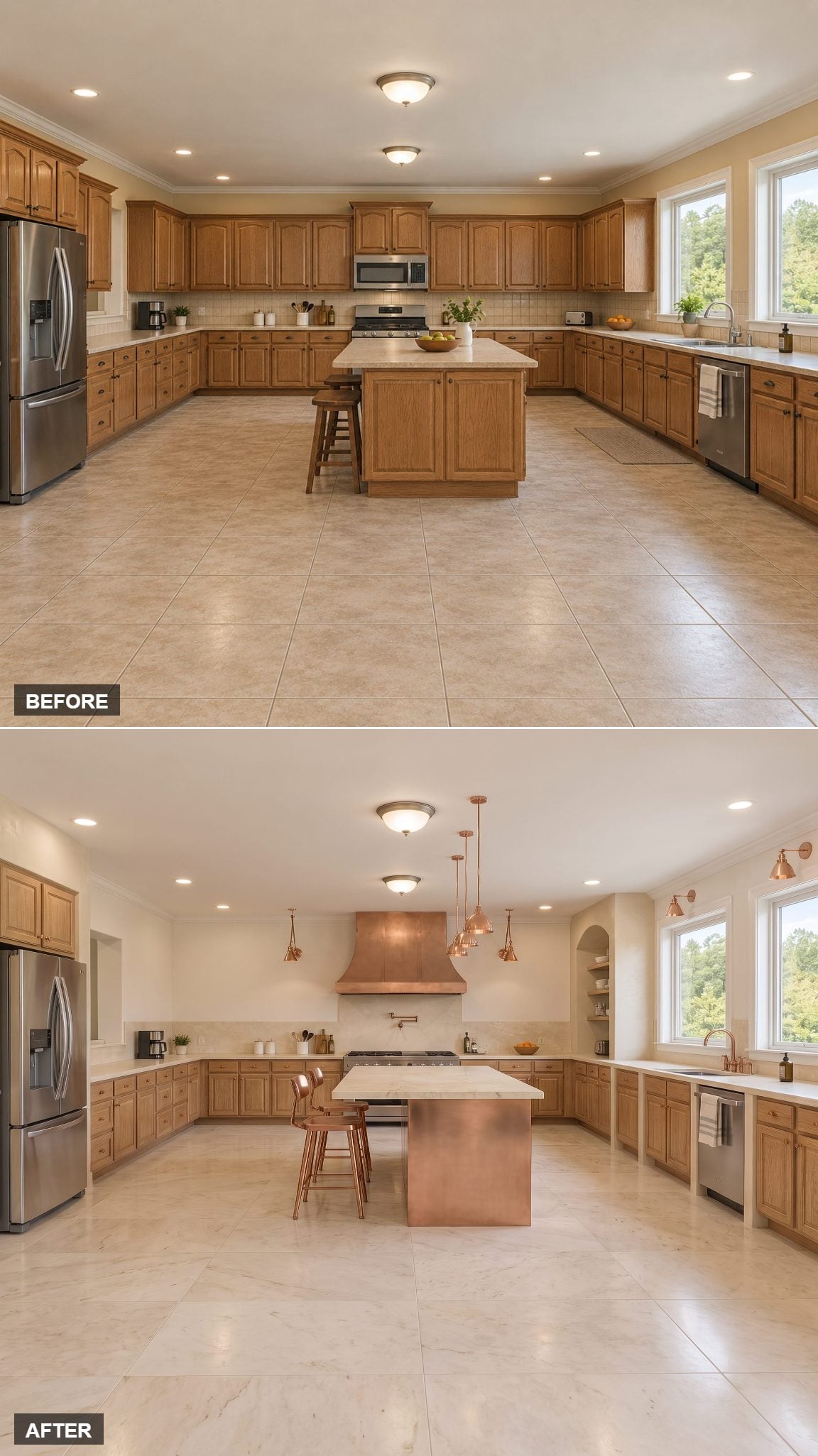
Most kitchens use copper like punctuation. This one writes the whole sentence with it.
The island is wrapped as cabinetry rather than treated as one seamless ingot: visible panels and seams give the metal block the character of oversized furniture. Against the pale perimeter, those construction lines keep the copper from reading like one featureless slab.
20. Copper Sink Island With a Dedicated Baking Wall
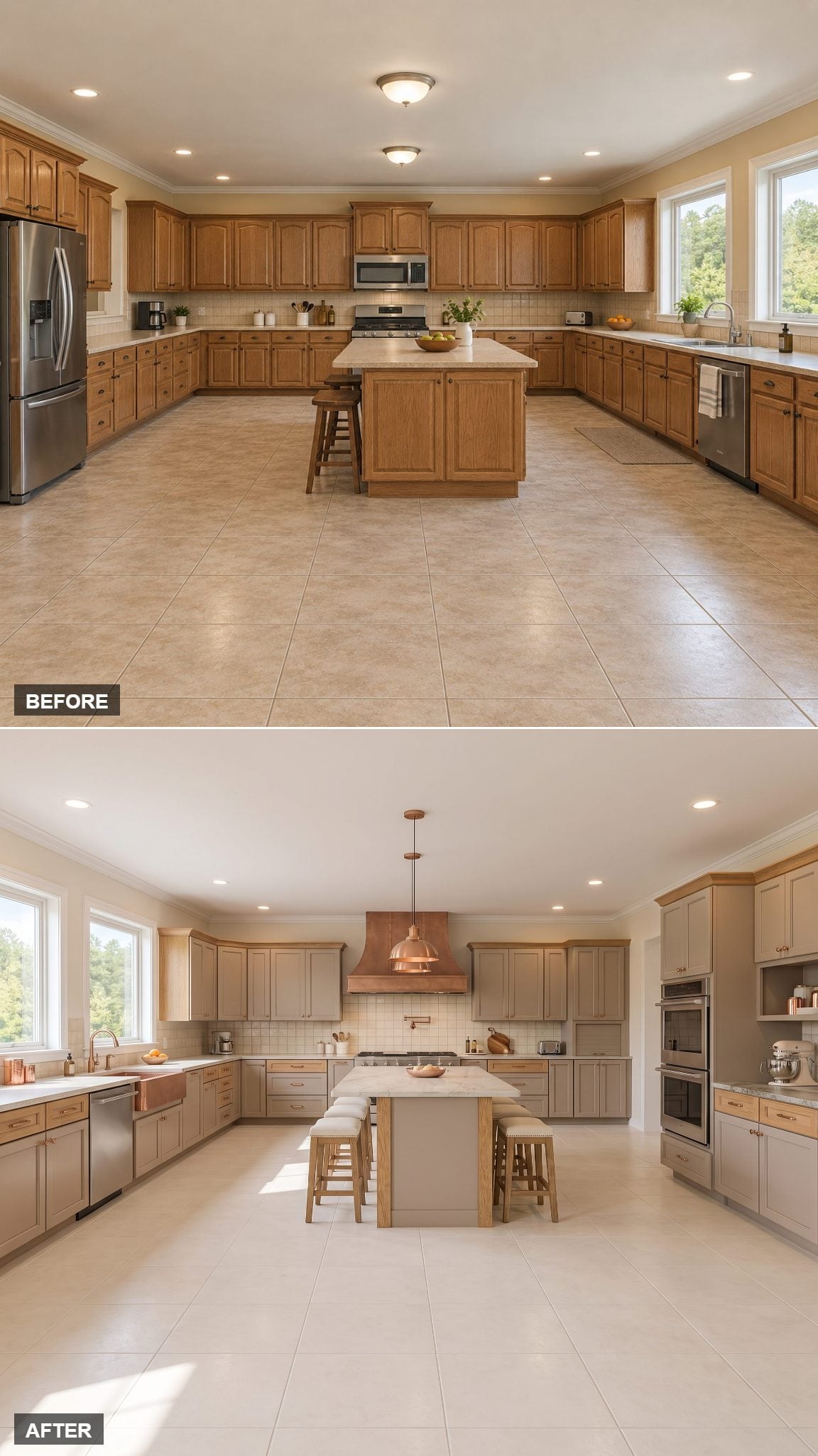
Instead of making every task compete for the same stretch of counter, this kitchen gives baking its own address.
The island holds a hammered copper sink glowing against pale marble. Across the room, a separate baking counter sits beneath open oak shelving filled with bowls and ingredients. The working height can be tailored to the person and task rather than treated as a universal prescription.
Cream cabinetry ties the zones together. Different jobs, different surfaces, one room.
19. A Freestanding Island and a Wall of Copper
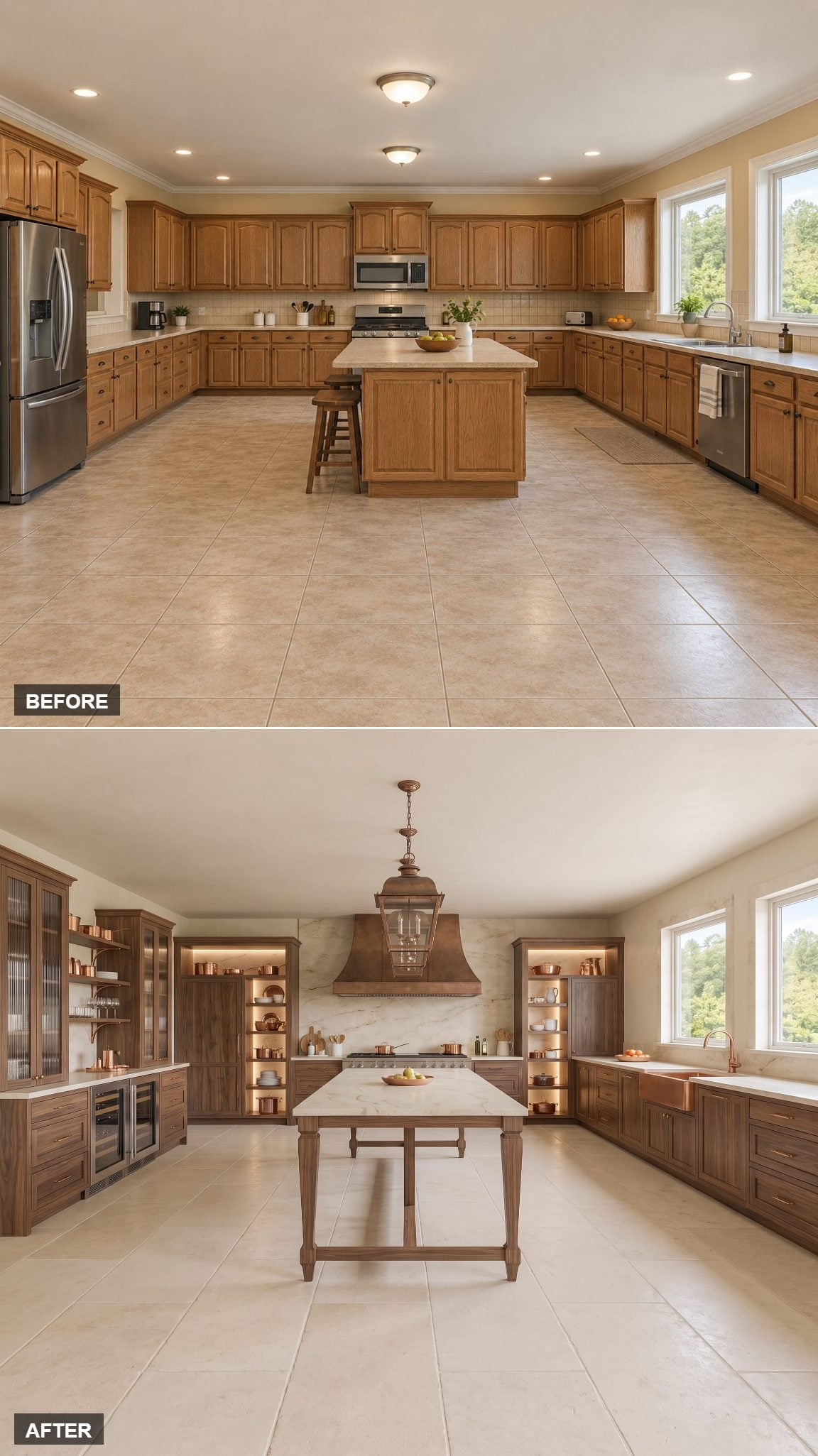
Not everything needs to look installed.
A furniture-style island moves into the center on turned legs and pale cream paint, giving the kitchen the looseness of a room assembled piece by piece. Behind it, a copper gallery wall holds open shelving and hammered cookware with the ease of a well-run glam kitchen decor scheme.
Marble counters, a copper faucet and appliances integrated into the cream cabinetry keep the architecture polished. A cutting board leans. A bowl stays out. The room is finished without looking frozen.
18. The Curved Island That Softened Everything
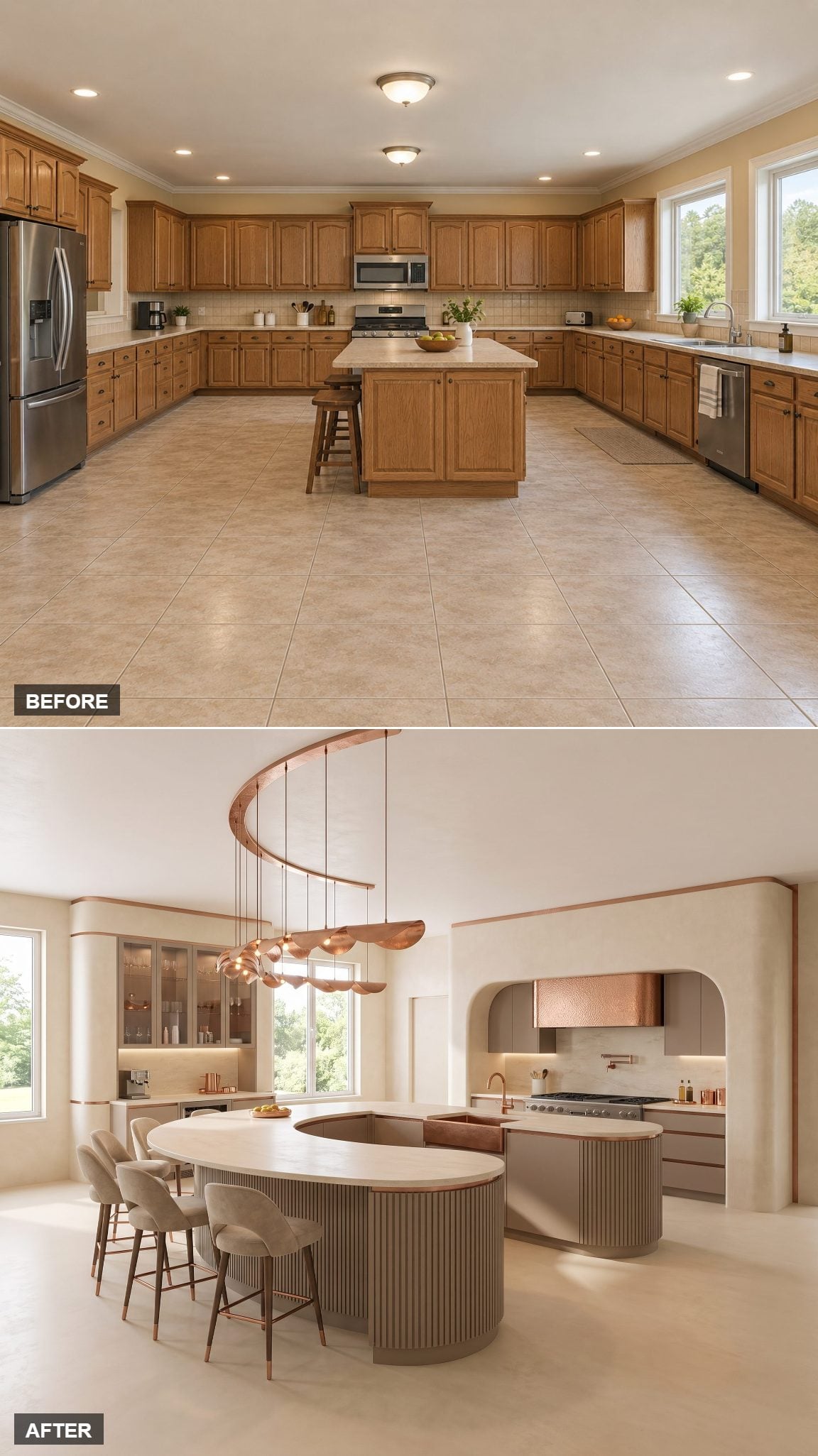
When cabinetry, counters and walls are mostly right angles, one serious curve can change the pace of the entire room.
A sculptural island wraps in a slow arc beneath a thick marble top, with copper stools tucked under the edge. Those copper bar stools and one brushed pendant provide the warm punctuation.
The curve isn’t magic. It simply gives circulation and sightlines something other than another corner to negotiate.
17. Almost No Upper Cabinets, All Copper Shelving
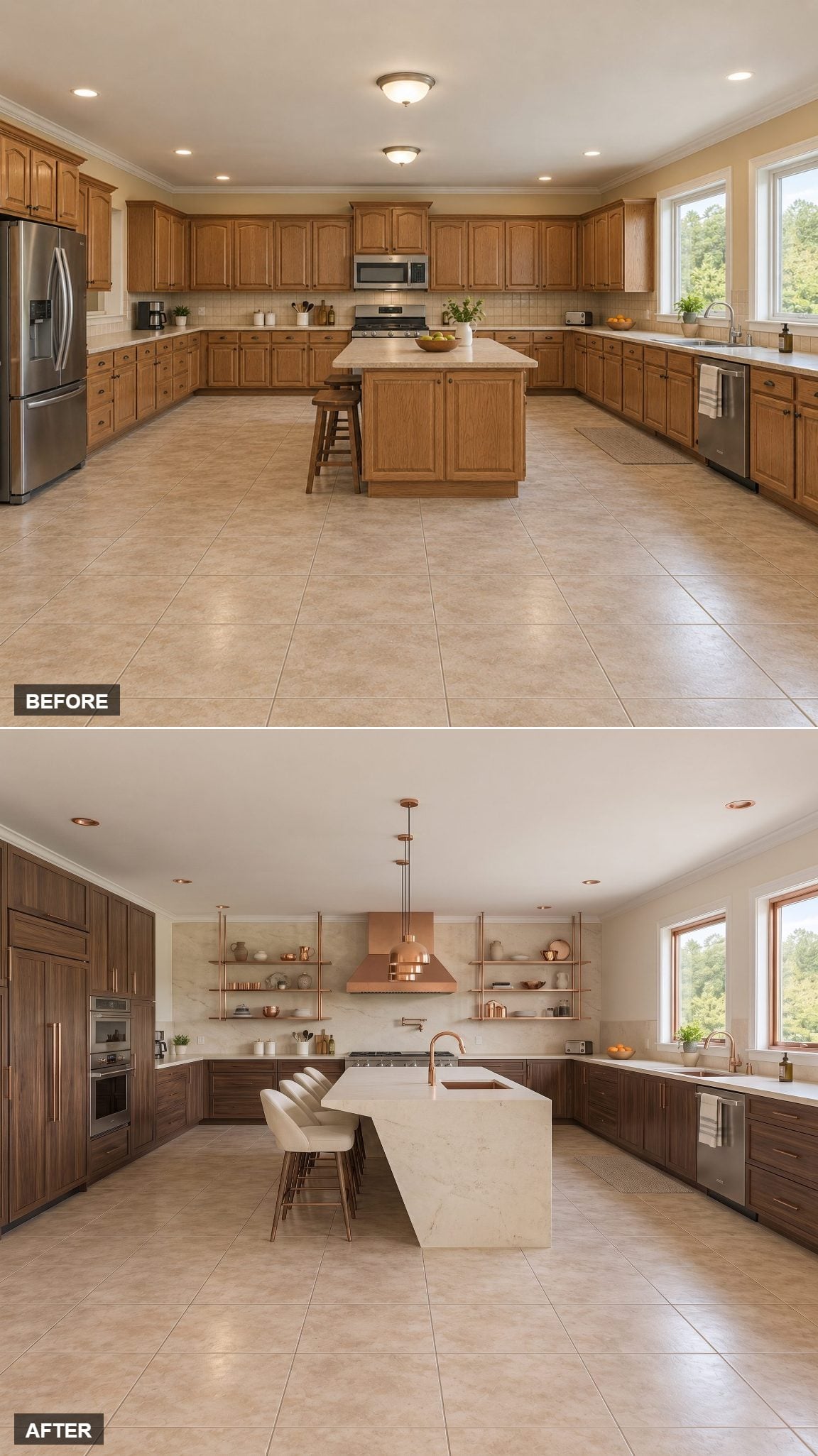
This one trades storage volume for visual air.
A few slim copper shelves hold cream stoneware, amber jars and one trailing plant while cream lower cabinets and marble take most of the practical load below. The wall feels lighter because more of it is allowed to remain wall.
For the right household, it’s an effective cool kitchen makeover move. For someone with 47 unmatched mugs and nowhere else to put them, perhaps less so.
16. The T-Shaped Island That Ate the Dining Table
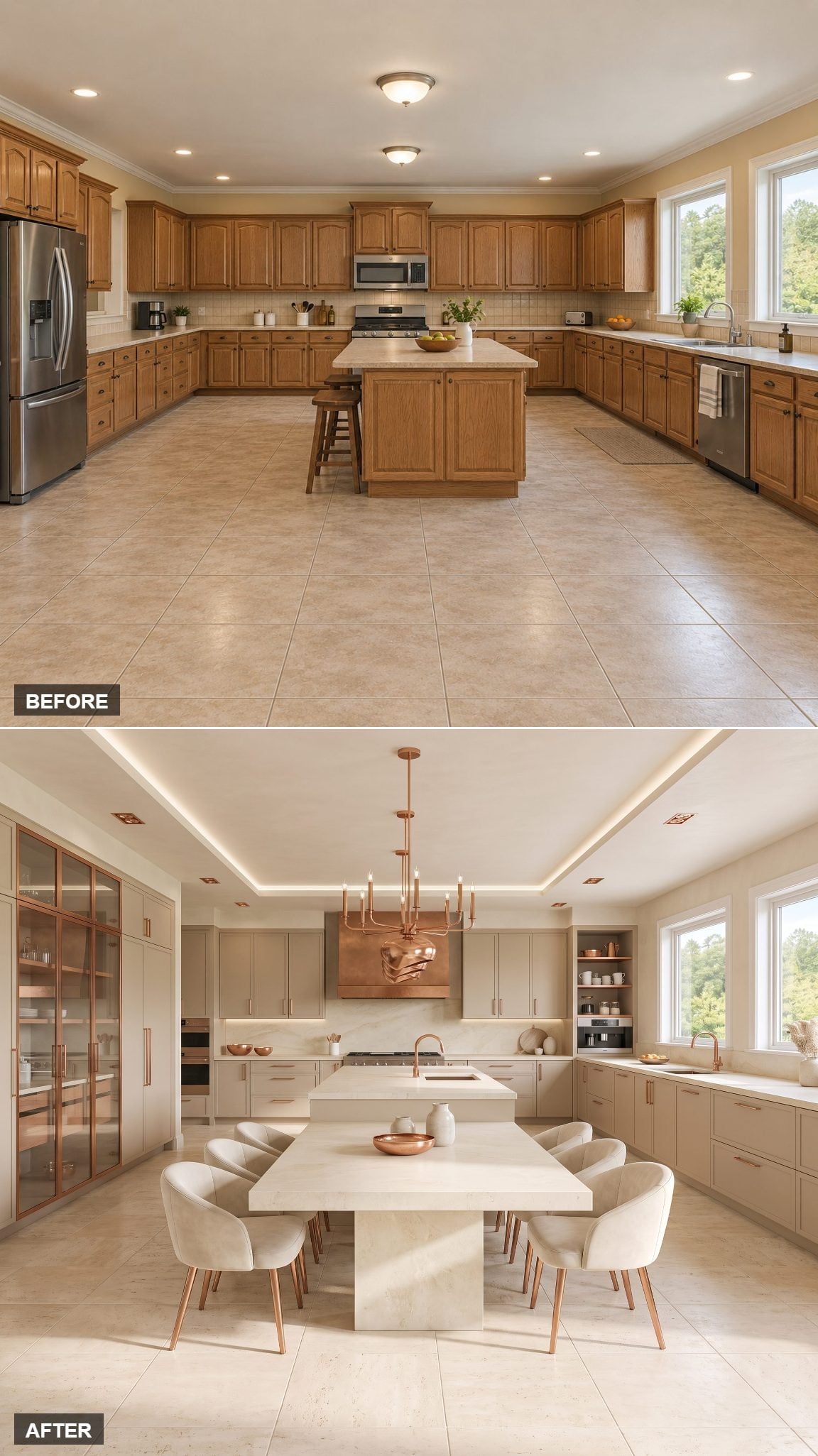
Why keep a separate table when the island can grow one?
A T-shaped plan extends a pale oak dining top from the cream marble work island, giving prep and meals distinctly different surfaces while keeping them physically connected. Copper pendants hang over the dining leg and linen dining chairs make that end unmistakably furniture.
One object replaces two, but the room still knows which part is for chopping and which part gets the plates.
15. The Copper Waterfall Breakfast Peninsula
🔥 Would you like to save this?
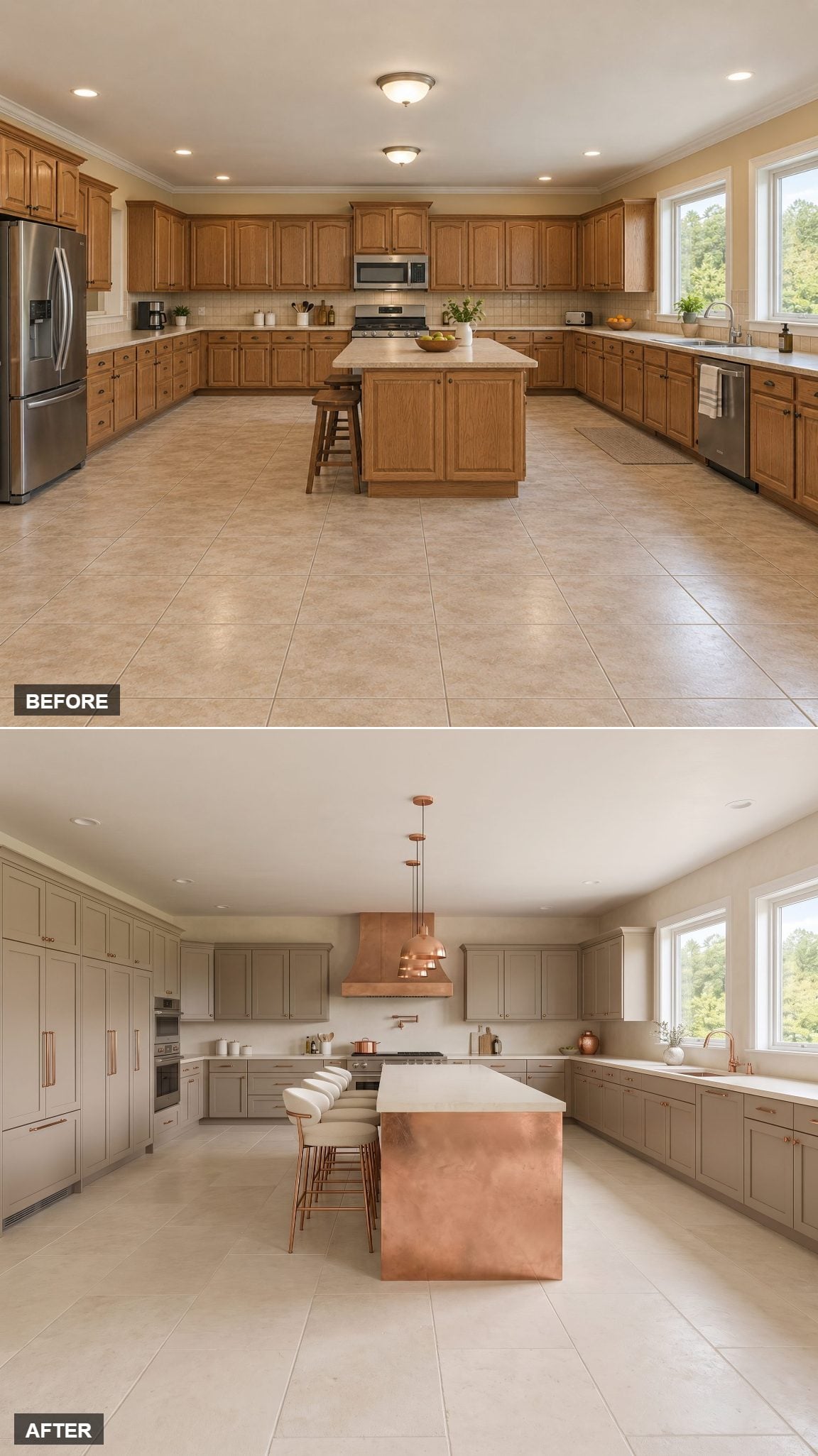
A waterfall edge keeps a peninsula from looking as though the countertop simply ran out of wall.
Here the pale slab folds over the end and reaches the floor, with copper trim tracing the return. Three copper stools line the open side, turning what could have been leftover counter into a deliberate breakfast edge.
You don’t need a monumental island to create a place worth sitting down.
14. From One Cramped Counter to a Three-Zone Workhorse
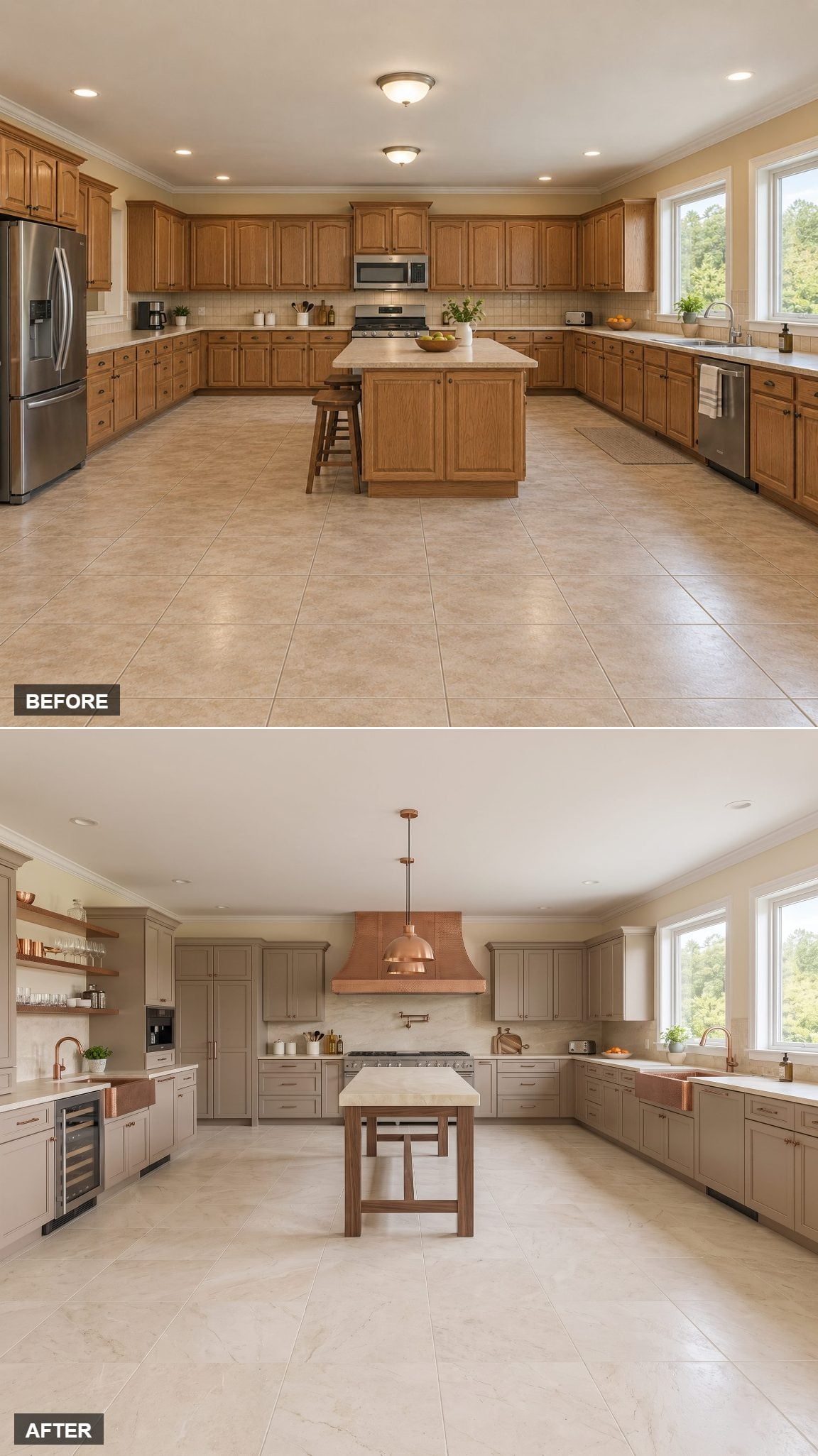
This design thinks about the kitchen as a sequence of jobs rather than one heroic countertop.
Prep, cooking and cleanup each get a clearer territory, with a copper-topped worktable occupying the center. Cream slab cabinetry runs around the perimeter, a copper hood marks the cooktop and the dishwasher tucks beside the sink.
Zoning doesn’t automatically make a kitchen efficient—the distances still matter—but it can stop several tasks from fighting for the same patch of counter.
13. The L-Shaped Island That Turned Cooking Into a Party
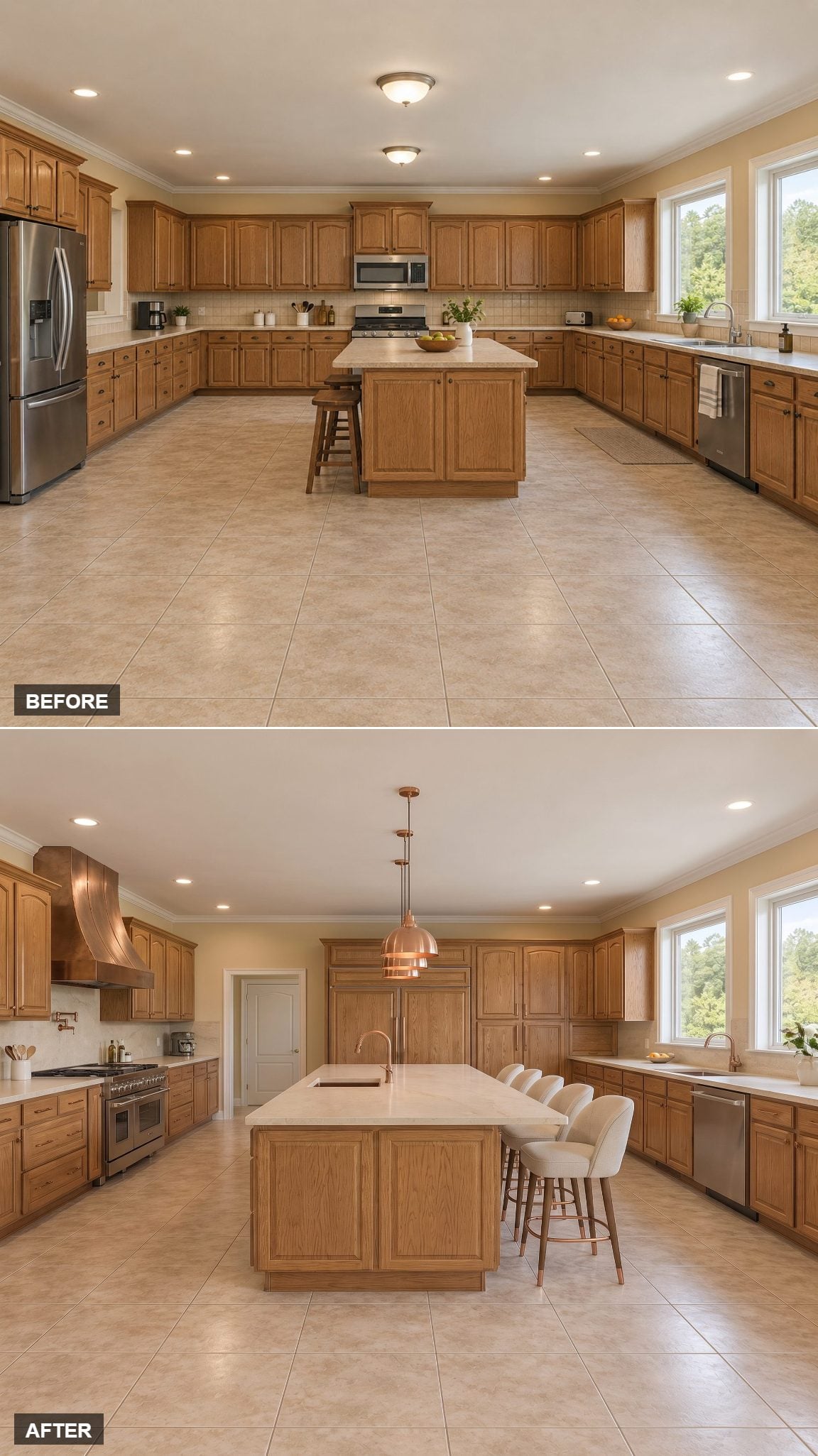
An L-shaped island bends the social edge away from the working edge instead of forcing everything into one straight line.
Cream stone wraps the corner, copper stools line the long side and brushed pendants establish the center from above. The refrigerator and range remain behind the active zone, while the seating occupies its own leg of the L.
You get glam kitchen decor that can still survive Tuesday night. The copper bar stools supply most of the sparkle without asking the cabinetry to join in.
12. Twin Galley Islands With the Ends Left Open
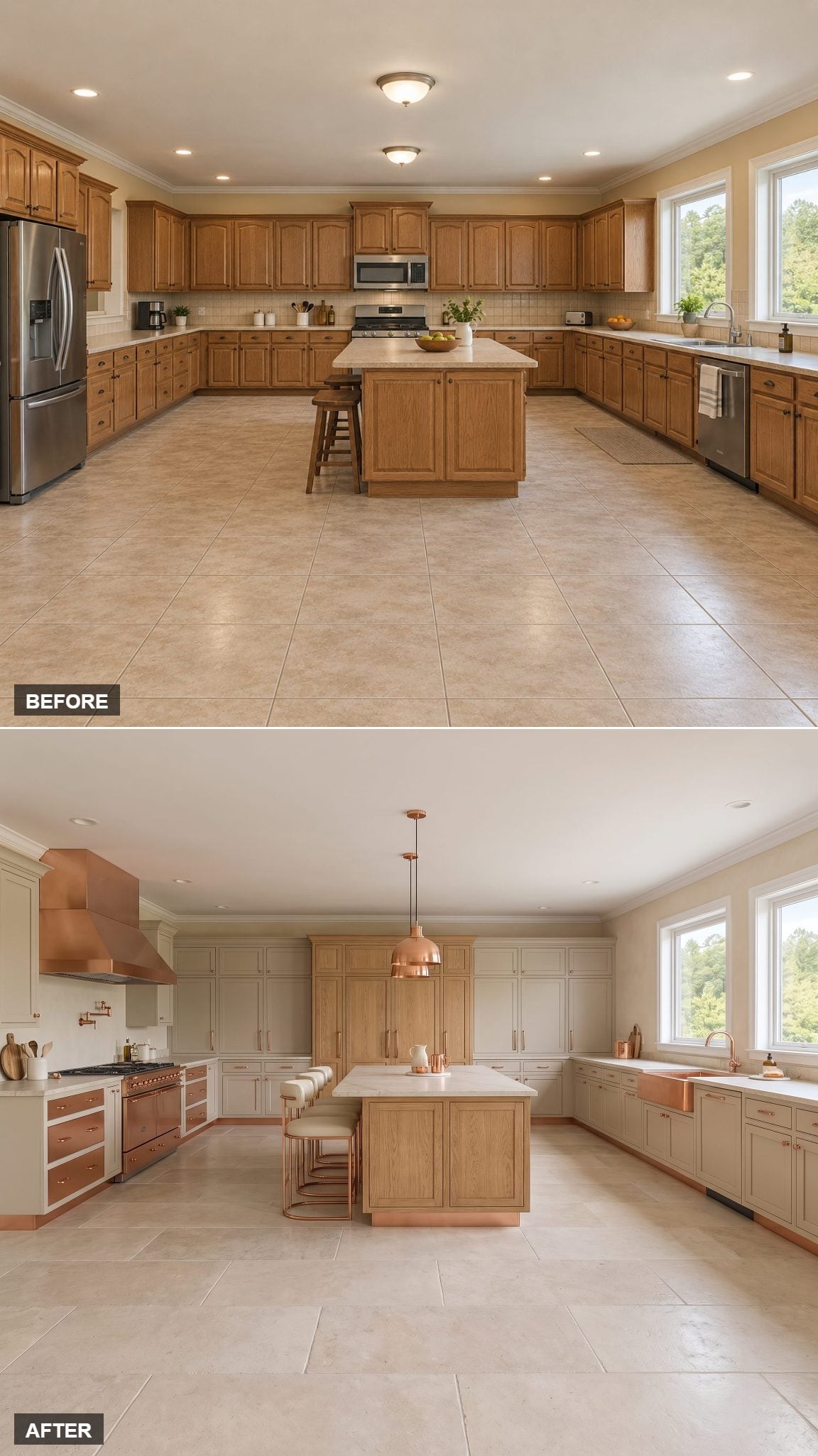
Two long parallel islands create a serious amount of linear work surface, but the interesting part is what happens at the ends: nothing.
Leaving those passages open keeps the room from turning into a corral. Range and hood occupy one run, sink and dishwasher another, with the refrigerator beyond. Copper pendants march down the center aisle and give all that cream stone a warm spine.
This is a high-capacity layout for a room large enough to carry it—not a prescription for squeezing a second island into a kitchen that barely wanted the first.
11. The Long Dining Island That Skips the Stools
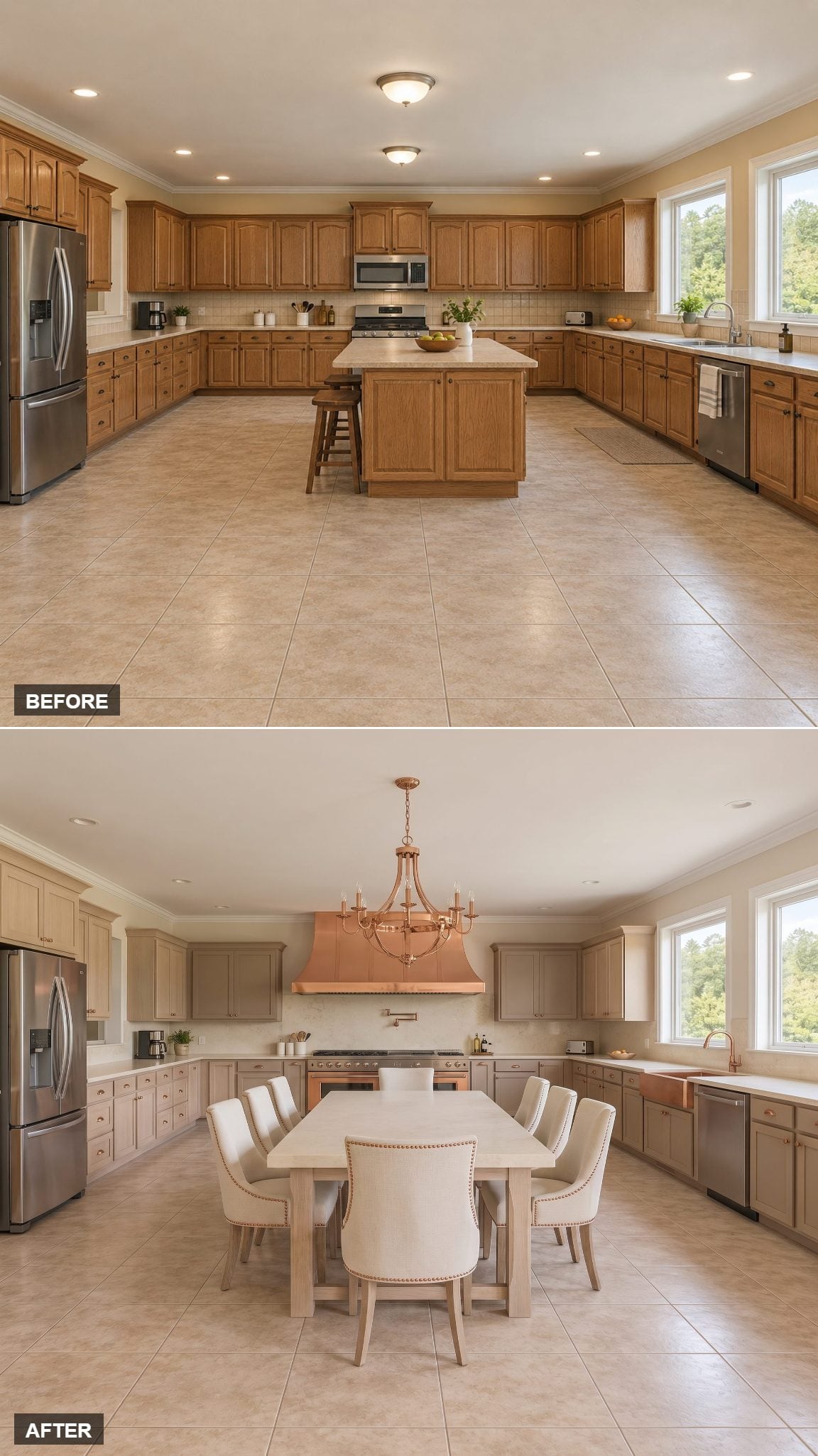
Not every island needs a lineup of backless stools tucked beneath it.
This one stretches into a proper dining surface, with real chairs on both sides and copper pendants running overhead. The cream base and marble top still belong to the kitchen, but the seating arrangement belongs unmistakably to dinner.
It reads as furniture rather than a counter you’re expected to perch at for twelve minutes.
10. Copper Lanterns Over a Round Table Nobody Wants to Leave
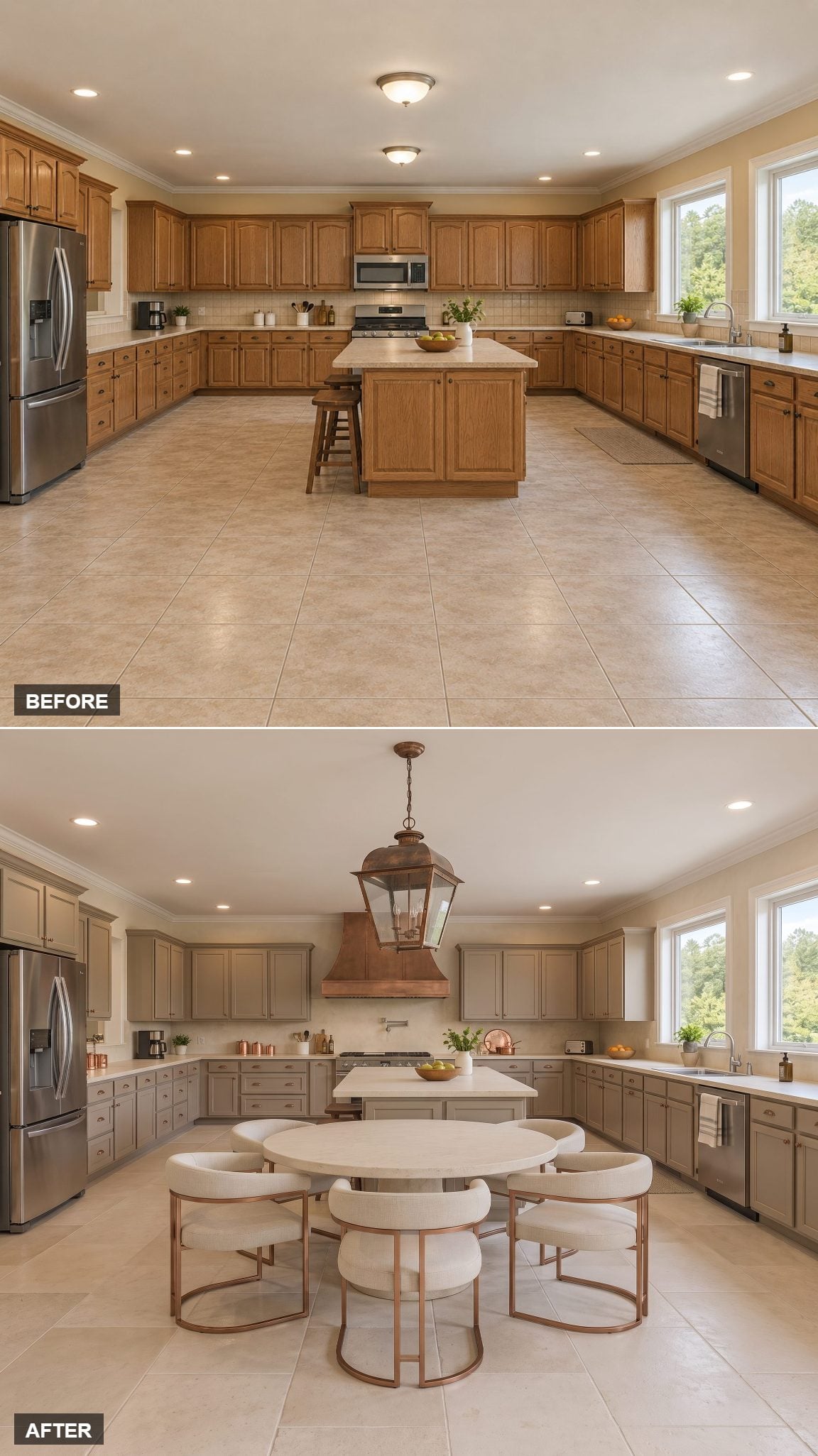
Swap the island for a round table and the room immediately loses its front and back.
Hand-cut copper lanterns hang low over cream oak, throwing warm pools of light across the grain. Everybody faces everybody else more directly, and no dominant end seat gets to behave like headquarters.
9. The Sculptural Two-Level Island That Broke Every Rule on Purpose
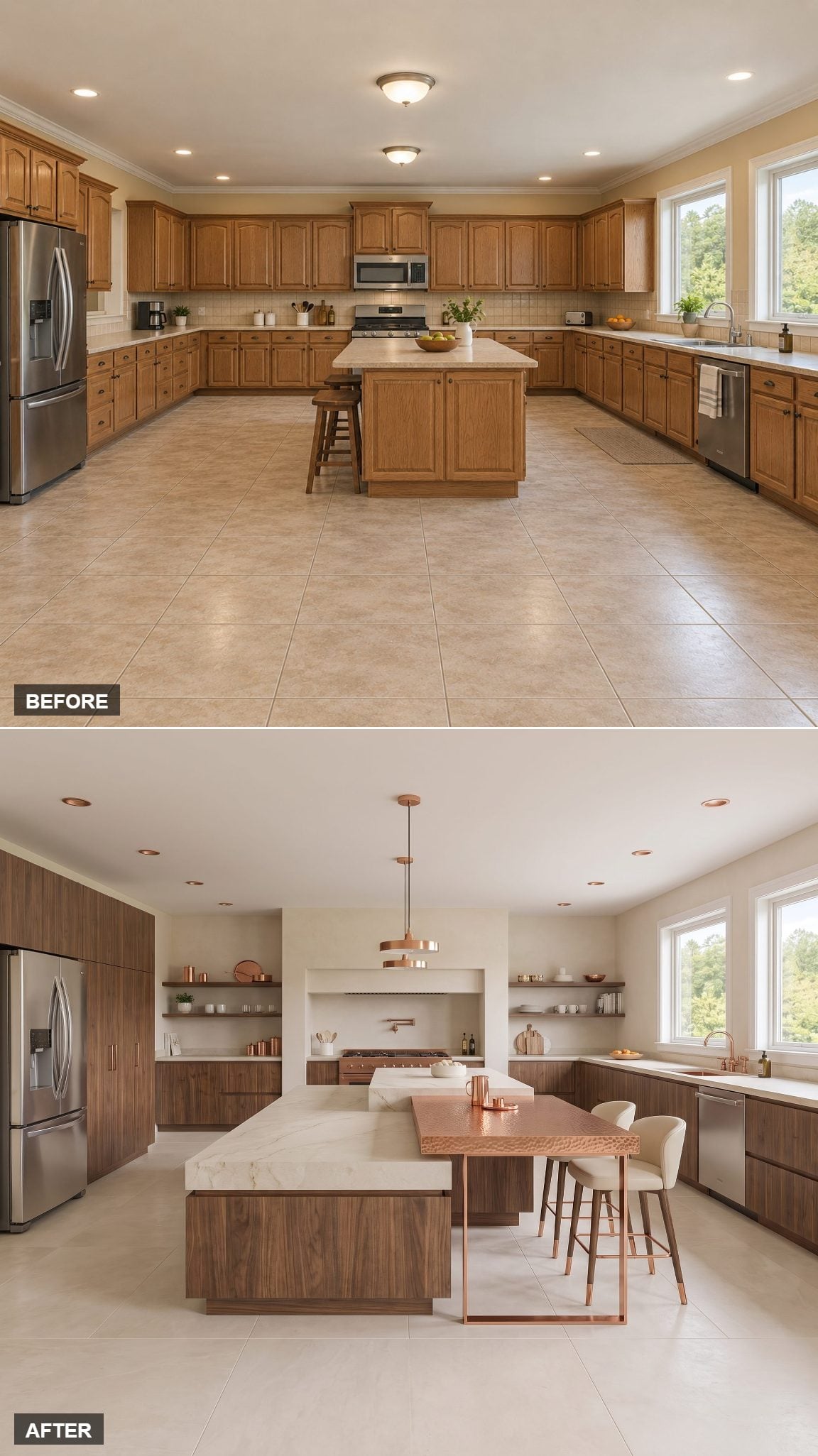
Most islands are a rectangle and a prayer. This one refuses.
An asymmetric two-level form pairs a lower cream-marble work surface with a raised copper-clad ledge for seating. The change in height gives prep and socializing separate territories without putting a wall between them.
Warm cream cabinetry surrounds the piece while hammered copper pendants repeat the metal overhead.
8. One Monolithic Copper Island, Nothing Else Competes
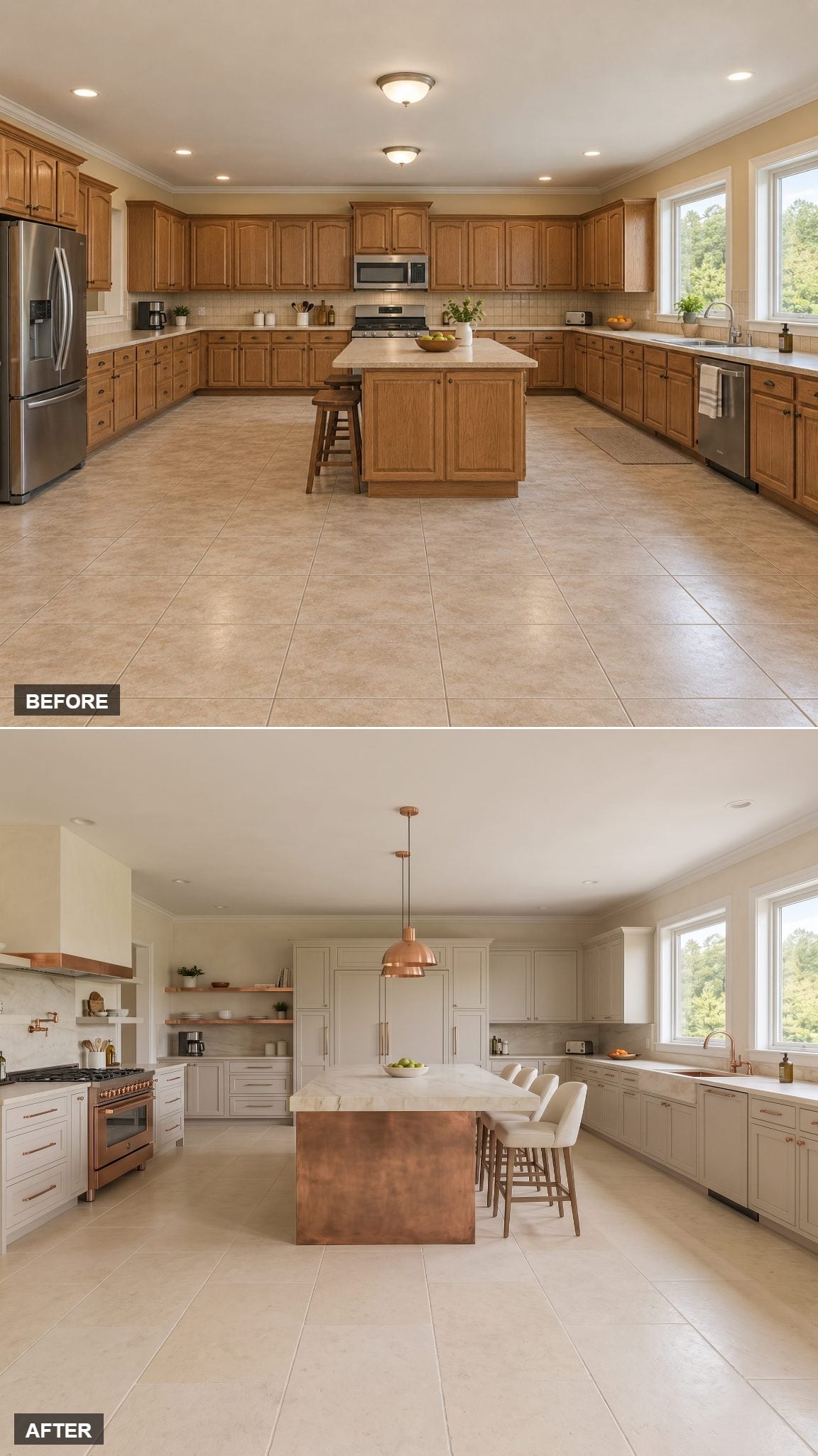
Some rooms need one object large enough to settle the argument.
A monumental island appears as a solid block of brushed copper in a sea of pale cabinetry. No marble waterfall interrupts it. No contrasting panel divides it. The strength comes from treating the metal as one continuous mass.
Everything else steps back because anything louder would turn competition into noise.
7. The Copper Ribbon That Wraps the Island Like a Gift
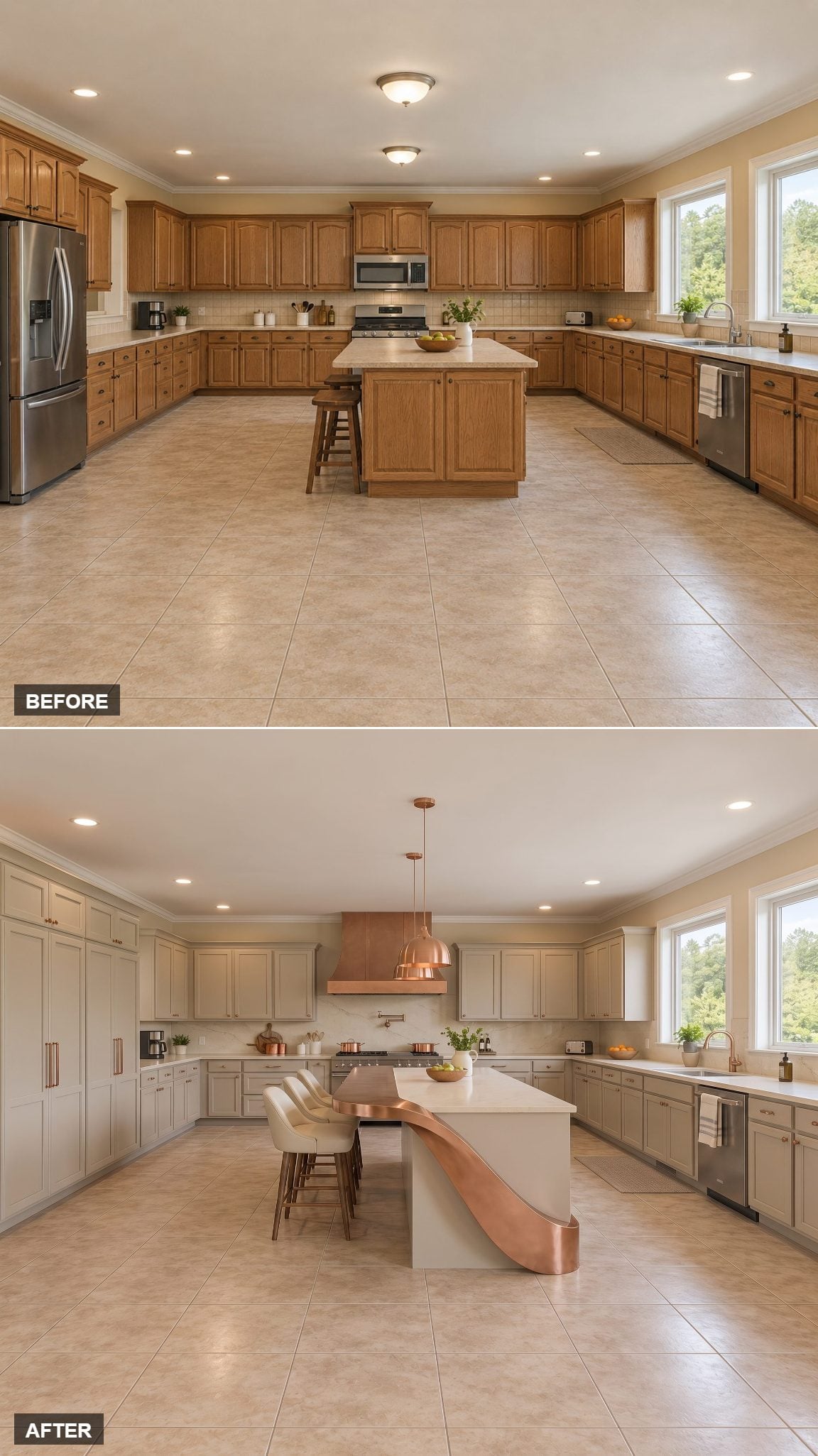
After all that solid metal, this one proves how little copper you actually need.
A single band folds around the base and continues through the corners as one crisp line. Cream stone sits above it, matte and quiet, so the copper reads almost like an inlay blown up to furniture scale.
Sculptural without asking the whole island to wear armor.
6. Natural Oak and Cream Plaster for a Kitchen That Exhales
🔥 Would you like to save this?
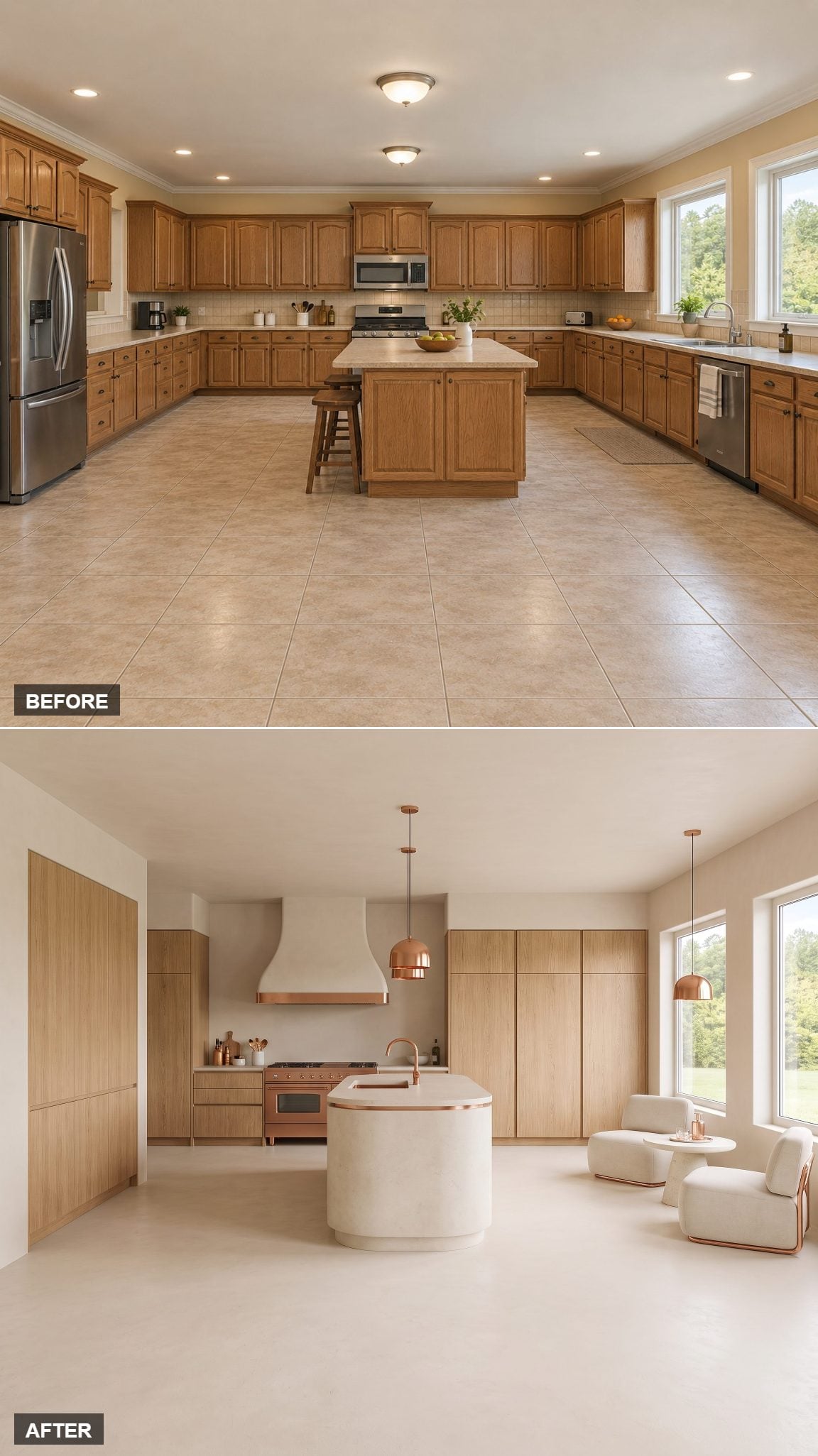
After all that metal, this room lowers its voice.
Cream plaster walls carry a soft, hand-worked texture while natural oak cabinetry supplies the grain. Copper appears only in the hardware and slim hood, enough to warm the room without becoming its subject.
It’s a culinary salon rather than a showroom—the kind of space where a cool kitchen makeover actually delivers on the promise of calm instead of merely photographing that way.
5. The Kitchen With a Built-In Sofa Nook
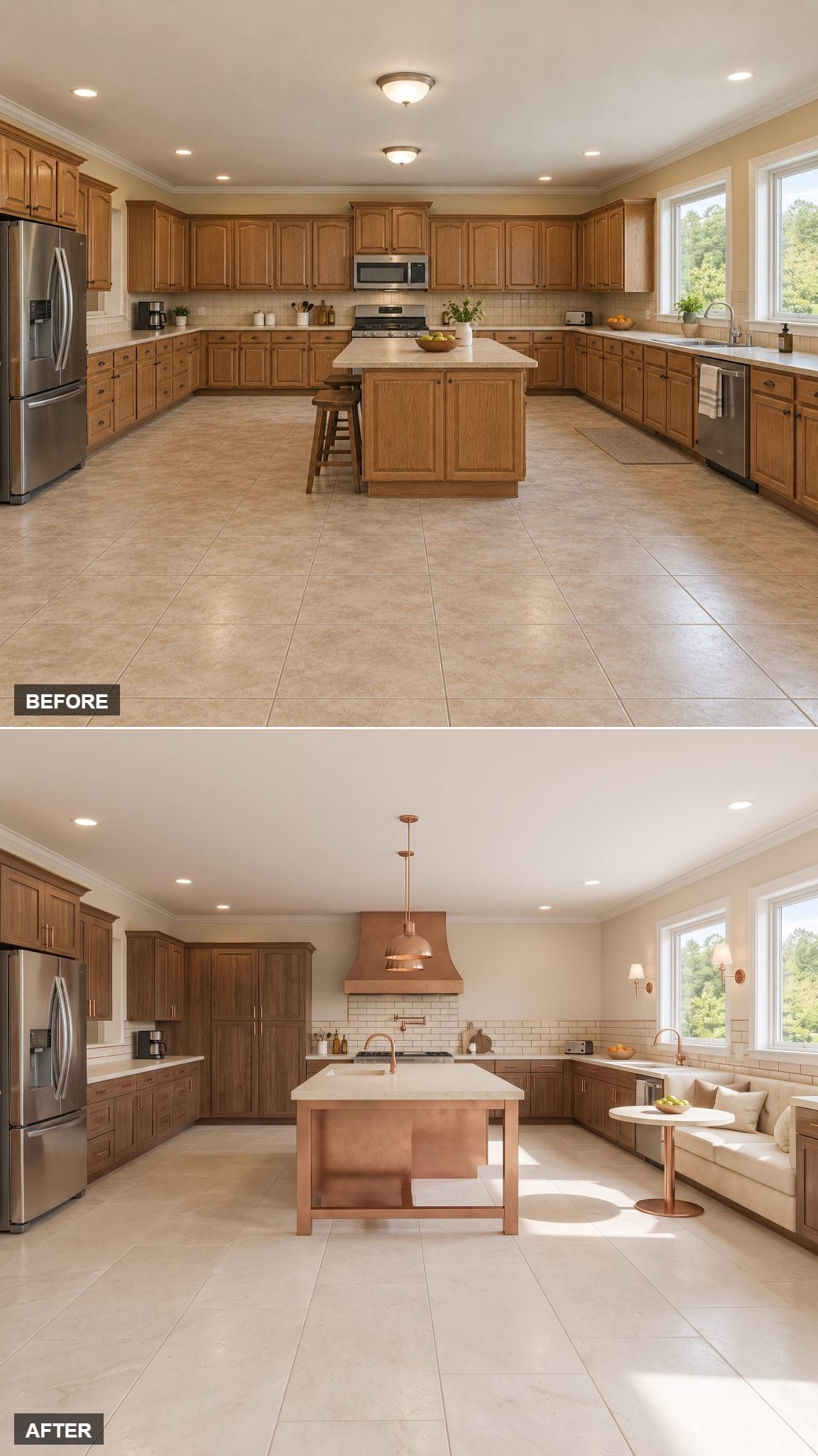
This is the design that answers the title most literally. If the kitchen feels like nothing but work, put somewhere to stop working inside it.
A cream upholstered banquette curls into the corner beneath a copper sconce, with oatmeal linen cushions and a loose throw softening the edges. Marble counters and a copper hood handle the kitchen part. The sofa handles the living part.
Cook. Sit down. Drink coffee two steps away. Don’t leave just because dinner is finished.
4. A Copper-Framed Appliance Wall That Turns Function Into Art
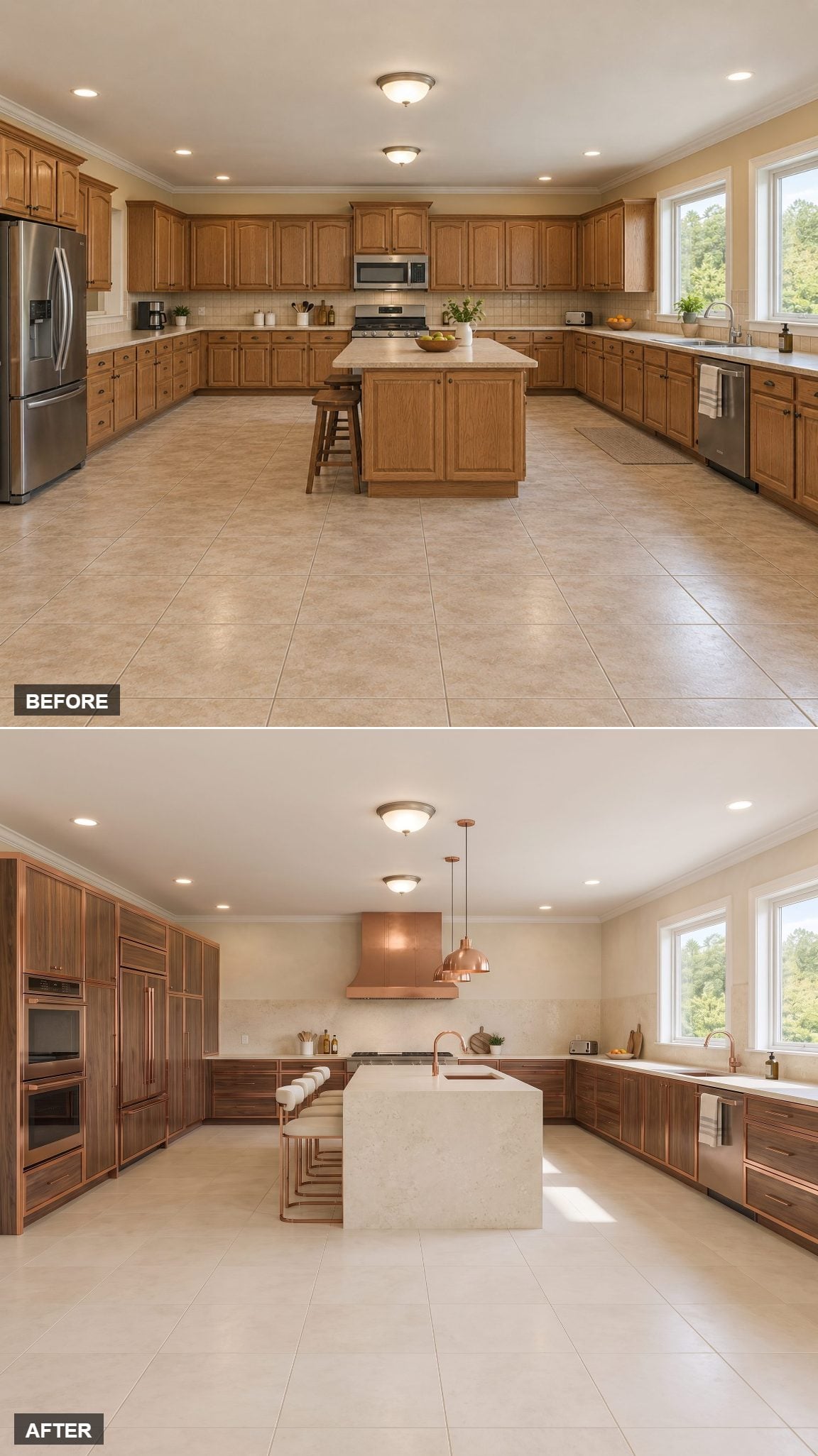
Appliances usually get hidden or apologized for. Here the entire working wall gets a frame.
A rectilinear copper surround gathers the cooking appliances into one deliberate plane, more like a giant piece of millwork than a portal or recessed hearth. The cream island stays almost aggressively simple so all the visual energy remains on the wall.
Function doesn’t disappear. It gets edited into a composition.
3. The Copper Feature Wall Behind a Sculptural Oval Island
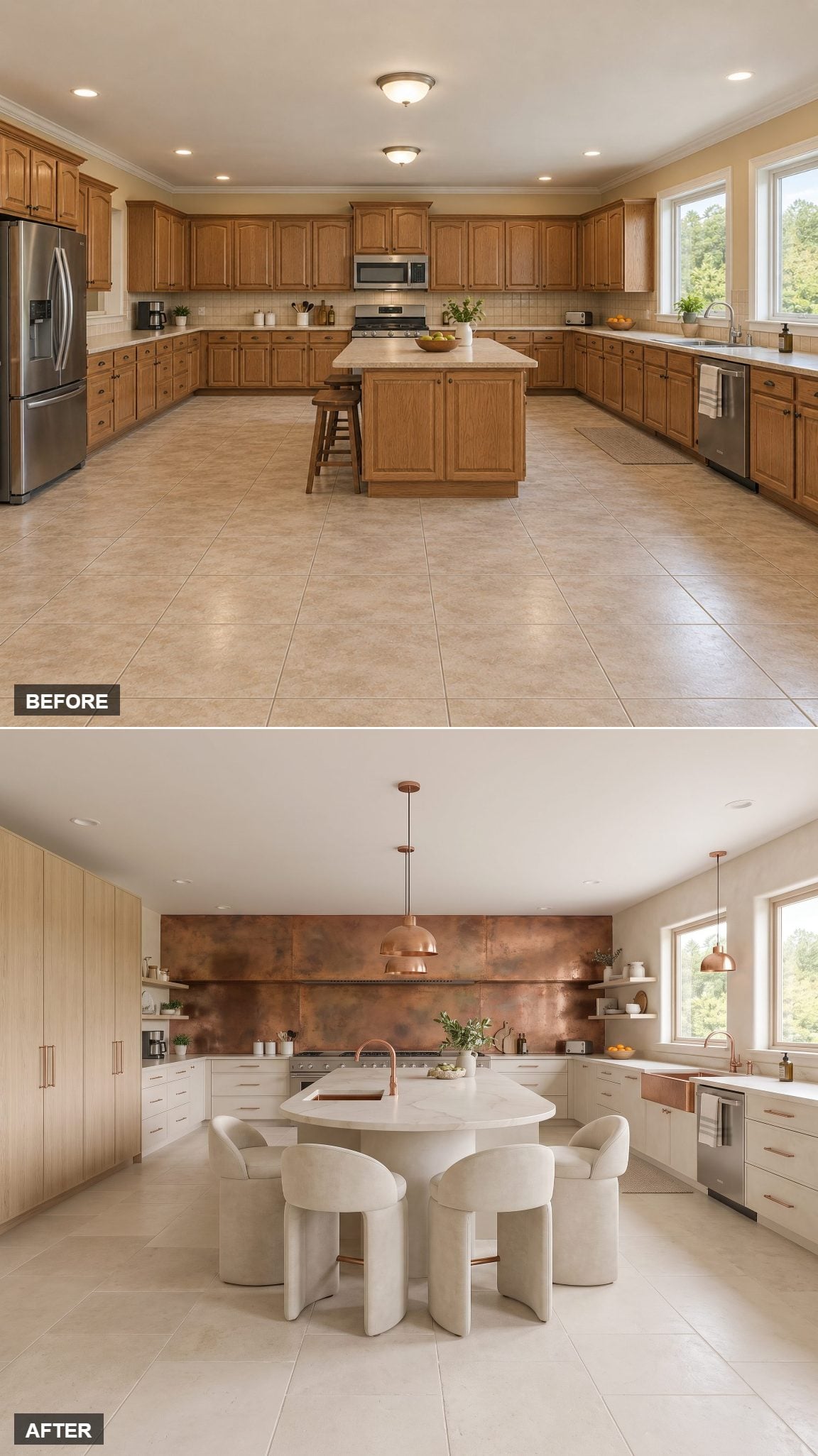
An entire wall of copper. That’s the swing this kitchen takes, and it lands because the island in front refuses to repeat the same geometry.
The oval cream-stone edge softens the broad metal plane behind it, while the reflective wall throws warm light back across the paler surfaces. Hard wall, soft island. Straight plane, curved object.
Bold, yes. Busy, no.
2. Copper Range Alcove Meets Waterfall Island
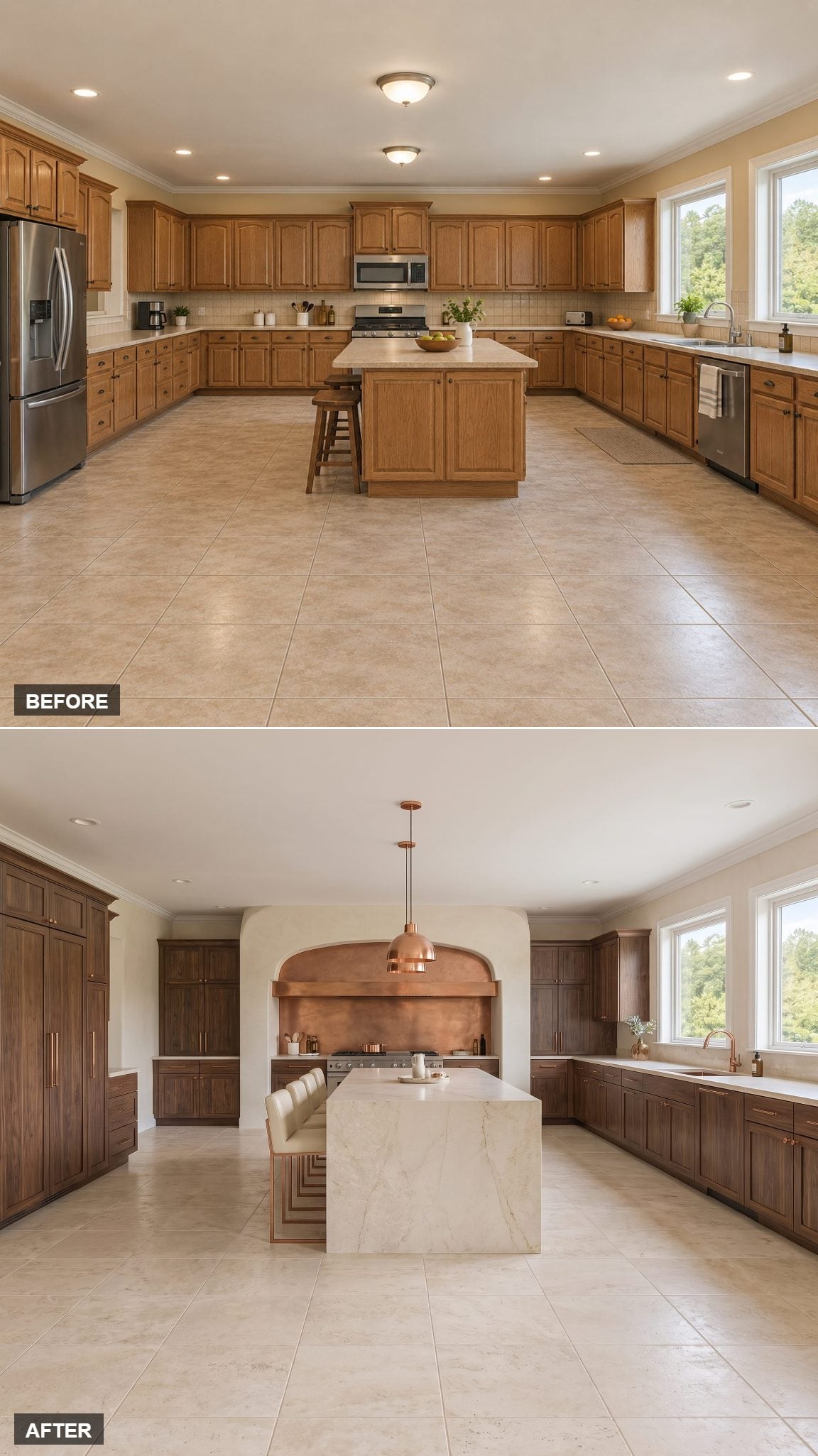
This one goes big in two places at once.
A deep architectural alcove frames the range, its interior lined in copper so the cooking zone becomes part of the architecture rather than an appliance lineup. Out front, a waterfall island in cream marble drops to the floor in one uninterrupted plane, with copper stools tucked beneath.
The refrigerator and dishwasher disappear into the surrounding cabinetry where they can. A cutting board, kettle and stack of bowls keep the room from becoming a museum.
1. The Ultimate Cream and Copper Retreat, Full Send
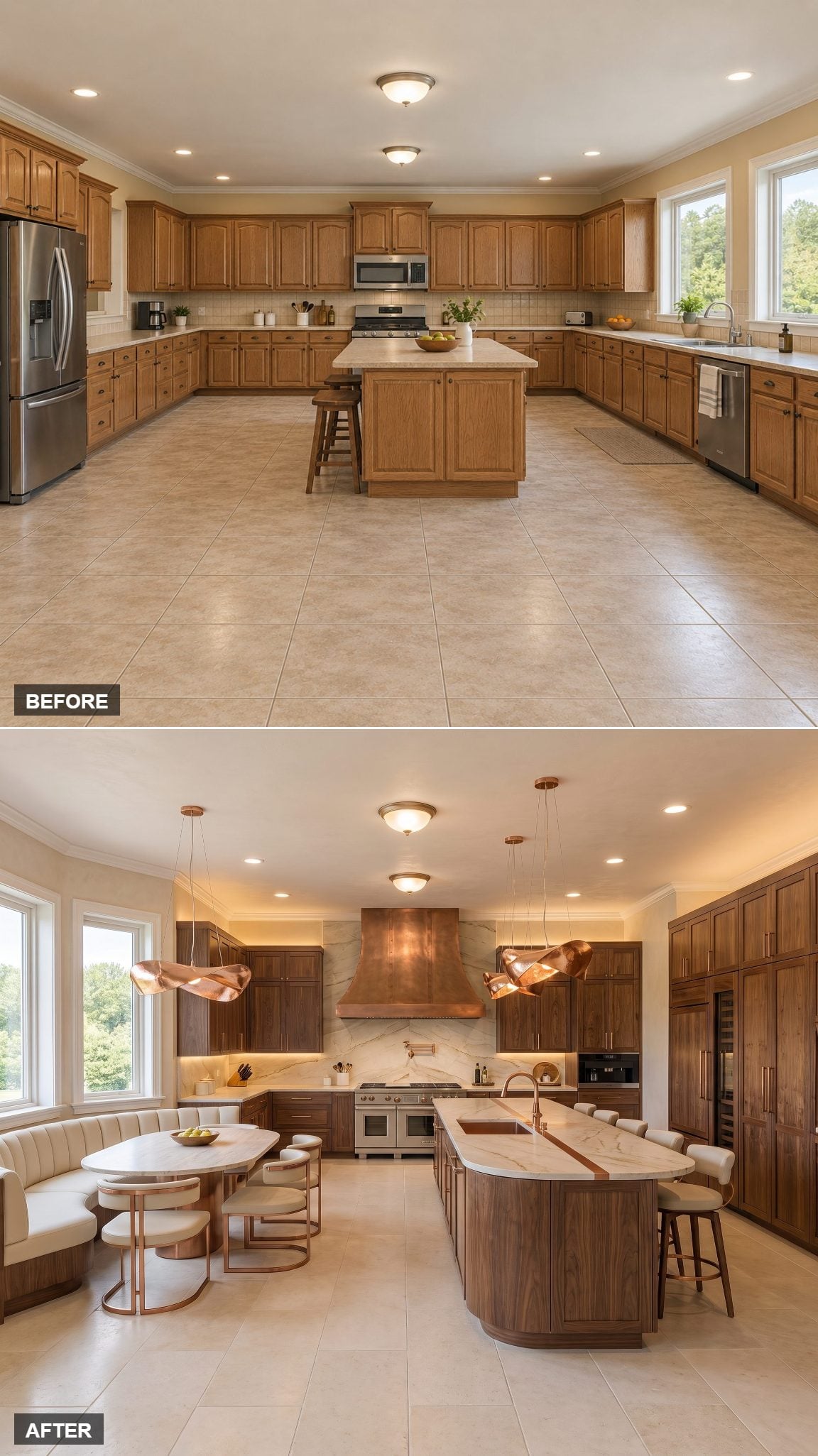
This is the one where restraint takes the night off.
Cream marble runs from broad work surfaces into the architecture while copper repeats through the hood, pendants, hardware and open shelving. Ordinarily that much repetition would be grounds for intervention. Here the two-tone discipline keeps everything surprisingly coherent.
A book left open on the counter and one copper kettle on the range prevent all that finish work from becoming untouchable. The room has gone from somewhere you complete tasks to somewhere you’d happily stay after the tasks are done.