🔥 Would you like to save this?
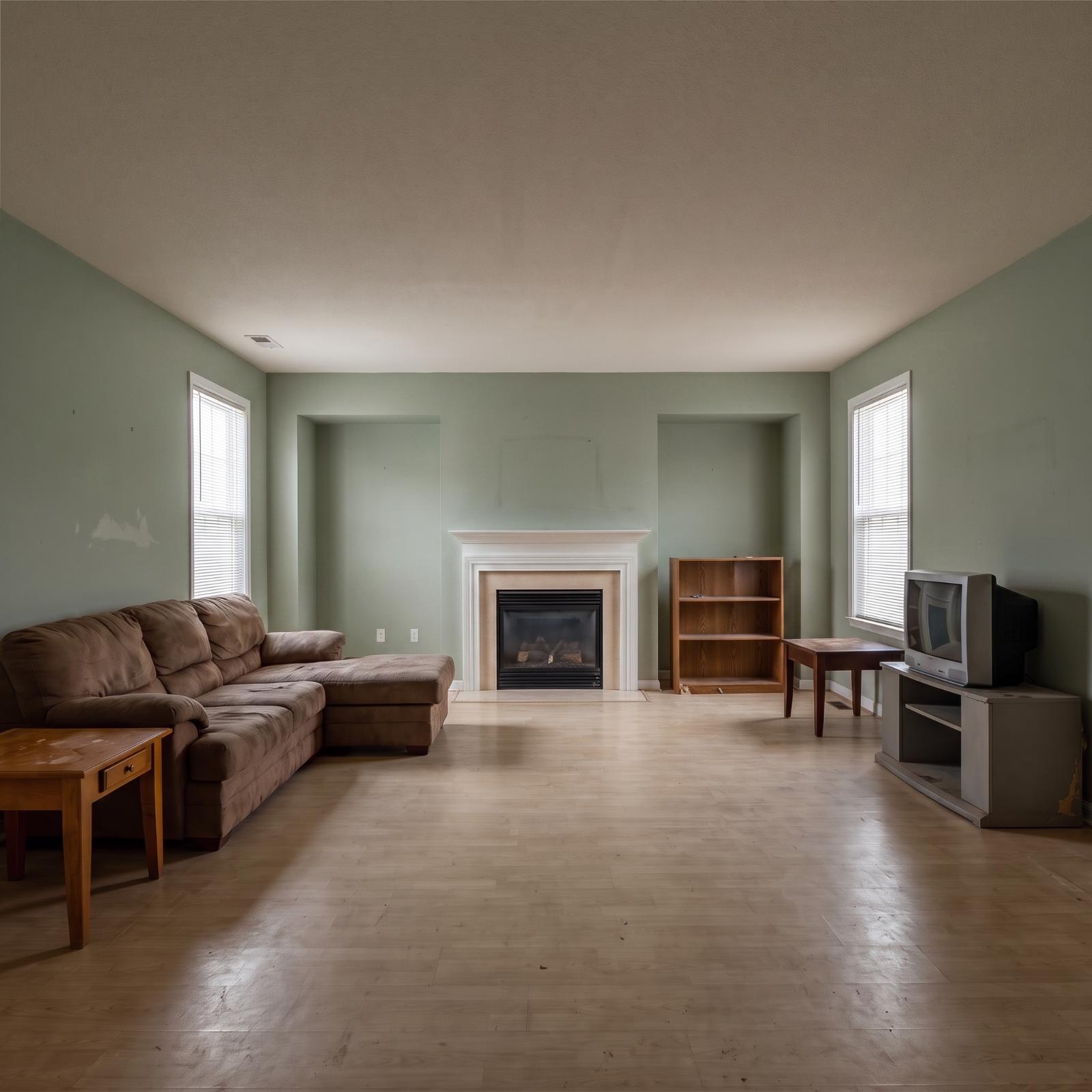
An empty-nest family room can develop a peculiar problem. The square footage has not changed, but the life that once filled it has. A sectional that survived homework, sleepovers, movie nights, and somebody always looking for the remote suddenly seems to be floating in a room with too much floor and not enough reason to gather.
In order to come up with the very specific design ideas, we create most designs with the assistance of state-of-the-art AI interior design software. Also, assume links that take you off the site are affiliate links such as links to Amazon. this means we may earn a commission if you buy something.
We asked AI to rethink that problem 30 ways using a lodge-inspired palette of cream, brown, leather, stone, and natural wood. Some concepts lean rustic, others cleaner and more contemporary. The useful part is not choosing a favorite whole room. It is seeing how different moves — a heavier fireplace wall, facing chairs, built-ins, low light, a properly scaled rug — can make a large family room feel inhabited again without pretending it has become smaller.
30. Warm Walnut Built-Ins Give the Fireplace Wall Some Authority
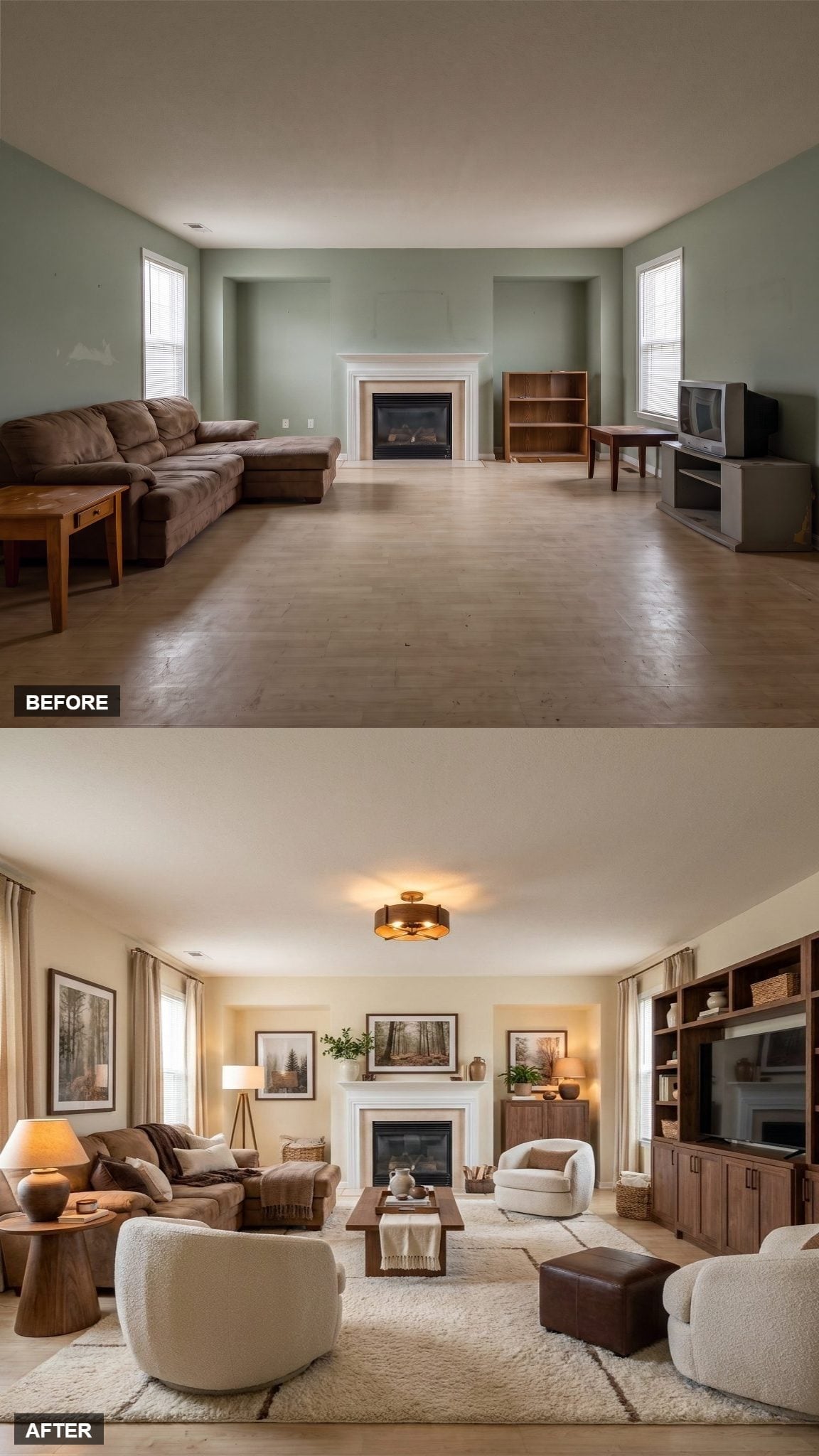
Soft cream replaces the sage green, but the bigger change is architectural. Walnut cabinetry fills the right side of the fireplace wall, giving the television, storage, and display pieces a permanent home instead of leaving them to behave like furniture that wandered in separately.
Two rounded bouclé chairs turn toward a low wood coffee table on a deep ivory rug. That tighter geometry makes the hearth feel connected to the seating rather than stranded behind it.
29. A Stone Fireplace Gives the Room Something Heavy Enough to Push Against
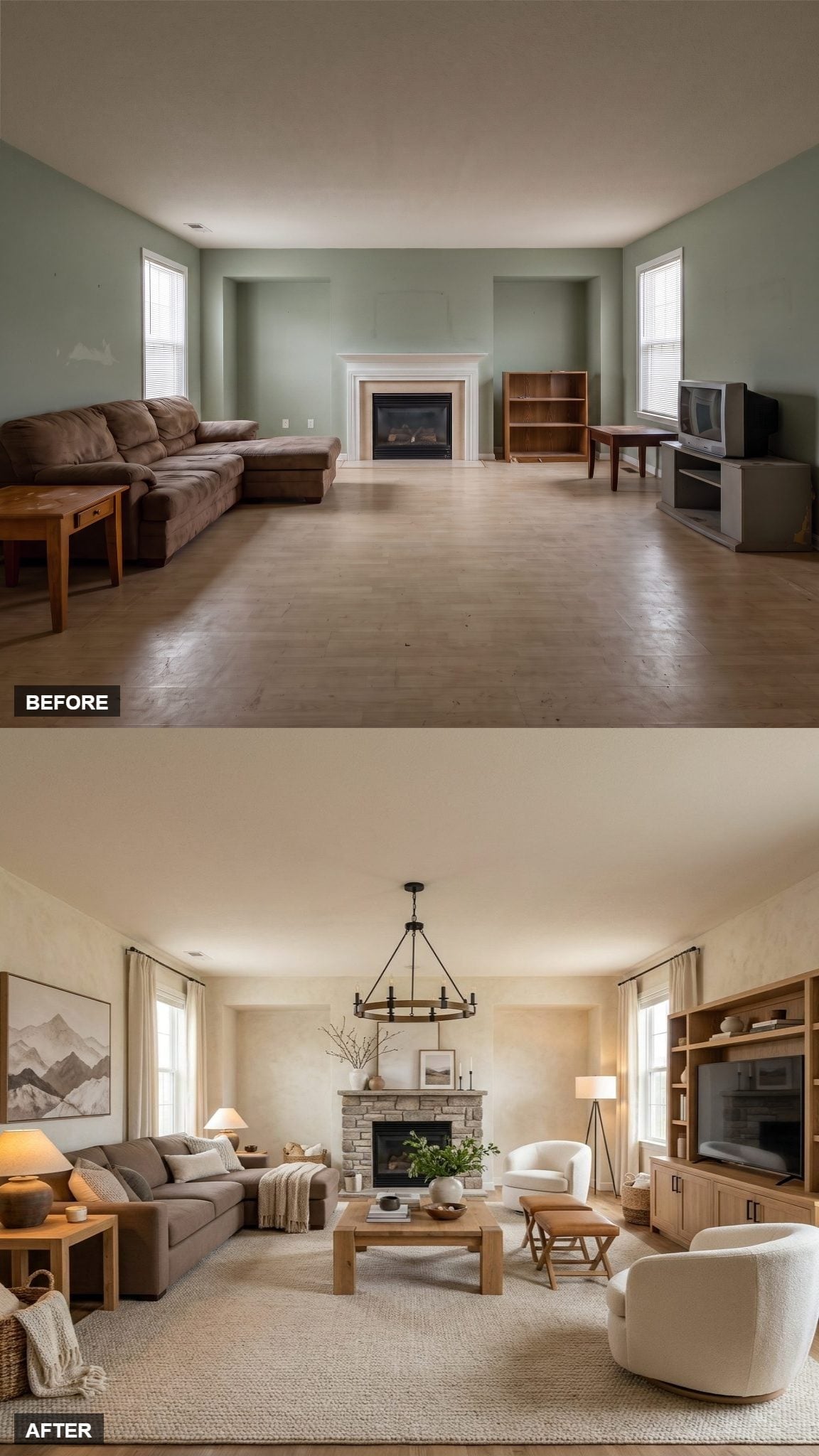
This version changes the material that matters most. Stone cladding replaces the lighter fireplace treatment, adding enough visual mass to hold its own across a large room.
Warm greige walls, a chunky wood coffee table, and rounded bouclé chairs stay deliberately quieter. The fireplace becomes the weightiest object in the composition, which is exactly what a room this expansive needs from its focal wall.
28. Leather, Linen, Firewood, and Plaid Push the Room Properly Into Lodge Territory
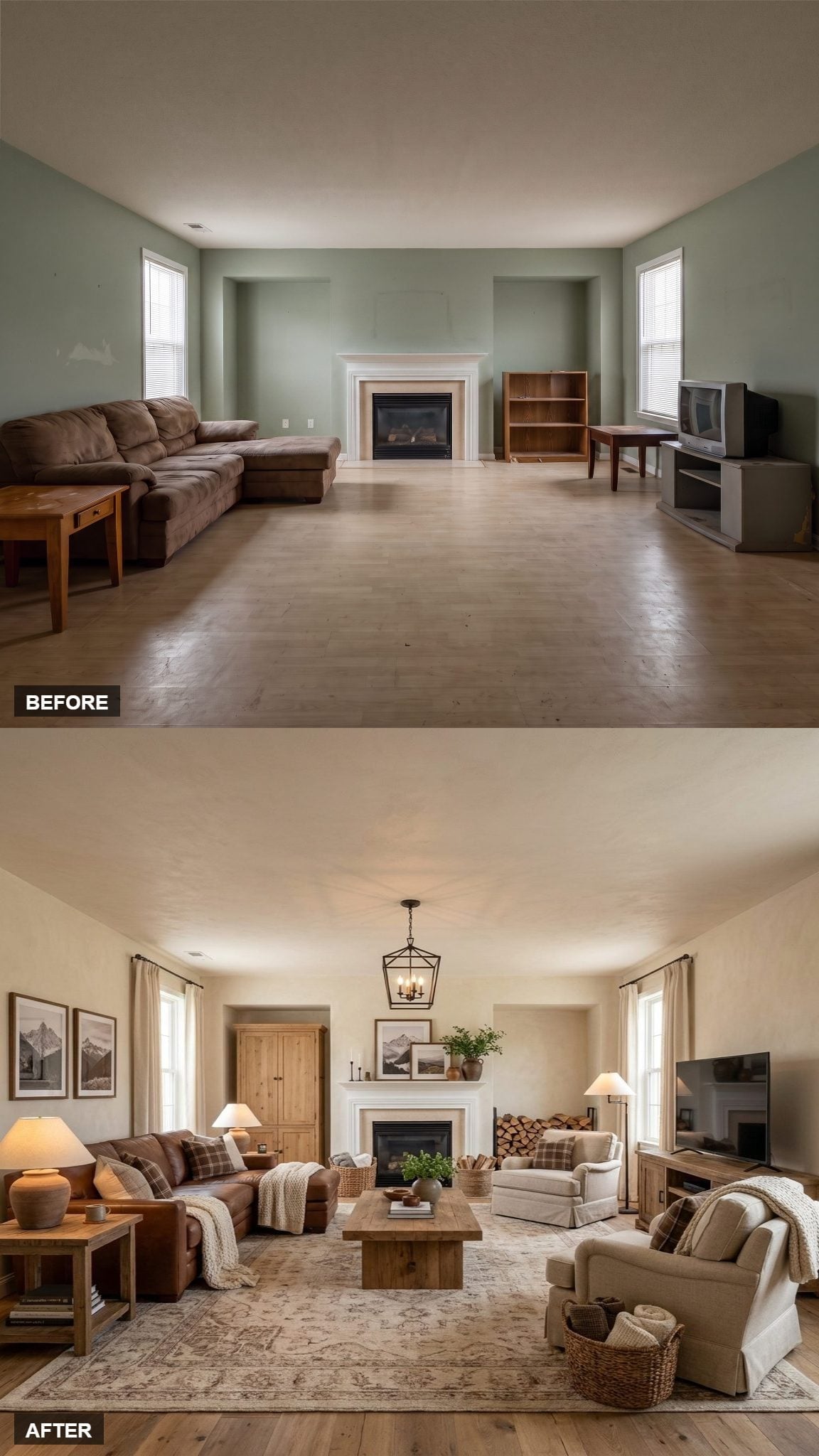
Here the lodge idea comes through in the materials rather than a decorative theme. Brown leather gives the seating weight, linen softens the windows and chairs, plaid appears in controlled doses, and stacked firewood makes the hearth look useful rather than ornamental.
The wool rug brings the furniture off the perimeter, while the iron lantern overhead marks the conversation area from above. Wicker baskets finish the room without making it look like somebody ordered a “mountain house” starter kit.
27. Swivel Chairs Turn Dead Floor Into Flexible Seating
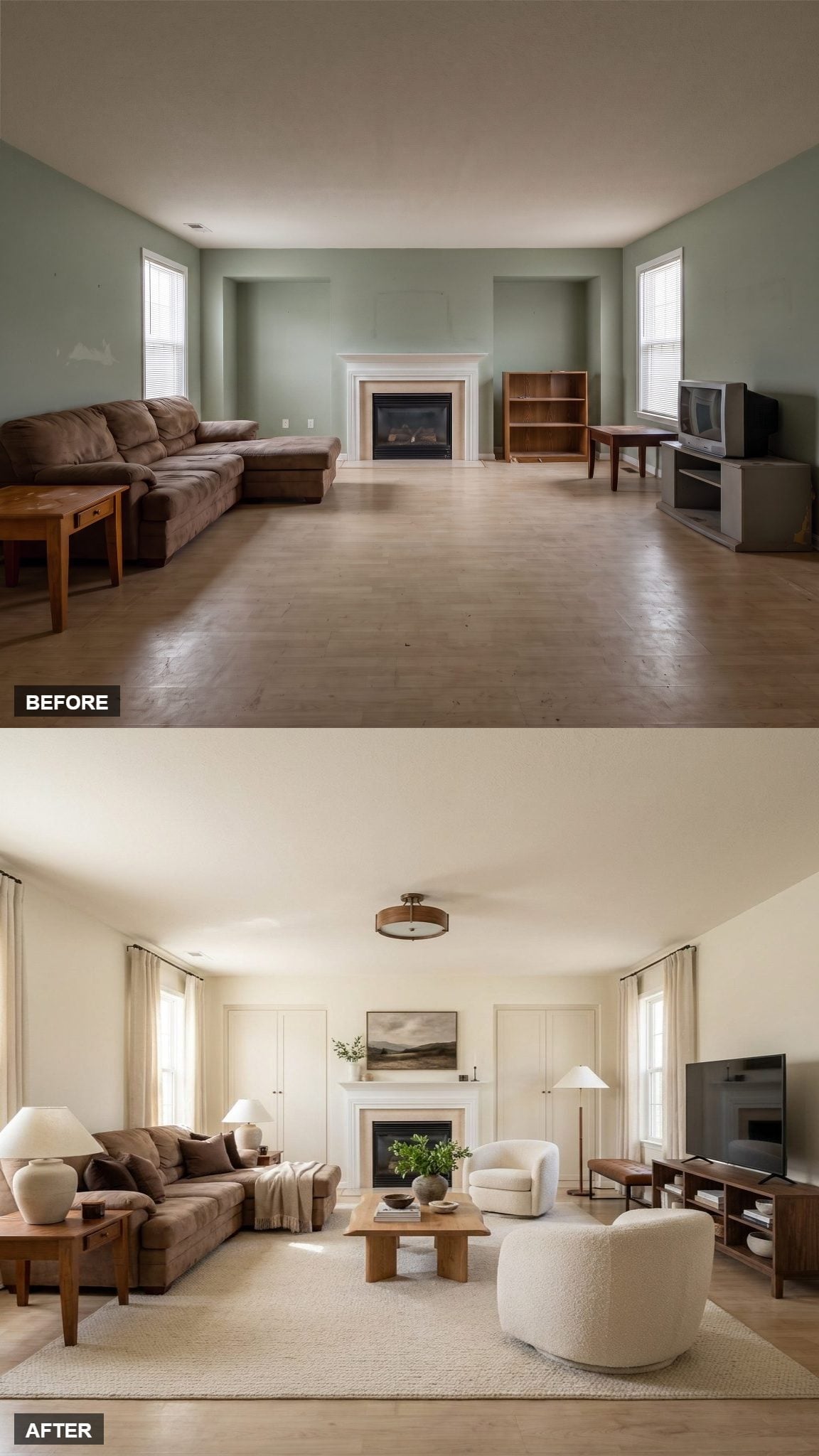
The brown sofa holds one side of the arrangement while two bouclé swivel chairs occupy the open edge. Their rounded shape is softer than another sofa would be, and their ability to rotate matters in a room trying to serve several directions at once.
A chunky wood table and cream rug define the middle, while the landscape above the mantel stays muted enough to let the architecture remain in charge.
Why the Swivel Chairs Work Harder Than They Look
A fixed armchair commits to one direction. A swivel chair can face the fire, turn toward the television, or swing toward somebody entering from another part of the room. That makes it especially useful at the edge of a large seating group, where flexibility matters more than perfect symmetry.
26. An Amber Craftsman Fixture Changes the Character Without Changing the Architecture
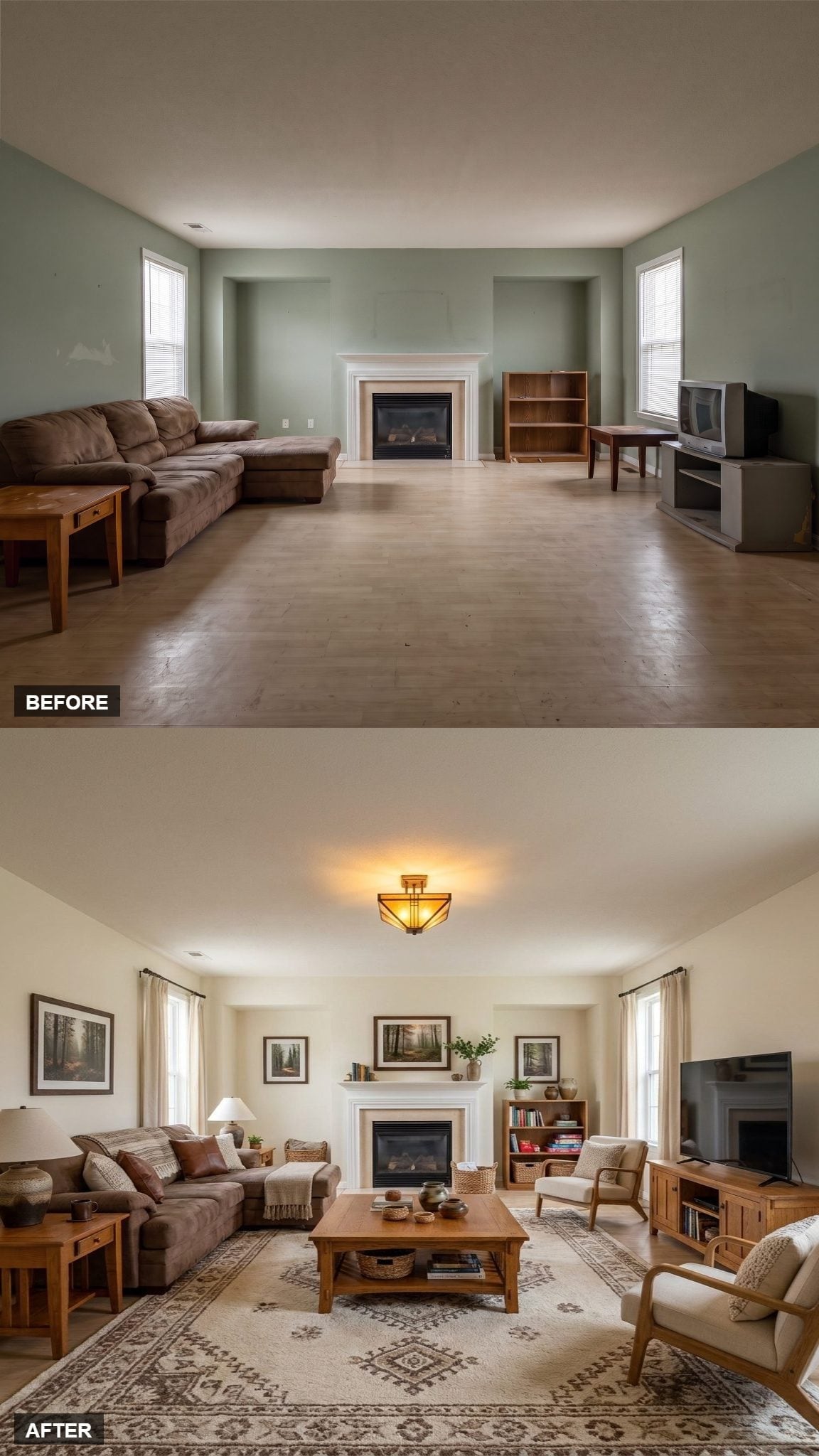
Not every oversized room needs a chandelier hanging into it. The amber-glass Craftsman flush mount here stays close to the ceiling but still supplies warmth and period character.
Ivory walls, forest prints, a geometric cream-and-brown rug, and wood-framed linen chairs give the room a more architectural lodge vocabulary. It feels less like generic neutral decorating and more like a room with a point of view.
25. Facing Leather Sofas Turn the Room Into an Actual Conversation
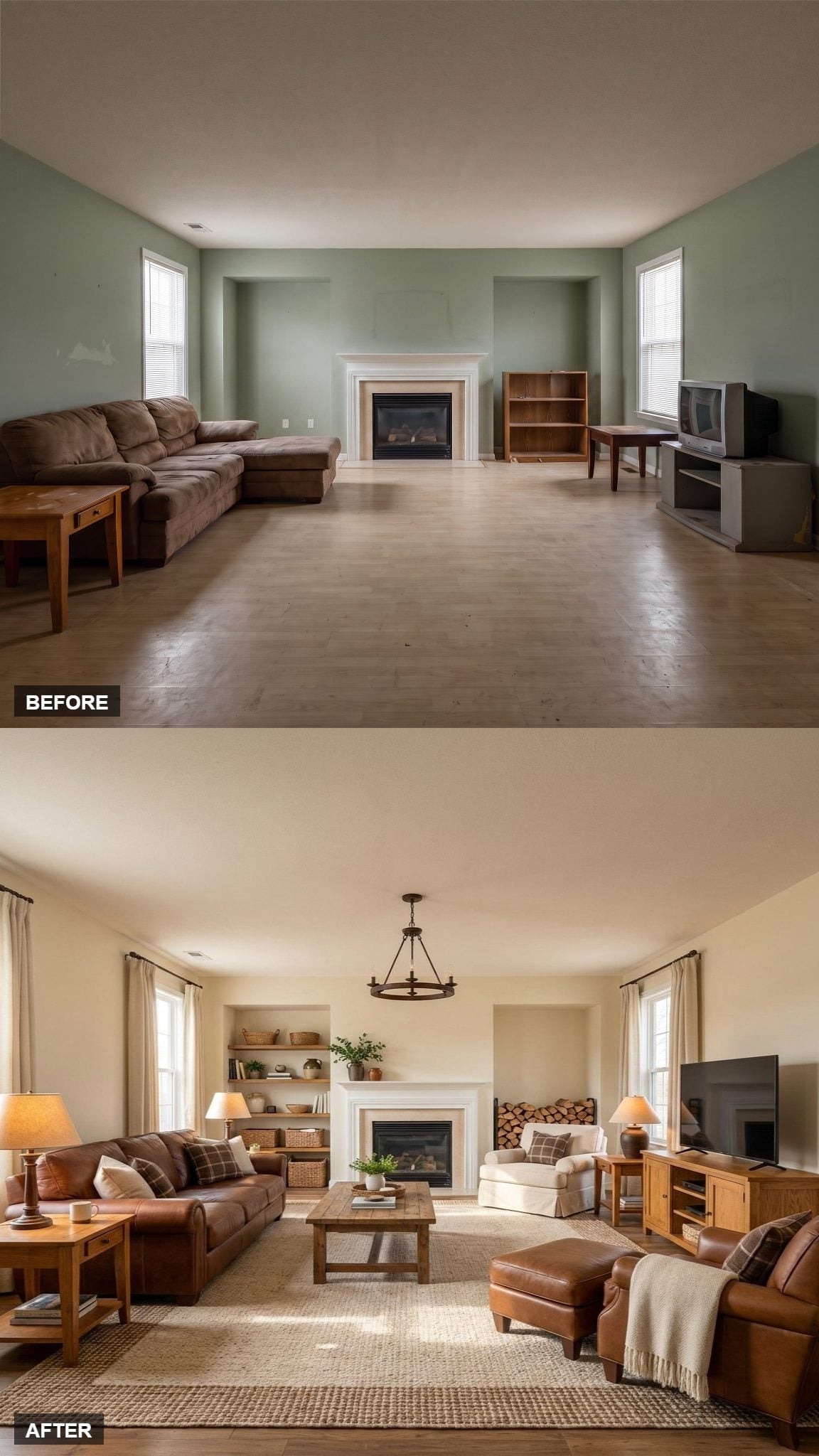
The built-ins help, but the seating plan is the interesting move. Two cognac leather sofas face one another across a reclaimed wood coffee table instead of every seat staring dutifully at the television.
That creates a room for talking first and watching second. A jute rug defines the area underneath, while lamps on both sides keep the darker leather from becoming heavy after sunset.
24. A Thick Woven Rug Makes the Existing Sectional Feel Chosen Again
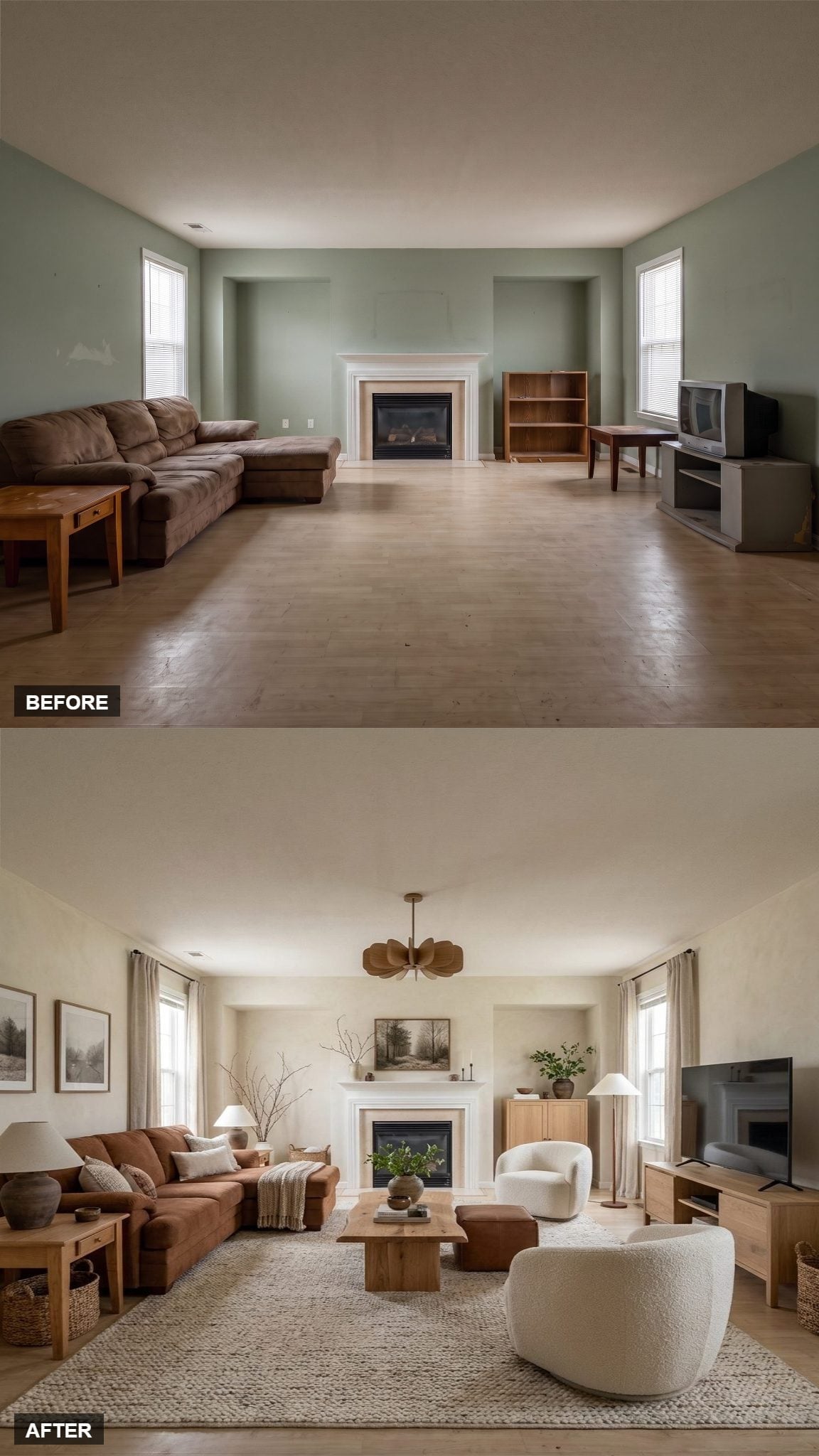
The sectional stays brown. That matters because not every redesign requires throwing away the largest thing in the room.
Warm cream walls calm the backdrop, then a substantial woven rug gives the sofa, bouclé chairs, and slab-style coffee table one shared footprint. Linen drapes soften the windows. Suddenly the existing sectional looks less inherited from the old room and more deliberately retained.
23. High Linen Drapes Give the Window Wall a Stronger Backbone
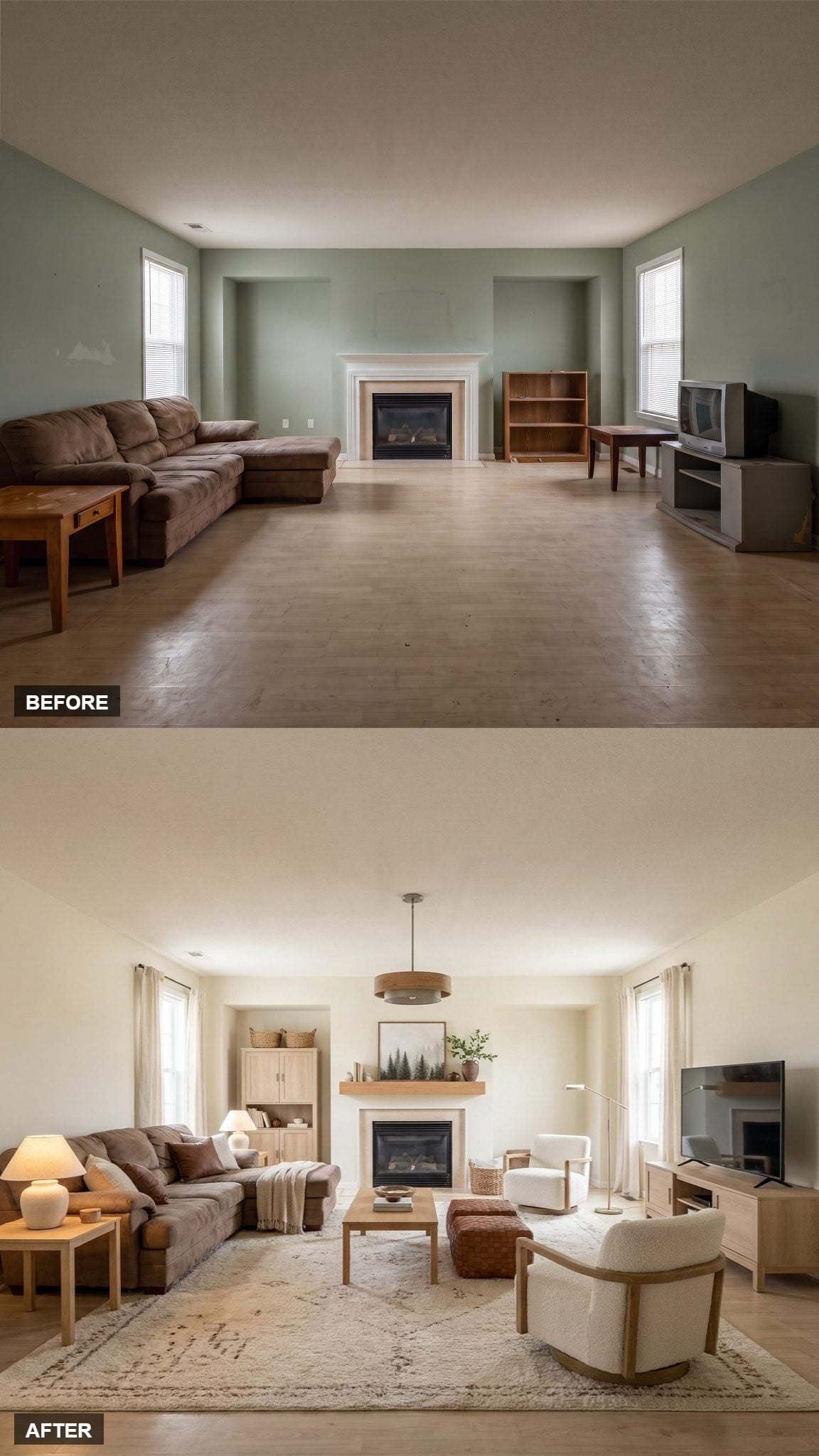
The best move here is on the windows. Hanging pale linen drapes close to the ceiling gives the window wall a stronger vertical rhythm and keeps a wide room from dissolving into a series of unrelated openings.
Below, a shaggy Moroccan-style rug gathers the sectional and bouclé chairs around a low table. The raw wood mantel shelf adds enough texture to keep all that cream from feeling polite.
22. Rounded Chairs and a Chunky Table Build a Conversation Circle
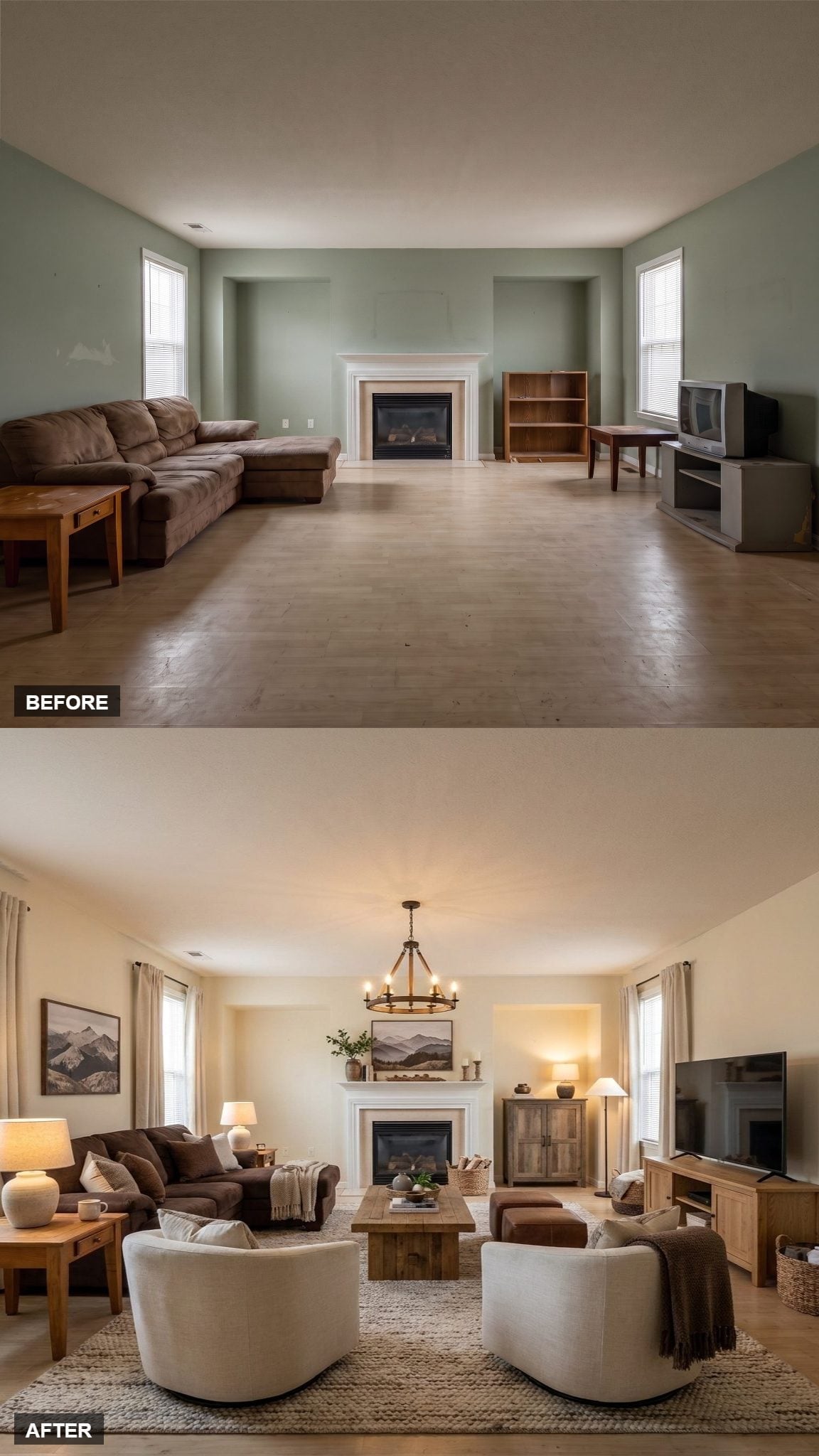
Two cream bouclé chairs move into the foreground instead of hugging the edges, creating a visible circle around the heavy wood coffee table.
That simple decision changes the reading of the floor. Instead of seeing unused square footage around the furniture, you see a defined island of seating inside a larger room.
Common Mistake: Pushing every sofa and chair against the walls can exaggerate the emptiness in a large family room. Bring enough of the furniture inward that people can actually speak across the coffee table without raising their voices.
21. Plaid Works Better Here Because Everything Around It Stays Quiet
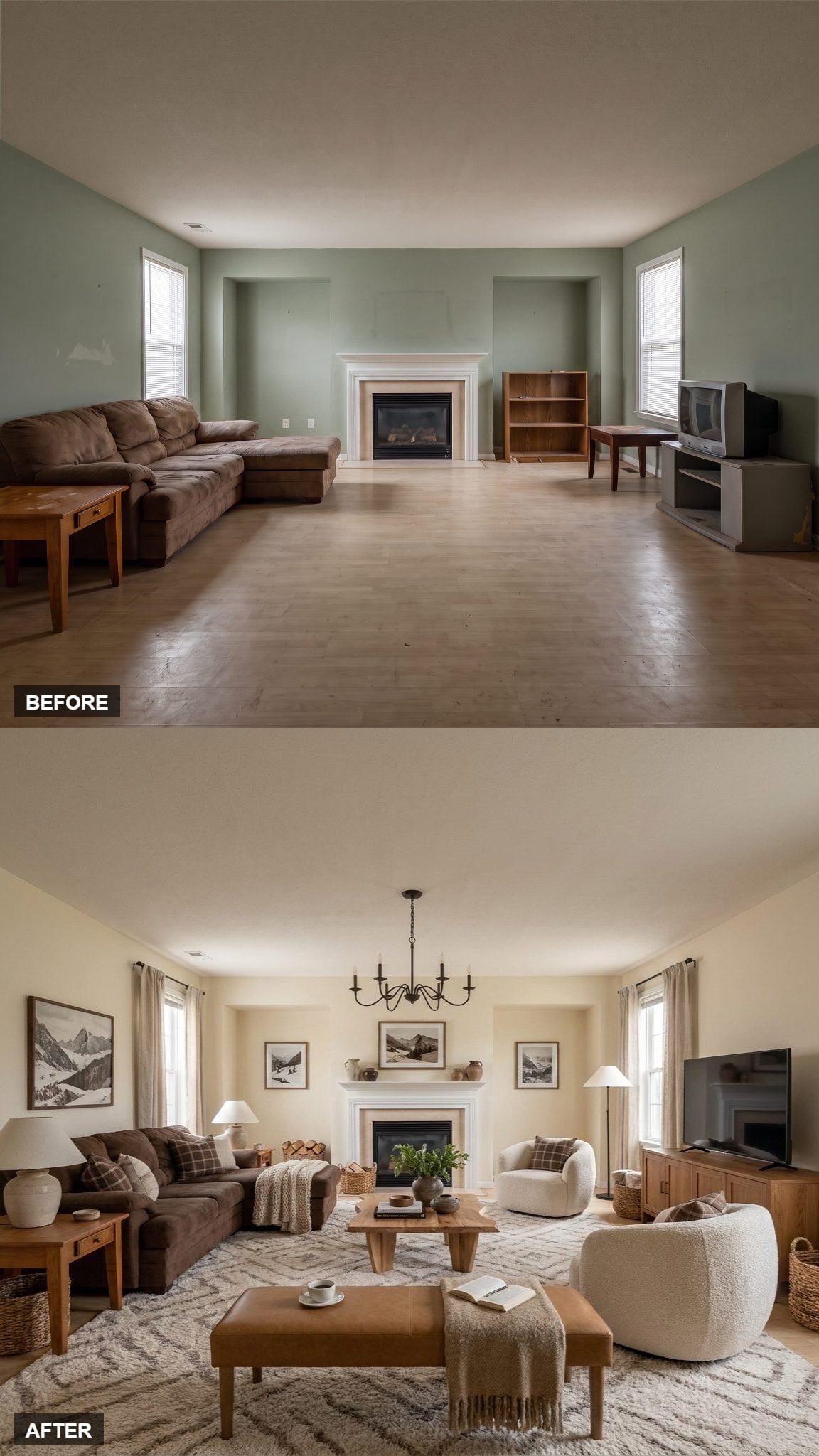
Plaid can tip a lodge room into costume very quickly. Here it appears only on the pillows, surrounded by a dark upholstered sofa, one bouclé chair, raw-edged wood, baskets, and a cream Moroccan-style rug.
Because the palette stays restrained, texture supplies the personality. The iron fixture overhead adds another rougher material without requiring antlers, carved bears, or anything else that announces the theme from across the county.
20. A Reading Chair Gives the Oversized Room a Second Reason to Exist
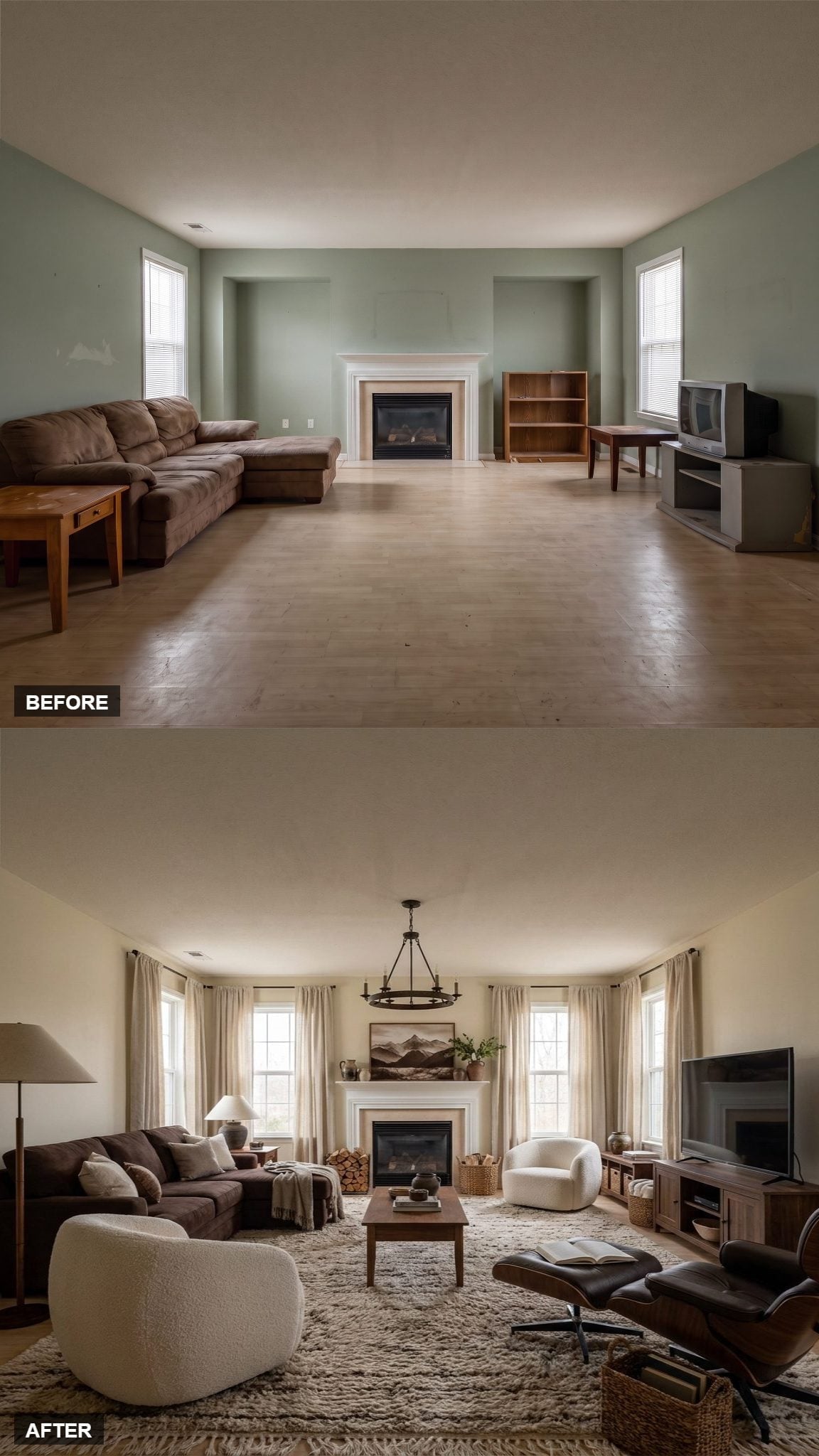
The Eames-style lounge chair near the fireplace is the most useful detail in this concept. Instead of forcing every square foot into one enormous seating arrangement, the room gets a smaller reading zone tucked beside the hearth.
Floor-to-ceiling linen drapes give the perimeter more structure, while a shaggy rug defines the central conversation area. One big room now contains more than one kind of evening.
19. Built-Ins on Both Sides Make the Fireplace Feel Permanent
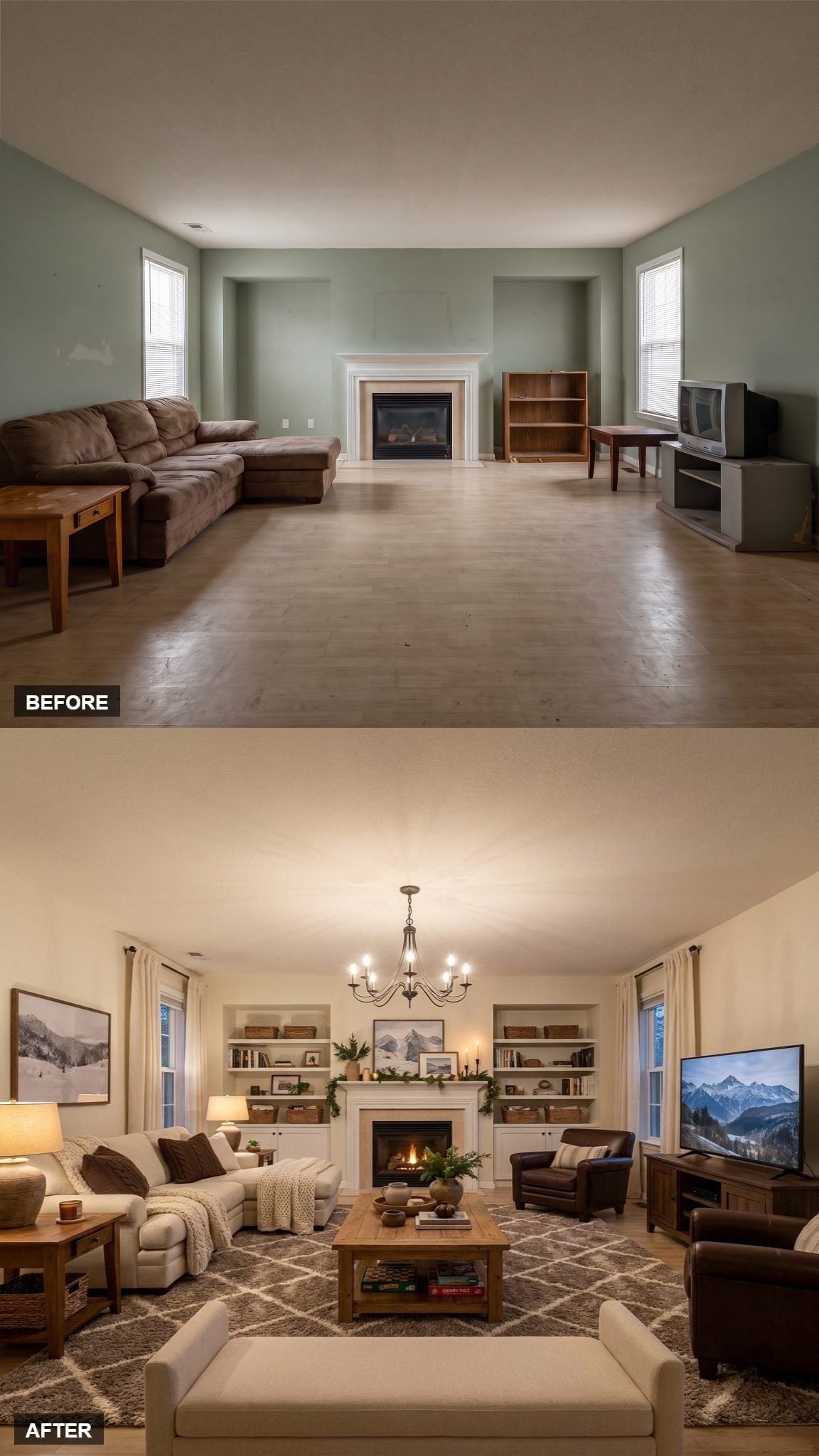
Cream cabinetry flanking the hearth fills what would otherwise be dead wall space and creates a strong architectural center. Open shelves above closed storage keep the wall useful without turning it into a solid block.
A cream sectional, leather chair, patterned rug, and wood table sit in front of that new backdrop. The fireplace no longer has to hold the entire wall together by itself.
18. Mixing Pattern Scales Adds Warmth Without Adding More Furniture
🔥 Would you like to save this?
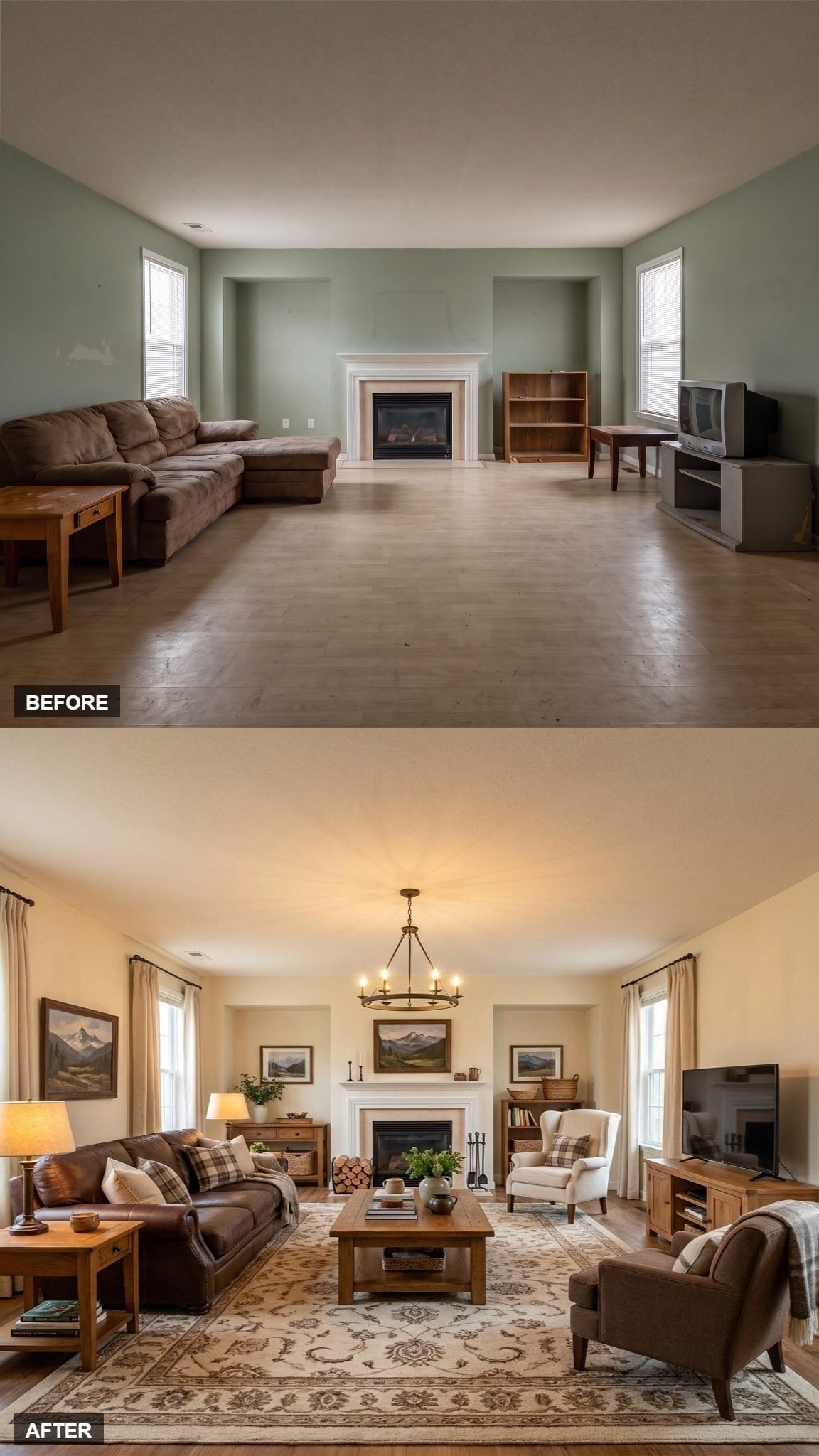
A large medallion rug, solid dark leather, and smaller plaid pillows operate at three different visual scales. That is why the room feels layered without becoming crowded.
The wingback chair provides another shape on the right, while the ring chandelier marks the center without becoming the subject of the entire room.
In the Details: When patterns differ in scale, they are less likely to fight. A broad rug motif, a restrained plaid, and mostly solid upholstery can create more depth than adding another table or chair.
17. A Low Wood Flush Mount Keeps the Ceiling Quiet
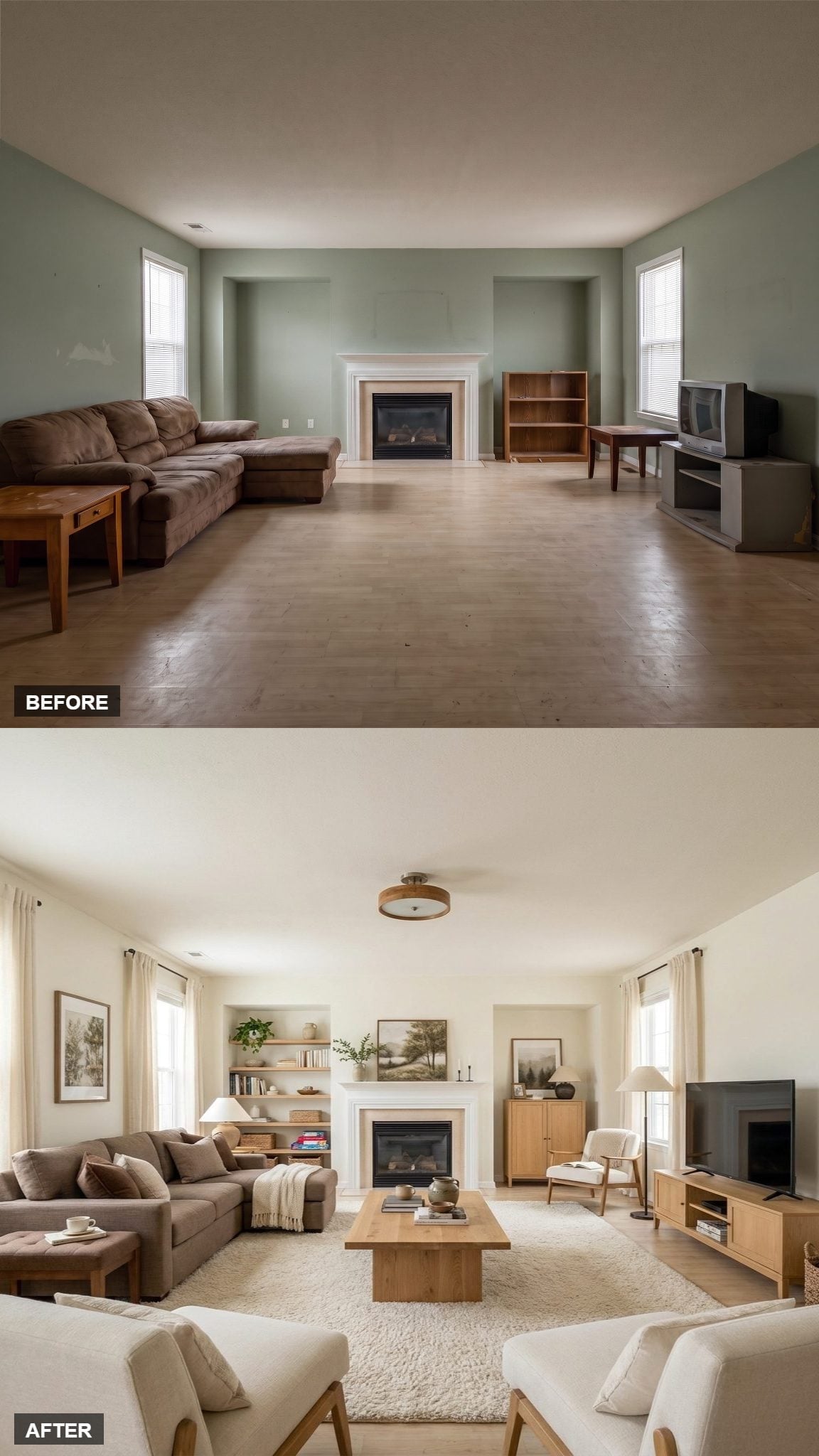
This concept resists the temptation to suspend another oversized chandelier. A round wood flush mount sits close to the ceiling and repeats the natural tones below without taking over the upper half of the room.
Taupe upholstery and a shaggy cream rug continue the softer palette. The effect is calmer and more contemporary than the iron-heavy lodge versions.
16. Oak Around the Fireplace Warms the Wall Without Making It Rustic
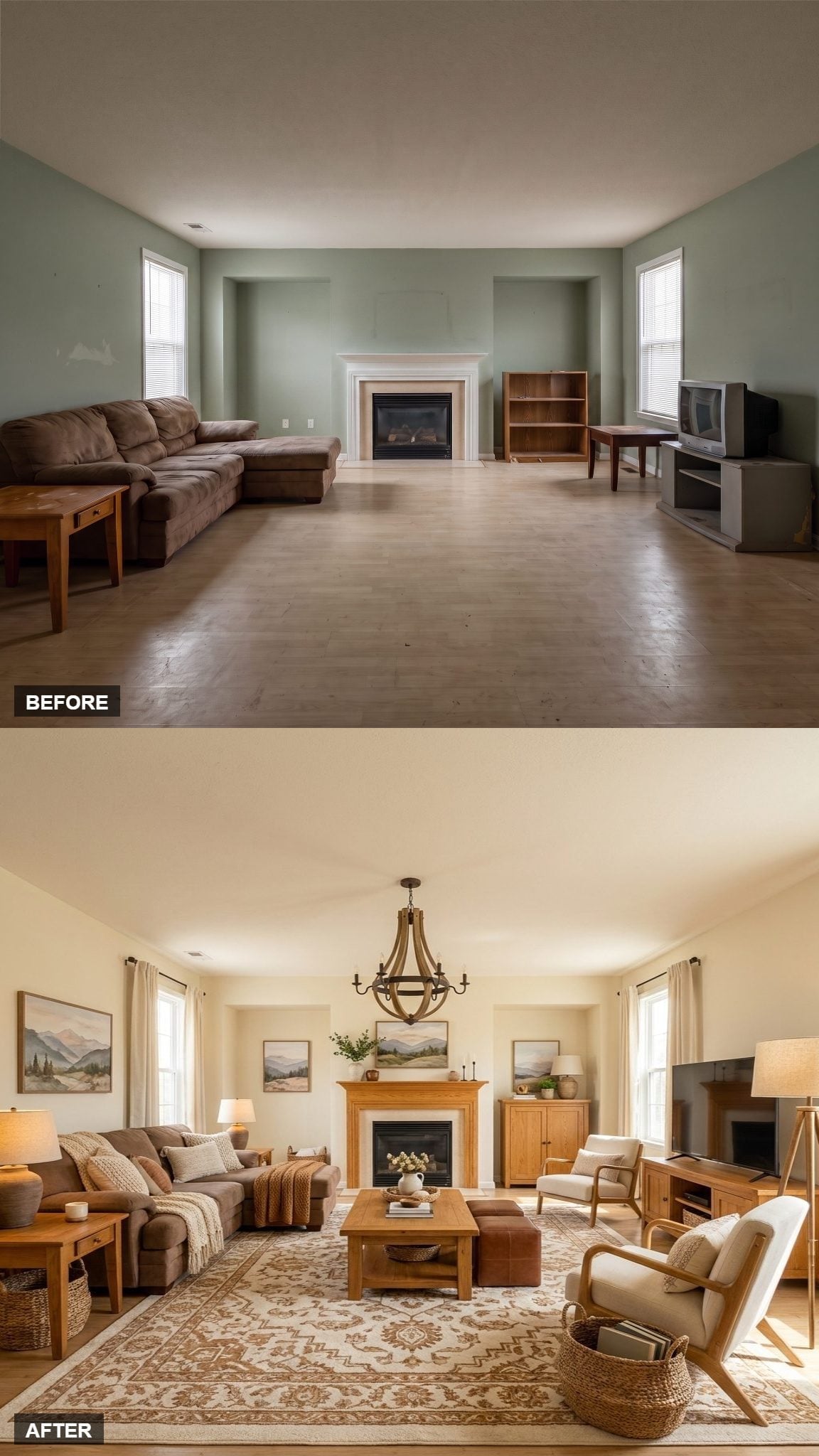
Natural oak trim around the fireplace changes the temperature of the wall without covering it in stone. The move feels lighter, cleaner, and particularly useful if full lodge rusticity is not the goal.
A rust-and-ivory medallion rug sets the boundary for the seating, while two bentwood-and-linen chairs sit opposite the sofa. That facing arrangement creates intimacy without requiring additional furniture.
15. A Botanical Rug Gives Three Different Seats One Shared Territory
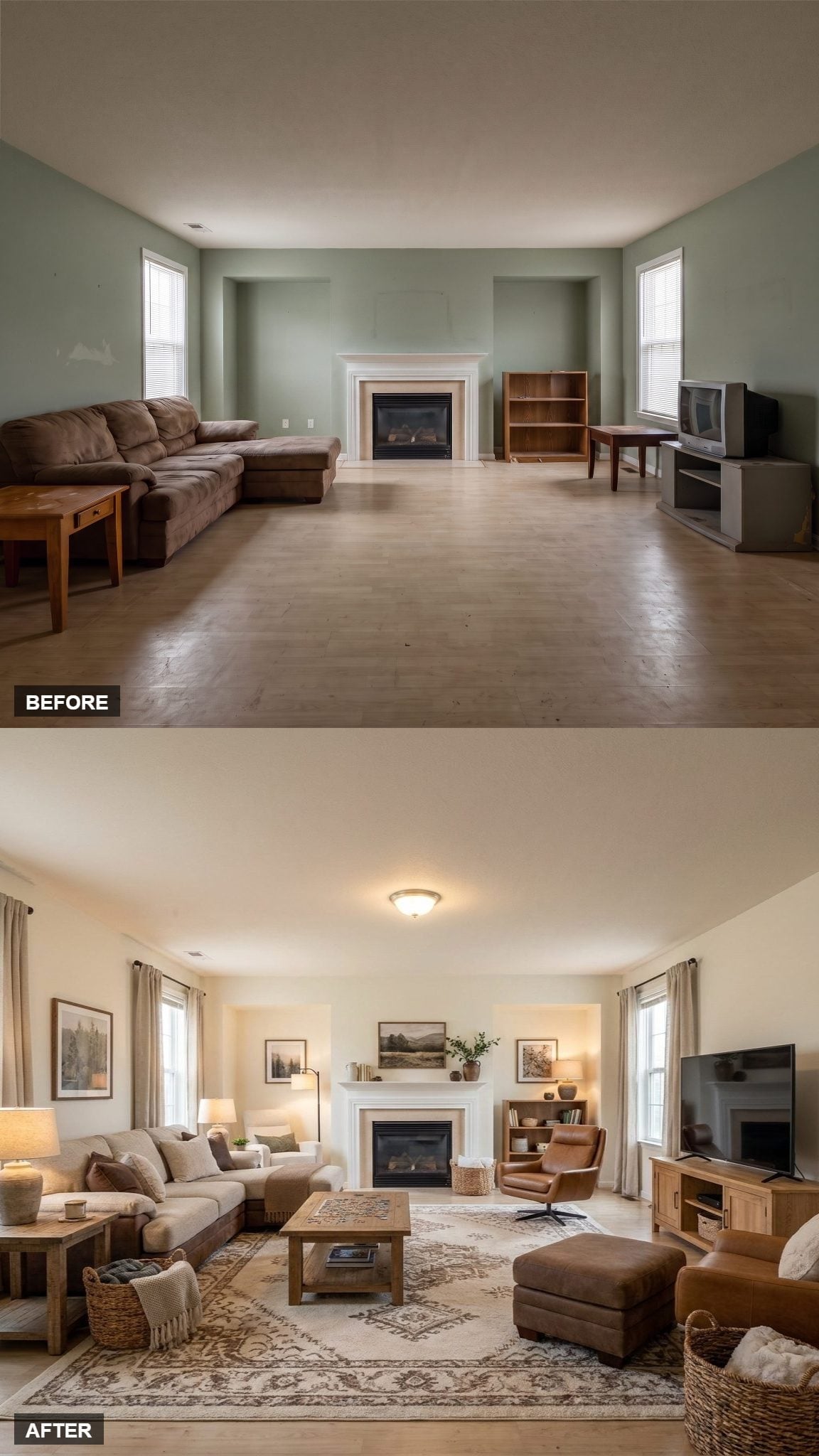
A sectional, leather chair, and ottoman are three very different shapes, but the botanical medallion rug makes them feel related by giving all of them one visual boundary.
Linen curtains and a simple flush mount stay out of the way. In a room where the furniture already has variety, the floor does not need another competing idea.
14. Mountain Prints Make the Lodge Reference Without Resorting to Props
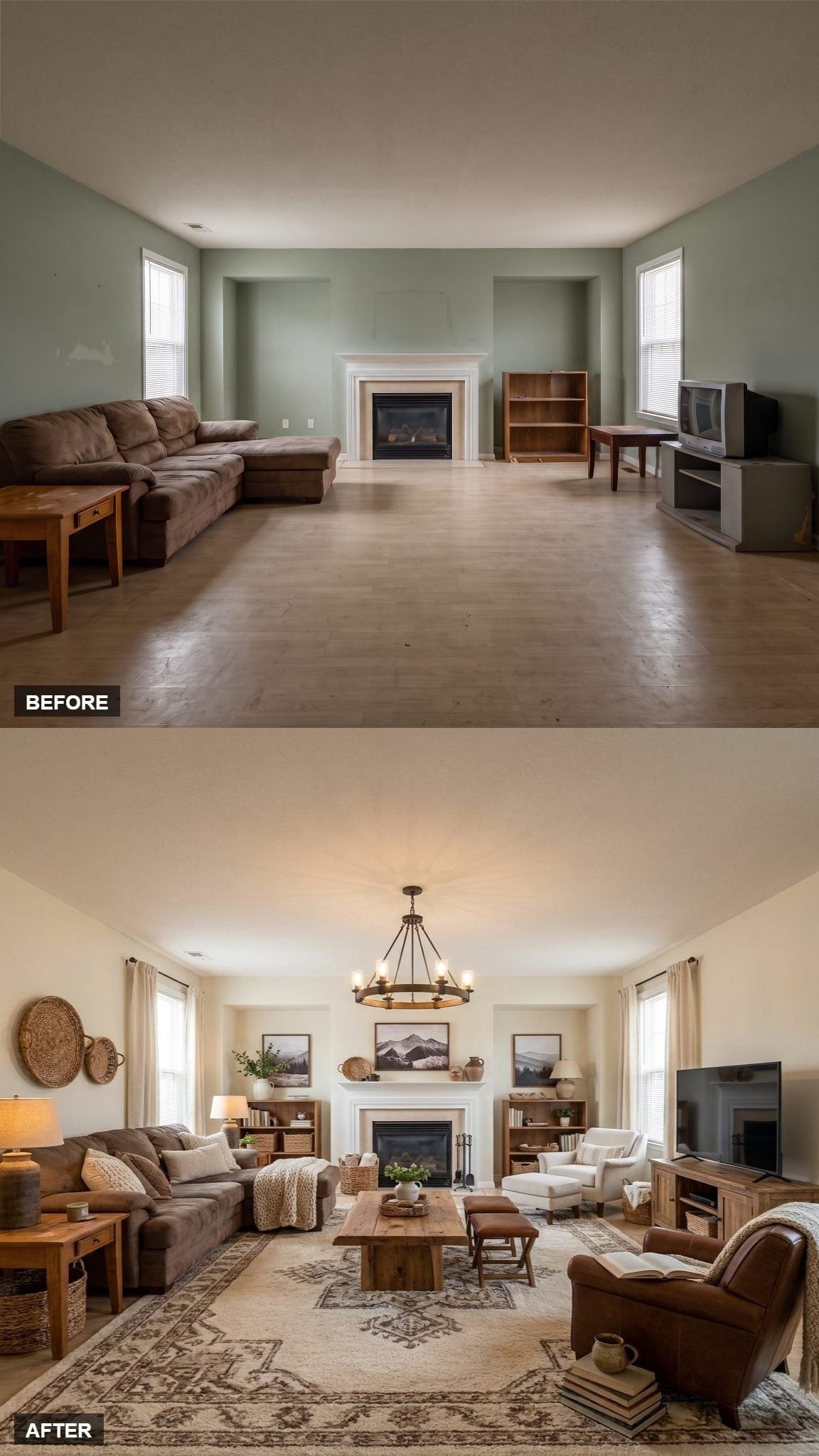
Framed mountain prints above the mantel are enough to establish place without loading every shelf with outdoorsy memorabilia.
Built-in bookcases give the fireplace wall storage and depth, while the sectional and leather chair sit across a wool rug around a substantial wood table. The iron wagon-wheel fixture fits the scale, but the artwork supplies the lodge reference without shouting.
13. One Suspended Fixture Can Mark Where the Room Actually Happens
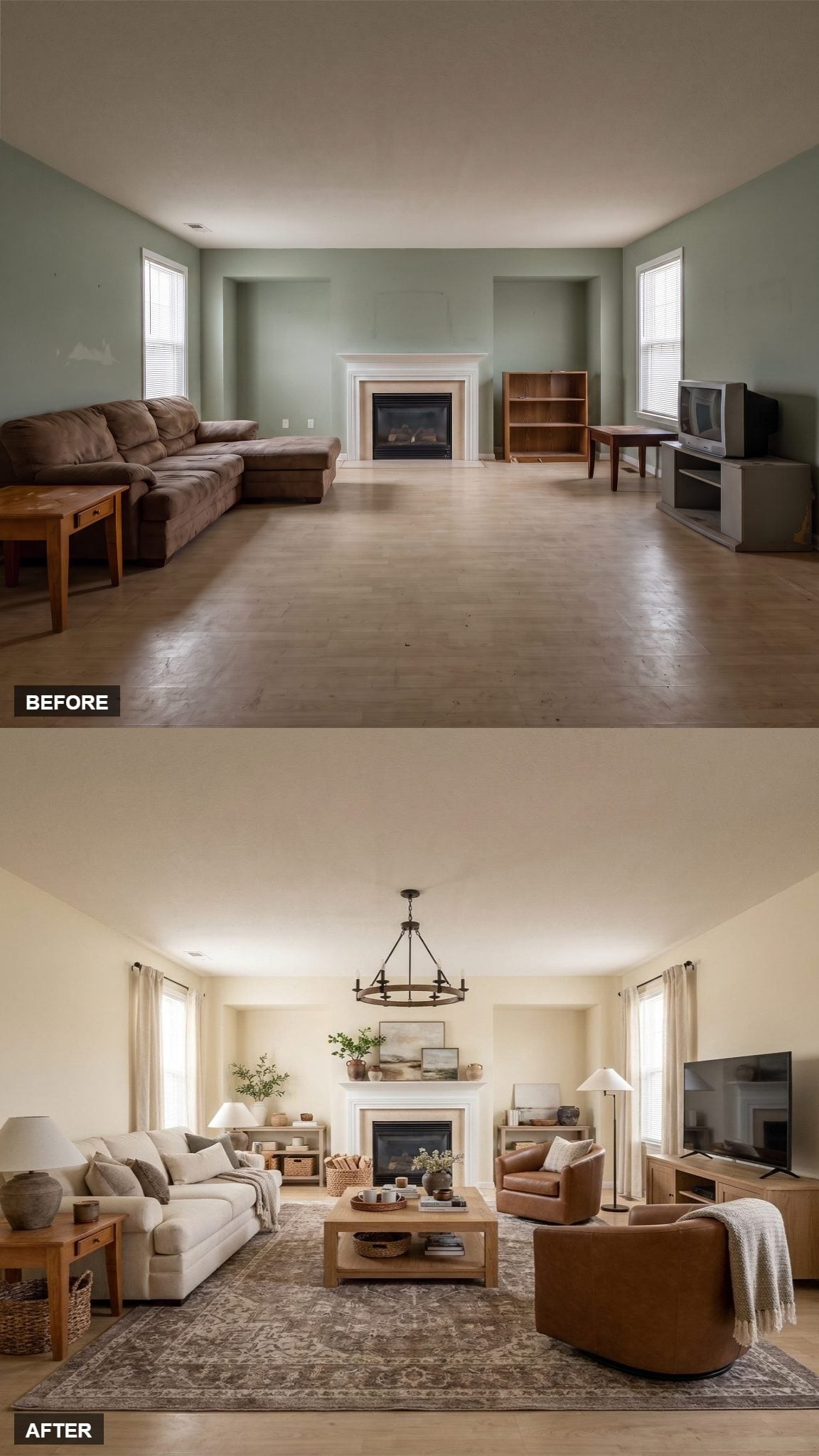
In a large room, a suspended fixture can function almost like a ceiling-level boundary. Center it over the actual seating group and the eye understands where the useful part of the room begins.
The natural wood coffee table and patterned rug reinforce that boundary below, while warm cream keeps the fireplace wall from breaking into too many competing tones.
Why It Works: A chandelier or pendant centered over a seating group can define that zone from above. The important part is alignment: the fixture should relate to the furniture arrangement, not simply hang in the mathematical center of the room.
12. A Single Bouclé Chair Softens a Wall of Oak Storage
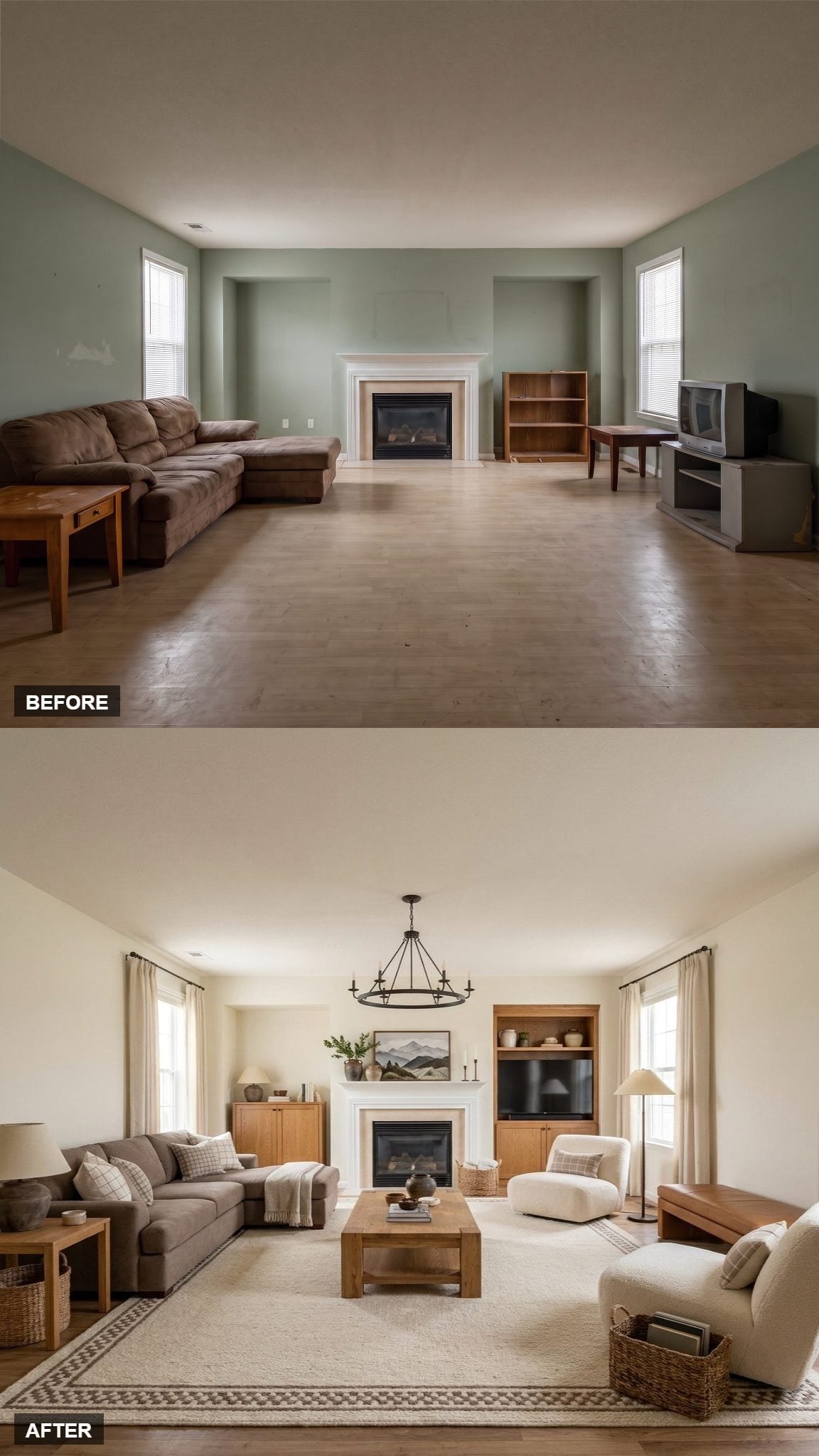
Warm oak cabinetry gives the fireplace wall considerable visual weight, so the bouclé chair is useful precisely because it pushes in the opposite direction.
Its rounded form and fuzzy surface soften all those straight cabinet lines. The patterned rug and sectional remain simple enough that the material contrast stays clear.
11. Warm Light Makes the Neutral Palette Feel Deliberate After Dark
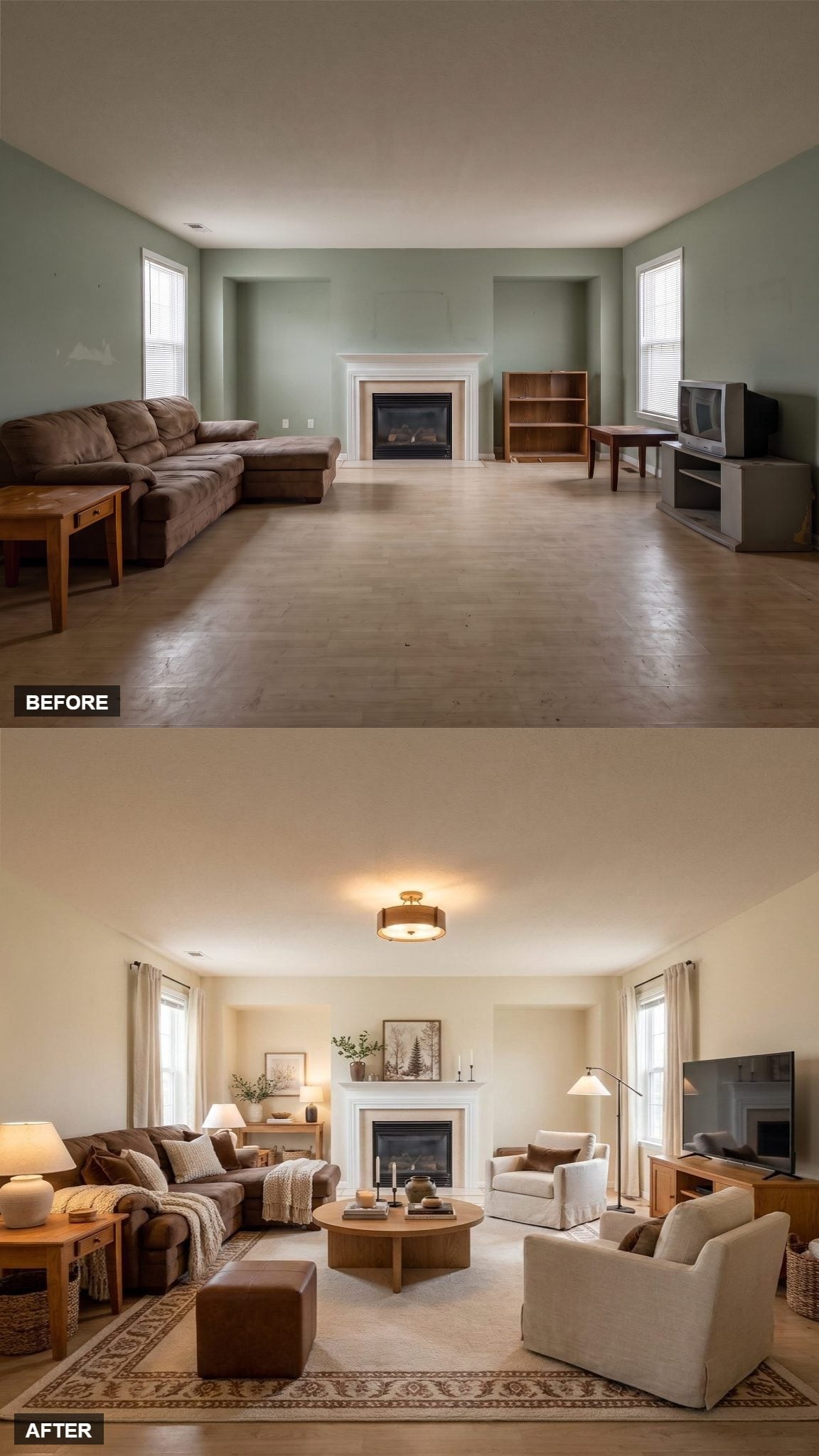
A brass-toned drum fixture changes the cream walls from pale backdrop to something closer to honey once the lights come on.
The round wood table is equally important. Its curved shape breaks up the long sectional and gives two slipcovered chairs an obvious place to join the conversation. This room depends less on architectural intervention than on warm illumination and compact furniture geometry.
10. Floor-to-Ceiling Shelves Make the Room Feel Collected Rather Than Filled
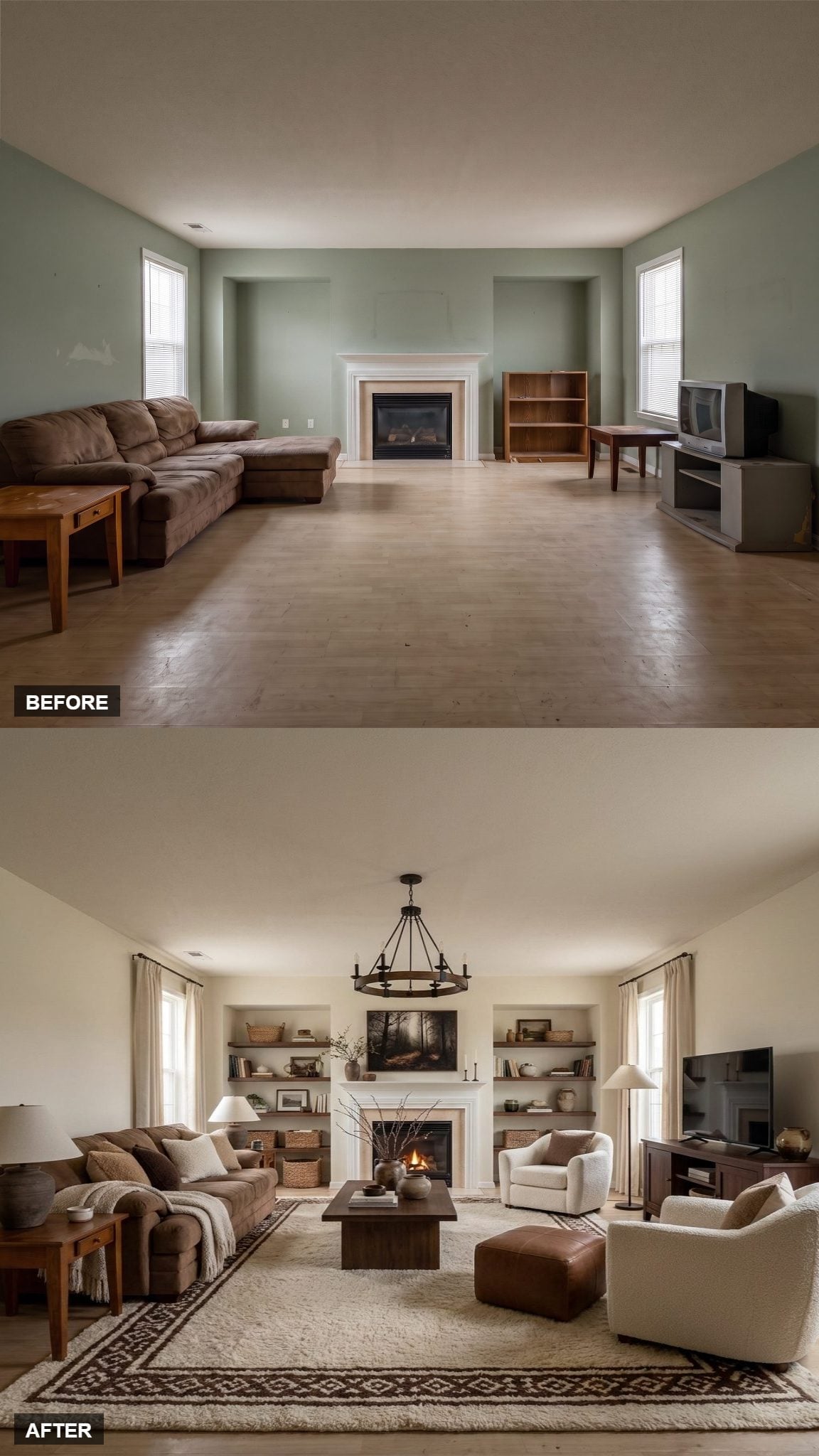
The useful distinction here is between storage and display. Floor-to-ceiling shelves provide plenty of both, but baskets, framed pieces, pottery, and plants are spaced unevenly enough that the wall does not resemble a retail fixture.
Below, the seating sits on a geometric rug around a low table and leather ottoman. There are many elements in the room, but none needs to become a centerpiece because the built-in wall supplies the framework.
9. Recessed Lighting Lets the Rug Be the Main Event
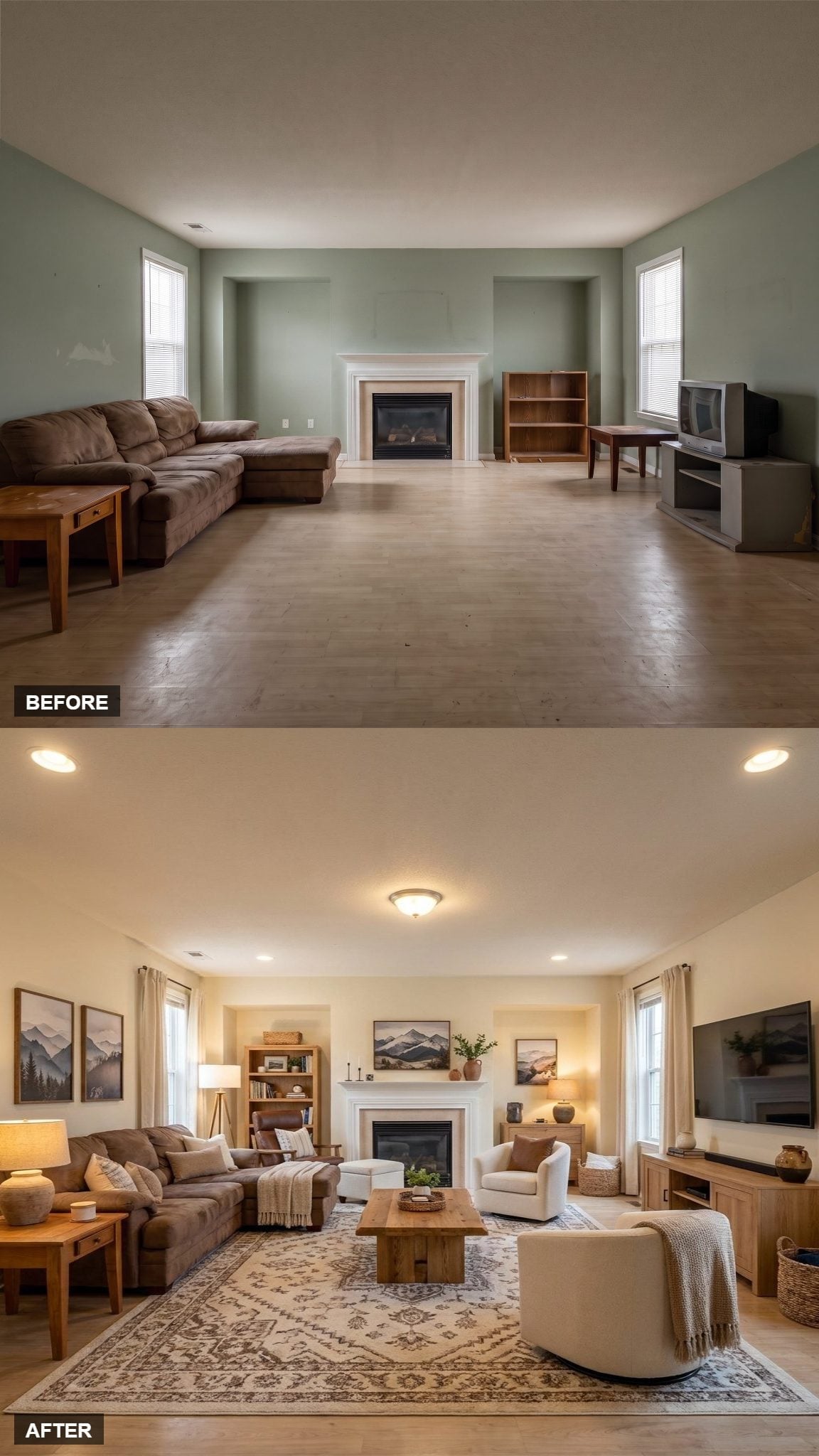
Not every concept benefits from another decorative fixture. Here the recessed lights disappear into the ceiling and leave the traditional ivory-and-brown rug to define the seating zone.
That restraint matters. Once the sectional and surrounding pieces are gathered onto the rug, there is enough pattern underfoot without introducing another focal object overhead.
8. Stone in the Middle and Tall Storage on Both Sides Balance a Very Wide Wall
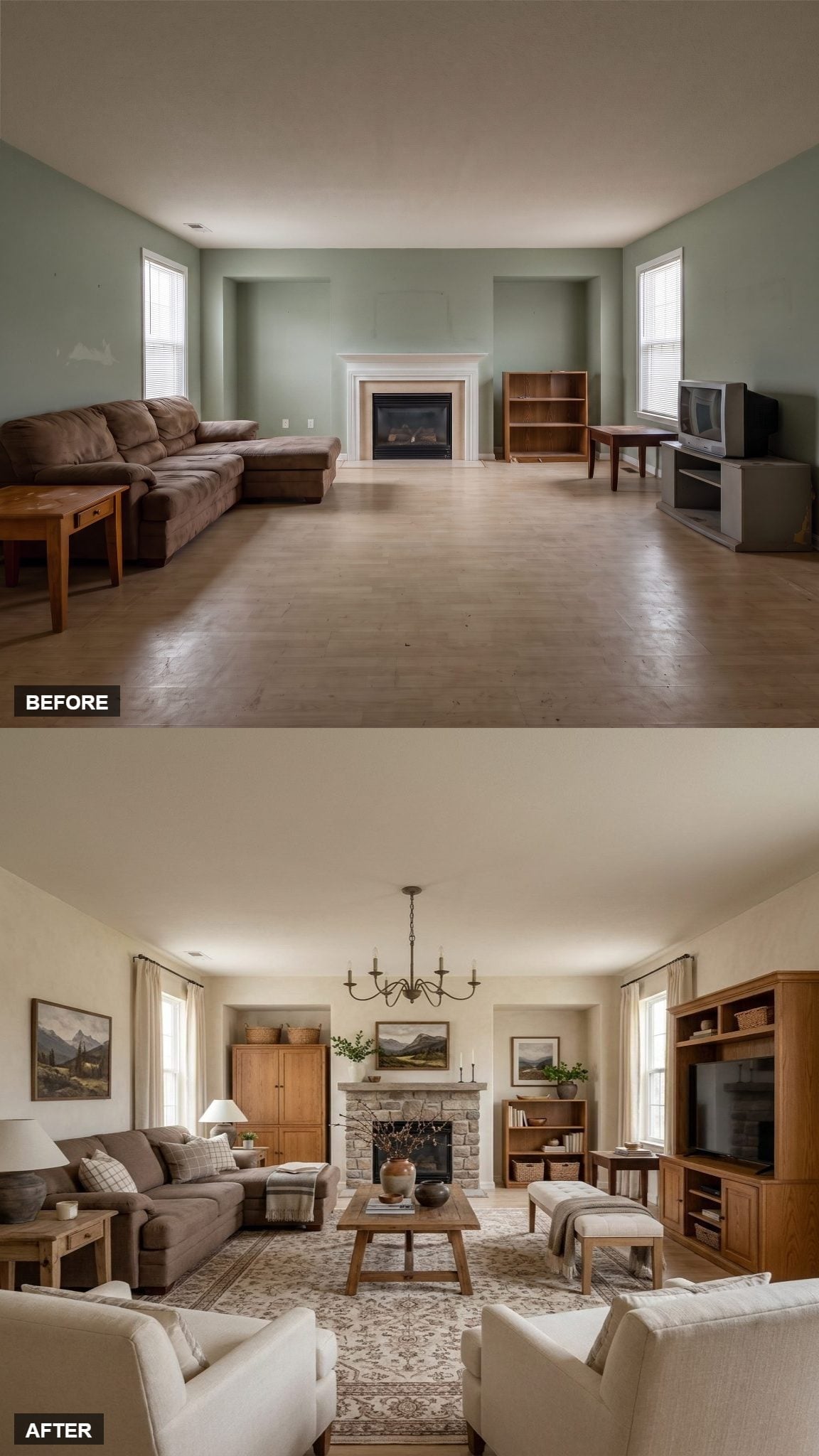
The fieldstone fireplace is the central mass, but the tall armoire on the left and entertainment unit on the right keep the rest of the wall from falling away.
They are not matching built-ins, and that is part of the appeal. Similar height and visual weight can balance a fireplace without requiring perfect symmetry or a full custom-cabinet project.
7. An Iron Chandelier Gives the Furniture a Point to Organize Around
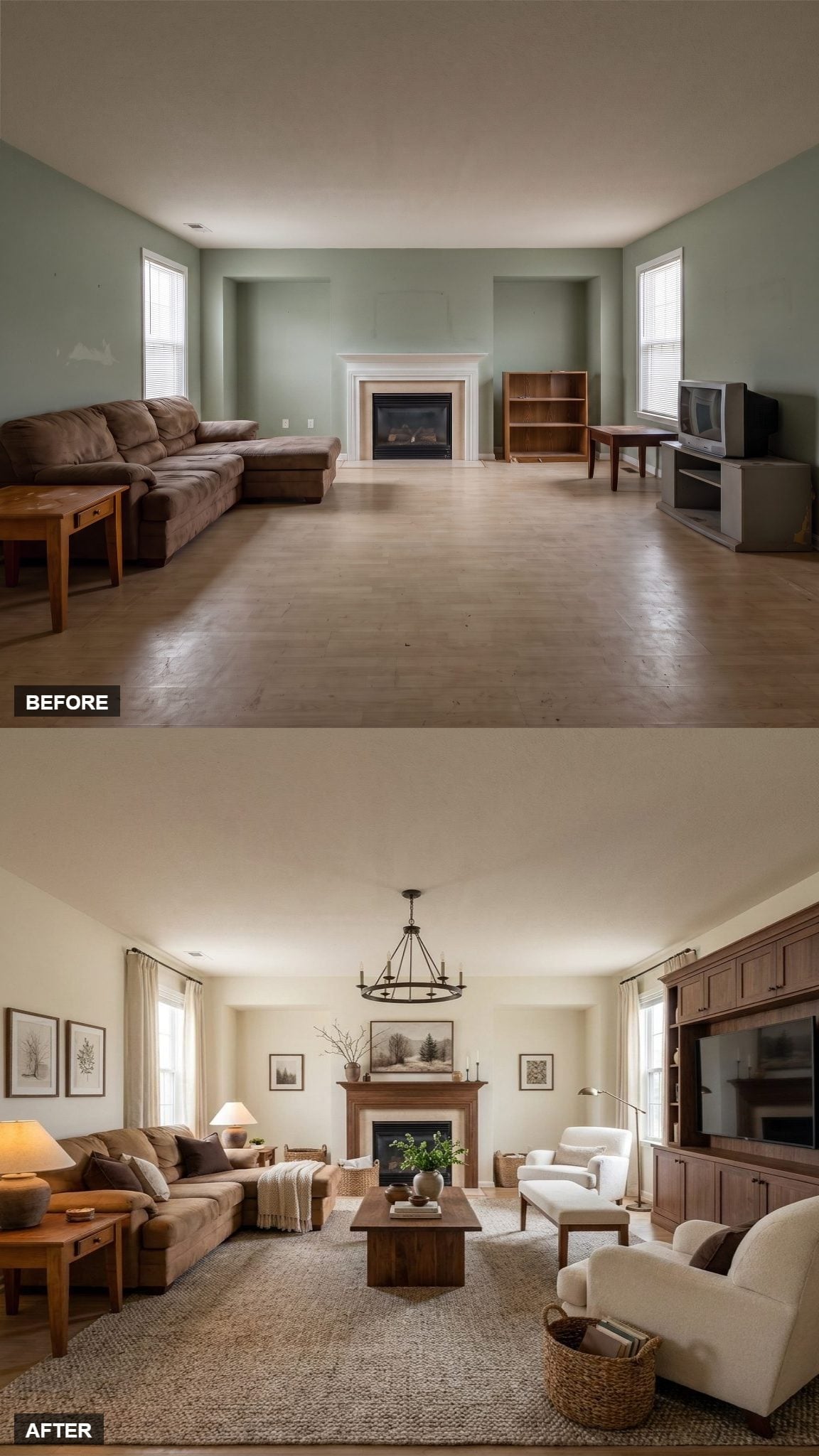
A round iron chandelier establishes the center first. The sectional, cream armchairs, coffee table, and woven rug then gather beneath it instead of spreading across the available floor.
Framed botanicals beside the mantel add vertical detail without introducing another large piece of furniture. It is a good example of using alignment rather than sheer quantity to finish a large room.
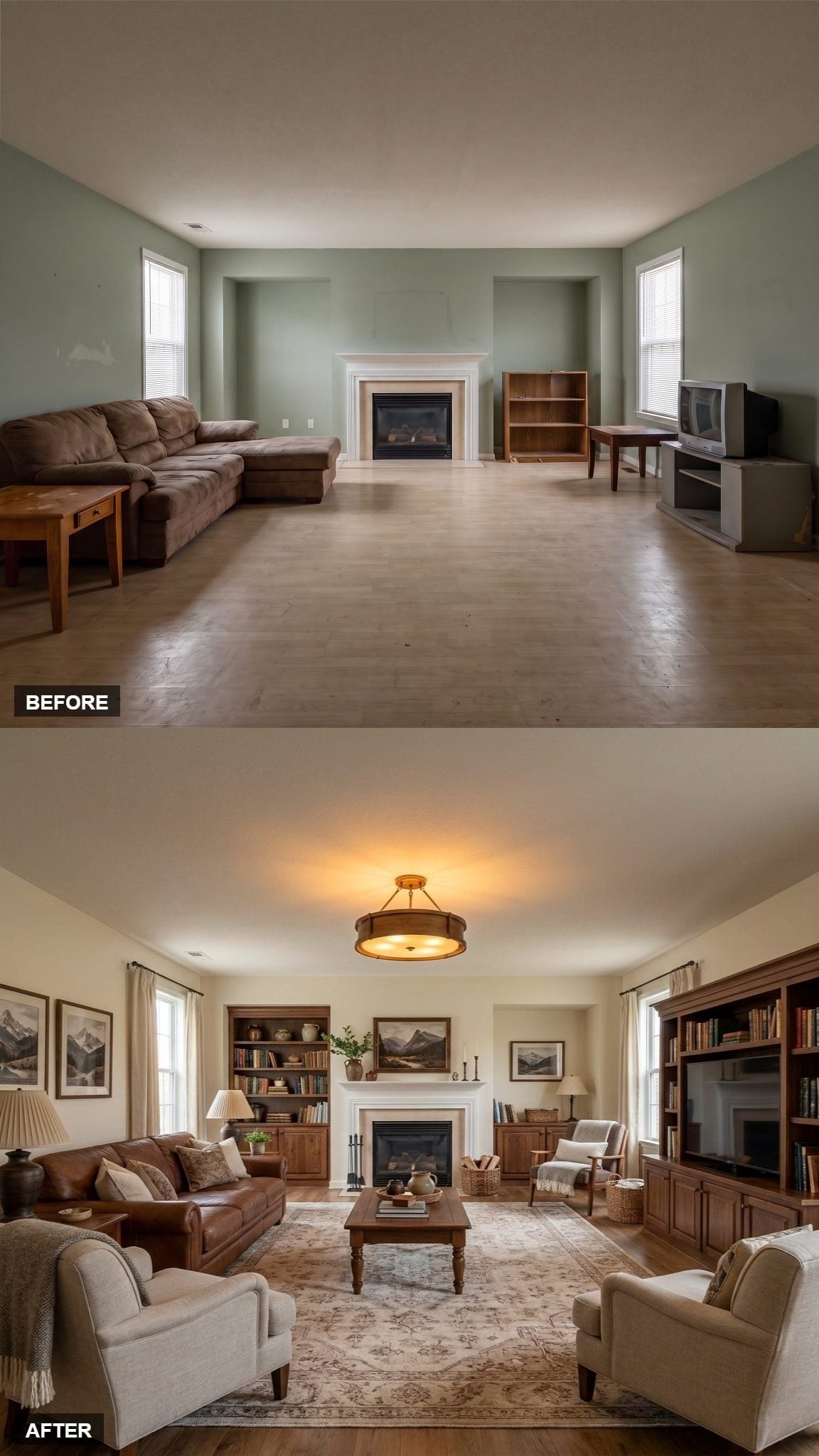
6. Unevenly Filled Shelves Keep Dark Built-Ins From Feeling Too Perfect
🔥 Would you like to save this?
Dark-stained built-ins could easily overpower this room. What saves them is the loose styling: books stacked horizontally and vertically, pottery with breathing room around it, plants breaking up the hard edges.
Leather seating and a dusty rose-and-ivory rug introduce softer, less architectural layers in front. The result feels collected over time rather than completed on installation day.
5. A Leather Sectional Makes More Sense Once the Fireplace Becomes the Destination
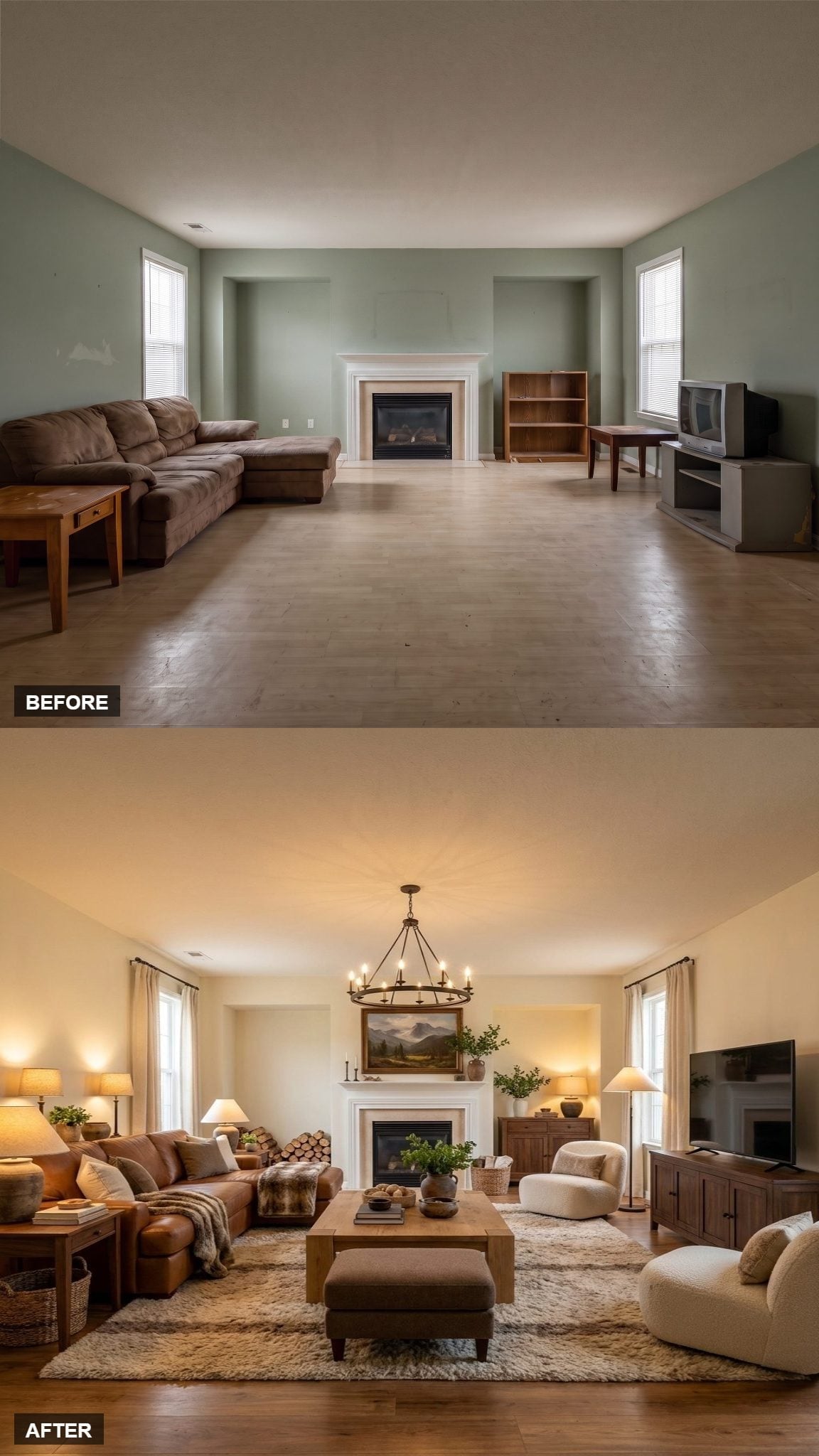
The dark leather sectional wraps around the coffee table instead of stretching along the perimeter, which makes the fireplace part of the seating experience rather than background scenery.
A wagon-wheel chandelier repeats the dark metal overhead, while lamps on either side keep the room from relying on one bright central source after dark. Bouclé on the loose armchair keeps all that leather and iron from becoming too severe.
4. White Cabinets Let the Dark Iron Fixture Supply the Contrast
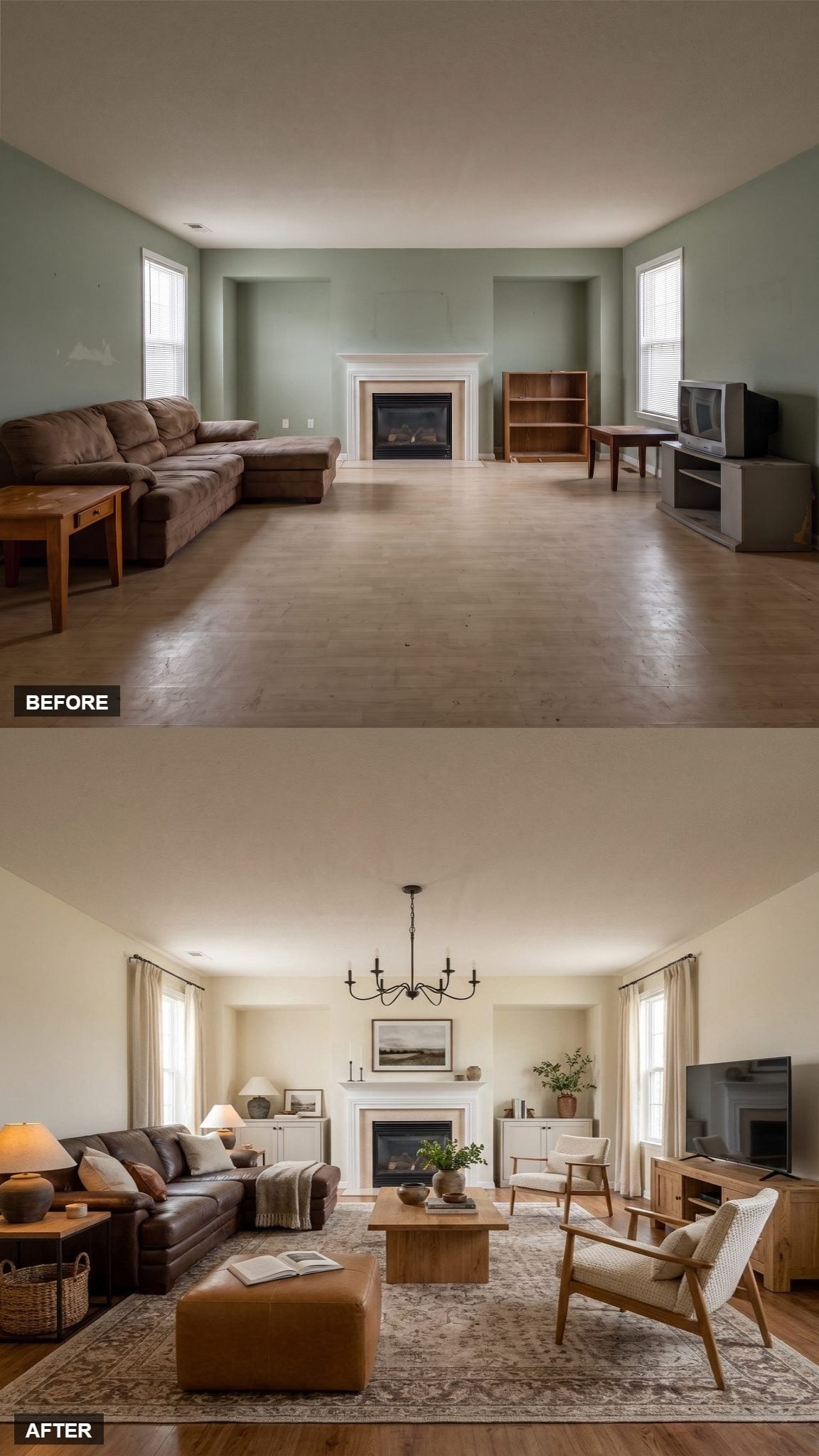
White cabinetry flanking the fireplace nearly disappears into the warm cream walls, leaving the dark forged-iron chandelier as the strongest contrast in the room.
That keeps the storage visually light while still giving the fireplace wall more definition. It is a useful option when dark wood built-ins would make an already substantial room feel heavier than intended.
3. Paired Oak Bookcases Give the Fireplace Wall a Simpler Frame
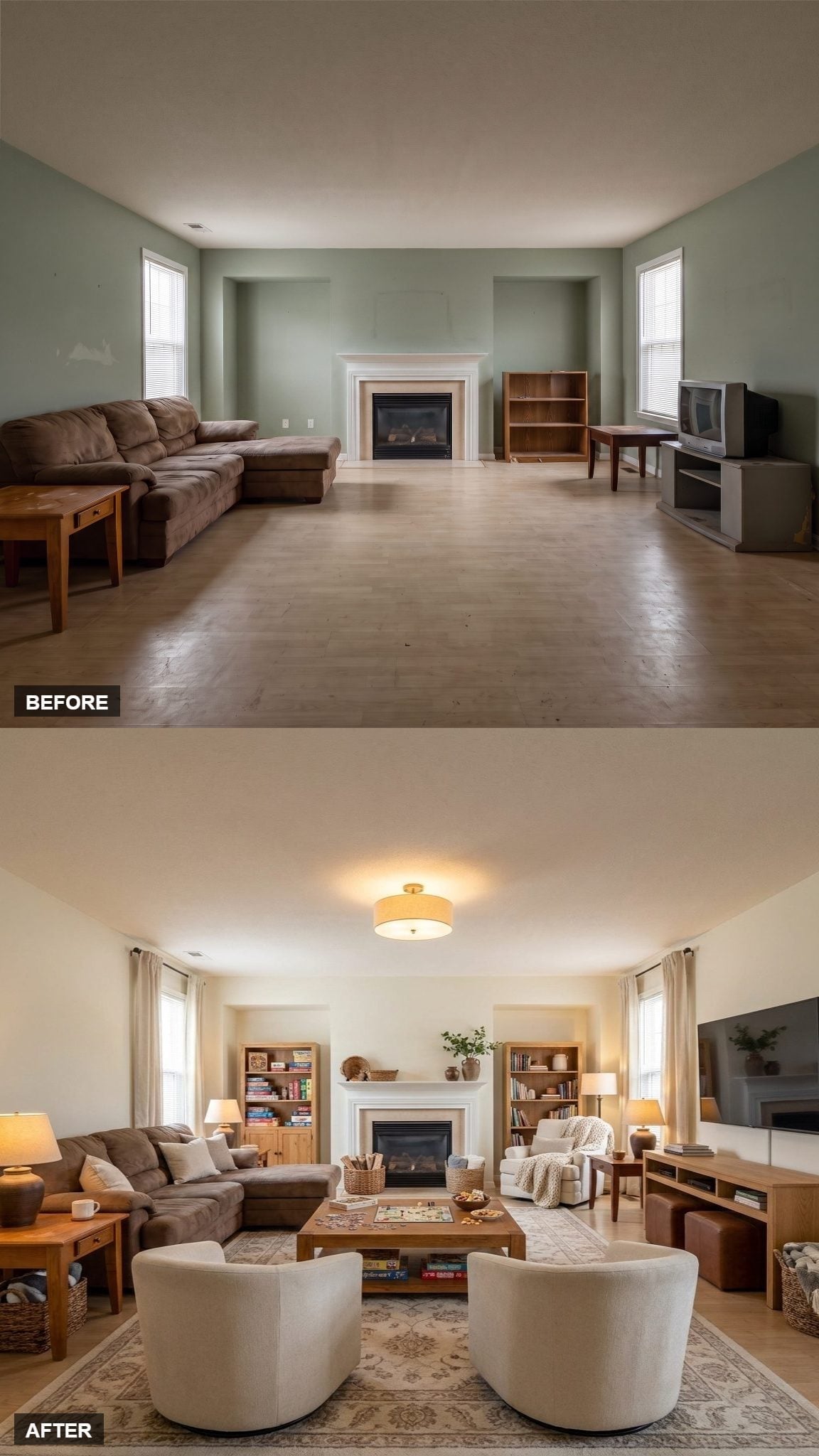
This is the stripped-down alternative to full built-in cabinetry. Two oak bookcases sit on either side of the fireplace and provide height, storage, and symmetry without covering the whole wall.
Oatmeal barrel chairs face the sectional across a wood coffee table, giving the room a softer center while the bookcases handle the perimeter.
2. Honey-Toned Cabinets Make the Built-In Wall Feel More Relaxed
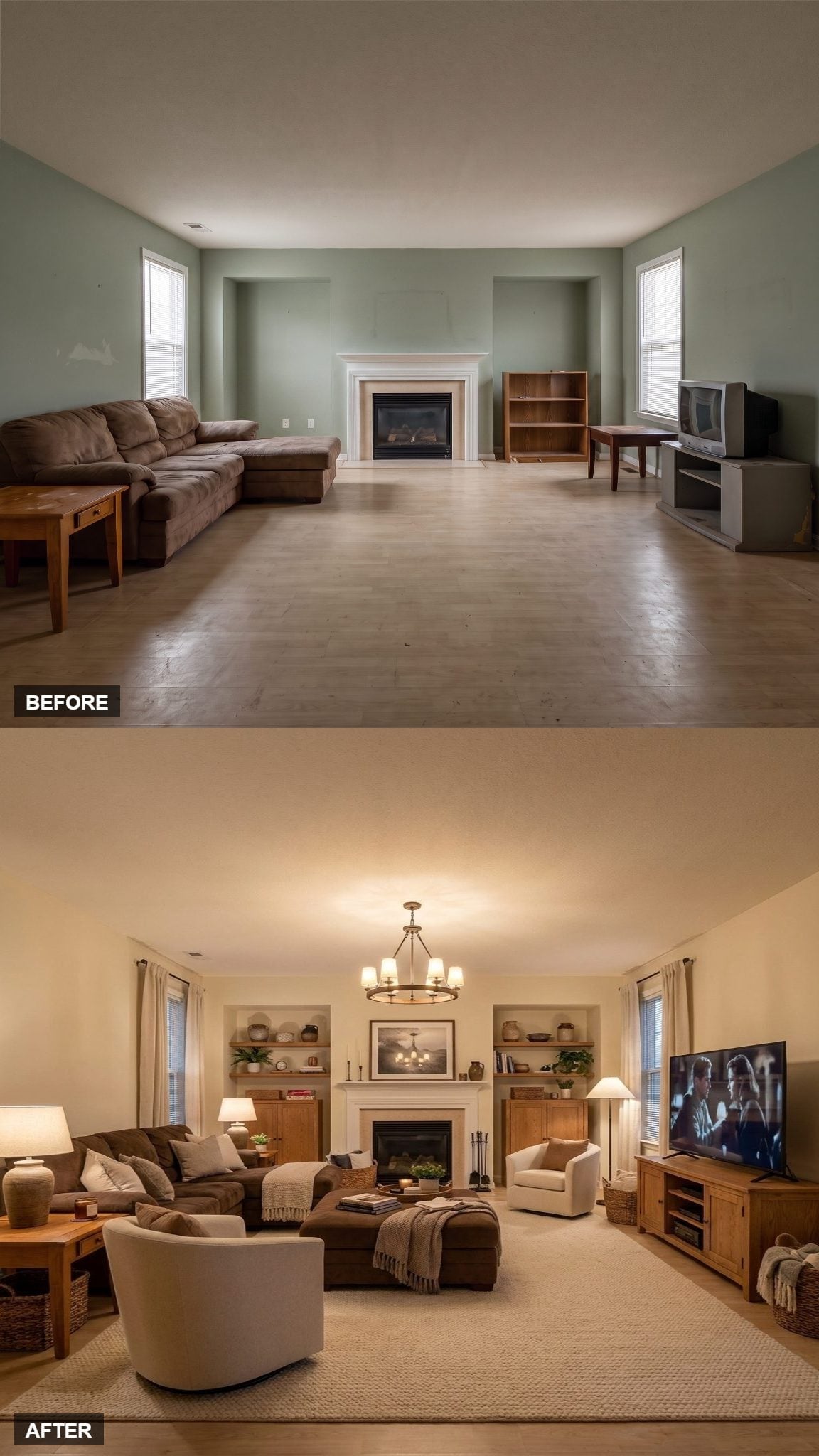
Open shelving above honey-toned cabinet bases creates a warmer, less formal version of the classic fireplace built-in.
Small ceramics and trailing plants keep the shelves loose, while a bronze ring fixture picks up the wood and brown tones without matching them exactly. The low ottoman at the center also leaves sightlines open across the seating group.
1. Rope, Iron, Firewood, and Built-In Media Storage Finish With the Most Lodge Character
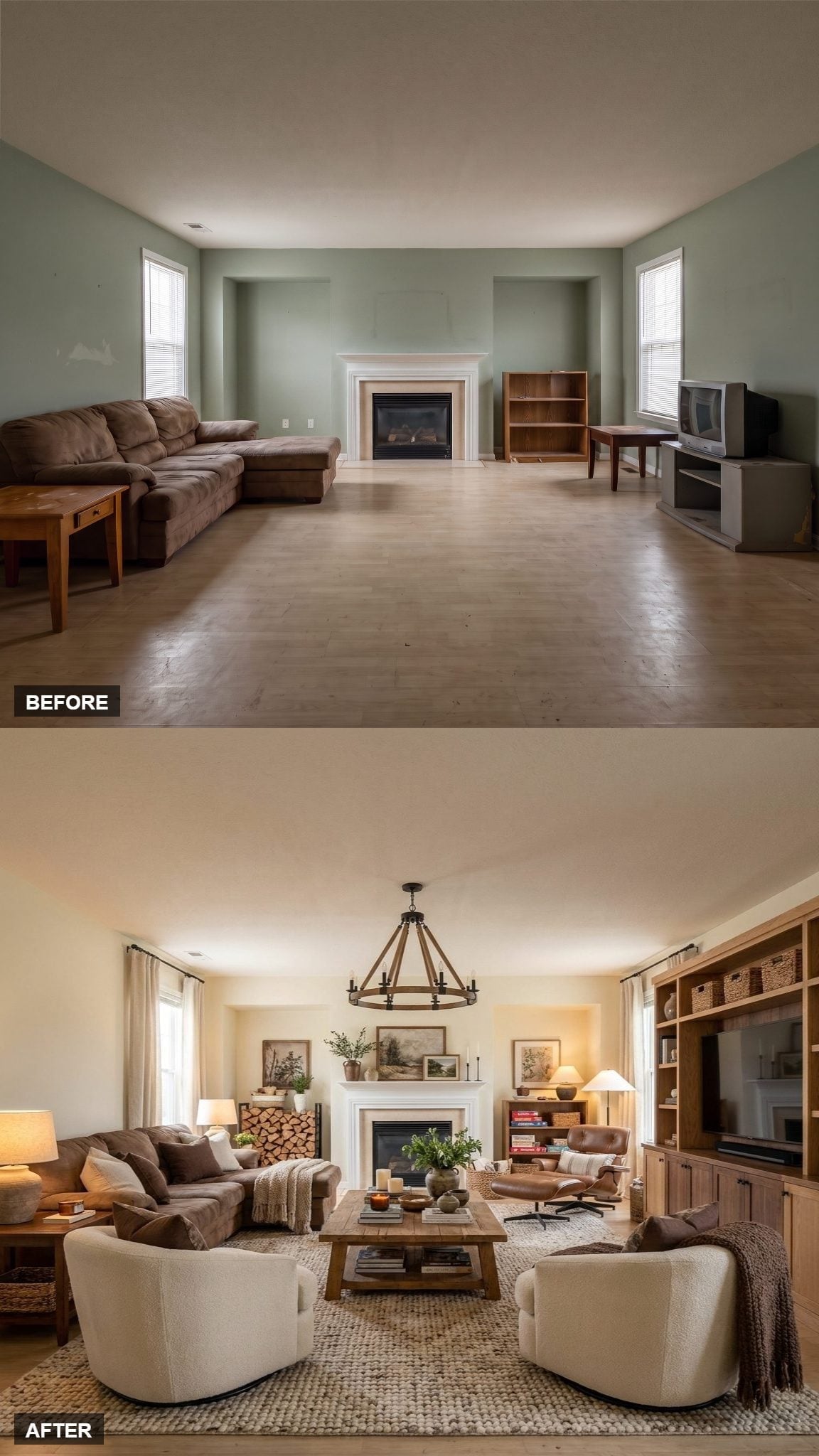
The last concept brings several of the strongest ideas together without simply repeating one of the earlier rooms. Rounded bouclé swivel chairs make the foreground flexible, a rustic wood table has enough bulk for the scale of the seating, and the rope-and-iron fixture introduces a rougher lodge note overhead.
Built-in cabinetry along the right wall absorbs the television and what would otherwise be dead space. Firewood beside the hearth and landscape prints above it complete the mood without overwhelming the room with rustic accessories.
The useful lesson across all 30 concepts is not that a large empty-nest room needs more things. Quite often it needs fewer things placed with more conviction. Give the fireplace wall enough weight. Pull the seating close enough for an actual conversation. Let one rug establish the territory. Use light to mark where people gather. A family room does not have to be full of children again to stop feeling empty.