🔥 Would you like to save this?
The 1980s garage did not need much explaining. A scarred workbench, a wall of pegboard, one good vise, a corded drill, and enough steel hanging from hooks to make almost anything seem repairable. Cars were opened up in driveways. Shelves were built instead of ordered. A coffee can full of mismatched screws could sit untouched for ten years and still be considered an essential inventory system.
What makes those workshops look almost extravagant now is the price of admission. Many of the tools that defined them could be bought for somewhere between a few dollars and roughly a day’s wages, and most were expected to stay in service for decades. These period prices are approximate, but they capture the scale of the thing: this was a garage assembled one hammer, socket, saw blade, extension cord, and Saturday afternoon at a time.
In order to come up with the very specific design ideas, we create most designs with the assistance of state-of-the-art AI interior design software. Also, assume links that take you off the site are affiliate links such as links to Amazon. this means we may earn a commission if you buy something.
38. The Heavy Wooden Workbench: $60 to $90 If You Bought It Built
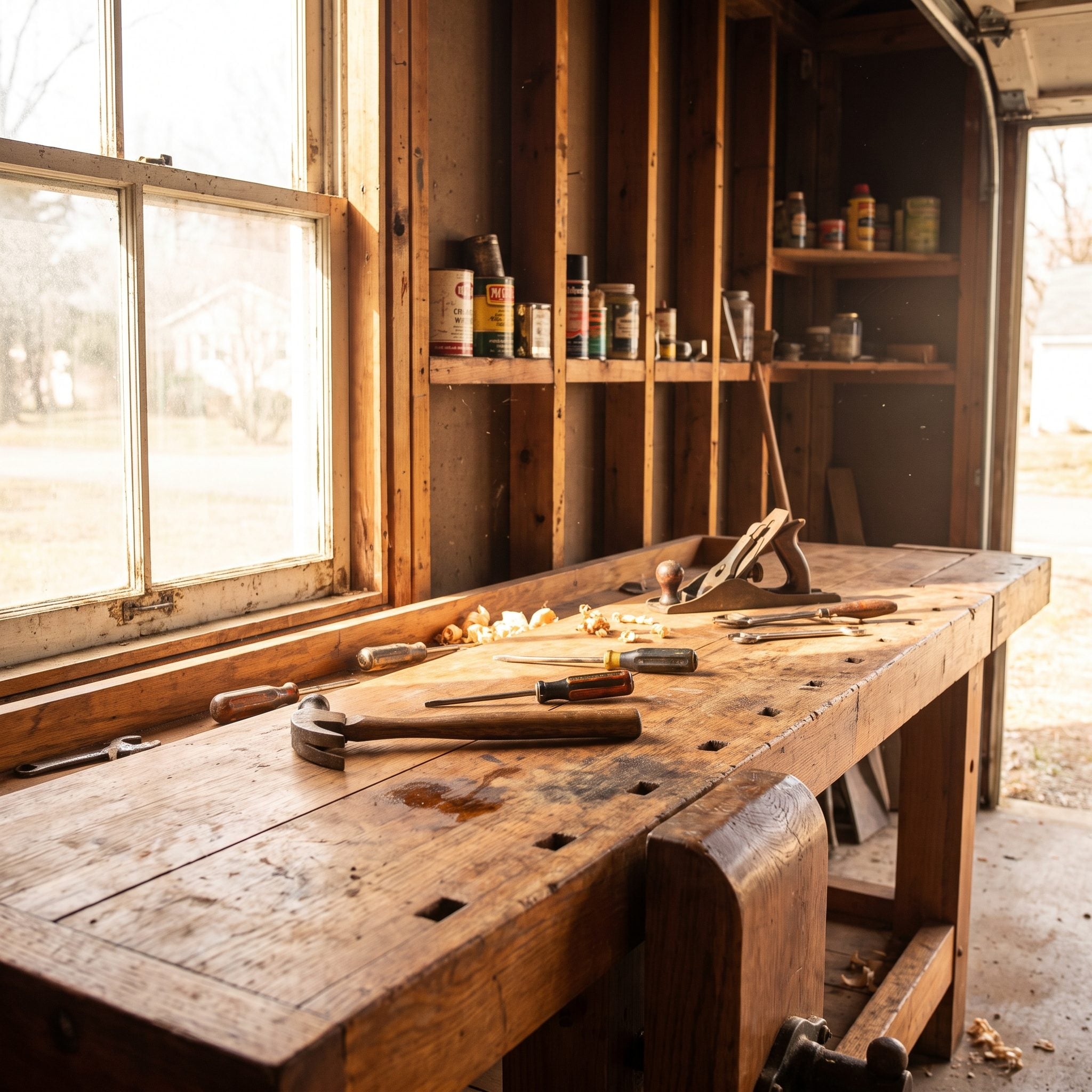
A store-bought wooden workbench in the early 1980s could run roughly $60 to $90, depending on its length, construction, and the thickness of the top. That was enough money to make building your own look very sensible.
Two-by-fours, plywood, screws, and a free Saturday produced the great unofficial furniture category of the suburban garage: the bench designed for exactly one wall and never intended to leave it. Perfect joinery was optional. Enough mass to survive a hammer blow was not.
37. The Bench Vise Bolted Permanently to One Corner: $18 to $30
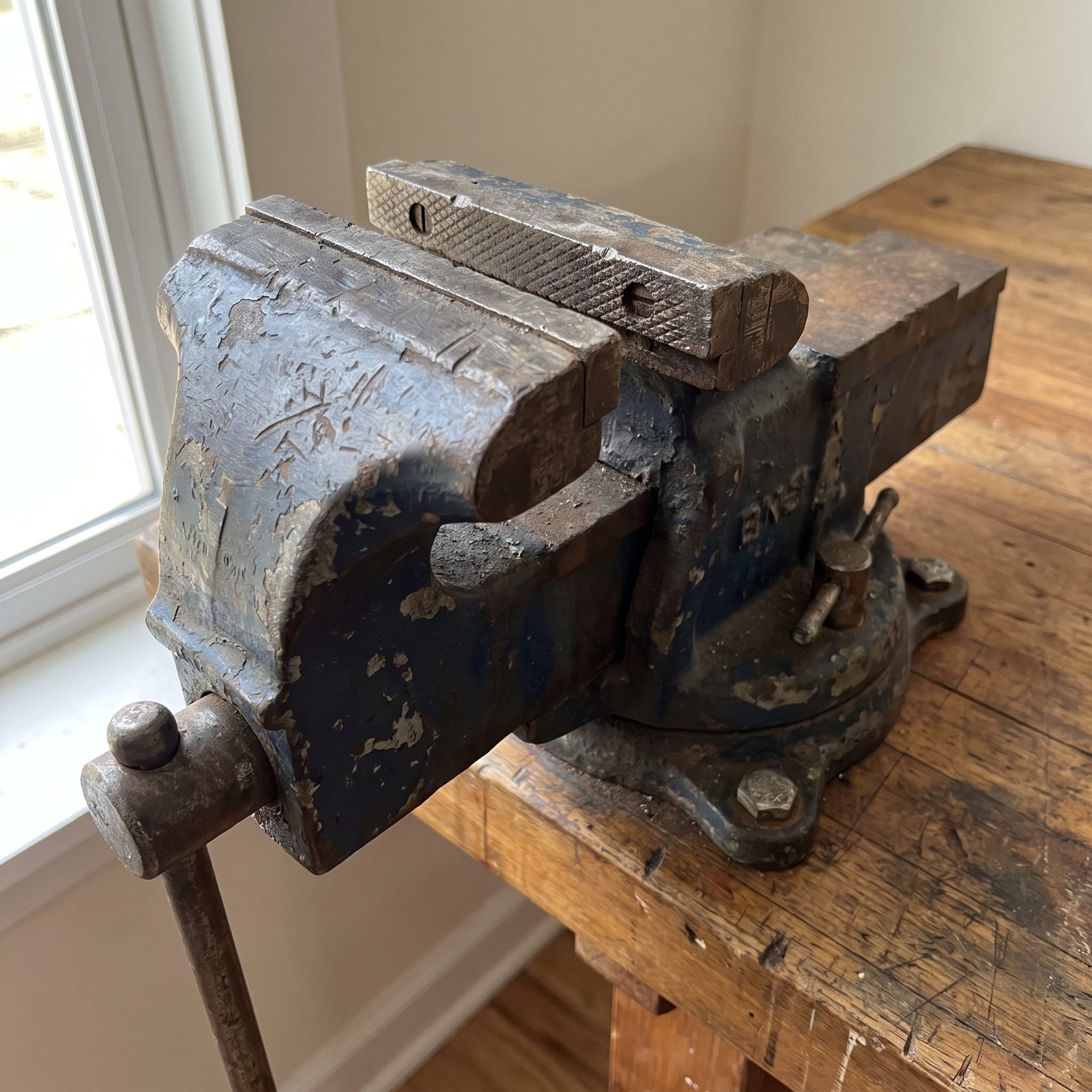
Eighteen dollars for a tool that could still be working forty years later. A solid 4-inch cast-iron bench vise might sit in the $18-to-$30 range in the early 1980s, with larger swivel-base models costing more.
Once bolted down, the vise became the workshop’s third hand. It held pipe, lumber, metal brackets, mower blades, bent hardware, and anything else that needed to stop moving while somebody attacked it with another tool.
36. The Pegboard Wall That Put Every Hand Tool on Display: $4 a Sheet
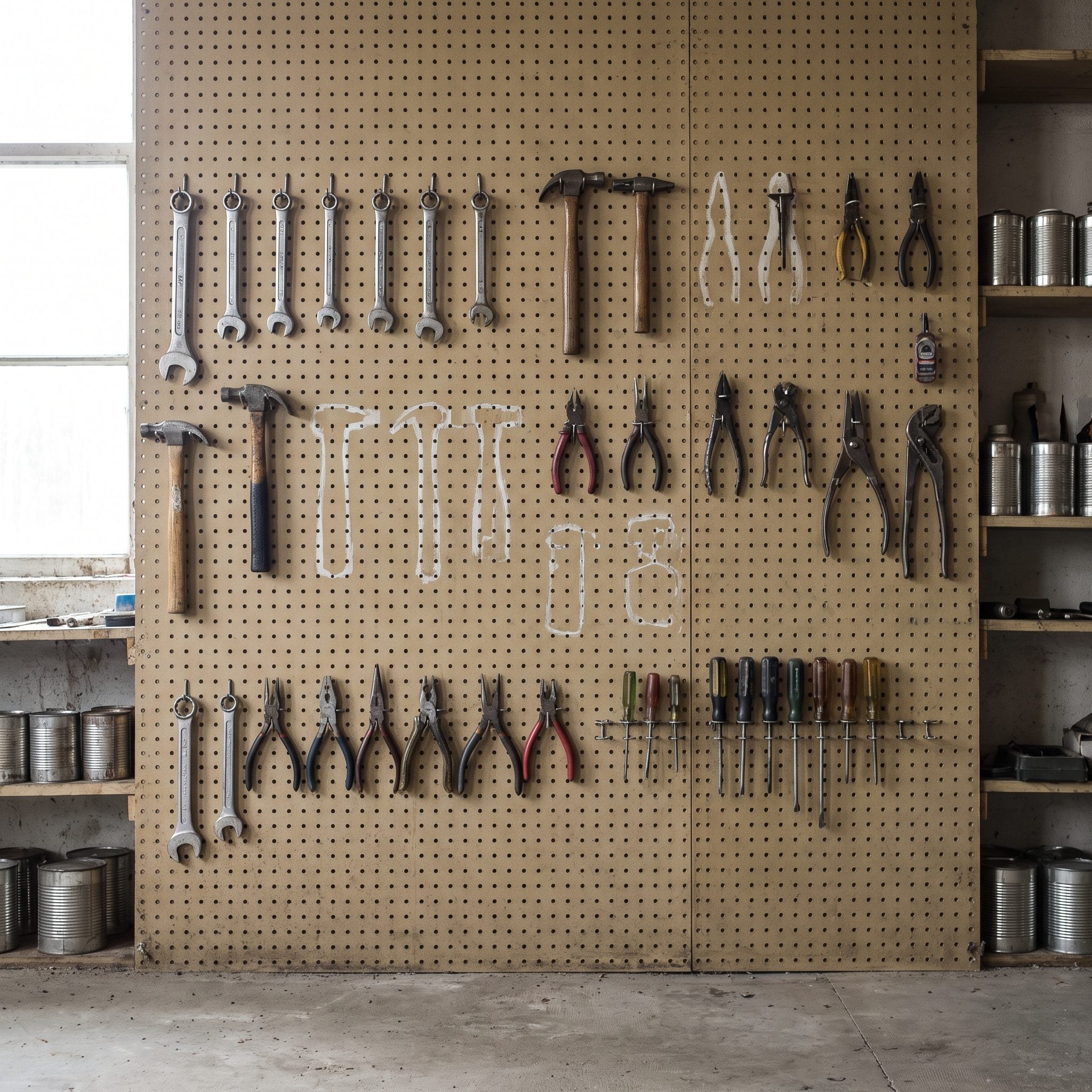
A 4-by-8 sheet of perforated hardboard could cost only a few dollars, with hooks adding a little more. For well under the price of a power tool, an empty wall suddenly became the workshop’s control panel.
Pegboard was the organizing religion of the era. Some owners even traced tool outlines onto the board, borrowing the shadow-board idea used in factories and commercial shops. The beauty was immediate visibility: missing pliers left a plier-shaped accusation on the wall.
35. The Red Metal Toolbox With Cantilever Trays: $25 to $45
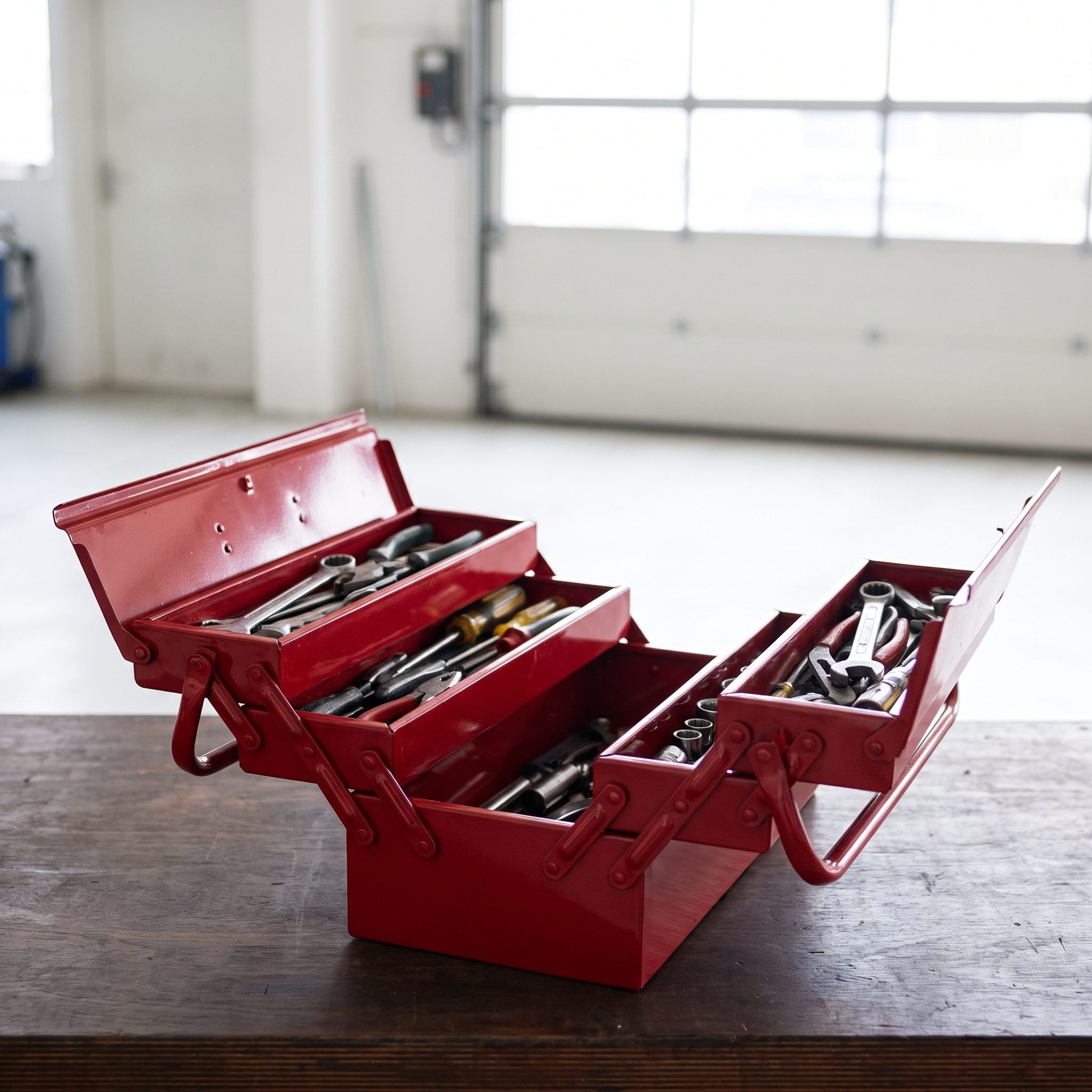
The steel cantilever toolbox was mechanical theater. Lift the lid and the trays opened in stages, exposing sockets, bits, punches, electrical tape, spare bolts, and several small objects whose original purpose had already been forgotten.
At roughly $25 to $45, it was not disposable storage. These boxes acquired dents, chipped paint, oily fingerprints, and enough weight to make every trip across the garage feel slightly ill-advised. Closing one produced a metallic clank no plastic case has ever quite duplicated.
34. The Claw Hammer Every Household Workshop Needed: $6 to $10
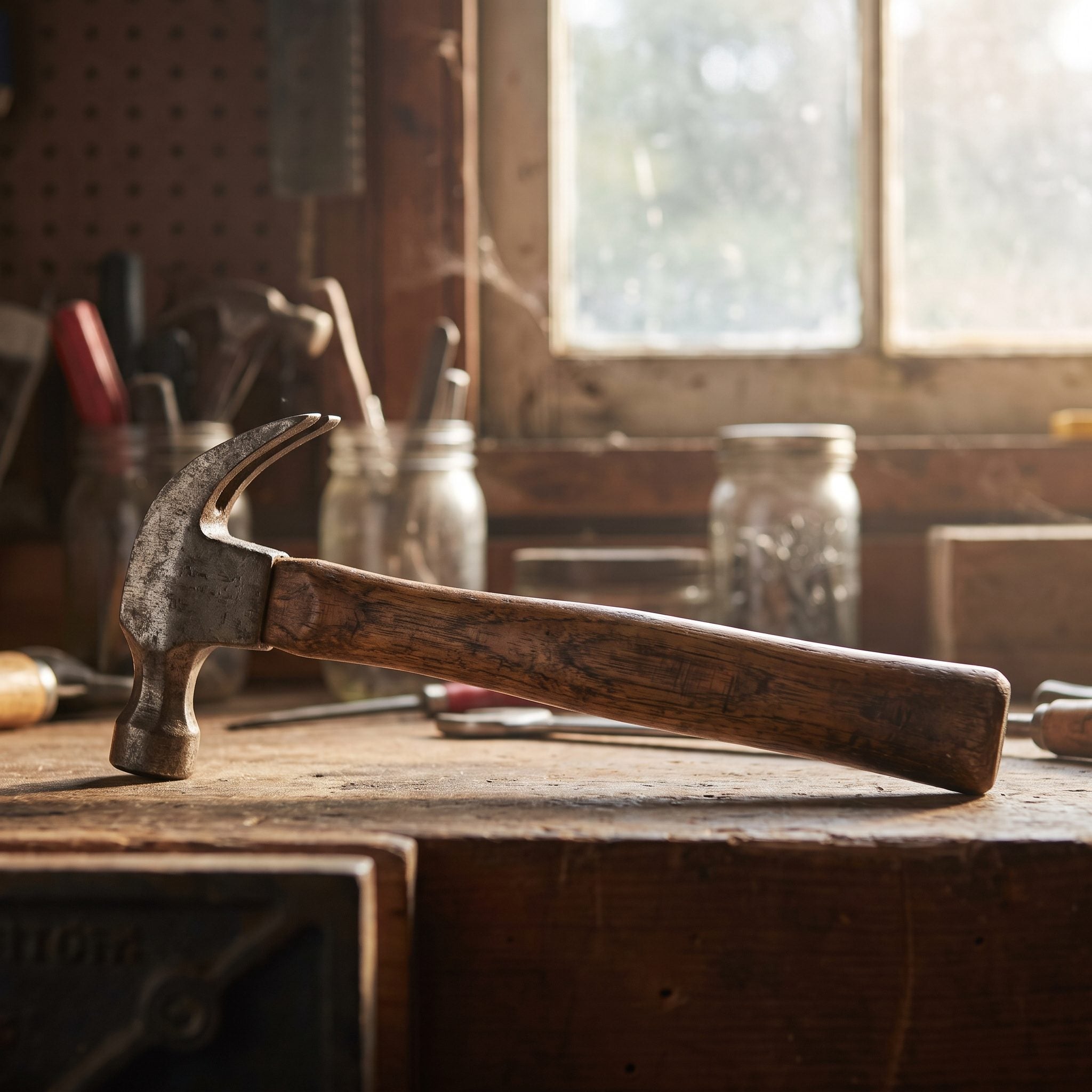
A decent 16-ounce claw hammer could be had for roughly $6 to $10. Wood handles kept the price down; fiberglass and one-piece steel versions generally cost a little more.
No elaborate system was required. A hammer drove nails, pulled them back out, persuaded stubborn parts, tapped shelves into alignment, and inevitably got pressed into service for several jobs its designer never intended.
33. The Flathead-and-Phillips Screwdriver Set: $8 to $15
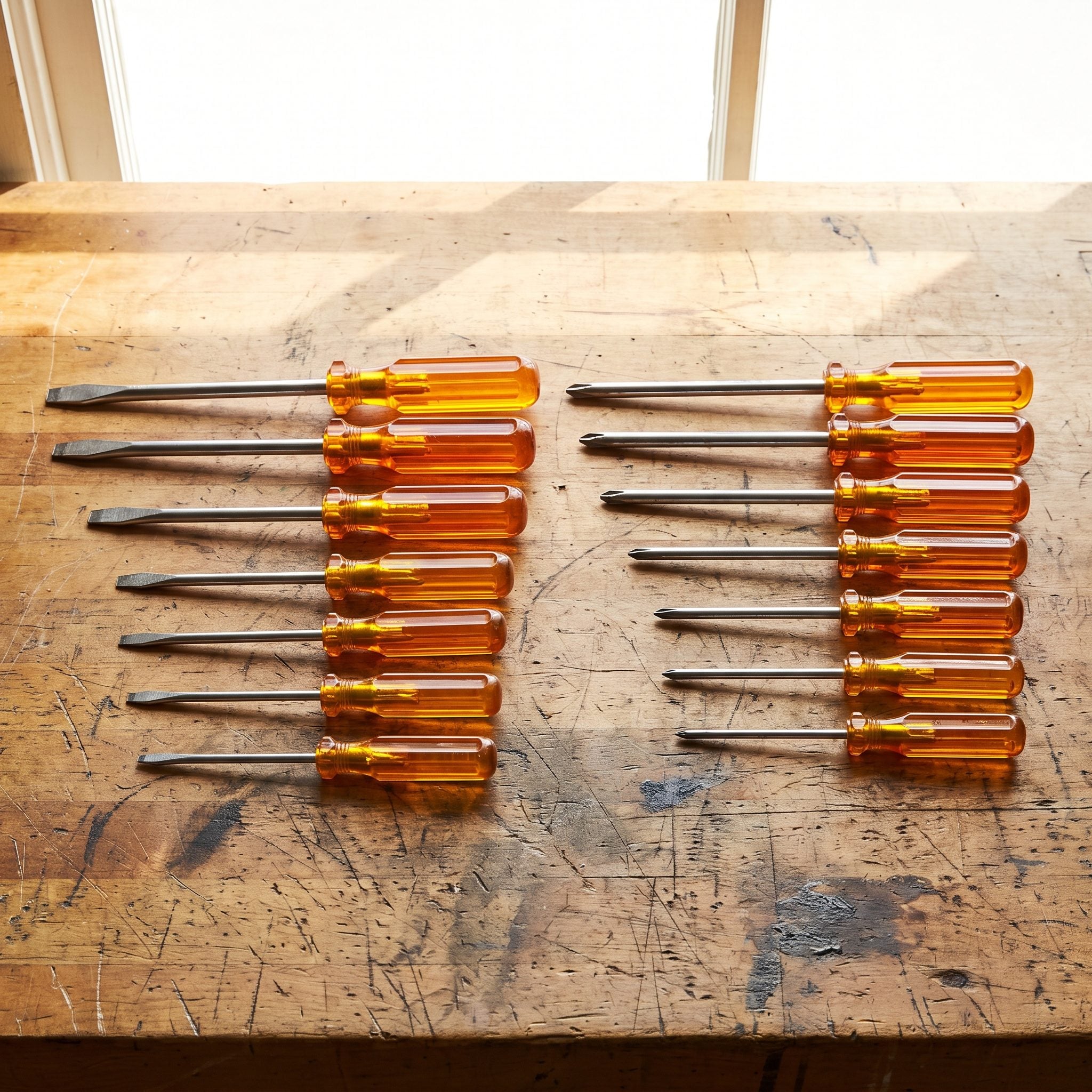
The clear amber handles are practically period furniture. A graduated set of flathead and Phillips screwdrivers might run $8 to $15, often with translucent acetate handles that caught the fluorescent shop light beautifully.
Buying the set was supposed to ensure that the right tip was always available. Human impatience took care of the rest. A screwdriver slightly too small still found its way into the screw head, which explains a great deal about the mangled fasteners hiding inside old appliances.
32. The Combination-Wrench Set: $20 to $35 for the Good Chrome Ones
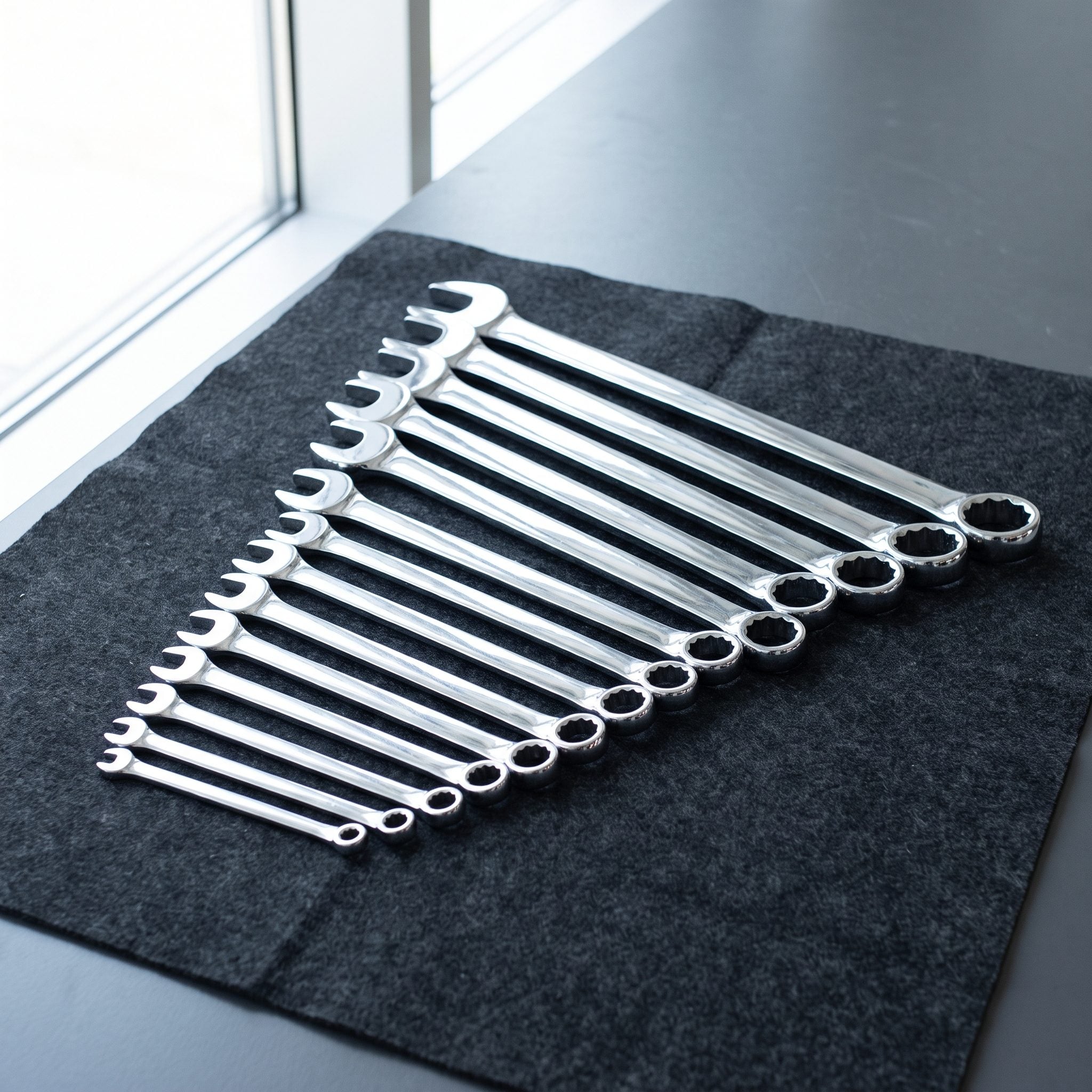
A set of chrome combination wrenches, open at one end and boxed at the other, could run $20 to $35 depending on the number of sizes and the brand stamped into the steel.
Lifetime replacement warranties helped turn better hand tools into long-term purchases rather than consumables. Decades later, plenty of those sets are still in service, usually with one mysteriously empty slot.
31. The Ratchet-and-Socket Set in Its Molded Plastic Case: $40 to $70
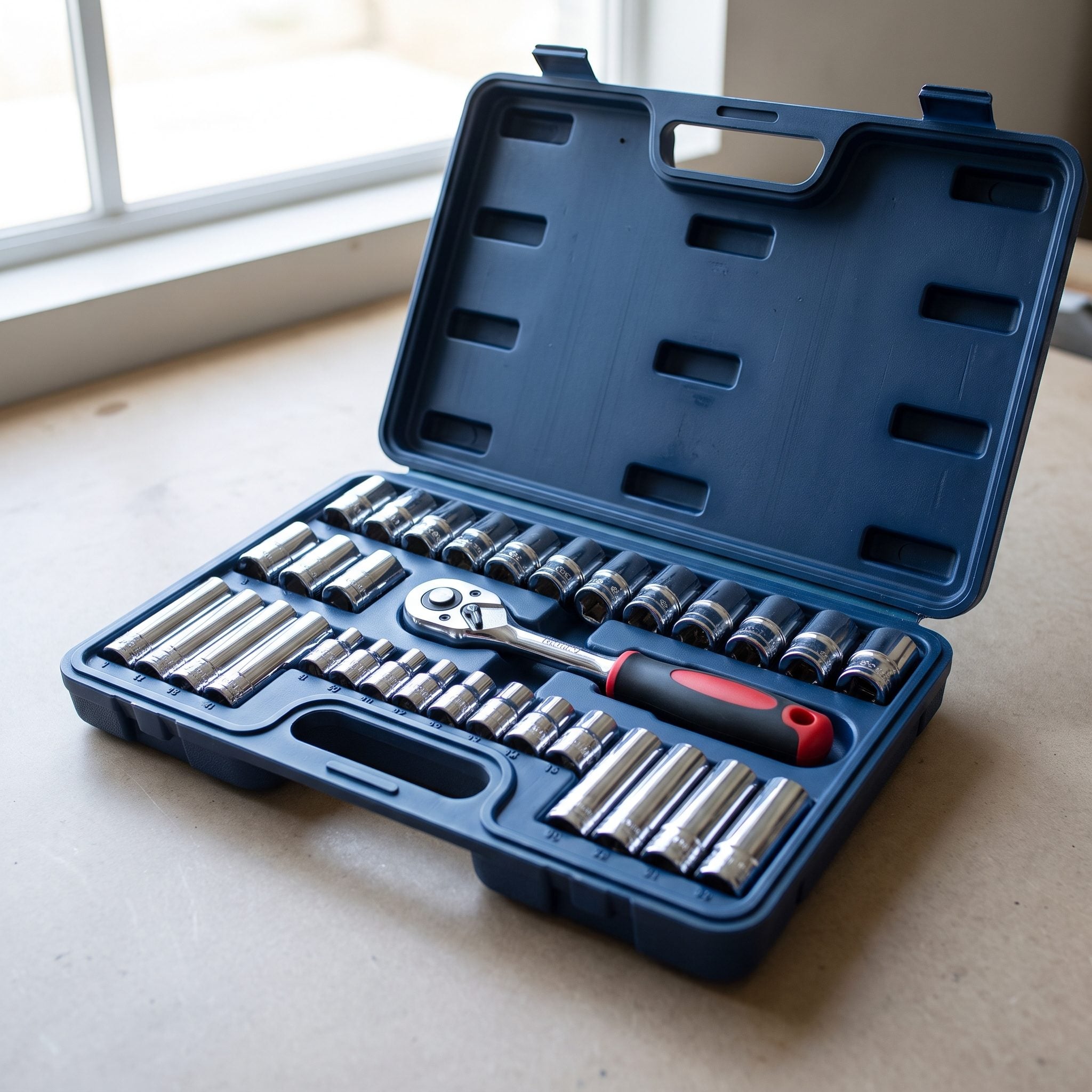
The socket set was a bigger purchase: perhaps $40 to $70 for a proper assortment with a reversible ratchet, extensions, and both SAE and metric sockets fitted into a molded case.
Part of the pleasure was mechanical. The ratchet clicked. The case snapped shut. Every socket had a molded recess that suggested permanent order, an illusion usually destroyed as soon as the set began doing actual work.
This was also the kit that opened up a different level of home repair. Alternators, starters, brakes, lawn equipment, bicycles, and whatever else had bolts suddenly looked less like jobs reserved for somebody else’s shop.
30. The Adjustable Crescent-Style Wrench: $6 to $12
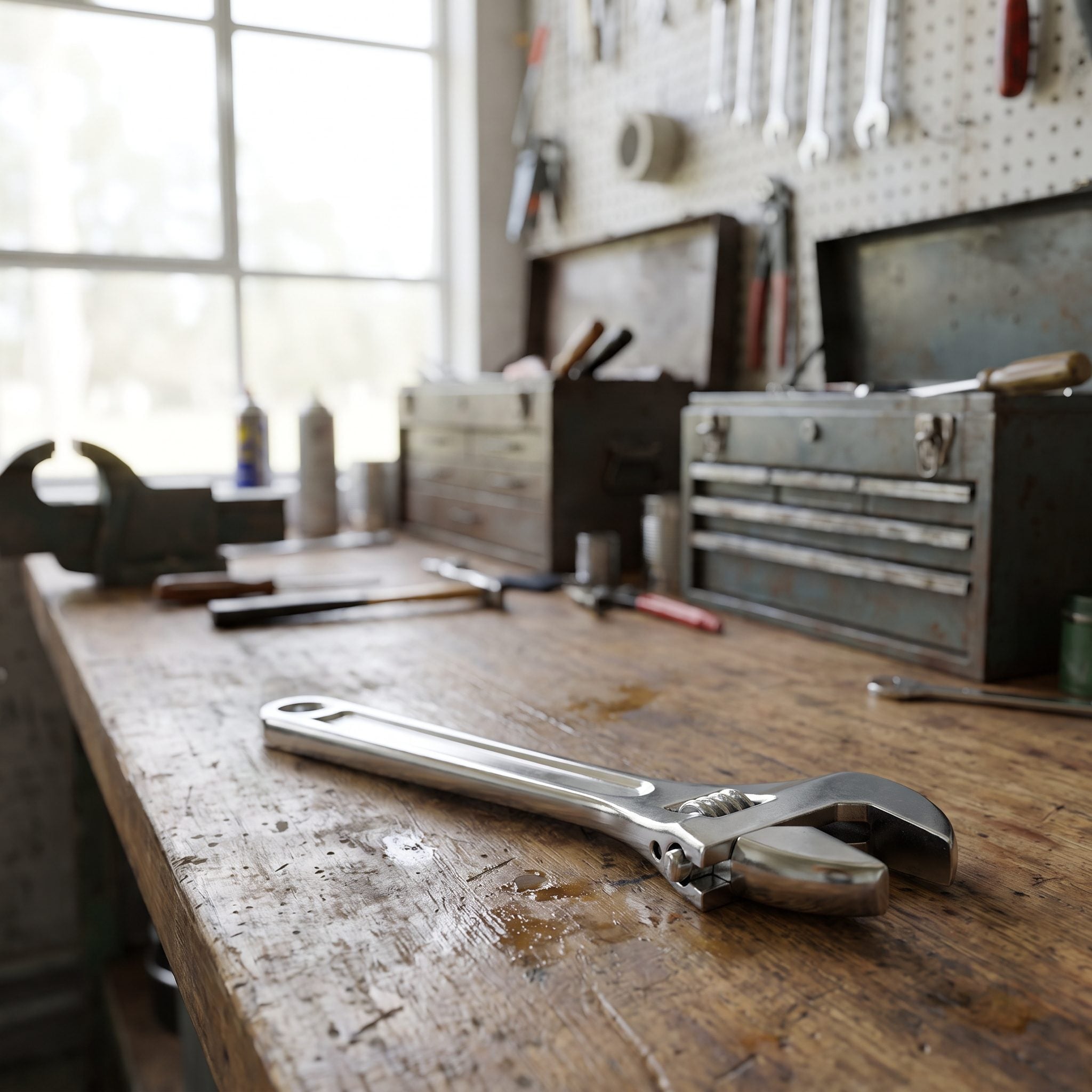
An adjustable wrench might cost $6 to $12 depending on its length. Plenty were called Crescent wrenches regardless of the maker, a brand name becoming shorthand for the entire tool.
Its appeal was obvious: one wrench covered a range of fastener sizes. Its weakness was just as obvious once the jaws were adjusted poorly or allowed to slip. A convenient wrench could turn a crisp bolt head into something resembling a polished pebble surprisingly quickly.
29. The Pliers Set With Slip-Joint, Needle-Nose, and Cutting Pliers: $12 to $20
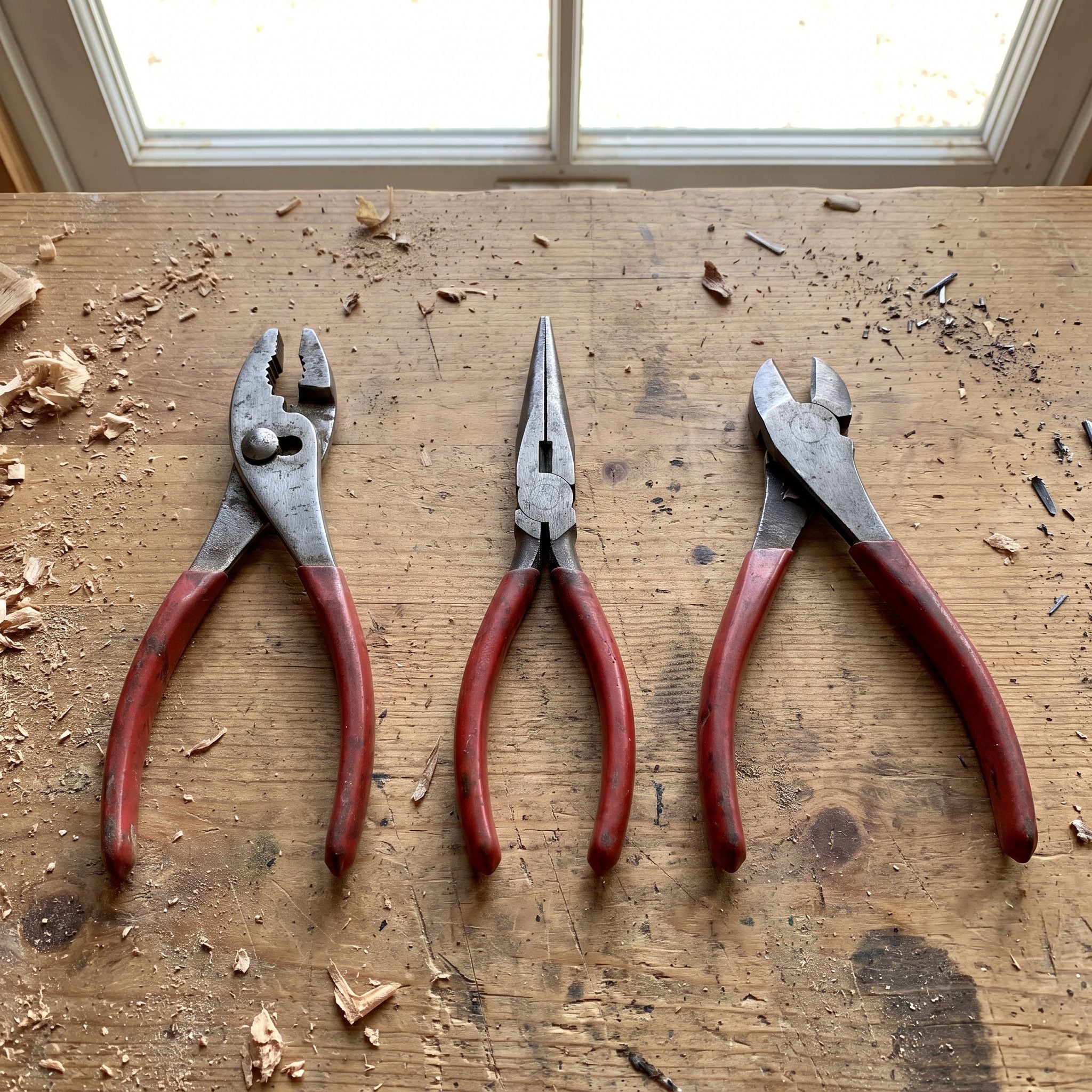
A basic three-piece pliers set could land around $12 to $20: slip-joint pliers for gripping, needle-nose for reaching into tight spaces, and diagonal cutters for wire.
Together they covered three very different jobs with almost no overlap. Needle-nose pliers retrieved dropped screws. Cutters dealt with wire and small fasteners. Slip-joints became the garage’s universal grabber, regularly asked to perform far beyond their job description.
28. Vise-Grip Locking Pliers: $6 in 1983
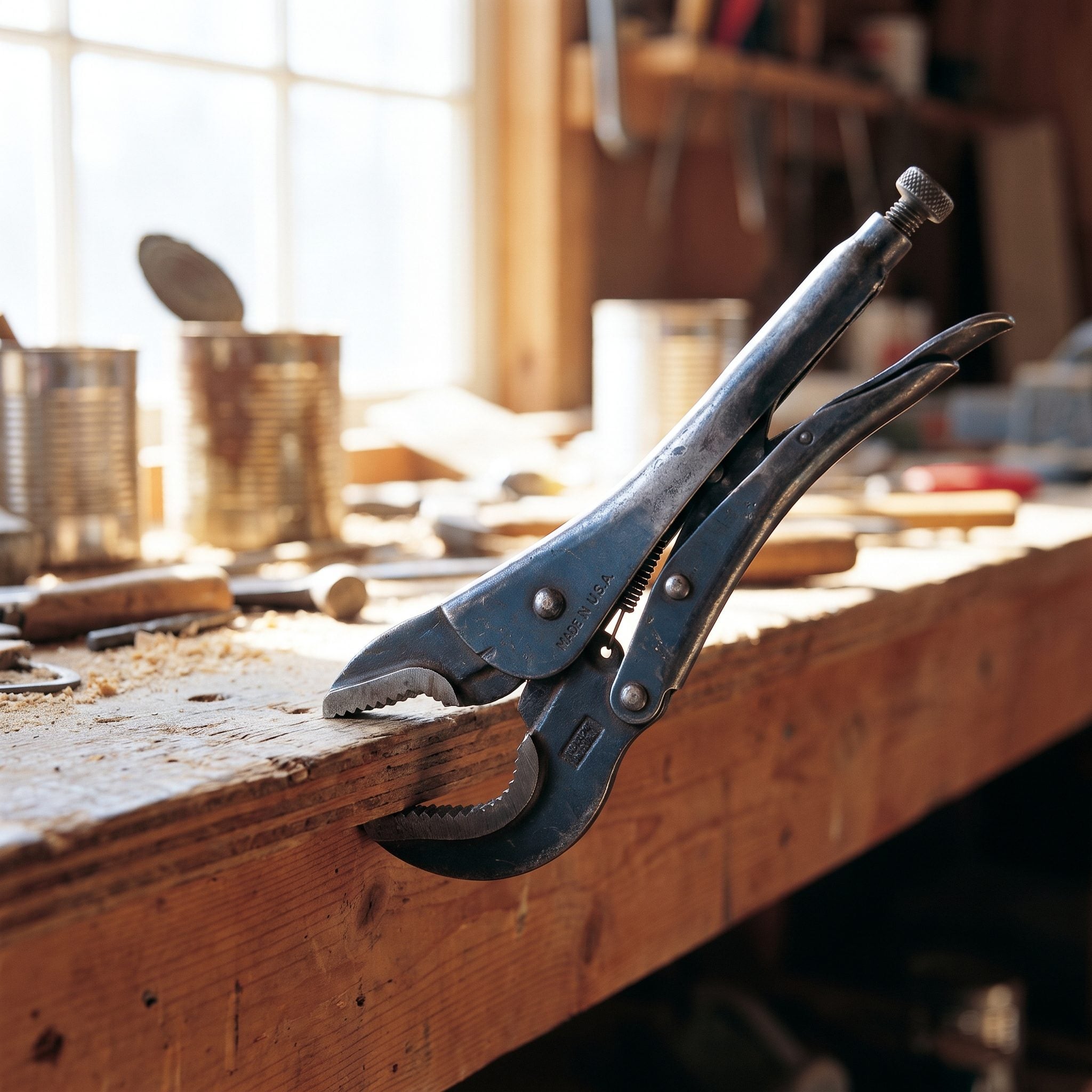
Locking pliers could cost around six dollars in the early 1980s. Vise-Grip became such a familiar name that it often stood in for the entire category.
The cleverness was concentrated in the adjusting screw and locking mechanism. Set the jaw opening, squeeze the handles, and the tool stayed put. That turned one pair of pliers into a clamp, temporary handle, stripped-fastener grabber, and emergency third hand.
27. The Pegboard Hand Saw: $9 in 1982

A solid crosscut hand saw could sell for around nine dollars in the early 1980s. Need a two-by-four shortened on Saturday morning? Unhook the saw and start cutting. No battery level. No extension cord. No charger hiding somewhere behind a paint can.
The better versions paired a decent steel blade with a shaped wooden handle that did not punish your hand halfway through the job. Sharpening could extend their lives considerably, which helped explain why some stayed on garage walls for years.
26. The Hacksaw: $7 in 1984
🔥 Would you like to save this?
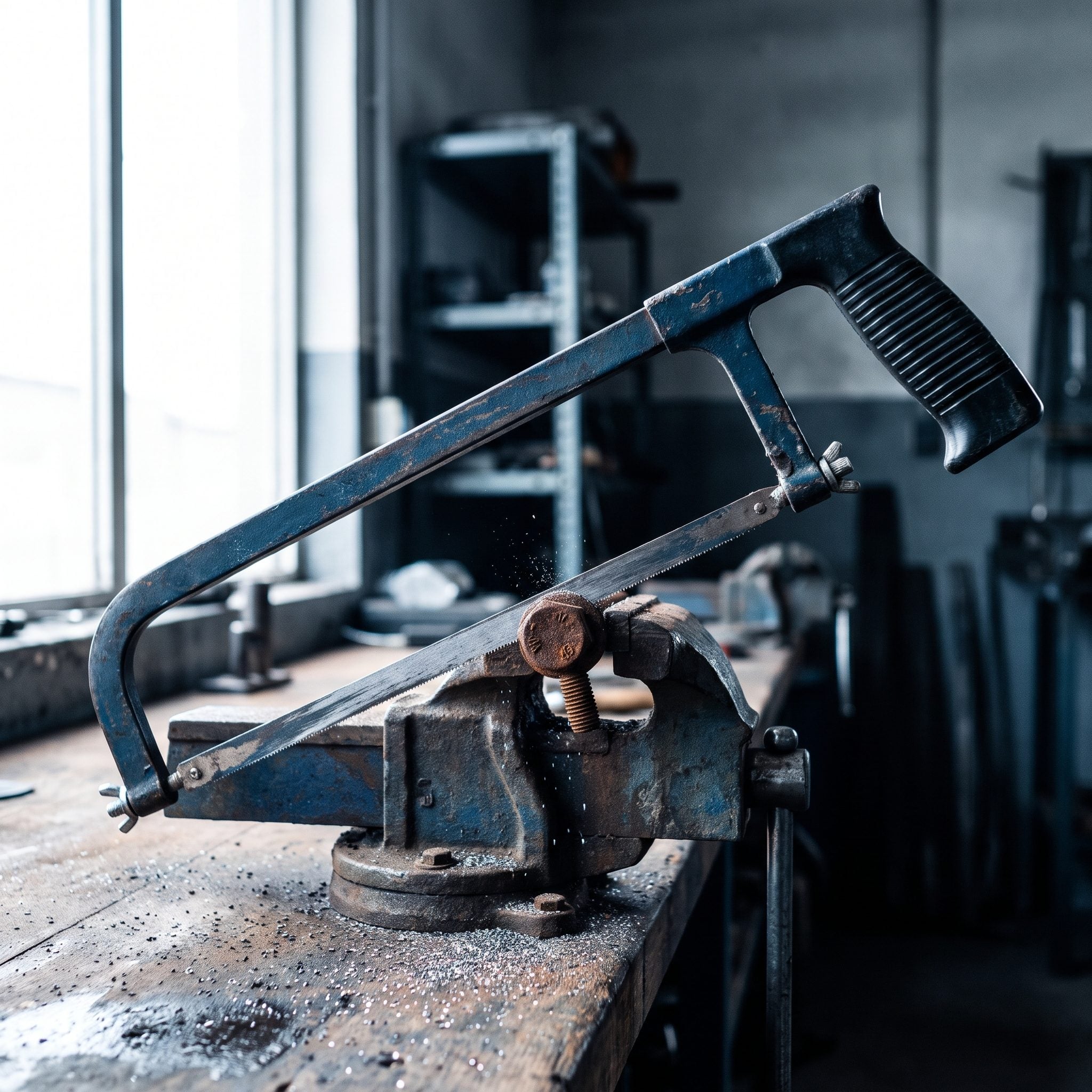
The hacksaw went after what the hand saw could not: metal tubing, bolts, brackets, and other stubborn pieces of hardware. A basic frame could cost around seven dollars, while replacement blades became the recurring expense.
Blade orientation mattered more than the simple frame suggested. Conventional hacksaw blades are normally mounted to cut on the push stroke, teeth pointing away from the handle. Put one in backward and a five-minute cut could begin to feel like a personal feud.
25. The Corded Electric Drill: $25 in 1982
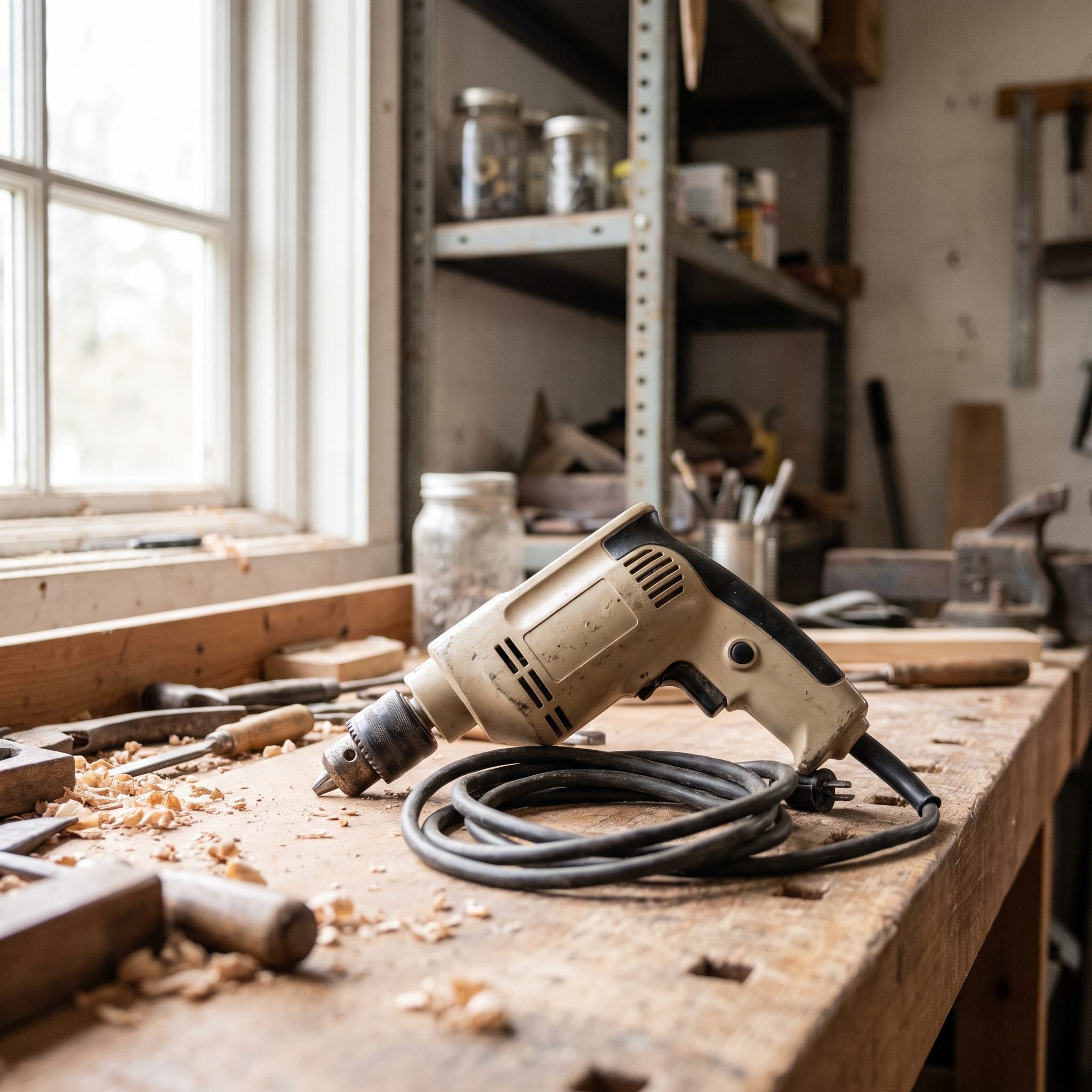
The corded drill was the power-tool workhorse. Around $25 could buy a capable machine that drilled holes, drove screws with the appropriate bit, spun wire brushes, mixed light materials, and generally justified its shelf space every weekend.
Cordless drills already existed, but early battery tools had nowhere near today’s combination of power, endurance, and convenience. The orange extension cord remained part of the drill’s ecosystem. Find an outlet, drag the cord across the floor, and get to work.
24. The Drill-Bit Set in a Metal Index Case: $15 in 1984
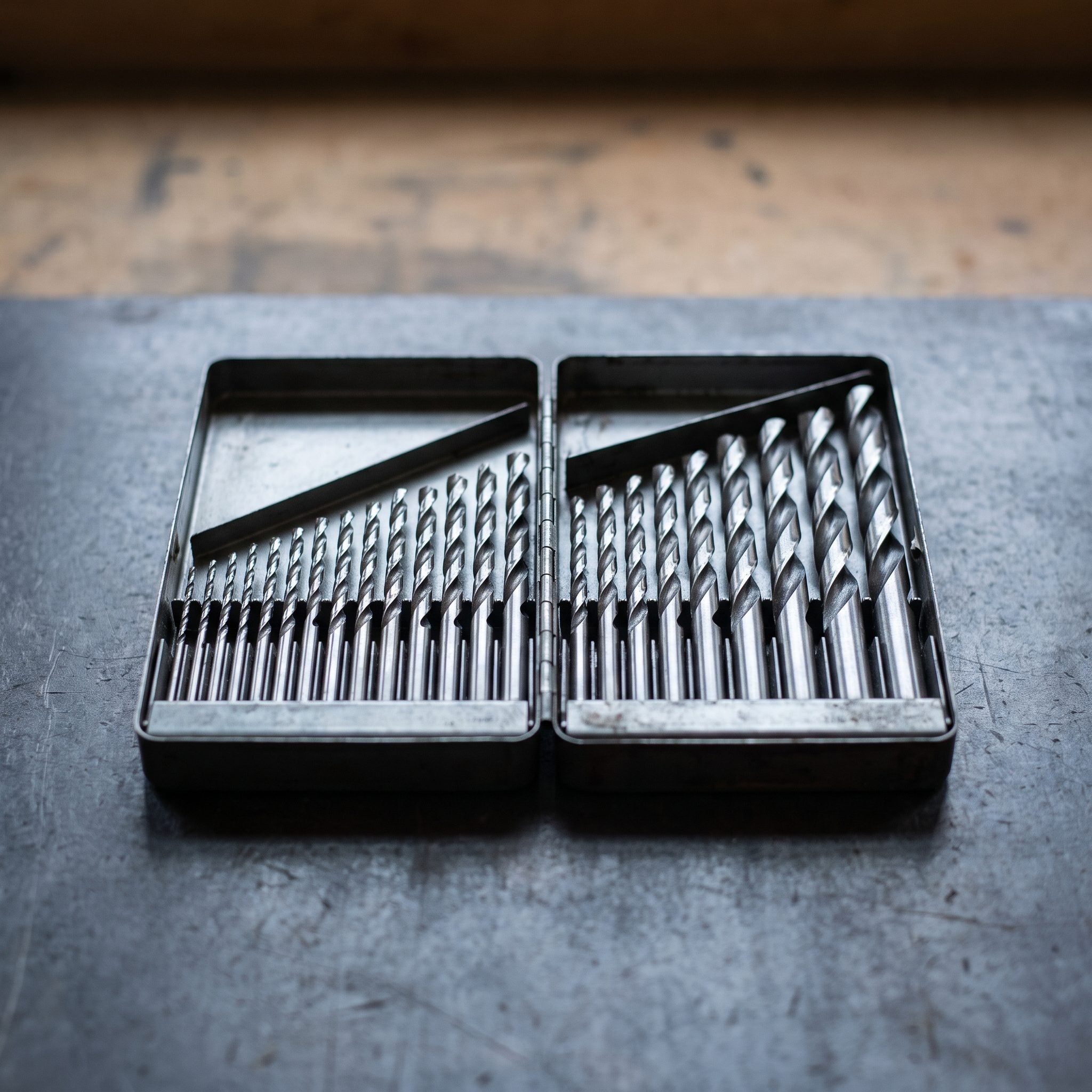
A graduated set of twist bits in a hinged metal index case might cost about $15. Flip open that little box and every diameter marched upward in perfect order from smallest to largest.
High-speed steel bits could handle wood, plastic, and suitable light-metal drilling when used correctly. The case also introduced one of workshop life’s small mysteries: the exact size you needed was usually the first empty hole.
23. The Circular Saw: $40 in 1983
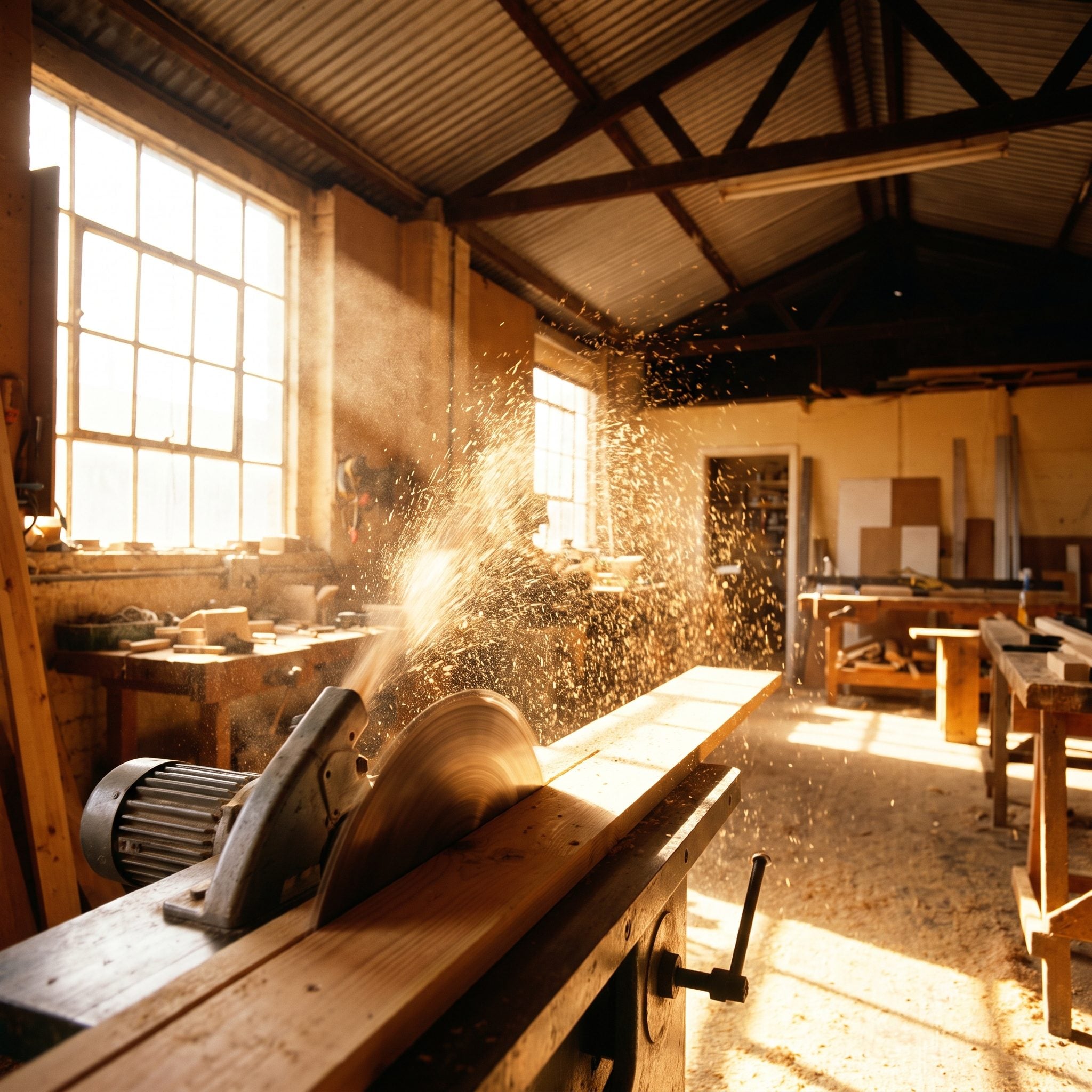
The circular saw changed the scale of what could happen in a home garage. Around $40 bought a machine capable of turning plywood sheets, framing lumber, and shelving stock into project-sized pieces with a speed no hand saw could approach.
The sensory memory is almost architectural: the motor climbing in pitch, the blade entering pine, the plume of warm sawdust behind the cut. Suddenly a pile of lumber could become a wall, cabinet, deck, or questionable backyard masterpiece before dinner.
22. The Jigsaw for Curves and Awkward Cuts: $30 in 1985
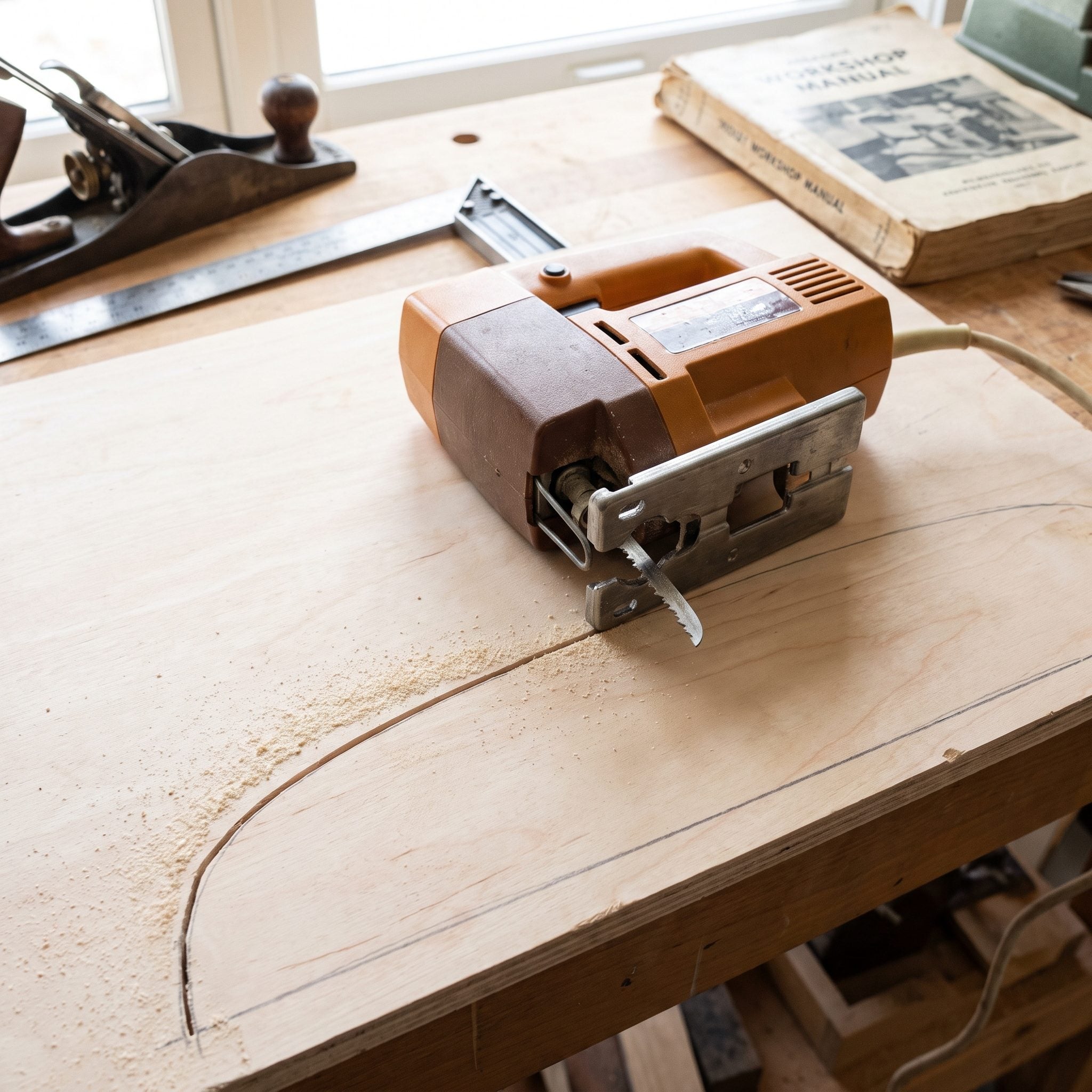
The jigsaw took over where the circular saw’s straight-line confidence ended. Curves, interior openings, rounded corners, homemade signs, and all the slightly ambitious cuts now had their own machine.
At roughly $30, it bought freedom more than speed. The narrow reciprocating blade could follow a much tighter radius than a circular saw, although patience still mattered. Push too aggressively and the neat pencil line could become an archaeological suggestion.
21. The Workbench Tape Measure: $5 in 1981
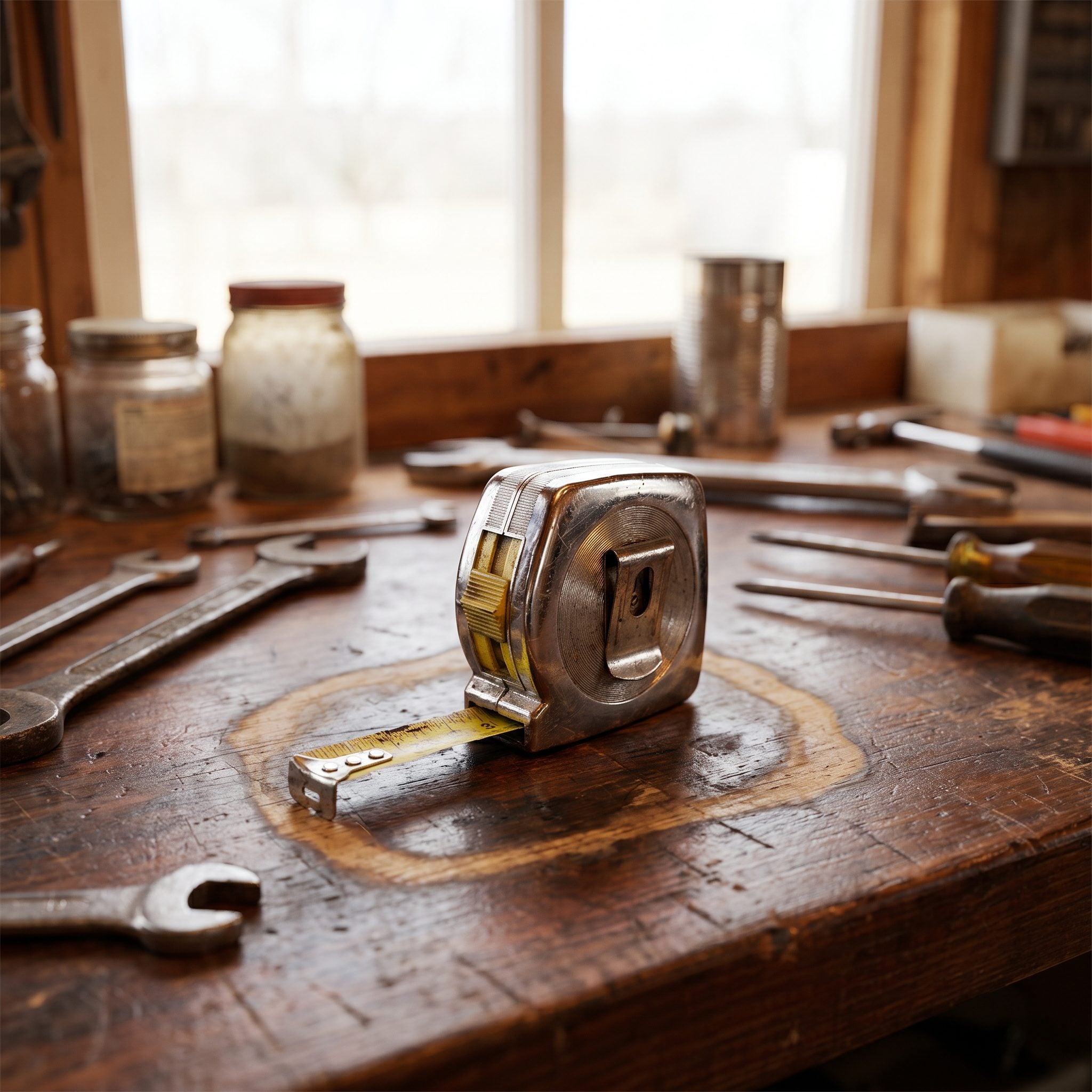
Five dollars bought one of the least glamorous tools in the room and one of the most frequently reached for. Shelves, doorways, boards, windows, appliances, and the suspicious gap beside the refrigerator all eventually met the tape.
Better models had wider blades that could extend farther before collapsing. Cheaper tapes folded early and usually at the exact moment somebody was trying to read the measurement from the other side of the room.
20. The Carpenter’s Level: $8 in 1983
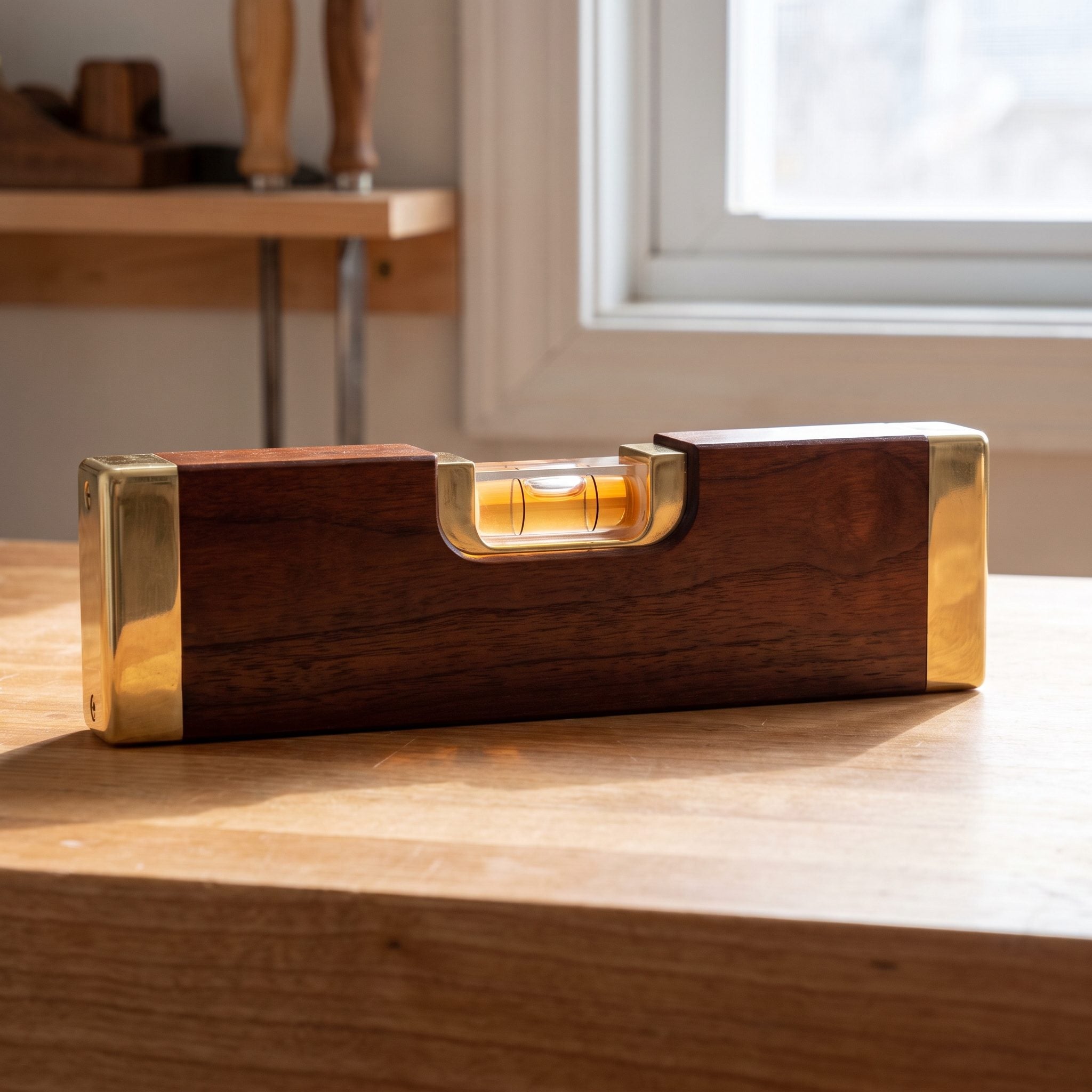
A carpenter’s level could cost around eight dollars, with handsome wood-bodied versions and metal models filling workshop walls at different price points.
The principle was beautifully primitive. Put the tool against the work, watch the bubble wander, and keep adjusting until it settled between the lines. No display, calibration beep, or app required. The bubble simply disagreed with your eyes until the shelf was actually straight.
19. The Combination Square: $10 in 1985
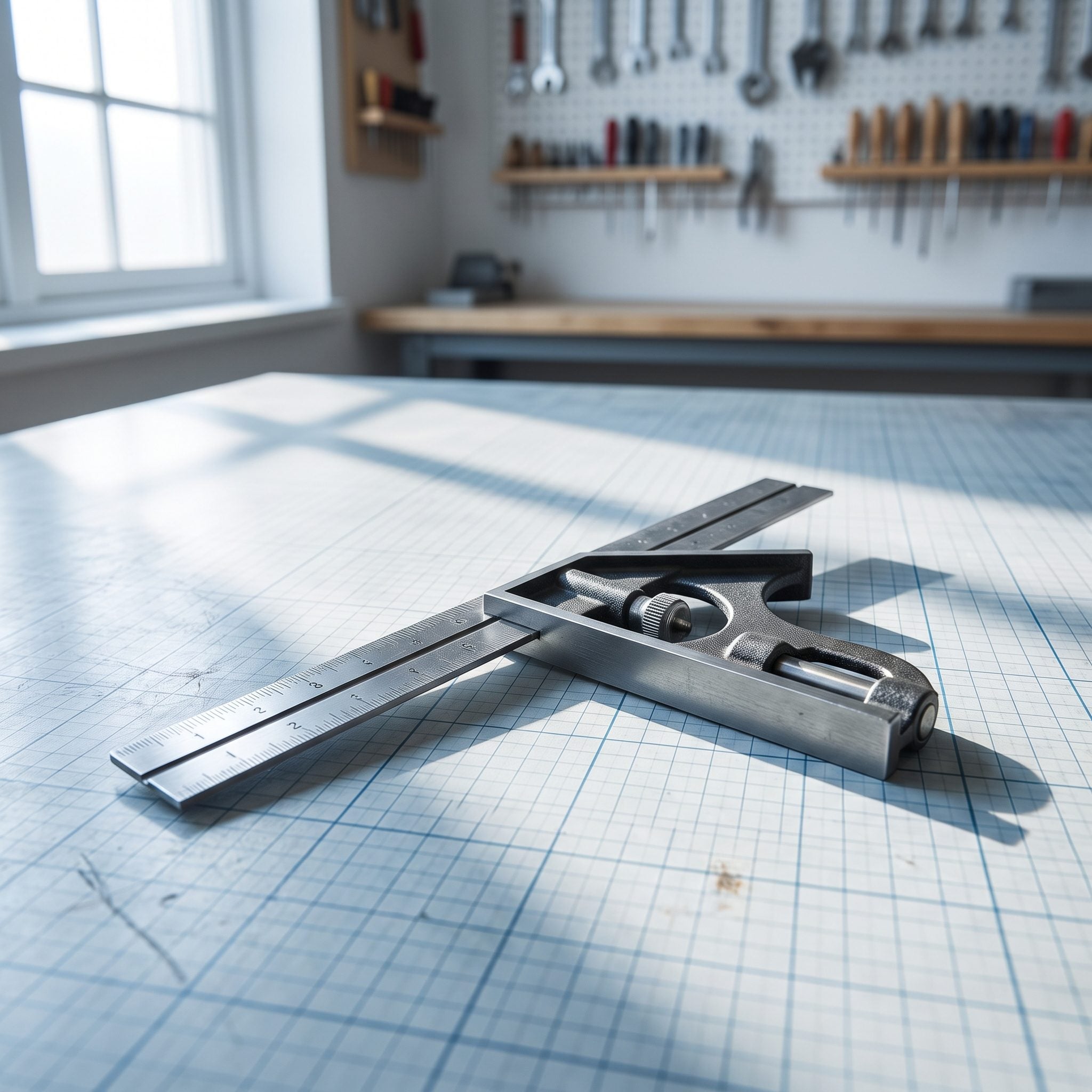
The combination square might run around ten dollars, yet it packed several jobs into one compact tool: checking 90 degrees, marking 45s, gauging depth, transferring measurements, and drawing a clean line across stock.
This was where improvisation gave way to precision. A board that had looked straight enough suddenly had evidence presented against it.
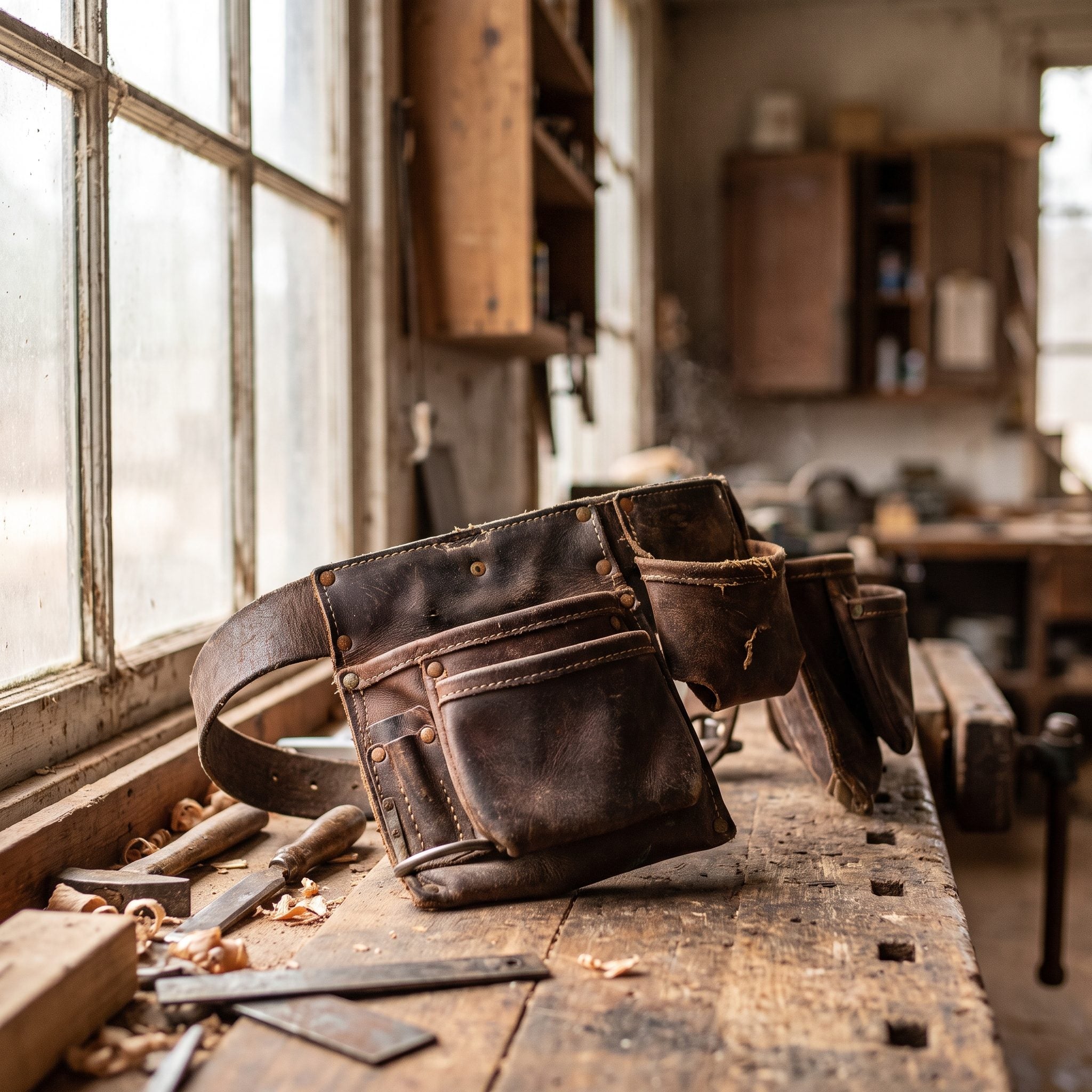
18. The Leather Tool Belt That Molded to Your Hips: $20 to $45
A leather carpenter’s belt could run $20 to $45, and few workshop objects changed character more dramatically with use. Fresh leather was stiff and almost architectural. Months of nails, pencils, hammers, sweat, and sawdust softened it into something shaped around its owner.
The pockets sagged. The hammer loop polished where steel rubbed against leather. Scratches stopped looking like damage and started looking like a record of work. New tool belts were products. Old ones looked biographical.
17. The Bench Grinder That Sharpened Almost Everything: $35 to $50
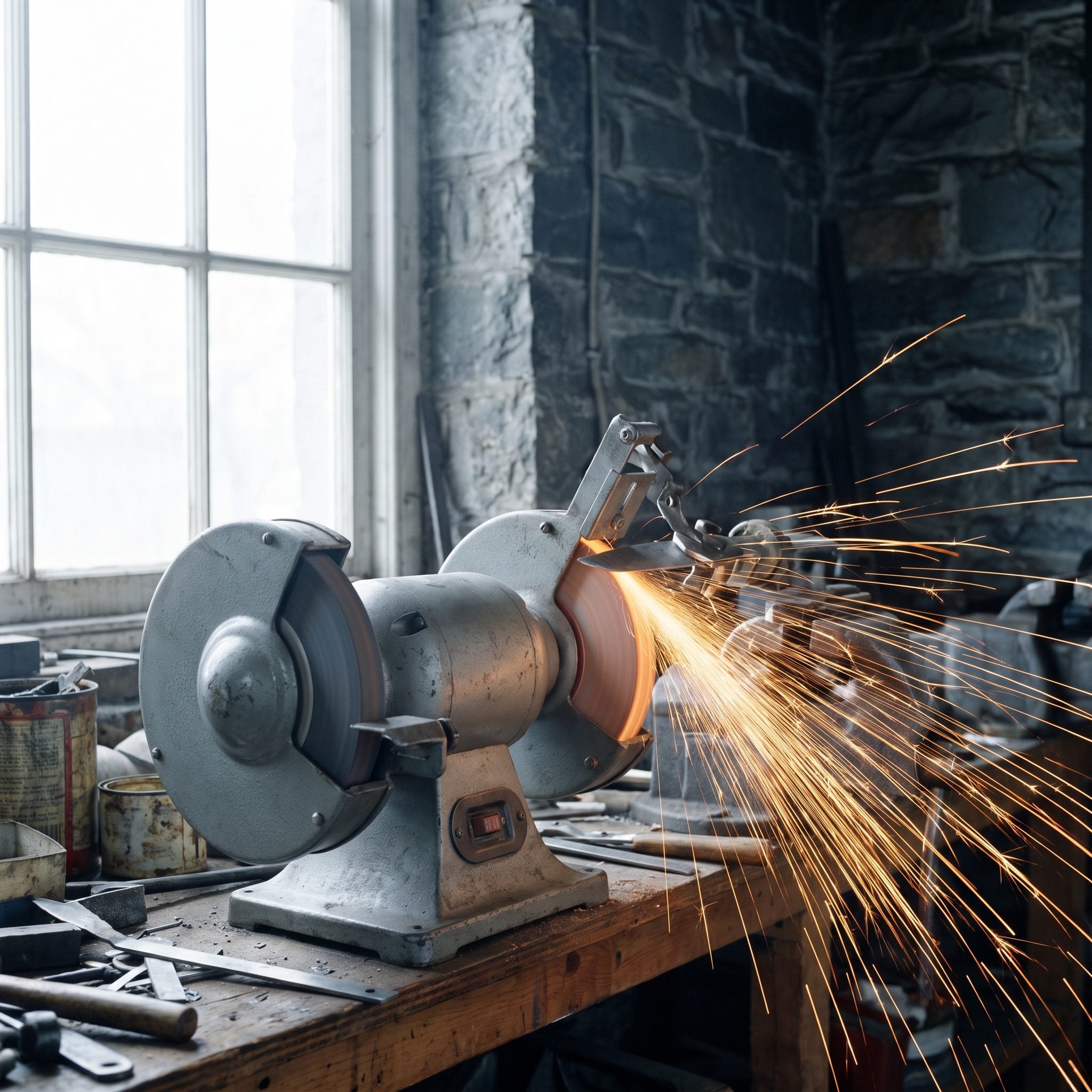
A decent bench grinder could run roughly $35 to $50. That made it a serious purchase, but one machine could touch up mower blades, chisels, punches, and other steel tools for years.
Its appeal was almost aggressively mechanical: motor in the middle, grinding wheel on either side, switch in front. Bolt it to the bench and the workshop gained its own shower of sparks.
16. The Orbital Sander Nobody Wanted to Hold for Long: $25 to $35
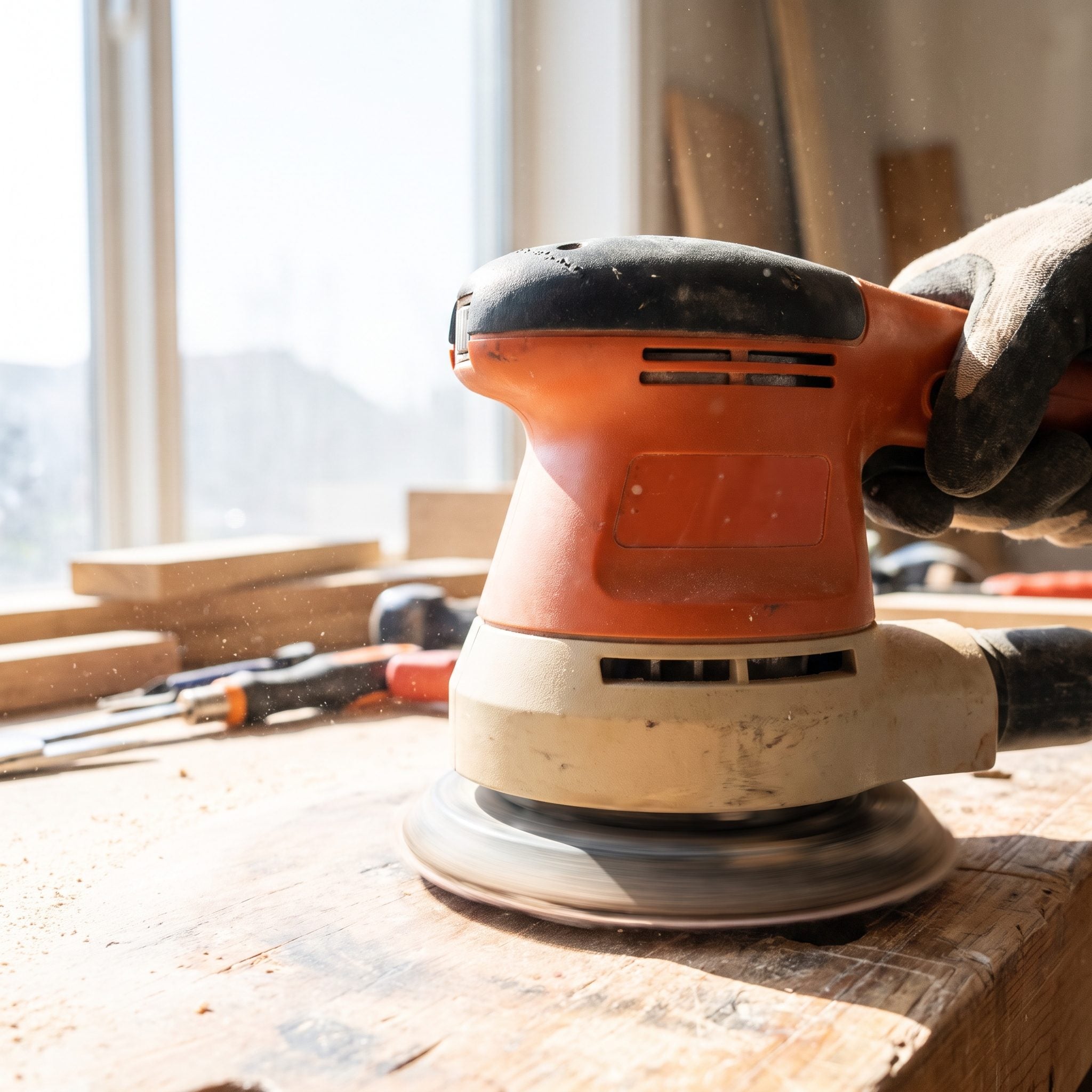
A finishing sander might cost around $25 to $35, and the price felt almost suspiciously modest once the machine had buzzed through your palm for ten minutes and turned the air the color of whatever board you were sanding.
Still, it collapsed hours of hand sanding into manageable work. Tabletops, doors, shelves, and patched surfaces lost their rough edges quickly. The tool was affordable. The sandpaper somehow never was, mostly because the last usable sheet vanished five minutes before the job ended.
15. The Caged Trouble Light That Ran Hot Enough to Burn: $6 to $10
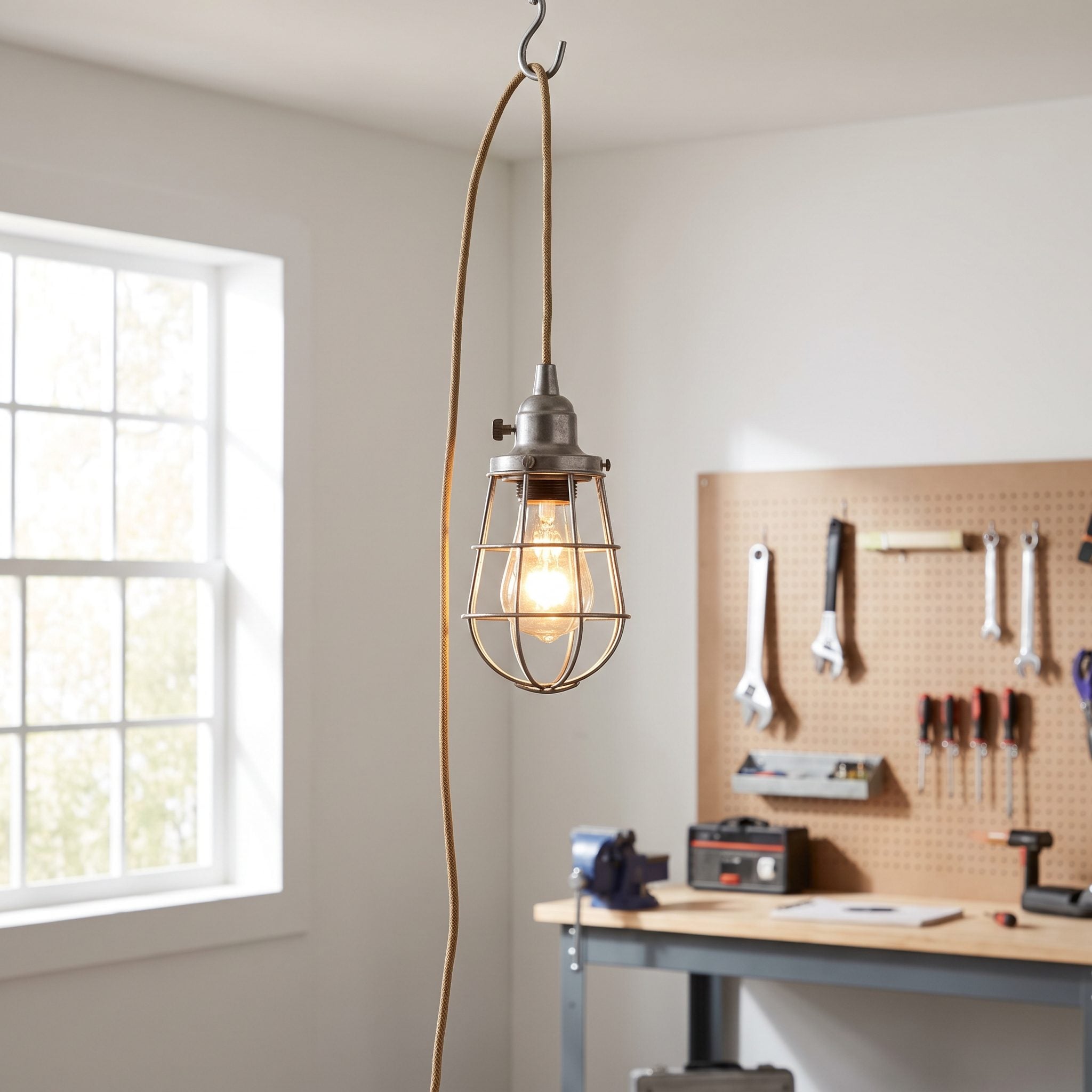
A basic trouble light might cost $6 to $10: incandescent bulb, metal cage, hanging hook, long cord. Elegant it was not. Useful in an engine bay or beneath a sink, absolutely.
The bulb produced enough heat to make careless contact memorable, while the cage protected the glass from the bumps and knocks that came with dragging a light into awkward places. It illuminated everything with that unmistakable warm workshop glow long before LEDs made the whole arrangement seem faintly prehistoric.
14. The Orange Extension Cord You Tripped Over Every Time: $12 to $20
🔥 Would you like to save this?
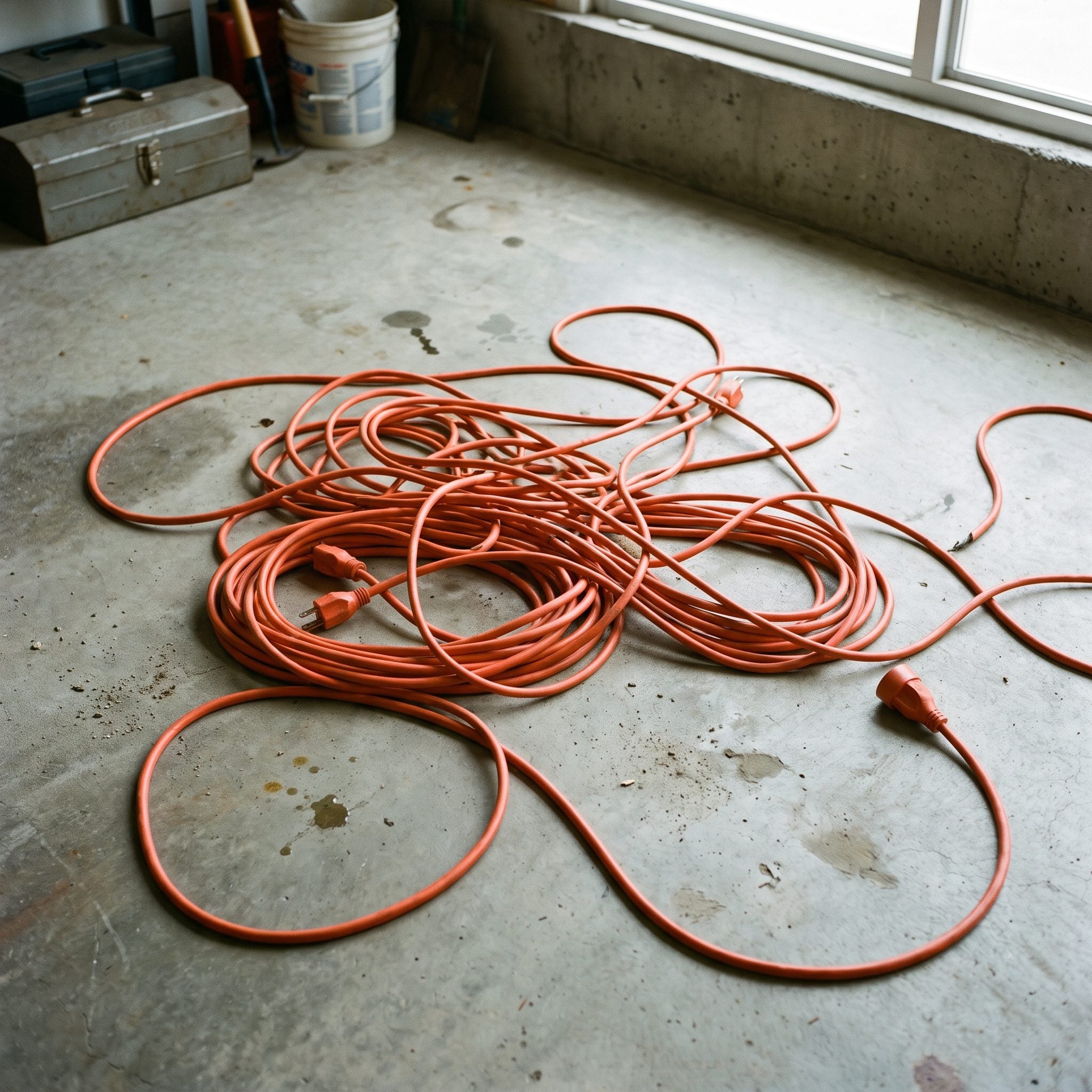
A good 50-foot heavy-duty extension cord could run $12 to $20. In a workshop built around corded drills, saws, sanders, grinders, and trouble lights, it was less an accessory than circulatory system.
Orange became almost part of the scenery: looped over a hook, tangled beneath a bench, stretched across the driveway, or sitting precisely where a boot wanted to land. A sound cord could last for years. Once the insulation cracked or the plug failed, though, nostalgia stopped being a good reason to keep it.
13. The Shop Vac Buried Under a Decade of Its Own Dust: $60 to $90
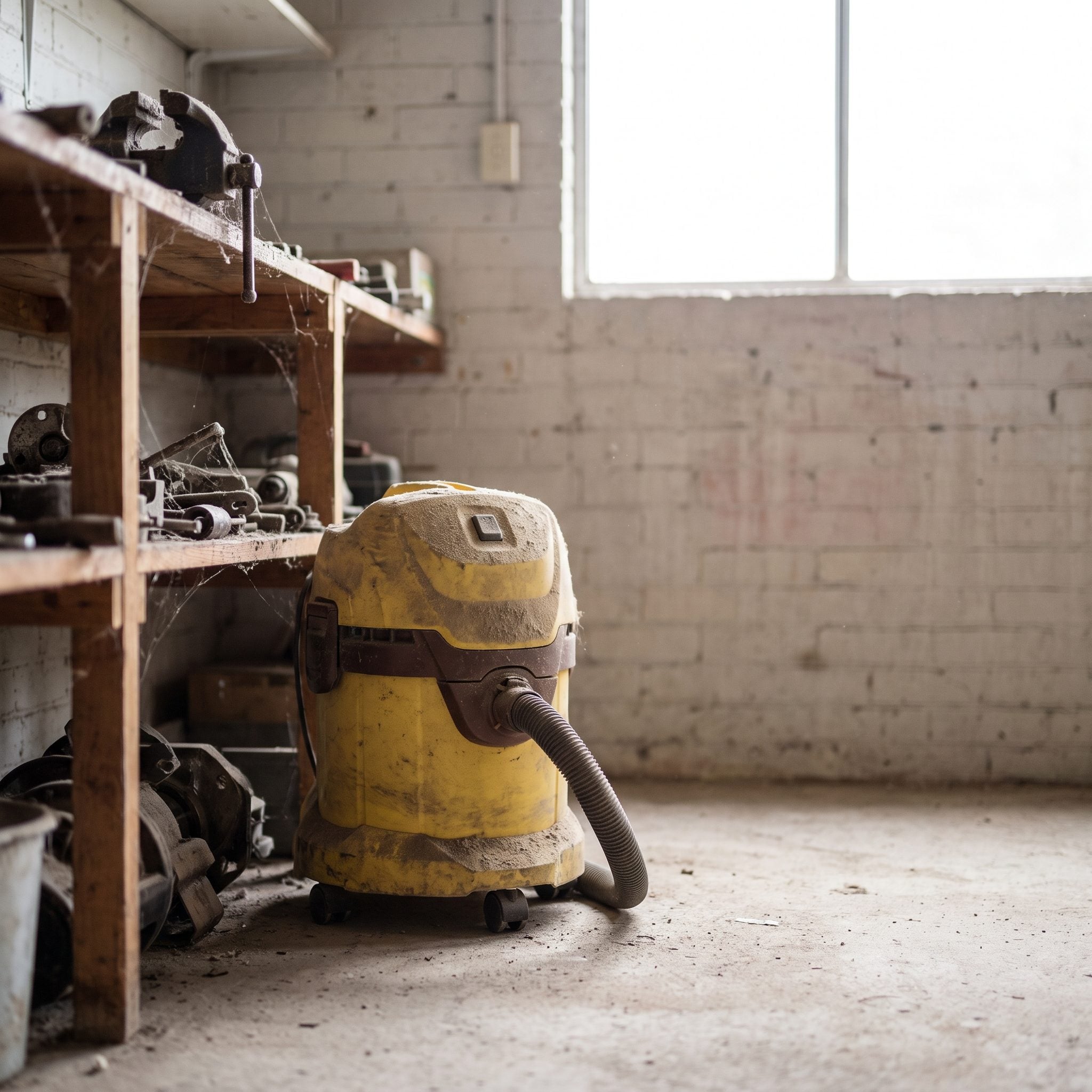
A wet-dry vacuum could cost $60 to $90, making it one of the more substantial purchases in the garage. In return, it swallowed sawdust, dirt, spilled water, loose debris, and much of the evidence left behind by everything else in this gallery.
The paradox was perfect: the machine purchased to remove dirt invariably developed a permanent gray film of its own. By that point it looked less like an appliance than another piece of workshop infrastructure.
12. The Gray Metal Shelving Groaning Under Paint Cans: $30 to $50 a Unit
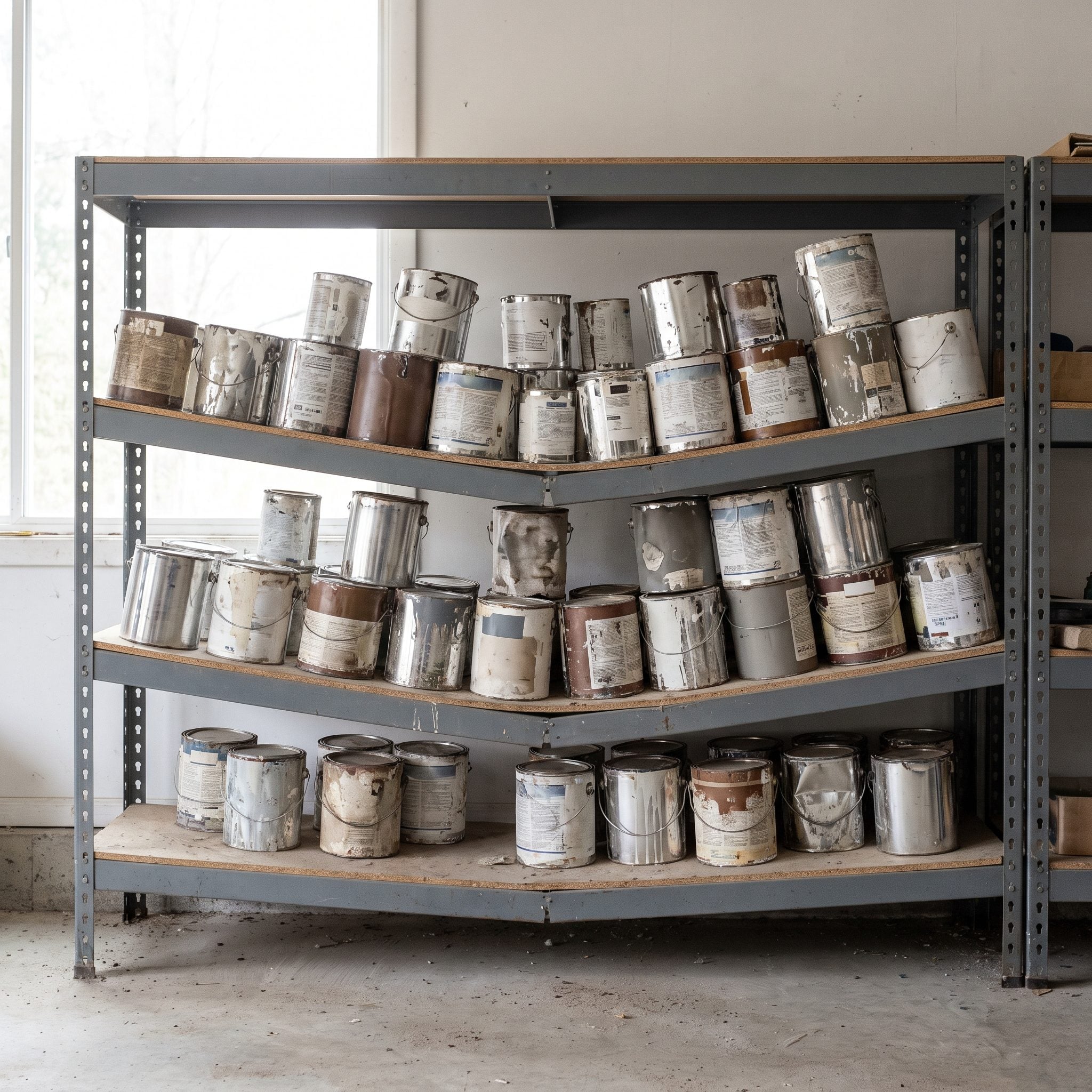
A steel utility shelving unit could run $30 to $50 and instantly become the archaeology department of the house. Paint from rooms no longer painted that color. Oil for vehicles no longer owned. Half a box of tile. A mysterious bracket everyone was afraid to discard.
Slotted angle construction allowed shelves to be repositioned, at least theoretically. More often the whole unit was assembled once, loaded beyond aesthetic redemption, and left to bow gently beneath twenty years of good intentions.
11. Coffee Cans and Baby Food Jars Full of Hardware: Free, If You Saved Them
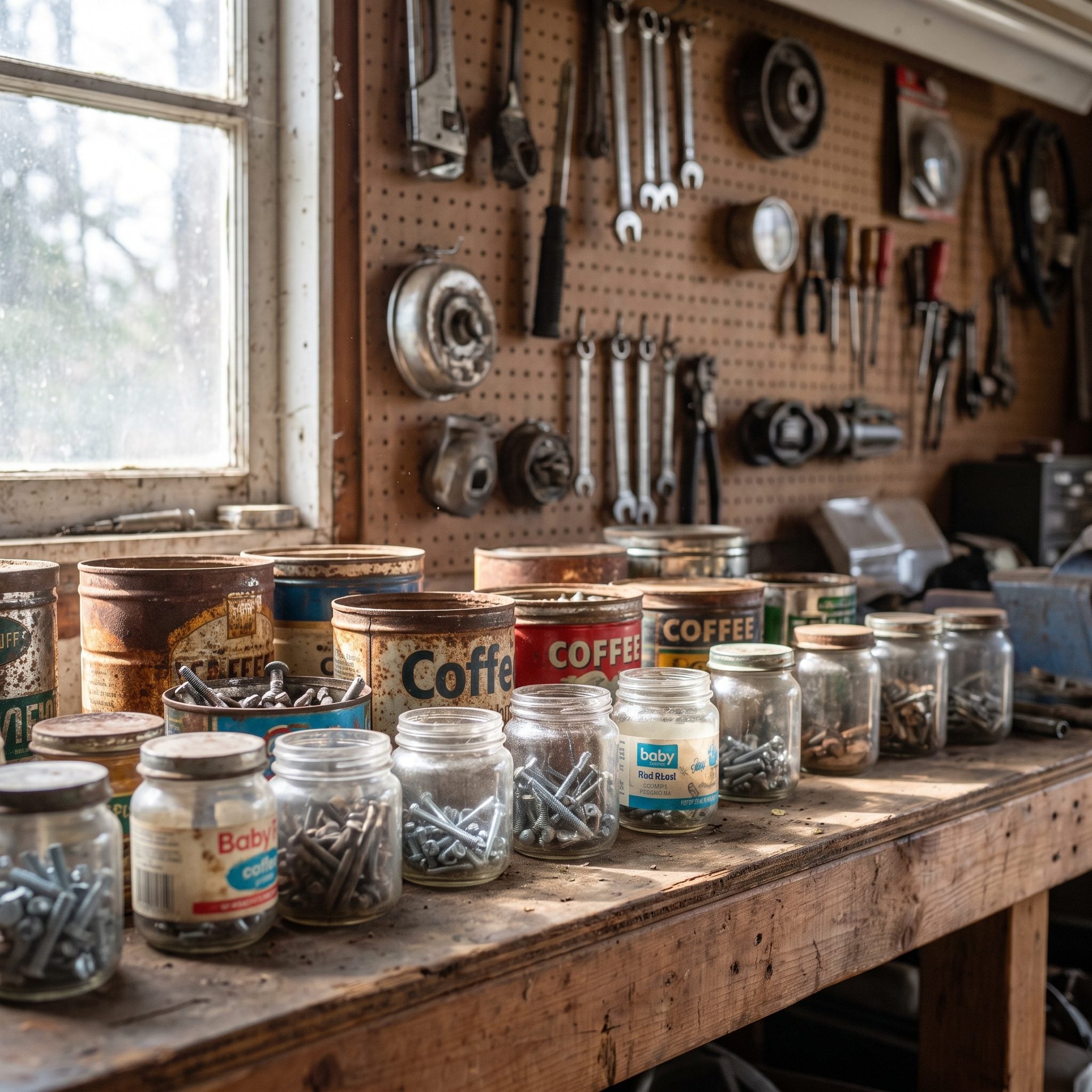
This storage system cost exactly what the coffee or baby food had already cost. Metal cans, glass jars, and mayonnaise containers accumulated screws, washers, nails, cotter pins, electrical connectors, and unidentifiable hardware with tremendous confidence.
The cleverest version screwed jar lids beneath a shelf so the glass containers twisted into place overhead. Cheap, visible, compact, and impossible to improve without making it more expensive.
10. The Little Metal Parts Cabinet With Forty Tiny Drawers: $15 to $30
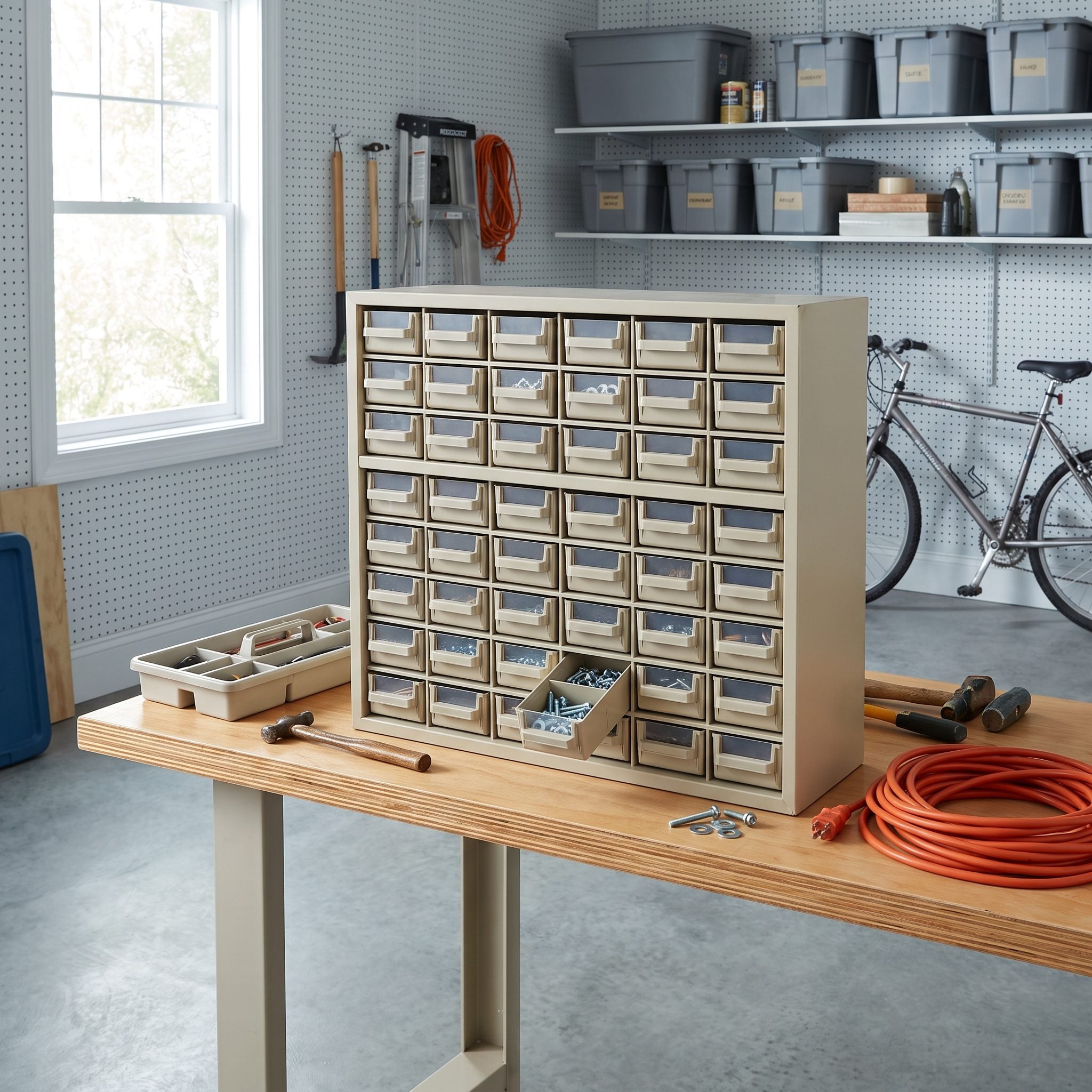
The multi-drawer parts cabinet was the moment random hardware received a bureaucracy. For $15 to $30, dozens of little drawers appeared, ready for labels written in ballpoint pen on masking tape.
The ideal was one fastener type per drawer. Reality was less disciplined. A few compartments became densely populated civilizations while others contained a single spring whose purpose disappeared sometime during the Reagan administration.
9. The Aluminum Stepladder Leaning Where It Always Leaned: $25 to $40
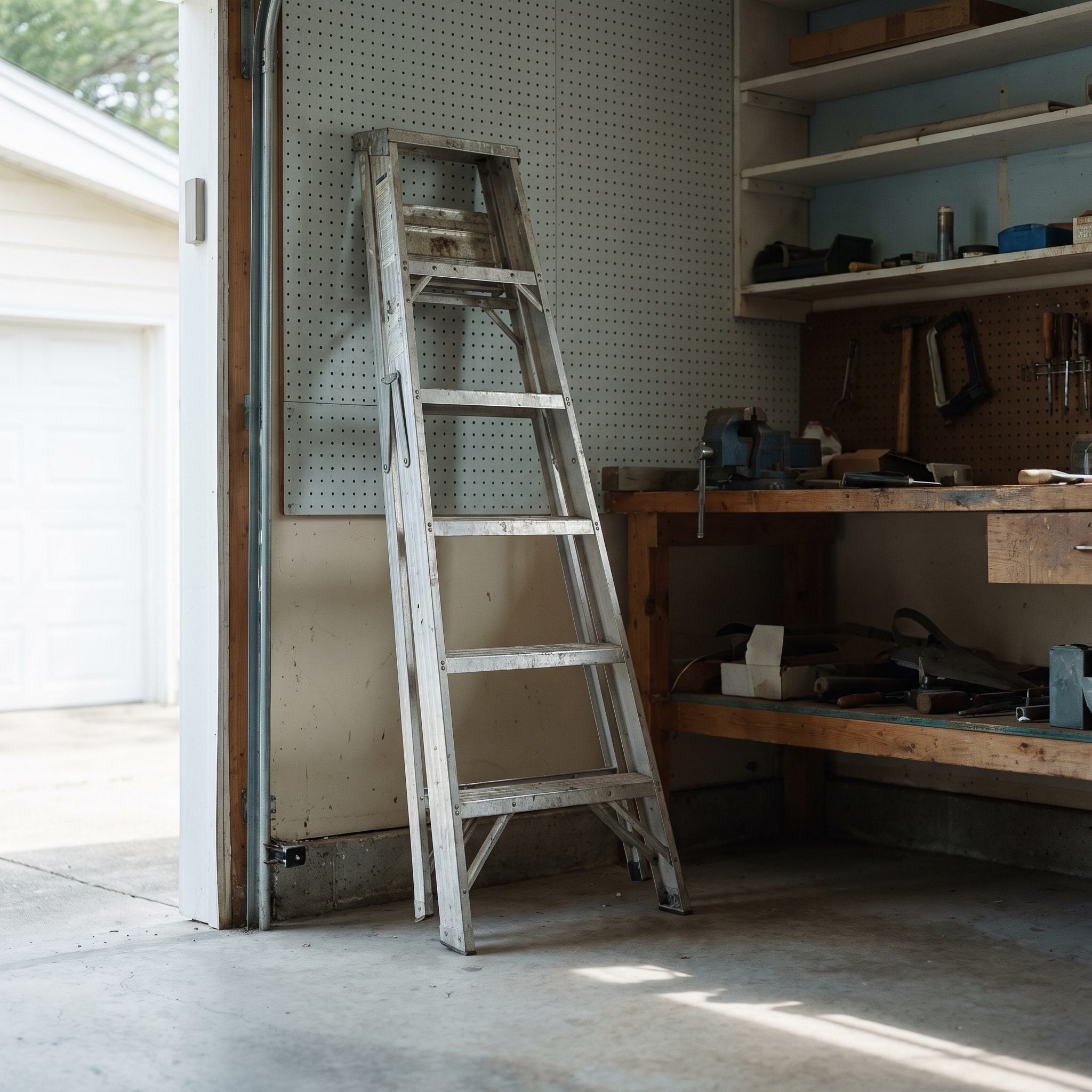
A folding aluminum stepladder could cost roughly $25 to $40. Light enough to move easily and useful far beyond the workshop, it tended to occupy one permanent strip of wall until somebody needed access to everything stored above head height.
Paint flecks, worn feet, scratched rails, and fading labels gave old ladders a familiar patina, but the working parts mattered more than the cosmetics. Sound hinges, intact steps, secure spreaders, and good feet were what kept an ordinary climb ordinary.
8. The Hydraulic Floor Jack: $30 to $50 in the Mid-1980s
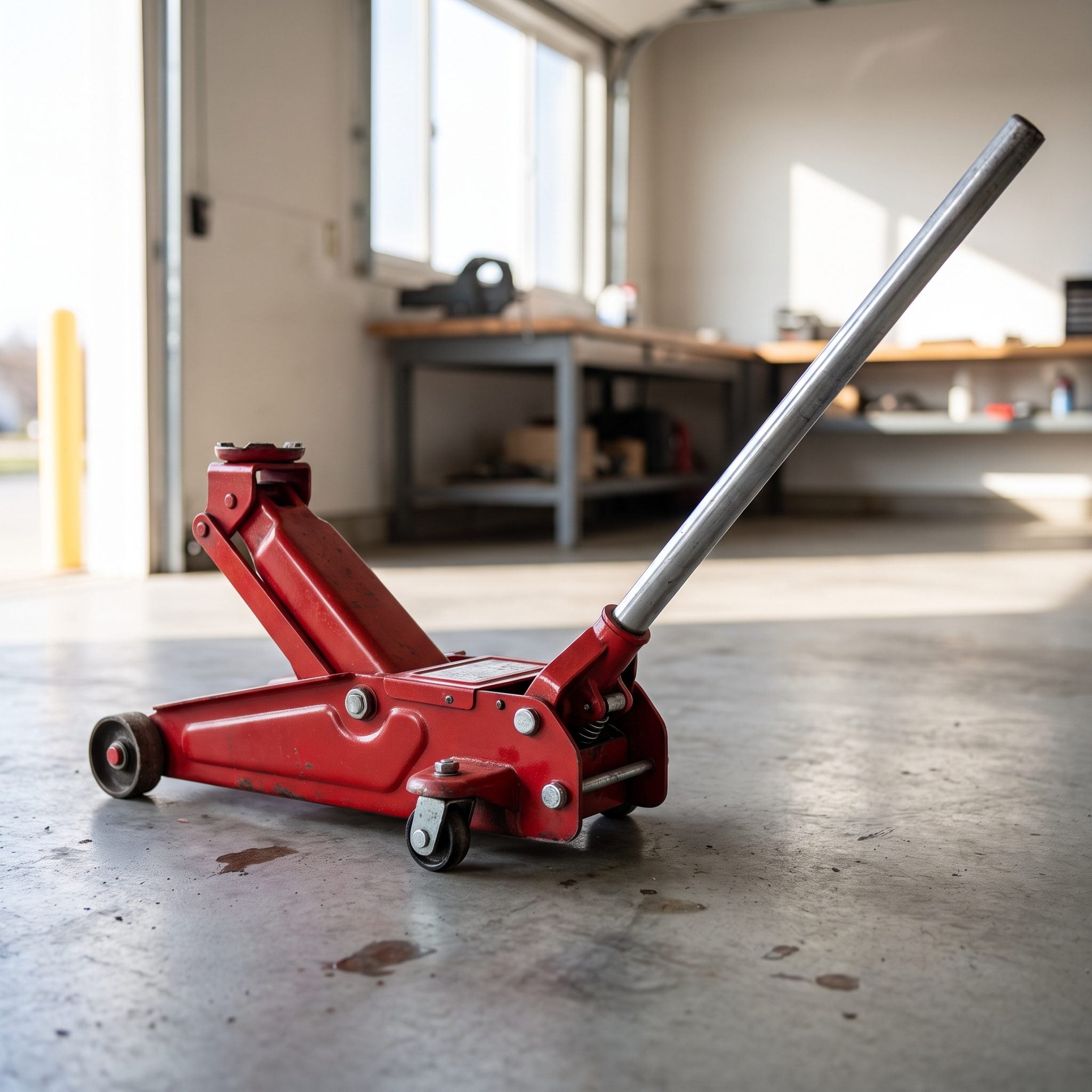
A steel hydraulic floor jack might cost roughly $30 to $50 in the mid-1980s. Heavy, low, and usually painted red, it was the machine that transformed a driveway into a temporary service bay.
The steel construction gave many older jacks impressive heft and longevity, but a hydraulic jack was never something to trust as the sole support beneath a vehicle. Its job was lifting. The next item handled the part that mattered once the wheels left the ground.
7. A Pair of Jack Stands: $15 to $25
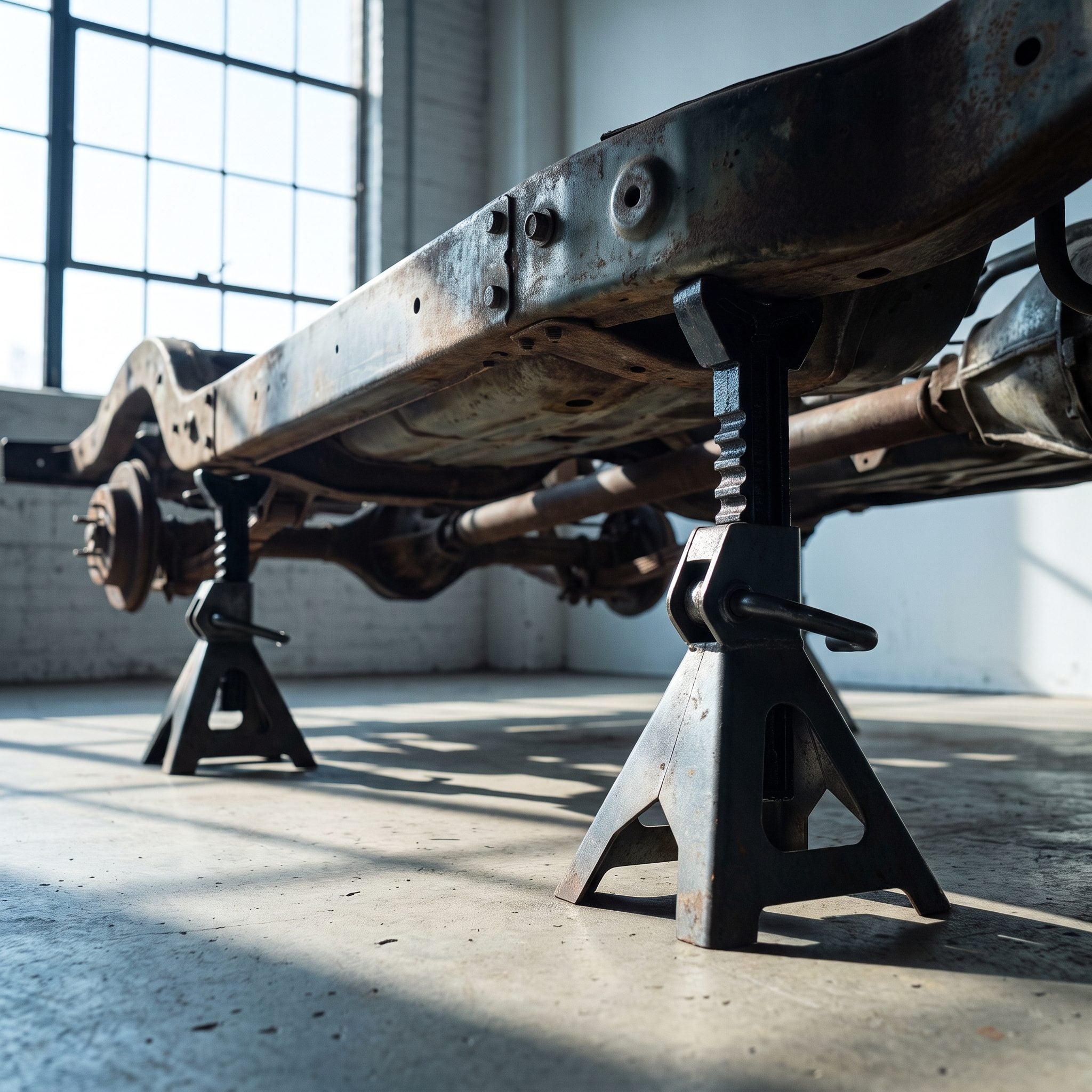
A pair of steel jack stands might cost only $15 to $25, yet they performed the critical job the hydraulic jack was not supposed to do: support the vehicle once it had been raised.
That distinction gave them an outsized place in a home garage. The jack moved the weight. Properly positioned stands held it. Not glamorous, not complicated, and far more important than their price suggested.
6. The Battery Charger That Rescued a Dead Sedan: $30 to $60
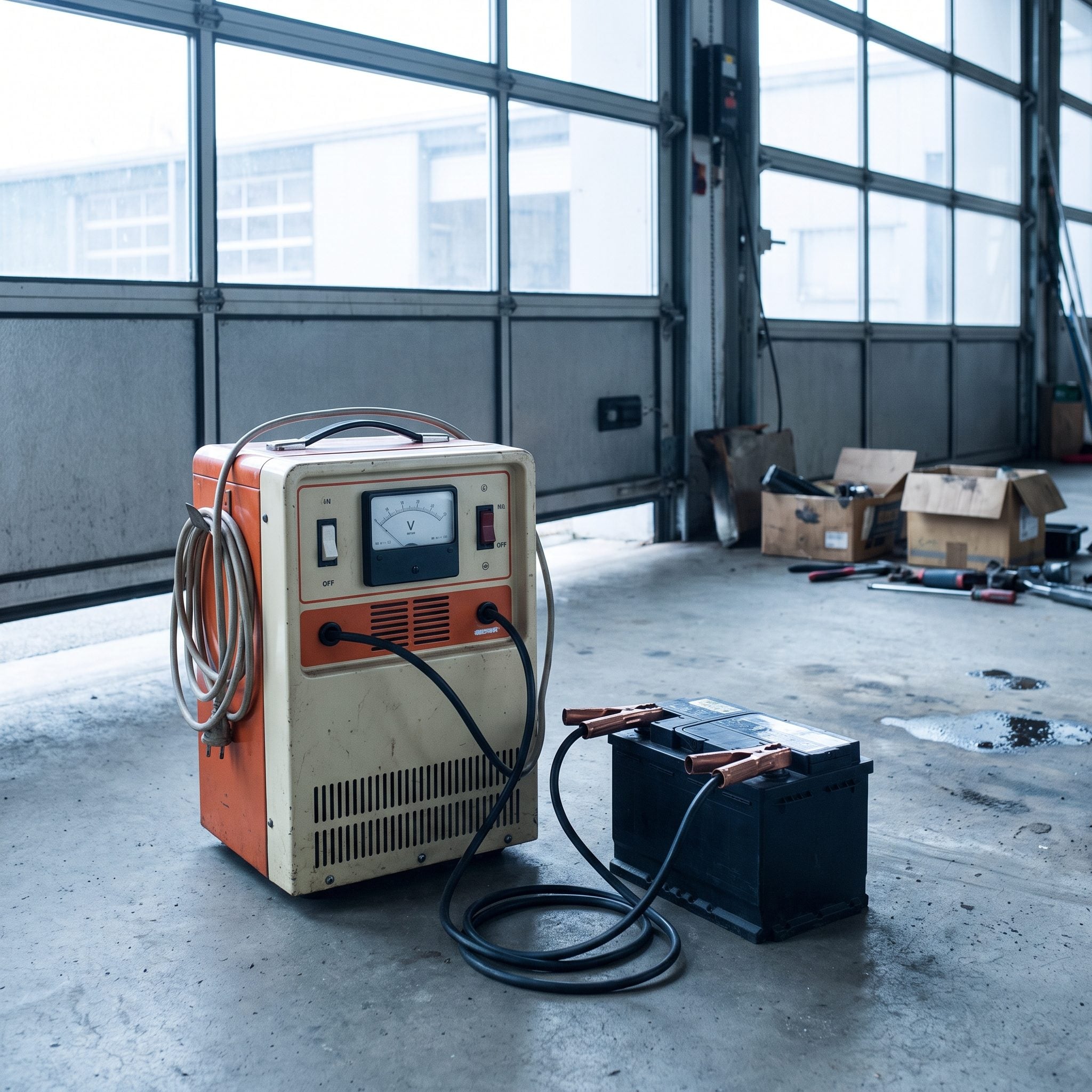
A boxy battery charger could run $30 to $60, often with a large analog ammeter on the face and almost nothing resembling modern electronics.
The ritual was slower than today’s smart-charger experience. Connect it according to the manufacturer’s procedure, select the appropriate setting, watch the needle, and wait. No app notification arrived when the sedan decided it had enough electricity to reconsider its morning.
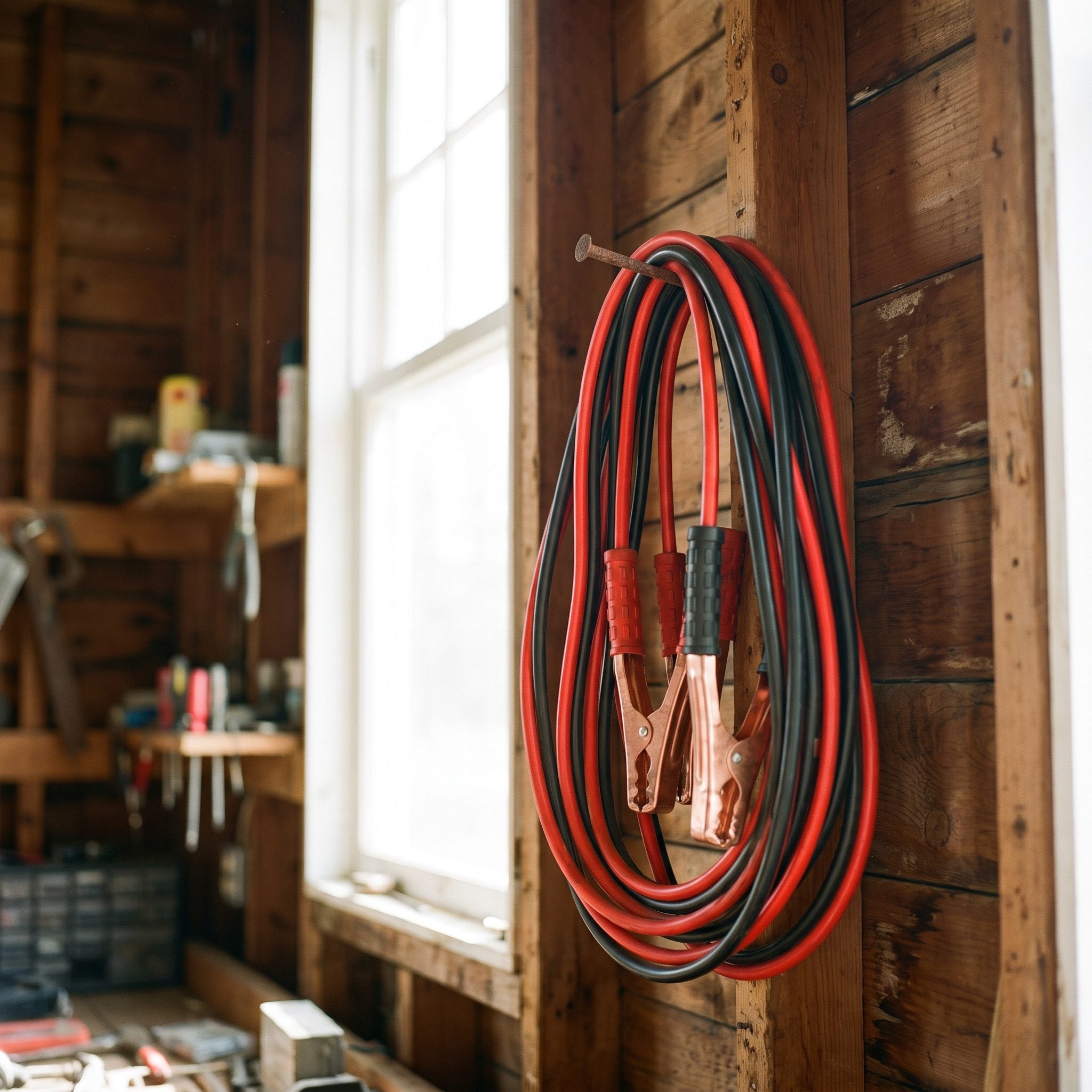
5. Jumper Cables on a Nail: $8 to $20
🔥 Would you like to save this?
A basic set of jumper cables might start around eight dollars, while heavier-gauge cables with more substantial clamps pushed toward $20.
They spent most of their lives looped over a hook or buried in a trunk, then abruptly became the most valuable object on the block when a battery went flat. The best feature was not technological at all: one functioning car could help another. Actual hookup procedures depend on the vehicle, particularly because sparks and batteries are a bad combination.
4. The Pencil Tire Gauge and Basic Car Tool Kit: $2 for the Gauge, $40 to $80 for the Kit
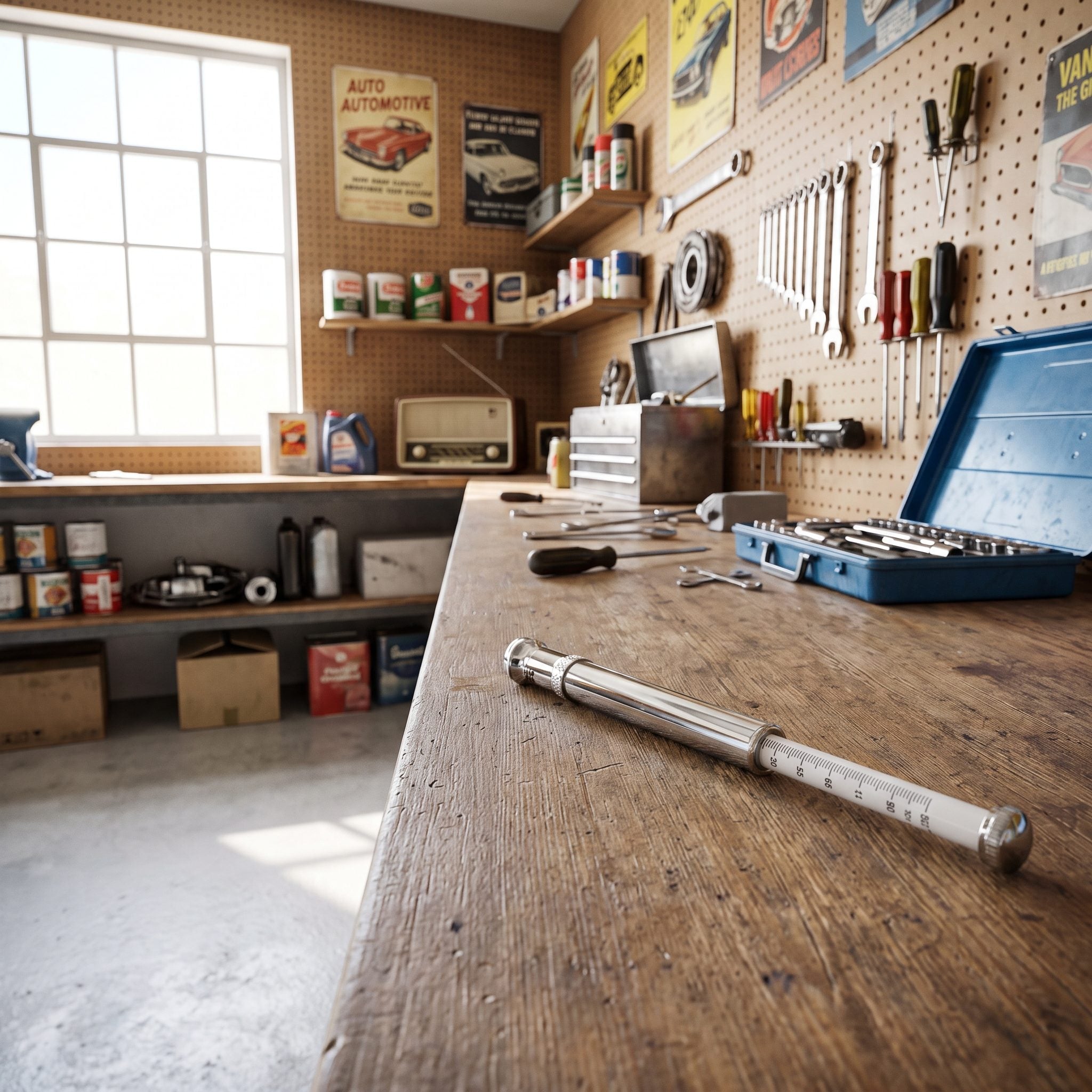
Two dollars could buy the chrome pencil-style tire gauge with the little white measuring stick that shot out when pressure entered the barrel. It was small enough to disappear into a glove compartment for years and simple enough to require no battery, screen, or explanation.
A basic automotive tool kit cost far more, perhaps $40 to $80 depending on the assortment. By this point most of its ingredients should look familiar: sockets, wrenches, screwdrivers, and other hand tools gathered into one portable case for the driveway or trunk. The important shift was location. The workshop was becoming mobile.
3. The Saturday Maintenance Trio: Drain Pan, Funnel, and Grease Gun for Under $30 Total
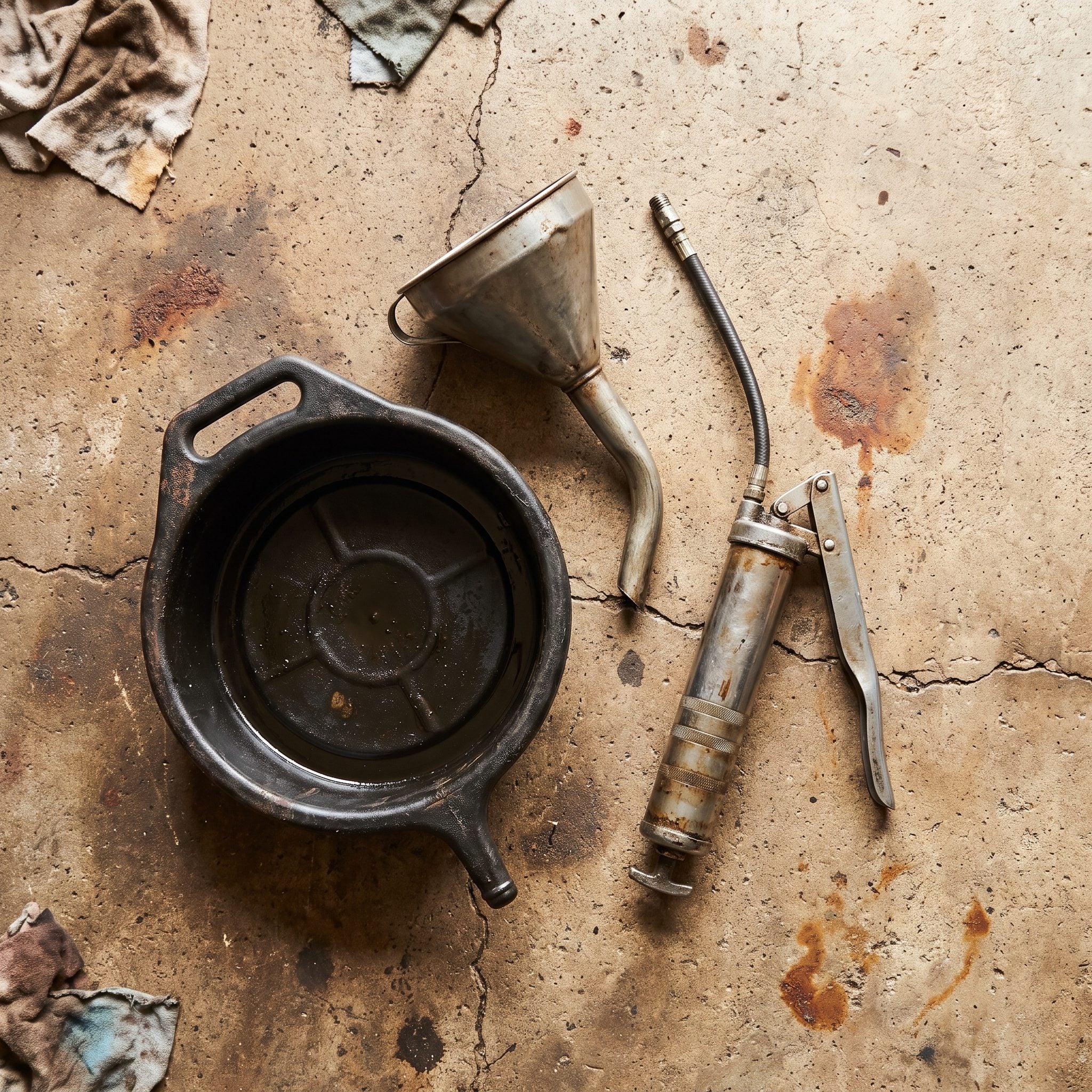
For under roughly $30, a garage could acquire the unglamorous equipment behind routine maintenance: a drain pan for used fluids, funnels for cleaner pouring, and a grease gun for vehicles or equipment fitted with grease points.
None of it looked impressive hanging beside a polished socket set. All of it existed to make messy jobs slightly less messy. The drain plug could still escape into the pan, oil could still find a sleeve, and newspaper remained an unofficial piece of shop equipment for good reason.
2. The Fire Extinguisher on the Wall: $15 to $30
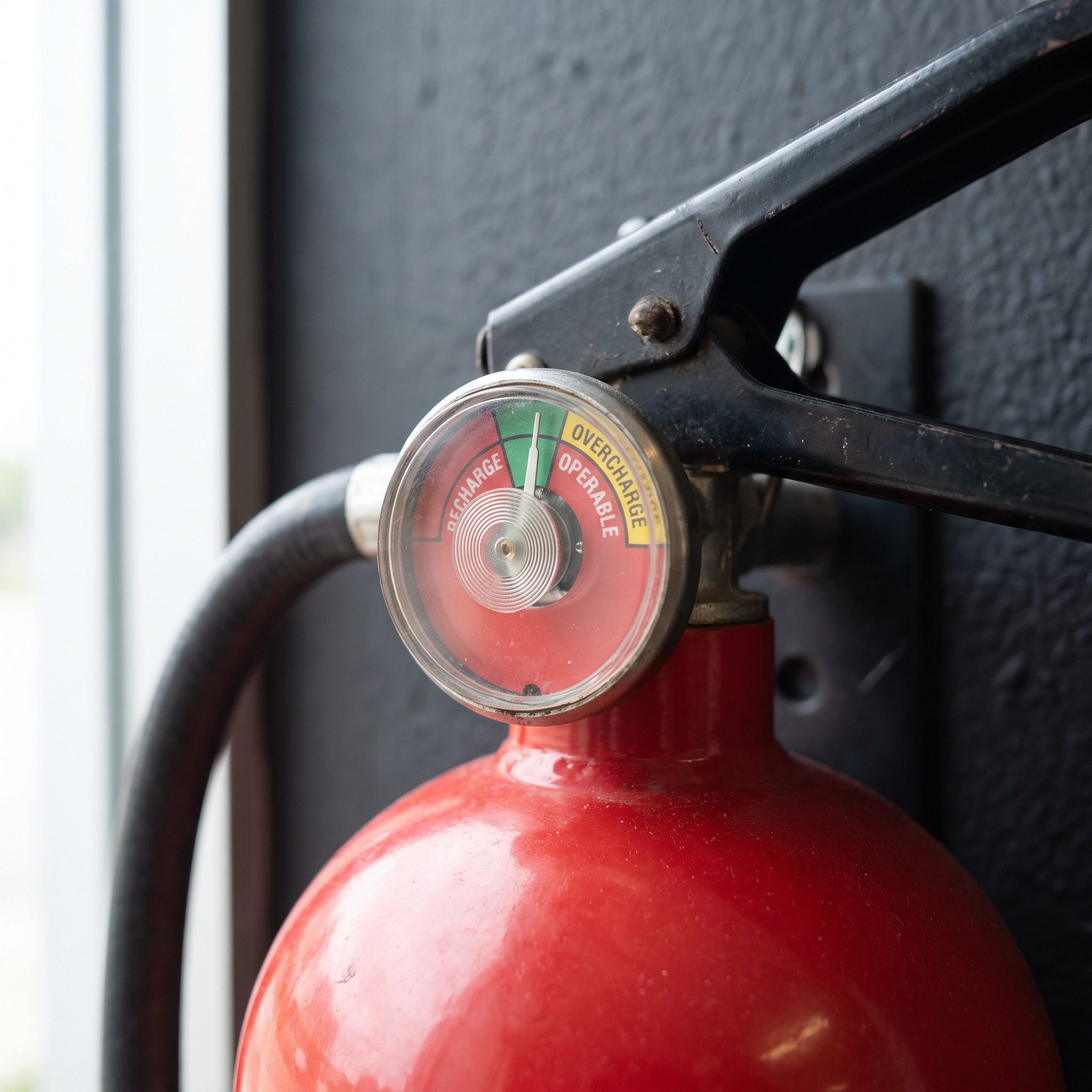
Roughly $15 to $30 bought the one garage tool everybody hoped would remain decorative. Fuel, solvents, electrical equipment, oil, sparks, and hot machinery made fire protection an unusually sensible thing to hang within reach.
The important part was having an extinguisher with the proper rating for the hazards present and keeping it maintained and accessible. The red cylinder spent years doing nothing. That was success.
1. Safety Glasses, Work Gloves, and Ear Protection: $10 to $25 for the Whole Set
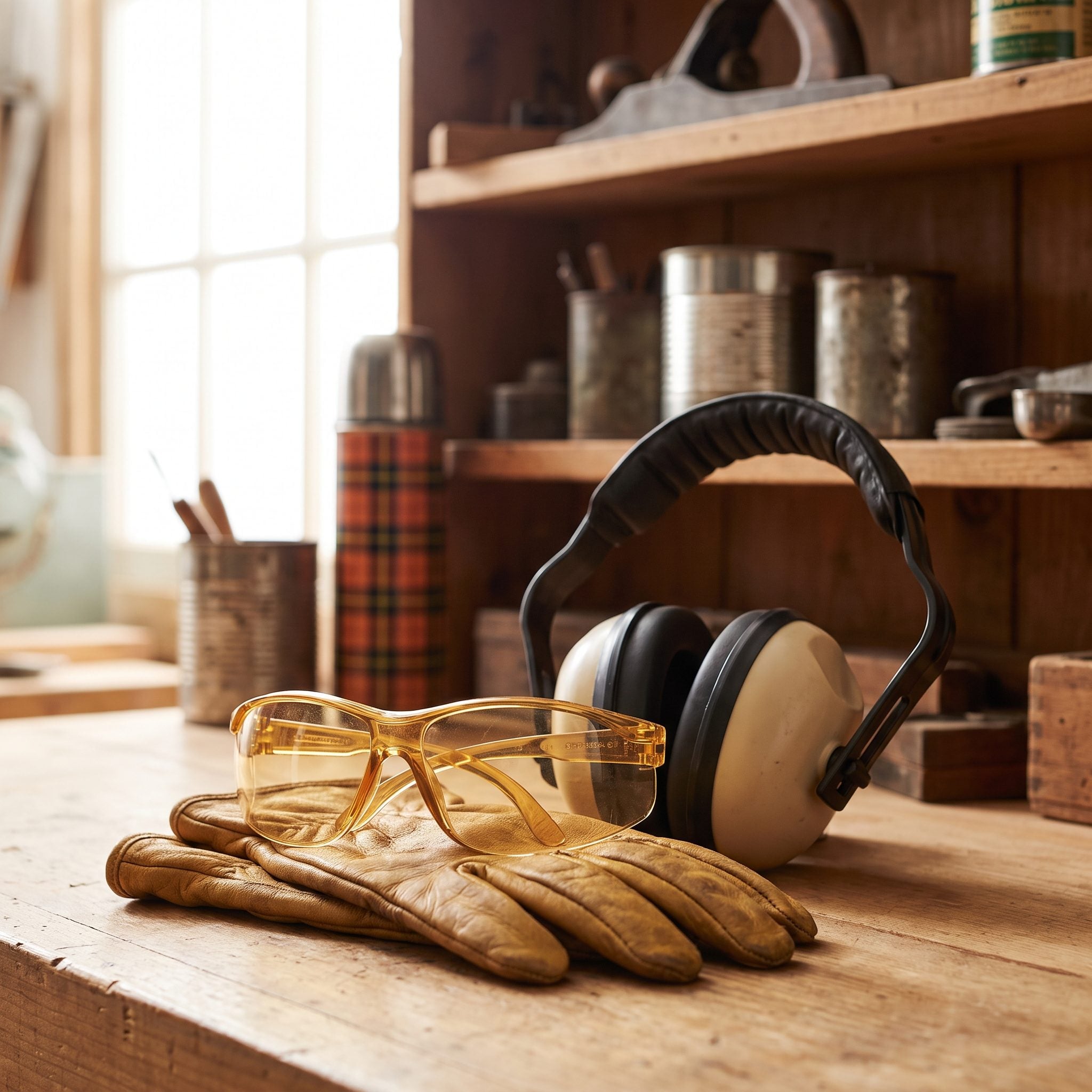
For perhaps $10 to $25, the garage could finish its equipment list with the tools designed to protect the person using all the other ones: safety glasses, work gloves, and hearing protection.
They were cheaper than the saw, cheaper than the drill, cheaper than the socket set, and easier to underestimate because they did not build or repair anything. Their job was simpler. After an afternoon of grinding steel, cutting lumber, drilling holes, lifting cars, and making enough noise to wake the house, they helped make sure the mechanic walked back inside in the same condition he came out.