🔥 Would you like to save this?
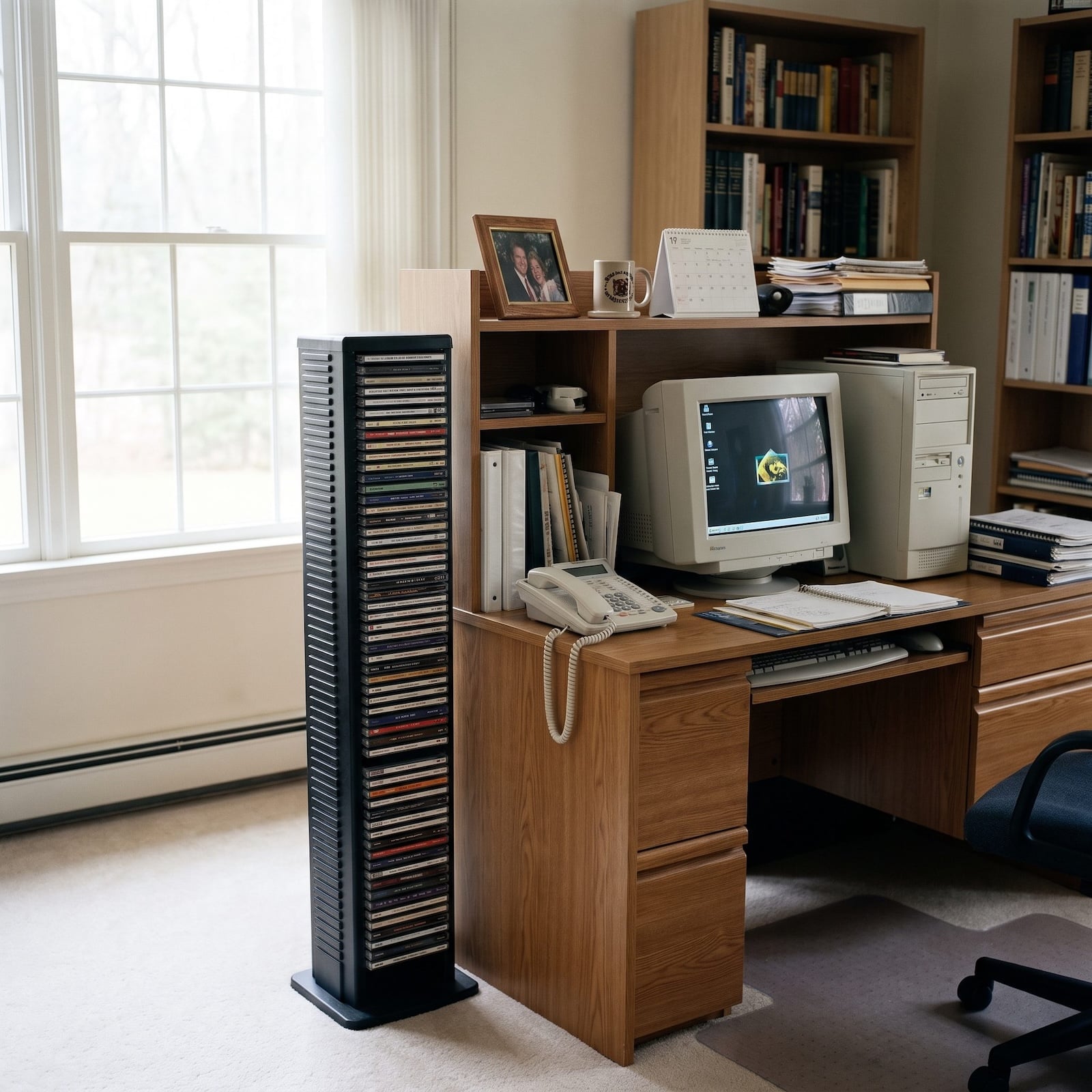
A home office in the 1990s did not arrive in one sleek box. It accumulated. First came the computer, expensive enough to make the purchase feel faintly irresponsible. Then the monitor claimed half the desk. The printer wanted its own furniture. The modem wanted the telephone. Software came in cartons big enough to suggest there might be a microwave inside, and every new device arrived trailing another cable toward the increasingly worried power strip under the desk.
None of it felt particularly cheap at the time. A capable home computer could swallow weeks of pay before the monitor, printer, software, furniture, phone line, disks, paper, and little plastic objects started joining it. These 32 pieces rebuild the whole scene — from the beige tower that consumed the budget to the stapler sturdy enough to survive three computers, two houses, and most of the Clinton administration.
In order to come up with the very specific design ideas, we create most designs with the assistance of state-of-the-art AI interior design software. Also, assume links that take you off the site are affiliate links such as links to Amazon. this means we may earn a commission if you buy something.
32. The Beige Desktop Tower That Ate a Serious Chunk of the Budget
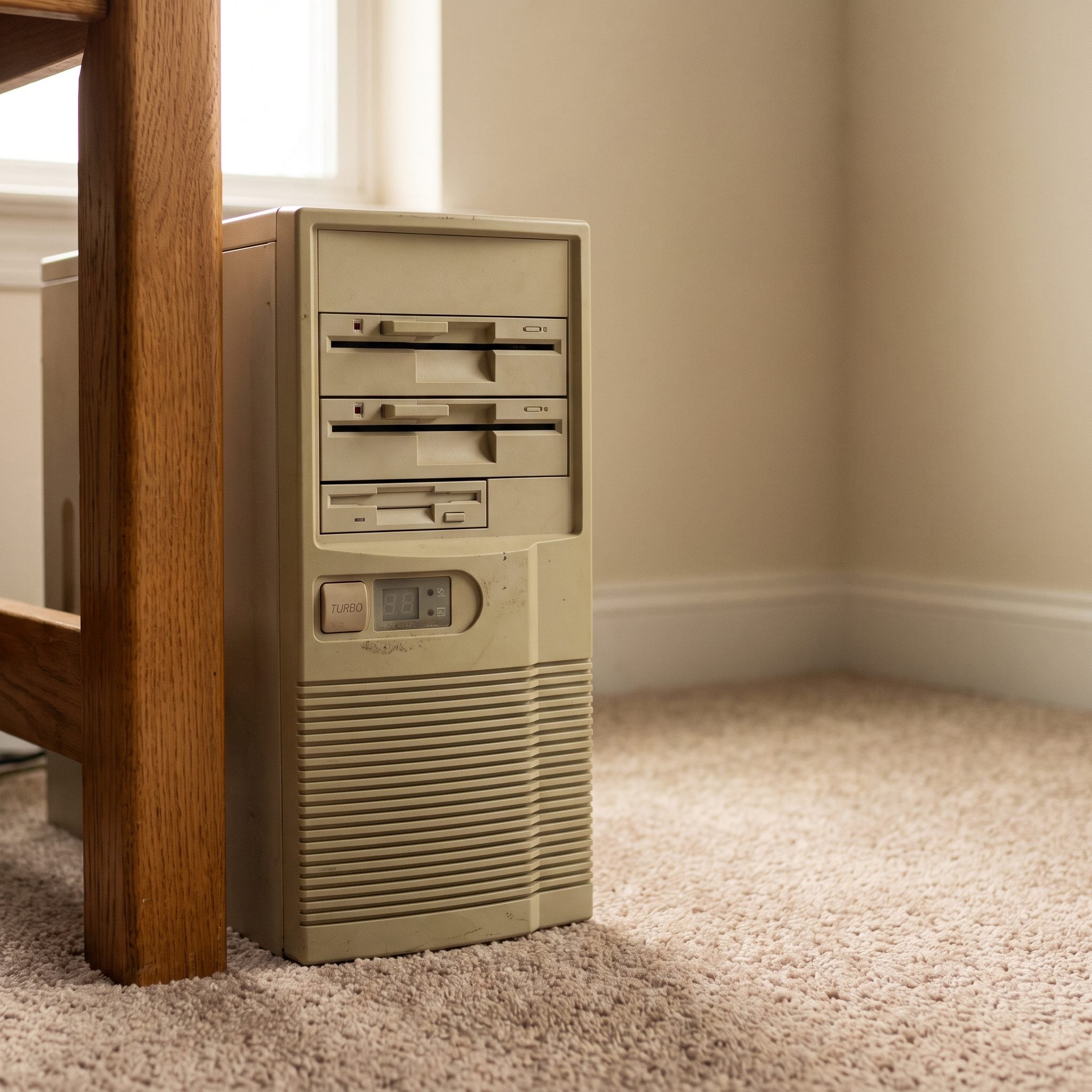
The tower was where the budget first went sideways. A capable name-brand home PC in the early 1990s could easily run well into four figures, with stronger configurations pushing toward or beyond $2,000 before the monitor, printer, and software began circling.
What you got was a beige case, a hard drive that sounded enormous because its capacity was measured in hundreds of megabytes, one or two floppy drives, and perhaps a CD-ROM if the machine was particularly ambitious. At $10 or $12 an hour, this was not casual electronics shopping. Families saved, financed, or stared at the newspaper ad for another six months.
A pink home office or the most sober accounting setup in town still began with essentially the same object: one large beige rectangle humming below the desk and quietly informing everyone where the money had gone.
31. The Fabric Office Chair That Squeaked Eventually
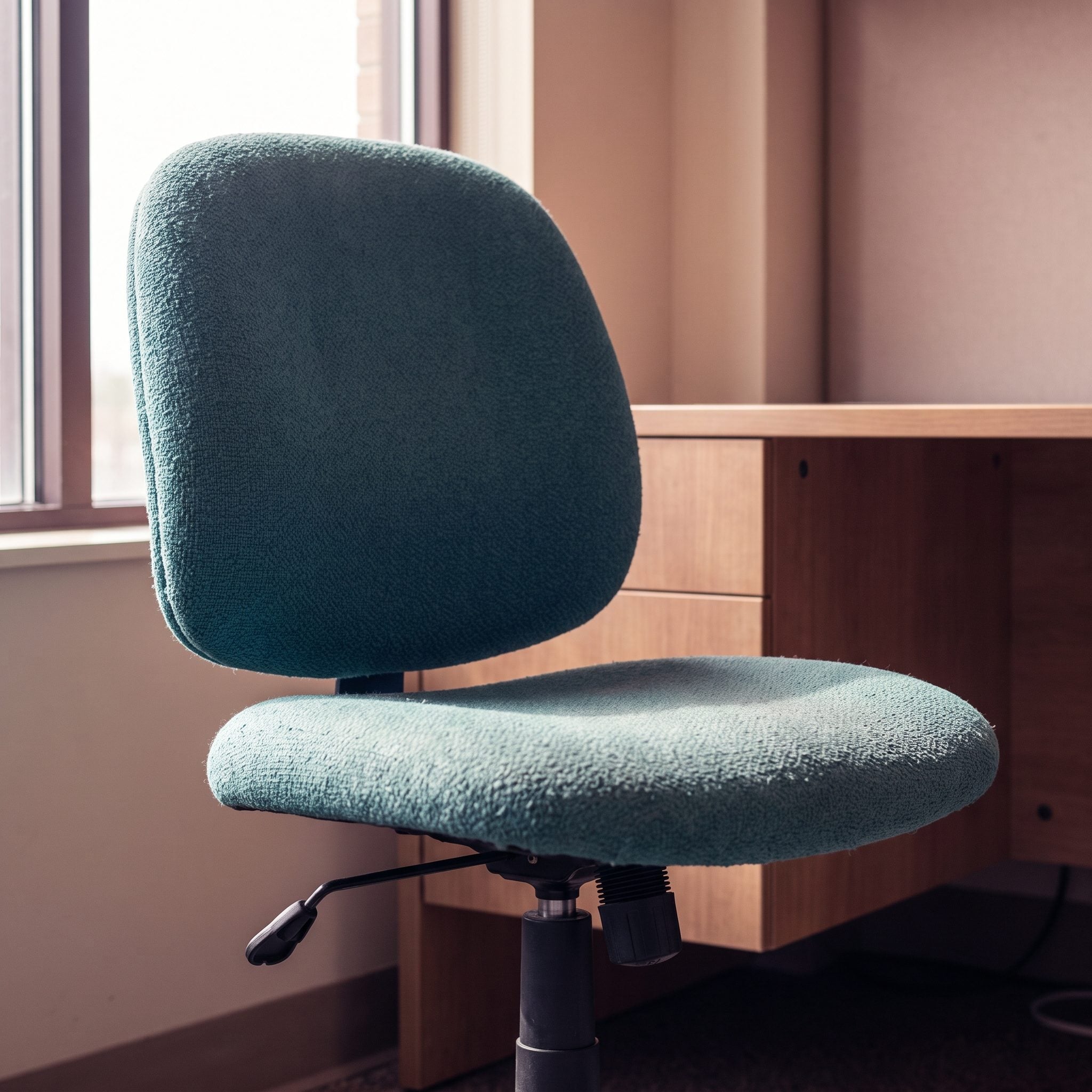
The classic home-office chair came upholstered in nubby teal, mauve, blue, or gray fabric, perched on five reluctant casters and equipped with a pneumatic lever everyone adjusted repeatedly during the first week and then never touched again.
Basic models commonly landed around $60 to $150, with arms, thicker padding, and more adjustments pushing the price upward. The trouble arrived gradually: flattened seat foam, loosened arms, a tilt mechanism developing opinions, one caster refusing to cooperate with the carpet.
Nothing looked particularly ergonomic, but the chair made the room official. The spare bedroom had crossed over. Someone was going to sit here long enough to regret the lumbar support.
30. The CRT Monitor That Took Up Half the Desk
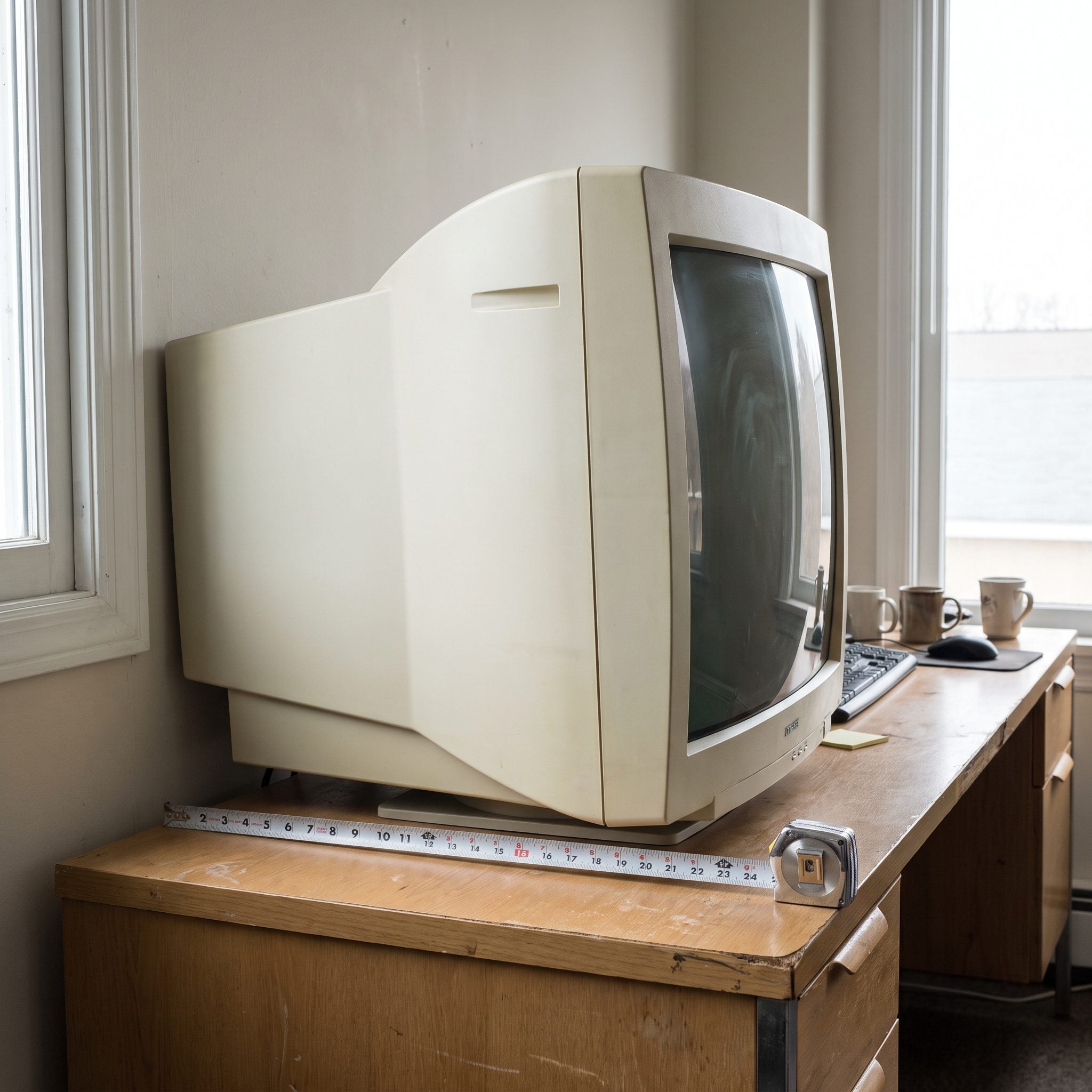
Calling it a 14-inch monitor made it sound almost dainty. Then you saw the back.
A CRT could extend almost as far backward as it was wide, turning the desk into a support structure for a glowing glass cube. Common models might run roughly $300 to $600, depending on size, resolution, brand, and year, while larger 17-inch displays could climb considerably higher.
At ordinary early-’90s wages, even the monitor represented several days of gross pay. And unlike today’s thin screens, you did not tuck it under one arm and move it. You bent your knees, cleared a route, and treated the front glass with the respect normally reserved for aquariums.
29. The Dial-Up Modem That Screeched the Office Online
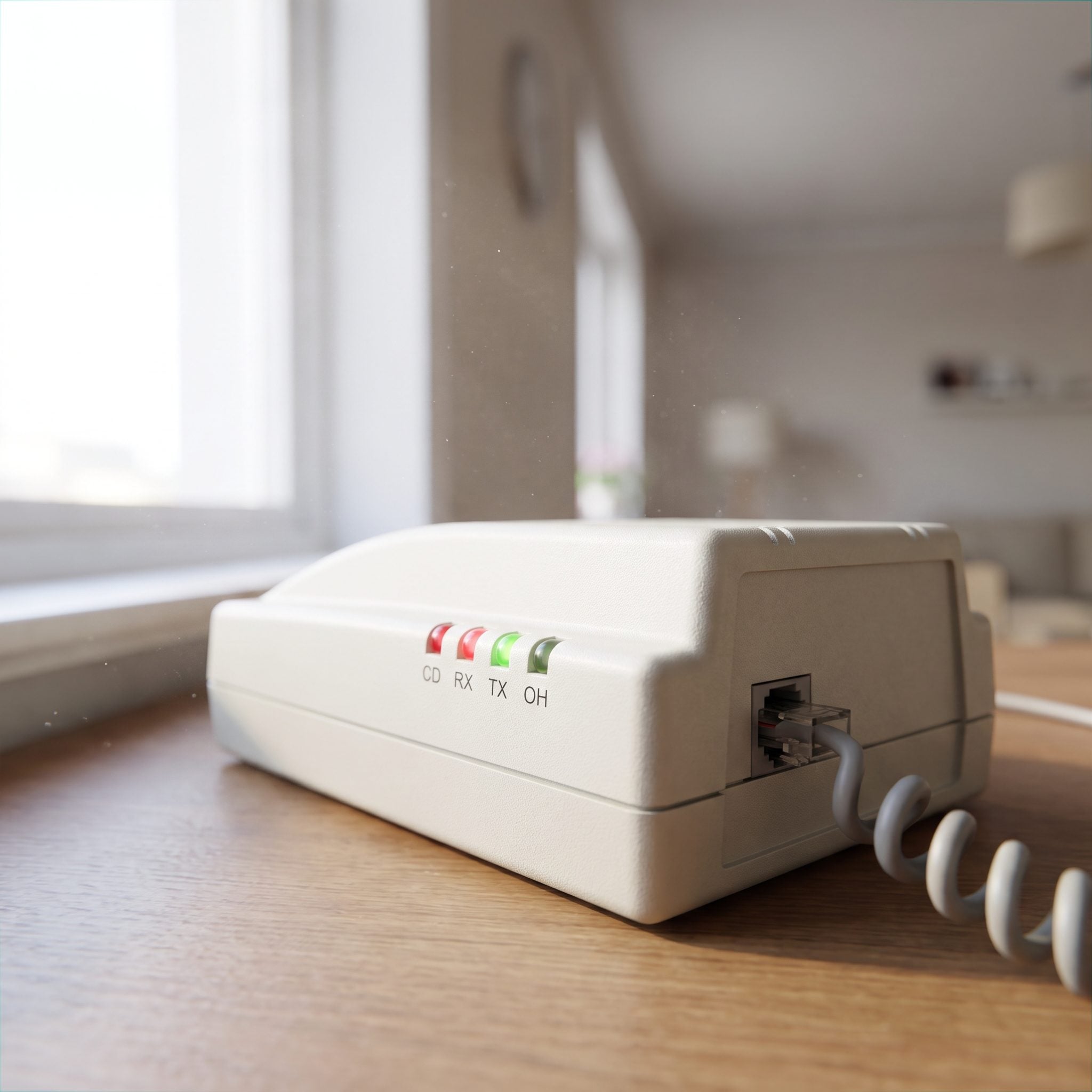
The modem arrived with a number attached to its speed that kept getting more impressive: 14.4k, then 28.8k, then 33.6k. The celebrated 56k era belongs mainly to the later 1990s, when dial-up finally approached its practical ceiling.
External box or internal card, the important part was the sound. Click. Dial tone. Numbers pulsing into the line. Then the famous handshake — hiss, shriek, warble, static — as two machines negotiated whether the outside world was going to happen today.
Downloading one decent photograph could take long enough to make coffee, drink it, and return to discover the image was still assembling itself from the top down.
The modem connected the office to the world. The telephone bill reminded you that the world was not free.
28. The Computer Desk With a Compartment Built for the Tower
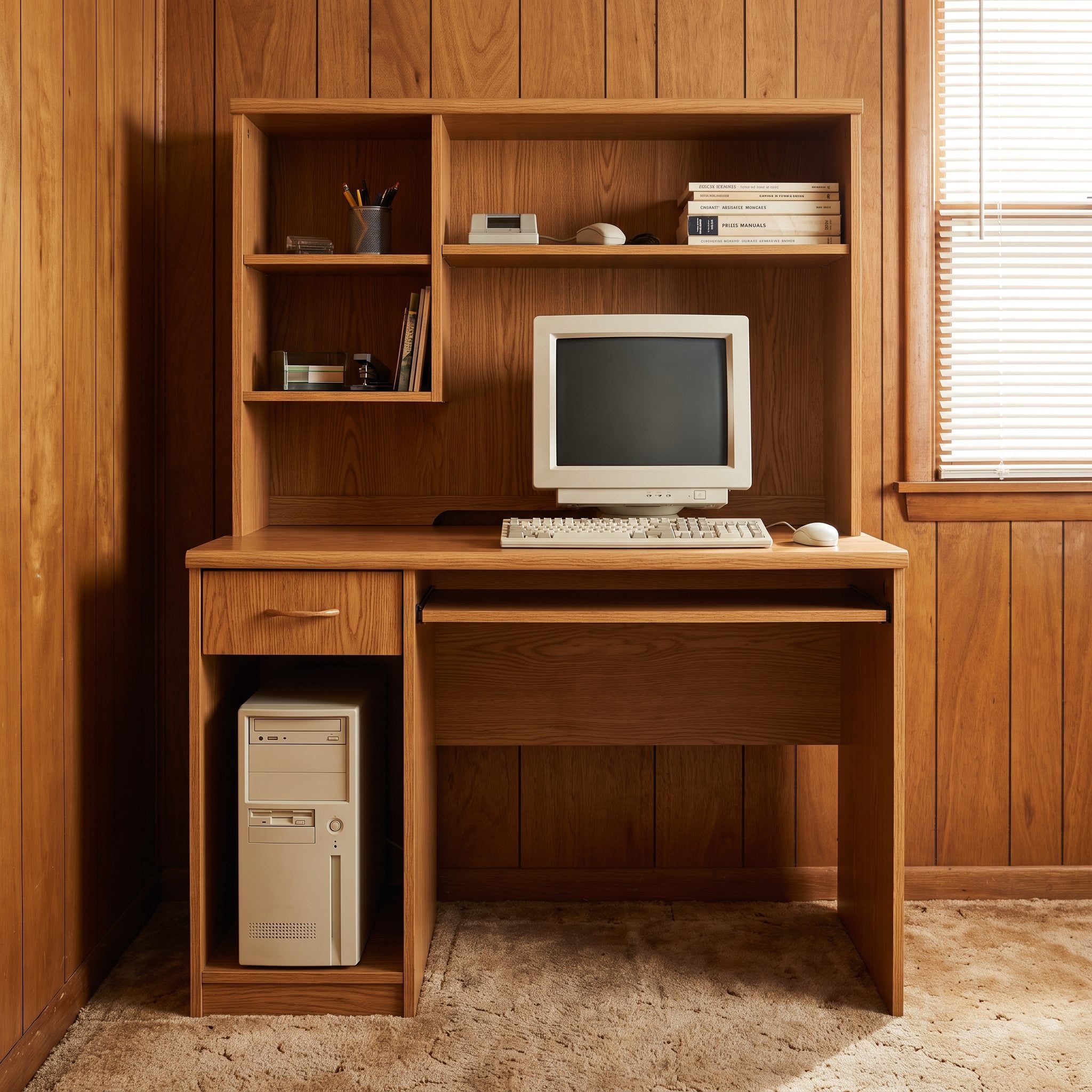
The computer created a new species of furniture almost immediately: the desk designed around the machine instead of the person.
There was a low cubby for the tower, an upper shelf strong enough for the CRT, usually a sliding keyboard surface, and perhaps one heroic little shelf expected to handle the printer. Prices commonly ranged from roughly $120 to $400, depending on size and whether the finish was real wood or particleboard wearing a convincing photograph of wood.
The good part was vertical stacking. Without it, the monitor and tower could consume almost every useful inch of surface. A proper retro office makeover starts making sense the moment you remember just how physically large the equipment was.
27. The Ball Mouse That Needed Its Own Cleaning Ritual
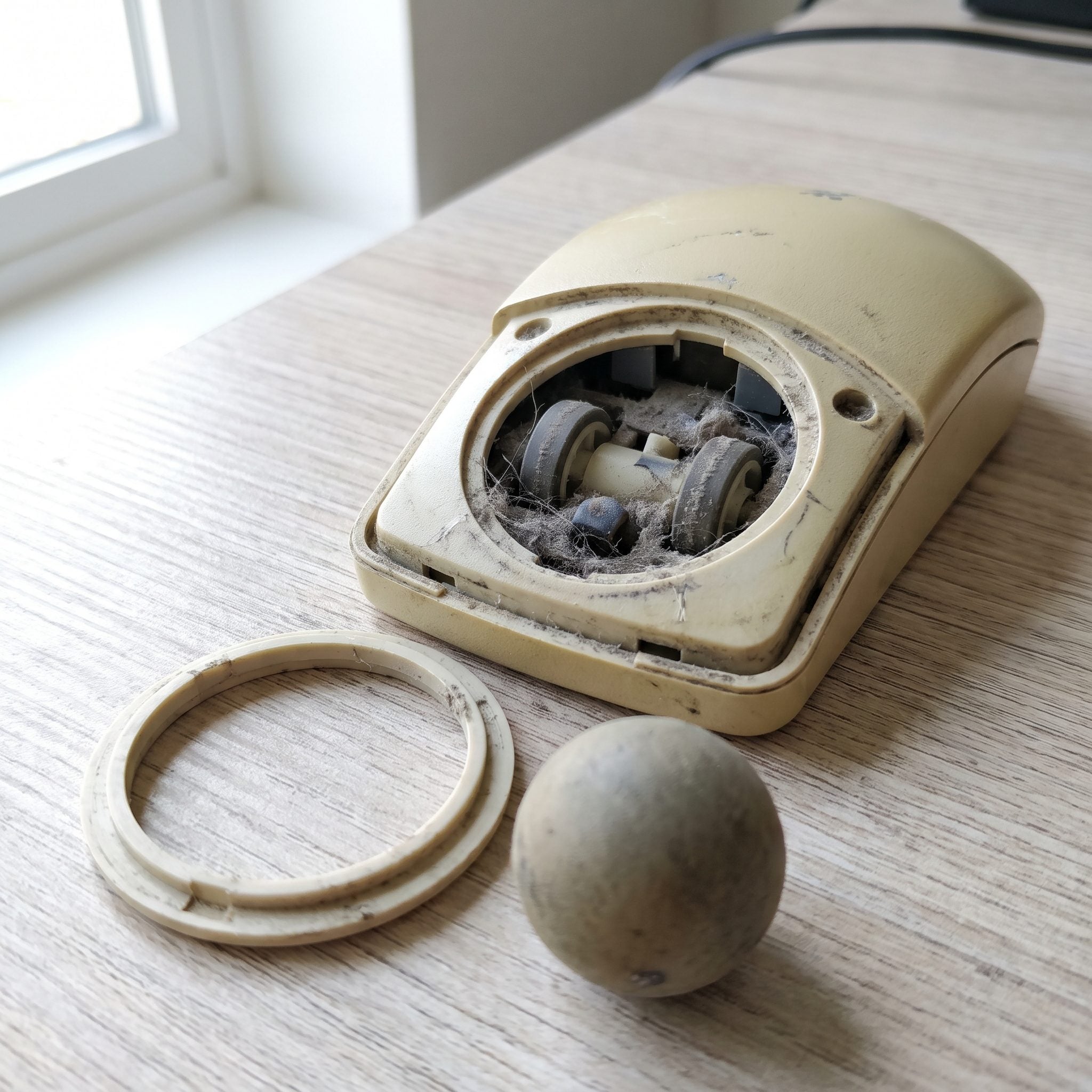
A basic two-button mouse might cost around $15 to $40, and inside was the technology nobody misses: one surprisingly heavy rubber ball collecting everything the desk could shed.
Eventually the pointer began drifting or refusing to move sideways. That meant turning the mouse over, twisting open the retaining ring, dropping the ball into your palm, and scraping compacted lint from the internal rollers with a fingernail.
Then back together it went, suddenly smooth again for reasons that felt faintly mechanical and satisfying. Three-button mice also existed, giving everyone an additional button to ignore.
26. The Dot-Matrix Printer That Announced Every Page to the House
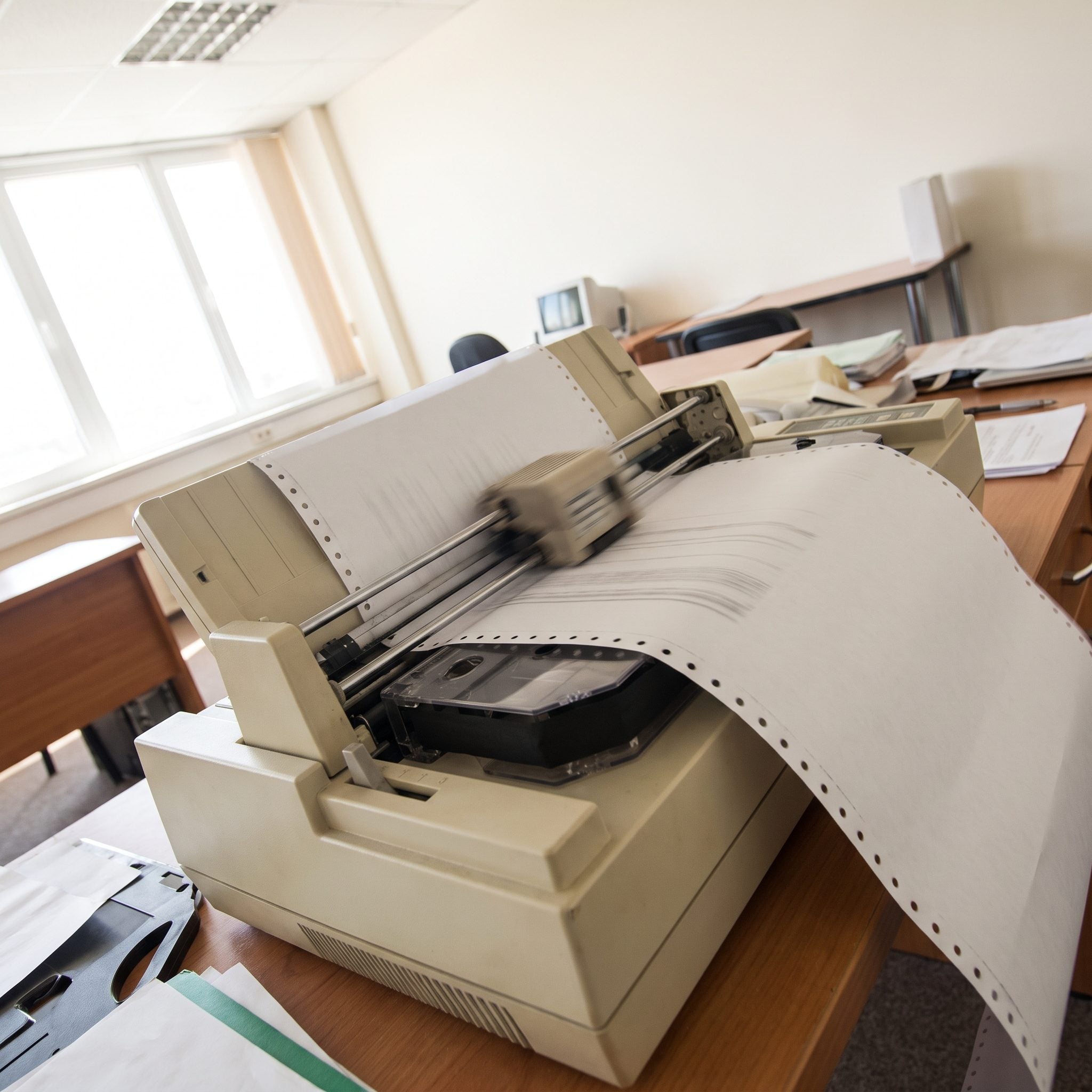
No printer has ever been more committed to letting the household know it was working.
Dot-matrix models remained common in the early 1990s because ribbons were inexpensive, continuous paper was practical, and impact printing could handle multipart forms. Home and small-office machines could land around $150 to $350, depending on print quality and speed.
Then the print head began its assault: back and forth, line after line, hammering characters onto paper through an inked ribbon. Documents emerged attached to one another like a paper accordion, sprocket holes marching down both sides.
By the middle of the decade, inkjets were taking over ordinary home printing. Nobody had to hold a funeral for the noise.
25. The Rolodex Spinning Beside the Phone
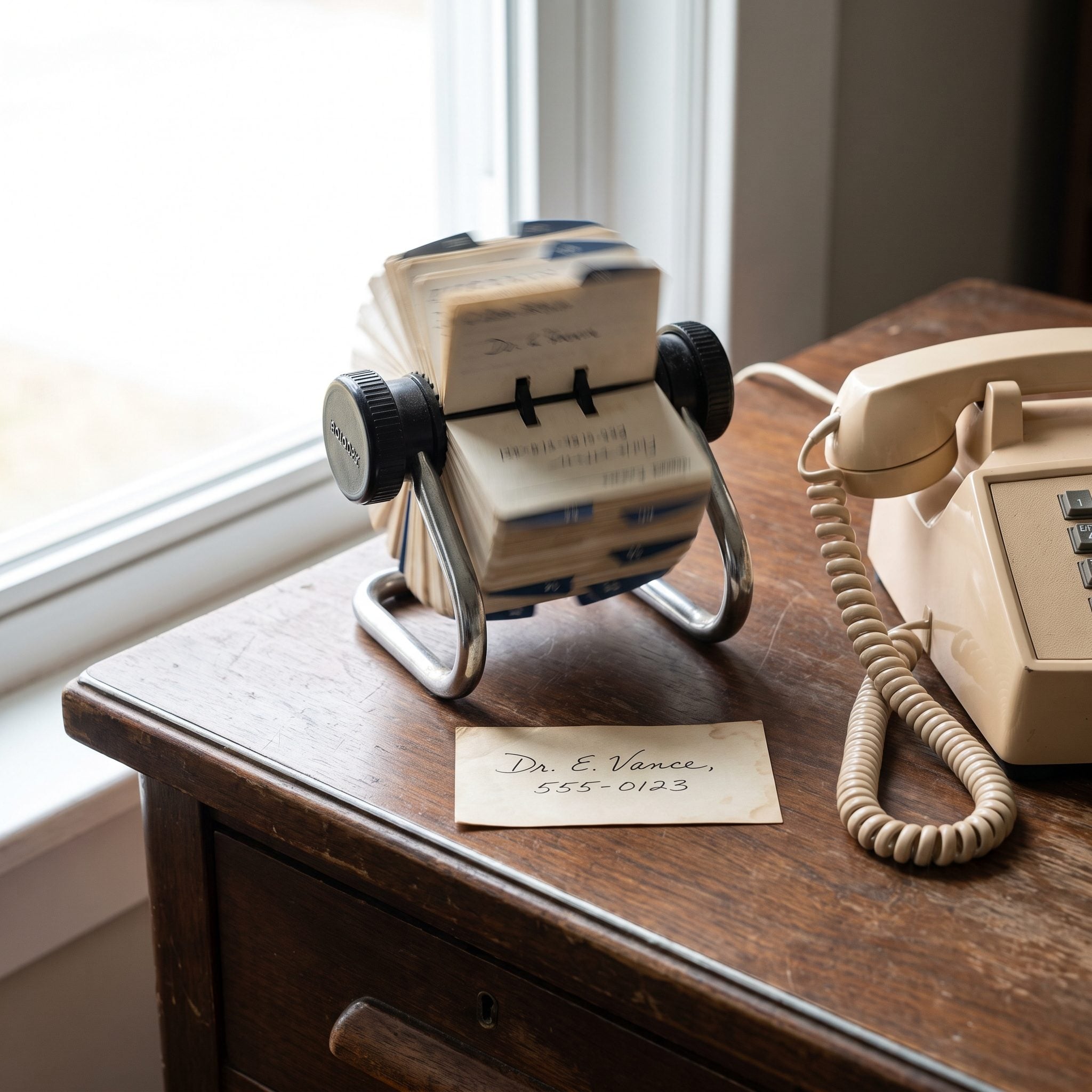
For maybe $15 to $30, a rotary card file became the office’s memory.
Dentist. Accountant. Plumber who actually showed up. Client who preferred being called after four. Every card accumulated handwriting, crossed-out numbers, extensions, spouses’ names, and tiny bits of information nobody would bother typing into a phone today.
Flip the wheel with your thumb and the cards made a sound capable of transporting an entire generation straight back to a beige-carpeted room in 1996.
24. The Software Box That Was Almost Comically Large
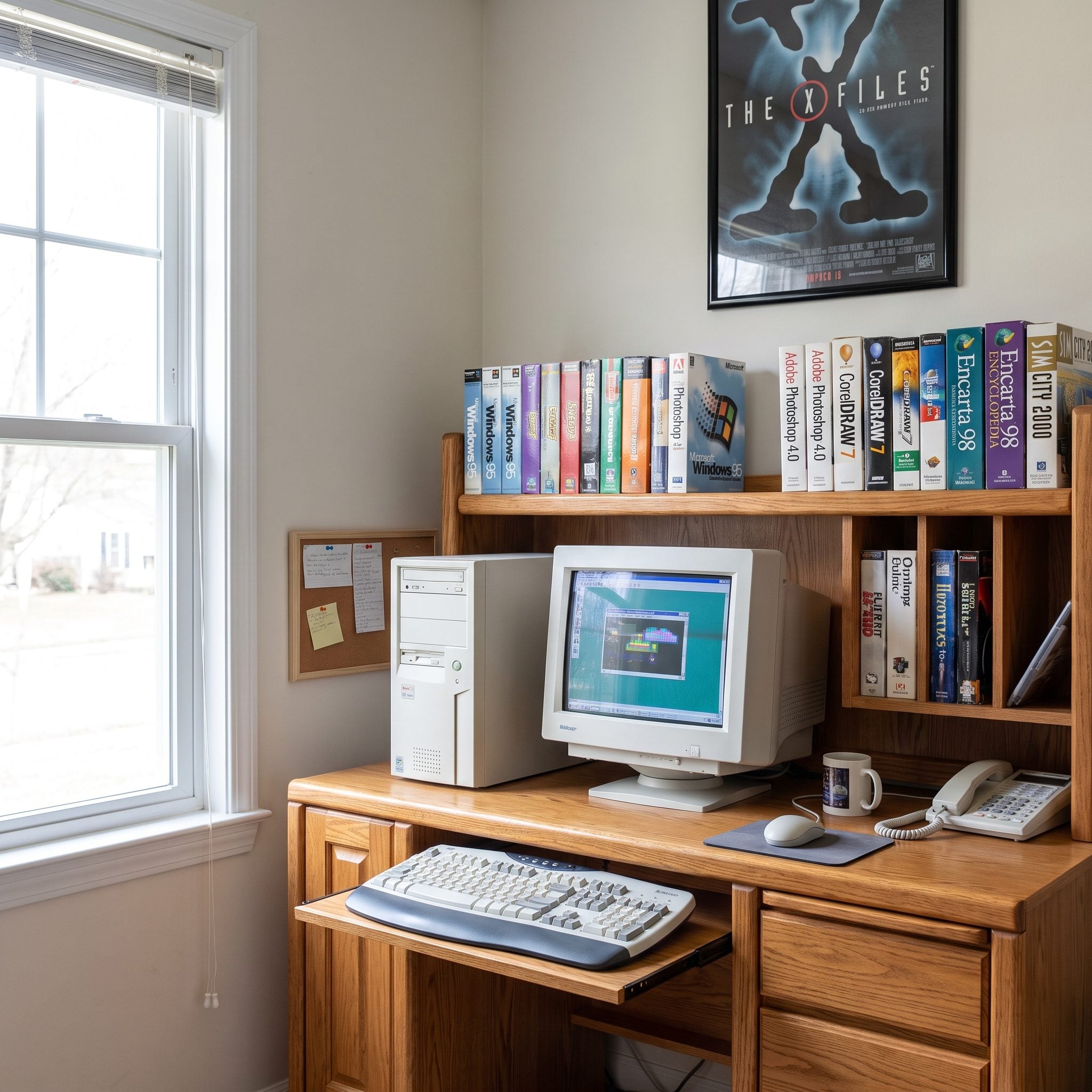
The carton suggested substantial machinery. Inside might be one CD, a manual, a registration card, and enough empty space to rent out separately.
Software could run from around $30 for games and smaller programs to $200 or considerably more for serious productivity titles. Retail packaging did its best to make the purchase feel physical and important.
That was partly the point. A six-inch-wide box looked like value on a store shelf in a way one silver disc never could. Eventually the industry admitted everyone was mostly buying air.
23. The Fax Machine That Made the Spare Room Look Like a Company
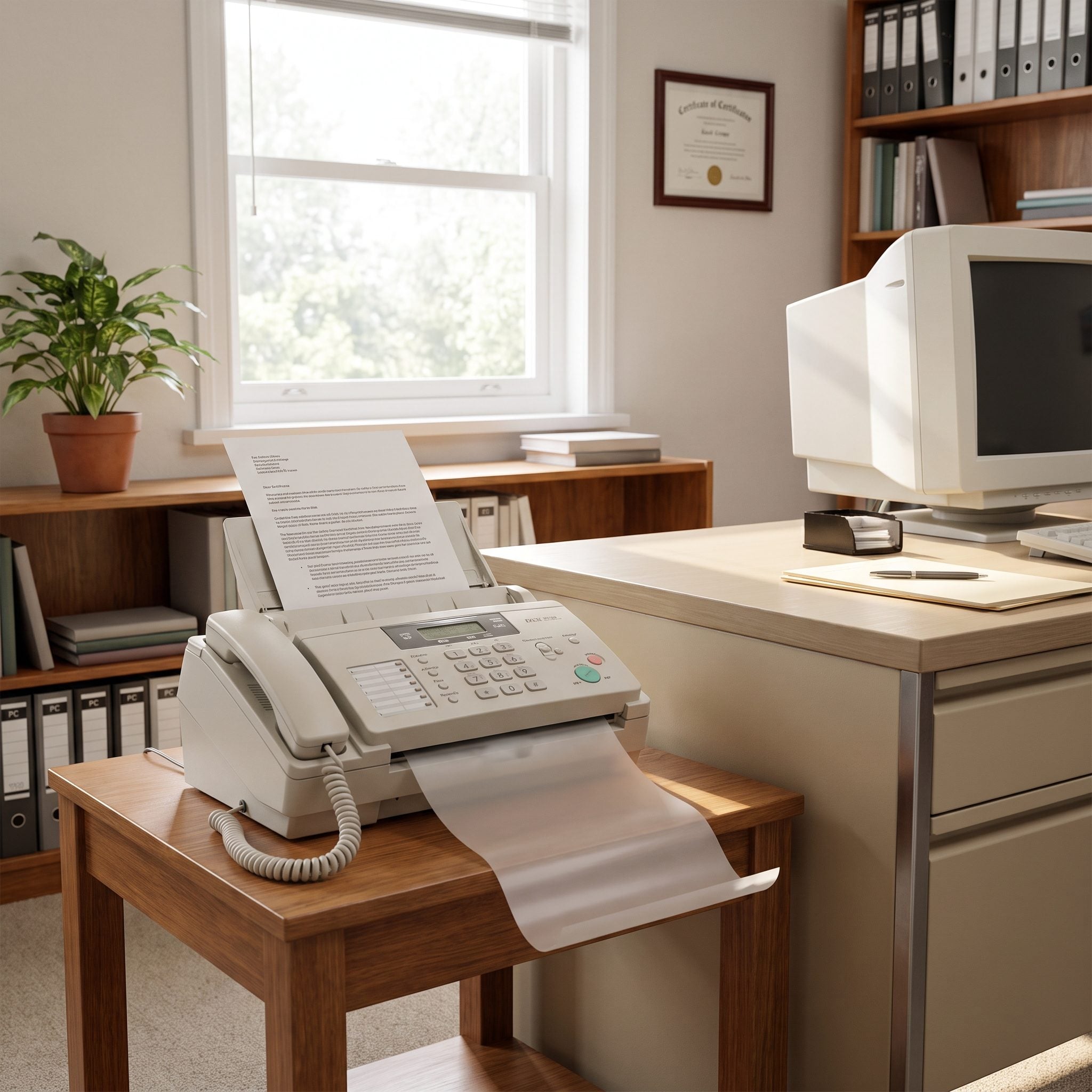
A fax number on the letterhead changed the mood.
Home fax machines were still a meaningful purchase, especially if you wanted plain-paper output rather than thermal rolls. But suddenly contracts, order forms, signatures, diagrams, and badly handwritten notes could arrive almost immediately instead of spending days in the mail.
Thermal paper had its own personality: smooth, curling, chemically treated, and prone to fading badly with age, heat, or sunlight. Anything important tended to be copied onto ordinary paper before it quietly vanished.
The machine also worked on its own schedule. A document could arrive at midnight while the house slept, giving the spare bedroom a little taste of corporate infrastructure.
22. The Full-Size Keyboard That Sounded Like Work
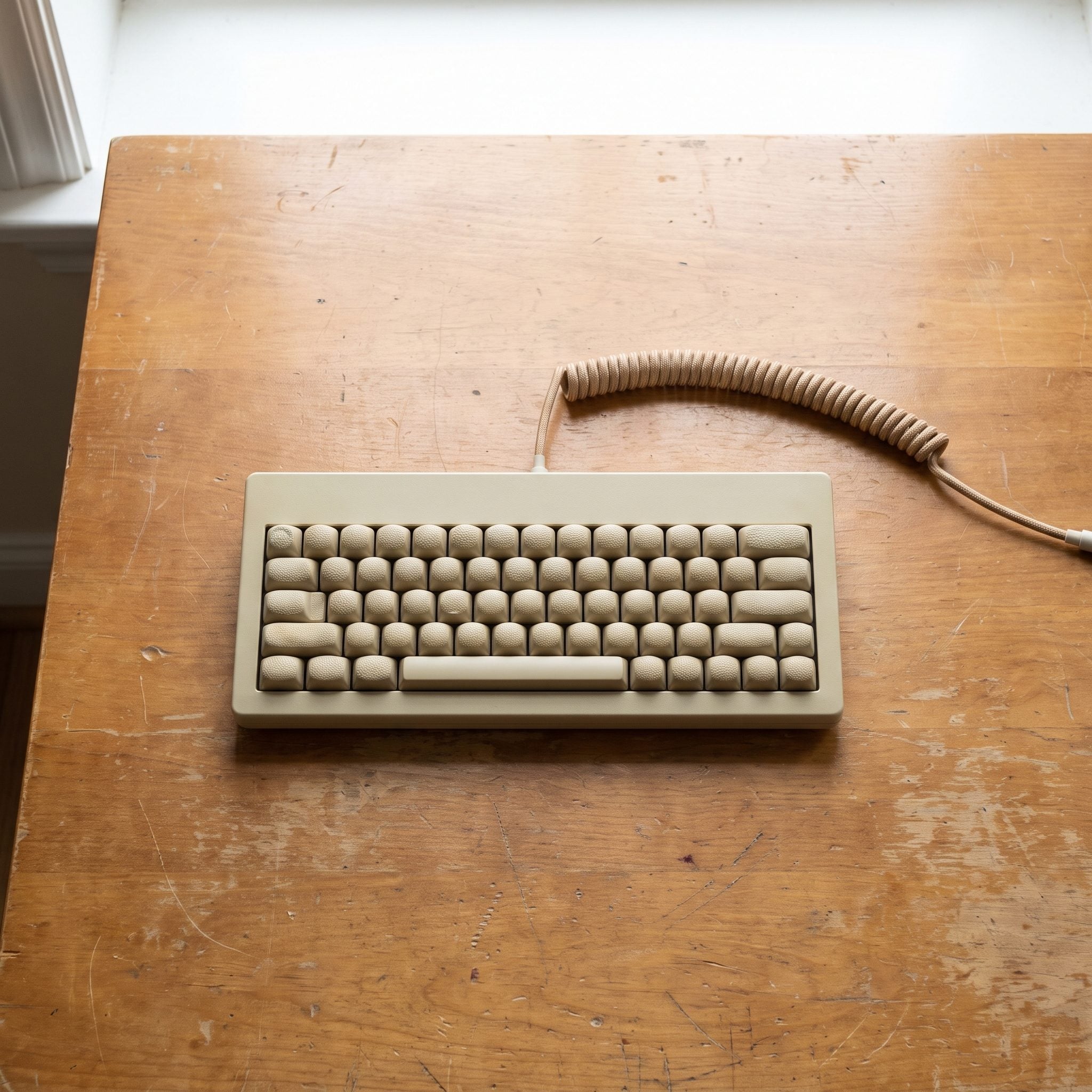
Keyboards were mercifully affordable, with ordinary models often landing around $20 to $60. They were also enormous by current standards: full function row, numeric keypad, deep case, thick cable.
Many early-’90s keyboards had a firmer, more substantial key feel than the cheapest modern boards, although rubber-dome and membrane designs were already common alongside mechanical and other switch types.
What almost all of them shared was durability. A keyboard could survive spilled coffee, years of crumbs, and three different computers while the letters slowly polished themselves off the most-used keys.
21. The Inkjet Printer That Changed What a Home Office Could Produce
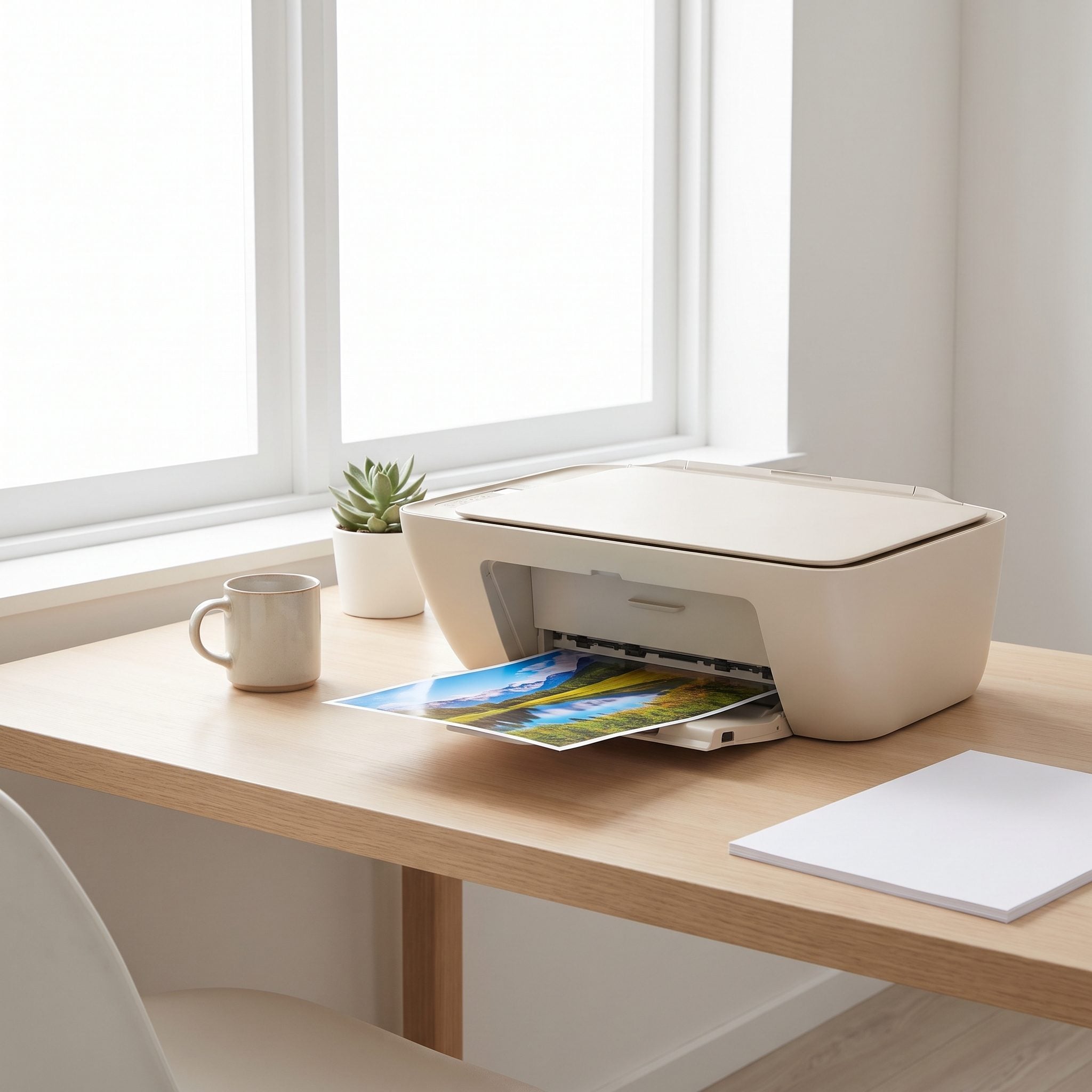
Early color inkjet printing was not initially cheap. At the beginning of the decade, some color models still carried prices near or above $1,000. As the technology moved deeper into the consumer market, prices fell into the several-hundred-dollar range and the home office suddenly gained color.
That mattered. Reports could have charts that weren’t different shades of gray. Invitations appeared. Photos looked terrible by modern standards but miraculous by contemporary ones. Ink needed time to dry and cartridges emptied with suspicious speed, but the output no longer looked like something hammered through a ribbon.
20. The Second Phone Line That Ended the Family Dial-Up War
🔥 Would you like to save this?
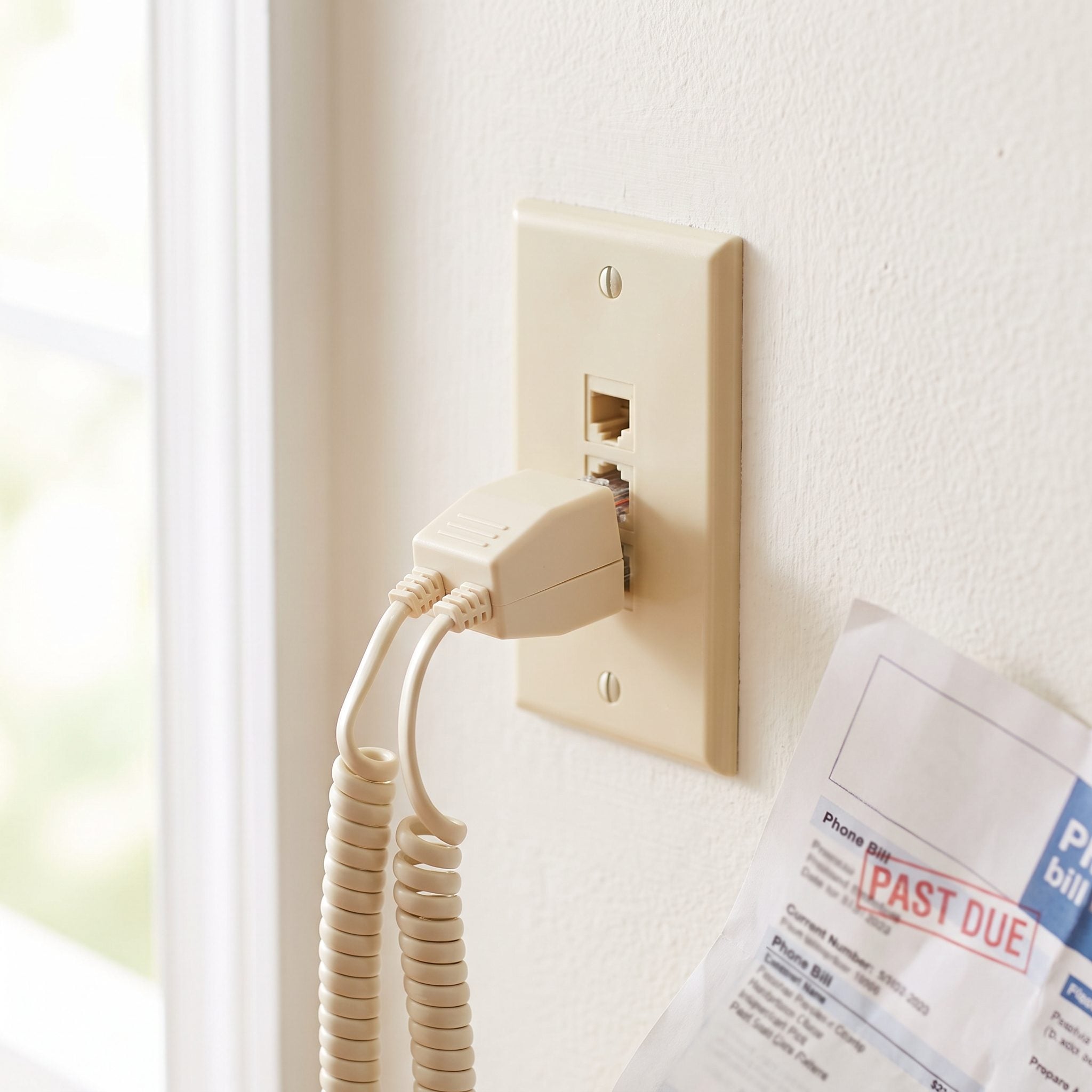
The modem was a one-time purchase. The second telephone line followed you onto the bill every month.
But for a household using dial-up regularly, it ended the central domestic conflict of the era: somebody going online and making the home telephone unavailable.
No more lifting the kitchen receiver and accidentally detonating a download. No more hour-long stretch when clients, grandparents, and everyone else got a busy signal because somebody was checking email.
For a genuine home business, that second line was less glamorous than the computer and arguably just as useful.
19. The Multimedia Upgrade Kit That Made the Computer Start Performing
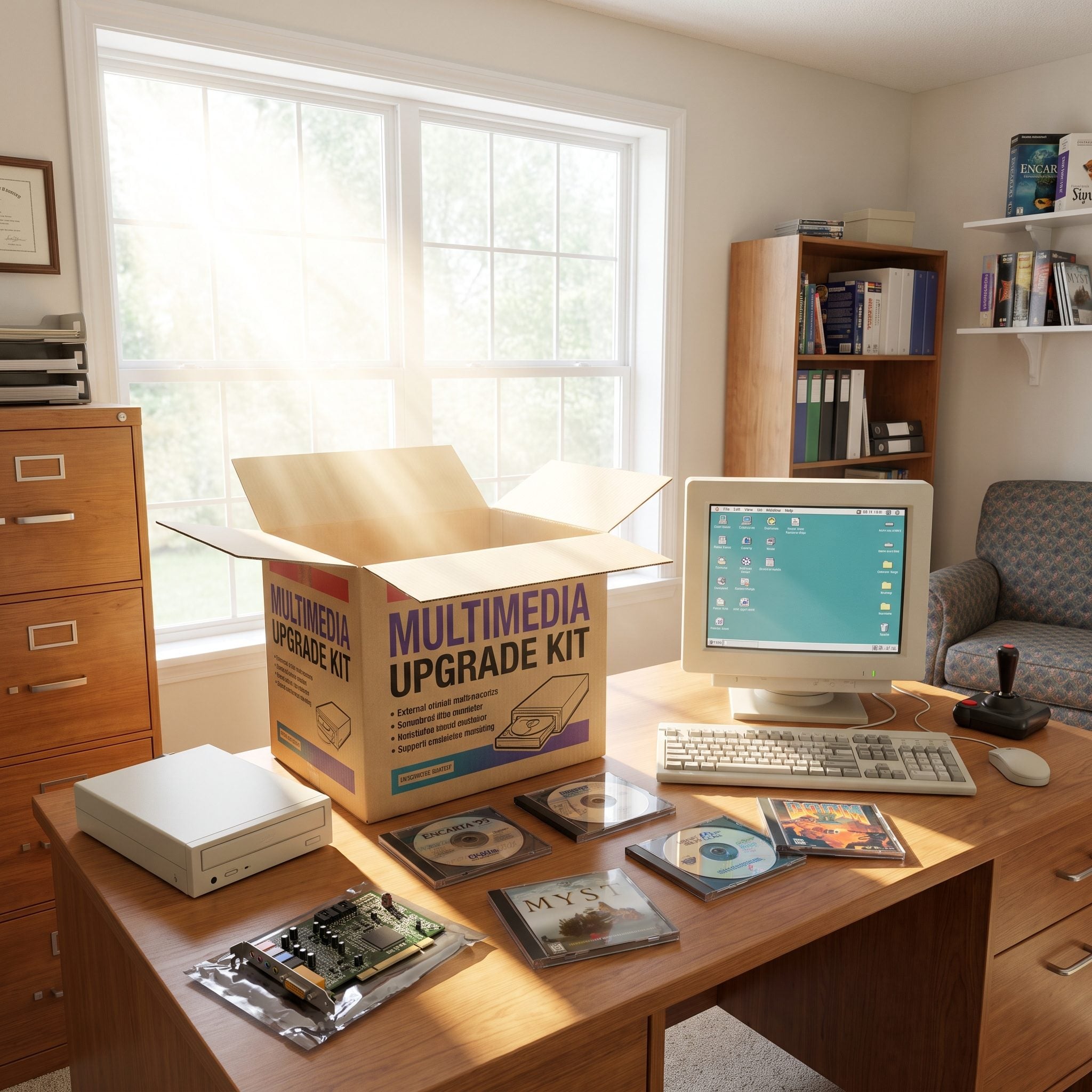
This could be the expensive optional purchase that changed the whole machine.
Early-’90s multimedia upgrade kits commonly bundled a CD-ROM drive, sound card, cables, software, and a stack of demonstration discs, with better packages landing around $300 to $600.
Then came the speed race: single-speed, double-speed, quad-speed. A standard single-speed CD-ROM transferred data at roughly 150 KB per second, which made the spinning disc seem futuristic right up until you sat waiting for it.
Still, the transformation was real. Suddenly the computer talked. Games had recorded music. Encyclopedias had video. A tiny moving picture appeared in a box on the screen and nobody complained that it was the size of a postage stamp.
18. The Desk Lamp That Made a Little Island of Work
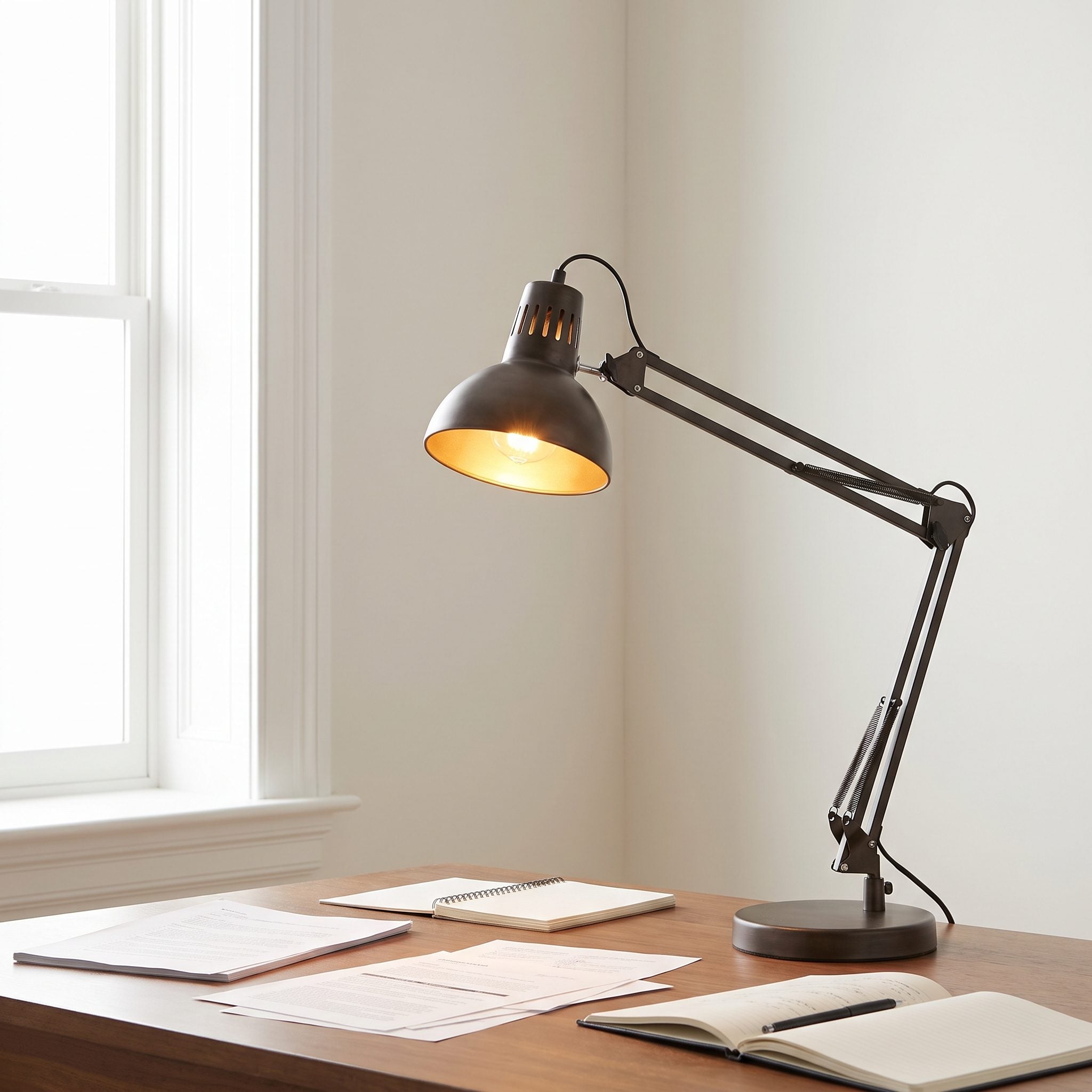
A decent adjustable lamp might cost $20 to $50, with swing-arm architect styles toward the upper end. Most still relied on incandescent light, which gave the desk a warm pool of illumination and occasionally made the shade hot enough to remind you where the bulb was.
That focused light mattered in a room dominated by paper. Bills, manuals, handwritten notes, envelopes, forms — the CRT illuminated itself, but everything else needed help.
Task lighting is still worth stealing for any modern retro office makeover. A well-placed lamp creates contrast and focus without asking one ceiling fixture to light the entire room equally.
17. Blank 3.5-Inch Floppy Disks by the Box
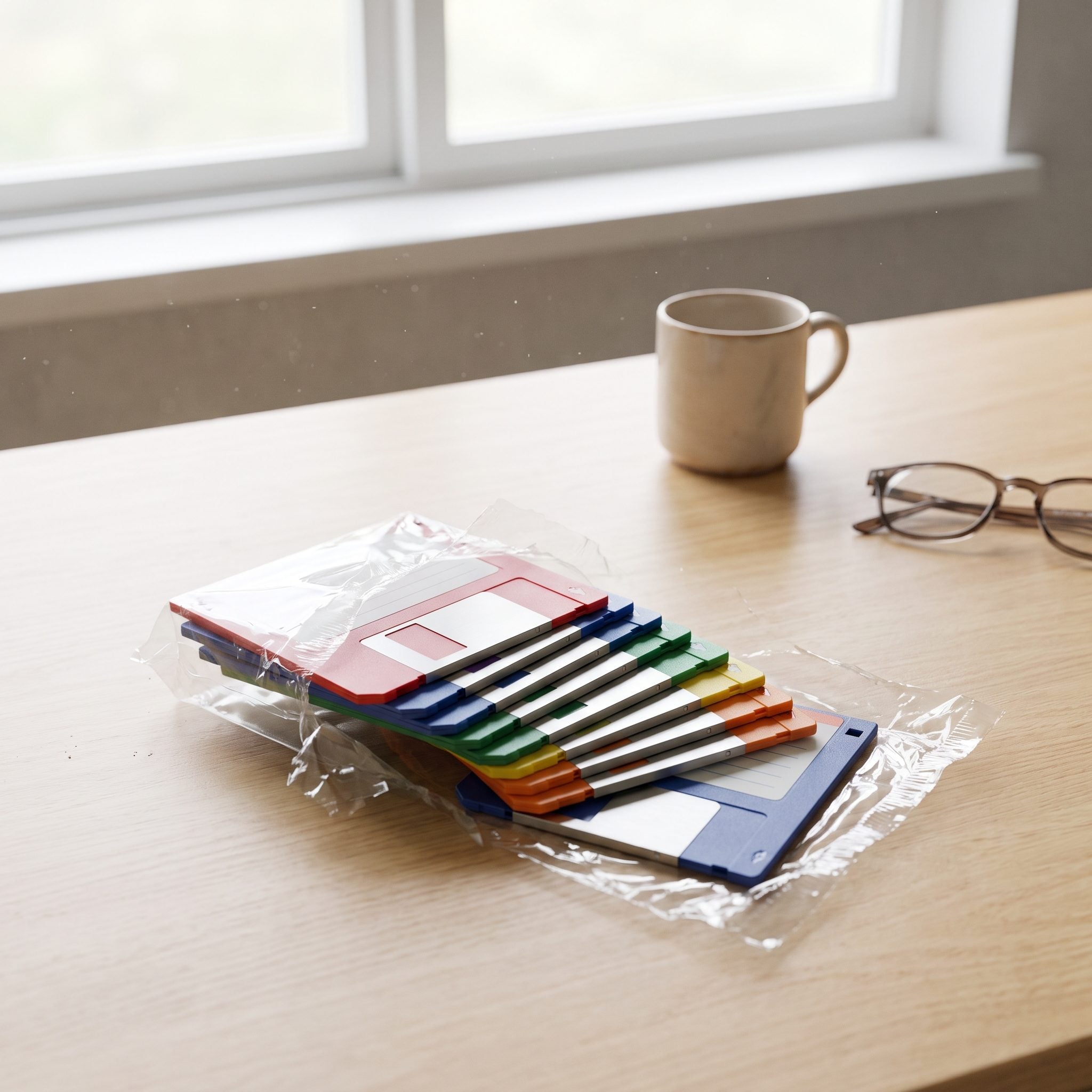
A ten-pack of formatted 3.5-inch disks could cost roughly $8 to $15 earlier in the decade, with prices falling as the format became ubiquitous.
Each high-density disk held 1.44 MB. That once sounded generous. Then people began adding images to documents and discovered exactly how small 1.44 MB could become.
You bought disks constantly. Work. Taxes. School. Backup. Backup of the backup. Color-coded packs encouraged elaborate filing systems in which red meant business and blue meant personal until everyone forgot the system and wrote on the labels anyway.
16. The Rolling Computer Cart for Homes With No Room to Spare
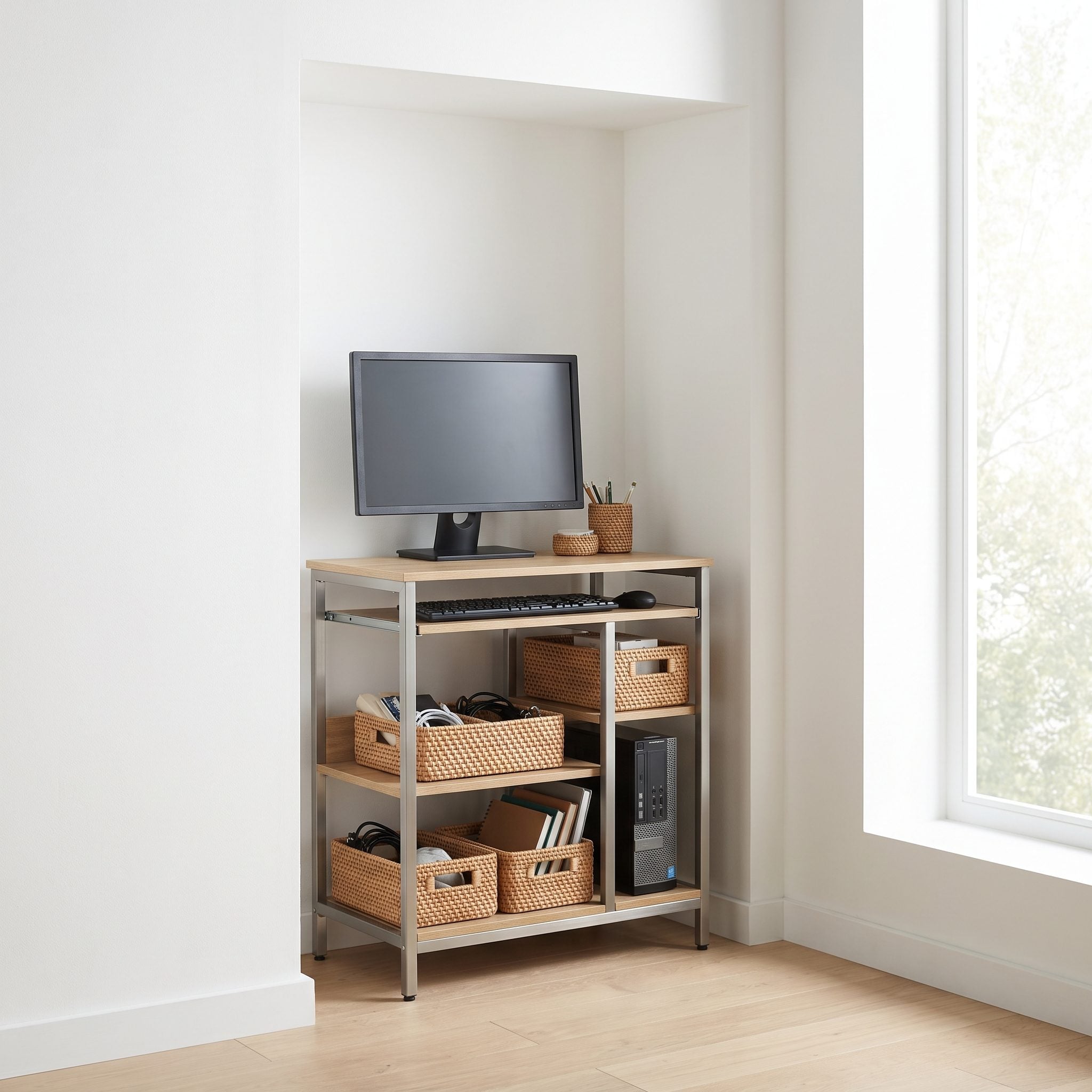
Not every house had a room willing to become an office. The rolling computer cart offered a compromise on casters.
For roughly $50 to $120, a compact metal-and-laminate structure stacked the CRT, tower, and keyboard into the smallest possible footprint. Work happened in the den. Then the whole machine theoretically rolled into a corner when company came.
The wheels caught on carpet transitions. The frame wobbled when someone typed hard. Moving a fully loaded cart always felt like transporting a small aquarium.
But in apartments, bedrooms, and shared family rooms, it kept the computer from colonizing an entire wall.
15. The Computer Speakers Flanking the CRT
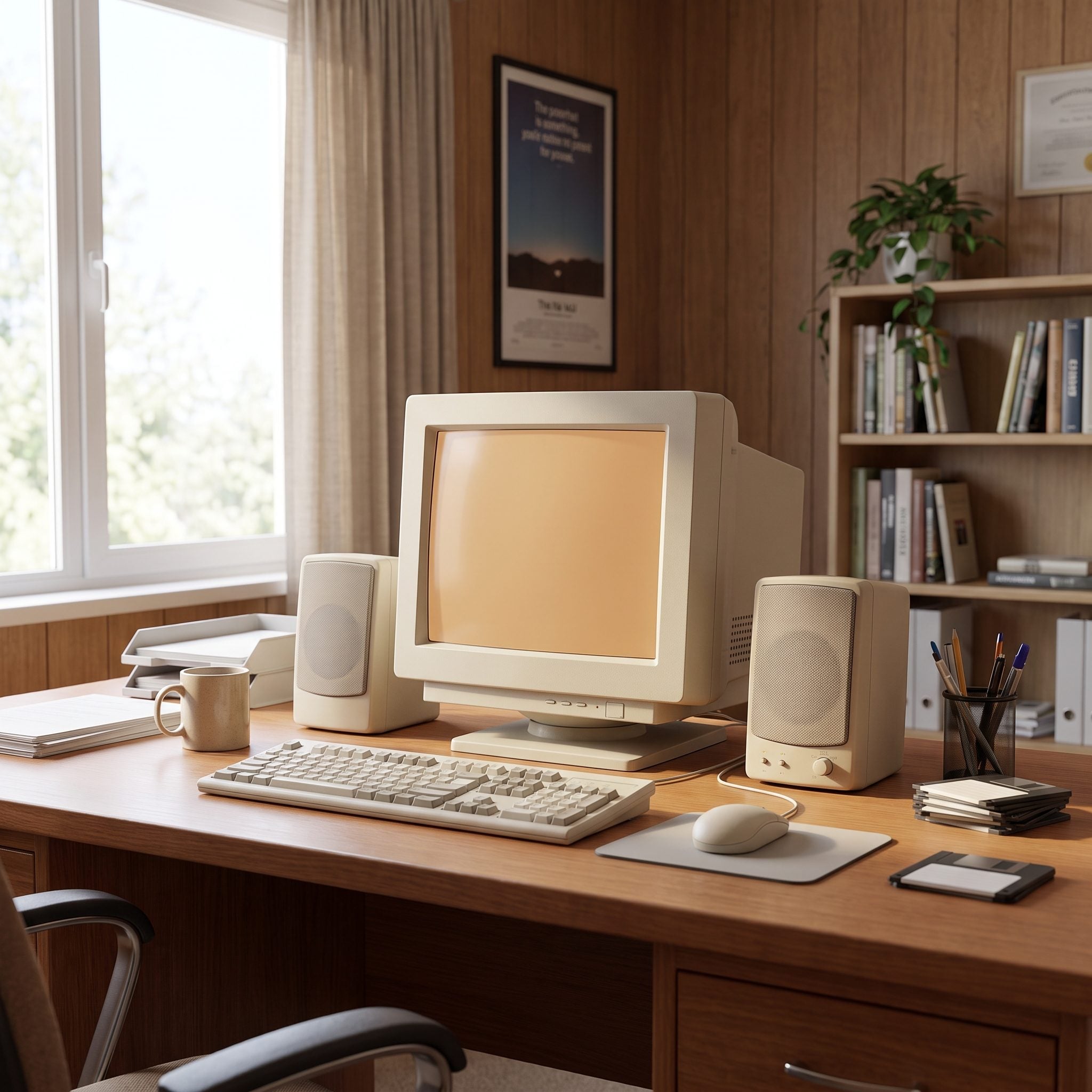
Basic PC speakers might begin around $40, while better desktop sets from familiar audio brands could climb beyond $150, especially as the decade progressed and subwoofers joined the furniture.
The interesting part was that speakers went from optional curiosity to expected equipment remarkably quickly. PC audio expanded dramatically through the early 1990s as Sound Blaster-compatible hardware became a de facto standard and increasingly sophisticated sound cards reached ordinary machines.
Suddenly games had voices, CDs played through the computer, and two gray plastic boxes appeared on either side of the monitor like tiny stage monitors.
14. The Word-Processing and Office Software Suite That Cost Real Money
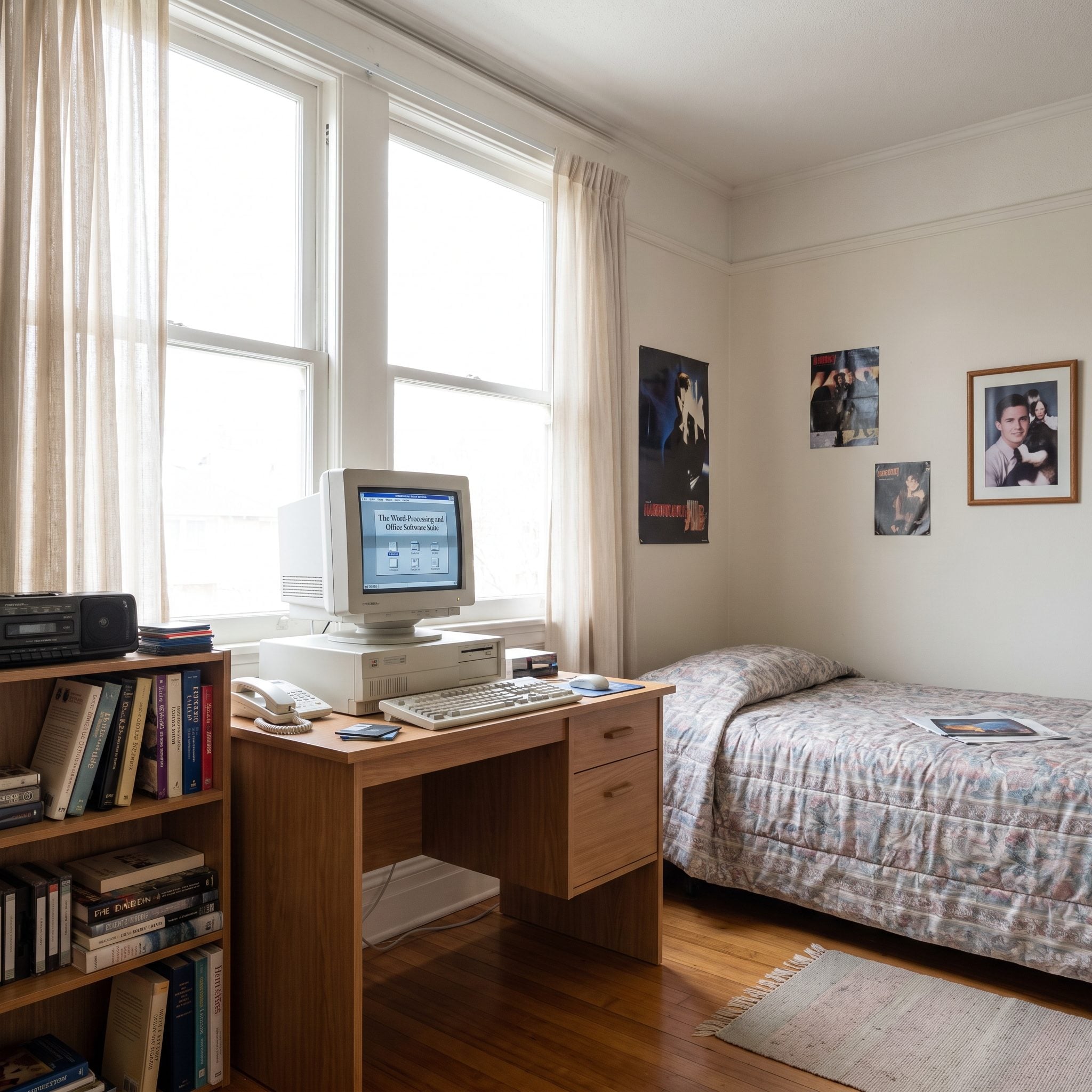
The hardware was useless without something to run on it, and serious productivity software was not an afterthought.
A major office package combining word processing, spreadsheets, and other tools could cost roughly $200 to $500, depending on edition, year, and upgrade status.
Then came the version cycle. New features arrived. File formats evolved. The office down the street upgraded and suddenly you had a reason to consider doing the same.
The computer was expensive. Then you discovered the programs inside it had their own budget.
13. The Corded Desk Phone That Lived Beside the Monitor
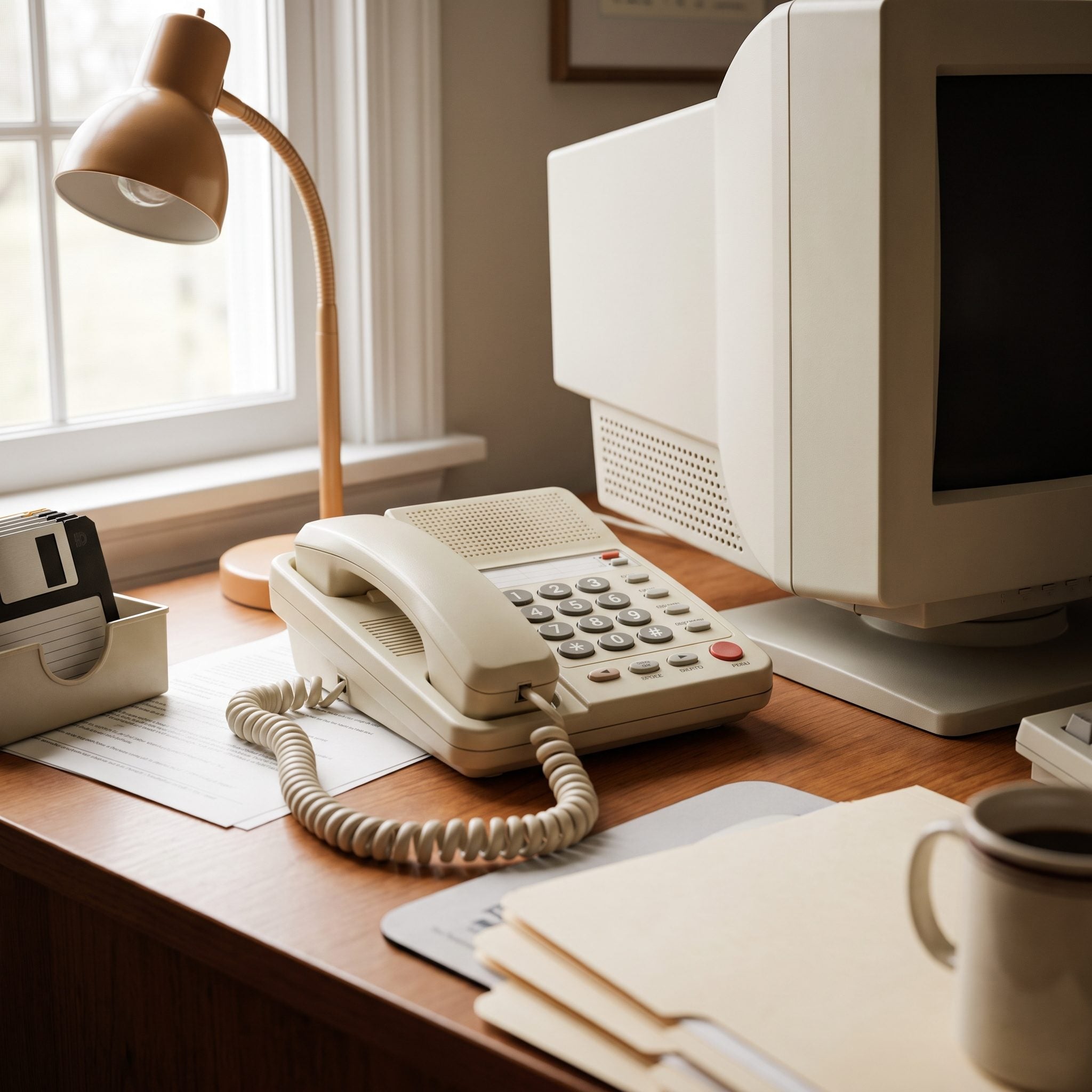
The home office still revolved around the telephone, and the telephone still had a wire.
A basic corded model could be inexpensive; speakerphone, hold buttons, multiple lines, and rows of speed-dial keys pushed the price higher. Beige was heavily represented.
The phone sat beside the monitor because work meant talking while looking at something else. Handset against shoulder, pencil moving over a pad, coiled cord stretched to maximum length.
It could perform essentially one job. It performed that job for fifteen years.
12. The Mouse Pad Printed With Somebody Else’s Logo
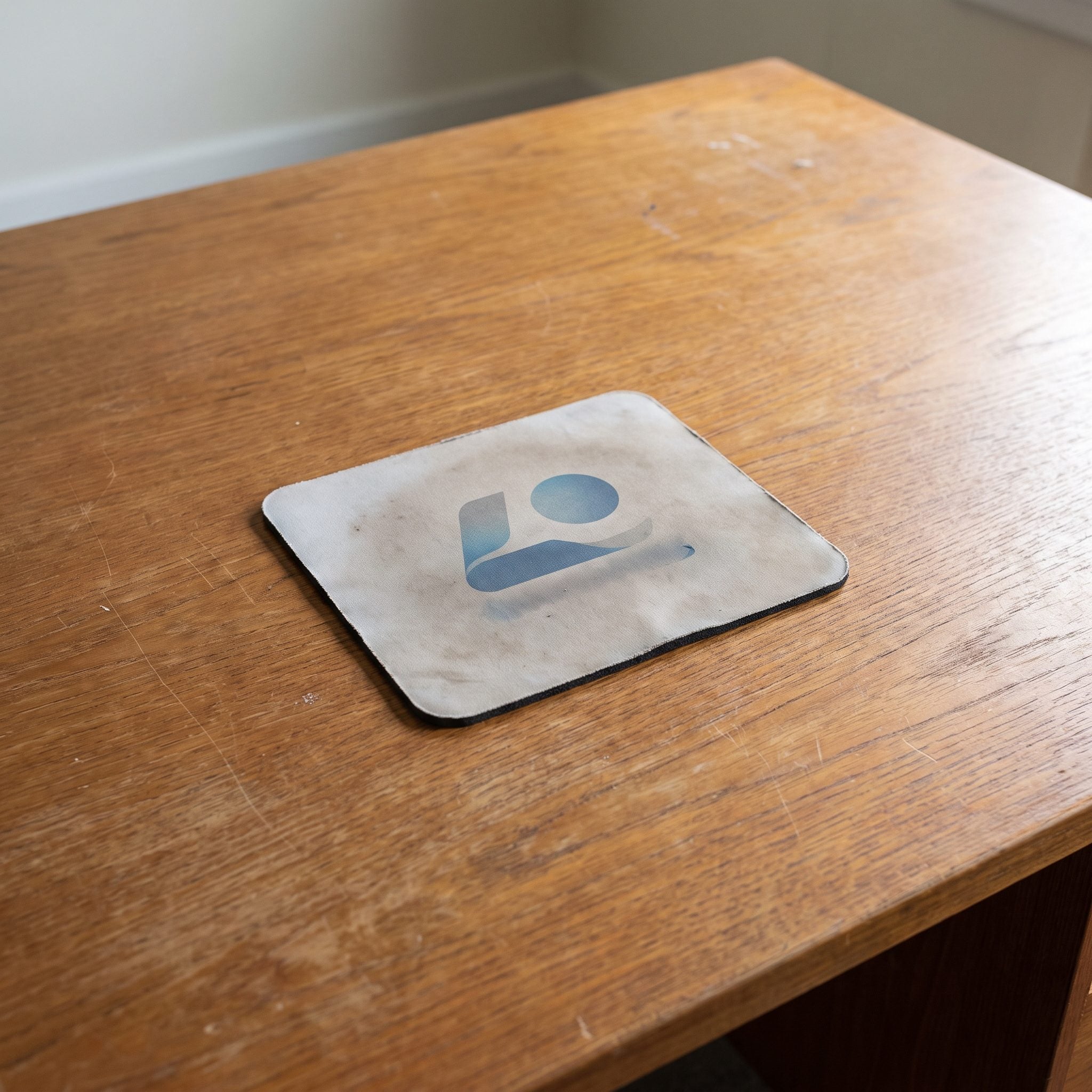
At $3 to $10 — and often free with some other purchase — the foam-backed mouse pad may have been the cheapest piece of dedicated computer equipment on the desk.
It also gave the rolling ball a consistent surface and helped keep the mechanism working more reliably than many slick desktops did.
Computer stores understood the advertising opportunity immediately. Their name, telephone number, and logo lived under your hand for five years while the fabric gradually darkened, the foam cracked, and one corner curled permanently toward the ceiling.
11. The Encyclopedia CD-ROM That Made the Computer Feel Educational
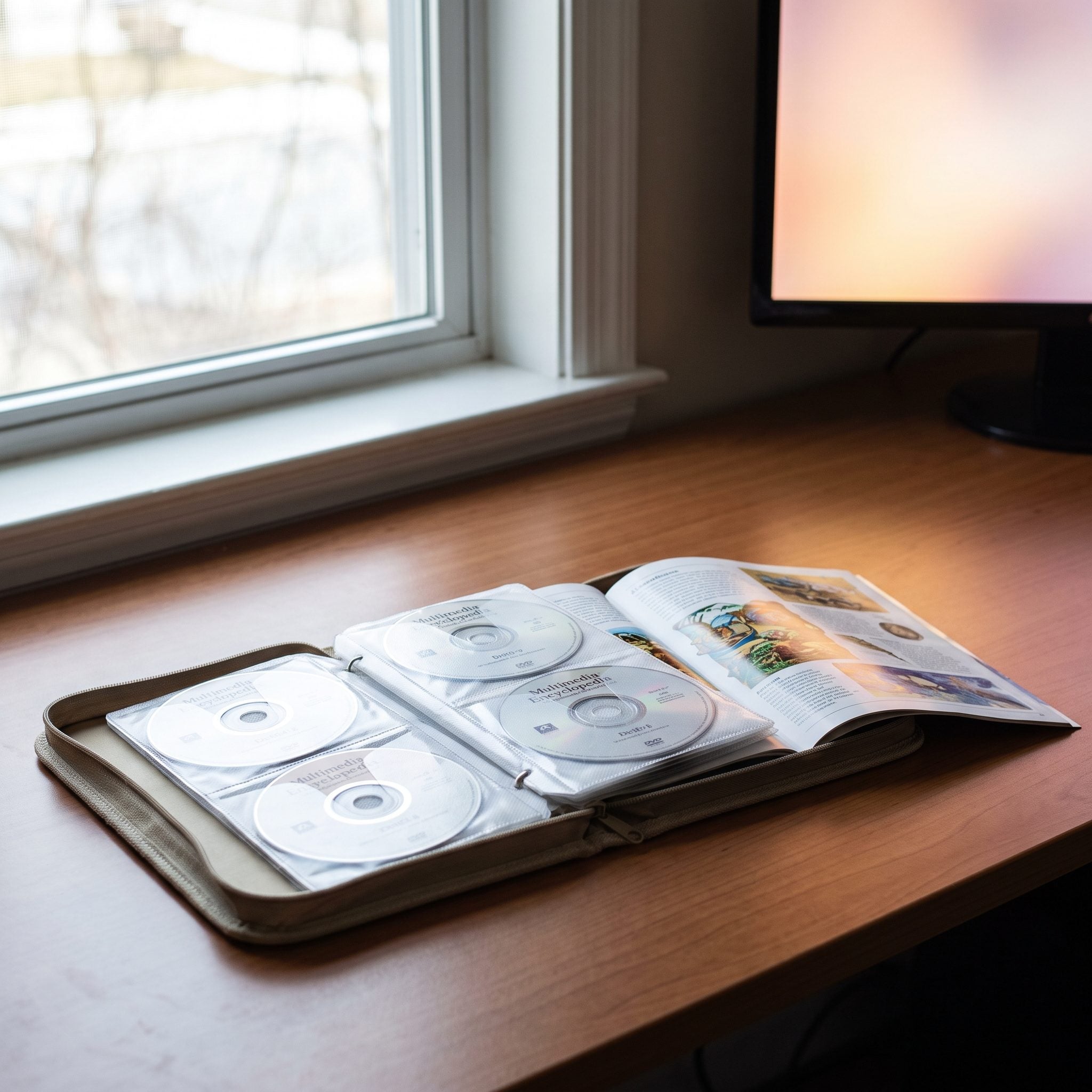
The multimedia encyclopedia was one of the great parental arguments for buying the CD-ROM drive.
Reference titles ranged from relatively inexpensive single-disc editions to elaborate multi-disc collections costing several hundred dollars. Compared with the price and shelf space demanded by a full printed encyclopedia, even the expensive digital versions could look persuasive.
And they were spectacular at the time. Click an animal and hear it. Click a country and watch a tiny video. Follow a hyperlink without anyone yet treating the word “hyperlink” as ordinary language.
The CD-ROM didn’t single-handedly kill the printed encyclopedia — the web would have plenty to say about that later — but it helped make a wall of reference books suddenly look very old.
10. The Printer Stand With a Hole in the Back for the Paper
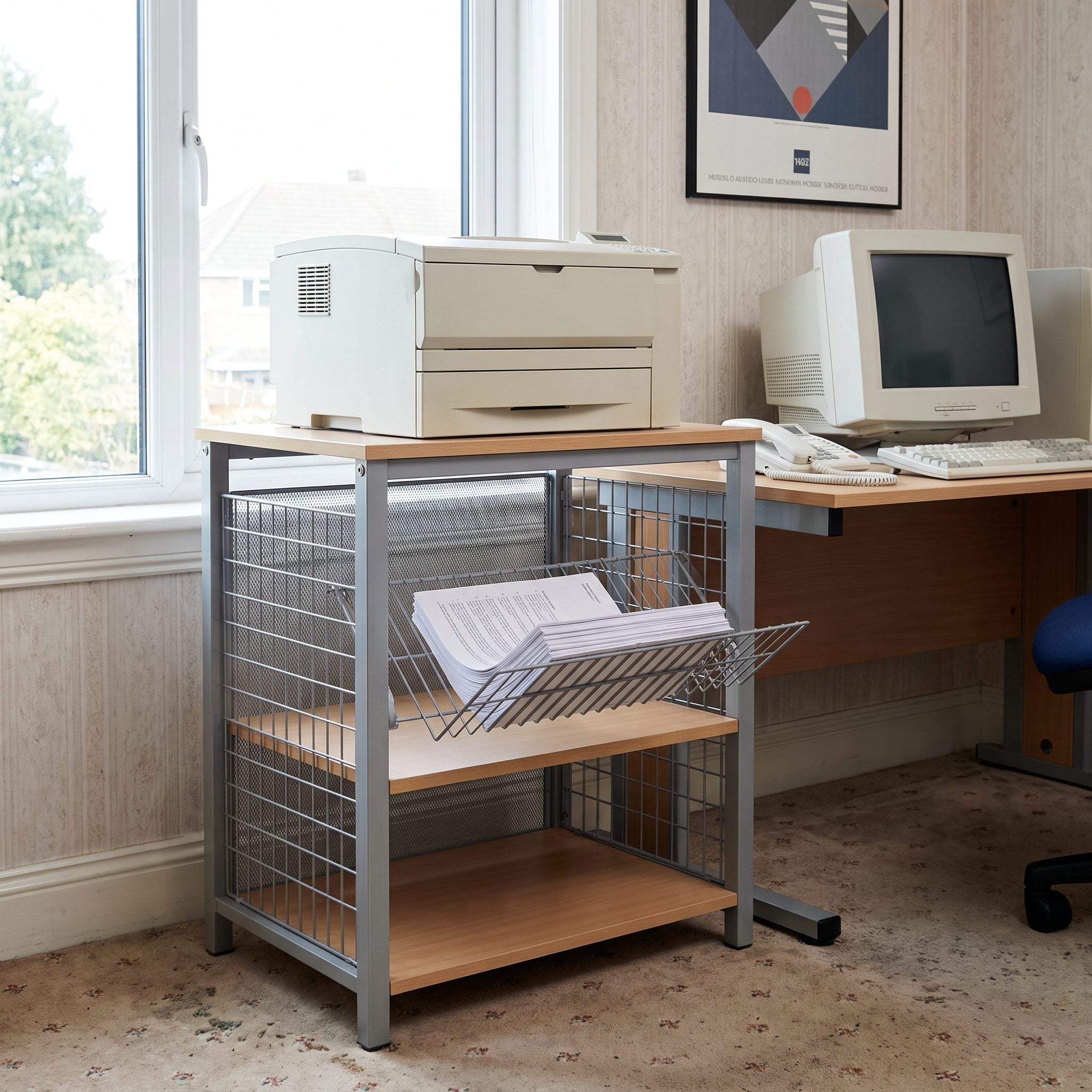
The printer was too large to ignore and too important to leave on the floor, so naturally it acquired furniture.
The cheap version was metal tubing and laminate. The aspirational version was black-ash melamine pretending it belonged with the desk. Lower shelves stored paper, manuals, and spare ribbons or cartridges.
The cleverest designs included a rear opening so continuous-feed paper could travel directly from a box on the bottom shelf into the printer above. In theory, every sheet followed the route neatly. In reality, paper still found the carpet.
If you’re looking at pink home office storage now, remember that the 1990s answer was often another piece of furniture with one very specific hole cut into it.
9. The Bookshelf Sagging Under Binders and Reference Books
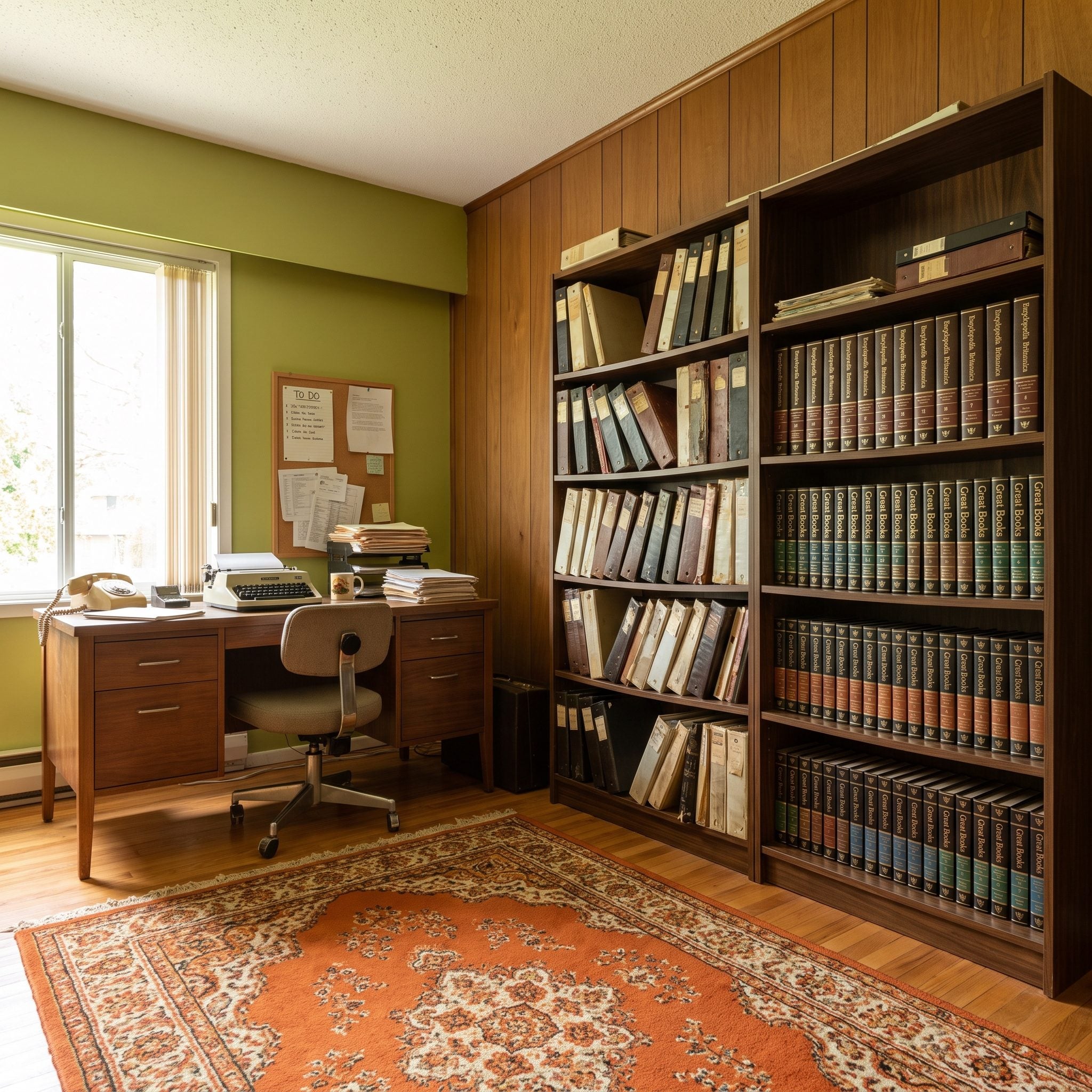
A flat-packed particleboard bookcase from an office store or warehouse club might cost around $40 to $90, depending on height and how persuasive the fake woodgrain looked from across the room.
Then came the weight. Dictionaries. Tax binders. Software manuals. Catalogs. Reference books. Perhaps an entire encyclopedia set bought on payments years earlier.
The center of the longest shelf slowly bowed into a smile. Eventually someone wedged a paperback underneath it and declared the structural problem solved.
8. The Answering Machine With the Blinking Red Light
🔥 Would you like to save this?
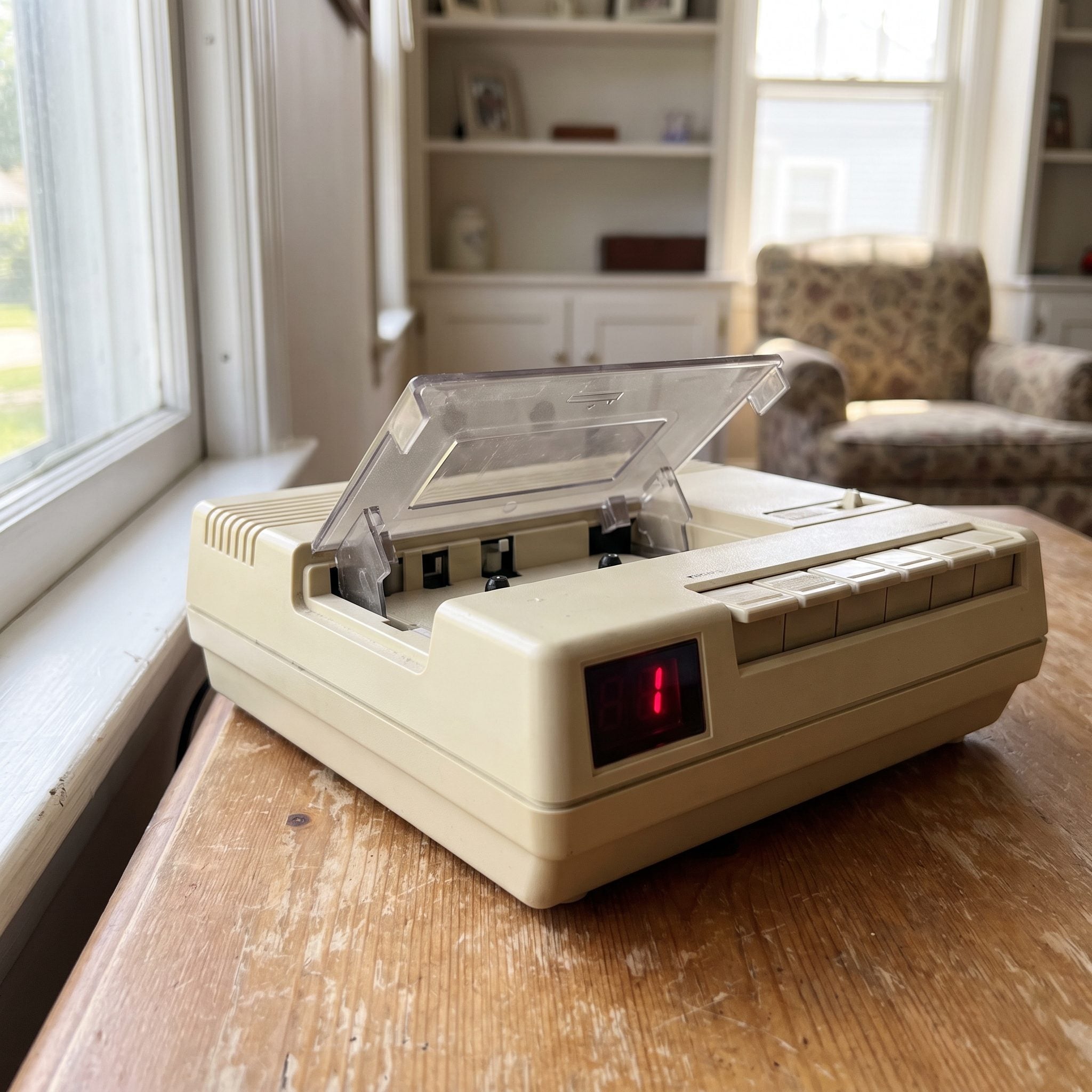
Before voicemail became invisible, messages occupied a physical machine on the desk.
Earlier models recorded onto tiny cassettes; digital answering machines became increasingly common as the decade progressed. Either way, coming home to a blinking number instantly changed the temperature of the room.
Three messages. One client. One sales call. Your mother.
Then came the outgoing greeting, carefully recorded in a voice several degrees more formal than the one anyone actually used. Every home business wanted to sound established. Nothing exposed the nerves faster than hearing yourself say, “We’re unable to take your call right now.”
7. The File Cabinet Full of Paper Nobody Dared Throw Away
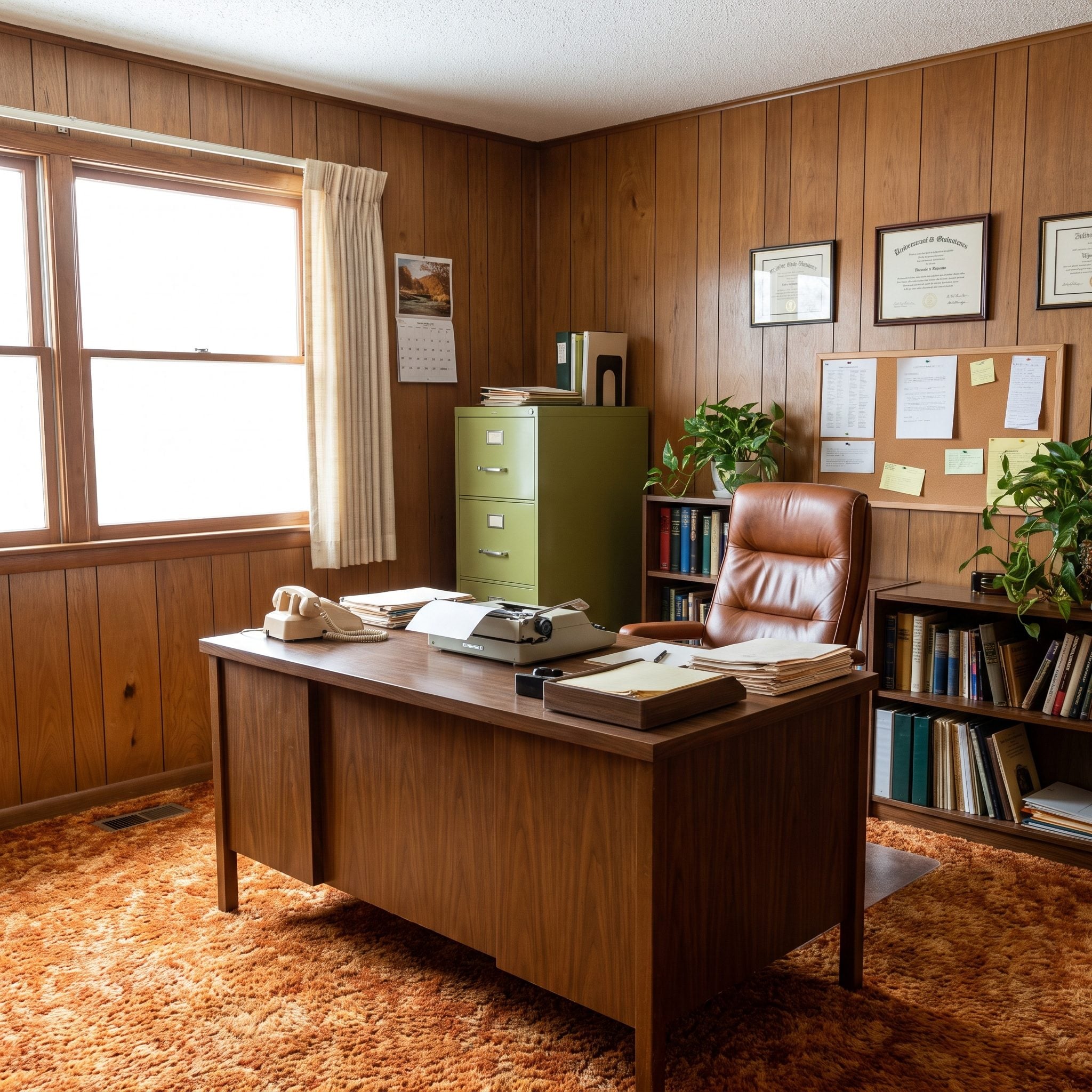
A decent two-drawer metal cabinet could land around $80 to $150, while larger four-drawer versions climbed considerably higher.
That bought a permanent home for tax returns, warranties, bank statements, client files, mortgage documents, insurance papers, instruction manuals, and receipts whose purpose nobody could remember but nobody felt safe discarding.
The better drawers glided. The cheaper ones jammed three-quarters open and required a hip check.
Digital storage was coming, but paper still had legal, financial, and emotional authority. If something mattered, you kept the original in a green hanging folder and hoped you remembered which drawer.
6. The CD-ROM Storage Tower That Arrived Later in the Decade
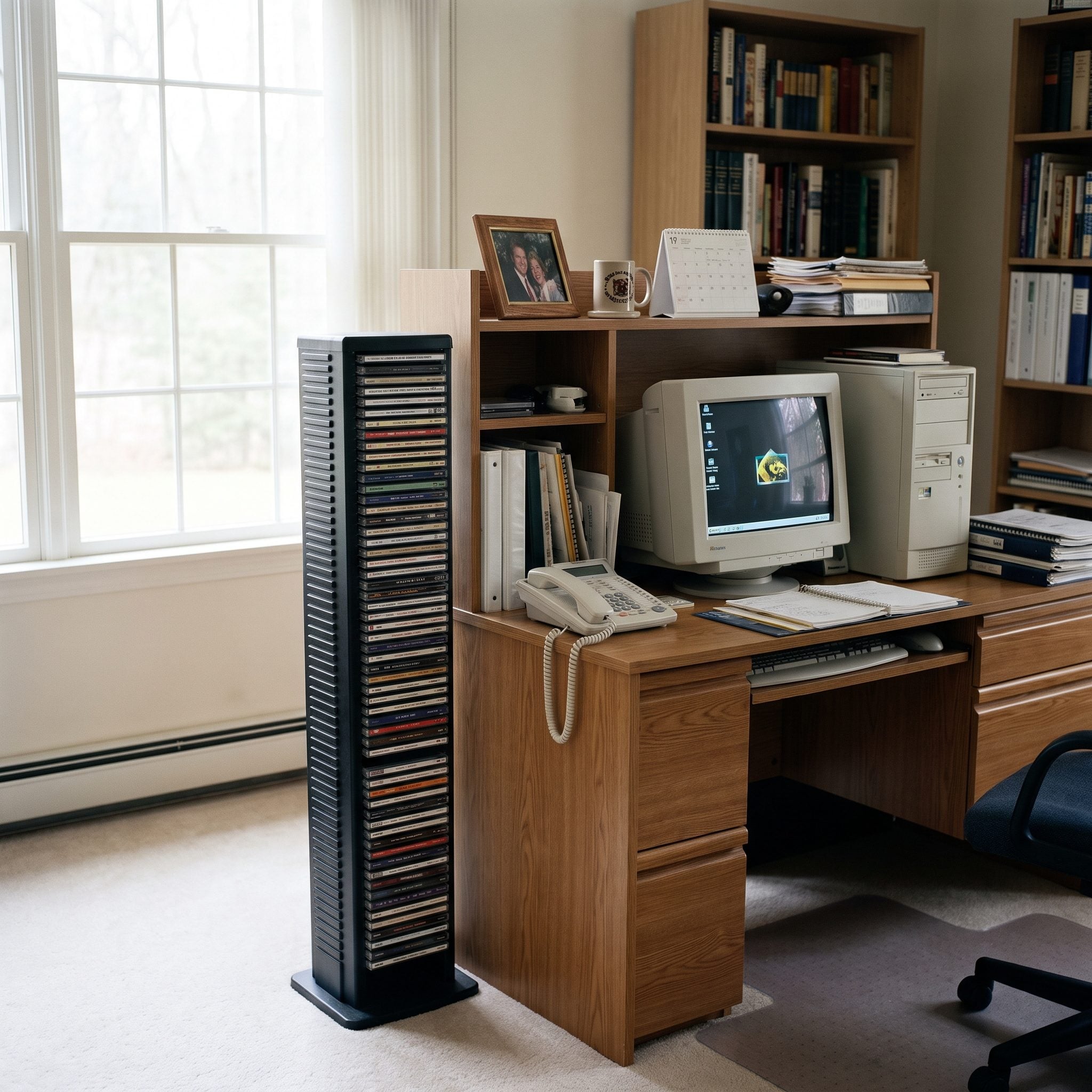
Once CDs multiplied, the desktop acquired another accessory: the rotating plastic tower.
Depending on size, these might run around $20 to $50. Jewel cases slid vertically into little slots while the whole structure turned like a lazy Susan of software.
For about six months, organization had been solved forever. Then one hinge cracked. A disc came out and never went back. Another case migrated to the car.
By the end, the tower was half full and a drawer beside it contained twelve unidentified silver discs. A retro office makeover should probably include both conditions for accuracy.
5. The Ream of Bright-White Paper That Made a Printout Look Official
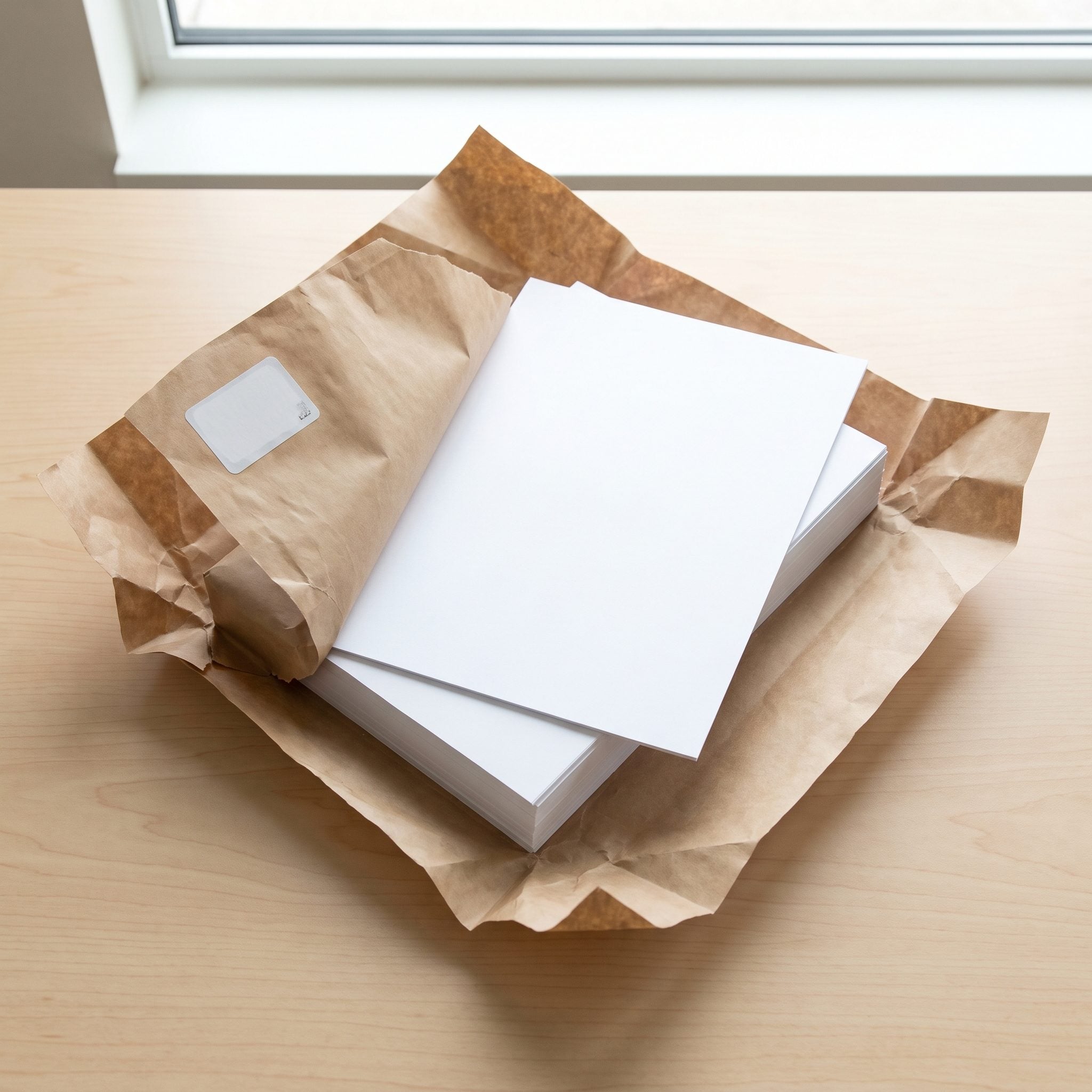
After thousands of pages on continuous-feed stock, a clean white sheet emerging from a printer looked almost luxurious.
Paper itself remained one of the relatively inexpensive components of the office, but presentation mattered. Green-bar stock said data. Perforated tractor paper said computer. A crisp individual sheet said letterhead, résumé, proposal, invoice.
Same words. Completely different authority.
4. The Stapler, Hole Punch, and Tape Dispenser That Refused to Die
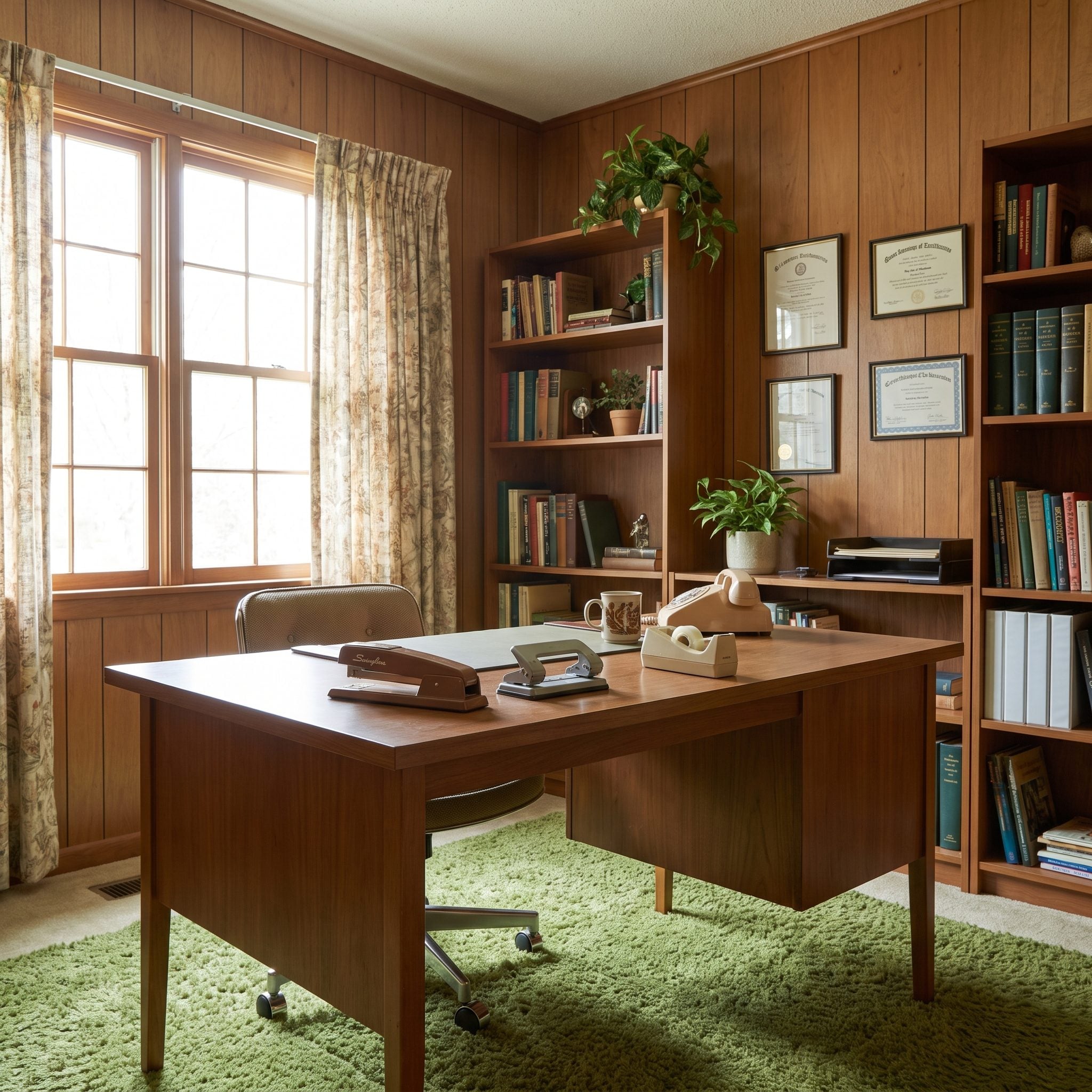
The computer might have cost two grand. The tools that survived it cost about twenty-five bucks combined.
A solid stapler, basic hole punch, and weighted tape dispenser could be assembled for roughly $20 to $30. A good metal stapler had enough mass to suggest it had been designed during an era when office supplies were expected to survive a small building collapse.
Many did. Computers came and went. Printers were replaced. The fax disappeared. The same black stapler moved into the next desk drawer and continued biting through paper without requesting a software update.
3. The Corkboard and Wall Calendar Running the Household
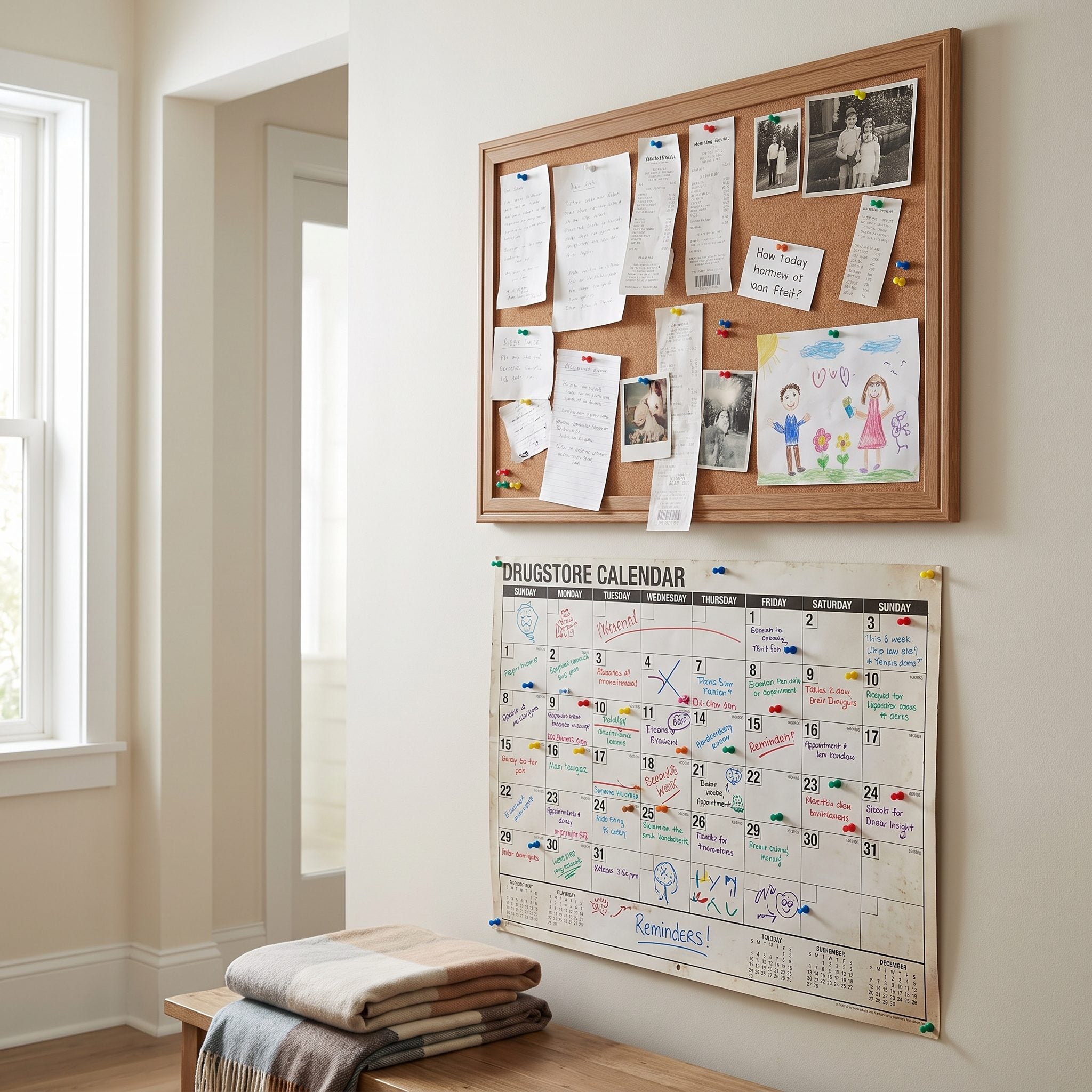
A corkboard might cost $10 to $25. The calendar was cheaper still, sometimes free from a bank, insurance agent, garage, or anyone else hoping their telephone number would hang in the kitchen for twelve months.
Together they functioned as the household operating system. Appointments. Practice schedules. Tax dates. School notices. Phone numbers. Business cards. One coupon already expired.
No login. No synchronization. Everyone passed it and absorbed the plan.
The wall calendar may have been the last screen in the house everybody looked at without arguing over whose account was logged in.
2. The Giant Computer Manual That Lived Within Arm’s Reach
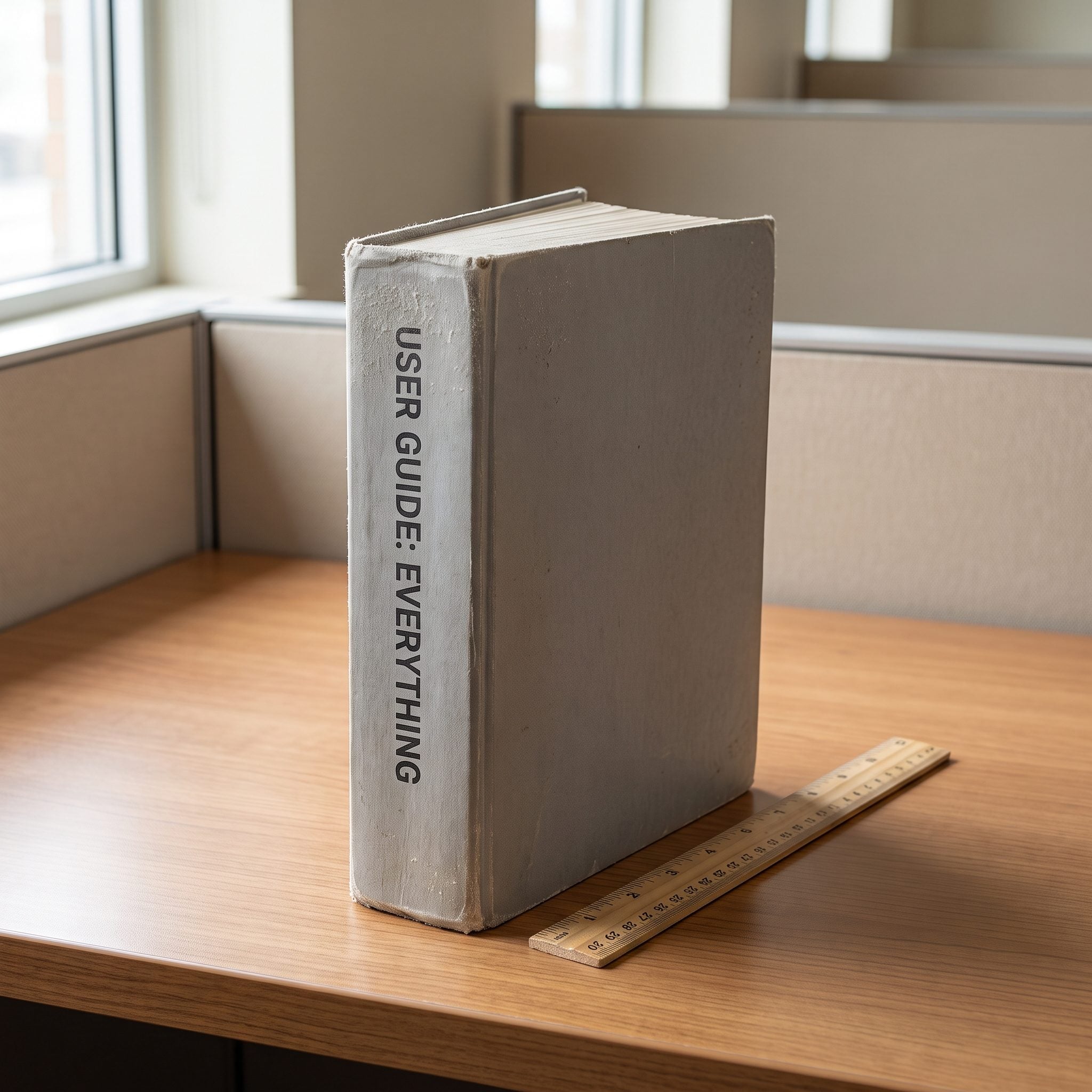
The manual was usually included, which made it one of the few substantial objects in the office that felt free.
Some were enormous: thick indexes, appendices, troubleshooting charts, installation diagrams, commands nobody understood until the machine failed at 10:30 at night.
There was no search box waiting somewhere else. If an error appeared, you reached for the book, found the index, followed the page number, and tried to determine whether the paragraph describing your problem had been translated from another language by a committee.
The spine eventually cracked. Corners softened. Pages acquired pencil marks and coffee rings. Long after the computer was obsolete, somebody still hesitated before throwing the manual away.
1. The Desk Buried in Cables Despite Everyone’s Best Efforts
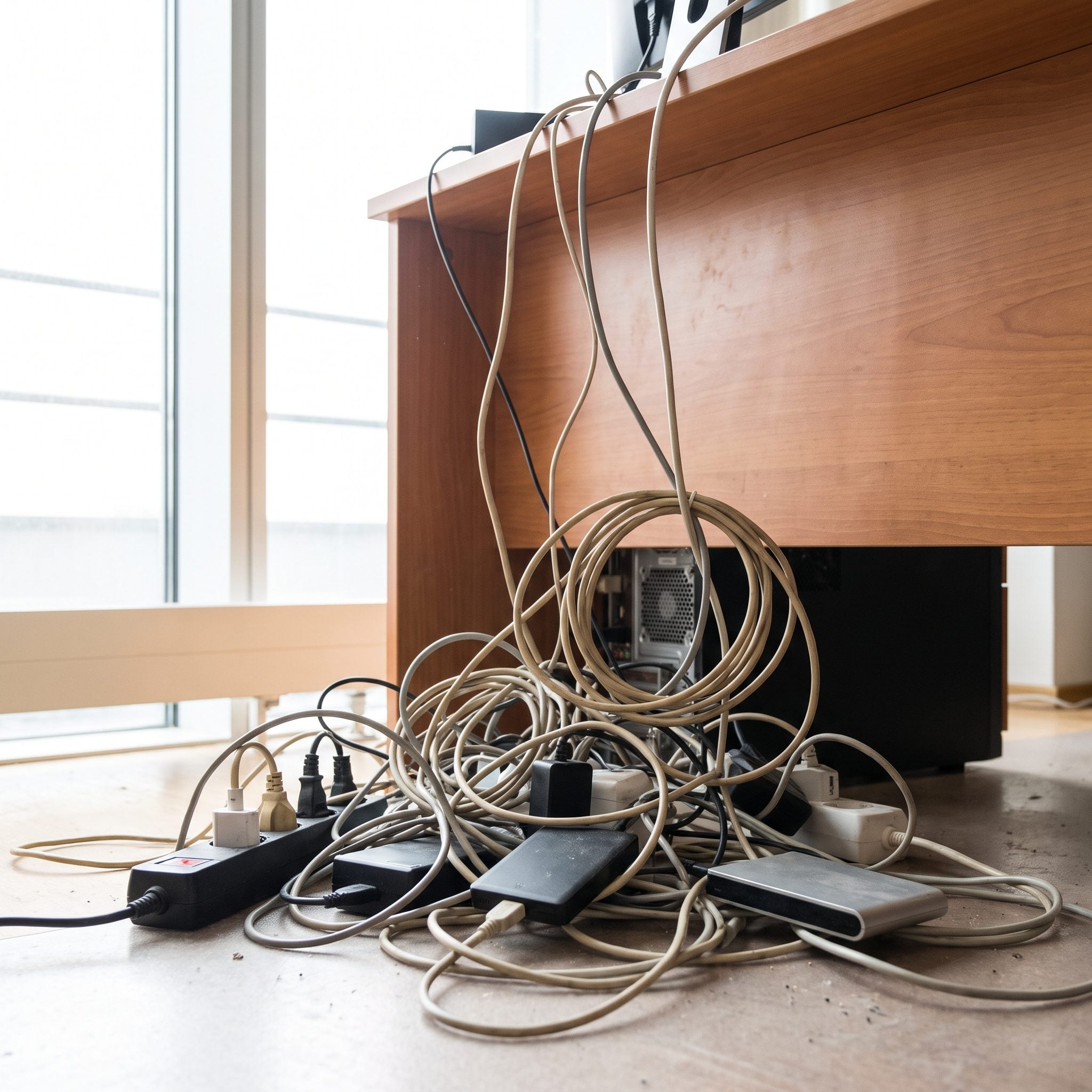
Then there were the cables, the one office expense that technically came free and somehow cost more patience than anything else.
Monitor cable. Keyboard cable. Mouse cable. Printer cable. Speaker wires. Modem line. Telephone line. Power for everything. One cord disappeared behind the tower and emerged somewhere nobody could identify without crawling under the desk with a flashlight.
You bought Velcro ties and plastic cable sleeves with optimism. The system looked magnificent for approximately one week. Then another peripheral arrived and the peace treaty collapsed.
By the middle of the 1990s, even a fast home modem was commonly moving data at 28.8 or 33.6 kbps; 56k would become the late-decade prize. All those cords, boxes, adapters, lights, shelves, disks, paper, and furniture were supporting a connection slower than almost anything we would tolerate today.
That may be the strangest part of reconstructing the room now. The technology was cumbersome, expensive, noisy, hot, and constantly in the way — and when the modem finally connected, the whole office suddenly felt like the future.