
Stainless steel spent decades convincing kitchen designers that every appliance should look like laboratory equipment. Then the refrigerator discovered cobalt, the range developed a taste for oxblood, and the extractor hood began behaving like a piece of sculpture. The cabinetry hasn’t quite recovered.
In order to come up with the very specific design ideas, we create most designs with the assistance of state-of-the-art AI interior design software. Also, assume links that take you off the site are affiliate links such as links to Amazon. this means we may earn a commission if you buy something.
A refrigerator can now resemble a lacquered cabinet from an Italian design showroom. A range can turn a wall of limestone into a composition worth studying. Even the extractor hood, that ungainly necessity above the stove, has developed architectural ambitions. Some curve like sculpture, others rise into the ceiling, and a few have enough color to make the surrounding cabinetry seem positively prudish.
Brass hardware connects enamel to millwork. Marble veining sharpens unexpected color combinations. Walnut, plaster, concrete, and glass give saturated finishes something substantial to play against. From a sun-drenched California kitchen to a plum-lacquered interior and a desert house interrupted by cobalt, these 30 designs demonstrate how much more interesting a kitchen becomes when its appliances develop a color sense of their own.
30. Cobalt Under an Arch, Butter Yellow Everywhere Else
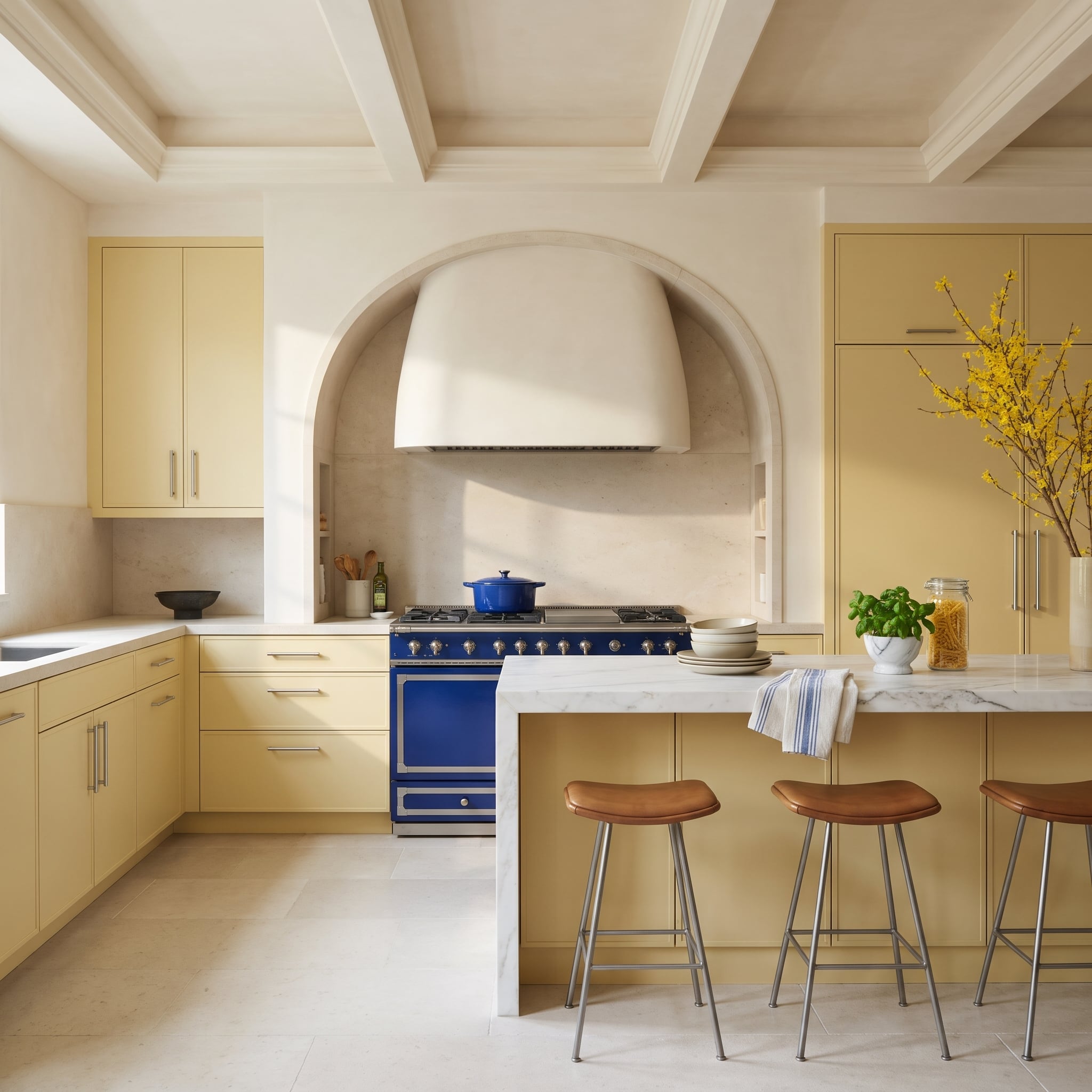
The plaster arch gives the cobalt range the sort of architectural framing usually reserved for a fireplace. Butter-yellow cabinetry softens the contrast, while pale stone provides a clean interval between the two colors. Even the striped towel on the island picks up the blue at a smaller scale. The range commands the wall without needing the refrigerator to join the performance.
29. Lavender Finds a More Sophisticated Relative in Plum Lacquer
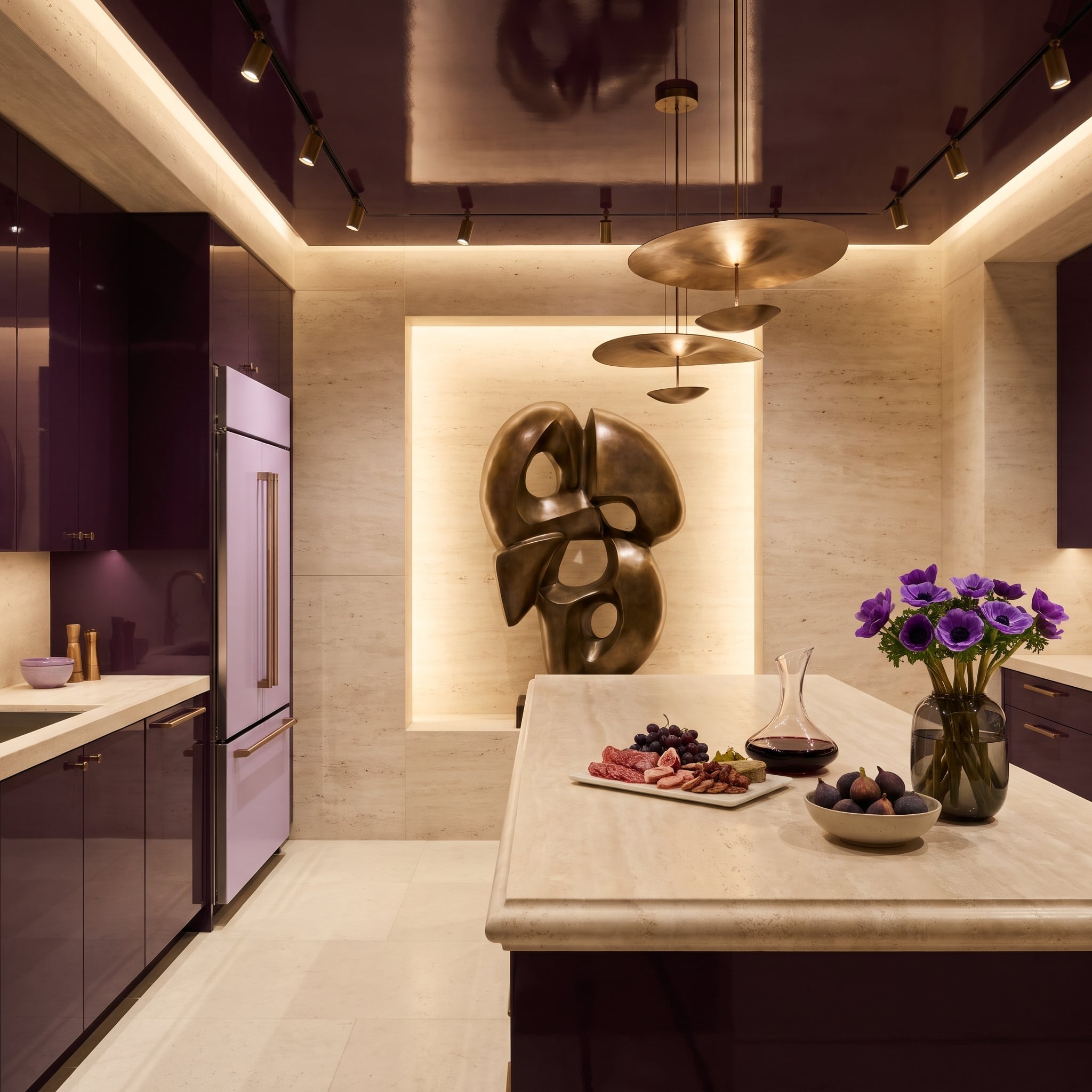
Lavender enamel takes on an entirely different character when surrounded by aubergine lacquer. The French-door refrigerator becomes the lightest note in a composition that moves through several depths of purple. Bronze pulls extend the cabinetry’s metalwork onto the appliance, while the reflective ceiling catches the pendant lighting above travertine surfaces. What might have been an extravagant color choice becomes an exercise in tonal sophistication, with changes in sheen doing as much as the colors themselves.
28. A Red Hood With the Geometry of Folded Paper
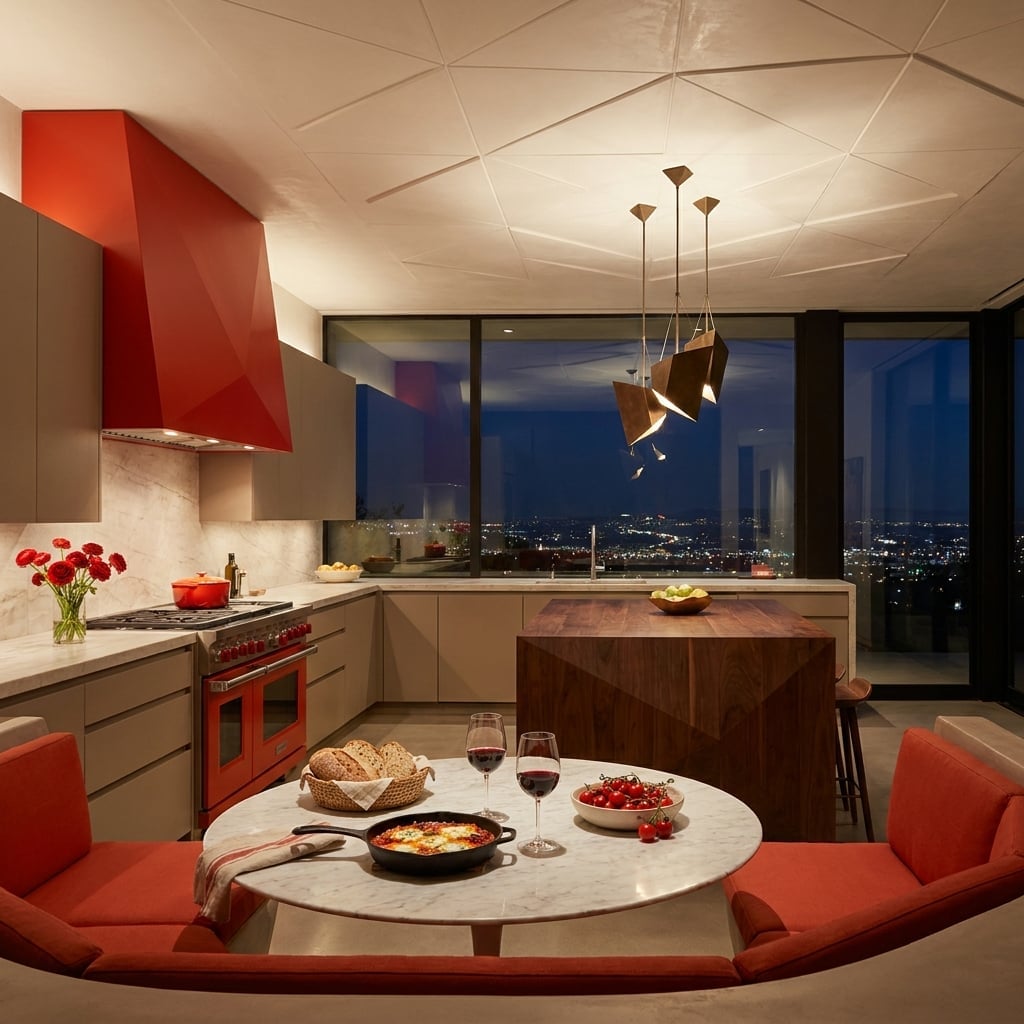
The red hood’s tapering facets belong to a room already fascinated by angles. Triangular ceiling details, sharply folded pendants, and an articulated walnut island carry the geometry across the space. A matching red range anchors the cooking wall, while the upholstered banquette repeats the color at the opposite end. The hood is theatrical, certainly, though the surrounding architecture knows its lines.
27. Custard-Yellow Enamel Against Smoked Oak
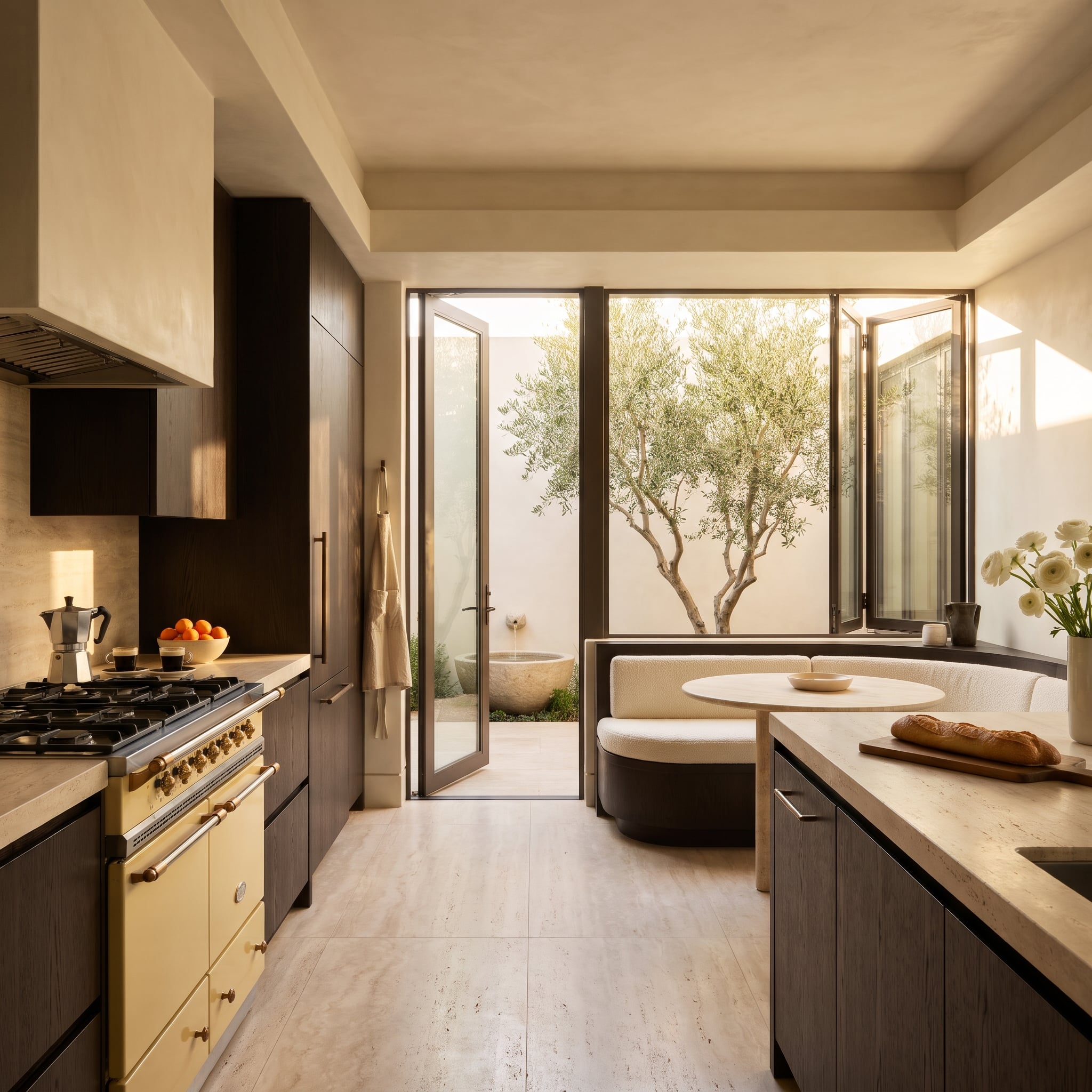
Custard-yellow enamel brings an unexpected delicacy to the smoked-oak cooking wall. The range’s brass controls find a counterpart in the long pulls on the integrated refrigerator, while travertine supplies a warmer, more textured transition between the finishes. Beyond the cooking area, folding glass opens toward an olive tree and a curved banquette occupies the corner. The pale enamel has enough presence to distinguish the range without disturbing the room’s relaxed architectural character.
26. A Cobalt Refrigerator Interrupts the Desert
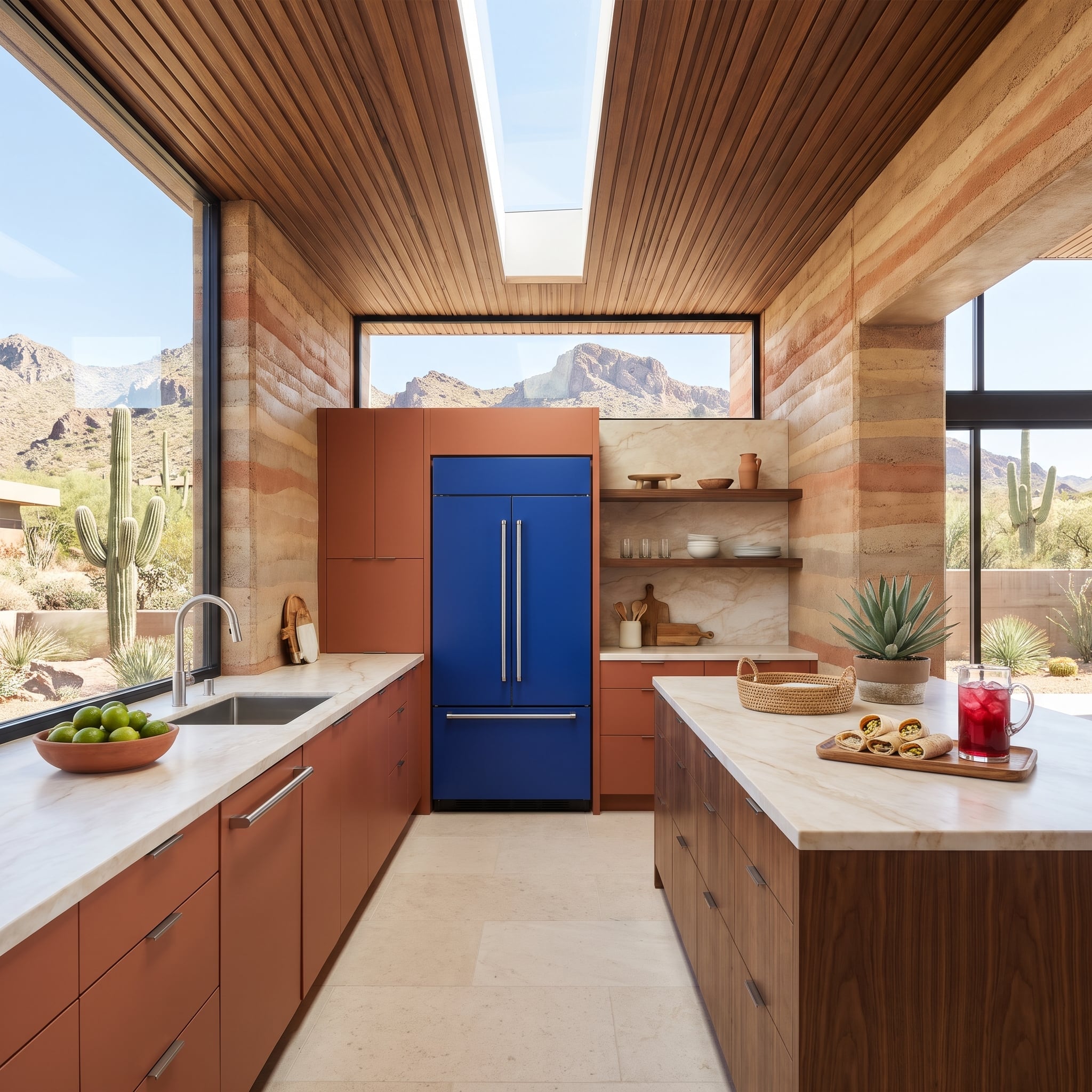
Terracotta cabinetry, walnut, and the horizontal strata of rammed earth establish an emphatically warm interior. The cobalt refrigerator cuts across that palette with one cool vertical plane. Cabinetry above and alongside it gives the appliance a deliberate place in the composition, while its steel handles pick up the nearby drawer hardware. Beyond the clerestory, the mountain provides all the additional drama the room requires.
25. A Sapphire Hood Takes Its Curves From the Ceiling
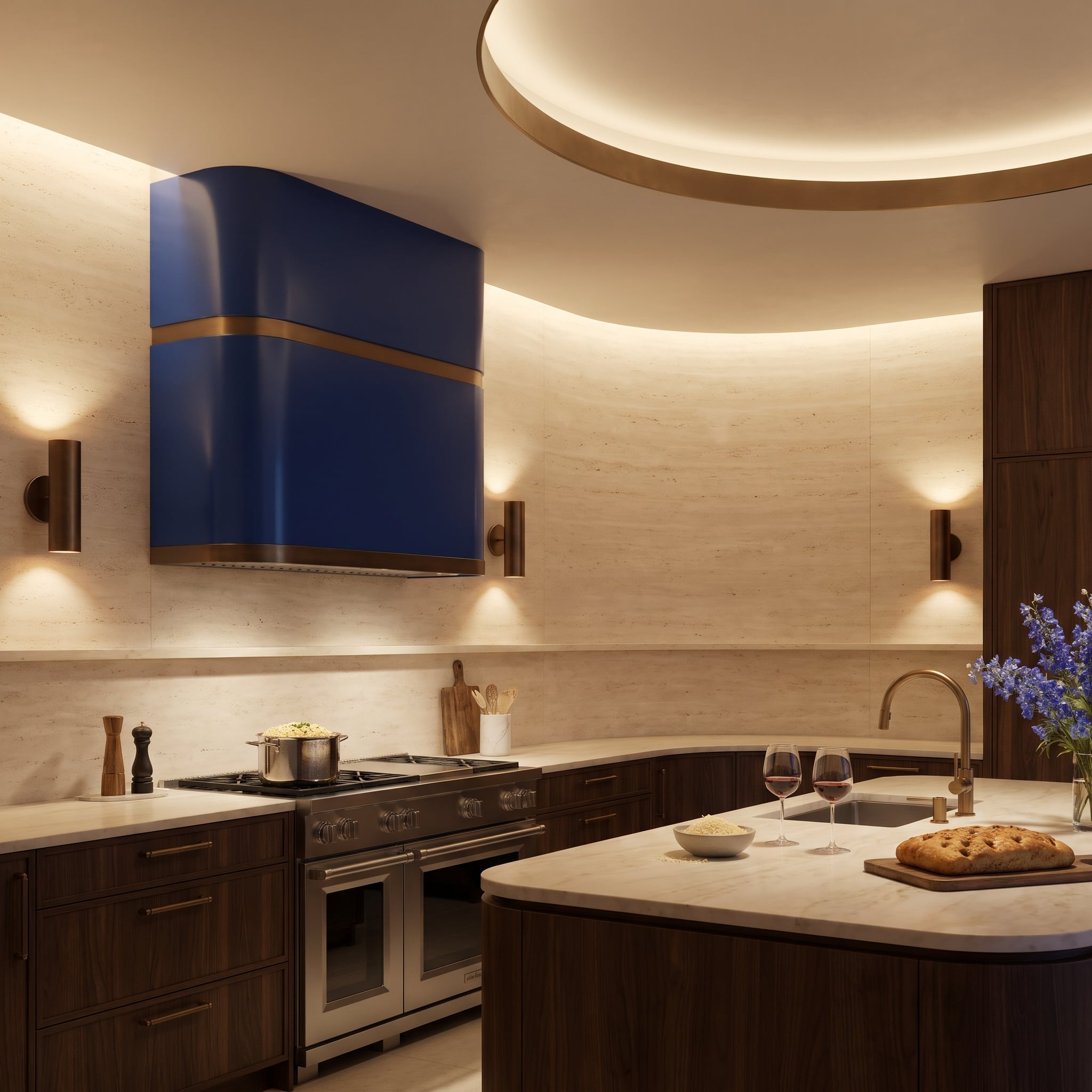
Two brass bands cinch the rounded sapphire hood, echoing the oval cove-lit ceiling above. Bronze sconces flank the composition and wash the travertine with warm light. Against those soft curves and mineral surfaces, the blue becomes a precise focal point. Walnut cabinetry provides weight below the counters without repeating the hood’s color. Its sculptural profile and brass detailing make the extractor feel less like equipment than a custom architectural installation.
What Our Readers Say
- Asked which kitchen faucet finish they would buy, Home Stratosphere readers picked chrome at 46%, well ahead of brass at 26% and black at 25%.
From Home Stratosphere reader polls and votes.
24. Tomato Red Meets a Powder-Blue Coast
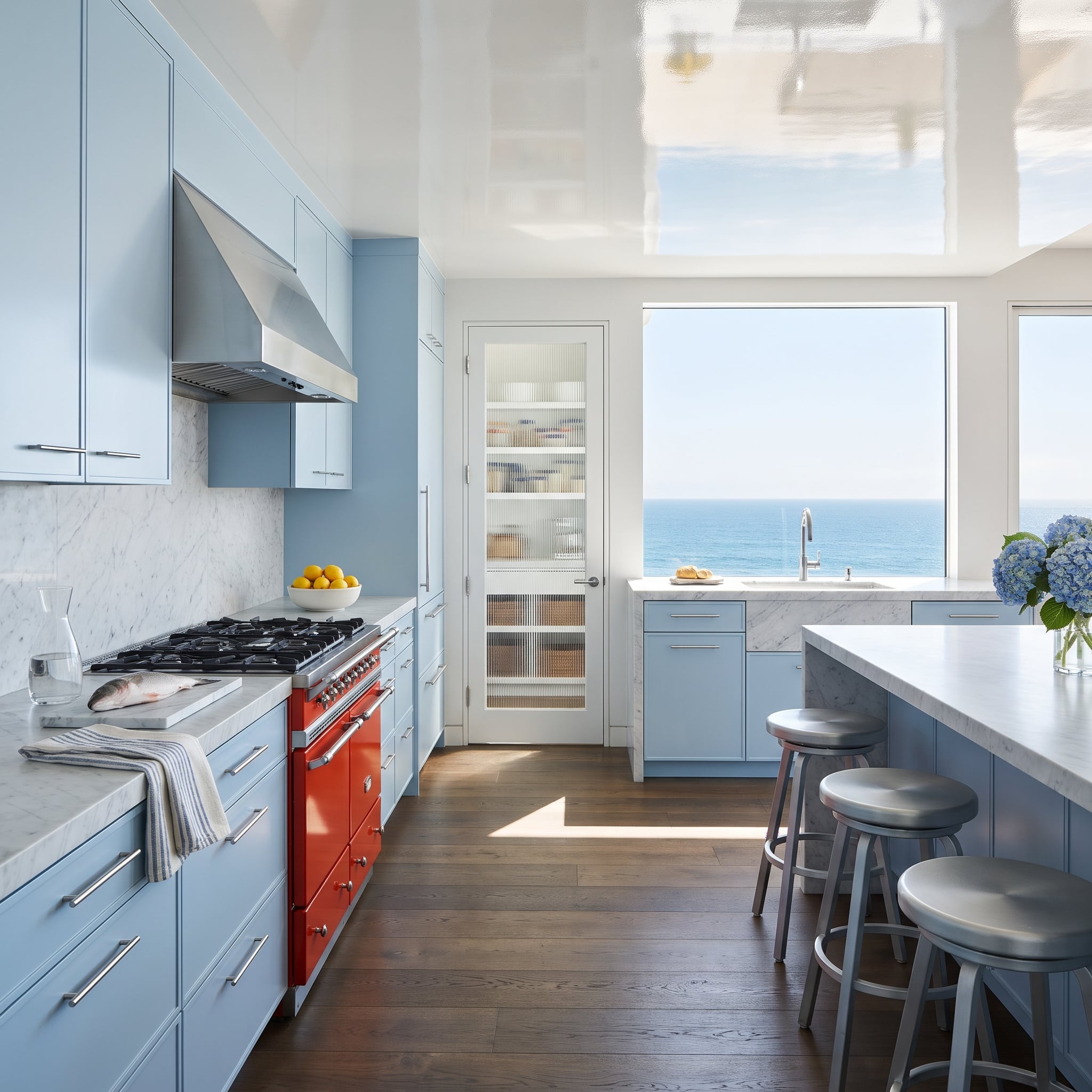
The sea beyond the window finds a pale counterpart in the powder-blue slab cabinetry. The tomato-red range interrupts that agreement, set sharply against white marble and gleaming metal rails. Broad fields of blue establish the coastal atmosphere, while one concentrated red appliance gives the cooking wall its energy. The contrast is confident enough to dispense with nautical decoration altogether.
23. An Emerald Refrigerator With a Garden Connection
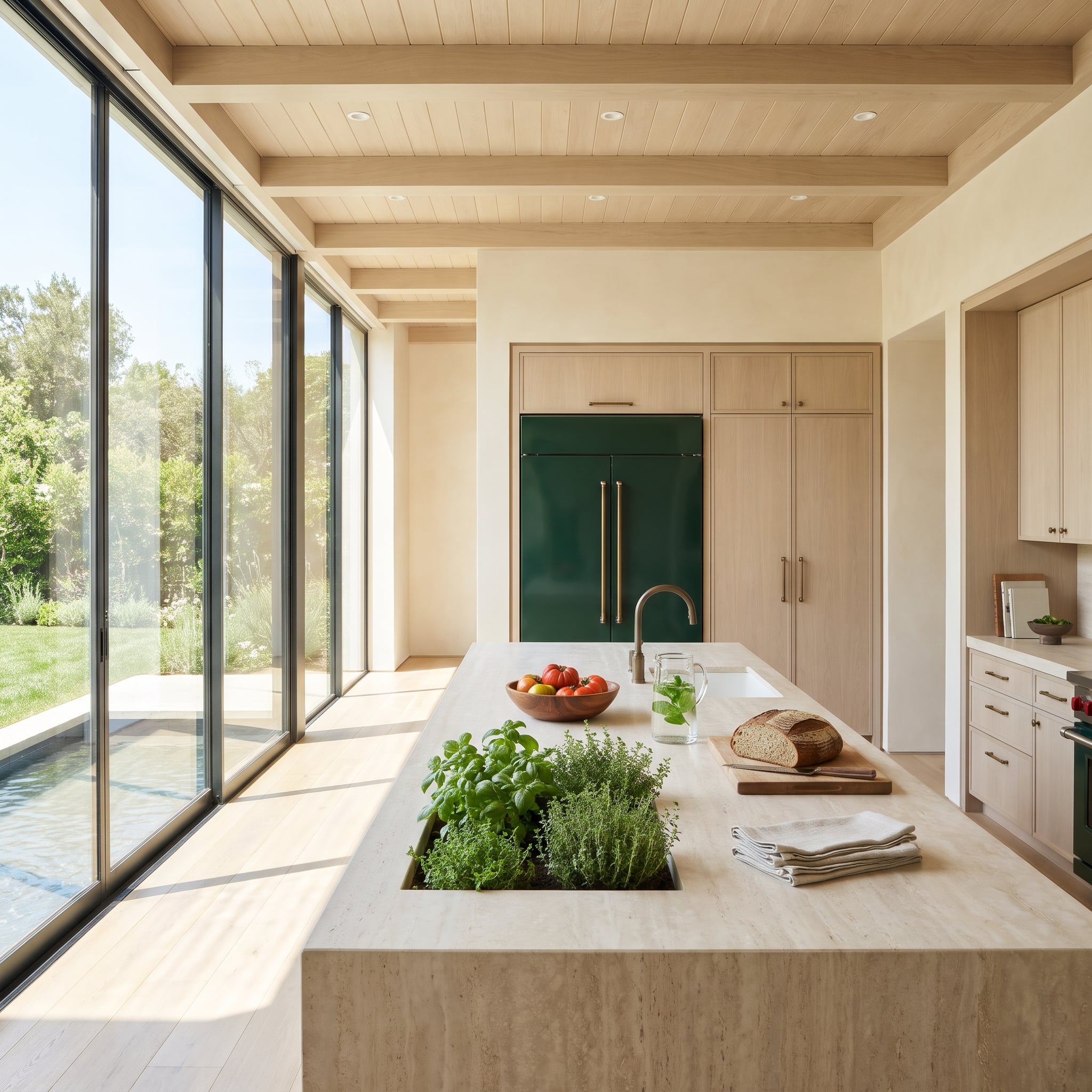
A ribbon of living herbs runs through the island, giving the emerald refrigerator a surprisingly natural counterpart. Pale oak cabinetry and travertine keep the surrounding palette warm and restrained, while brass pulls add a metallic glint to the lacquered doors. The connection between appliance and planting is subtle enough to reward a second look. Green appears in two entirely different forms, one polished and manufactured, the other alive and irregular.
22. Mulberry Lacquer Gives Stainless Steel a Supporting Role
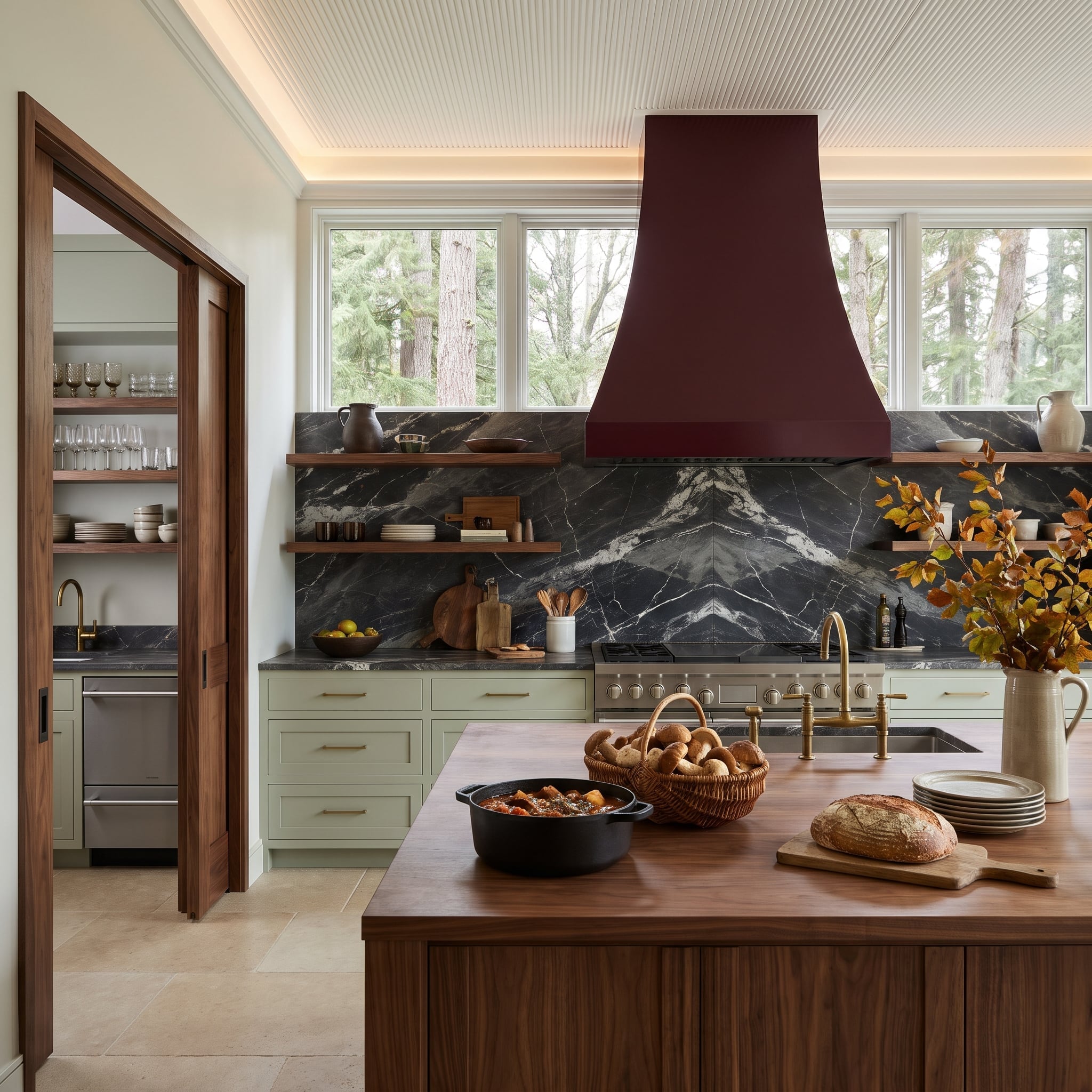
The stainless range is deliberately understated beneath a flared mulberry hood. Behind it, bookmatched marble veins converge near the centerline, giving the colored form a natural point of emphasis. Walnut shelving and a brass bridge faucet contribute warmth without distracting from the cooking wall. The hood gets the dramatic finish; the stainless range provides the gleaming machinery beneath it.
21. Oxblood Breaks the Cream-Cabinet Monopoly
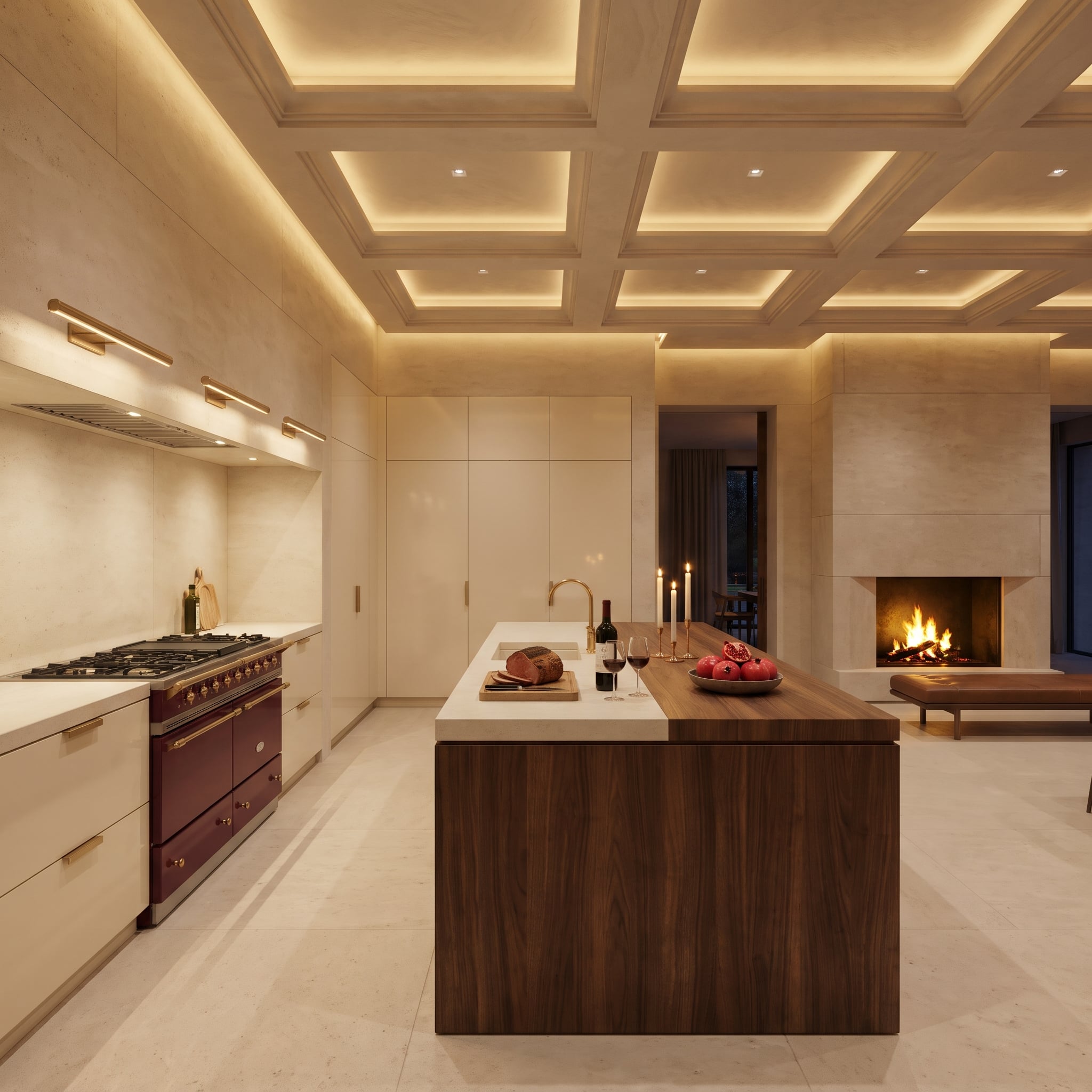
An almost uninterrupted expanse of cream cabinetry gives the oxblood range remarkable prominence. Its brass controls connect with the picture-light sconces above the stone, introducing a warmer metallic register. Across the room, the island shifts from stone at the sink to a thicker walnut surface near the seating. These changes in material, depth, and proportion prevent the cream cabinetry from becoming monotonous. The range supplies the color; the architecture supplies the substance.
Cream cabinetry has a strong case on its own: in our readers’ heart votes, cream-dominant kitchens got more hearts than the other kitchen images in the same articles, 58% versus 49%.
20. Cobalt Enamel Beside a Wall That Glows
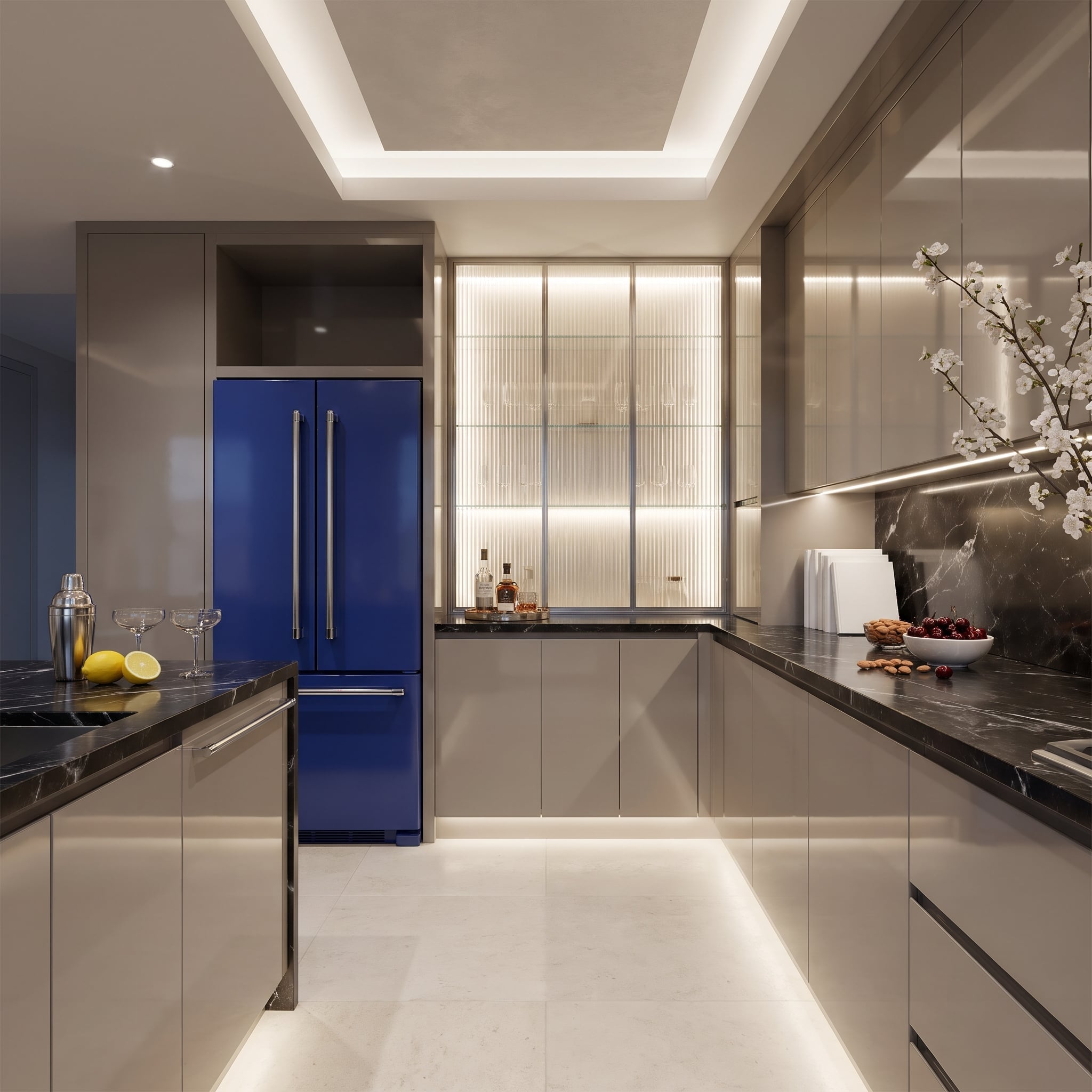
Light filters through reeded glass beside the cobalt refrigerator, giving the wall an almost translucent quality. The appliance presents the opposite effect: an opaque, saturated block of enamel with a sharply defined silhouette. Taupe lacquer mediates between the two, introducing a smooth neutral surface that allows their differences to register. The composition is as much about the behavior of materials under light as it is about blue.
19. Forest Green Gives a Pink Galley Some Backbone
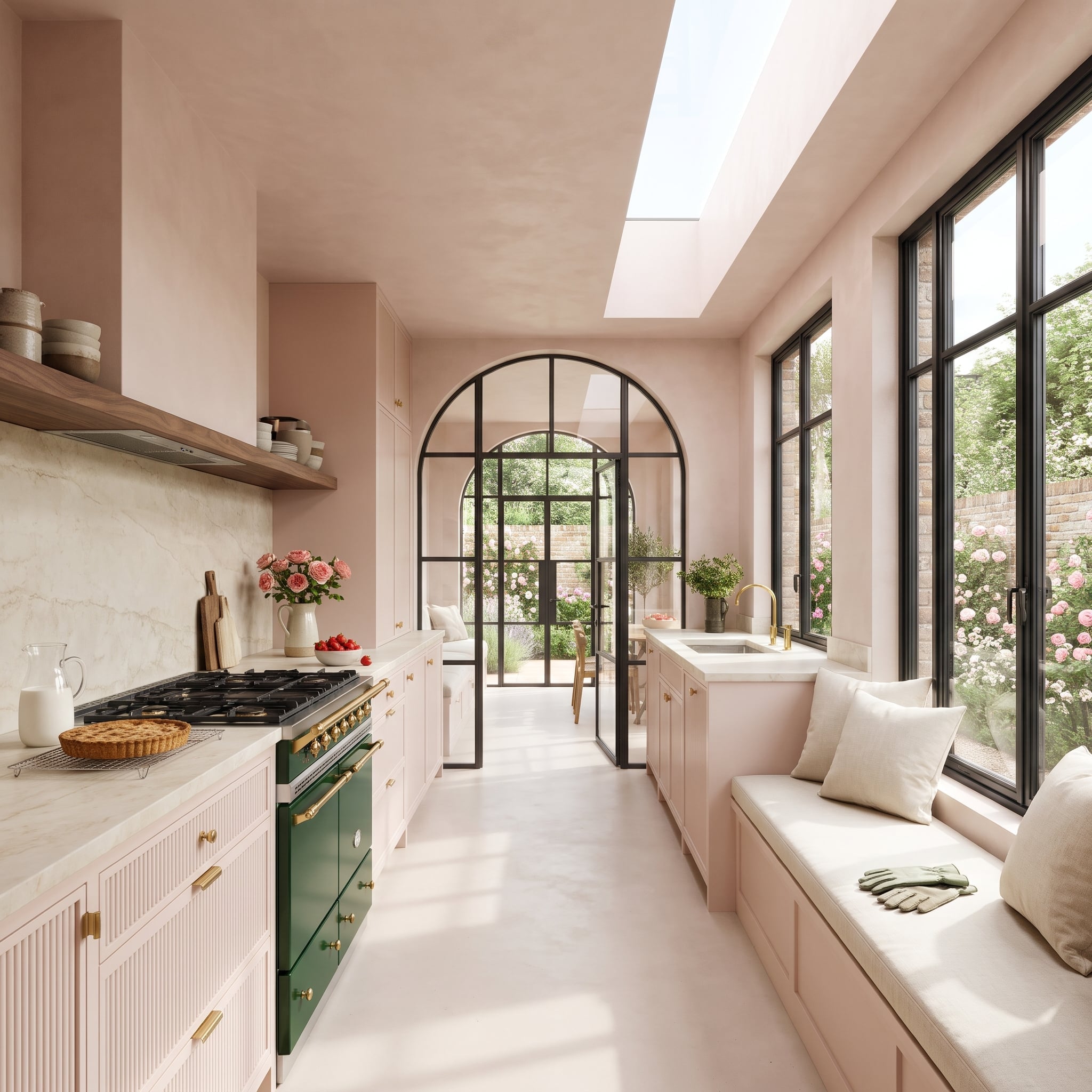
Pink stretches from floor to skylight, making the forest-green range an unexpectedly effective counterweight. Outside the steel-framed windows, climbing foliage repeats the green on a larger scale. A brass rail connects the range to the cabinet hardware, and the extractor is tucked beneath a walnut shelf. The result has the exuberance of an unusual color pairing and the discipline of a carefully planned interior.
18. Two Butter-Yellow Refrigerators Frame a Glowing Onyx Niche
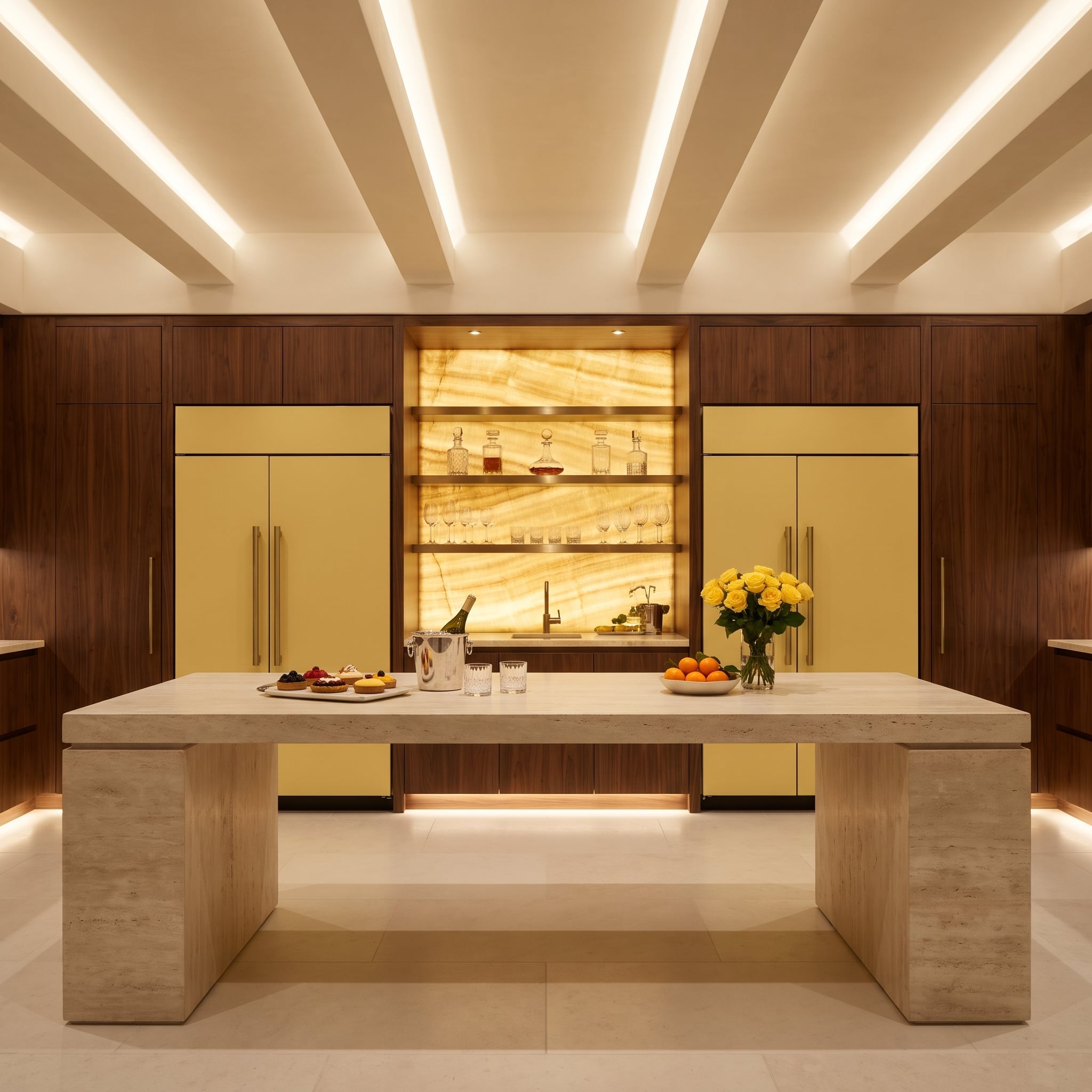
Two butter-yellow refrigerators stand on either side of an illuminated onyx niche, establishing a symmetry that borders on ceremonial. Their long brass pulls connect them to the surrounding walnut millwork. Between the smooth enamel surfaces, the backlit stone reveals a richly patterned interior glow. The pale yellow is an inspired choice: warm enough to belong beside the wood and luminous enough to hold its own against the onyx.
17. A Mustard Cylinder Against Board-Formed Concrete
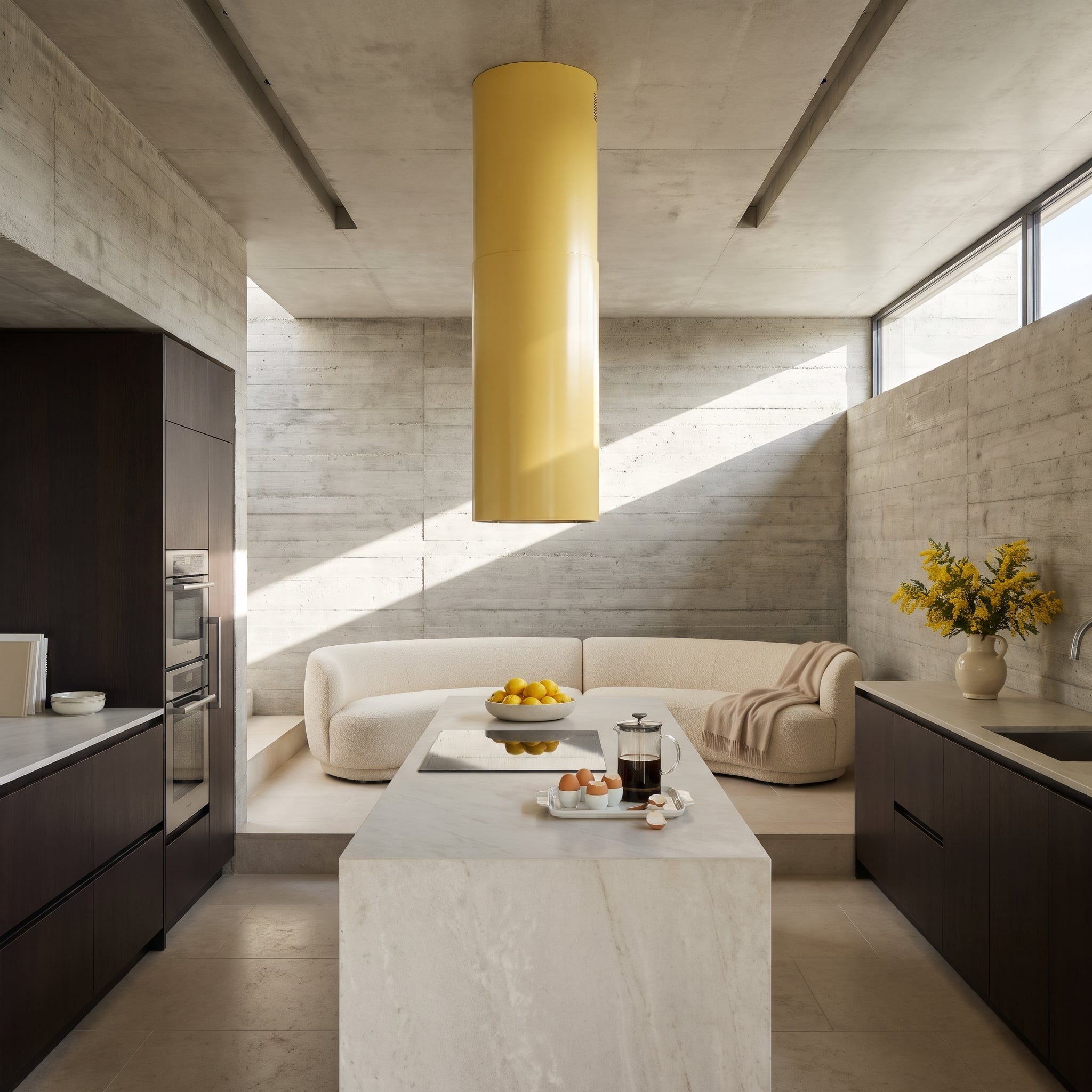
Board-formed concrete gives the walls and ceiling an almost industrial severity. The mustard cylindrical hood introduces a warm, improbable curve into that rectilinear setting. Below, a white marble waterfall island provides a crisp geometric counterpoint. Clerestory light moves across the concrete, revealing its grain and casting long shadows. The hood is the only saturated accent, and the room has no difficulty making that count.
16. An Oxblood Refrigerator Beside a Brass-Framed Pantry
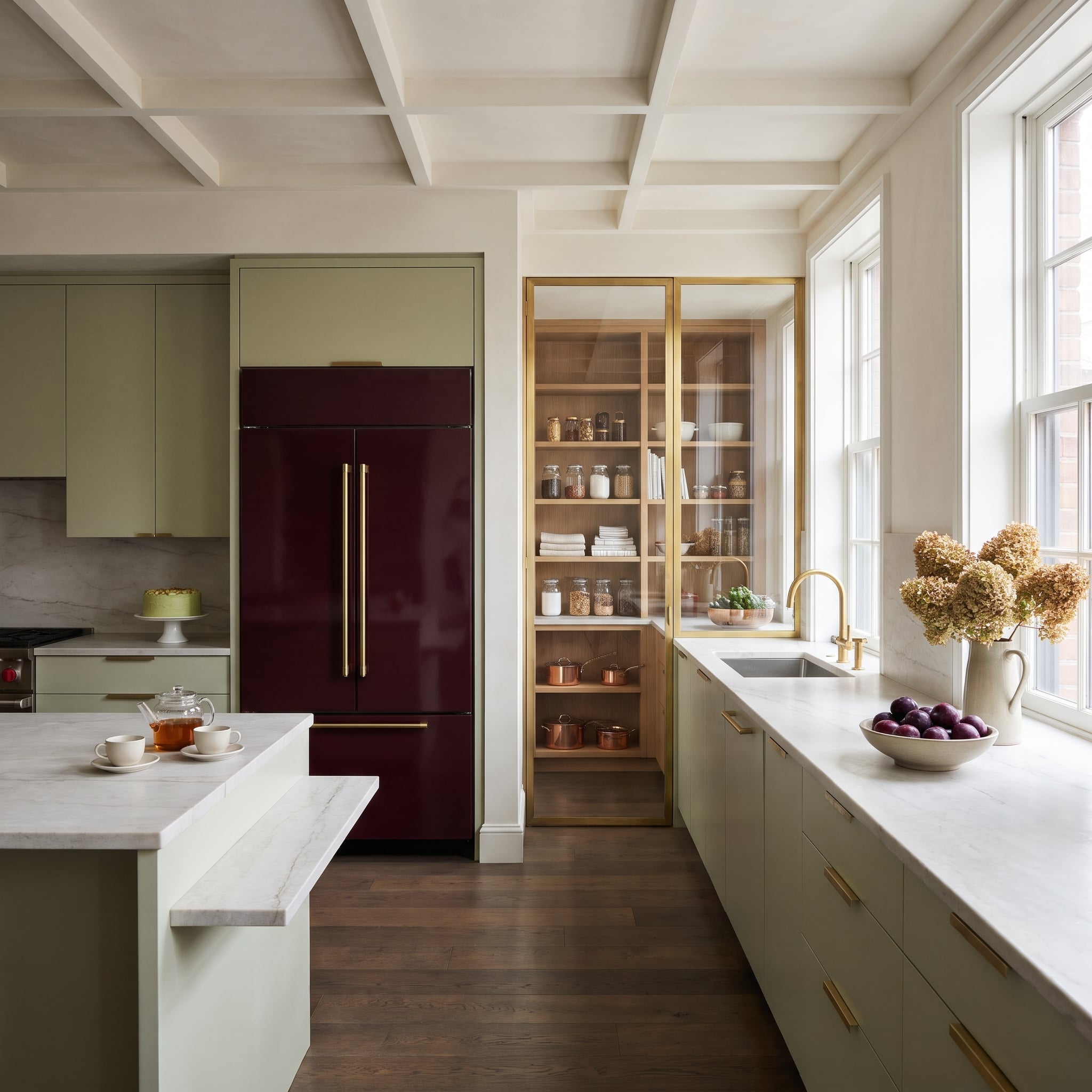
Celery-colored cabinetry surrounds an oxblood French-door refrigerator whose long brass handles find a counterpart in the adjacent glass pantry door. Beyond that finely detailed frame, oak shelving and copper cookware introduce a second layer of warmth and texture. The refrigerator’s deep enamel has the richness of lacquered furniture, while the pantry’s transparent doors offer a glimpse of the storage architecture behind. Two very different treatments of the same wall, held together by their metalwork.
15. Bottle Green Holds Its Own Against Violet-Veined Marble
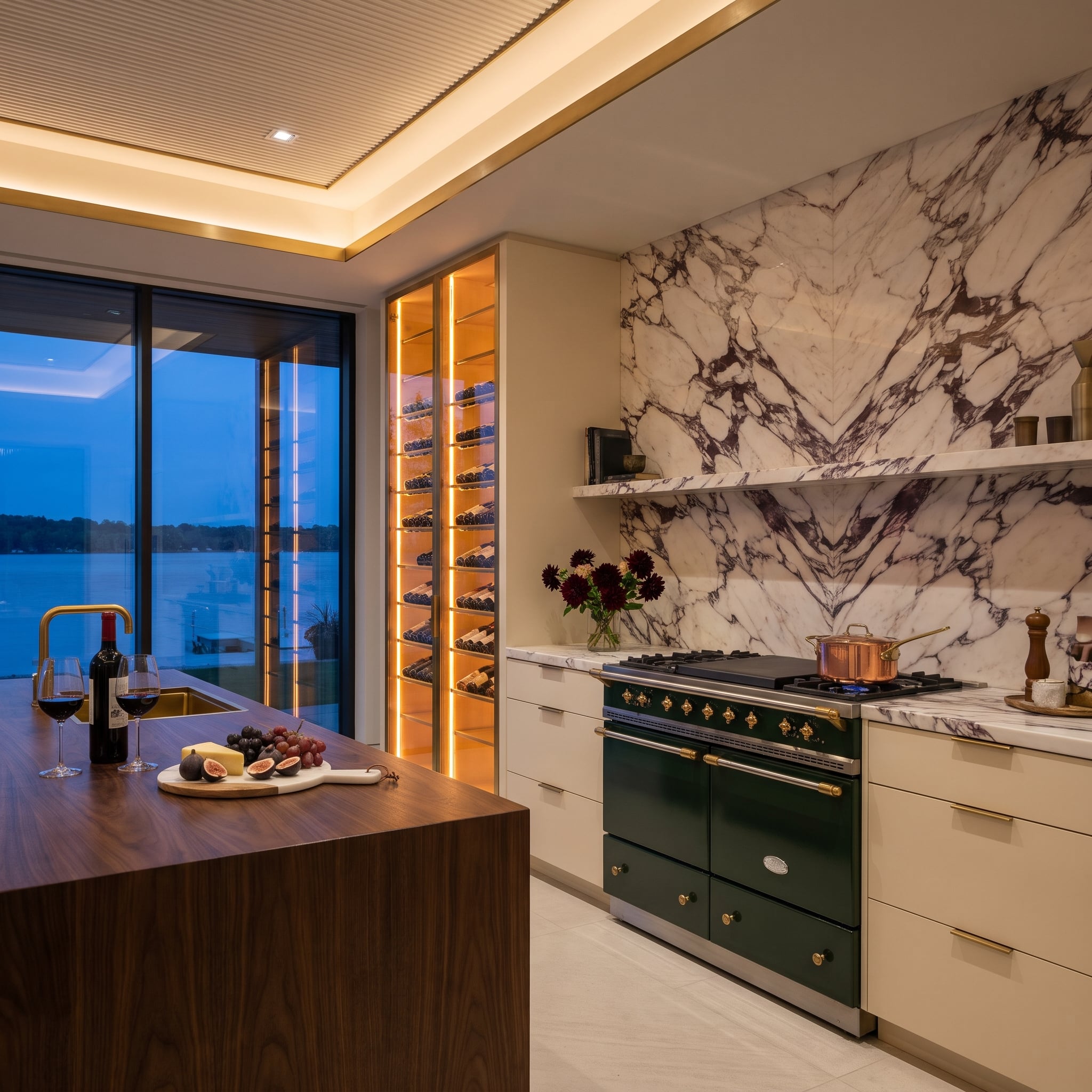
Brass controls sharpen the bottle-green range, while the marble behind it supplies an entirely different kind of spectacle. Bookmatched violet veining converges above the burners, establishing a strong central axis. The range anchors the restless stone pattern with one saturated, relatively uniform surface. Here, the drama comes from movement in the marble meeting the solidity of the enamel.
14. A Lilac Hood Catches the Last Color in the Sky
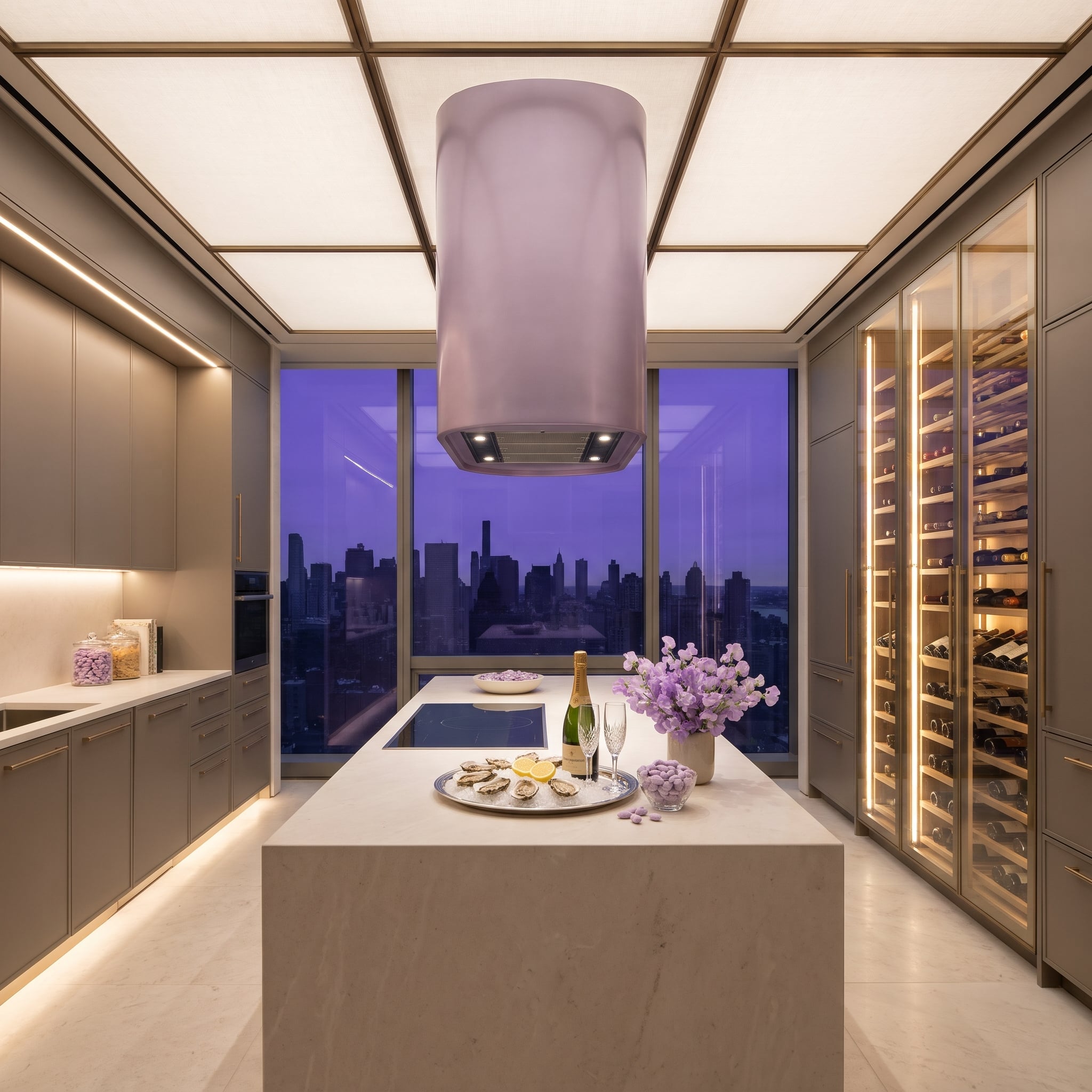
The cylindrical hood hangs over the island with the presence of an oversized pendant. At dusk, the skyline beyond the glazing takes on a related violet cast, giving the lilac an unexpected connection to the view. Taupe cabinetry and warm lighting inside the wine display temper the cool finish. As daylight fades, the appliance becomes part of a changing composition of color, reflection, and illuminated glass.
13. A Red Refrigerator Gives the Lake House Its Sharpest Accent
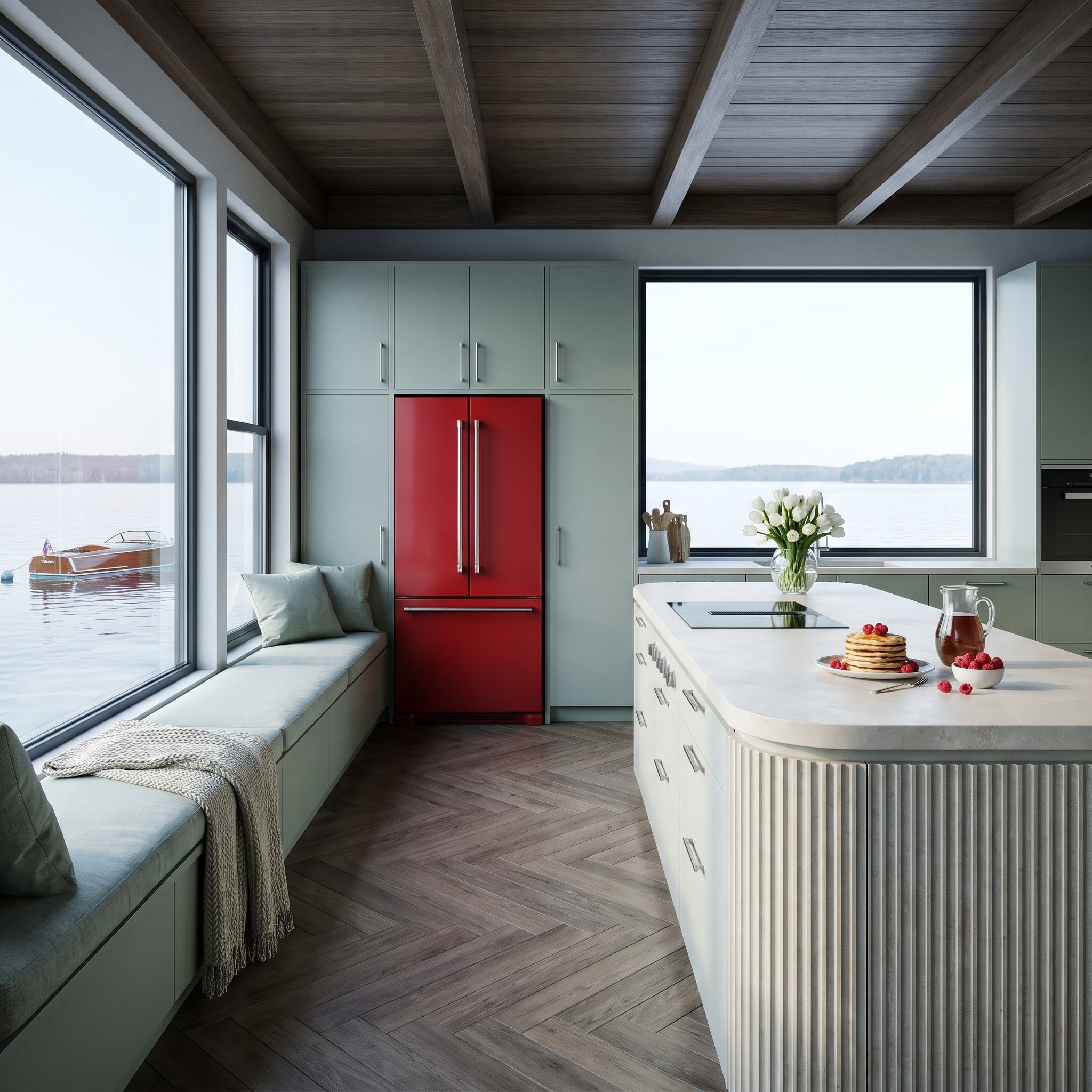
Sage cabinetry encloses the red French-door refrigerator on three sides, turning it into a crisp inset within the millwork. Across the herringbone floor, a fluted island end introduces curvature, while the long window seat directs attention toward the lake. The refrigerator provides the room’s strongest color without requiring a matching hood, painted island, or another conspicuous appliance.
12. Cobalt Enamel Beneath a Sheet of Stainless Steel
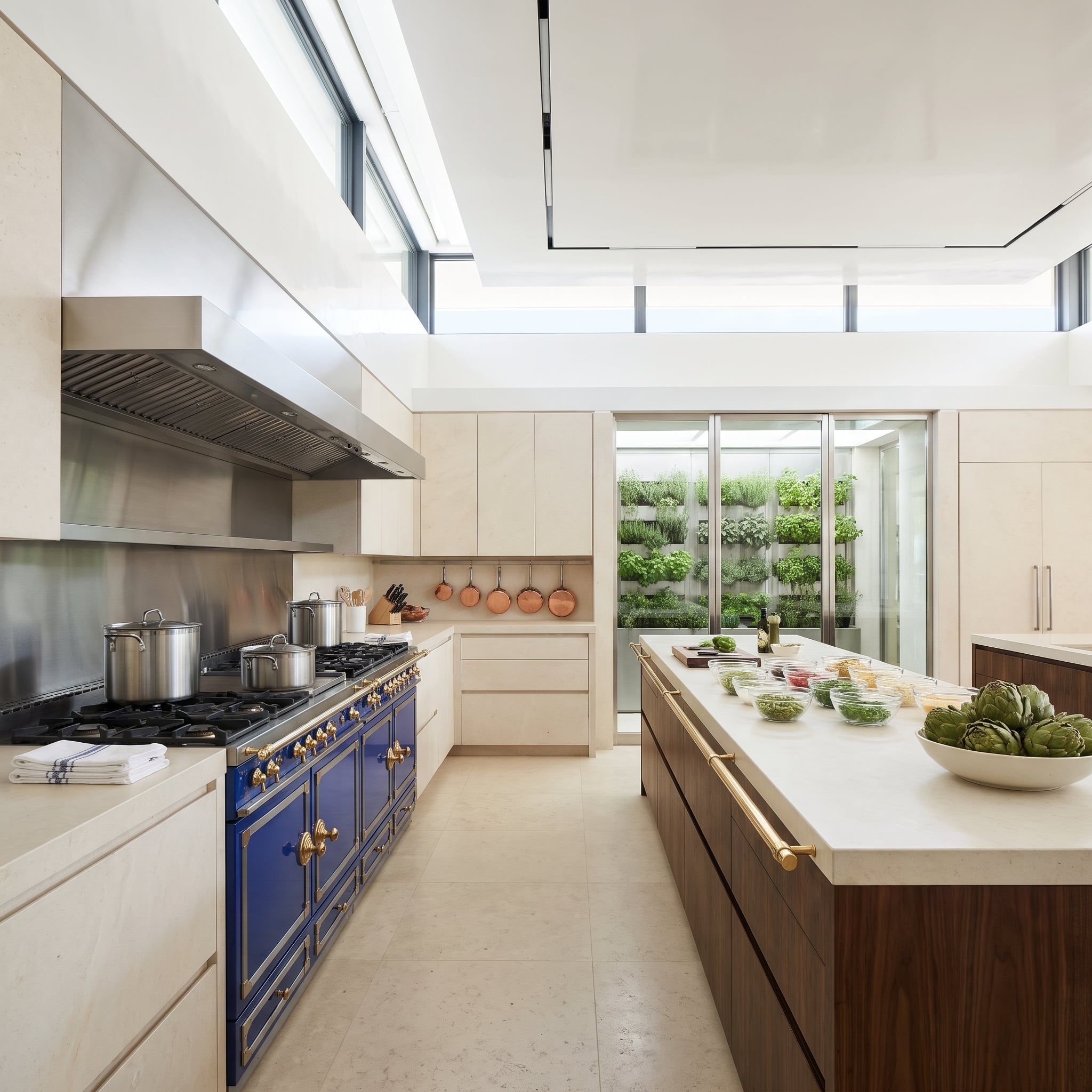
Hood and backsplash form one broad stainless-steel plane, providing a clean metallic backdrop for the cobalt range. Brass knobs and rails find a counterpart in the towel bar on the walnut island. Copper pans introduce another warm metal, while the glazed herb area contributes green. The materials are varied, though each occupies a distinct place in the composition. Stainless steel survives perfectly well here, provided it knows which appliance is in charge.
11. Butter Yellow Takes the Edge Off Dark Walnut
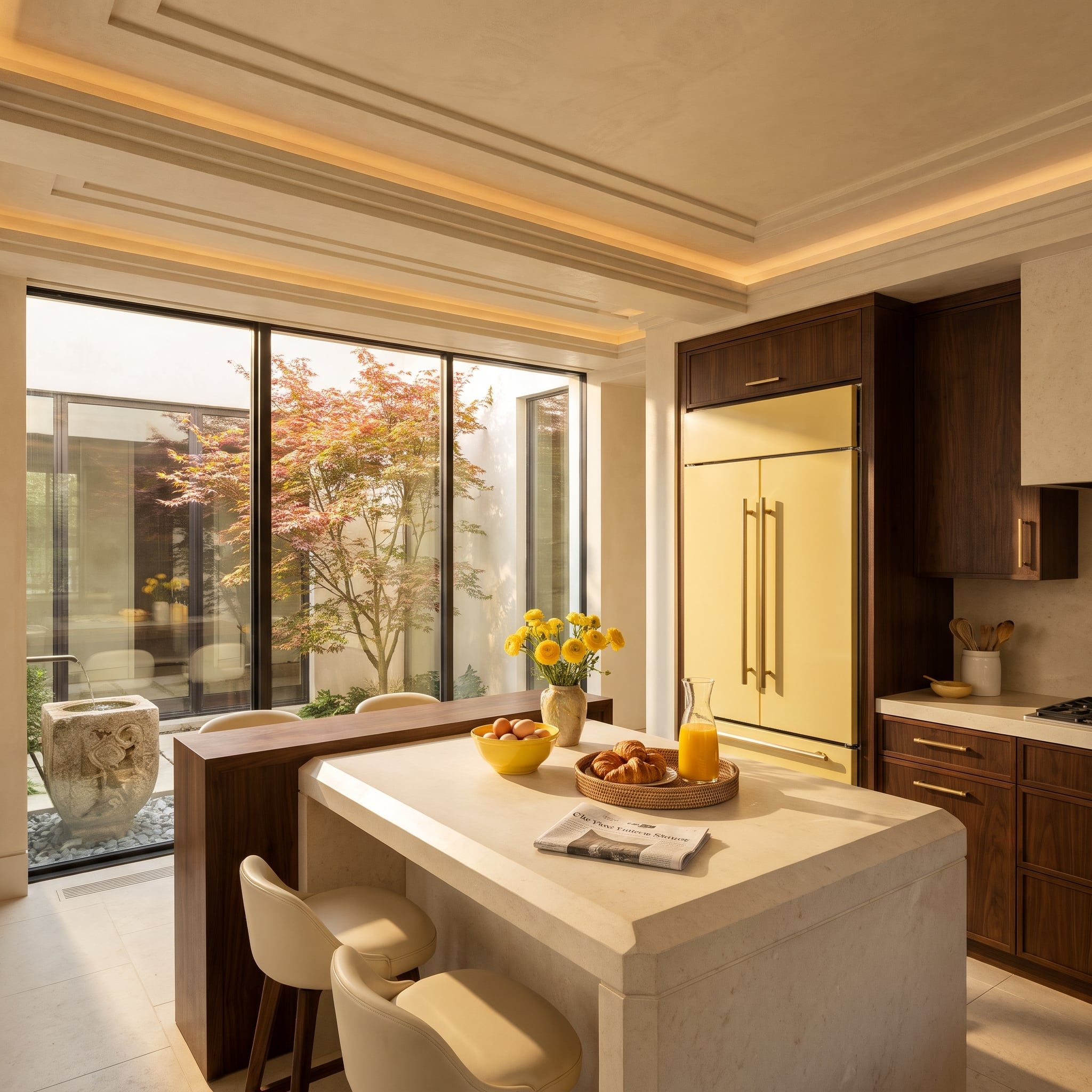
Dark walnut surrounds a butter-yellow refrigerator, creating a contrast more subtle than the familiar pairing of bright enamel and white cabinetry. Long brass pulls link the appliance to the drawers near the cooktop. In the foreground, a honed stone island with a substantial beveled edge meets a raised walnut bar, bringing another shift in thickness and material. The refrigerator’s gentle color lightens the composition without diminishing the wood’s richness.
10. Green Lacquer Brings the Oaks Indoors
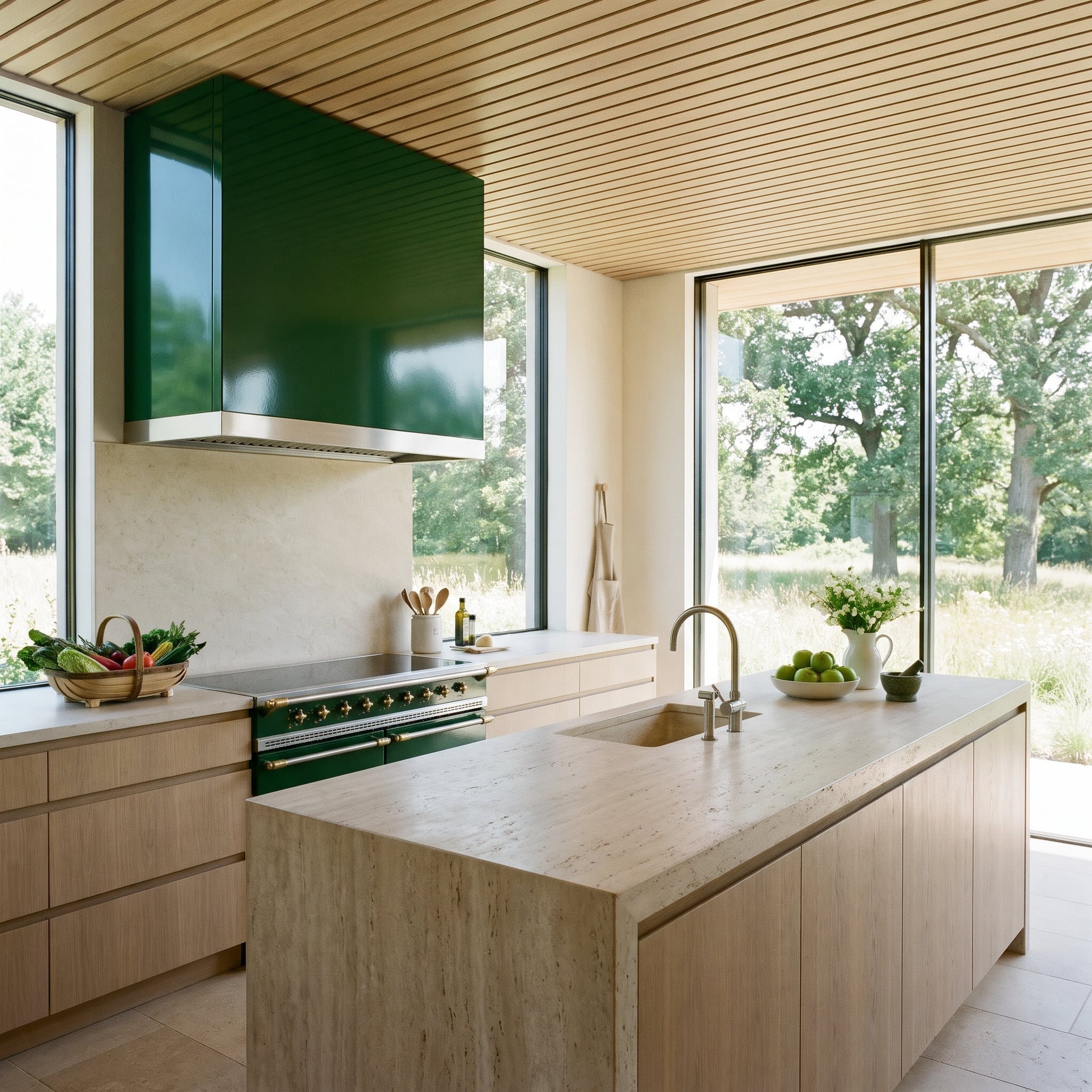
The glossy green hood and matching range form a continuous color statement. Tall windows bring the oak trees outside into the room, and their shapes appear in the lacquer’s reflections. Brass knobs punctuate the enamel with warm highlights. Unlike a matte painted surface, this finish changes with the view and the daylight, giving the appliance an unusually active relationship with its surroundings.
9. Lilac Enamel Gets All the Nickel
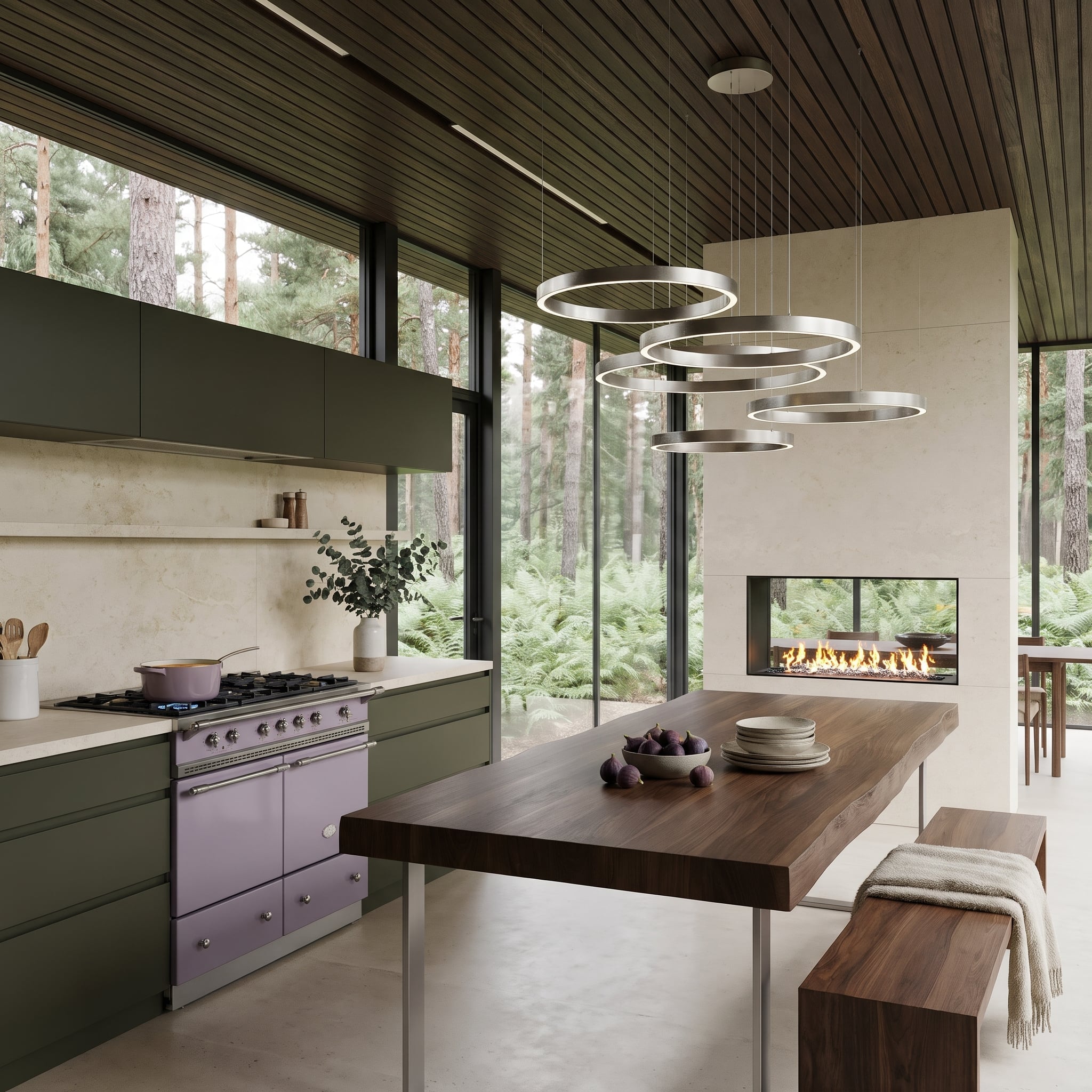
Matte olive cabinet doors dispense with visible pulls, leaving the lilac range’s nickel knobs and front rail to catch the light. Ring pendants overhead reinforce the metallic highlights. Purple and green make an unconventional pairing, one soft and luminous, the other muted and earthy. A lilac pot on the burners repeats the enamel at a smaller scale, concentrating the brightest color and hardware around the cooking area.
8. Emerald Ovens Take Their Cue From the Conservatory
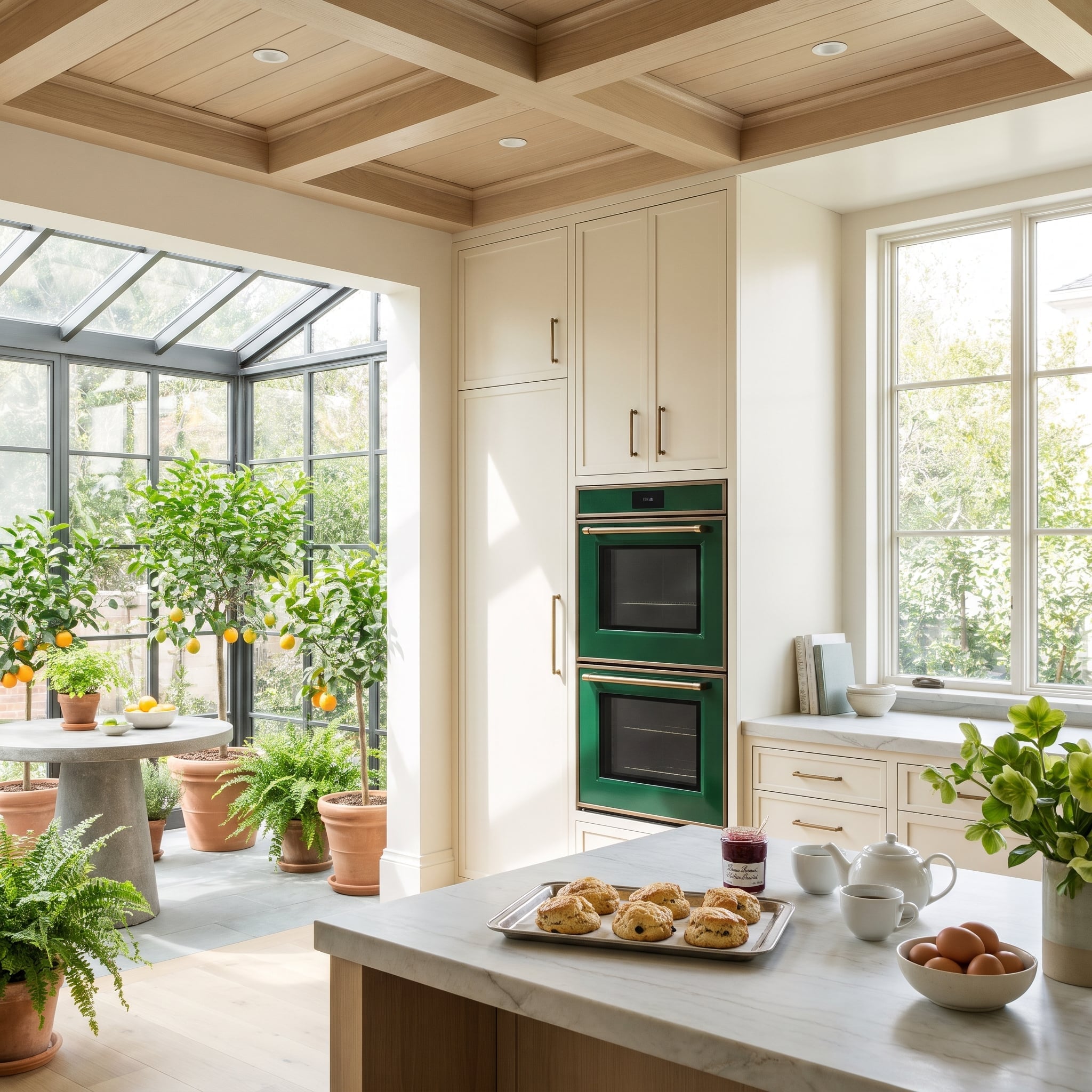
A pair of emerald ovens brings an unexpected concentration of color to the pale cabinet tower. Their brass handles align with the surrounding hardware, giving the installation a finely ordered appearance. Through the cased opening, a steel-framed conservatory filled with citrus trees and ferns carries the green into an adjoining space. The cream cabinetry conceals the refrigerator, allowing the ovens to establish the kitchen’s strongest visual connection with the garden.
7. Burgundy Between Sage and a Wall of Walnut
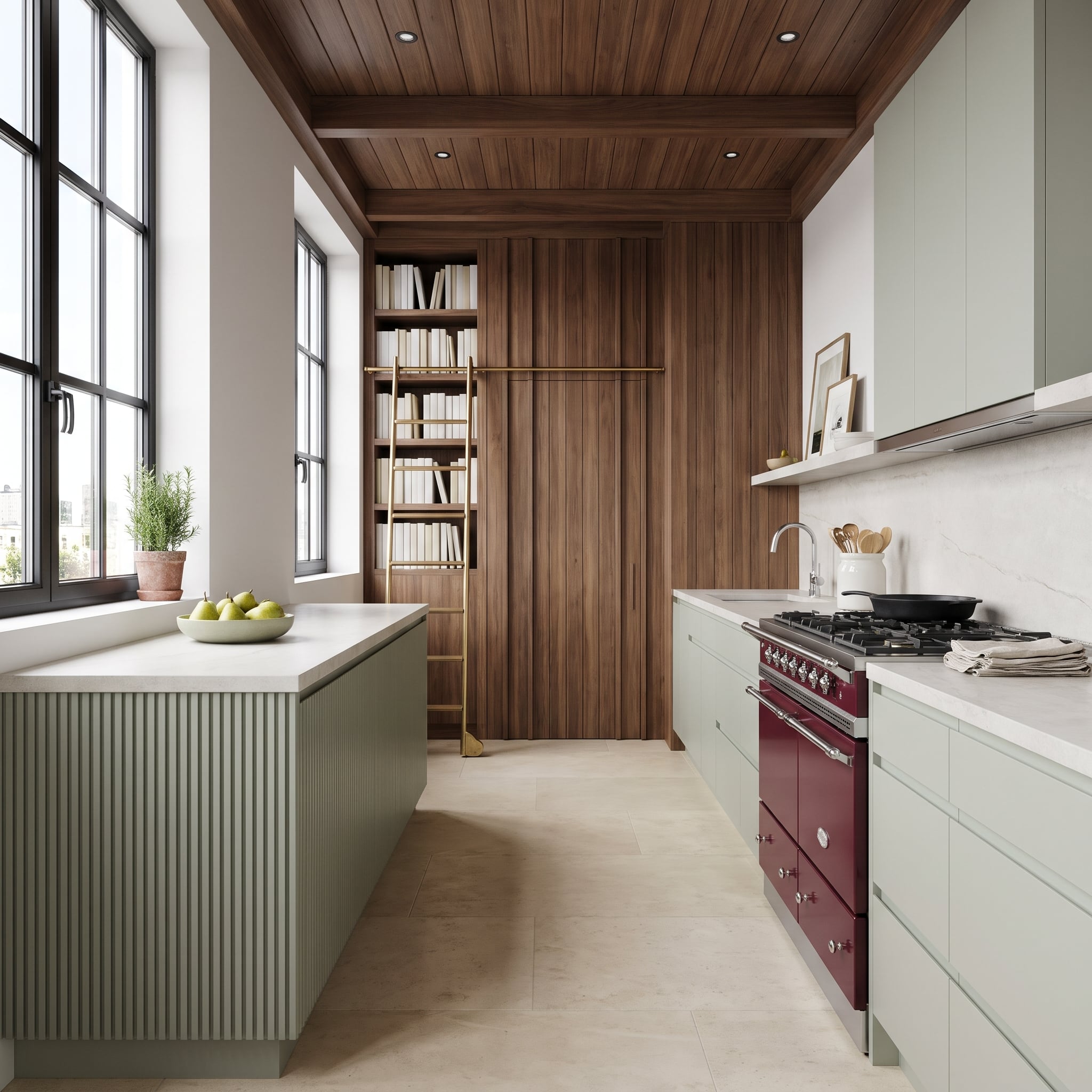
The burgundy range interrupts a run of handleless sage cabinetry, its chrome rail catching light against the enamel. Fluted green panels across the galley introduce texture, while walnut climbs the far wall and continues overhead. A library ladder adds a strong vertical line to an otherwise horizontal composition. The range sits at the meeting point of cool green and warm timber, with its wine-dark finish providing a rich intermediary.
6. Cherry Red Escapes the Walnut Panels
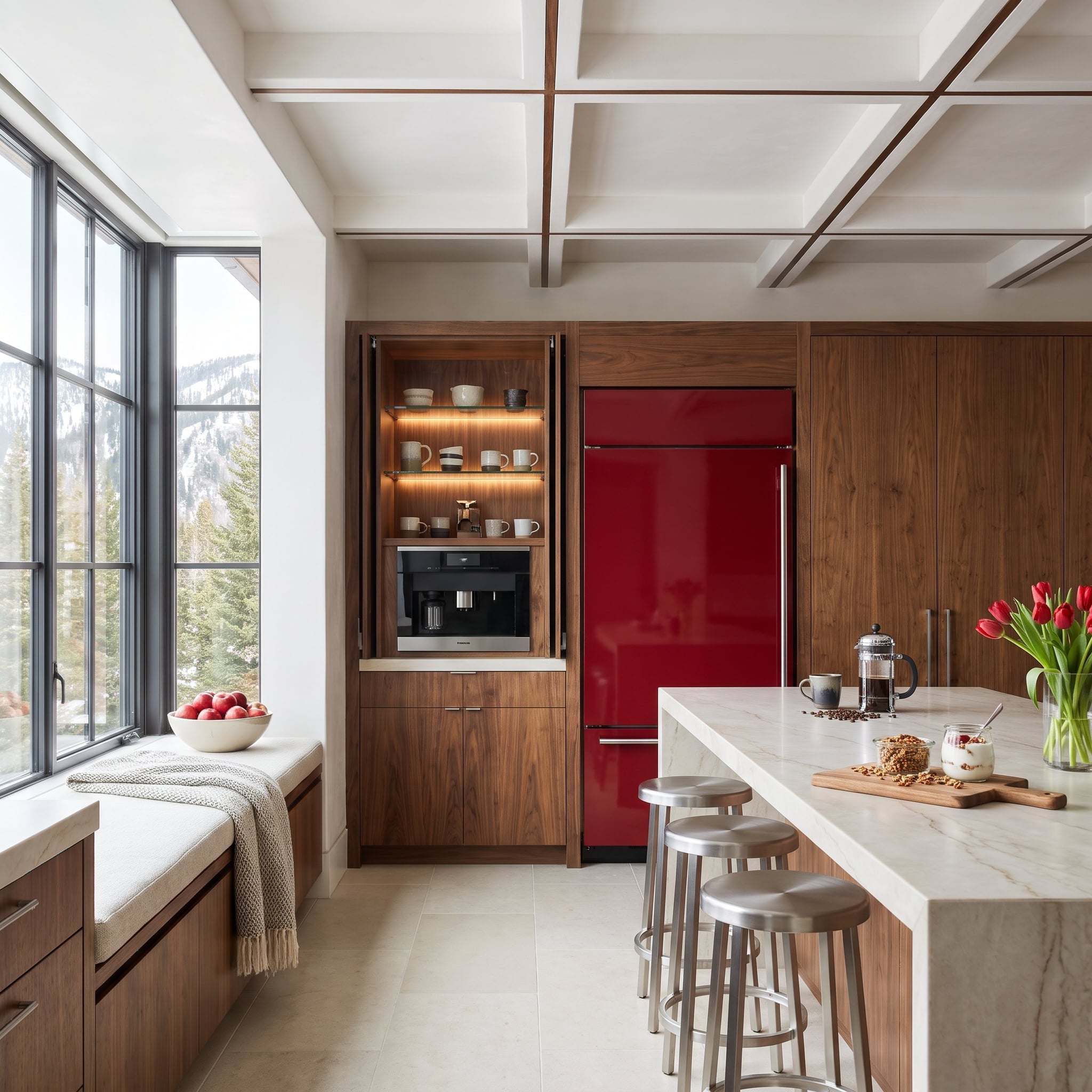
The walnut wall conceals storage and a coffee station behind broad panels, then leaves the cherry-red refrigerator entirely exposed. That interruption gives the appliance a sharply defined silhouette against the grain. Red tulips on the waterfall island provide a small echo in the foreground. The surrounding millwork is restrained enough to make the refrigerator look like a deliberate piece of furniture rather than an object the cabinetry failed to conceal.
5. Wine Lacquer Climbs Into the Coffered Ceiling
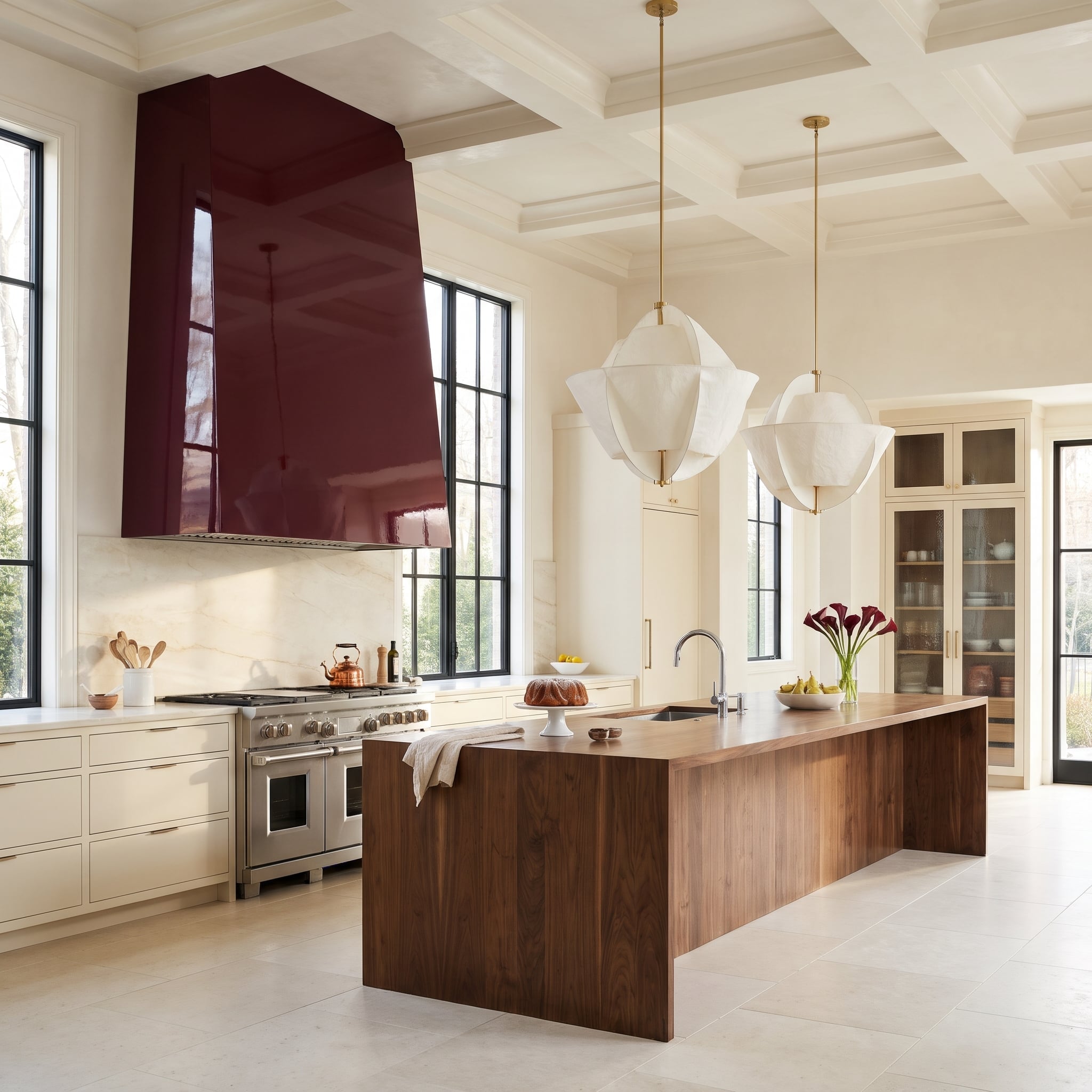
Wine-dark lacquer continues from the range up the tall tapered hood, which fits between the ceiling beams rather than ending awkwardly beneath them. Its face recedes as it rises, reducing the impression of bulk. A veined stone backsplash provides a pale interval, while the walnut waterfall island repeats the depth of the burgundy without copying its color. The hood belongs to the ceiling as convincingly as the range belongs to the cooking wall.
4. Red Enamel Takes Over a California Kitchen With a View
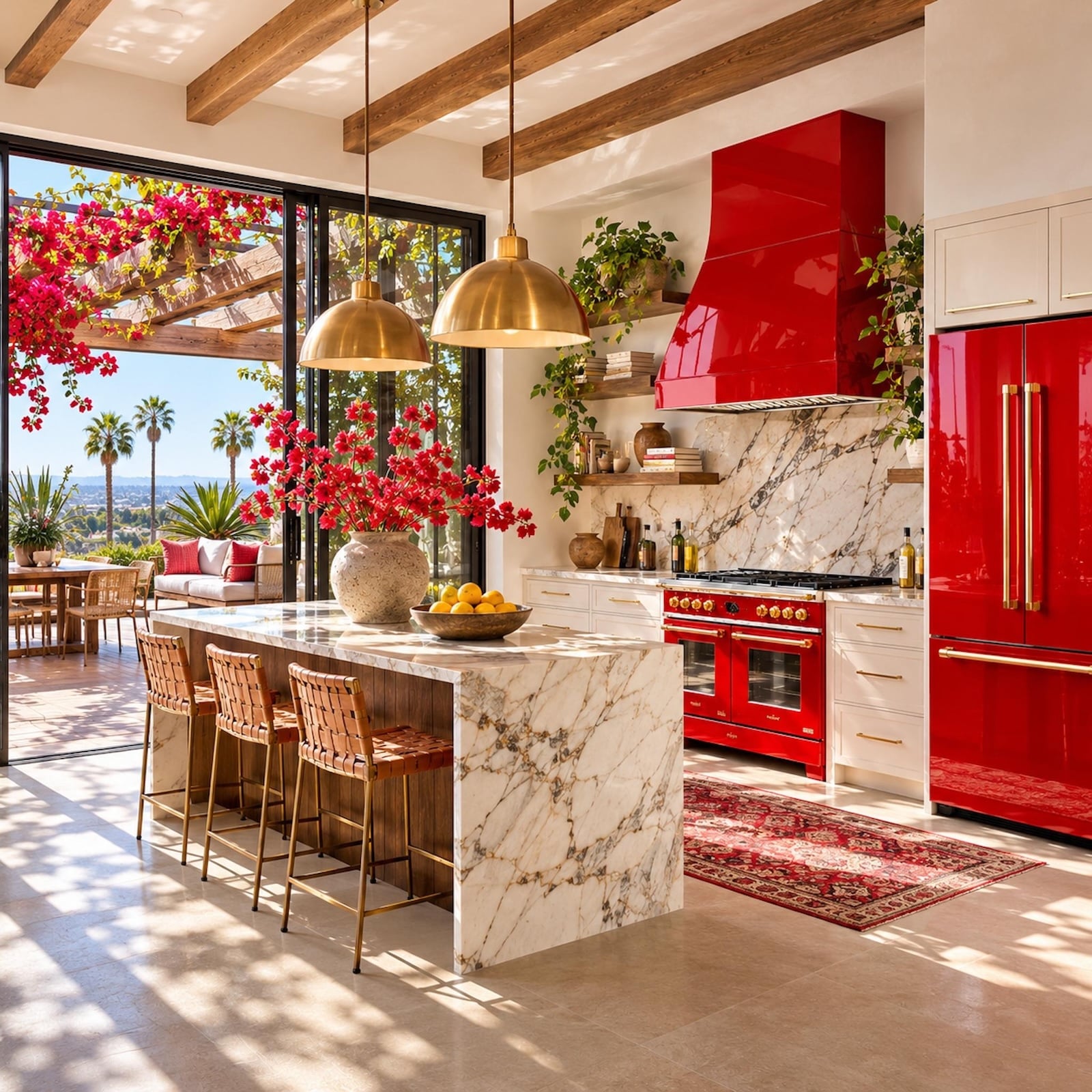
Three glossy red appliances—the range, sculptural hood, and French-door refrigerator—give this sunlit kitchen a color scheme with absolute conviction. White cabinetry and heavily veined marble provide a crisp backdrop, while exposed timber beams, woven leather stools, and brass pendants bring warmth. Beyond the open glass wall, bougainvillea frames a furnished deck and palm-studded views. The red continues in the flowers and patterned runner, connecting the appliances to a room that feels as exuberant as the California sunshine outside.
3. Royal Blue Beneath a Hood That Almost Vanishes
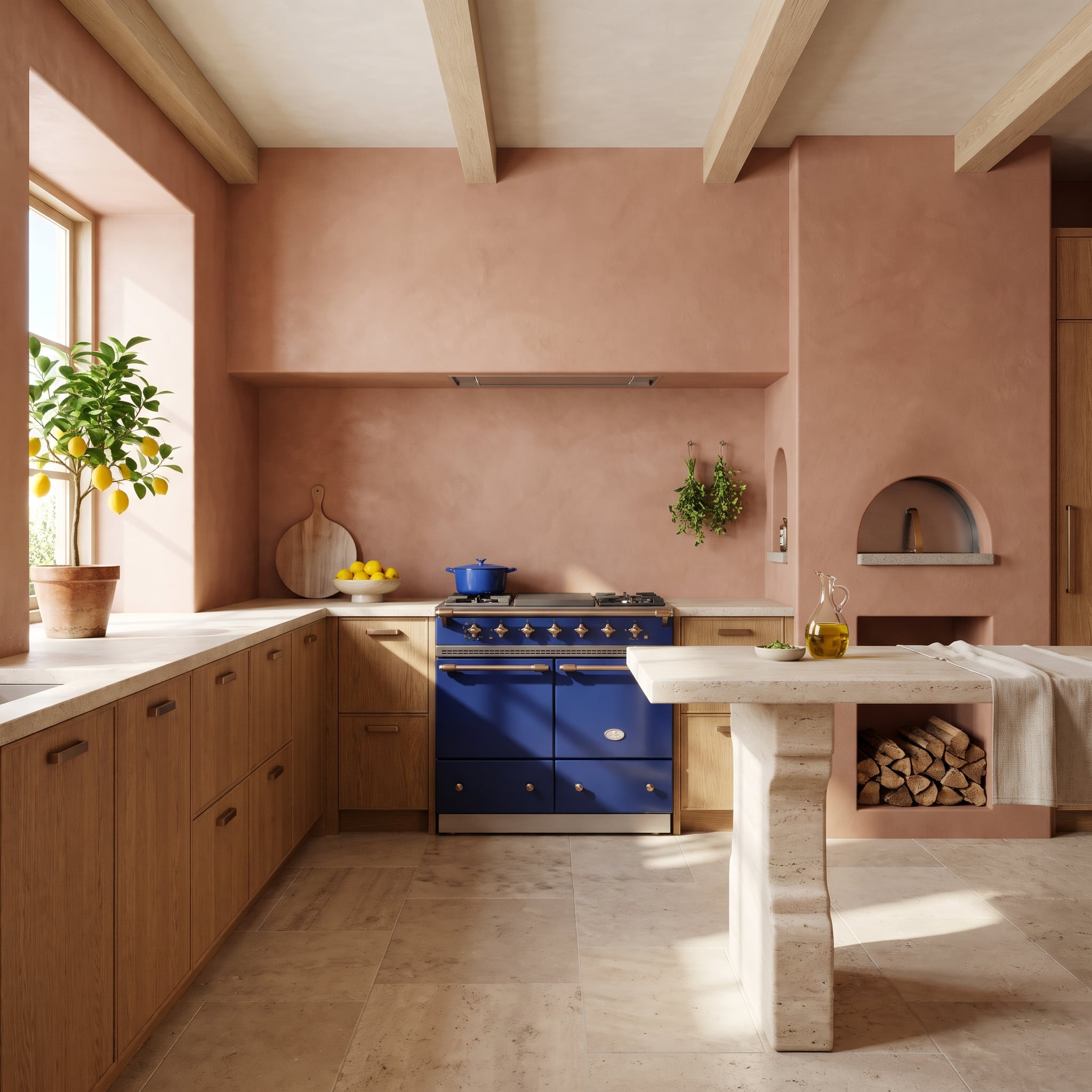
Pink plaster absorbs the ventilation into a narrow soffit slot, clearing the wall for a royal-blue range. Plain oak drawers on either side establish a strong horizontal setting. Travertine continues across the island and floor, adding mineral texture to the color contrast. The most effective architectural move is an absence: no bulky hood to compete with the blue enamel.
Our readers would back that move: asked whether they would buy a statement hood or a hidden one, 67% of Home Stratosphere readers chose the hidden hood.
2. Electric Yellow Lights Up a Dark City Kitchen
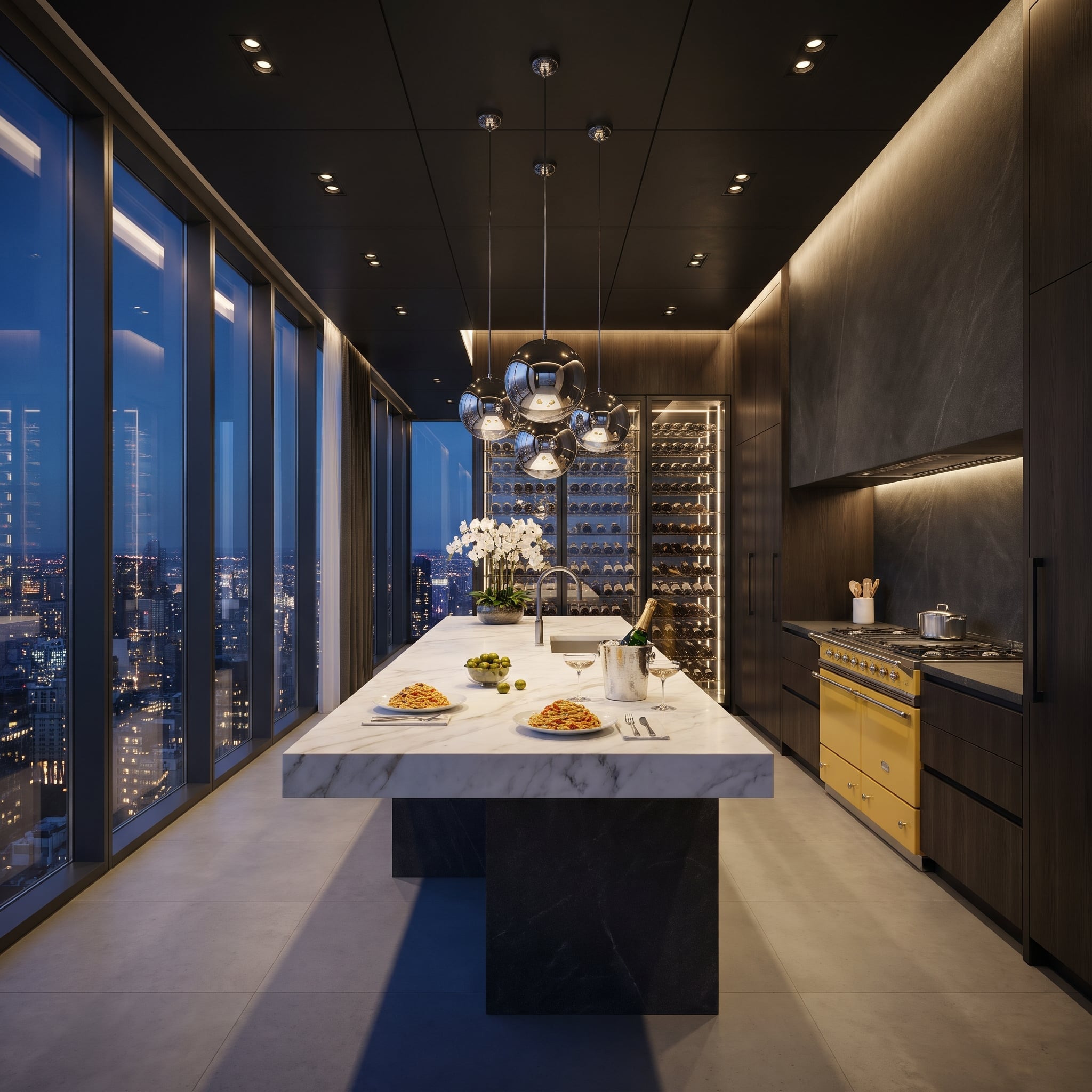
Dark wood, charcoal counters, and a stone-clad hood establish a shadowy cooking wall. The yellow range cuts through it, with chrome rails and controls catching the under-hood lighting. Above the marble island, mirrored globes reflect the skyline and illuminated wine display. One concentrated yellow accent provides the visual charge, while the room’s reflective surfaces multiply the effects of the surrounding lights.
1. A Red Range Holds Its Ground Against the Open Landscape
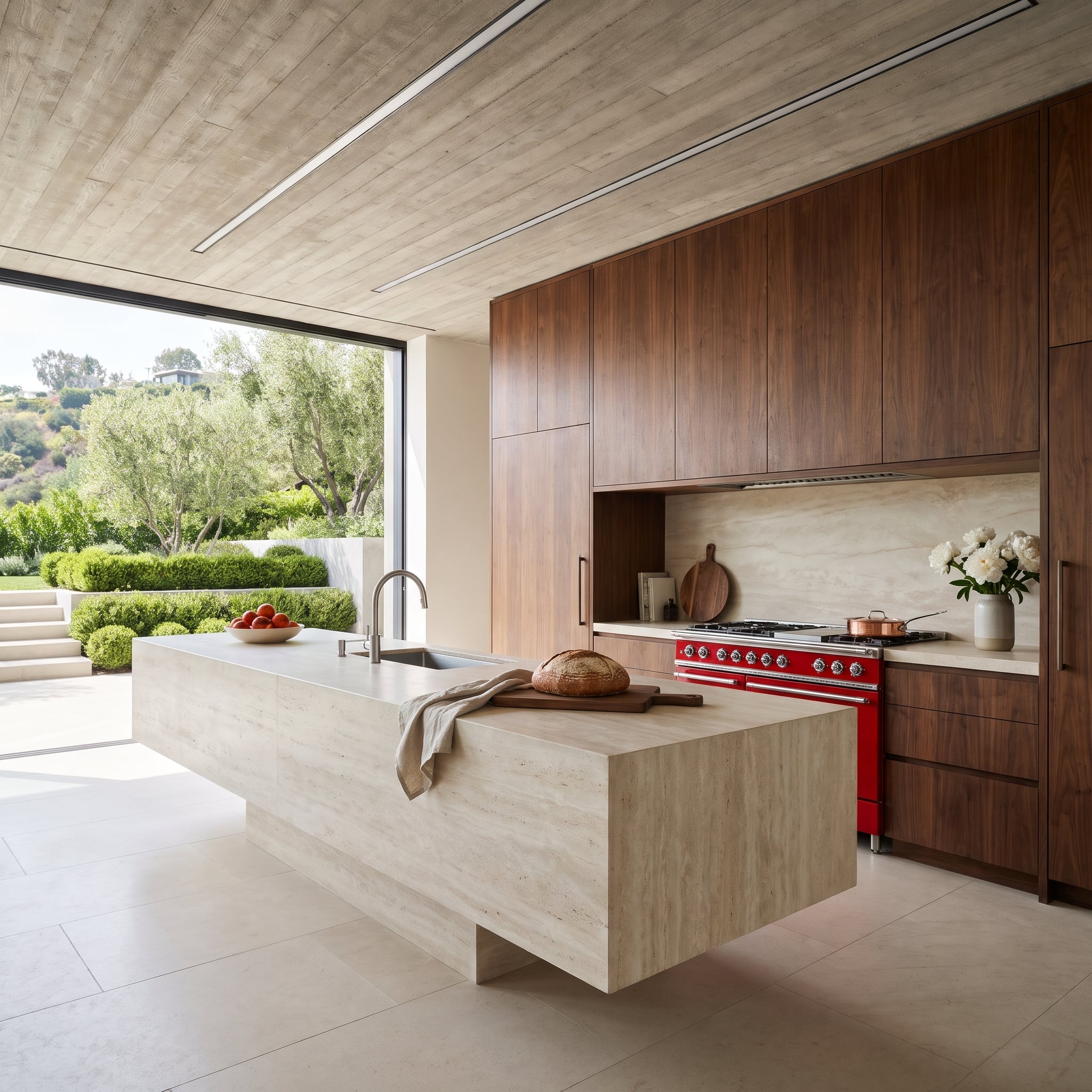
Travertine covers the backsplash and wraps an island raised visually on a recessed plinth. Walnut forms a deep niche around the red range, giving its enamel a rich, sharply defined border. Beyond, the glass wall opens the kitchen to the landscape. The red enamel becomes a precise punctuation mark between the weight of the walnut and the openness of the view.