
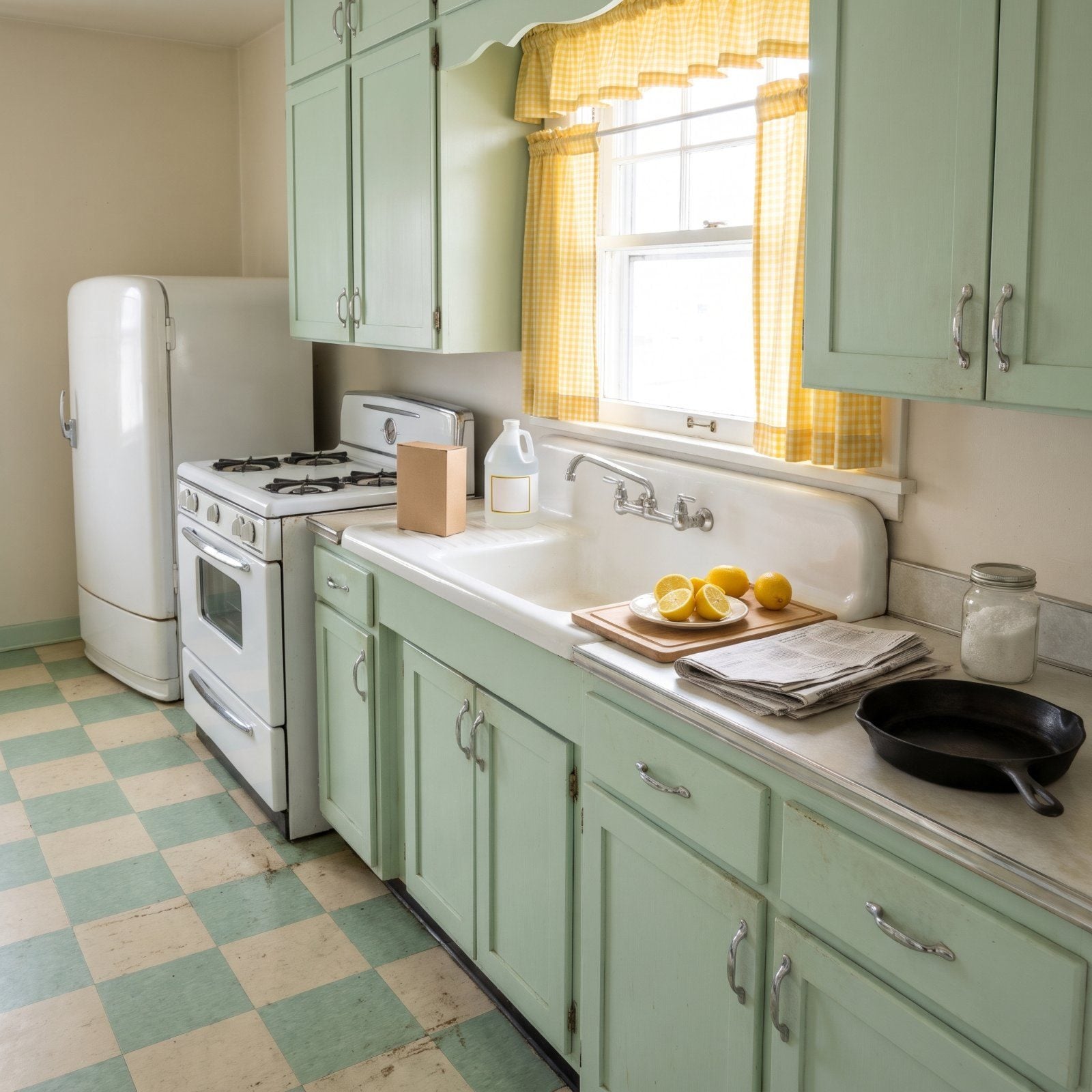
Open the cabinet under any grandmother’s sink and you found less, not more. A box of baking soda gone soft at the corners. Half a lemon drying out on a saucer. And a jug of white vinegar that handled more jobs than any three bottles do now. The whole house smelled faintly of it on Saturday mornings, that sharp clean bite cutting through the kitchen. These are the fixes that got passed down at the sink, the ones that still work better than they have any right to.
33. Polish Windows With Vinegar and Crumpled Newspaper
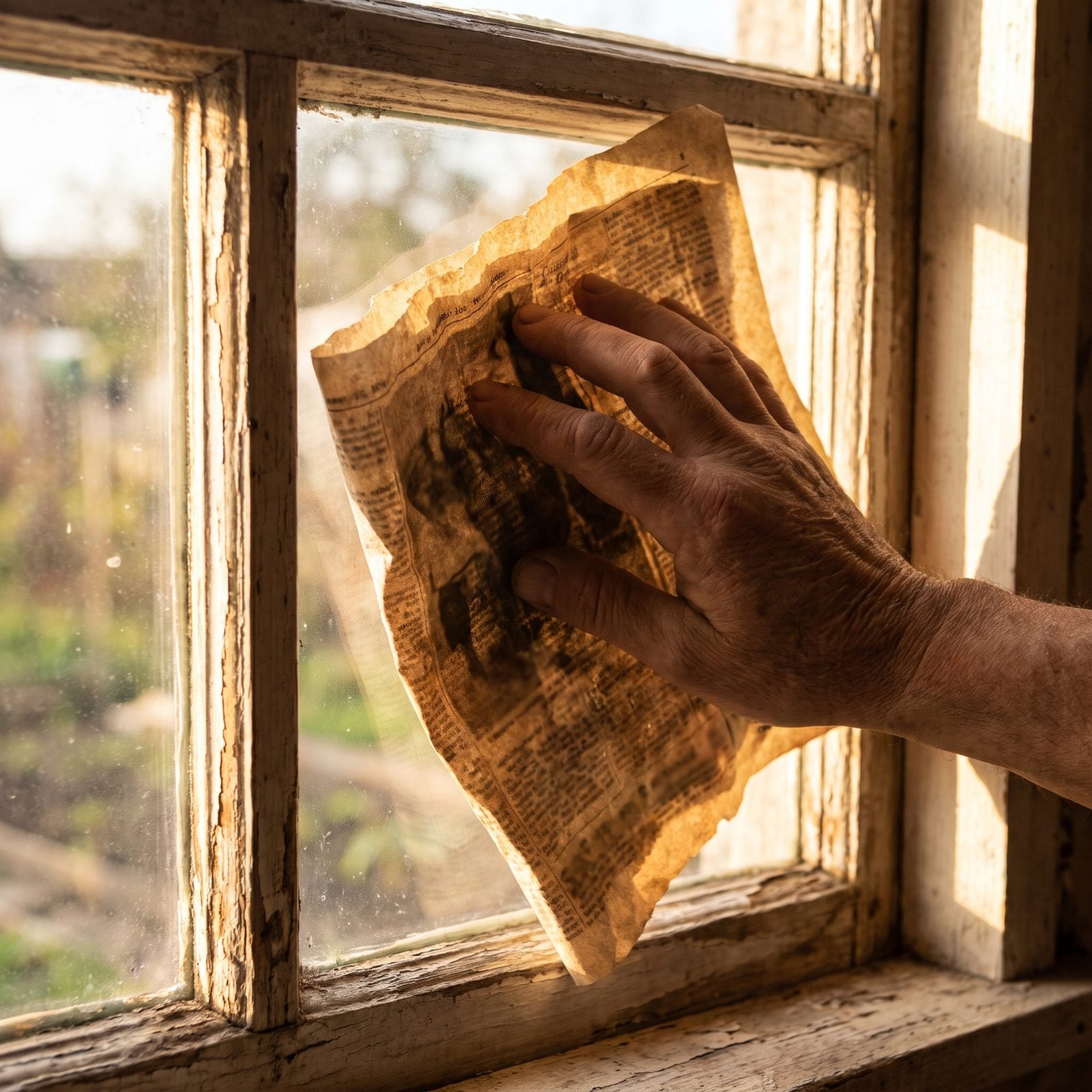
Vinegar cuts the film. Newspaper does something a cloth can’t, though: it won’t shed lint, and the ink seems to buff the glass right to a squeak. Dampen a folded sheet of newspaper with vinegar-water, press it flat against the glass under your palm and wipe, then go over it dry with a fresh sheet.
In order to come up with the very specific design ideas, we create most designs with the assistance of state-of-the-art AI interior design software. Also, assume links that take you off the site are affiliate links such as links to Amazon. this means we may earn a commission if you buy something.
I resisted this one for years because it sounds like an old wives’ tale. Then I tried it on a patio door and watched the streaks that no paper towel had ever beaten simply vanish. The glass went clear in a way that store spray never quite managed.
32. Lift Tea and Coffee Stains With Baking Soda
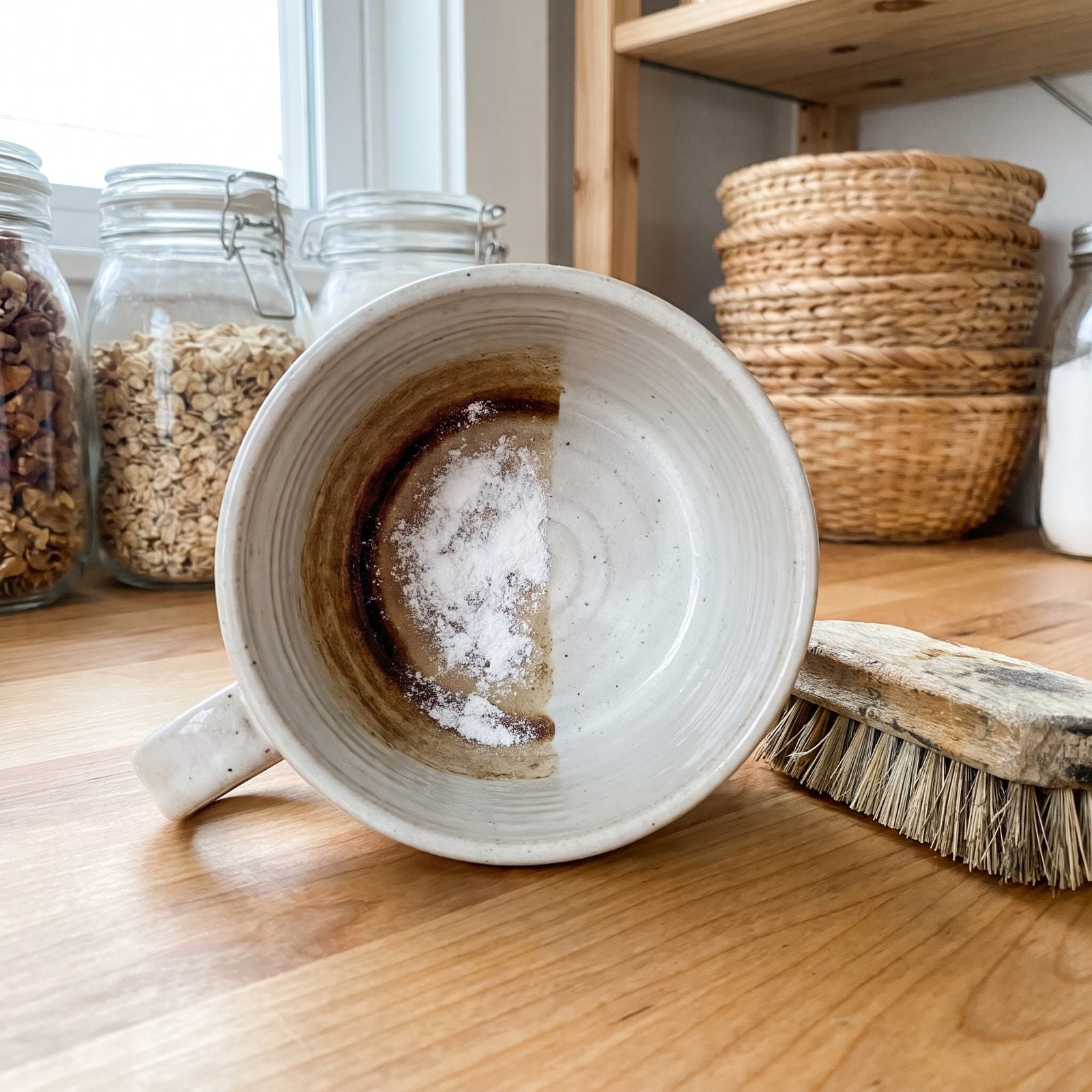
That brown ring inside a favorite mug isn’t dirt exactly. It’s tannin, baked into the glaze over hundreds of cups, and soap slides right over it.
Baking soda is mildly abrasive and mildly alkaline, which is the one-two it needs. Sprinkle a little onto a damp cloth, work it around the stain, rinse. The ring lifts off like it was never loyal to begin with. Works on the inside of a Thermos too, where your hand can’t reach but a bottle brush dipped in paste can.
31. Scrub Wooden Cutting Boards With Lemon and Salt
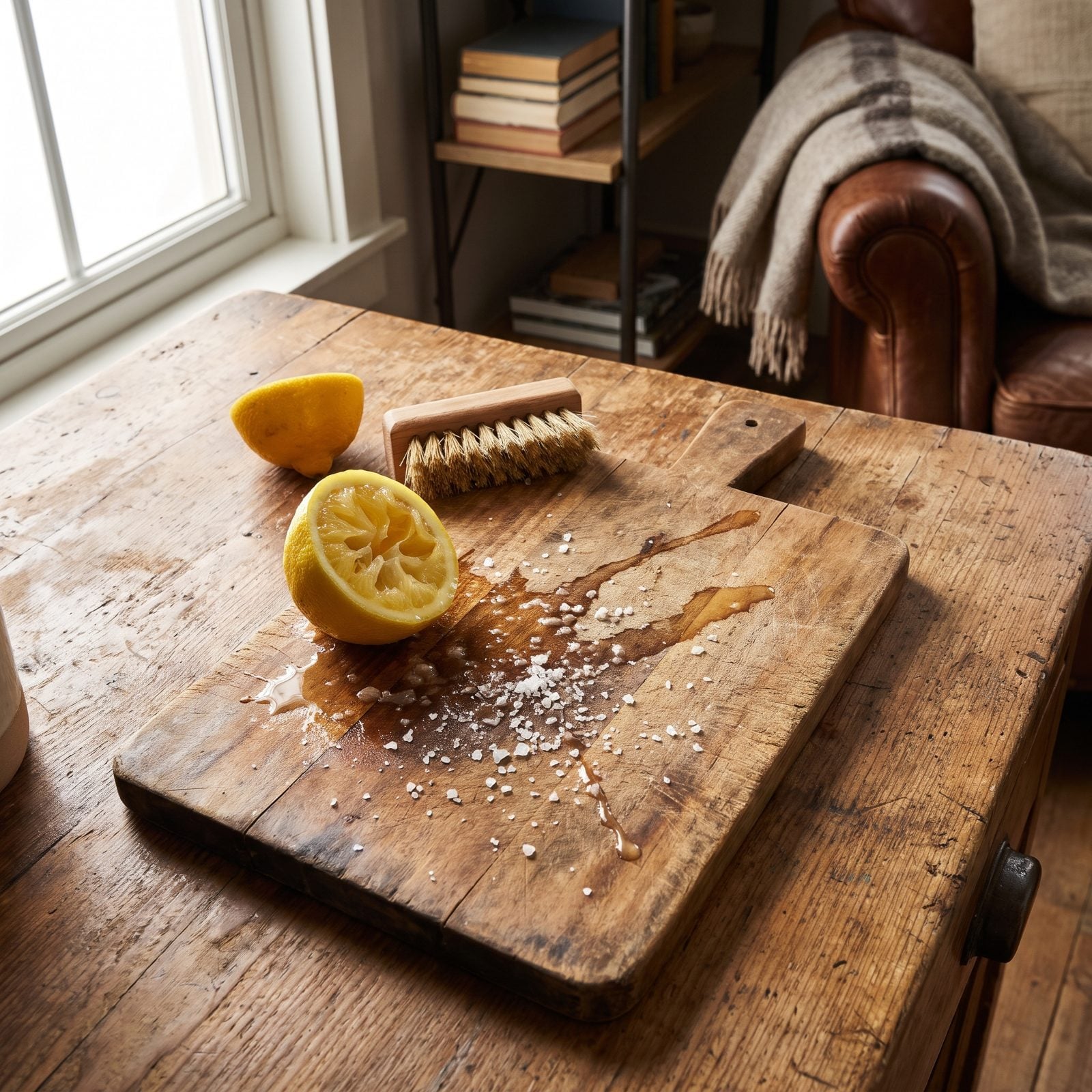
Half a lemon, a fistful of coarse salt, and some elbow grease. The salt is the scrubber, the lemon is the acid that fights odor and a little of the staining, and together they pull garlic and onion funk out of a board that soap just can’t reach.
Let it sit a few minutes, then scrape the gray slurry off and rinse. This is also the fix for a board that’s been handling raw chicken all afternoon and smells like it. A thin coat of mineral oil after it dries keeps the wood from cracking. People ask me about butcher-block counters, and this is the same move scaled up, a nod to the kind of durable kitchen surfaces that show up in a good farmhouse pantry design.
30. Clean Cast-Iron Pans With Coarse Salt
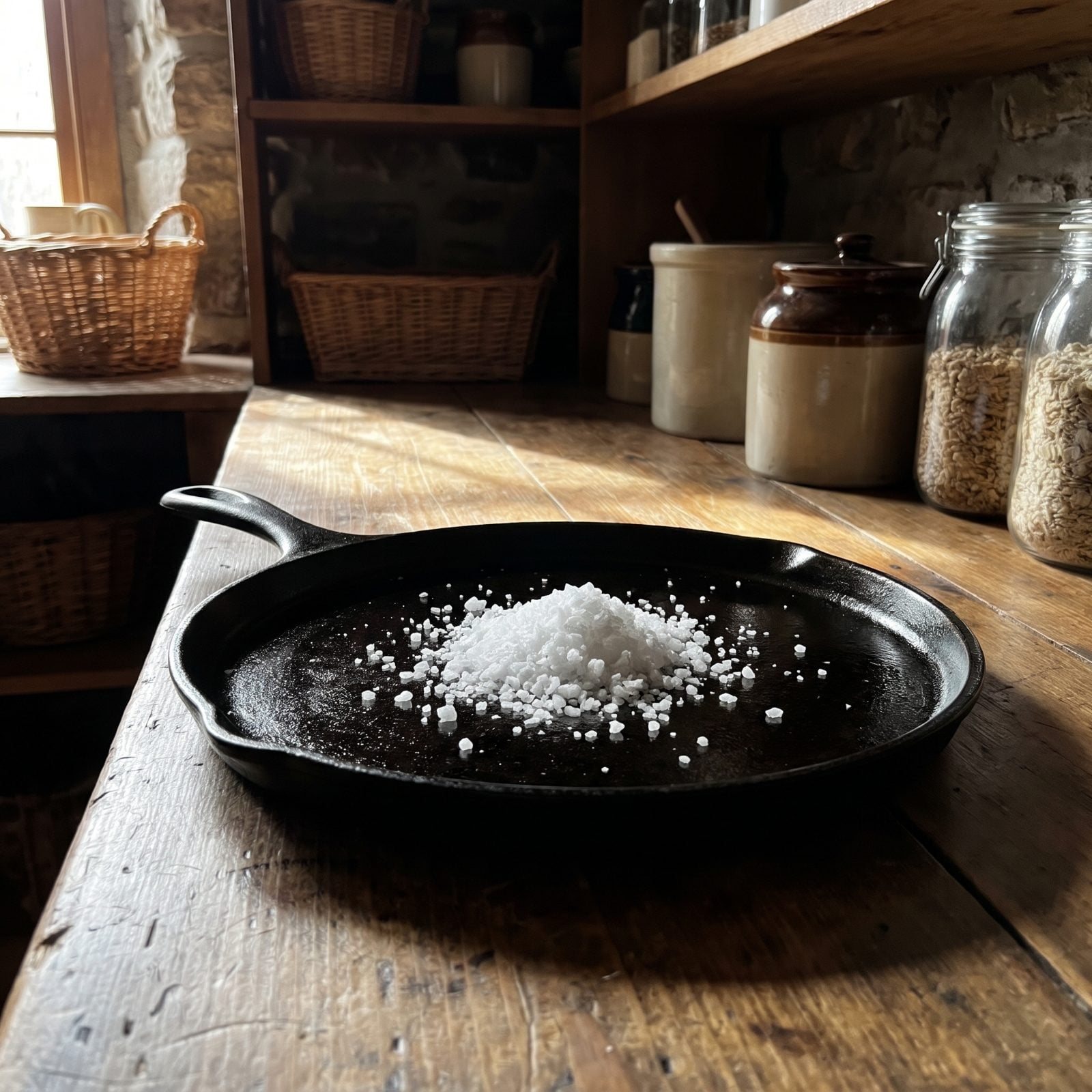
You don’t wash cast iron. You know this already if you ever watched someone smack your hand away from the dish soap, because soap and a scrub pad strip out the seasoning you spent years building.
Instead: a pile of coarse salt and a wad of paper towel or a stiff brush, scoured over the warm pan. The salt grabs the stuck bits and lifts them off without touching the oiled patina underneath. Wipe it out, rub a few drops of oil over the surface, and the pan’s ready for next time. The salt goes gray. The pan stays black.
As a classically trained chef puts it, “If it still needs a bit more attention, add some kosher salt to the pan and scrub with a damp sponge. The salt acts an abrasive cleaner without disturbing the seasoning.”
29. Swirl Ice, Salt and Lemon Through a Glass Coffee Pot
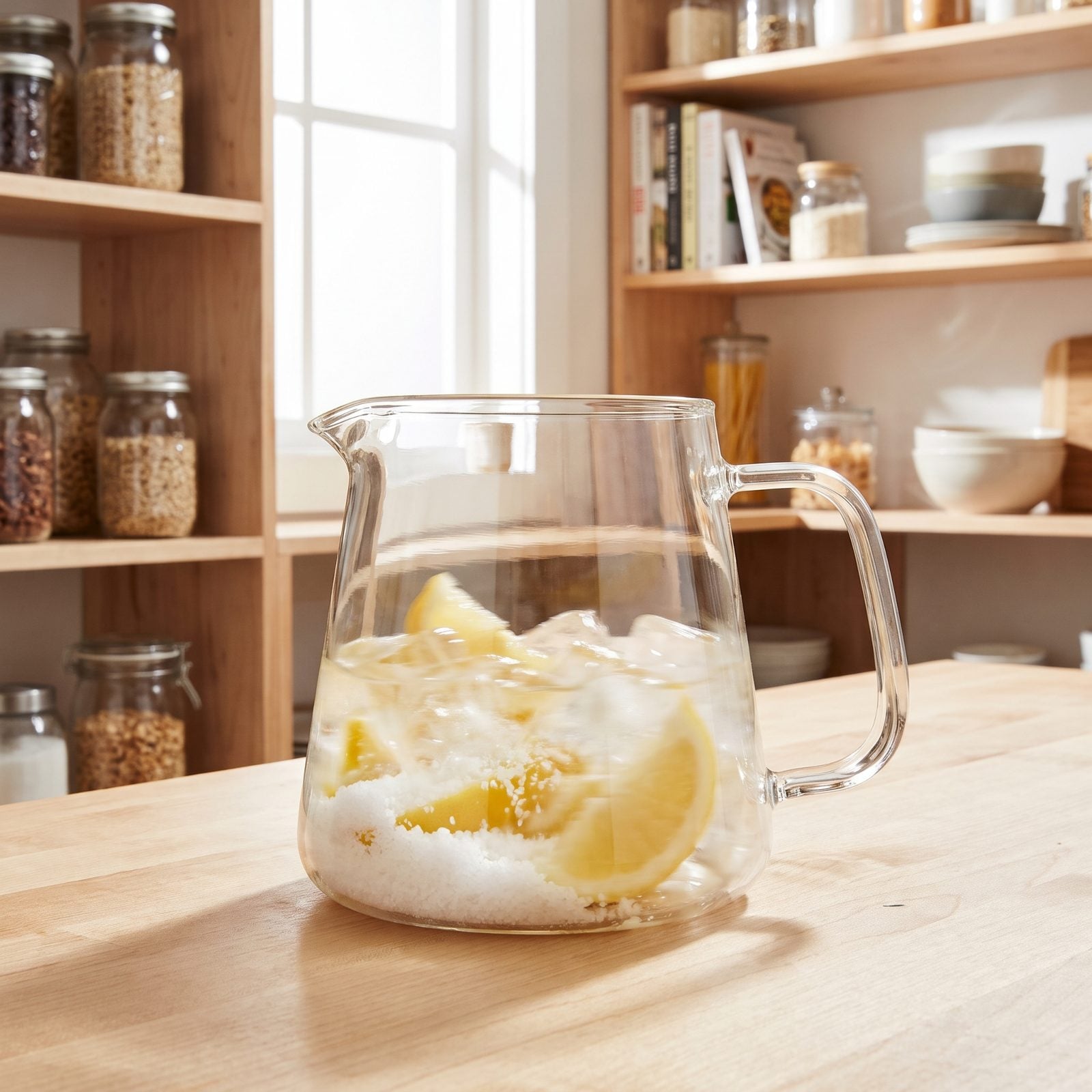
The bottom of a glass coffee pot goes brown and cloudy, a film of oils and tannin that a sponge can’t reach down into. Here’s the diner trick: a handful of ice, a spoon of coarse salt, a squeeze and a wedge of lemon, then swirl hard.
The ice and salt crash around like scrubbers in a space your hand can’t fit, and the lemon cuts the oily haze. A minute of swirling and the glass goes clear again. Dump it, rinse, and your next pot actually tastes like coffee instead of yesterday.
28. Loosen Burned-On Food by Simmering Baking Soda
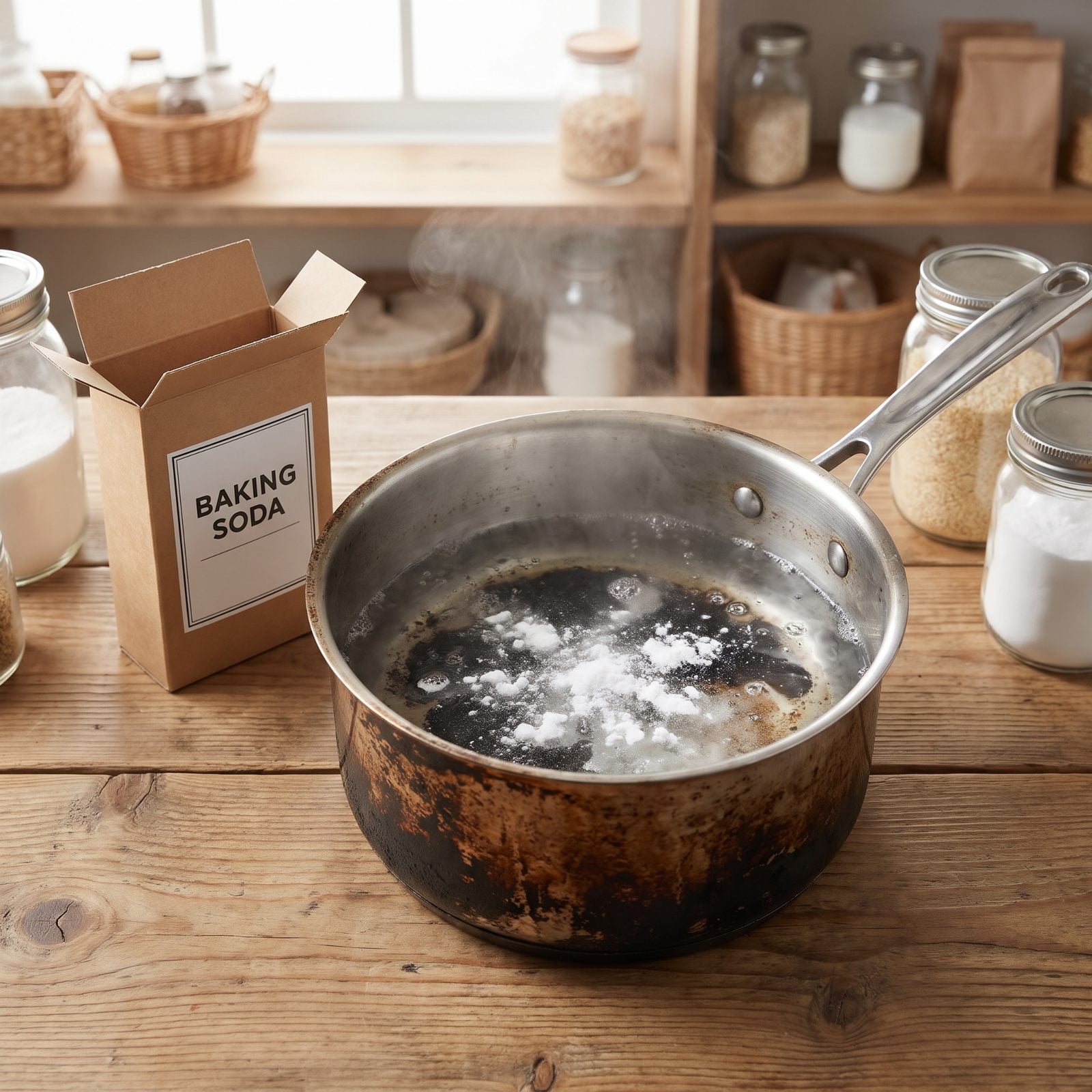
You walked away from the rice. We’ve all walked away from the rice. Now there’s a black crust welded to the pan bottom and scrubbing it cold is a losing fight.
Don’t scrub. Sprinkle a couple spoons of baking soda straight over the char, pour a little water in the pan, and let it simmer for ten minutes. The heat and the alkaline water work under the burned layer and soften it, even if the crust doesn’t look any different yet. Then a wooden spoon pushes most of it off with no muscle at all.
27. Brighten Dull Aluminum Pans With a Cream-of-Tartar Simmer
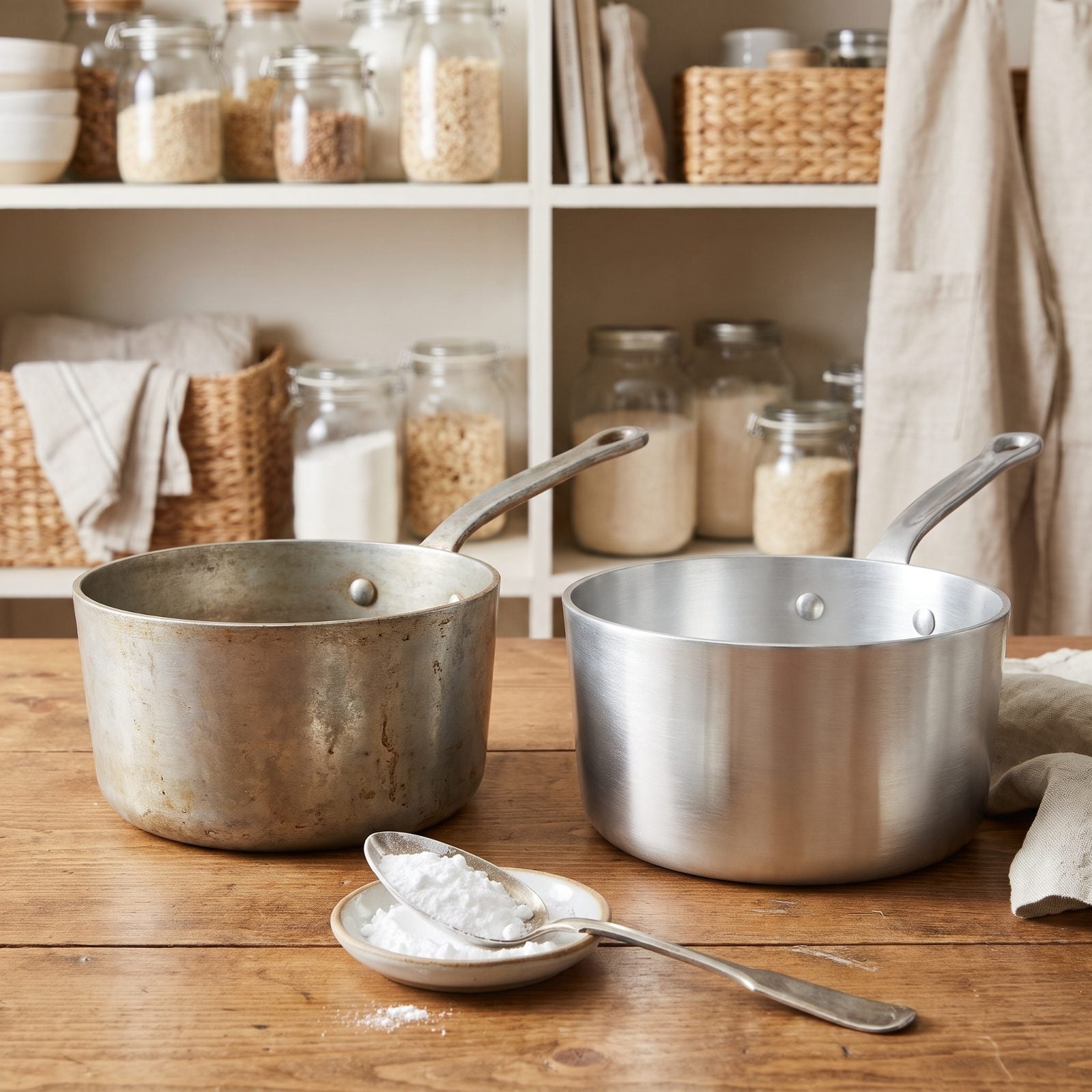
Old aluminum pots go dull and blotchy, with orange-brown stains and patchy discoloration that no amount of scrubbing lifts. A spoon of cream of tartar in a pot of simmering water fixes it from the inside.
The mild acid dissolves the stains and dull oxide layer, and the aluminum underneath comes back silvery. Simmer it ten or fifteen minutes, swirl it up the sides, then pour it out and buff dry. A cut lemon rubbed over the outside handles the parts the water doesn’t touch. Worth tucking into a well-stocked baking shelf, right where you’d want it in a transitional pantry makeover.
26. Degrease Range-Hood Filters With Washing Soda
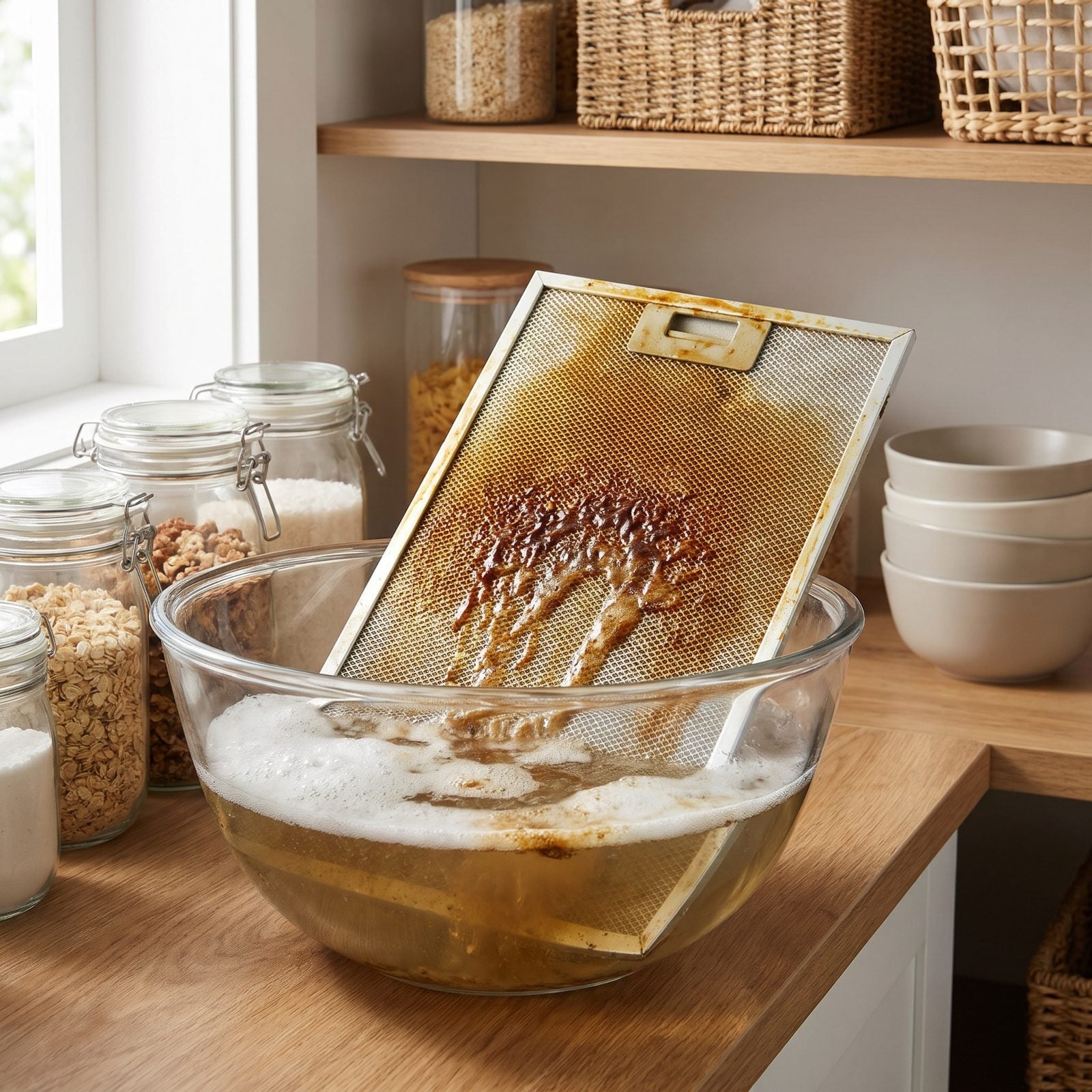
Pull a range-hood filter after a year of frying and it comes out tacky, amber, furred with grease you can scrape with a fingernail. Dish soap barely dents it.
Washing soda does. It’s stronger than baking soda, more alkaline, and grease is its whole reason for being. Dissolve a few spoons in a sink of water as hot as you can run it, drop the filter in, and let it soak twenty minutes. The grease loosens and clouds the water. A quick brush and a rinse, and the mesh is bright again. Wear gloves, though. Washing soda is tough on grease and a little tough on skin.
25. Cover a Fresh Oven Spill With Salt
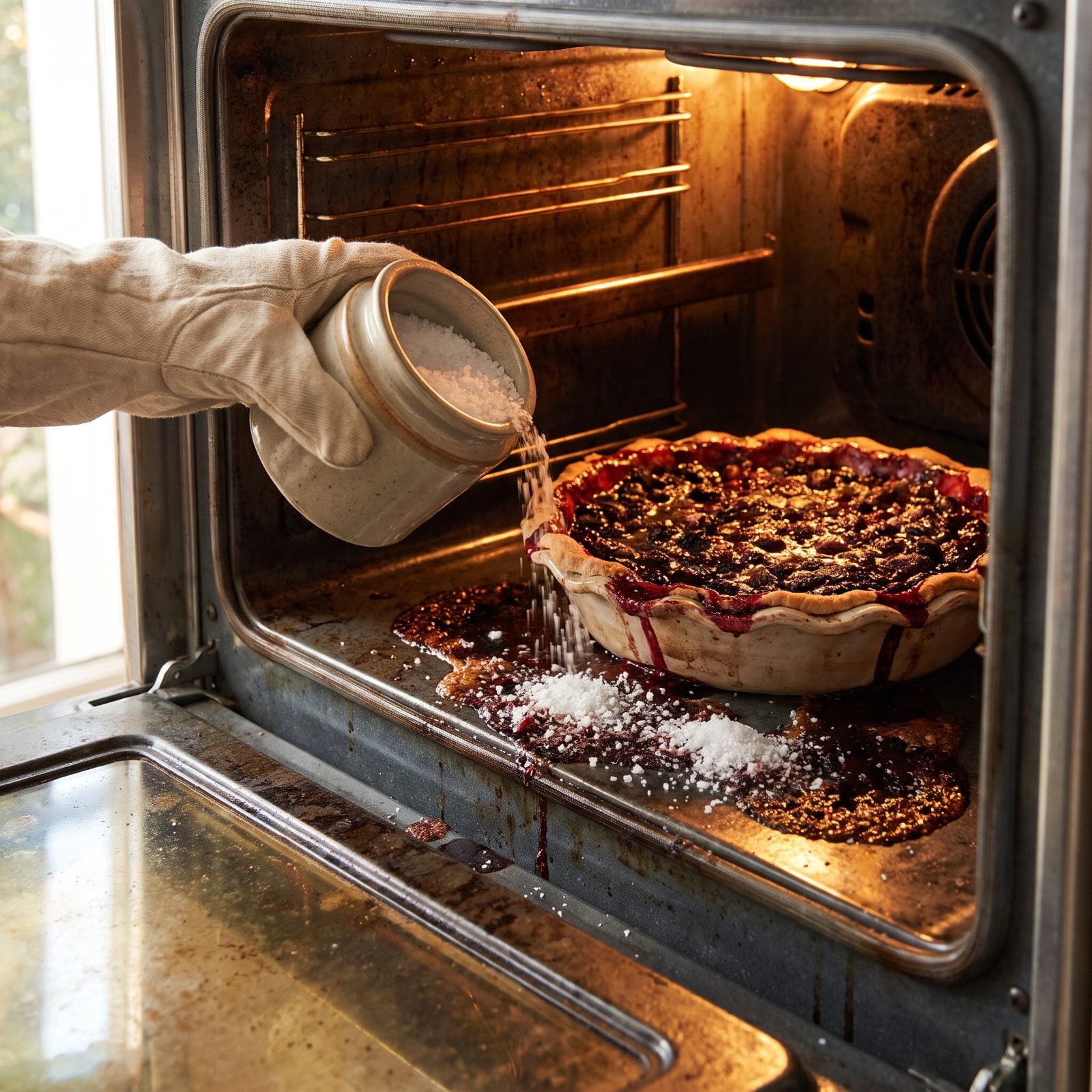
The pie boils over. There’s that smell, the smoke, and sugar fusing to the oven floor into something you’ll be chiseling at next week. Catch it fast and you save yourself the fight.
Pour a good stream of salt onto the fresh spill while the oven’s still hot. The salt soaks it up and keeps it from spreading or smoking, and it crusts the mess into something that brushes right out once the oven cools. It won’t make anything pretty in the moment. What it does is turn the cleanup into an afterthought instead of a chore.
24. Clean a Cool Oven With a Baking Soda Paste
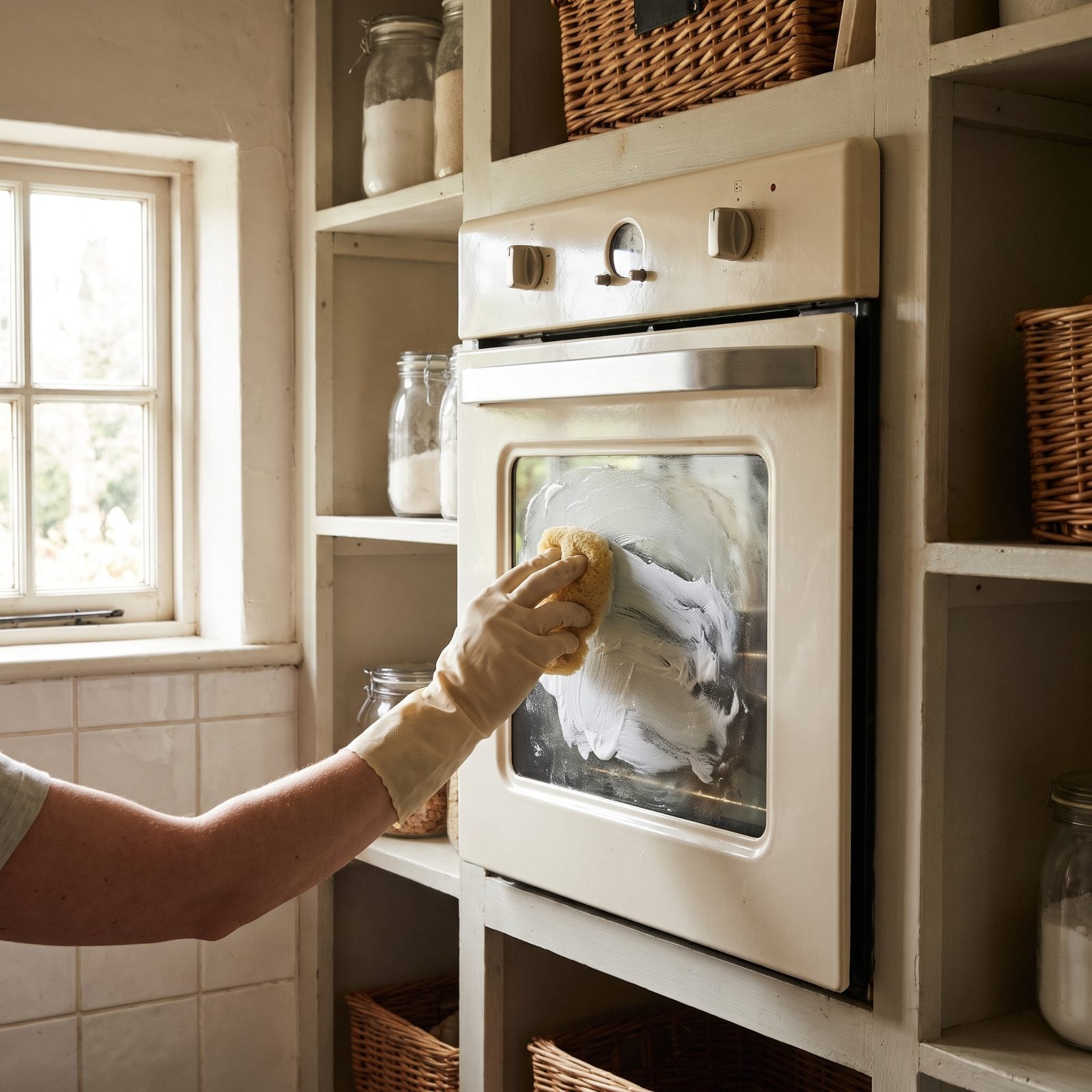
Before oven-cleaner sprays came with their fumes and warnings, this is how it got done. A paste of baking soda and a little water, smeared thick over the grime, left to sit overnight.
By morning the paste has softened the baked-on grease and char underneath it. Wipe most of it away with a damp cloth, then spritz any stubborn spots with vinegar water and watch it fizz up the last of the residue. Slower than the spray, sure. It’s also something you can do with your head inside the oven and not come out dizzy.
23. Soak Cloudy Glassware in Diluted Vinegar
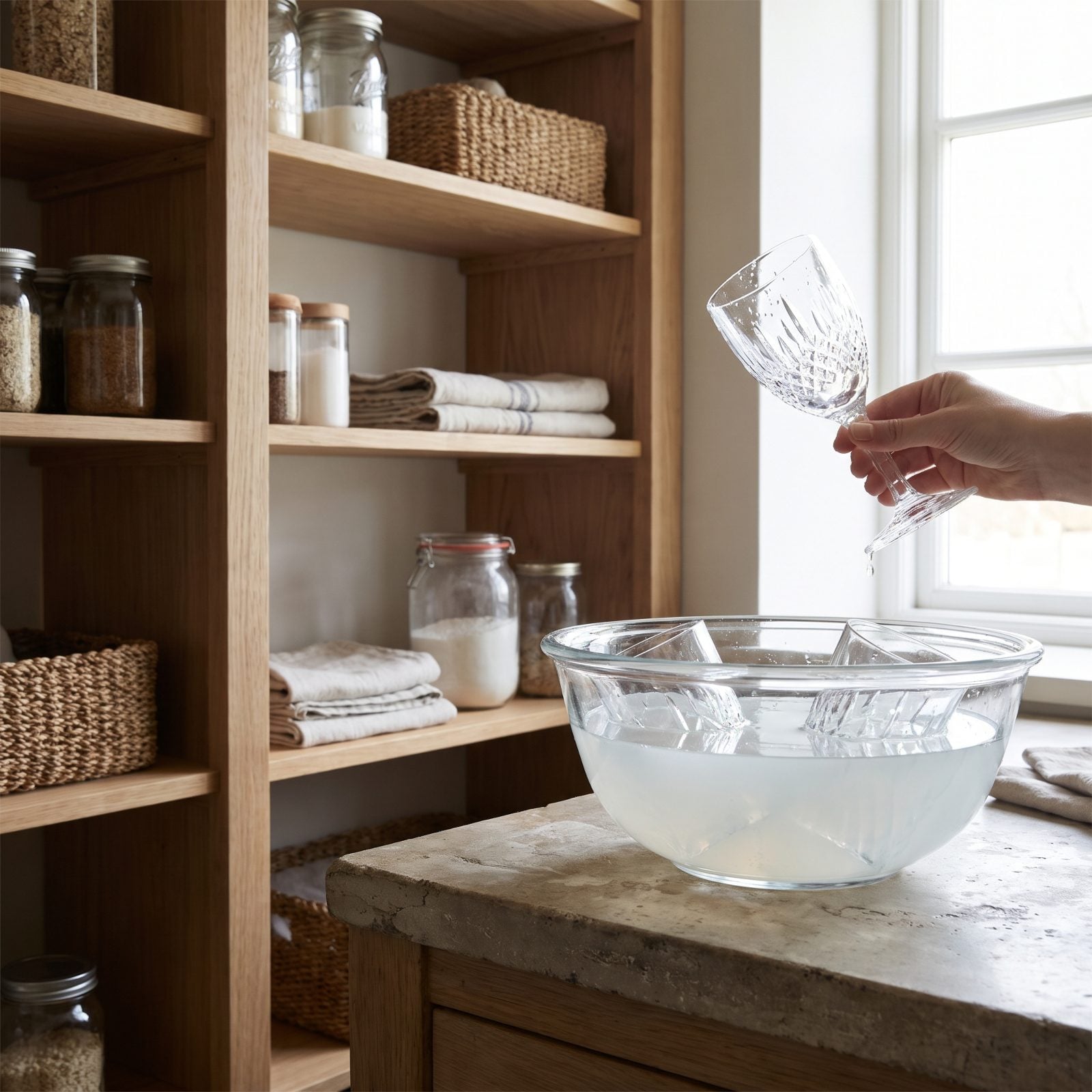
That foggy film on your glasses isn’t dirt. It’s hard-water mineral scale, mostly calcium, baked on by your dishwasher over months of hot cycles. Scrubbing won’t touch it. You need acid.
Fill a basin with roughly one part white vinegar to three parts warm water and let the glasses sit for twenty minutes while the mild acid dissolves the mineral deposit. Wipe each glass with a soft cloth while it’s still wet, rinse, and dry on a rack.
22. Remove Light Rust From Carbon-Steel Knives With a Cut Potato
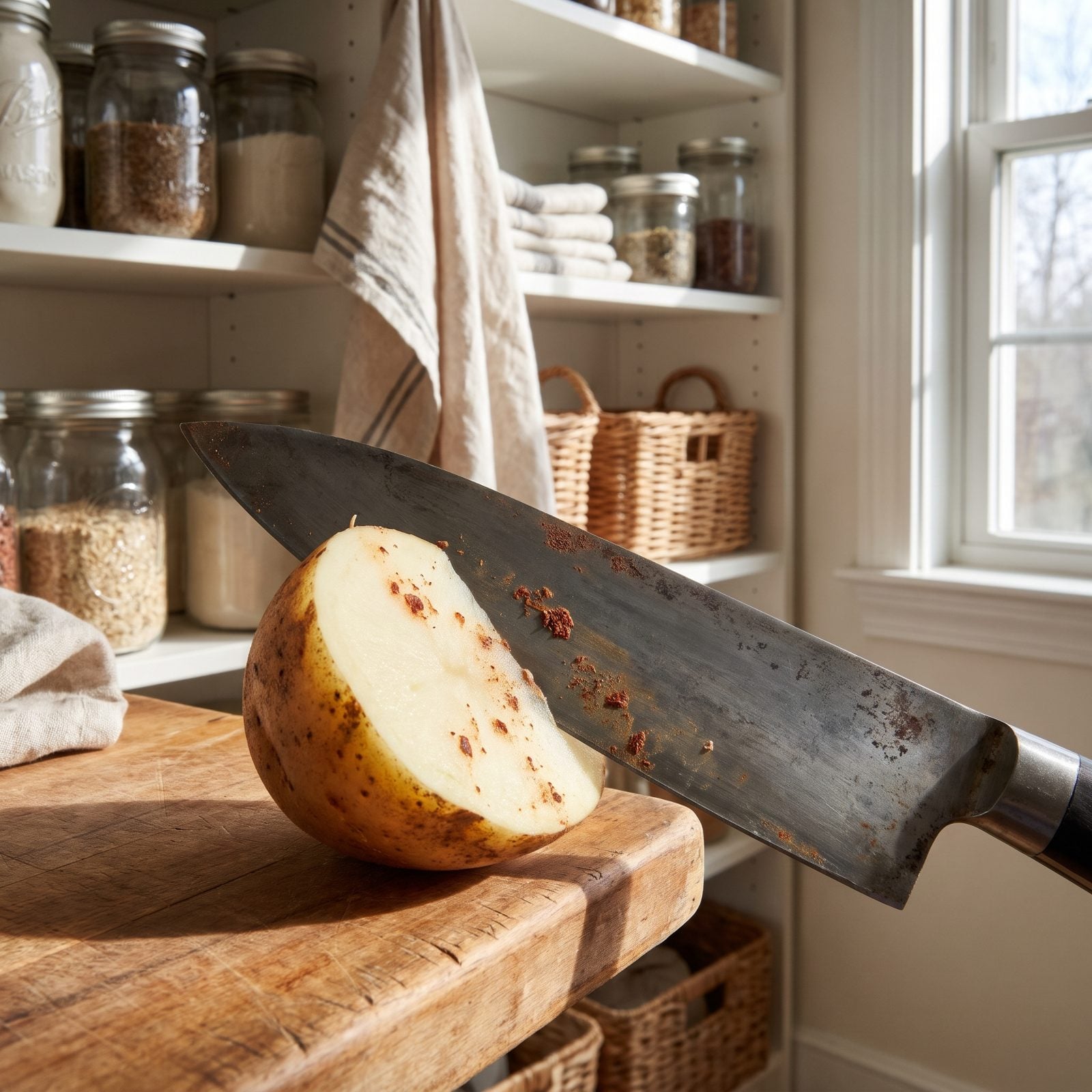
Carbon-steel blades rust. That’s the trade for holding an edge better than stainless. Leave one wet in the sink overnight and you’ll find orange freckles by morning.
Cut a raw potato in half, dip the cut face in a little coarse salt, and rub it firmly along the rust spots. Potatoes contain oxalic acid, mild enough not to pit good steel but strong enough to loosen surface oxidation, and the salt gives you grit.
Rinse, dry hard with a towel, and wipe a thin film of oil over the blade before you put it away. A carbon knife that goes away damp will rust again by Thursday. I’ve learned that one more than once.
21. Polish Unlacquered Brass With Flour, Salt and Vinegar
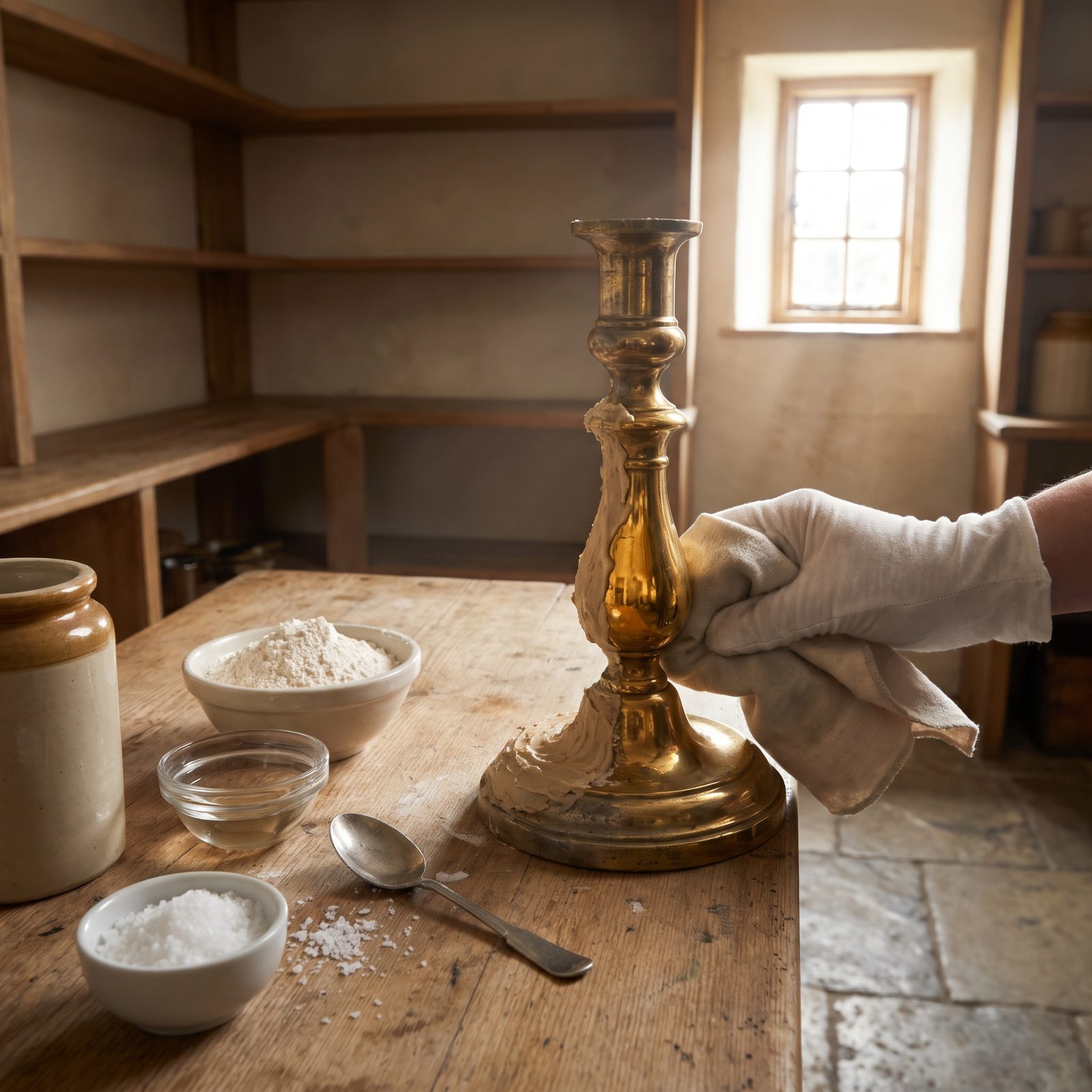
This only works on unlacquered brass. If your piece has a clear protective coating, the paste does nothing but sit there, because you’re polishing varnish, not metal. Check first by looking for cloudy or peeling spots in the shine.
Mix equal parts flour, fine salt and white vinegar into a paste the texture of thick cream. Smear it over the tarnished brass, let it sit for ten minutes, then rub with a soft cloth. The acid breaks down the tarnish, the salt scours, and the flour holds it all together so it clings instead of running.
Rinse under warm water and dry completely. Any paste left in a crevice will dry white and chalky. This is the same chemistry that turns up in a good victorian pantry ideas roundup when old fixtures need bringing back.
20. Restore Tarnished Silver With Foil, Baking Soda and Hot Water
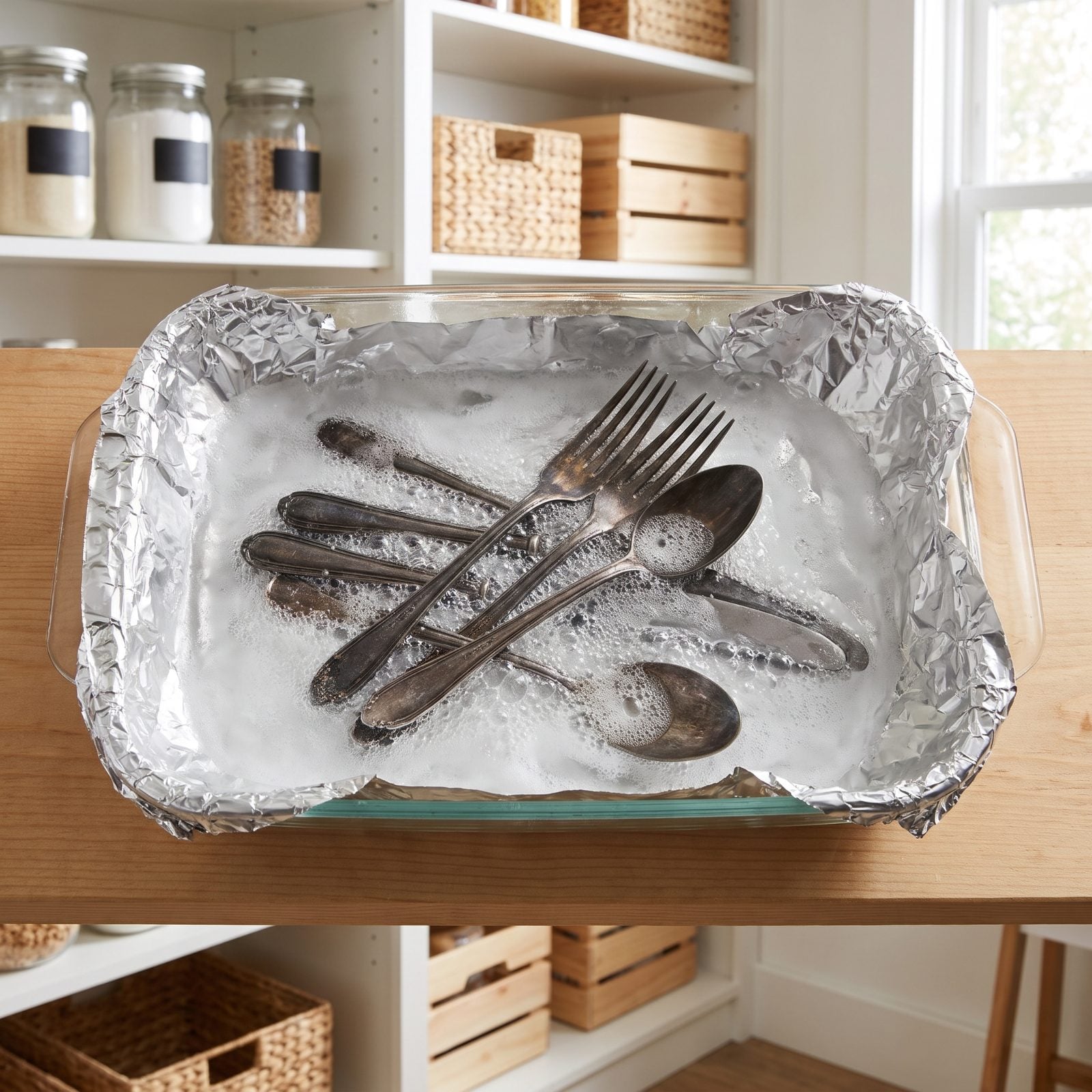
This one feels like a magic trick, and it isn’t. It’s a tiny chemistry experiment in a baking dish.
Line a dish with aluminum foil, shiny side up, and lay your tarnished silver on top so it touches the metal. Pour over hot water mixed with a couple of tablespoons of baking soda. Within a minute or two you’ll see the dark tarnish start to lift, sometimes with a faint sulfur smell.
Here’s what’s happening. The tarnish is silver sulfide, and the aluminum pulls the sulfur off the silver and onto itself. The silver stays, the blackness leaves. No scrubbing, which means no scratches and no silver worn away.
In a tip shared on a metalsmithing community site, one jewelry maker says that removing tarnish from sterling silver takes only an oven-safe dish, aluminum foil, baking soda, salt and boiling water.
19. Draw Grease From Clothing With Plain White Chalk
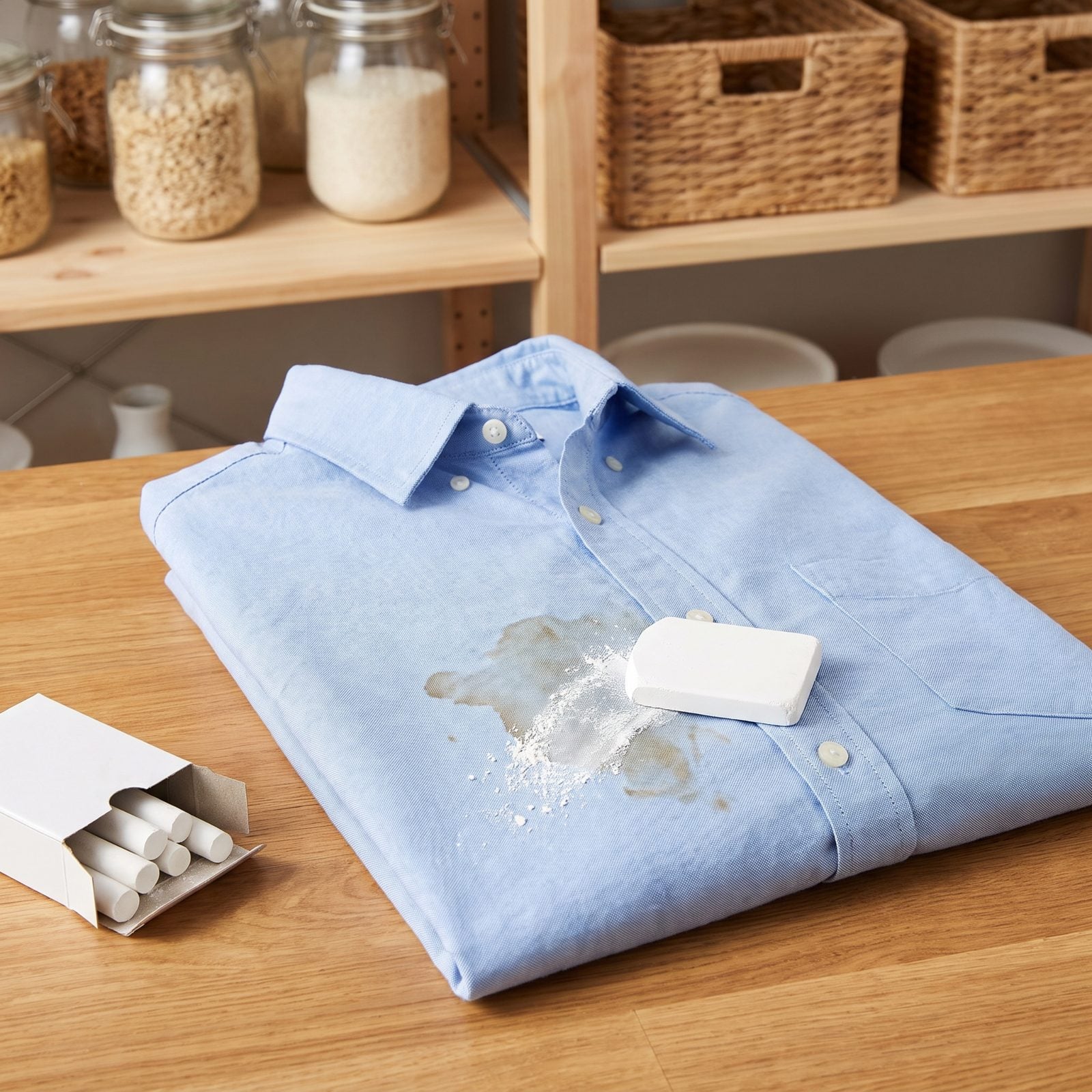
Drip salad dressing down your front and the clock starts. Grease soaks into fabric fast, and once it sets through a hot wash it’s there for good.
Rub plain white chalk thickly over the spot before it goes anywhere near water. Chalk is absorbent and pulls the oil up out of the fibers. Let it sit a few minutes, brush it off, reapply if the mark is heavy, then launder as usual.
Use plain white chalk, not the dustless or colored school kind, which can leave its own stain. Keep a stick in the kitchen drawer.
18. Rinse Fresh Bloodstains in Cold Water
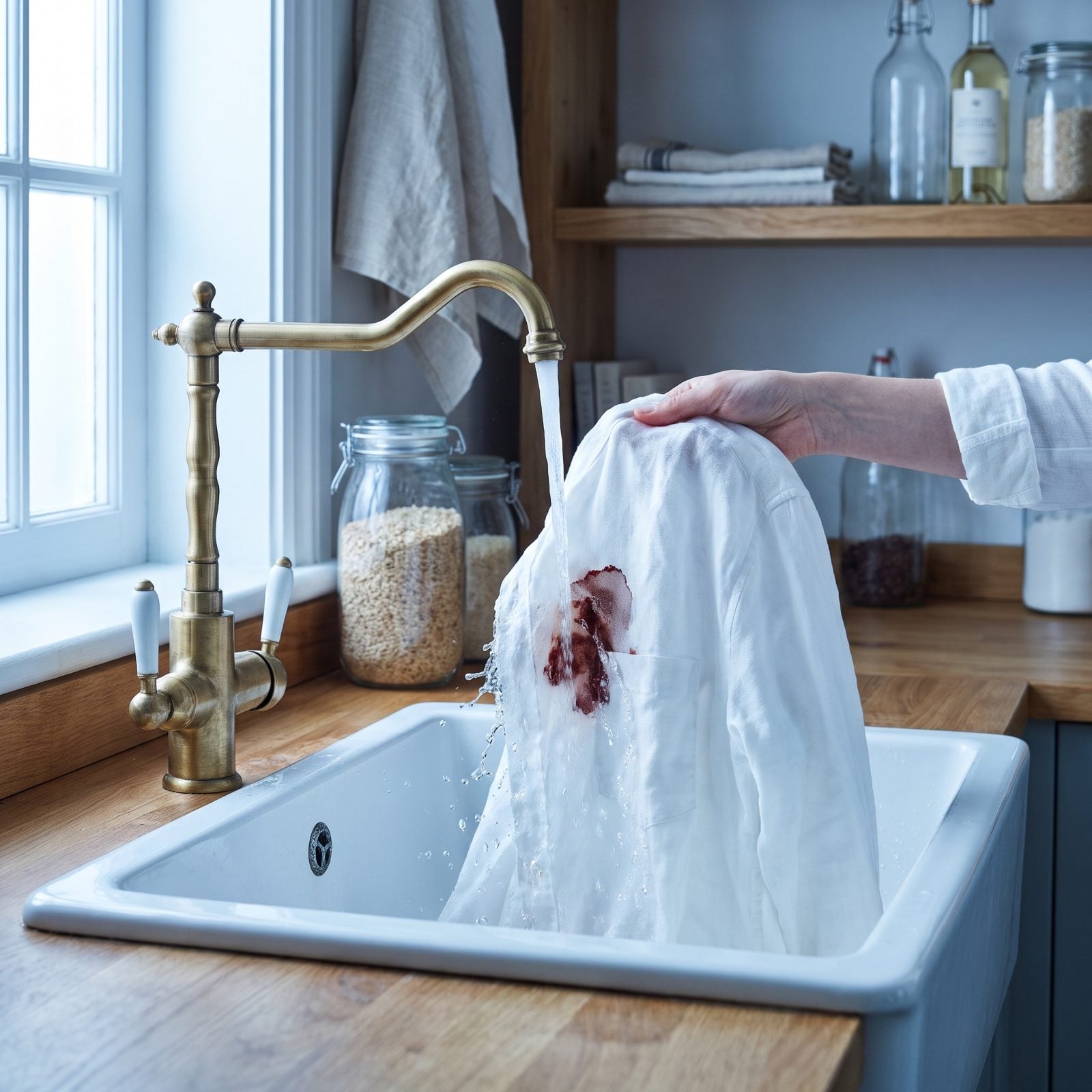
The instinct is hot water. It’s the wrong instinct, and it’s cost a lot of shirts.
Blood is protein, and heat cooks protein, which is why a boiled egg can’t un-boil. Hot water sets a bloodstain permanently into the weave, while cold water keeps the protein loose enough to flush out.
Hold the stain under a cold running tap and let the stream run straight over it, so the water carries the blood away before it can settle in. Work a little plain soap in with your fingers if it lingers. Fresh blood usually lifts almost entirely. Dried blood is a harder fight, so speed matters more than anything else here.
17. Fade Laundry Rust Marks With Lemon, Salt and Sunlight
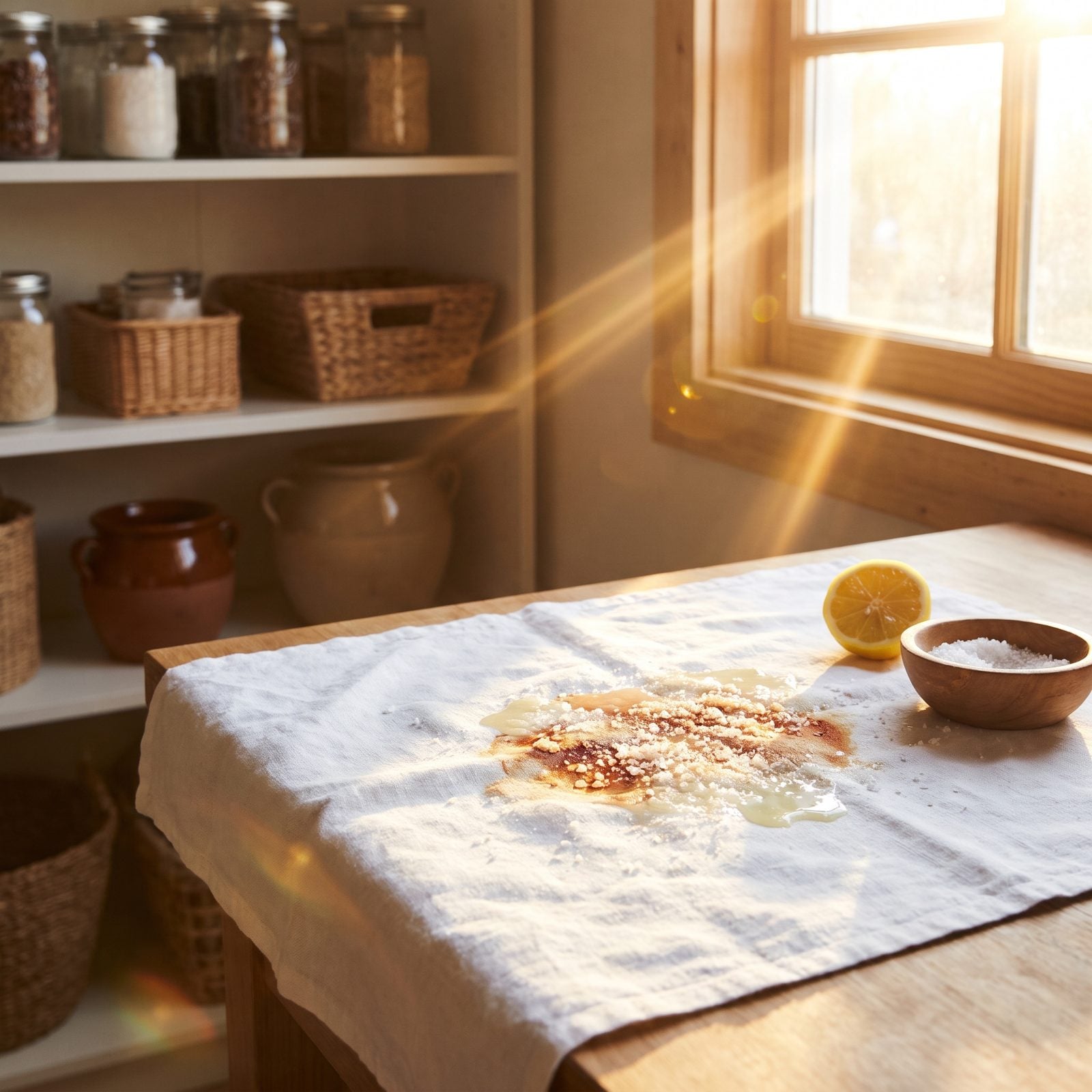
Rust on white laundry comes from somewhere specific — a bobby pin left in a pocket, a rusty washer drum, a metal clothespin that bled in the rain. It looks orange-brown and bleach won’t shift it. Chlorine bleach can actually set it darker.
Squeeze fresh lemon juice over the mark, pile on coarse salt, and lay the item flat in direct sun. The citric acid reacts with the iron oxide, the salt scours and holds moisture, and ultraviolet light drives the whole reaction. Keep it damp. Let it bake for an hour, then rinse and check.
Deep rust may need a second round. This is slow work, not a quick fix, and patience is the whole method.
16. Restore White Laundry With Traditional Laundry Bluing
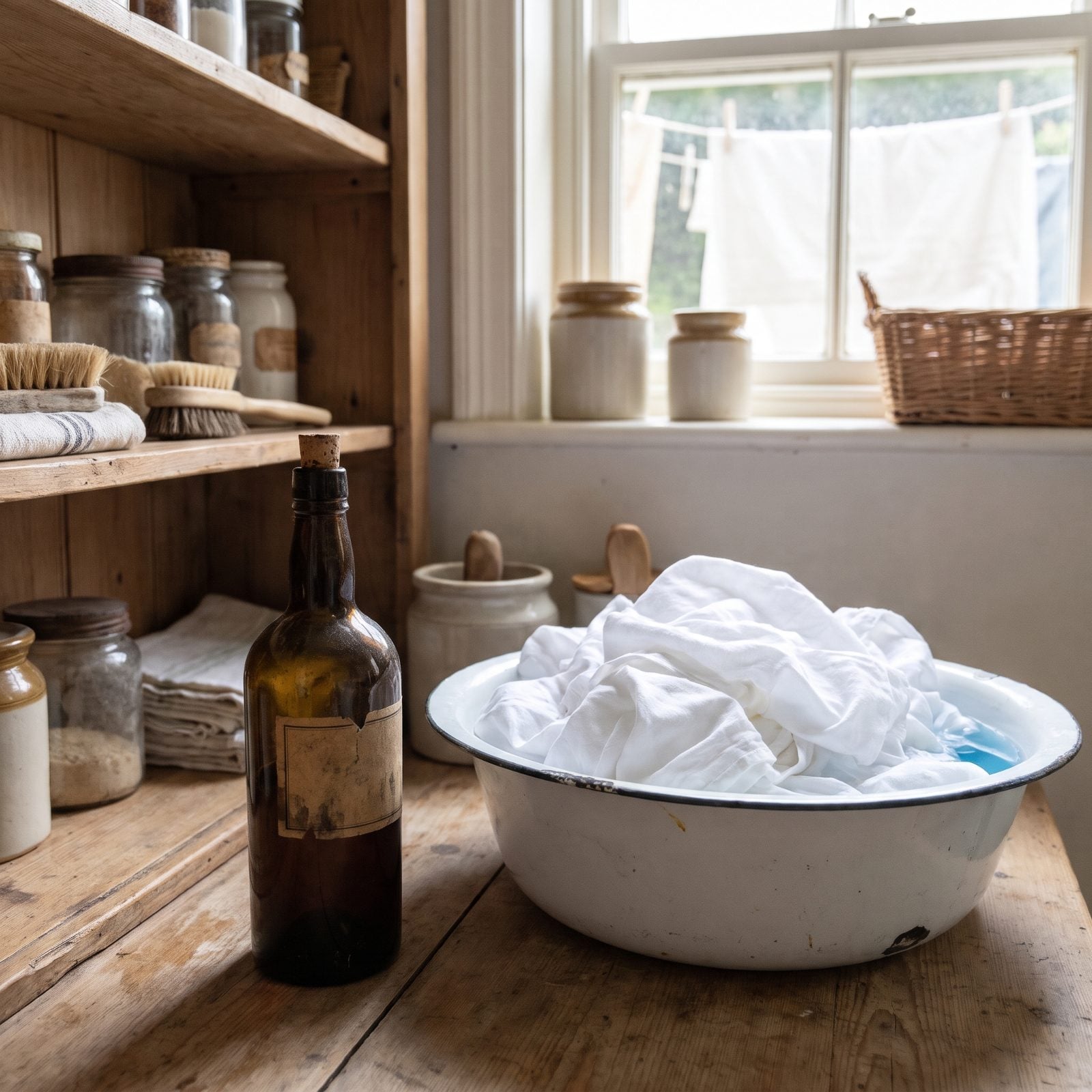
Old whites don’t fade to grey because they’re dirty. They fade because fabric naturally yellows over time, and yellow reads as dull to the eye.
Bluing is the trick nobody born after a certain decade knows about. You add a tiny amount of blue pigment to the rinse water, which deposits an invisibly faint blue on the fabric. Blue cancels yellow, so the cloth reads as brighter white even though you’ve technically tinted it. An optical trick, not a chemical clean.
The catch is dose. Bluing is potent, so a few drops in a full basin is plenty. Too much and you’ll pull your sheets out faintly blue — a very visible mistake to explain to anyone watching.
15. Boil White Cotton Dishcloths to Sanitize and Deodorize Them
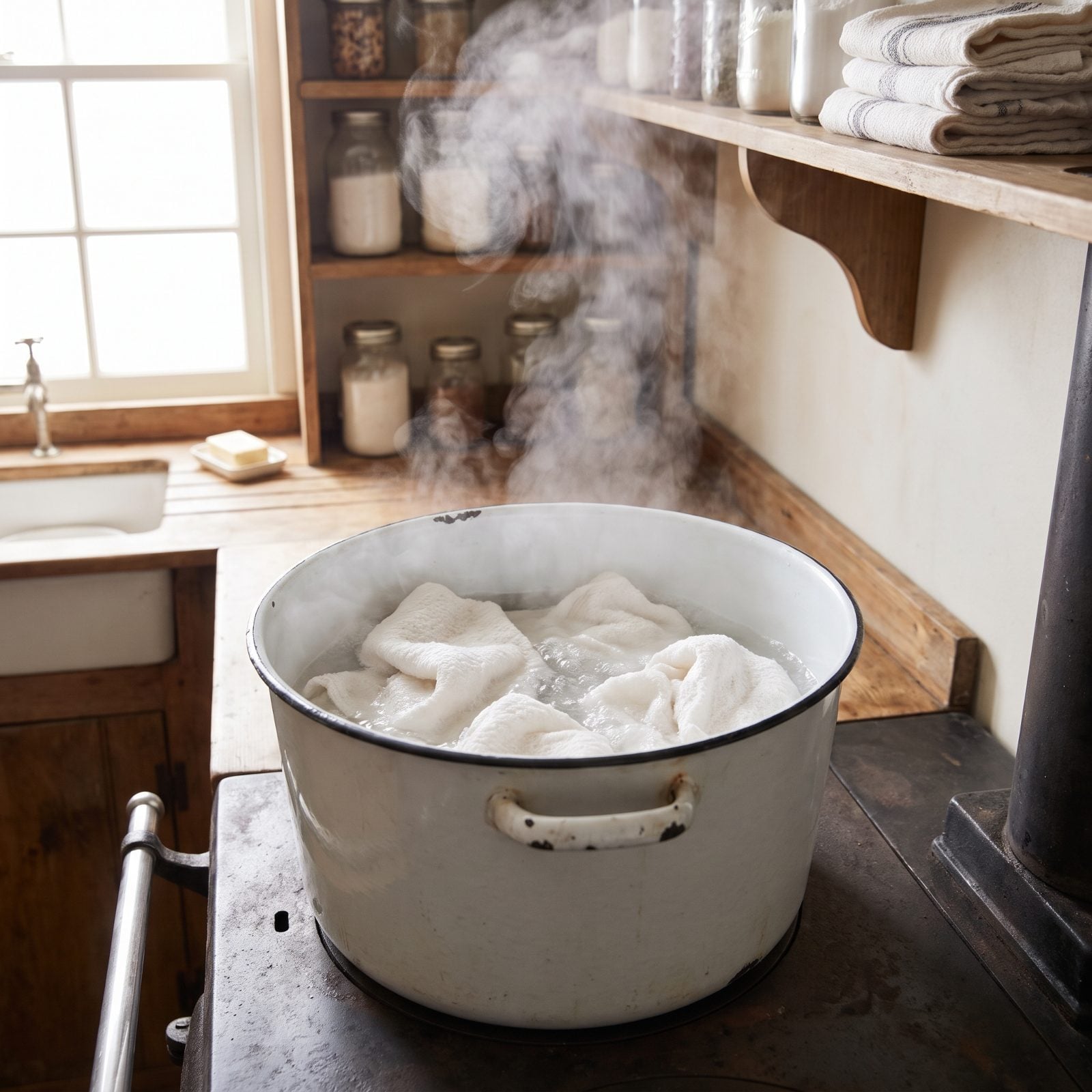
That sour, musty smell on a dishcloth isn’t from food. It’s bacteria living in the damp fibers, and no amount of rinsing kills them. A dishcloth that smells is a dishcloth that’s spreading more than it’s wiping.
Drop white cotton cloths into a pot of water, add a spoon of baking soda, and bring it to a rolling boil for ten to fifteen minutes. The sustained heat kills the bacteria the smell comes from, and the baking soda helps neutralize the odor and soften the water. Lift them out with tongs, wring once cool, and line-dry in the sun if you can.
White cotton only. Colored or synthetic cloths don’t take kindly to a boil, and anything with a print will run.
14. Pull Oil From Upholstery With Cornstarch
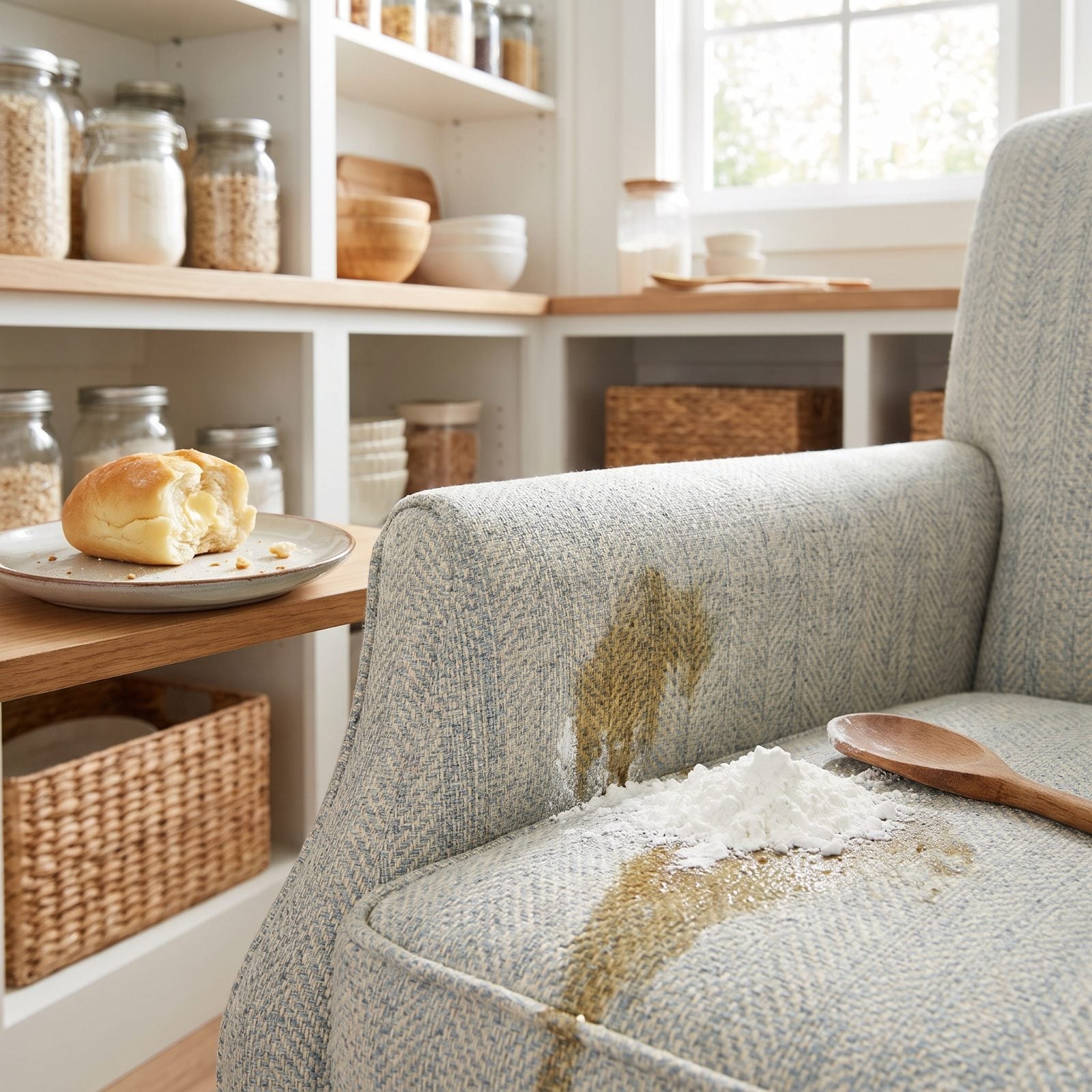
Someone sets a buttered roll on the arm of the good chair, and you catch it an hour later as a dark halo soaked into the weave. Water makes it worse. Rubbing spreads it. What you need is something that drinks grease.
Dust the spot heavily with cornstarch and walk away for a few hours, overnight if you can stand it. The powder wicks the oil up out of the fibers. Vacuum it off and repeat if a shadow remains. I’ve rescued a linen cushion this way that I’d already written off as a loss.
13. Freshen a Colorfast Wool Rug With Clean, Powdery Snow

This one sounds made up until you try it. Bring in clean snow on a day when it is dry and powdery rather than wet and slushy, scatter it over a colorfast wool rug until the pile is well covered, let it sit a few minutes, then sweep it off with a broom. The cold snow pulls odor and fine grit out of the wool, and if you sweep it up promptly, it comes off before it melts and soaks in. Indoors, work quickly, and once the rug is swept, sweep up the stray bits scattered on the floor around it before they melt.
Test a corner first. A rug that bleeds in warm water will bleed in snow too. But a sound wool rug comes back smelling like nothing at all, which is exactly what you want.
12. Beat Area Rugs Outdoors to Release Embedded Dust
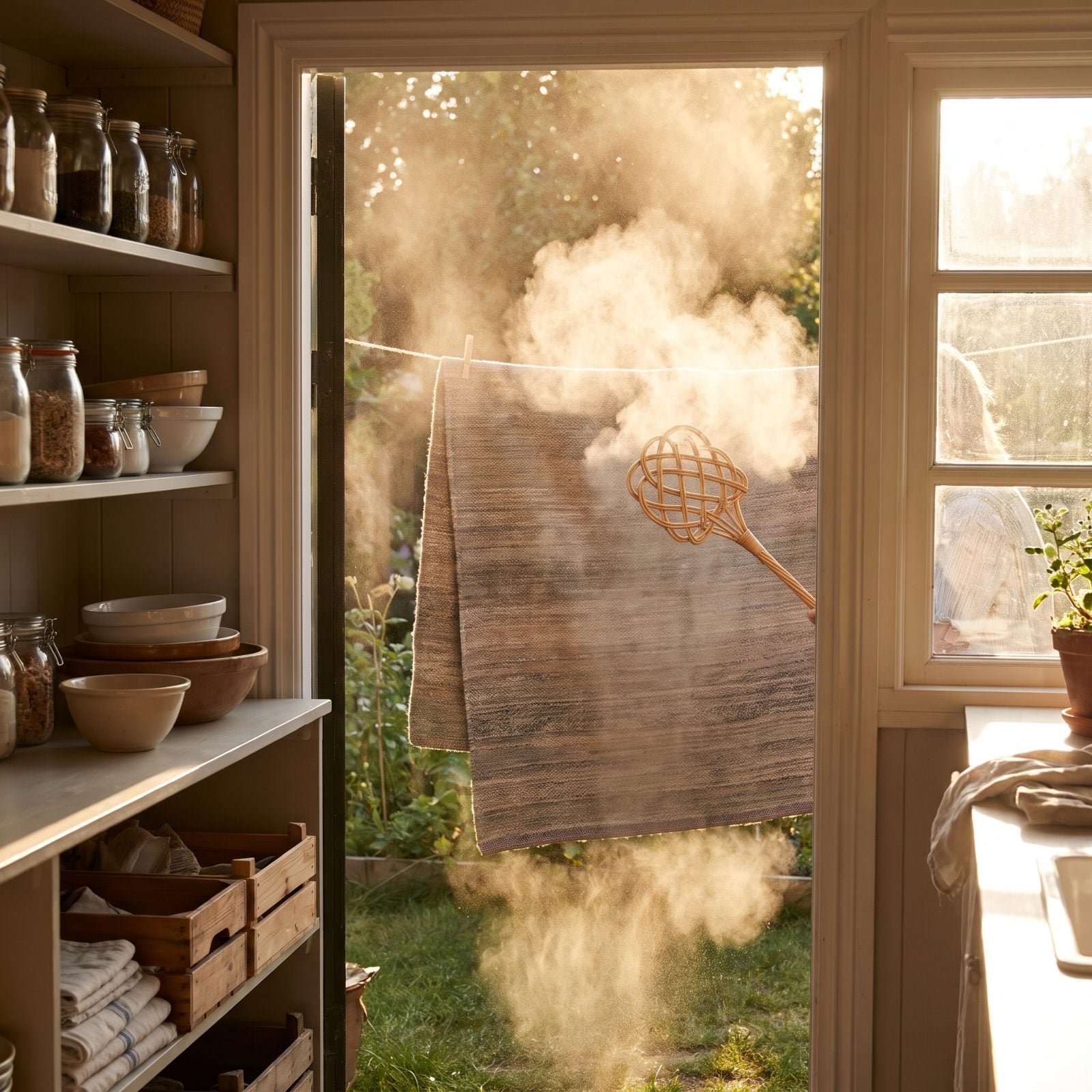
A vacuum pulls what’s near the surface and never touches the grit that’s worked its way down to the backing. That’s the stuff grinding against the fibers every time you walk across it, wearing a rug out from the inside.
So throw it over a line or a railing, pile side out, and go at it with a rattan beater or the flat of a broom. The amount of dust that comes out of a rug you thought was clean will alarm you. Pick a breezy day so the cloud blows away from you, not into your face.
11. Air a Mattress Outdoors in Bright, Dry Sunlight
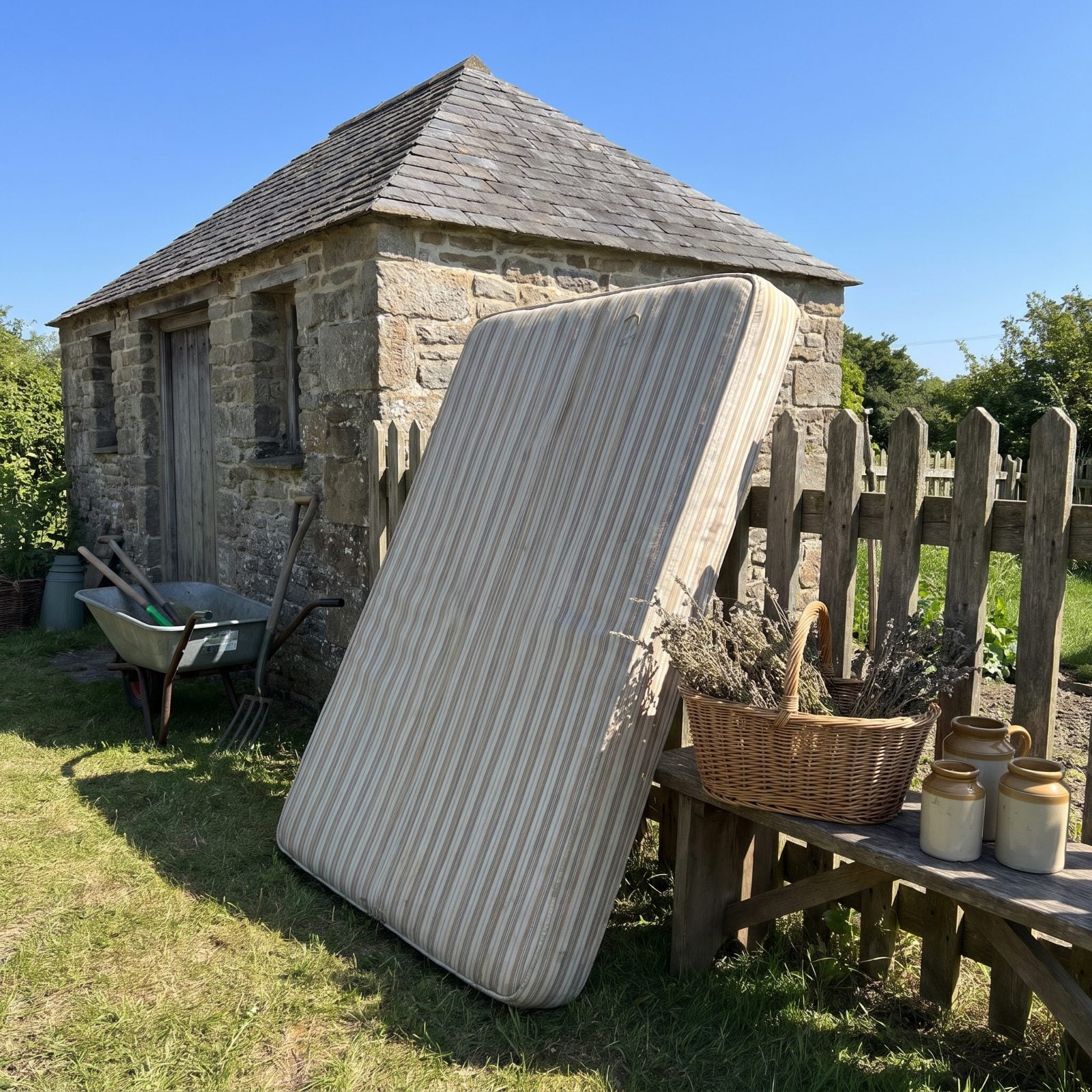
Before anyone owned a dehumidifier, the cure for a stale mattress was the sun and a dry afternoon. You dragged it outside, leaned it against the house, and let hours of bright light and moving air do what no spray can.
Sunlight is a genuine disinfectant, and dry air pulls out the moisture our bodies leave behind every single night. Strip the bedding, flip the mattress halfway through, and bring it in before the dew settles. Something that smelled faintly of nothing-in-particular comes back smelling of outside.
10. Dust Venetian Blinds With Cotton Gloves
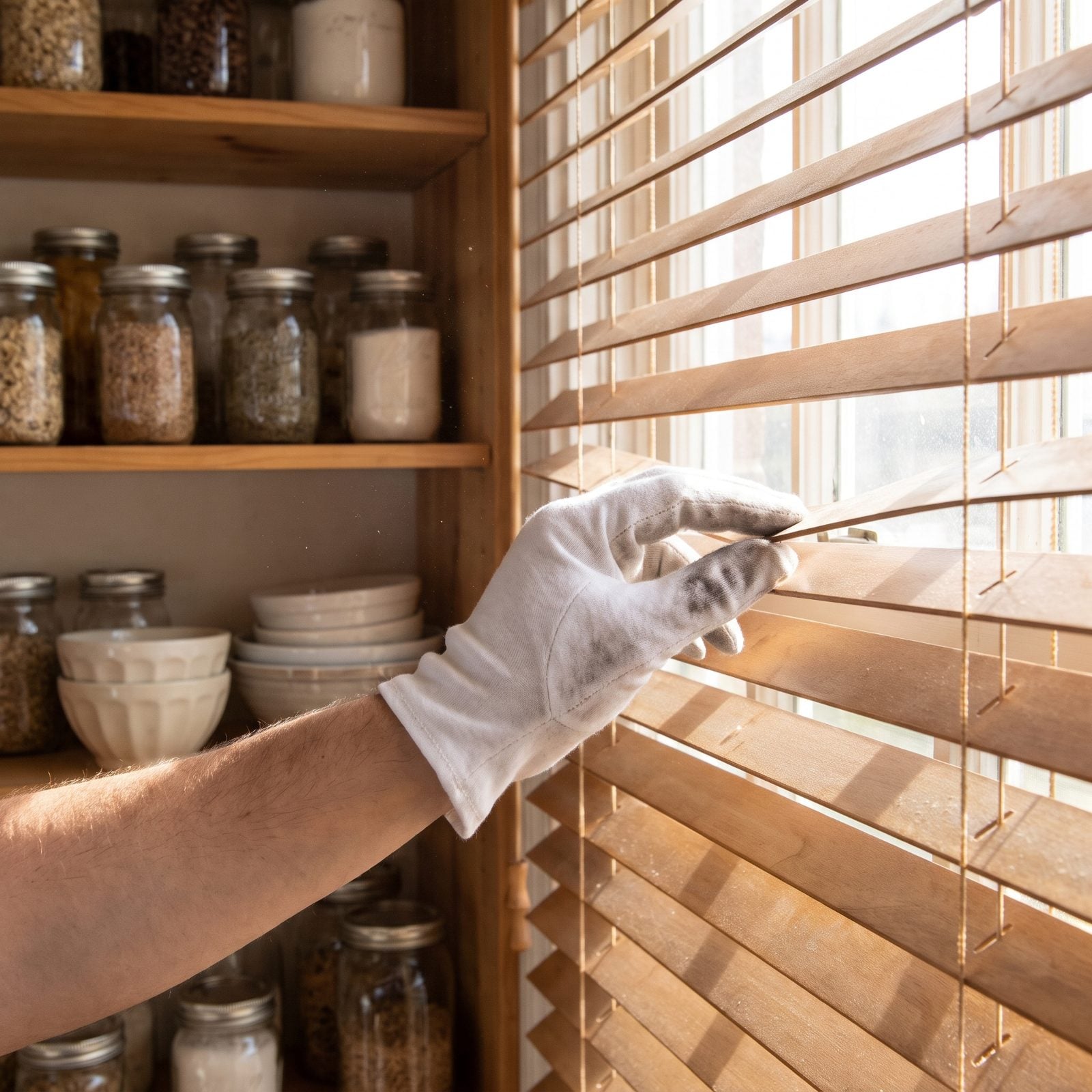
Nobody has ever enjoyed dusting Venetian blinds with a rag. You wipe one side, flip the slat, chase the dust you just pushed off. It’s a loop with no exit.
Here’s the fix: put on a pair of clean cotton gloves, the thin white kind, dampen them slightly, and run your fingers along each slat with the slat pinched between two fingers. Both sides at once, every slat, no pushing dust onto the next one. Rinse the gloves when they load up. Fifteen minutes and you’re done, which beats the rag method by a country mile.
9. Catch Radiator Dust With a Damp Towel and Long Brush
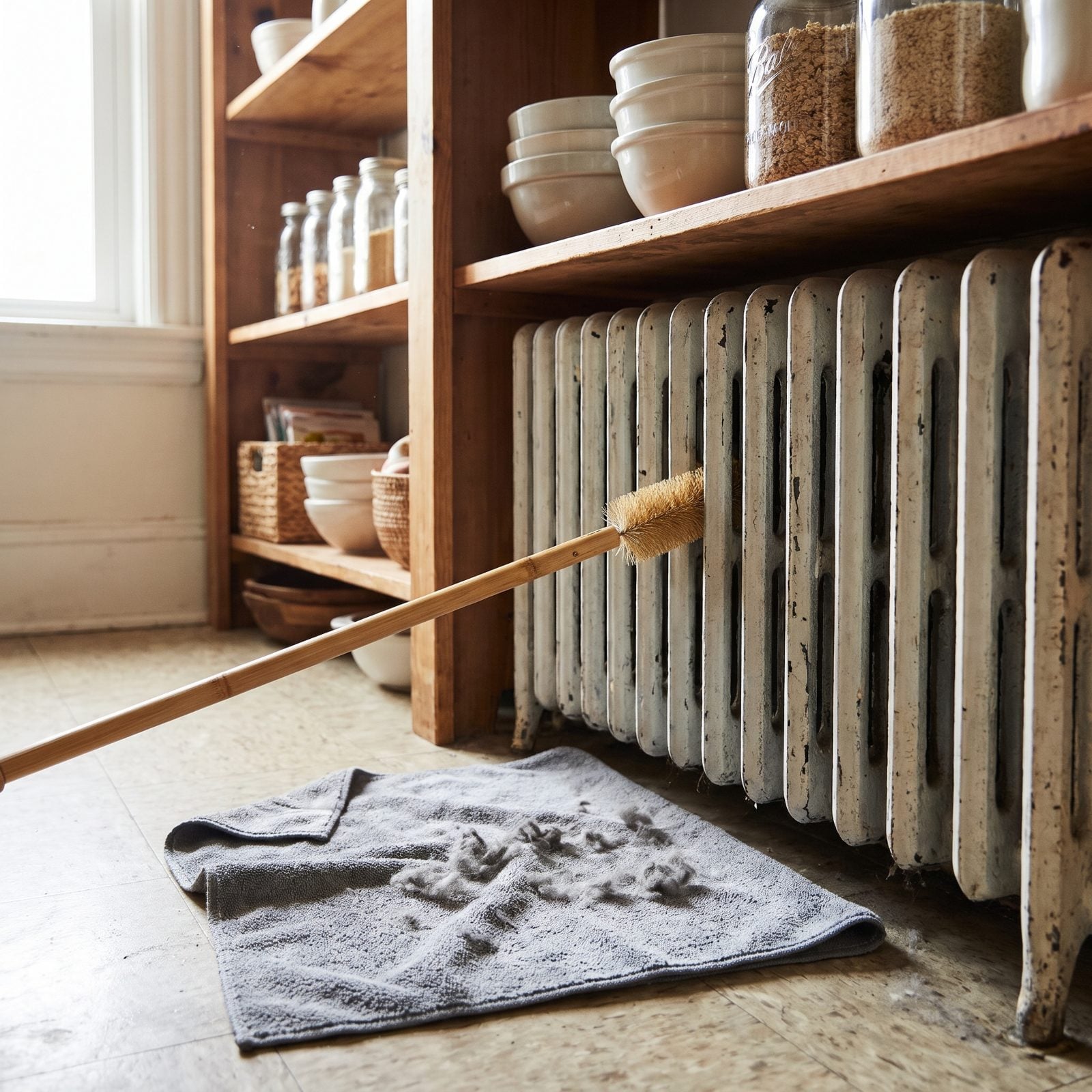
Old cast-iron radiators are dust magnets, and the dust lives in the one place your hand won’t reach, deep in the gaps between the fins. Leave it there and it bakes onto hot metal every winter, which is why old houses smell faintly of scorched dust the day the heat kicks on.
Lay a damp towel on the floor behind the radiator to catch what falls, then run a long, thin radiator brush down through each gap. A wooden spoon wrapped in a microfiber cloth works just as well if you don’t own the brush. The towel traps the dust instead of letting it scatter across the floor. Shake it out, rinse, done.
8. Lift White Water Rings From Wood With Mayonnaise
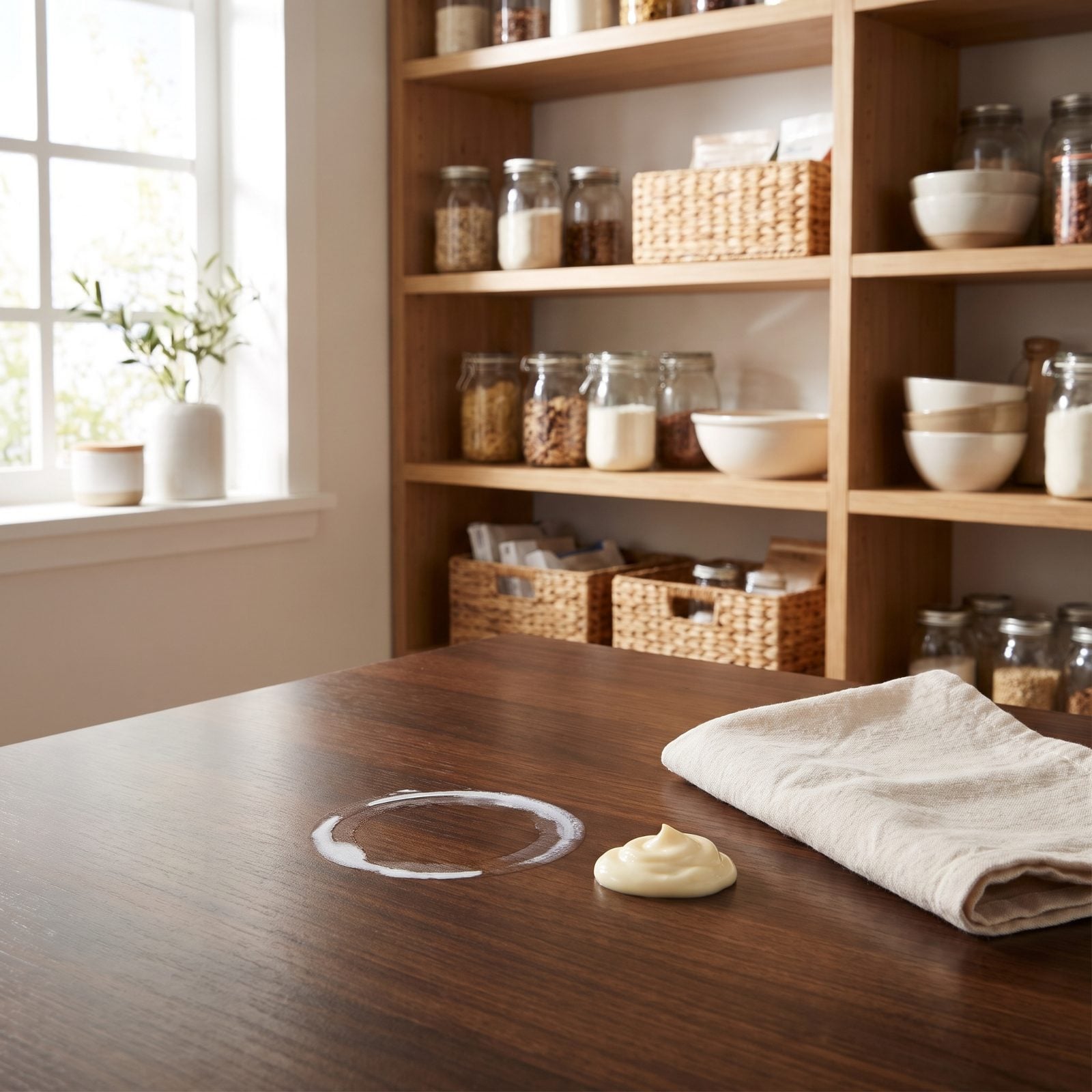
A cold glass left on the good table leaves a ghost. That cloudy white ring is moisture trapped in the finish, not in the wood itself, which is the whole reason this trick works.
Smear a thin layer of plain mayonnaise over the ring and leave it an hour or two, longer for a stubborn one. The oil works down into the finish and pushes the trapped moisture out. Wipe it off, buff with a dry cloth, and watch the ring fade. I was convinced this was an old wives’ tale until a cloudy ring on my grandmother’s table disappeared in an afternoon.
7. Freeze Candleholders Before Scraping Off the Hardened Wax
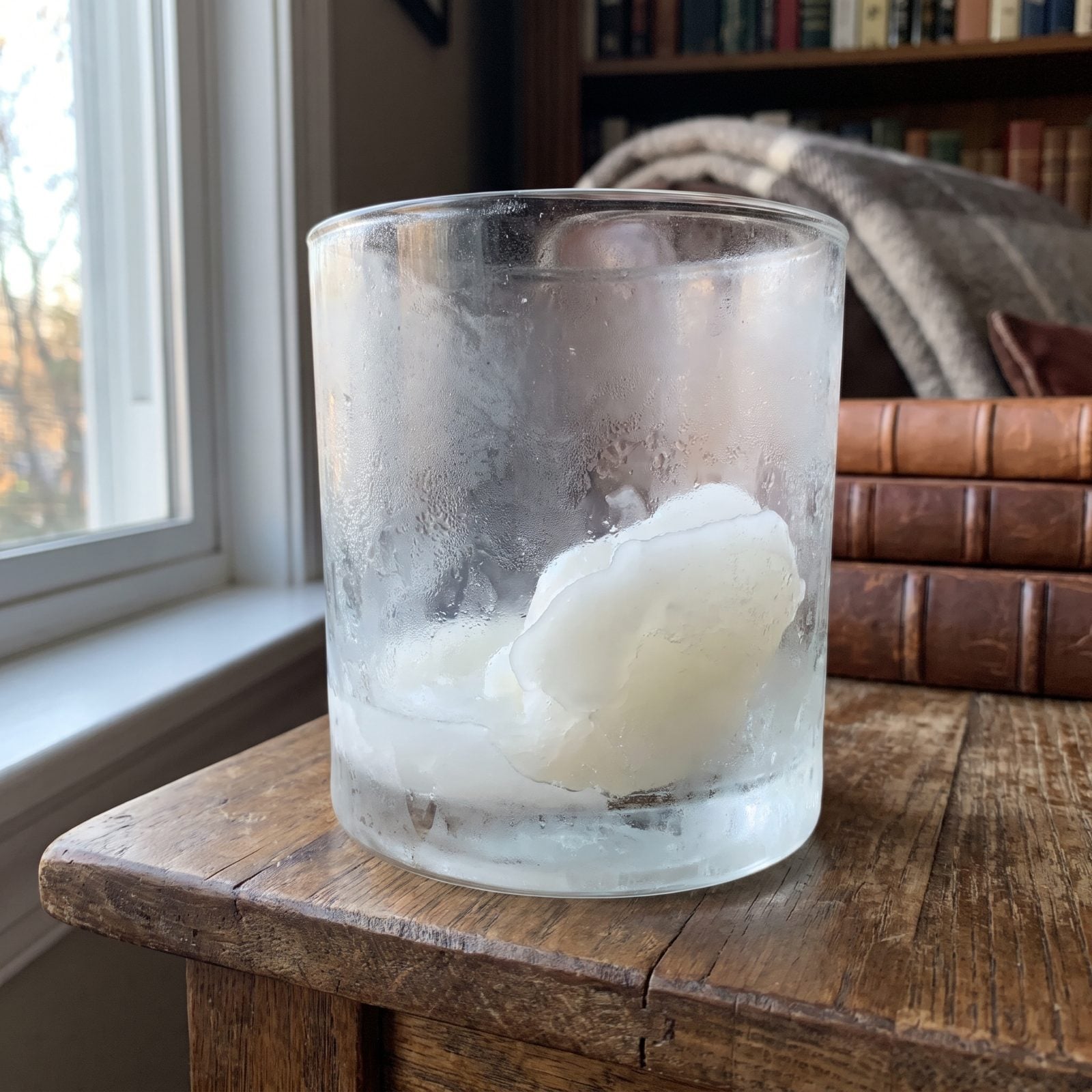
Prying old wax out of a candleholder with a butter knife is how good glass gets scratched and good brass gets dinged. The wax is clinging to every curve, and warm wax smears instead of letting go.
Put the holder in the freezer for an hour or two instead. Cold makes the wax brittle, so it cracks into chunks instead of smearing. Sometimes it shatters into jagged shards that still cling to the glass, so pry each piece loose gently with a wooden craft stick rather than metal. Whatever thin film is left peels off with a fingernail or the same stick.
One caution: let the holder come back to room temperature before you wash it. Freezer-cold glass dropped straight into hot water can crack.
6. Draw Candle Wax Out of a Tablecloth With Brown Paper and a Warm Iron
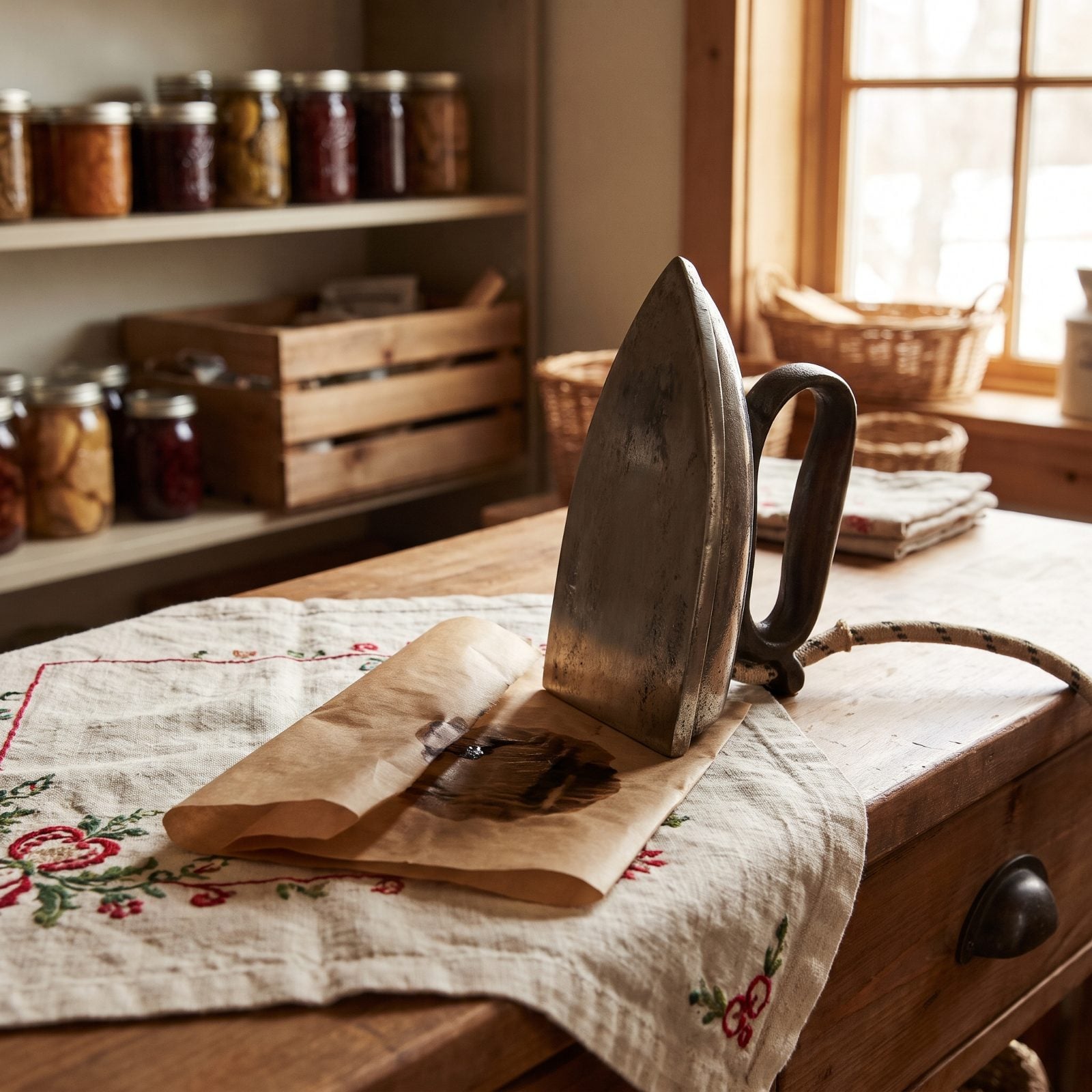
A candle tips during a holiday dinner and leaves a waxy puddle on the good tablecloth. Don’t panic, and don’t toss it in the wash, which just spreads the wax around.
Let the wax harden first, then scrape off everything you can with a dull knife. Lay a plain brown paper bag under the stain and another on top, then press with a warm, dry iron. The wax melts and wicks straight up into the paper. Shift to a clean patch of paper each time it darkens and keep pressing until nothing more transfers.
Use paper with no printing on it, or the ink can come along for the ride. Set the iron to suit the fabric, and if a faint colored shadow from the candle dye remains, launder the cloth as usual.
5. Rub Chrome Faucets With a Cut Lemon to Lift Mineral Spots
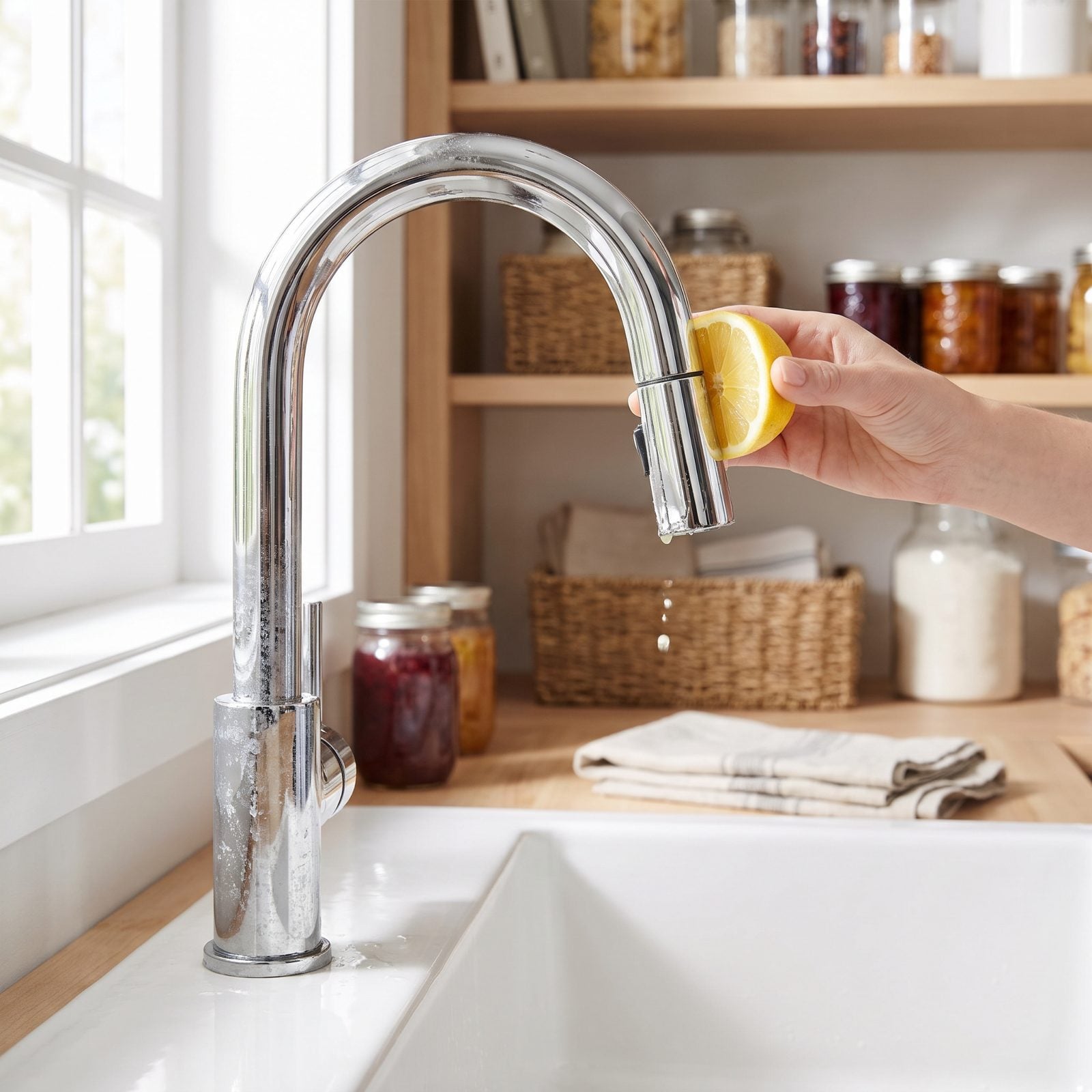
Chrome looks gorgeous for about a day. Then the water spots arrive, those chalky white freckles that make a clean kitchen look neglected.
Cut a lemon in half and rub the cut side over the faucet, squeezing a little as you go so the juice gets around the base and handles. Give it a few minutes. The citric acid dissolves the mineral deposits, and the kitchen smells fresh instead of like a chemical plant. Rinse with plain water and buff dry with a soft cloth, because drying is what keeps the next round of spots from forming.
Keep the juice off marble or other natural stone around the sink. Acid etches it, and that dull mark won’t buff out.
4. Brighten Dingy Grout With Baking Soda and a Splash of Hydrogen Peroxide
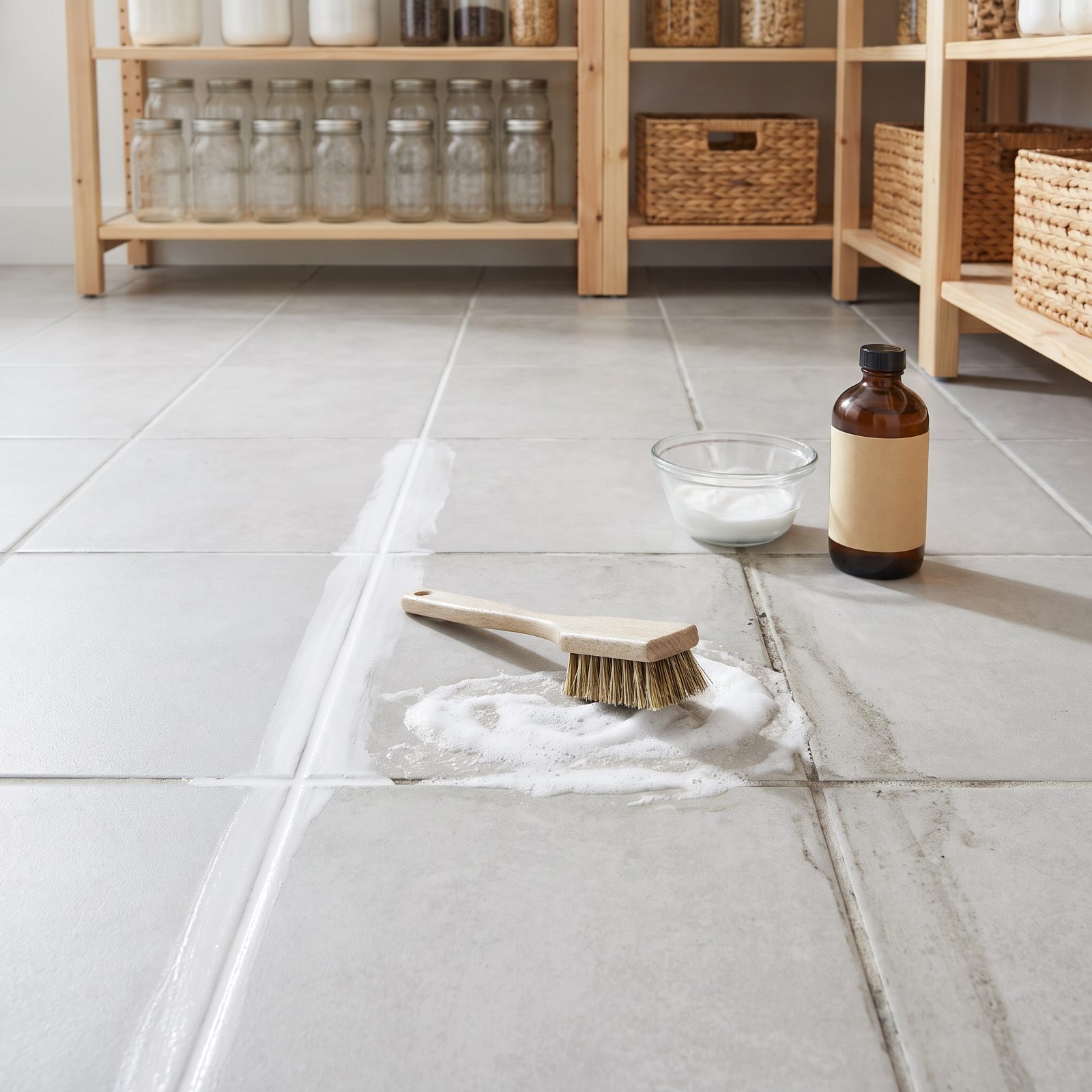
Grout is porous, which is a polite way of saying it soaks up everything. Over time light grout turns a dingy gray that makes the whole floor or shower look older than it is.
Mix baking soda with enough ordinary drugstore hydrogen peroxide to make a thick paste. Spread it along the grout lines, let it sit for ten minutes or so, then scrub with an old toothbrush. The baking soda gives you grit, and the peroxide works on the discoloration. Rinse well and wipe dry.
Test a hidden spot first if your grout is colored, since peroxide can lighten it. And keep vinegar out of this job entirely. Peroxide and vinegar shouldn’t be mixed together.
3. Leave an Open Dish of Baking Soda in the Back of the Fridge

It’s one of the oldest tricks there is, and it’s lasted because it works. An open box or dish of baking soda tucked in the back of the fridge takes the edge off the smells that build up between cleanouts.
Baking soda neutralizes many odor molecules rather than just covering them up the way a scented product would. Pour it into a shallow dish instead of leaving it in the box with a small opening. More surface area means more contact with the air and a better result.
It doesn’t last forever. When it stops keeping up, usually after a month or so, swap in a fresh batch and pour the old one down the drain. Nothing wasted.
2. Clean and Protect Garden Tools in a Bucket of Oiled Sand
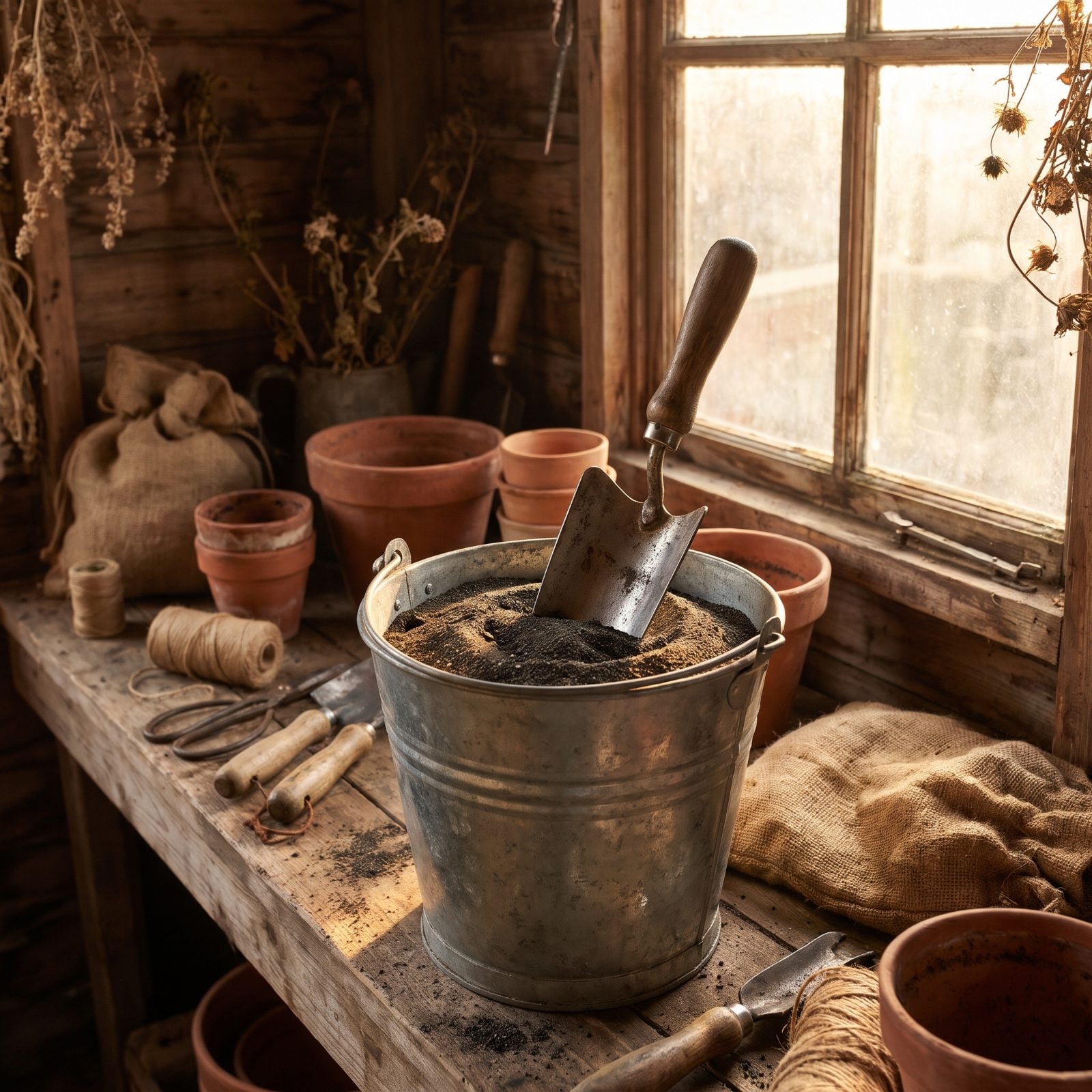
The sound gives it away first — that dry, grinding crunch as a trowel blade slides into a bucket of sand, over and over, until the mud and rust give up and the steel comes out clean. If you grew up around a potting shed, you knew this bucket. It lived in the corner, half-forgotten, and did more for the tools than anyone ever thanked it for.
The trick is coarse sand mixed with linseed oil until it’s barely damp. Plunge a dirty trowel or hand fork in a few times and the grit scours off caked soil while the oil leaves a thin film that keeps rust from taking hold over winter. One bucket. No scrubbing, no wire brush skinning your knuckles.
As a garden writer puts it, “After a day in the garden, deposit your hand tools in the “quick clean” bucket to protect their finish and keep them free of rust.”
1. Scrub Grimy Metal Patio Furniture With Diluted Washing Soda
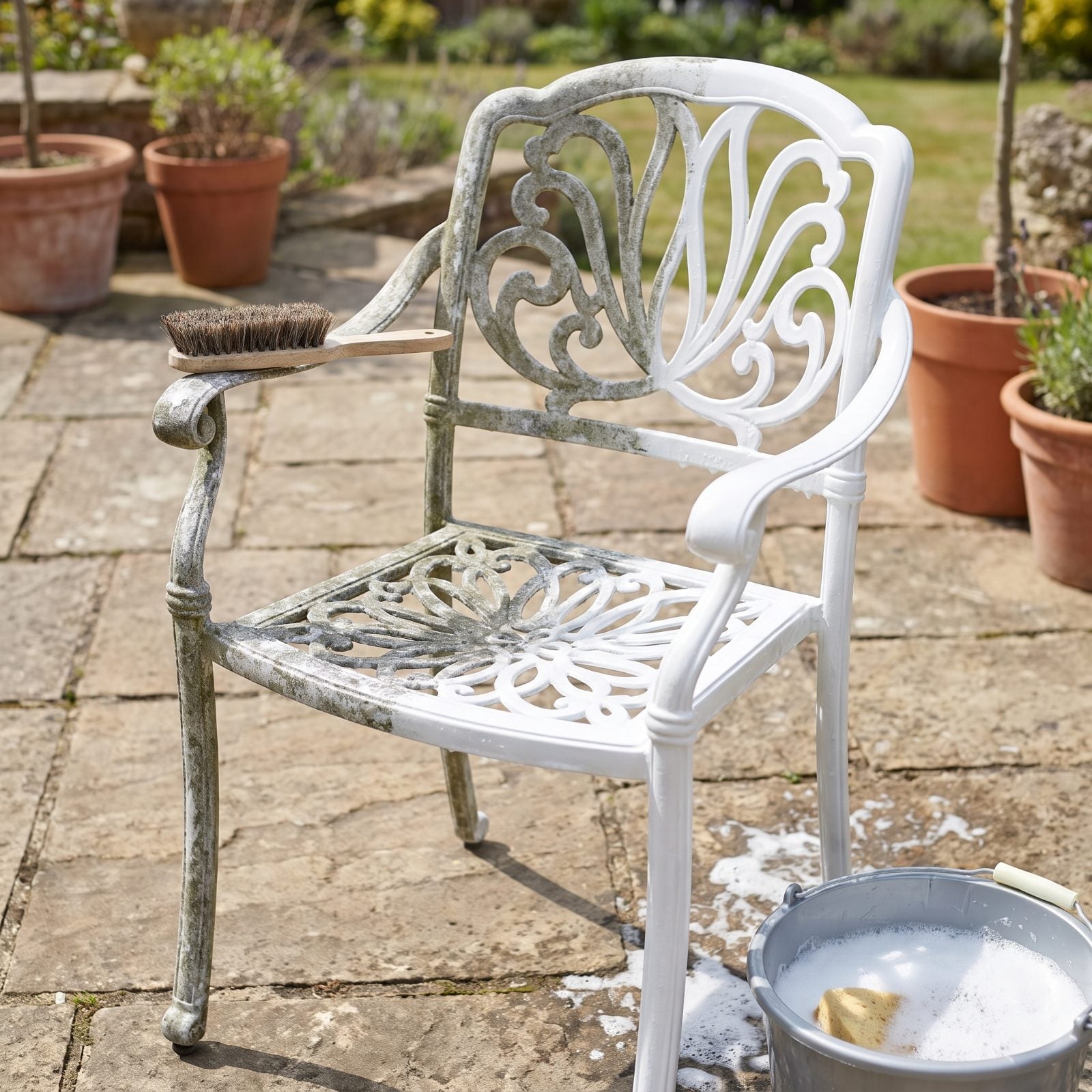
Metal patio furniture ages fast. One winter outdoors and the painted iron goes from crisp white to a grimy, chalky grey that no amount of plain soapy water will touch. The old answer wasn’t some special spray — it was a box of washing soda crystals from under the sink, the same one you’d forgotten was back there.
A few tablespoons dissolved in a bucket of warm water makes a strong alkaline solution that cuts through grease, pollen film, and that gritty weathered scum. Work it in with a stiff brush, let it sit a minute, then rinse hard with the hose. The furniture comes back looking years younger.
One caution: washing soda is strong stuff. Wear gloves, keep it to painted or galvanized metal, and rinse thoroughly. On raw aluminium it can dull the finish, so test a hidden spot first if you’re not sure.