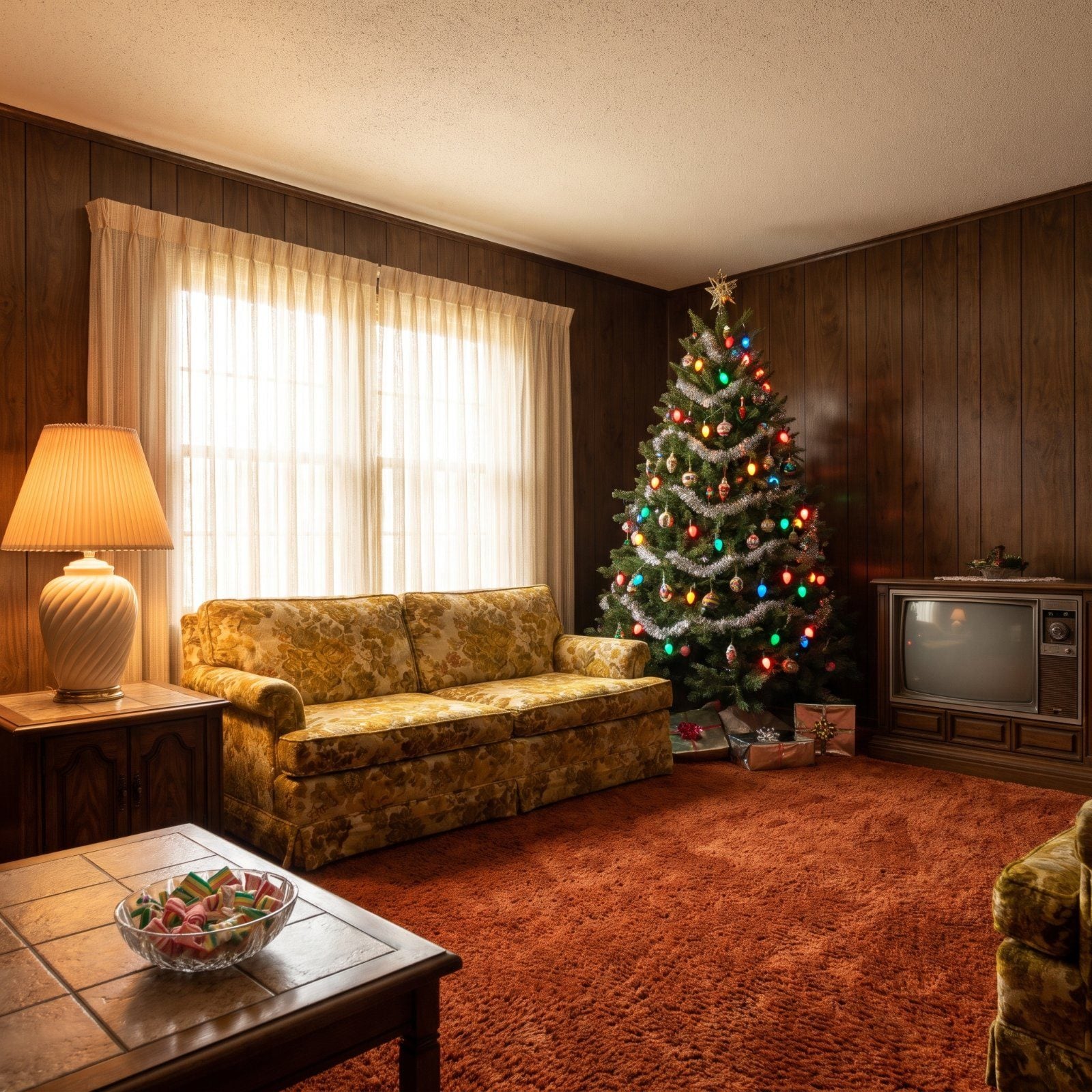
The tinsel caught the light from a single string of fat colored bulbs, and the whole room smelled like pine, cigarette smoke, and the faint ozone of a tube TV warming up. Somebody’s dad was asleep in the plaid recliner. The shag carpet still held the shapes of last night’s slippers. Christmas in 1978 had a specific weight to it, heavy furniture, heavy colors, heavy everything. We lined up the same living-room staples then and now, and the difference is bigger than you remember.
47. From Dark Walnut Paneling to Limewashed, Color-Drenched Walls
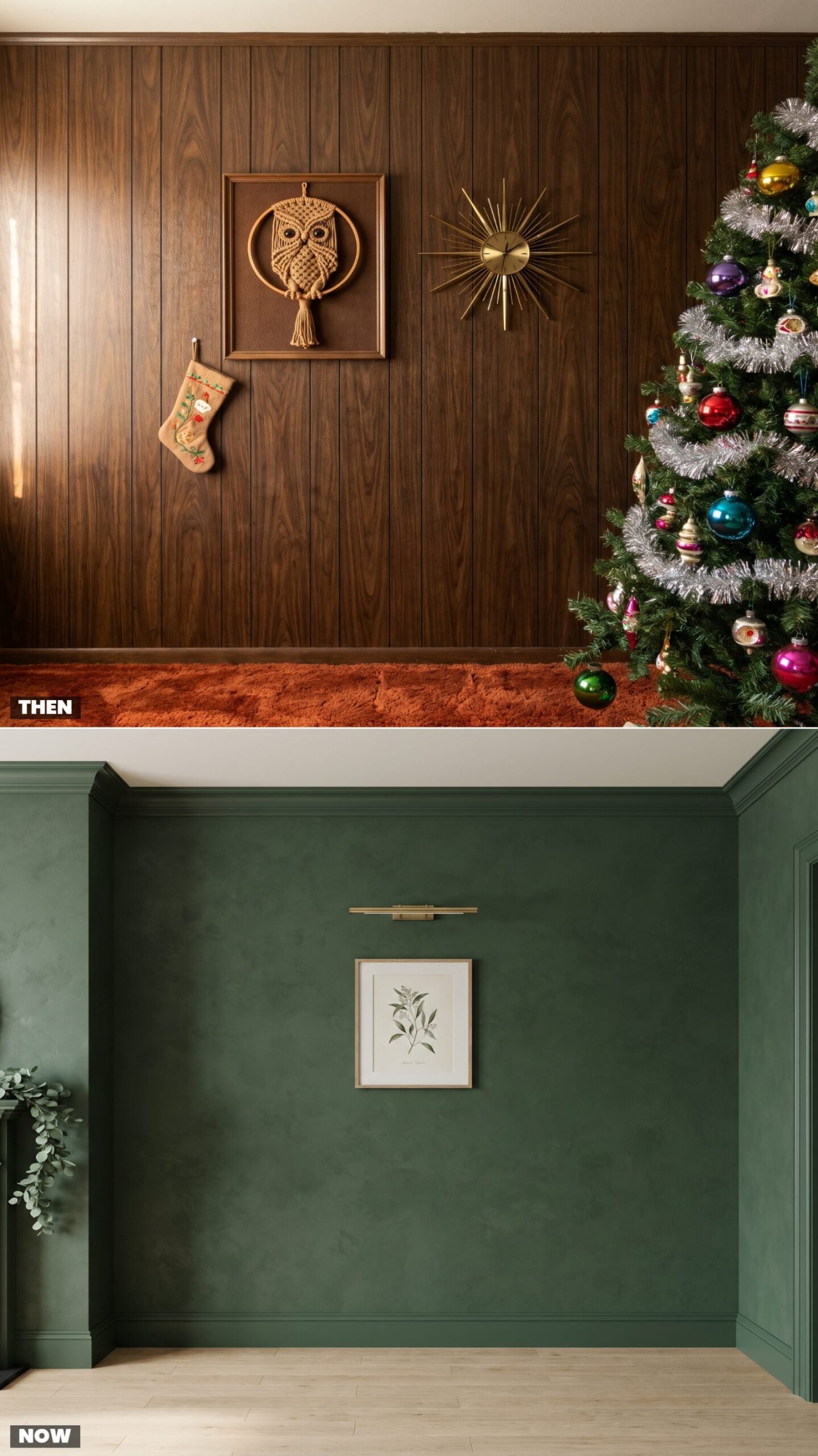
That walnut paneling wasn’t wood. It was printed hardboard veneer, and half the rec rooms in America wore it. The stuff drank every photon in the room, which is why 1978 Christmas photos all look like they were shot inside a cello.
In order to come up with the very specific design ideas, we create most designs with the assistance of state-of-the-art AI interior design software. Also, assume links that take you off the site are affiliate links such as links to Amazon. this means we may earn a commission if you buy something.
The modern version goes the opposite direction with color-drenched limewash, trim and all, in a deep forest green. That chalky matte finish catches soft shadow instead of swallowing light. One wall, one commitment, and the brass picture light does the sparkling that tinsel used to.
46. Shag Carpet You Could Lose a Toy Soldier In vs. Pale Hardwood
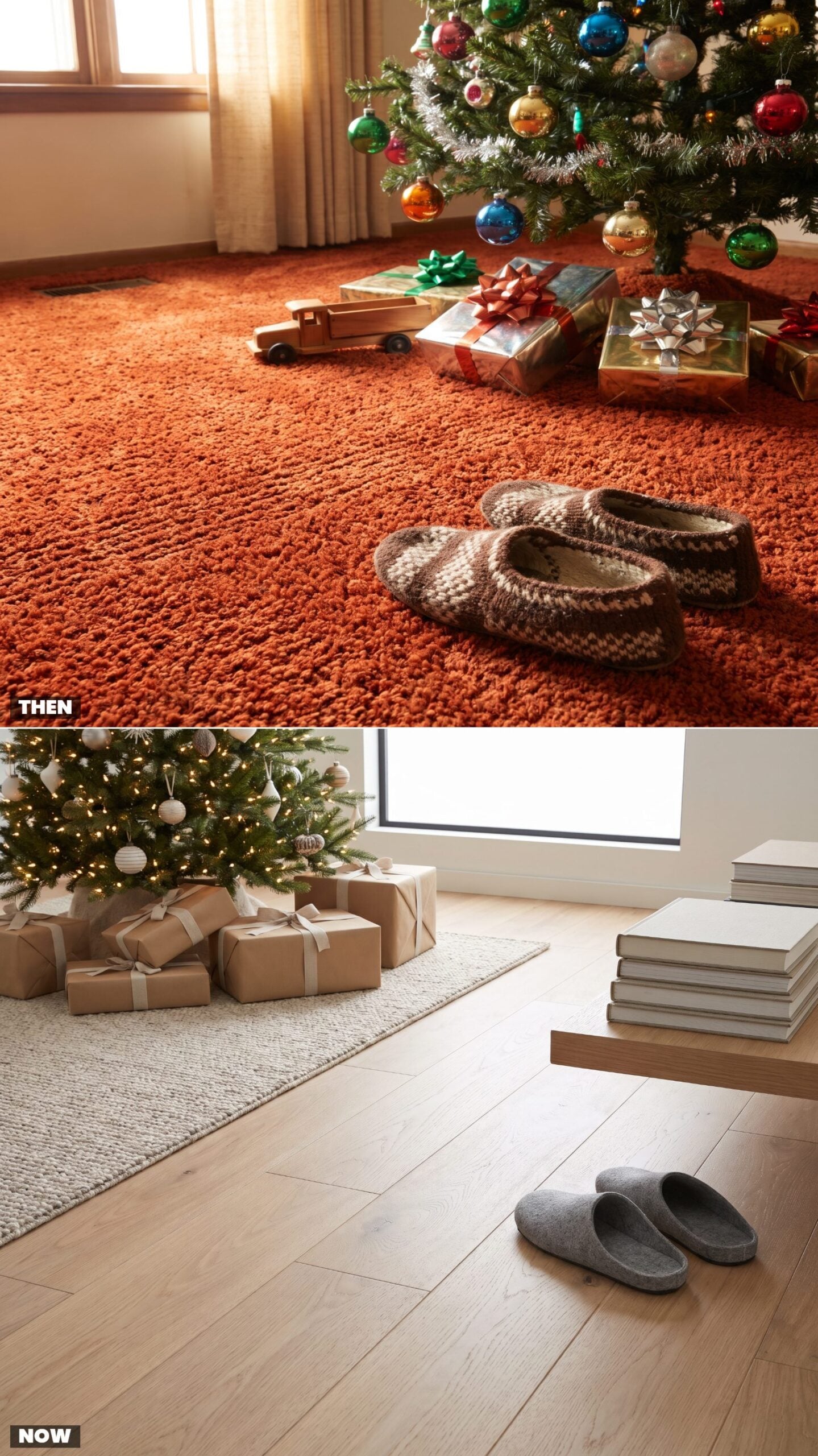
Shag was a commitment. The pile ran deep enough to swallow a Lego, a dropped ornament hook, and occasionally a small pet, and you raked it, with an actual rake. It held static like a balloon rubbed on a sweater.
Now the floor is wide-plank pale oak with a flat wool rug you can actually vacuum. The warmth moved from the carpet into the wood tone itself, a better trade than people admit. A bright attic decor look leans hard on this pale-floor move.
What Our Readers Say
- Not everyone is sold on the pale look: in our readers’ heart votes, living rooms with light wood tones got fewer hearts than the other images in the same articles.
From Home Stratosphere reader polls and votes.
45. Avocado and Harvest Gold vs. Evergreen Neutrals
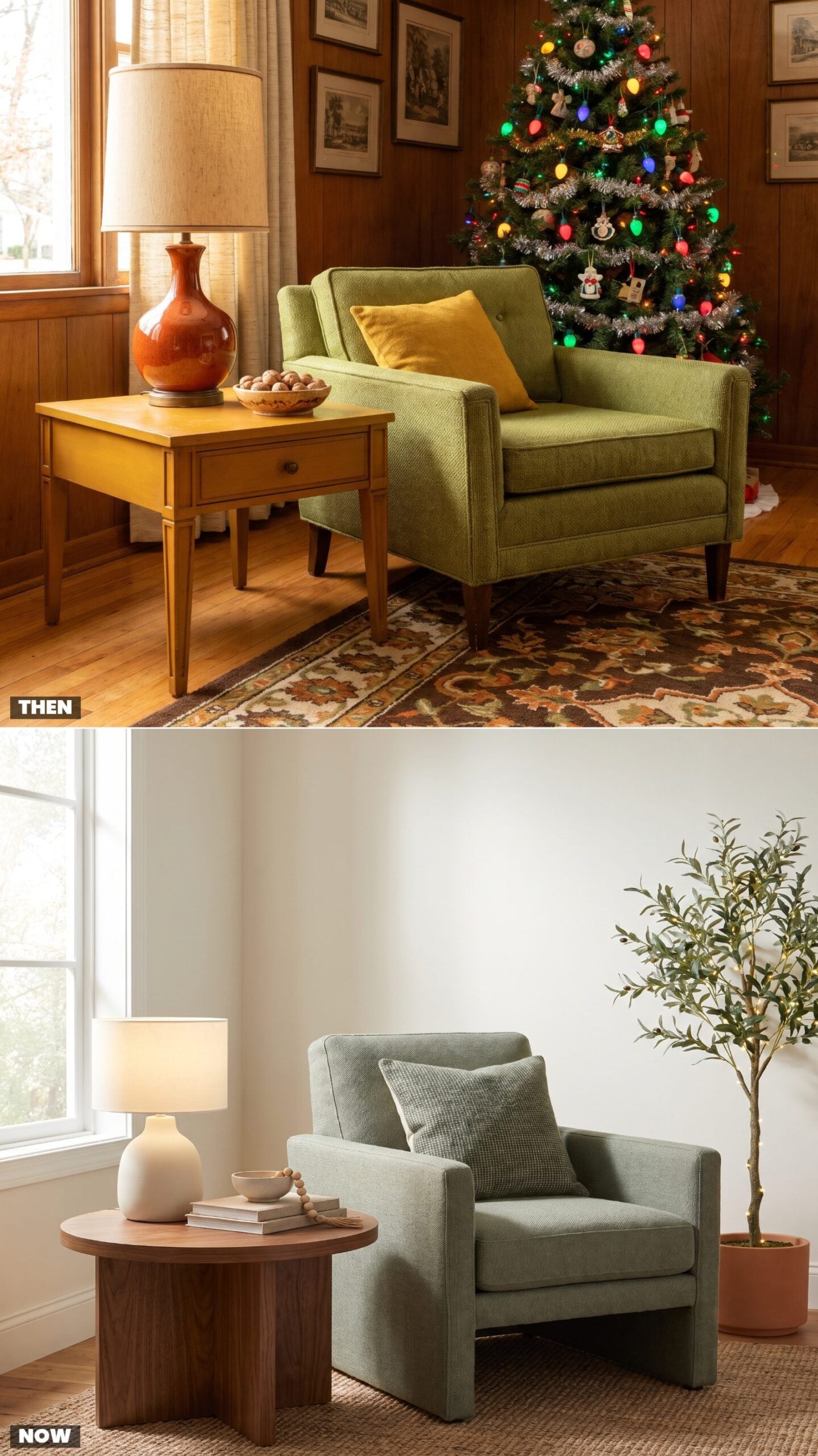
Avocado and harvest gold weren’t accent colors in 1978. They were the whole room, plus the fridge, plus the oven, warm and earthy and absolutely relentless.
The modern read keeps the green but drops the volume. Sage, olive, forest, played as near-neutrals against warm walnut and oatmeal. Same instinct toward nature, calmer execution, and you get the coziness without the room shouting at you.
44. Floral Velour Sofas vs. Performance-Fabric Sectionals
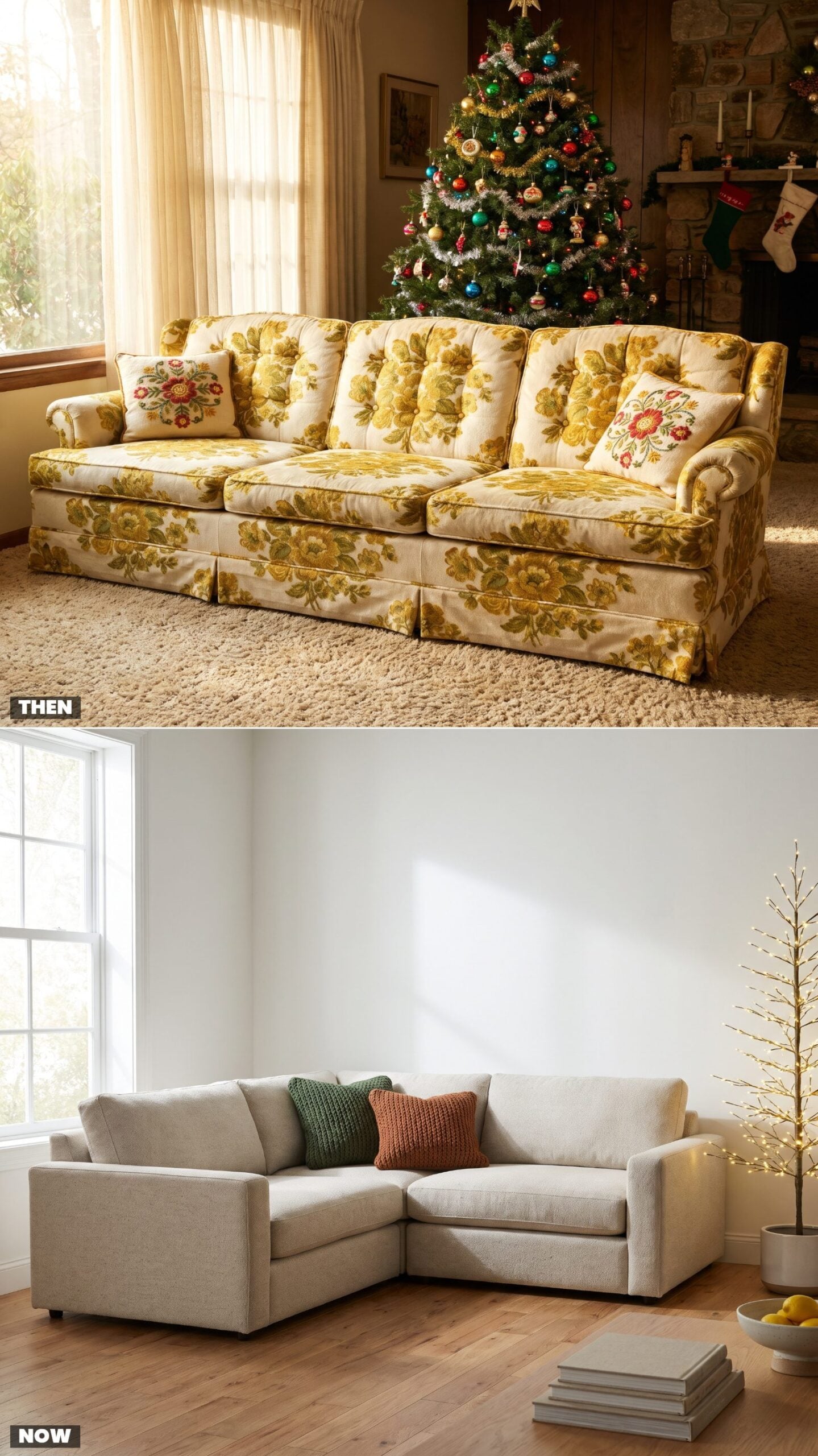
That floral velour was indestructible and it knew it. Big blooming flowers in gold and avocado, cushions so firm they’d outlive the house. It also showed every handprint and held onto smoke like a sponge.
Today the sofa grew into a low oatmeal sectional in performance fabric you can wipe clean after the gingerbread gets ambitious. The pattern retreated into the pillows, where it belongs. Honestly? I miss the audacity of those florals a little. But I don’t miss the stiffness. A glam family room today starts almost every time with a sectional like this.
43. Plaid Rocker-Recliners vs. Streamlined Swivel Chairs
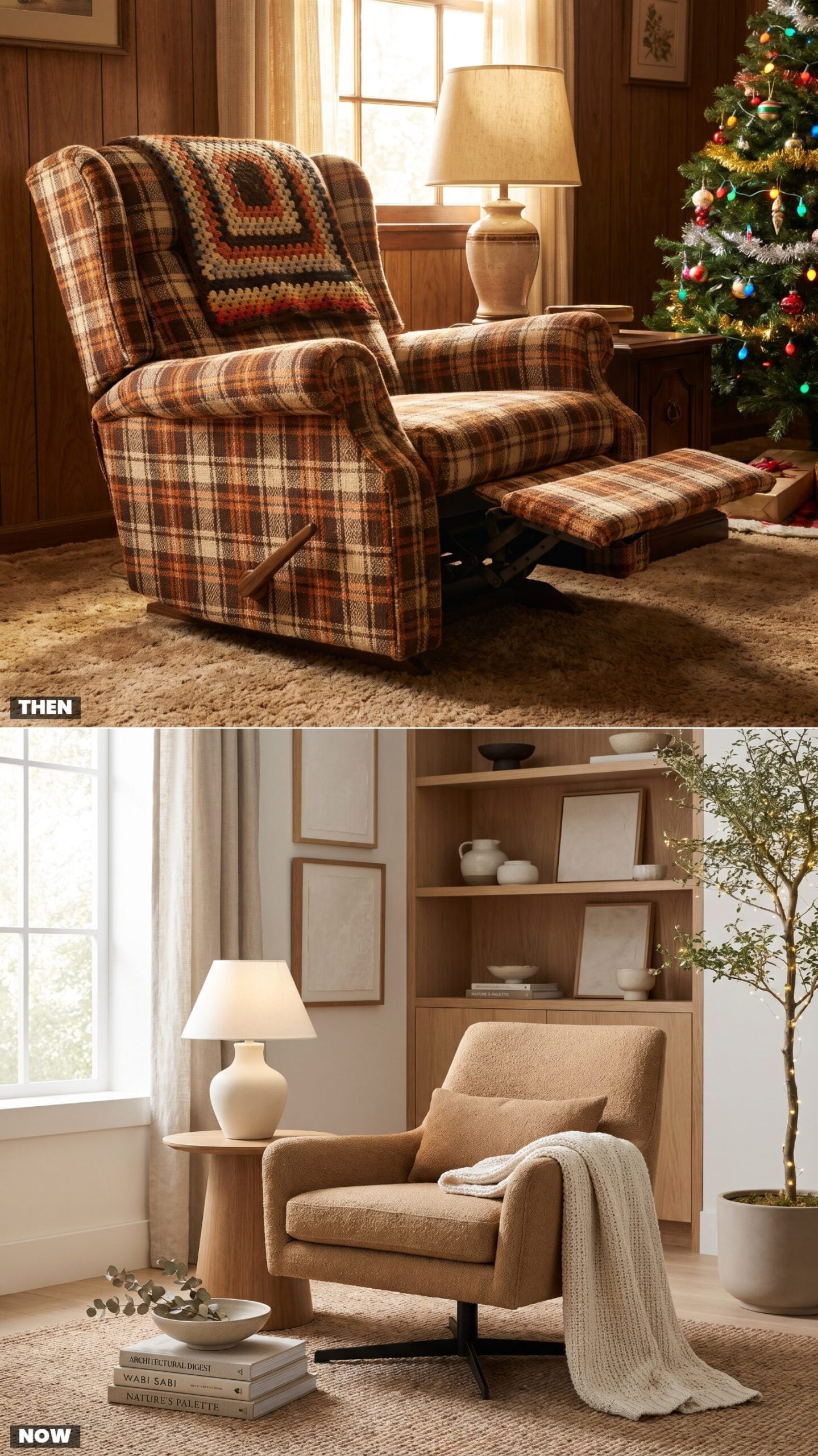
The plaid rocker-recliner was the throne of the house. It weighed as much as a small car, had a lever that could take a fingertip off, and belonged to exactly one person. You sat in it when they weren’t home and jumped up when the car pulled in.
The swivel chair kept the comfort and lost the bulk. Camel bouclé, slim metal base, and it spins so you can turn toward the tree or the conversation. Lighter in every sense.
42. Tile-Top Coffee Tables vs. Low Solid-Wood Slabs
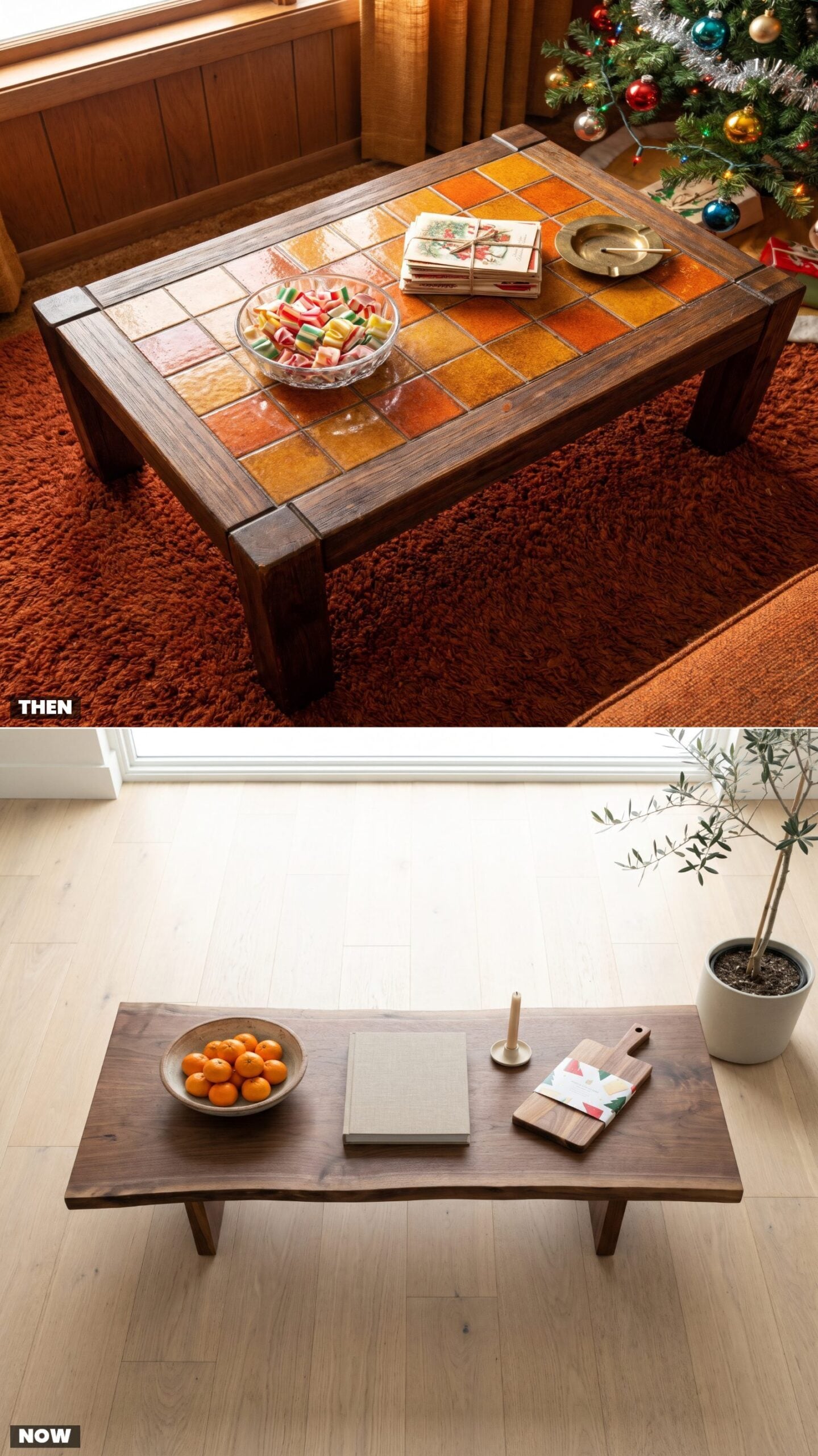
Tile-top coffee tables were everywhere, and every one of them had at least one cracked tile and a grout line permanently stained the color of coffee. The grout was the whole problem. Nobody has ever successfully cleaned coffee-table grout.
The replacement is a single low slab of walnut, oiled smooth, grout-free and glorious. One material, honest and heavy. It’ll pick up water rings and wear them like a history instead of trapping crumbs forever.
Solid wood still wins the vote: when we asked Home Stratosphere readers which coffee table they would buy, 44% picked solid wood, ahead of upholstered and glass.
41. Wood-Grain Tube TVs and Giant Consoles vs. Frame TVs on Floating Units
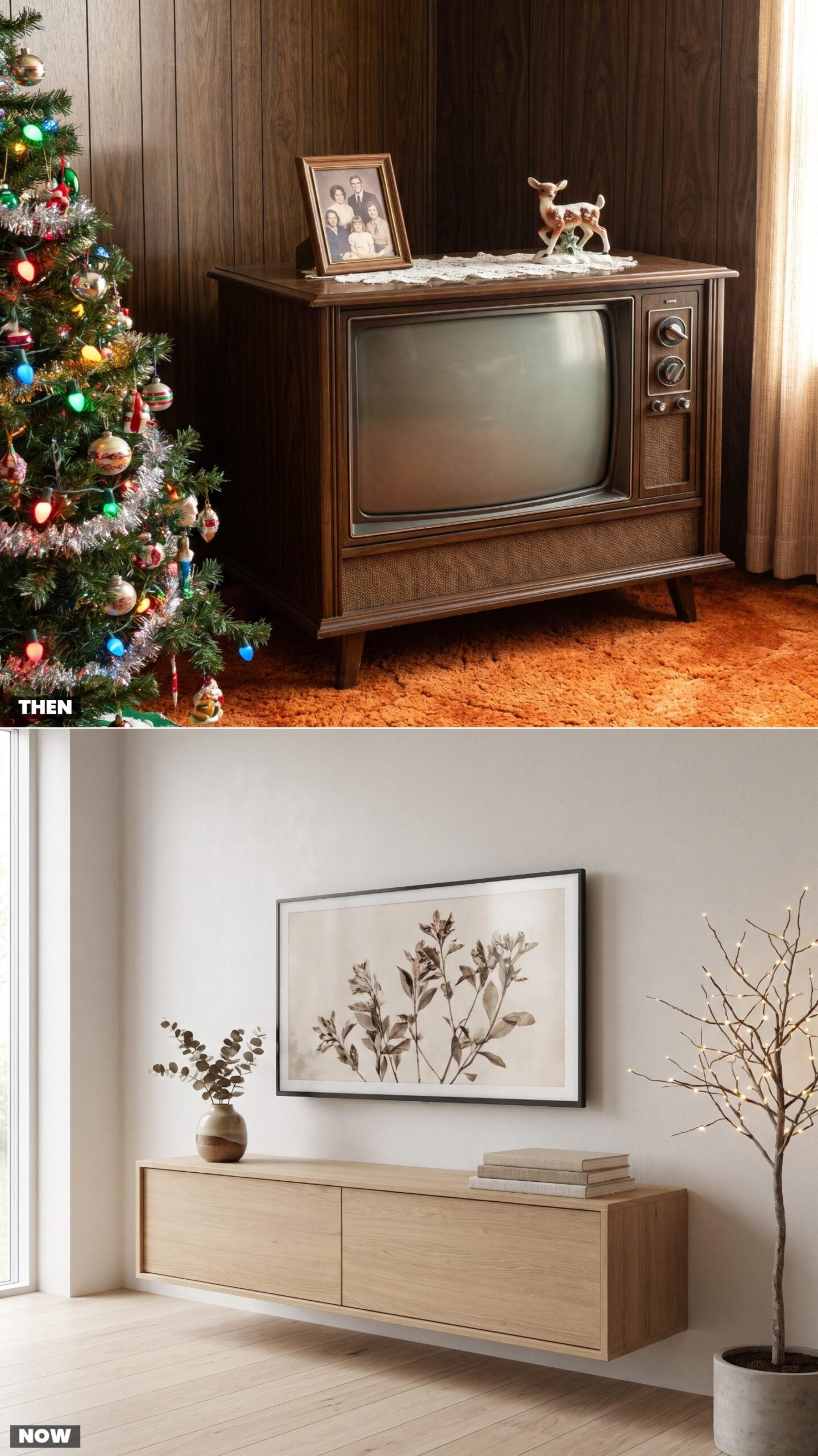
The console TV was furniture first and television second. It had legs, a cabinet, and a screen roughly the size of a dinner plate wrapped in enough walnut veneer to build a canoe. You didn’t move it. You moved around it.
Now the screen hangs flat on the wall pretending to be a painting, and the storage floats beneath it. The set finally stopped being the biggest object in the room. A proper modern great room hides the tech entirely until you need it.
40. Hi-Fi Record Cabinets vs. Wireless Streaming Stations
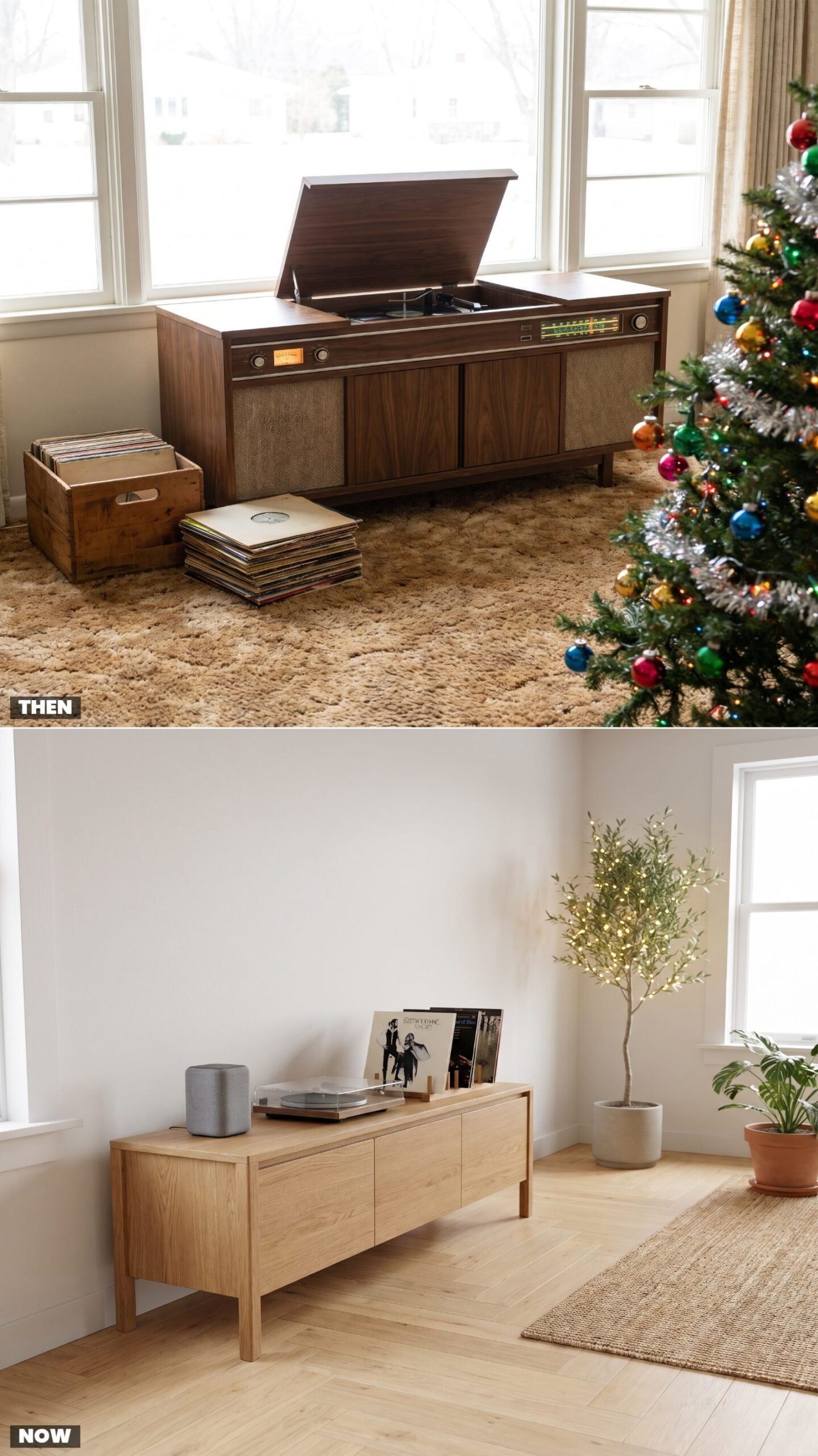
The hi-fi cabinet was a real piece of furniture. Lift the lid, lower the needle, and the whole family gathered around four feet of walnut to hear the Christmas records with the little skip on track three everybody knew by heart.
The streaming station shrank all of that into a speaker the size of a coffee can. Faster, cleaner, endless. But something about flipping the record and reading the sleeve is gone, and I won’t pretend I don’t miss it.
39. Rotary Phones on Their Own Tables vs. Wireless Charging Consoles
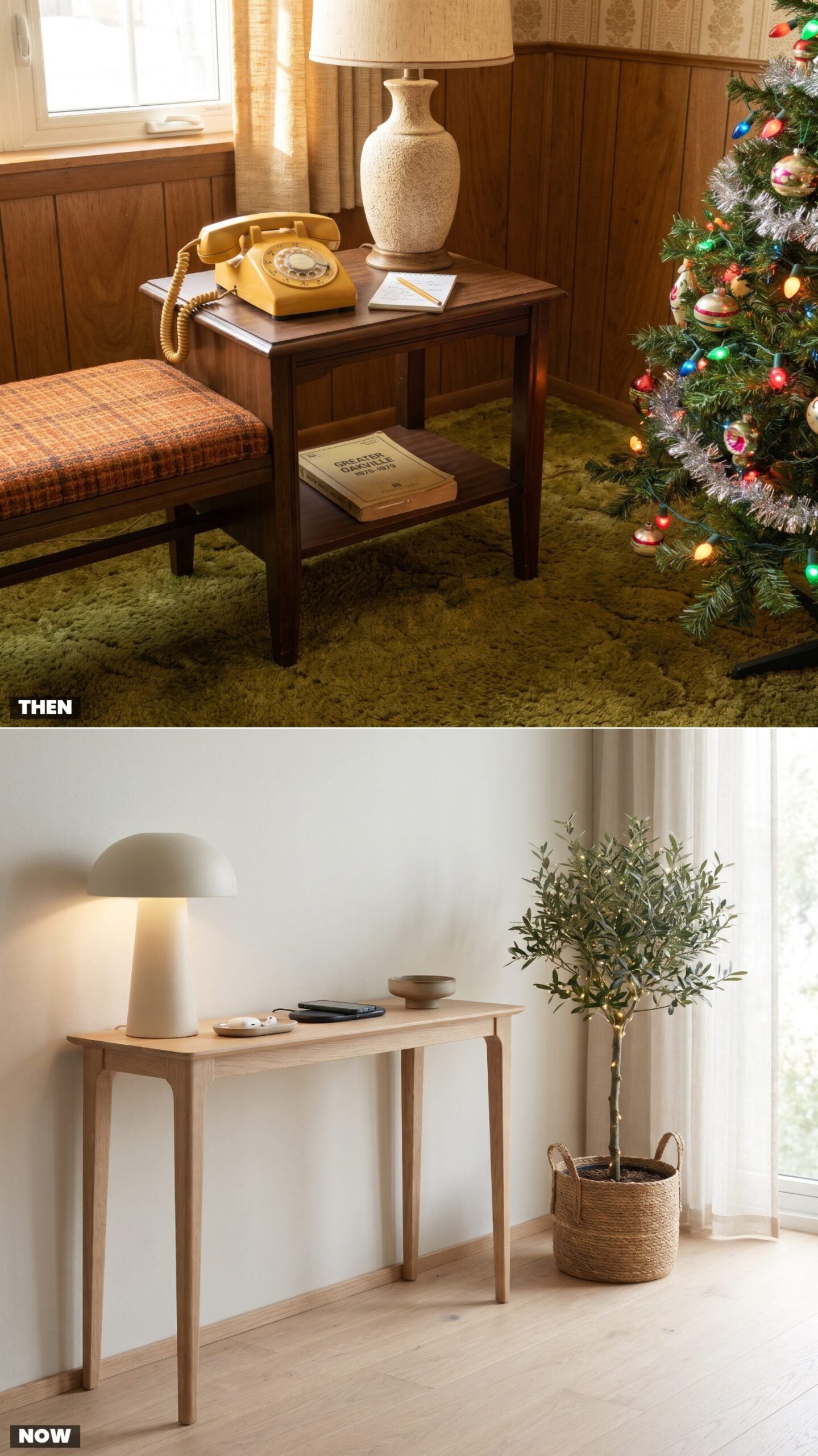
The phone had its own furniture. A little table, sometimes with a built-in bench, parked in the hallway or living-room corner, and a cord just long enough to stretch into the next room for privacy. The whole family’s calls happened right there, in public.
Now the phone has no address. It lands on a charging pad on a slim console and wanders everywhere else. The dedicated phone table is as extinct as the dial tone.
38. Pleated Ceramic Lamps vs. Sculptural Portable Lights
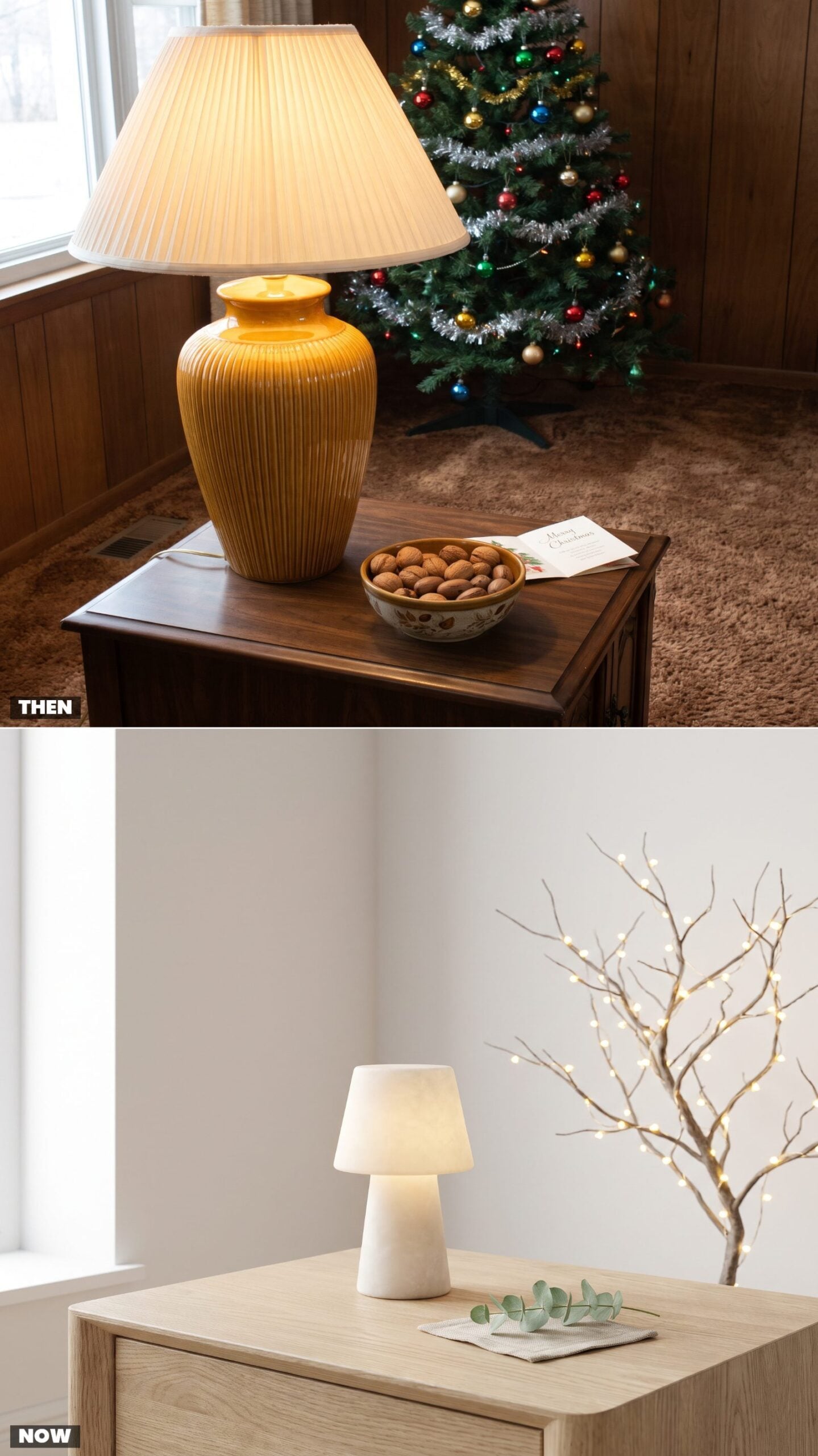
Every 1978 living room had the pleated ceramic lamp. Heavy glazed base, a shade that looked like an accordion, and a three-way switch that clicked through its settings with a satisfying thunk. It sat in exactly one spot forever because it had to be near an outlet.
The modern version threw away the cord entirely. A little rechargeable alabaster form you carry to the table, the windowsill, wherever the evening wants it. Smaller, dimmable, and free to roam.
37. Heavy Drapes Then, Bare Windows and Roman Shades Now
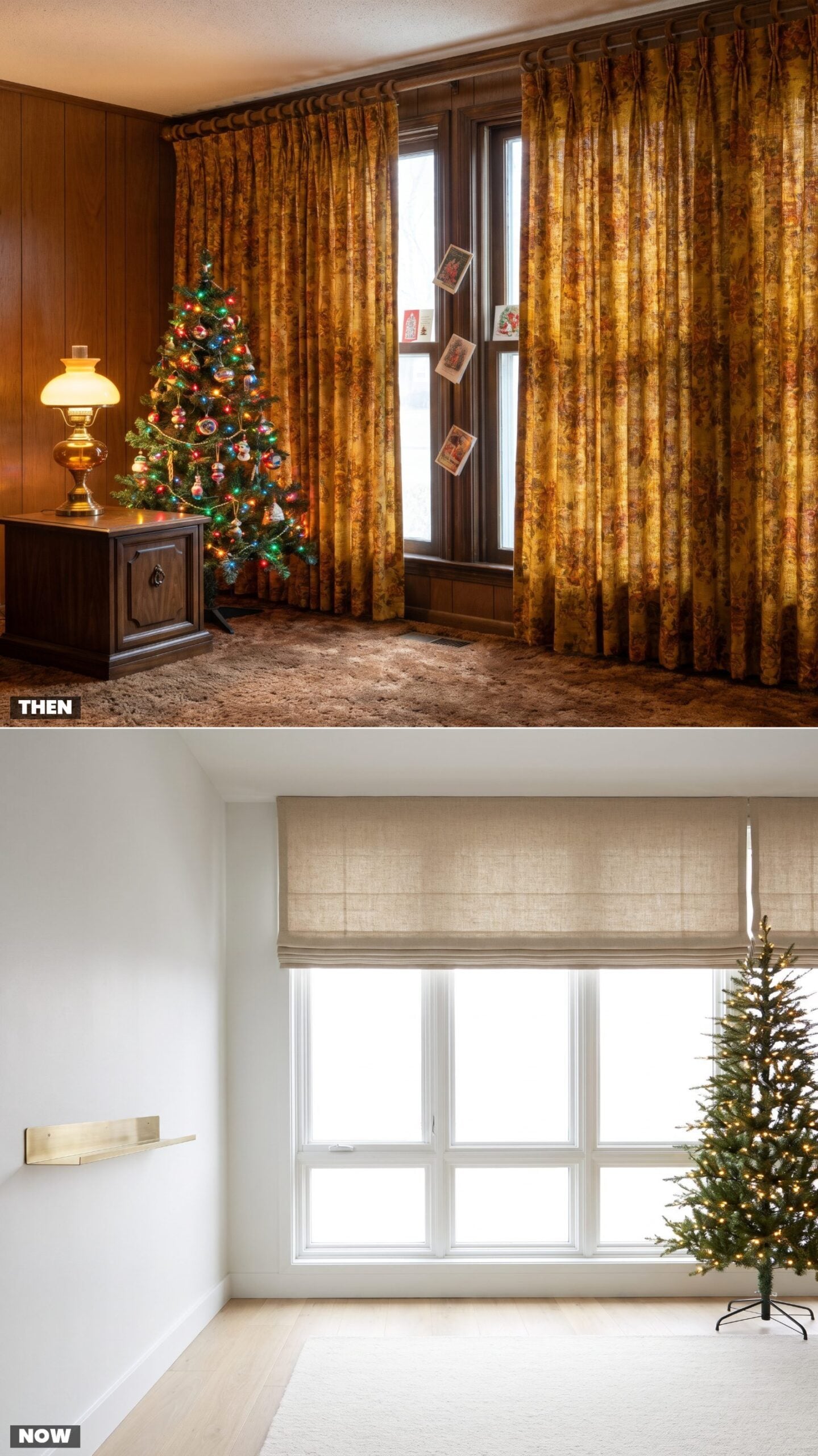
Back in 1978, a window wasn’t dressed until it was buried. Floor-length pinch-pleat drapes in harvest-gold florals, lined and heavy, puddling on the shag. They kept the heat in and the light out, so on a December afternoon the tree lights did all the work.
Now the window itself is the feature. Flat-fold linen Roman shades in oatmeal, pulled high, letting the short winter daylight pour across a pale oak floor. The glass stays visible, and the snow outside becomes part of the decor.
If you’re torn on what to do with your windows, so are our readers: in our reader polls, curtains, shutters and blinds came out as a near three-way split.
36. Gilded Sunburst Mirrors Give Way to Soft Organic Arches
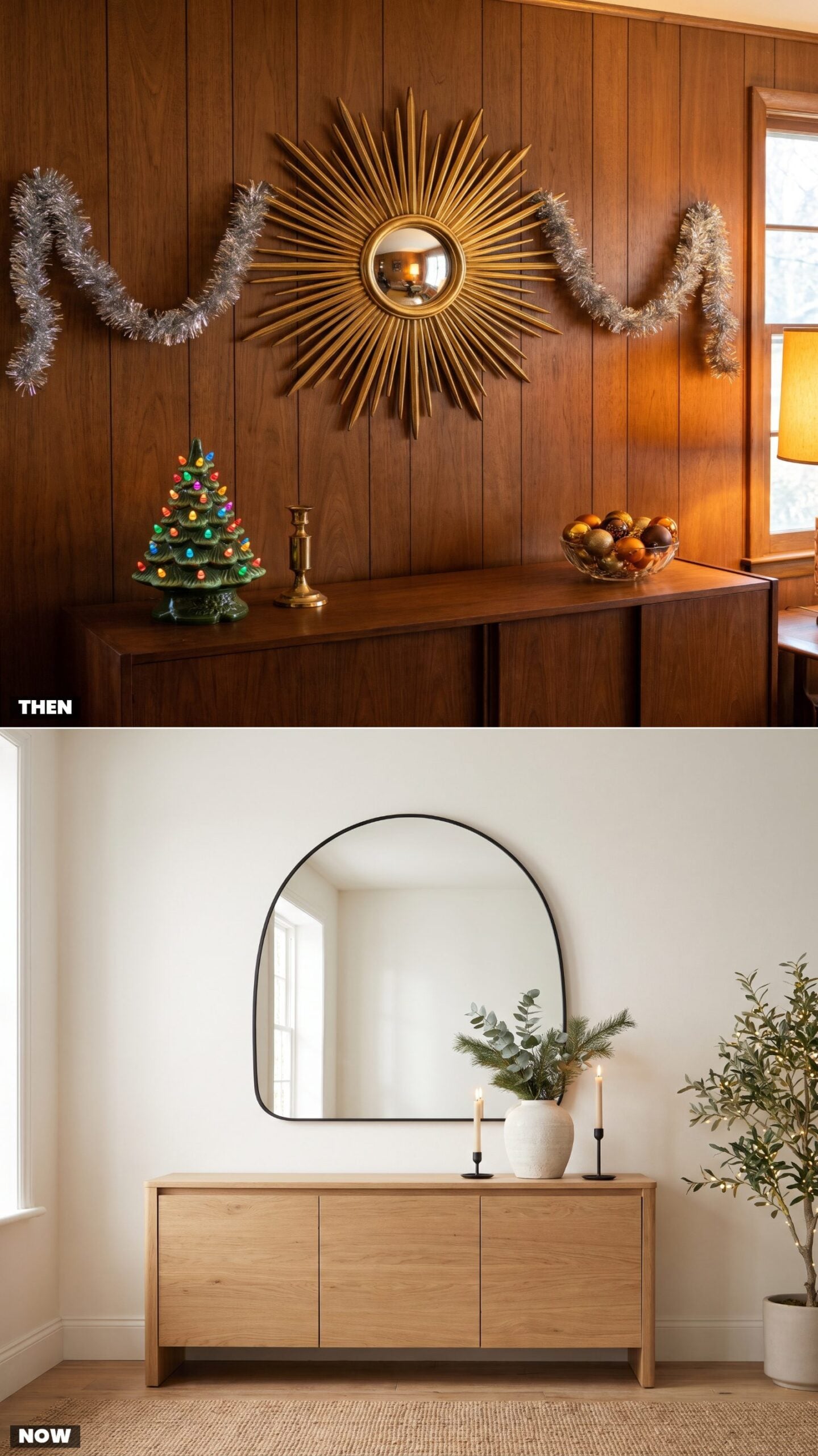
The sunburst mirror was a thesis statement. Gold spokes firing out in every direction, a tiny convex eye at the center, hung over the teak credenza like a little brass sun that never set. Every third living room had one.
The arched mirror is quieter and more generous — a soft curved top, a thin matte frame, and a real job of bouncing daylight rather than showing off. It flatters a room instead of competing with it.
35. From Packed Display Cabinets to Sparingly Styled Built-Ins
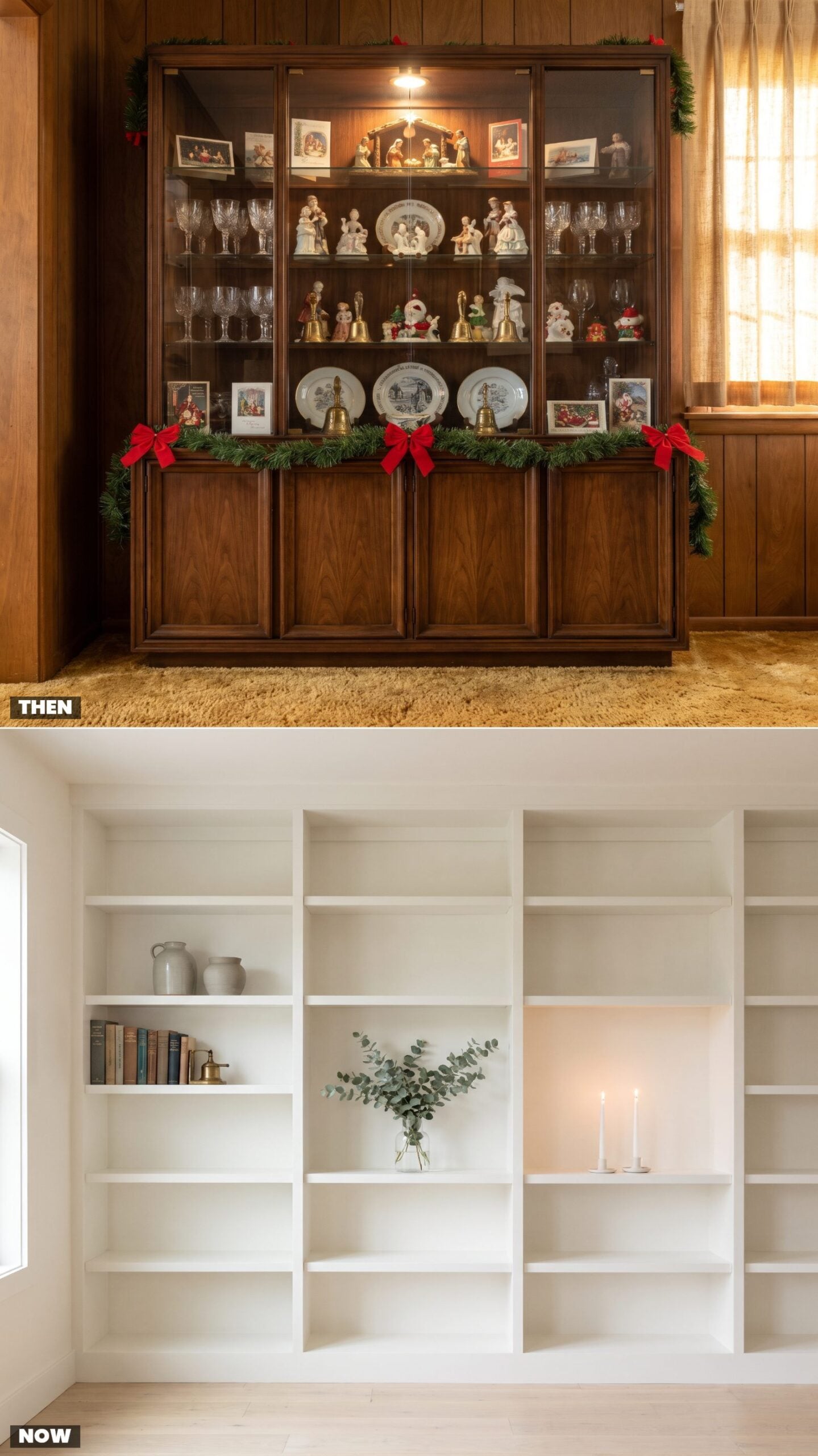
Shelf space in 1978 meant storage for a lifetime of acquisition. Cut-glass goblets, commemorative plates on little wire stands, a brass bell for every state visited, figurines three deep. At Christmas you just wedged the Nativity in wherever it fit.
The modern built-in treats empty space as the point. A few ceramic vessels, one row of books, a sprig of eucalyptus, room to breathe. I used to think bare shelves looked unfinished. Then I lived with the crammed version and spent every December dusting between the figurines.
34. The Wide, Wild Natural Tree Becomes the Sculpted Designer Tree
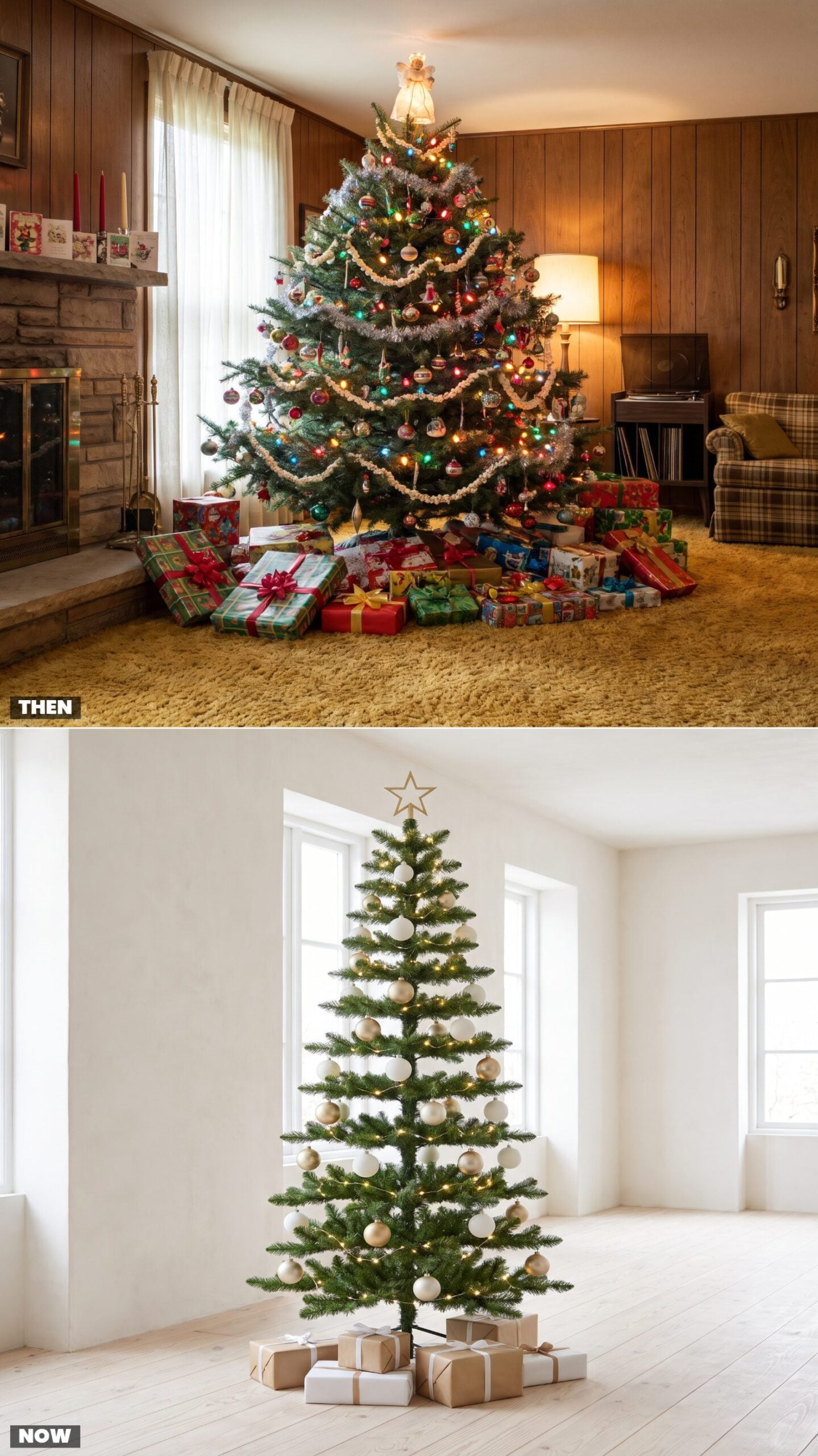
The 1978 tree took up half the room and apologized for none of it. A wide, slightly lopsided Scotch pine dragged in from a lot, loaded with everything anyone owned — mismatched ornaments, tinsel by the fistful, popcorn garland, an angel leaning at an angle nobody corrected.
The designer tree is a different animal. Narrow, tall, branches spaced for display, decorated in two colors with military discipline. It looks great. It also looks like nobody’s children were allowed near it.
33. The Tree in the Picture Window vs. the Tree Framing the Fireplace
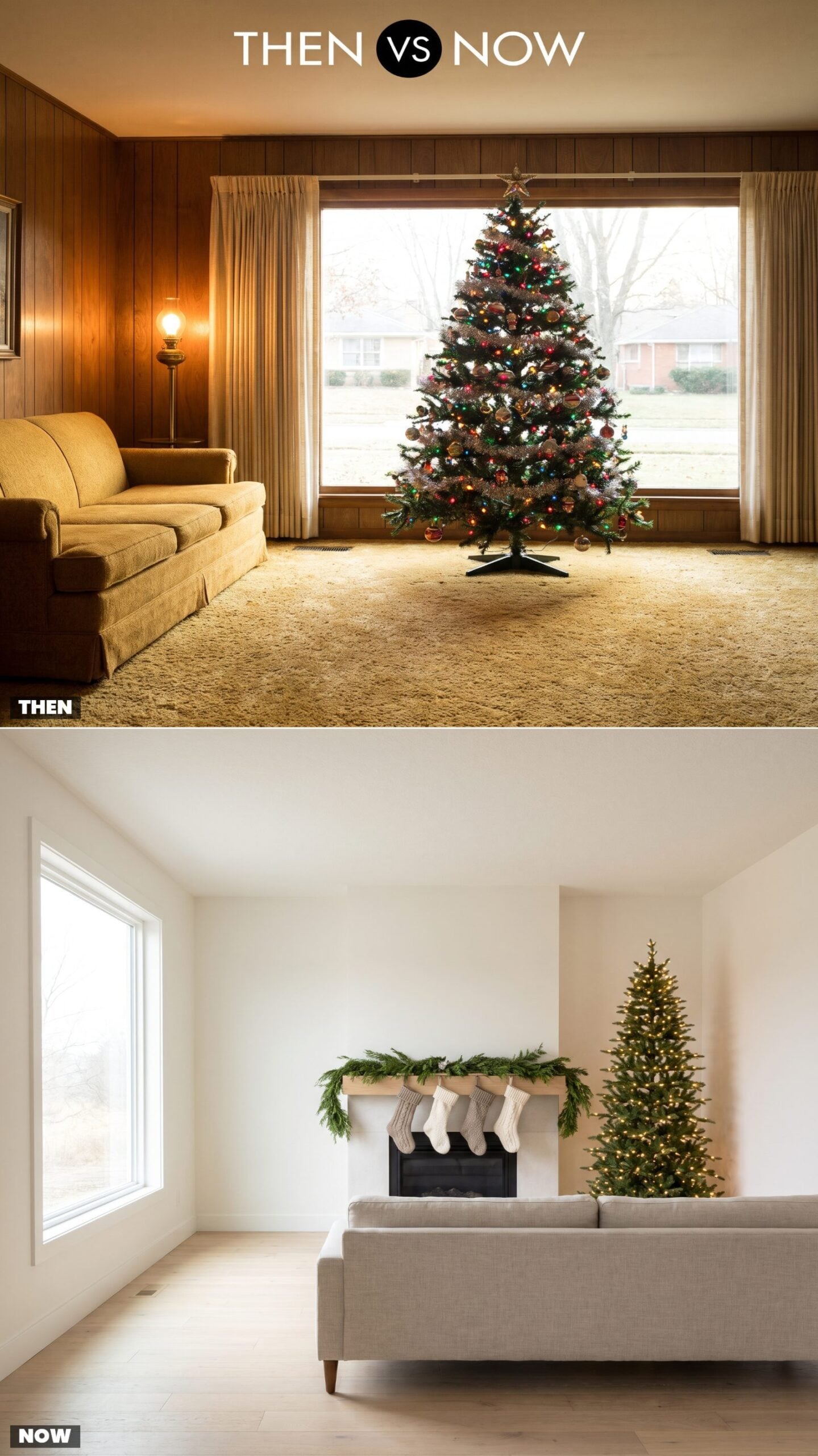
In 1978 the tree went in the picture window, lights out, on display for the whole street. Part pride, part neighborly signal. Your tree talked to the neighbor’s tree across the lawn.
These days the tree moves inward, next to the fireplace, where it frames the hearth and anchors the room for the people actually inside it. The modern great room treats the mantel and tree as one holiday vignette instead of a street-facing billboard.
32. Spray-On Snow in a Can, Now Professionally Flocked Branches
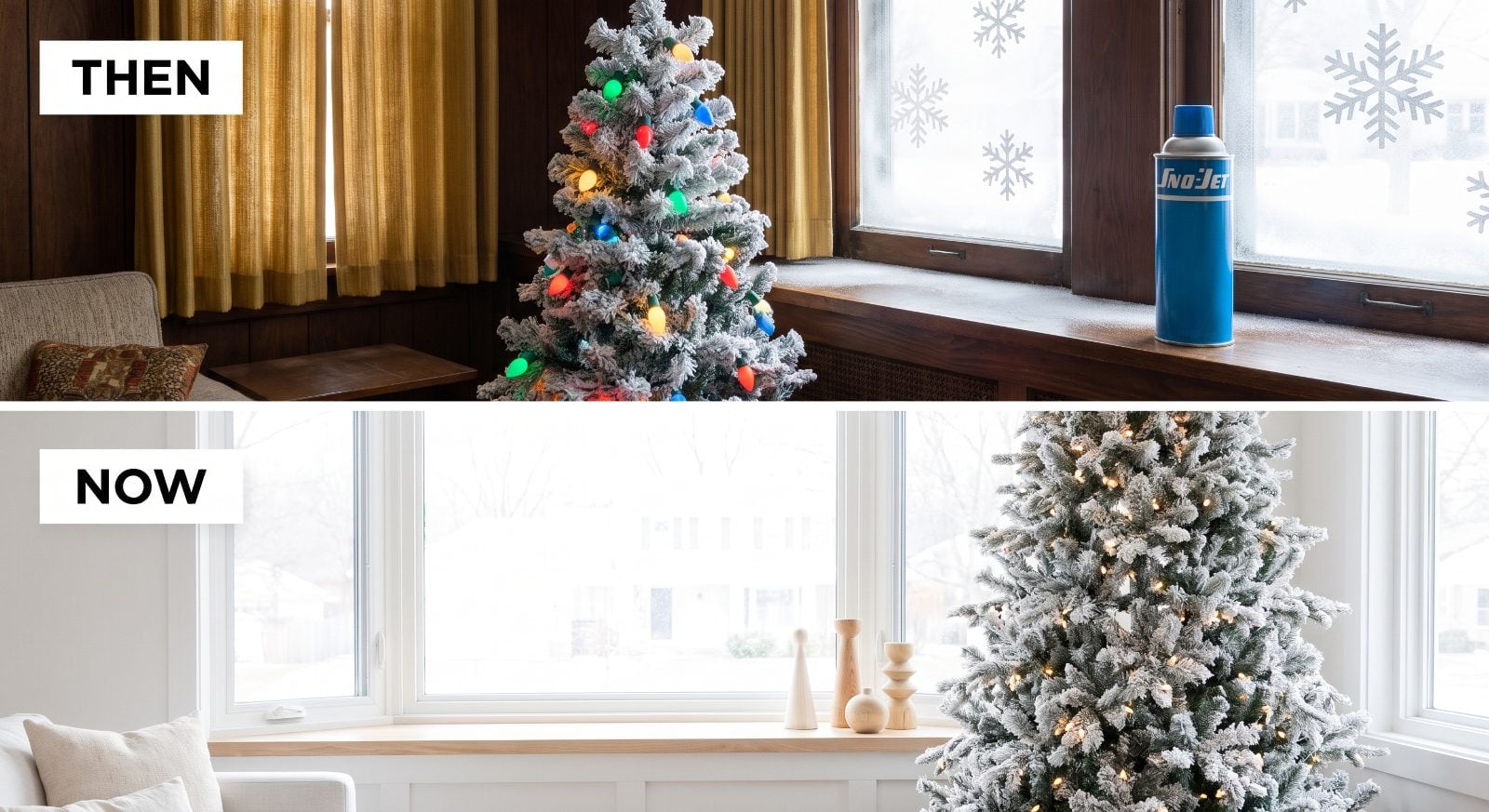
Flocking in 1978 came out of a can and smelled like a hardware store. You shook it, aimed at the branches, and hoped the drips on the window looked like snowflakes and not like a kid got loose with the spray paint. It never quite scrubbed off the glass either.
Now flocking is done at the lot or arrives pre-done — an even dusting on the branch tips that actually reads as snow. Cleaner, softer, and nobody’s lungs are involved.
31. Hot Multicolored C7 Bulbs, Now App-Controlled Micro Lights
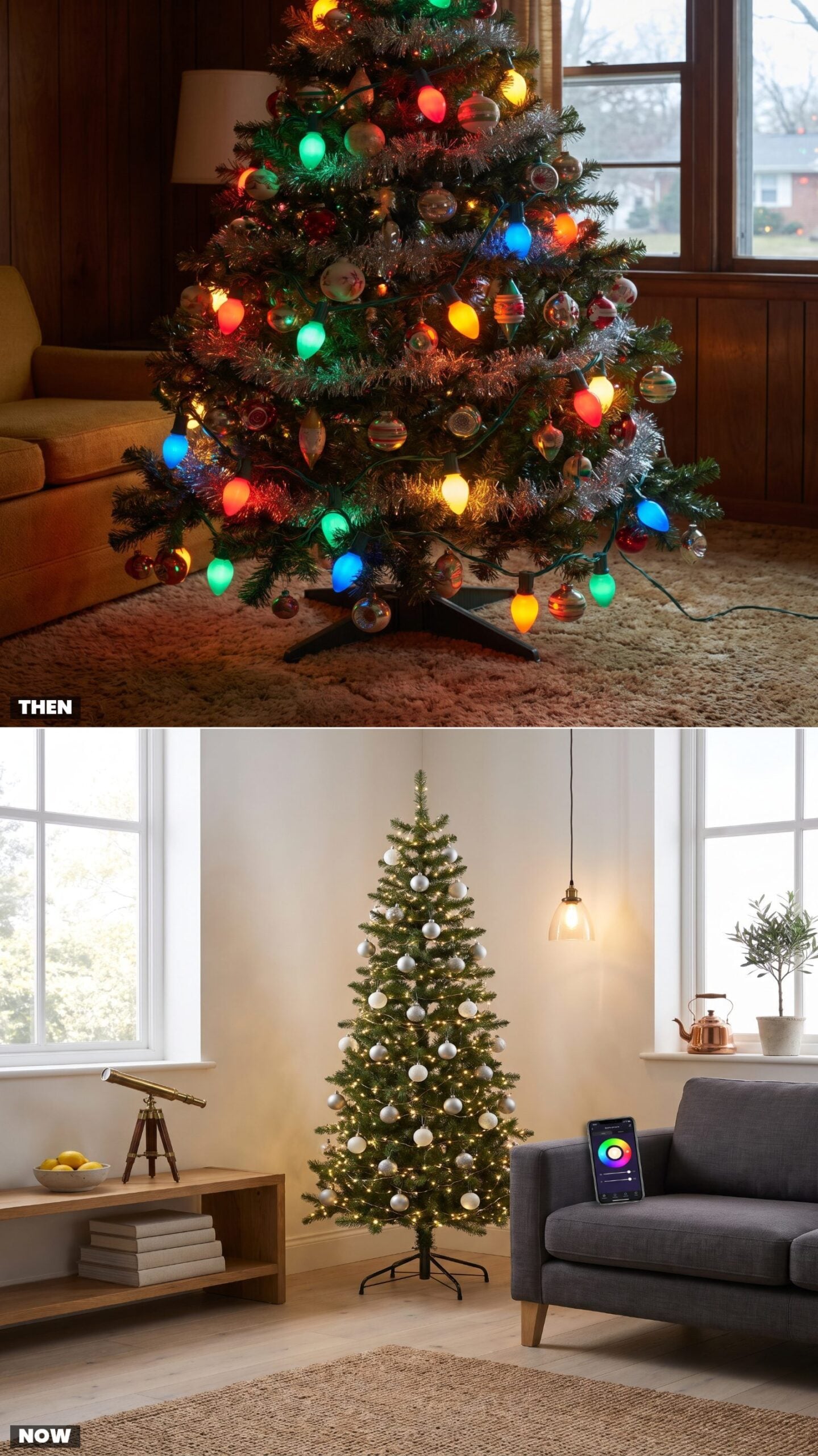
Those big C7 bulbs ran hot enough to warm your fingers, and a burnt-out one meant hunting down the culprit. Red, green, blue, orange, the glass glowing against the needles. There was a real danger involved, which somehow made it better.
Micro LEDs changed all of it. Thin copper wire, hundreds of warm pinpoints, cool to the touch, and a phone app that dims them or shifts the whole tree to white for photos. Safer, prettier, and slightly less magic. I miss the heat a little.
30. Loose Silver Tinsel vs. Deliberately Draped Glass Icicles
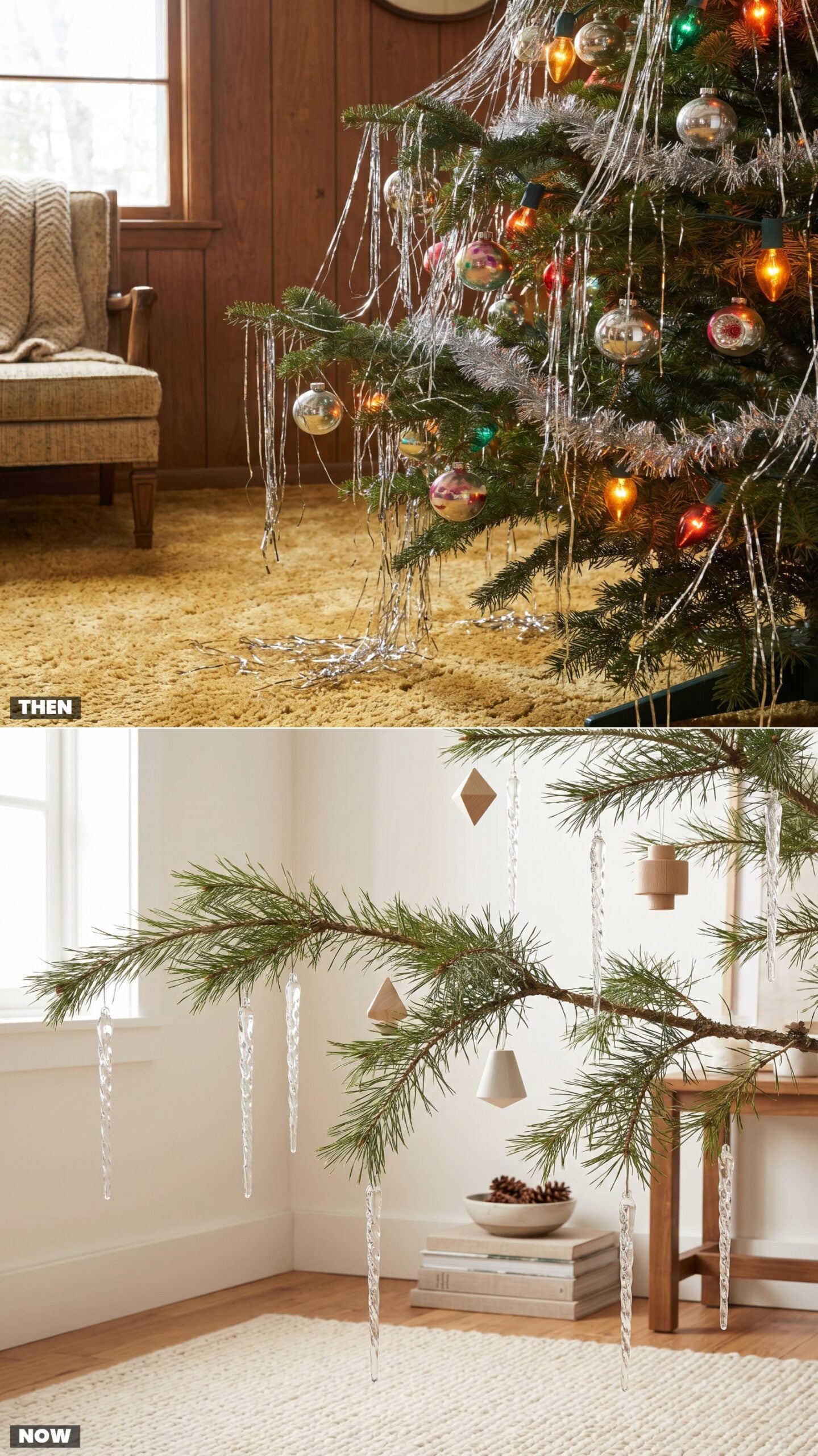
Tinsel was thrown, not placed. You grabbed a handful of silver lametta and tossed it at the branches, and it landed however it landed. By New Year’s it was in the carpet, in the vacuum, stuck to the dog. Still, caught in the colored lights, it shimmered like nothing else.
The modern move is a few clear glass icicles, hung one at a time, straight down from the branch tips — deliberate, sparse, no mess. It catches light the same way tinsel did without redecorating your floor.
29. Shiny Brite Grab-Bags vs. the Curated Ornament Collection
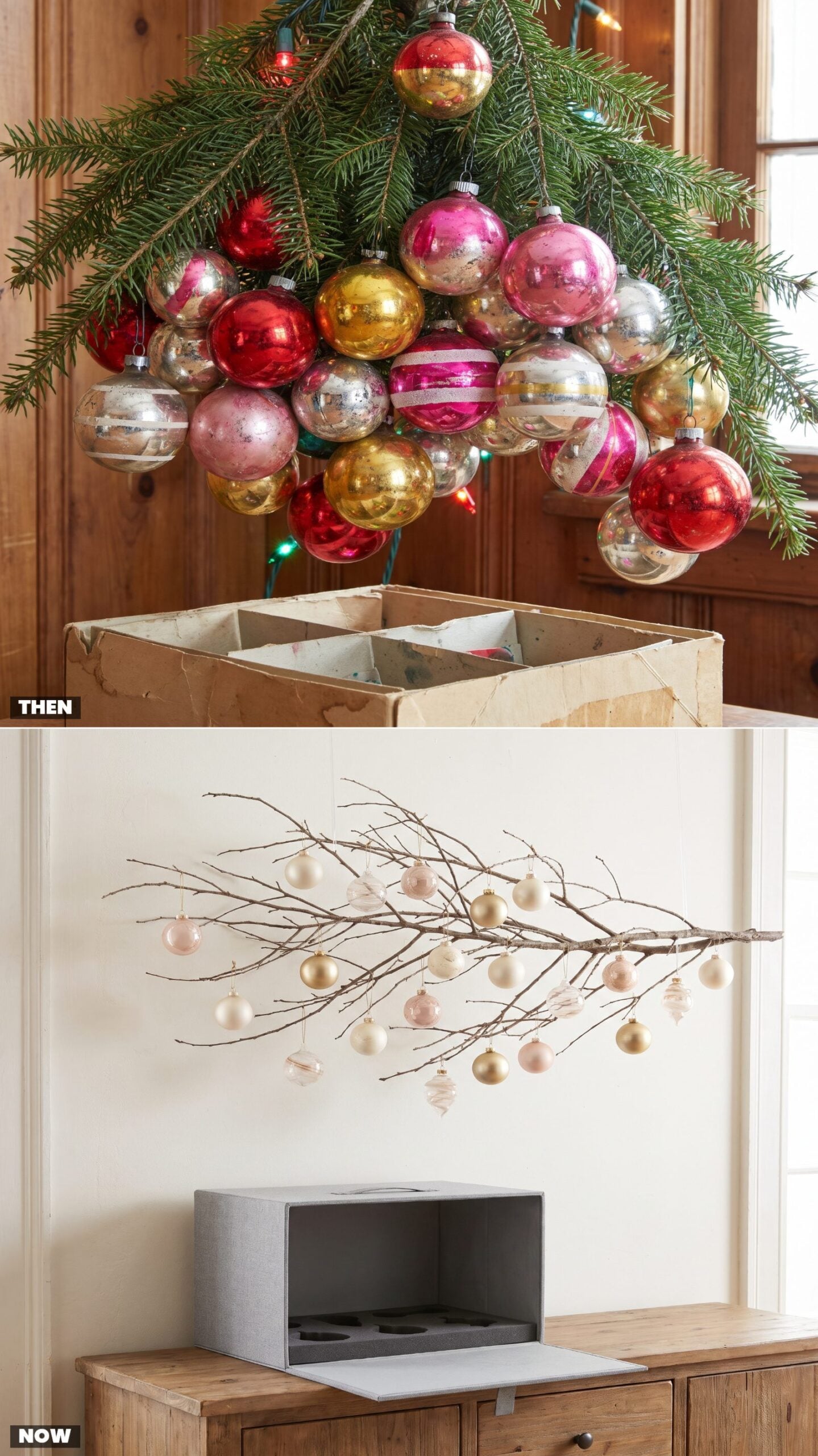
The Shiny Brite box was pure chaos, and that was the charm. Reds and pinks and silvers, mica-glittered stripes, a few scuffed bald spots where the paint wore off from decades of handling. Nothing matched. Everything had a story.
The curated collection runs the other way — a tight palette of cream, blush and brushed gold, evenly spaced, hand-blown glass accents, stored in foam inserts instead of a battered cardboard box. It photographs beautifully. It just doesn’t carry the same memory per ornament.
28. Popcorn-and-Cranberry Chains vs. Sculptural Wood-Bead Garlands
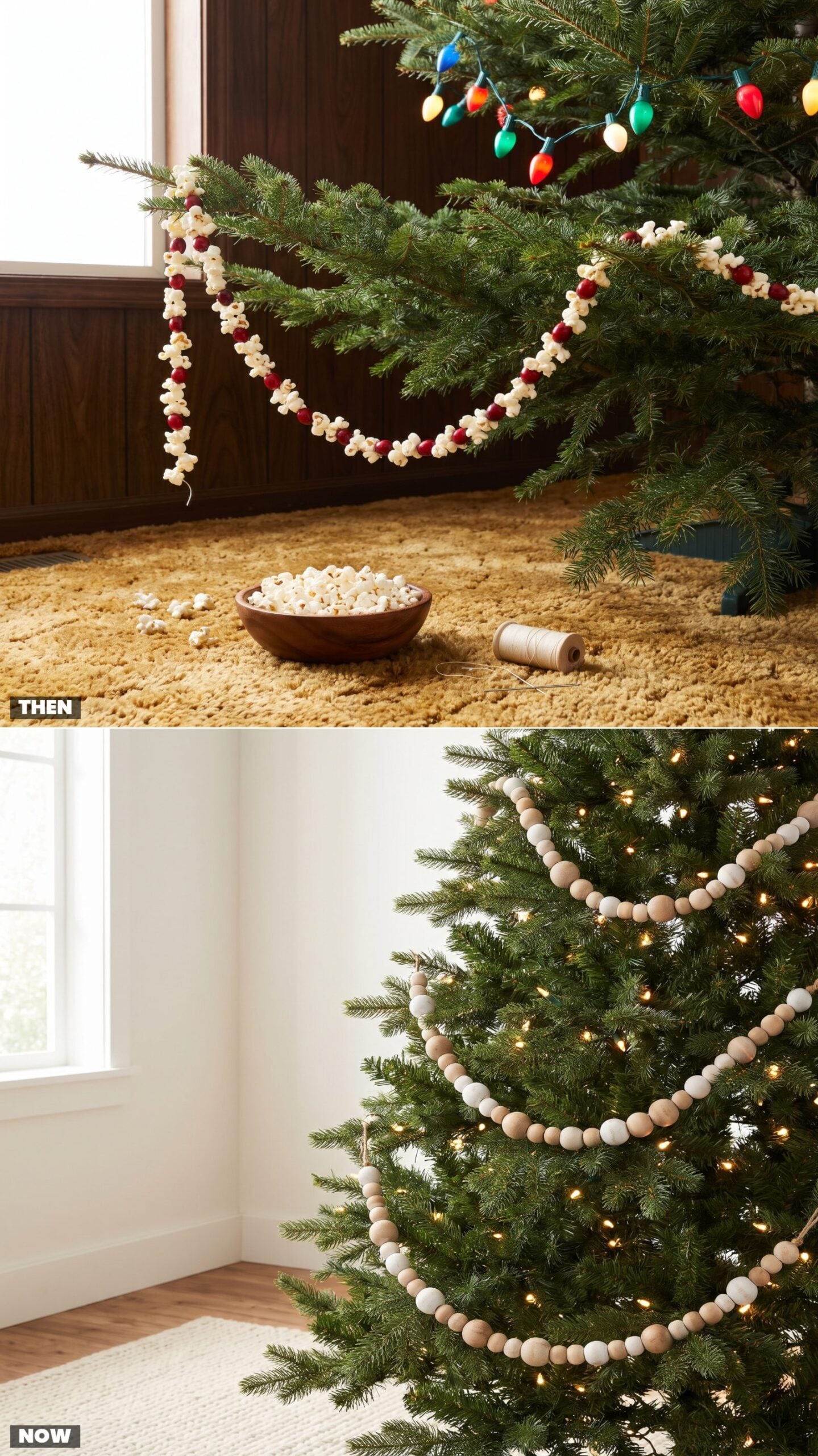
Stringing popcorn and cranberries was a whole evening — needle and thread, a bowl of popcorn slowly disappearing into mouths instead of onto the string. The garland sagged, broke in spots, and the cranberries went leathery by New Year’s. Genuinely homemade, which is exactly why people loved it.
Wood-bead garlands do the same visual job without the perishables. Chunky natural and whitewashed beads on jute, draped in even swags, reusable year after year. Cleaner, sturdier, and no ants in January. But you lose the evening around the popcorn bowl, and that was half the point.
27. The Light-Up Star Topper Gives Way to an Oversized Botanical Spray
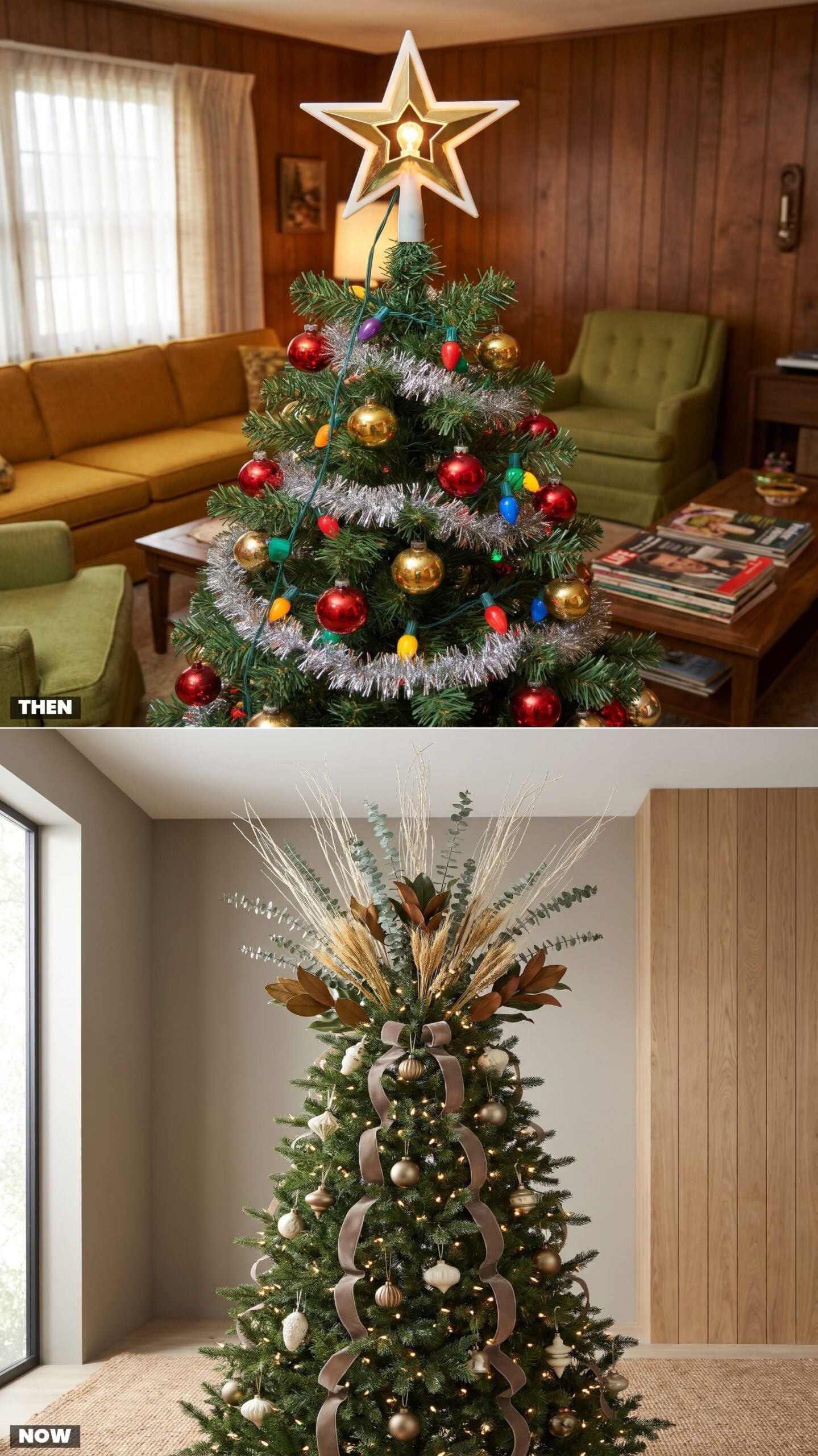
Back in 1978 the star did a job no decoration should be asked to do: it lit up. A plastic five-point topper with a tinted bulb inside, a cord snaking down through the tinsel to a wall outlet you could trip over. Half the magic was the glow. The other half was hoping the bulb held through New Year’s.
Now the top of the tree gets a dried botanical spray instead — bleached branches, eucalyptus, a little wheat, fanning up like the tree sprouted its own antlers. No cord, no glow. Just texture catching the warm white fairy lights below it.
26. From a Quilted Tree Skirt to a Woven Collar at the Base
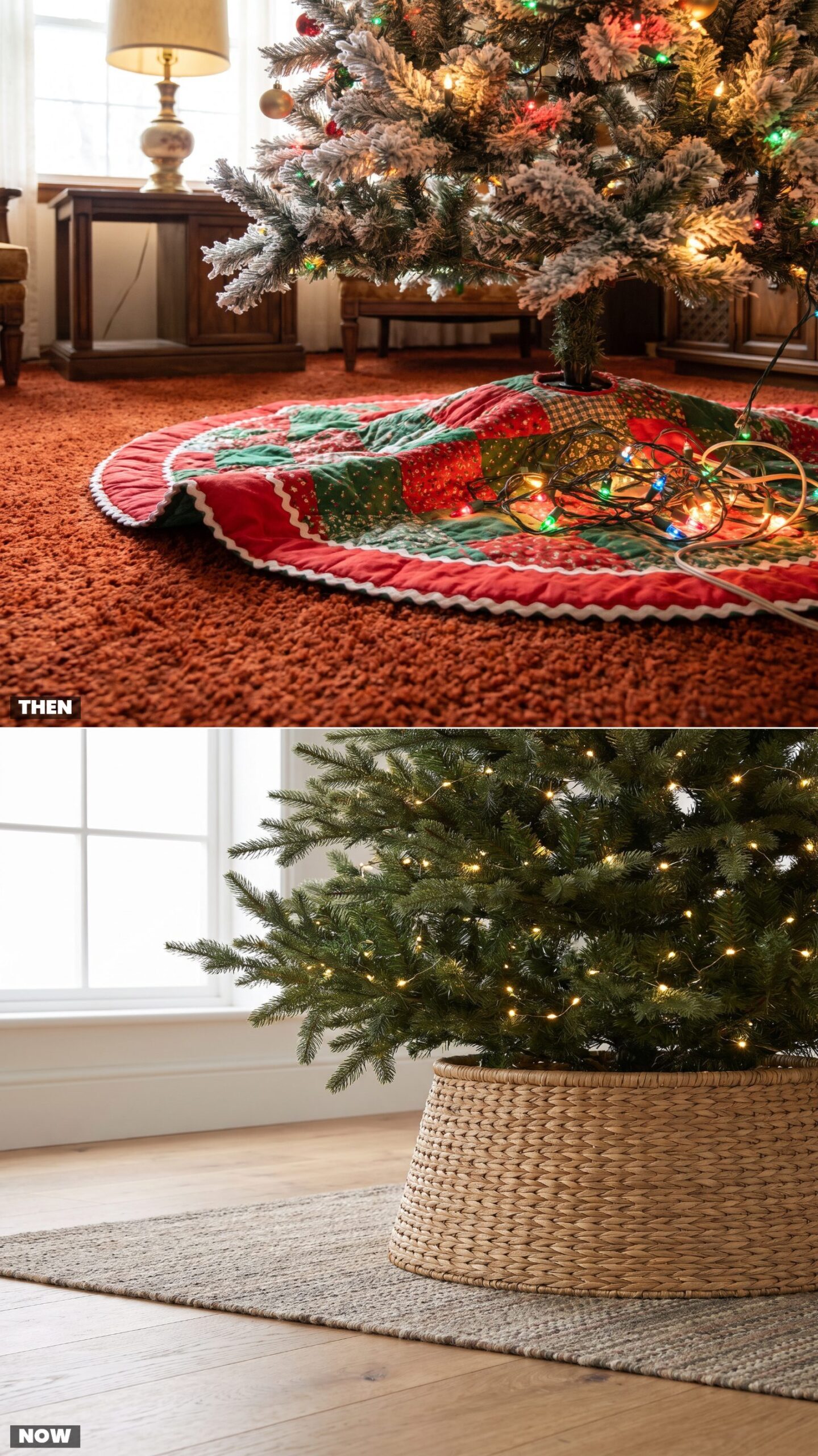
The quilted skirt was equal parts decoration and damage control. It hid the metal stand, caught the dropped needles, and after a few years it had a water ring and a pucker where the batting gave up — red and green patchwork, white rickrack, folded wrong every single December.
The woven collar swapped sentiment for structure. A seagrass basket wraps the trunk, holds its shape, hides nothing it doesn’t need to, and reads like furniture instead of a blanket.
25. Toy-Stuffed Tree Bases, Now a Spare Few Display Gifts
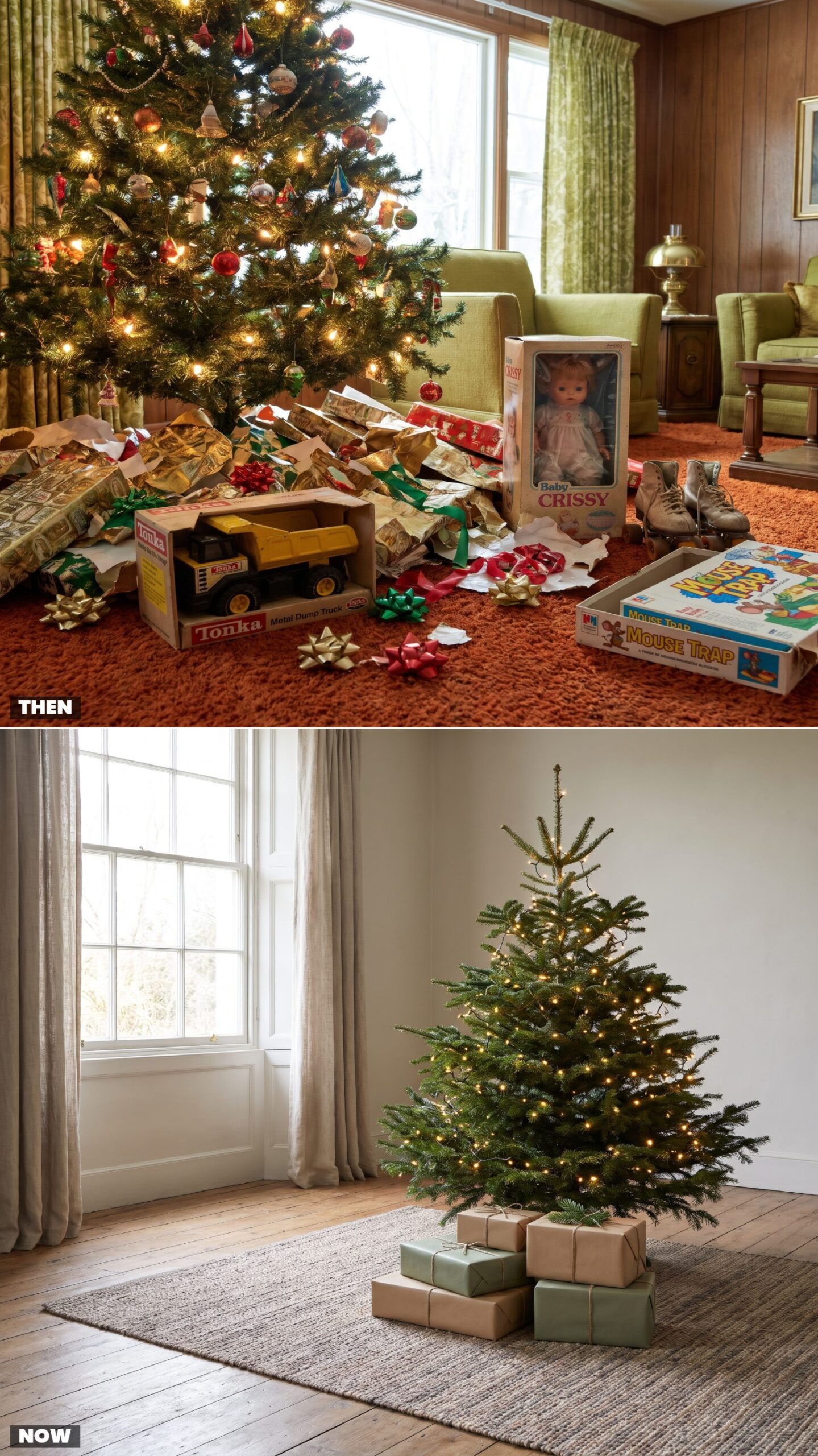
You remember the pile. Gifts stacked two feet deep, a metal truck with a dented bumper before breakfast, a doll still fused to its cardboard, wrapping paper covering the carpet like leaf litter. The base of the tree was a landfill of plastic and bows, and nobody minded one bit.
The modern floor is practically empty by comparison — four or five packages styled like a window display, a sprig of cedar on top for the photo. More restraint, more floor, arguably less fun. I’ll let you decide which era had it right.
24. Novelty Wrapping Paper Traded for Coordinated Matte Packages
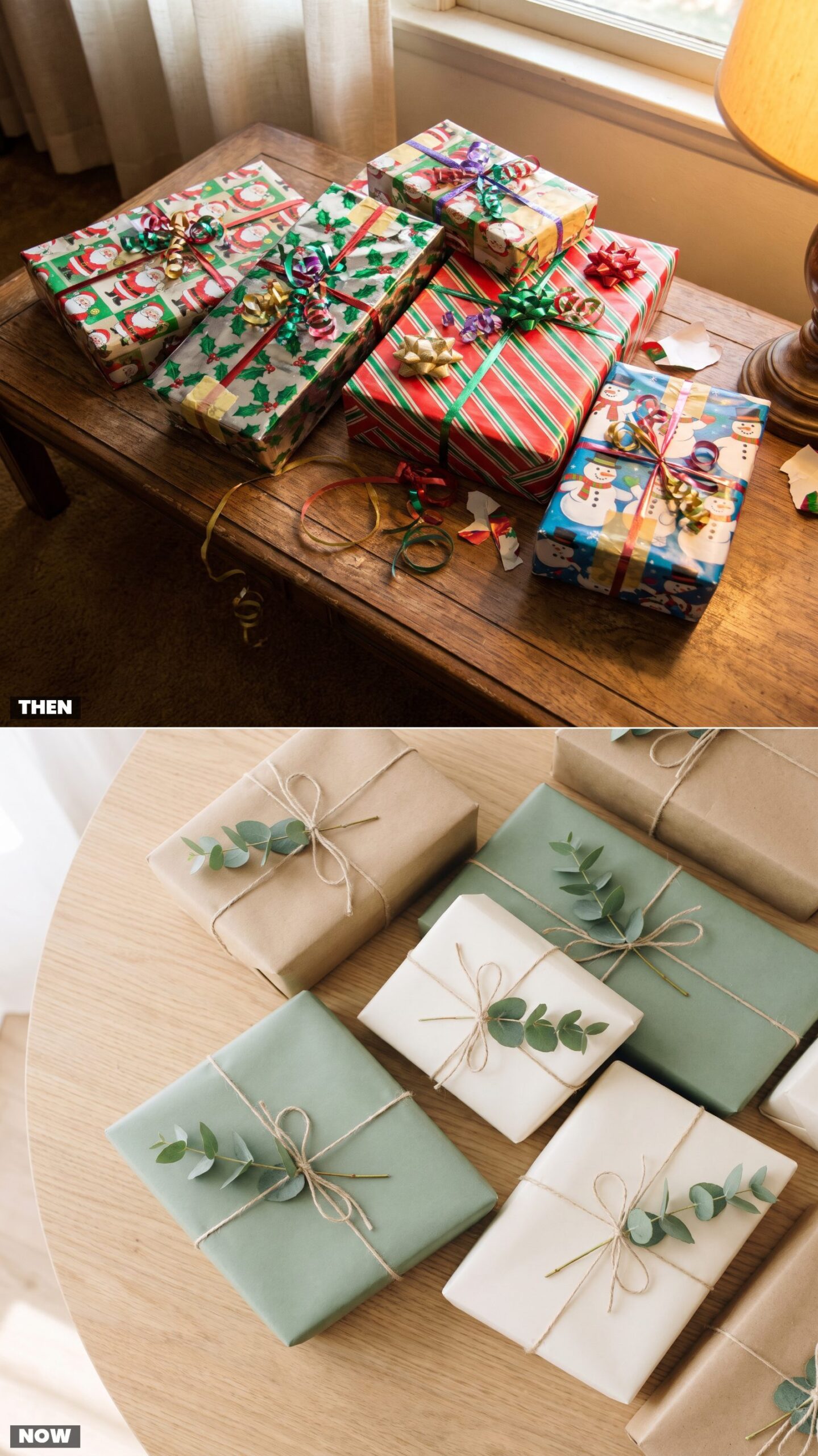
Grinning snowmen. Foil holly that shed glitter for a month. Candy-stripe paper that clashed with the next box over, and nobody expected otherwise — you bought whatever roll was at the drugstore, and the pile under the tree looked like a party that invited everyone.
Now gifts arrive in matte kraft and sage, tied with cotton twine, a eucalyptus sprig standing in for the bow. It photographs beautifully. It also costs more and takes twice as long, and I say that as someone who still owns a spool of twine for exactly this reason.
23. Plastic Mantel Greenery Replaced by an Asymmetrical Fresh-Cedar Swag
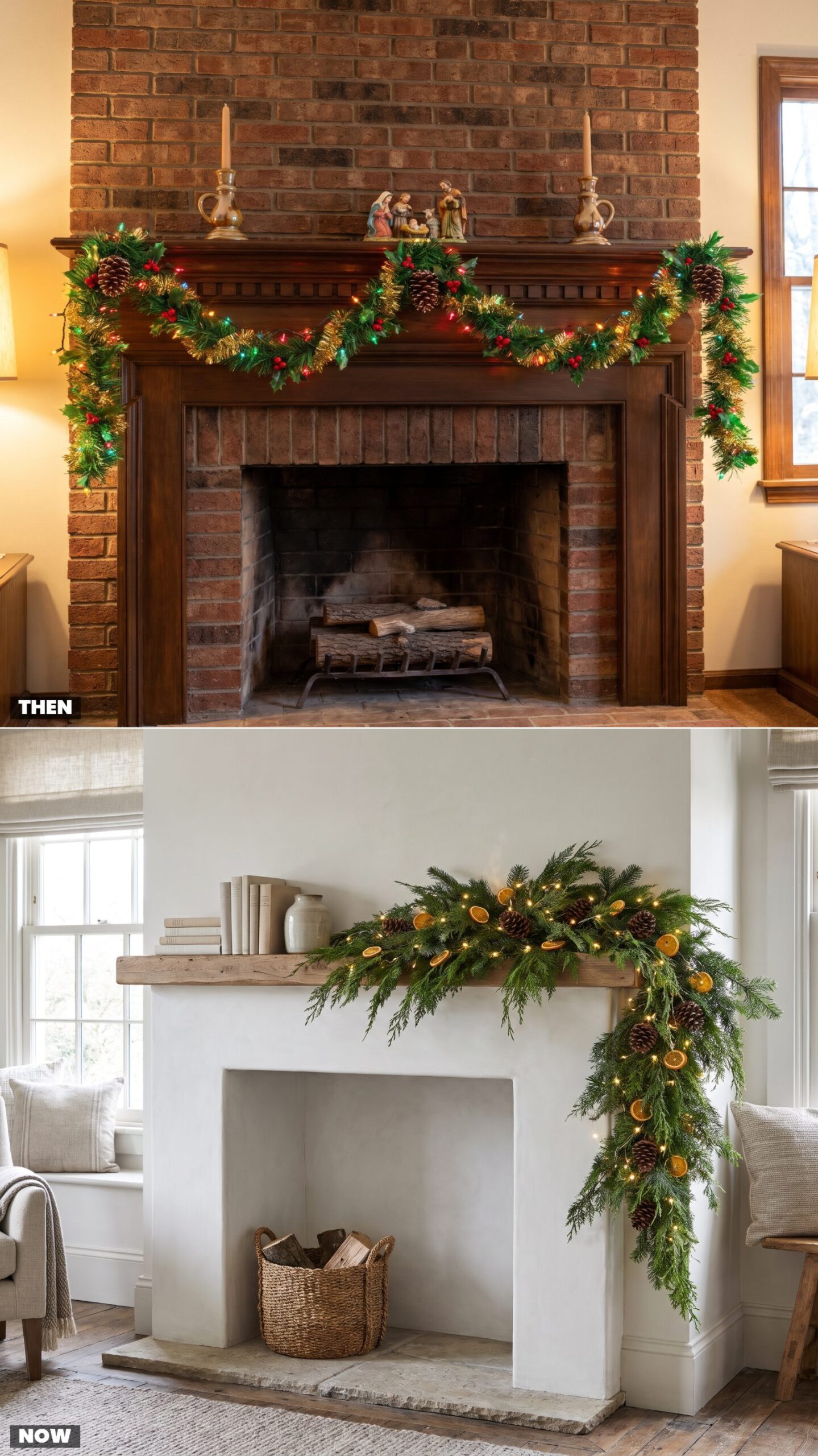
The plastic garland was built for permanence, not realism. Uniform PVC needles, glued red berries that never fell because they were never real, a gold tinsel thread running through the whole thing. You draped it evenly across the mantel because symmetry was the look, then boxed it up identical every January.
The fresh-cedar swag leans into imperfection instead. It drapes heavier to one side, trails off the end, drops a needle or two, and smells like December did before the plastic version showed up. For a glam family room, the real greenery pulls more weight than any fixture on the mantel.
22. Red Felt Stockings Make Way for Personalized Knit Ones
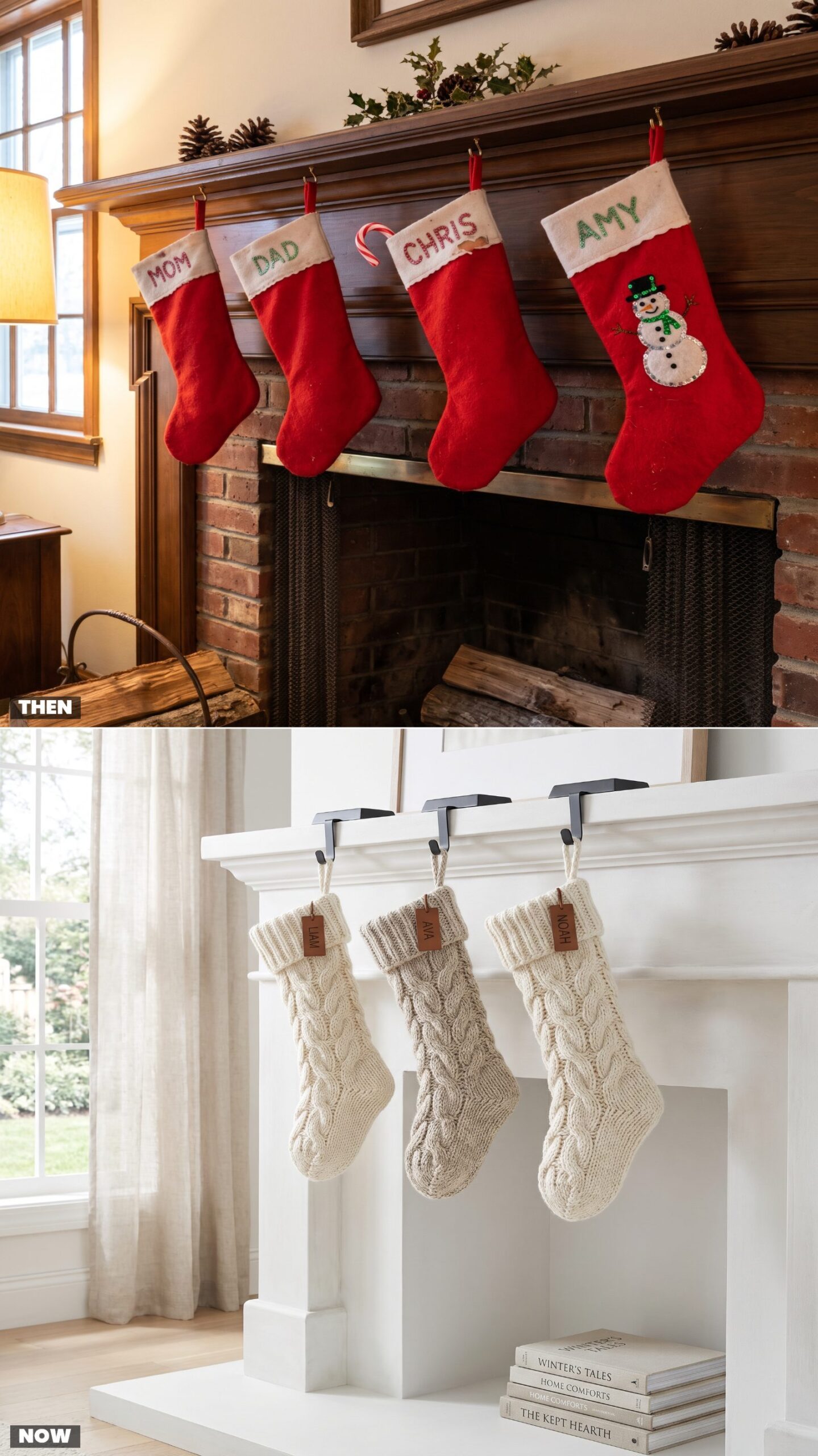
Red felt, white cuff, your name spelled in glitter glue that flaked a little more every year. One had a sequin snowman losing sequins. They hung from brass nails hammered straight into the mantel front, and a plastic candy cane poked out of the top because that was the whole tradition.
The knit versions are quieter — cream cable-knit, a little leather name tag, hung from heavy black holders. They cost real money, and they’ll outlast the felt ones by decades, which is sort of the point of spending it.
21. The Mantel Clock Steps Aside for Oversized Holiday Artwork
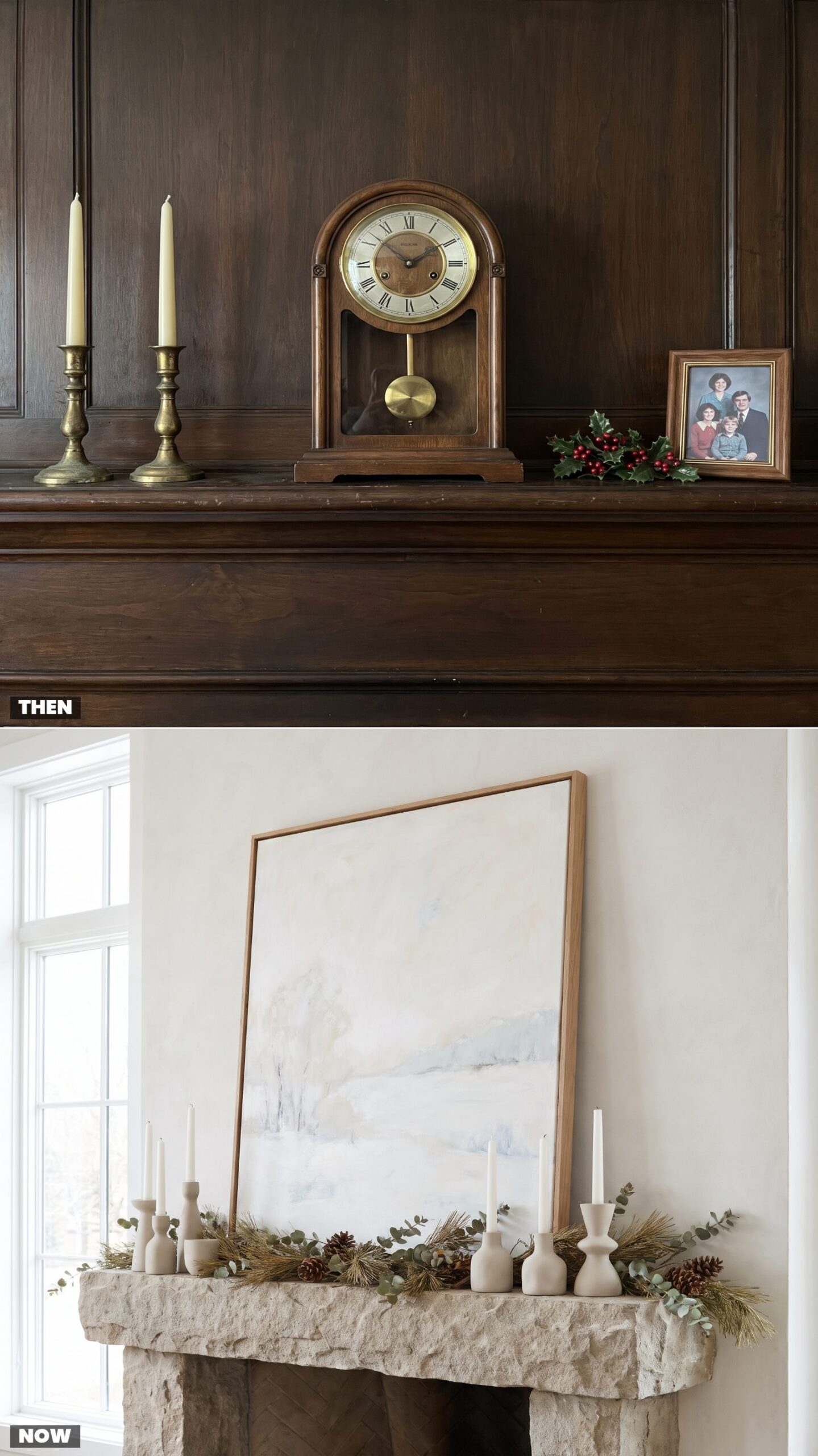
The mantel clock ran the show in 1978. Wood case, brass-rimmed face, a pendulum you wound on Sundays, flanked by candlesticks and a leaning sprig of plastic holly. It ticked through every Christmas morning and told you precisely how long until the relatives arrived.
Today the clock’s gone — your phone handles that now — and a large leaning piece of art takes the wall instead. A soft winter landscape, a thin oak frame, propped rather than hung. Scale is the whole trick: one big piece reads calmer than ten small ones fighting for the same shelf.
20. Wood-Burning Fires Swapped for One-Touch Electric Flames
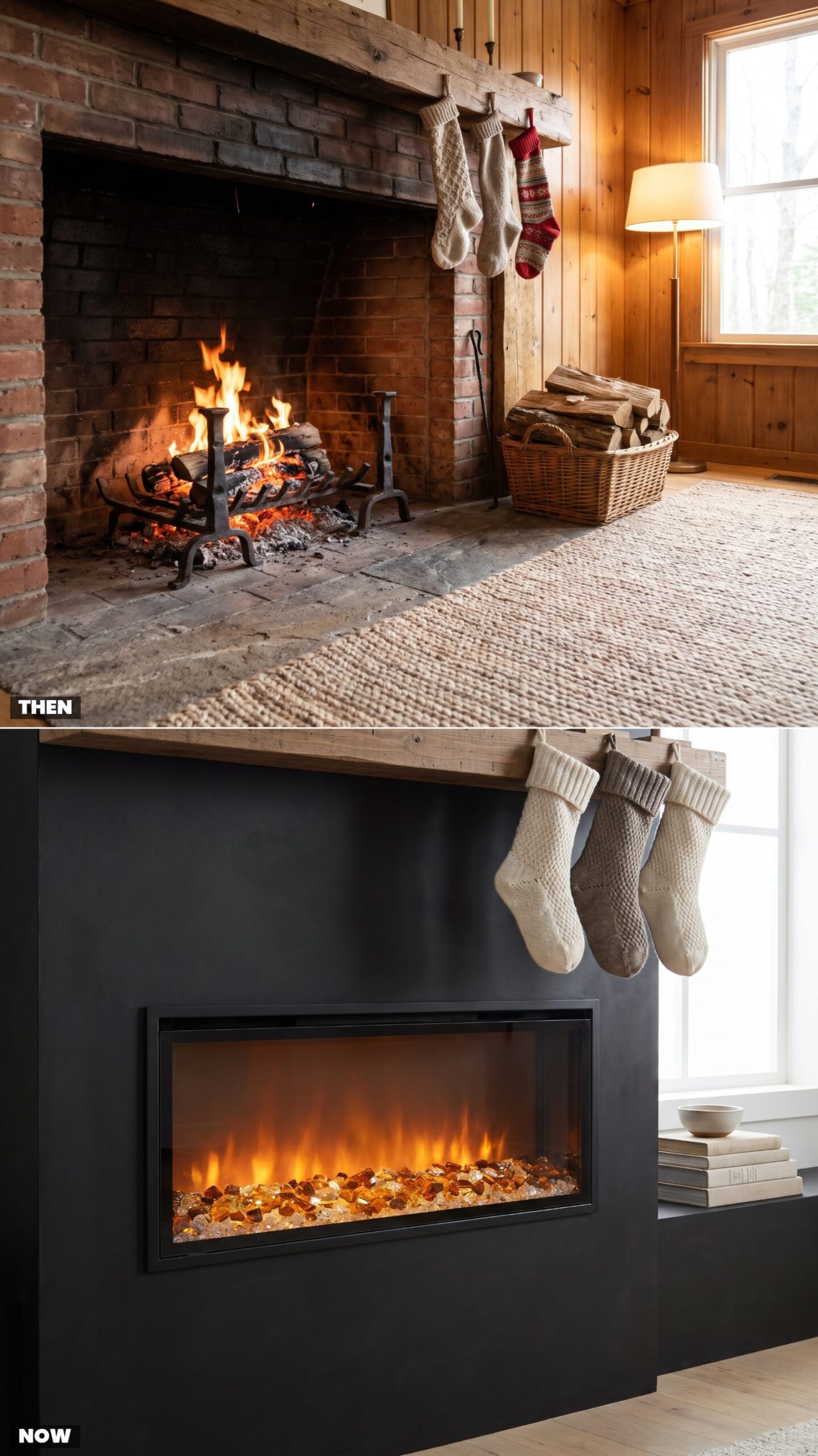
A real fire asks for work. You split the wood, hauled it in, stacked it, lit it, poked it, then swept the hearth when the ash got away from you. The payoff was the crackle and the smell and the way the whole room leaned toward the heat. The downside was a chimney flue and a cold draft when you forgot it.
The electric flame does none of that. One touch, steady orange glow over glass embers, no smoke, no hauling. It doesn’t crackle. I miss the crackle. But I don’t miss carrying logs through the snow in socks.
19. Brass Fireplace Screens Replaced by a Minimal Black Surround
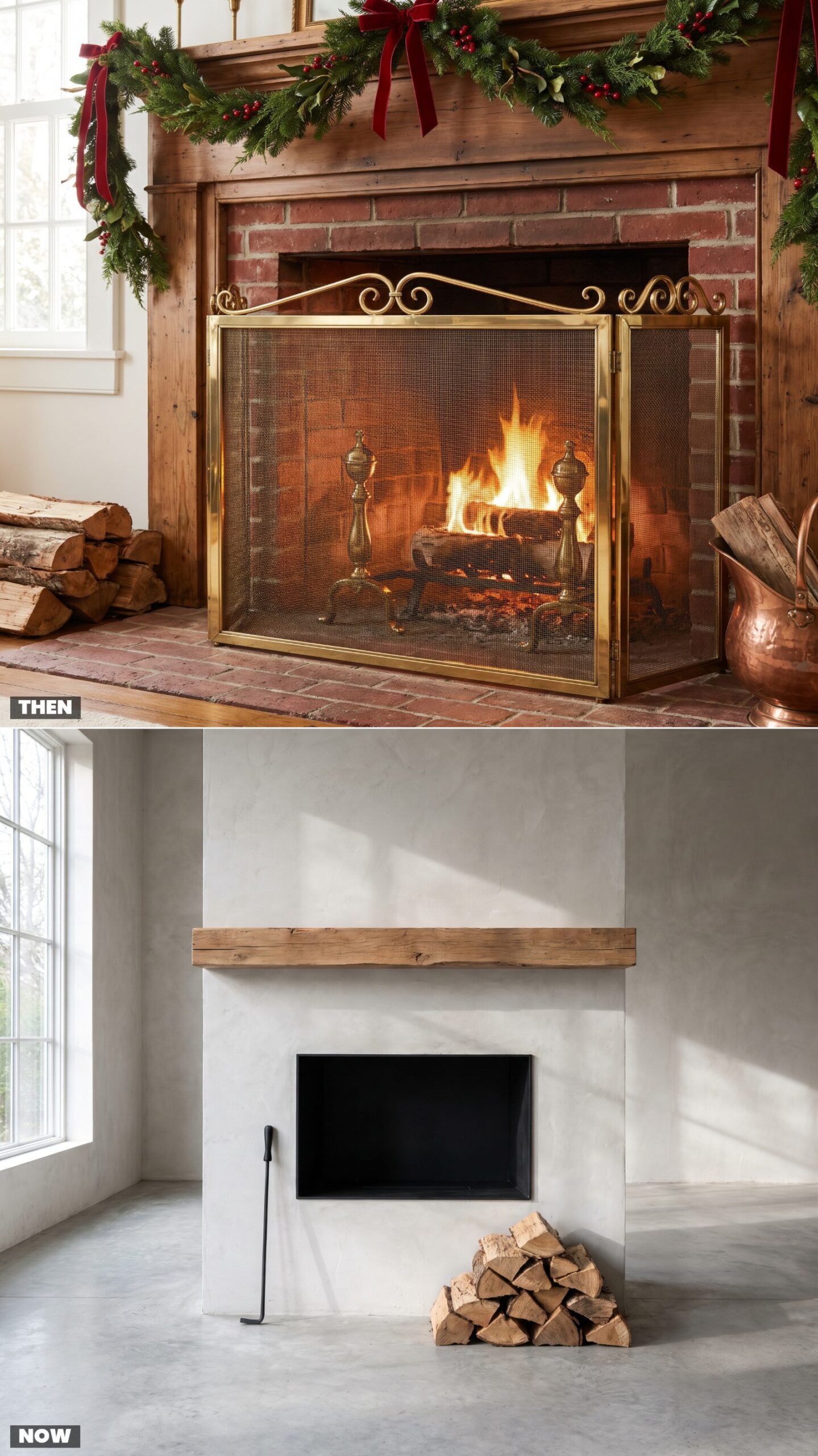
Brass was the move in 1978, and the fireplace screen was where it showed off. Polished gold frame, fine mesh front, a scrolled top rail that caught the firelight, andirons to match. Practical and ornate at once — and you polished it before company came.
The modern hearth went flat black and dropped the scrollwork entirely. A clean steel firebox set into limewashed plaster, one matte tool leaning nearby, nothing to polish. It reads calm because there’s simply less for your eye to do.
18. Artificial Holly Wreaths, Now Foraged Evergreen Ones
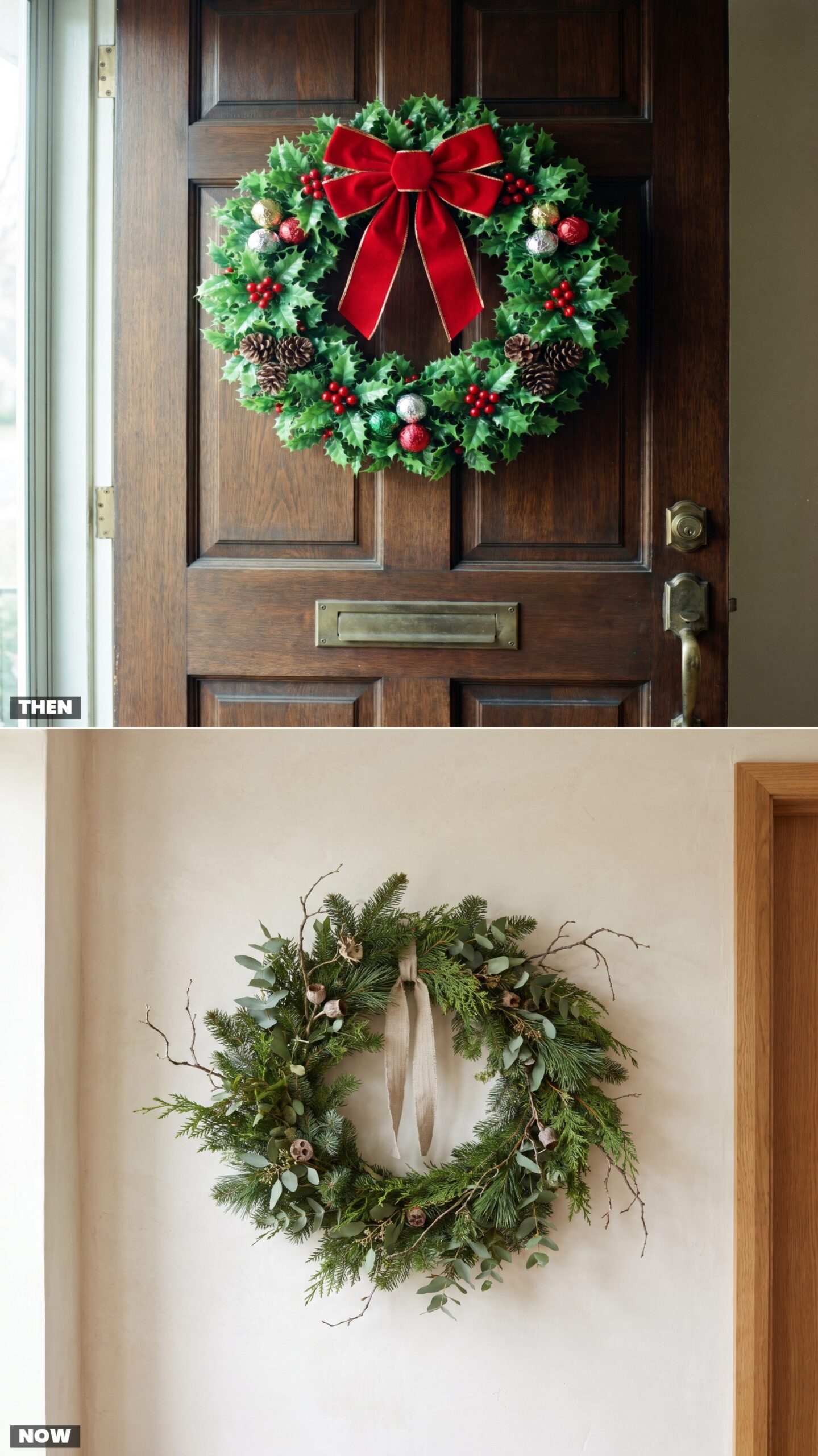
Plastic holly, glossy red berries fused on so they’d never drop, a velvet bow the size of a dinner plate. The 1978 wreath hung perfectly round and perfectly flat, and you unboxed the exact same one every December for fifteen years. It never shed, never browned, never surprised you.
The foraged wreath makes the opposite argument. Real fir and cedar and eucalyptus, an irregular shape, a few bare twigs poking out where you feel like letting them, maybe a strip of linen instead of a bow. It browns by New Year’s. That’s the deal, and it’s a fair one.
17. Christmas Cards Taped to the Wall vs. Cards on a Clip Garland
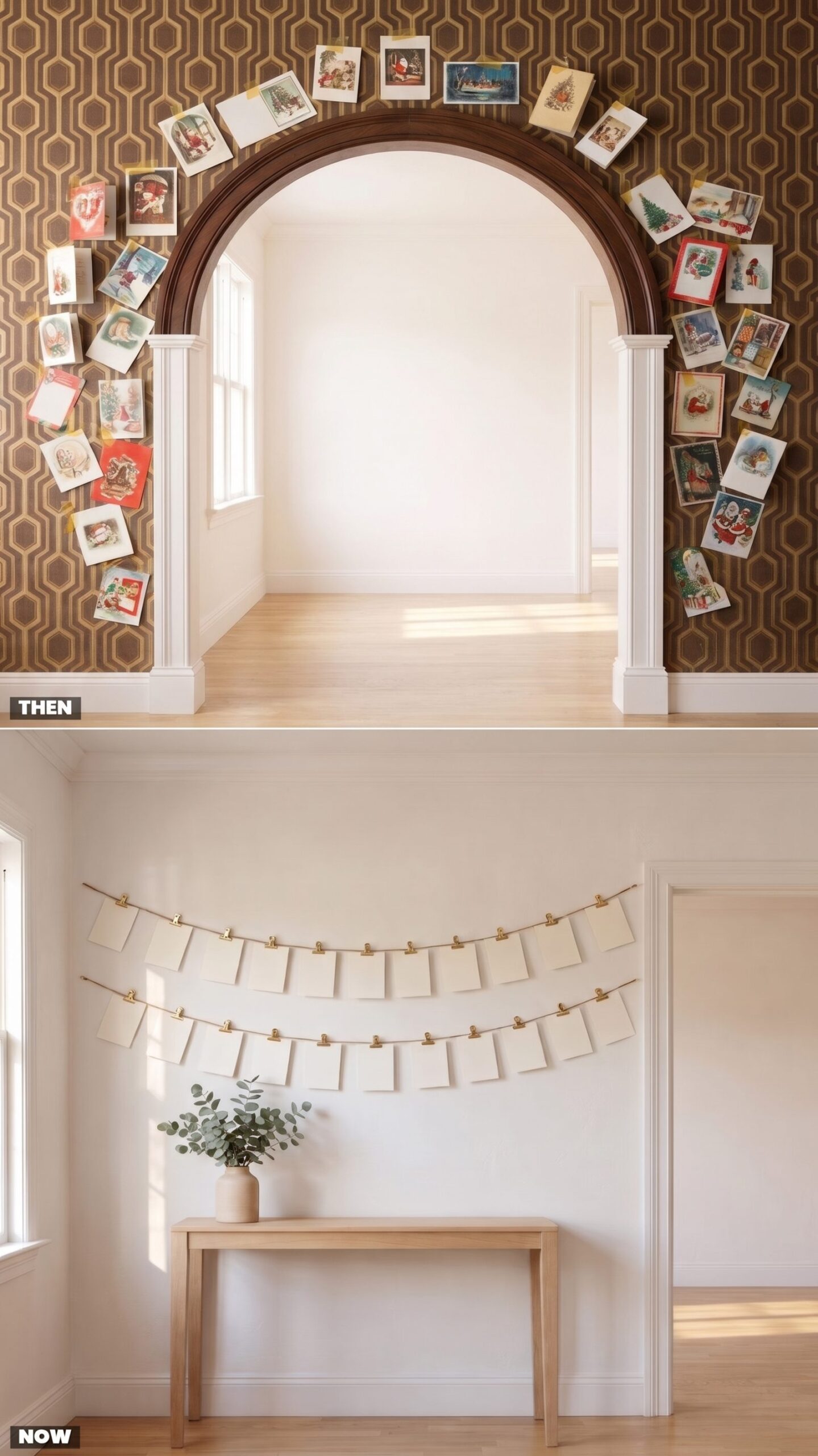
The old method was tape and hope. Cards went straight onto the wallpaper, climbing around the doorway in a drift that grew lopsided by mid-December, half of them peeling off on their own while the rest left a sticky ghost behind when you finally pulled them down in January.
The clip garland fixed all of it. String up a length of twine, add a row of little brass clips, and your cards hang upright and readable — easy to swap as more arrive, no wall damage, no curling corners. Same wall of goodwill, minus the archaeology of old adhesive underneath.
16. Foil Ceiling Swirls vs. Suspended Paper Stars
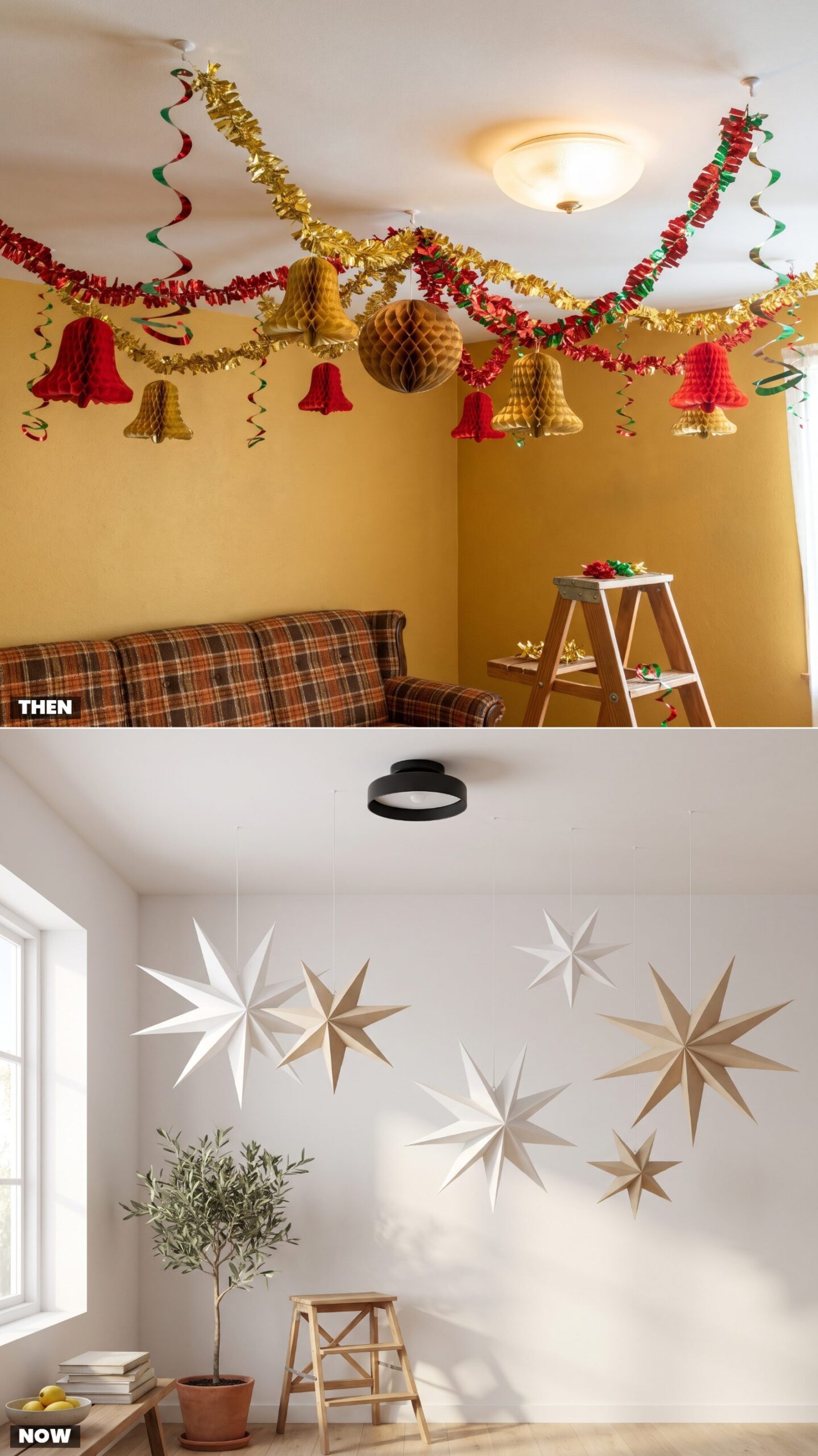
Ceiling decorating in 1978 meant metallic overload: foil swirls radiating out from a honeycomb centerpiece, held up by thumbtacks and optimism, catching every lamp in the room and throwing it back twice as loud. It said party. It also crinkled if you breathed on it.
The paper star does the opposite. A couple of folded moravian stars at staggered heights read as sculpture, not tinsel — quiet glow, clean shapes, nothing up there trying to blind you.
15. Dripping Tapers vs. Flameless Rechargeable Candles
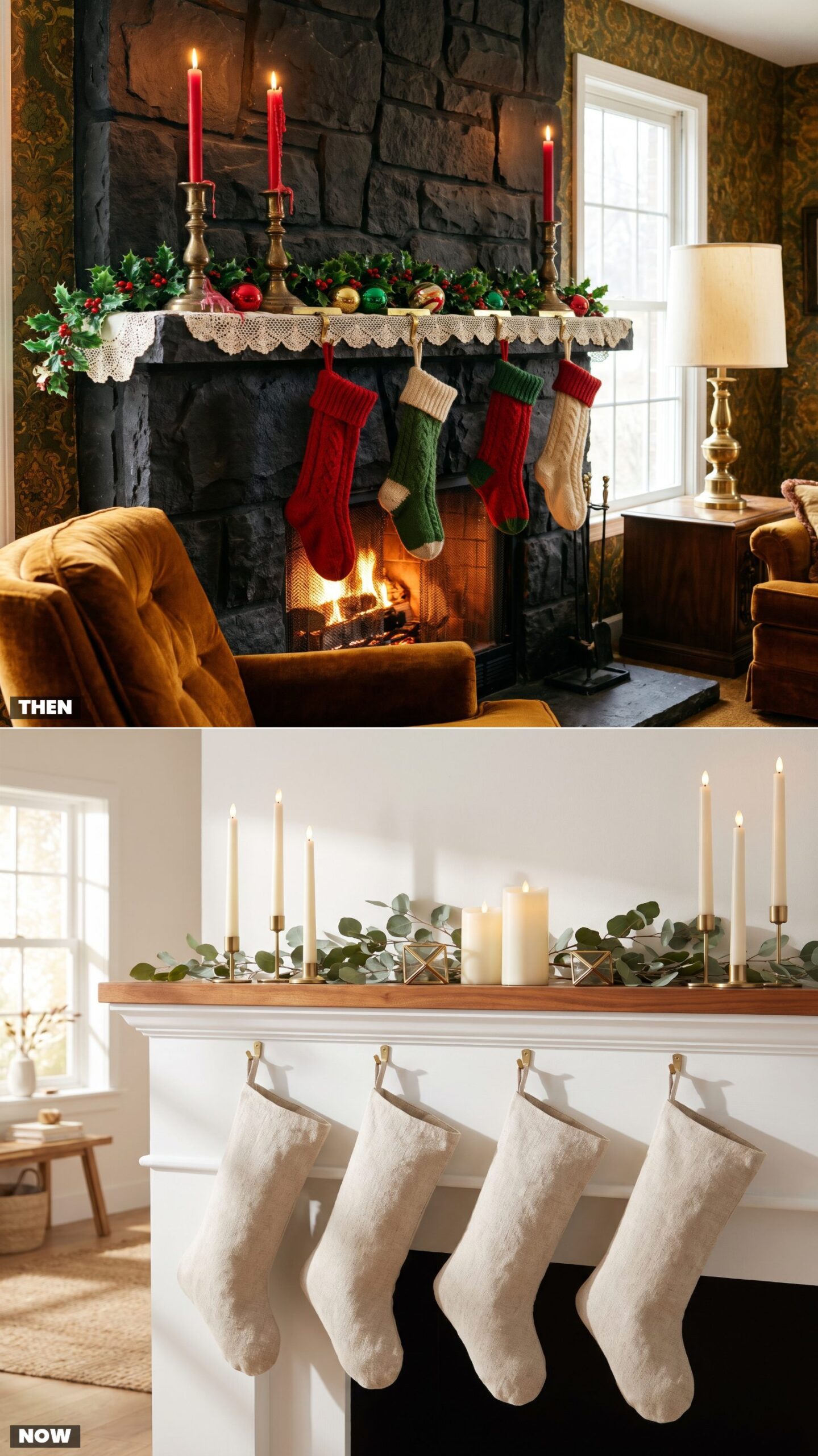
There was always one taper that leaned. By Christmas Eve it had wept red wax down the candlestick and onto Grandma’s lace doily, and you spent Boxing Day picking it off with a fingernail. Open flame next to a pine garland, meanwhile, was a yearly gamble nobody around the table ever bothered to name.
Flameless candles ended the drama. Rechargeable, soft-flickering, safe to leave near real greenery and safe to forget when you head to bed. From across the room the glow reads almost identical, and the cleanup is zero.
14. The Crowded Tabletop Nativity vs. a Minimal Hand-Carved Crèche
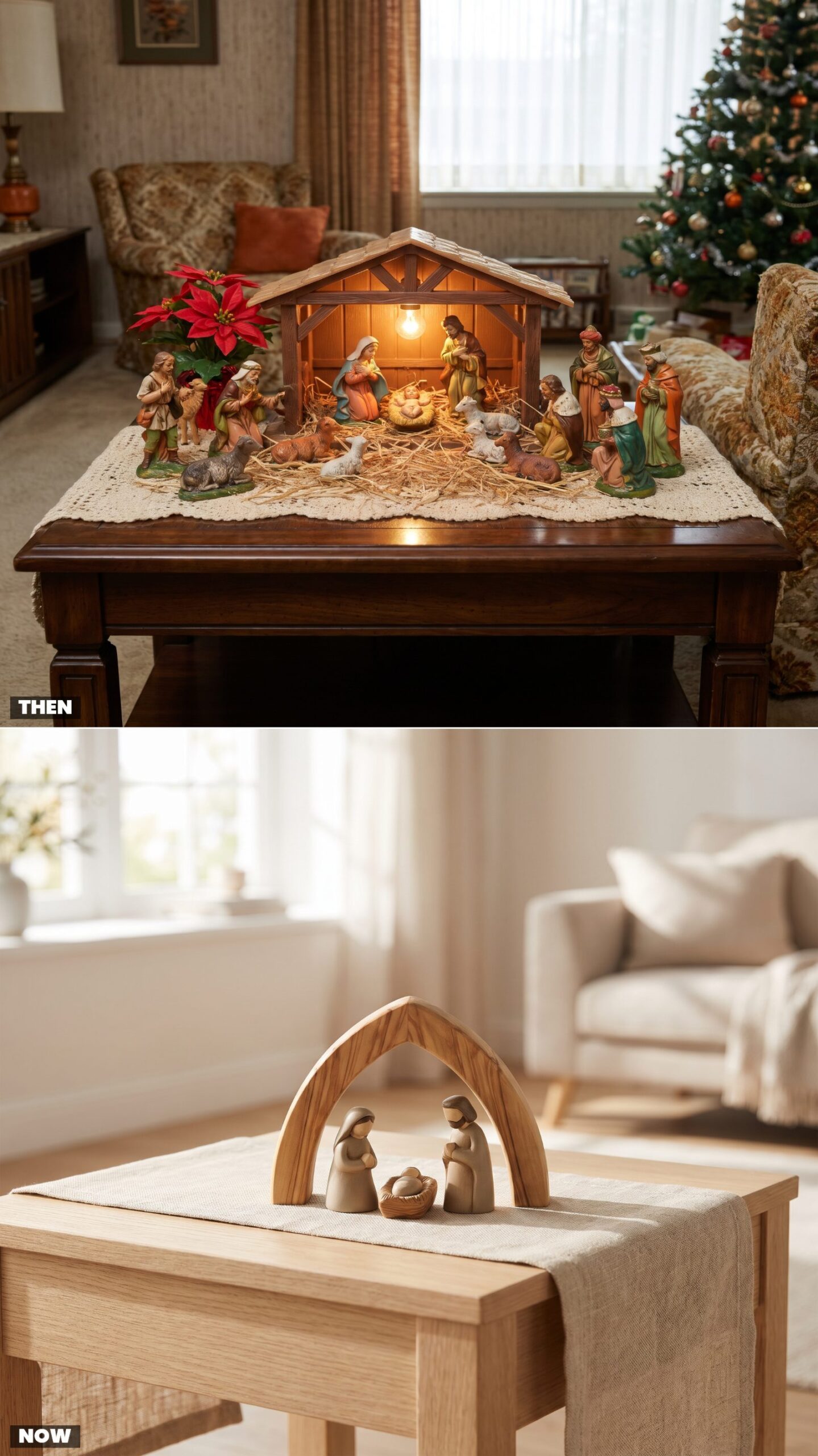
The 1978 nativity was a full cast and then some. Glossy ceramic figures packed shoulder to shoulder, a plastic stable lit from within by a single hot bulb, straw everywhere, and usually a spare shepherd or two who didn’t quite fit anywhere. More figures meant more Christmas — or so the thinking went.
The pared-back carved crèche trusts the quiet. A few olive-wood figures in matte natural tones, no glow, no crowd. You take in the whole scene at a glance, and the restraint comes off as reverence instead of clutter.
13. The Glowing Ceramic Tree vs. a Contemporary Tabletop Tree
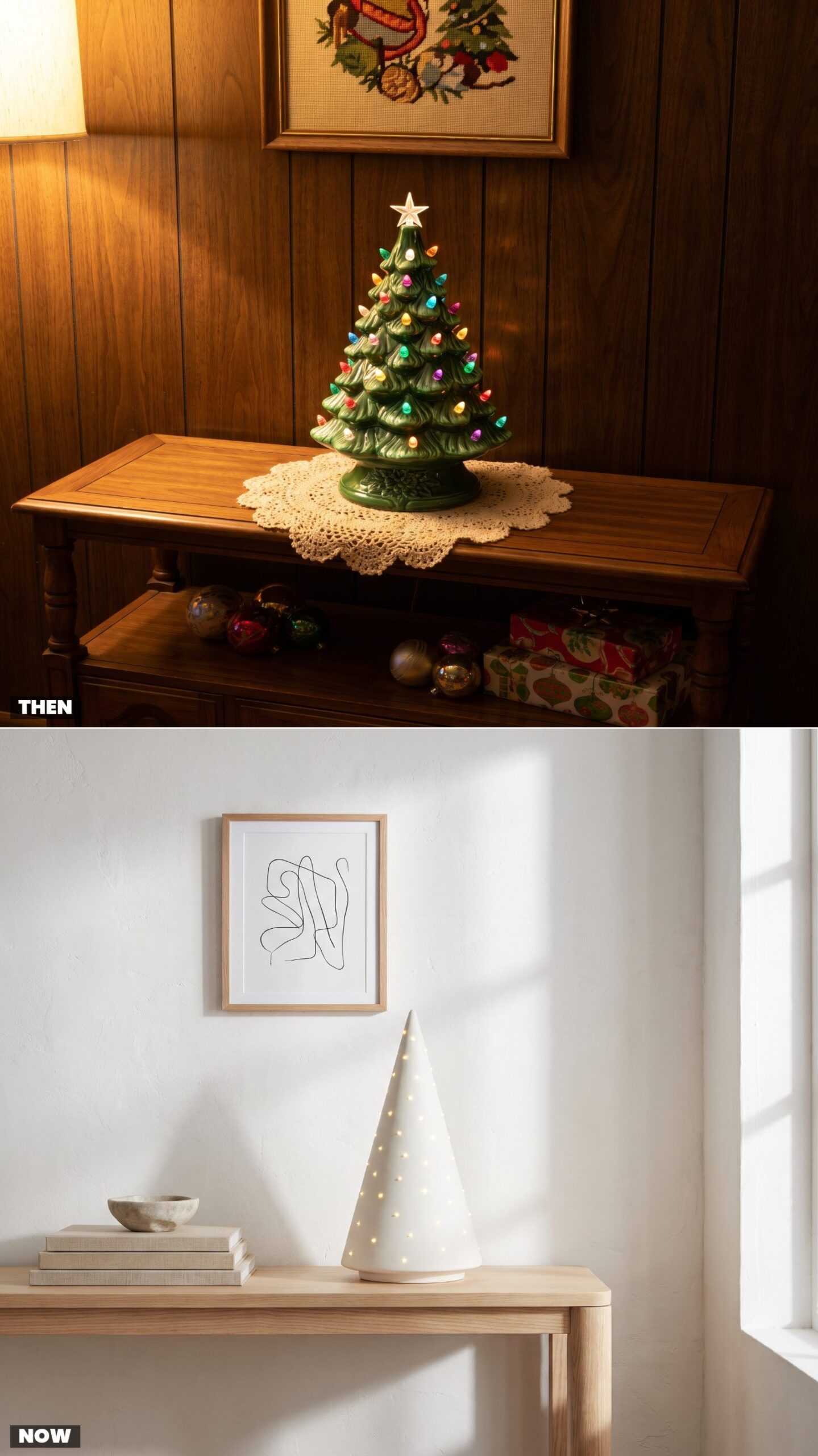
The ceramic tree was a whole personality. Fired in somebody’s class down at the community center, dotted with tiny plastic peg lights in every color, one bulb inside doing all the work. It glowed on the console all through December, and — I’ll say it — losing a red peg to the vacuum counted as a small household tragedy.
The modern tabletop tree goes sculptural. A matte-white cone or a brass wire frame, warm-white LEDs, no multicolor circus. It reads as an object you chose rather than a relic you inherited. The bright attic decor crowd swears by these for tight corners.
12. Cotton-Snow Villages vs. Illuminated Modular Christmas Villages
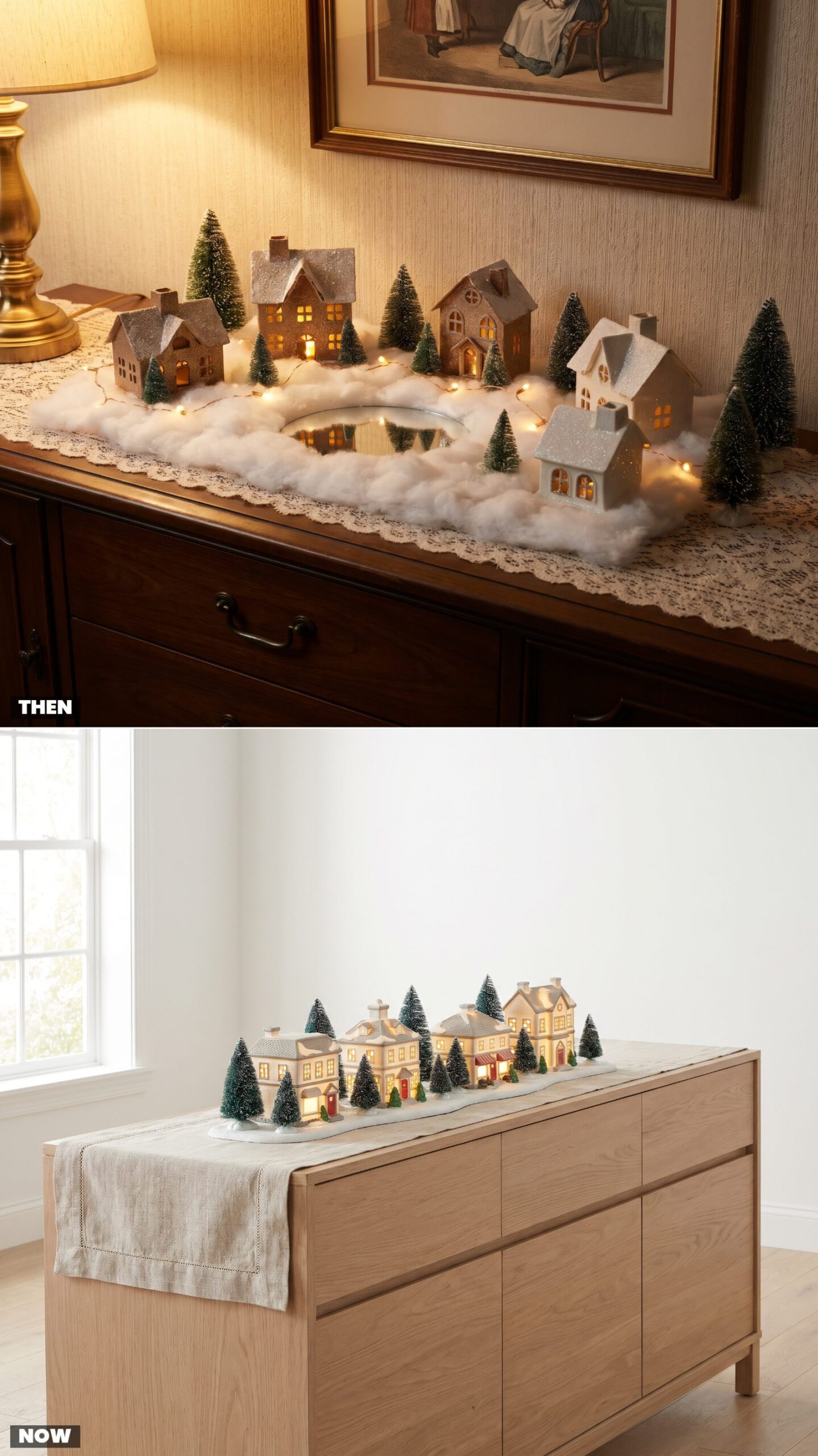
The old village was improvised, and charming for it. Little cardboard houses with glitter roofs nestled in pulled-apart cotton batting, a hand mirror standing in for a frozen pond, one strand of bulbs snaked through the back to light a few paper windows. Honestly, building the fake snow was half the fun.
The modern modular village is a different beast. Coordinated porcelain buildings, each individually lit, a matching snow base, cords tucked where you’ll never find them. It looks like a tiny town that has its act together — which the cotton-ball version never quite managed.
11. Blow-Mold Santas vs. Hand-Finished Folk Figures
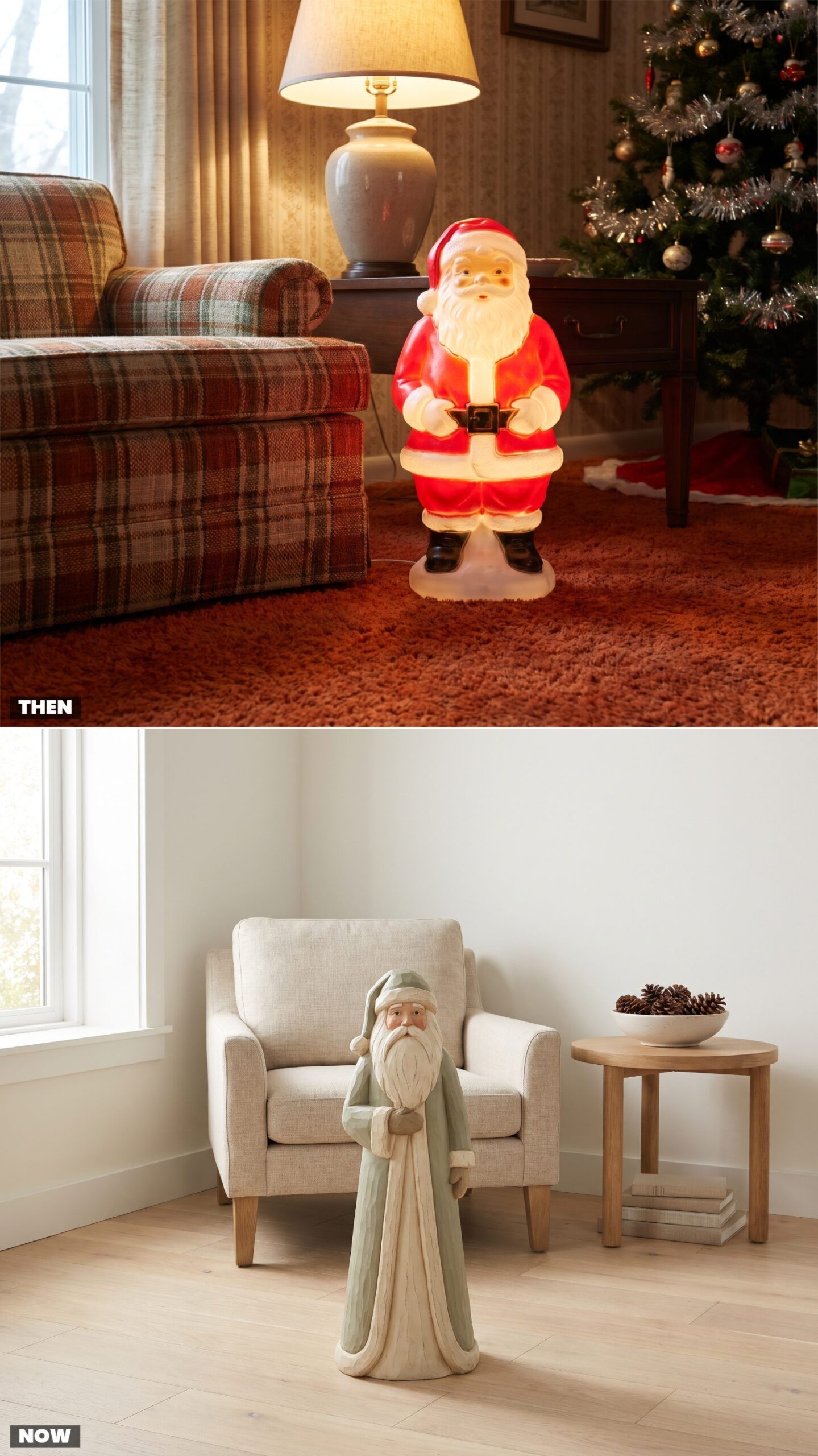
The blow-mold Santa glowed from the inside and weighed almost nothing. Every year you hauled it up from the basement, fed the cord through the little hole in the back, and parked it by the door to greet everyone in the same glossy red. Indestructible. Cheerful. A little loud.
The folk figure went the handcrafted route — carved-look, matte, robes in muted sage or cream, no cord and no glow. It’s the kind of thing you’d keep on a shelf year-round instead of exiling to a box for eleven months.
10. The Lone Nutcracker Soldier vs. a Collected Nutcracker Display
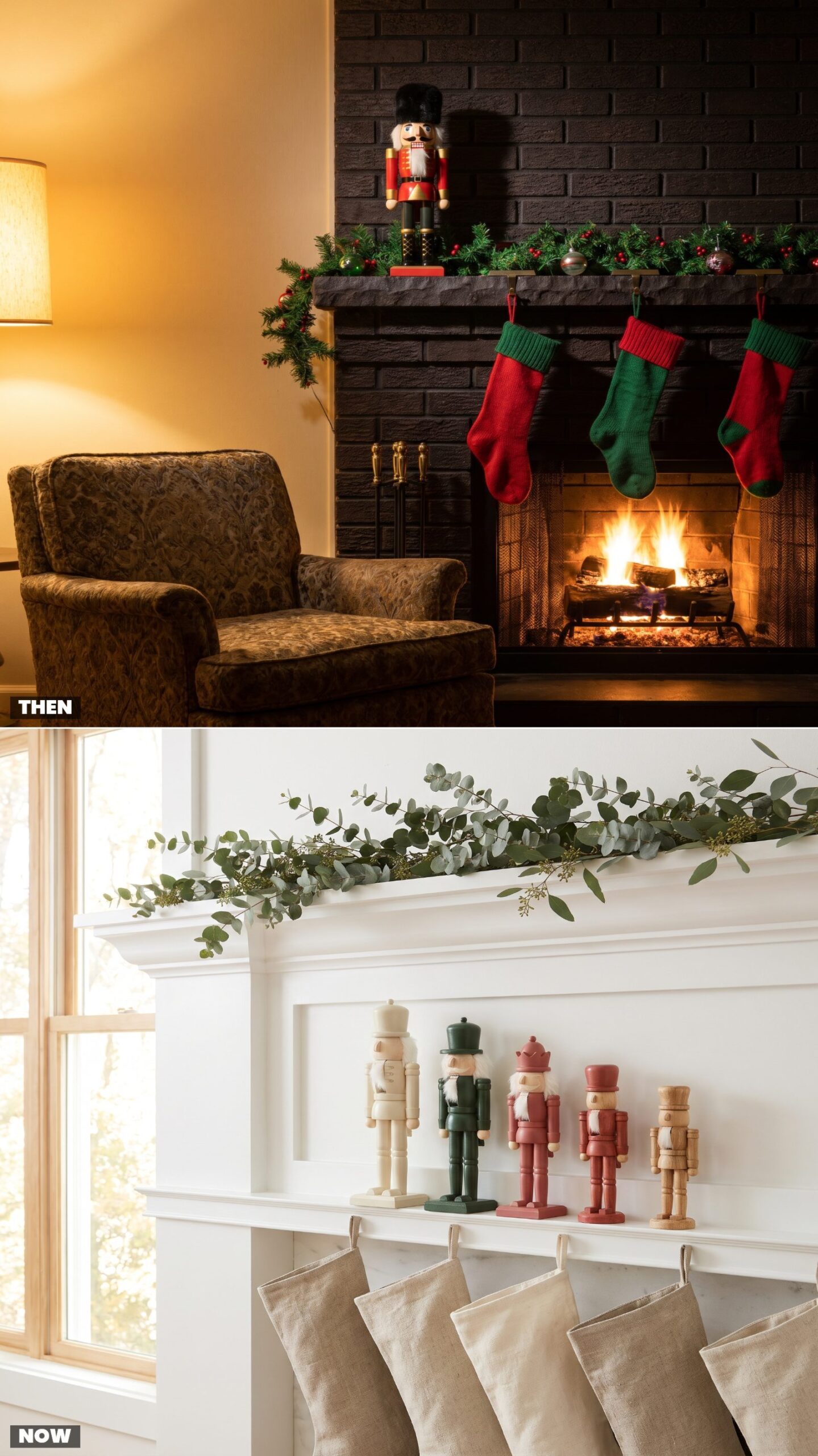
For a long time, one nutcracker was the whole collection. A single red-and-gold soldier stood guard on the mantel, bought once and pulled out every December, the only one of his kind. He held the post alone for years.
Now the nutcracker travels in numbers. A graduated row in coordinated muted colors, tallest to shortest, reads as a deliberate lineup rather than a lonely sentry. And collecting one a year? It slowly turns the mantel into a record of the seasons.
9. Foil-Wrapped Poinsettias vs. Potted Amaryllis Arrangements
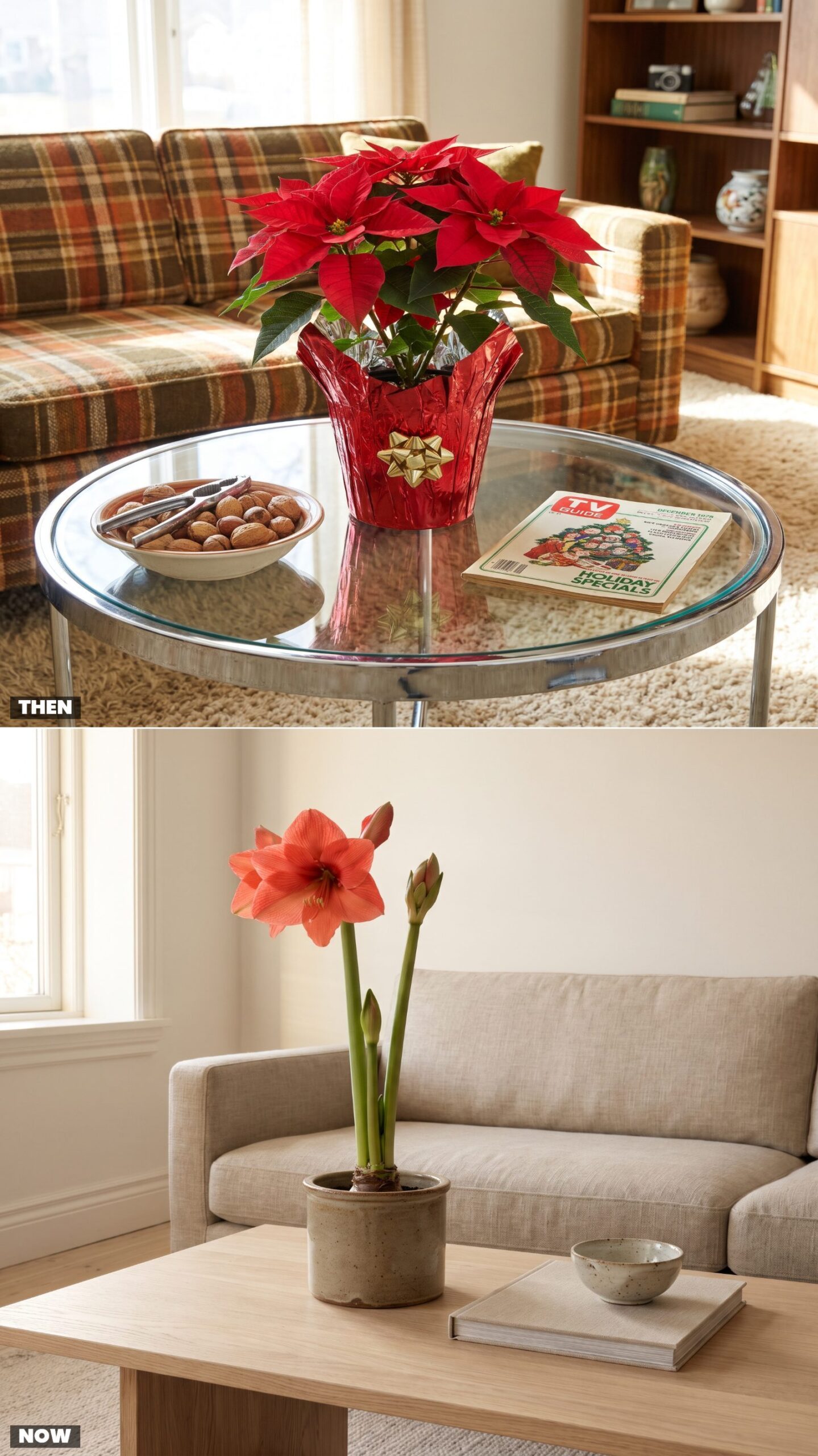
Every holiday table had one: the poinsettia strangled in crinkled red foil with a stapled bow, straight from the grocery checkout. The foil trapped water, the plant sulked, and by New Year’s it was shedding leaves all over the chrome coffee table.
The amaryllis plays a longer game. One tall stalk, a big architectural bloom, a plain stoneware pot with no foil anywhere near it. It keeps growing through the season, so the whole arrangement actually improves as December wears on instead of slowly falling apart.
8. Tinsel-Wrapped Houseplants vs. Natural Greenery in Stone Planters
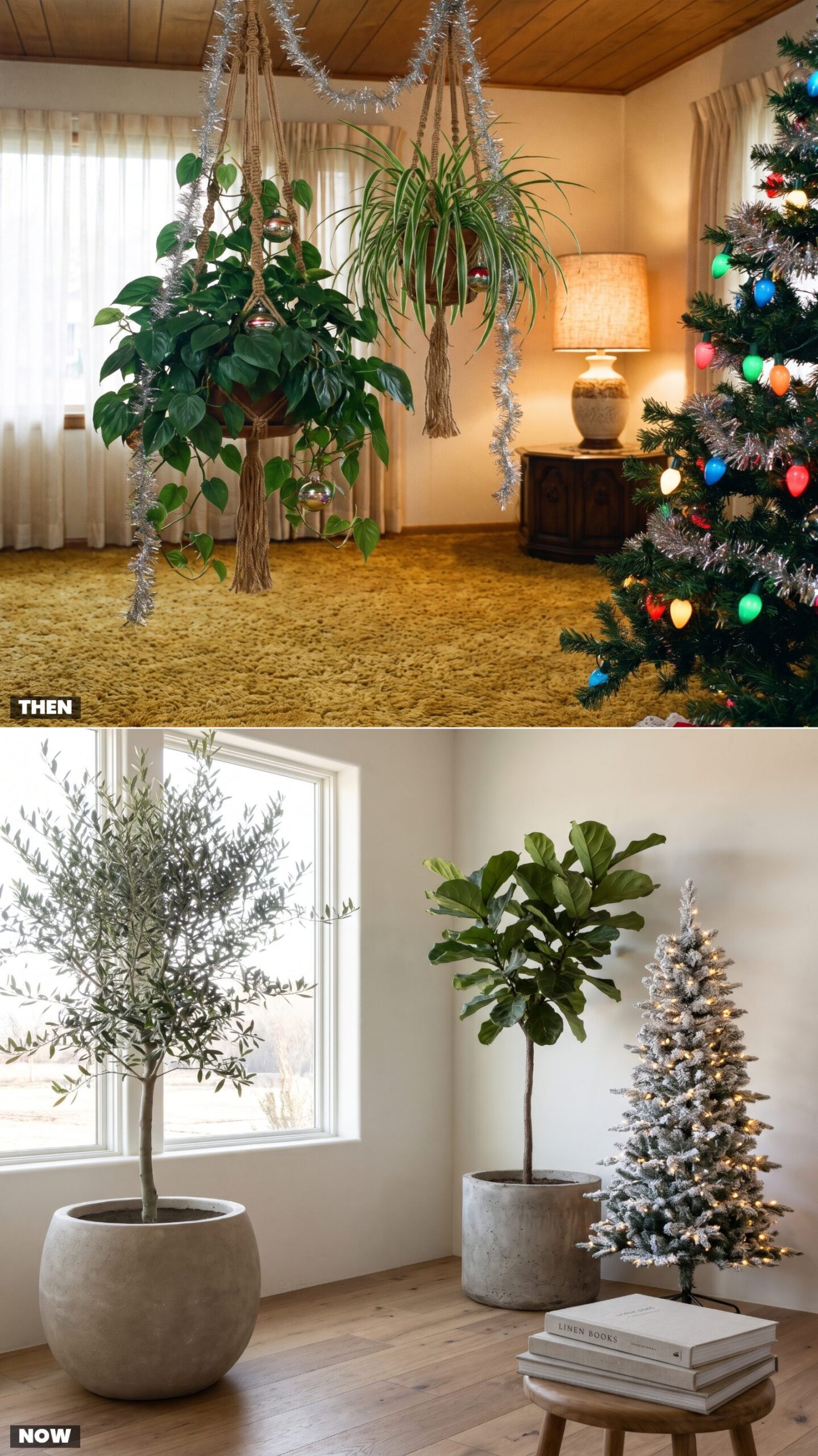
Back in 1978 a houseplant wasn’t safe come December. You draped the philodendron in silver lametta, hung a few glass balls off the spider plant, and called it festive. It shed tinsel into the shag until Easter.
Now the greenery does the work by just being green. A real olive tree in a matte stone planter reads as calm and alive, and it needs nothing hung on it to earn the corner. Live plants also pull your eye to a spot the tree usually hogs.
7. The Rolling Cocktail Cart Grows Up Into a Built-In Beverage Station
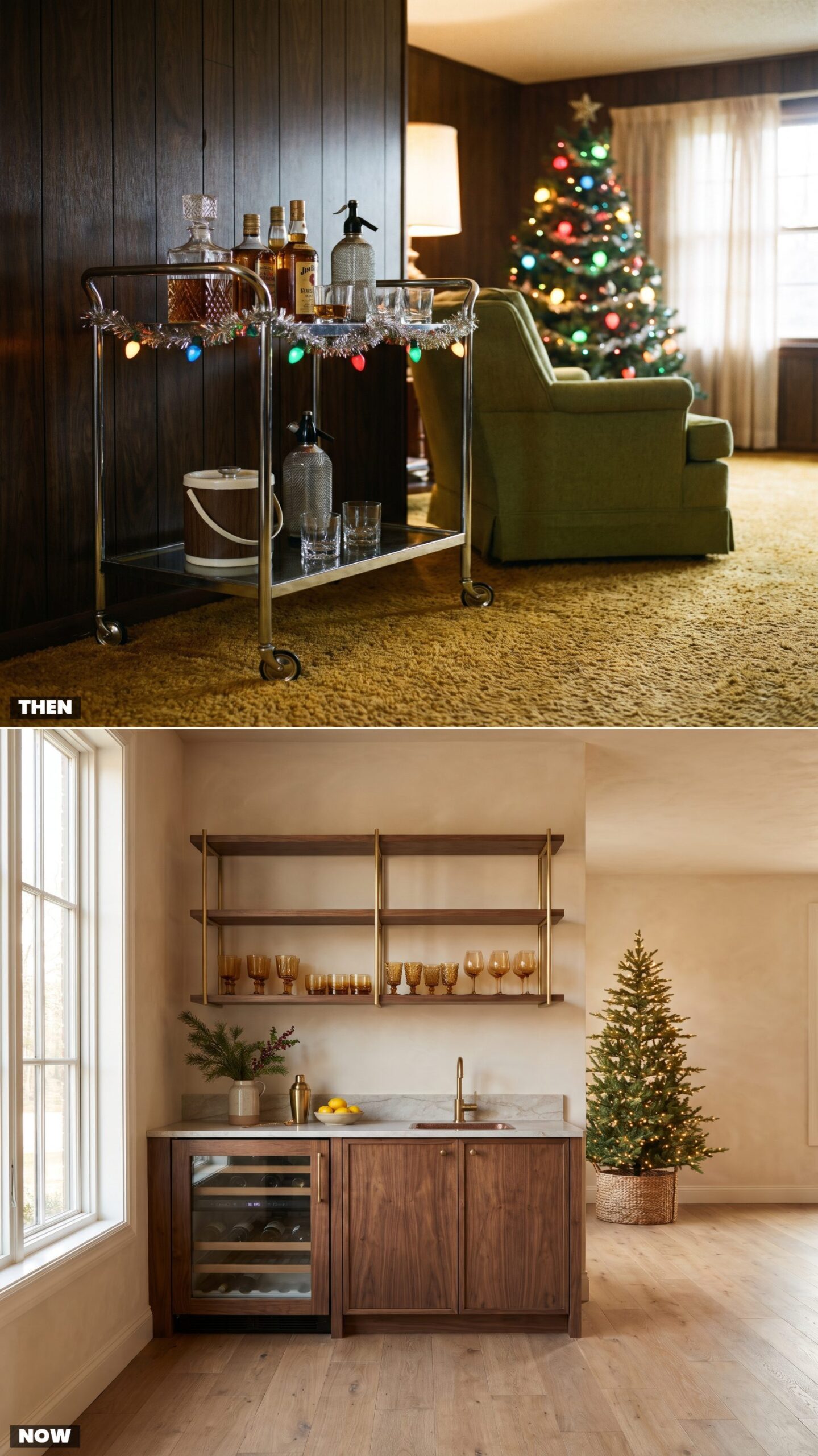
The rolling bar cart was a flex and a liability. One sharp turn through the living room and the decanter slid. Still, there was something to it: wheel the whole operation over to the guests and let the tinsel-wrapped top shelf do the talking.
The modern version stays put. A built-in station in walnut and stone with a little undercounter fridge means the ice never runs out and nothing rolls into a doorframe. You lose the theater, sure. You gain a sink.
6. From Cut-Glass Punch Bowl to the Self-Serve Cocoa Bar
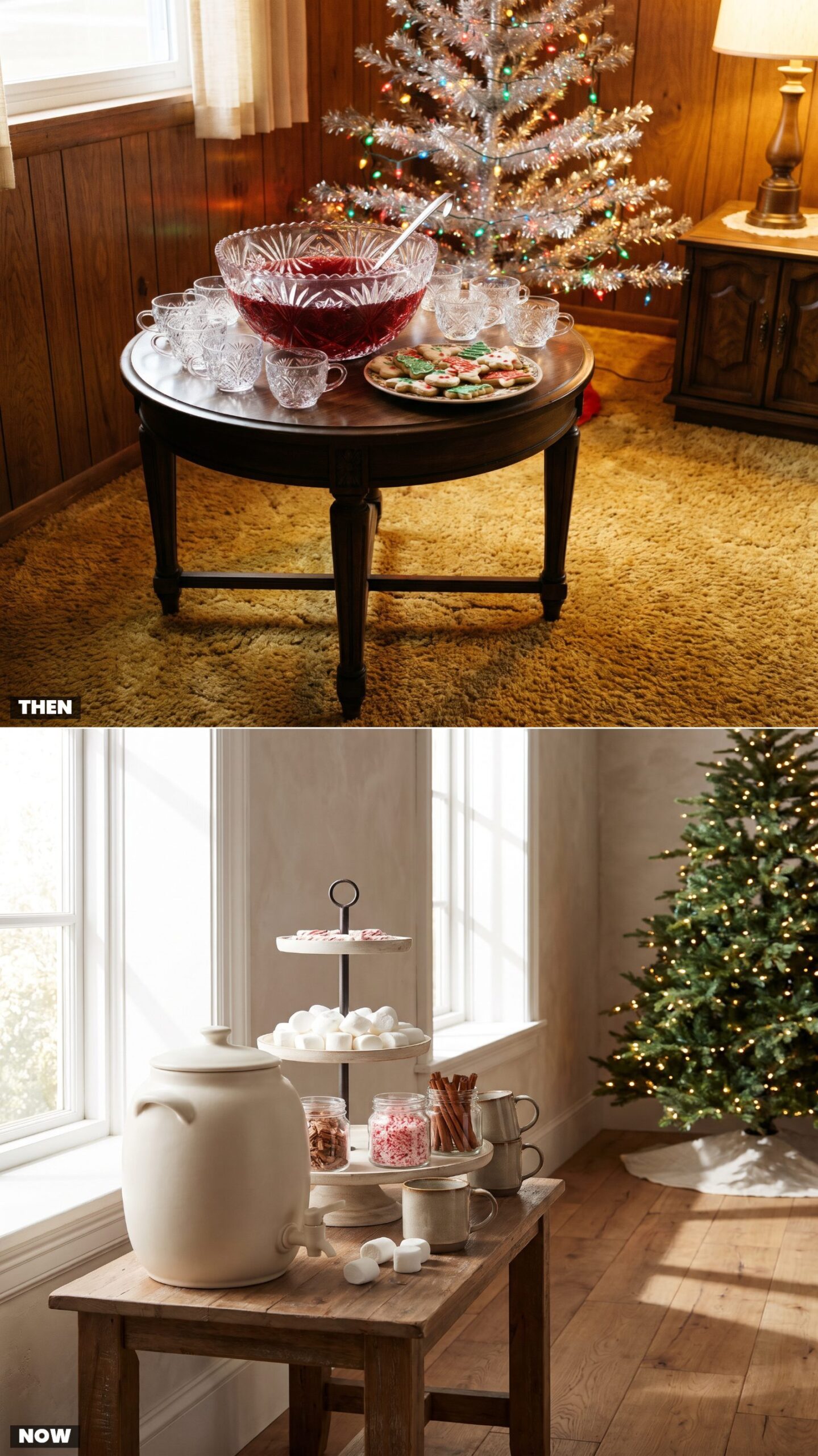
The punch bowl was a 1978 centerpiece and a commitment. One enormous bowl of red liquid, a ladle, a ring of little glass cups, and a prayer that nobody knocked it off the table. Everyone drank the same thing whether they liked it or not.
The cocoa bar flipped the logic entirely. Set out an urn, little jars of peppermint and marshmallows, a stack of stoneware mugs, and let people build their own. Kids love it, it photographs beautifully, and you’re not scrubbing punch out of the carpet at midnight.
5. Where the Ashtray Sat, a Scented-Candle Tray Now Lives
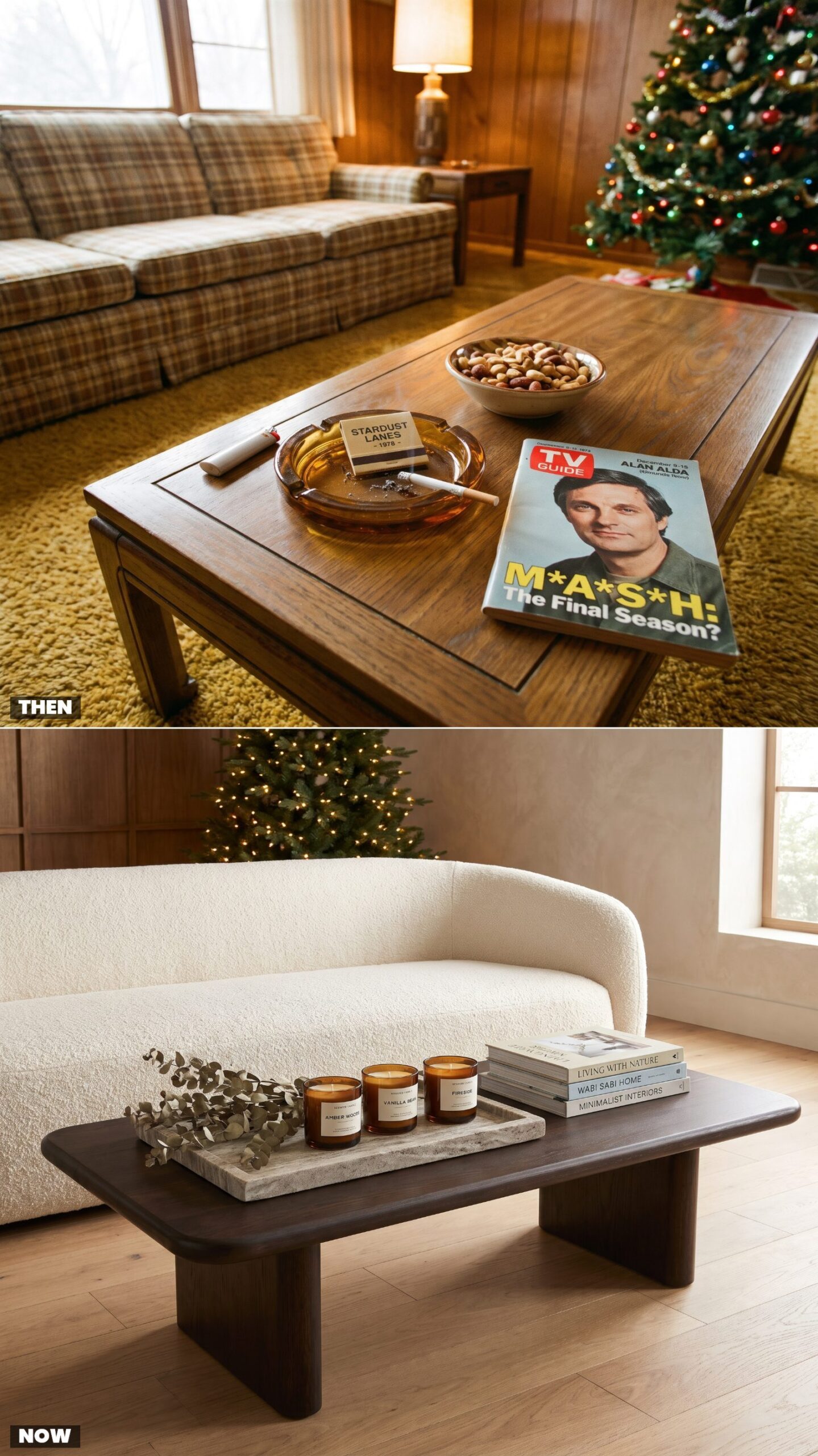
The ashtray held court on the coffee table in 1978. Heavy amber glass, a book of matches, a curl of smoke drifting past the tree lights. Nobody thought twice about it. It was just part of the room.
That exact spot now holds a stone tray with a few amber-glass candles and a bundle of eucalyptus. Same instinct, lighting something for the mood, completely different result. The room smells like balsam and clove instead of last night’s party.
4. Toy Catalog Piles vs. a Curated Children’s Christmas Corner
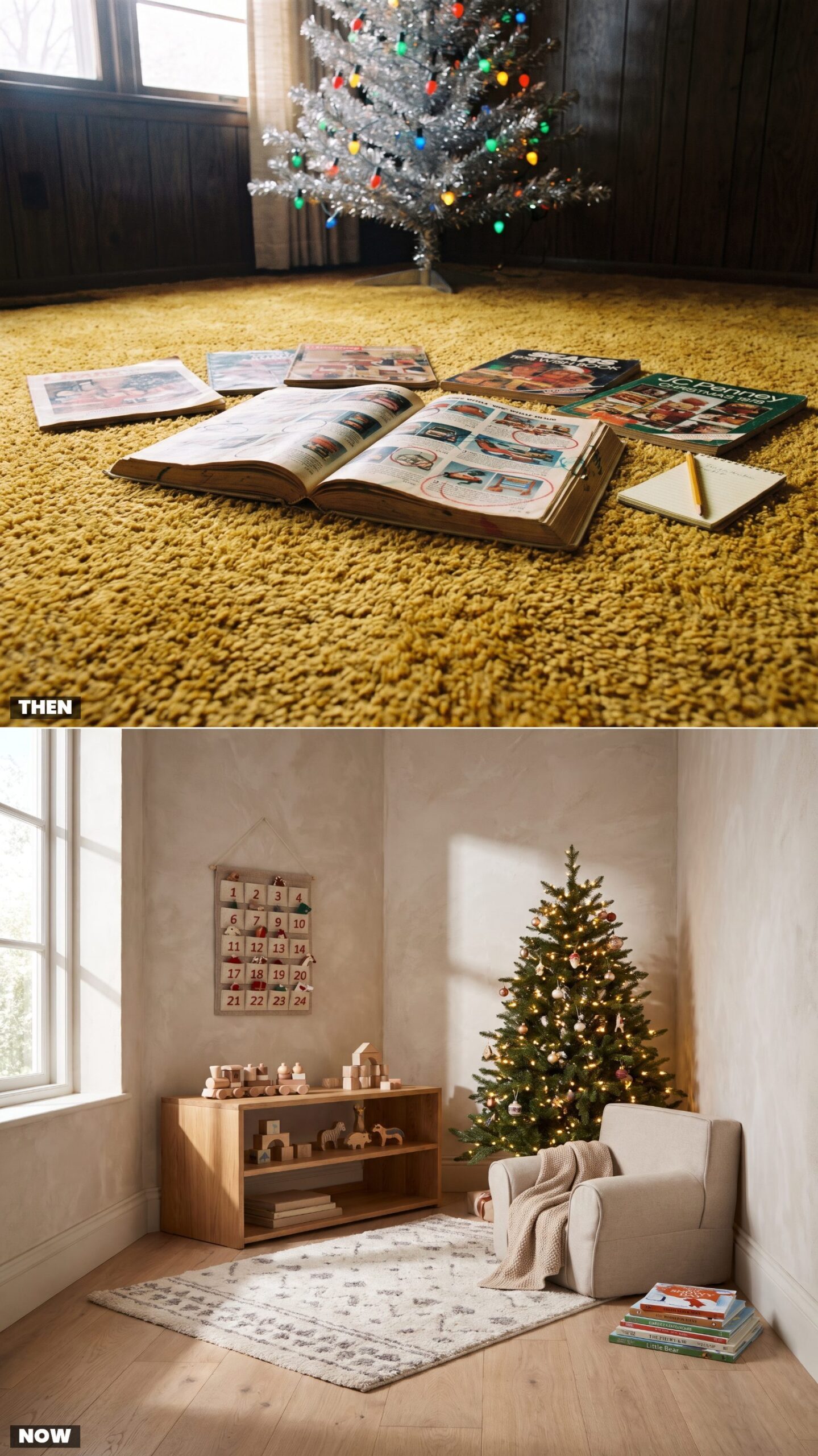
The thick toy catalog hit the mailbox in November and the countdown began. Kids sprawled on the shag, dog-eared the wish-book, circled everything in crayon, and negotiated the list down to something a parent might actually buy. That stack of catalogs was the planning committee.
Now the kids’ zone is a design decision. A low play shelf, a felt advent calendar on the wall, a wool rug and a reading nook that looks good enough to leave out. Pair it with a bright attic decor approach and the whole corner feels intentional instead of chaotic.
3. Crocheted Afghan Throws vs. the Oversized Faux-Fur Blanket
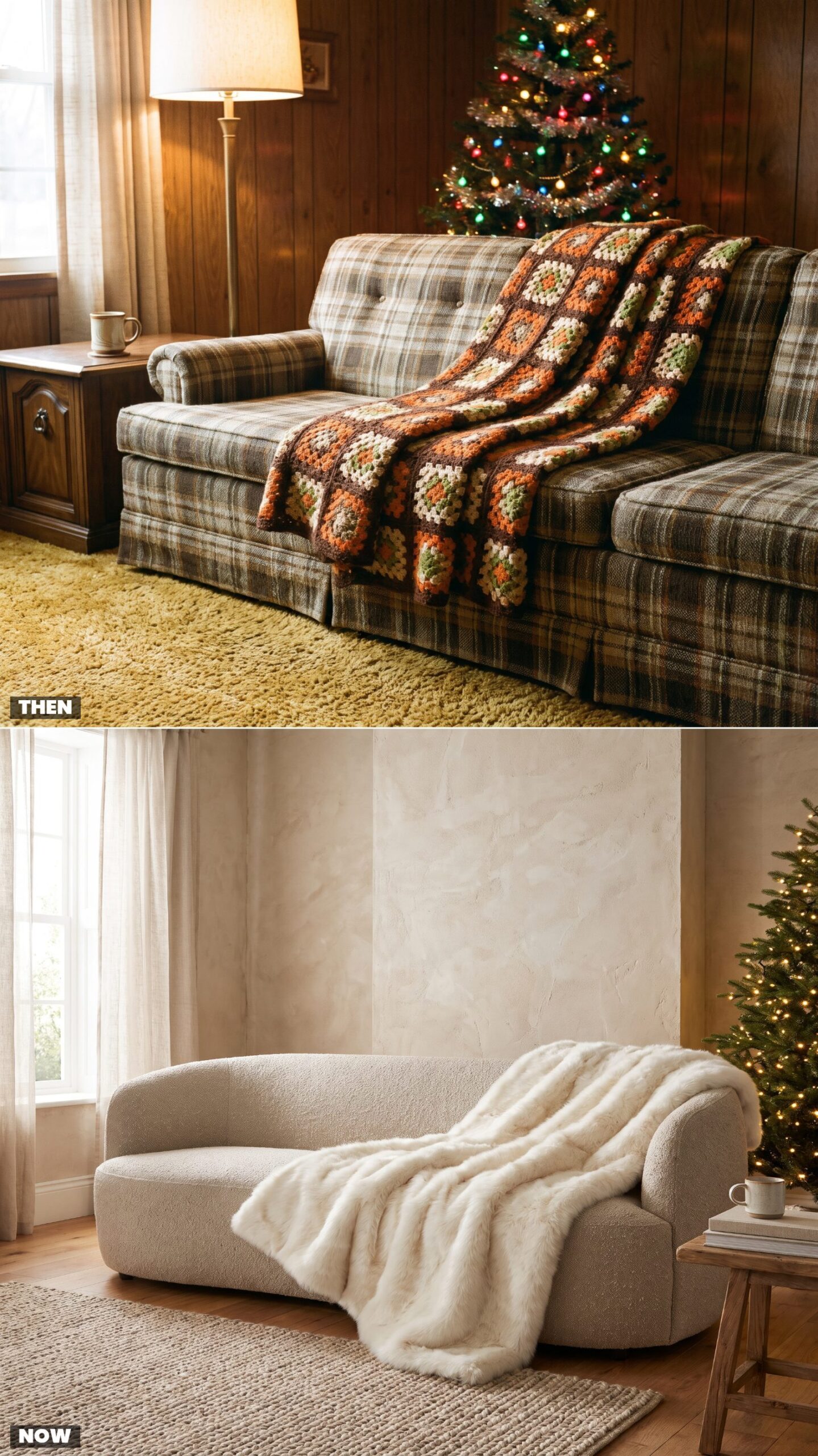
Every 1978 sofa had an afghan. Granny squares in orange, brown and avocado, crocheted by someone in the family and thrown over the back for whoever got cold during the Christmas special. It had history. It also scratched a little.
The modern throw is an oversized ivory faux-fur thing you sink into — softer, bigger, no yarn ends to pick at. I’ll admit I miss the afghans a bit. They meant somebody sat down for a whole weekend and made you a blanket. A faux-fur throw arrives in a box.
2. Needlepoint Holiday Cushions Give Way to Layered Designer Pillows
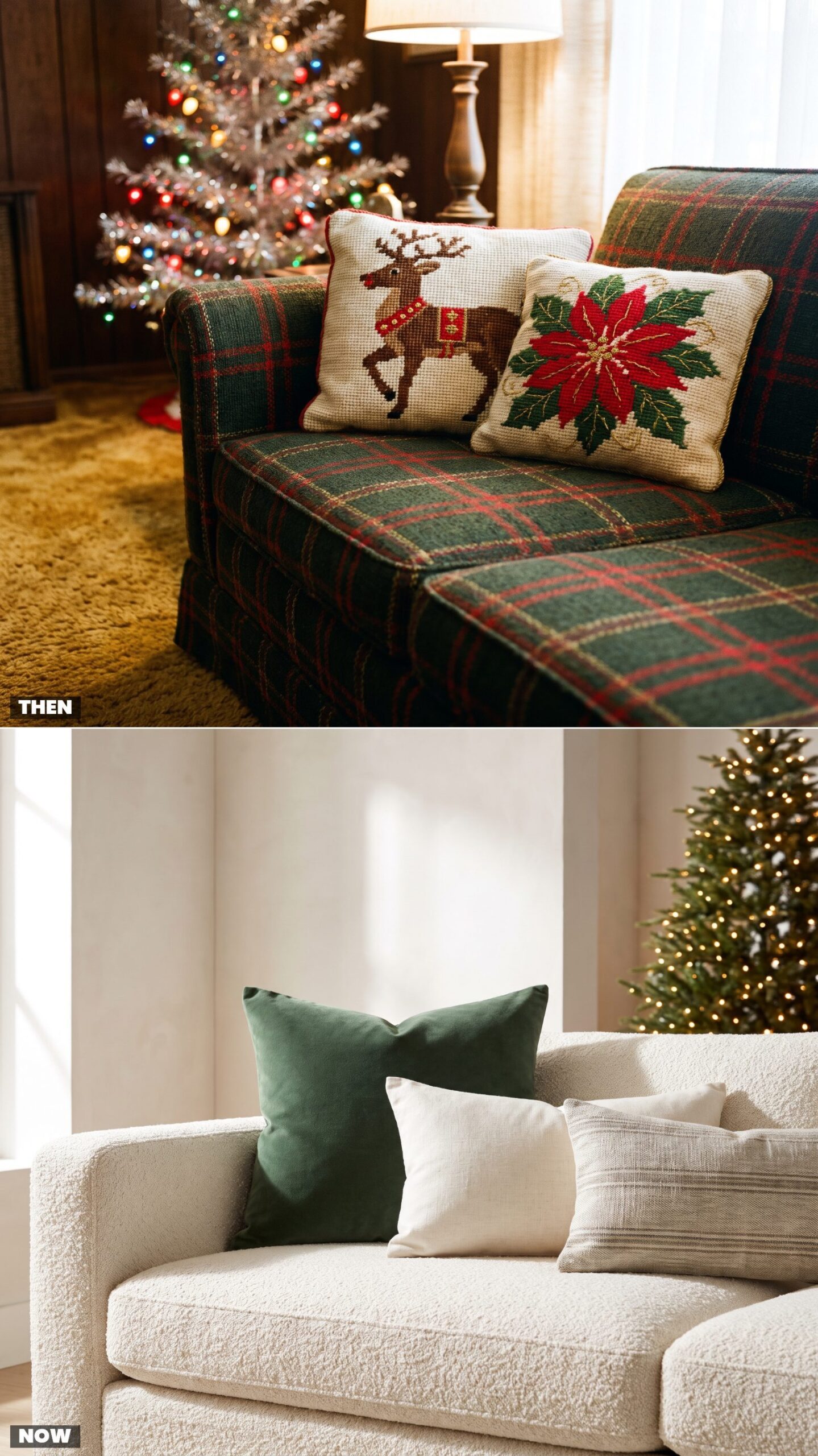
Needlepoint cushions carried the literal message in 1978. A stitched reindeer, a poinsettia in red and gold, the holiday spelled out in wool thread. Usually a gift, usually displayed out of obligation, and usually a little stiff to lean against.
The current move is texture over message. A forest-green velvet pillow next to a cream linen lumbar and a woven stripe says Christmas without a single reindeer in sight. The seasonal color does the talking, so you can store it all in January without the room looking stripped.
For the pillows themselves, Home Stratosphere readers lean simple: 56% said they would buy a solid set over patterned or striped, and most of them said it came down to looks.
1. Flash-Cube Family Photos vs. the Smartphone Portrait Station
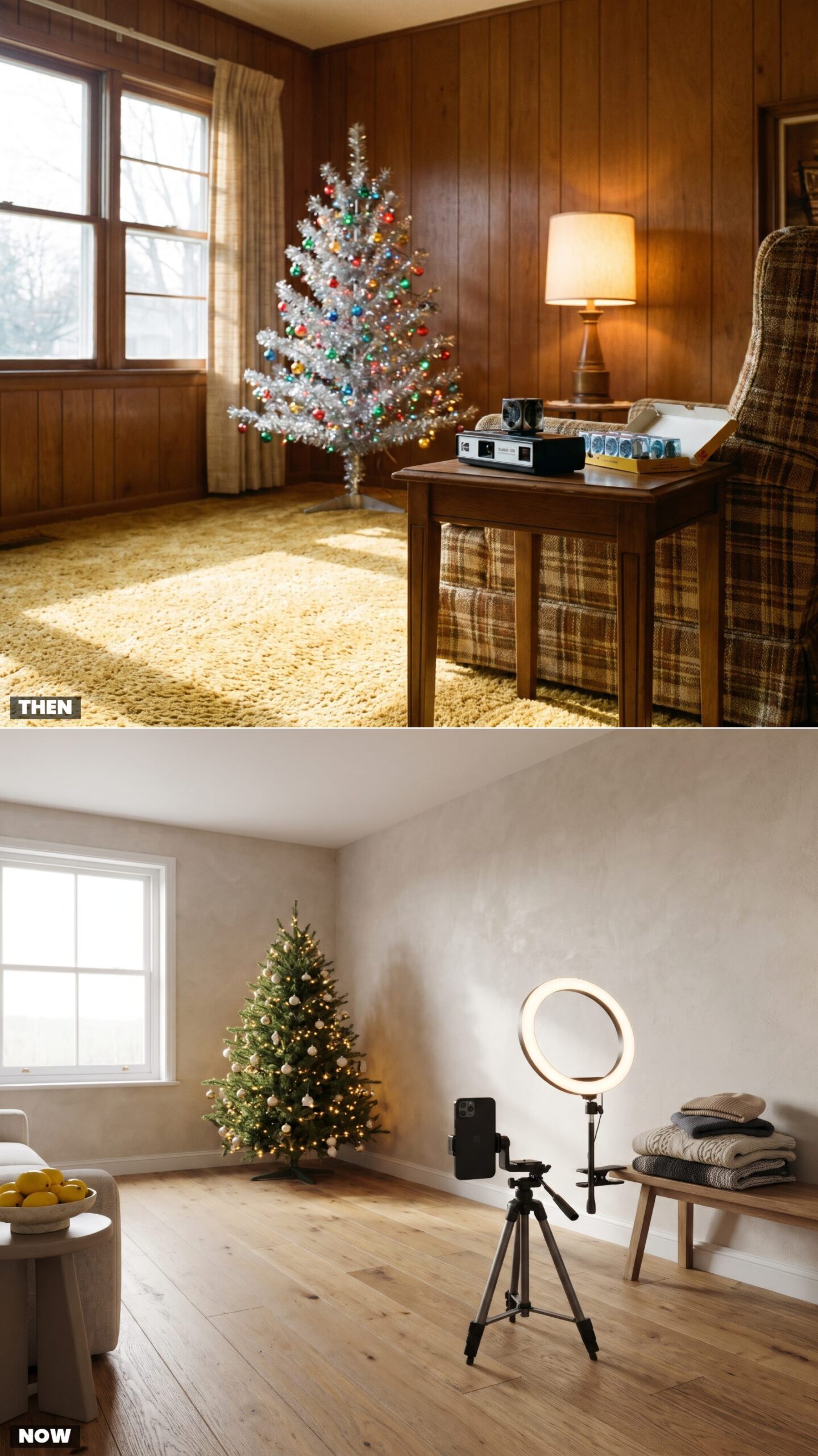
The 1978 family photo was a gamble. Boxy camera, a four-sided flash cube that blinded everyone, one shot, then two weeks of waiting for the drugstore to tell you half the roll came back with closed eyes and a thumb over the lens.
Now the living room doubles as a portrait studio. A phone on a tripod, a soft ring light, forty takes until somebody’s eyes are open, and the good one is on the group chat before dessert. The spontaneity is gone, and so is the suspense.
One thing the flash cube had going for it: nobody asked to retake it. You got what you got, and that blurry photo of a kid mid-sneeze is now the one everyone laughs hardest at.