
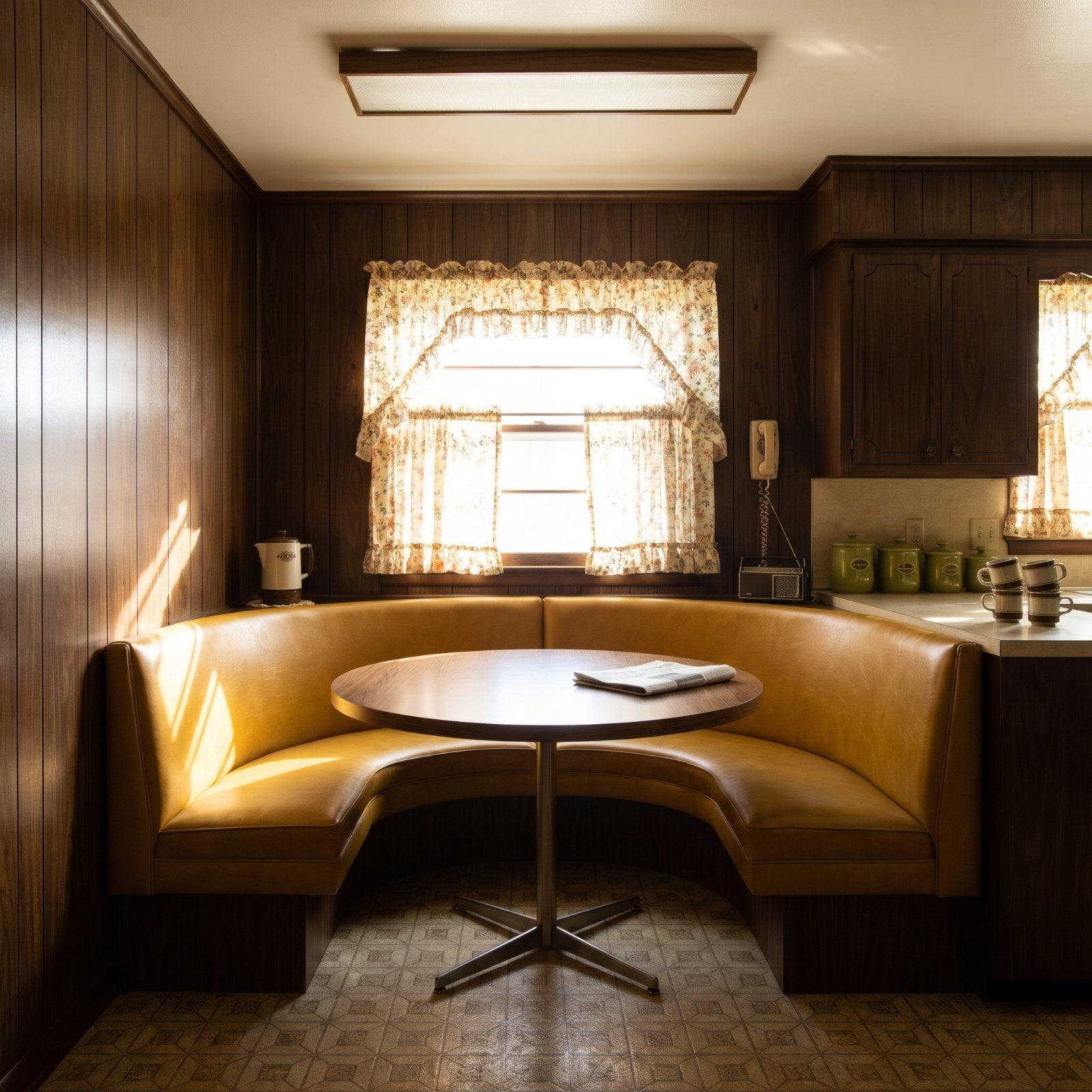
The smell hit you first — burnt toast, instant coffee, and the vinyl of a booth that stuck to the backs of your legs in July. The breakfast nook of 1978 was a tight little corner where the whole family squeezed in before school and work, elbows touching, orange juice sweating onto gold laminate. The bones of that corner survived. Almost nothing else did. Put the two side by side and the gap between them says more about how we live now than any renovation show ever could.
38. Wraparound Vinyl Booths to Streamlined Linear Banquettes
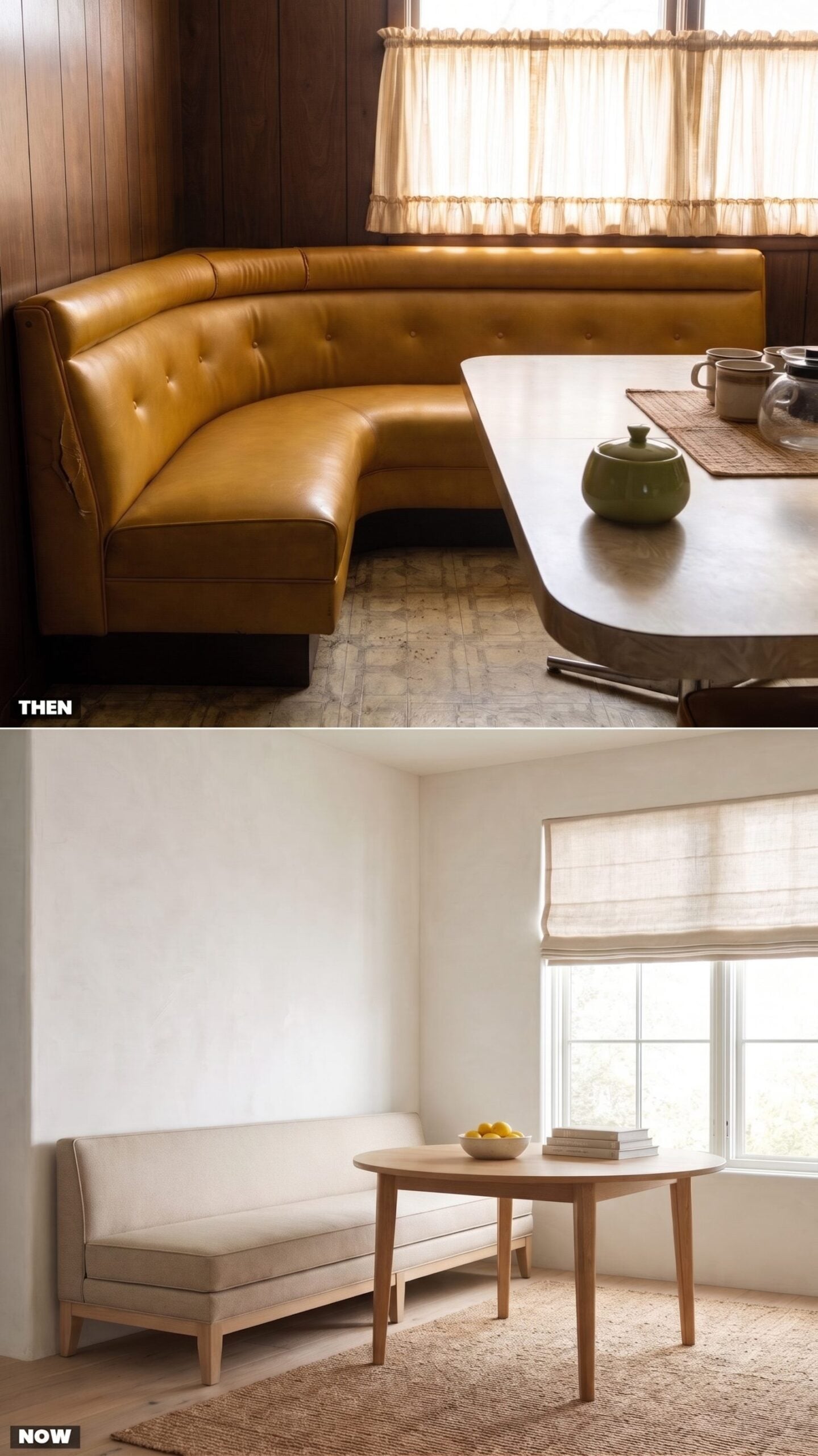
The 1978 booth was built to trap you, and that’s meant fondly. Deep tufted harvest-gold vinyl booth seating wrapped a corner so tight that four people and a cereal box left nobody room to breathe. The modern version loosens its grip — a single oatmeal upholstered banquette runs flat along one wall, leaving the corner open and the room reading larger than it actually is.
In order to come up with the very specific design ideas, we create most designs with the assistance of state-of-the-art AI interior design software. Also, assume links that take you off the site are affiliate links such as links to Amazon. this means we may earn a commission if you buy something.
The shift tells on us. We stopped needing to pin the whole family in one spot, and now the nook flexes between breakfast, a laptop, and homework spread out at 4pm.
37. Rounded Faux-Wood Laminate Tables to Slender Solid-Oak Ovals
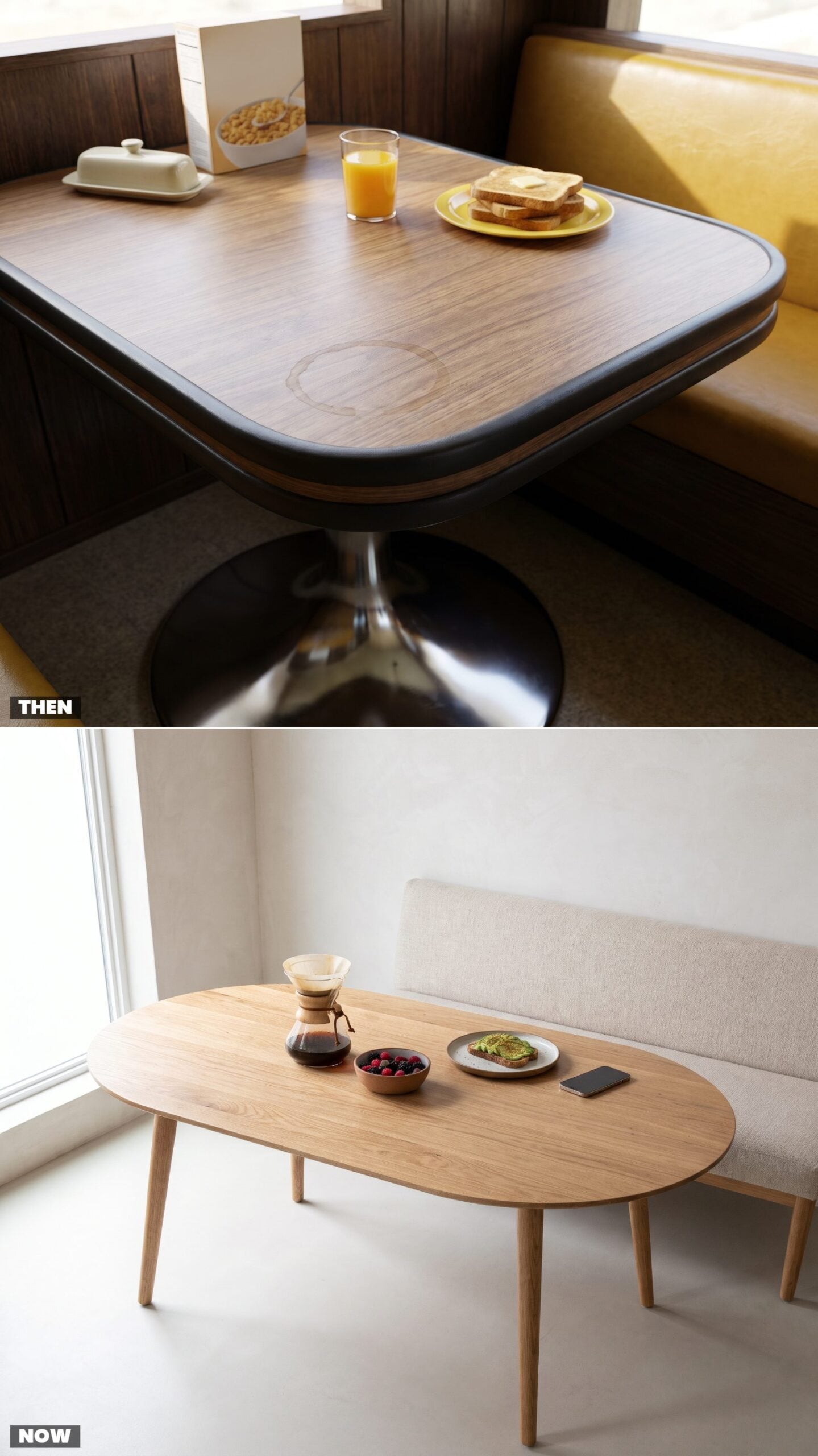
That faux-wood laminate was a miracle of its moment. It shrugged off grape jelly, crayon, and a decade of elbows without complaint. The grain was printed, the base was chrome, and nobody pretended it was anything but durable.
The solid-oak oval table that replaced it is honest about what it is: real grain, tapered legs, a slimmer footprint that lets you slide in and out without the hip-check. We traded bulletproof for beautiful, which only works because we eat differently now. Fewer sticky spills. More phones face-down.
36. Wipe-Clean Naugahyde to Stain-Resistant Performance Fabric
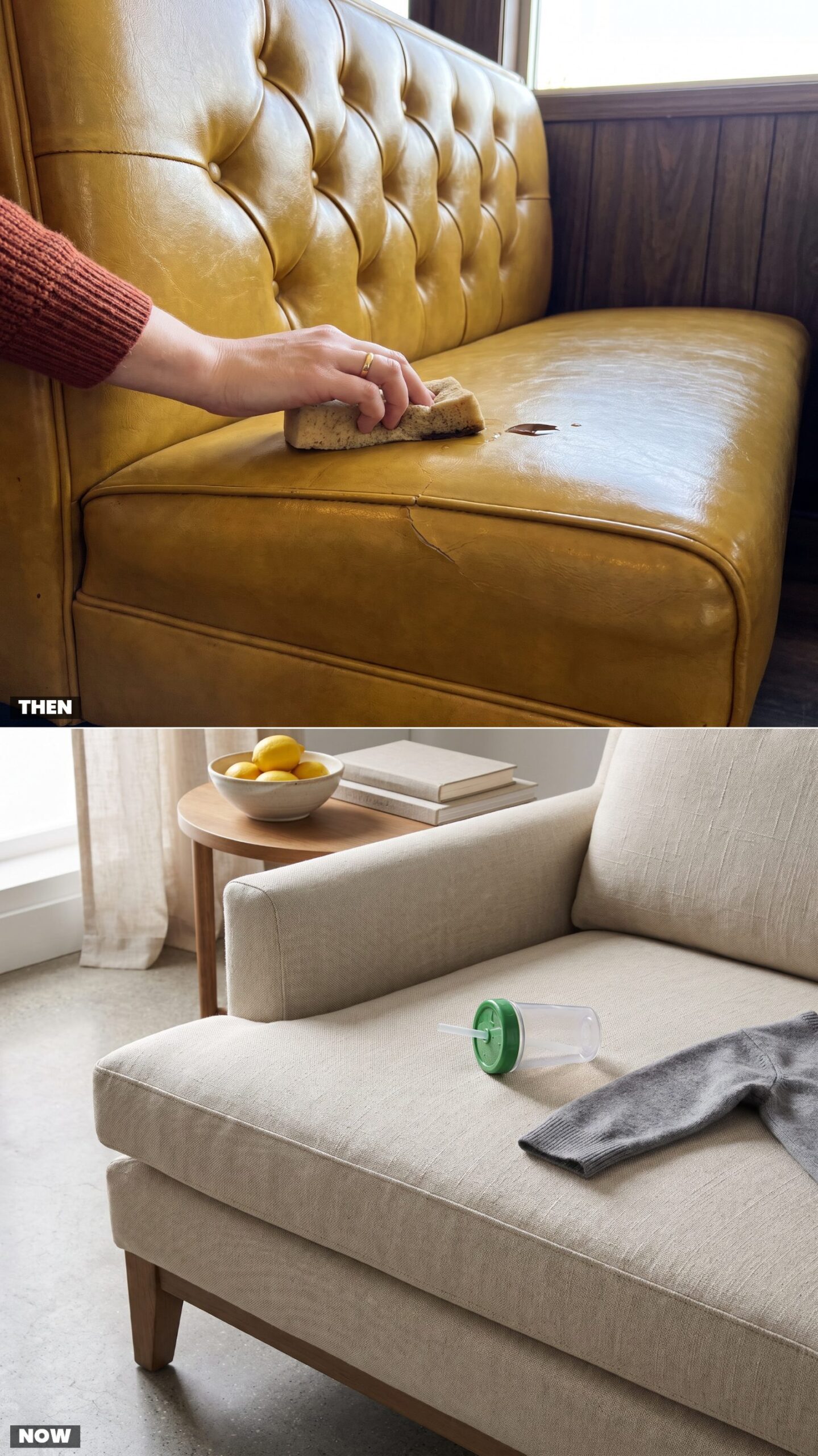
Naugahyde was the working parent of upholstery. Spill milk, swipe a sponge, done. It squeaked when you slid in and burned the back of your thighs every summer, but it never stained and it never quit.
Performance fabric pulls the same shift with better manners. A woven performance fabric cushion wipes clean and shrugs off juice, but it feels like a sweater instead of a raincoat. The job stayed the same. The experience got human.
35. Harvest Gold and Avocado to Warm Layered Neutrals
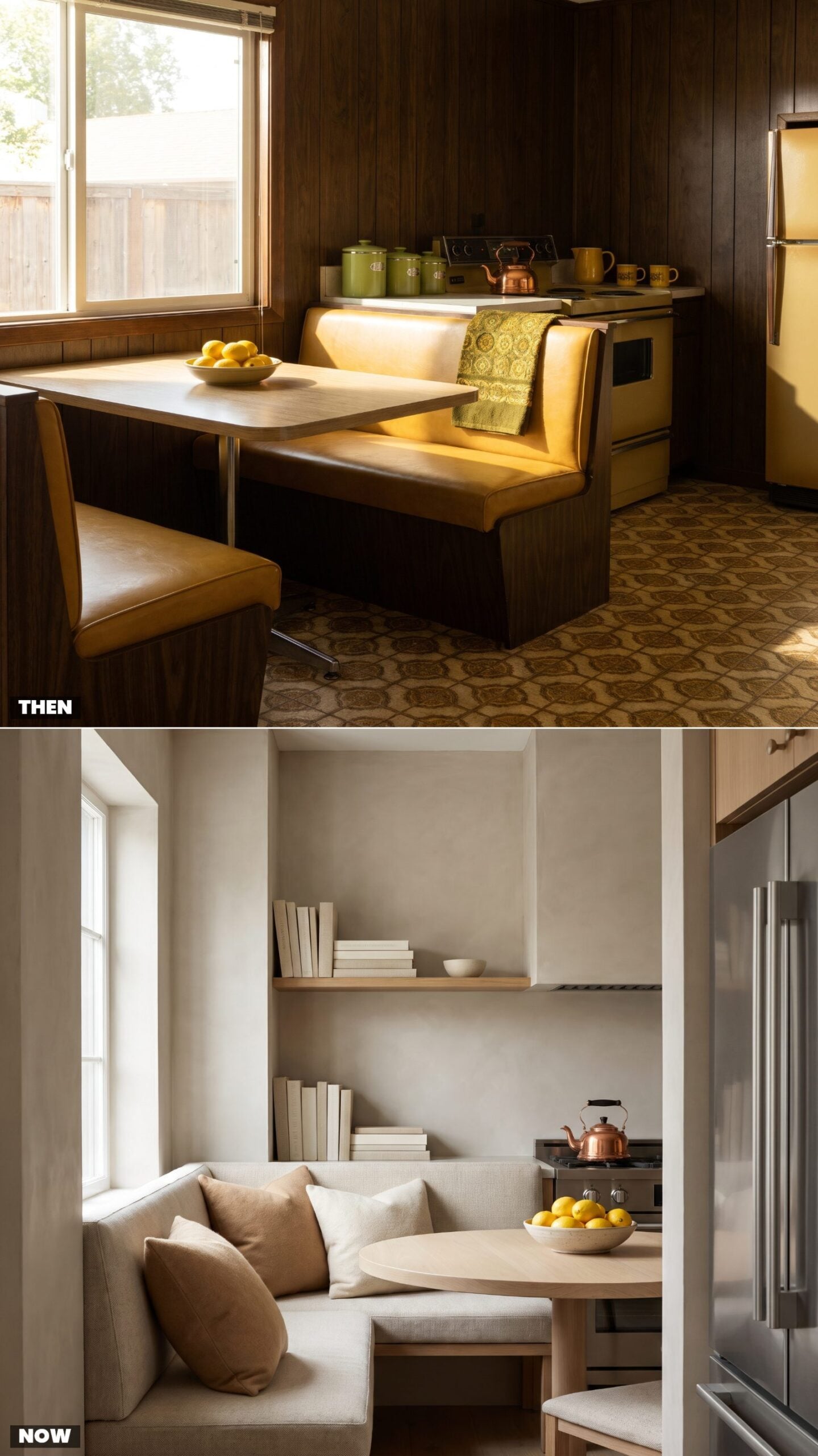
Harvest gold and avocado weren’t accents. They were the whole room, right down to the fridge and the canister set. The 1970s committed to a mood with zero hesitation, and honestly, there was a confidence to it we almost miss.
Now the nook runs on camel and cream textiles layered over greige plaster, and nothing shouts. The color comes from material and light instead of pigment. An oatmeal linen cushion against pale oak does the quiet work the avocado fridge used to do loudly.
34. Dark Wood Paneling to Limewashed Plaster Walls
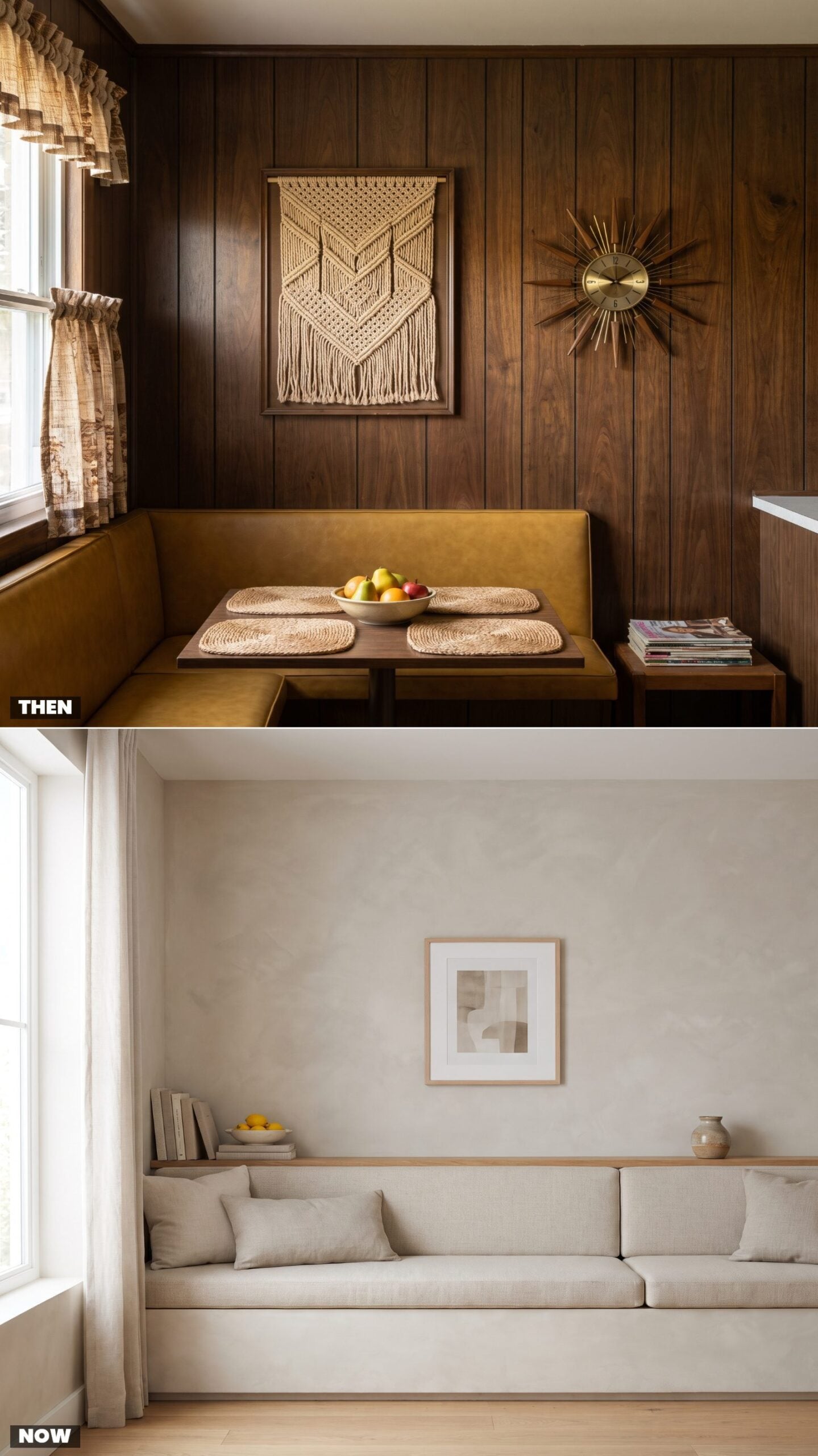
Wood paneling made a room feel like a den you could hide in. It drank the light, cozy in December and cave-like in July. Every 1978 home had at least one wall of it, and the macramé and sunburst clock were practically required by law.
Limewashed plaster does the opposite — it catches daylight and throws it back soft, with a cloudy depth flat paint can’t fake. The corner that used to feel enclosed now feels calm and open. If you like that quiet, tonal look, it pairs well with a japandi design sensibility throughout the rest of the house.
What Our Readers Say
- In our reader votes, rooms with dark wood tones got fewer hearts than the other images in the same articles.
- Gold accents fared no better: Home Stratosphere readers gave rooms with gold accents fewer hearts than the other pictures they were shown alongside.
From Home Stratosphere reader polls and votes.
33. Oversized Daisies to Small-Scale Botanical Wallpaper
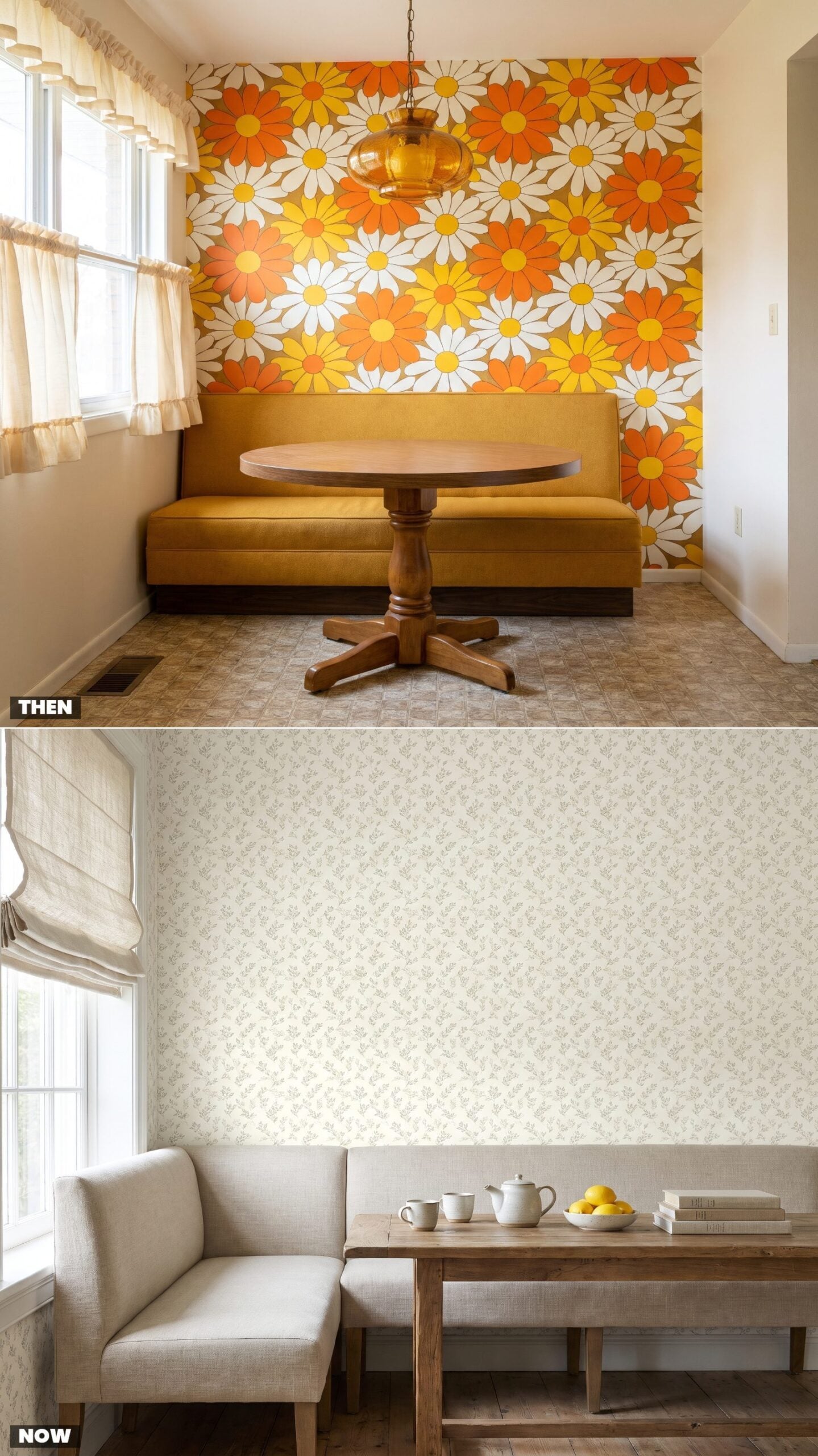
The daisies were enormous. Blooms the size of dinner plates, orange and yellow, climbing the wall with the subtlety of a parade float. Joyful and a little exhausting, which pretty much sums up 1978 pattern taste.
Today’s sage botanical wallpaper whispers where the old one hollered. Small sprigs on an off-white ground add texture without taking over the room. You notice it on the second glance, not from the driveway.
32. Sheet Vinyl Floors to Wide-Plank Engineered Oak
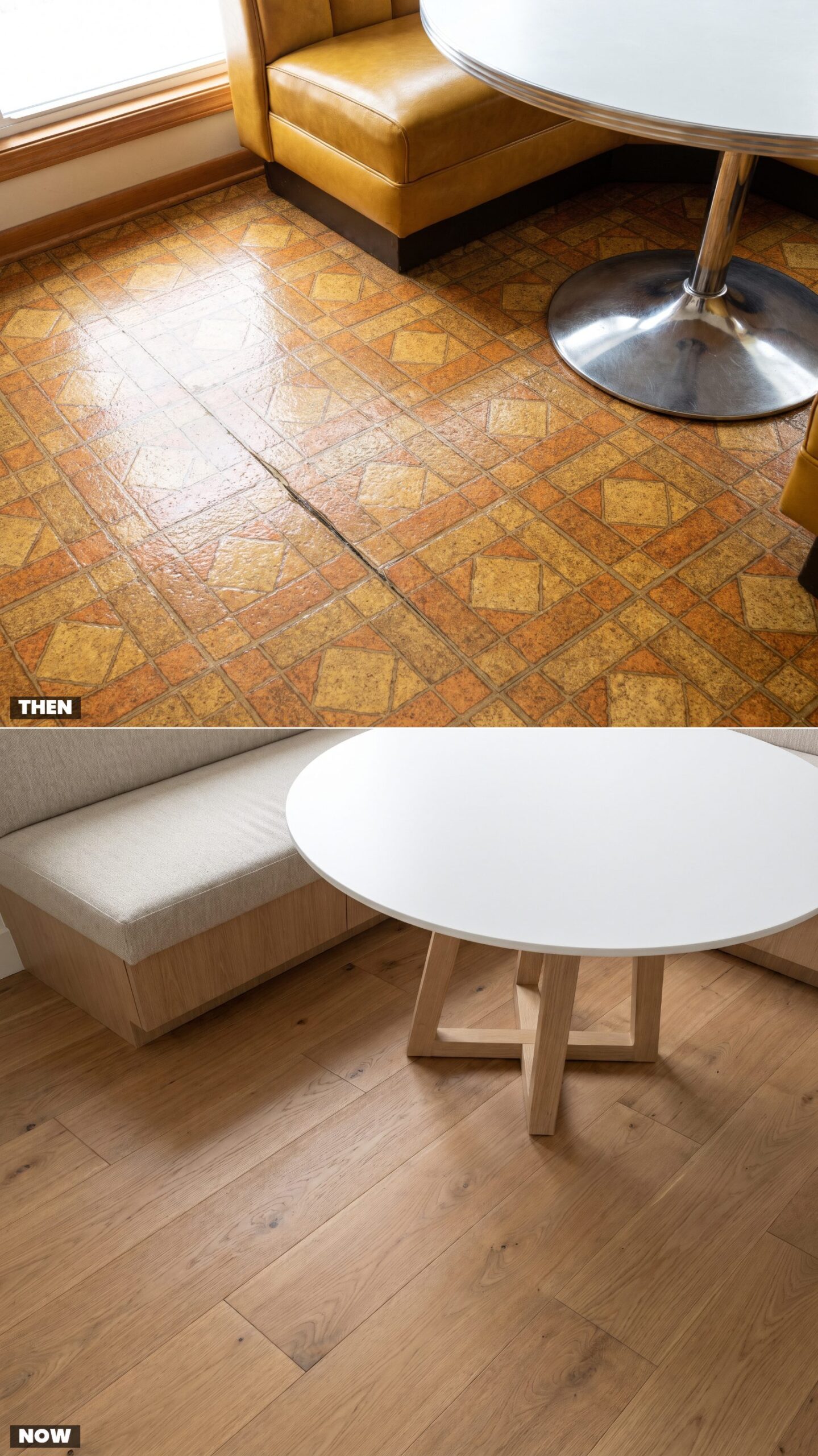
Sheet vinyl faked everything — brick, parquet, Spanish tile, all printed flat and sealed under a sheen you could mop in thirty seconds. Practical, affordable, and loud enough to clash with the daisy wallpaper two feet away.
Wide-plank engineered oak reads as what it is. Real grain, matte finish, warmth underfoot that no printed vinyl ever managed. It’s the quiet anchor the whole nook now stands on.
31. Popcorn Ceilings to Smooth Ceilings with Wood Beams
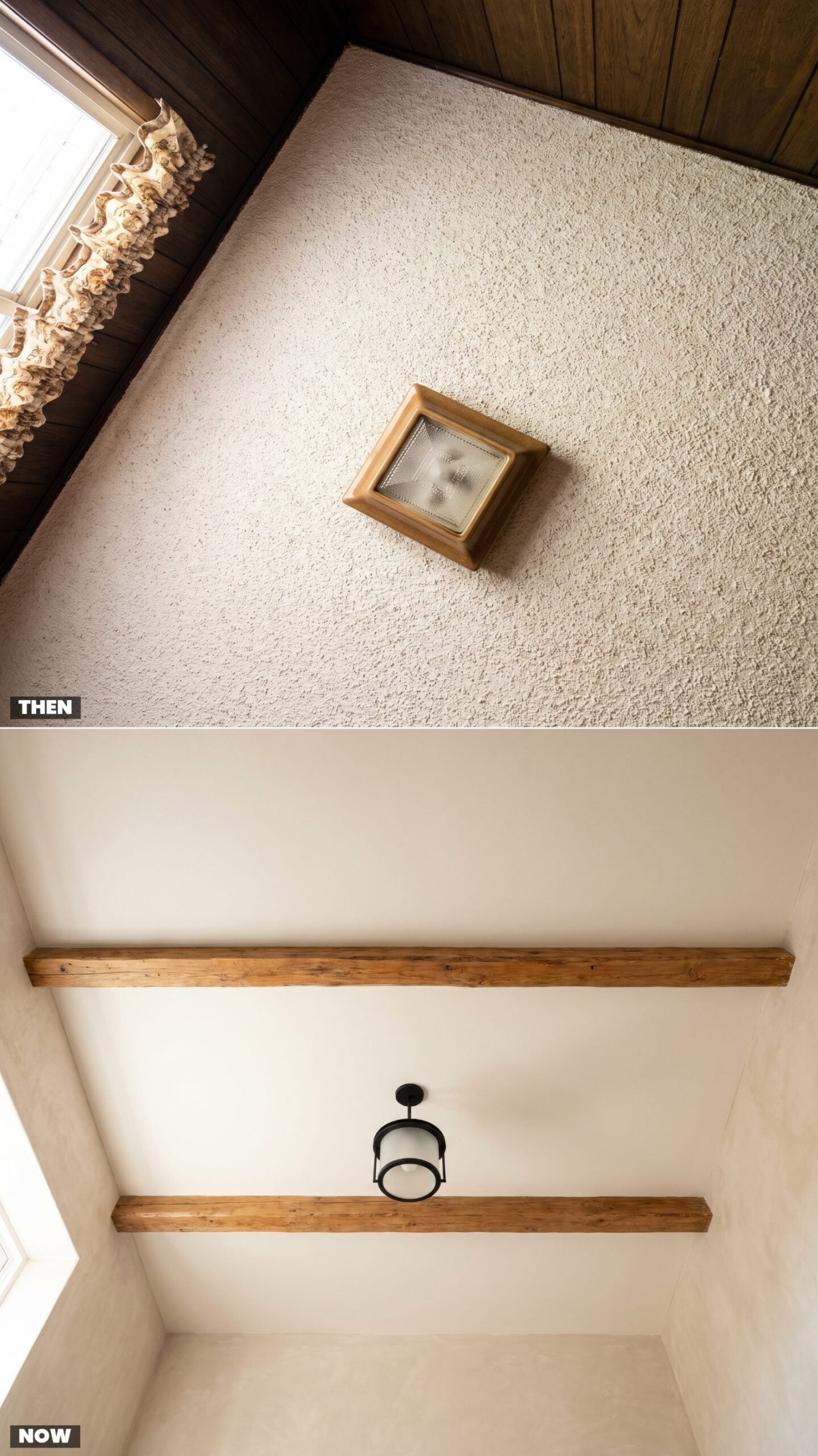
Popcorn ceilings were 1978 looking back at you. Sprayed on fast, they hid every flaw and collected dust nobody could reach. We all pretended we didn’t notice the texture.
Smooth ceilings with wood beams read as deliberate now. The beams add warmth overhead and draw the eye up, which makes a small nook feel taller. Scrape the popcorn, add two beams, and the whole corner changes character.
30. Boxy Fluorescent Fixtures to Oversized Woven Pendants
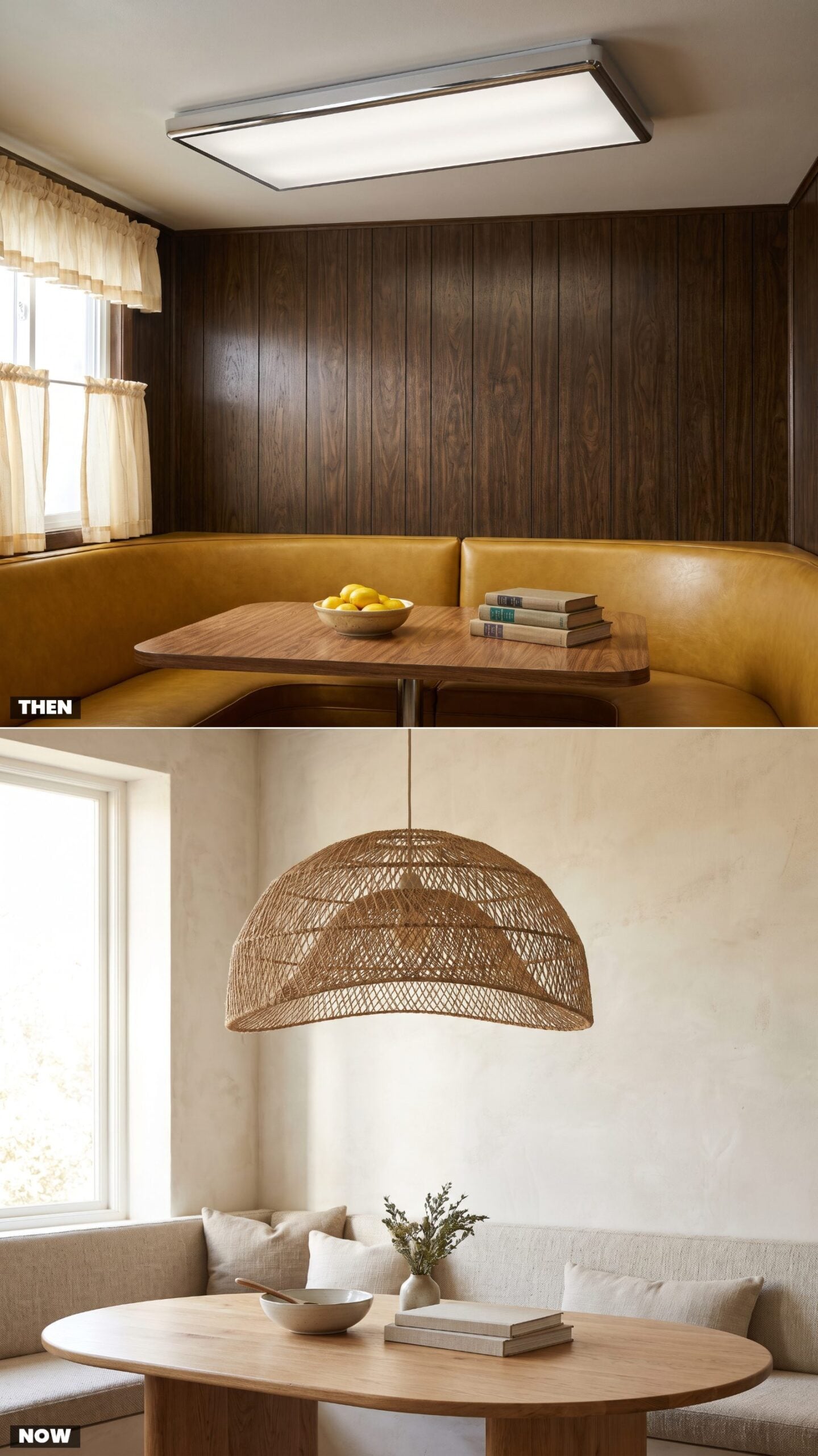
Flat, even, and faintly blue. The boxy fluorescent fixture lit the nook like a classroom, hummed a little, and flickered when it was cold. Nobody loved it, everybody had one.
An oversized woven rattan pendant replaced the panel with some intention behind it. The open weave throws dappled shadows instead of flooding the room flat, and hung low it carves the table into its own little zone. One fixture does the entire mood now. The same instinct shows up in a well-lit bright entryway design, where one strong overhead piece anchors the whole space.
29. Ruffled Café Curtains to Relaxed Roman Shades
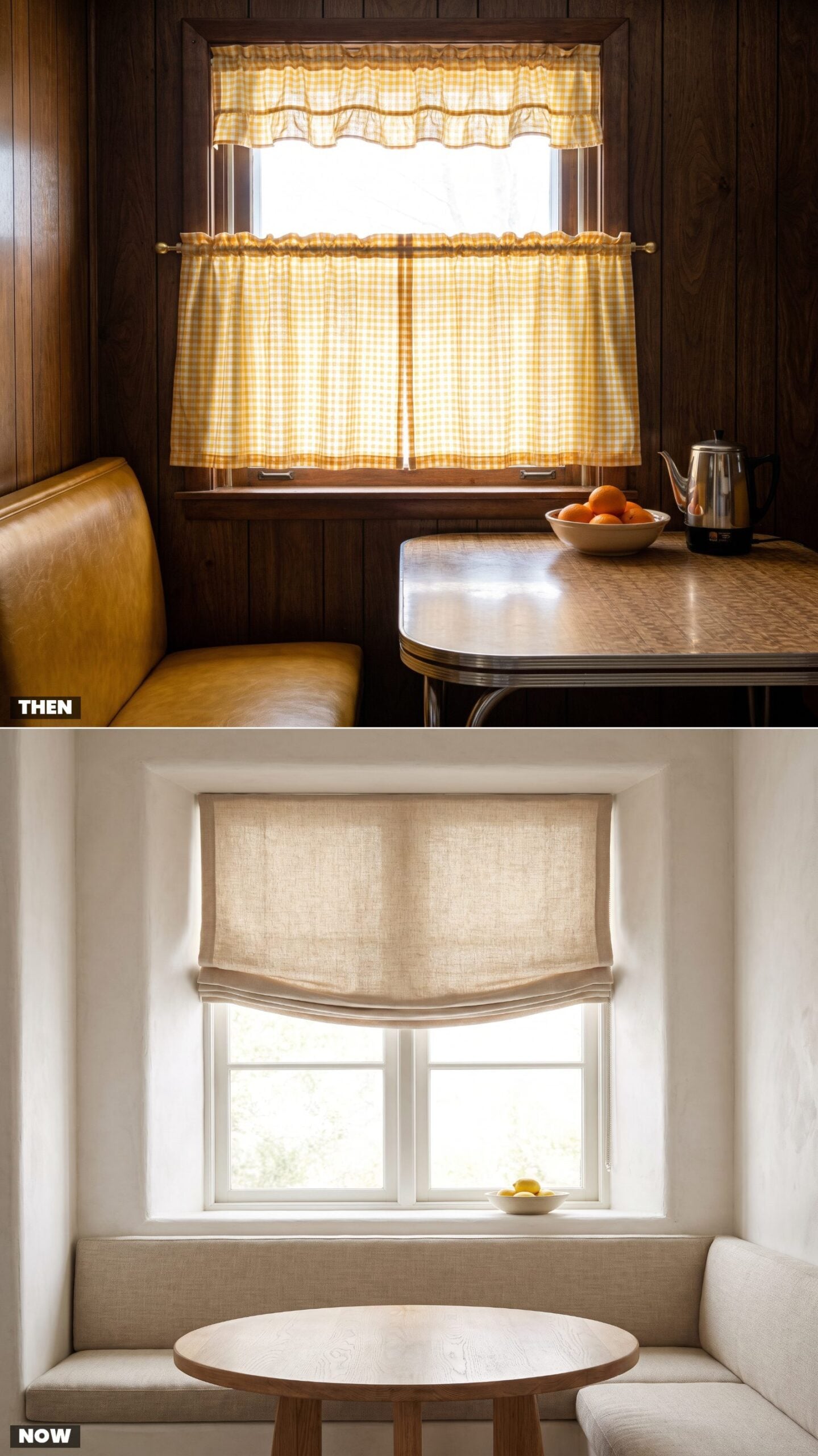
Café curtains were a whole personality. Ruffled valance, gingham tier, brass rod, enough fabric to dress a doll. They covered just the bottom half of the window so you got privacy and light at once, which was genuinely smart.
A linen Roman shade keeps that logic and drops the fuss. Pulled partway, it filters harsh morning sun into something soft, with clean folds where the ruffles used to be. Same job. Fewer frills, more calm.
28. Aluminum Sliders to Black-Framed Energy-Efficient Windows
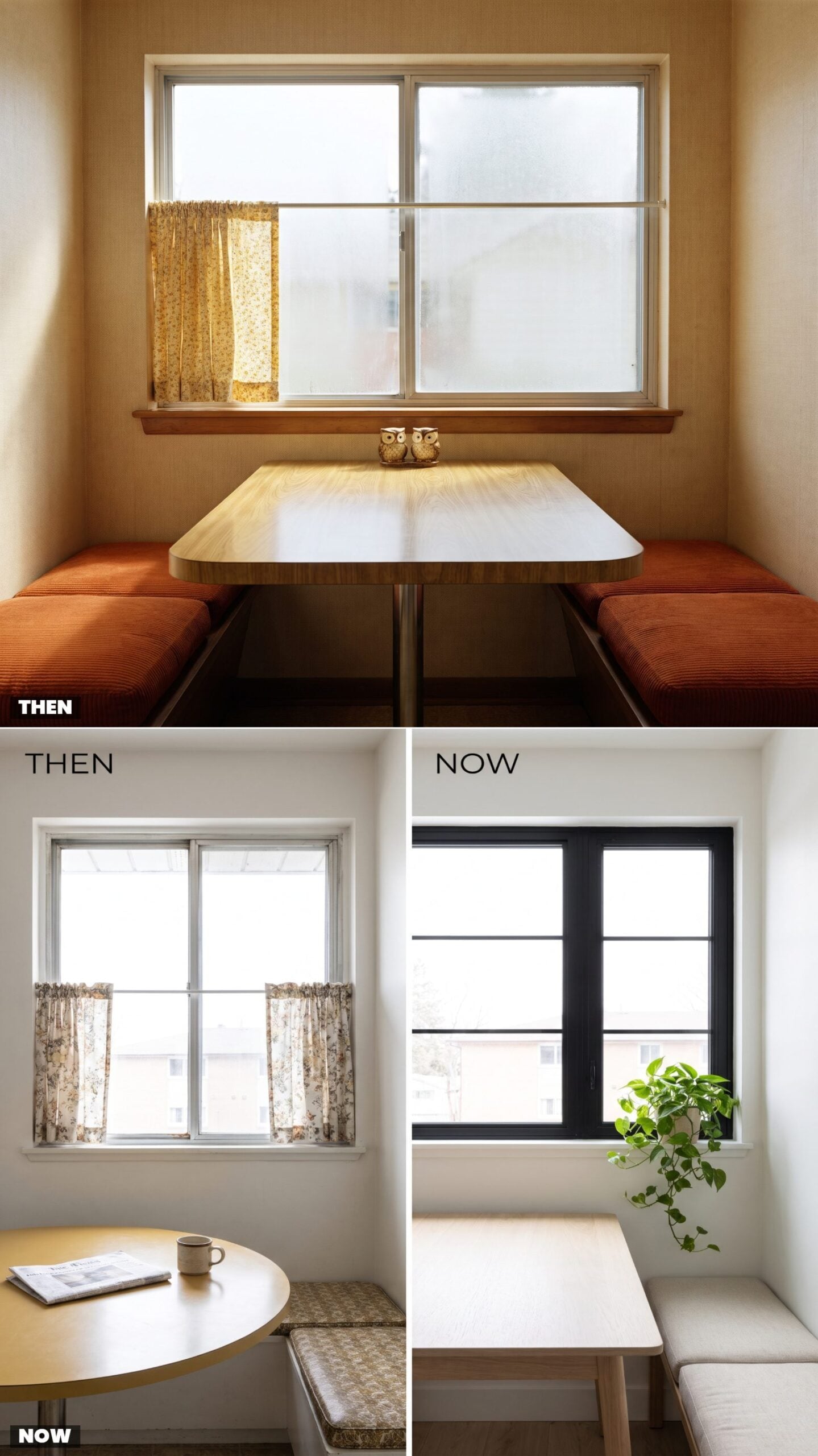
That thin aluminum slider was a workhorse and a liability at once. It sweated in winter, rattled in the wind, and let the heat walk right out through the frame. The cafe curtain was there because the glass offered nothing — no privacy, no insulation.
Now the same wall carries a black-framed casement, double-glazed, the mullions doing more styling work than that old floral curtain ever managed. The dark frame reads like a border drawn around the morning. Light comes in. The draft stays out.
27. Closed-Off Nooks to Glass Doors Opening onto the Patio
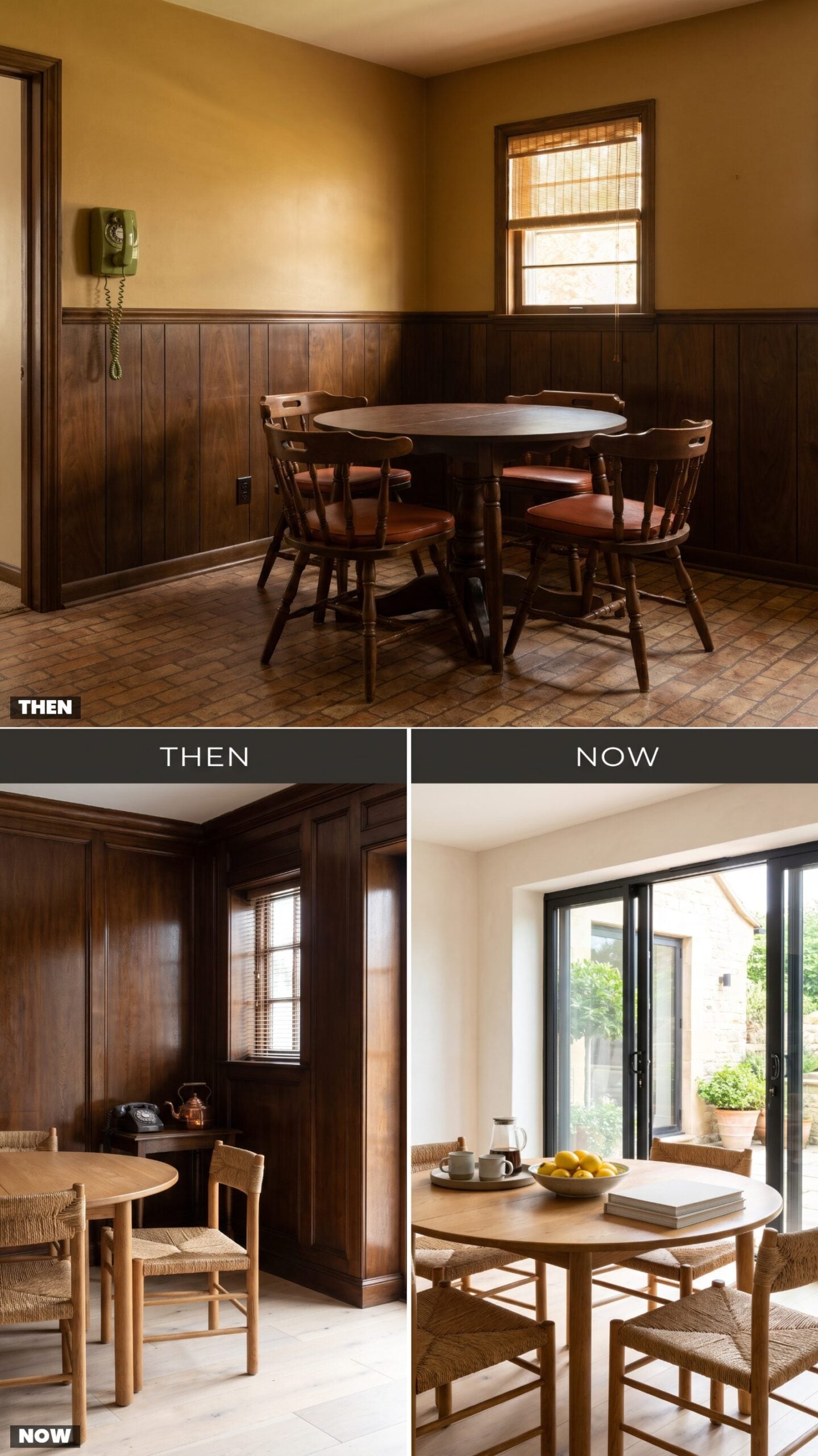
In 1978 the nook was a room-within-a-room, deliberately boxed off so the mess of breakfast stayed out of sight. That solid wall and its one stingy window made the corner private, a little dim, a little hunkered down. The avocado rotary phone on the wall was where the family actually lived.
Knock the wall out and the whole corner breathes. Glass doors pull the patio inside, so coffee happens with one foot nearly outdoors. Want to blur that line even further? The same logic carries over into japandi backyard design, where inside and outside stop arguing with each other.
26. Honey-Oak Cabinets to Flat-Panel Painted Cabinetry
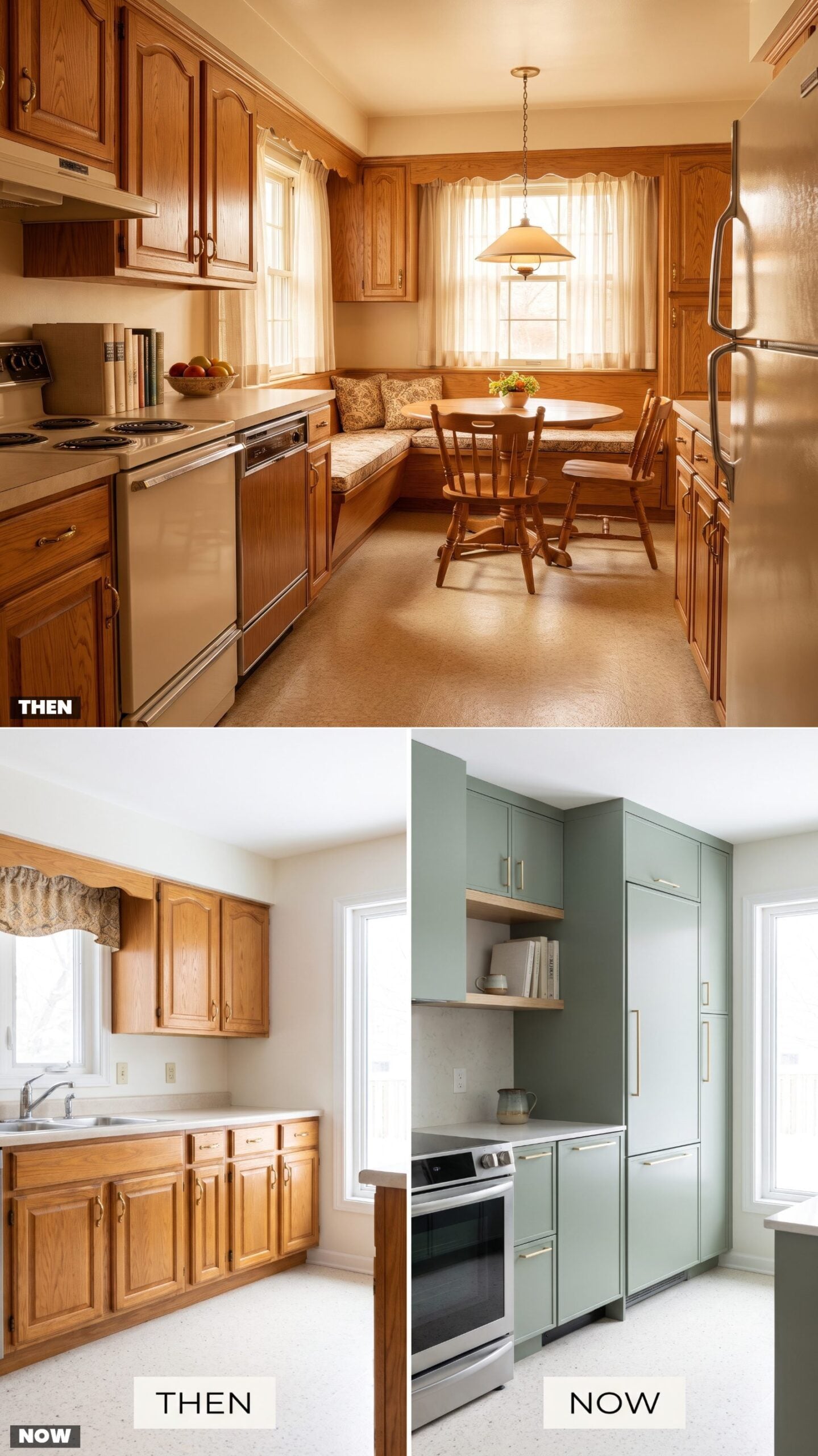
Honey oak ran the suburbs for a solid decade — every grain line showing, every scalloped valance carved like it had somewhere to be. It wasn’t bad wood. It was just loud, and it aged into orange faster than anyone expected.
Flat-panel painted doors in a quiet sage settle the whole corner down. The flat face gives your eye nowhere to snag, so the brass pulls and the window view get to do the talking instead. Painted cabinets can be a hard sell. Then you see one in soft green and the argument ends.
25. Butcher-Block Laminate to Honed Quartz Countertops
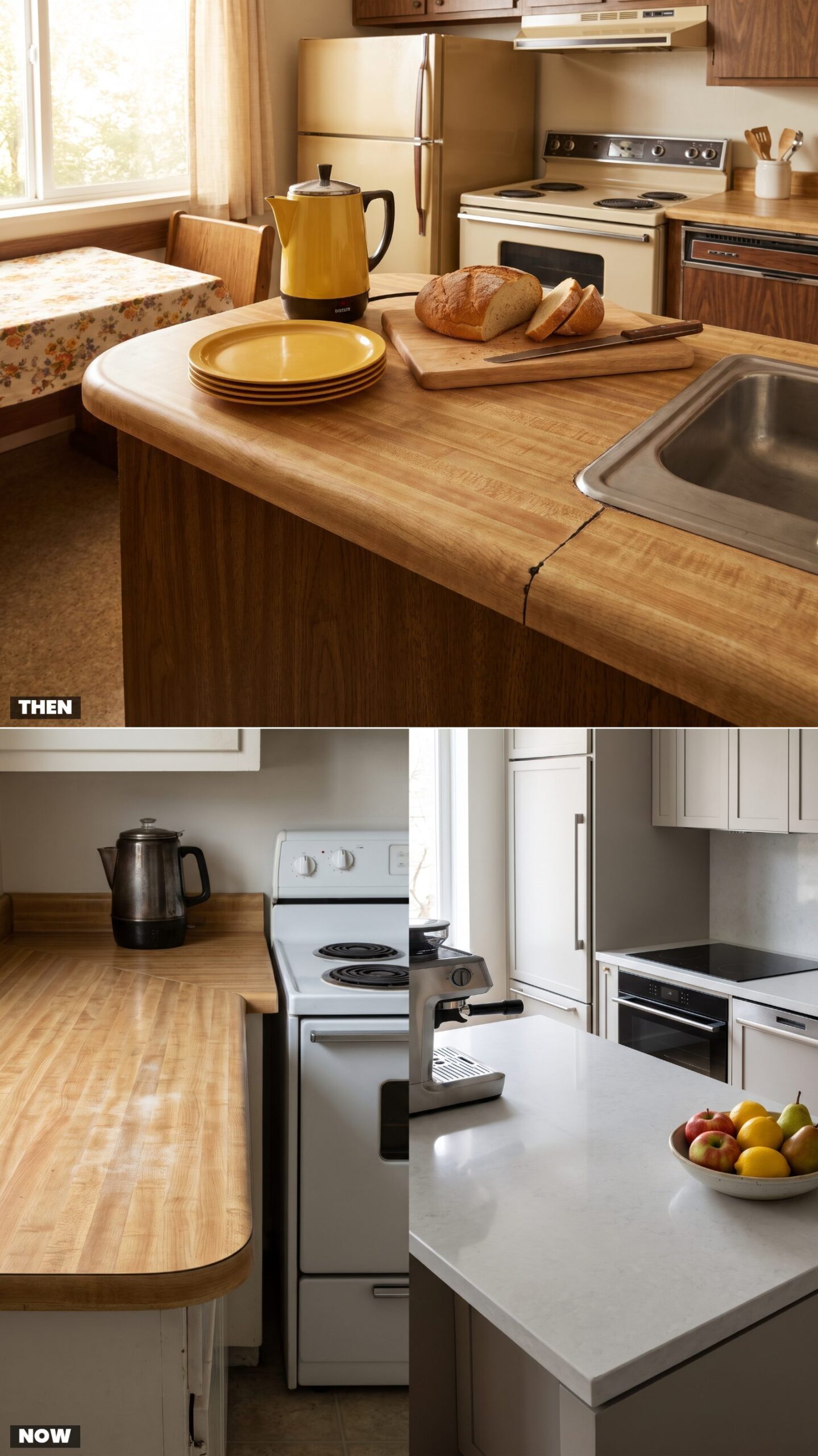
The laminate faked wood and fooled nobody. That bullnose edge rounded over, the seam collected crumbs, and a hot pan left a scar you learned to hide under a trivet.
Honed quartz goes the other way — matte, seamless, indifferent to red wine. No shine to fight the morning light. Just a cool, even surface that makes the whole nook feel like somebody thought about it.
24. Four-Inch Backsplashes to Full-Height Handmade Tile
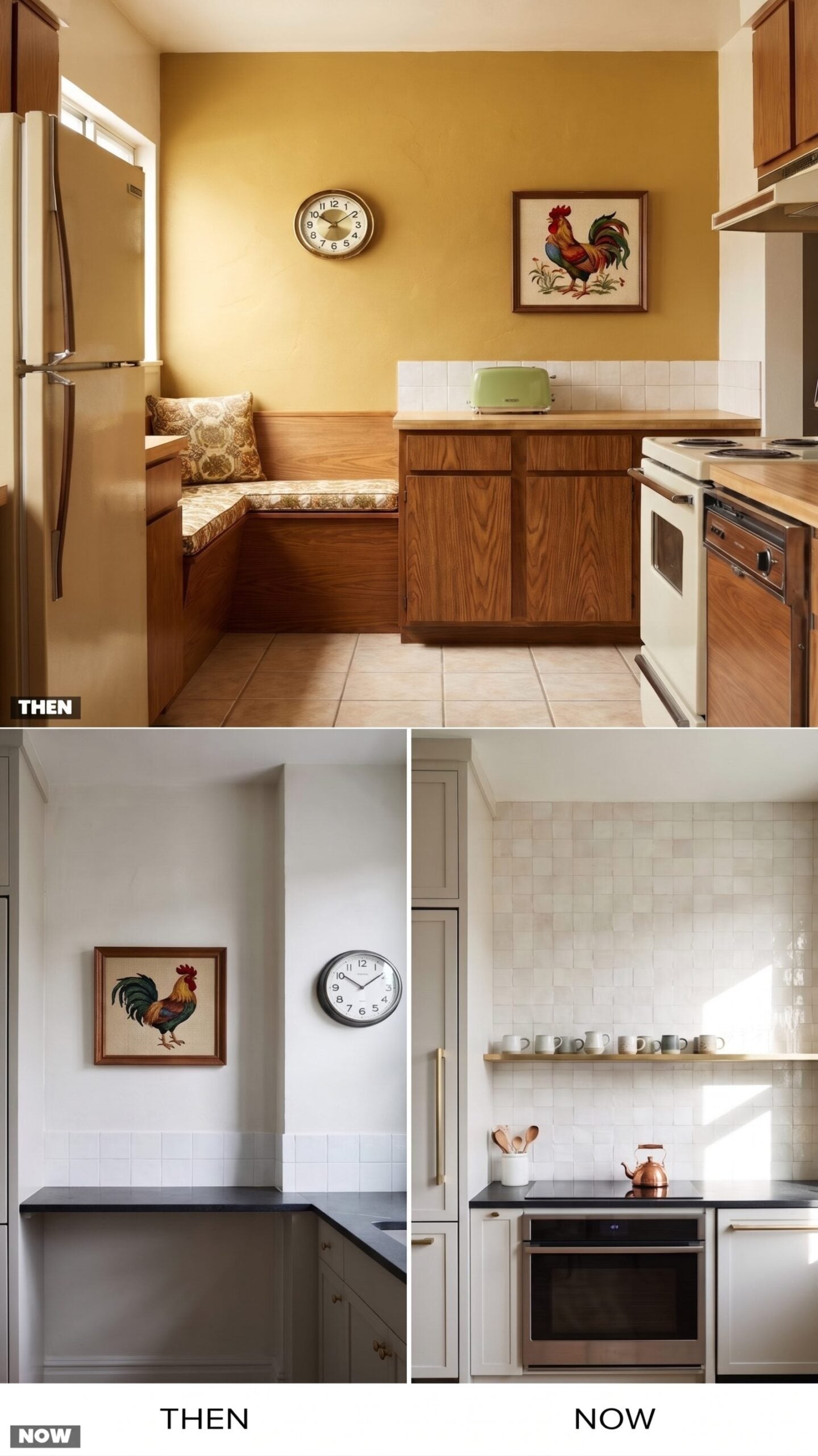
The four-inch backsplash was a compromise nobody loved. Just enough tile to catch splashes, then paint the rest and hang a rooster. Grease climbed the plaster above it and stayed.
Full-height handmade tile rewrites the whole math of that wall. The glaze pools and varies, so every square catches light a little differently, and the surface becomes the thing you look at instead of the thing you ignore. Zellige in particular refuses to lie flat — exactly why people pay for it.
23. Avocado Refrigerators to Panel-Ready Smart Fridges
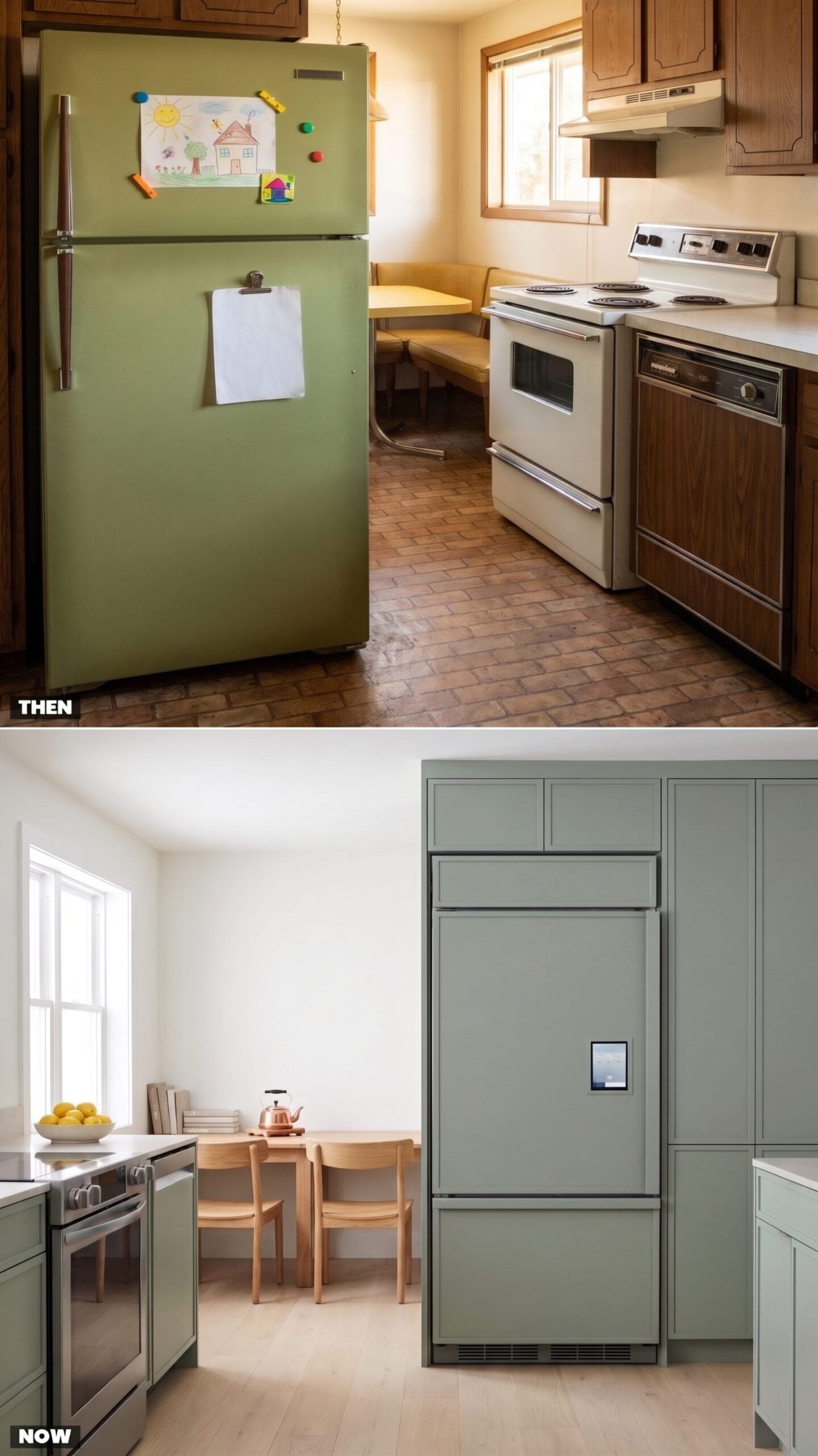
Avocado wasn’t subtle. The fridge was the loudest thing in the house — a rounded green monument with the kids’ art and a grocery list fighting for space on the door. You could spot it from the next room.
Panel-ready fridges run the opposite play. Face it in the same cabinetry and it melts into the run, flush and silent, the touchscreen the only tell. The entire appliance strategy now is to make the appliance vanish.
22. Brown Range Hoods to Integrated Plaster Vent Hoods
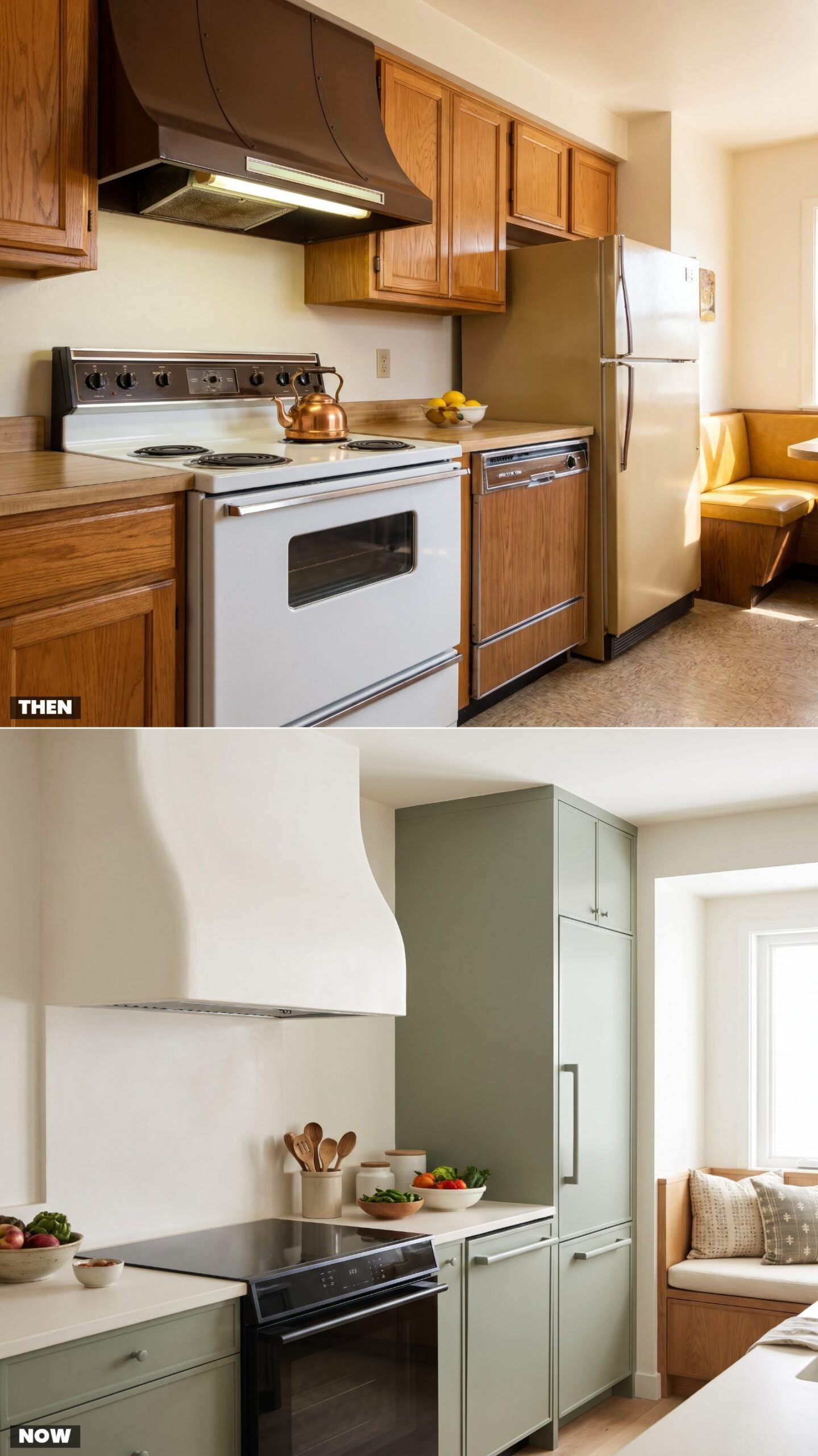
The brown metal hood did its job and announced it — a bronze box with a buzzing fluorescent tube and a filter that turned amber with grease. It was the kind of fixture you stopped seeing, because nobody was ever going to make it pretty.
The plaster hood practically counts as sculpture now. Curved, painted to melt into the wall, the mechanics tucked completely out of sight. It reads as part of the room’s bones rather than a machine bolted to the ceiling.
Our readers are firmly on the side of discretion here, with two out of three saying they would choose a hidden hood over a statement one.
21. Countertop Microwaves to Concealed Appliance Garages
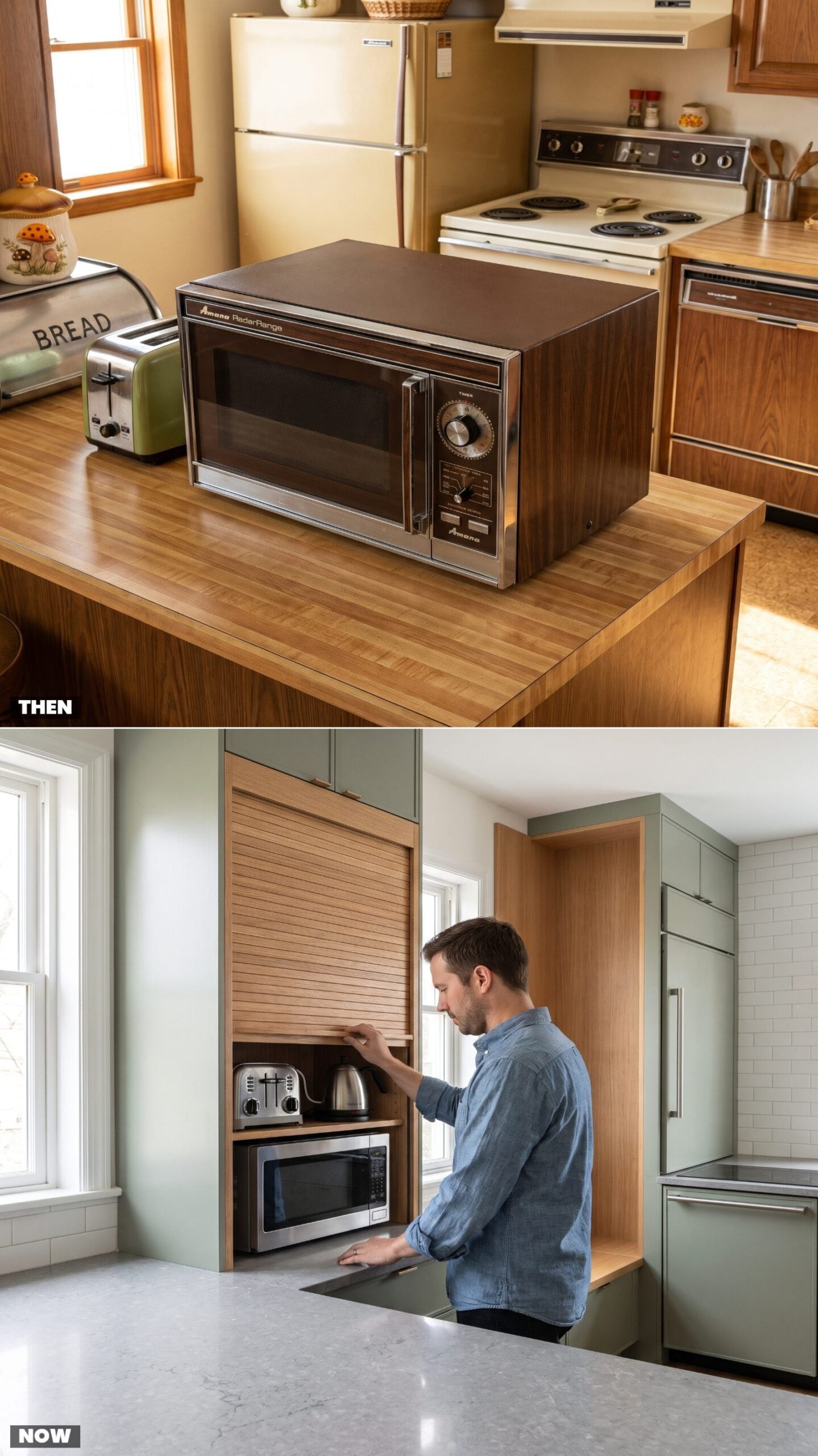
The first microwaves were enormous and proud of it. A brown box with a dial timer and a faux-wood flank, parked dead center on the counter — because where else would it go? The rest of the surface went to a toaster, a bread box, a cookie jar, all living out in the open.
These days the small appliances get a closet. A cabinet with a roll-up tambour door swallows the microwave, the kettle, the toaster, and shuts them away the moment breakfast is done.
20. Electric Percolators to Dedicated Espresso Stations
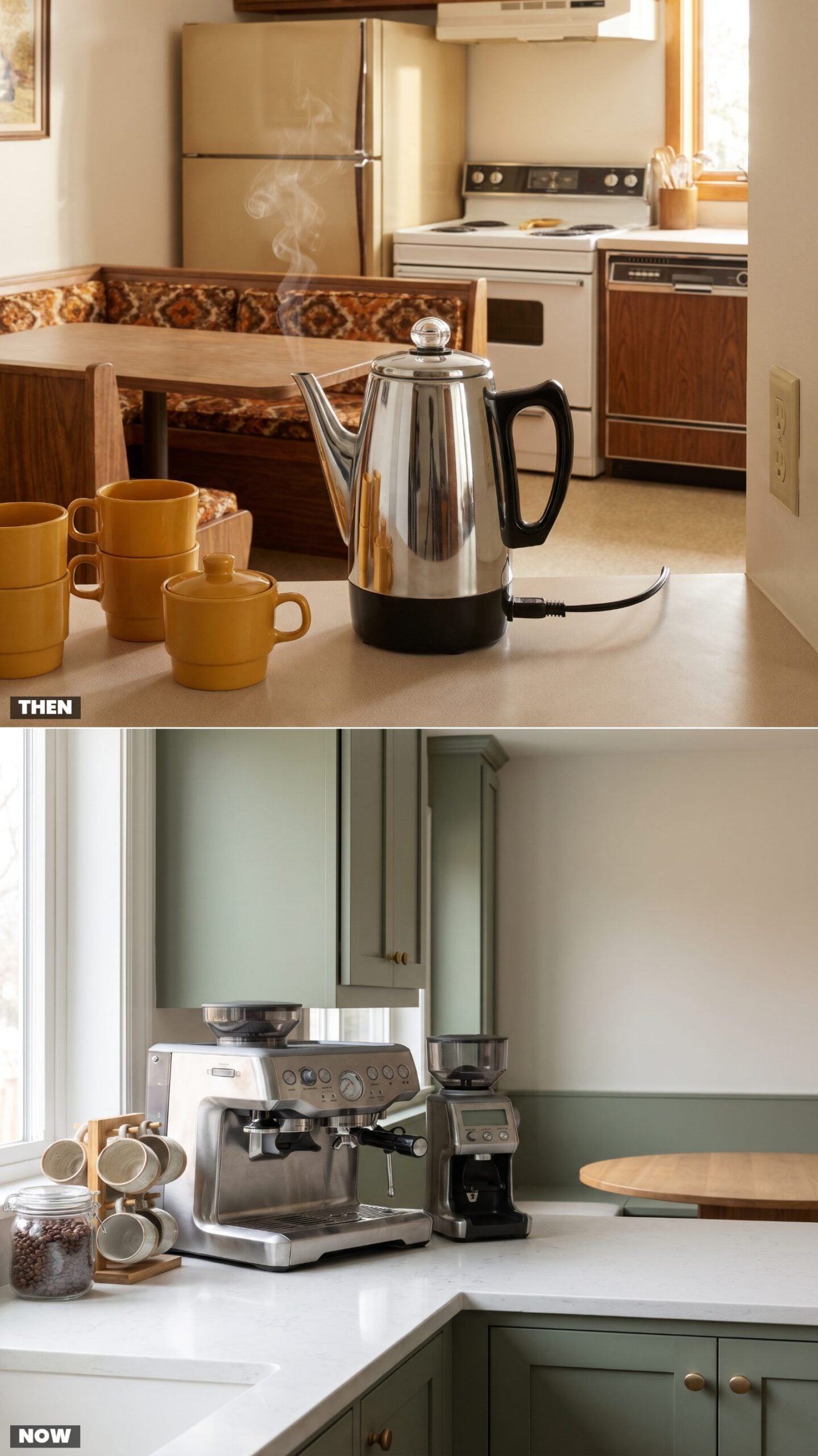
The percolator ran the morning for years — chrome, bubbling, that glass knob on top popping away, brewing coffee that was reliably strong and reliably bitter. One appliance, one cord, one job.
The espresso station is a whole corner now: machine, grinder, a jar of beans, a rack of cups you actually chose. Coffee stopped being a chore and turned into a small ritual people guard with their lives. Some people rearrange an entire nook around the grinder’s clearance height. No regrets, apparently.
19. Matching Melamine Sets to Hand-Thrown Ceramic Dishware
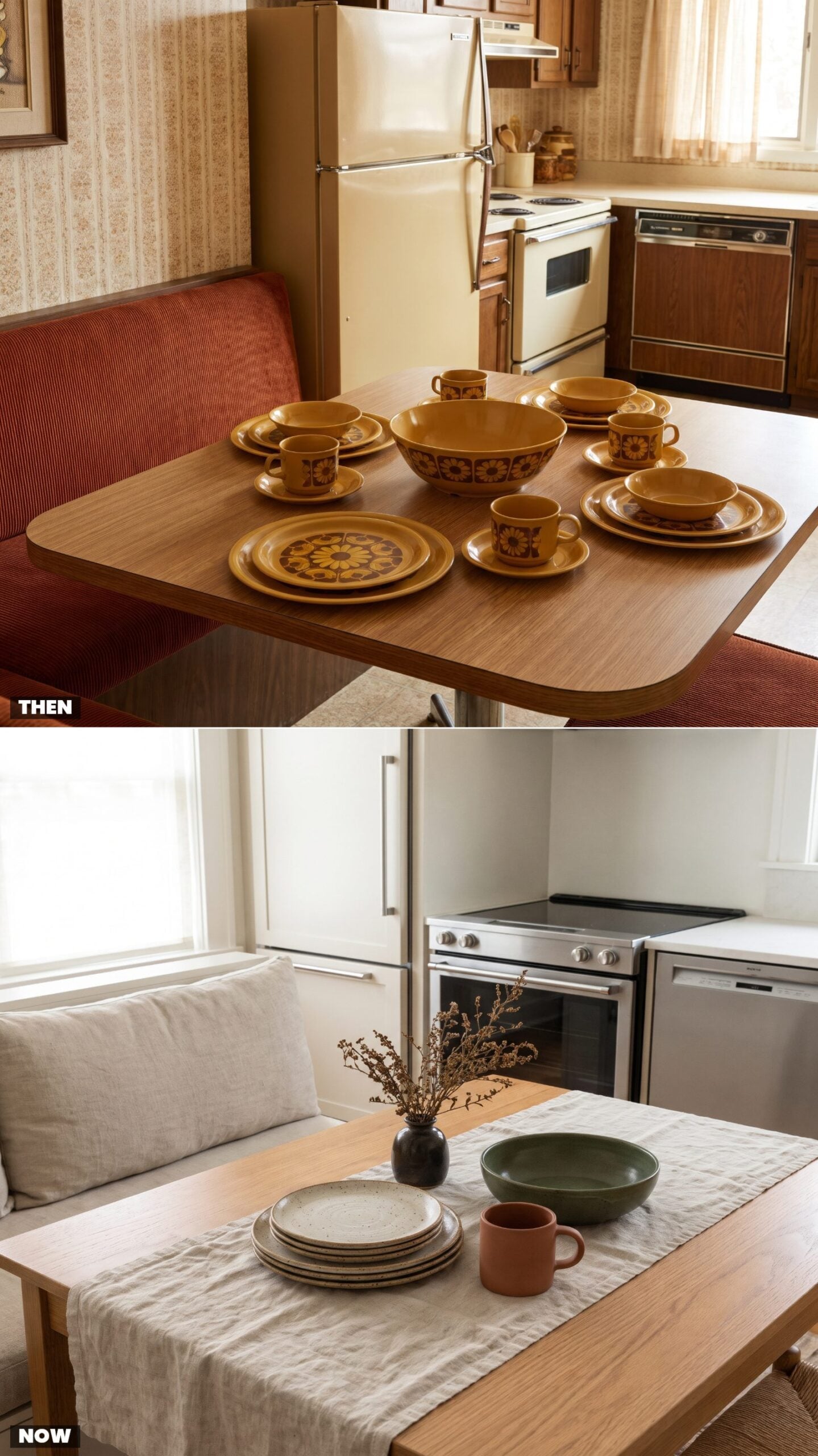
Everything matched in 1978, and matching was the whole idea. A full melamine set in harvest gold with a daisy motif, every plate identical, unbreakable, stackable, dishwasher-proof. Buy it once, use it forever — and it nearly did last that long.
Now the goal flips. Hand-thrown ceramics in mismatched earthy glazes, a speckled plate next to a green bowl next to a terracotta mug, each one slightly off from the last because a human made it. The wobble is the luxury.
18. Plastic Tablecloths to Washed-Linen Runners
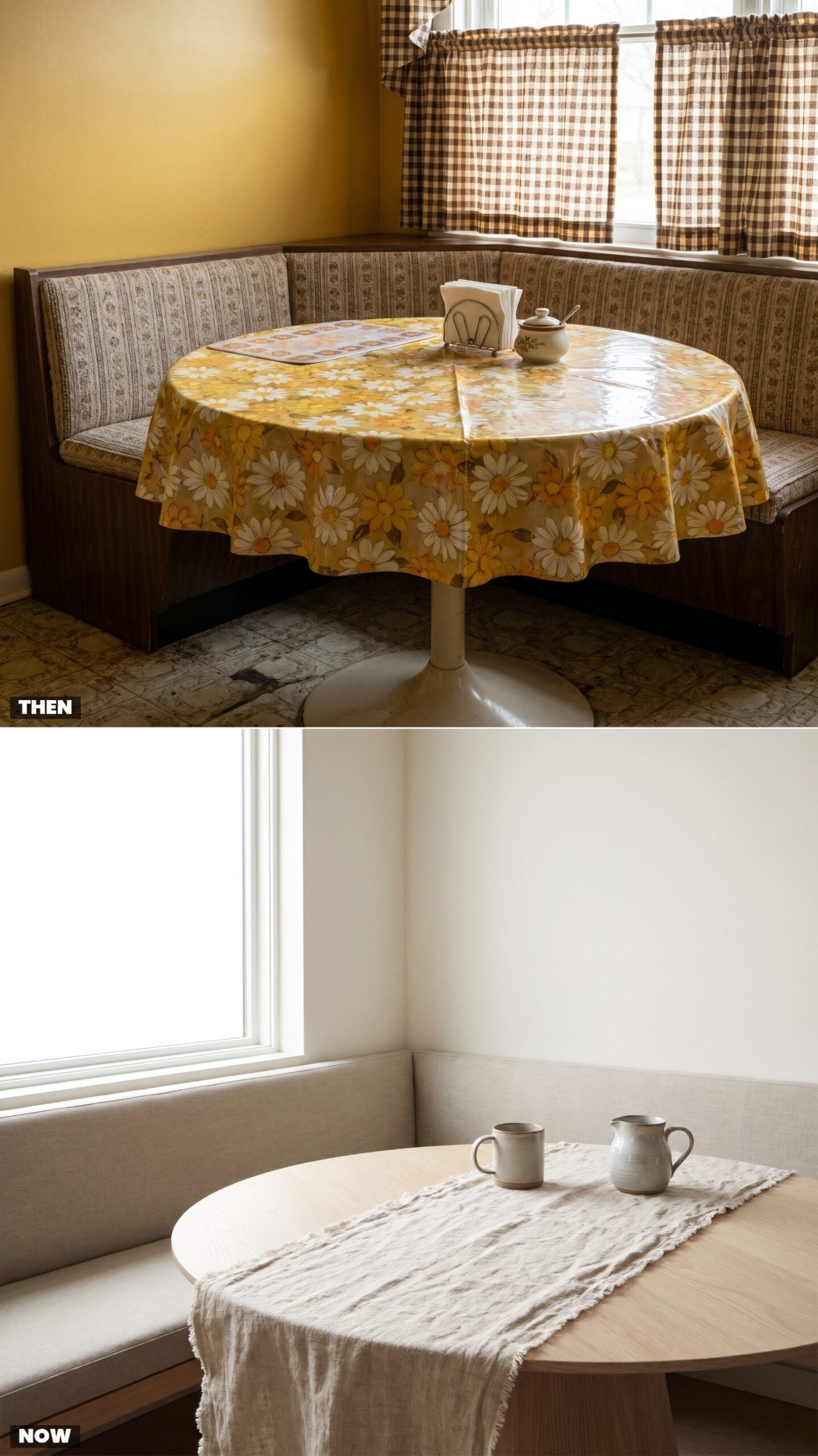
The 1978 breakfast nook ran on vinyl. Daisy-printed, wipe-clean, slightly tacky in August, and chosen for one reason: kids spill and vinyl forgives. You could hose it off and pretend the crease down the middle wasn’t there.
Now the same table wears a washed-linen runner with raw frayed edges, laid over bare oak instead of hiding it. The whole logic flipped. We stopped covering the wood and started showing it off, and the linen wrinkles on purpose. Nobody’s ironing it. That’s the appeal.
17. Artificial Fruit Bowls to Foraged Branch Centerpieces
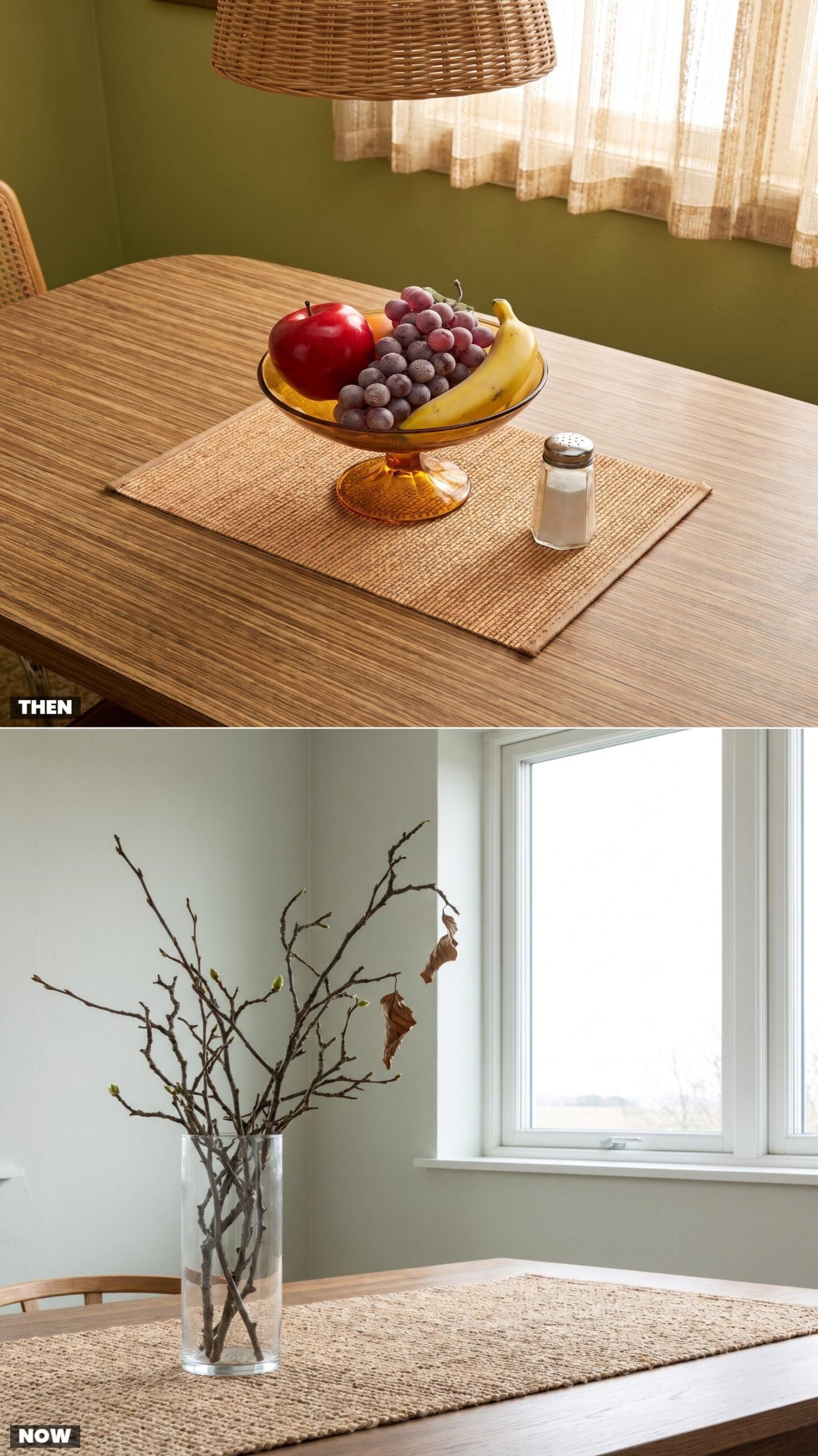
Every nook had the bowl. Waxy plastic apples that never ripened, a banana permanently on the edge of going, a film of dust on the grapes that nobody ever wiped. Decoration pretending to be food.
The modern version swapped fake abundance for real restraint: a few bare foraged branches in a glass vessel, buds and all. It costs nothing, changes with the season, and offers more honesty than that plastic banana ever managed. Want more of this across the house? Our japandi backyard design ideas lean hard into the same quiet, branch-forward calm.
Not everyone has given up the bowl, though: about half of Home Stratosphere readers said they would store counter fruit in one, and most of those said it was for the looks.
16. Country Plaques to Oversized Abstract Art
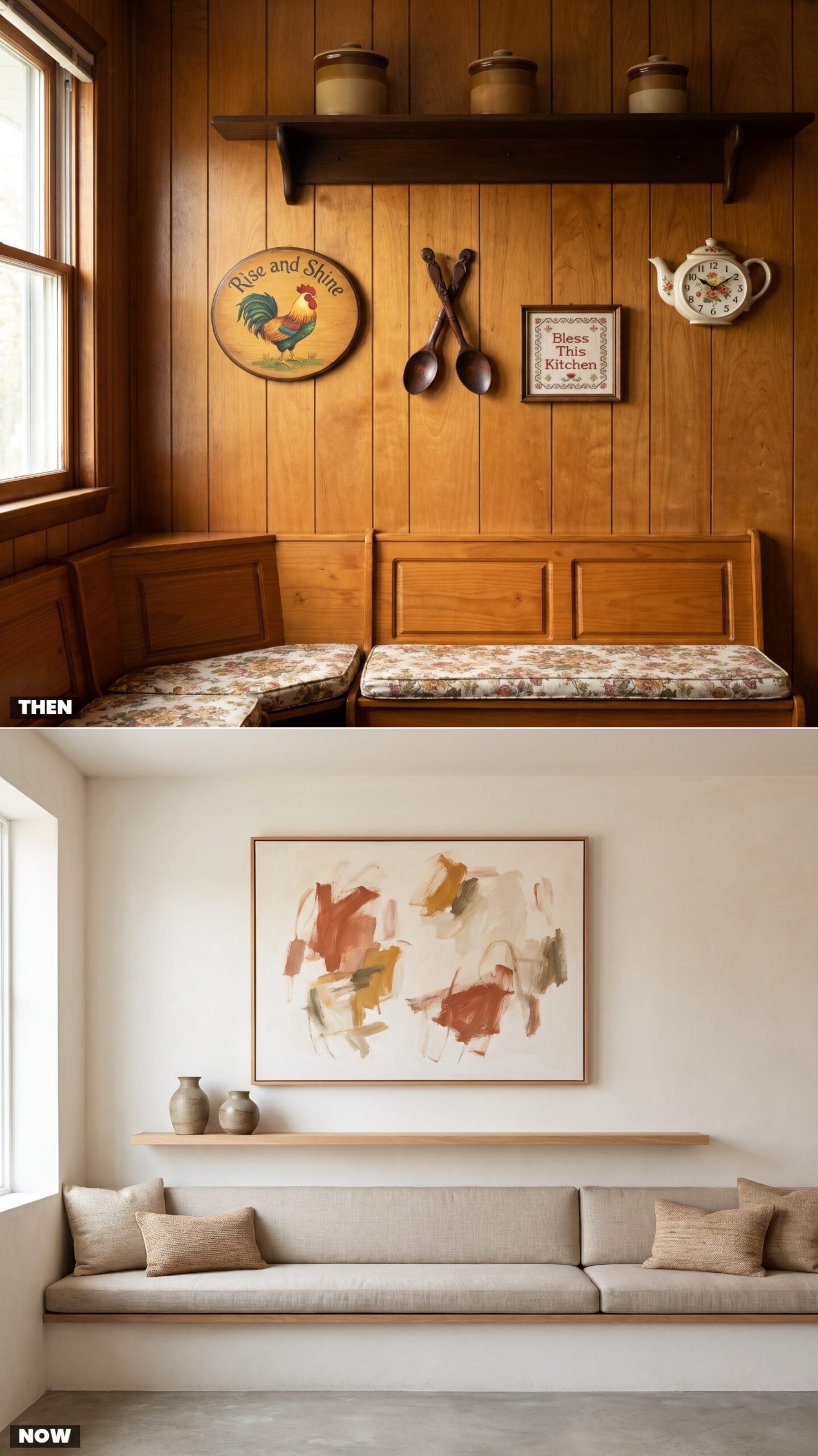
The 1978 wall talked a lot. A rooster plaque, crossed wooden spoons, a teapot clock, an embroidered blessing in a thin frame, every object with some little sentiment stitched or painted onto it. The wall was basically narrating your breakfast.
Now one oversized abstract canvas does the whole job. Loose ochre and terracotta strokes. Nothing to read, nothing to decode. Many small statements became one confident one, and the room exhales because of it.
15. Wall-Mounted Rotary Phones to Built-In Charging Shelves
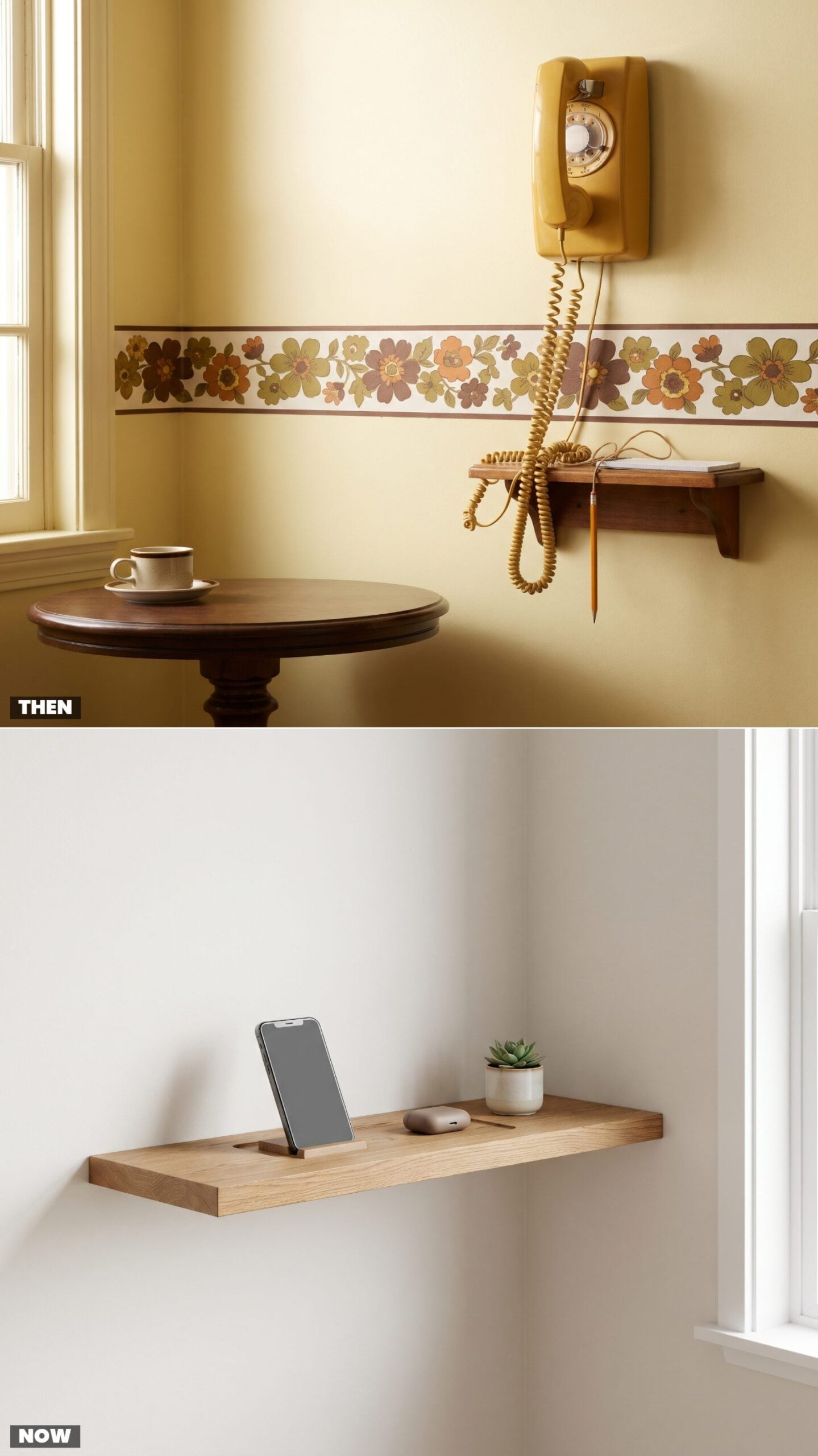
The phone lived on the wall, and so did your whole social life. That harvest-gold rotary with the coiled cord stretched until it begged, long enough to pace into the pantry for privacy and never quite long enough to reach the table. A pencil hung on a string, and a notepad caught the messages.
The charging shelf replaced all of it. Recessed wireless pad, a slot for earbuds, done. No cord to untangle, no pacing, no privacy pantry. The nook stopped being where calls happened and became where devices quietly refuel between them.
14. AM/FM Table Radios to Voice-Controlled Smart Speakers
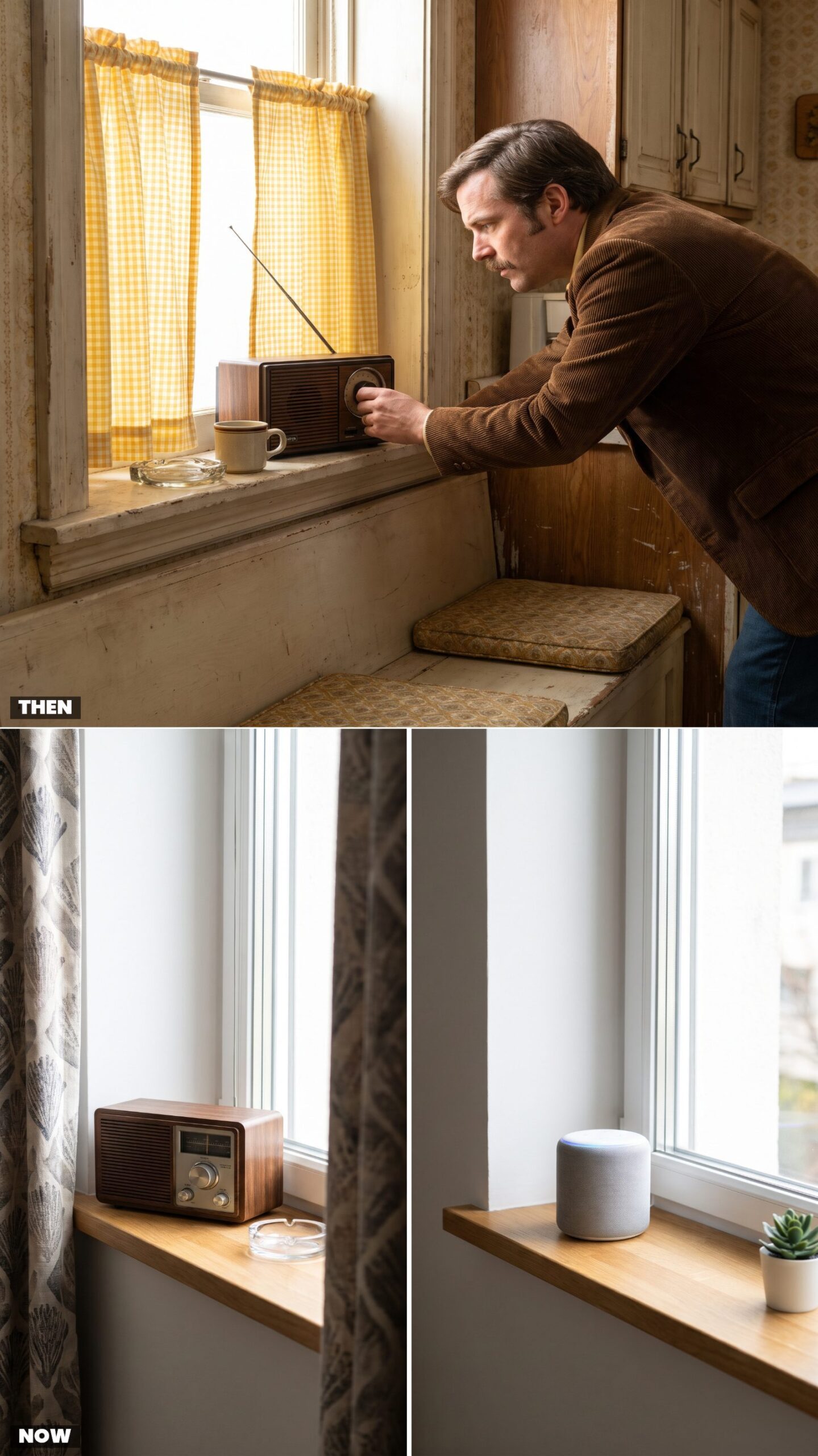
Morning sound used to require aim. You nudged the dial, extended the telescoping antenna, and tilted the whole wood-grain box until the station stopped hissing. One truck down the street and you lost the weather report entirely.
Now you just say the word and the fabric-wrapped speaker answers. No hunt for a signal, no fiddling. What’s funny is how the object shrank from a proud centerpiece to something almost shy, a soft grey cylinder you half-forget is there until it starts reading you the news.
13. Folded Newspapers to Tablets on Adjustable Stands
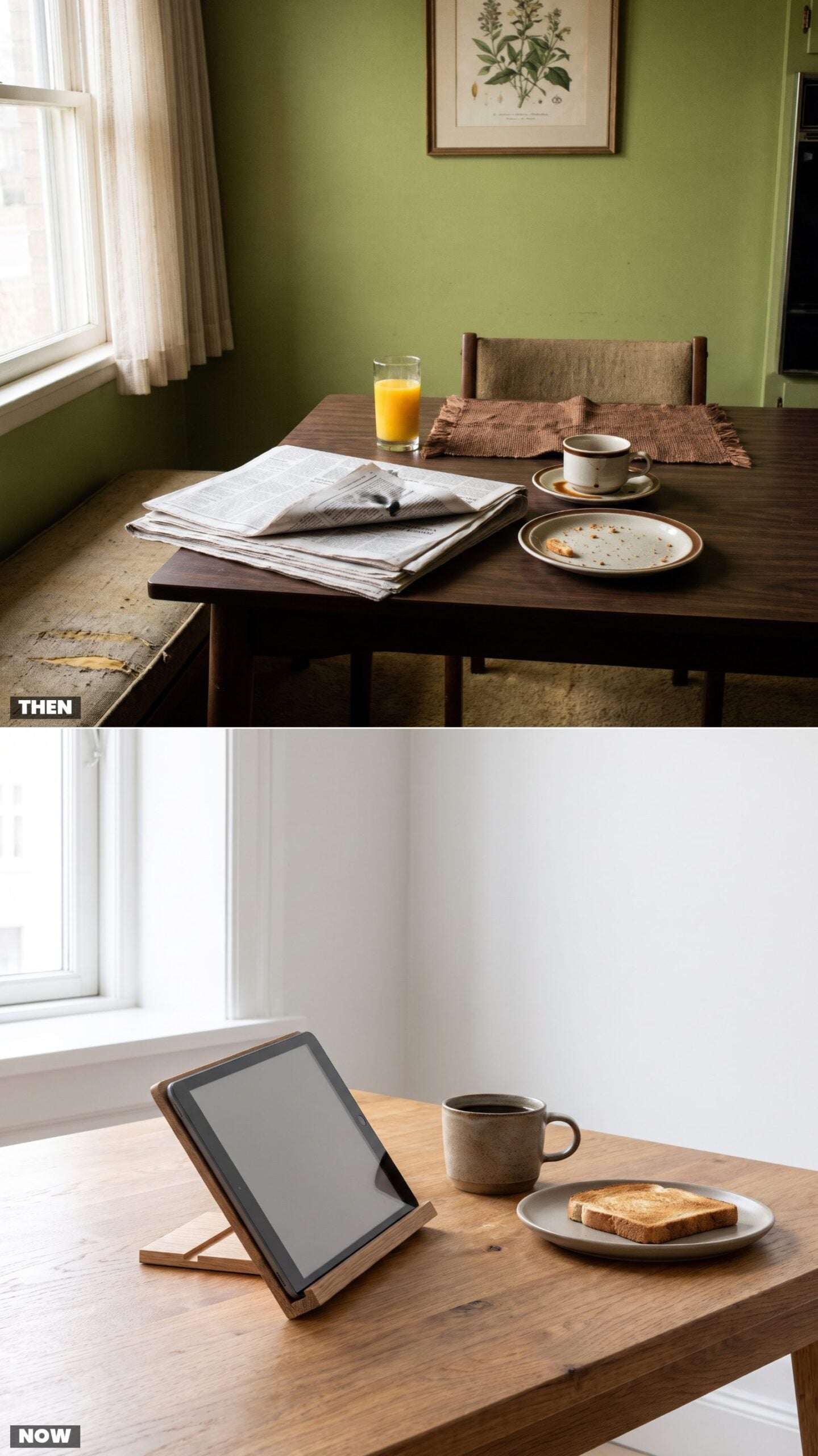
Breakfast had a soundtrack: the rustle and snap of a broadsheet being folded down to a readable size. Ink on the fingers, crumbs in the crease, a page or two slipping to the floor. Reading the paper was a two-handed, full-table affair.
The tablet on an adjustable oak stand freed up both hands and the whole tabletop. No folding, no ink, no sections scattered across the bench. The ritual survived. The mess did not.
12. Portable Kitchen Televisions to Screen-Free Breakfast Corners
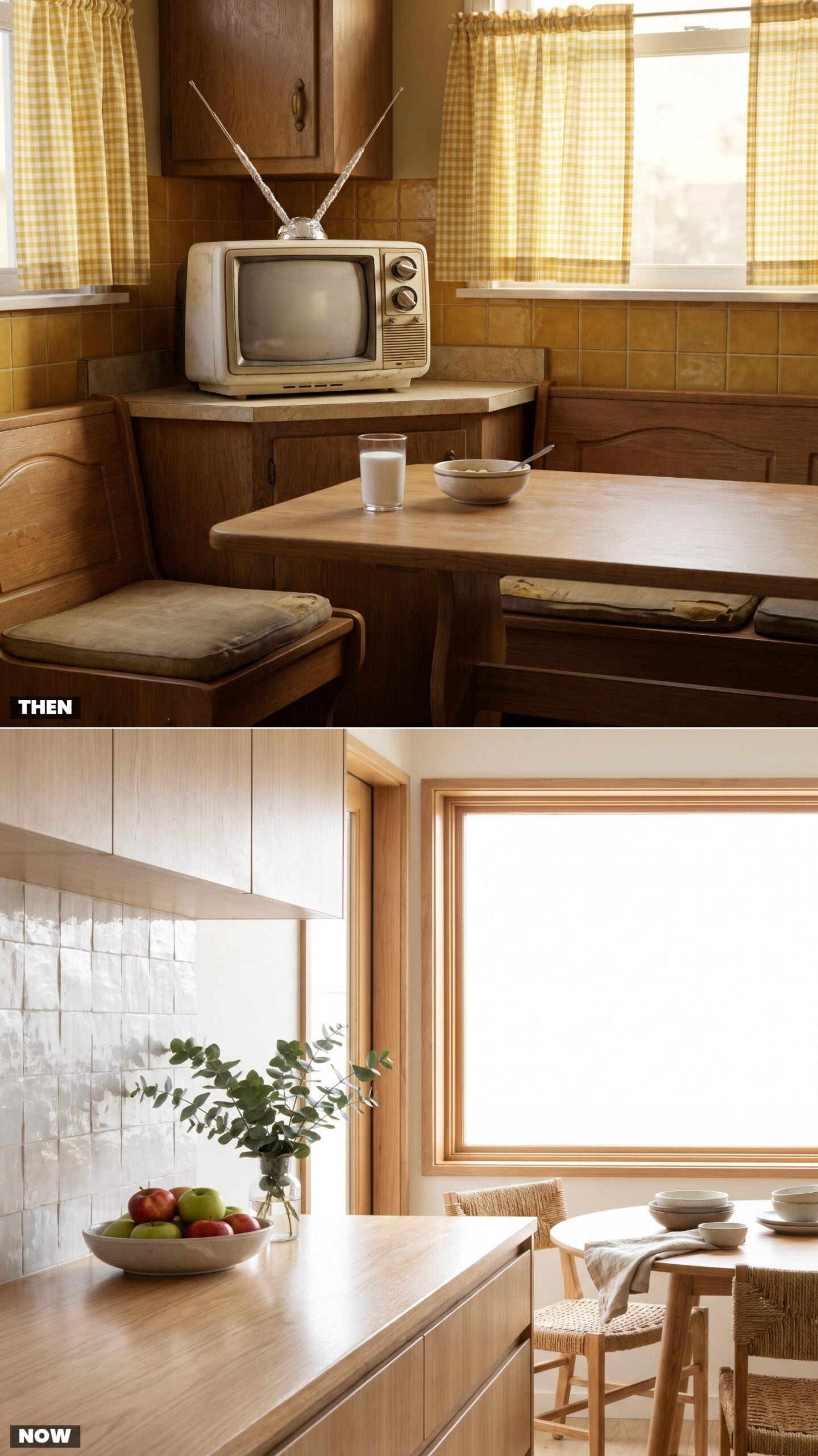
The little kitchen TV earned its spot on the counter, rabbit ears wrapped in foil to coax the morning cartoons through the static. Cereal in one hand, eyes locked on a screen smaller than the cereal box. That was breakfast for a whole generation of kids.
The modern move is the opposite flex: deliberately pulling the screen out of the corner entirely. No TV, no tablet, just a bowl of real apples and actual conversation over cereal. After decades of cramming screens into every room, the quietest status symbol in the nook is the absence of one.
11. Hanging Spider Plants to Floor-to-Ceiling Indoor Greenery
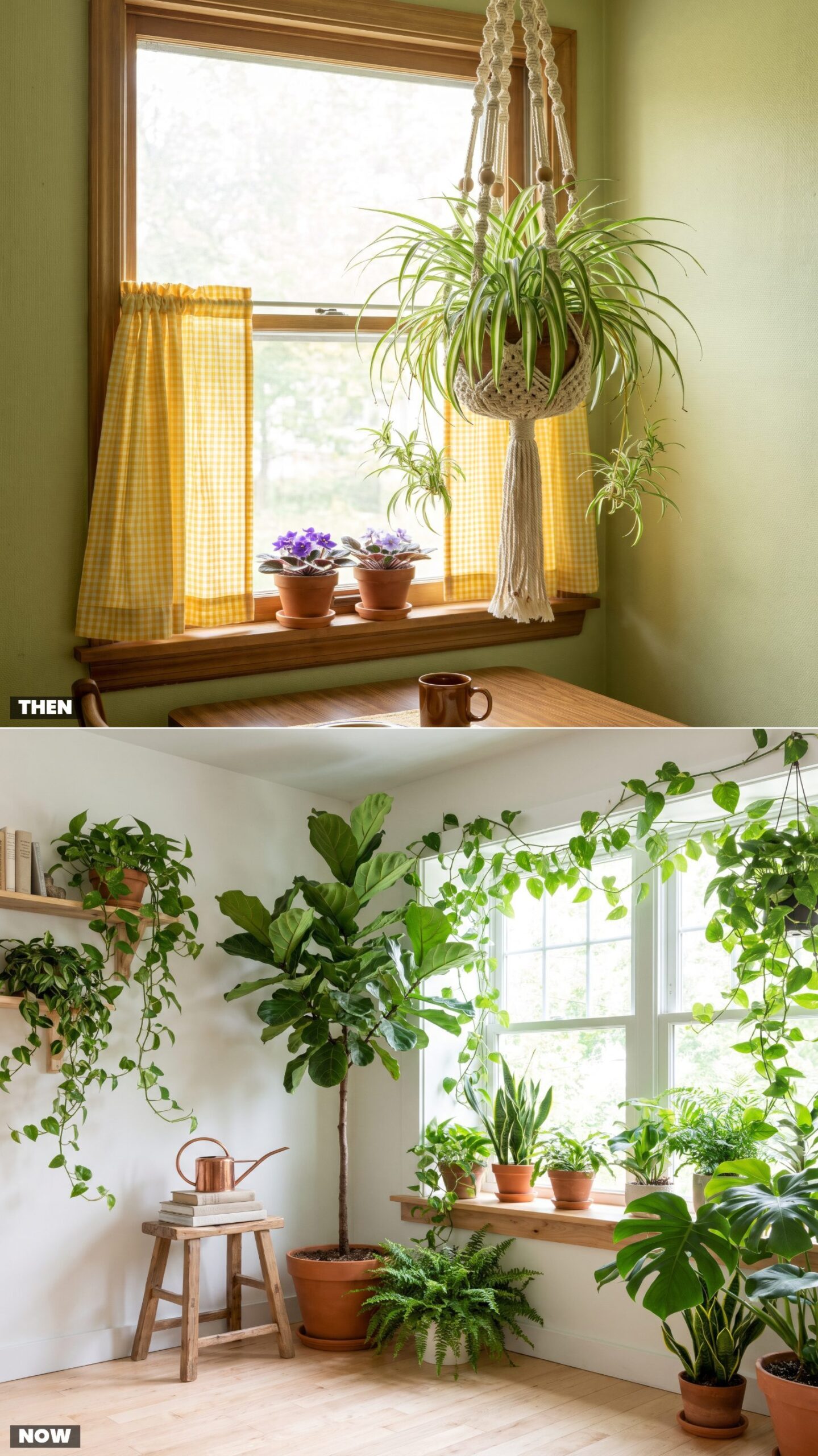
One spider plant in a macrame hanger used to count as a jungle. It threw out its little plantlets, you snipped them, potted them, handed them off to the neighbors. A couple of African violets on the sill rounded out the entire indoor garden.
The present-day nook goes big. A fiddle-leaf fig reaching the ceiling, pothos trailing off a shelf, plants layered on the floor and sill until the window nearly disappears behind leaves.
10. Hinged Bench Lids to Deep Soft-Close Storage Drawers
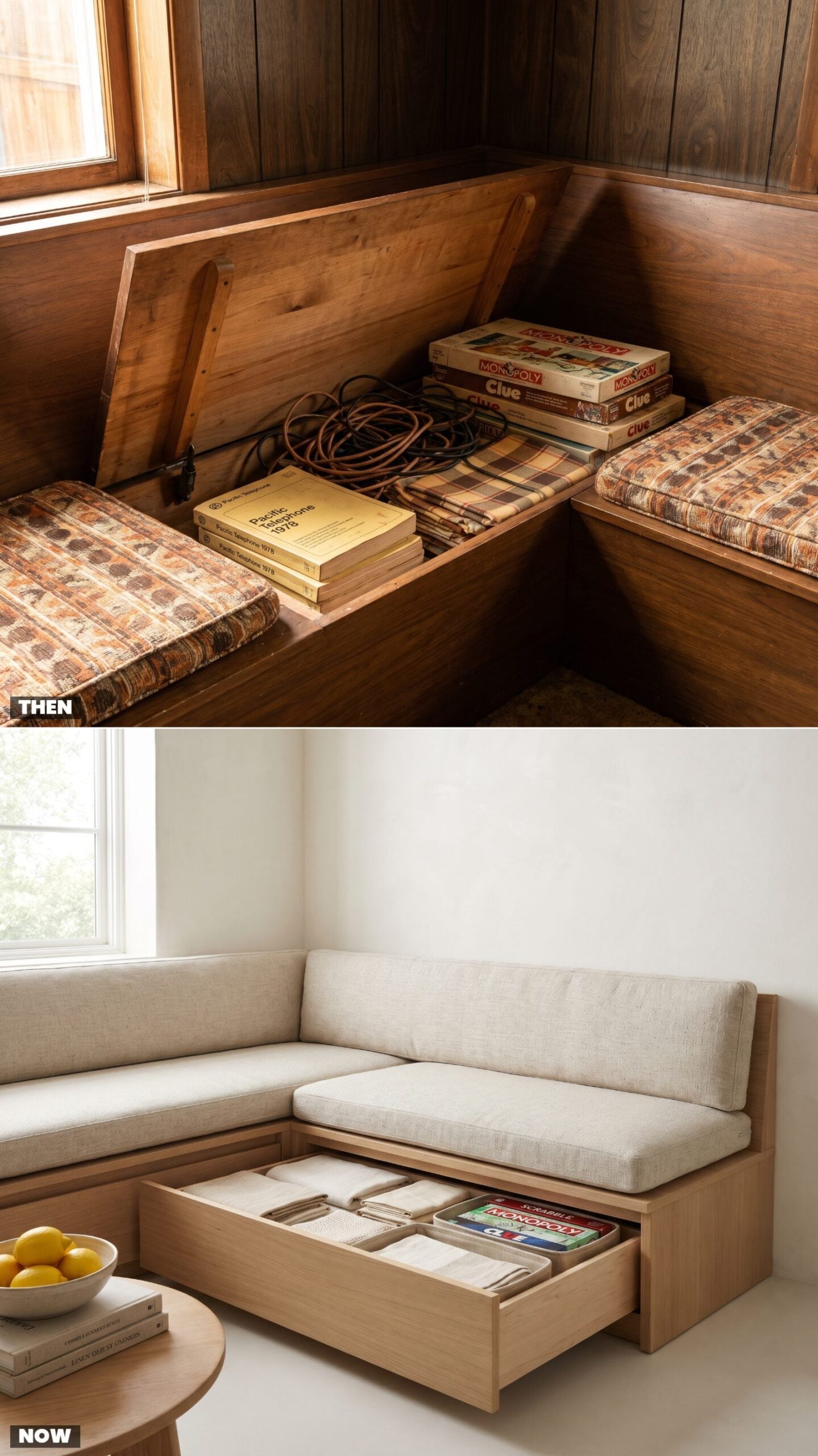
The banquette bench hid everything, and it made you work for it. You cleared the thin geometric cushions, hauled up the heavy hinged lid, then plunged into a cavity of board games, extension cords, and phone books with no order whatsoever. Whatever you needed was always on the bottom.
Deep soft-close drawers fixed all of that. You pull with two fingers, the drawer glides, and everything’s visible without clearing a single cushion. Same footprint, same hidden storage, zero lid-balancing acrobatics. The least glamorous upgrade in the whole nook, and quietly the most useful.
9. Corner China Hutches to Built-In Beverage Cabinets
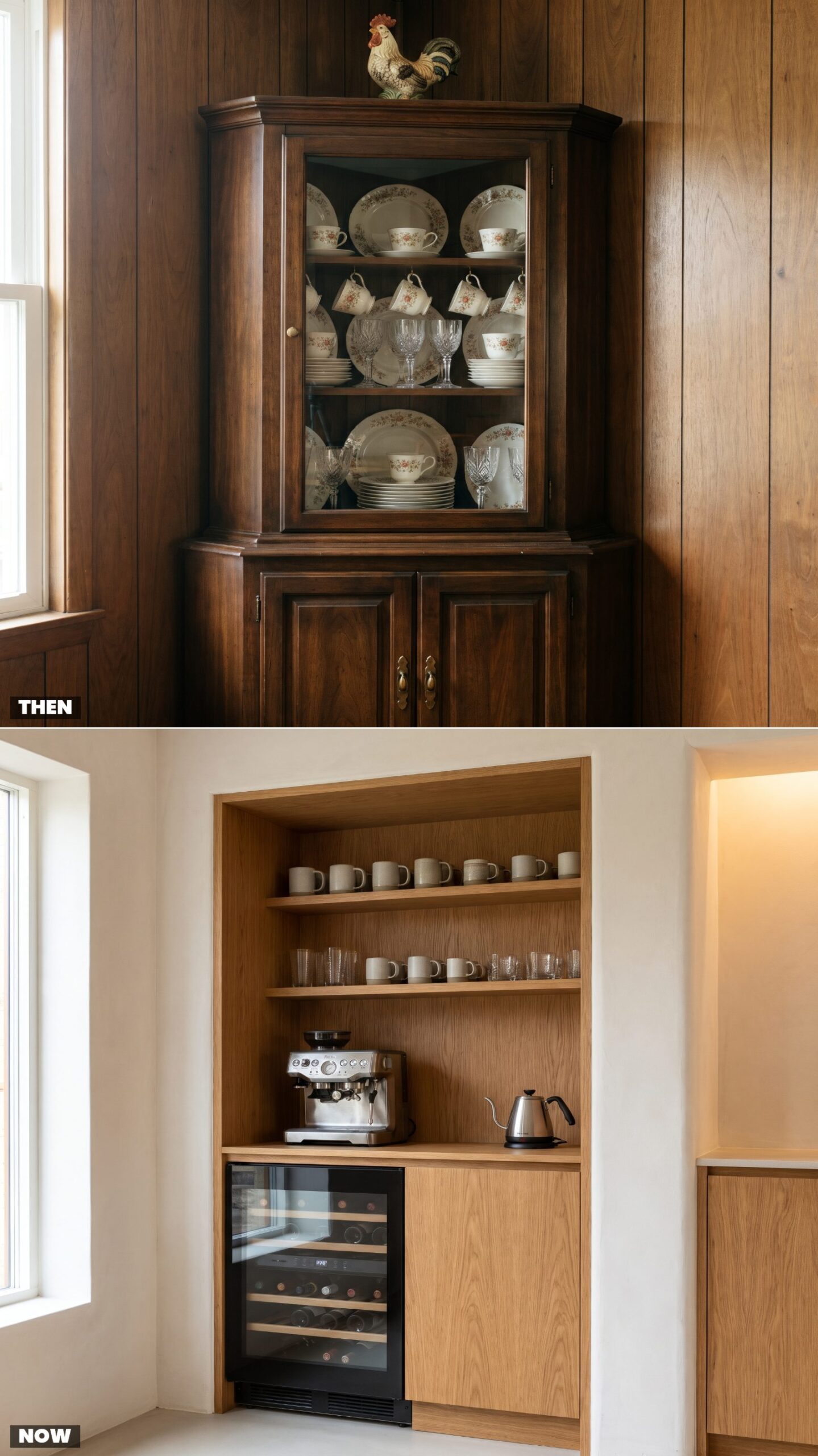
The corner hutch was a shrine to the good dishes. Floral plates behind glass, teacups hung on little hooks, cut glass catching the light, all of it used maybe three times a year and dusted far more often. And the rooster on top was non-negotiable.
Today that same corner holds a built-in beverage cabinet: an undercounter drinks fridge, open shelves of everyday stoneware, a coffee machine within arm’s reach of the table. The display of dishes you never touch gave way to the drinks you reach for every morning. The nook stopped showing off and started actually serving breakfast.
8. Serving Hatches to Open Sightlines into the Kitchen
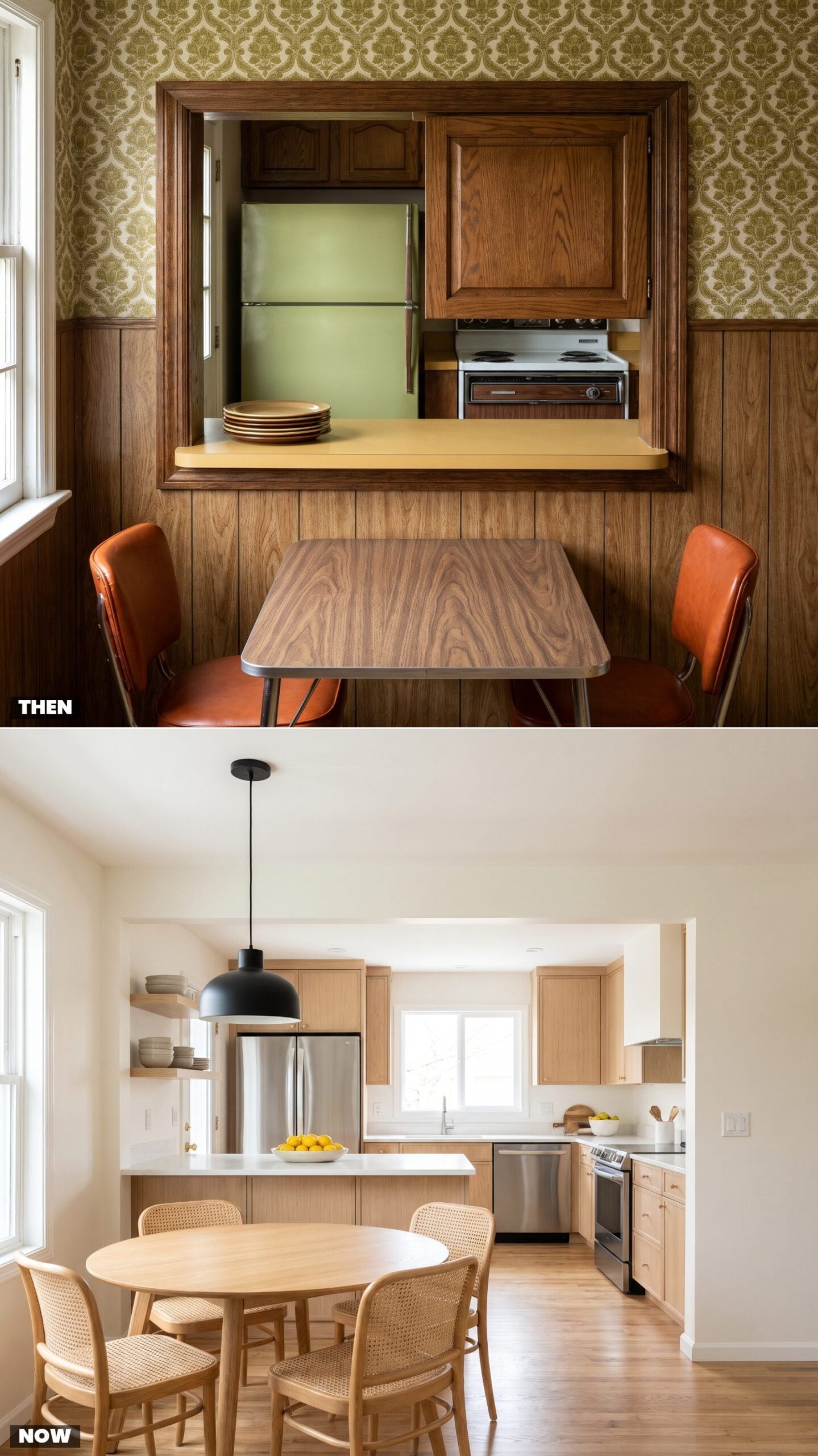
The serving hatch made sense in 1978. Keep the cooking mess out of sight, hand the food through, and shut the little door when company came. That hinged oak pass-through was the compromise of its day.
Now the wall is just gone. Kitchen and nook read as one room, because cooking stopped being a chore to hide and turned into the thing everyone crowds around. Pale oak cabinets and a white quartz counter sit in plain view and nobody minds. The hatch kept people apart. The open line pulls them in.
7. Spindle Half-Walls to Full-Height Slatted Room Dividers
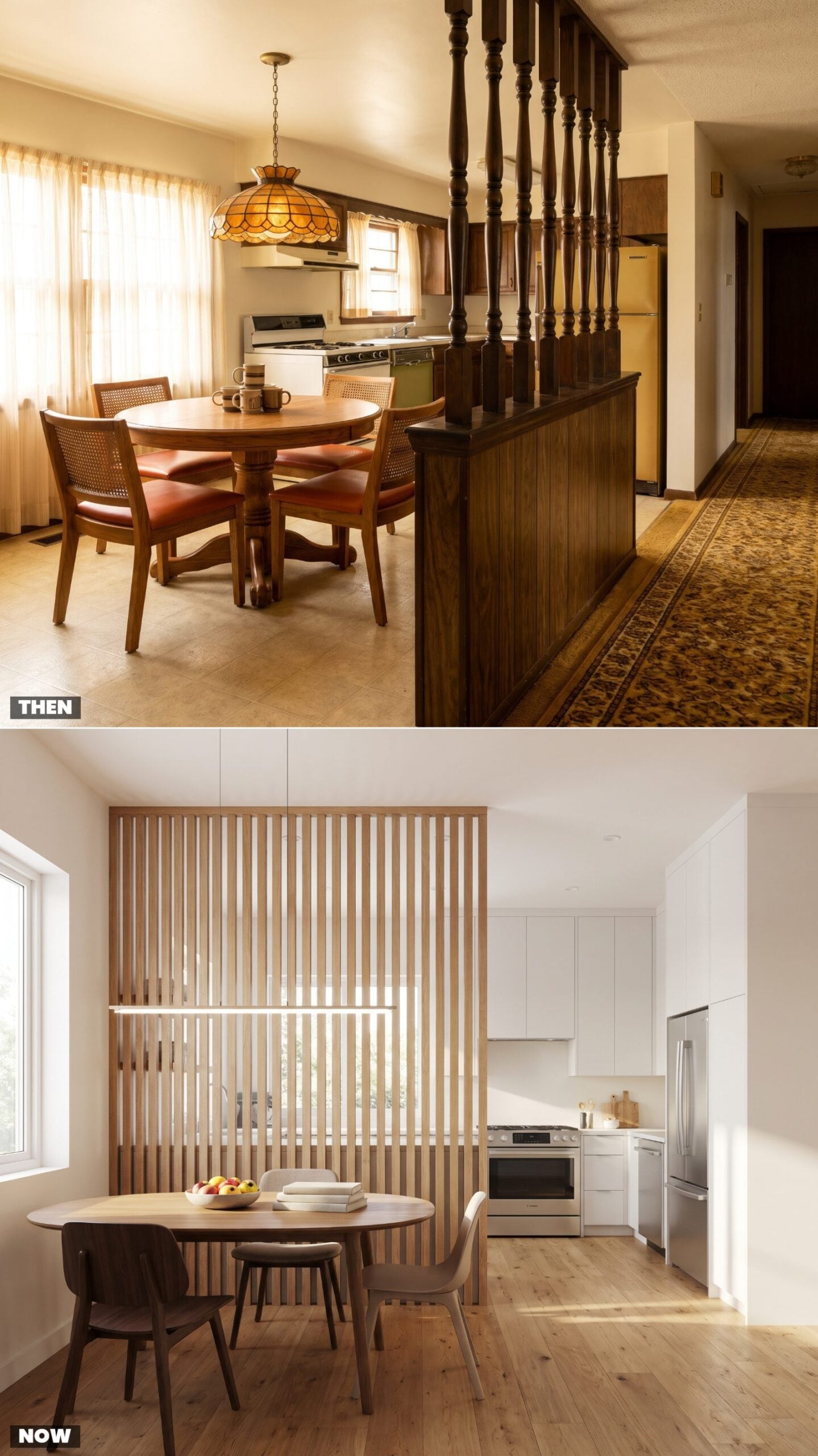
Those turned spindles were everywhere in 1978. Half privacy, half decoration, all dust-collector. You could see through them but never really past them, and they announced colonial revival whether you asked for it or not.
The slatted divider does the same job with a straighter spine. Full height, clean verticals, light still slipping through the gaps. It marks off the nook without boxing it in, which matters once you rethink a traditional hallway design for how open floor plans actually live now.
6. Bare Easy-Clean Floors to Washable Low-Pile Rugs
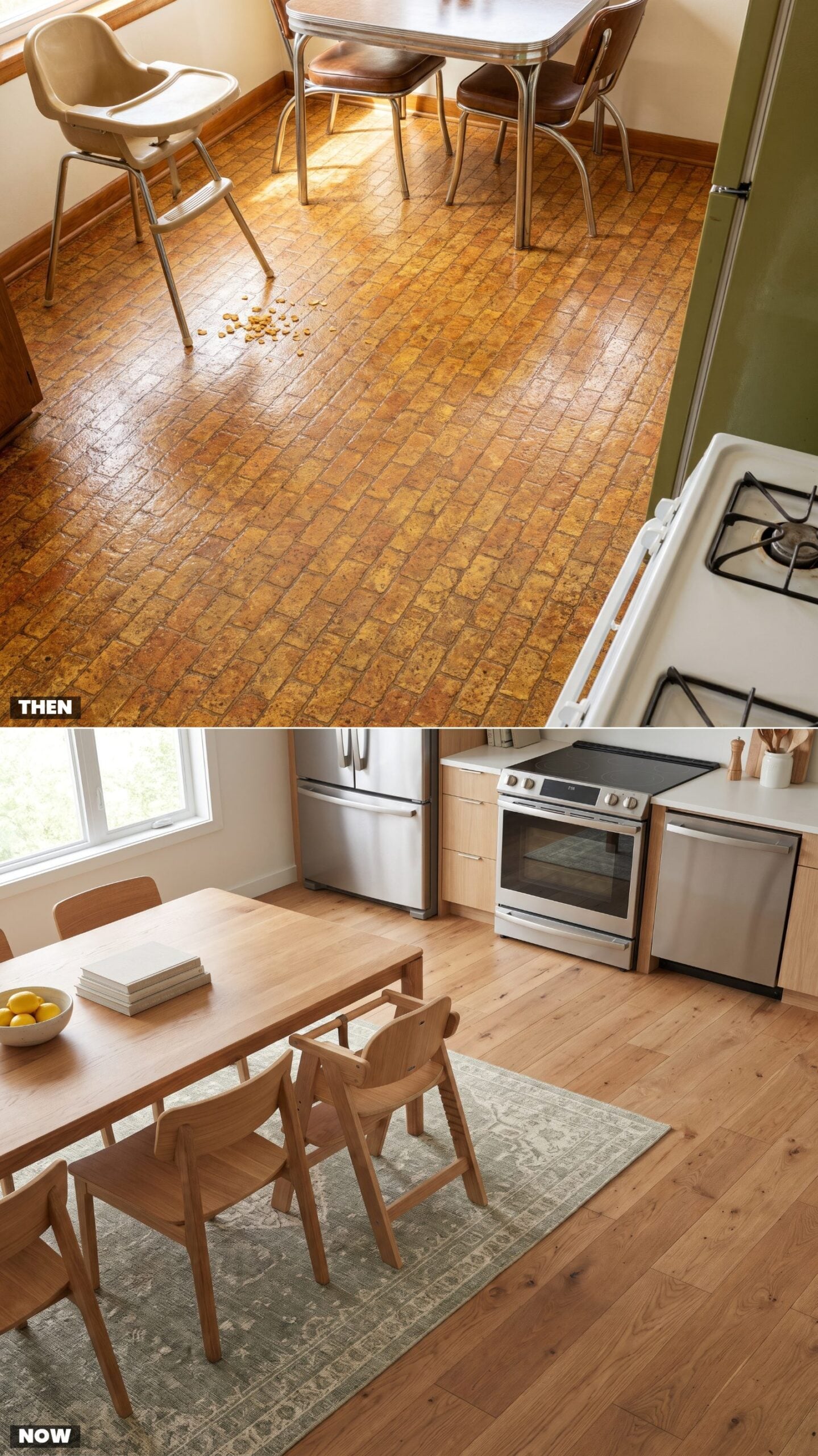
Nobody put a rug under a 1978 breakfast table. Sheet vinyl in a faux-brick pattern was the smart move, one wipe and the spilled milk vanished. Carpet near a high chair? Asking for trouble.
Washable rugs changed the math. Toss the whole thing in the machine, lay it back down, done. Now a flatweave in sage washable rug softens the hard oak floor without the old dread of a stain you’d live with forever.
5. Matching Chair Sets to Collected Vintage Side Chairs
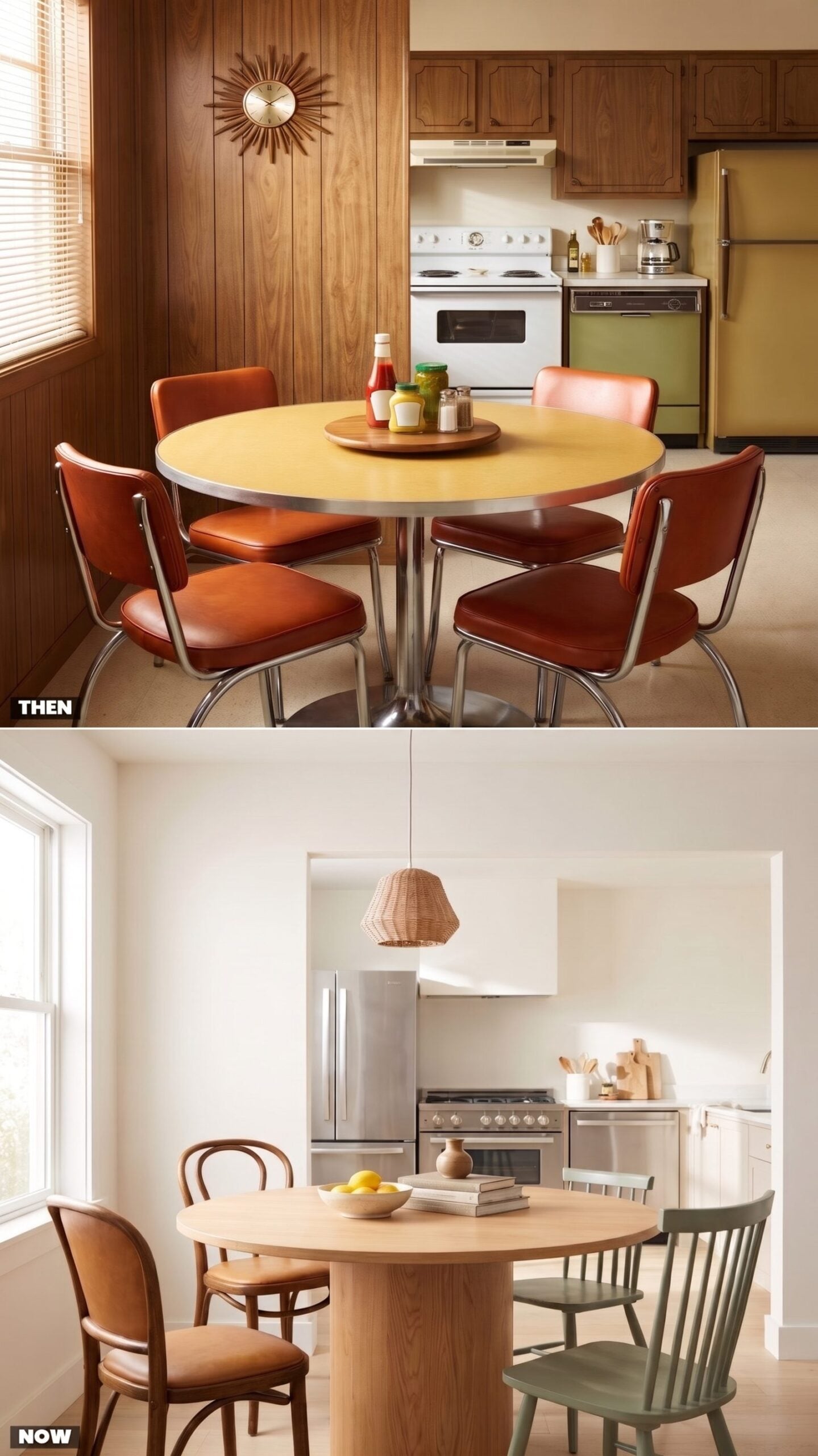
The 1978 dinette came as a set and stayed as a set. Four chairs, identical down to the vinyl, bought in one trip and matched forever. Uniformity read as money well spent.
The modern nook goes the other way on purpose. A bentwood here, a caramel leather chair there, something painted, something salvaged from a flea market. The mix looks gathered over years even when it isn’t, and it hands a small corner the feeling of a room with a past.
4. Molded Plastic High Chairs to Convertible Wood Toddler Seats
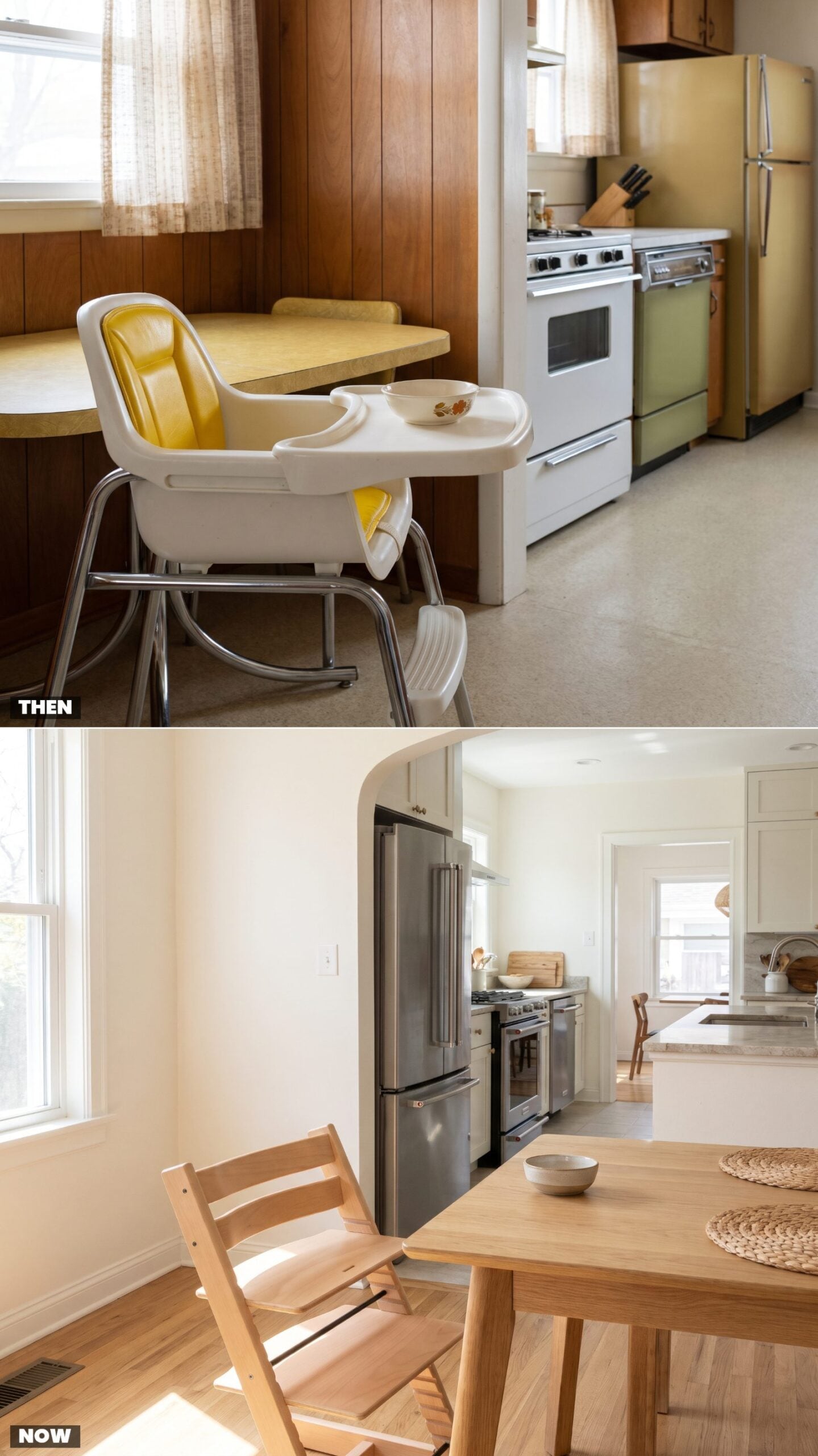
Molded plastic on chrome legs, a wipe-clean yellow seat. The 1978 high chair was built for one job and tossed the second the kid outgrew it. Nobody expected it to last or coordinate with a single other thing in the room.
The convertible wood seat grows with the child, dropping its tray and rising to the table for a decade of meals. It’s furniture now, not plastic you shove in a corner when guests arrive. That whole swap, from disposable to kept-for-good, runs through everything in the modern nook.
3. Narrow Bench Openings to Wheelchair-Friendly Table Clearances
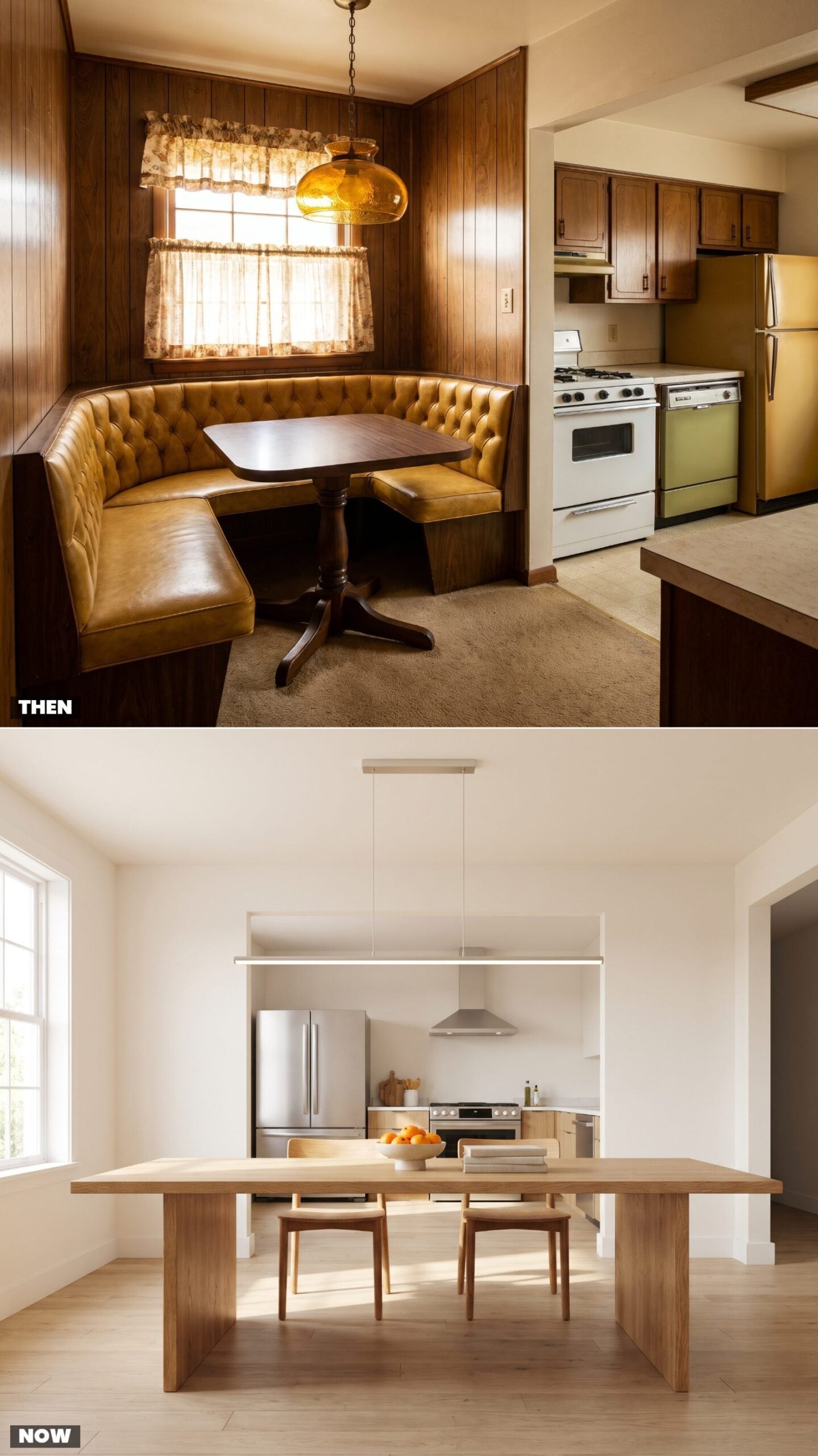
You remember the slide-in. The 1978 banquette was fixed, the table was fixed, and reaching your seat meant shuffling sideways past whoever beat you to the corner. Charming right up until somebody needed to leave mid-meal.
The modern nook plans for everyone to pull straight in. Open sides, chairs you can move, real room for a wheelchair or a walker. The corner stopped being a trap you squeeze into and became a table anyone can actually reach.
2. Tiny Four-Person Corners to Flexible Nooks for Larger Gatherings
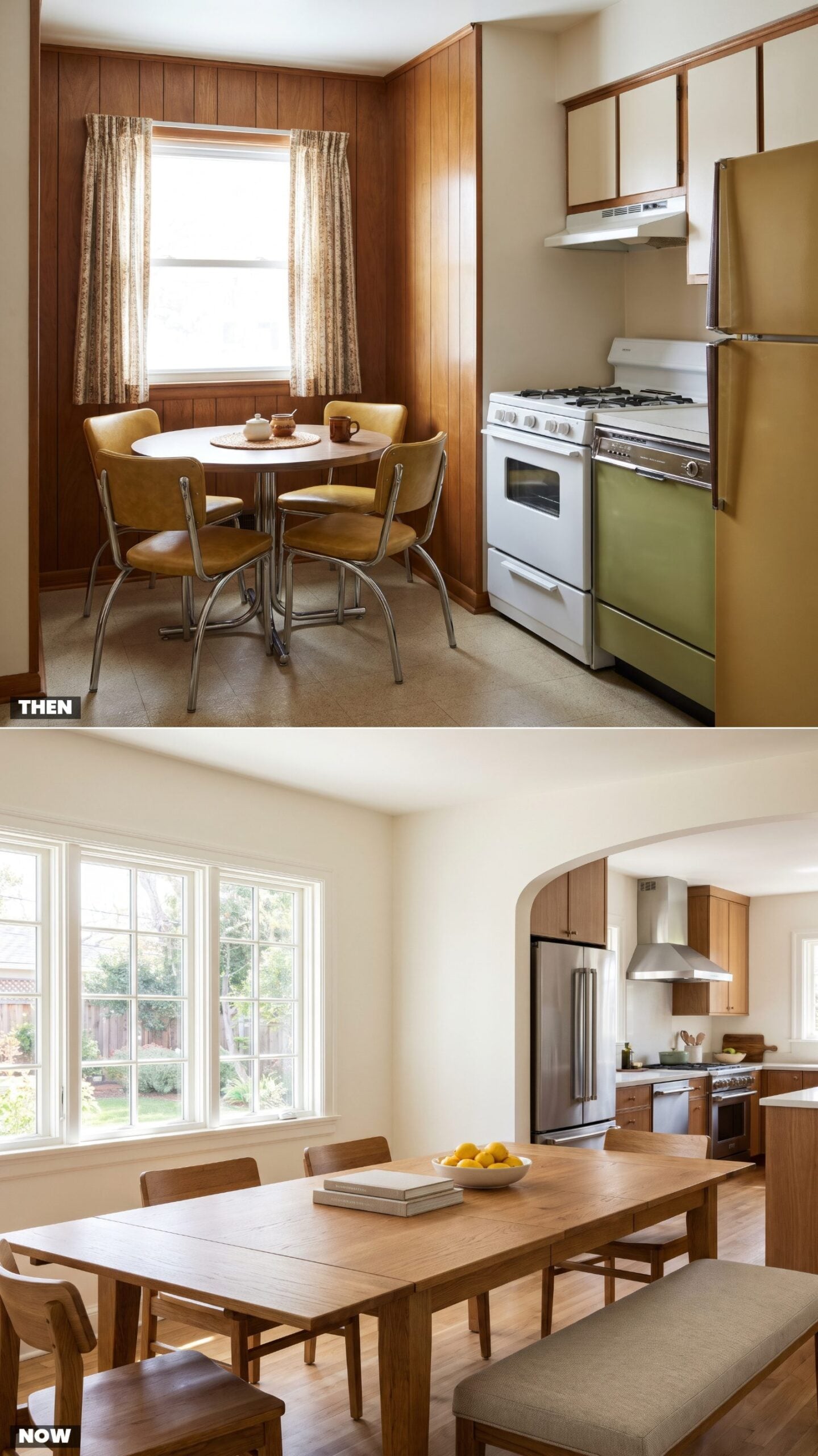
The 1978 nook assumed a family of four and not a soul more. Round table, four chairs, a tight alcove, and if Grandma turned up the kids ate standing at the counter. One job, and it did it.
Today’s nook stretches. An extendable table, a bench that squeezes in three at a push, chairs you can drag from anywhere in the house. Breakfast seats four on Tuesday and eight on Sunday without so much as moving a wall. The corner finally keeps up with how people actually gather, something you’ll notice too in a generous bright entryway design built to welcome a crowd.
1. Glass Ashtrays to Scented Candles and Match Strikers
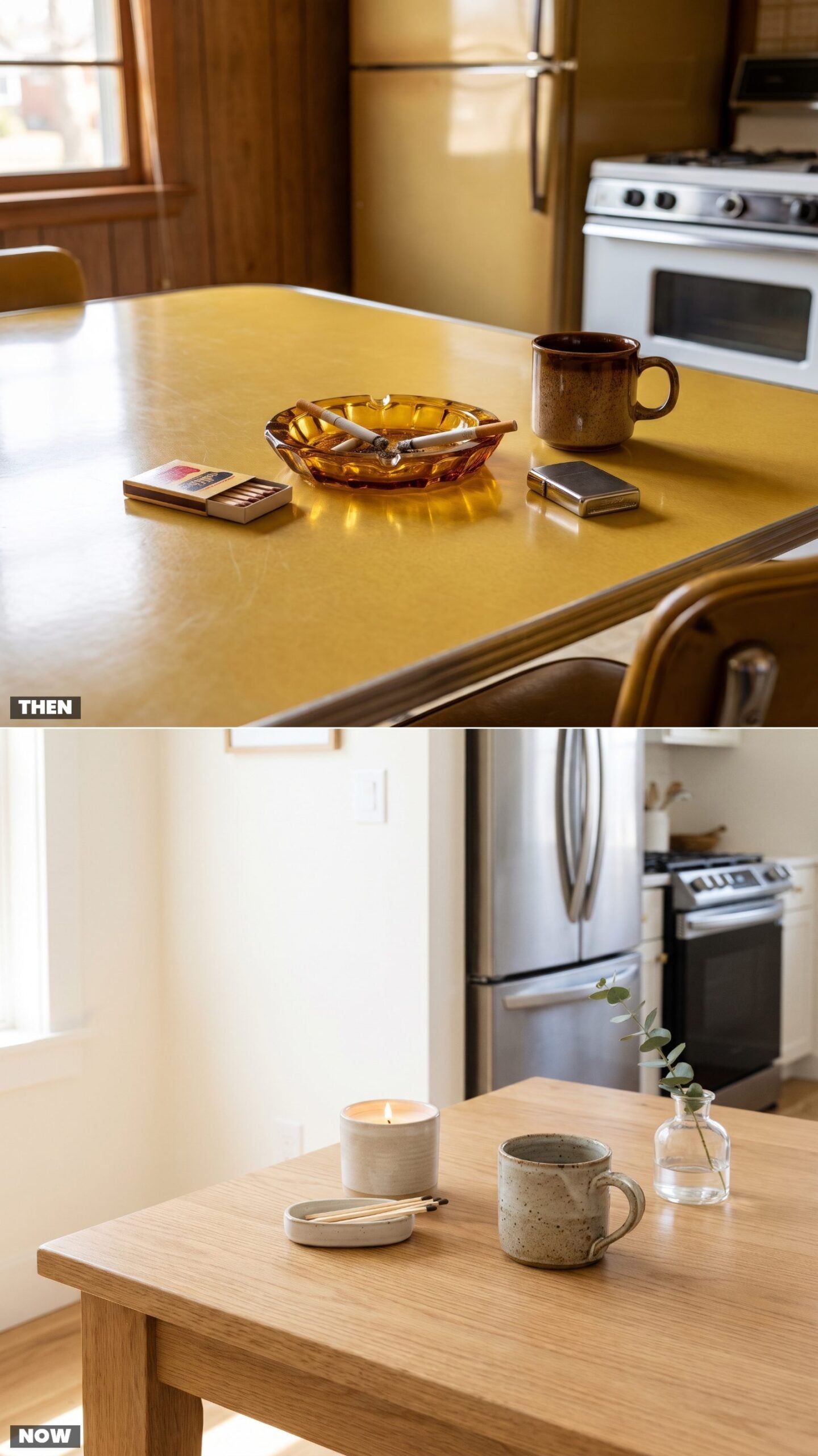
The centerpiece of a 1978 breakfast table was often a heavy amber ashtray and a book of matches. Coffee, cigarettes, the morning paper. That was the ritual, and the glass ashtray sat there as permanently as the sugar bowl.
The table still keeps a small ritual object at its center. Just a kinder one. A ceramic soy candle and a stoneware match striker do the same anchoring work the ashtray used to. Same instinct to make the table feel occupied, completely different object doing the occupying.