🔥 Would you like to save this?
The chamois cloth lived under the sink. You knew exactly why. Every doorknob, every faucet handle, every towel bar in the house had that particular warm-gold finish that fingerprints found immediately and water spots found faster. Saturday morning had a smell: Brasso. Sharp and chemical and oddly satisfying. The whole house gleamed by noon, and by Monday it needed doing again. These are the fixtures that defined a decade of American interiors, one polished surface at a time.
24. Brass Cabinet Hinges Visible on Every Single Door
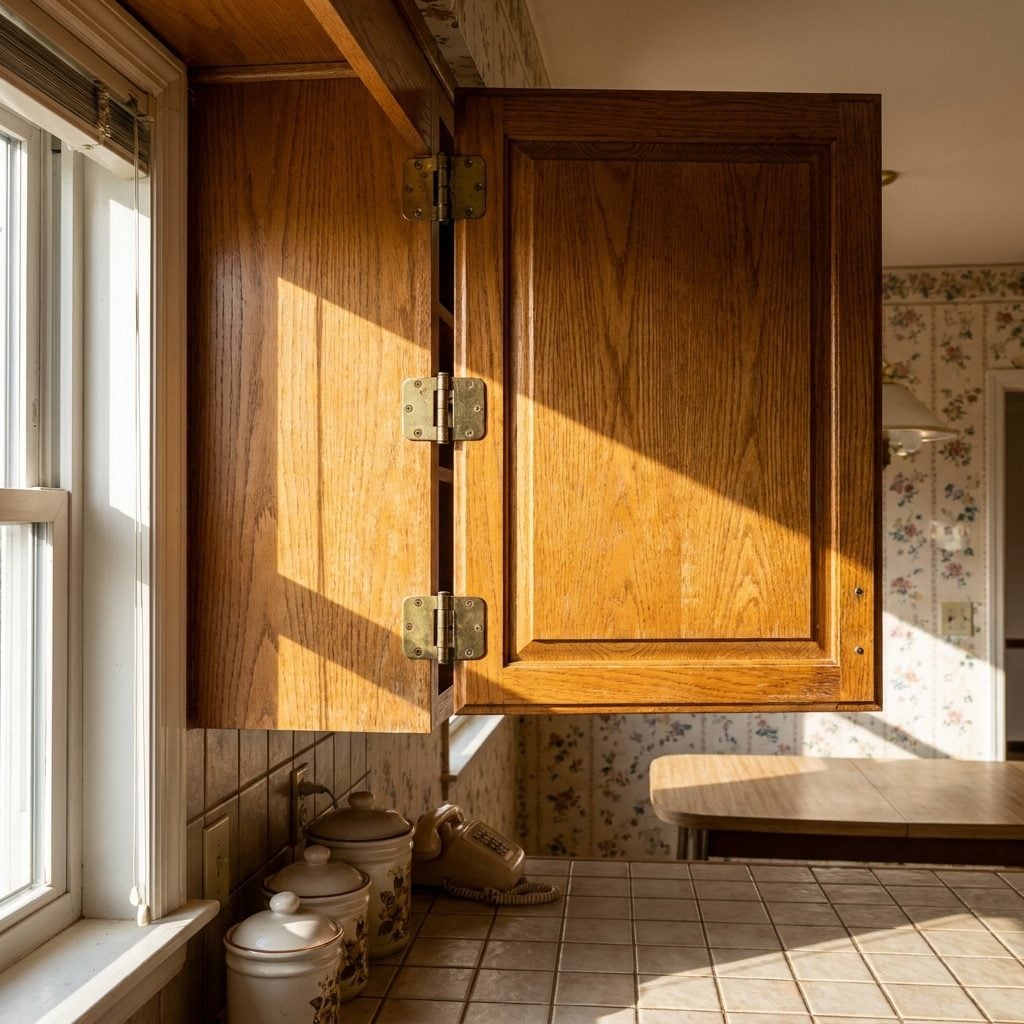
European concealed hinges existed. Cabinetmakers knew about them. And yet the fully visible brass butt hinge hung on through the entire decade like it had a union card. Three per door, sometimes four on the taller ones, each one polished to a different level of brightness depending on how well you’d done the previous round.
In order to come up with the very specific design ideas, we create most designs with the assistance of state-of-the-art AI interior design software. Also, assume links that take you off the site are affiliate links such as links to Amazon. this means we may earn a commission if you buy something.
The real detail: those hinges were installed with Phillips-head screws, and over time loose hardware, warped doors, or an out-of-level cabinet could make a door drift open or refuse to close flush. You’d adjust it once with a screwdriver and feel very competent about the whole thing. Six months later the door was back to drifting.
23. The Brass House Numbers Screwed Into the Brick Out Front
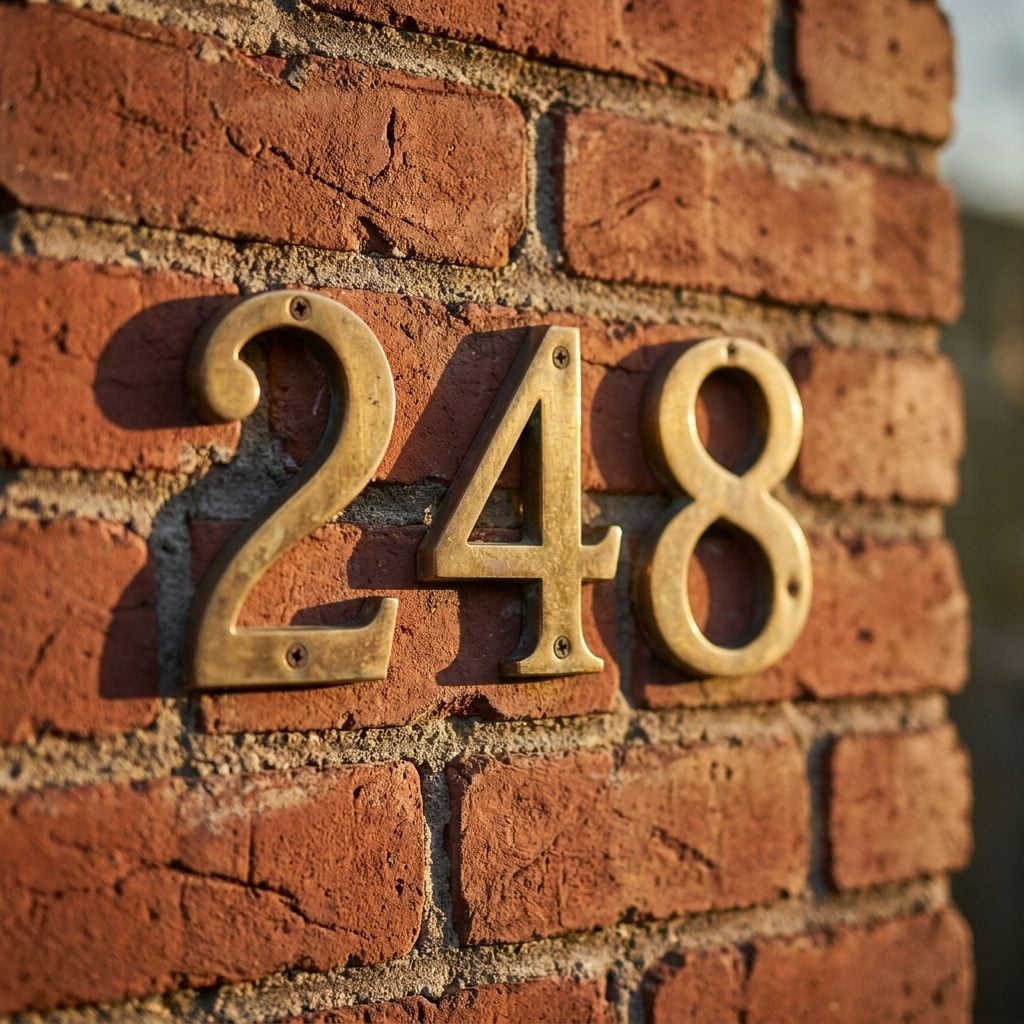
The brass house numbers sitting on that front brick wall were the first thing anyone saw when they pulled up. Four digits, serif font, mounted in a perfectly straight line that somehow managed to look slightly crooked anyway, always one numeral that sat a hair lower than the others. Nobody noticed until you’d lived there five years and couldn’t un-see it.
The finish on these lasted about two seasons before the outdoor air started winning. Polished in spring, gone dull by fall. The determined homeowner bought a brass polishing kit at the hardware store. Most people didn’t.
22. The Brass Shower Curtain Rod With the Tension Springs Inside
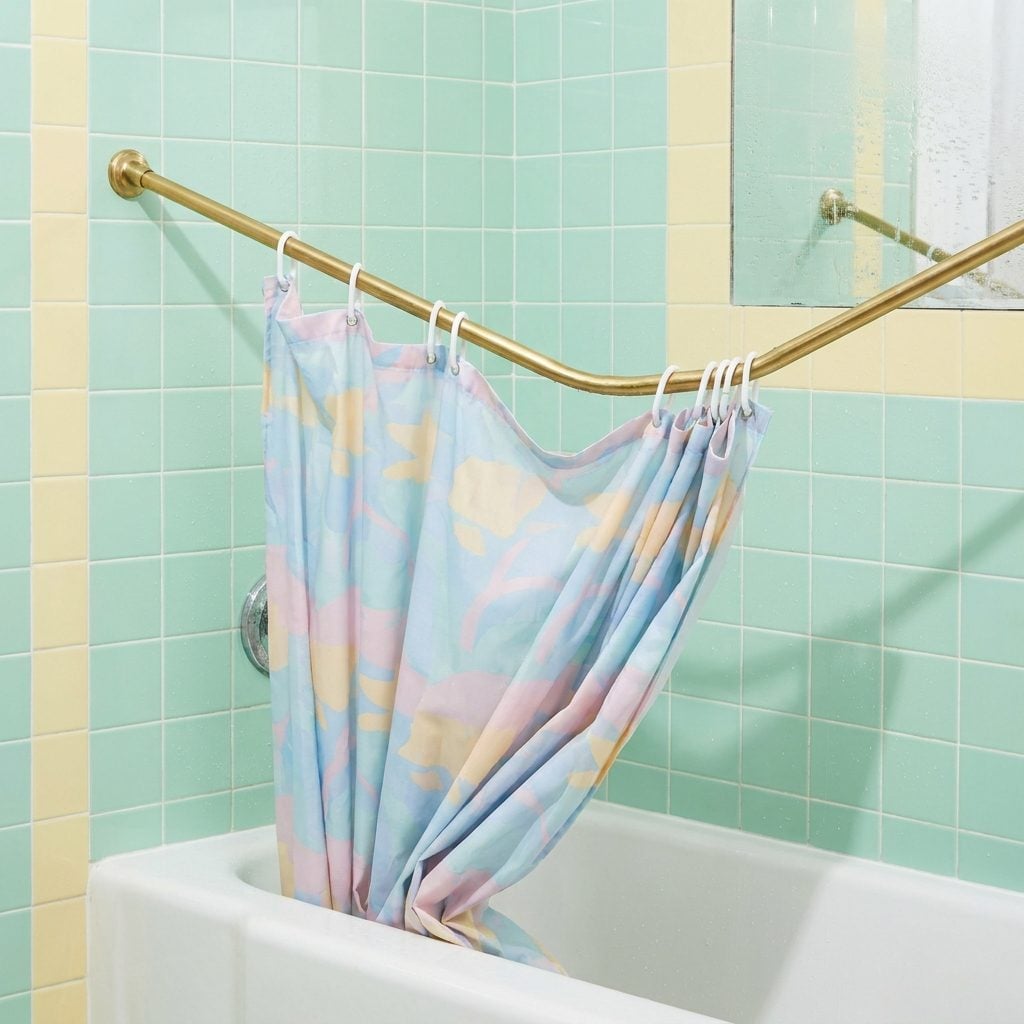
The tension rod was brilliant in theory: no drilling, no holes, just compress the spring and wedge it between the walls. The brass-finish version looked expensive until the lacquer dulled or spotted. What it also added was a slow, inevitable surrender to gravity. The rod would hold for months, then one morning you’d pull the curtain and the whole thing would drop straight into the tub with a noise like a small car accident.
Everyone has a version of this story. Everyone’s version involves a shower being actively in progress.
21. Brass Switch Plate Covers in the Hallway That Never Quite Matched
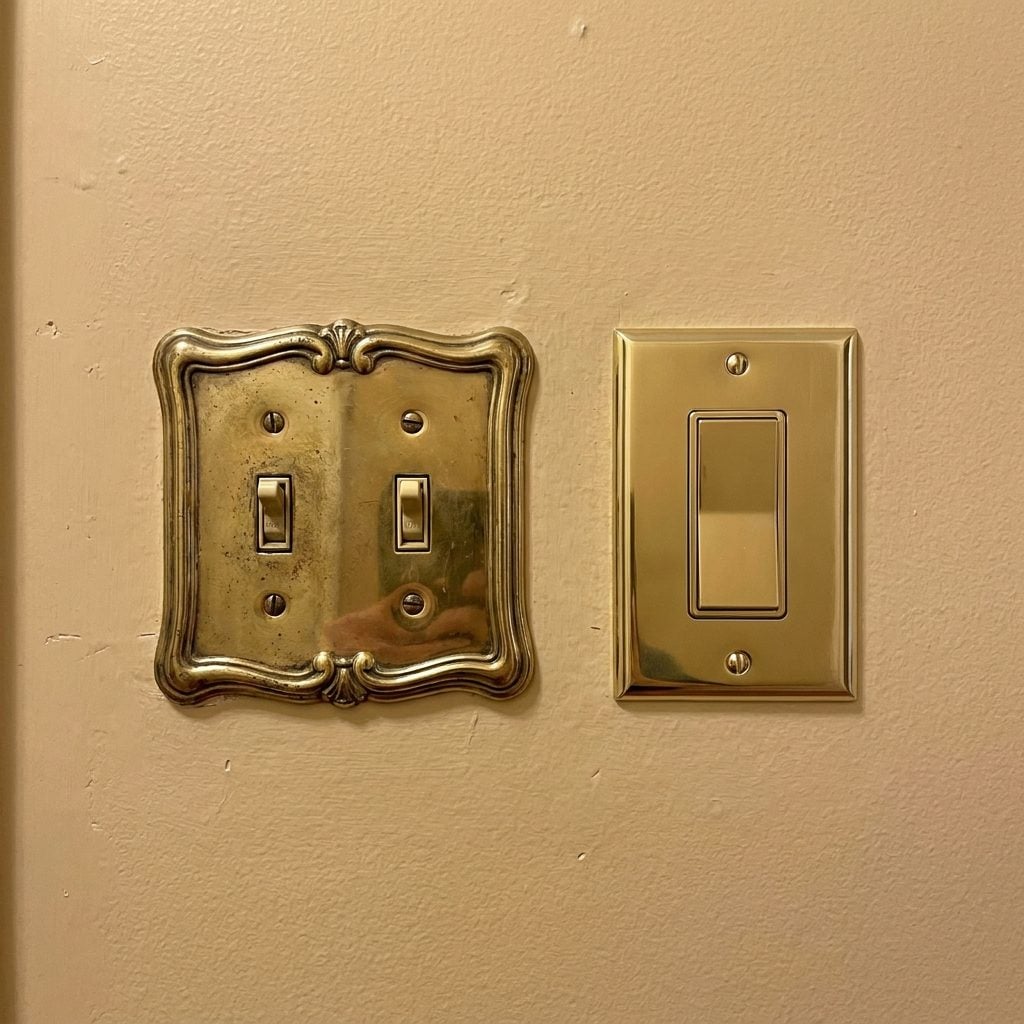
When a switch plate cracked, you went to the hardware store and bought the closest brass match you could find. The problem was that brass was never one color. Every manufacturer ran a slightly different alloy, a slightly different lacquer. The replacement plate came home a half-shade warmer or cooler than everything else on the wall, and there it sat for the next twenty years.
20. The Brass Door Knocker Nobody Actually Used Because There Was a Doorbell
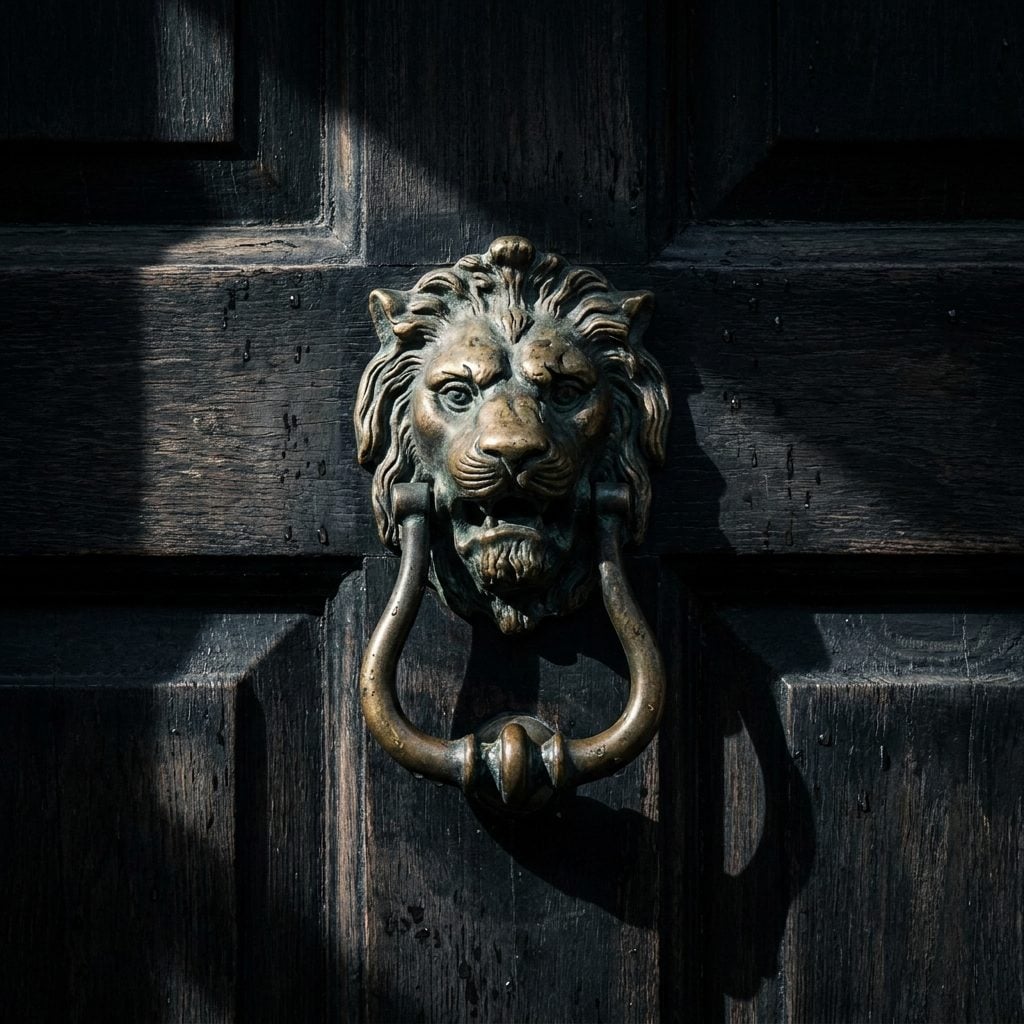
The lion’s head knocker. The urn-and-ring. The spread eagle. Whatever form it took, the brass door knocker was there on the front door, polished at least once a season, and used almost never. The doorbell was three feet away. Nobody was going to lift a brass ring and clap it against a plate when a plastic button existed.
It was purely decorative, which is fine. But the knocker occupied a specific category of home object: serious enough to require maintenance, nonfunctional enough to be furniture. You kept it because it looked substantial and because removing it would have left a hole in the door that would require filling.
19. Brass Fireplace Tools You Moved to Vacuum Around and Never Actually Used for Fires
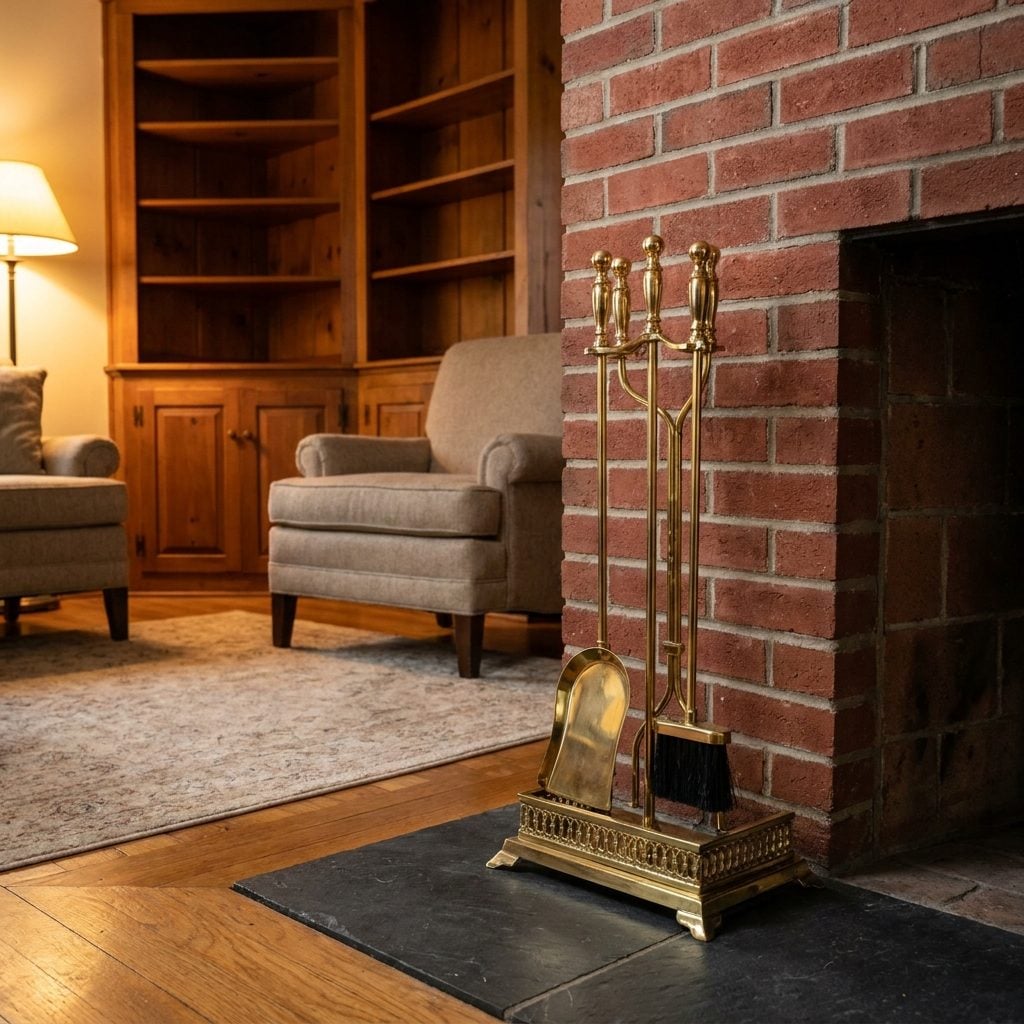
Five pieces counting the stand: poker, tongs, brush, and shovel, all arranged like ceremonial equipment. All polished to the same high shine that showed every fingerprint from ten feet away.
Plenty of these sets lived beside fireplaces that burned wood regularly. But a meaningful number of them spent their entire lives as sculptural objects, moved two inches left on cleaning day, moved two inches right when the vacuum cord required it, then returned to their exact original position. The fireplace could be gas-burning or purely decorative and the tool set remained. It was part of what a fireplace wall looked like, same as the brick and the mantel clock and the framed family portrait above it all.
These were objects that communicated something about a household even when the fire was never lit.
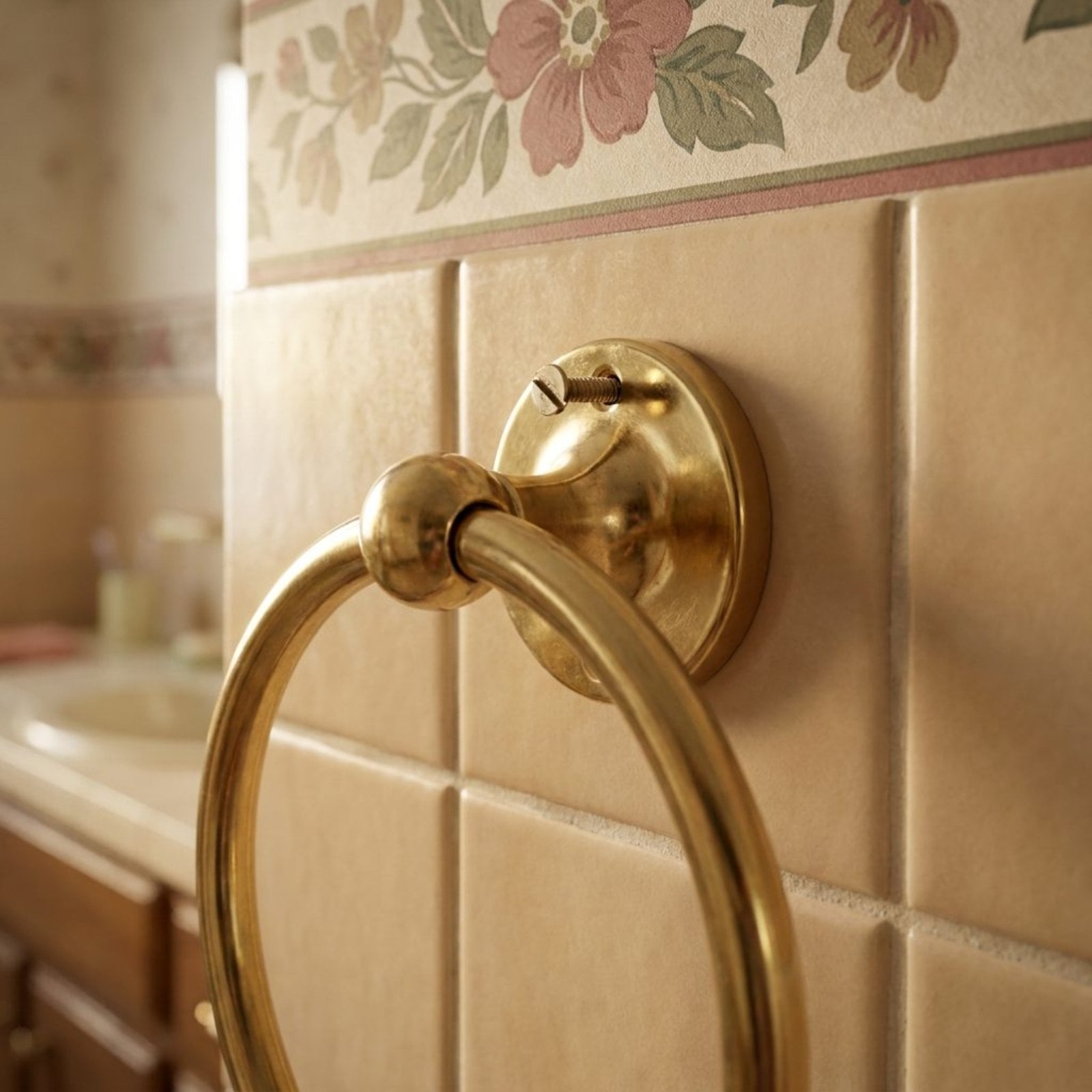
18. The Brass Bathroom Towel Bar Set With the Matching Robe Hook Nobody Ever Used
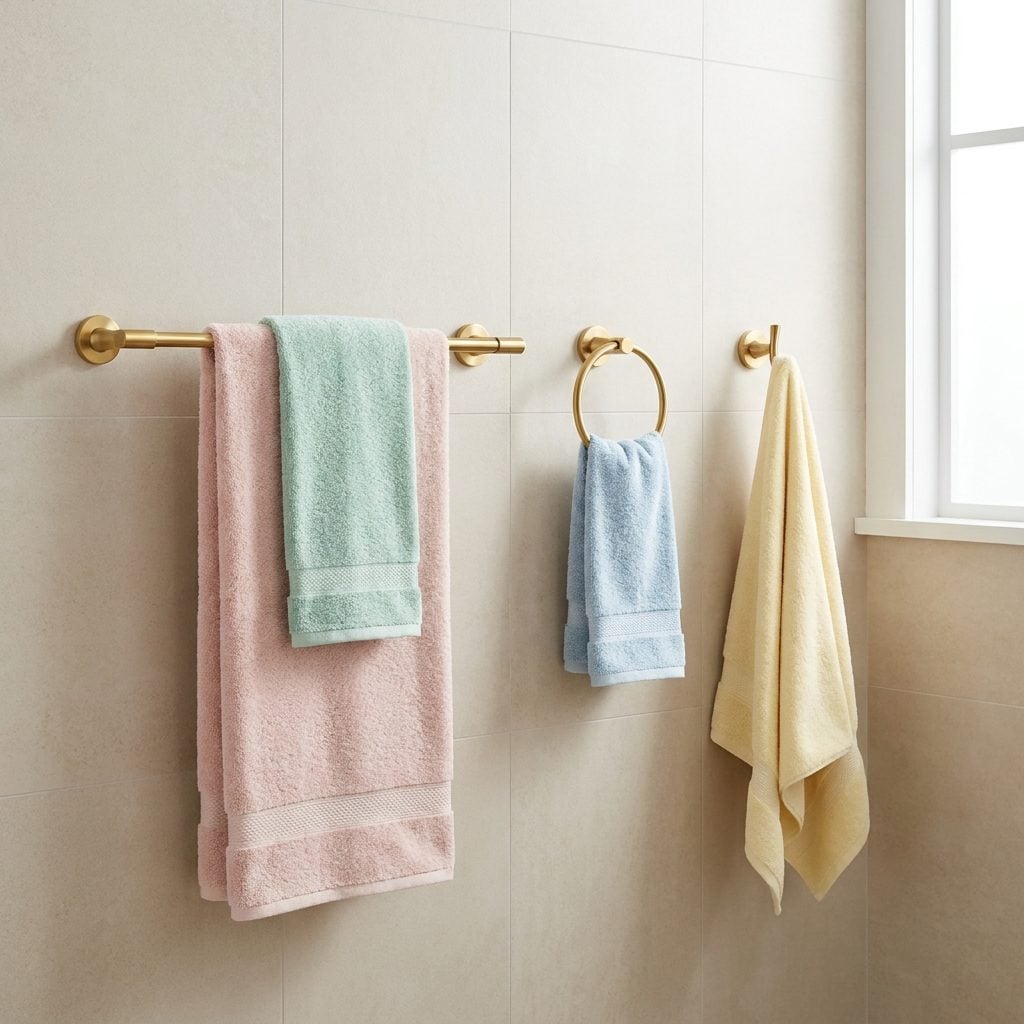
The towel bar, toilet paper holder, hand towel ring, soap dish, and robe hook arrived as a coordinated set from a catalog or home improvement store. Nothing in that bathroom was allowed to be brass alone.
The robe hook rarely held a robe. The towel ring developed a wobble, and the toilet paper holder eventually spun too freely or lost tension in its roller. The pieces stayed on the wall anyway because removing one would leave screw holes and break the symmetry of the set.
The lacquer wore first where wet hands touched it most, leaving darker patches against the remaining shine. Matching mattered more than flawless function.
17. The Brass Swing-Arm Wall Lamp on Either Side of the Headboard
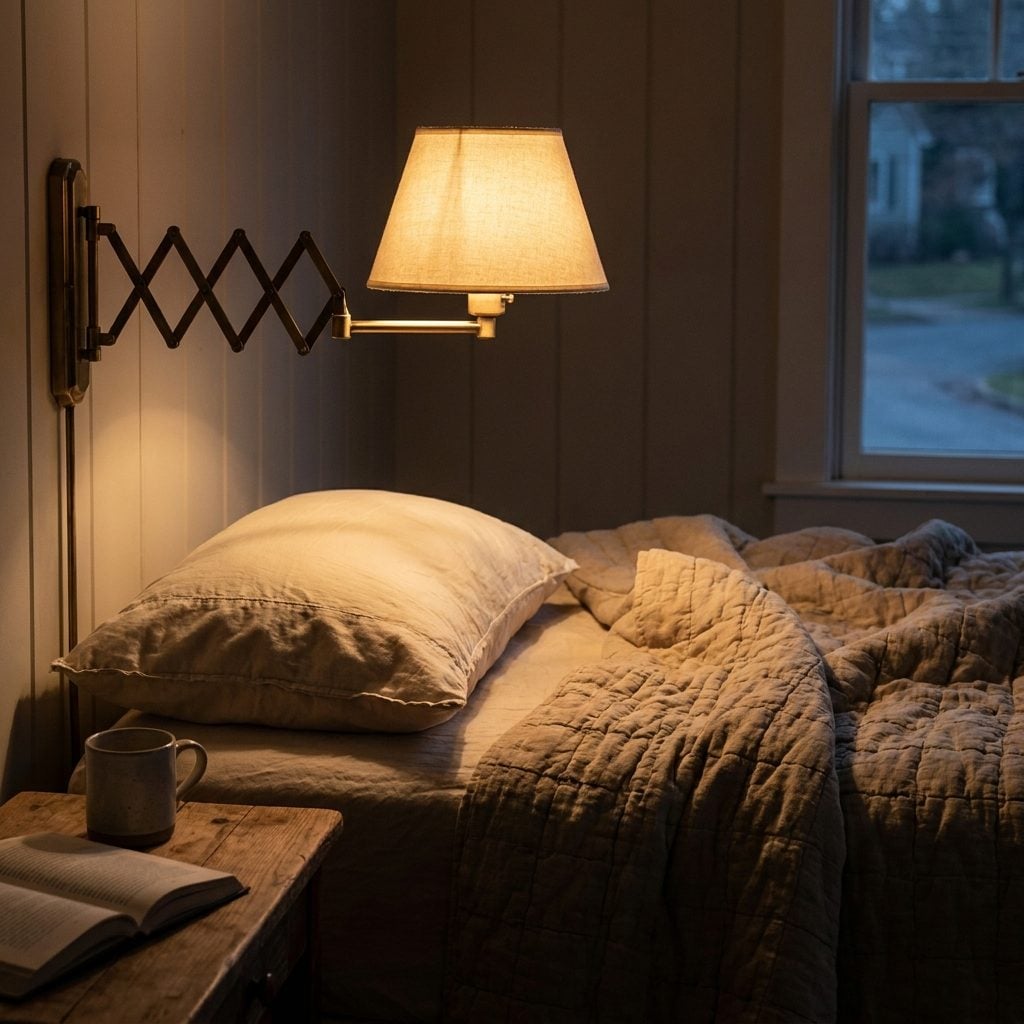
The swing-arm wall lamp solved a real problem. It freed up the nightstand from lamp duty, which meant the nightstand could hold the alarm clock, the water glass, the book, and the reading glasses all at once without everything tipping. In the context of 1980s bedroom design, this was a genuine quality-of-life improvement dressed in brass and a fabric shade.
Many versions used a pull chain. Brushing it in the dark to turn the light off was a small nightly ritual, feeling for the little bead, finding it on the second or third pass, the quiet click. One chain per side, both reachable without sitting up all the way. The arm swiveled toward whatever angle you needed and stayed there until someone knocked it.
16. The Brass Kickplate on the Front Door That Turned Green Around the Edges
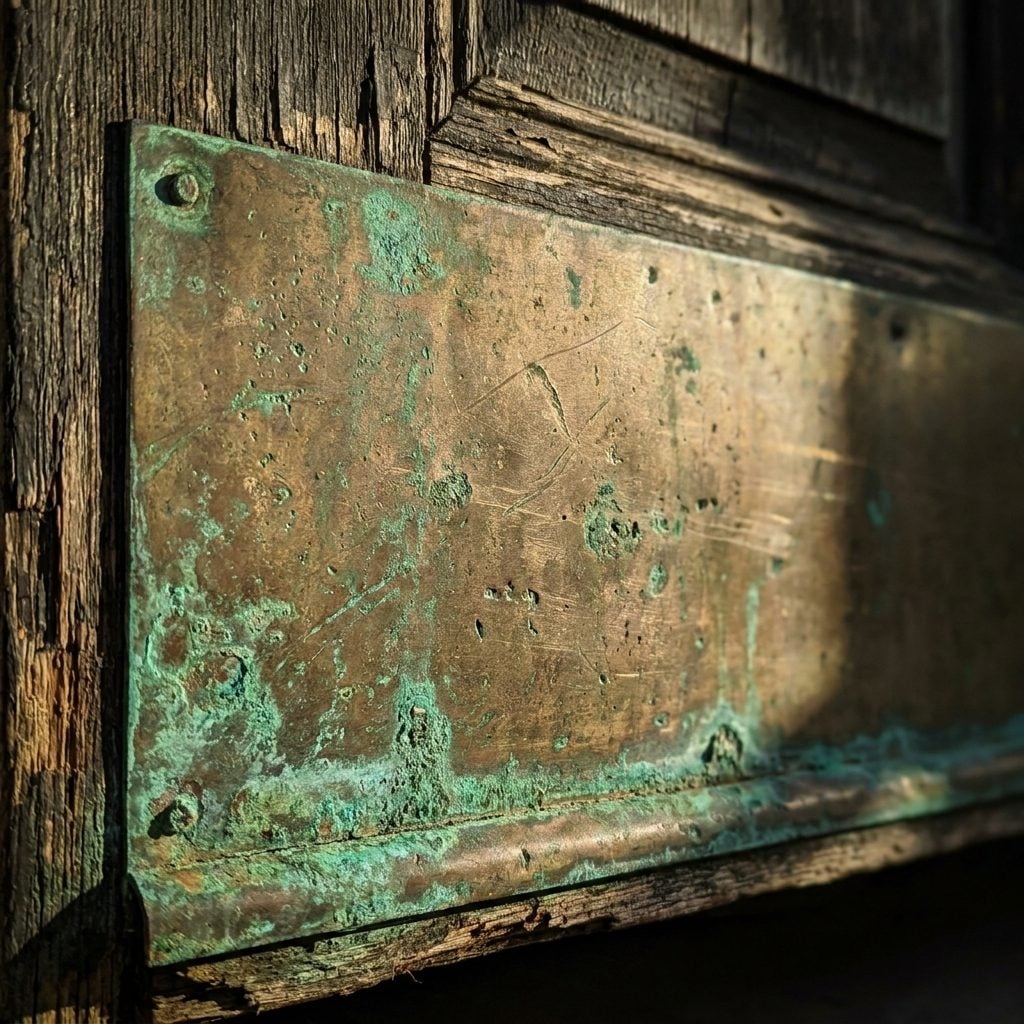
The brass kickplate was there to protect the door from scuff marks. That was the stated purpose. In practice it became the single most aspirational square foot of metal in the entire house, polished to a mirror finish before any gathering, photographed mentally by every neighbor who walked up the front path.
But brass and outdoor humidity have an arrangement, and that arrangement does not favor the homeowner. The center got polished. The corners got green. There was always a thin line of oxidation right where the screws went in, just out of reach of a folded cloth, where the Brasso never quite penetrated. You could spend twenty minutes on that plate and still not beat the edges into submission. Most people eventually stopped trying on the corners and decided the contrast was a texture.
15. The Brass Plant Hanger Brackets Screwed Directly Into the Window Trim
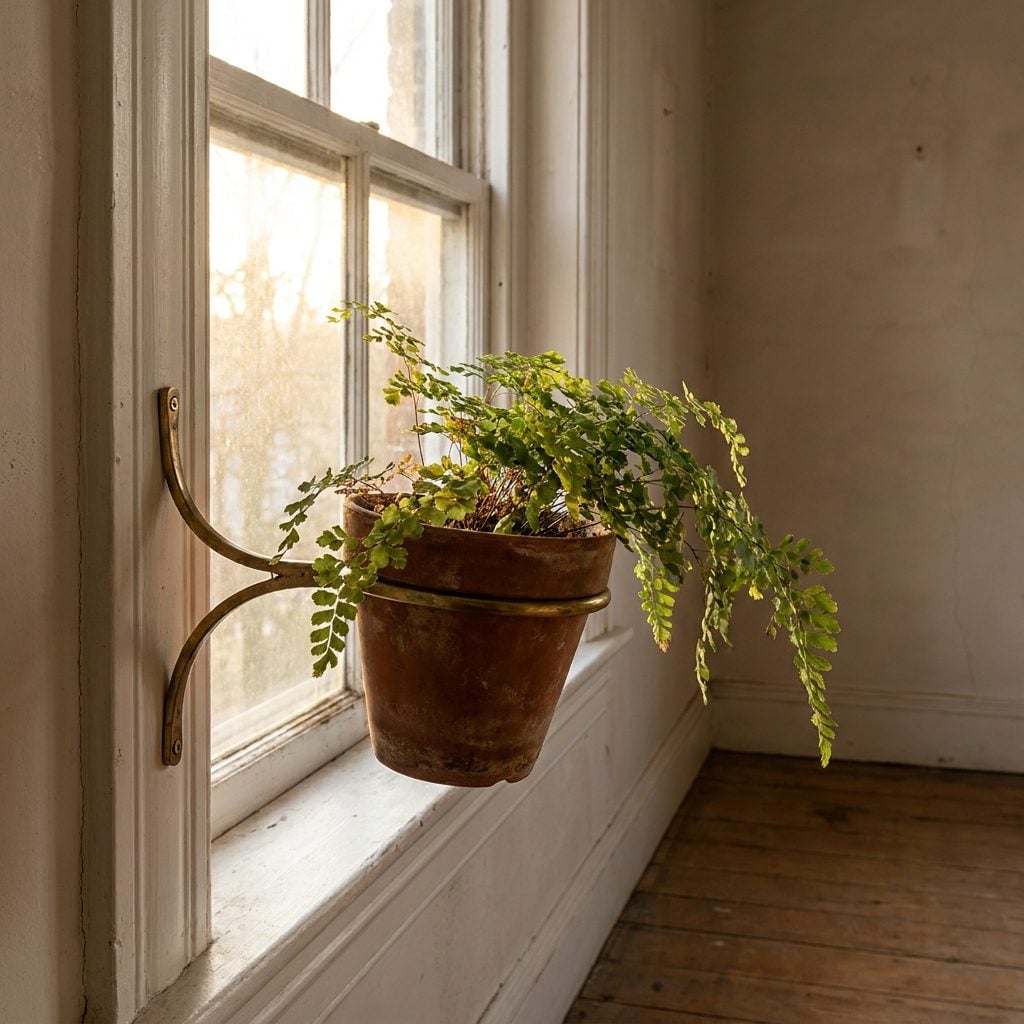
Screwed directly into the window trim with no anchors and a prayer, these small curved brass bracket arms held terracotta pots, macramé hangers, and the trailing ambitions of every spider plant and pothos slowly colonizing a south-facing window.
Porches got their own version: a swivel ceiling hook that held a Boston fern until winter, then spent the rest of the year supporting a wind chime. Indoors or out, the hardware often outlasted whatever hung from it.
When the brackets finally came down, they left small screw holes in the painted trim and a faint ring where watering had marked the wood. The plants, in most cases, were fine.
14. The Brass Bed Frame With the Ball Finials That Unscrewed Every Time You Moved It
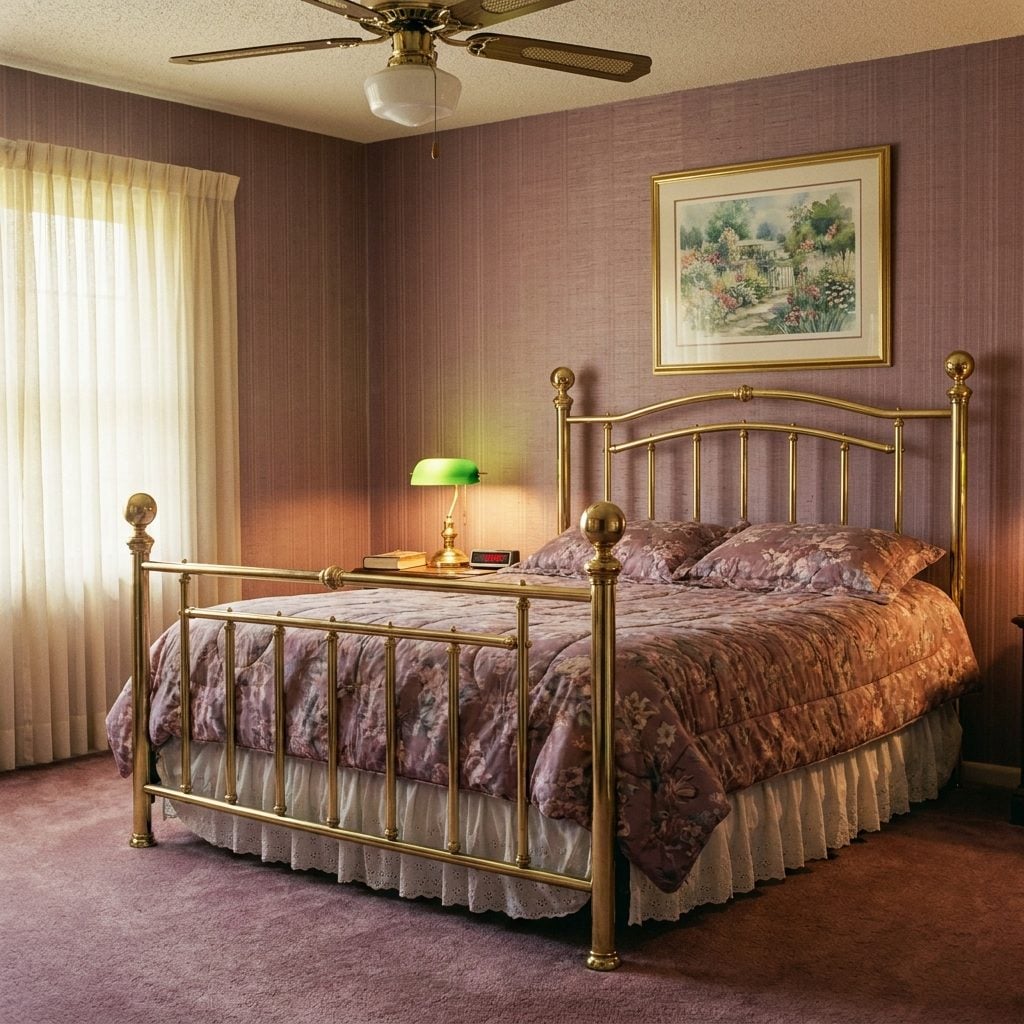
Every shift of the mattress nudged a finial another quarter-turn off its post. You’d spot it weeks later, dangling by two threads, and screw it back down without thinking twice. Then the other side would go. Then the one at the foot of the bed.
Hollow metal tubing with a polished or lacquered brass finish. Some beds used plain round balls; others went fully decorative with pineapple finials, the old symbol of hospitality turned into bedroom hardware. The joints squeaked whenever you sat down too fast, and the rails caught the glow from the bedside lamp and threw a warm smear of light up the wall.
Kids figured out quickly that a loose finial made a decent hiding spot for folded notes, baby teeth, and coins they did not want a sibling to find. One post eventually rattled when the bed moved, and nobody could remember what had been dropped inside.
13. The Brass and Glass Coffee Table That Left Water Rings You Could Never Wipe Off
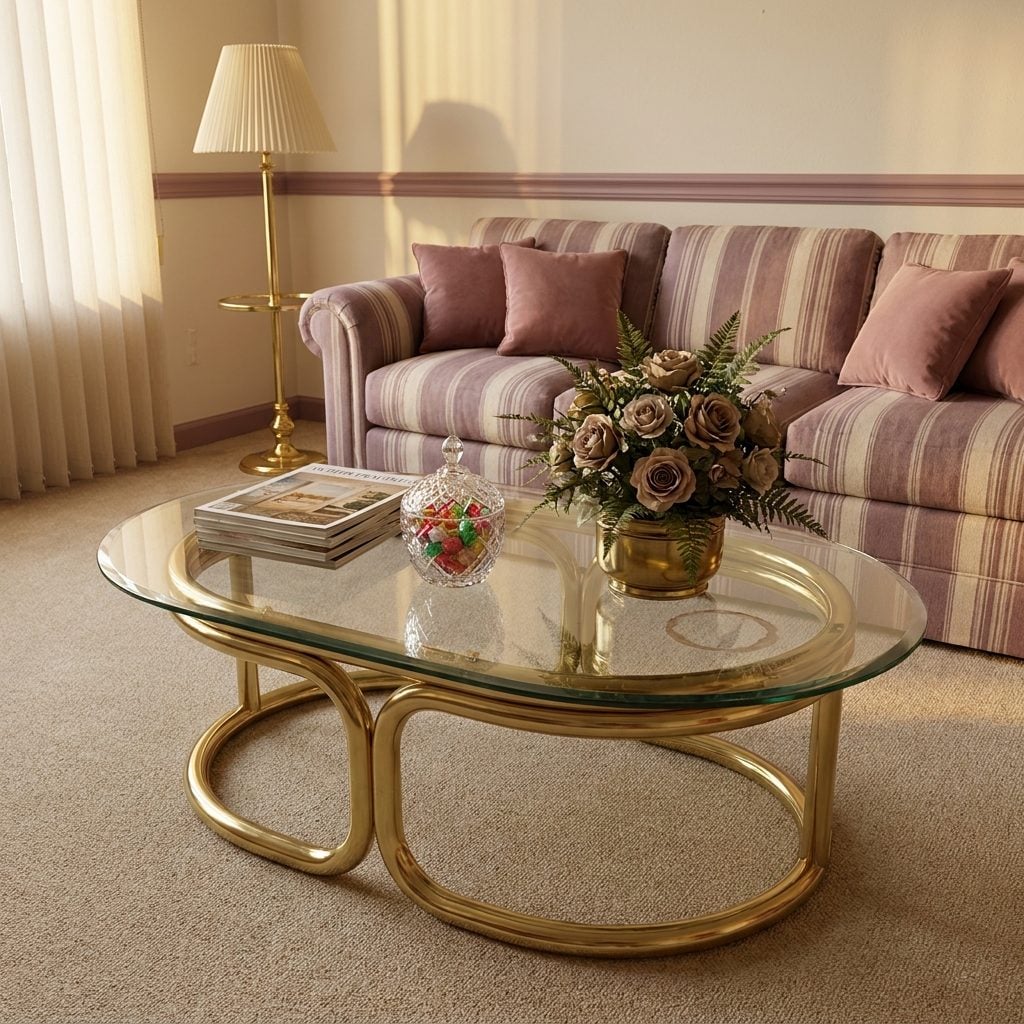
The base was two curved brass tubes bent into an oval, and the top was a slab of beveled glass sitting on suction cups nobody trusted. One Coke can without a coaster left a ring that reappeared whenever the light hit the glass.
Brass showed every fingerprint. The glass showed everything else. Windex became a weekly ritual, and somebody’s mother had one exactly like it with a fake floral centerpiece welded in place by inertia—that thing never moved, not even for company.
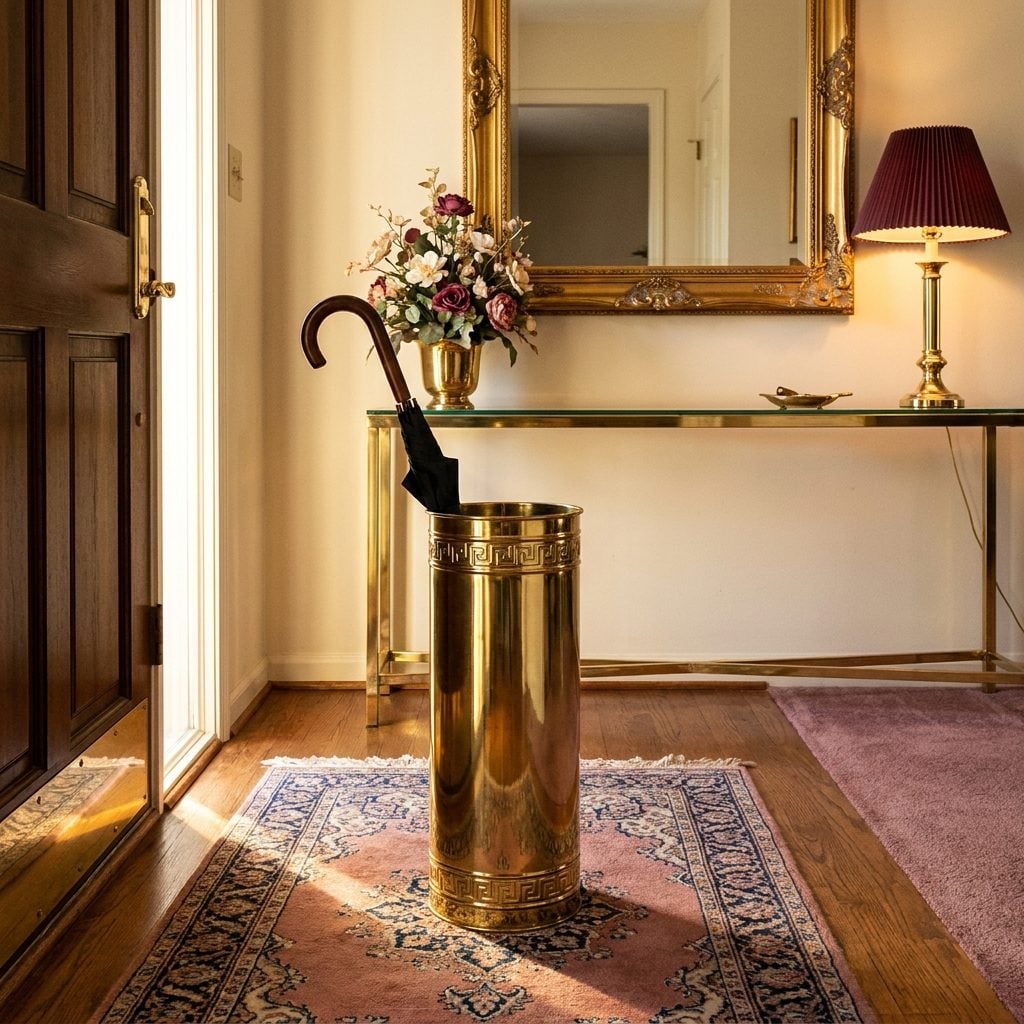
12. The Brass Umbrella Stand by the Front Door That Held Exactly One Umbrella
🔥 Would you like to save this?
Tall, cylindrical, embossed with a vaguely Greek key pattern, and always empty except for one bent umbrella nobody remembered buying. Sometimes a cane leaned in it. Sometimes a rolled-up movie poster. Twenty years by the front door, doing almost nothing.
Nobody seemed to know where they came from. It was the kind of object that materialized in the house the same year the wedding china did, and stayed exactly as long.
11. The Brass Sconce in the Dining Room With the Frosted Tulip Shades Pointing Up
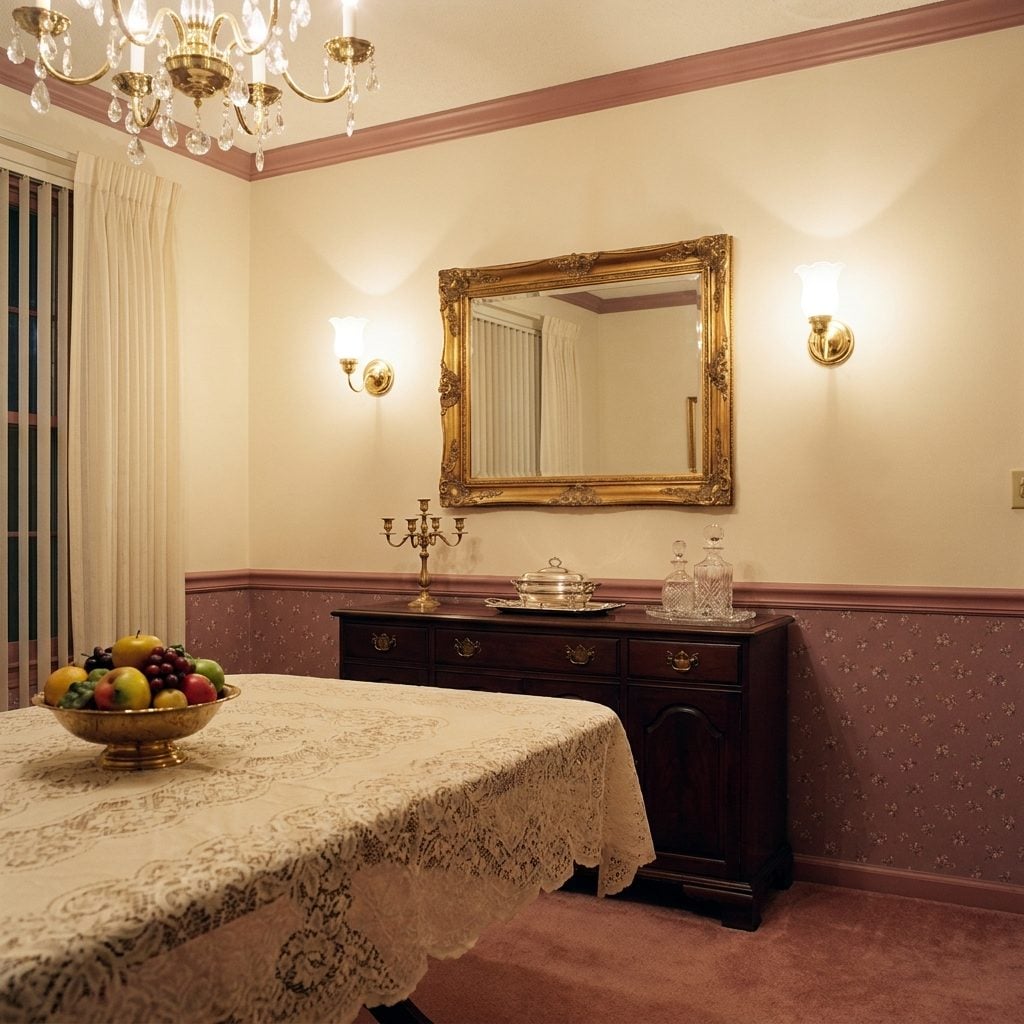
Both bulbs pointed up, and neither one lit the room. Purely decorative. The frosted glass had a rippled texture that trapped dust in ways no rag ever reached.
You dusted them for Thanksgiving and Easter, and forgot about them the rest of the year. Replacing a burned-out bulb meant loosening the shade and then a tiny brass finial that always seemed cross-threaded. Which is why one sconce was almost always dark.
10. The Brass Curtain Tiebacks Screwed Into the Wall Beside Every Window
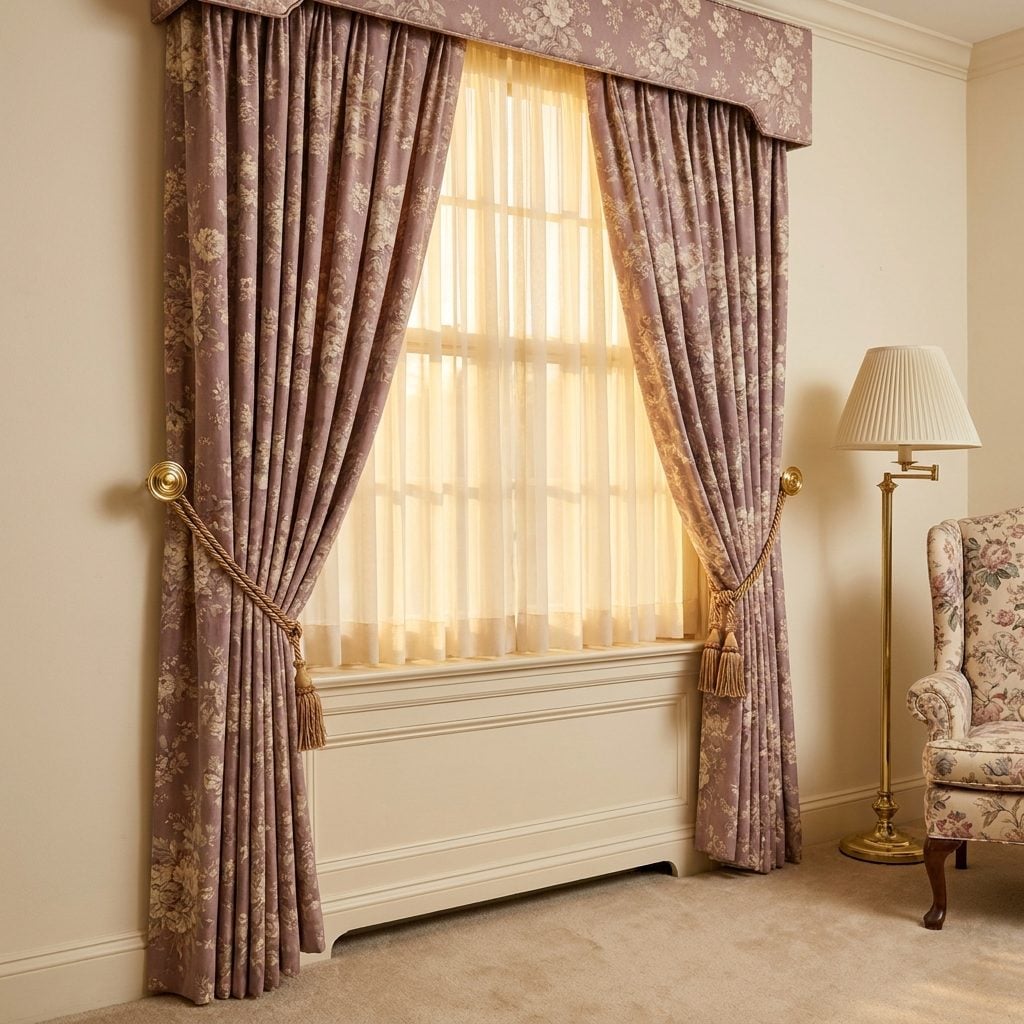
Little polished brass rosettes with a hook sticking out, mounted just below the window trim on both sides. The heavy drapes got looped through them and cinched with a matching brass-and-tassel rope, and the whole setup felt very serious, like the windows were dressed for a job interview they had no intention of attending.
Half the time nobody used them. Curtains hung straight down and the tiebacks sat there empty, waiting for company that never came.
9. The Brass Wine Rack That Sat on the Counter Holding Bottles Nobody Was Drinking
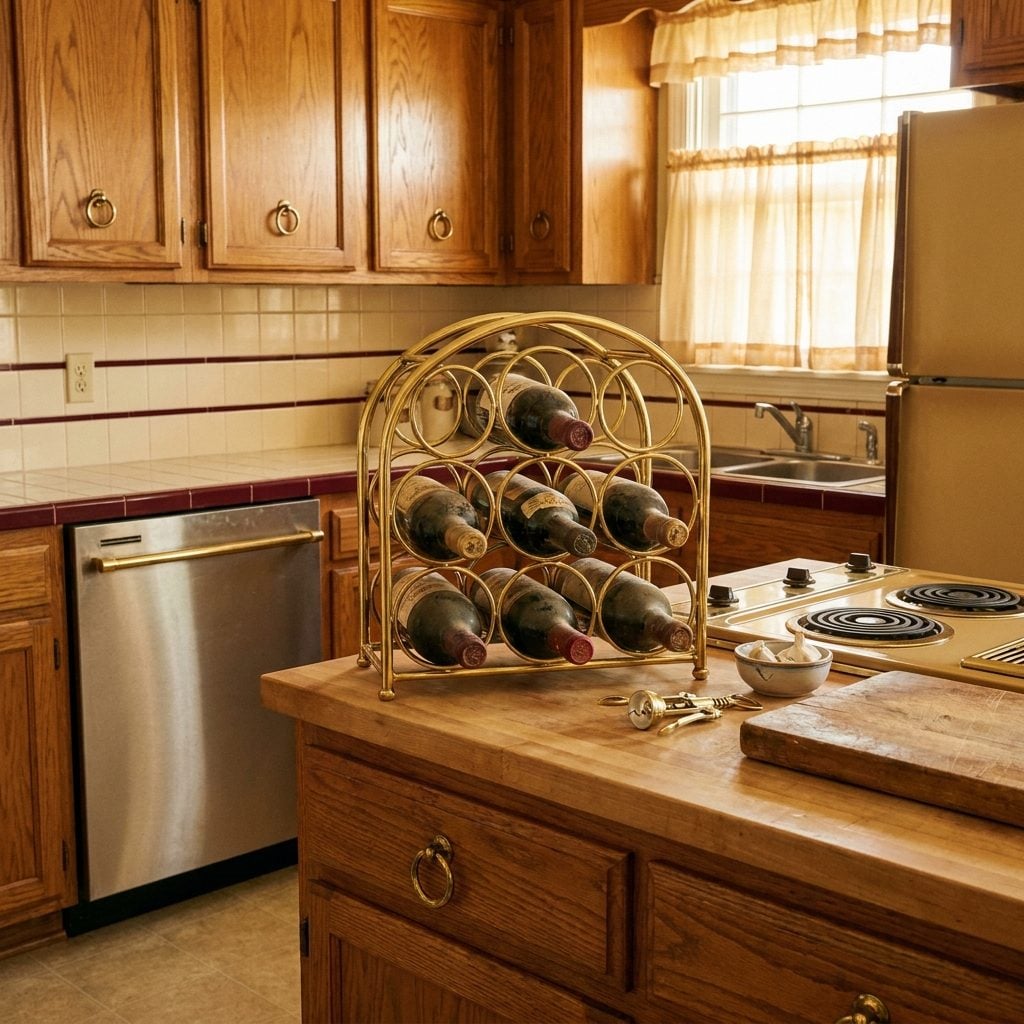
It held six bottles horizontally, and the same six bottles stayed in it for years. A merlot somebody brought to a dinner party, a chardonnay from a wedding, and a bottle of Blue Nun that had almost certainly turned.
The rack was always dusty on top because polishing it meant lifting out every bottle, and that felt like more commitment than anyone was willing to spend on a Saturday.
8. The Brass Étagère in the Corner of the Living Room With Five Glass Shelves of Collectibles
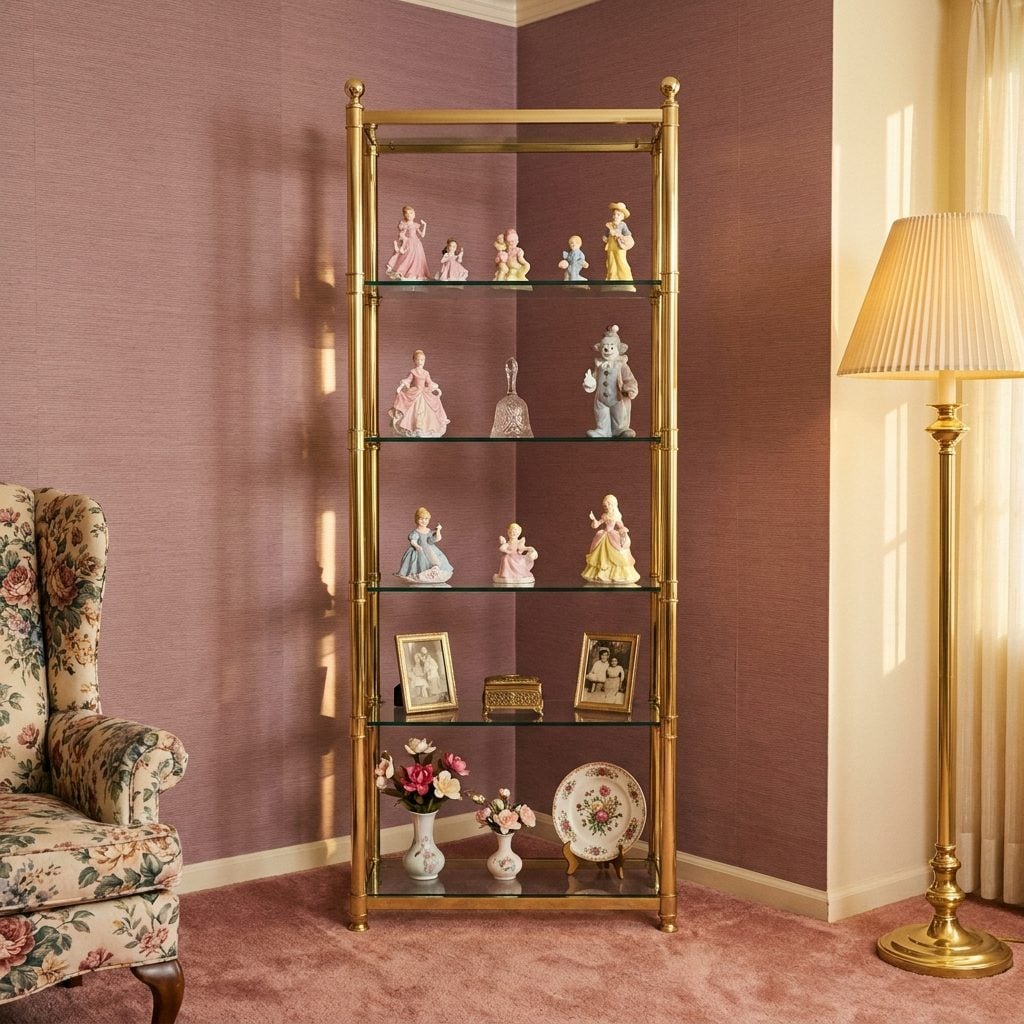
Tall, narrow, four brass posts holding five glass shelves—a display case at a small museum nobody visited. On the shelves: Precious Moments figurines, a Lladró clown, a crystal bell from a cruise, a Hummel or two, a framed school photo of somebody’s grandchild.
You were not allowed to touch it. Ever. The dust on the top shelf was older than most marriages.
7. The Brass Peacock Fireplace Screen With the Fanned-Out Tail
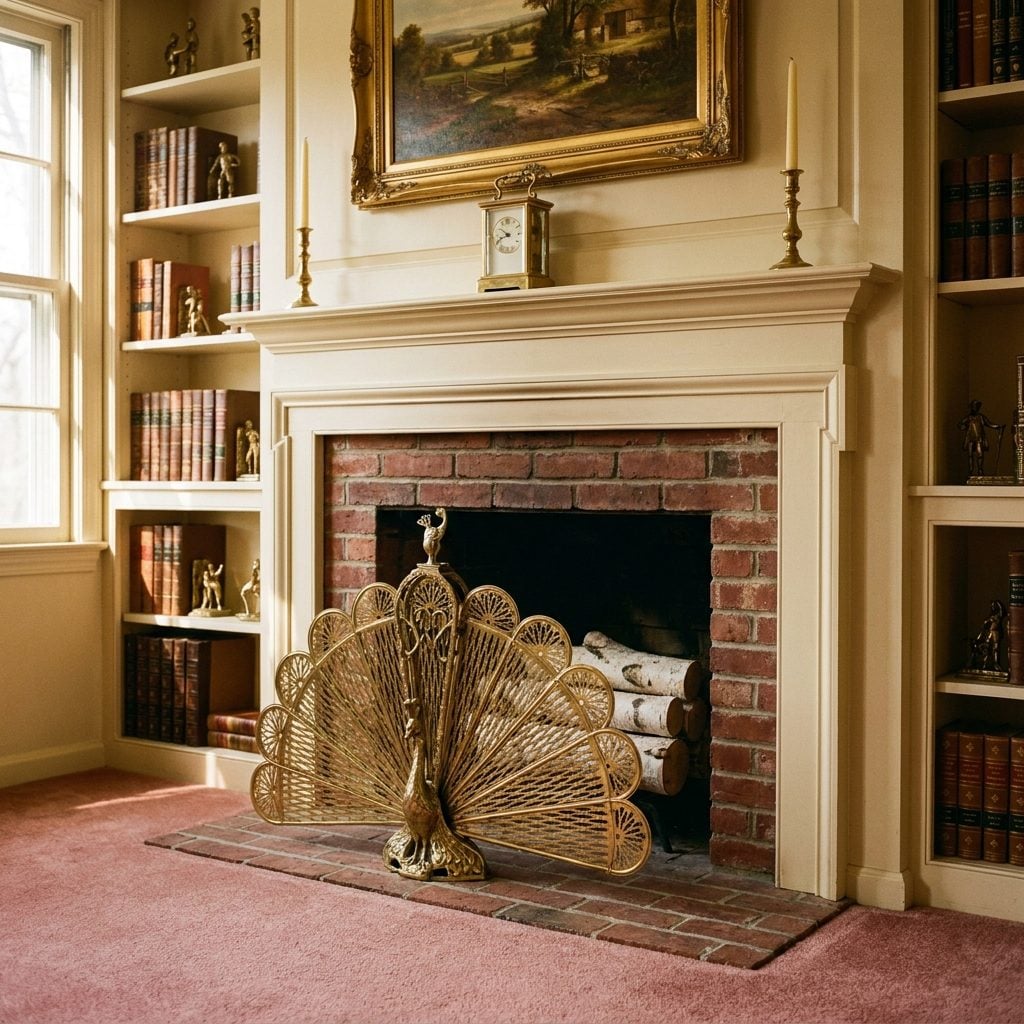
The tail spread out in a full fan of pierced brass, the body was a stylized peacock in profile, and the whole thing was more theatrical than any actual fire in the fireplace—which, let’s face it, mostly held decorative logs and a candle arrangement.
Everyone knew somebody with one. Some had polished. Some had the antiqued finish that was supposed to look expensive but just looked murky. All of them tarnished at the base first, where fingers grabbed to move it.
6. The Brass Bar Cart on Wheels That Rolled Approximately Nowhere
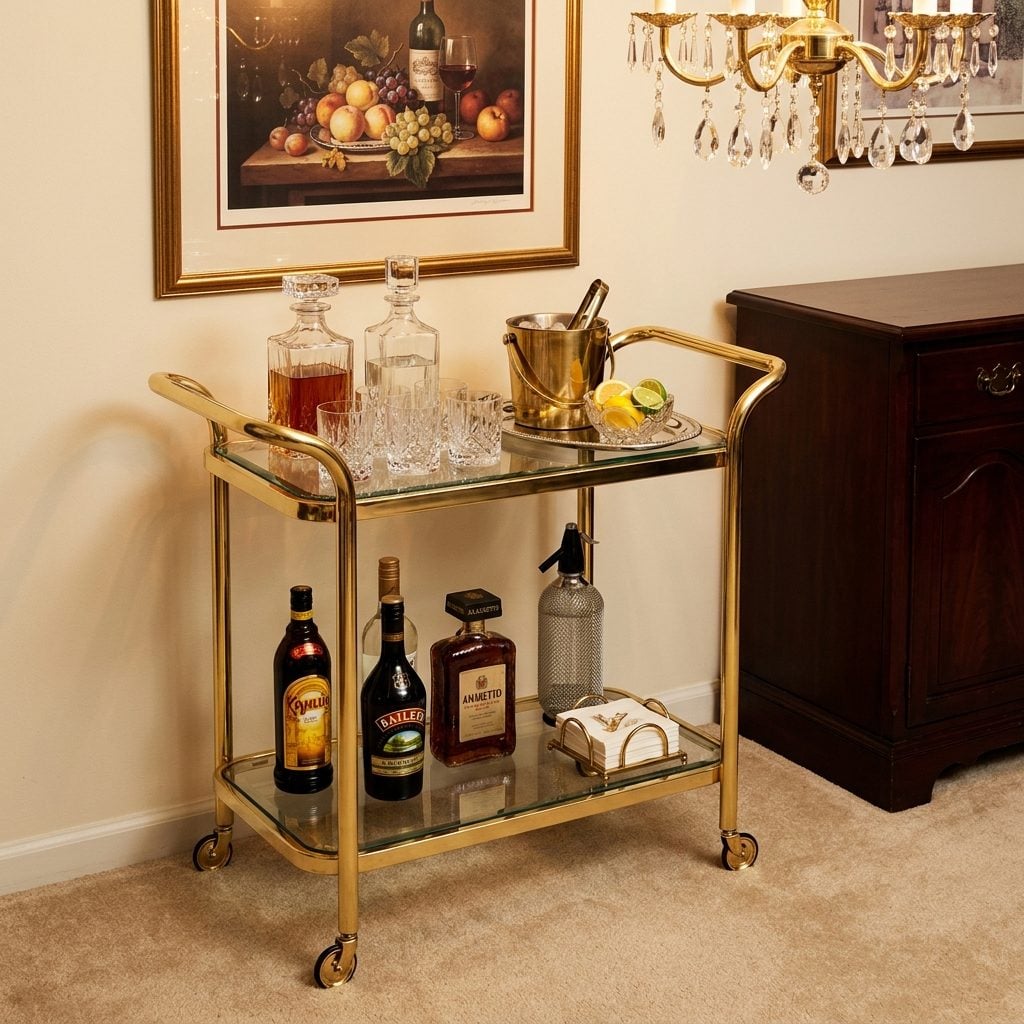
Had wheels. Never moved. It lived against the dining room wall between the china cabinet and the buffet, and the closest it ever came to rolling was when somebody vacuumed around it and shoved it two inches to the left.
Top shelf: the decanter set from a wedding. Bottom shelf: a bottle of Kahlua that had been half-full since sometime during the Reagan administration.
5. The Brass Chandelier Over the Dining Table With Six Flame-Shaped Bulbs
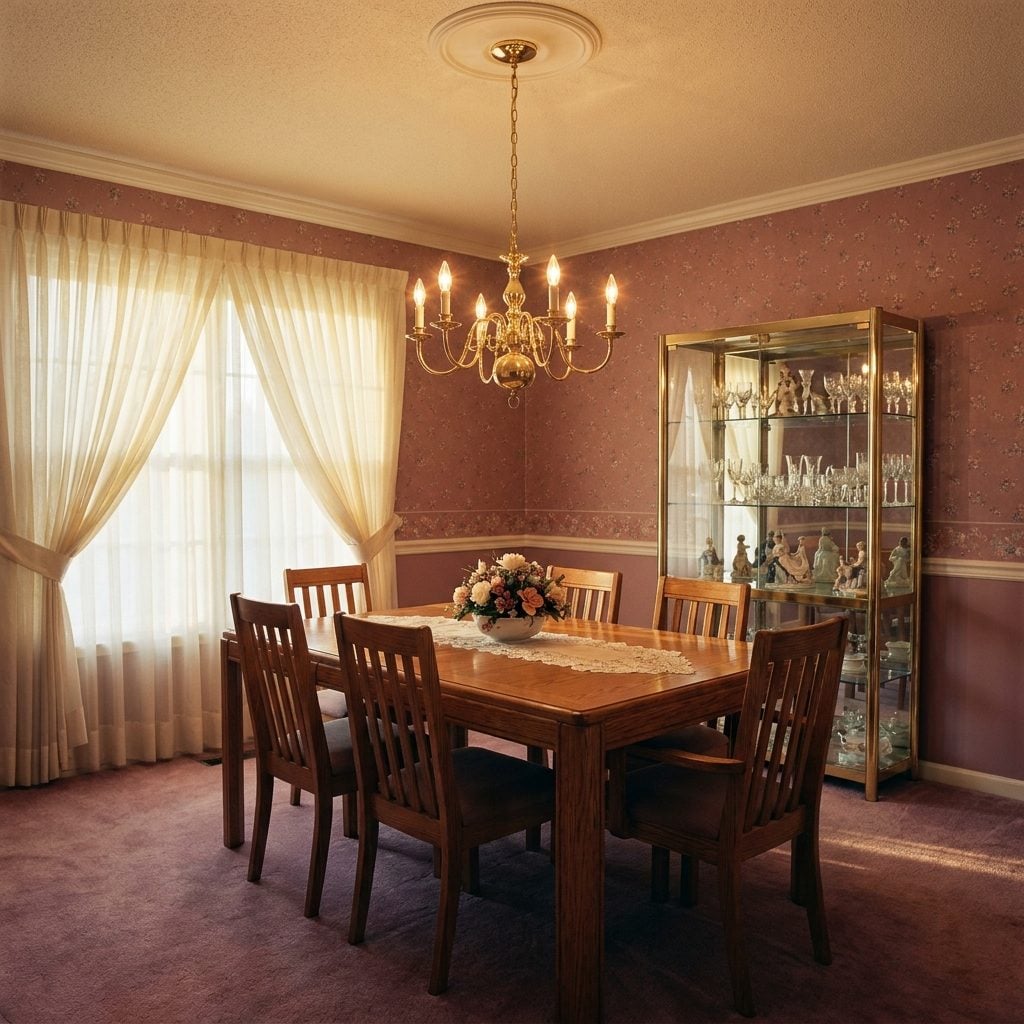
Six little flame bulbs pointing at the ceiling, and you spent your childhood staring up at them during long dinners waiting for permission to leave the table. The dimmer switch on the wall hummed a low note, and cranking it too far in one direction made all six bulbs flicker like they’d been startled—a small nightly drama nobody else seemed to notice.
The brass had that specific yellow-gold color that photographed strangely, always looking a little more orange in pictures than it did in person. Once a year someone climbed up on a chair with a rag, tried to polish it, and gave up halfway through because the arms were shaped weird and the rag wouldn’t fit into the crevices. So it stayed half-polished. Nobody mentioned it.
4. The Brass Ceiling Fan With the Cane Blades in the Family Room
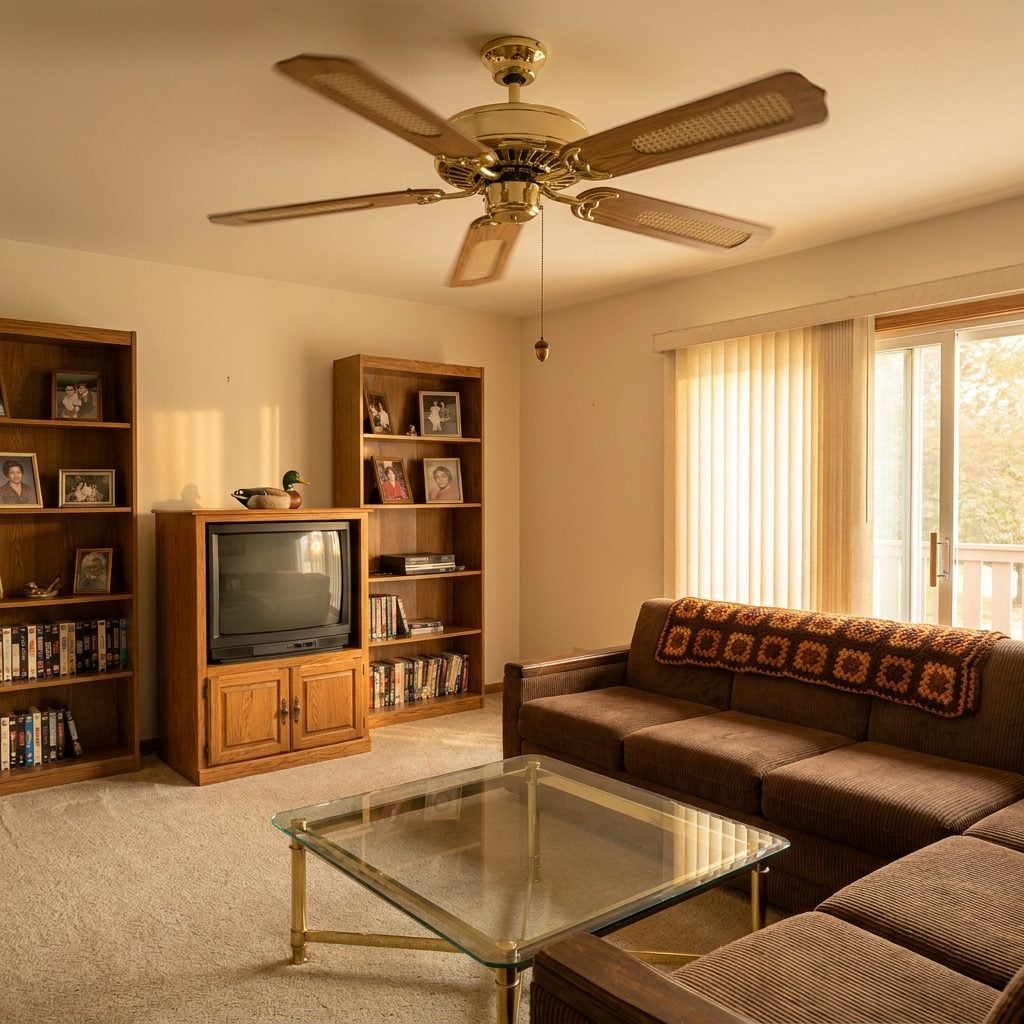
A little brass acorn dangled from the end of the pull chain, ticking against the housing whenever the fan spun. Someone had tied a length of ribbon or fishing line to it so the kids could reach without hauling over a dining chair.
Three speeds. Only two of them worked, because the middle setting made a clicking sound everyone had trained themselves to ignore years ago, and reverse was a mystery button nobody understood the point of until much later.
3. The Brass Faucet on the Bathroom Vanity With the Clear Acrylic Handles
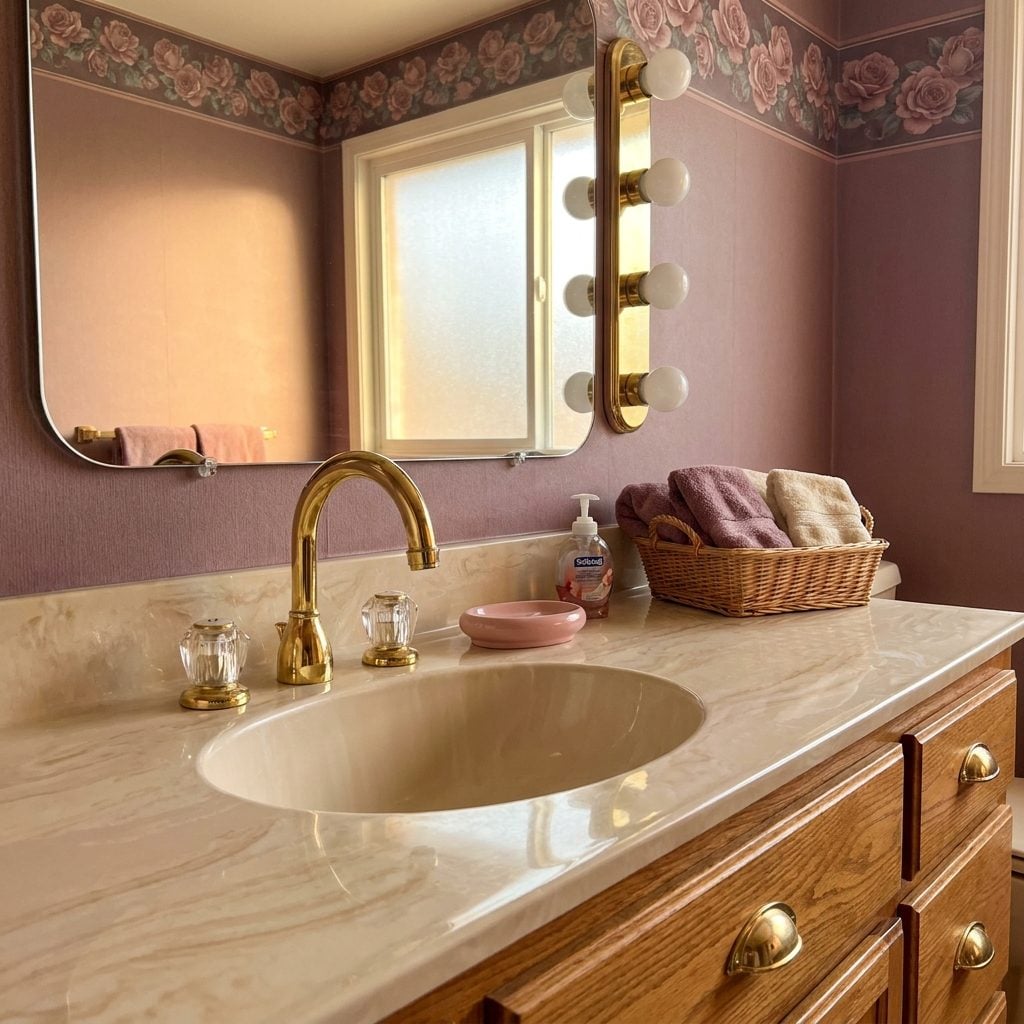
The acrylic yellowed at the base first, then went cloudy through the middle, then cracked around the little metal stem inside. You could watch the crack widen for months before anyone got around to doing anything about it.
H and C were tiny gold decals stuck to the top of each handle. One always peeled off within the first year, and for the rest of the house’s life you had to remember which was which. Everyone forgot. Everyone turned the wrong one first, every single time.
2. The Brass Kitchen Faucet With the Sprayer That Never Fully Retracted
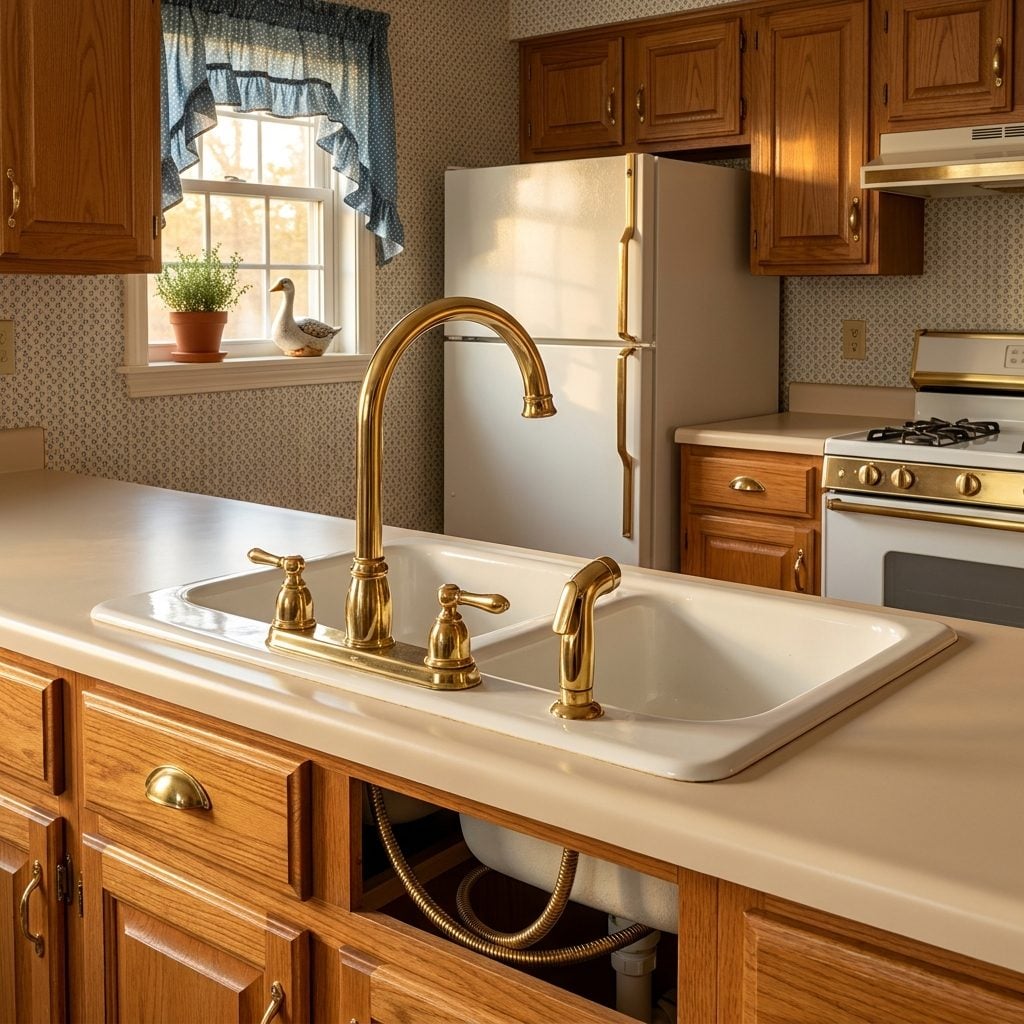
The sprayer was supposed to sit flush in its little brass cradle beside the faucet. It never did—always leaning about fifteen degrees off, the flexible hose underneath the sink tangled around the drainpipes or disposal and refusing to give it enough slack to sit right.
Every so often you’d press the trigger and catch a full blast of water in the face at an unexpected angle because whoever used it last had left it pointed the wrong way. Eventually the hose developed a slow drip inside the cabinet that nobody noticed until the cardboard box of dishwasher tablets down there turned to mush.
1. The Brass Trivet Collection Hanging on the Kitchen Wall
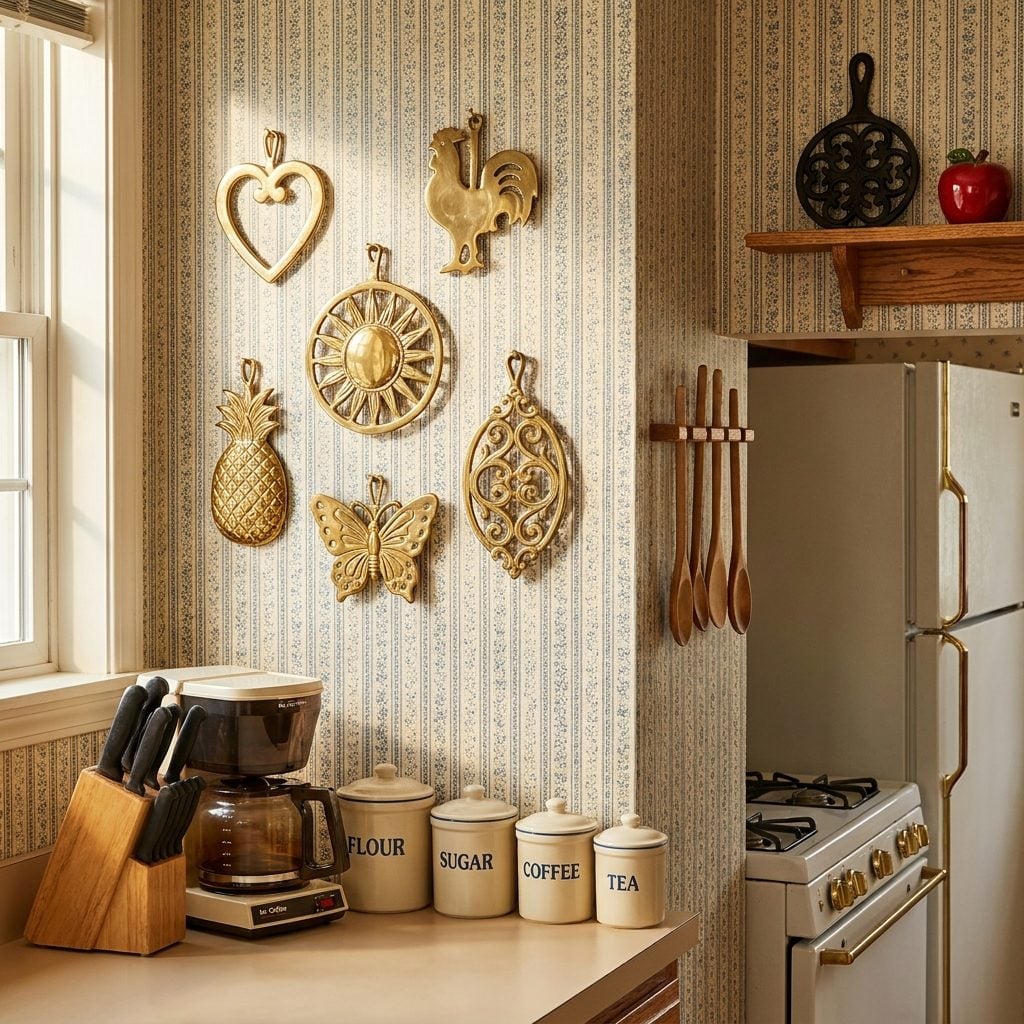
Not one of them had ever touched a hot pot. They lived on the wall, arranged in a rough constellation somebody had spent a Saturday afternoon hammering into place with a tiny brass nail behind each shape.
The rooster was always crooked. You could straighten it a hundred times and by next week it would be tilted again, like it had opinions.