
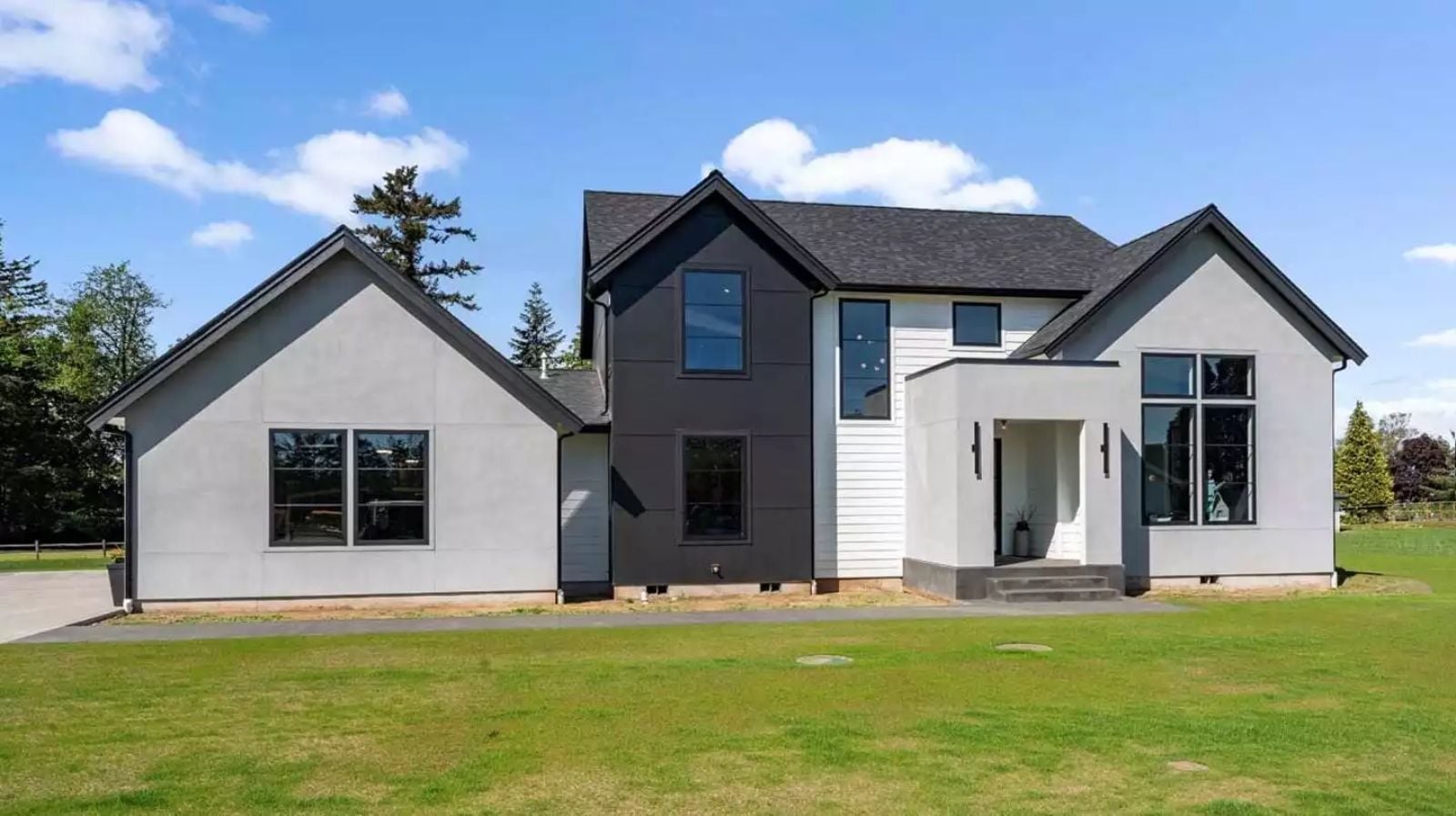
Families with teenagers are not really one household anymore — they are two, running parallel schedules under the same roof: backpacks dropped at the door, somebody’s playlist bleeding through the ceiling, a dinner conversation that starts at six and gets interrupted four times. The Ajax is built around that reality, with a dedicated activity room that gives teens their own corner of the second floor, an open main level where the adults still anchor the day, and a modern farmhouse exterior that holds the whole arrangement together without looking like a compromise.
Specifications
- Sq. Ft.: 2,792
- Bedrooms: 4
- Bathrooms: 3.5
Floor Plan – Main Floor
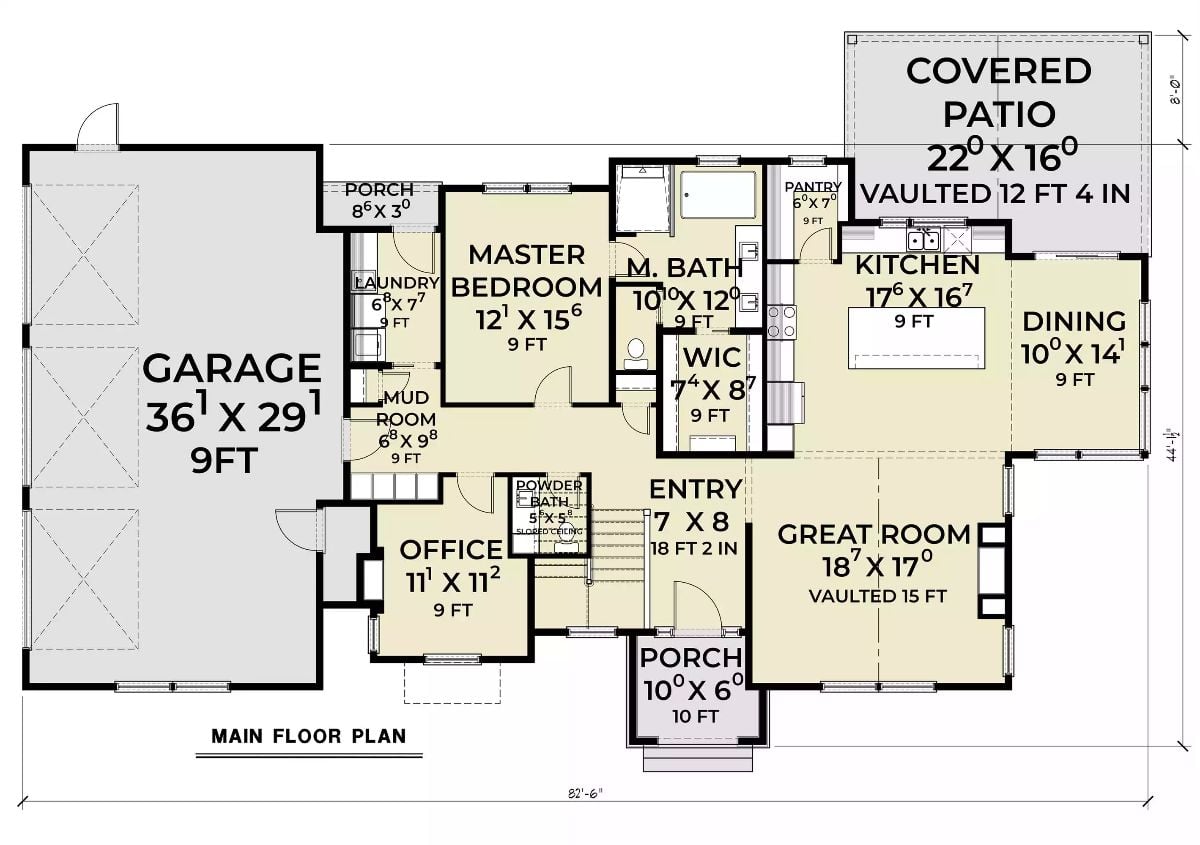
The main floor puts the master suite and office on opposite sides of the entry, with a vaulted great room, open kitchen, and covered patio anchoring the back of the house.
Floor Plan – Second Floor
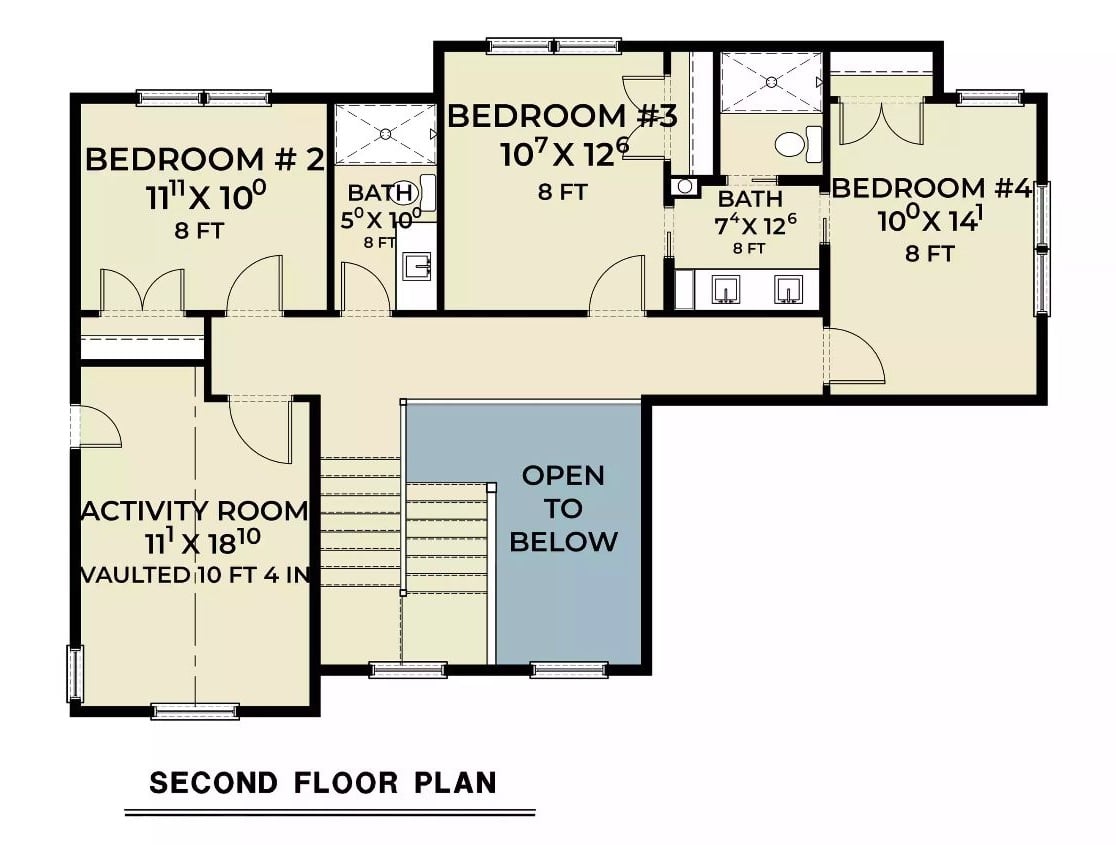
Upstairs, three bedrooms and an activity room tucked into its own corner share two bathrooms, with an open-to-below stairwell keeping the floors visually connected.
Vertical Height and Black Steel Make This Foyer Feel Earned
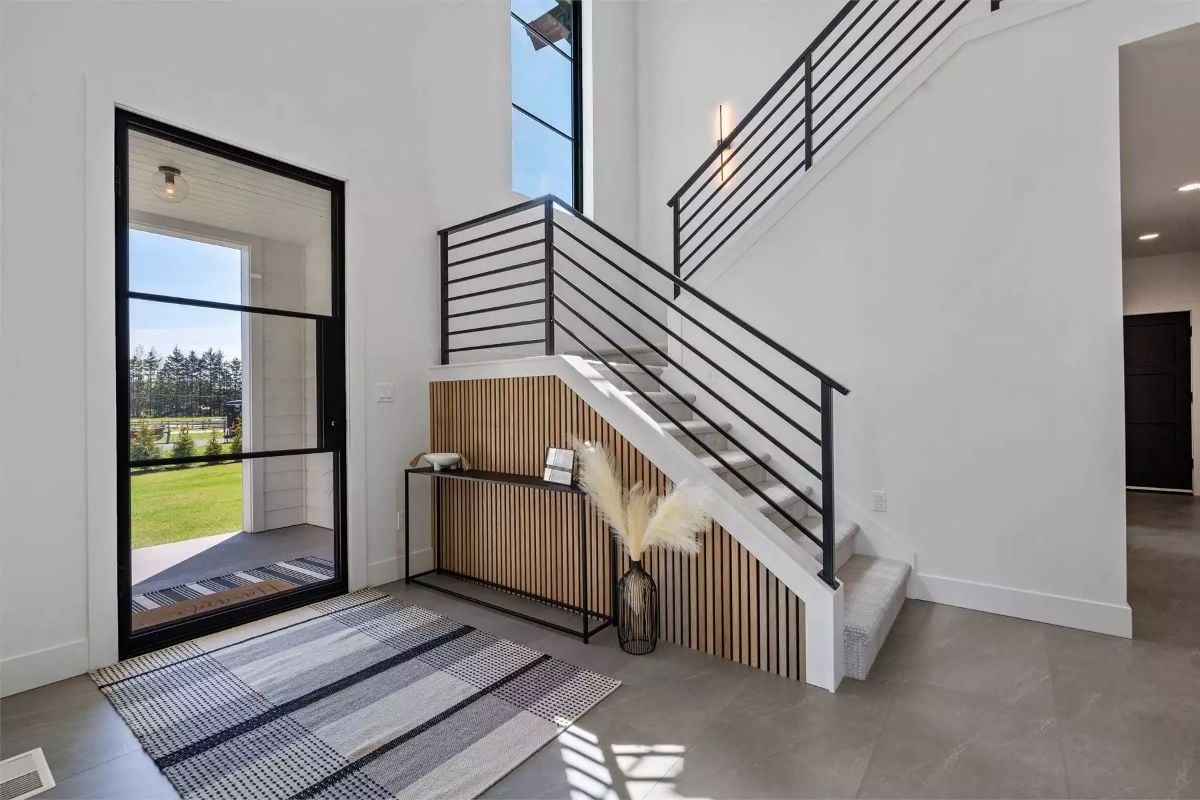
Floor-to-ceiling windows flank the entry door and pull natural light deep into the space. The horizontal black steel railings on the open staircase pick up the door’s framing in a way that reads deliberate rather than matched. Vertical wood slat paneling under the stairs grounds the white walls without competing with them, and pampas grass in the corner adds softness without requiring much of anything from the room around it.
Cathedral Ceilings and a Dark Plaster Wall Anchor This Family Room
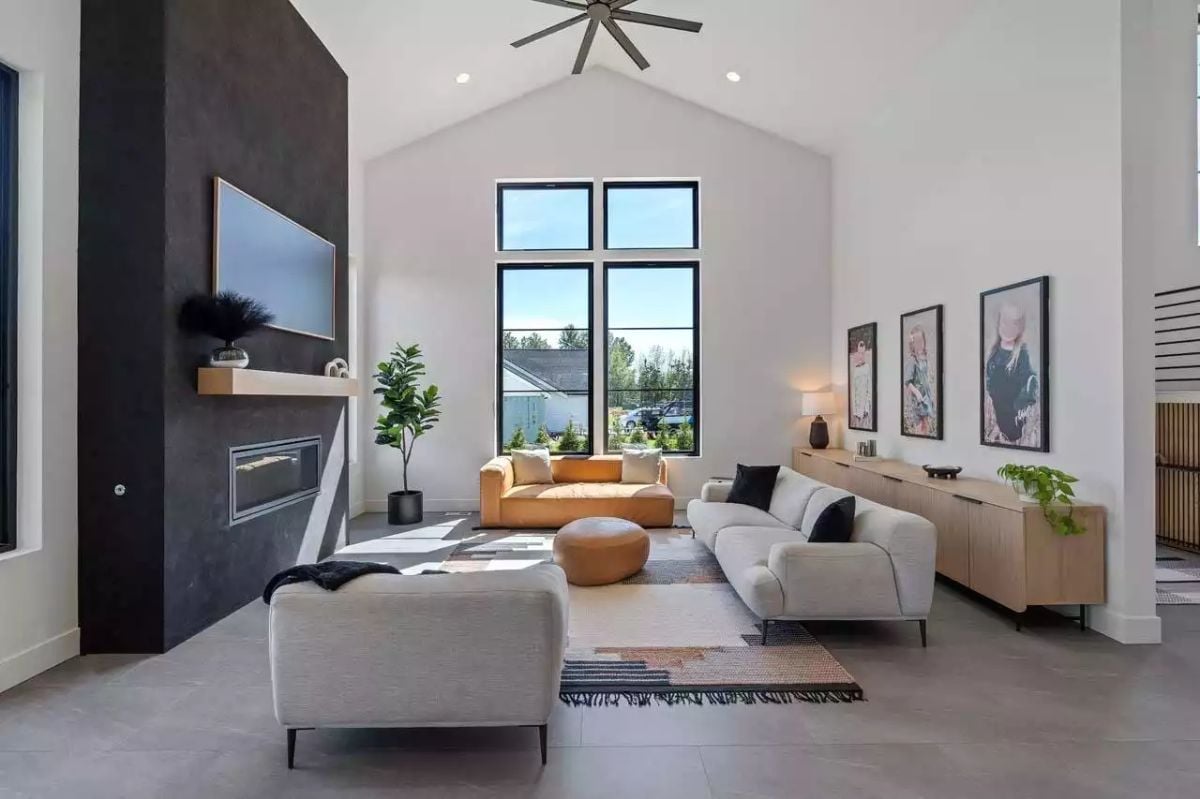
That black plaster wall isn’t decorative — it’s doing structural and visual work that white drywall never could.
The vaulted ceiling pulls the eye upward, and a six-blade ceiling fan keeps the scale from turning cold. Two light sofas face off across a patterned rug. Between them, a caramel leather ottoman sits like a comma mid-thought — present, useful, not trying too hard.
Black Barstools and Warm Wood Cabinets Pull This Kitchen in Two Directions at Once
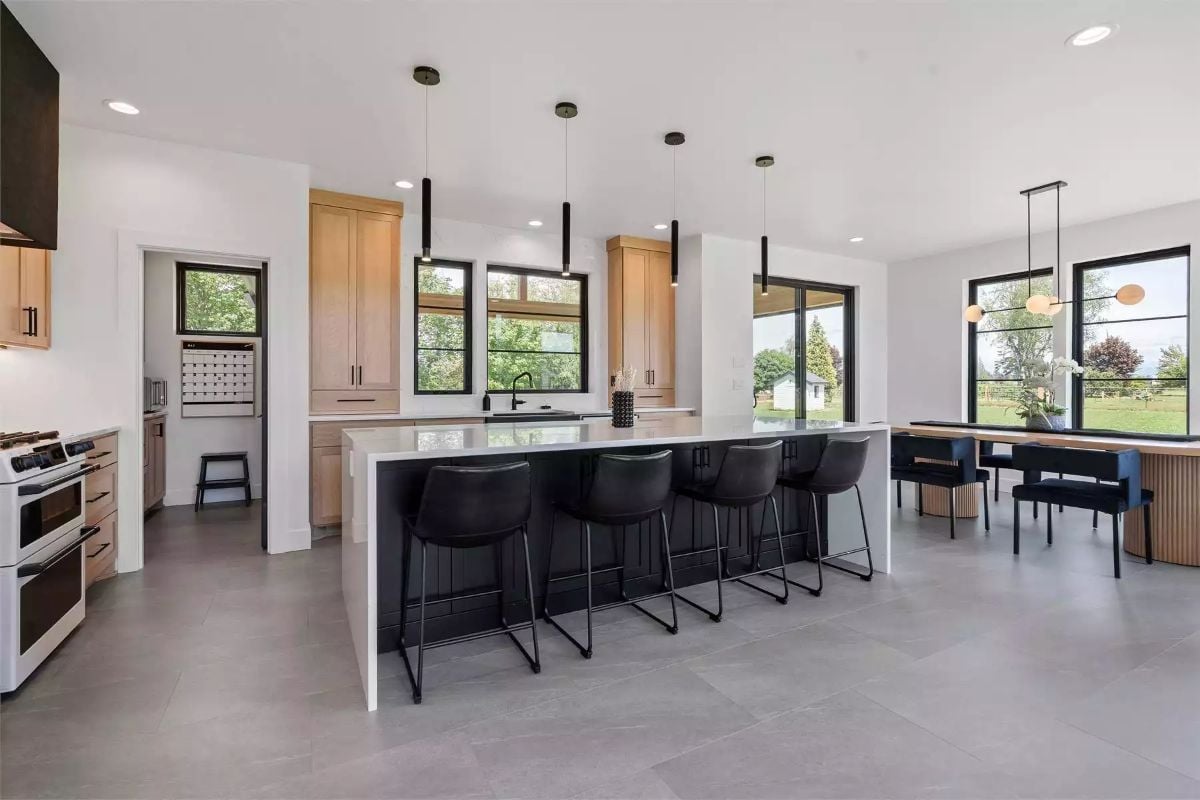
Four black leather counter stools line a dark-base island with a white quartz top. Against the honey-toned cabinetry, the contrast is sharp without feeling forced. Pendant lights drop in a staggered cluster above the island, and large-format gray tile floors run uninterrupted into what looks like a breakfast nook tucked against the windows.
Try This: Pair a dark island base with light upper cabinets to get contrast without committing to an all-dark kitchen. The space stays open while the island adds visual weight at counter level — and matte black hardware ties both zones together without forcing the finishes to match exactly.
Oval Wood Table and Globe Pendants Give This Dining Room Quiet Confidence
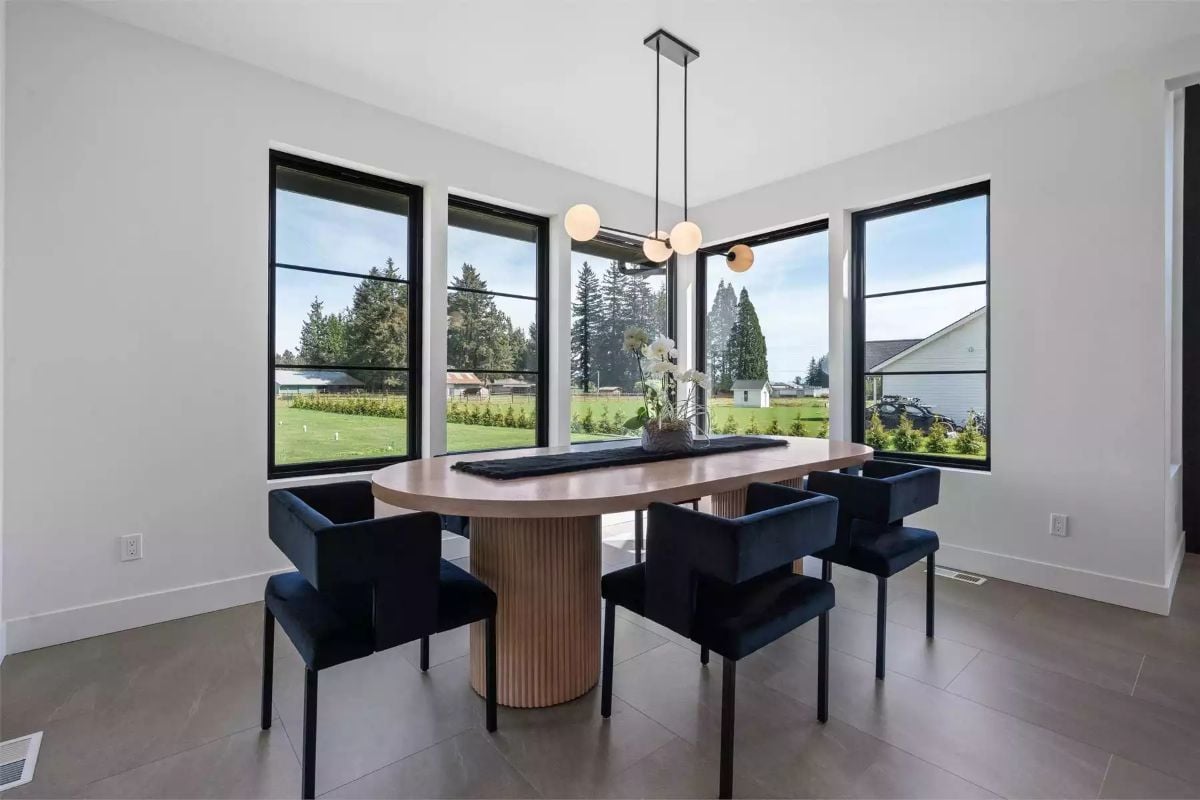
Fluted pedestal base, navy velvet chairs, and black window frames pull the eye outward toward open farmland.
History Corner: Oval dining tables gained traction in 19th-century Europe as a middle ground between the formality of a rectangle and the intimacy of a circle — they seat more guests than a round table of the same length while keeping cross-table conversation easier than a long rectangle allows. Upholstered armchairs at every position, once reserved strictly for the head seats, became the norm across all chairs as casual dining culture shifted through the late 20th century.
Gold Chair Bases and a Pop-Art Lion Keep This Home Office from Playing It Safe
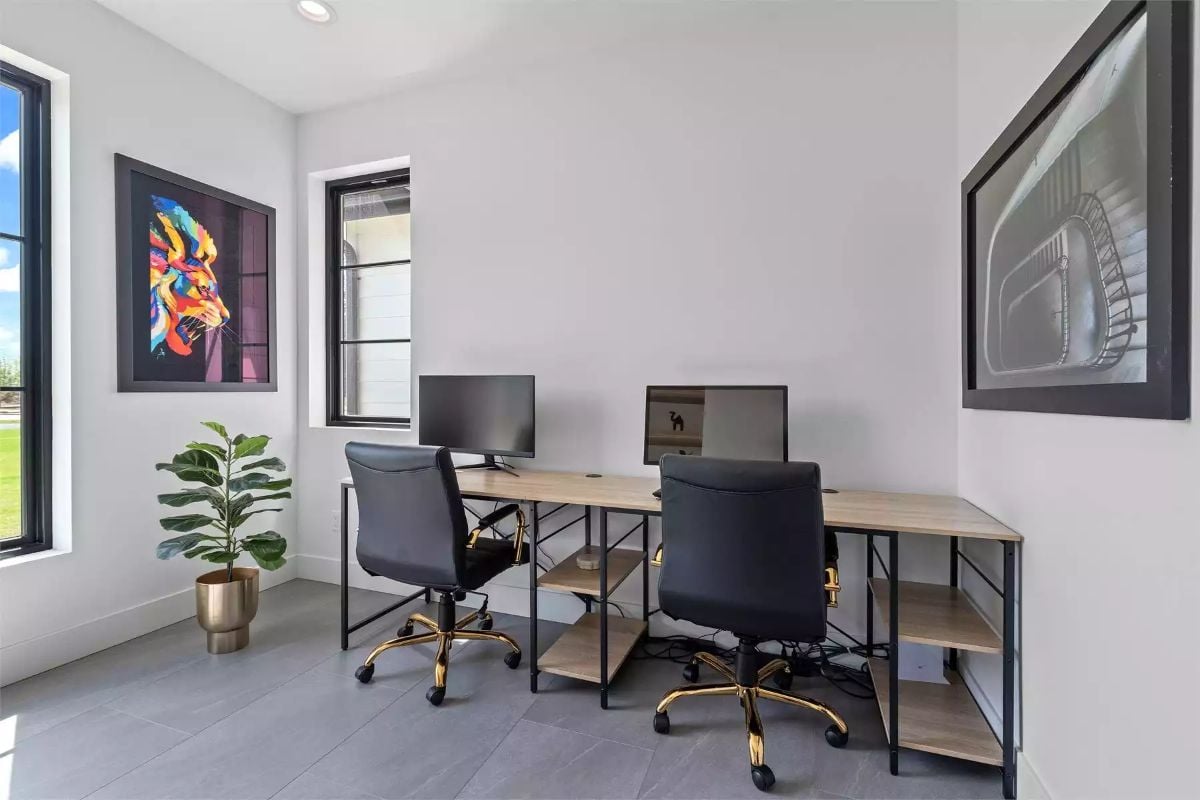
Black leather chairs with gold caster bases anchor a shared wood-and-steel desk setup. The colorful lion print on an otherwise bare wall is doing more work than it looks like it is — pull it out and the room goes flat immediately.
Pro Tip: Shared home office desks work best when each person gets visual separation, not just physical space. A slight L-shape or a low divider shelf down the center gives each user a defined zone without requiring a second room. Cable management built into the desk surface — like the grommets visible here — keeps a two-person setup from dissolving into a tangle by the end of the first week.
Channeled Velvet Headboard and a Sputnik Fixture Set the Tone Here
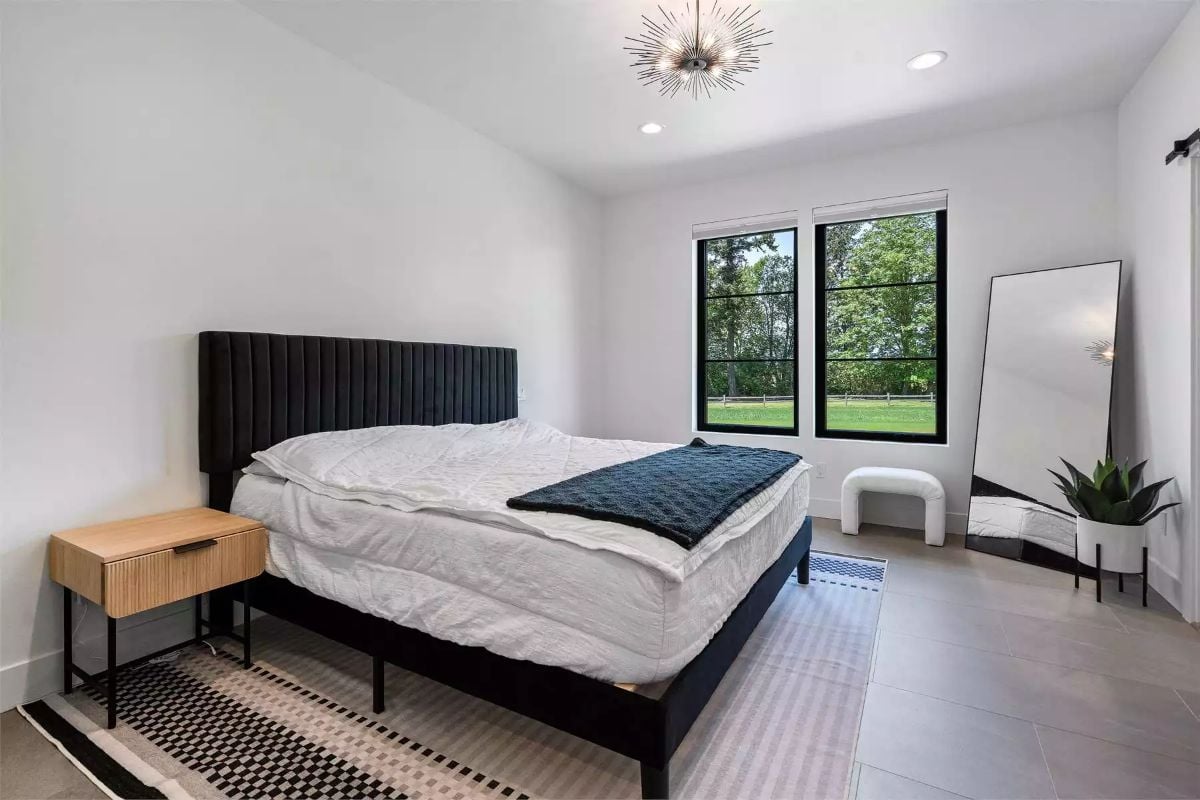
Dark velvet channeling on the headboard earns its keep against white walls, and the warm wood grain on the nightstand softens the black bed frame without fighting it. The views straight into the tree line don’t hurt. It’s a room that manages to feel dressed without feeling styled, which is harder to pull off than it sounds.
Designer’s Secret: Leaning a floor mirror rather than mounting it keeps your options open as furniture arrangements change over time. It also reads less formal, which suits a bedroom better than a perfectly centered, hardware-store installation ever does.
Freestanding Soaker Tub and Herringbone Shower Floor Do the Heavy Lifting Here
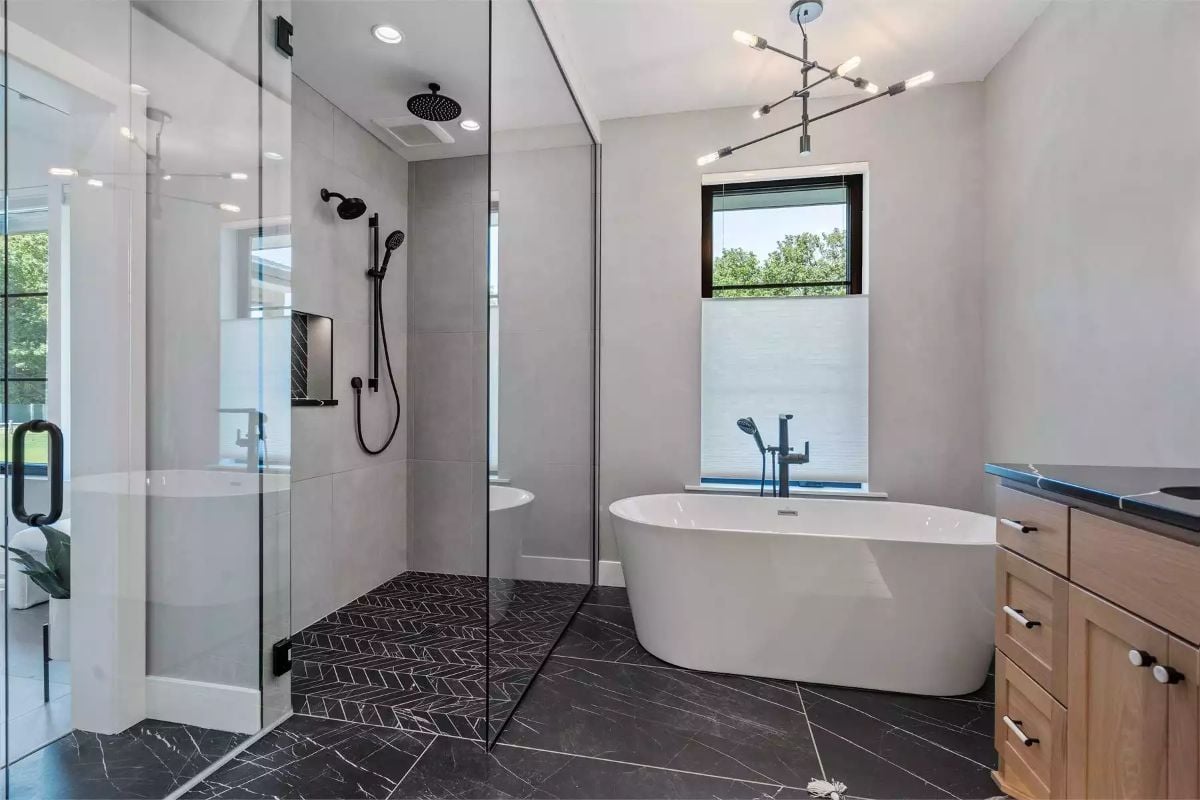
Matte black fixtures contrast sharply against the white acrylic tub, while the chevron tile underfoot shifts the texture without changing the palette.
- Frameless glass panels keep shower enclosures feeling open without sacrificing water containment.
- Freestanding tubs require floor-mounted faucets, so rough-in plumbing placement needs to be locked in early in the build — it’s not something you can adjust after the slab is poured.
- Rain showerheads paired with a handheld on a slide bar give you two entirely different shower experiences from one valve.
Pin It
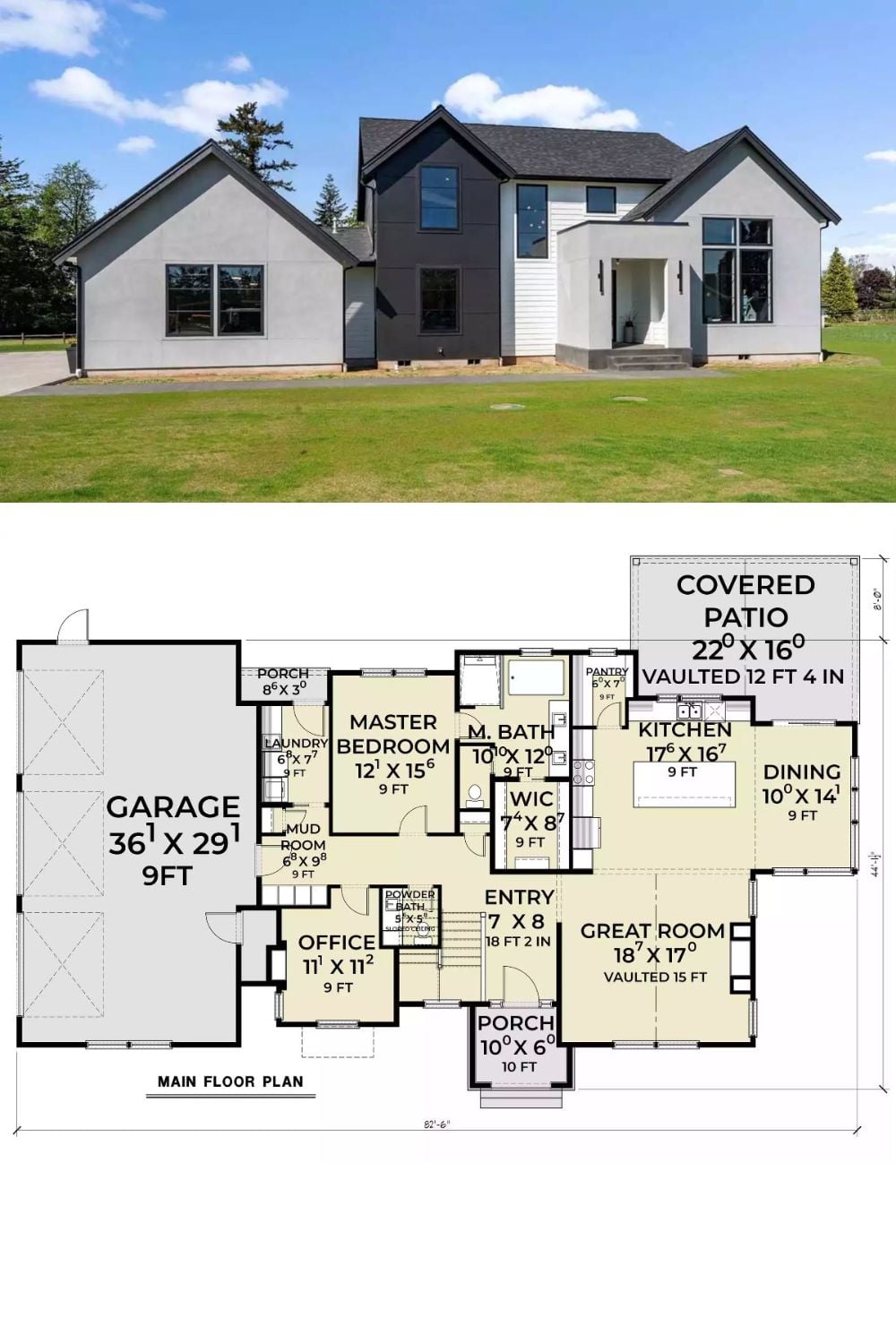
The exterior shows a modern farmhouse with contrasting white board-and-batten and dark gray stucco panels. Below, the main floor plan lays out a master suite, great room with a 15-foot vaulted ceiling, kitchen, dining, office, mud room, and a covered patio stretching 22 by 16 feet.
In The Details: Vaulted ceilings don’t have to be consistent throughout a house. Varying the heights between rooms — a 15-foot vault in the great room against standard 9-foot ceilings elsewhere — gives each space its own character and makes moving through the floor plan feel like something, rather than just walking from one identical box to the next.