
🔥 Would you like to save this?
Before a single ornament made it onto the tree, Christmas had already taken over the room. The attic box landed with a thud. Dust lifted. Plastic branches spilled across the carpet. Somebody put on a record, somebody else disappeared into a knot of lights, and within minutes the living room looked less like a decorating project than the aftermath of a very festive burglary.
That was part of the magic. Christmas in an ’80s house didn’t arrive tastefully or all at once. It accumulated. Red velvet bows multiplied. Tinsel migrated into rooms where nobody remembered putting it. School crafts elbowed their way between glass ornaments. Electric candles glowed in the windows while a plastic Santa slowly tipped sideways in the yard. By Christmas Eve, every available surface had joined in. These 38 decorations didn’t match, coordinate, or care — and somehow that was exactly why the house felt finished.
In order to come up with the very specific design ideas, we create most designs with the assistance of state-of-the-art AI interior design software. Also, assume links that take you off the site are affiliate links such as links to Amazon. this means we may earn a commission if you buy something.
38. The Giant Artificial Tree Dragged Up From Its Cardboard Box
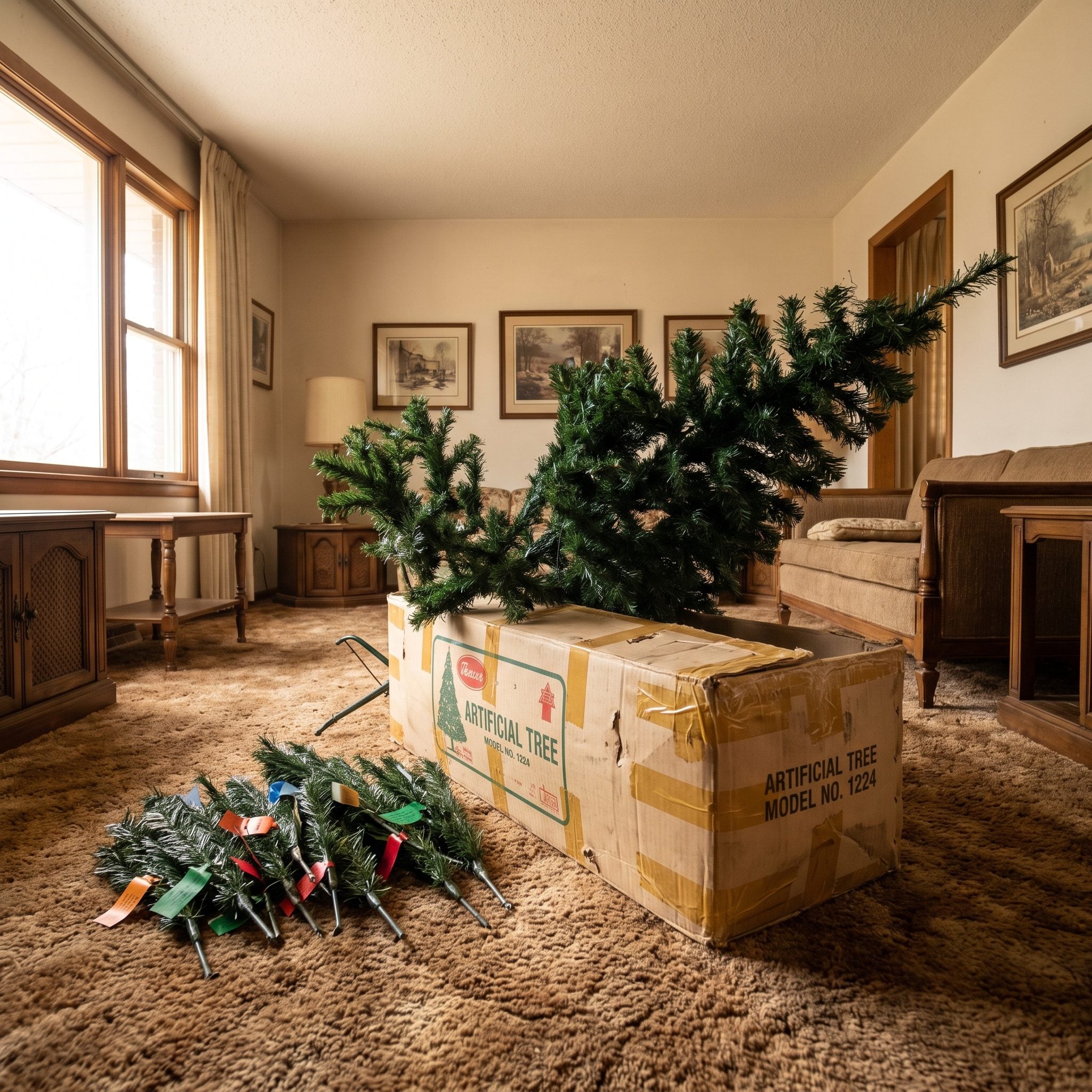
It came down from the attic in a cardboard box held together with the same yellowed packing tape that had failed the previous Christmas and apparently been given another chance. Inside were metal branches, a center pole, a stand that pinched fingers, and several little bundles sorted by painted color codes that made perfect sense until the instruction sheet vanished.
Then came the fluffing. Every branch had to be bent, spread, turned, and bullied into something resembling nature. Dad fought the pole. The kids handled the lower branches and complained about the scratches on their forearms. Someone backed across the room, squinted, and announced that the left side looked bald.
Eventually the tree stood. Almost straight. Almost symmetrical. And somewhere on the carpet sat one leftover branch nobody could explain.
37. Christmas Records and Cassettes Stacked Beside the Stereo
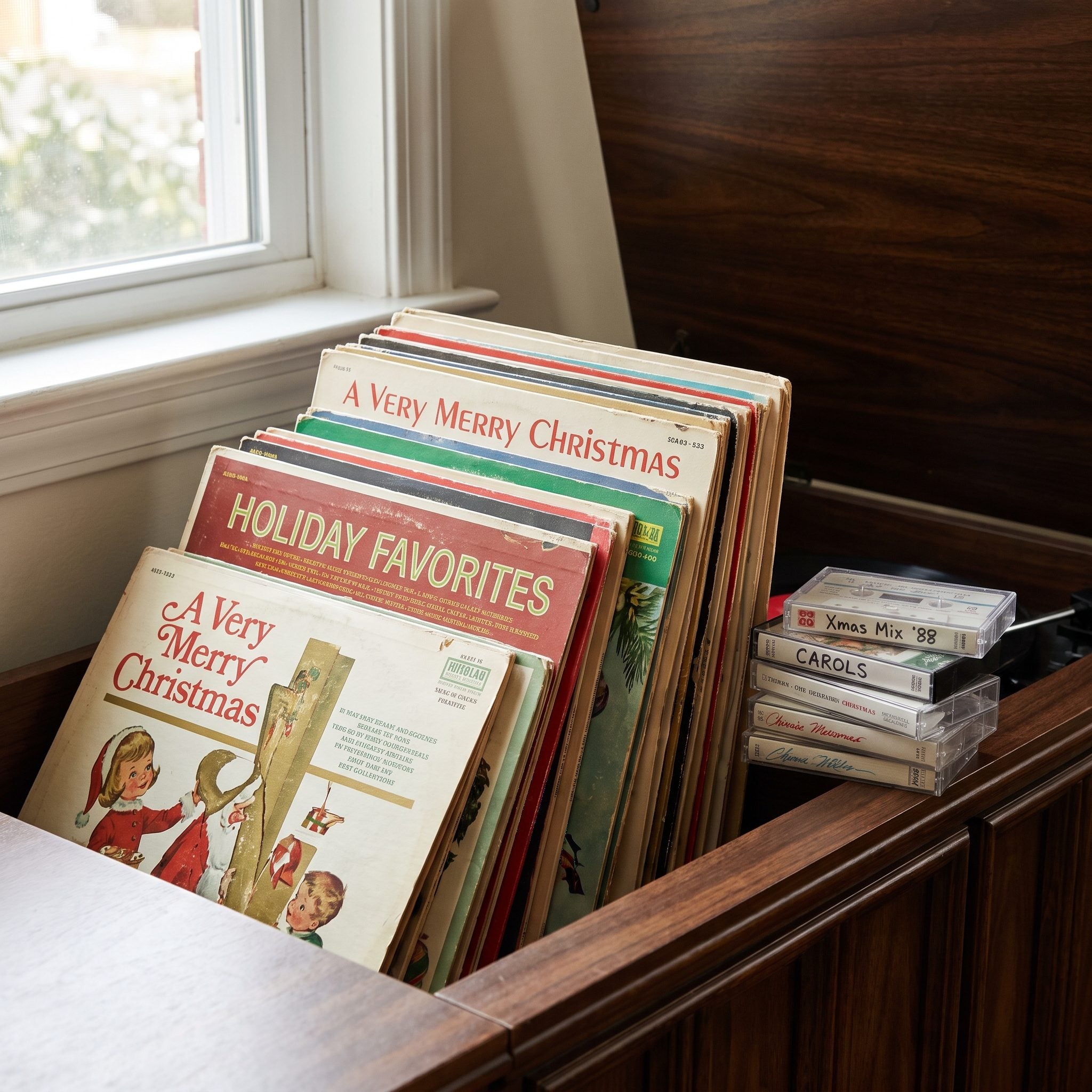
Before the first ornament went up, somebody supplied the soundtrack. The Christmas records leaned against the stereo cabinet all month, sleeves softened at the corners from years of being pulled out every December. Nat King Cole. Bing Crosby. A Firestone album that seemed to have materialized in every parent’s record collection without anyone remembering buying it.
You lifted the smoked-plastic lid, slid the record free, lowered the needle, and waited through that little burst of crackle before the music arrived. Cassettes were easier until the tape escaped and somebody had to wind it back into the shell with a pencil.
That was the signal. Once the music started, ordinary Saturday afternoon rules no longer applied. Christmas had entered the building.
36. Multicolored Mini Lights Wrapped Around Every Branch
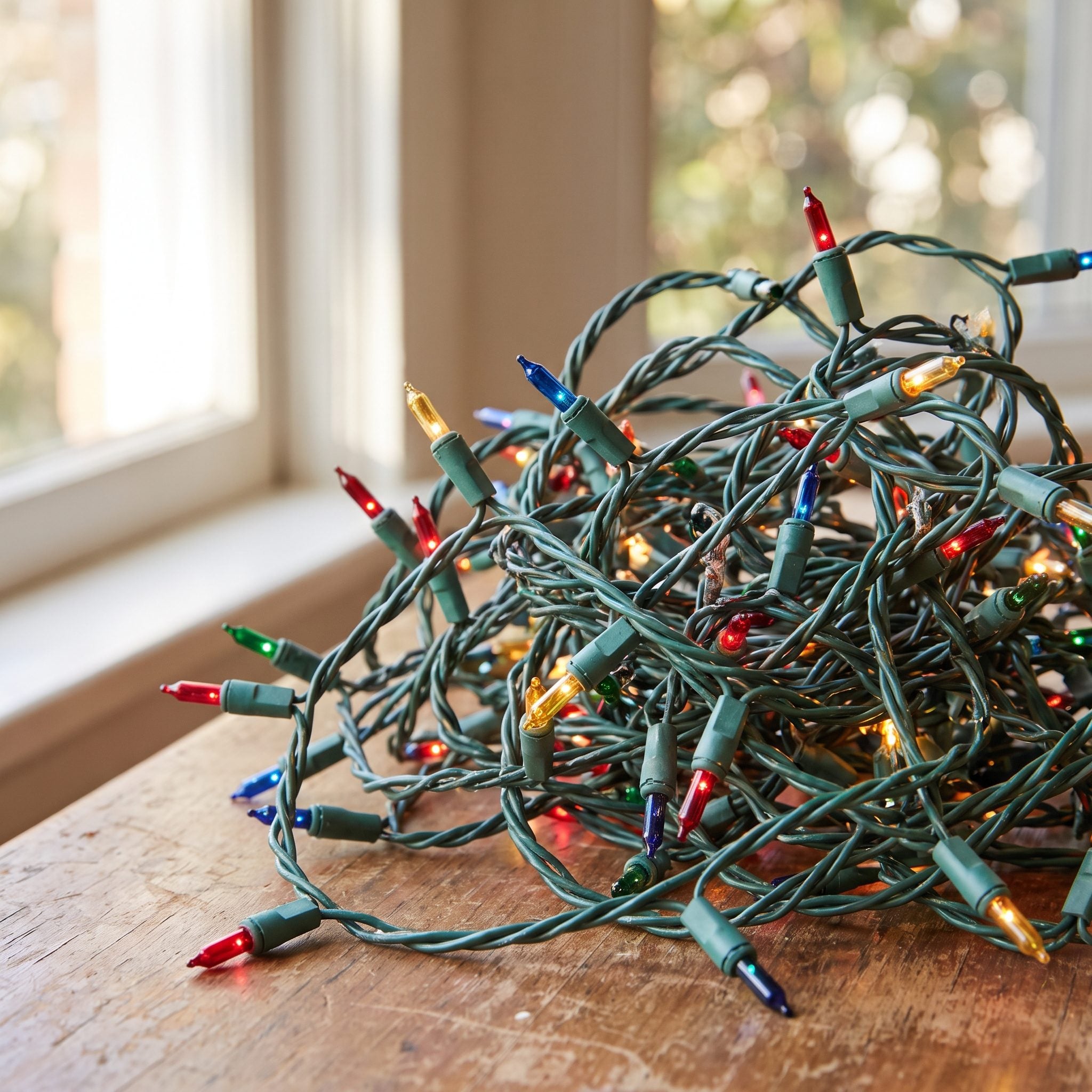
The strand emerged from its box as one solid knot.
Nobody understood how lights that had been carefully wound into a neat loop eleven months earlier could return looking like fishing line recovered from a shipwreck, but there it was. Twenty minutes of untangling followed, after which everybody held their breath while someone plugged the strand into the wall.
Sometimes it lit. Sometimes half of it lit. Sometimes nothing happened and an adult began inspecting tiny bulbs one by one with the expression of a bomb technician.
Once working, the lights went everywhere. Red, blue, green, yellow, and that unusually aggressive orange bulb that somehow ended up directly at eye level. Neatness was optional. Maximum color was not.
35. Shiny Glass Ball Ornaments in Every Color Imaginable
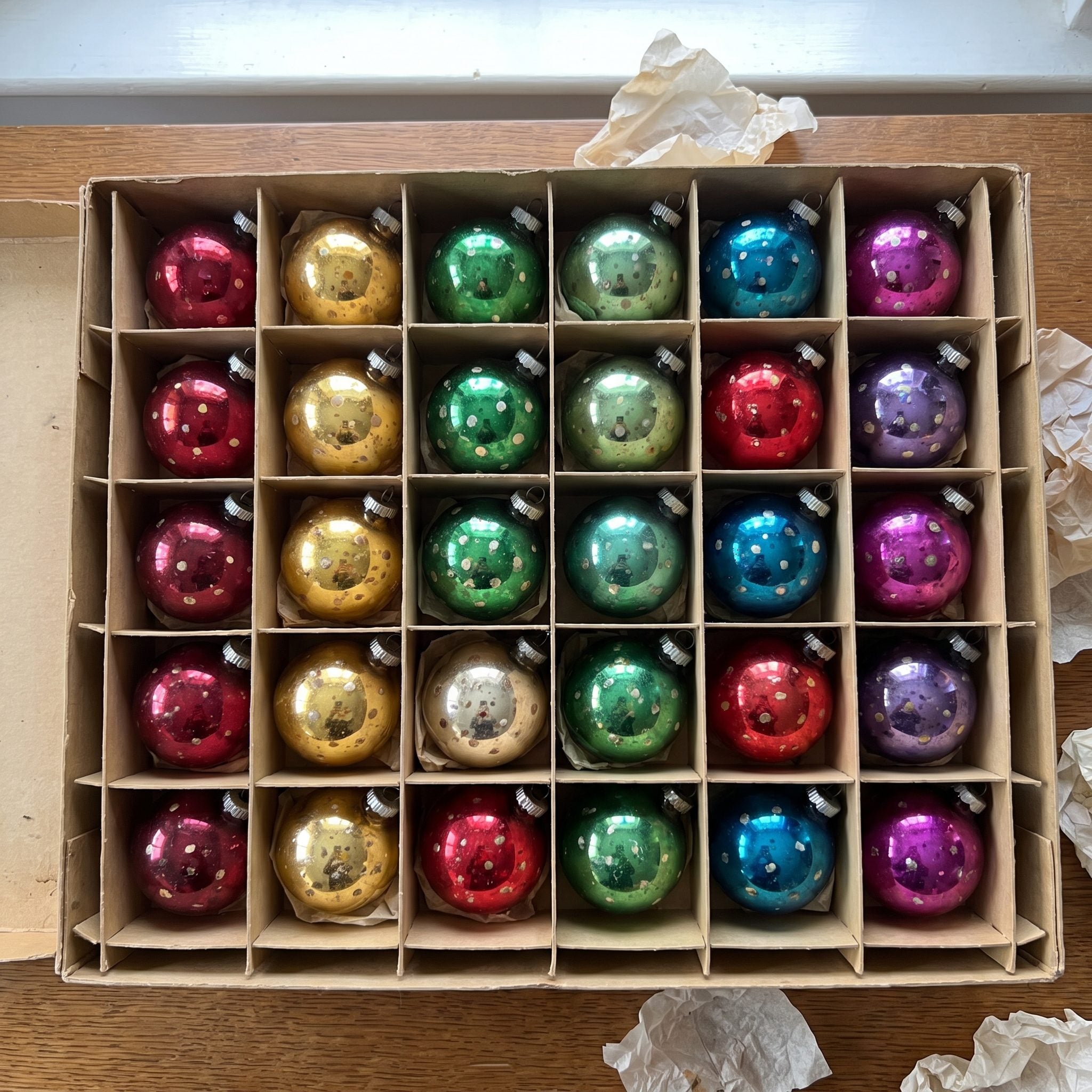
They came out of cardboard boxes with little dividers, each ornament sleeping in its own compartment beneath a square of tissue paper. Every year one had mysteriously cracked. Another had lost a patch of silvering. A third survived despite looking thin enough to explode if somebody breathed too hard.
The good ones were genuinely delicate: red, gold, royal blue, emerald green, with glitter swirls or satin bands that had somehow made it through ten Christmases.
Hung near the lights, they doubled the color. The whole wall behind the tree came alive in tiny reflected reds and blues.
34. Homemade School Ornaments Hanging Next to the Good Ones

Down at kid height sat the crooked ones.
The construction-paper wreath with hardened glue showing around the edges. The pipe-cleaner candy cane. The clothespin reindeer missing one googly eye. Something involving macaroni that had long ago stopped resembling whatever the teacher said it was supposed to be.
The fragile glass ornaments might have been moved safely toward the top, but these stayed right out front. Nobody tucked them into the back of the tree.
A store-bought ornament could be beautiful. The lopsided one had your name written across it in shaky marker.
33. Salt-Dough and Popsicle-Stick Ornaments Made at the Kitchen Table
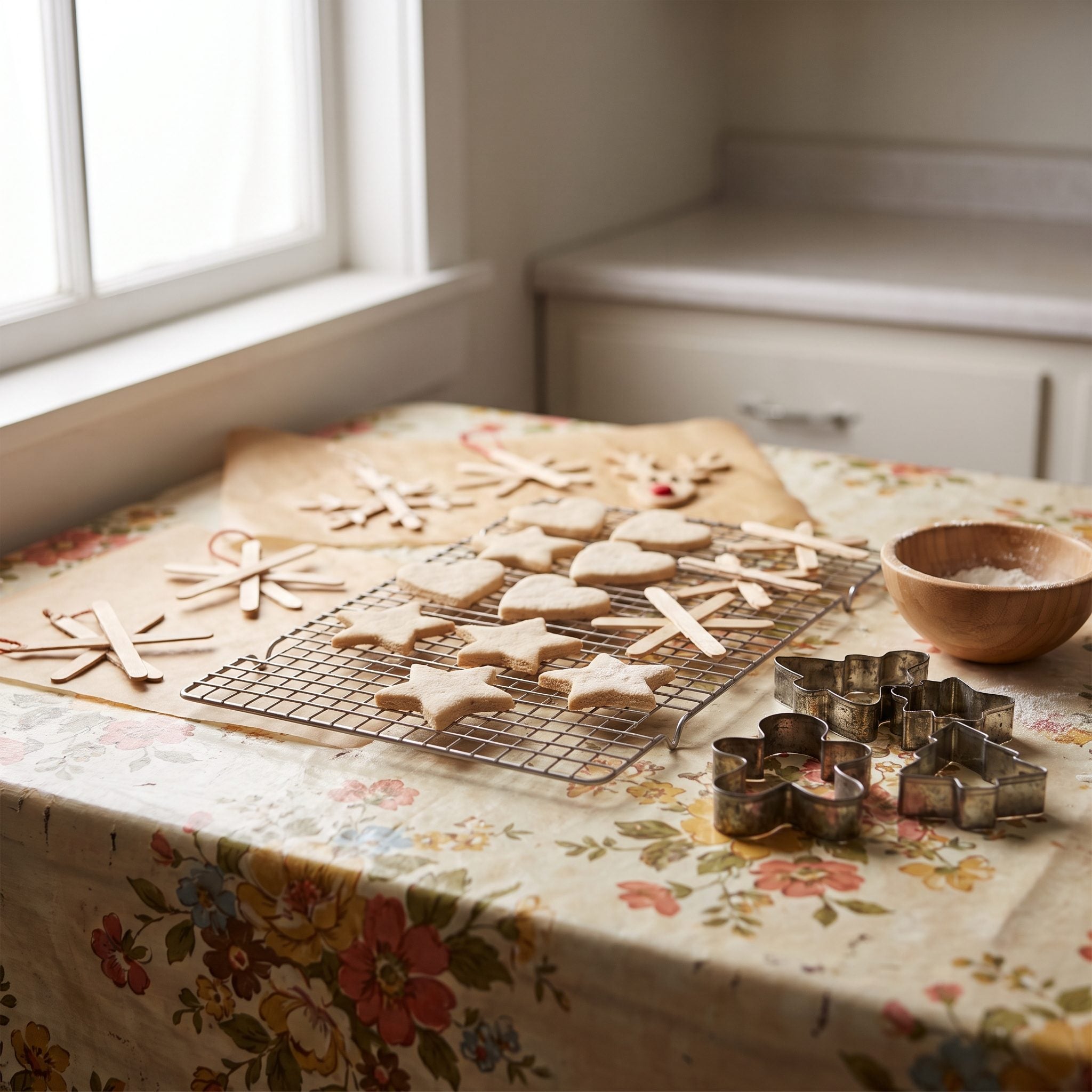
Before those masterpieces reached the tree, the kitchen had to survive their manufacture.
Salt dough smelled faintly of bread but tasted like punishment. You rolled it out, attacked it with cookie cutters, poked a hole through the top with a straw, and baked the pieces until they became nearly indestructible. Then came poster paint.
Popsicle sticks became stars, sleds, little frames, or structures whose architectural purpose remained unclear. Glitter covered the newspaper, the chairs, the children’s hands, and eventually rooms nobody remembered entering.
Half the ornaments cracked. The rest went on the tree anyway.
32. Photo Ornaments Holding School Pictures From Years Gone By
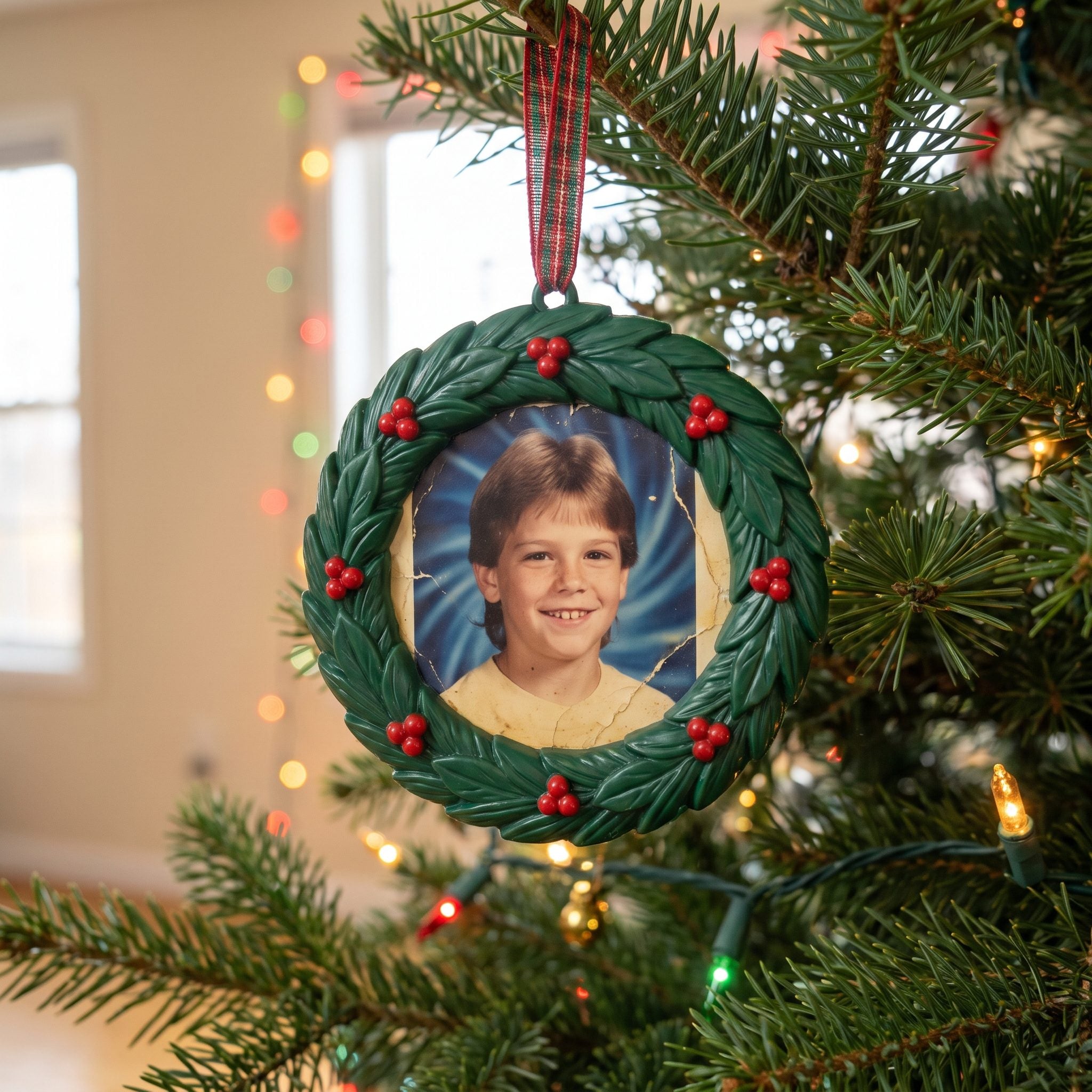
Somebody’s aunt seemed to specialize in these: little plastic wreaths or frames holding wallet-size school portraits against mottled blue studio backgrounds.
So every December the tree became an involuntary family retrospective.
There you were in second grade with the cowlick. Your brother reappeared with both front teeth missing and a sweater nobody would now admit buying. Another sibling stared out from the year of the regrettable haircut.
Decorating slowed whenever one surfaced because everybody had to stop and inspect the evidence.
31. Real Candy Canes Hung Straight From the Branches

They were technically decorations. Everybody understood the arrangement.
By the second week of December the bottom half of the tree had become mysteriously candy-cane deficient while the top branches remained fully stocked, a phenomenon directly correlated with the average reach of a seven-year-old.
Some stayed wrapped. The daring ones went on bare and gradually fused themselves to the needles. Every January revealed at least one forgotten specimen behind an ornament, softened by heat and wearing a respectable coat of dust.
There was always somebody willing to eat it.
30. Silver Tinsel Draped Over the Branches, One Strand at a Time
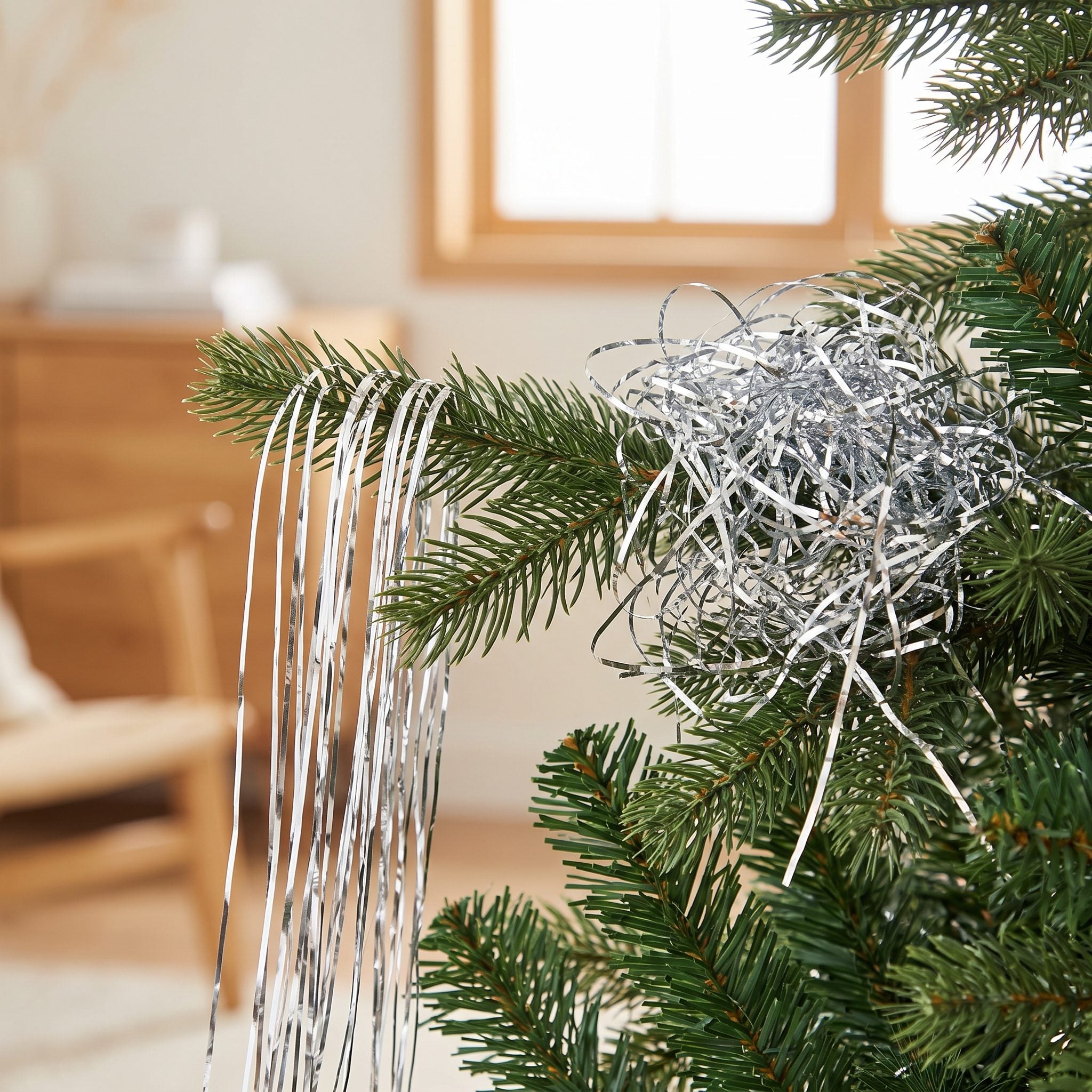
Some houses were strand-by-strand houses. Some were handful-throwers.
The purists laid each silver strand over a branch individually so it fell straight and caught the lights like ice. Children regarded this as an absurd waste of time and solved the problem by throwing fistfuls at the tree.
The result clung to the branches, the carpet, the dog, the sofa, and the back of your sweater.
You found tinsel in the vacuum cleaner in July. You found it under furniture when the decorations came out the following December. Tinsel didn’t leave a house. It merely changed location.
29. A Light-Up Star or Angel Crowning the Tree
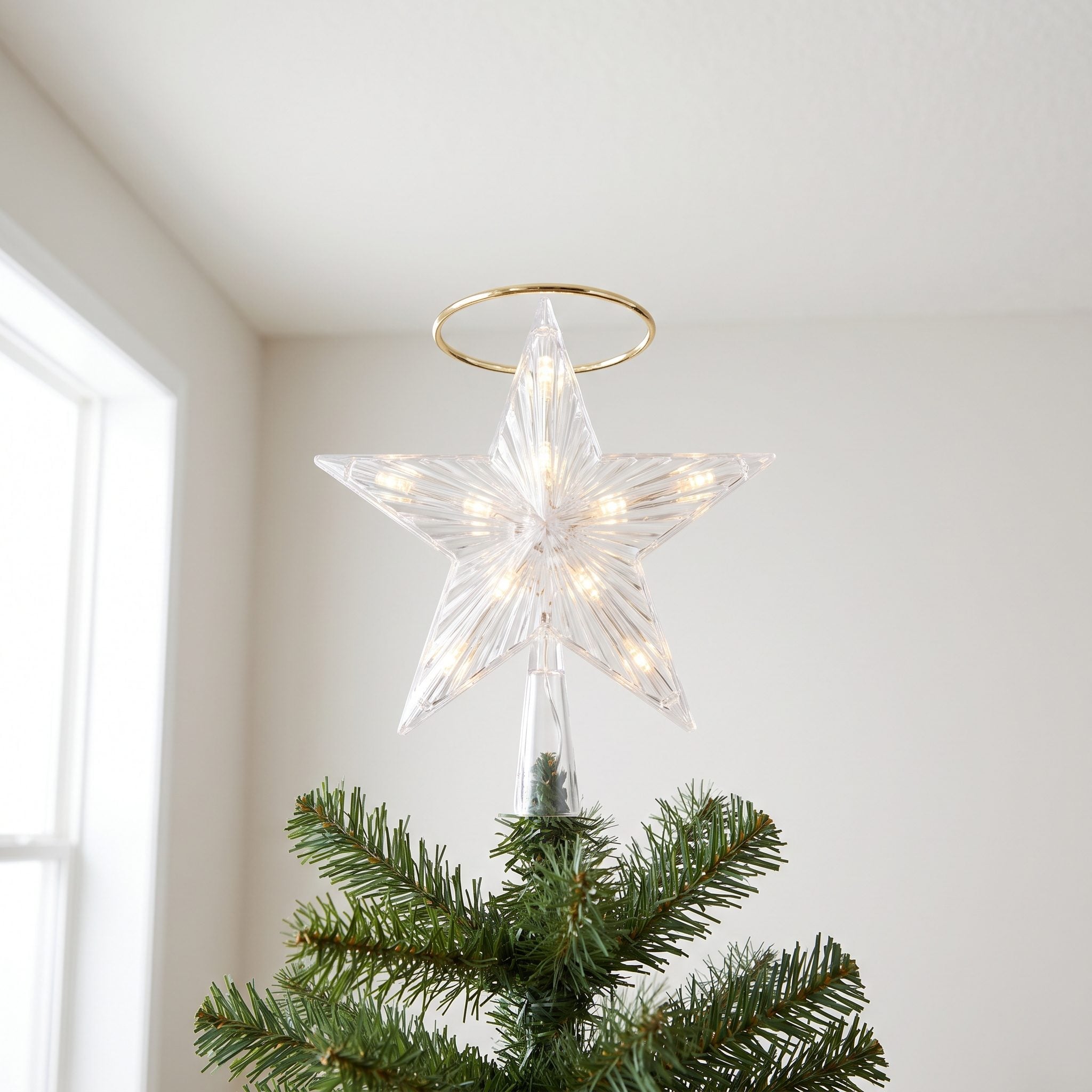
Tree toppers divided households with surprising efficiency. You were a star family or an angel family, and switching sides seemed somehow disloyal.
Getting either one onto the tree required a ladder, a second person holding the ladder, and several attempts to make the thing appear straight from every possible viewing angle. The plastic star often contained a bulb that grew warm enough to produce the faint smell of heated dust. The angel generally had a tulle skirt, gold trim, and a face that had seen some things.
Whatever went up there, the moment it lit was different from everything before it.
The tree was finished.
28. A Christmas Tree Skirt Mostly Hidden Beneath Presents

The tree skirt enjoyed approximately five days of glory.
Red felt, white snowflakes, maybe quilted fabric or a scalloped edge — it spread neatly around the base and concealed the metal stand, extension cords, and other evidence that Christmas required infrastructure.
Then the presents arrived.
By December 20 the skirt had vanished beneath boxes and gift bags. Its useful life returned briefly on Christmas morning after the packages disappeared, when it sat alone under the tree looking strangely exposed.
Half decoration, half camouflage, half traffic management around a small electrical utility system. Christmas math was different.
27. An Electric Train Circling the Bottom of the Tree
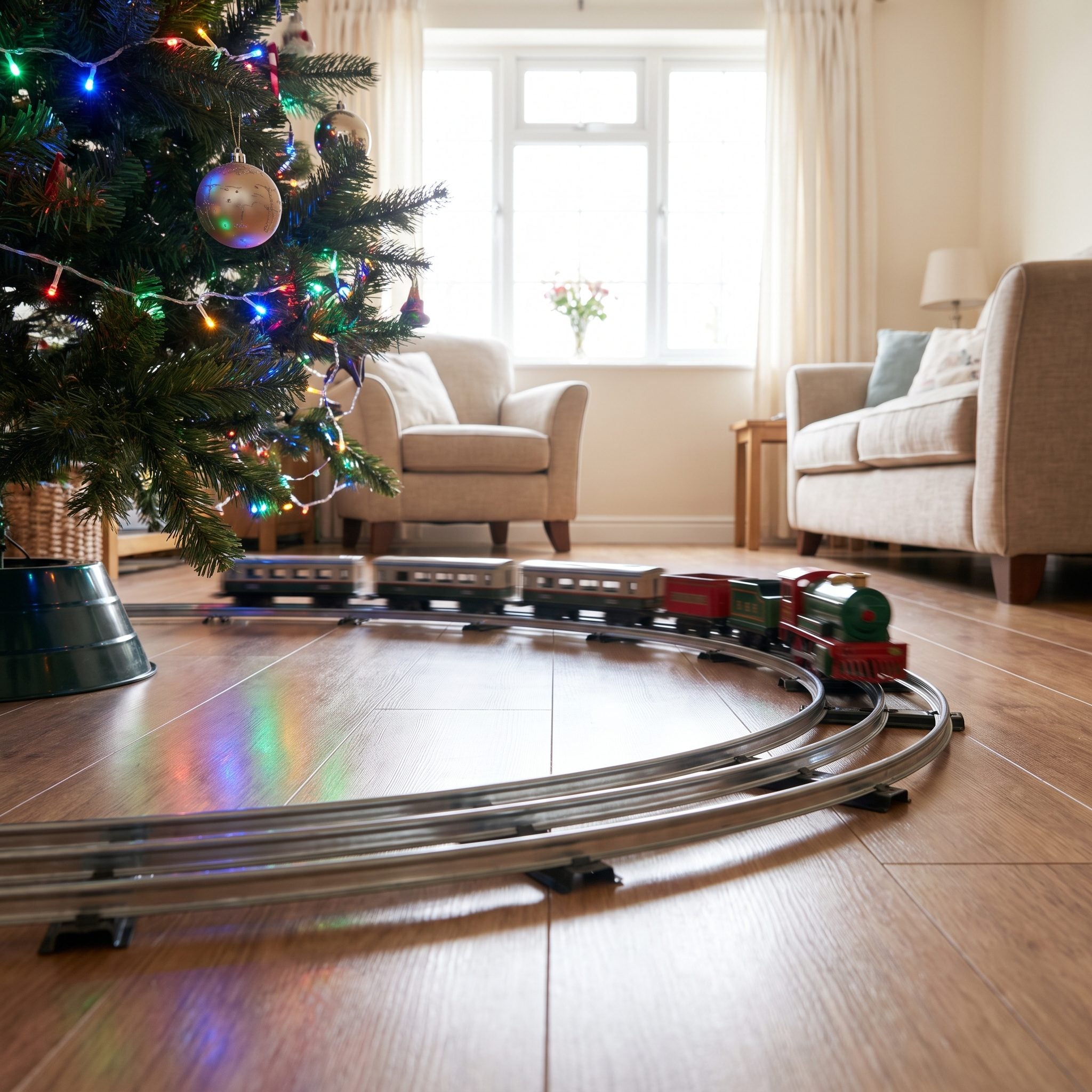
You heard it before you saw it.
The soft electrical hum. The click-click-click of steel wheels crossing the joints in the track. A locomotive making another endless lap beneath the lower branches while cotton snow and tiny houses blurred past.
Dad usually controlled the transformer, partly because Dad had set the thing up and partly because children regarded the throttle as a challenge.
Push it too hard into a curve and the locomotive stayed put while three passenger cars attempted independence.
Some of those sets were older than the kids watching them. A Lionel or another postwar train from Dad’s own childhood came out for a few weeks every year, smelling faintly of warm metal, ozone, and machine oil.
26. A Ceramic Christmas Tree Glowing From a Side Table
🔥 Would you like to save this?
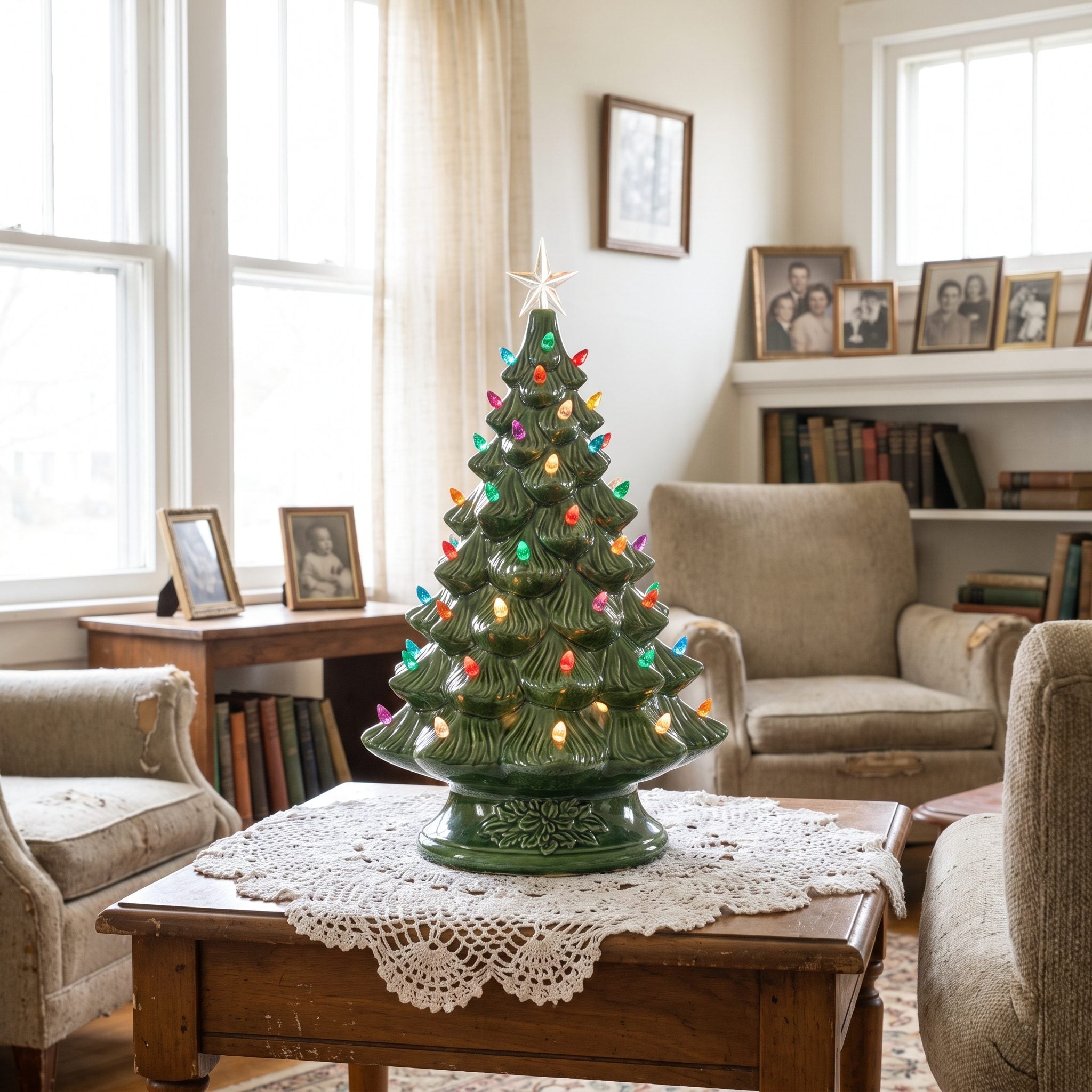
Grandma had one. Your aunt probably had one. There was a fair chance your own house had one sitting on a lace doily as though it had been formally appointed to the position.
The magic came from those tiny plastic bulbs fitted into holes in the ceramic, all lit by one light hidden inside. A few pegs were always missing. Their replacements never quite matched.
Plenty of these trees had been painted in ceramics classes during the 1960s and 1970s, which explains the slight variations in glaze, snow, and enthusiasm.
They didn’t illuminate a room so much as glow inside it. That was enough.
25. A Nativity Scene Given Its Own Special Table or Corner
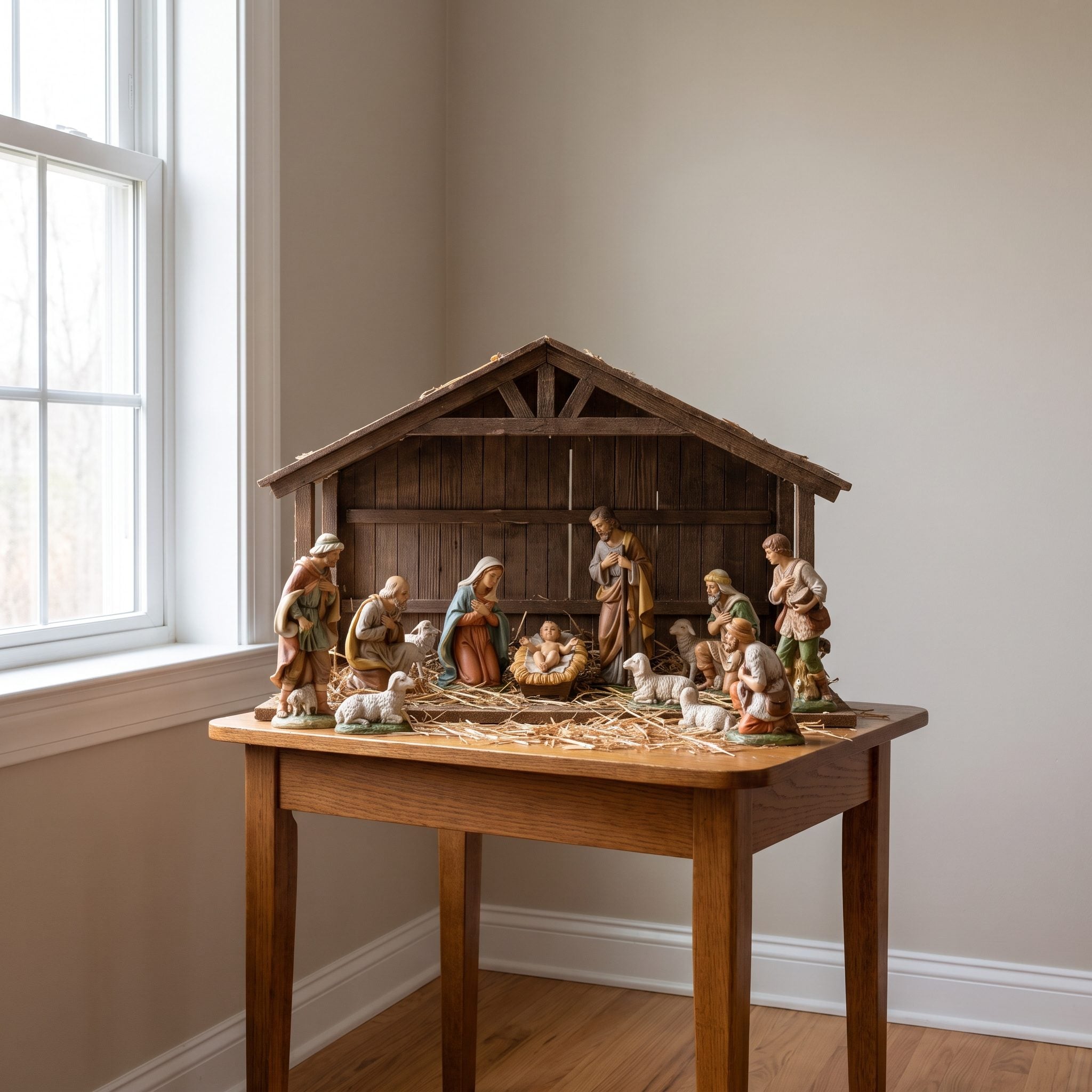
The nativity generally did not compete with the tinsel.
It received its own table, shelf, or quiet corner, sometimes spread over a piece of red felt and arranged with the seriousness of a museum installation.
Mary and Joseph went near the stable. Shepherds gathered. Sheep leaned at odd angles because one leg had broken years earlier. In some homes the wise men began December at the opposite end of the table and moved gradually closer. The baby remained in the box until Christmas Eve.
Children were told not to touch any of it.
Naturally, one figure had been glued back together at the neck.
24. Christmas Stockings Hanging From the Fireplace Mantel

The names usually began beautifully and ended in crisis.
Somebody started writing in glitter glue across a stiff red felt stocking, reached the final few letters, realized space had been badly miscalculated, and squeezed the remainder into the corner.
They hung empty for weeks, which somehow made them more interesting. Children checked them the way adults checked mailboxes — hopeful, suspicious, and convinced something might have changed since breakfast.
A working fireplace was optional. Stockings went on decorative mantels, bookshelves, railings, walls, or anywhere else Santa was apparently expected to understand.
23. Artificial Garland Draped Across the Mantel

Nobody mistook it for a branch cut fresh from the forest.
The garland was plastic, wired down the middle, and determined to retain the tight coil it had spent eleven months perfecting inside a box.
You wrestled it straight, fluffed every branch, swagged it across the mantel, and added pinecones, glass balls, bows, or mini lights until the fireplace acquired sufficient December authority.
That instinct hasn’t disappeared. Today’s Scandinavian Christmas decor may use quieter materials and a lighter touch, but greenery still works for the same reason: it breaks up the hard horizontal line of a mantel and immediately tells the eye that the room has changed.
22. Red Velvet Bows Appearing Everywhere

Once a household acquired a bag of red velvet bows, restraint was effectively over.
Banister. Wreath. Mantel. Curtain tiebacks. Mailbox. Lamp. The dog’s collar if she failed to leave the room quickly enough.
The wired ones were especially dangerous because they could be fluffed back into shape and therefore seemed appropriate for almost any surface.
One bow rescued a tired wreath. Three bows made a staircase feel deliberate. Twelve bows suggested somebody had discovered the decorating aisle unsupervised.
By January the velvet was dusty and slightly crushed. Back into the box it went.
21. Plastic Holly and Artificial Poinsettias Filling Empty Corners

A bare spot in December was apparently a problem requiring immediate correction.
That stretch of windowsill? Holly.
The empty corner beside the hutch? Poinsettia.
The buffet suddenly looked unfinished? Another poinsettia, ideally inside a gold-foil pot that reflected enough light to alert passing aircraft.
The artificial plants returned every year in exactly the same condition except for one leaf permanently bent from storage. Nobody demanded botanical realism. The assignment was to look aggressively seasonal.
They understood the assignment.
20. Christmas Cards Displayed Across Doorways, Walls, and Mantels
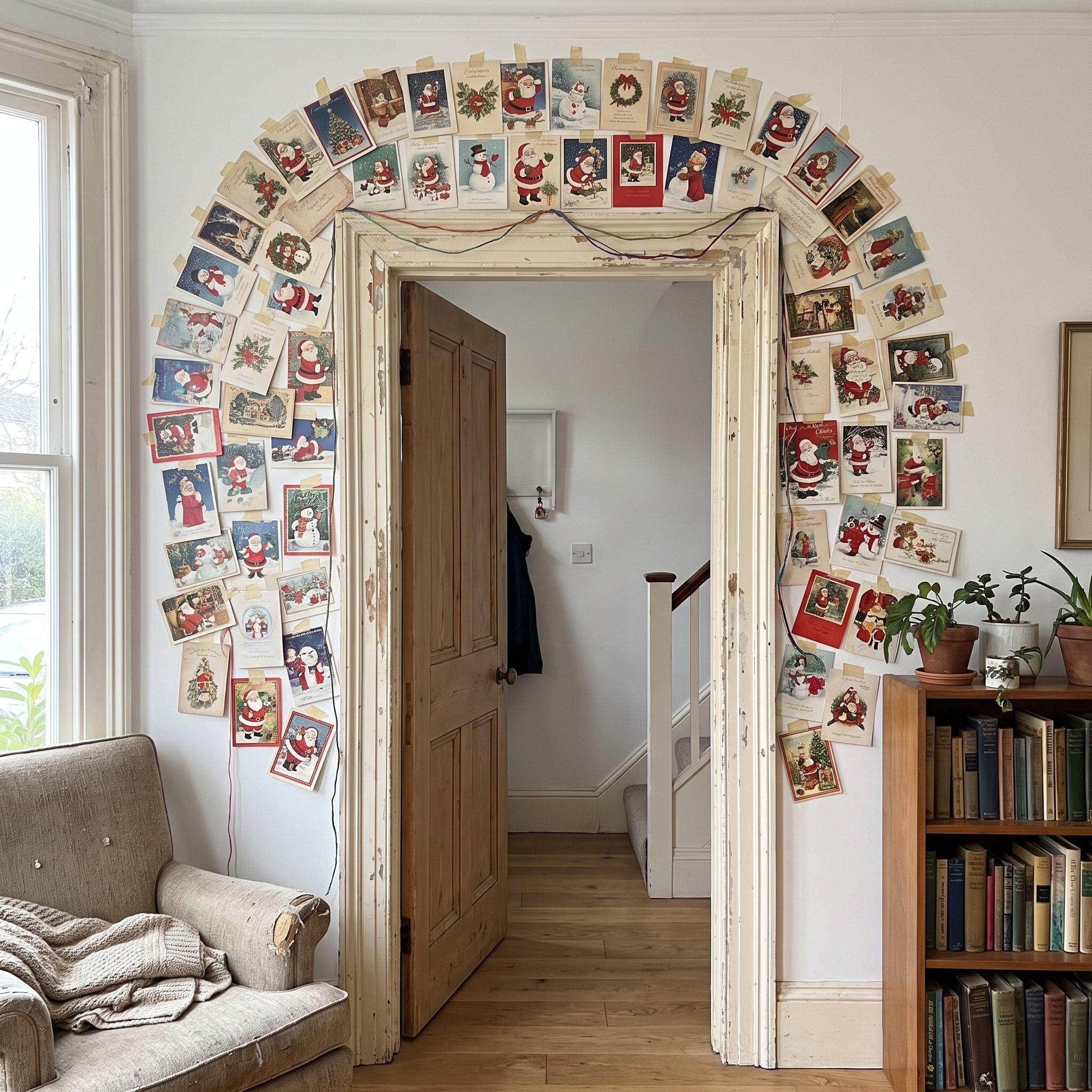
December mail had theater.
An envelope arrived. Somebody opened it. The card was passed around, the handwritten note read aloud, and then the whole thing went straight onto public display.
Every family had a system. Tape them around the doorway. String them across the wall. Stand them along the mantel until somebody slammed a door and twenty-three cards collapsed like dominoes.
By Christmas week, quantity became part of the decoration.
You could stand in front of that wall and read an entire year: new babies, moved-away neighbors, relatives who had changed hairstyles, children who were suddenly six inches taller.
Taking the cards down in January felt strangely severe.
19. The Construction-Paper Chains That Grew Longer Every December Afternoon
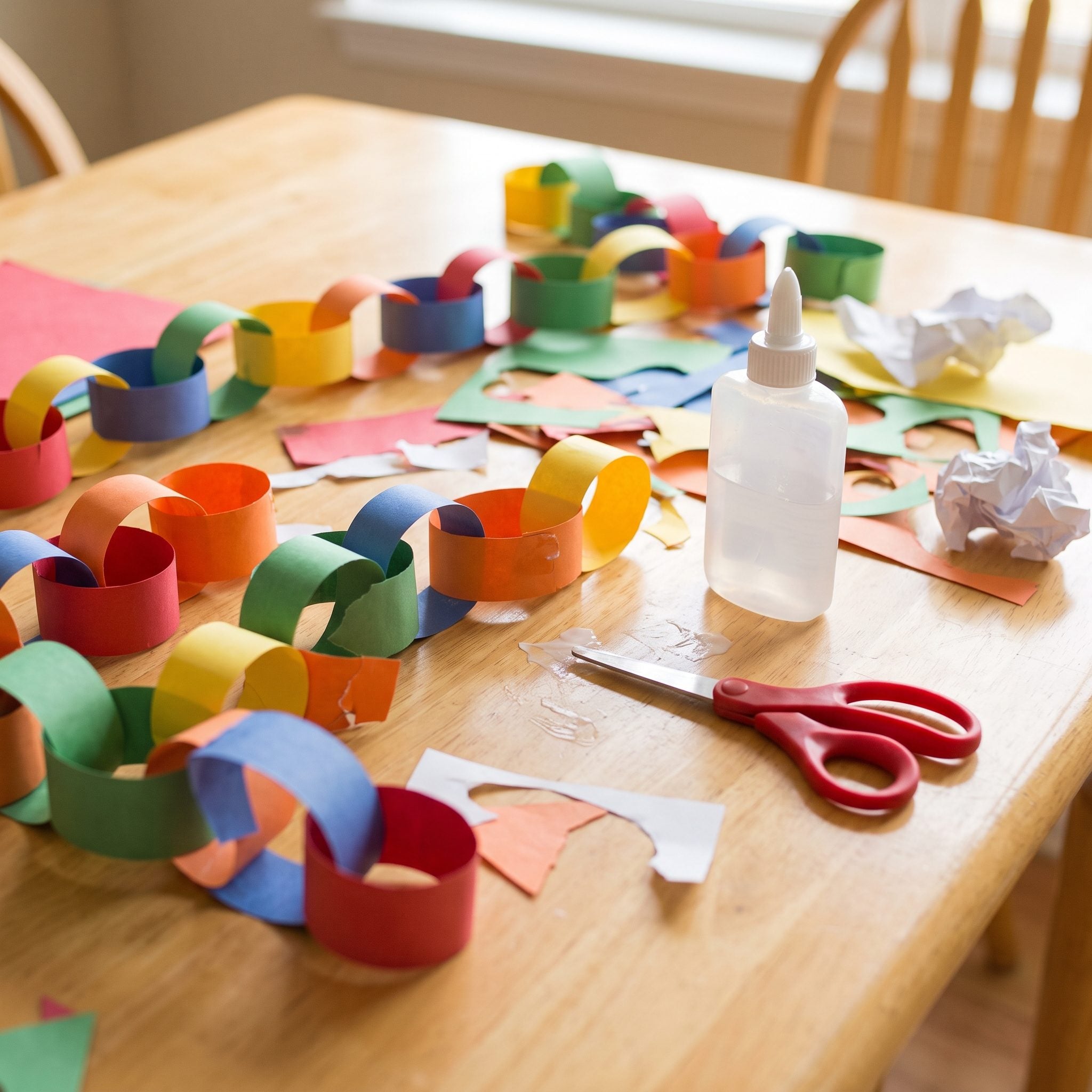
The red and green construction paper came out and the kitchen table became an assembly line.
One person cut strips. Another formed loops. Somebody used paste from a jar with a little brush built into the lid. Fingers stuck together. Paper stuck to sleeves. On at least one occasion somebody tasted the paste and immediately regretted the experiment.
The chain grew across the table, then across the room, then down the hallway.
Its proportions changed according to whoever had been working. Tight little loops from an older child gave way to enormous loose circles made by the youngest.
Once hung between two thumbtacks, the middle sagged heroically toward the floor.
Perfect.
18. The Foil and Honeycomb Bells That Unfolded Into a Half-Globe Every December
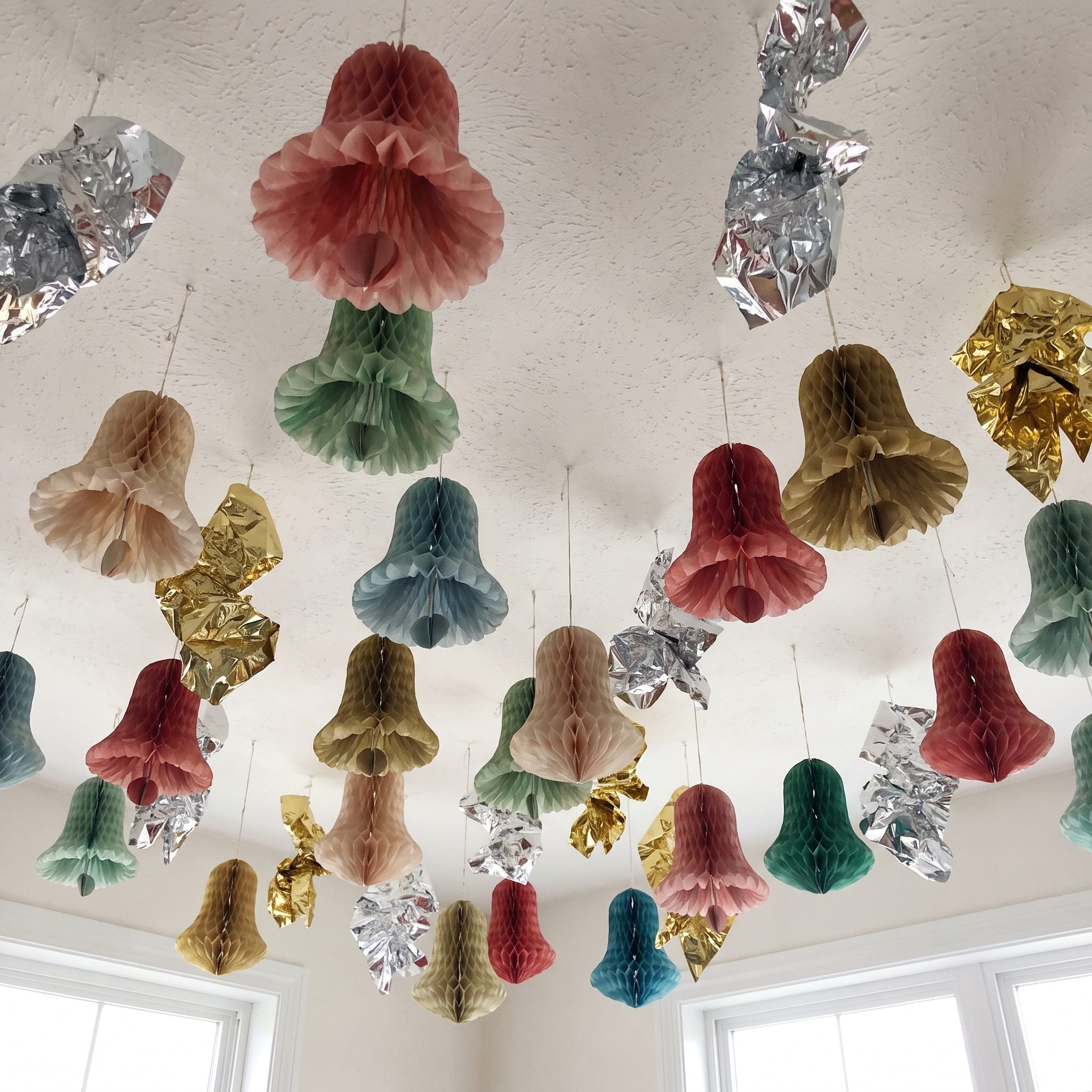
Eleven months of the year they were almost flat.
Then December came, somebody separated the cardboard ends, and the honeycomb paper suddenly opened into a fat red bell. A bent paper clip or tab held the whole improbable structure together.
They hung from doorways and ceilings on thread, exactly low enough for tall adults to walk into them.
Foil versions picked up the tree lights. Honeycomb ones slowly rotated whenever the furnace came on.
In January they folded flat again and returned to the box, unless somebody had crushed one. Then it came back the following year slightly asymmetrical and was hung anyway.
17. The Construction-Paper Santa Whose Beard Was Held On by Hope Alone
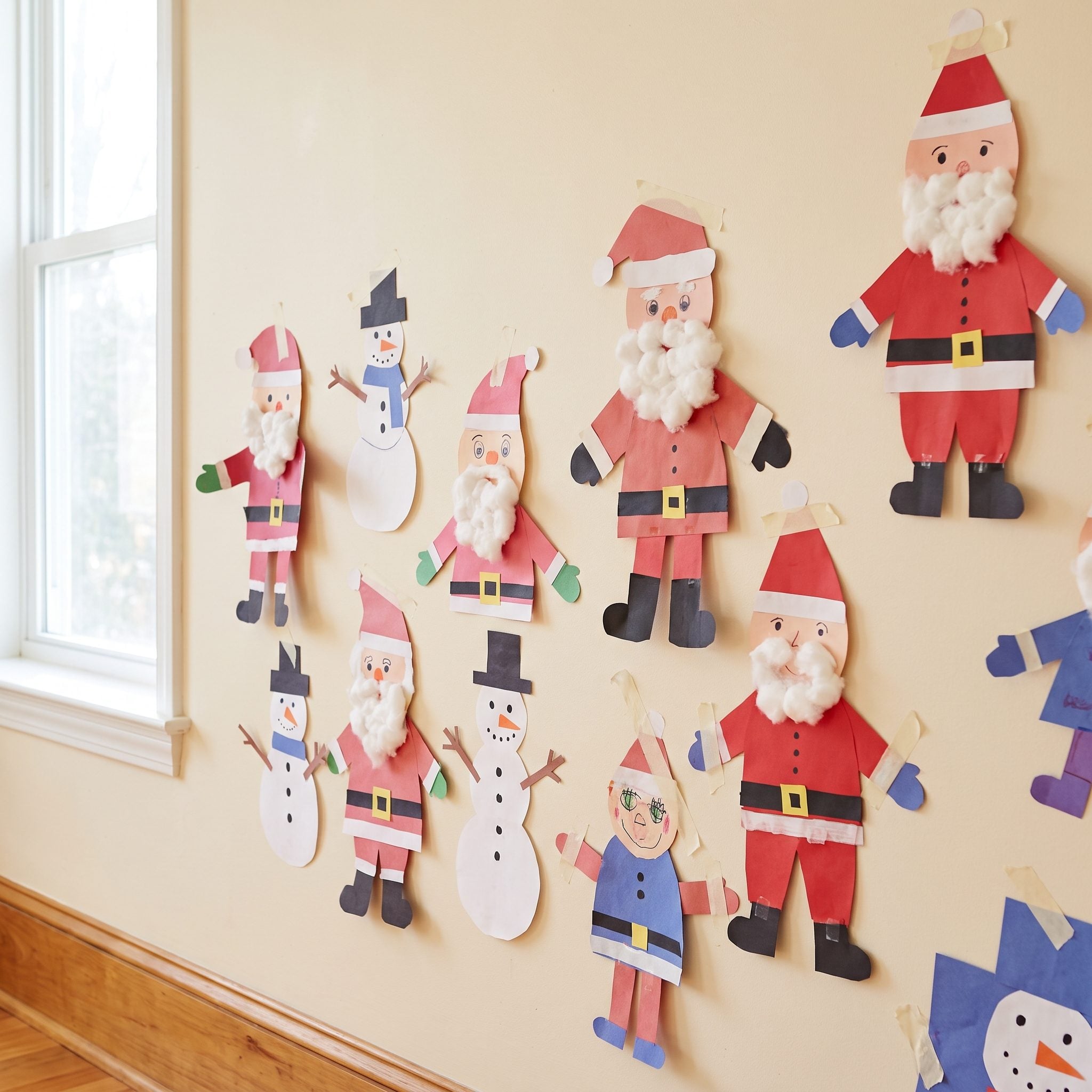
He went up crooked and remained crooked.
One googly eye sat noticeably higher than the other. Cotton balls formed a beard that began shedding almost immediately. Nearby might be a three-circle snowman cut freehand and a green paper tree leaning dramatically to one side as though December had brought gale-force winds indoors.
Everything was taped at child height, so the family’s entire handmade Christmas exhibition ended somewhere around four feet above the floor.
By New Year’s the tape surrendered. Santa listed sideways against the wall, attached by a single corner.
Nobody seemed particularly concerned.
16. Cotton-Ball Snow Pressed Onto Every Surface a Kid Could Reach

It began innocently on the windowsill.
Then snow appeared on the mantel. The television. The coffee table. The ceramic village. Somewhere along the way, the dog became involved.
A dab of Elmer’s glue, one squashed cotton ball, and another square inch of the house entered winter.
The material looked fluffy but felt oddly warm and faintly greasy, something nobody questioned because the larger artistic vision was clearly more important.
January exposed the consequences. The cotton clumped, yellowed, and occasionally peeled away in one strange papery sheet with dried glue attached.
Strays survived behind furniture until Easter.
15. Christmas Window Clings Stuck to Every Pane
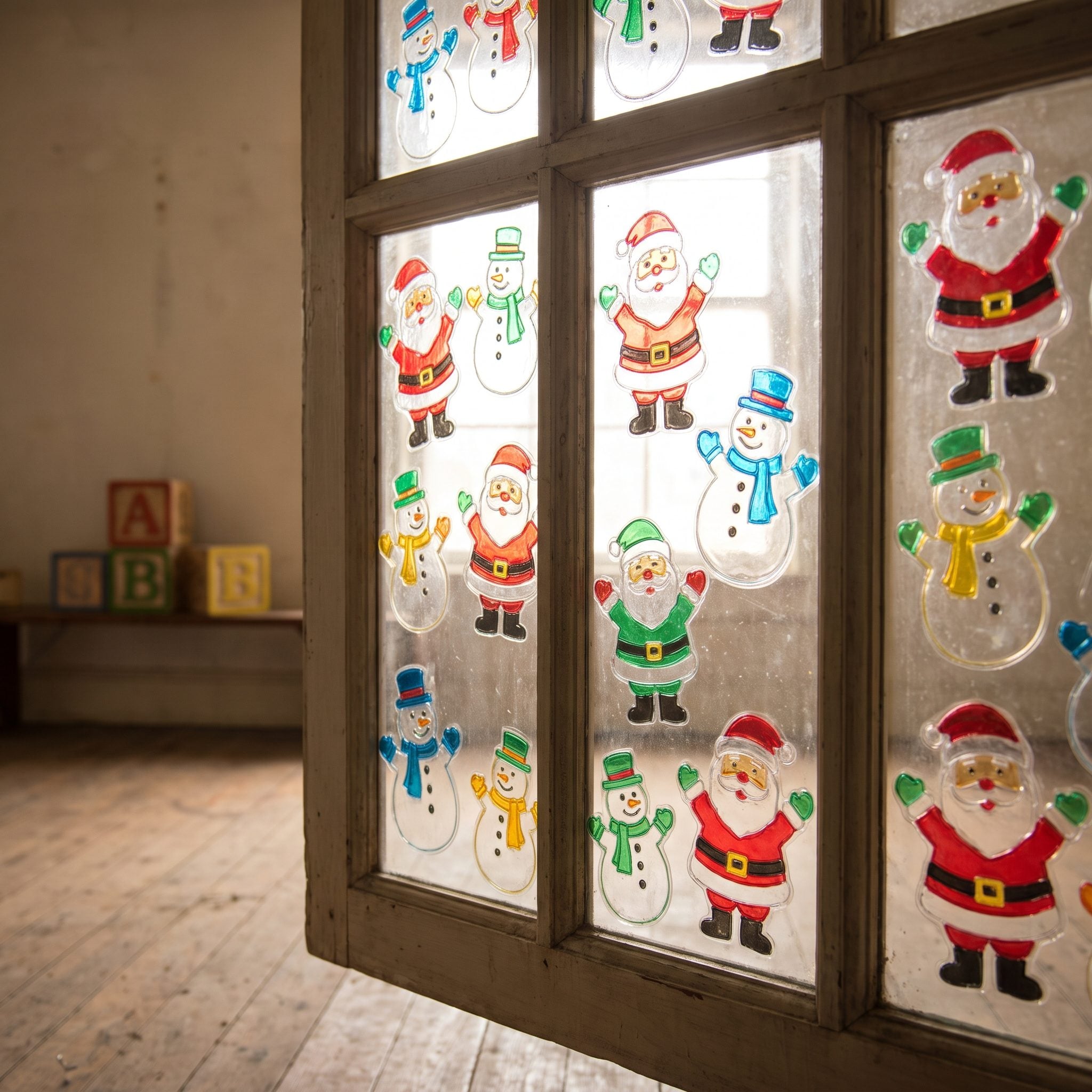
Open the plastic sleeve and that vinyl smell came straight out.
Inside: Santa. Snowmen. Candy canes. Bells. Holly. A reindeer whose anatomy became increasingly questionable once it was stretched across cold glass.
Children claimed the lower panes. Adults handled the upper ones, usually after deciding it was easier to stand on a chair than find the step stool.
From inside, half the designs were backwards. Nobody cared.
By January one corner had usually curled away from the window, leaving Santa hanging diagonally as though trying to escape.
14. Electric Candles Glowing in the Front Windows

🔥 Would you like to save this?
Drive down a suburban street after dark and the windows did half the decorating.
A little electric candle sat on each sill, its orange bulb reflected in the glass. One leaned. Another flickered because a child had bumped it chasing the cat. A third had been balanced on a folded piece of cardboard because the sill wasn’t level.
From the sidewalk none of that mattered.
A row of glowing windows made the house look occupied, warm, and expectant. Somebody was home. Somebody had decorated. Somewhere inside, wrapping paper was probably covering the dining-room table.
13. The Aerosol Snow Sprayed Into the Window Corners — And Somehow Onto the Curtains
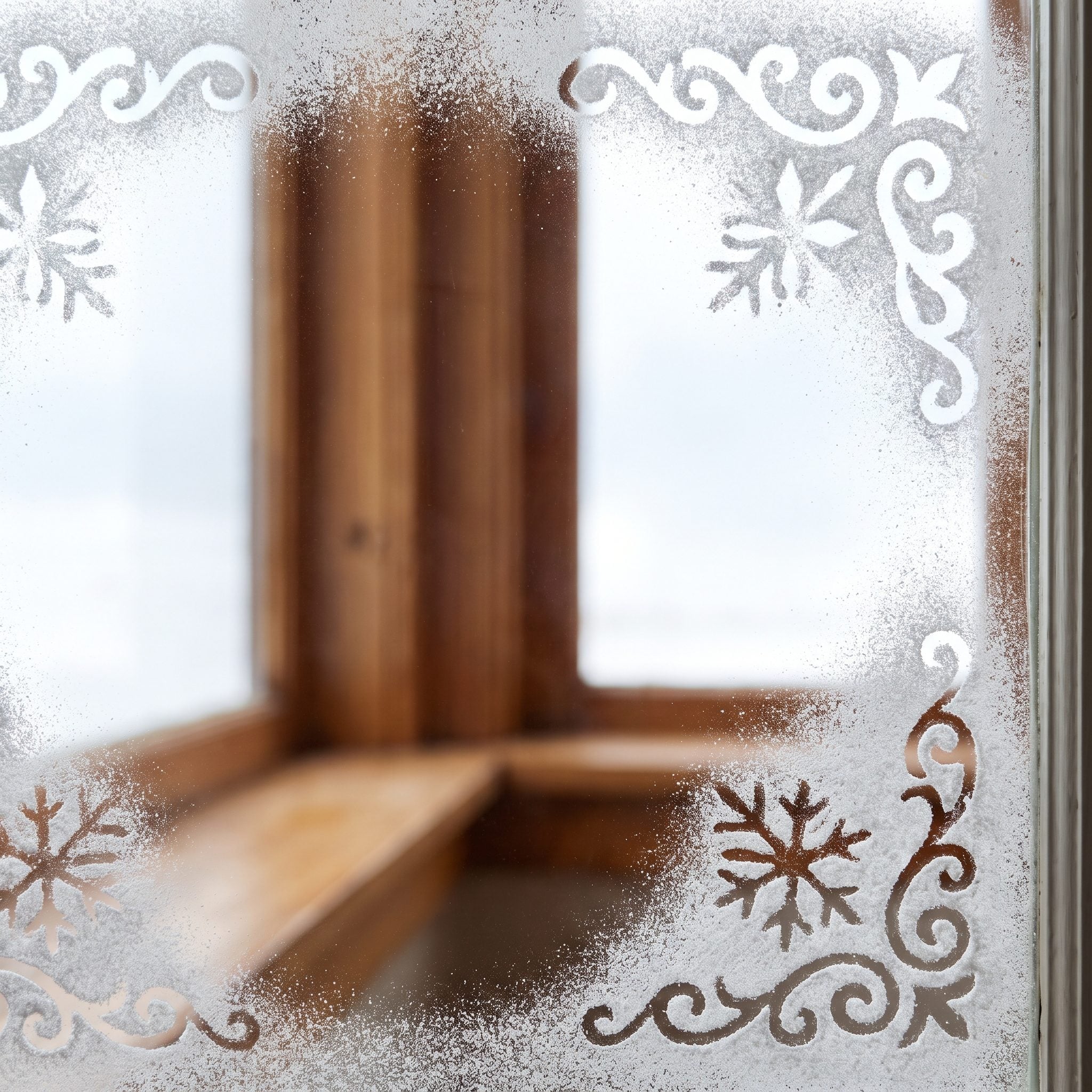
The smell arrived first: sharp, chemical, and so closely associated with December that one whiff could probably return an adult to childhood faster than any carol.
You held a stencil against the window and pressed the nozzle.
Snowflake.
Bell.
Cursive “Noel.”
A Santa boot with a blurred heel because the stencil moved halfway through.
Overspray reached the sill, your fingers, and inexplicably the drapes.
Then January arrived and the fantasy ended with wet paper towels, fingernails, and somebody muttering while scraping the last white residue from the glass.
12. The Big C7 and C9 Bulbs Glowing Around the Front Window
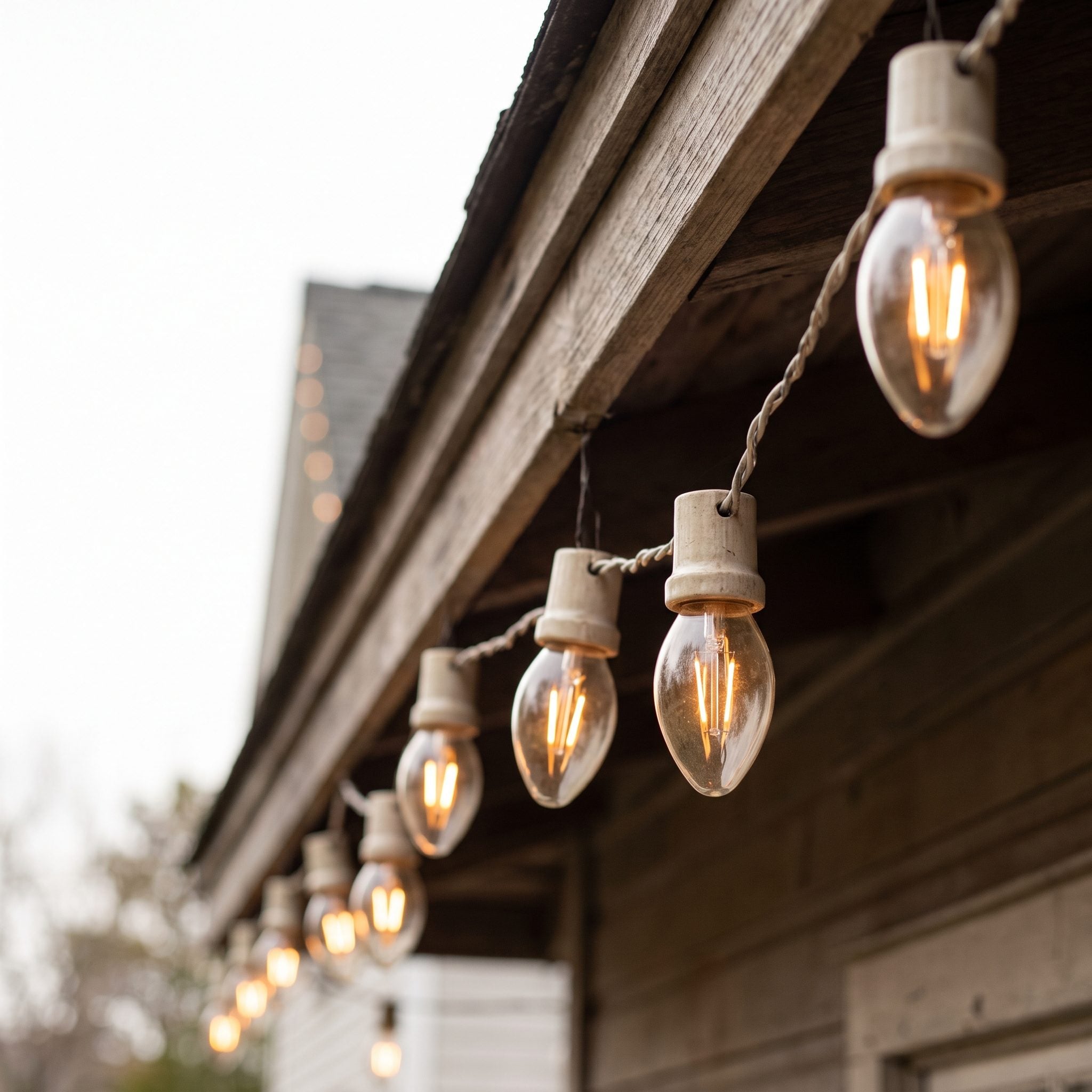
Before tiny LEDs became capable of covering a room in several thousand points of light, one string of big C7 or C9 bulbs could dominate an entire window.
They were fat, screw-in, made of glass, and warm enough to punish anyone who grabbed one too quickly. Some families ran them around the inside of a picture window where the red, blue, green, and orange bulbs glowed against the glass and announced Christmas to the street.
A burned-out bulb wasn’t disposable equipment. You unscrewed it and replaced it.
Replacement bulbs lived in little cardboard boxes in the junk drawer or ornament carton, waiting eleven months for their moment.
11. The Banister Wound in Garland That Slid a Little Lower Every Day

Somebody spent Saturday afternoon corkscrewing artificial garland up the banister with florist wire.
By December 12 it had migrated south.
Children grabbed it while charging downstairs. Adults caught sleeves on the bows. Every impact loosened another section until the carefully measured swag developed a pronounced downhill slope.
The ambitious version added red velvet bows at intervals and mini lights threaded through the plastic pine. Candy canes sometimes appeared along the rail.
Those never made it to Christmas.
10. The Front-Door Wreath With a Bow Bigger Than the Wreath Itself

The wreath itself was almost beside the point.
Fake evergreen. Plastic pinecones. Maybe a few berry clusters wired into place.
Then came the bow.
Deep red velvet, enormous loops, tails hanging toward the doorknob. If the ribbon had a wired edge, the bow could be reshaped every time somebody passed through the door and accidentally crushed it.
Someone in the house took that responsibility seriously.
The bow was re-fluffed after wind. Re-fluffed after sleet. Re-fluffed after the mail carrier brushed against it.
By Christmas Eve it had received more maintenance than several household appliances.
9. The Brass Jingle Bells That Announced Everybody at the Front Door

The wreath supplied the look. The bells supplied the soundtrack.
A little cluster of brass bells hung from the door, sometimes worked into greenery, sometimes attached to a velvet strap. Every arrival announced itself before the visitor managed to knock.
Jingle.
Cold air.
Boots on the mat.
Voices from the kitchen asking who it was.
After a month, the sound became part of the house. Today, small front porch decorating ideas often aim for a quieter welcome, but there was something wonderfully unsubtle about a door that told the entire main floor someone had just come in.
8. Outdoor Lights Tracing the Roofline and Porch Rail

Dad was on the ladder in a coat too thin for the weather and somehow, inevitably, one strand short.
Every bulb had been tested on the ground because nobody wanted to discover a dead section after reaching the highest corner of the roof.
Then up went the big colored lights: along the eaves, around the porch, down the railing, maybe across the garage if enough cord remained.
Someone below held the ladder and offered advice.
Half the neighborhood seemed to do this on the same freezing Saturday. By dark the whole block was outlined in red, green, orange, and blue.
One house always went further.
Every child knew which one.
7. The Plastic Light-Up Santa, Snowman, or Candle Standing Guard in the Front Yard

You didn’t decorate the yard so much as stake a claim to it.
One hollow plastic Santa. One extension cord. One bulb rattling around somewhere inside.
Done.
These blow-mold decorations were light enough to move easily and apparently just heavy enough to remain upright until the first serious gust of wind.
By Christmas there was always one snowman on the block lying sideways in the snow, still illuminated, smiling bravely through whatever had happened.
Union Products was one of the major names behind the blow-mold craze, but plenty of manufacturers filled hardware and discount stores with glowing Santas, candles, snowmen, and choirboys.
Nobody coordinated yards.
That was half the appeal.
6. Christmas Plush Toys and Dolls Quietly Colonizing the Sofa

By mid-December the sofa had developed residents.
A plush Santa. A musical bear. A rag doll in a calico Christmas dress. Maybe something with a battery compartment capable of producing a thin electronic version of “Jingle Bells” whenever somebody sat on the wrong cushion.
Some had been gifts years earlier and lived in storage for eleven months at a time, which gave their annual return the air of a family reunion.
You moved them when you needed to sit down.
Then, for reasons nobody questioned, you carefully put every one of them back.
5. Holiday Throw Pillows, Tablecloths, and Kitchen Towels Everywhere You Looked

🔥 Would you like to save this?
The textiles changed overnight.
The sofa acquired felt-appliquéd Santa pillows. The dining table gained plaid. Grandma’s lace went over or under something red. Even the kitchen towels suddenly carried candy canes, holly leaves, bells, or smiling gingerbread men.
None of this existed in the house during the other eleven months.
It lived in a basement box marked XMAS in thick black marker, folded flat and smelling faintly of storage.
Every December it returned a little more faded and somehow more official.
4. A Ceramic Christmas Village Slowly Taking Over the Tabletop
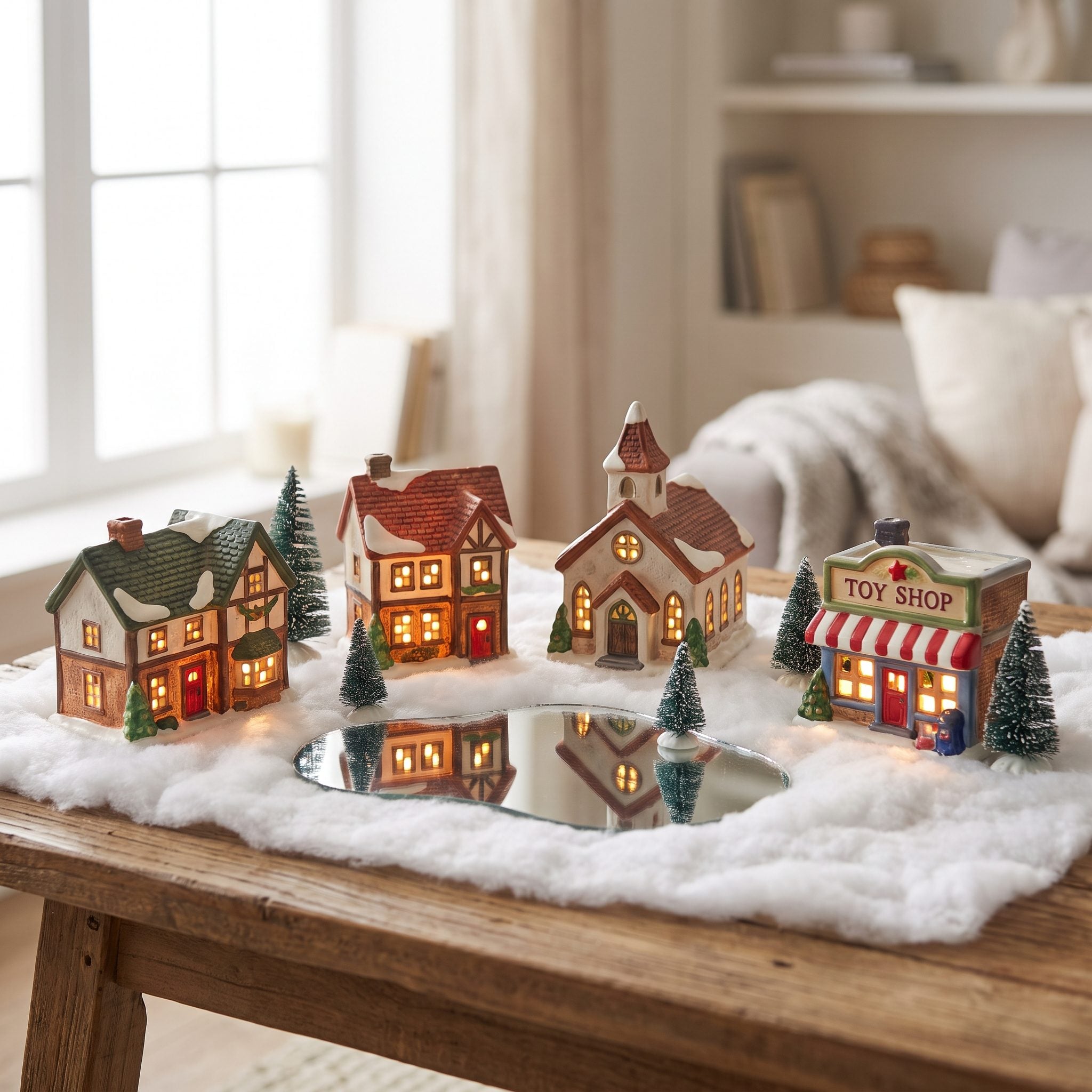
It began innocently.
One church.
Then a house.
Then another house because the church looked lonely.
Before long there was a general store, three bottle-brush trees, a mirror pretending to be a frozen pond, tiny skaters, and enough cotton batting to suggest the village had been cut off by a major weather event.
Department 56 helped turn illuminated Christmas villages into a collecting phenomenon, but plenty of families assembled their towns from less expensive ceramic pieces picked up one building at a time.
That was how the thing grew.
Nobody announced an expansion plan. One December you simply realized the village had occupied the entire sideboard.
The village was never finished. That was the whole appeal.
3. The Twisted Foil Icicles That Spun Themselves the Second the Heat Kicked On

Not the flat kind. The good ones were thin spirals of foil, coiled tightly enough to rotate almost imperceptibly when warm air rose from a furnace register.
Hang several above the vent and they came alive after dark, turning slowly and tossing little fragments of colored light across the wall.
A kid could lie underneath the tree and watch that happen for a ridiculous amount of time. I did. More than once. Nobody called it screen time because the screen was across the room showing a Christmas variety special nobody was watching anyway.
2. Presents in Bright Paper Finished With a Peel-and-Stick Bow

The wrapping paper had no interest in restraint.
Foil red. Glossy green. Metallic gold capable of reflecting the entire tree. Snowmen next to candy canes next to a pattern involving teddy bears in Santa hats.
Then came the peel-and-stick bow.
Remove backing. Press onto box. Done.
Matching the bow to the paper was unnecessary and possibly discouraged. A purple bow on a green package? Fine. Gold on red beside silver on blue? Even better.
By Christmas Eve the floor beneath the tree looked like somebody had spilled an enormous bag of hard candy.
Nobody wanted the packages to coordinate.
1. The Finished Living Room Where Nothing Matched and Somehow It Was Perfect
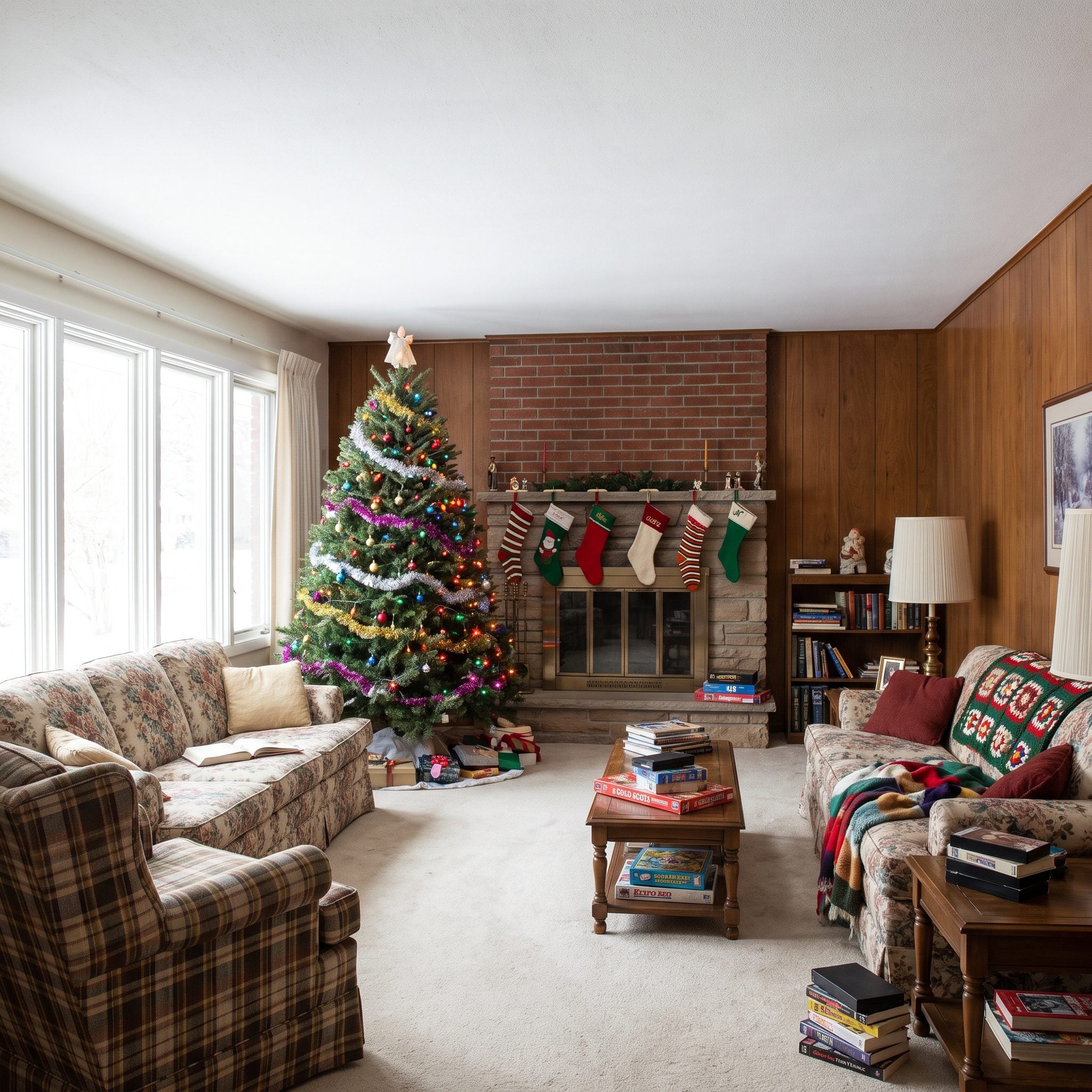
Then, somewhere around Christmas Eve, everybody stopped adding things.
The room was done.
Four colors of lights fought gently on the tree. The stockings didn’t match. A construction-paper ornament sat six inches from a fragile glass ball. Plush dolls occupied the sofa. The ceramic village had annexed the sideboard. Cards framed the doorway. Tinsel had already escaped onto the carpet.
No palette connected any of it.
No decorator would have described the arrangement as restrained.
Today’s polished interiors — including the quiet neutrals and inherited-looking pieces associated with old-money decor — often depend on editing. The 1980s Christmas room depended on accumulation.
Every year contributed something.
A child’s ornament. Grandma’s ceramic tree. Dad’s old train. A ridiculous bow. A photo of somebody at age eight wearing a haircut everyone had agreed never to discuss again.
Nothing matched because the room wasn’t assembled in one afternoon or bought in one collection. It had been built Christmas by Christmas, person by person.