🔥 Would you like to save this?
The smell of percolator coffee. The soft thunk of a wooden cutting board sliding back into its slot. A stool tucked under a laminate ledge where a kid ate cereal in his pajamas before school while somebody packed lunches three feet away. The 1970s kitchen was not waiting for its close-up. It was busy.
That is what makes so many of its supposedly dated ideas worth another look. Counters disguised crumbs instead of advertising them. Tables folded away. Plates dried where they were stored. Pots hung overhead because the ceiling was free. Floors expected spills, children, muddy shoes, and dropped casserole dishes without requiring an emotional support towel. These 27 ideas were built around cooking, eating, talking, storing, chopping, cleaning, and getting on with the day. Somewhere between harvest gold and the waterfall island, quite a few smart things disappeared.
In order to come up with the very specific design ideas, we create most designs with the assistance of state-of-the-art AI interior design software. Also, assume links that take you off the site are affiliate links such as links to Amazon. this means we may earn a commission if you buy something.
27. The Built-In Breakfast Bar That Gave Everyone a Casual Place to Land
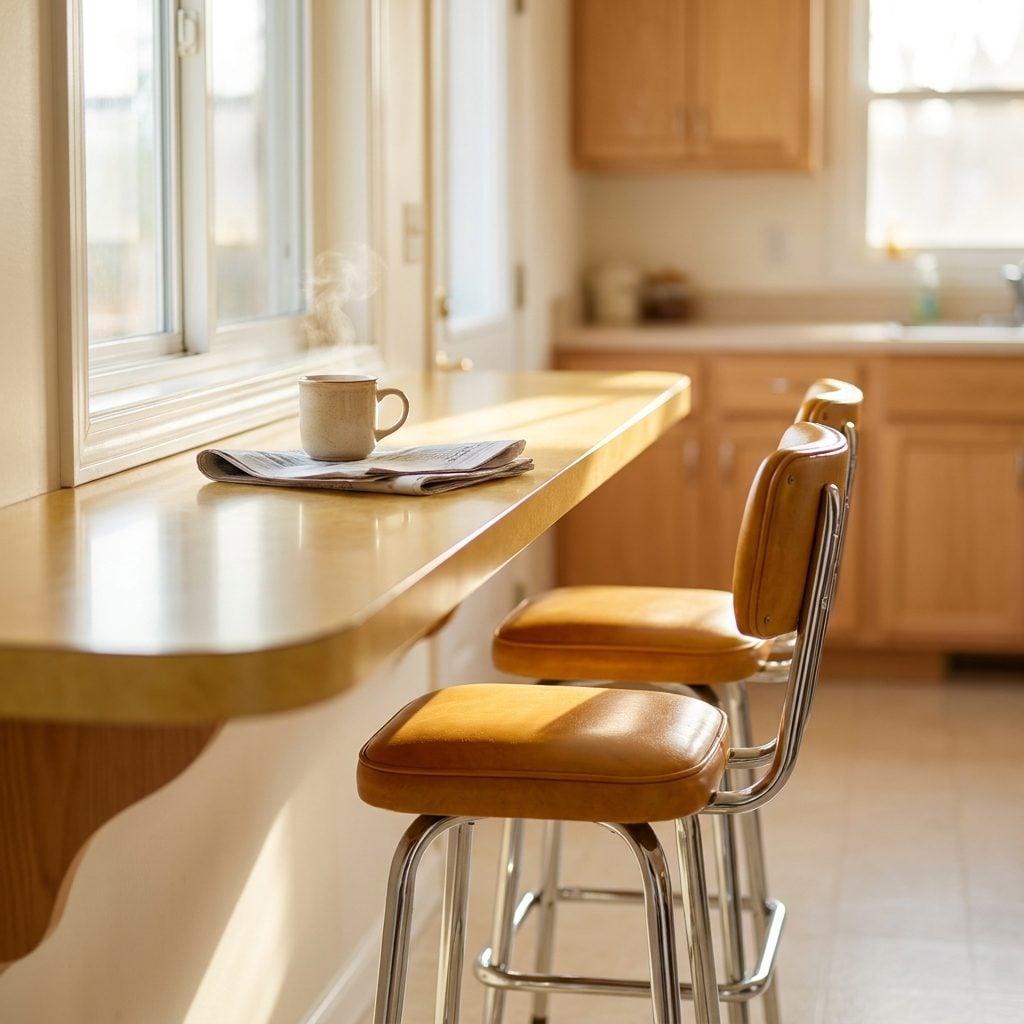
Two stools, a laminate ledge, and suddenly the kitchen had somewhere to land. Not a fortress of an island swallowing half the floor. Just enough counter for a cereal bowl, a coffee cup, homework, or an elbow while dinner happened nearby.
Phone calls happened here. Kids hovered here. Somebody could sit down without abandoning the person at the stove. The breakfast bar understood something simple: a kitchen does not need twelve feet of stone to become social.
26. The Pull-Out Cutting Board Hidden Right Under the Counter
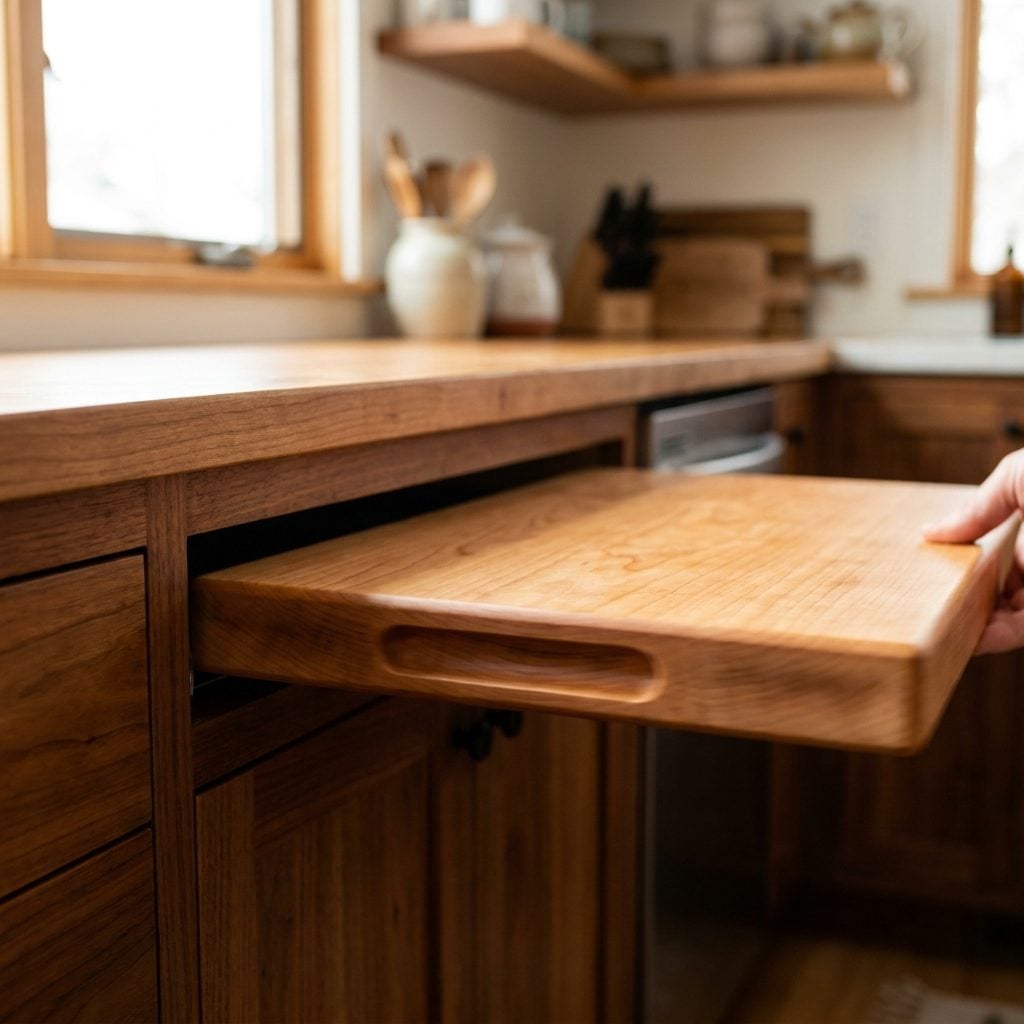
Grab the recessed pull, slide it forward, and there it is: a slab of wood ready to catch an entire chopping job without surrendering an inch of permanent countertop.
When the onions were diced and the carrots were dealt with, the board disappeared back into the cabinet. A small kitchen gained another work surface in seconds, then got the floor plan back as though nothing had happened.
Drawer banks eventually claimed a lot of that territory. The pull-out board still makes an awfully persuasive case for itself.
25. The Patterned Countertops That Didn’t Show Every Crumb and Water Spot
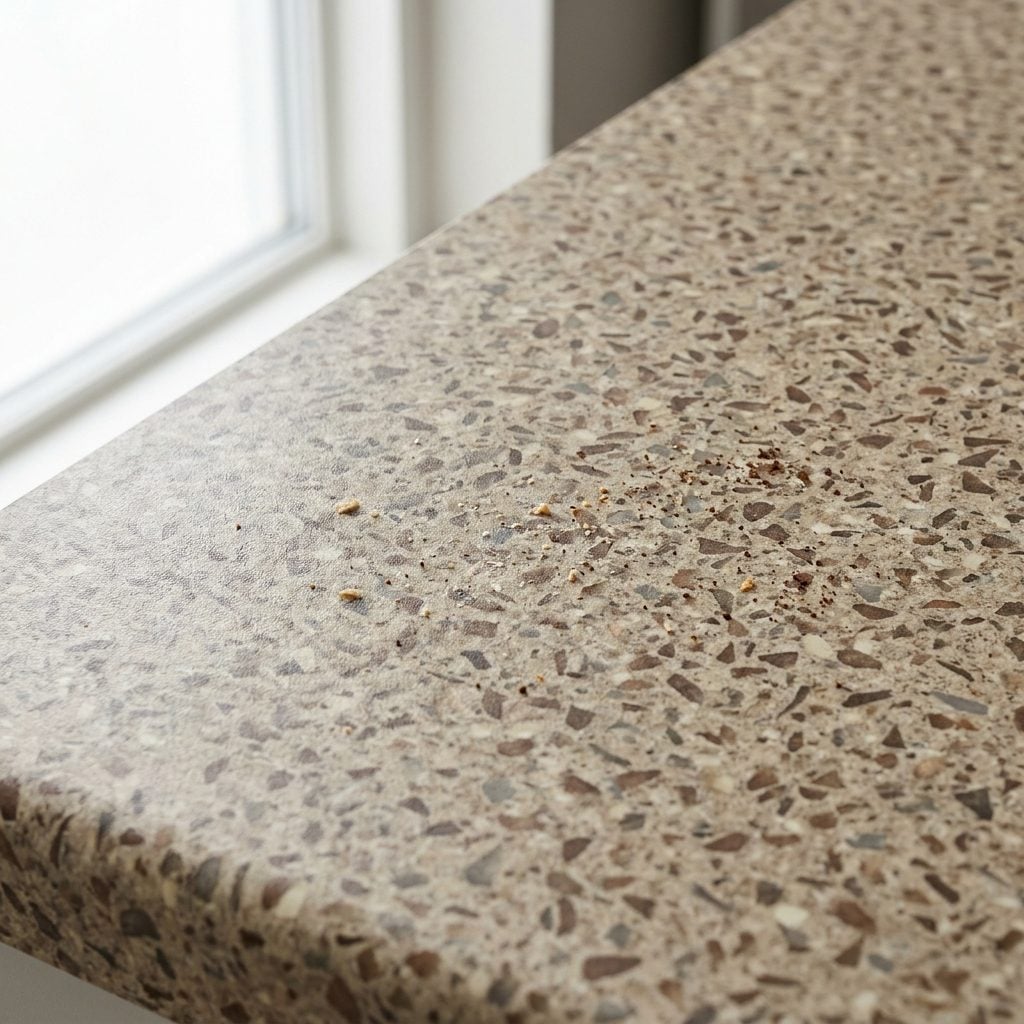
Speckled, flecked, faintly stone-like. The pattern was doing a job most people barely noticed: swallowing crumbs, water spots, flour dust, and the ordinary evidence of a kitchen that had been used since breakfast.
Bake all afternoon and the counter could still look respectable because the print refused to broadcast every stray speck. Compare that with a sheet of solid black or brilliant white that can announce one droplet from across the room. The 1970s surface was not pretending nothing happened there.
24. The Rounded Counter Edges That Were Kinder to Hips and Little Heads
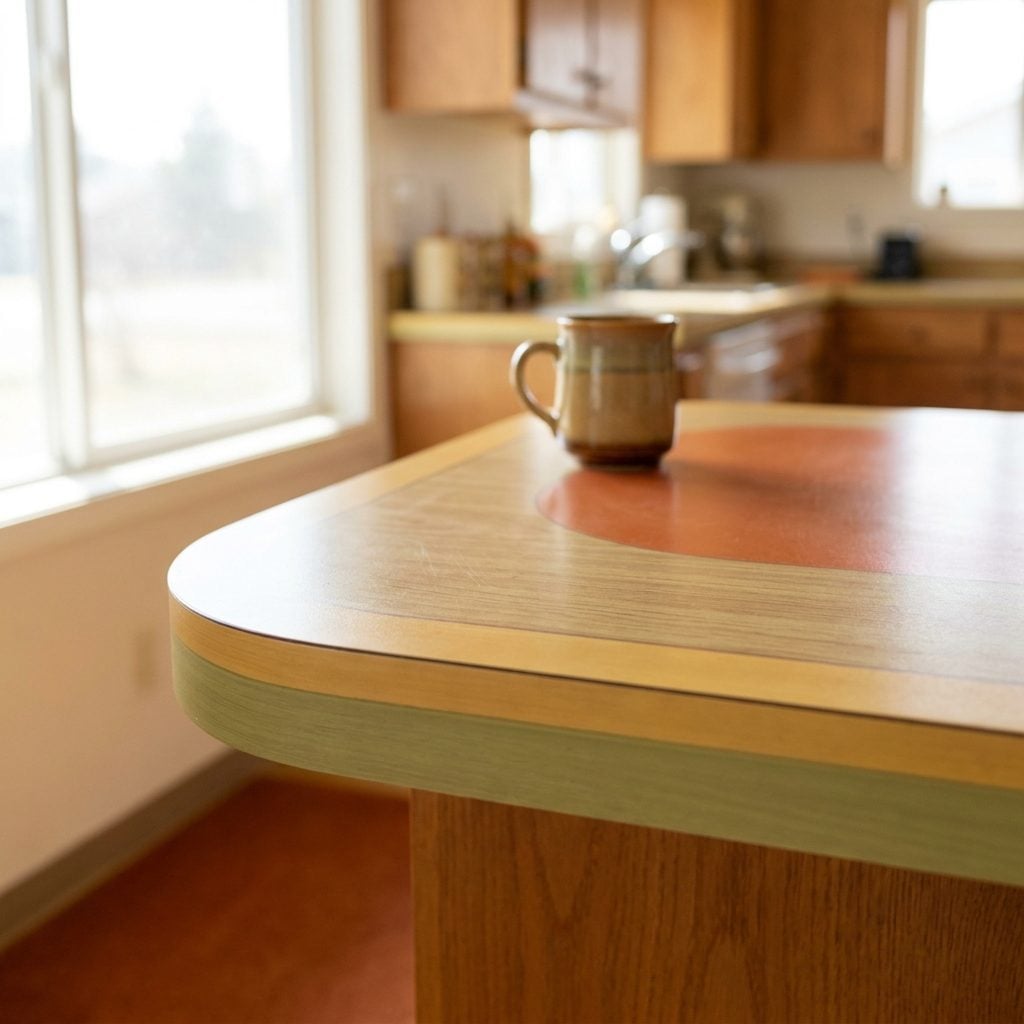
Anyone who has cracked a hip against a square stone corner while carrying groceries knows why this mattered.
Laminate counters often rolled softly at the front and eased off at the corners. Adults bumped them. Kids ran into them. The edge still existed, but it was considerably less interested in winning the encounter.
Square stone photographs beautifully. Your ribs may have a different opinion.
23. The Brick Kitchen Floor That Expected to Get Used
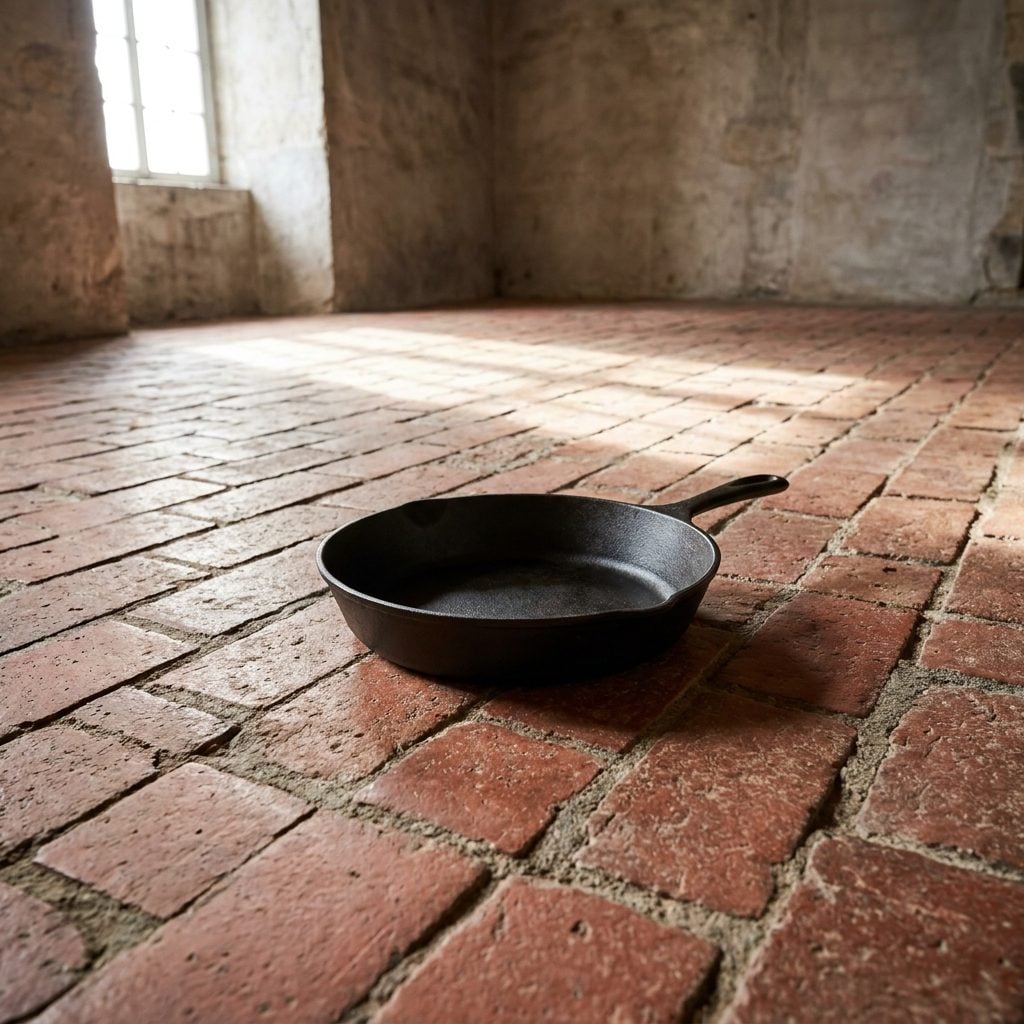
Drop a cast-iron pan on it and the floor was unlikely to be the one requiring sympathy.
Brick brought texture, color, and a surface that could absorb scuffs, darkening, and softened edges without looking ruined by them. In a room where things fall, boil over, and arrive from the backyard on muddy shoes, that tolerance mattered.
The attraction was the opposite of preciousness. Wear became part of the material rather than evidence that somebody had failed to protect it.
22. The Freestanding Butcher-Block Worktable That Could Move With the Room
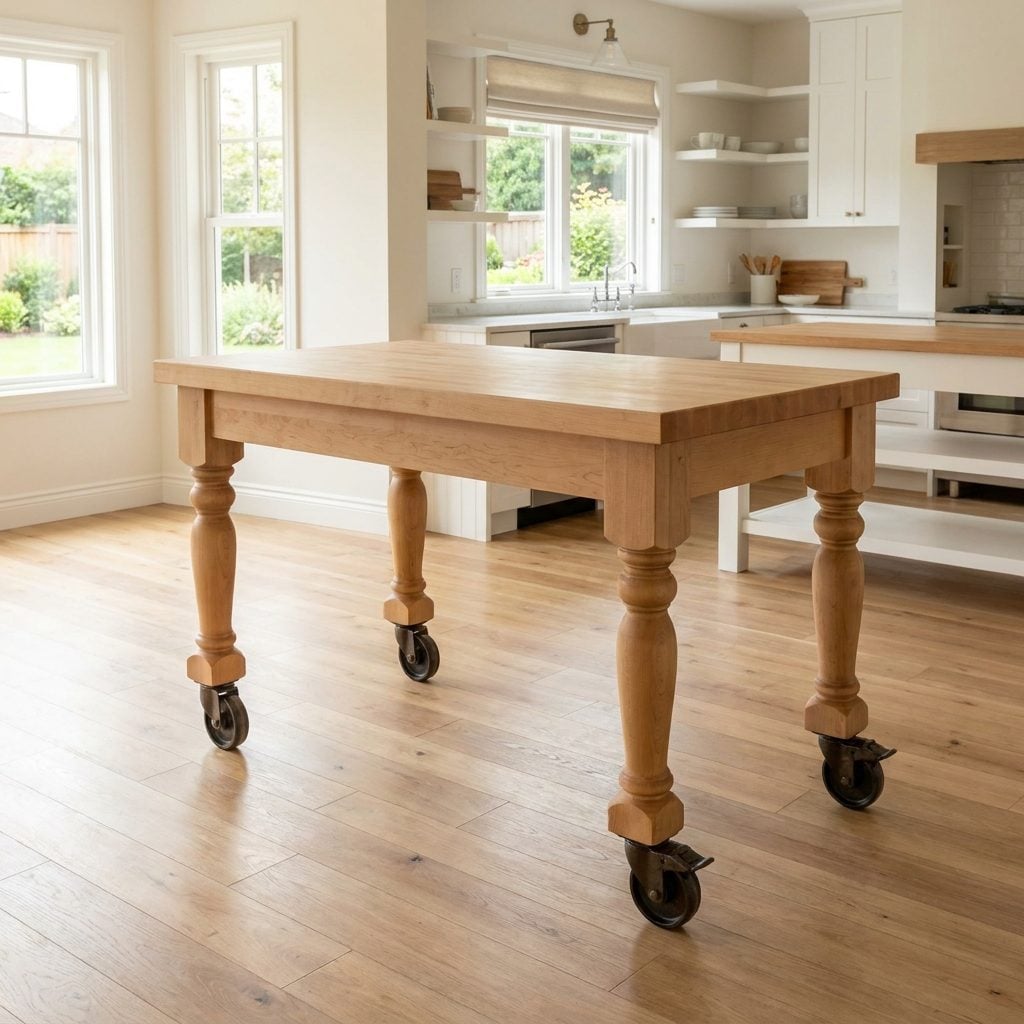
A permanent island locks the center of a kitchen into one decision. A freestanding butcher-block table behaved more like furniture: useful in the middle when extra prep space mattered, movable when it did not.
Four legs, a substantial wood top, maybe a lower shelf for big pots. Nothing architectural about it. No waterfall edge. No electrical outlets hiding inside. No minor demolition required if you changed your mind.
And when the household moved, the table could go too. Try saying that about eight feet of quartz.
21. The Ceiling Fluorescent That Actually Lit the Whole Work Area
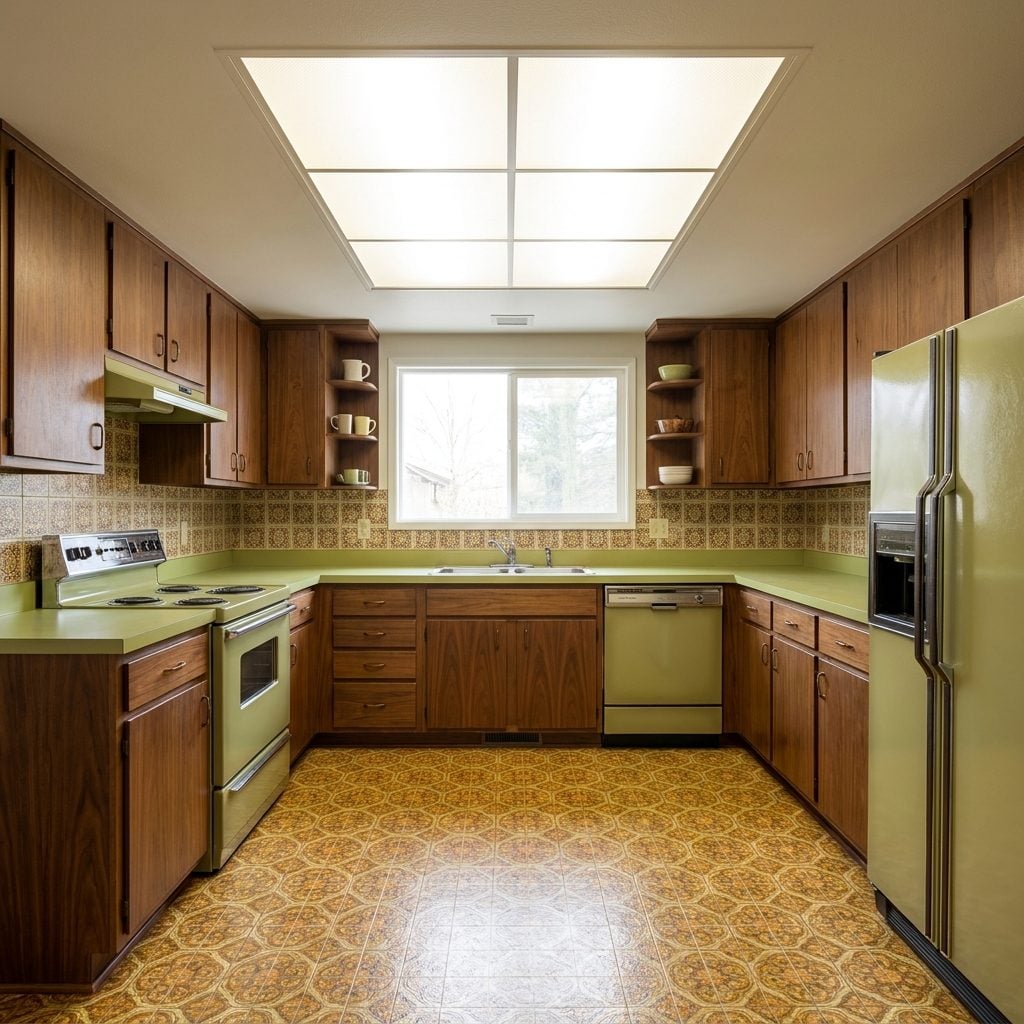
Flip the switch and the room lit up. Sink, range, counters, floor. Nobody mistook the fixture for jewelry, but that was not the assignment.
Fluorescent panels spent years being mocked as the least glamorous object in the house, yet broad overhead illumination could provide remarkably even general light. Badly planned recessed layouts, by comparison, can leave work surfaces caught between pools of brightness and shadow.
A kitchen is a workroom before it is an atmosphere. A well-lit bright kitchen decor scheme still earns its keep once the knives come out.
20. The Exposed-Brick Wall That Gave the Room Instant Texture
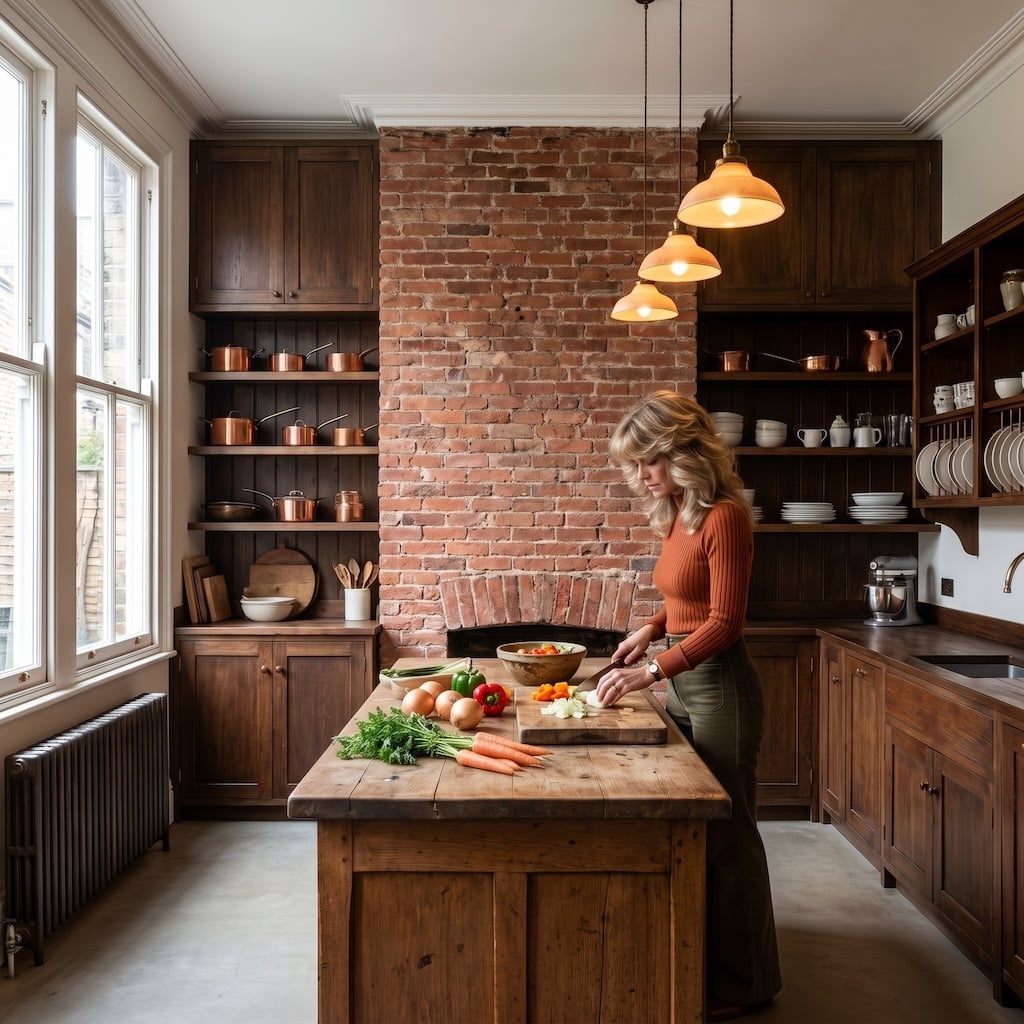
One wall of red-brown brick could do more for a room than another layer of cabinetry ever would. Rough mortar, uneven color, chipped edges — suddenly the kitchen had texture before a single decorative object arrived.
The trick was restraint. Brick on one wall, simpler cabinetry everywhere else, a little wood, done. The masonry supplied so much character that the rest of the room did not need to keep shouting.
Then plenty of brick got covered up. Years later, brick veneer started appearing in catalogs. Kitchens have a sense of humor.
19. The Fold-Down Table That Returned the Floor When Lunch Was Over
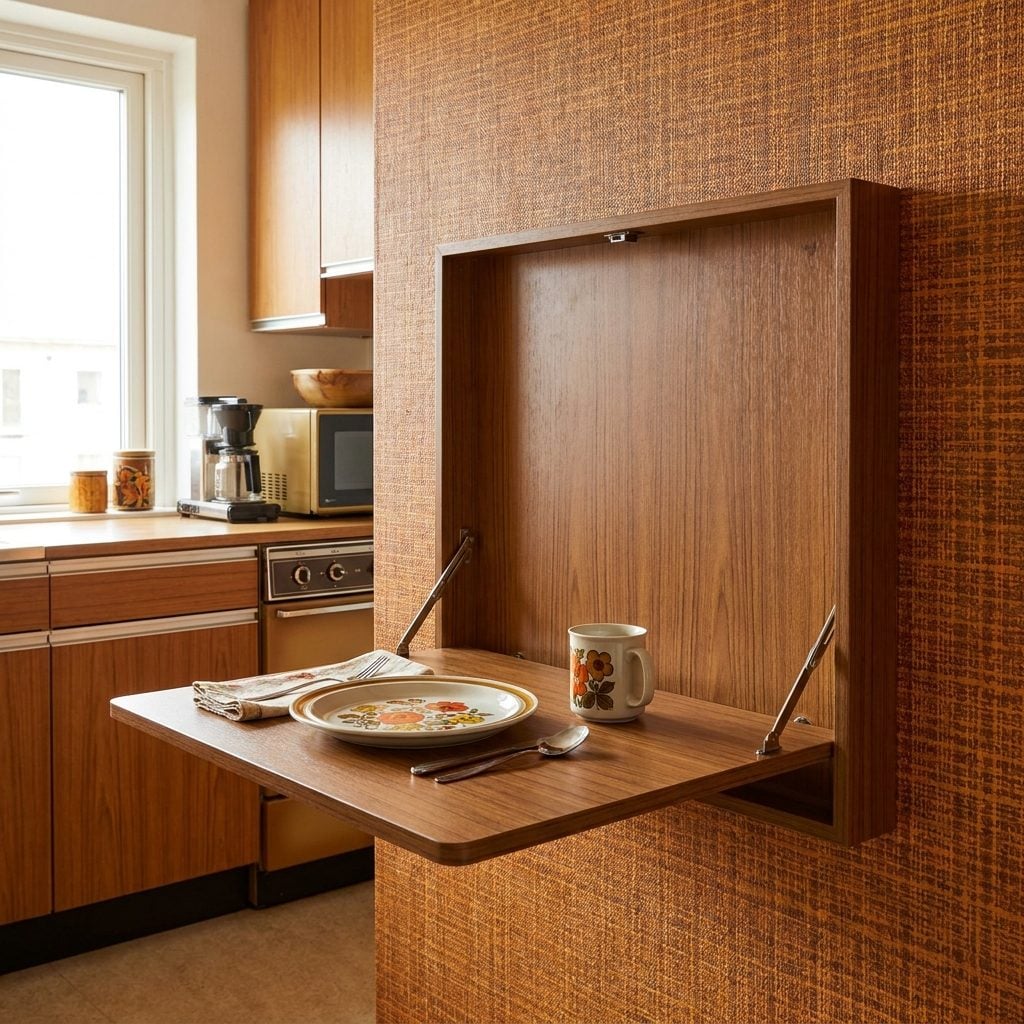
In a kitchen the size of a closet, the fold-down table was almost suspiciously clever. Open it on two brackets and there was somewhere for lunch, homework, bills, or an extra bowl during prep. Fold it back and the floor returned.
No breakfast nook required. No banquette eating permanently into circulation space. The table occupied the room only when the room needed a table.
Micro-apartments keep presenting flexible furniture as a new frontier. A hinge and two brackets would like a word.
18. The Built-In Plate Rack That Let Everyday Dishes Dry Where They Lived
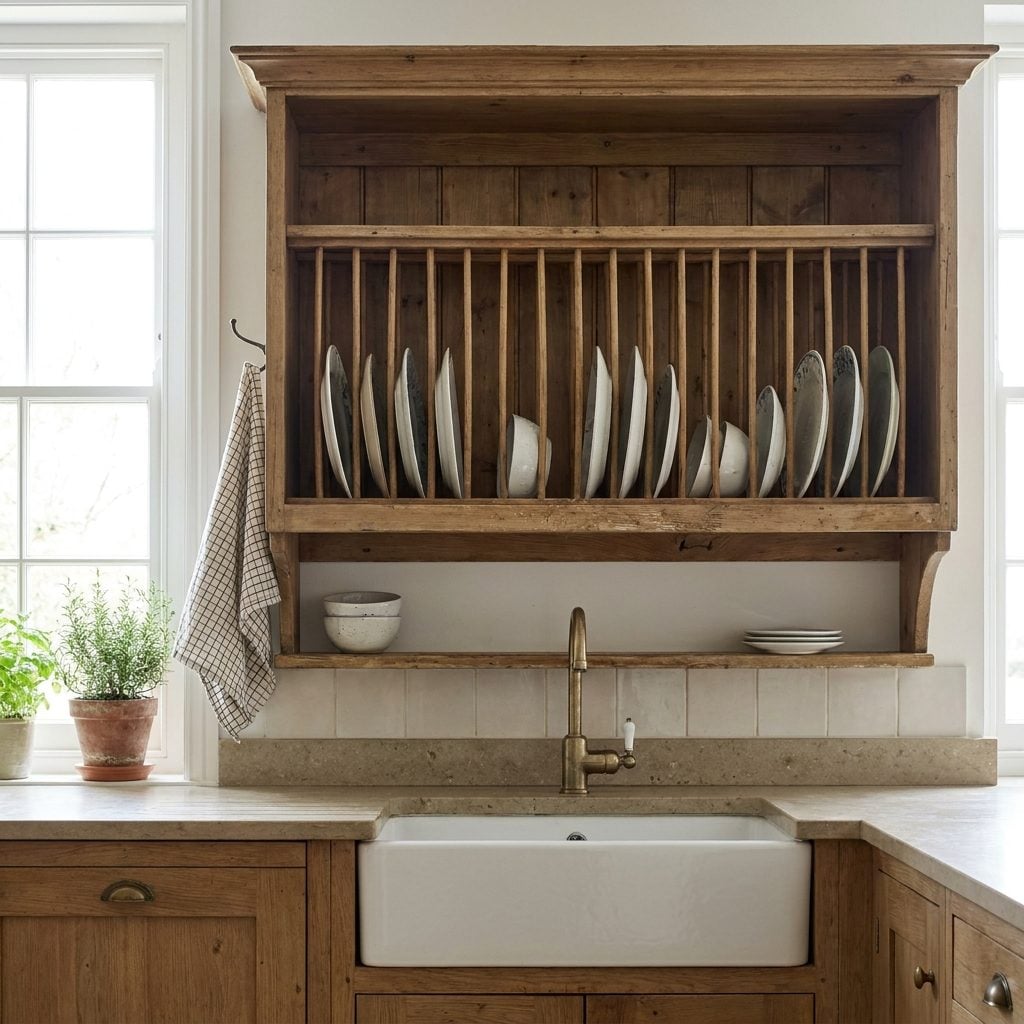
Wash a plate, slide it into the rack above the sink, walk away. The same structure handled drying and storage without leaving a plastic rack sprawled across the counter.
Everyday dishes did not need to disappear behind a cabinet door. They could stay visible, upright, ventilated, and exactly where a wet plate naturally arrived.
Storage, drying rack, and easy access in one narrow strip of cabinetry. Quiet efficiency is easy to overlook.
17. The Utility Rail That Put the Busy Tools Right Where They Were Needed
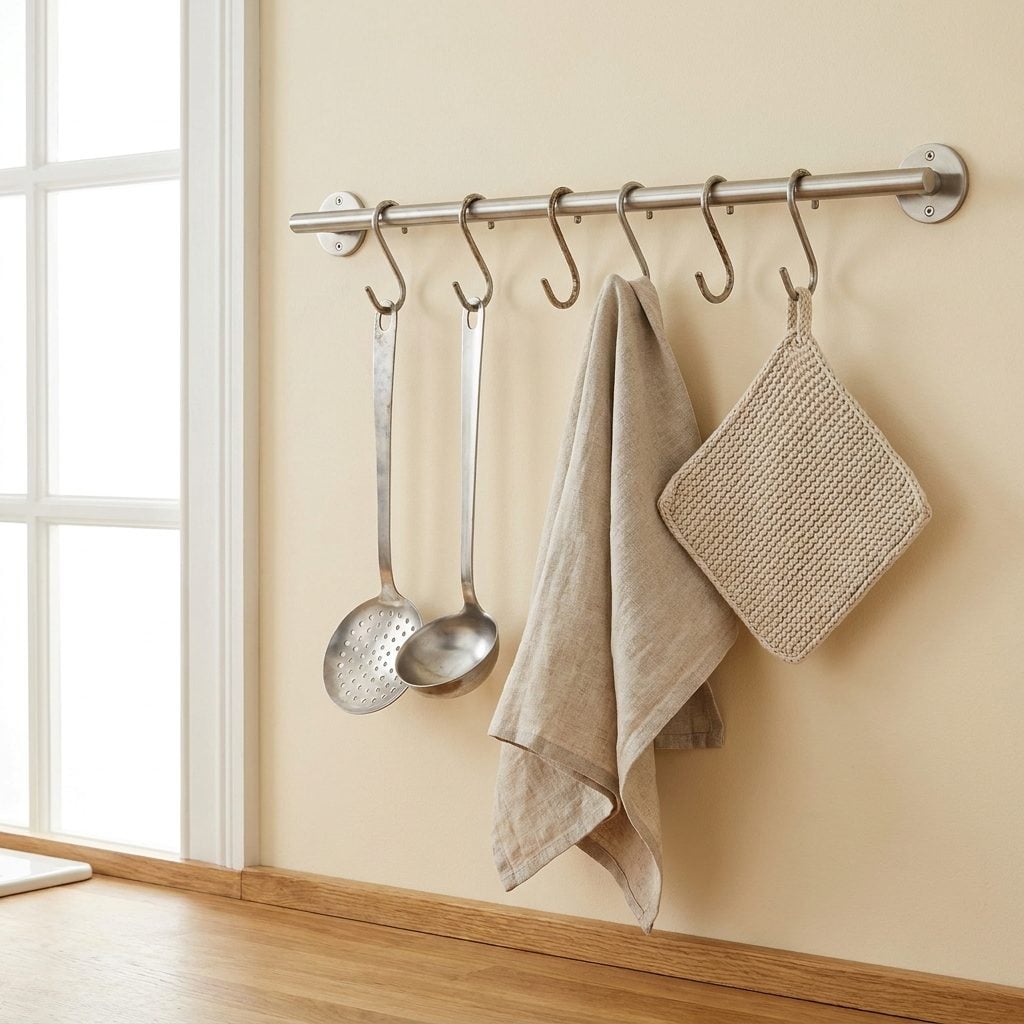
Whisk. Slotted spoon. Ladle. Potholder. Towel. The things used constantly could hang within easy reach instead of sharing a drawer with sixteen objects that had not seen daylight since Thanksgiving.
After enough repetition, the location became automatic. No digging, no opening three drawers with a pot boiling behind you.
Hidden storage eventually became synonymous with tidiness. Then open storage came back as a trend. The utility rail had been quietly doing both jobs all along.
16. The Indoor Herb Planter That Put Dinner on the Windowsill
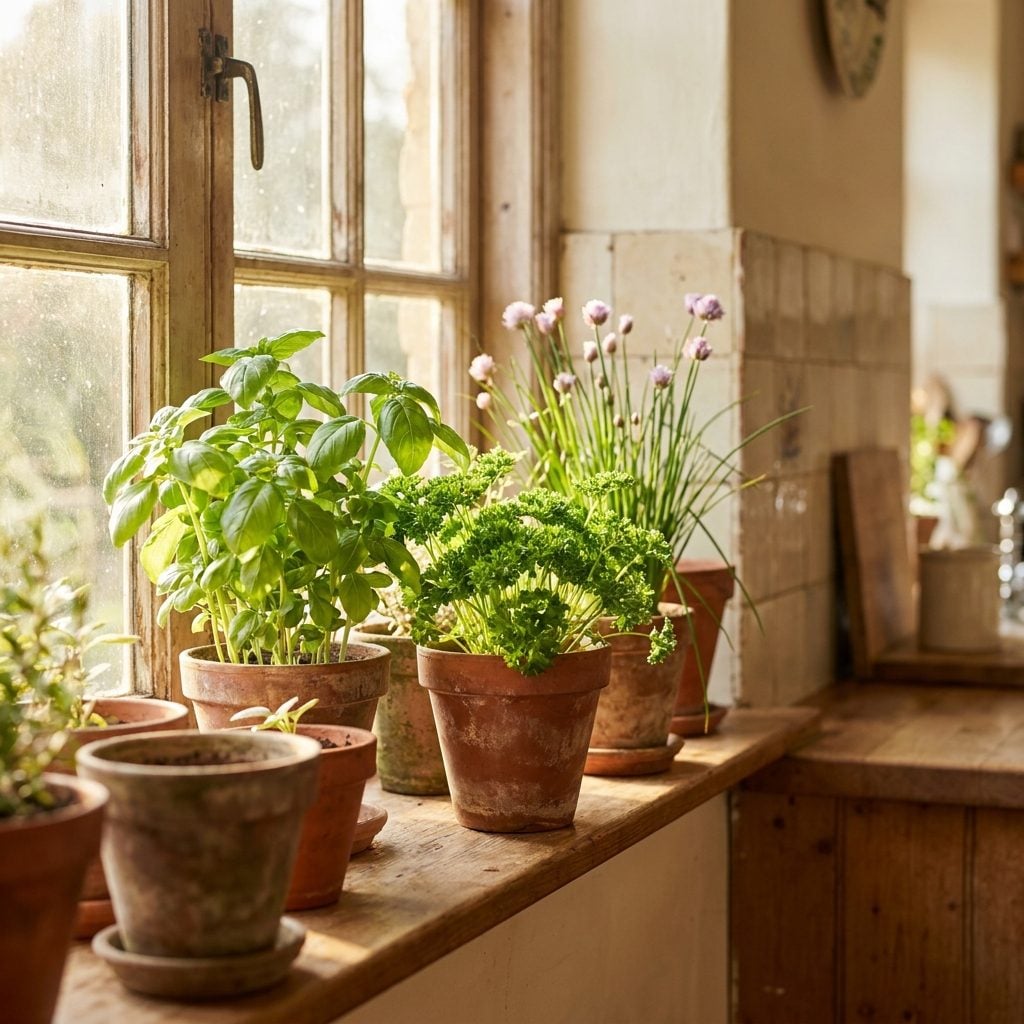
Basil, parsley, chives — mismatched terracotta pots occupying the sunniest sill in the house because dinner might need something green at six.
The plants earned their real estate. Snip what was needed, leave the rest growing, and the kitchen smelled better in the bargain.
Kitchen plants now often arrive styled in coordinated pots and positioned for photographs. A windowsill that actually gets harvested from has more charm, and it fits naturally with the farmhouse kitchen inspiration that keeps circling back to the same practical instincts.
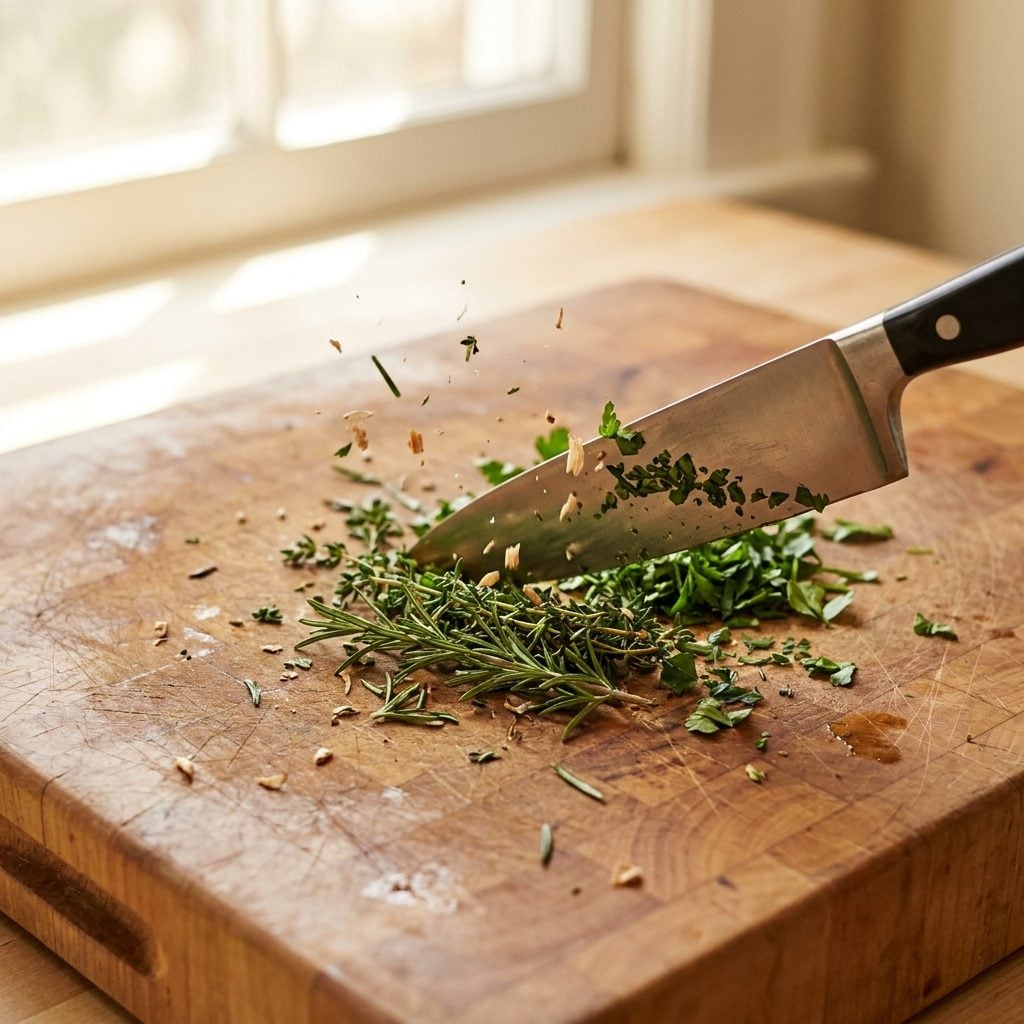
15. The Butcher-Block Surface That Was Meant to Show Knife Marks
🔥 Would you like to save this?
Wood work surfaces made sense in a room where chopping was not an occasional lifestyle activity. Proper butcher block could take knife marks, darken with age, and develop the kind of wear that made the surface look more convincing rather than less.
The counter was allowed to do its job.
Somewhere along the way, kitchens became full of materials that inspire panic the moment a utensil touches them. Grime is a problem. Wear is not automatically the same thing.
14. The Ceiling-Hung Rack That Used an Entire Zone of Empty Air
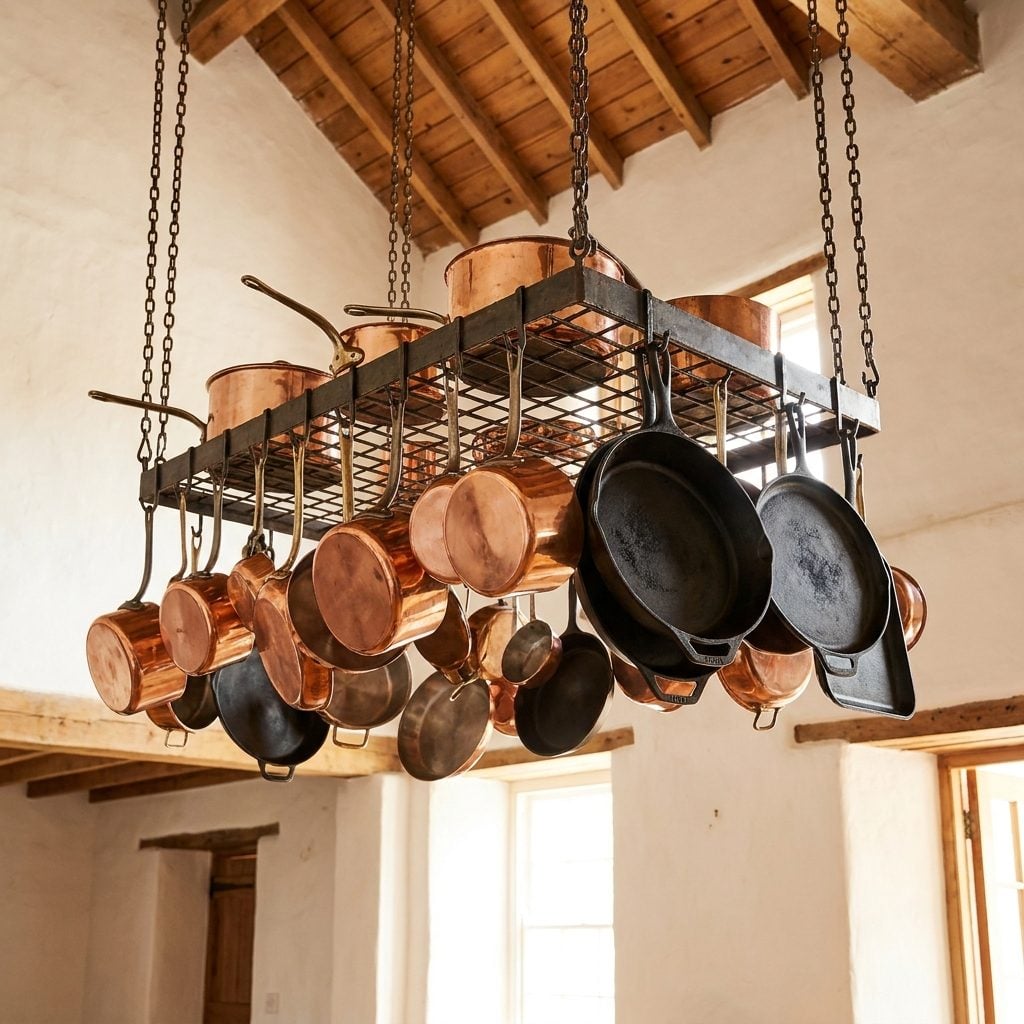
Every kitchen contains cubic feet of unused air overhead. A hanging rack turned some of it into storage.
Frequently used pans could stay visible, seasoned, slightly scuffed, and ready to grab without sacrificing a base cabinet or cramming another drawer. The hardware also added a little industrial weight to all that wood and laminate.
It still plays well with a warm cabinet scheme or a moodier one, and anyone chasing a black kitchen renovation can see how much a dark metal rack contributes without requiring another black surface.
13. The Pull-Out Pastry Board That Created a Second Counter on Demand
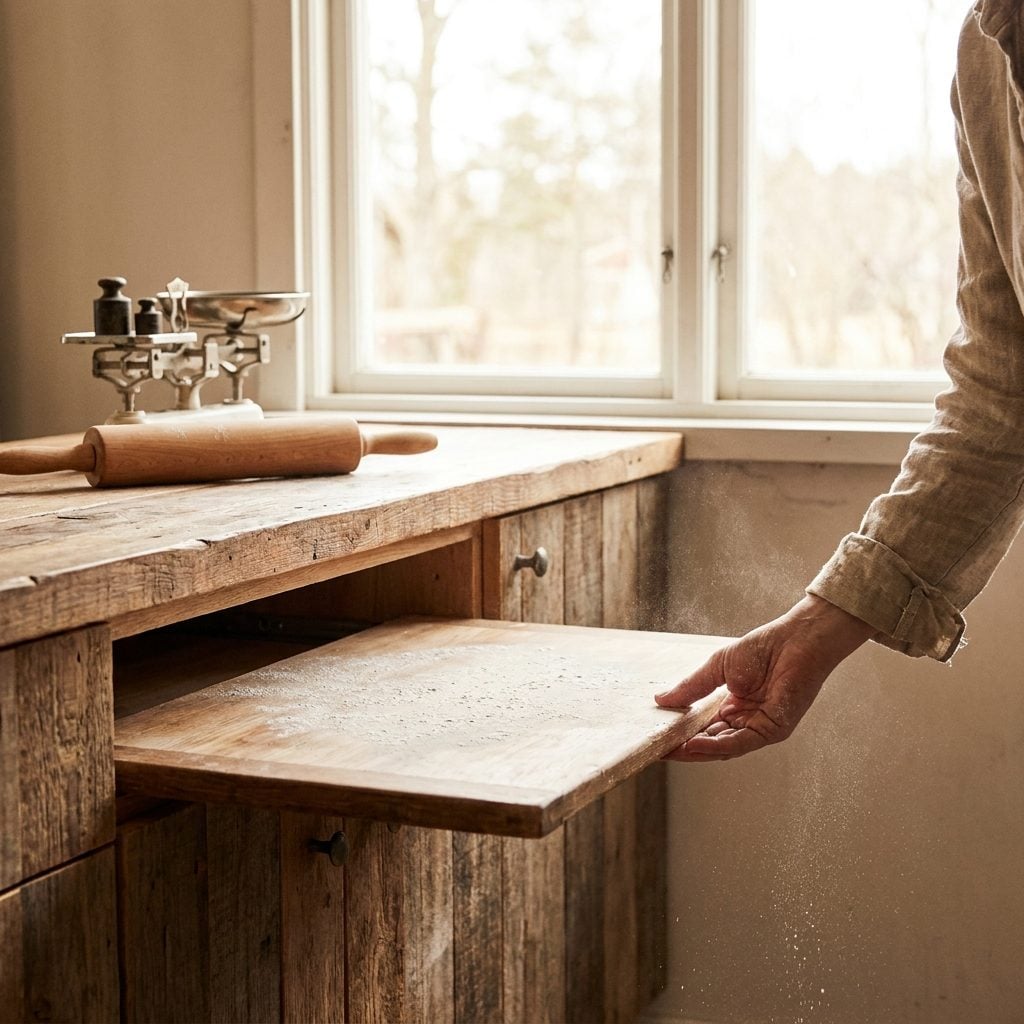
A wide wooden board tucked beneath the regular counter could slide out when dough needed room to spread. It was essentially a drawer with delusions of grandeur.
Wider than a small cutting board and smooth enough for rolling, it delivered another work surface precisely when bowls, flour, butter, and rolling pin had already colonized the first one.
Then it disappeared again. No permanent square footage sacrificed.
12. The Open Dish Hutch That Worked Like Furniture, Not Architecture
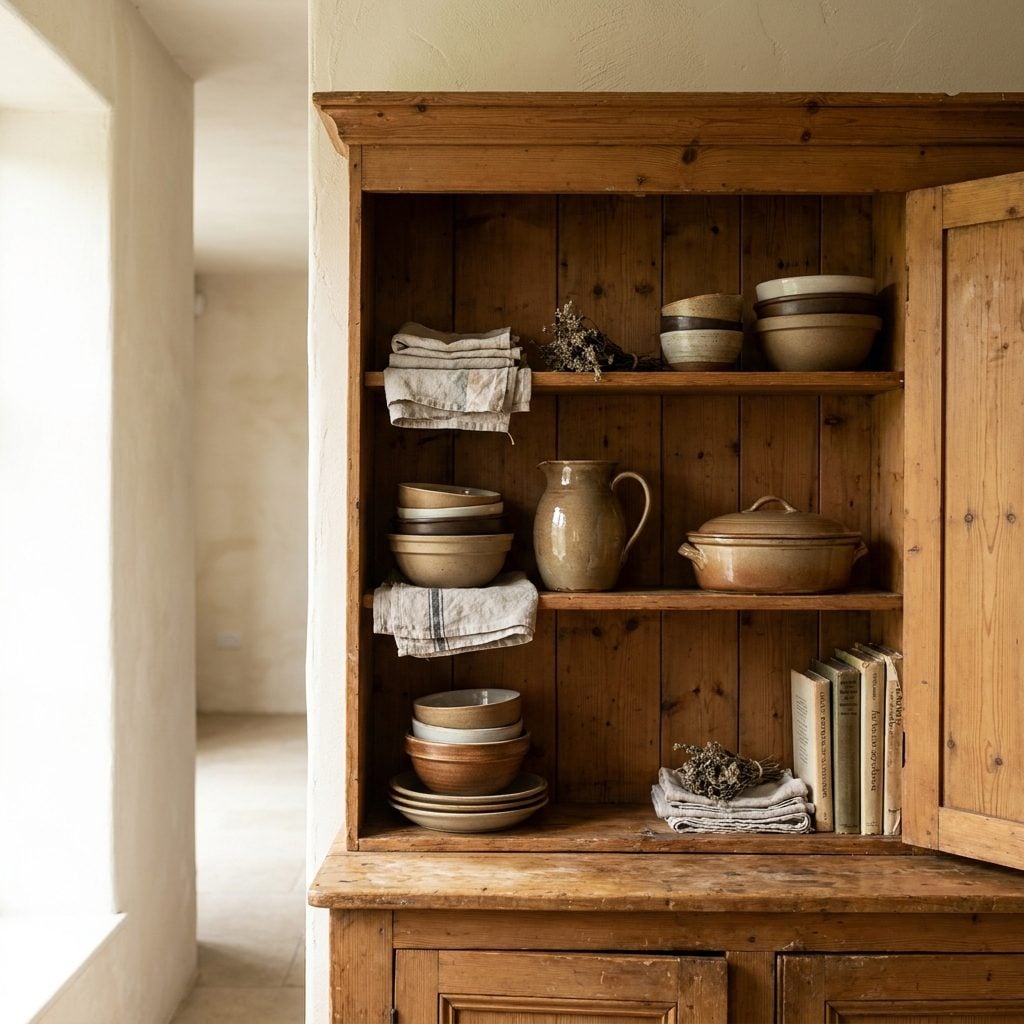
The hutch did not have to be reserved for china nobody touched. Everyday bowls, pitchers, serving dishes, mixing bowls — open shelves above, closed storage below, useful things visible without turning the entire kitchen into open shelving.
Its other advantage was wonderfully low-tech: it was furniture. Change the kitchen and the hutch stayed. Move house and it could move too. Fitted cabinetry cannot make the same promise.
There is a looseness to furniture-based storage that a wall of identical cabinet doors simply does not have.
11. The Warming Drawer That Kept Dinner Ready Without Starting Over
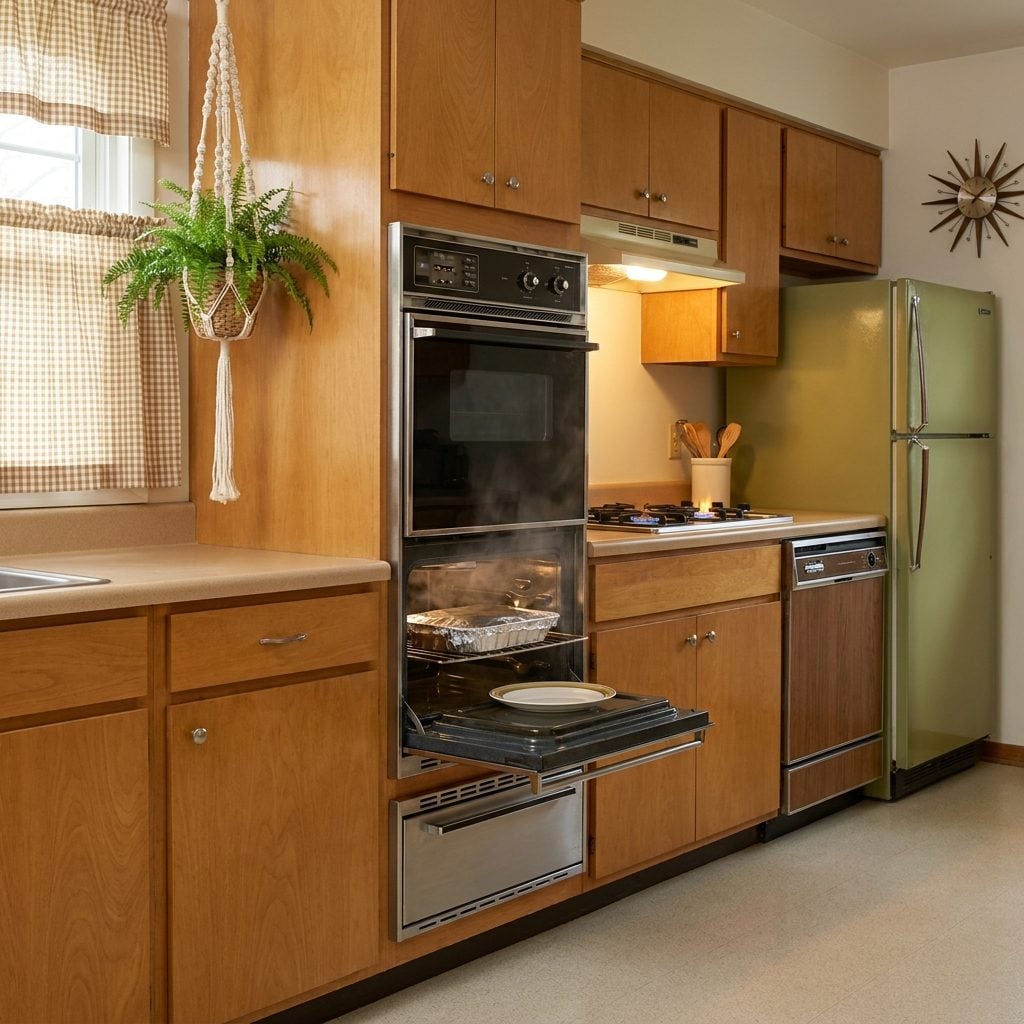
Somebody was always late. The warming drawer gave the covered plate somewhere to wait without asking the microwave to resurrect dinner one component at a time.
Low, controlled heat could keep cooked food warm for serving while the rest of the evening caught up. It was one of those appliances whose usefulness became obvious the moment dinner stopped happening on schedule.
Warming drawers never disappeared entirely and remain available in modern kitchens, though today they are more often treated as a specialty or premium appliance than an automatic part of the room.
10. The Pass-Through Window That Connected Two Rooms Without Exposing Everything
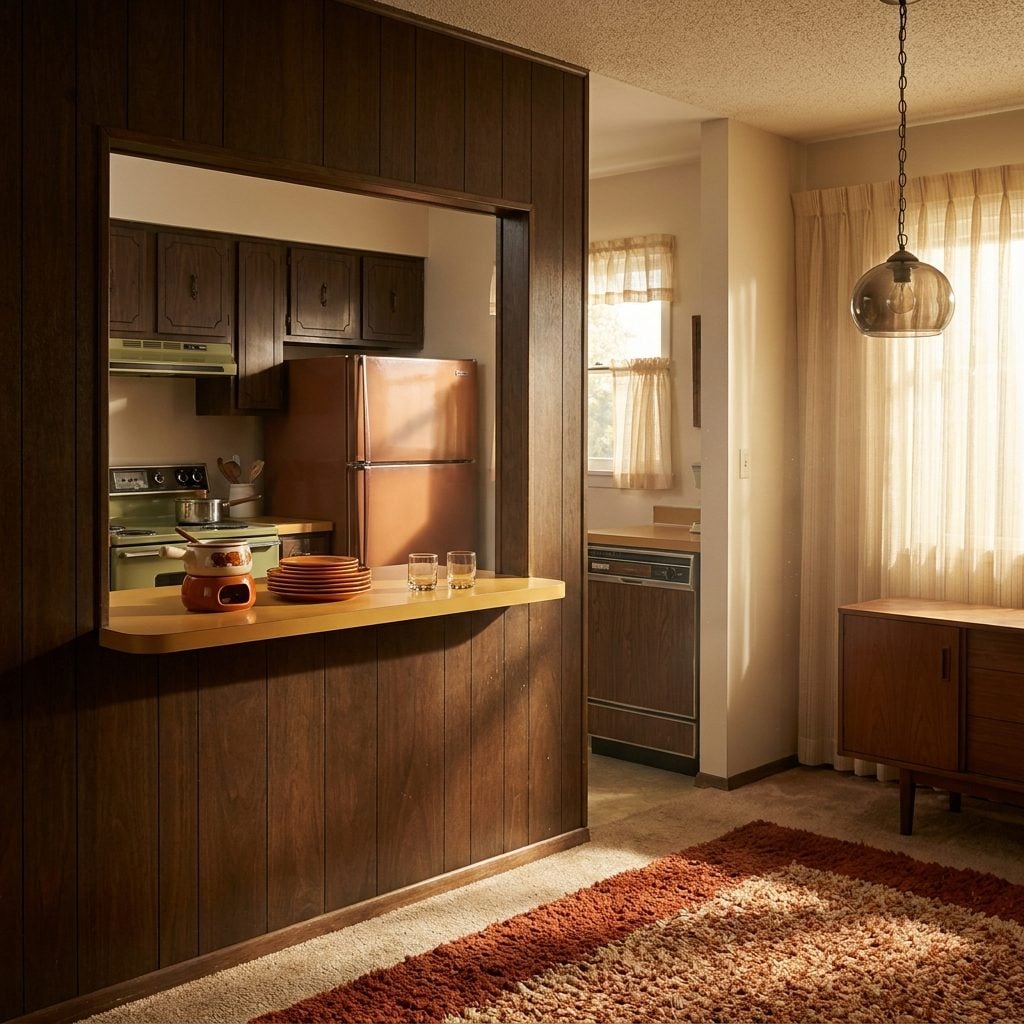
The burgers could stay in the kitchen. The conversation did not have to.
A pass-through opened the kitchen toward the den or dining room while leaving enough wall below to screen some of the dirty dishes, prep clutter, and evidence that dinner had not materialized by magic.
Open plans made the pass-through less necessary by removing the wall altogether. But the old half-measure had an advantage: connection without total exposure. The kitchen is already the room everyone drifts toward at a party. Sometimes one large opening was enough.
9. The Trash Compactor That Made a Bag of Garbage Considerably Smaller
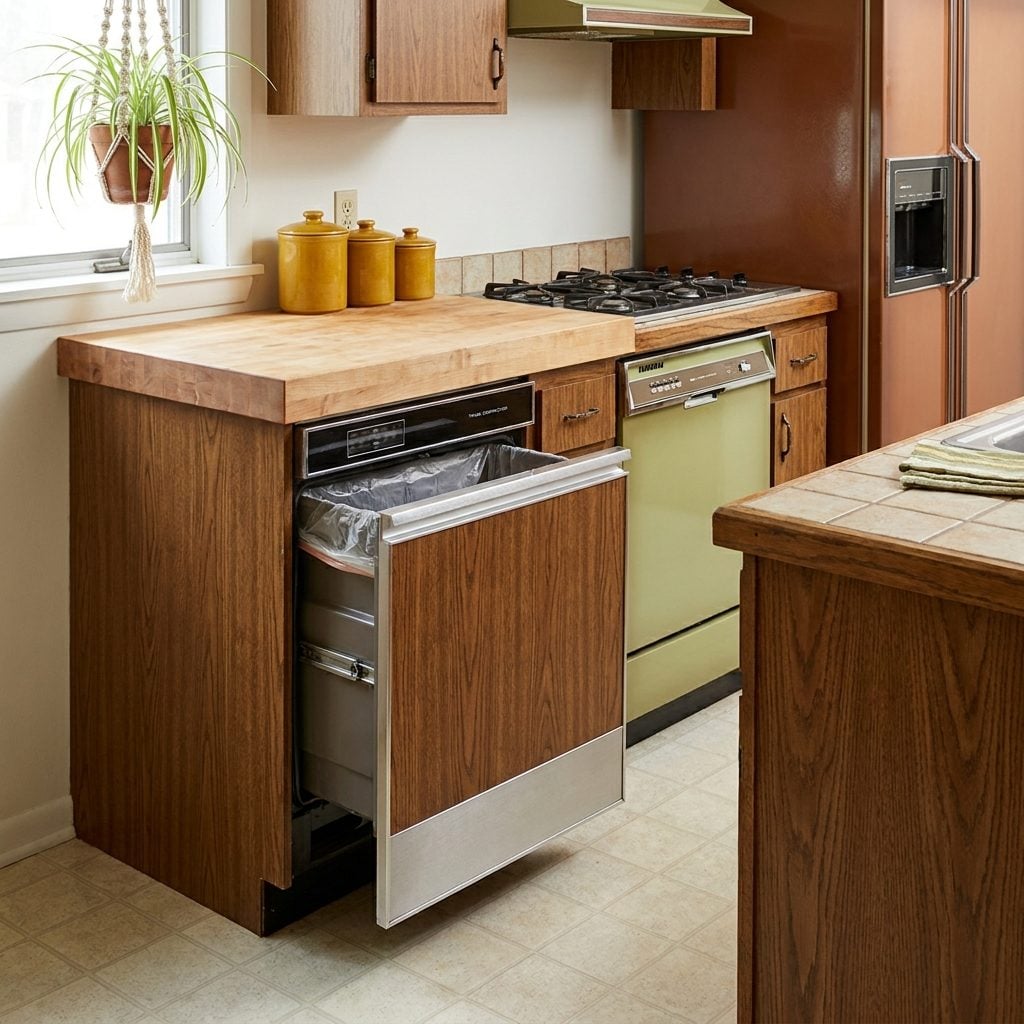
A built-in compactor did exactly what the name promised: compressed loose household trash into a much denser load, reducing the volume occupying the bin.
Changing recycling habits, sorting requirements, smell concerns, and the loss of valuable cabinet space all helped make the appliance less common. Still, the basic impulse was sound. The kitchen had created the waste, so the kitchen contained a machine designed to make dealing with it less annoying.
8. The Desk Nook That Gave Household Clutter an Address
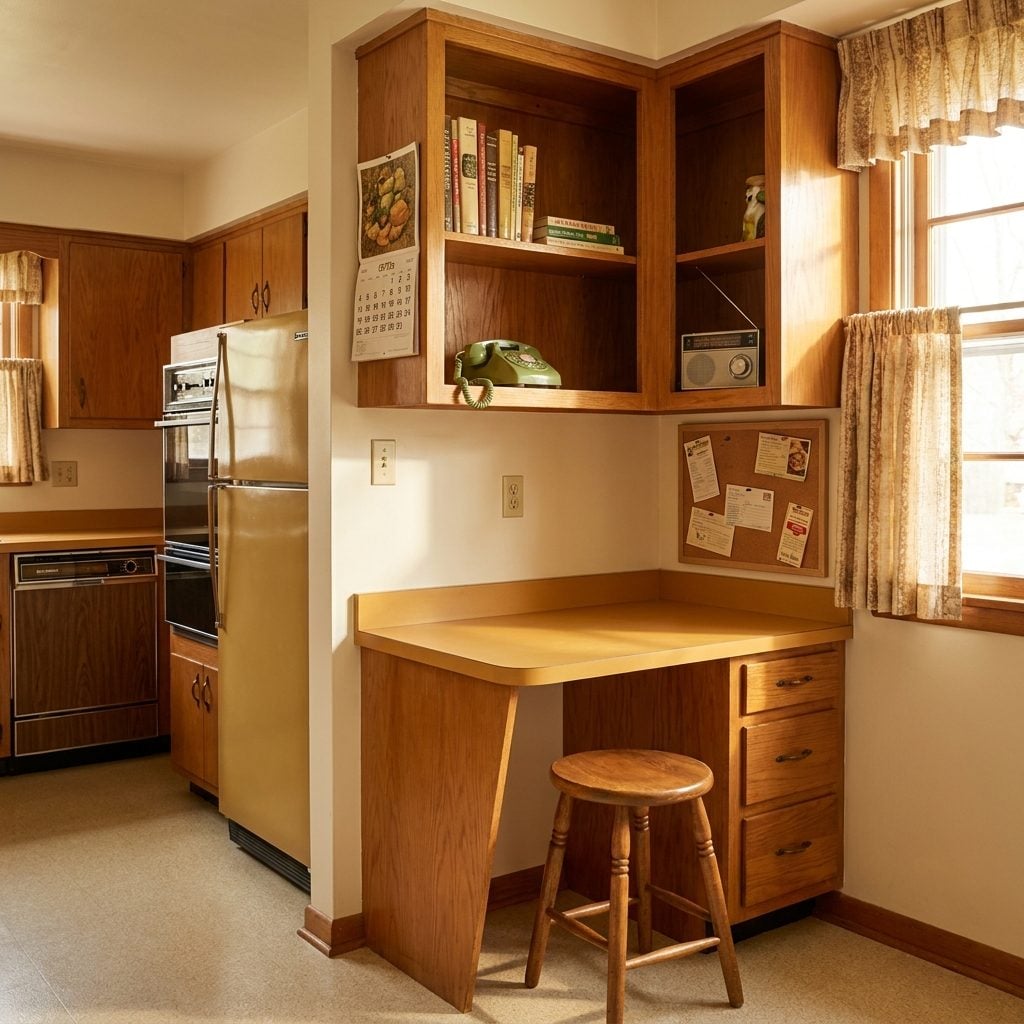
The phone lived there. Bills landed there. Recipe cards, calendars, school notices, grocery lists, envelopes, pens, and whatever else otherwise would have spread across the counter could be given a small desk of their own.
The nook sacrificed a little cabinet volume in exchange for a seated work surface inside the busiest room of the house. As layouts changed, many of these disappeared in favor of more storage.
The paperwork did not disappear with them. It simply found the island.
7. The Bright, Unapologetic Color That Refused to Fade Into the Background
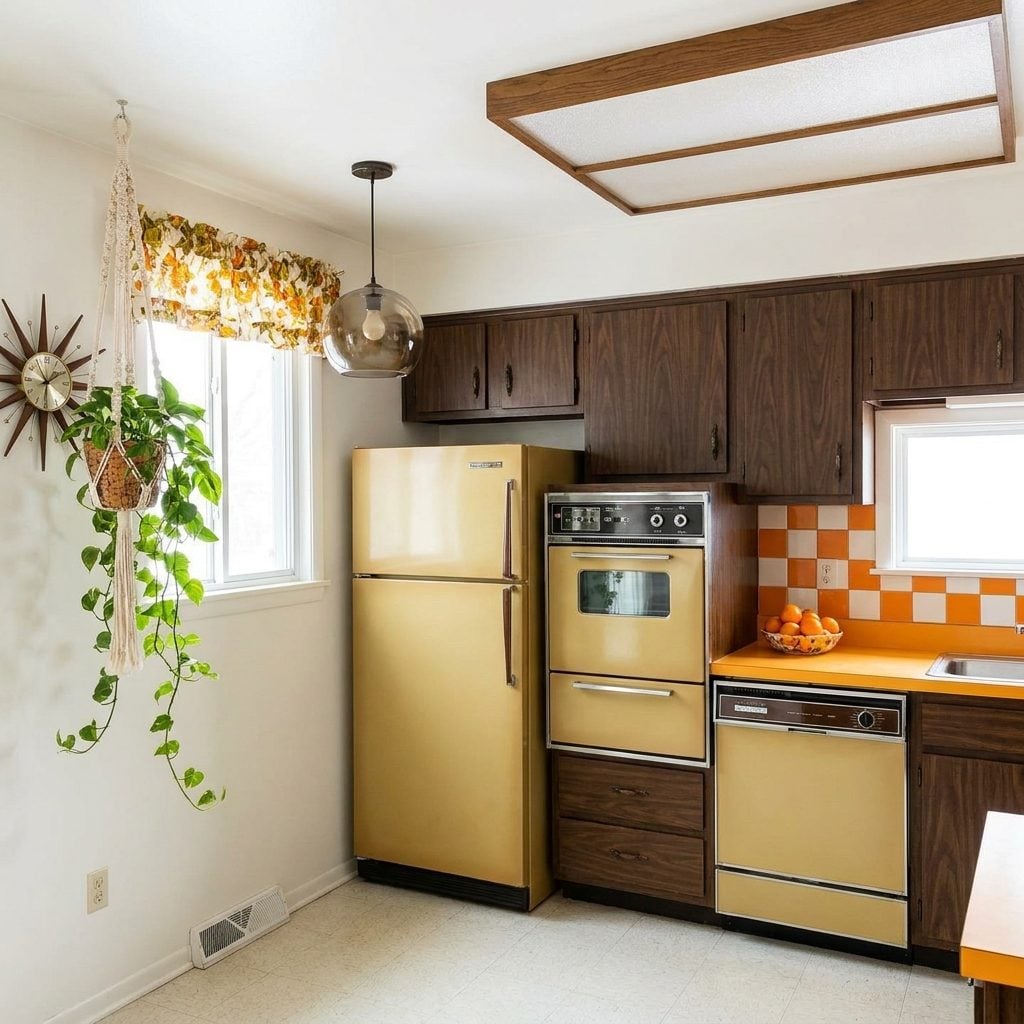
The 1970s kitchen was not afraid of you. Harvest gold. Avocado. Coppertone. Orange. The appliances could participate, the counters could participate, and the cabinets occasionally seemed determined to join the argument too.
Later kitchens spent decades retreating toward white, cream, gray, and greige. Nothing wrong with a clean white kitchen design, but saturated color gives a room an identity before the fruit bowl arrives.
Color is a mood decision. The 1970s simply made the decision loudly.
6. The Deep Double Sink That Let Two Jobs Happen at Once
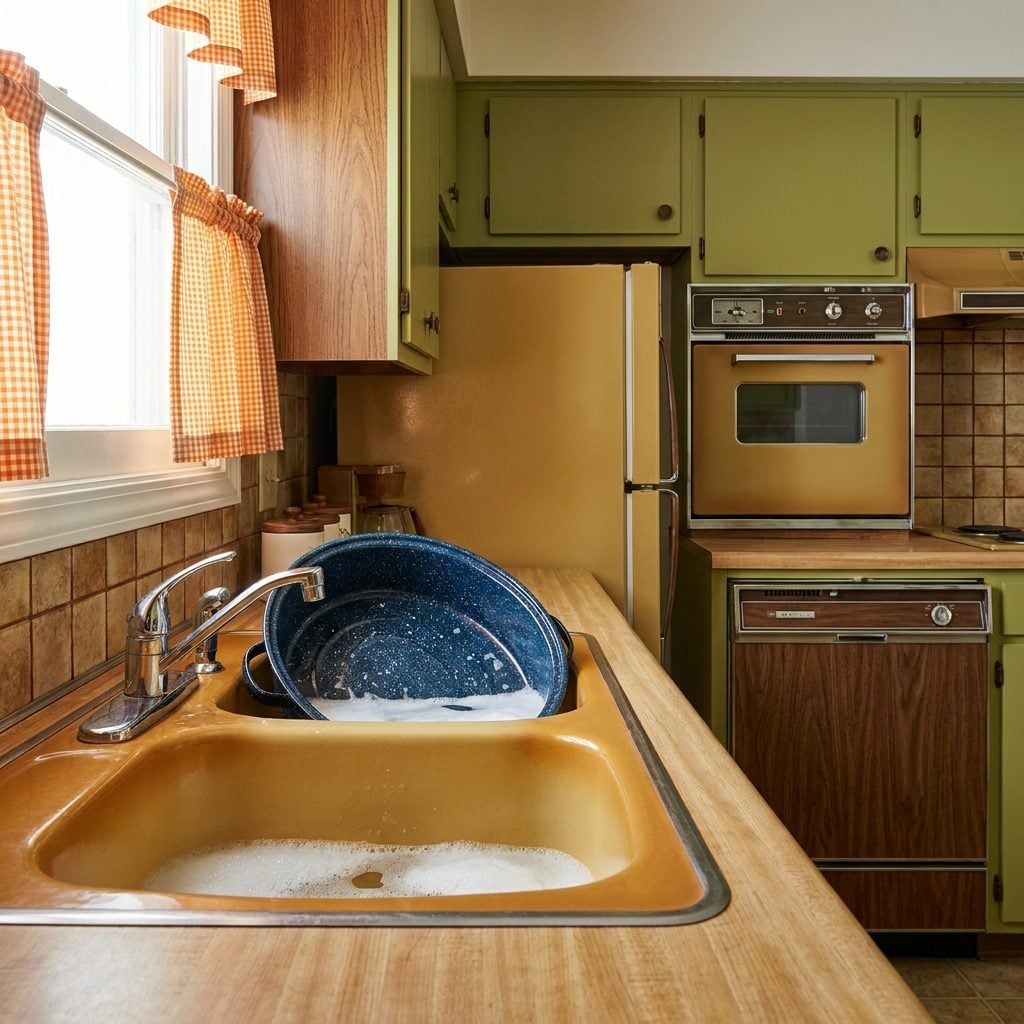
A large roasting pan could soak in one basin while the other remained free for rinsing vegetables, washing glasses, or dealing with everything else dinner had produced.
Many substantial sinks of the period were enameled cast iron, giving them enough mass to feel practically geological once installed. Two deep basins divided the work naturally: dirty on one side, clean on the other.
Single-bowl sinks offer their own advantages, especially for oversized cookware. But the old double basin was not indecisive. It knew exactly why it had two sides.
5. The Lazy Susan That Made the Worst Cabinet in the Kitchen Behave
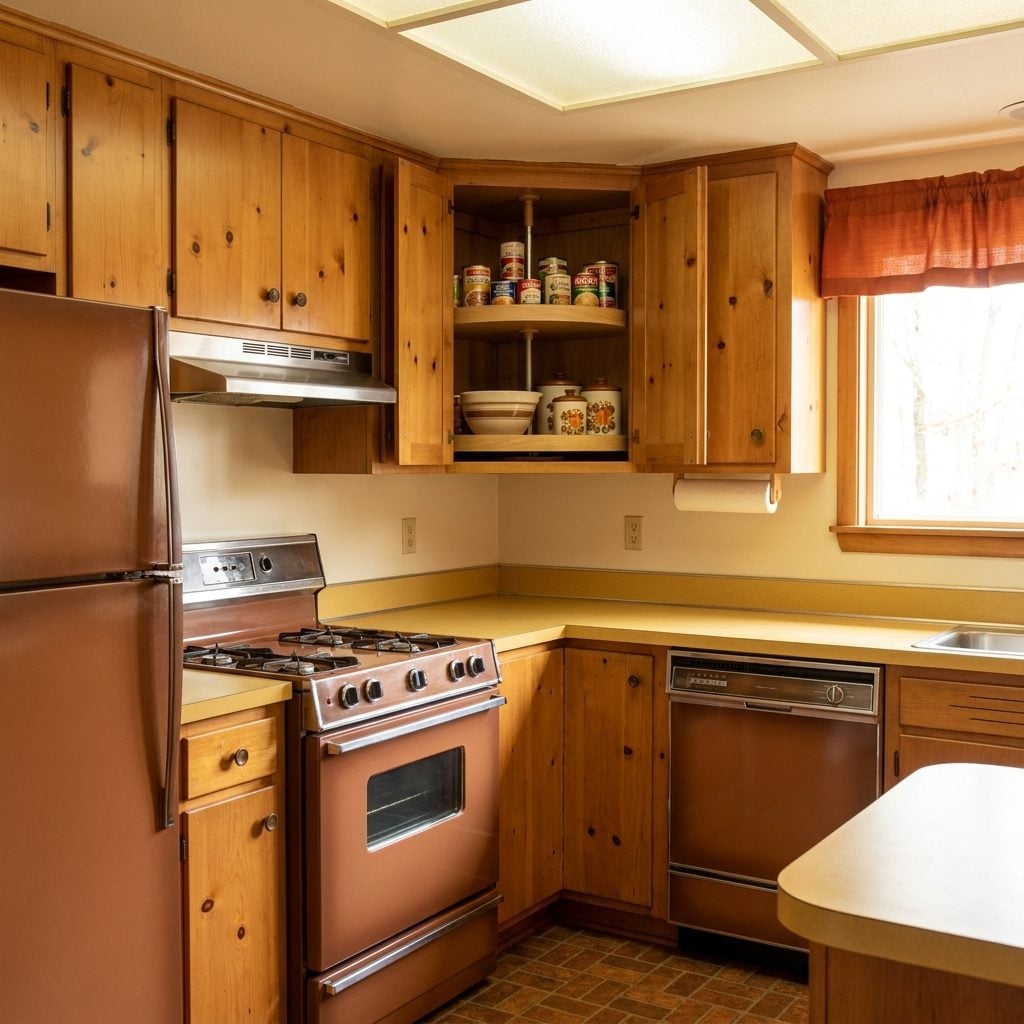
Spin the shelf and the can hiding in the darkest corner came back around without requiring an excavation.
The lazy Susan attacked one of cabinetry’s oldest problems: a corner deeper than anyone’s arm. Rotating shelves on a center pole brought the rear of the cabinet forward instead of asking the cook to crawl toward it.
Newer corner systems can be cleverer and more elaborate. The old rotating circle wins points for explaining itself immediately.
4. The Spice Rack Hidden on the One Surface Cabinets Usually Waste
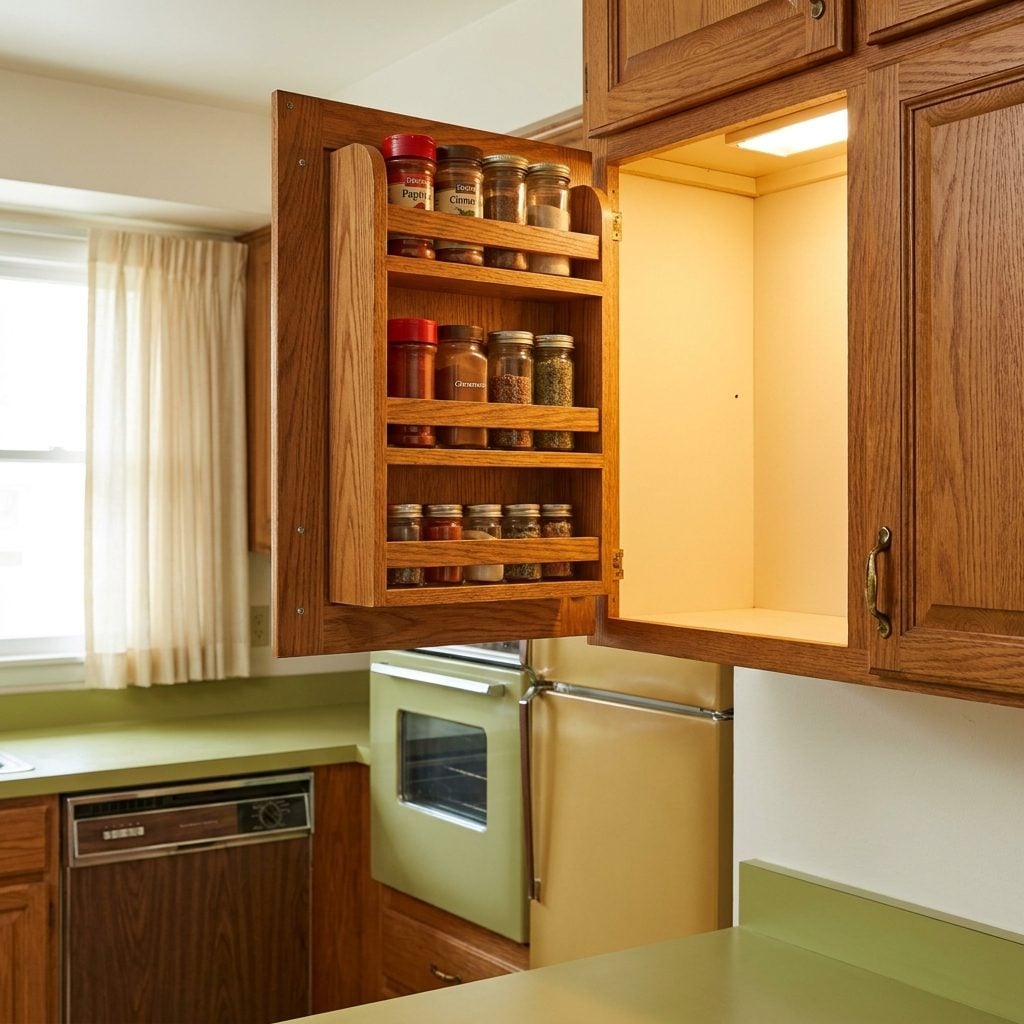
Open the cabinet and every spice label is suddenly facing you from the inside of the door. No rummaging through a drawer full of identical lids. No coriander vanishing behind the paprika until 1984.
Small wooden ledges claimed a vertical surface that otherwise did almost nothing. The counter remained clear, the jars stayed visible, and the storage occupied virtually no floor or counter footprint.
3. The Vinyl Floor That Had a Little Give When Everything Else Didn’t
🔥 Would you like to save this?
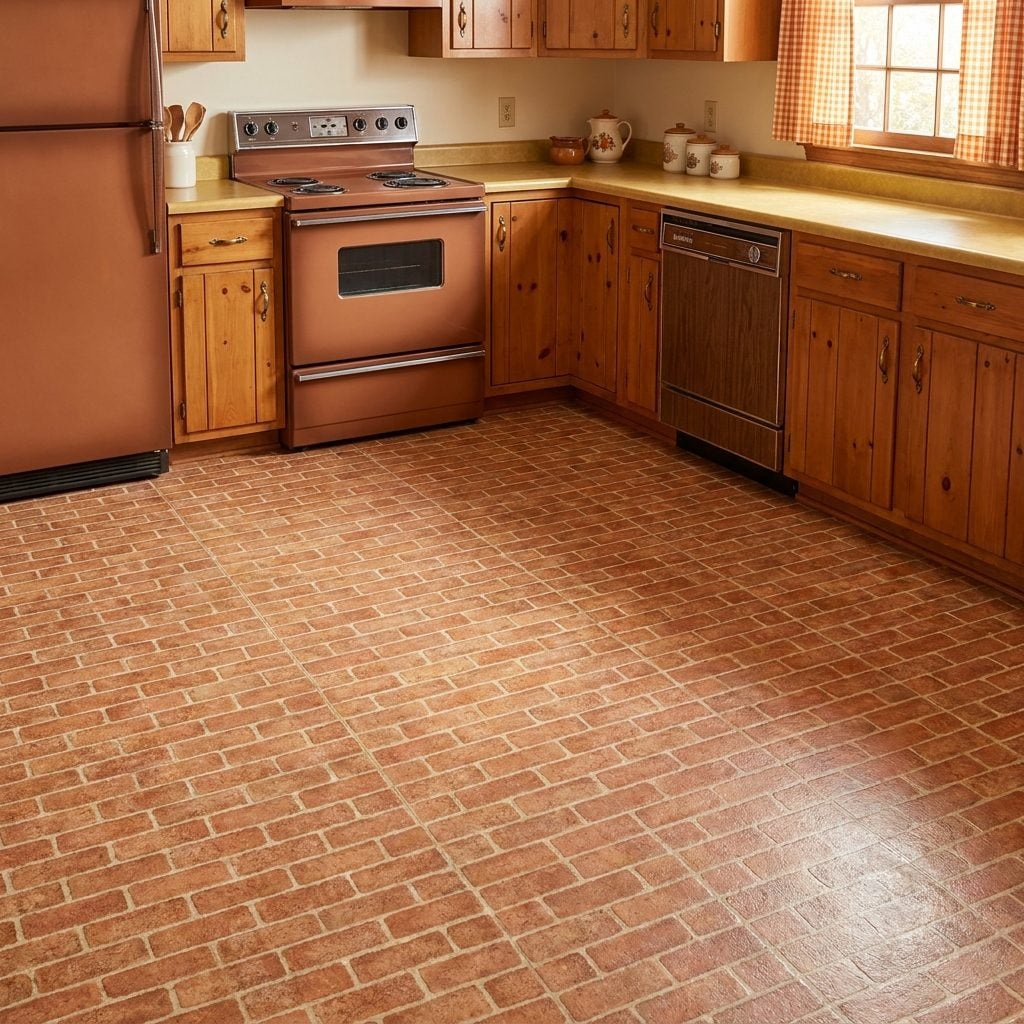
Glasses fell. Plates slipped. Casserole dishes had bad days. Cushioned sheet vinyl offered more give than hard stone or porcelain and felt noticeably less punishing underfoot during long stretches at the counter.
It also came in patterns busy enough to disguise crumbs, scuffs, and muddy traffic from the backyard. Faux brick, pebbles, grids, florals — discretion was apparently available by the yard.
A mop could reset the whole room. Nobody had to explain to the floor that kitchens are messy places.
2. The Kitchen Conversation Corner That Gave Company Somewhere to Stay
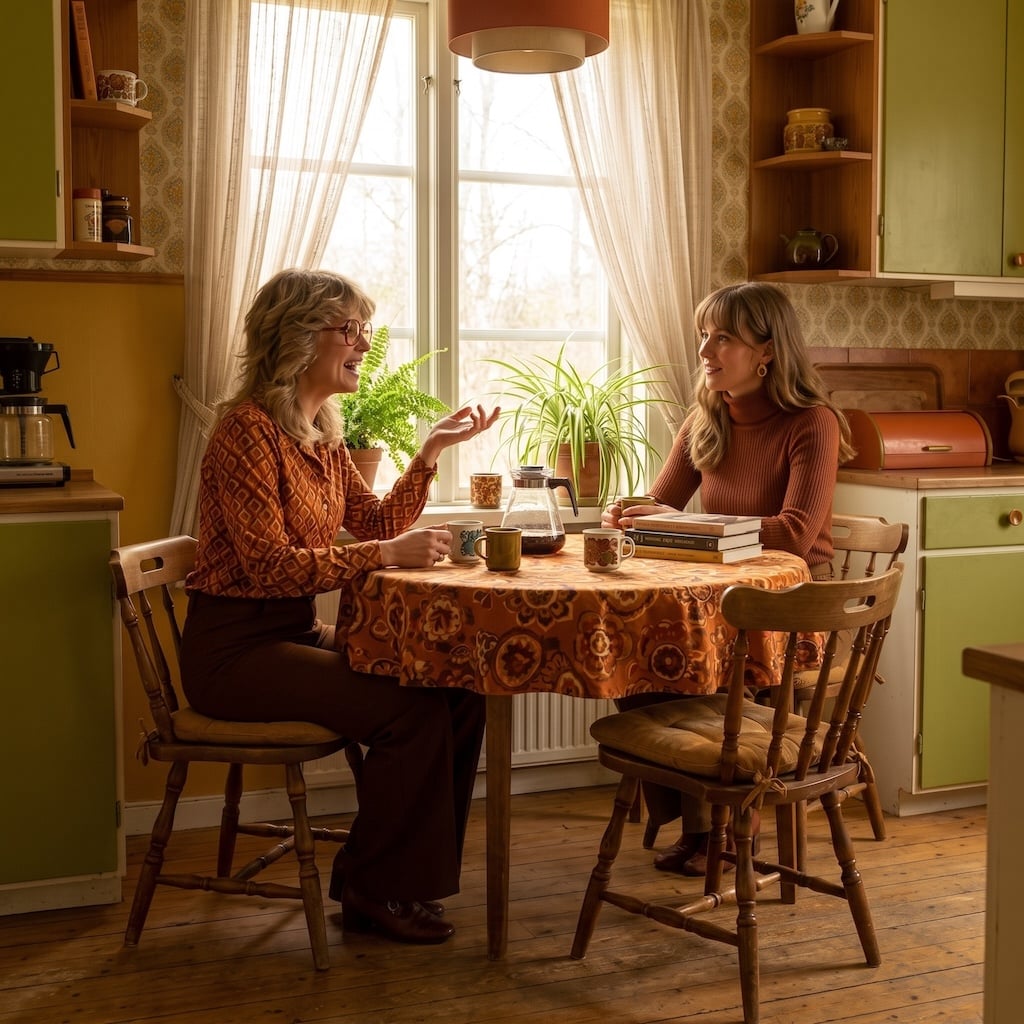
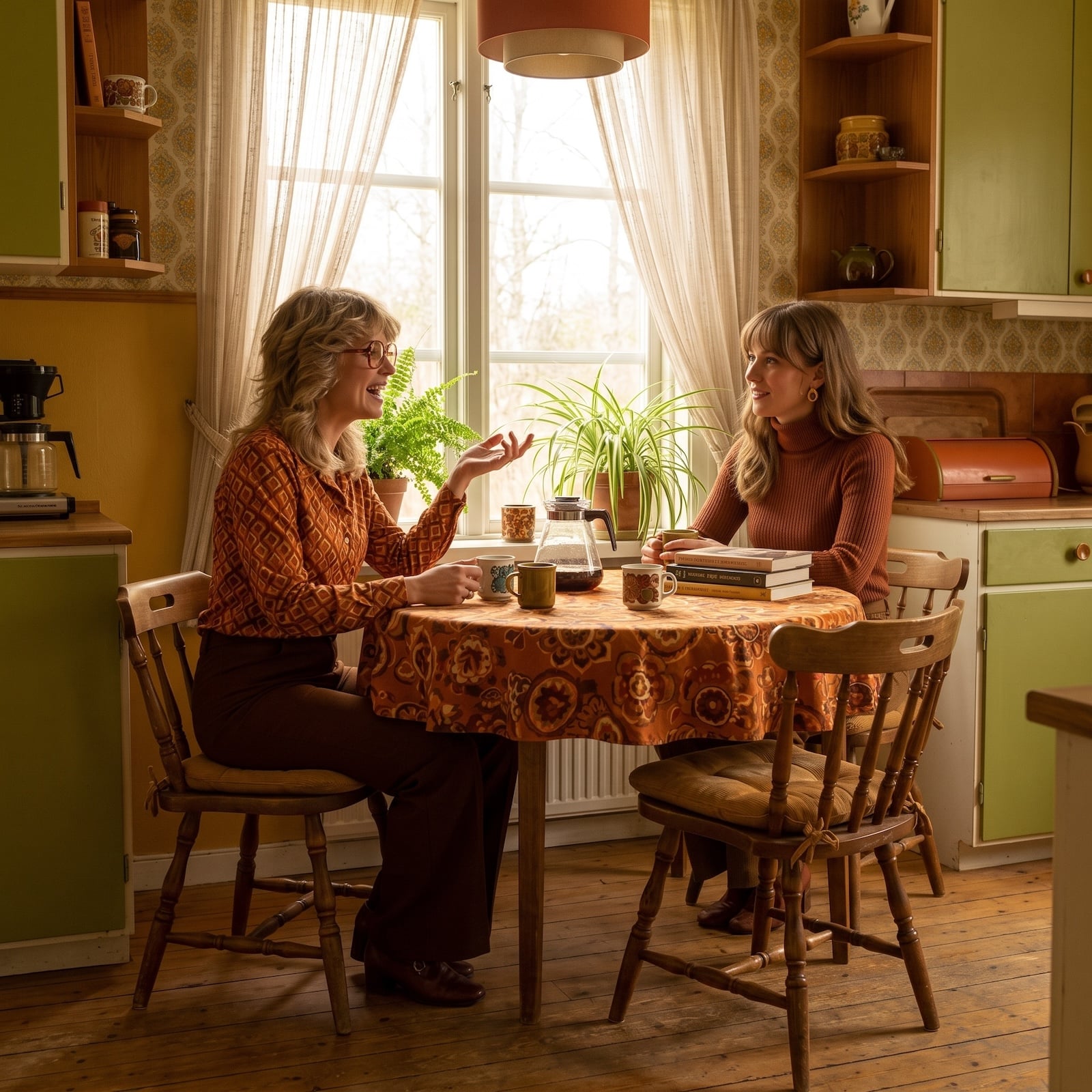
Two chairs and a little table in the corner. That was enough.
A neighbor could drink coffee there. Someone could sit with the paper, knit, talk, peel vegetables, or simply keep the cook company without being assigned a stool on the far side of a monumental island. The room made space for another person without making that person part of the work crew.
Open concept eventually connected the kitchen to almost everything, yet there is something different about having company close enough to carry on one quiet conversation while dinner happens. No television required. No entertainment zone. Just a chair, another chair, and the radical notion that the person cooking might enjoy someone nearby.
The little corner did not need to entertain anybody. It only needed to keep people close.
1. The Kitchen Designed Around Cooking Instead of Looking Untouched
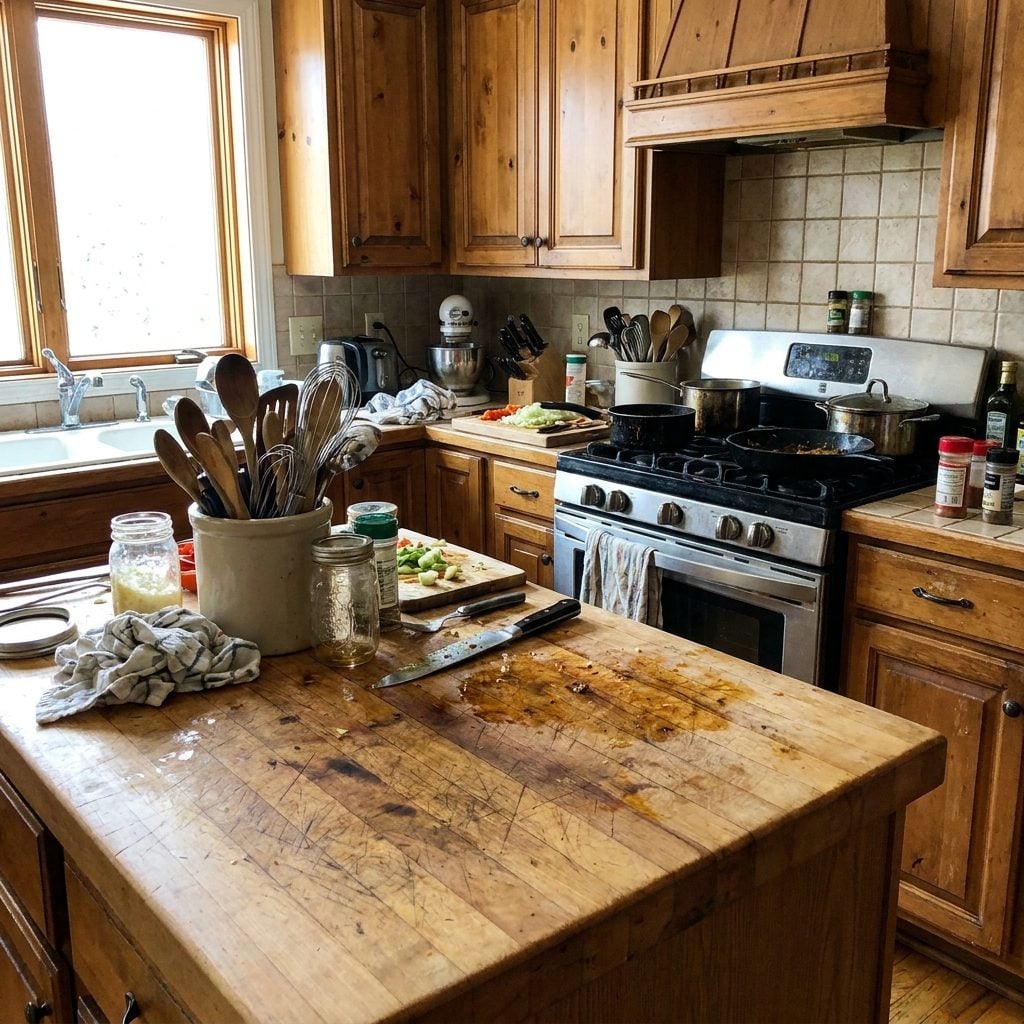
Here is where all 26 ideas before it finally meet.
The butcher block could show knife marks. Utensils could stay out because somebody was going to use them again in four hours. The floor could survive a dropped pot. The lighting was allowed to be bright. A chair could exist simply because someone wanted to sit down. Storage followed the motion of cooking instead of disappearing for the sake of a perfectly blank wall.
The strongest 1970s kitchens were not great because they were gold, brown, brick, laminate, fluorescent, or covered in avocado appliances. They were great when every square foot seemed to understand that food would be chopped there, water would be spilled there, children would wander through, somebody would arrive late, and people would inevitably stand around talking while dinner took longer than expected.
That is the part worth stealing back. Not the color palette. Not the nostalgia. The permission for a kitchen to look as though life actually happens in it.