🔥 Would you like to save this?
The 1970s basement bar was suburbia’s answer to a downtown cocktail lounge, minus the overpriced drinks and with considerably more wood paneling. Upstairs, the family television and sensible furniture carried on with domestic life. Downstairs, amber glass glowed, chrome caught the light, and a shag-carpeted corner acquired the swagger of a cocktail lounge. The distance between the two worlds was one flight of stairs. The difference in ambition was enormous.
Nothing about these bars was subtle. A mirrored wall could turn six liquor bottles into twelve. A brass foot rail gave an ordinary counter the authority of a neighborhood tavern. Cocktail shakers, novelty glasses, cigarette boxes, and colored pendant lights announced that entertaining was serious business, even when the drinks involved crème de menthe and a blender with fourteen buttons.
In order to come up with the very specific design ideas, we create most designs with the assistance of state-of-the-art AI interior design software. Also, assume links that take you off the site are affiliate links such as links to Amazon. this means we may earn a commission if you buy something.
And the people? They were the whole point. A bar built for four stools could attract ten standing guests, all talking over one another while the stereo competed for attention. These 37 details capture the furniture, gadgets, questionable decorating decisions, and genuine social pleasures that made the 1970s home bar an institution. Some deserve a comeback. Others belong exactly where the decade left them.
37. The Wood-Paneled Bar That Turned a Basement Into a Private Club
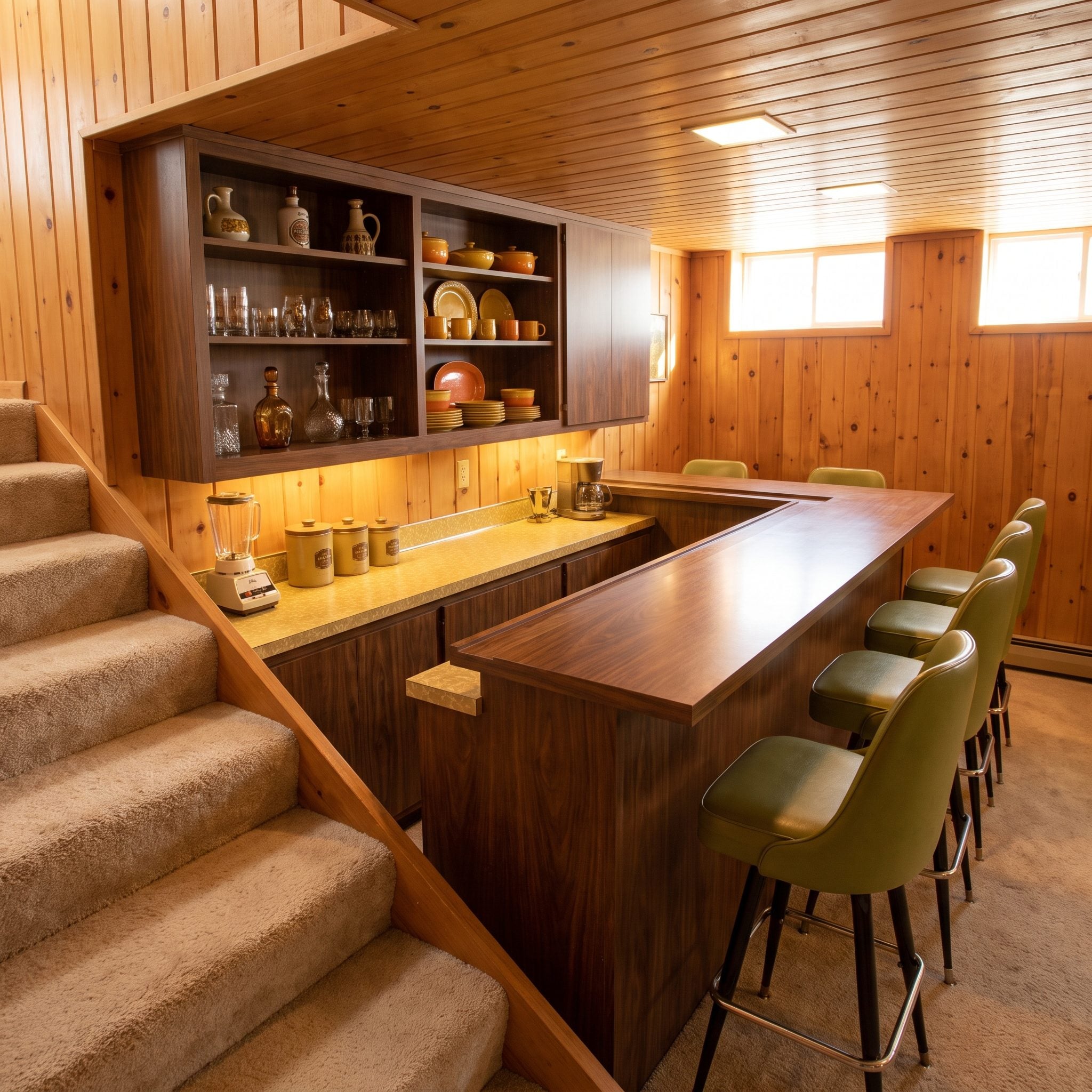
Somewhere between the furnace room and the family television, the basement acquired a bar. Not a cart, not a cabinet, but an actual counter with shelves, stools, and enough wood-grain paneling to make a lumberyard feel underdressed. The transformation was immediate. Ordinary basement space suddenly had ambitions above its station.
Faux walnut, honey oak, and dark-stained finishes created the atmosphere of a neighborhood tavern without the expense of building one. The counter established a place for serving drinks, while the surrounding paneling made the whole corner feel deliberately separate from the rest of the house. A private club, essentially, with the washing machine somewhere beyond the next wall.
What Our Readers Say
- Wood still sets a mood: readers who picked wood ceilings chose a cosy and moody overall home feel 72% of the time, vs 26% of everyone else.
- In our Hot or Not photo matchups, living rooms with dark wood tones won more of their head-to-head matchups than expected, 59% against an expected 53%.
From Home Stratosphere reader polls and votes.
36. The Stereo Console That Made the Basement Its Own Radio Station
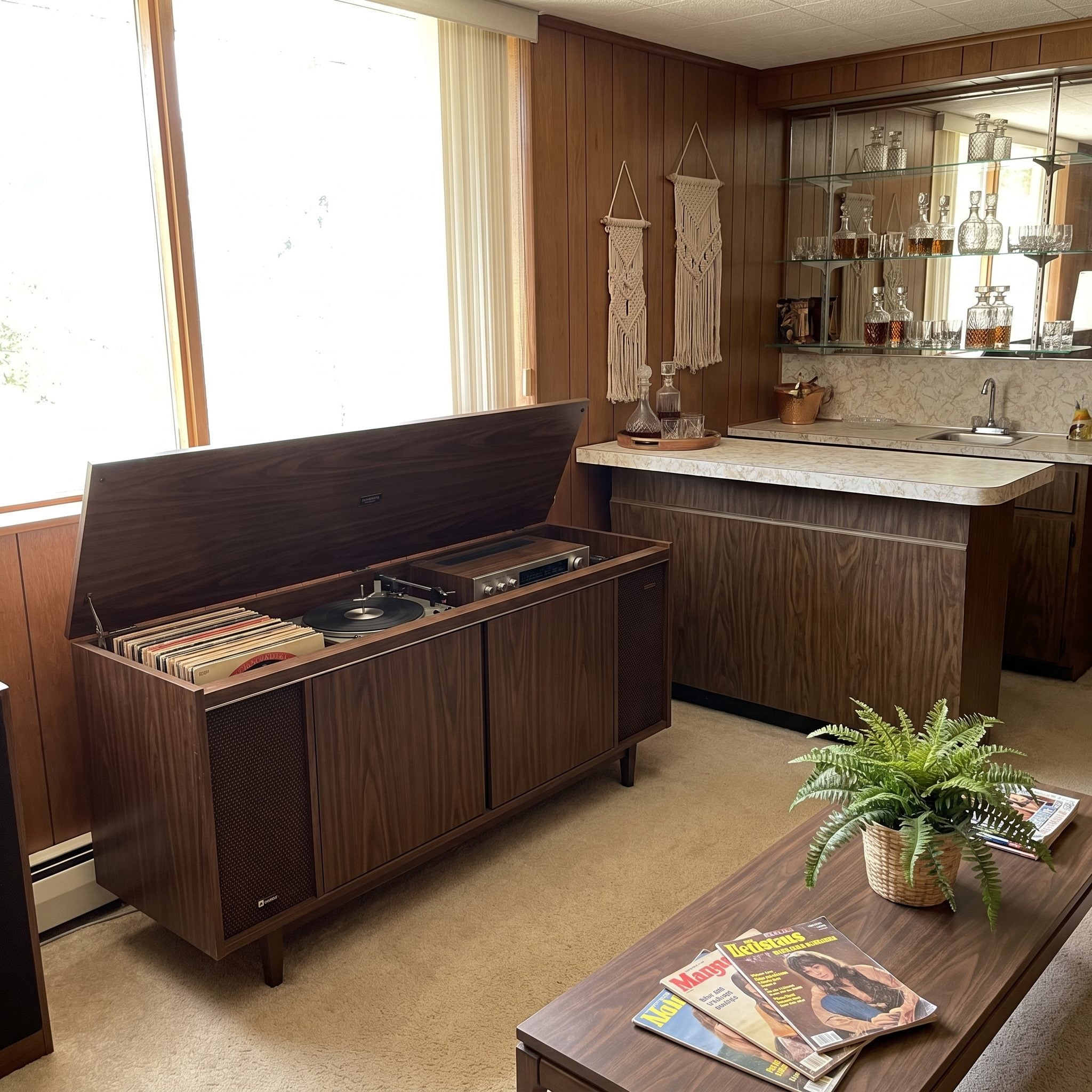
The stereo console occupied a remarkable amount of furniture for something whose principal job was making noise. A walnut cabinet stretched along the wall, concealing a record player, amplifier, and speakers beneath a lid that opened like the hood of a respectable automobile.
These all-in-one systems were prominent in midcentury homes, although separate stereo components gained ground during the 1970s. Either arrangement gave the basement bar something indispensable: a soundtrack. Soul, rock, jazz, and eventually disco could change the room’s character without anyone moving a chair. The person controlling the records wielded almost as much influence as the person pouring the drinks.
35. The Swivel Bar Stools That Nobody Could Sit Still On
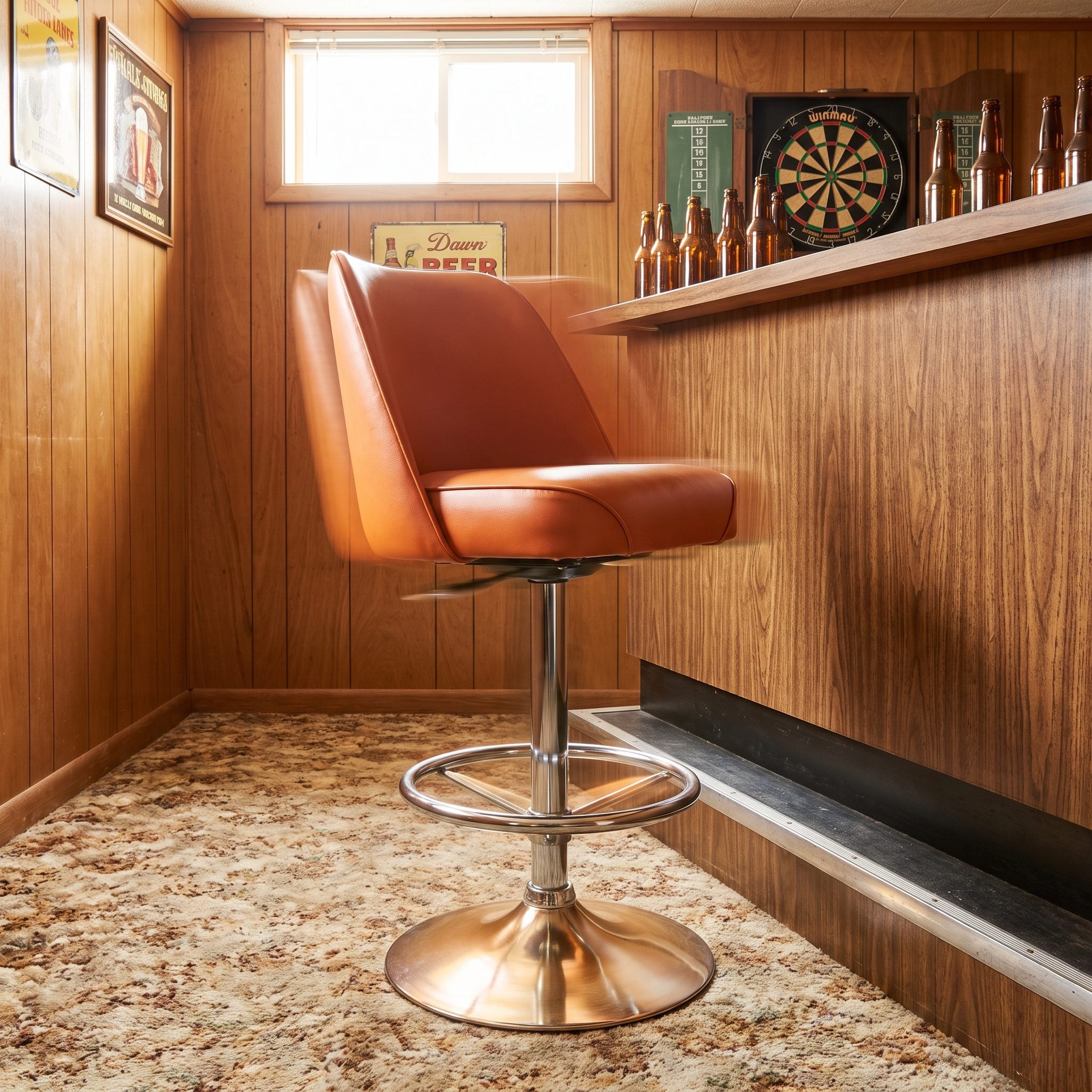
What distinguished a proper bar stool from an ordinary chair? The ability to rotate through 360 degrees while contributing absolutely nothing to the conversation. Swivel stools were irresistible furniture, particularly when upholstered in thick vinyl and mounted on shiny chrome or brass-tone bases.
Tufted cushions, rounded backs, and padded seats borrowed their appearance from commercial lounges. The swivel made them practical, allowing guests to turn toward the counter or the room without getting up. It also introduced an entirely unnecessary but thoroughly enjoyable mechanical feature to the act of sitting down.
34. Amber and Avocado Glassware That Made Clear Glass Look Underqualified
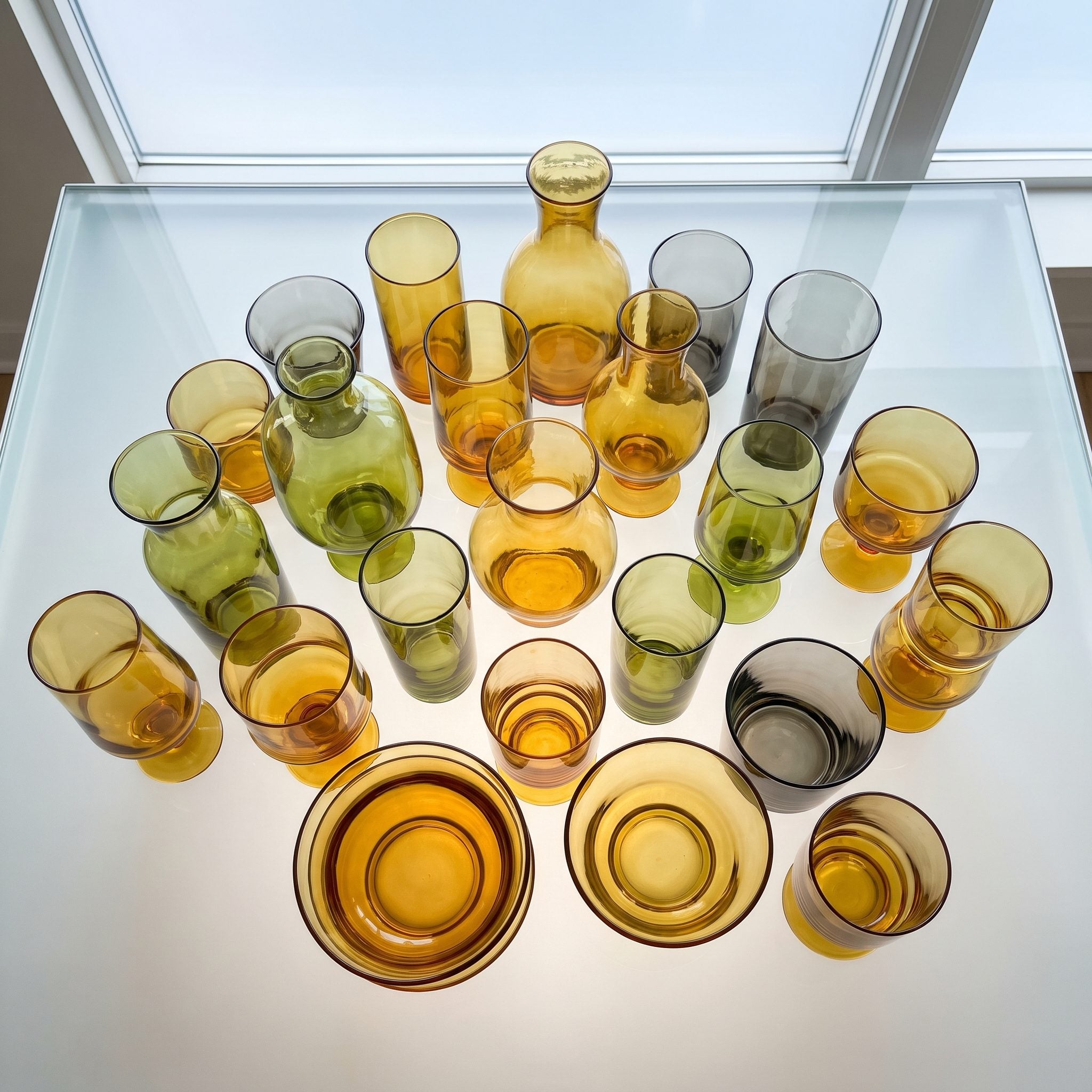
Why serve a perfectly good drink in clear glass when it could emerge from a tumbler the color of an overripe avocado? The 1970s embraced amber, smoky gray, olive green, and gold with an enthusiasm that extended from kitchen appliances to the bar shelf.
Pressed patterns, hobnail textures, and faceted surfaces gave these glasses plenty of personality. Matching sets could coordinate with the room’s carpet or upholstery, although the results were not always an exercise in restraint. A whiskey sour in an amber tumbler looked as though it had been designed to match the wallpaper. Frequently, that was the appeal.
33. The Swag Lamp That Hung From the Ceiling Like a Declaration
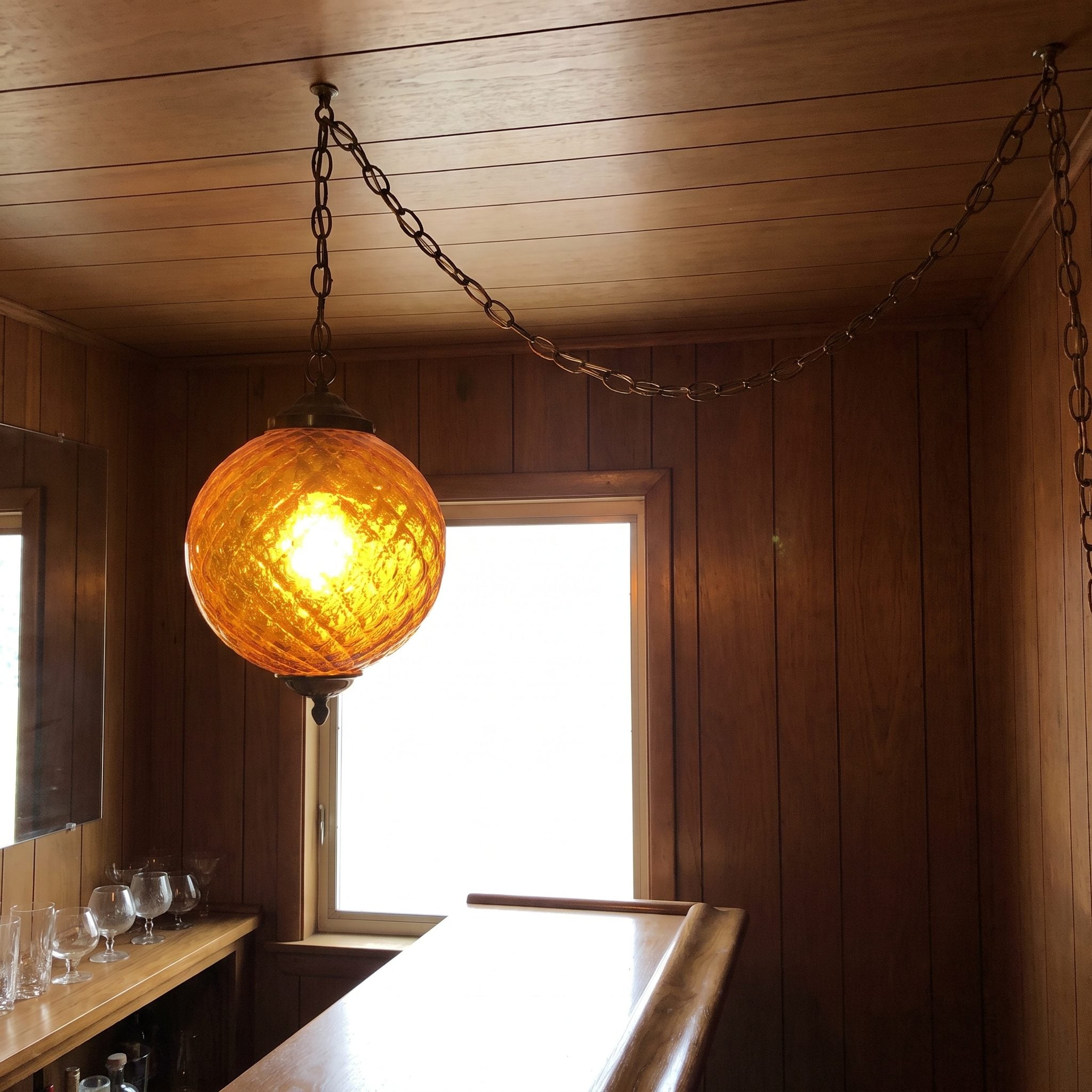
The swag lamp refused to hide its wiring. A chain looped across the ceiling, descended over the counter, and suspended a shade that might have been amber glass, woven material, or textured plastic. The exposed chain was part of the performance.
Unlike a conventional ceiling fixture, a swag lamp could be positioned where its light was most useful. Over a basement bar, that meant bottles glowing beneath a concentrated pool of warmth while the rest of the room retreated into softer shadow. One lamp, a few hooks, and suddenly the basement had mood lighting worthy of a cocktail lounge.
32. The Chrome Cocktail Shaker That Looked Better Than Most of the Drinks
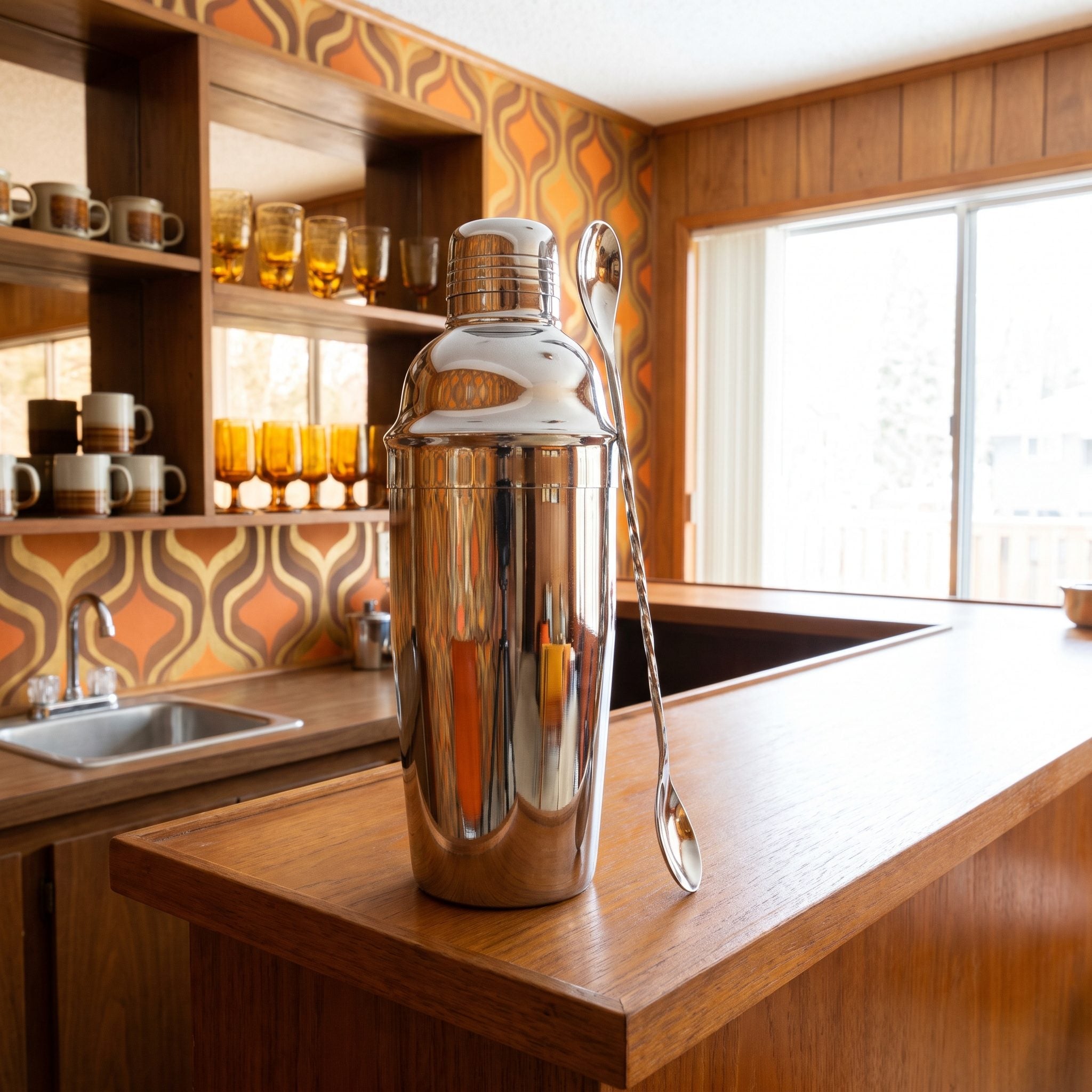
A polished cocktail shaker was the basement bar’s answer to a sports trophy. It gleamed on the counter, reflected the surrounding bottles, and suggested a level of mixological competence that the owner may or may not have possessed.
Its real contribution arrived when ice hit metal. Shaking a cocktail was noisy, physical, and considerably more theatrical than pouring whiskey into a glass. The shaker could earn its place as equipment, but its value as a prop was beyond dispute. Even standing idle, it made the bar look ready for action.
31. Shag Carpet So Deep It Could Swallow a Cocktail Olive
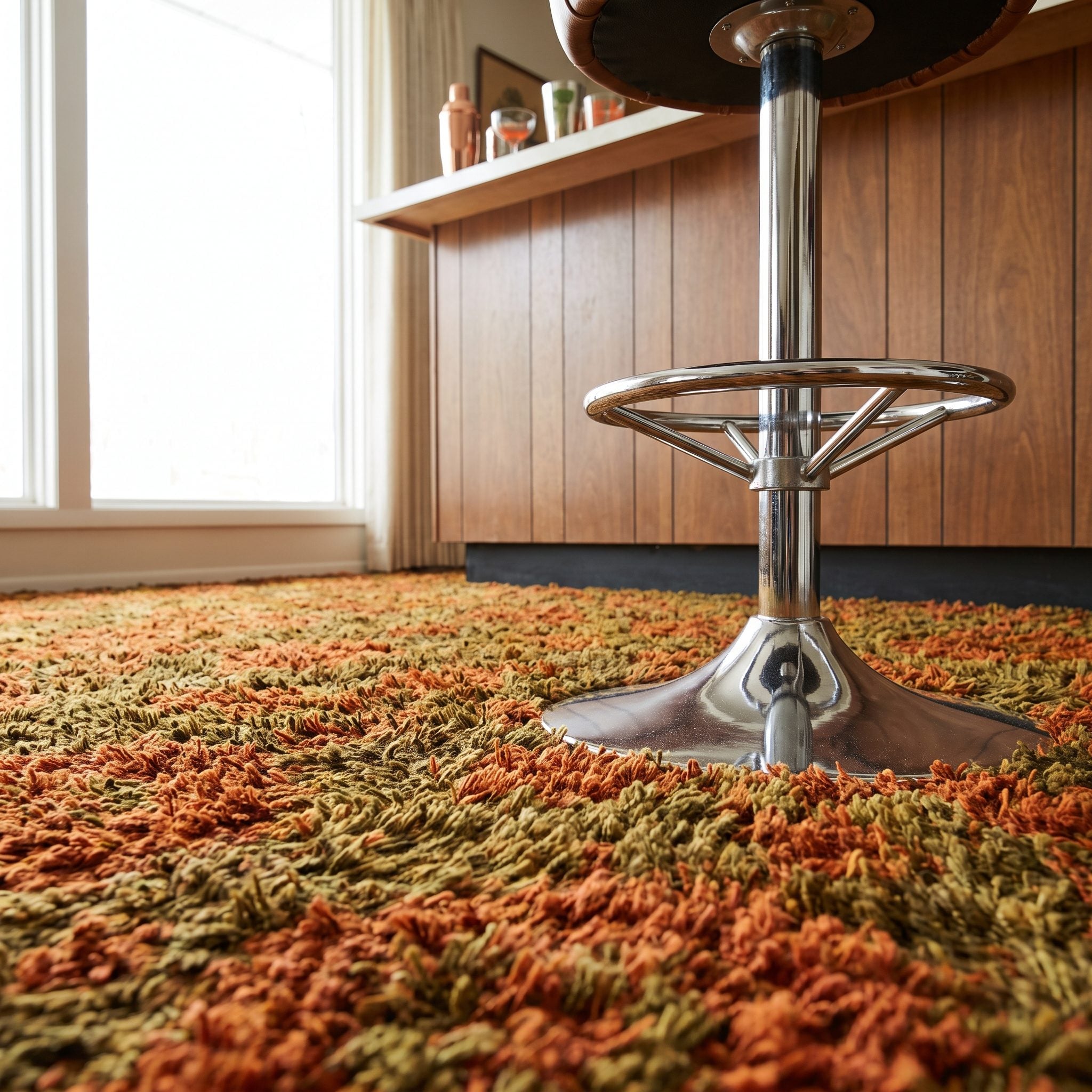
Nothing said 1970s luxury quite like carpeting that required its own grooming equipment. Deep shag came in gold, orange, brown, and avocado, with a pile that could make an ordinary basement feel unexpectedly plush.
Running it right up to the bar stools was a decorating decision that placed atmosphere ahead of housekeeping. Spilled drinks, dropped snacks, and heavy foot traffic were not natural allies of long-pile carpet. Still, the texture softened a room otherwise dominated by laminate, glass, and metal. It was comfortable, unmistakably fashionable, and a spectacularly impractical place to lose a peanut.
30. The Martini and Coupe Glasses That Announced a More Serious Occasion
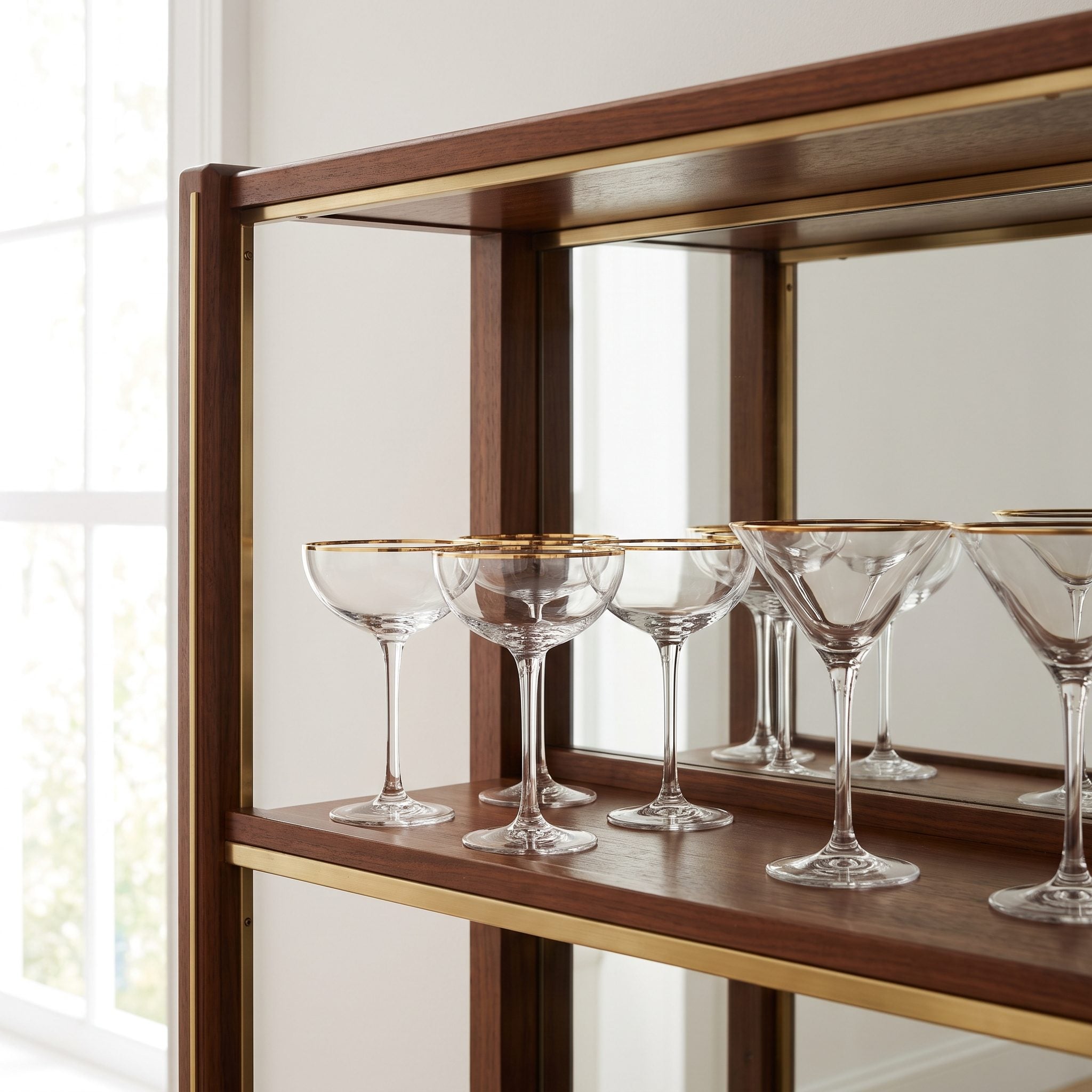
The thick tumbler handled the everyday business of drinking. The delicate stemmed glass suggested something more ceremonial. A coupe or V-shaped martini glass could transform a modest serving into a cocktail that demanded a little attention.
These glasses brought a different silhouette to shelves otherwise occupied by heavy lowballs and decanters. Their narrow stems and broad bowls looked elegant, although they were less forgiving of careless handling. The basement bar might have been surrounded by shag carpet and wood paneling, but its stemware had metropolitan aspirations.
29. The Brass Foot Rail That Gave the Bar Its Professional Credentials
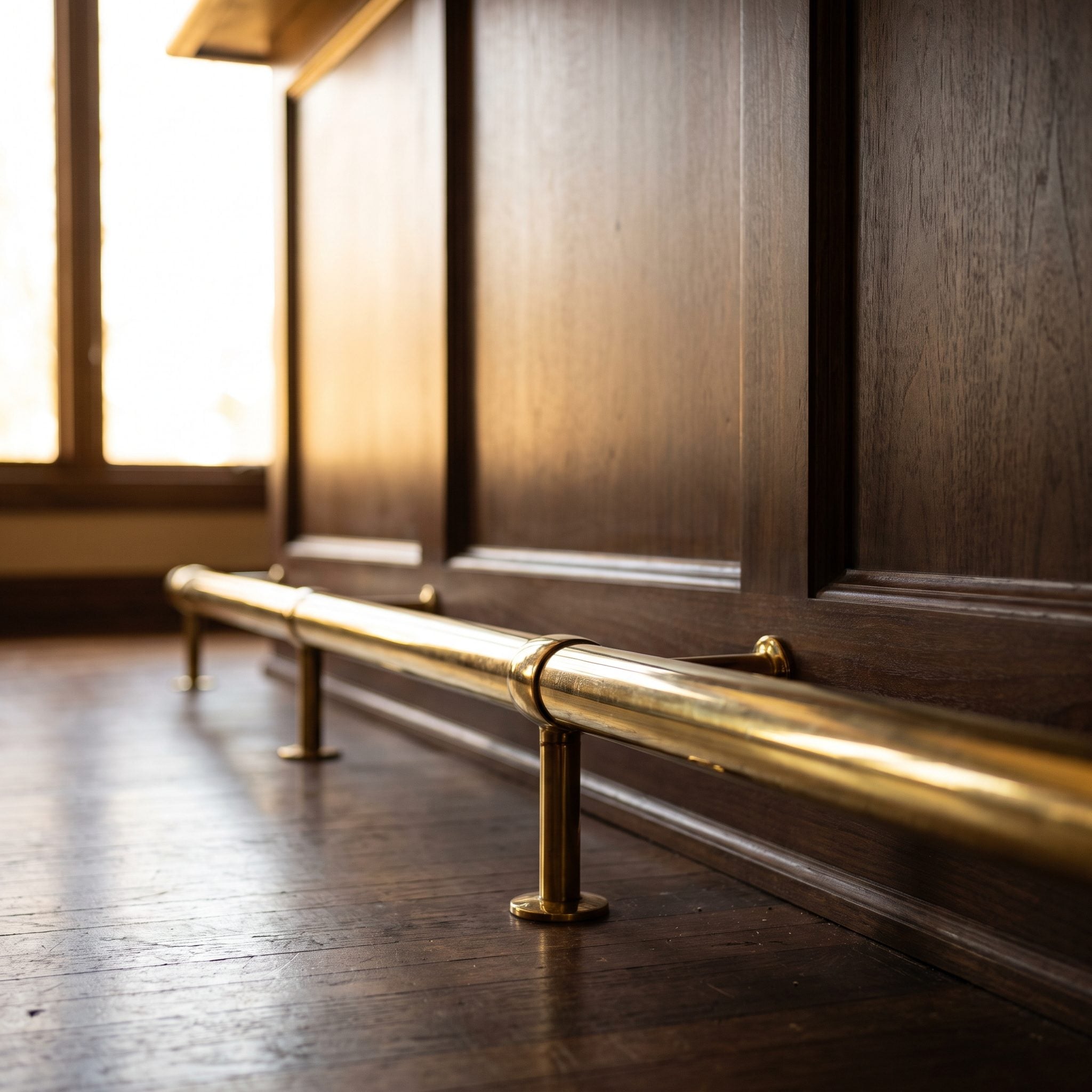
A brass foot rail was a wonderfully specific piece of borrowed sophistication. Commercial taverns had used them for generations, and their arrival in the suburban basement gave the counter an immediate air of legitimacy.
The function was straightforward: a comfortable place to rest one foot while standing at the bar. The visual effect was considerably grander. Polished metal running along the base of a wood-paneled counter suggested a public establishment, even when the only customers were friends and relatives. It was the smallest architectural detail with the biggest ambitions.
28. The Bowl of Party Mix That Outlasted Every Cocktail
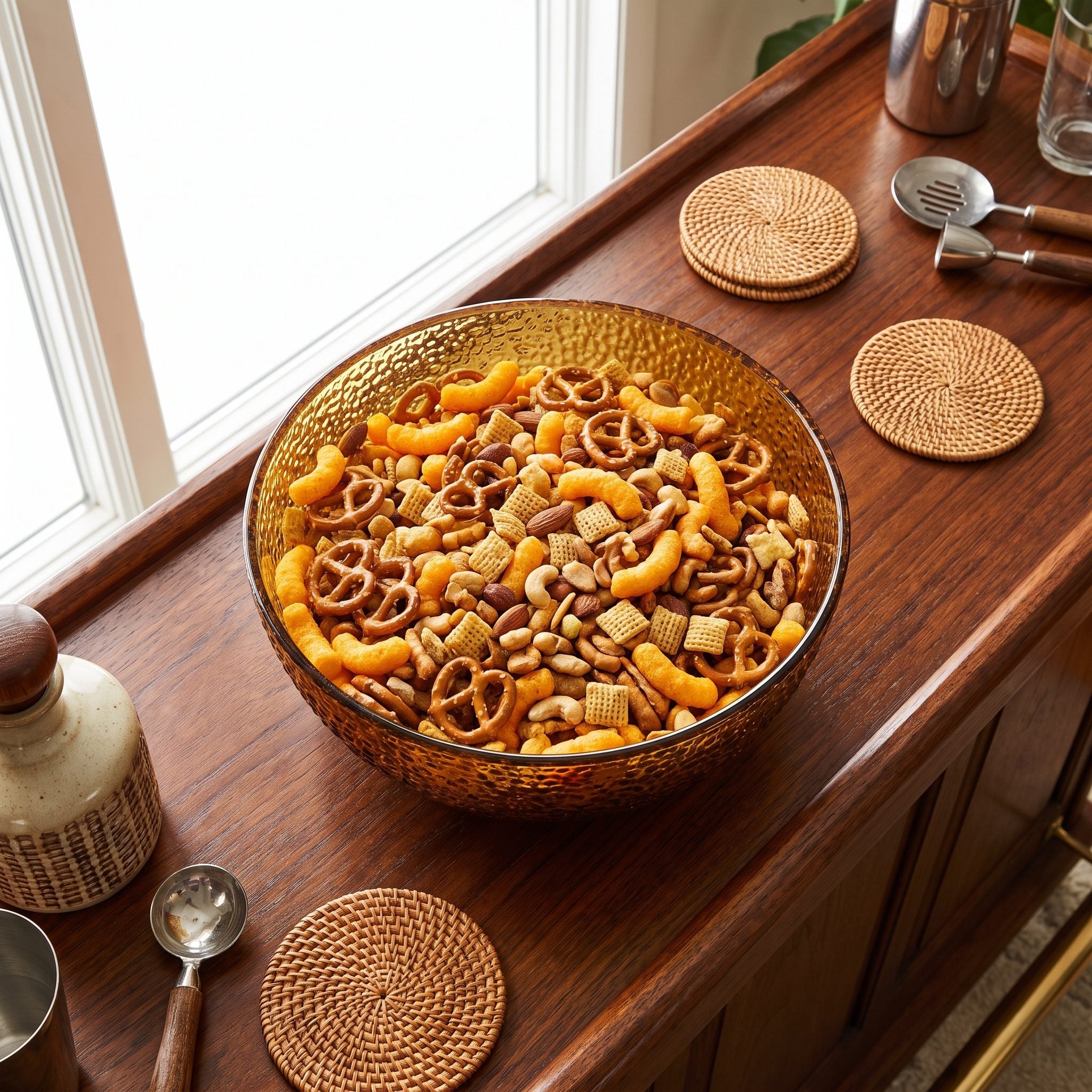
Forget the elaborate cocktails for a moment. The most dependable attraction on the counter may have been a bowl of salted nuts or homemade party mix. Pretzels, cereal squares, crackers, and nuts offered something crunchy between drinks without interrupting the conversation.
Seasoned versions commonly used butter, Worcestershire sauce, and garlic or onion seasoning before a slow bake. Divided dishes added a little presentation to what was essentially an invitation to graze. The bar could run out of vermouth. Running out of snack mix was a different sort of hosting failure.
27. The Mirrored Wall That Made Six Bottles Look Like Twelve
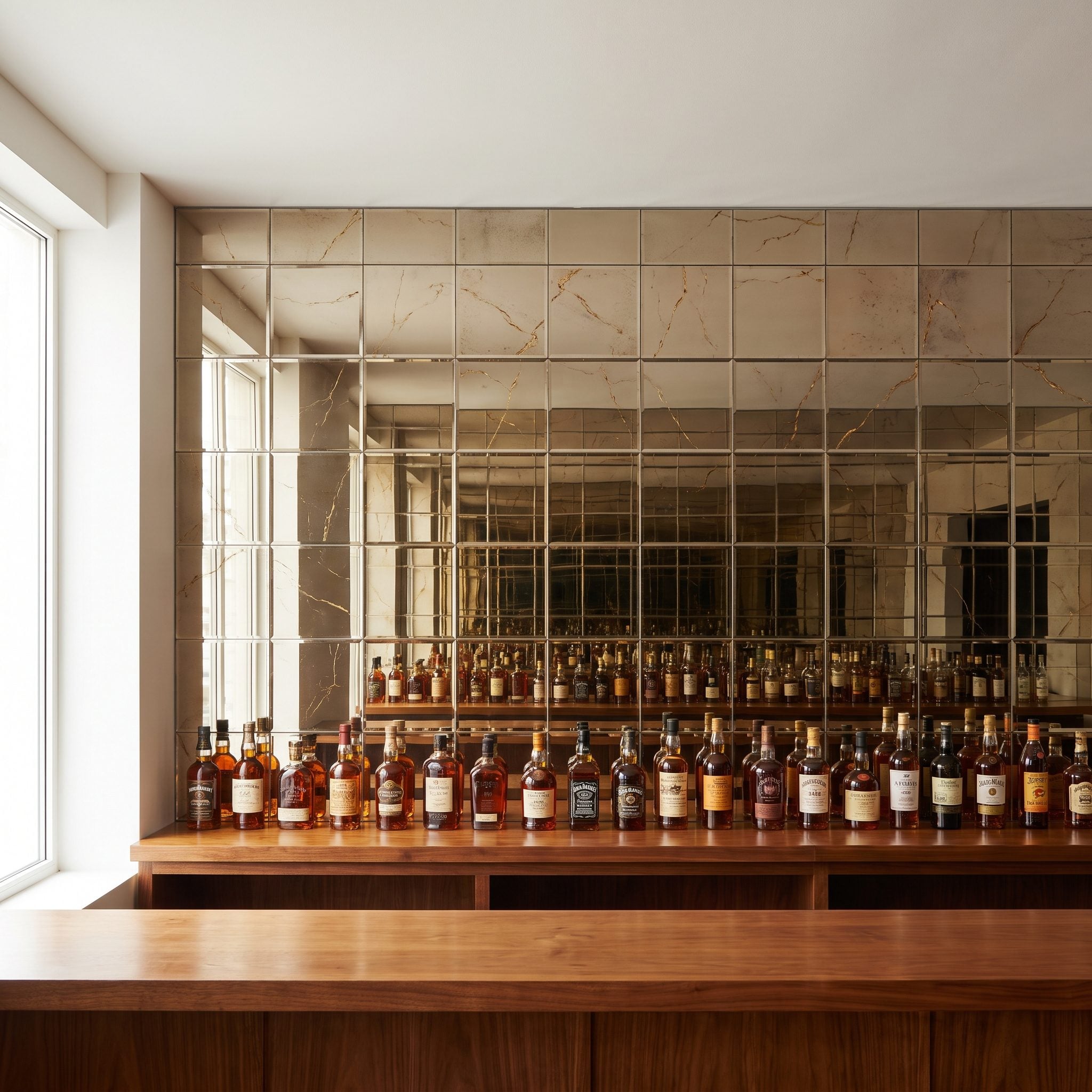
Mirrors were the basement bar’s most economical form of extravagance. A handful of bottles arranged against reflective glass suddenly resembled a much more impressive collection, while the room itself appeared deeper and brighter.
Bronze-tinted and smoked mirrors added a warm, slightly theatrical quality to the effect. Glassware caught the light, bottle labels appeared in duplicate, and a narrow counter acquired the visual depth of a hotel lounge. The trick was transparent, of course. That never made it any less effective.
26. The Blender With More Buttons Than Anyone Needed
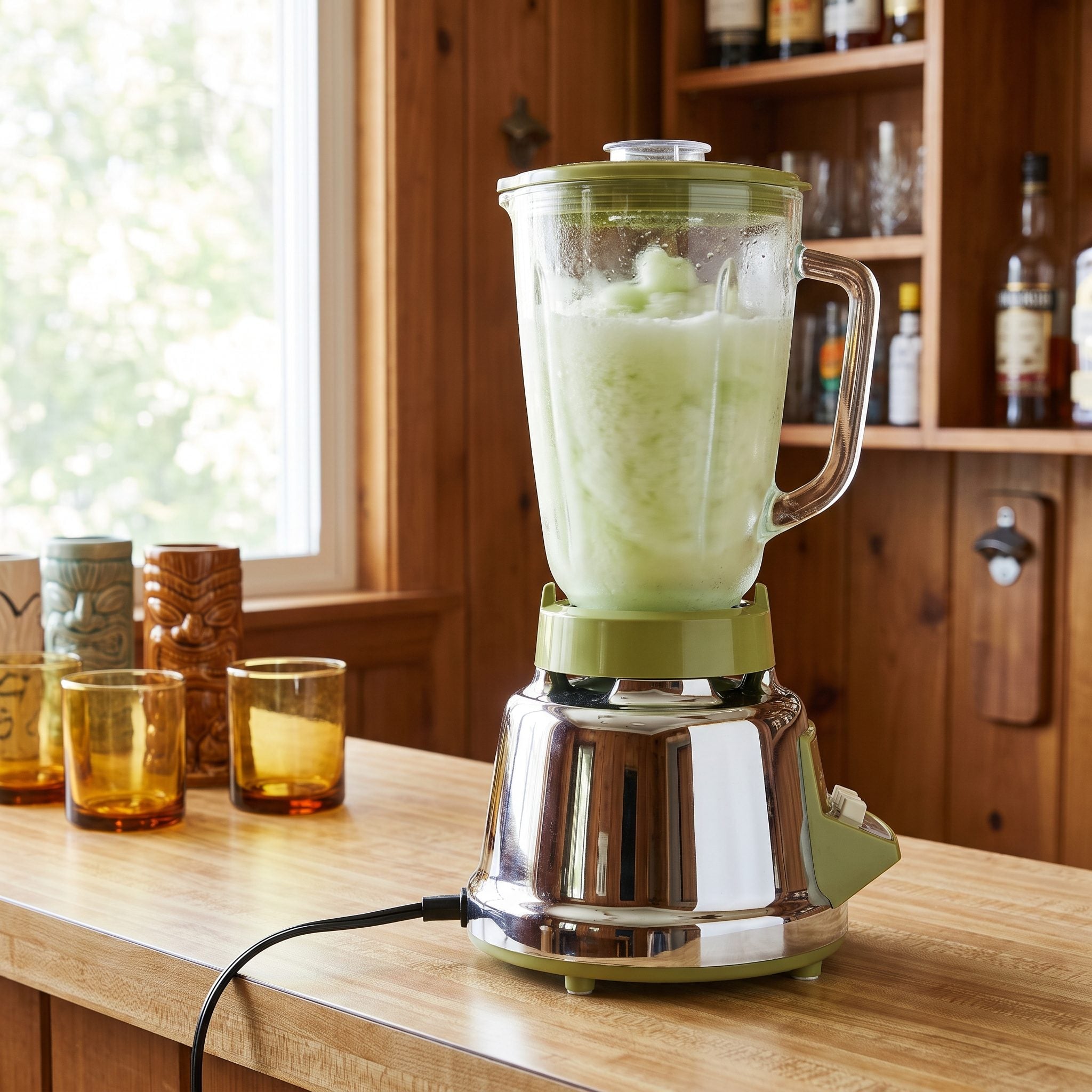
The electric blender introduced an entirely different level of noise to cocktail hour. One moment the room was full of conversation; the next, a machine with a chrome base and an improbable number of speed settings was pulverizing ice for frozen daiquiris.
Blended piña coladas and other icy drinks expanded the possibilities beyond the shaker and mixing glass. The appliance itself often embraced the decade’s favorite colors, including avocado and harvest gold. Buttons labeled for chopping, liquefying, and crushing gave the operator an impressive range of choices, most of which seemed to produce roughly the same racket.
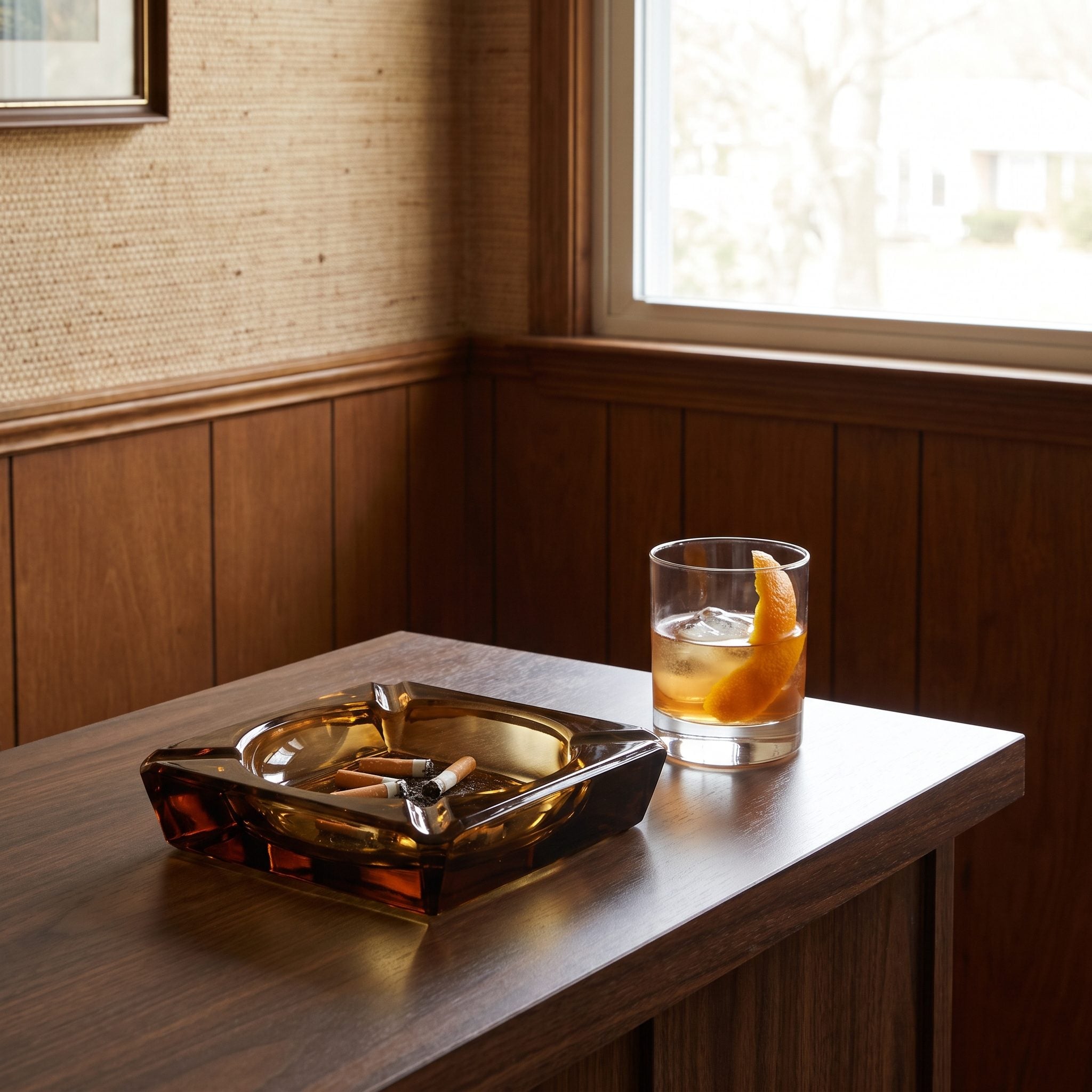
25. The Ashtrays That Were Practically Part of the Furniture
🔥 Would you like to save this?
Few objects date a 1970s party scene faster than an ashtray sitting beside a cocktail glass. Indoor smoking was widely accepted in many homes, and ashtrays appeared in enough shapes, colors, and materials to qualify as a decorating category of their own.
Heavy amber glass, smoked finishes, and ceramic designs could coordinate with the barware. Their presence was once routine; today it makes the period look like another civilization. The room might have been designed for comfort, but its understanding of indoor air quality was considerably less sophisticated.
24. The Lowball Glasses Heavy Enough to Feel Like Equipment
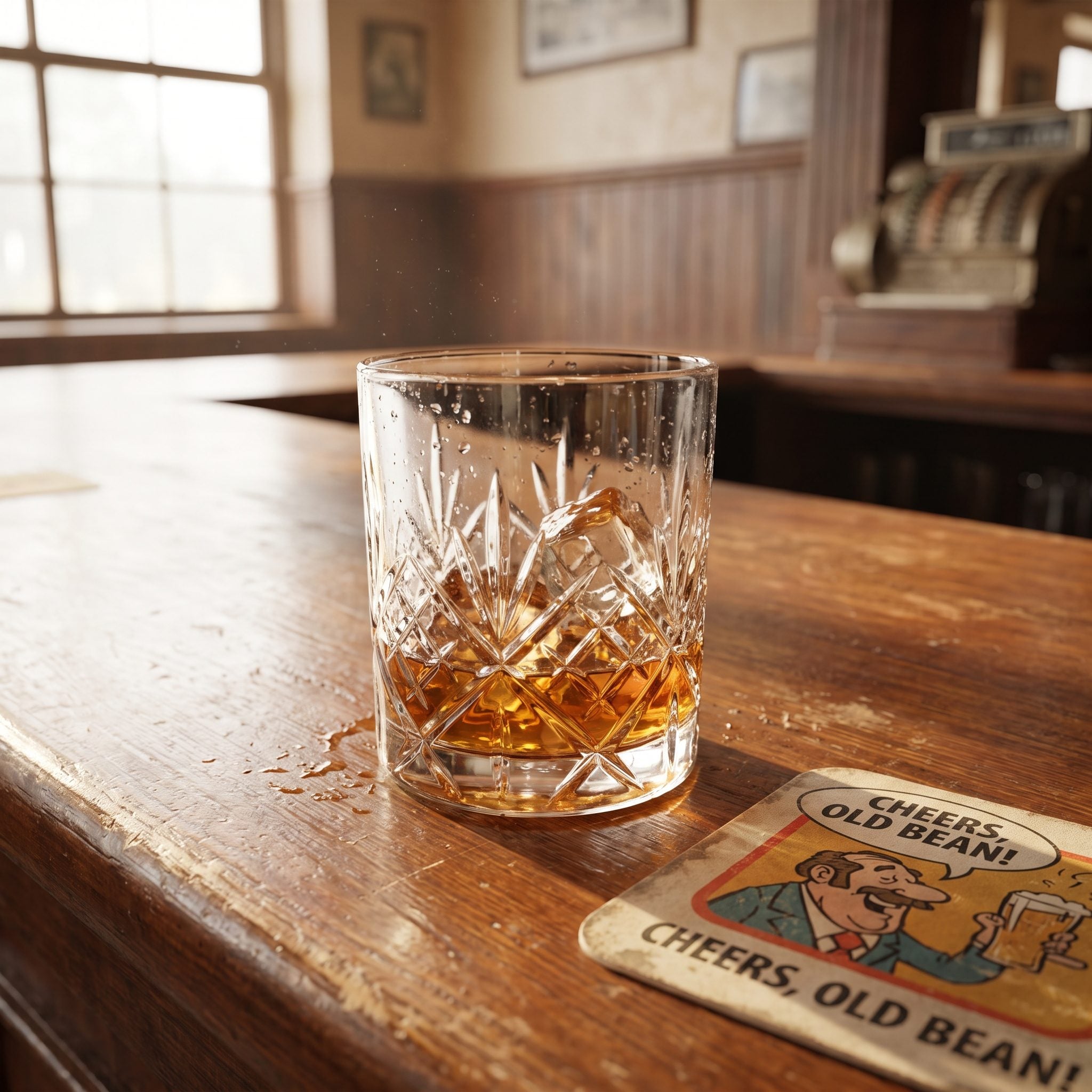
The lowball glass had no interest in delicacy. Thick bases, substantial rims, and cut-glass patterns gave it the heft of a small architectural object. Set one on a laminate counter and the resulting sound suggested that business was being conducted.
Whiskey, scotch on the rocks, and short mixed drinks were natural occupants. Unlike the stemmed glasses reserved for elaborate cocktails, the lowball was built for frequent use. It was sturdy, satisfying to hold, and proof that a drinking glass could have the physical presence of a paperweight.
23. Faux-Brick Walls That Gave the Basement a Fake Past
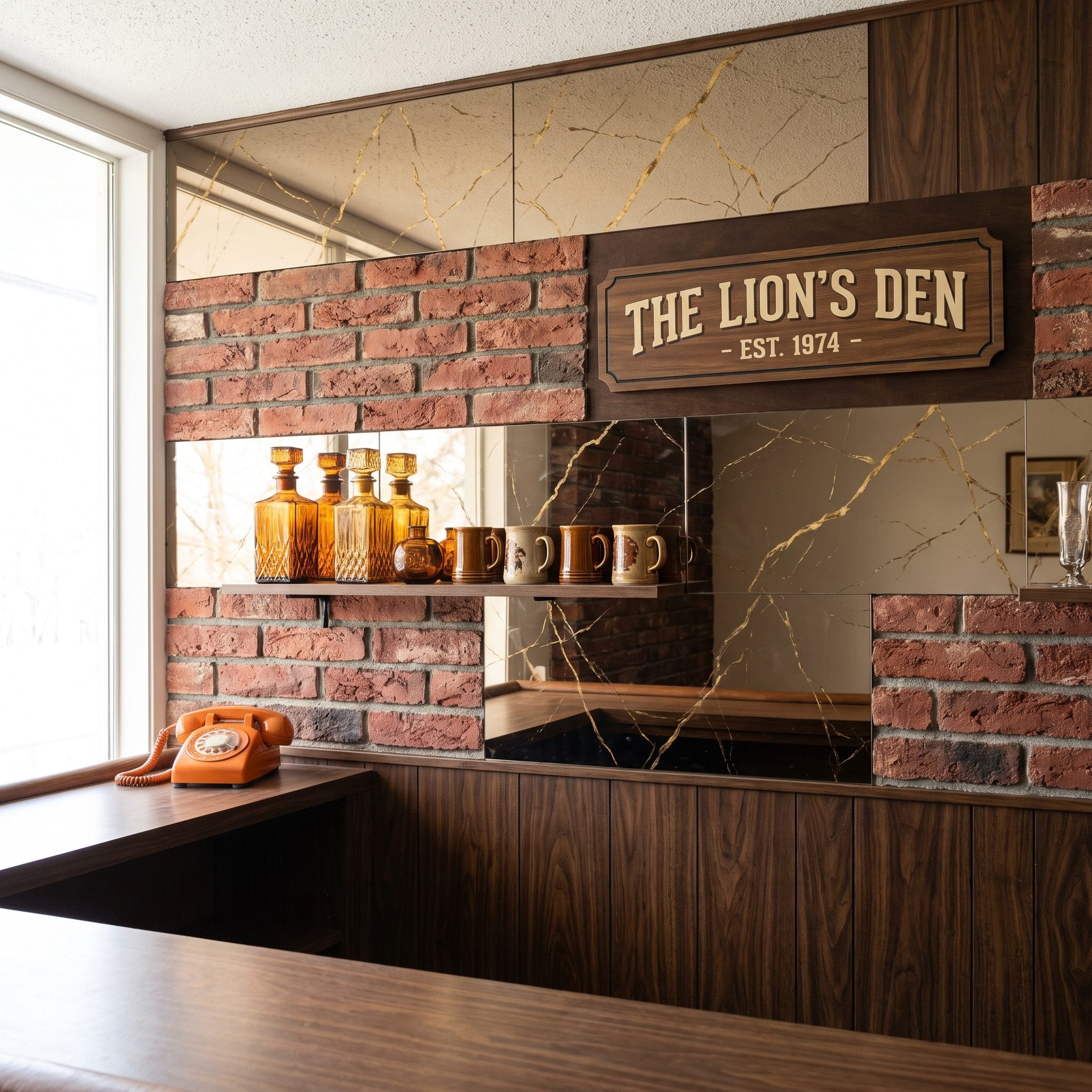
Why build a bar in an ordinary suburban basement when it could look as though it occupied a century-old tavern? Faux-brick panels supplied instant history, complete with rough-looking surfaces and the suggestion of masonry that had never met a bricklayer.
They were lighter and generally less expensive than genuine brickwork, making them a convenient way to add texture to a feature wall. Combined with dark wood and brass accents, the result could feel cozy and convincingly pub-like. Historical authenticity was beside the point. The basement was playing a role, and the scenery was doing its part.
Brick has outlasted the decade: today, Home Stratosphere readers give photos featuring brick more hearts than the other images in the same articles, 52% vs 45%.
22. The Fondue Pot That Turned Appetizers Into a Group Activity
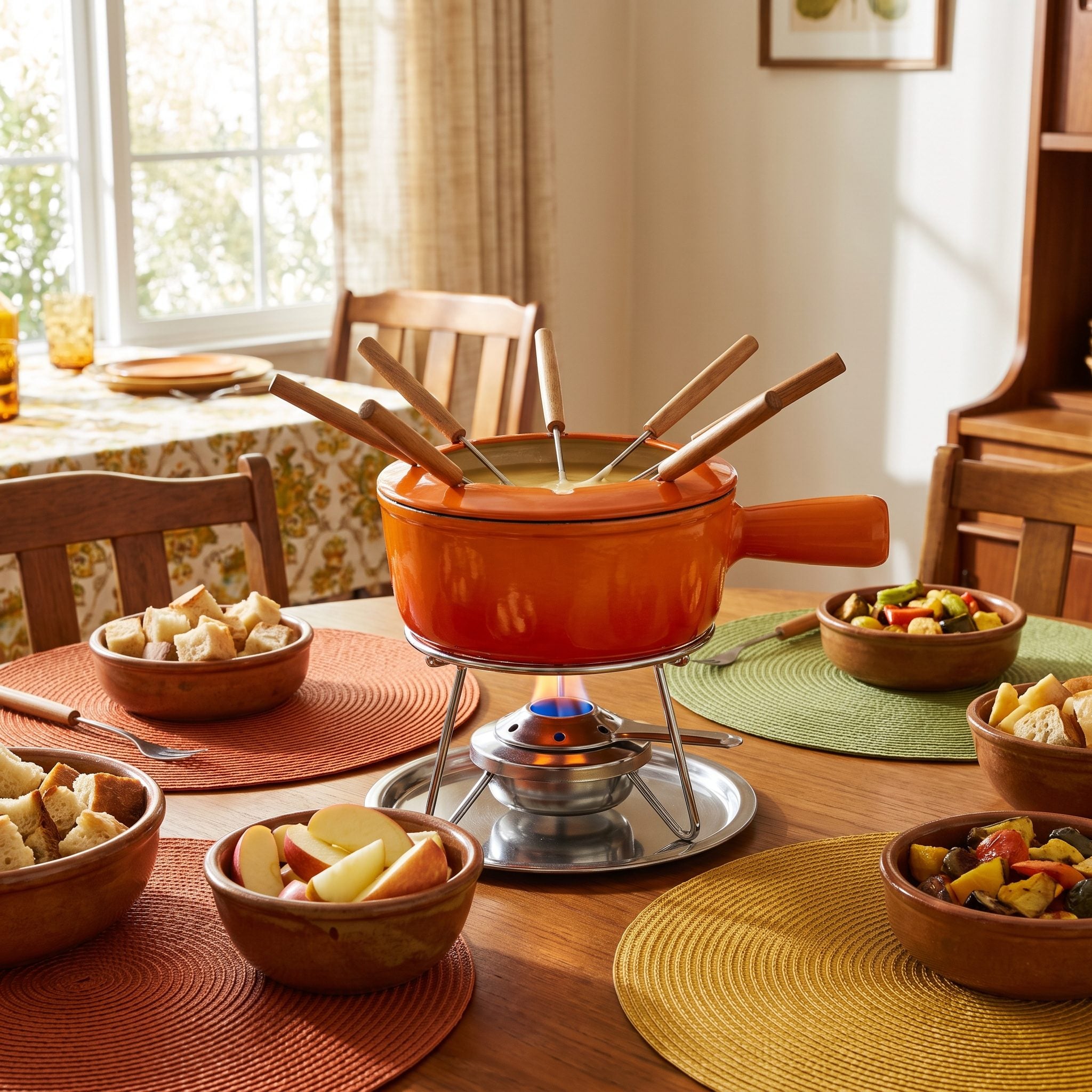
The fondue pot made eating cheese a surprisingly elaborate social undertaking. A bubbling vessel, long forks, cubes of bread, and a tabletop burner turned a simple appetizer into an activity requiring the cooperation of everyone within reach.
Fondue gained considerable American popularity during the 1960s and remained fashionable through the 1970s. Colorful enamel pots suited the decade’s informal entertaining style, while the shared serving arrangement kept guests gathered together. It was convivial, occasionally messy, and proof that melted cheese could command an entire room’s attention.
21. The Glass Shelves That Made the Liquor Collection Look Curated
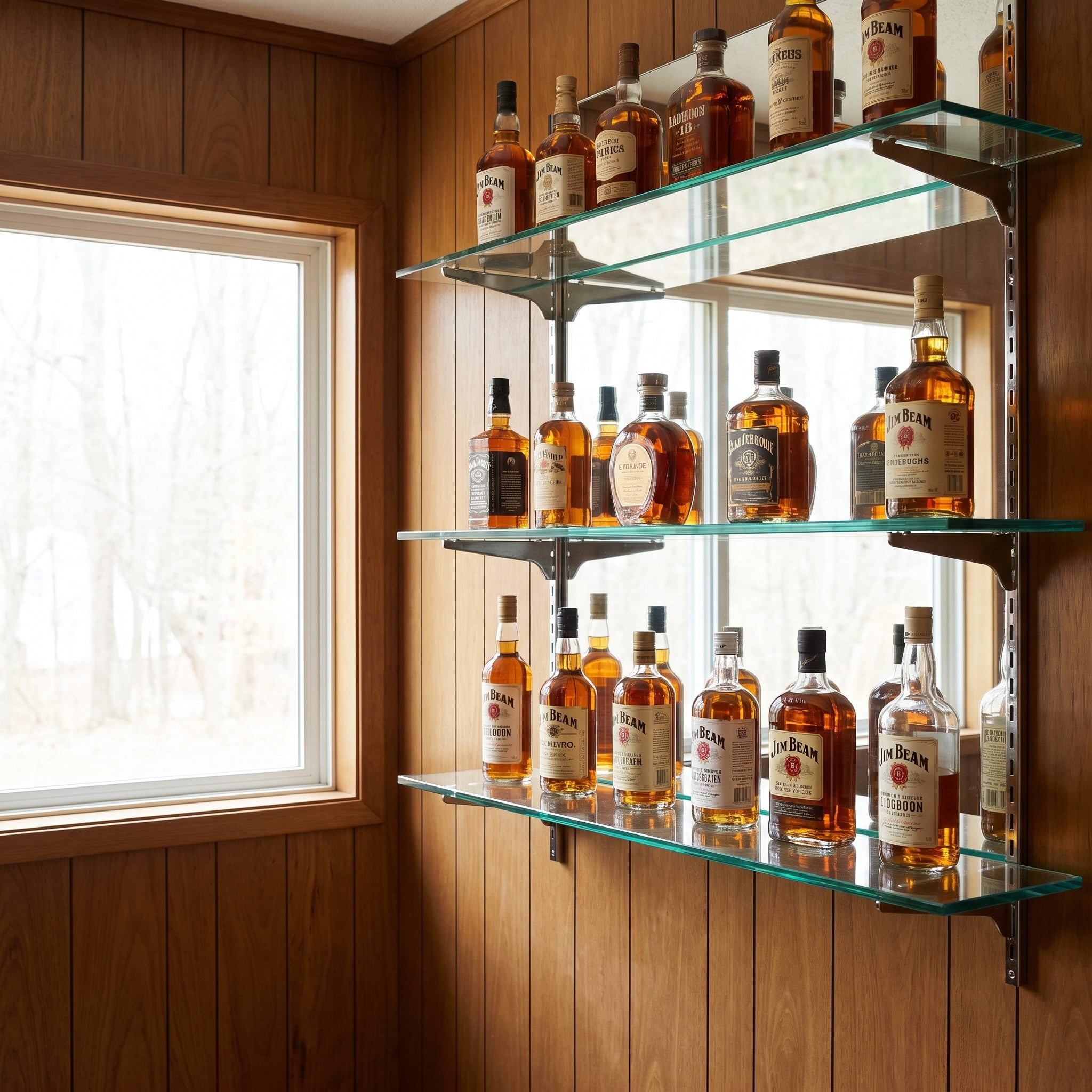
Glass shelves on chrome brackets brought a touch of commercial-bar polish to the basement. Instead of hiding bottles behind cabinet doors, they displayed the collection like merchandise in a particularly specialized department store.
Some arrangements incorporated concealed lighting, allowing colored spirits and decorative bottles to glow against the wall. Labels faced outward, heights varied, and the shelves became part of the room’s composition. A modest collection could look impressive with the right presentation. The contents had not changed; the merchandising had.
20. The Cigarette Box That Treated Smoking Like a Courtesy
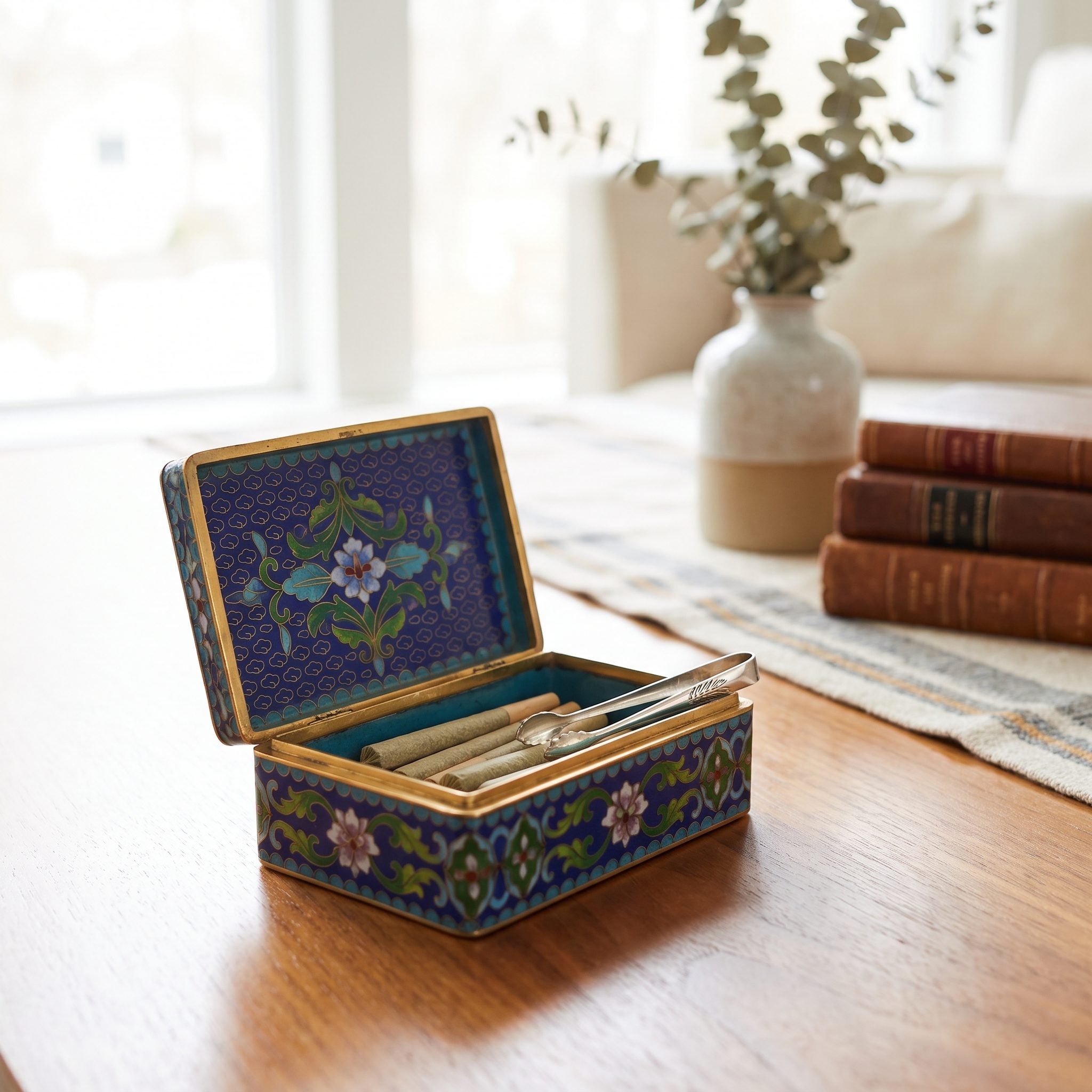
A decorative cigarette box was another reminder that the etiquette of entertaining has changed dramatically. In many social circles, offering cigarettes could be treated as a gesture of hospitality, and the container was expected to look the part.
Walnut cases, acrylic holders, metal boxes, and novelty designs turned the cigarettes into a tabletop presentation. Some were elaborate enough to resemble miniature jewelry boxes. Today the idea seems astonishingly misplaced, but in the period’s domestic vocabulary it belonged beside the cocktail napkins and ashtrays.
19. The Highball Glasses That Kept the Gin and Tonic in Business
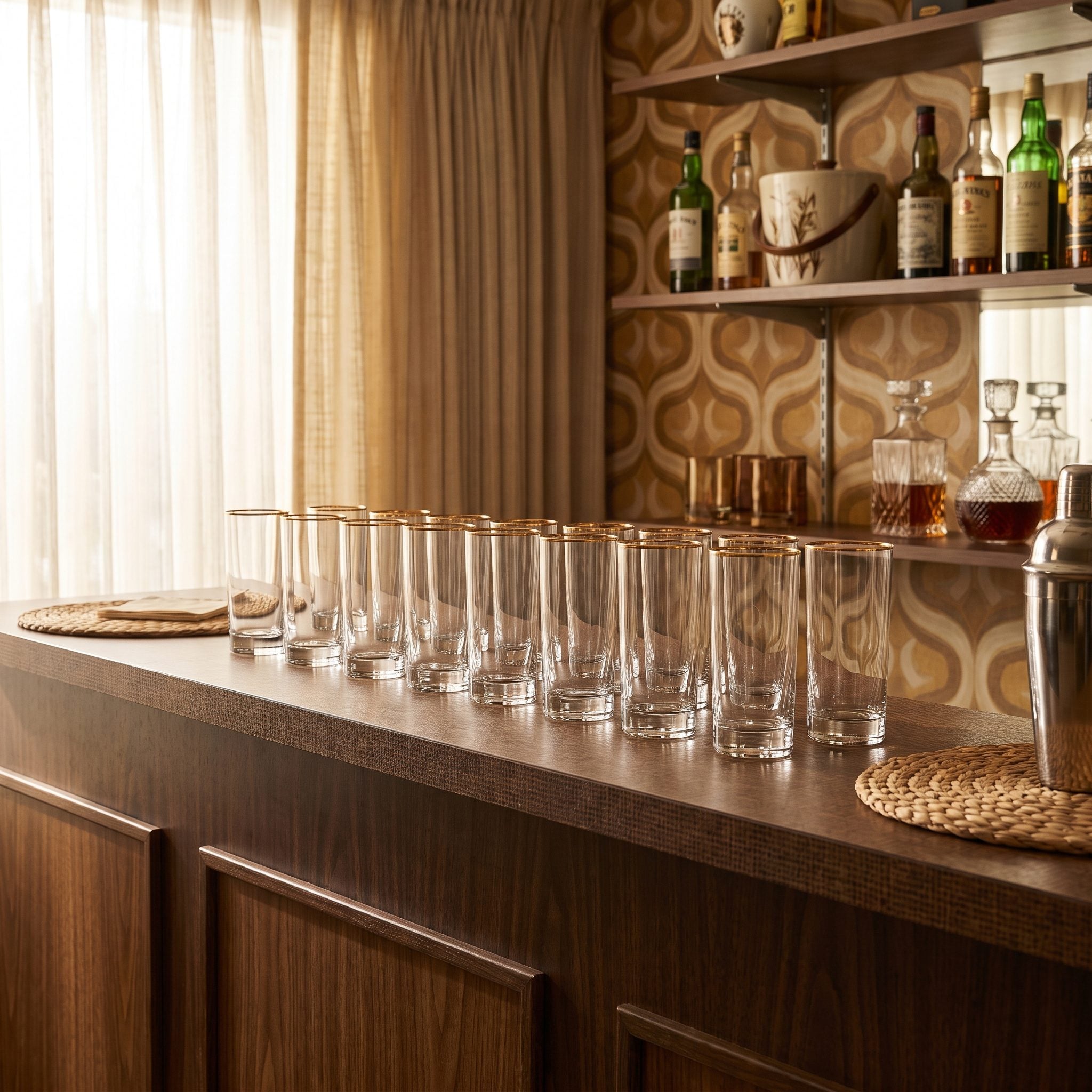
The highball glass was the reliable middle manager of the basement bar: tall enough for ice and mixer, straightforward to use, and rarely the center of attention. Gin and tonics, screwdrivers, and whiskey highballs all found a comfortable home in its cylindrical walls.
Collins glasses were generally taller and narrower, although the sizes overlapped. Gold bands, printed patterns, and matching sets added decorative ambition to these practical shapes. Lined up behind the counter, they suggested the bar could handle a crowd without resorting to the kitchen cupboard.
18. The Cocktail Recipe Book That Promised More Than the Host Could Remember
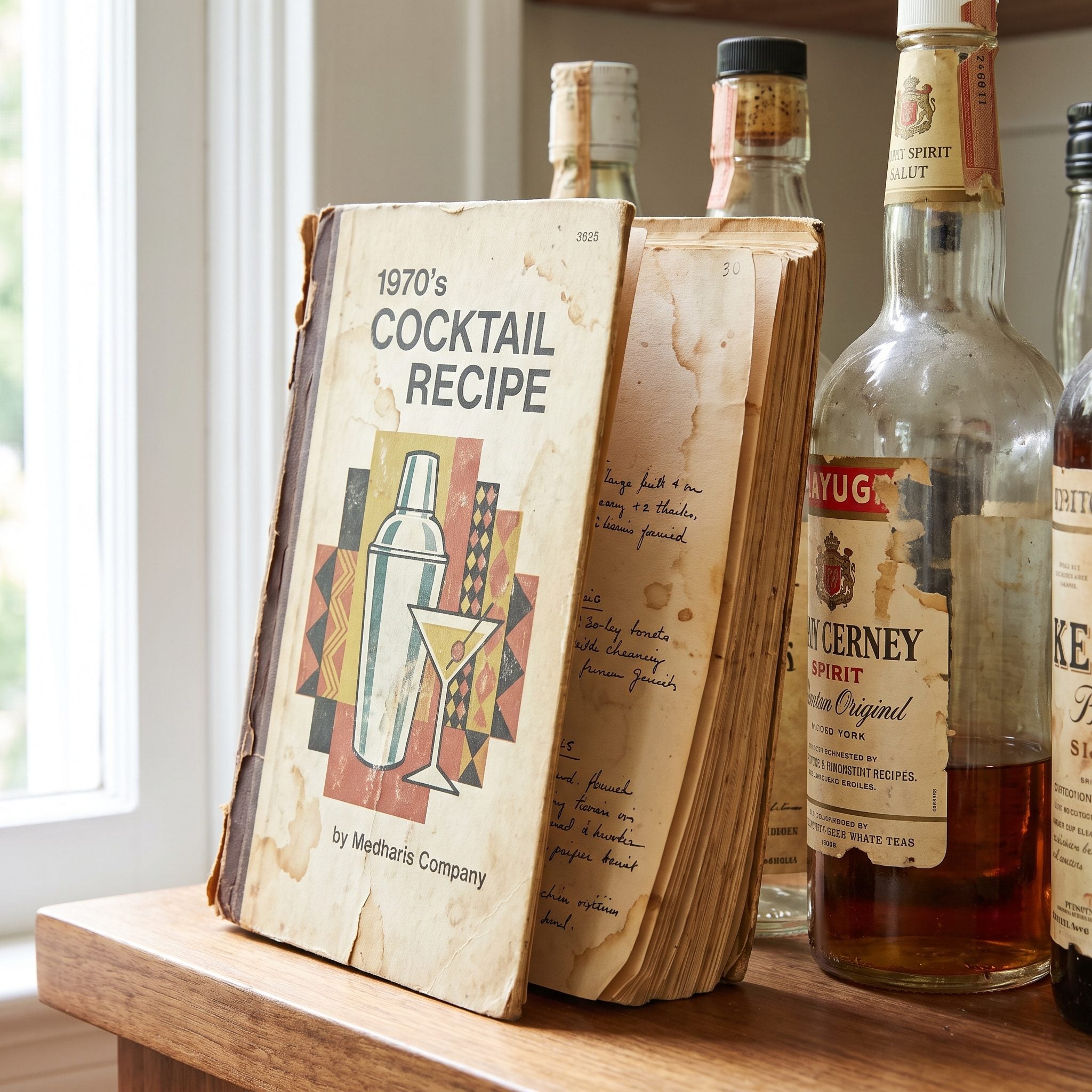
A cocktail guide was a modest investment in the appearance of expertise. Grasshoppers, Harvey Wallbangers, Manhattans, and tropical concoctions appeared in orderly recipes, often accompanied by illustrations that made the finished drinks look spectacularly colorful.
Tiki cocktails had been part of American drinking culture since before World War II, with postwar enthusiasm helping spread the fashion. By the 1970s, cocktail books could offer everything from traditional standards to sweet, creamy inventions. The book made the basement bar seem capable of producing an enormous repertoire. Whether anyone ordered beyond the usual favorites was another question.
17. Colored Pendant Lights That Made Everyone Look Better at Closing Time
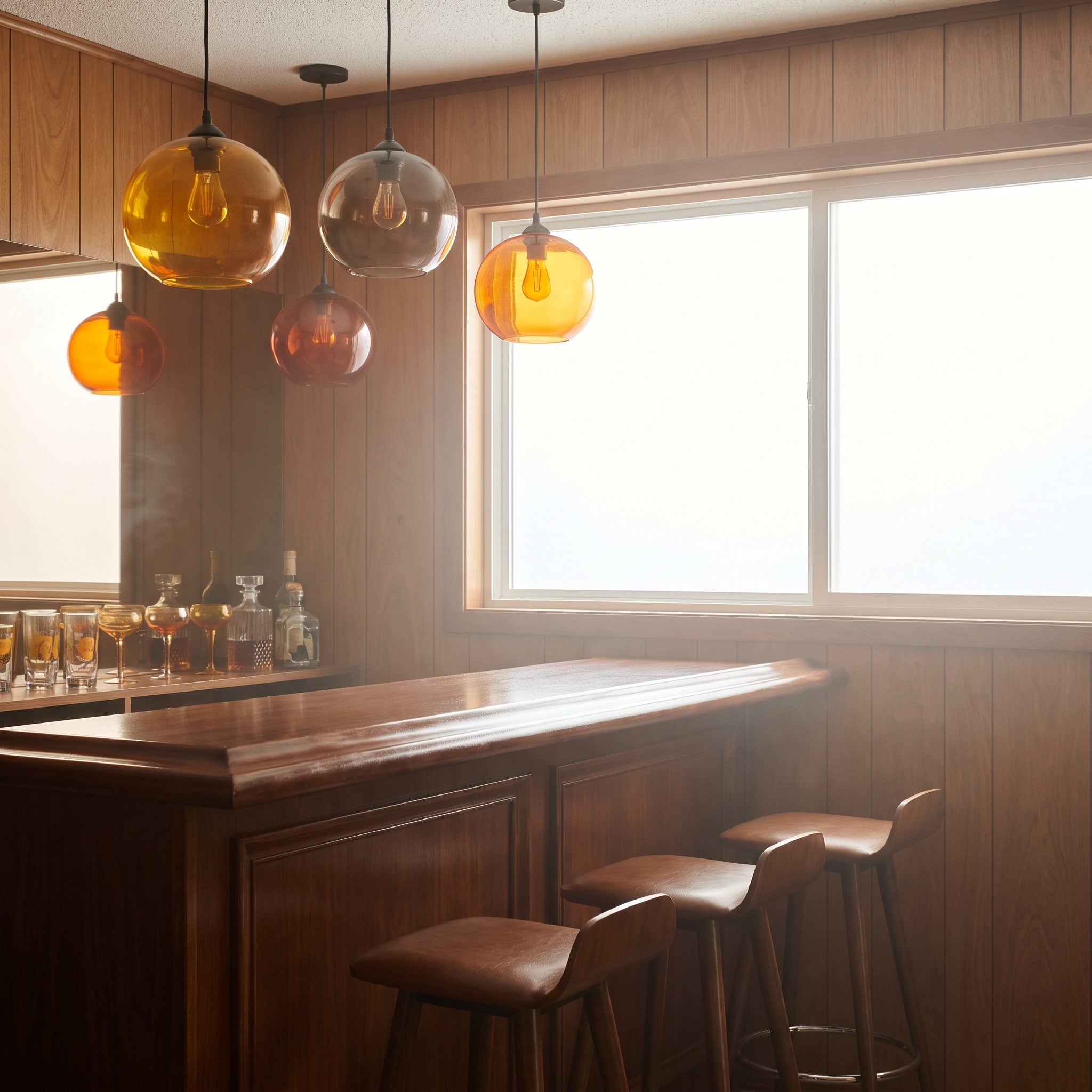
Amber, orange, and smoked-glass pendant shades could bathe a bar in light that was considerably kinder than a fluorescent ceiling fixture. Bottles gleamed, wood paneling deepened in color, and the room acquired a warmth that had little to do with the thermostat.
Fixed pendants and clustered globes also contributed sculptural shapes above the counter. Their decorative value survived even when the bulbs were off. The 1970s understood that lighting could change the personality of a room, although the decade occasionally approached the subject with the subtlety of a traffic signal.
16. The Souvenir Glasses That Turned the Bar Into a Travel Scrapbook
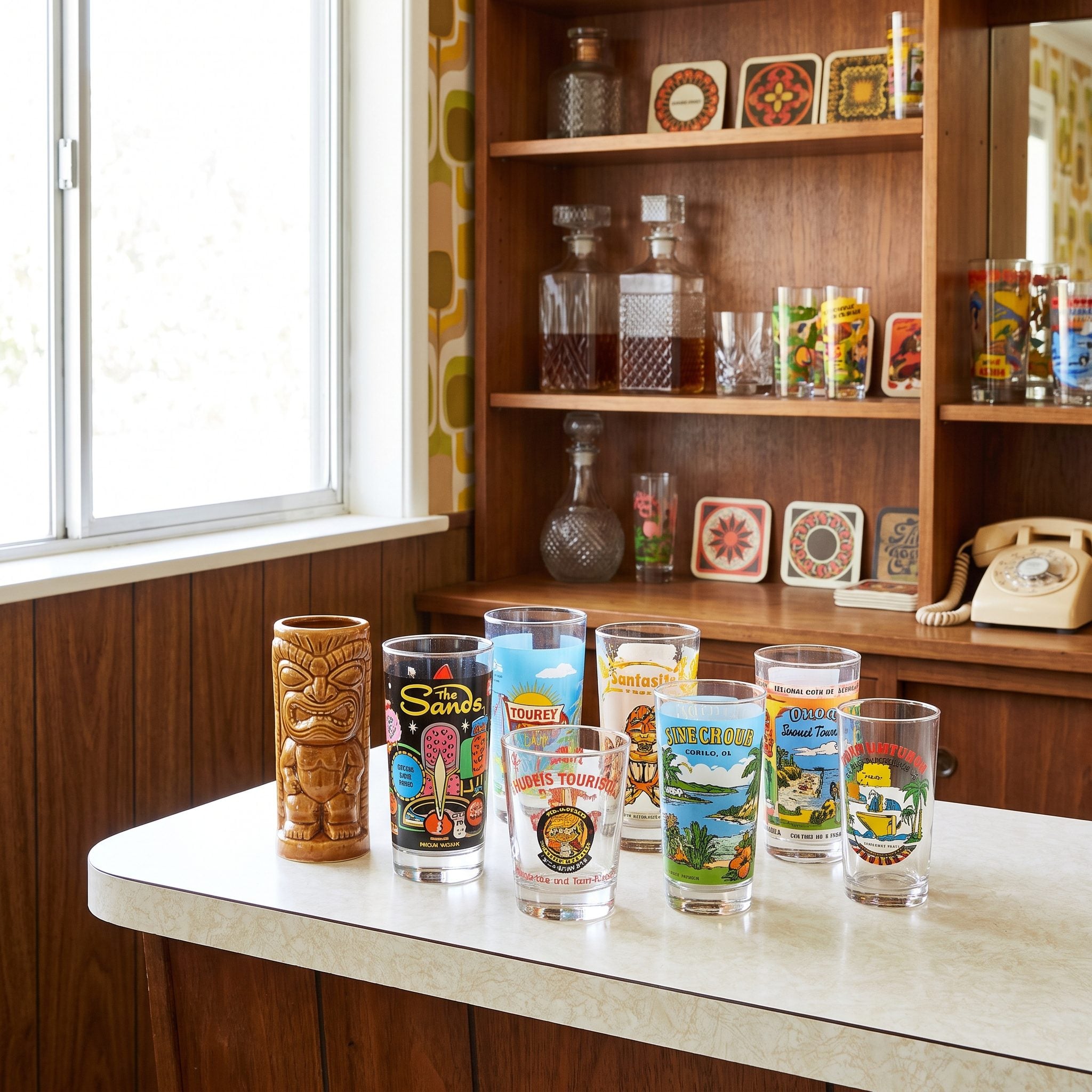
Not every glass in a 1970s bar belonged to a matching set. Some advertised vacation destinations, hotels, restaurants, sports teams, or tourist attractions. Others featured illustrations so cheerfully tacky that their decorative purpose was impossible to mistake.
Souvenir and promotional glassware gave the collection a less formal personality. A Grand Canyon tumbler could sit beside a respectable cut-glass decanter without anyone demanding an explanation. The result was part barware, part travel scrapbook, and part evidence that the gift shop had done its job.
15. The Ice Bucket and Tongs That Made Cocktail Hour Official
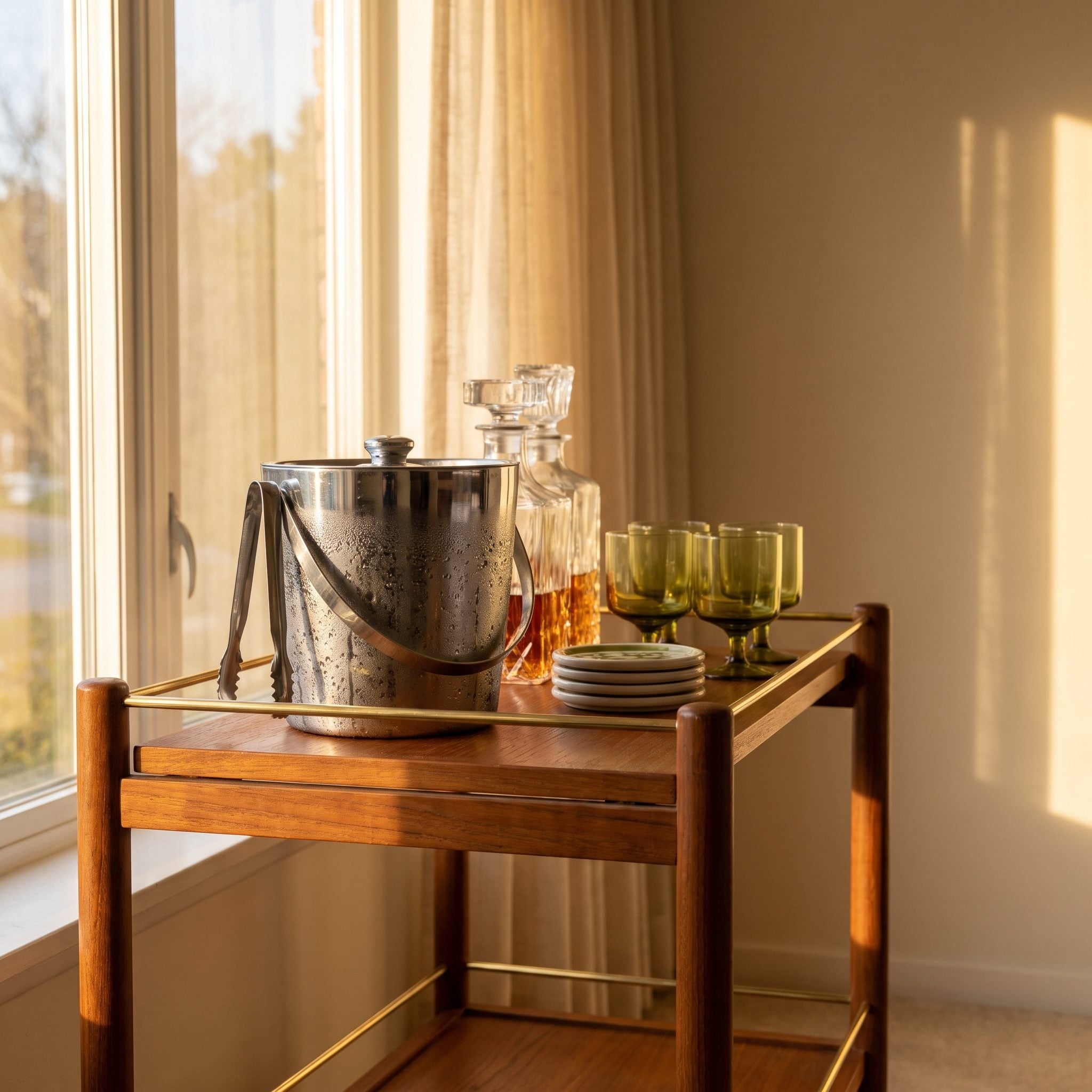
The arrival of the ice bucket gave the counter a distinctly businesslike appearance. Chrome, faux teak, colored plastic, and insulated designs offered choices for almost every decorating scheme, while a matching pair of tongs completed the presentation.
Keeping ice close to the drinks reduced trips to the kitchen and made mixing easier. The tongs added a ceremonial touch to what was, fundamentally, the transfer of frozen water from one container to another. Few household objects have managed to make such a routine task look so formal.
14. The Stack of LPs That Made Every Guest a Potential Disc Jockey
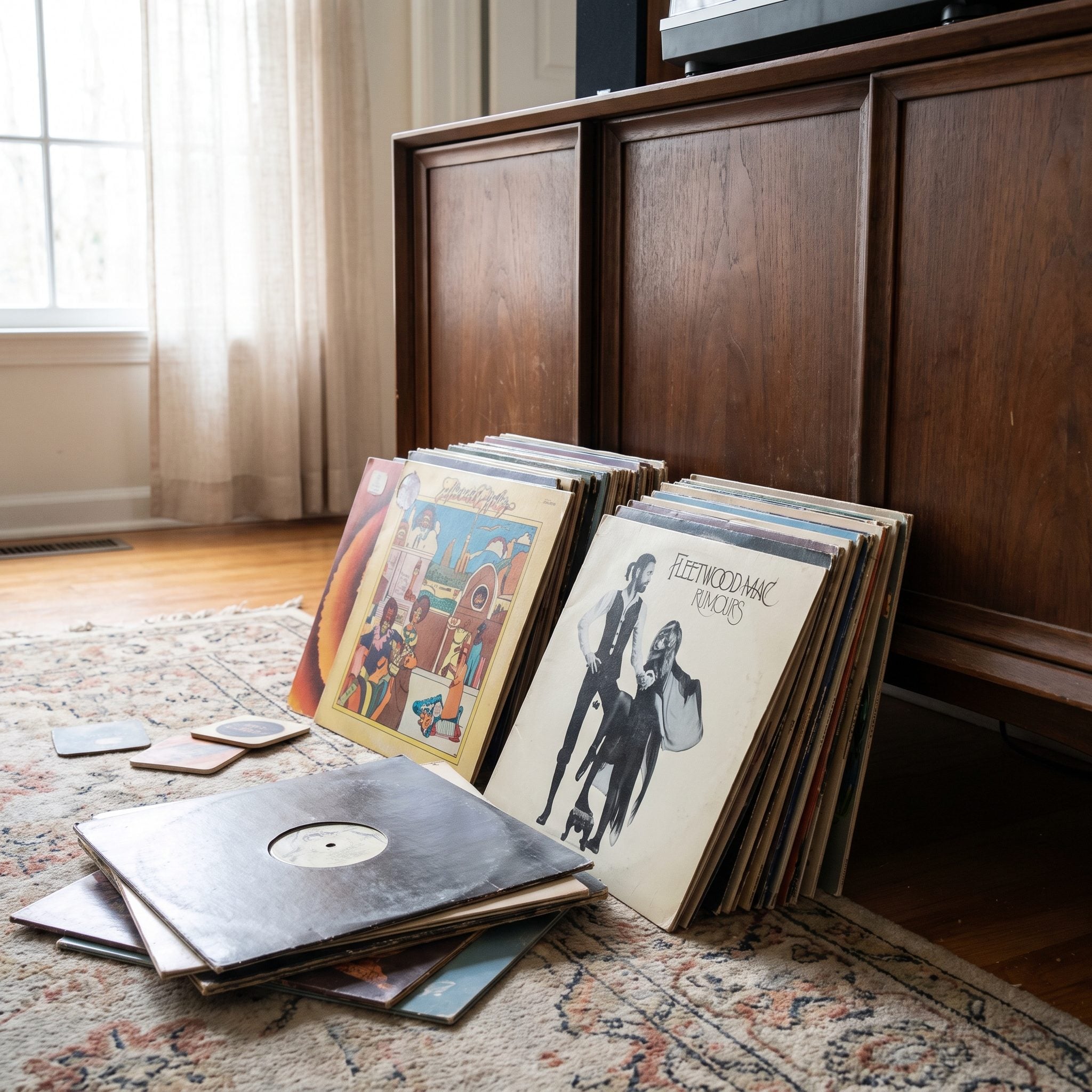
A stack of record jackets beside the stereo was both storage and a public declaration of musical taste. Album covers brought their own artwork into the room, from restrained typography to the decade’s more spectacular exercises in graphic excess.
Changing records required participation. Someone had to choose the next album, lift the previous disc, and lower the needle. Soul could give way to rock, jazz to disco, and the room’s mood could shift with a single selection. The playlist was a physical object, and disagreements about it were part of the entertainment.
13. The Upside-Down Stemware Rack That Borrowed From Real Bars
🔥 Would you like to save this?
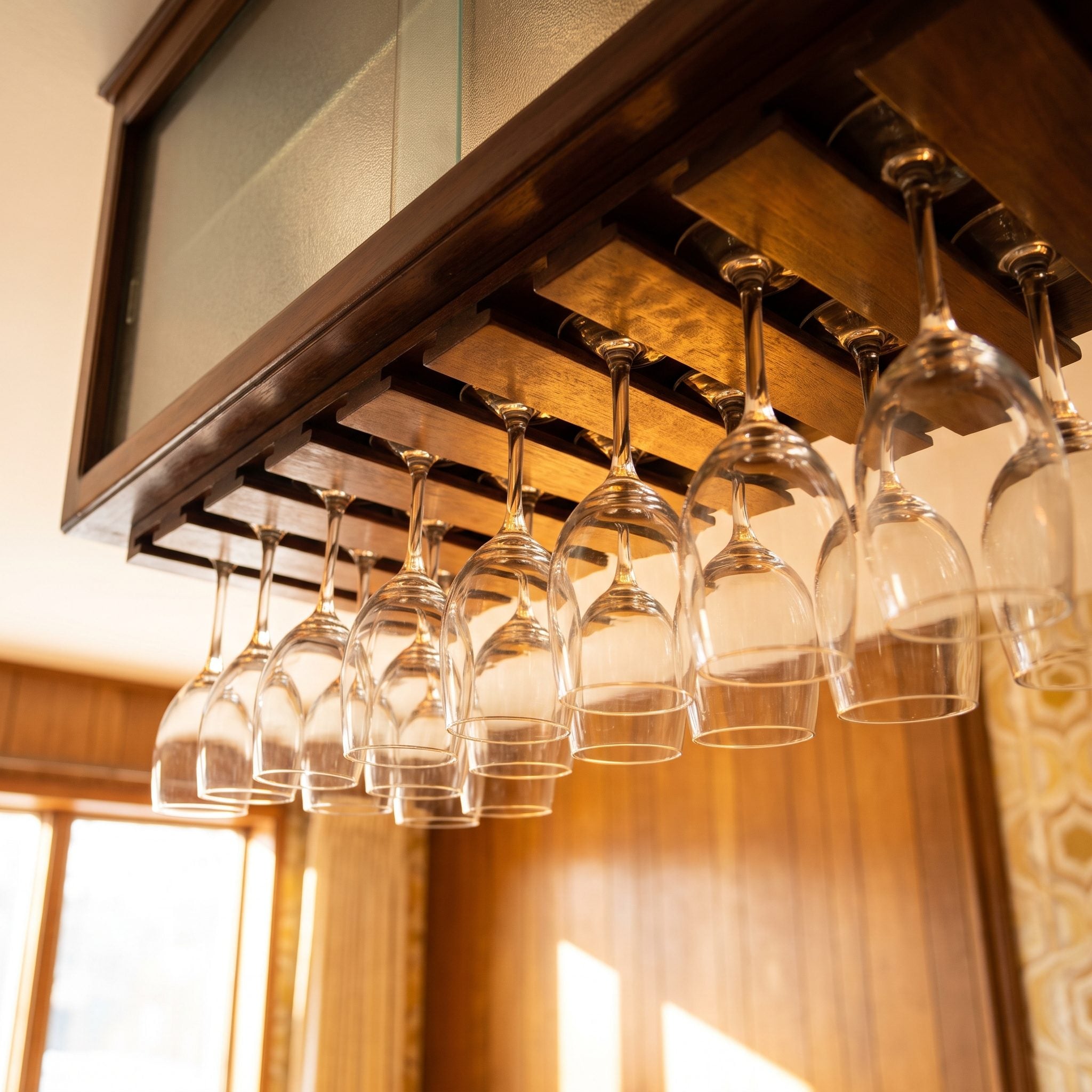
Suspending glasses beneath a cabinet was an efficient way to save shelf space while making the bar look impressively equipped. The bases slid into parallel tracks, leaving the bowls hanging below in a neat row of inverted silhouettes.
The arrangement helped reduce dust collecting inside the bowls, although exposed rims still needed attention. More importantly, it gave the home bar a recognizable piece of professional equipment. Sliding a glass out of its rack was a small movement with a surprisingly convincing bartender’s flourish.
12. The Garnish Tray That Gave Every Drink a Finishing Touch
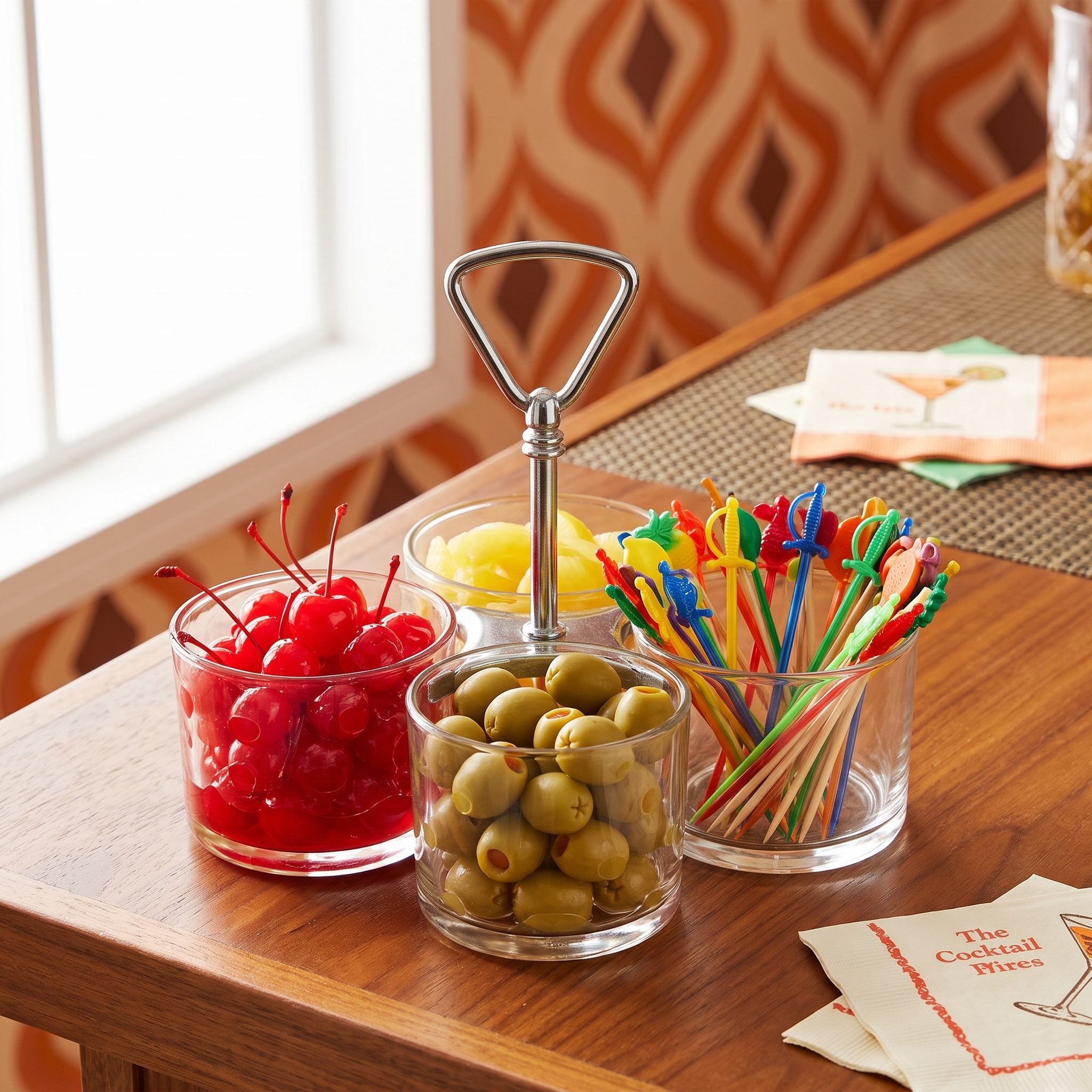
Maraschino cherries, green olives, cocktail onions, and citrus twists brought an extraordinary amount of color to a small tray. They also distinguished one cocktail from another: olives for martinis, onions for Gibsons, cherries for sweeter concoctions.
The garnish station made the bar look prepared for something beyond pouring liquor over ice. Against amber glass and dark wood, the reds, greens, and yellows were almost decorative enough to stand alone. It was a miniature produce department with considerably more vermouth nearby.
11. The Tiny Sink That Made the Basement Bar a Permanent Installation
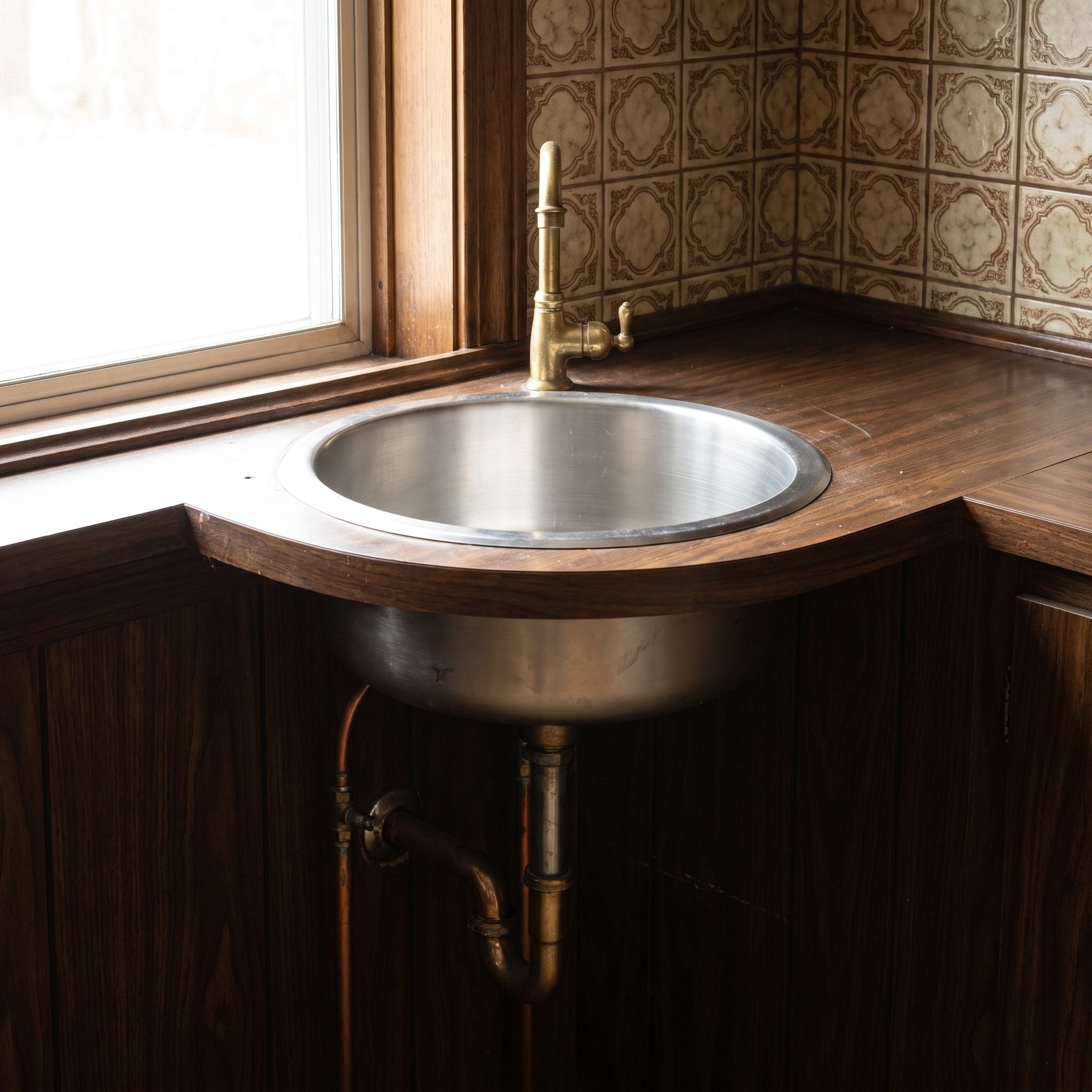
A wet bar’s defining advantage was running water, and the sink itself often occupied remarkably little space. A compact stainless-steel basin, chrome faucet, and laminate surround could turn a counter into a functional preparation area.
It was not glamorous equipment. Nobody installed a tiny sink for its sculptural beauty. But rinsing glasses and handling small cleanup tasks without retreating to the kitchen made entertaining easier. The plumbing was the practical foundation beneath all the decorative swagger.
10. The Cut-Glass Decanter That Made Ordinary Whiskey Look Distinguished
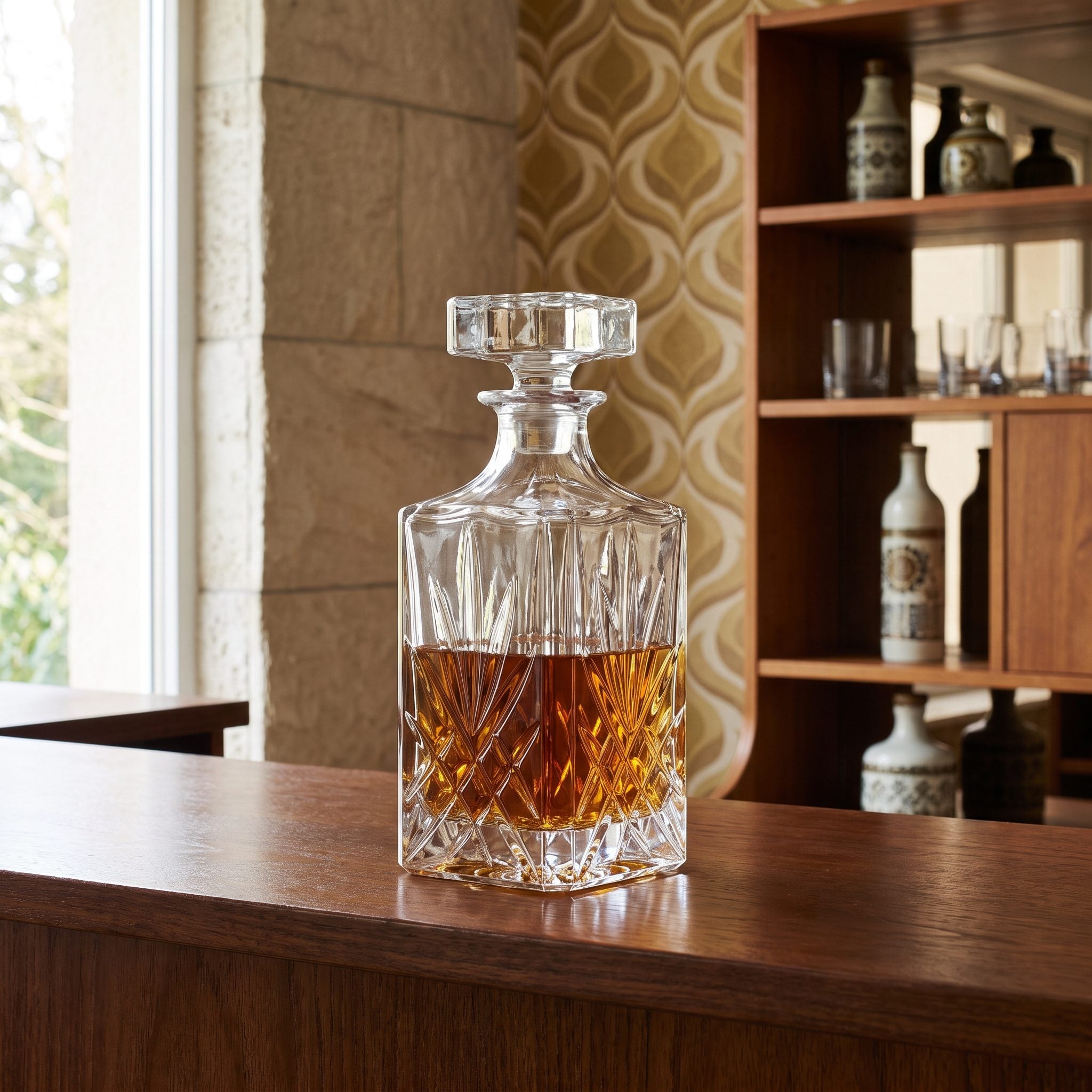
A handsome decanter could give an unremarkable bottle of whiskey the appearance of a much more expensive proposition. Faceted glass caught the light, the stopper added weight, and the entire arrangement looked as though it belonged on a mahogany desk in an executive office.
Cut and pressed-glass versions appeared in coordinated bar sets and among popular gift items. Their appeal was visual as much as practical. The decanter changed nothing about the liquor inside, but it made pouring a drink feel considerably more ceremonial. Packaging, it turns out, was doing much of the heavy lifting.
9. The Cocktail Napkins That Had Their Own Sense of Humor
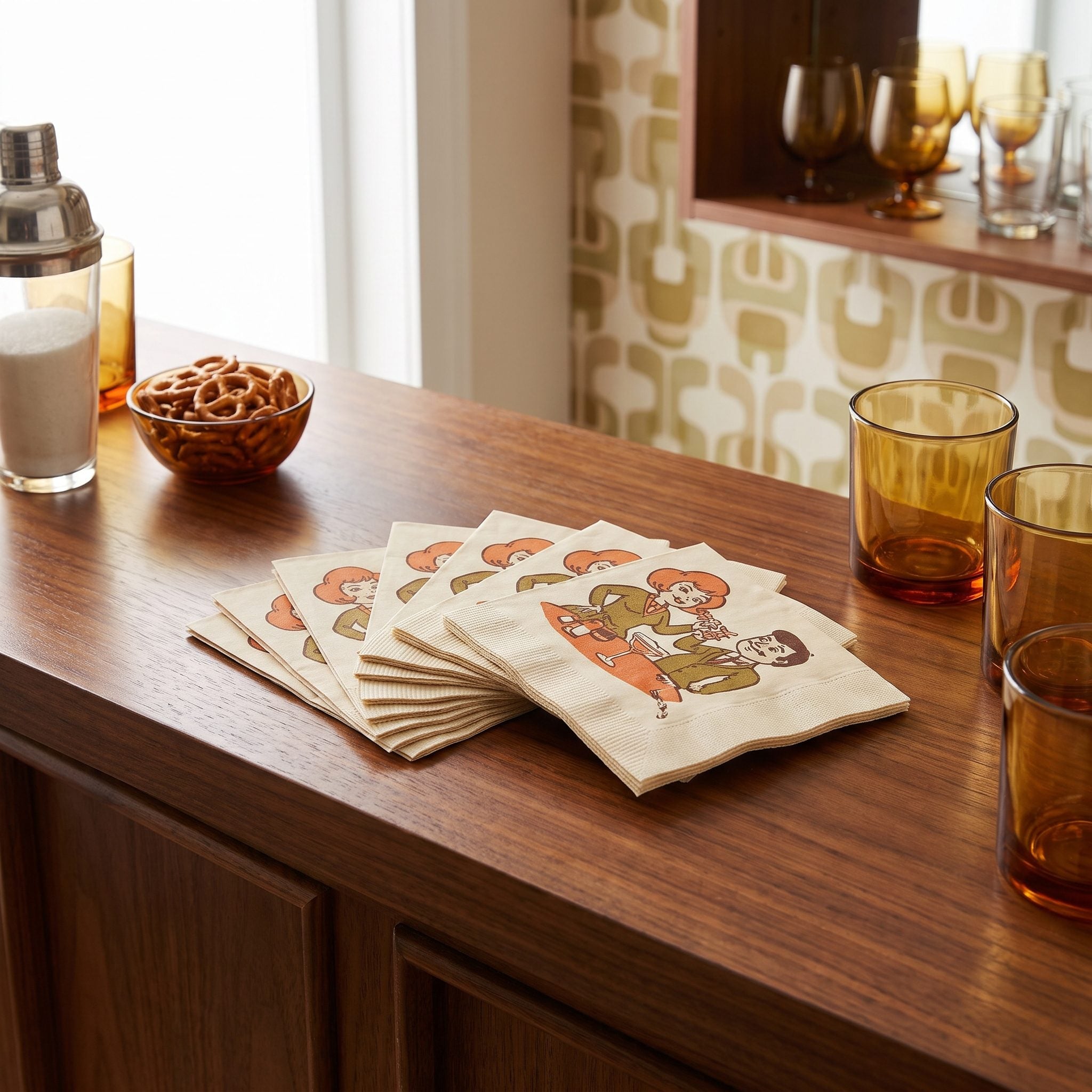
The cocktail napkin was an unlikely canvas for domestic wit. Printed cartoons, cheeky slogans, geometric patterns, and novelty illustrations turned a disposable square of paper into another piece of party decoration.
Its practical duties were modest: catch a drip, protect a surface, and give a guest somewhere to rest a glass. The designs did the entertaining. In a room already committed to amber lighting, novelty barware, and faux-brick walls, even the paper products were apparently unwilling to remain anonymous.
8. The Under-Counter Refrigerator That Eliminated Trips Upstairs
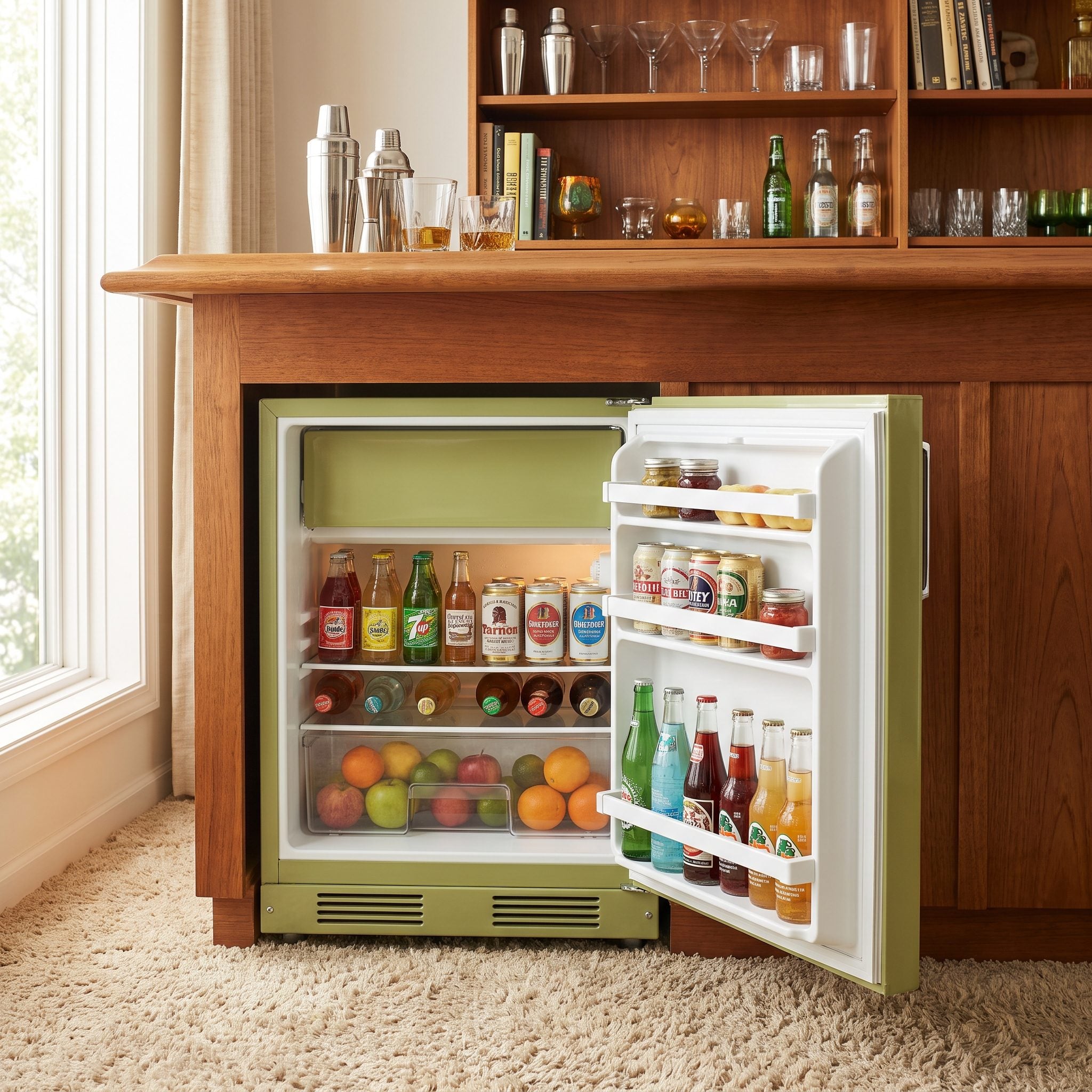
A dedicated refrigerator was not standard equipment in every basement bar, but better-appointed versions could include compact cold storage beneath the counter. Mixers, soft drinks, garnishes, and other chilled supplies stayed within reach.
Unlike the mirrored shelves and decorative glassware, this was an upgrade whose usefulness required no explanation. Fewer trips to the kitchen meant more time with guests. The refrigerator might have been the least theatrical object in the room, but it was among the most sensible. Even the 1970s occasionally allowed practicality to win.
7. Matching Decanters With Tiny Labels for Every Spirit
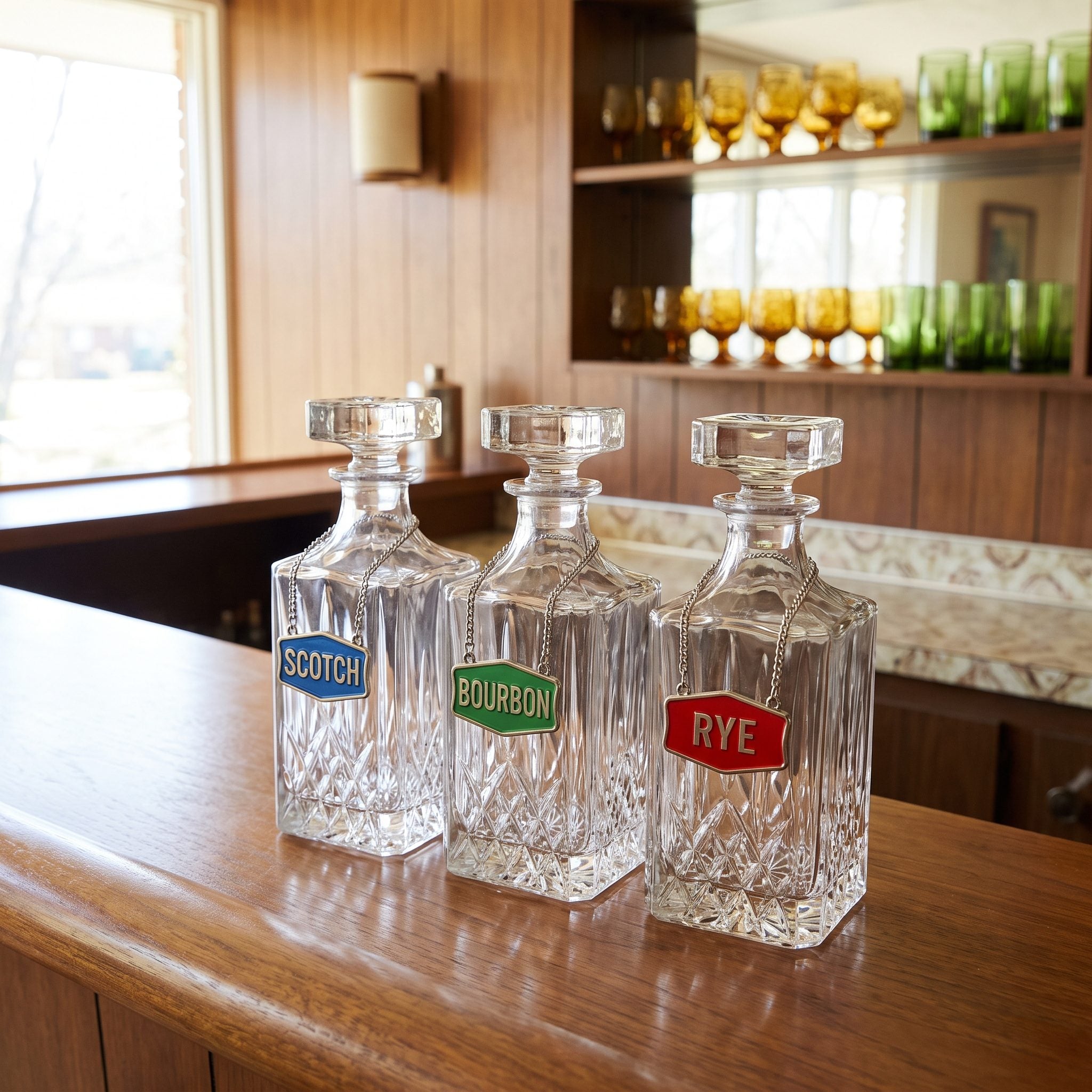
One decanter suggested taste. Three matching decanters suggested an entire administrative system for alcohol. Hanging labels identified scotch, bourbon, gin, and other spirits, often using small metal chains and decorative lettering.
The labels were useful when identical containers held different drinks, but the coordinated display was the larger attraction. Everything had a designated place, a matching vessel, and a little badge of authority. The home bar had acquired the organizational discipline of a filing cabinet, only with better refreshments.
6. The Swizzle Sticks That Turned Restaurant Souvenirs Into a Collection
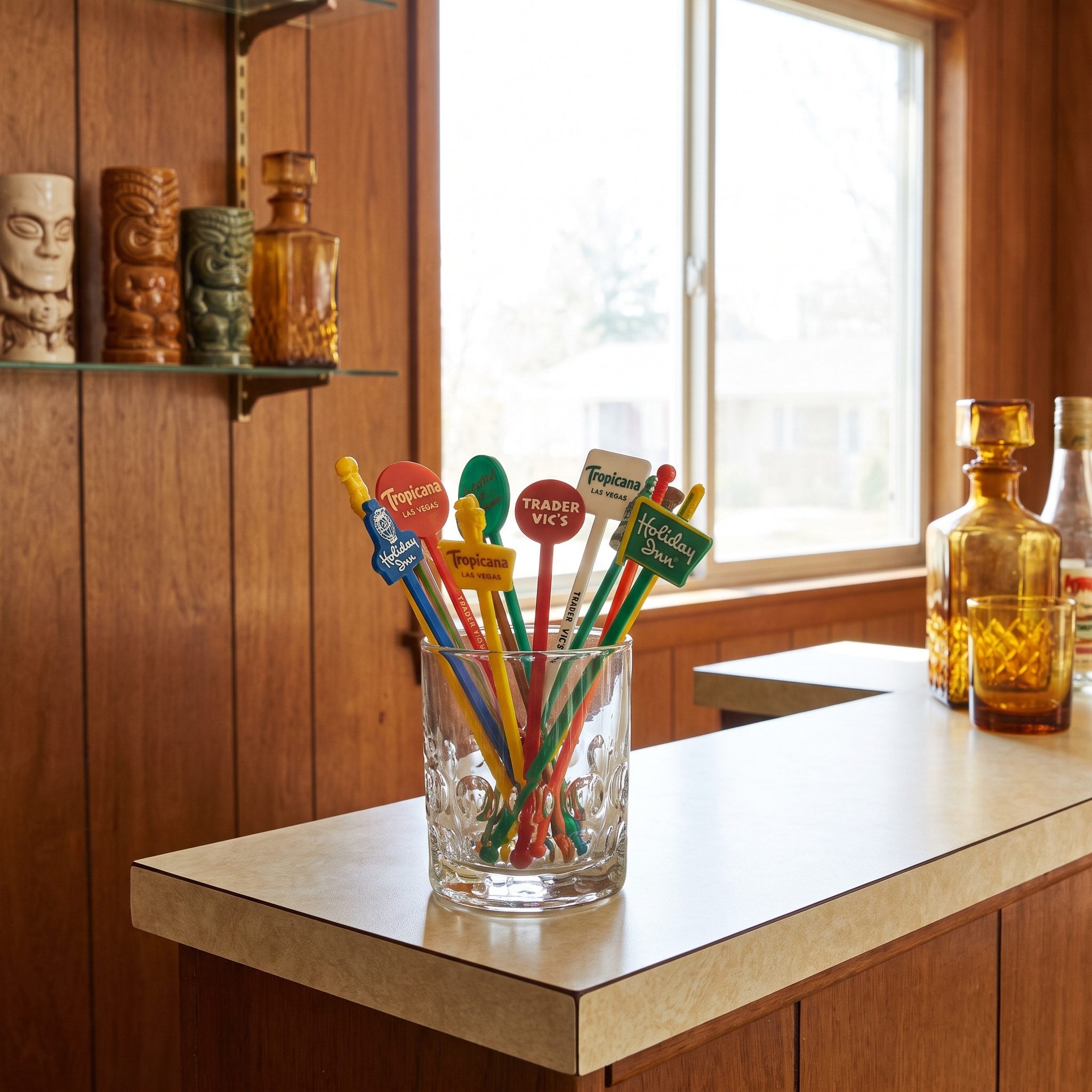
Swizzle sticks were miniature advertisements disguised as drink accessories. Hotels, restaurants, and cocktail lounges produced examples decorated with logos, animals, palm trees, and an impressive assortment of plastic ornamentation.
Collected in a glass on the home bar, they became a colorful record of places visited and drinks ordered. Some were practical stirrers; others were clearly more interested in being souvenirs. The collecting habit survives among enthusiasts of vintage barware, proof that even a tiny plastic stick can acquire historical significance if it remains in circulation long enough.
5. The Bar Tool Set That Made the Counter Look Fully Equipped
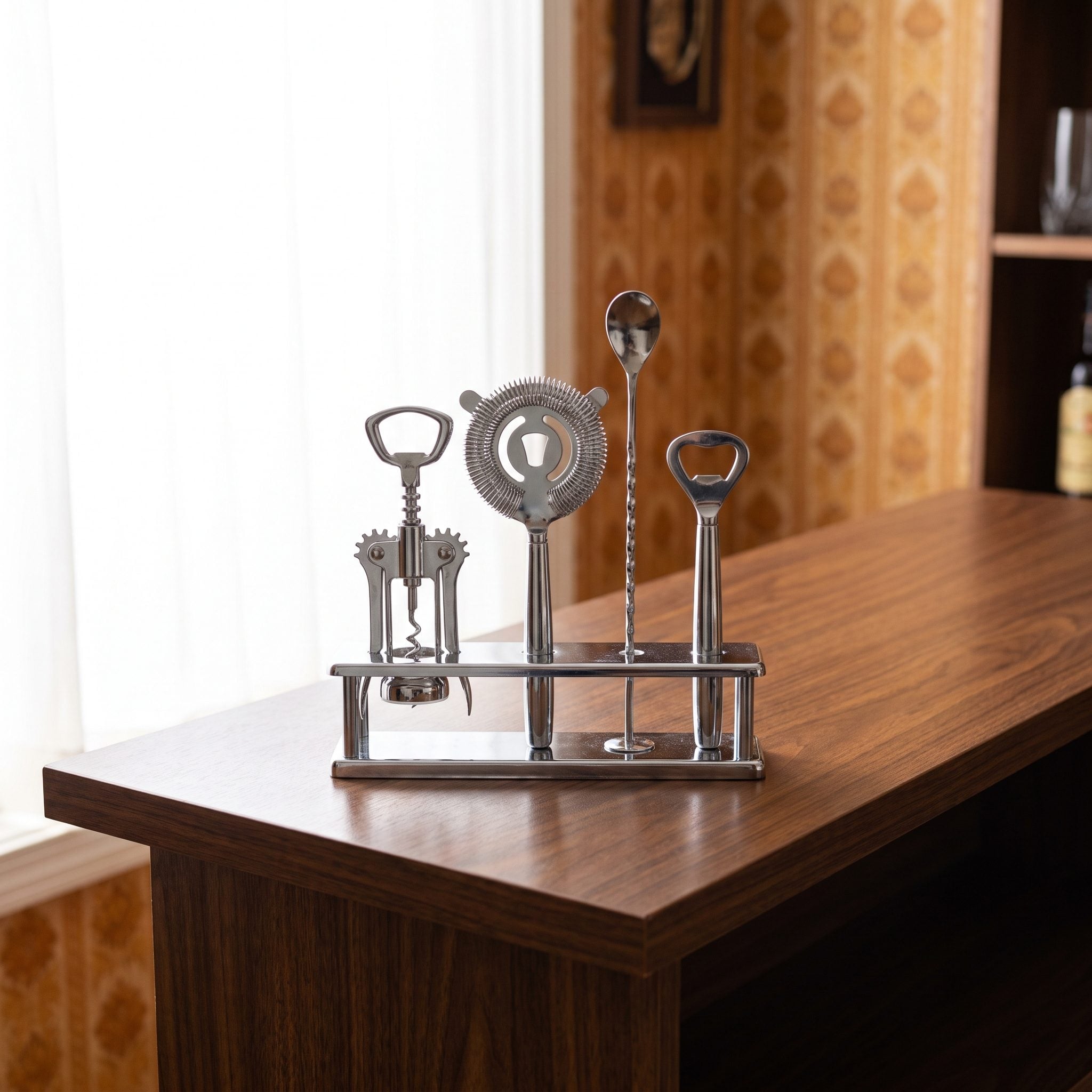
A matching set of bar tools was a compact declaration that the host had thought of everything. Corkscrew, strainer, long-handled spoon, and bottle opener stood together on a rack, their chrome and wood finishes coordinated for maximum effect.
Each had a legitimate purpose, although the bottle opener was likely to see more routine action than the cocktail strainer in many households. The stand kept everything accessible and gave the counter the appearance of a professional workstation. It was an excellent arrangement for making drinks and an even better one for looking prepared to make them.
4. The Cocktail Tray That Carried the Party Beyond the Counter
🔥 Would you like to save this?
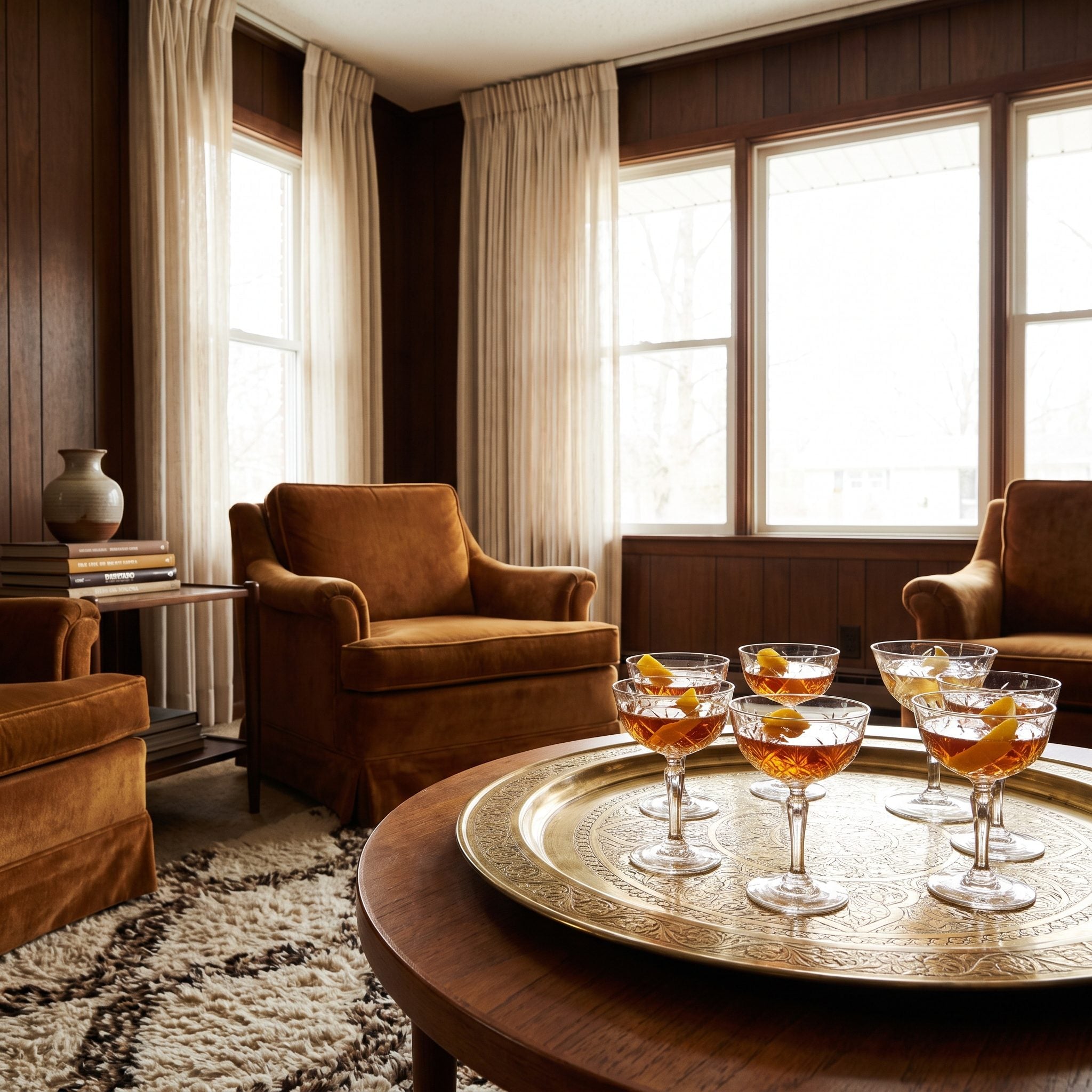
A serving tray gave the basement bartender a way to extend hospitality beyond the counter. Brass-tone metal, decorative patterns, and sturdy handles turned a practical object into another opportunity for coordinated design.
Carrying several filled glasses across a room required more care than the tray’s elegant appearance suggested, particularly when the route involved deep shag carpet. Still, the tray connected the bar to the surrounding seating areas. The drinks could travel, even when the guests had no intention of surrendering their favorite spot.
3. The Host Who Turned Mixing Drinks Into a Performance
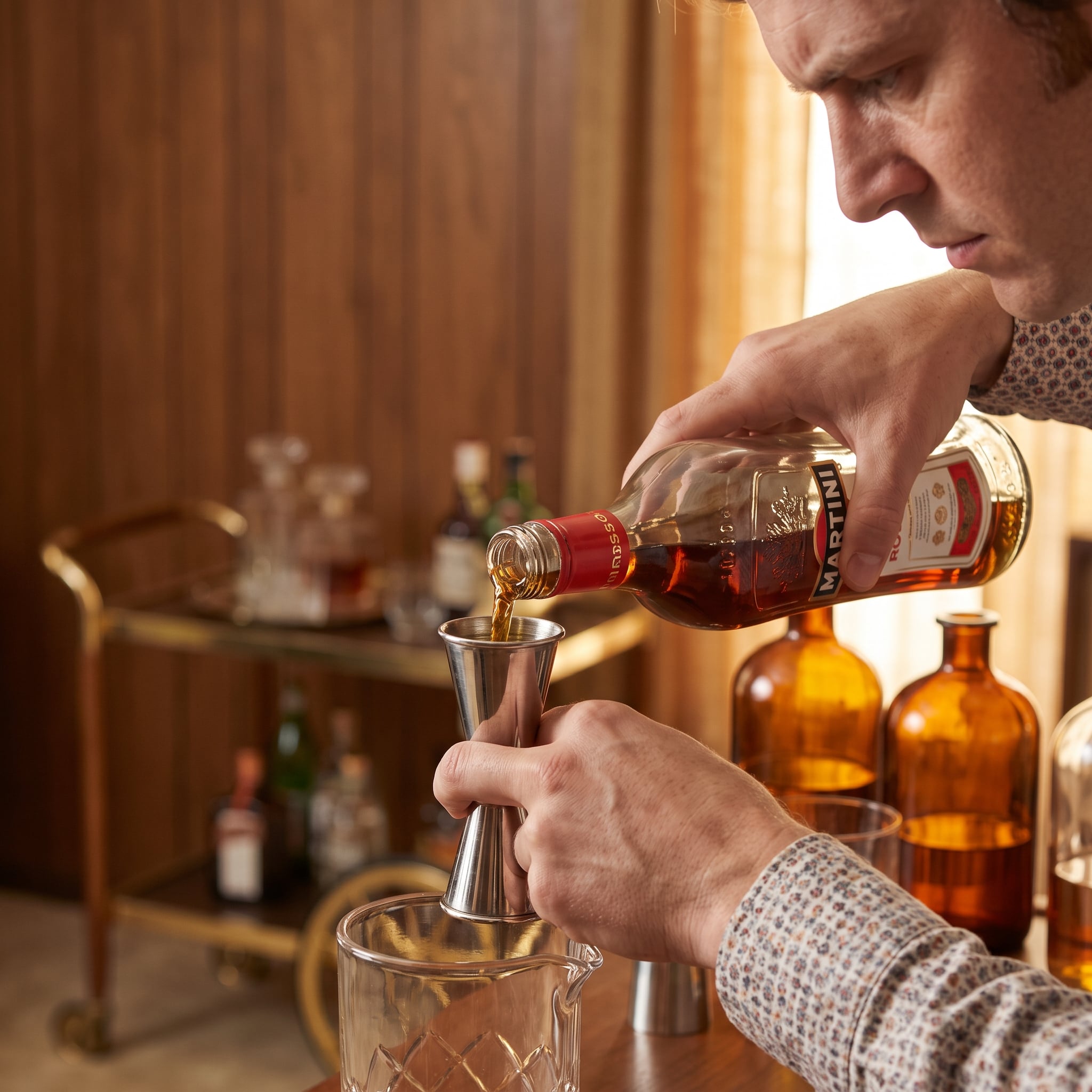
Behind the counter, the host could become bartender, entertainer, and master of ceremonies. Measuring spirits, stirring cocktails, adding ice, and selecting garnishes gave the evening a little structure and the guests something to watch.
Not every drink demanded an elaborate ritual, and plenty of parties relied on straightforward pours. But a properly mixed cocktail offered a small gesture of attention that setting out a bottle could not reproduce. The home bar’s real luxury was not the equipment. It was having someone on the other side of the counter willing to use it.
2. The Bar Stools Were Empty. Everyone Was Standing Around the Counter.
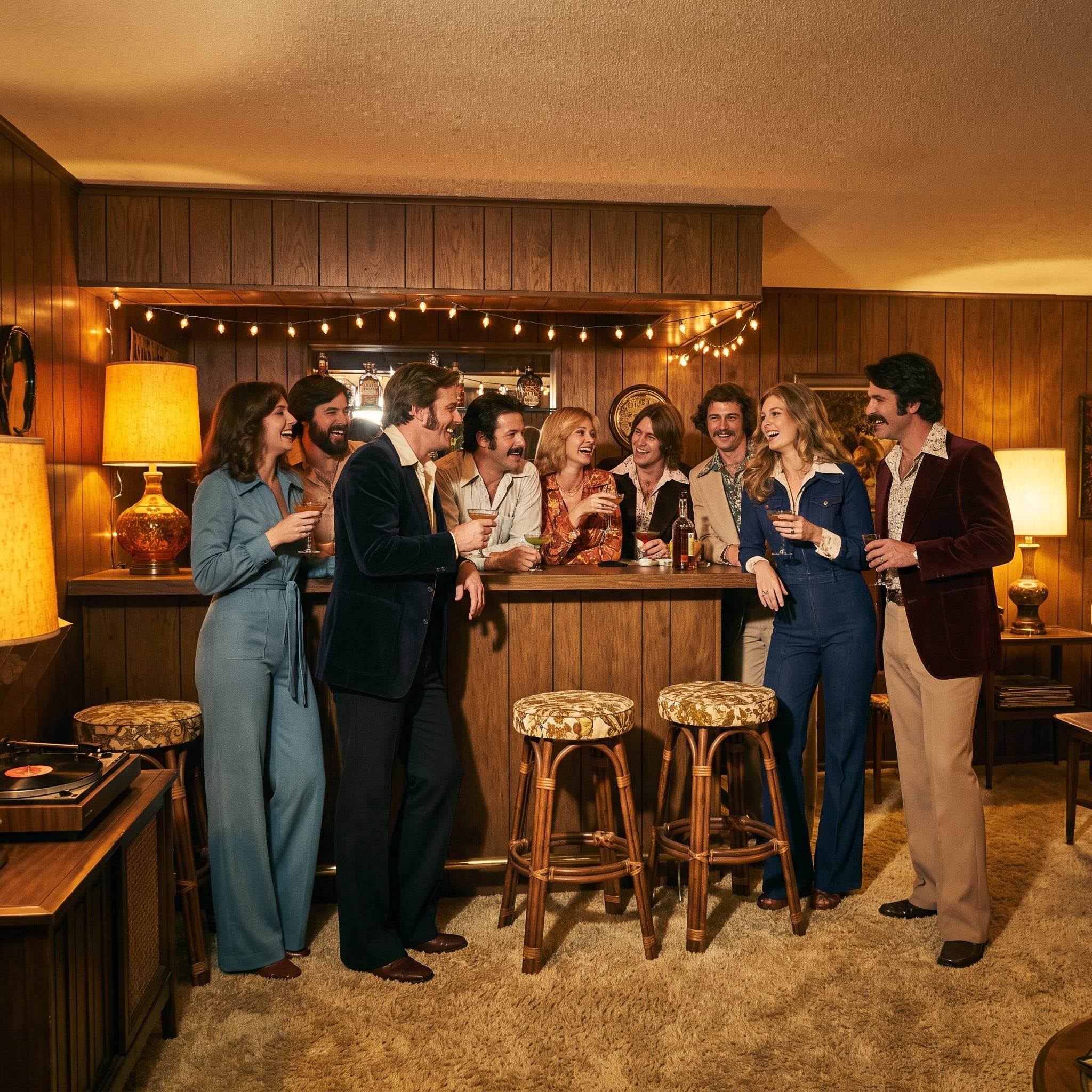
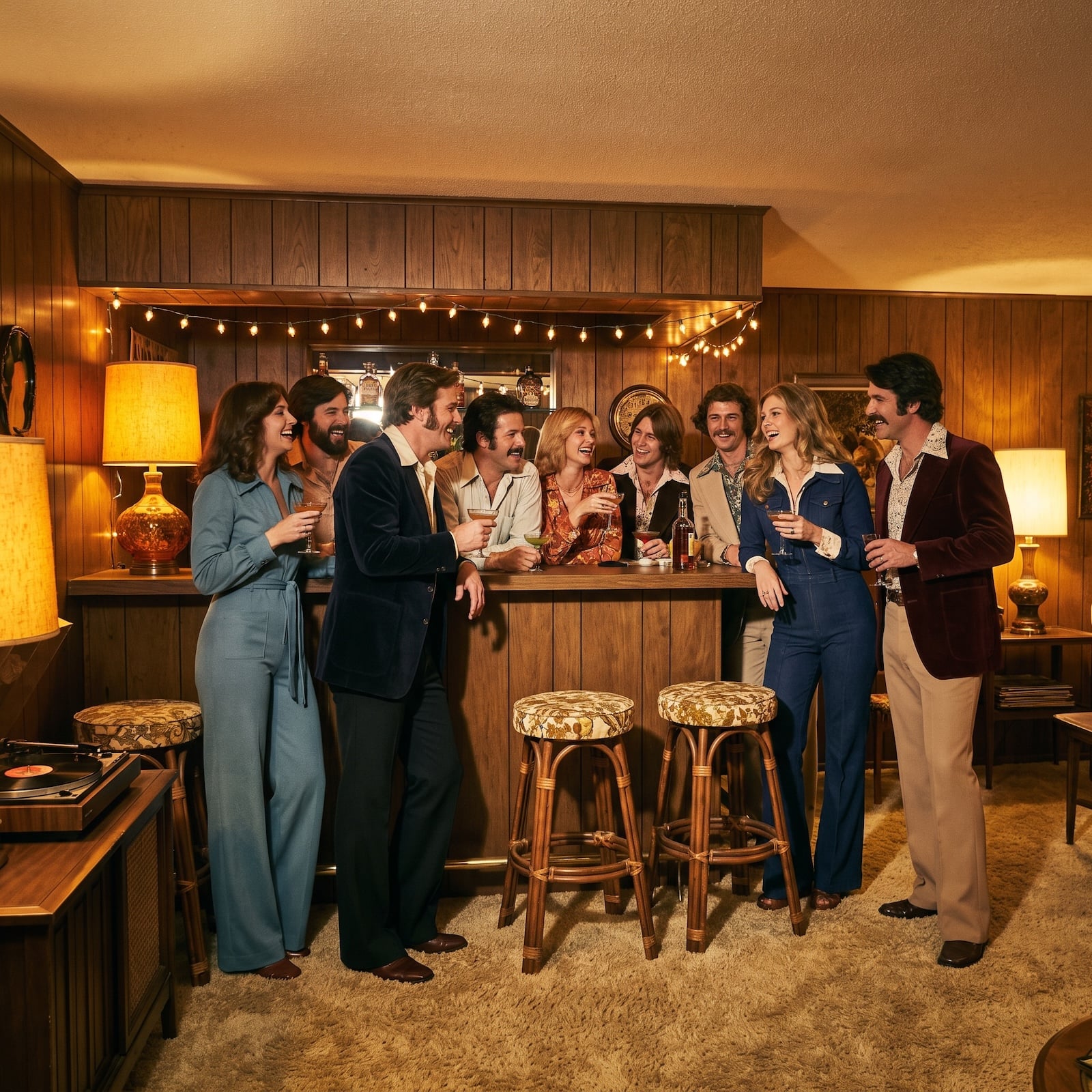
The great joke of the basement bar was that the stools could remain empty while the counter attracted a crowd. Guests gathered around the drinks, leaned against the padded edge, and moved between conversations without committing to a seat. The bar became the room’s social center, whether or not anyone needed another cocktail.
Its design encouraged that behavior. The counter provided a natural place to stand, the host supplied a reason to linger, and the surrounding space allowed conversations to expand or split apart. The expensive sofa could wait. The interesting people were standing by the bottles.
1. The Basement Corner That Became a Cocktail Lounge After Dark
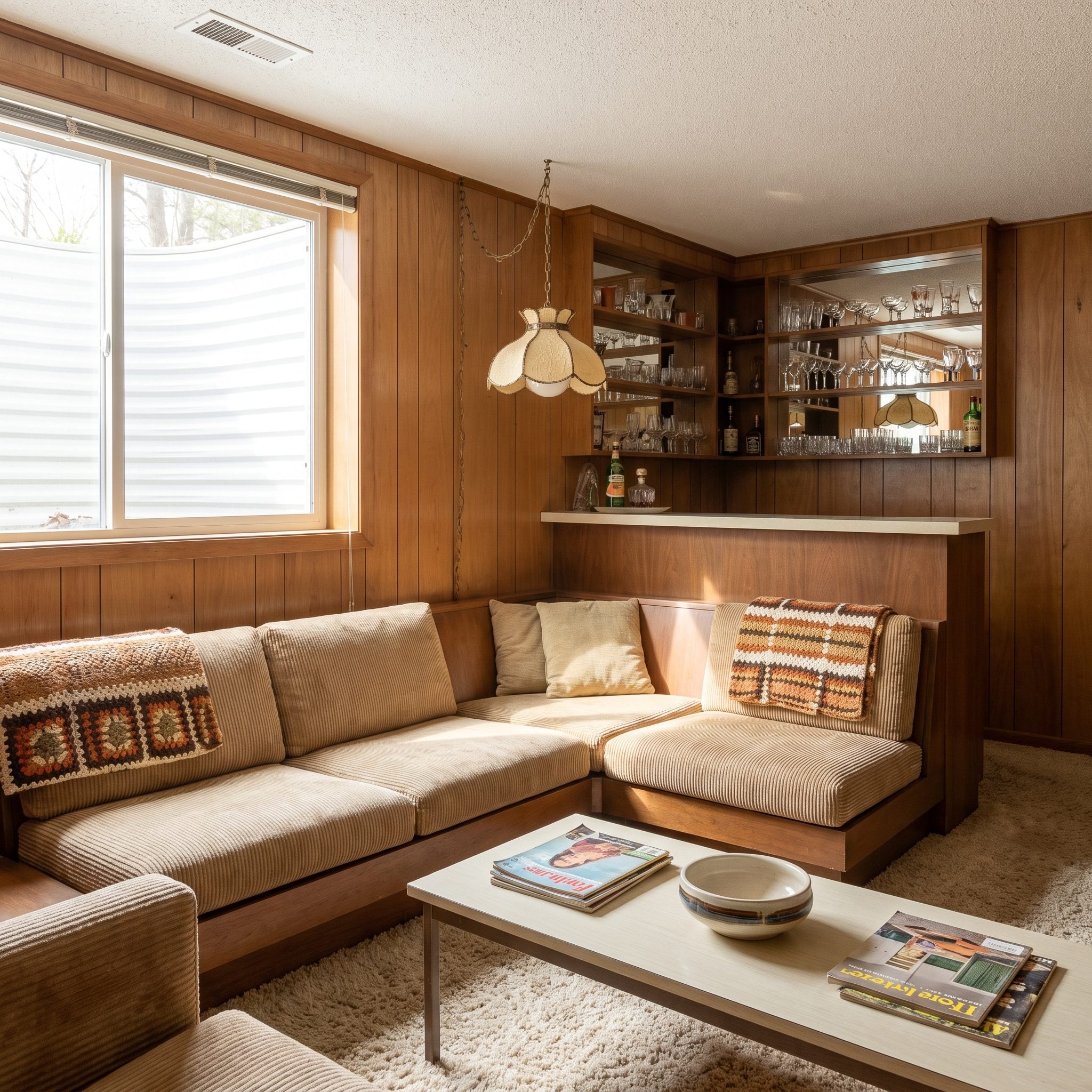
By itself, a wood-paneled counter was furniture. Add warm lighting, a record player, padded stools, a collection of glassware, and a few guests, and the basement acquired an entirely different personality. The transformation depended less on square footage than on how deliberately the room was arranged.
There was genuine ingenuity beneath the decorative excess. Mirrors stretched the space, lighting softened its edges, and the bar gave people somewhere to gather. The shag carpet, cigarette boxes, and avocado glassware may have dated spectacularly, but the social idea behind the room has aged rather well. The 1970s home bar understood something that expensive entertaining spaces still occasionally miss: the best room in the house is the one nobody wants to leave.