🔥 Would you like to save this?
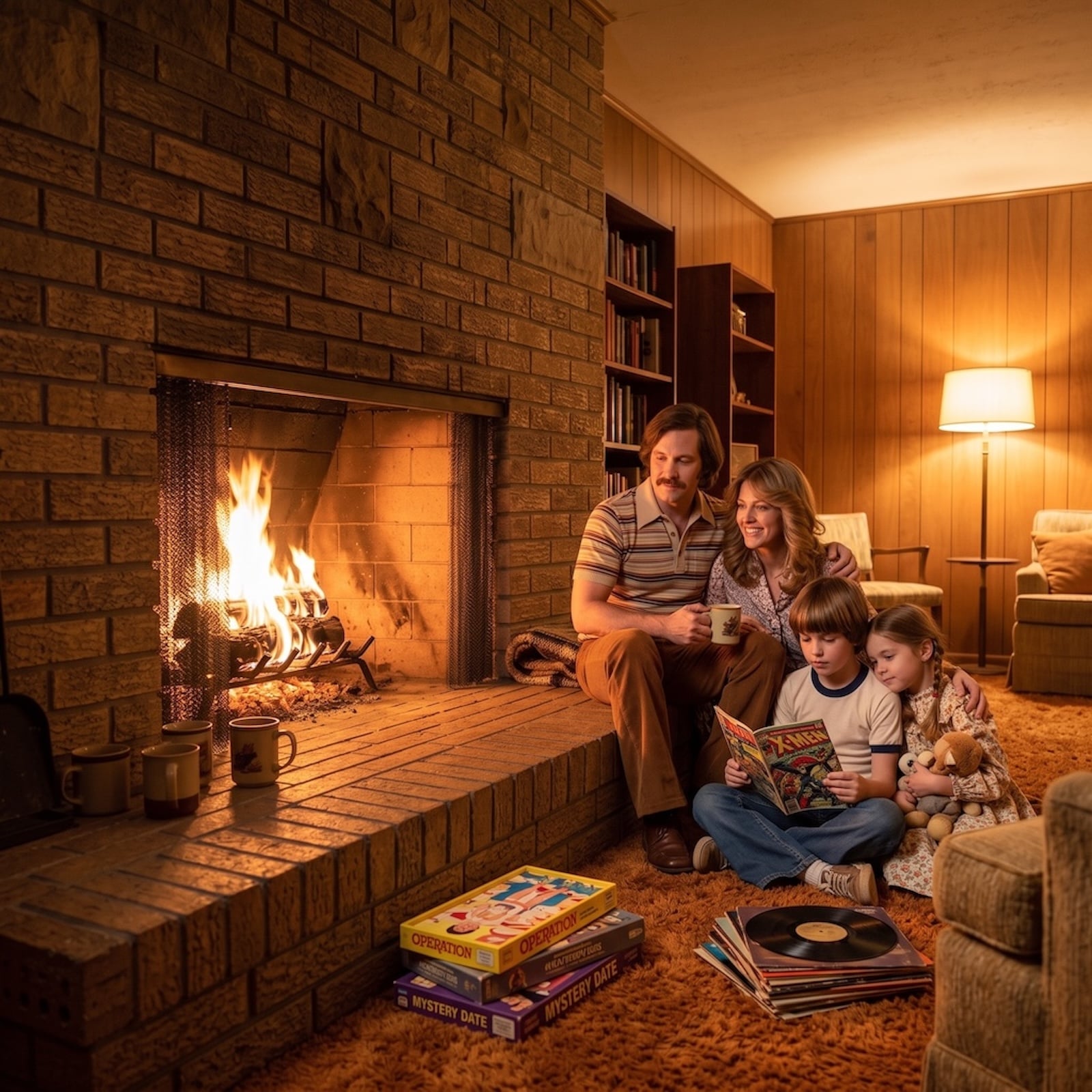
The old American family room was its own species. Darker than today’s great room, softer around the edges, and gloriously unconcerned with whether anyone walking through the front door would approve. Kids stretched out wherever there was carpet. Somebody owned the recliner by unwritten law. Games stayed half-finished, records stayed visible, and the coffee table was expected to survive whatever happened next.
Look closer and the coziness starts making practical sense. Furniture was deep enough to disappear into. Lamps illuminated people instead of the entire ceiling. Curtains could shut out the night. Books, toys, photographs, magazines, plants, stereo equipment, and somebody’s abandoned coffee cup were allowed to remain part of the scenery. Even the television occasionally had the manners to dress like furniture.
In order to come up with the very specific design ideas, we create most designs with the assistance of state-of-the-art AI interior design software. Also, assume links that take you off the site are affiliate links such as links to Amazon. this means we may earn a commission if you buy something.
No single decorating trick created that feeling. It came from dozens of small permissions: sit on the floor, leave the afghan out, put your feet up, let the kids’ stuff mingle with yours, don’t clear every surface before bedtime. What follows is a room designed less around presentation than occupation — and a pretty convincing explanation for why losing that distinction may have cost the modern house more comfort than anyone expected.
33. Wood-Paneled Walls Turned a Split-Level Into a Den
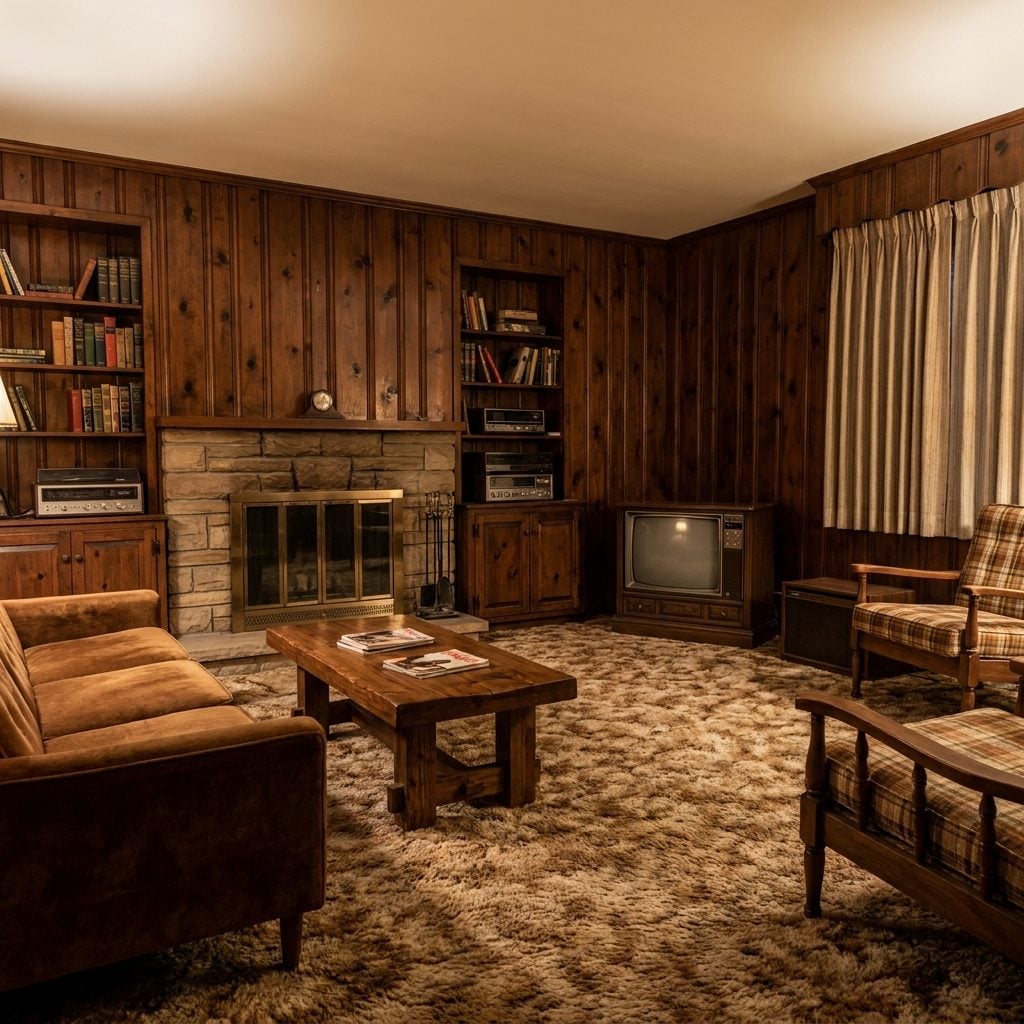
The paneling could make a split-level three blocks from a strip mall feel faintly like a cabin. Real timber was the prize, but printed hardboard did most of the work in ordinary houses, reproducing walnut, pecan, and other dark grains without requiring a lumberyard budget.
The reddish-brown walls also changed the light. Instead of bouncing every bulb around the room, they absorbed some of it and let the corners stay dark. You could disappear into one of these rooms at two in the afternoon and feel no obligation whatsoever to be productive.
A good dark family room still understands the appeal. Not every room needs to advertise itself from the front door.
32. The Oversized Sectional Made One Corner Family Headquarters
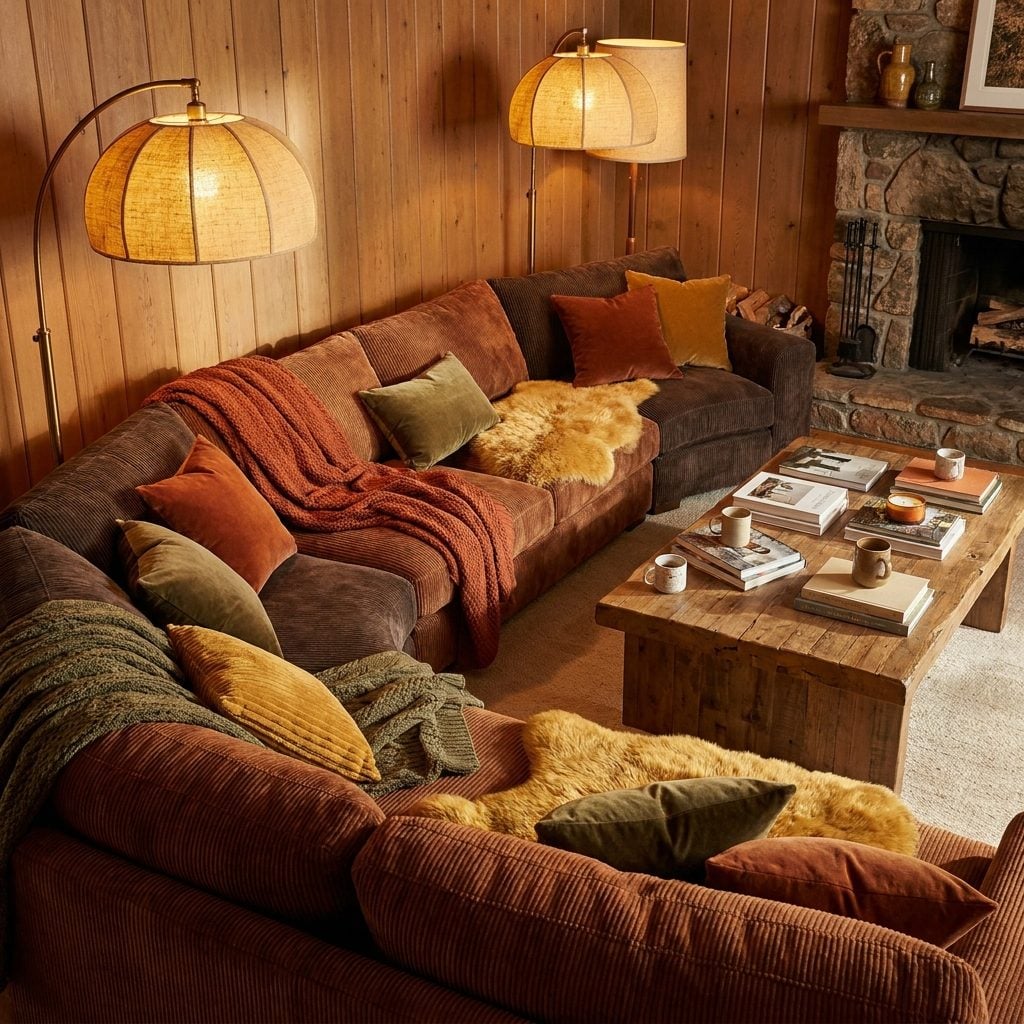
The sectional swallowed a corner and then started collecting people. Five could watch the same show without anybody negotiating personal space because personal space was not the assignment.
Its wraparound shape mattered as much as its size. Sit anywhere and you were still part of the group, able to see the television and the person arguing about what should be on it. Some sectionals could be rearranged as rooms or families changed, giving one enormous piece of furniture a surprising amount of flexibility.
If you’re planning a living room makeover, that’s the old trick worth remembering: arrange at least some seating for people to encounter one another, not merely the screen.
31. Table Lamps Let the Corners Stay Dark
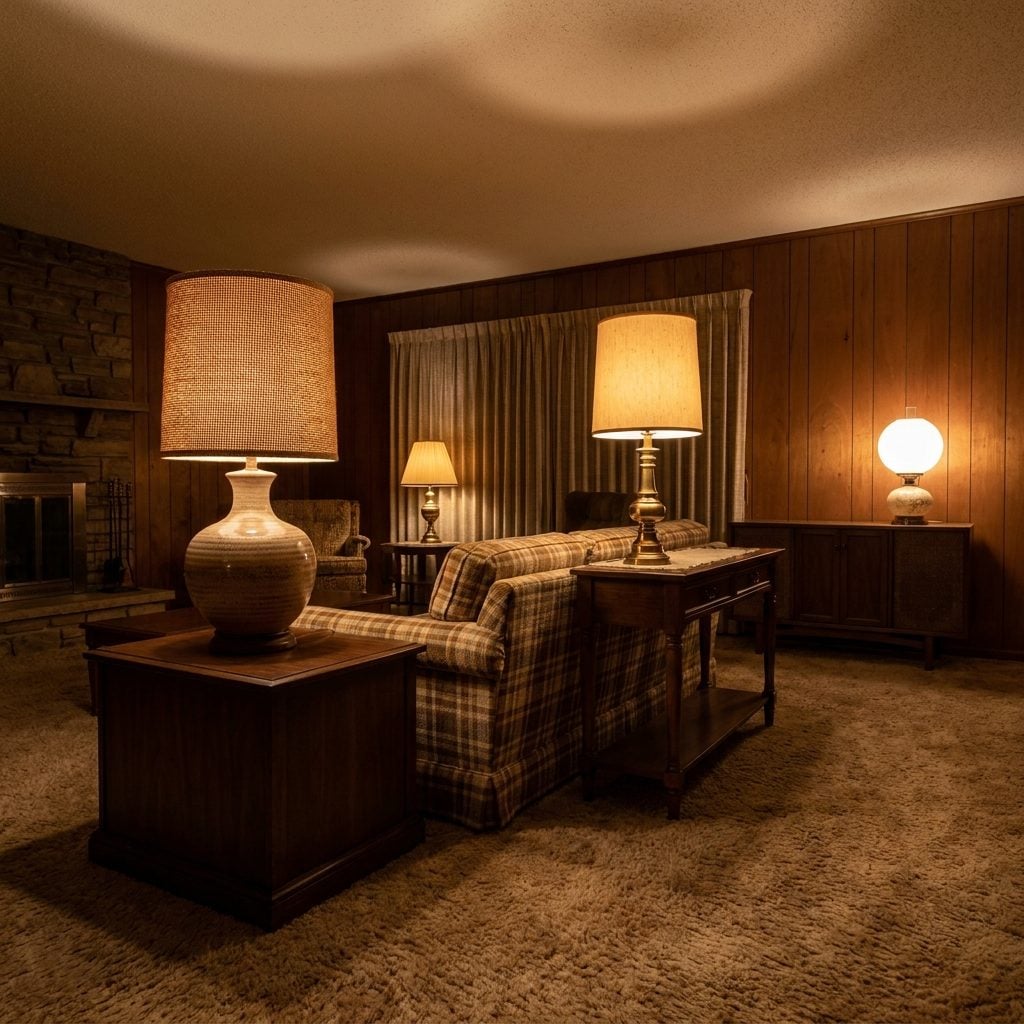
The big ceiling fixture existed. That didn’t mean anybody had to turn it on.
Family rooms were often lit down at human height: a lamp beside the sofa, another near the recliner, maybe a floor lamp over the reading chair. Those ceramic table lamps with pleated shades created separate pools of amber light instead of flattening every surface under one overhead blast.
The room felt smaller at night because you couldn’t see all of it at once. That was a feature.
30. Wall-to-Wall Carpet Quietly Turned the Floor Into Furniture
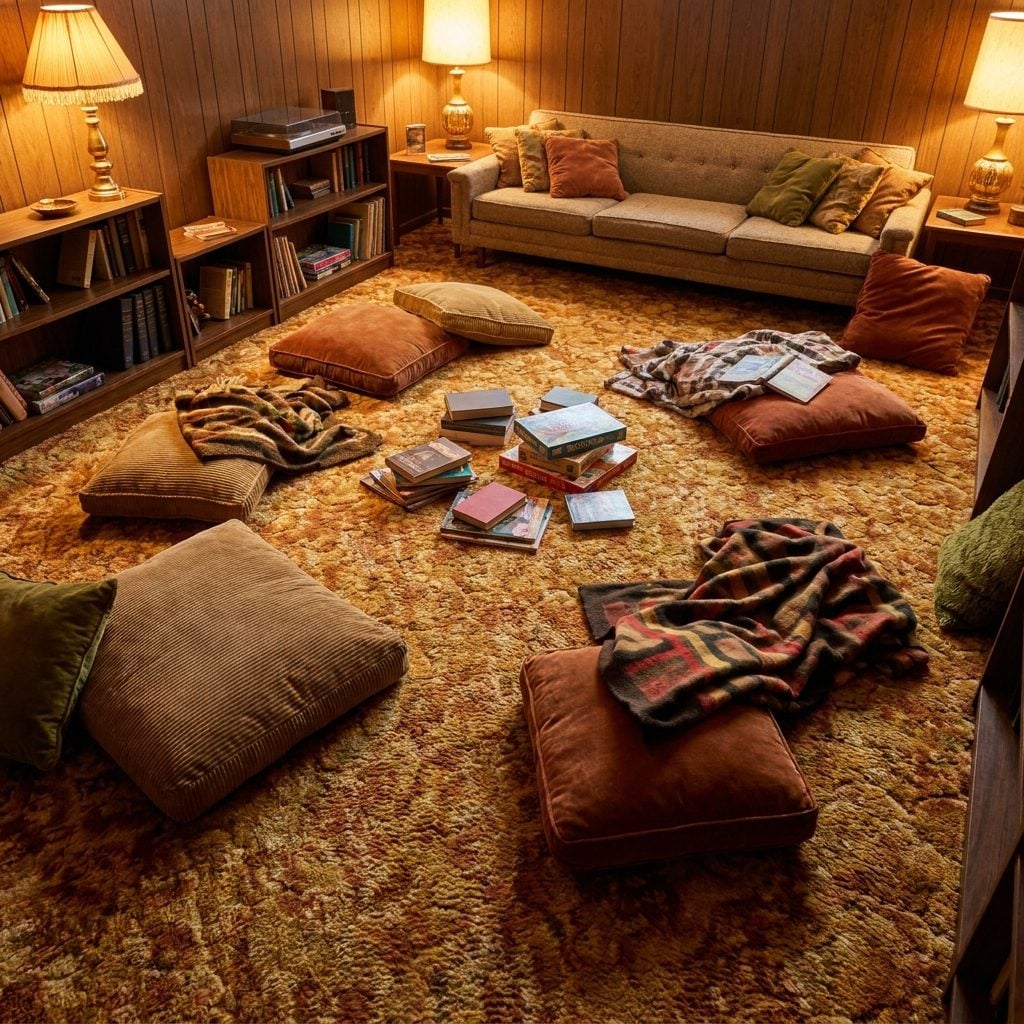
Once the entire room was soft, a chair stopped being mandatory. Kids did homework on their stomachs. The dog found the warm patch by the window. On movie night, whoever lost the race to the sofa simply spread out below it.
Carpet also took the edge off a busy room acoustically. Feet, toys, conversation, and television noise landed on something forgiving rather than bouncing off every hard surface.
Hard floors are handsome and wonderfully practical. They have simply never inspired many people to lie face-down and read a comic book.
29. The Big Brick Fireplace Told Every Chair Where to Go
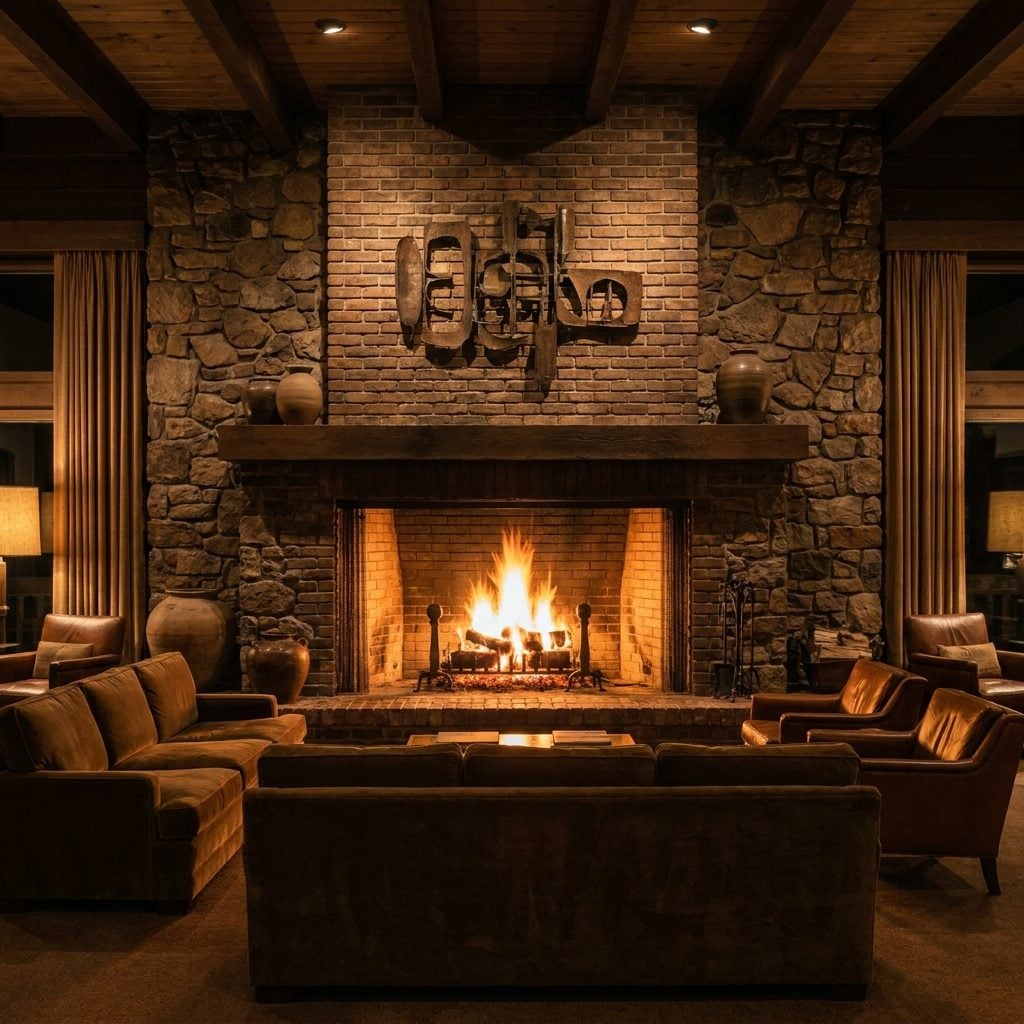
The fireplace gave the room an obvious center before anyone started worrying about media walls. Sofas angled toward it. Chairs drifted closer in winter. The mantel collected family photographs, clocks, candlesticks, and whatever seasonal arrangement arrived next.
Those fireplaces were not shy. Fieldstone could climb an entire wall. Brick hearths projected into the room. Timber mantels looked capable of holding up the house.
A slim modern insert can heat beautifully, but the old masonry versions had visual weight. Even when no fire was burning, the room still knew where its heart was.
28. The Crochet Afghan Wasn’t Styling. It Was Equipment.
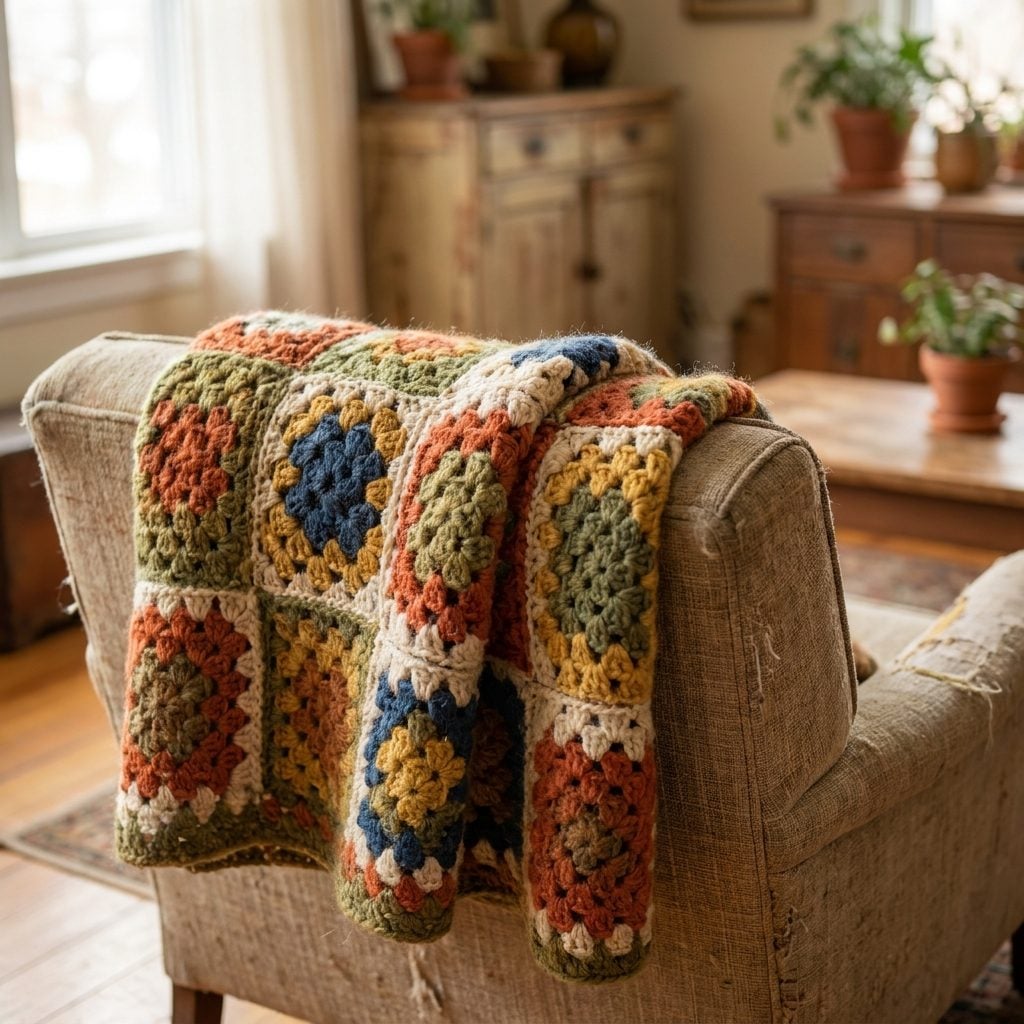
It lived on the back of the couch and never really left. Somebody’s grandmother made it from whatever yarn existed in the house, which is how orange, brown, mustard, avocado, and cream all ended up in one object without a committee approving the palette.
The afghan was permission to stop sitting properly. Grab it, disappear underneath, wake up during the ten o’clock news, and leave it crumpled where you landed.
A throw folded precisely over the arm of a designer sofa is decoration. This thing had a job.
27. The Stereo Corner Turned Listening Into an Event
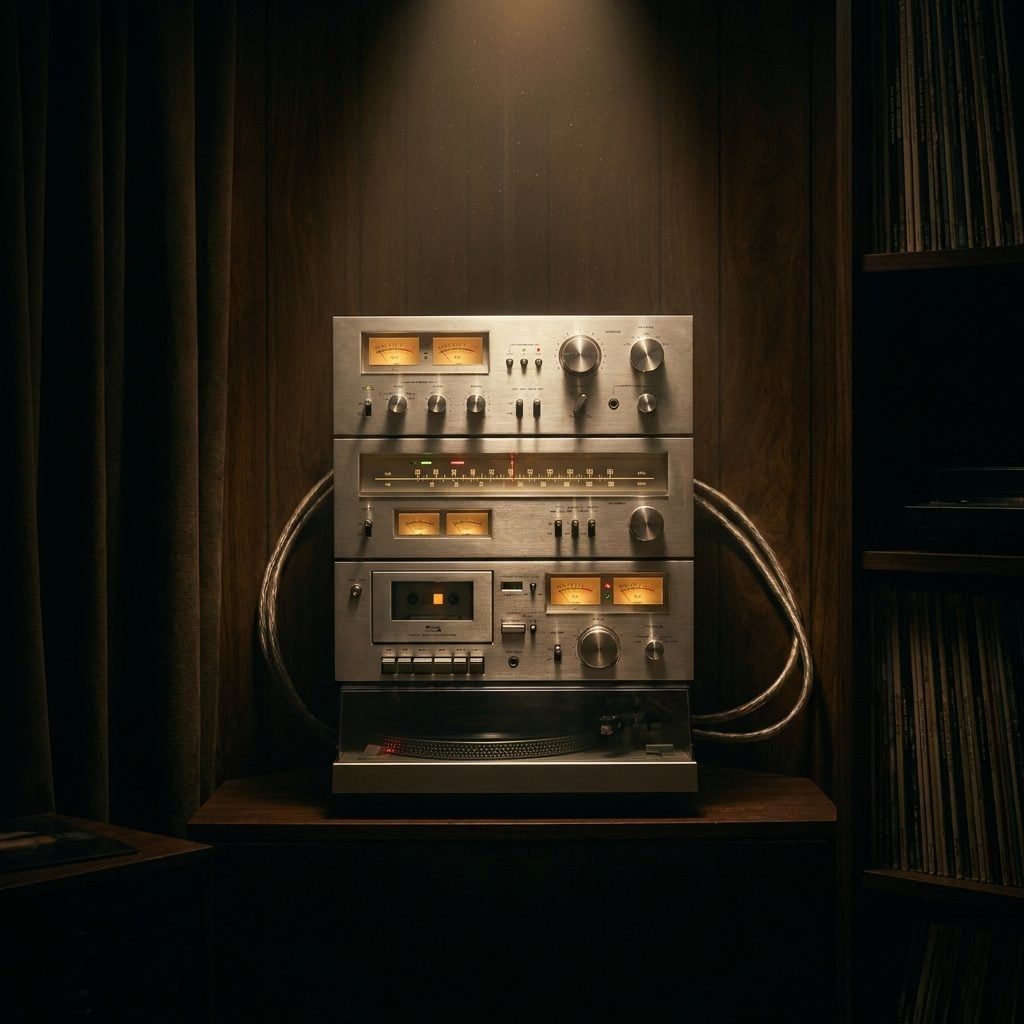
Serious music required real estate. The stereo occupied a corner because there were receivers, turntables, tape decks, tuners, sometimes an equalizer with enough sliders to suggest somebody knew what they were doing.
You knelt down, chose a record, lowered the needle, and then listened. The physical setup made music an activity rather than an invisible utility running somewhere in the background.
A phone can now summon almost every album ever recorded. That’s miraculous. The little ceremony around choosing one went somewhere in the bargain.
26. Floral and Plaid Upholstery Could Take a Hit
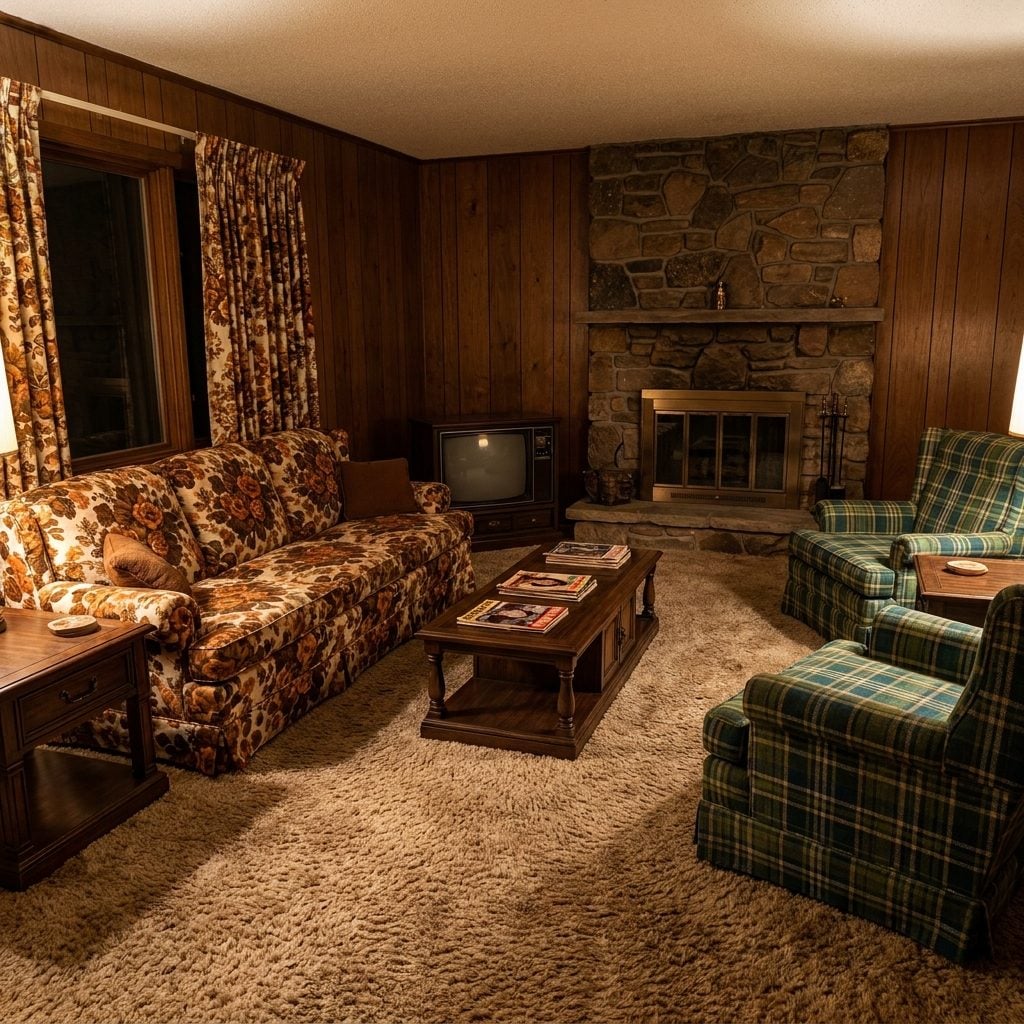
Busy upholstery was smarter than it looked. A dense floral or plaid could visually break up a juice stain, worn arm, or mysterious mark in a way a pale solid never will.
That mattered in a room occupied by children, pets, snacks, newspapers, shoes, and people who occasionally sat down while still holding food.
The patterns weren’t delicate, and neither was family life. They understood each other.
25. The TV Guide Was the Evening’s Flight Schedule
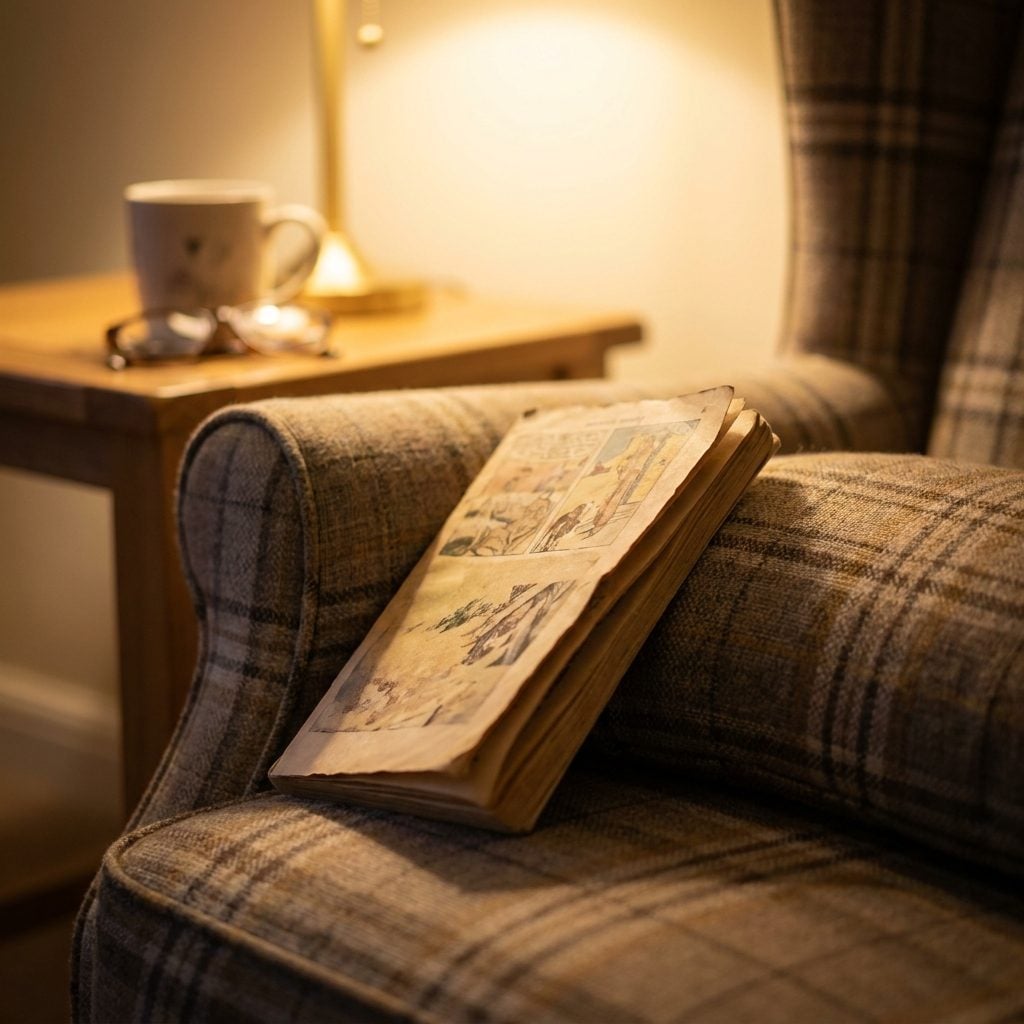
It had a designated habitat: beside the recliner, on the coffee table, wedged into the sofa cushions, or open to the evening listings with somebody’s pen marks already arguing for what came next.
The TV Guide mattered because television happened on television’s schedule. Miss the movie and there was no streaming service waiting patiently until tomorrow.
You planned the evening around a tiny magazine, and somehow that made the evening feel planned.
24. Heavy Curtains Could Make the Outside World Disappear
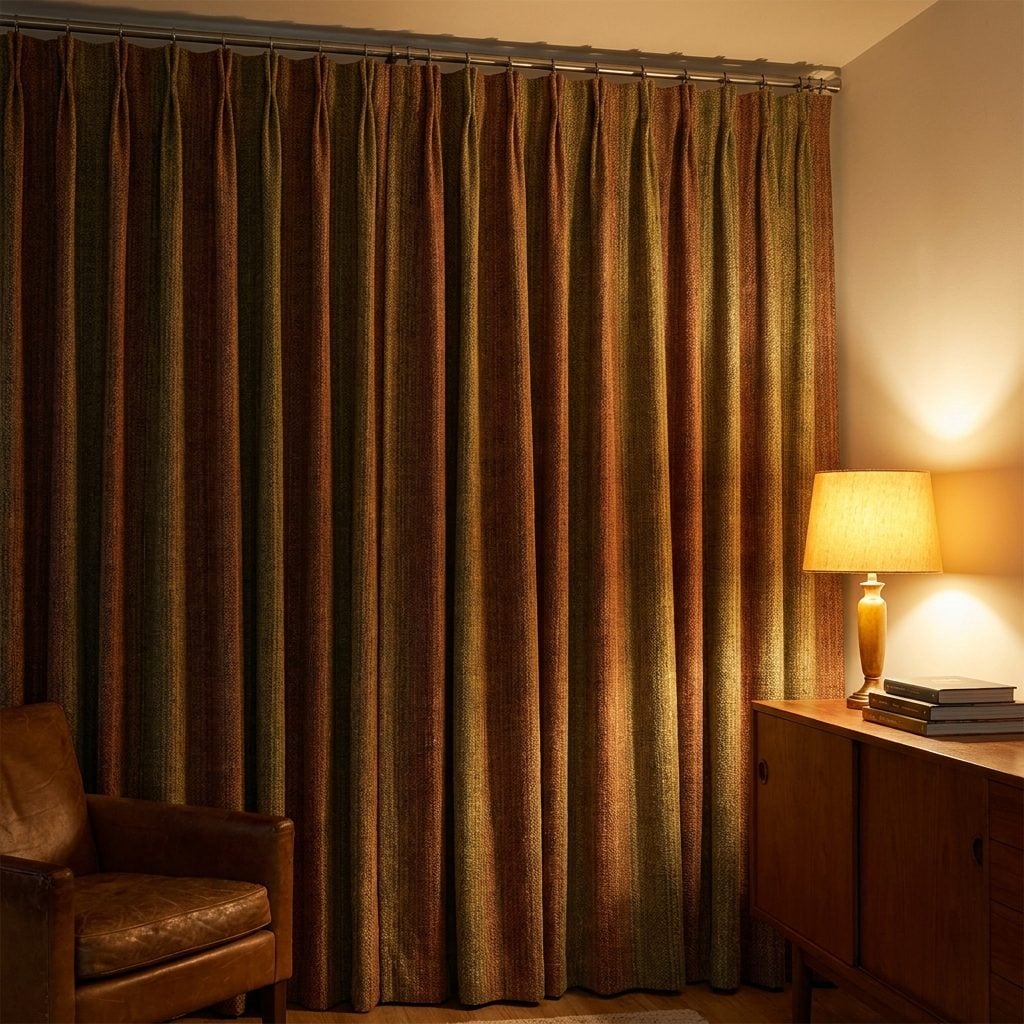
These were not airy linen panels politely framing the view. They were lined, full-length drapes hanging from traverse rods, often dense enough to make their own weather when you pulled them closed.
At night, the windows vanished. What remained was paneling, lamplight, upholstery, and whatever was happening inside the room.
The effect was almost architectural. You could pull the family room tight around you like another blanket.
23. The Recliner Had an Owner and Everybody Knew It
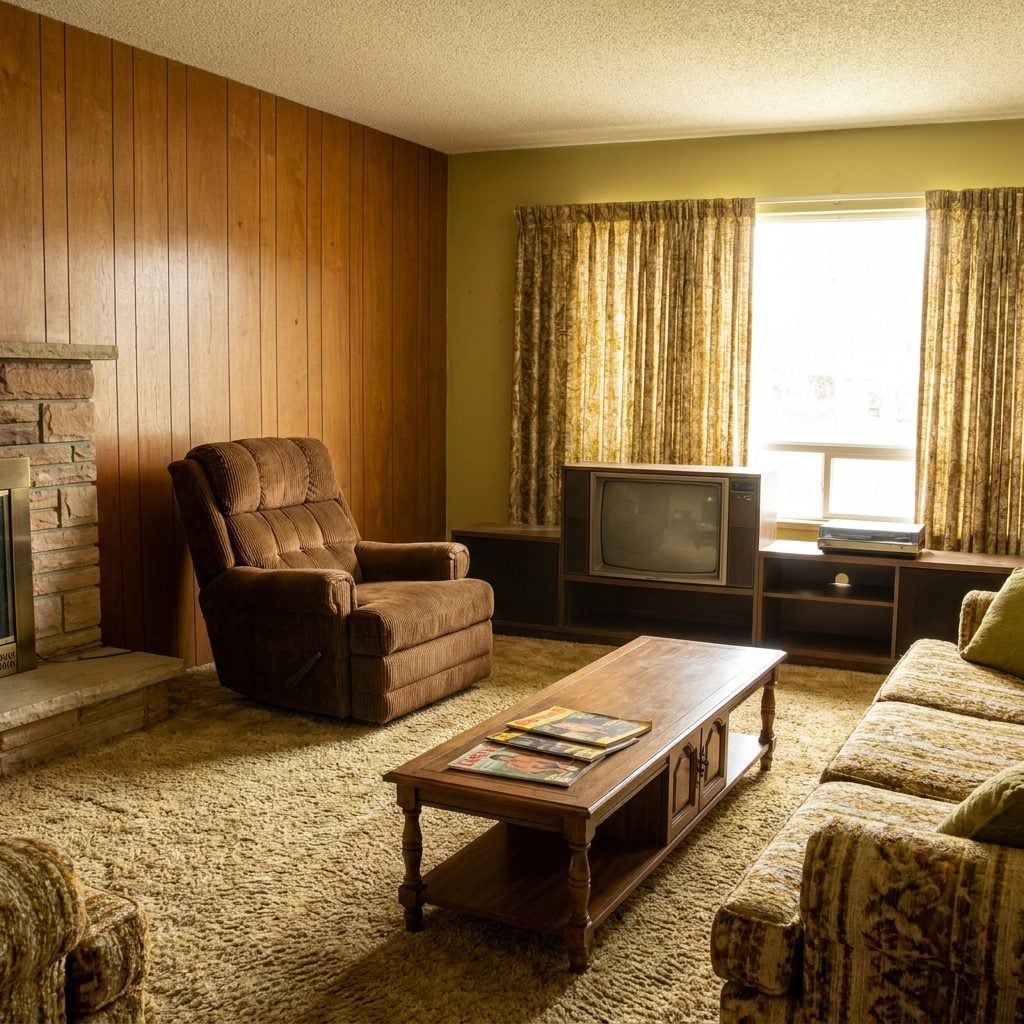
Every household seemed to have one chair that belonged to one particular adult through a combination of custom, body imprint, and unspoken law.
The armrest had a coffee-ring history. The cushion had learned one person’s shape. The lever required a particular little yank everybody else somehow got wrong.
The recliner turned sitting down into declaring yourself officially finished for the evening. Feet up. News on. Approach only with a good reason.
22. Houseplants Occupied the Places Furniture Couldn’t
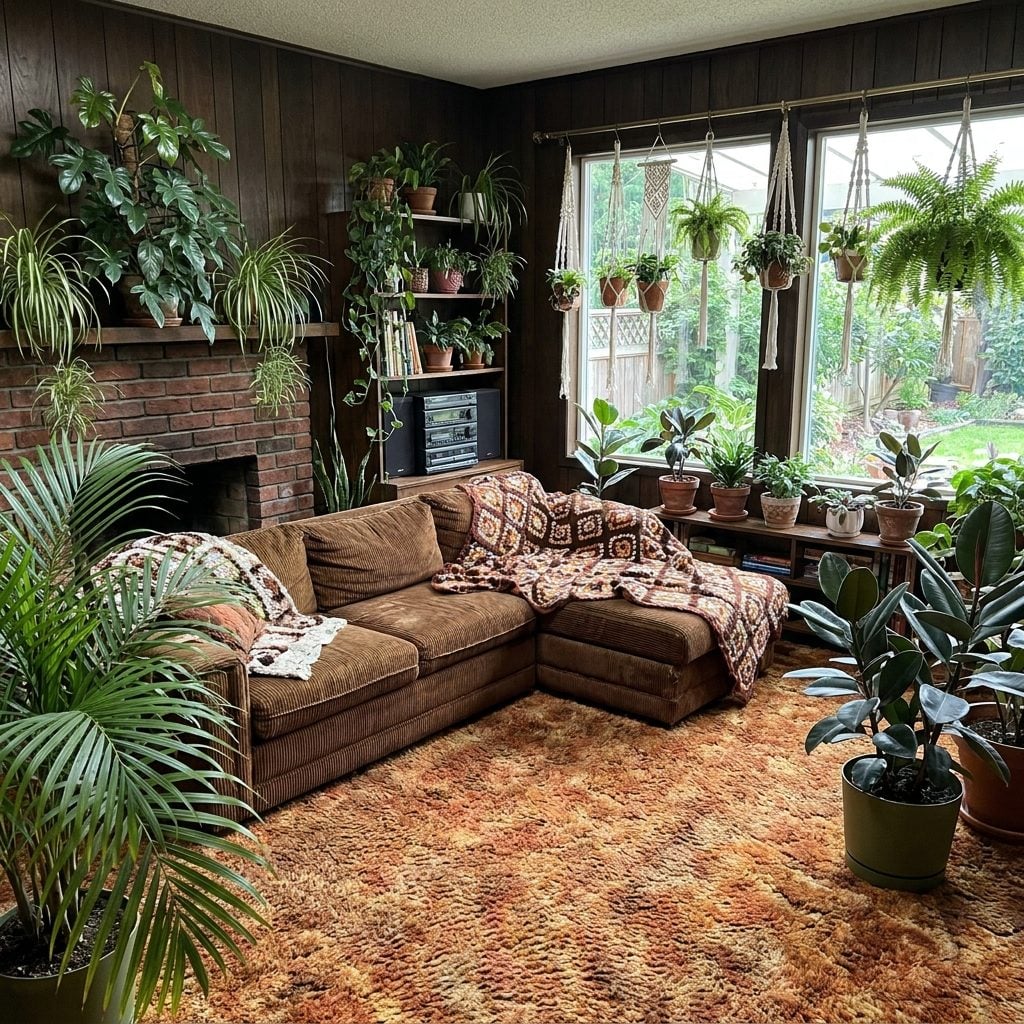
A split-leaf philodendron colonized the corner. Spider plants dangled from macrame hangers. Pothos crept along the top of the paneling like it had somewhere to be.
Plants filled all the awkward little gaps family rooms produce: beside a window, behind a chair, above a cabinet, at the end of a shelf. Their soft, irregular shapes were especially effective against rooms full of hard wood, brick, glass, and rectangular furniture.
We now call this biophilic design. Grandma called it finding somewhere to put the fern.
21. The Wood-Console TV Was Half Appliance, Half Sideboard
🔥 Would you like to save this?
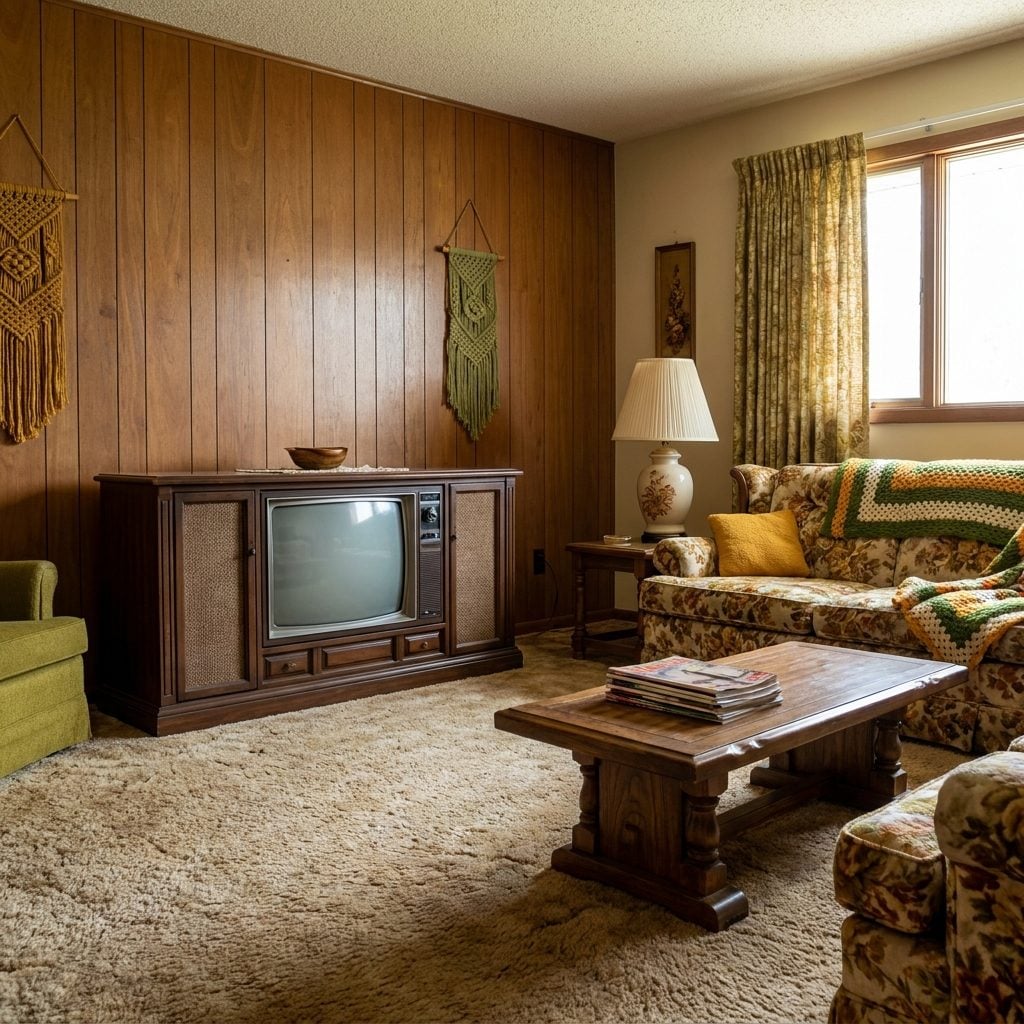
The television sat on the floor because it was built like cabinetry and weighed accordingly. Walnut veneer, speaker grilles, turned feet, knobs with satisfying resistance: the machine arrived wearing furniture.
The screen itself could seem comically small inside all that wood. Naturally, the broad top became another household surface. A plant. A framed photograph. Maybe a doily if someone was feeling formal.
You didn’t mount this television. You decided where it lived and then made peace with that decision for a decade.
20. Deep Shag Turned Carpet Into Terrain
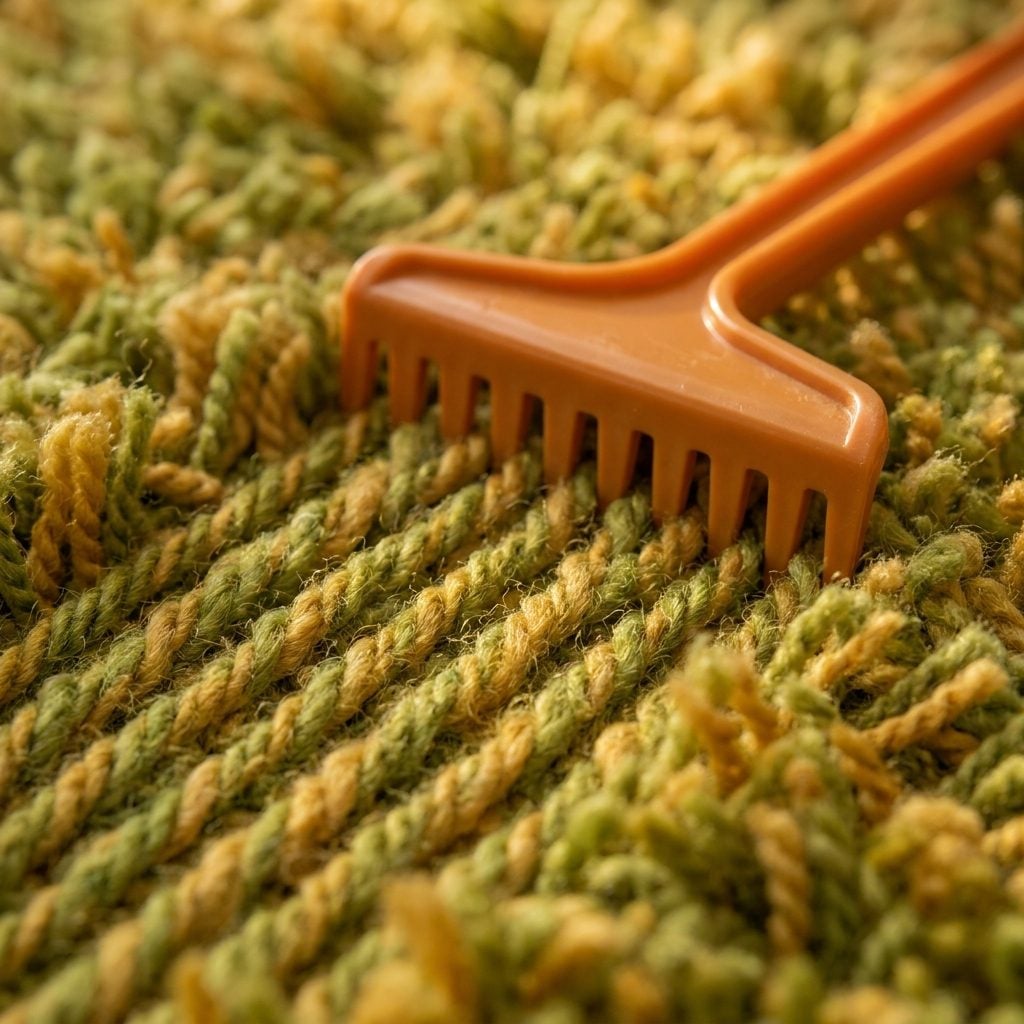
Shag was carpet with ambitions. Some versions were deep enough that grooming the pile became part of maintenance, and losing an earring could become a seasonal mystery.
What it did brilliantly was change the room at foot level. The surface looked thick before you touched it, muffled movement once you entered, and made sitting on the floor feel less like losing a chair and more like choosing one.
I’ve defended shag before. I remain available to do so again.
19. Built-In Bookshelves Gave the Fireplace a Whole Wall
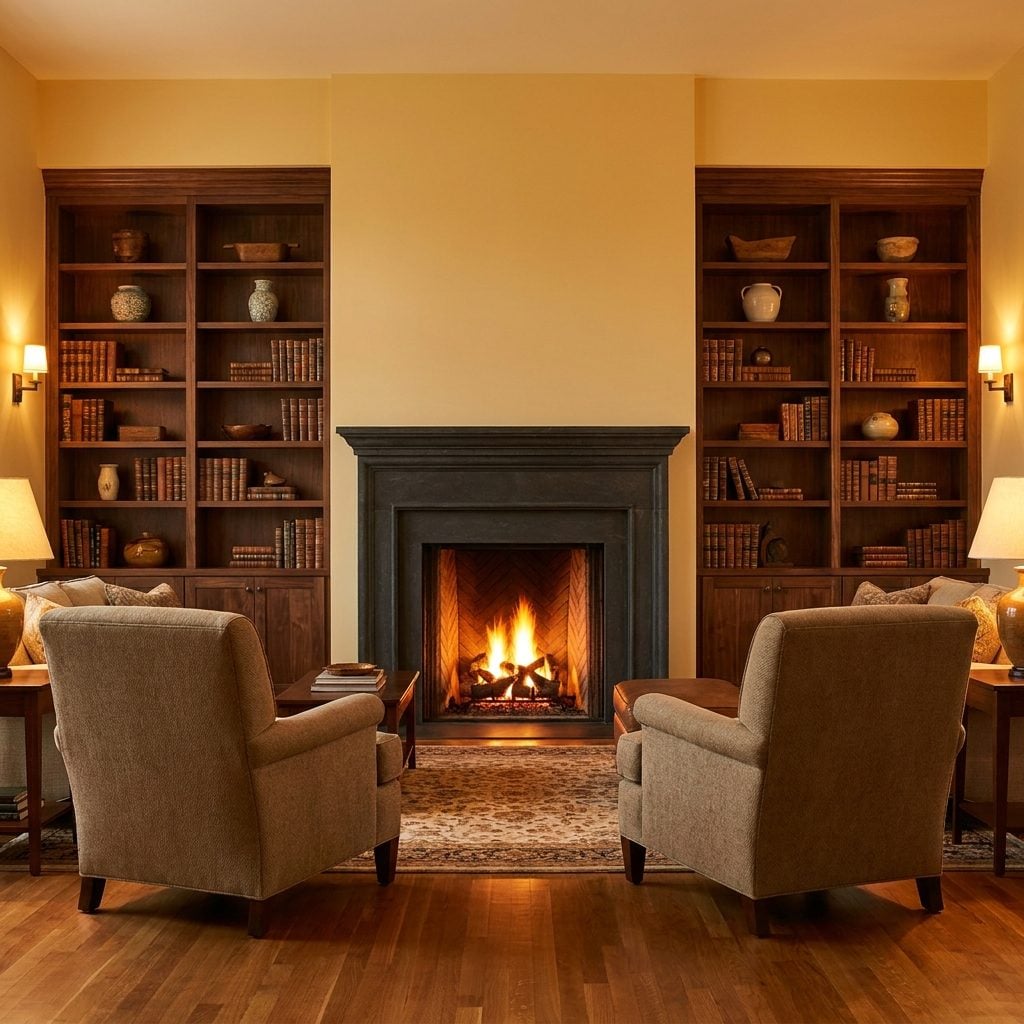
A fireplace framed by floor-to-ceiling shelves stopped being an isolated feature and became a composition. The whole wall appeared to have been designed around sitting down and staying there.
The architecture also created enormous storage without importing another freestanding cabinet. Books, albums, games, photographs, encyclopedias, and souvenirs all acquired addresses.
If you’re considering a living room makeover, this idea still holds up: built-ins can give a fireplace visual weight while making the wall earn its square footage.
18. The Family Phone Made Privacy a Matter of Cord Length
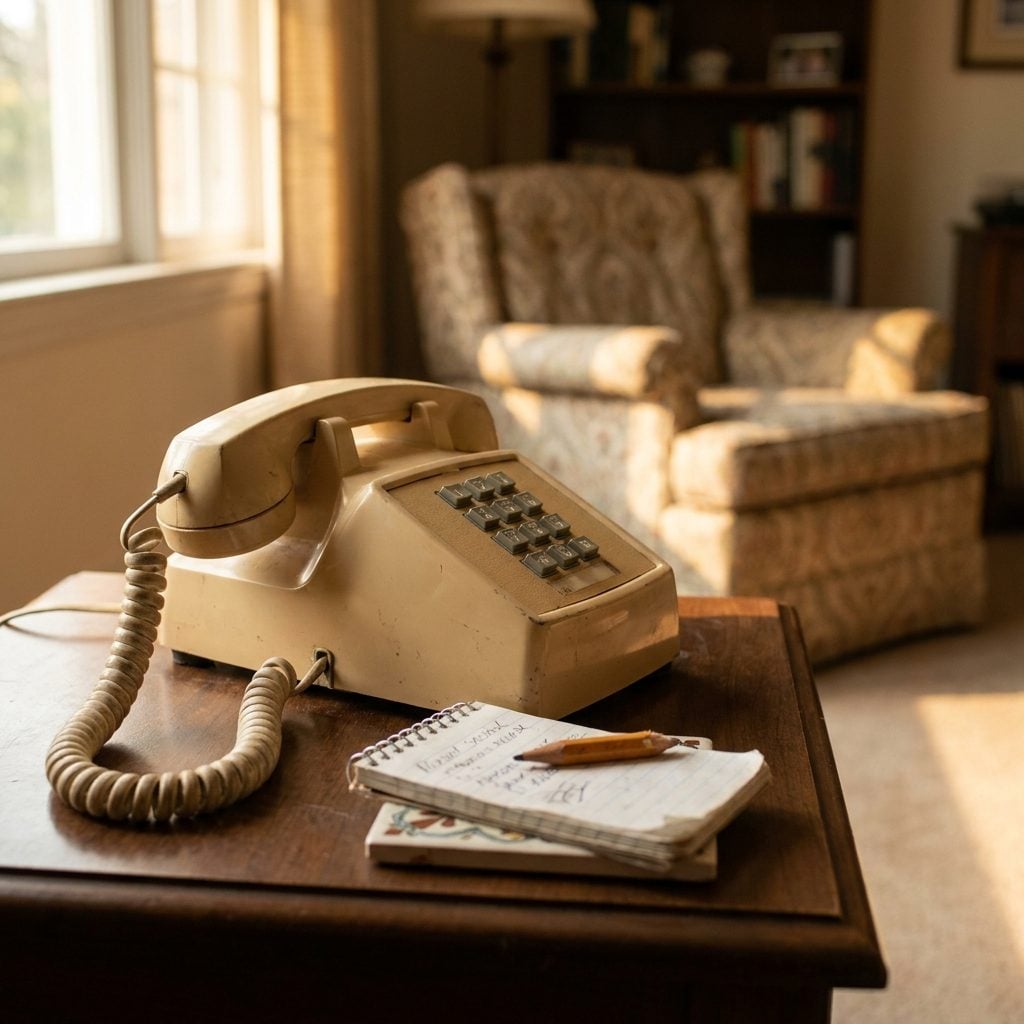
One telephone. One household. One line.
It sat on an end table beside a notepad, a pencil somebody had chewed, and perhaps an address book containing every number the family actually knew.
The coiled cord represented the full extent of teenage privacy. Stretch it around the corner and hope nobody listened. Eventually it snapped you back toward the room like a leash.
The phone wasn’t merely in the family room. It tethered conversations to it.
17. Swag Lamps Drew an Invisible Circle Around the Seating Area
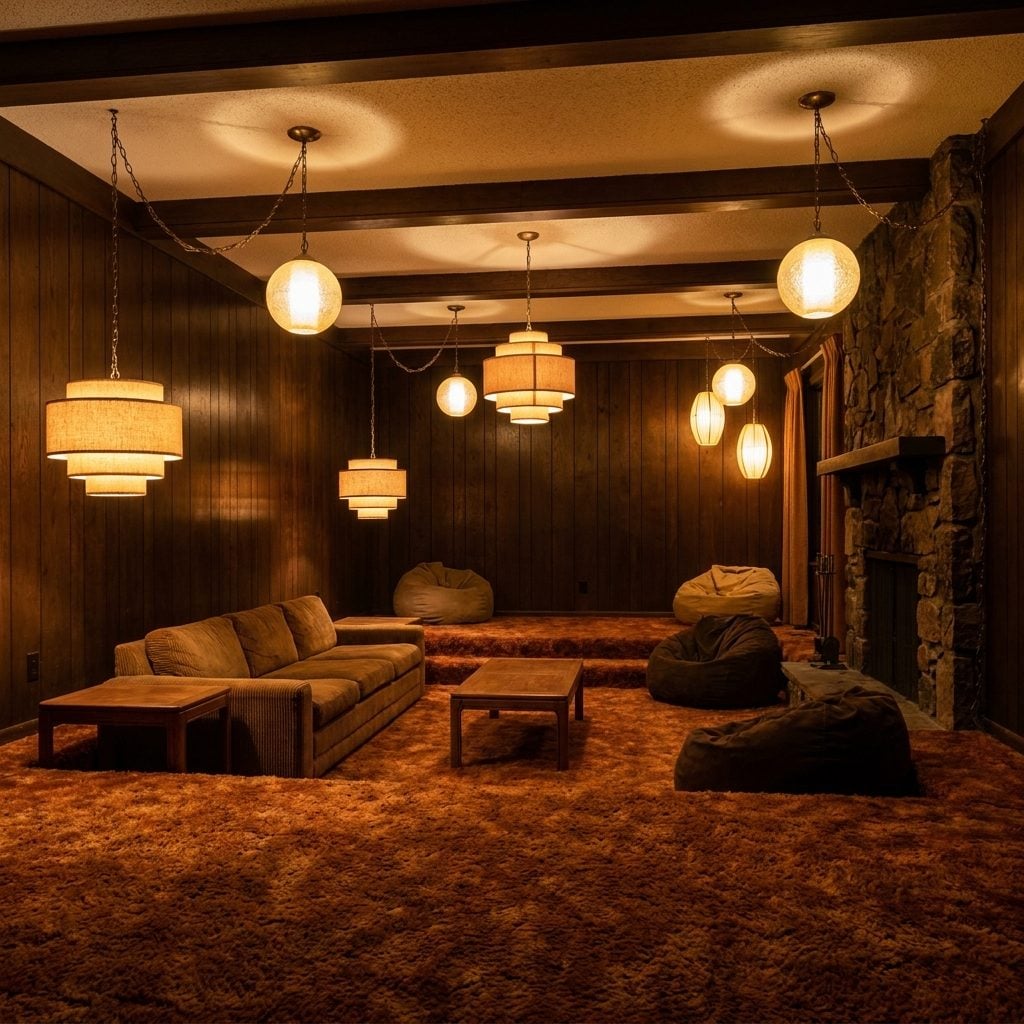
A swag lamp solved a lighting problem with a chain, a ceiling hook, and the nearest outlet. No electrician required.
Amber glass, smoked globes, textured shades, even fringe appeared over seating groups, hanging low enough to define a patch of room beneath them. The light didn’t illuminate everything. It announced where the gathering was happening.
Walls weren’t necessary. A warm circle on the carpet did the zoning.
16. Overstuffed Sofas Made Getting Up Seem Like Tomorrow’s Problem
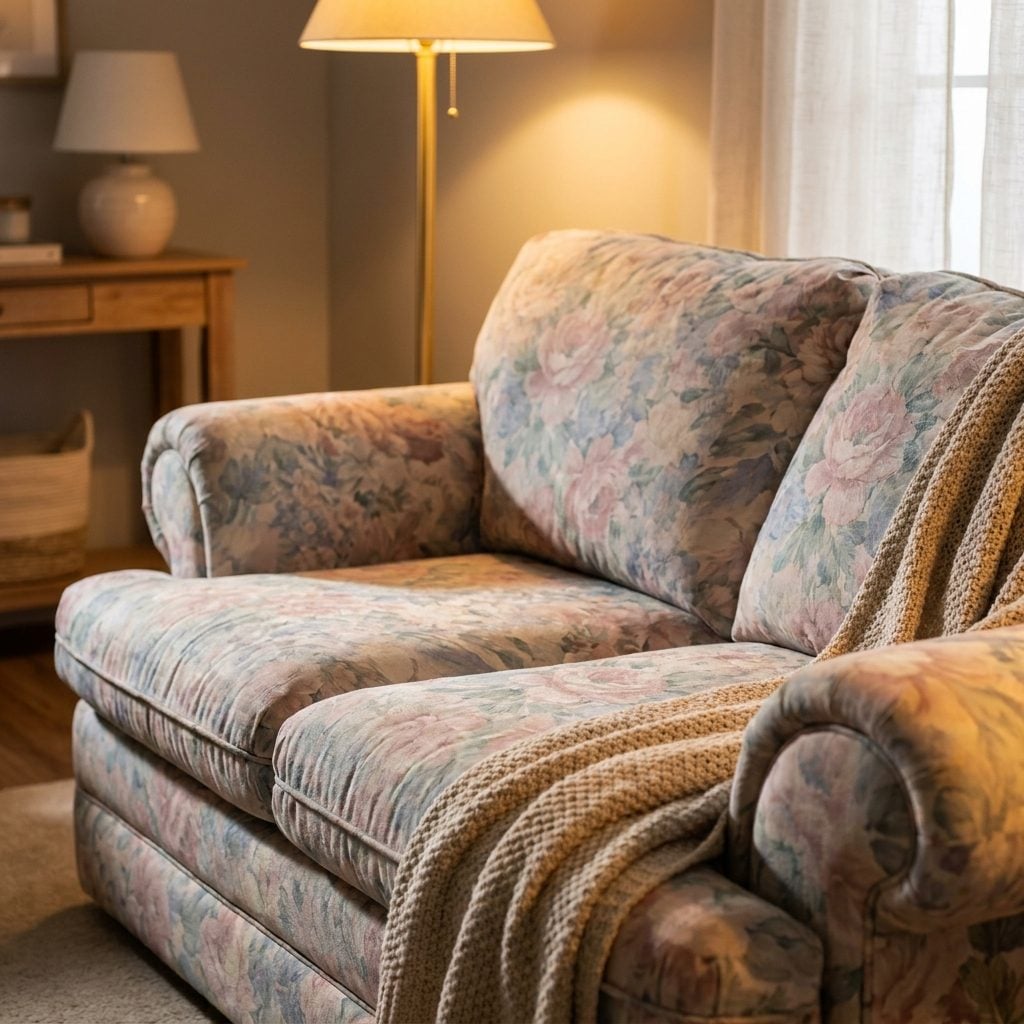
You did not sit delicately on these sofas. You surrendered to them.
Deep cushions, thick arms, loose backs, and enough stuffing to complicate standing up turned the simple act of watching television into a minor commitment. Where the sectional was about fitting everybody, the overstuffed sofa was about making whoever got a seat reluctant to leave it.
Modern furniture can be beautifully tailored. This furniture had no interest in tailoring you.
A sofa you have to climb out of is a sofa that has made a persuasive case for staying awhile.
15. Records, 8-Tracks, and Cassettes Put Taste on Display
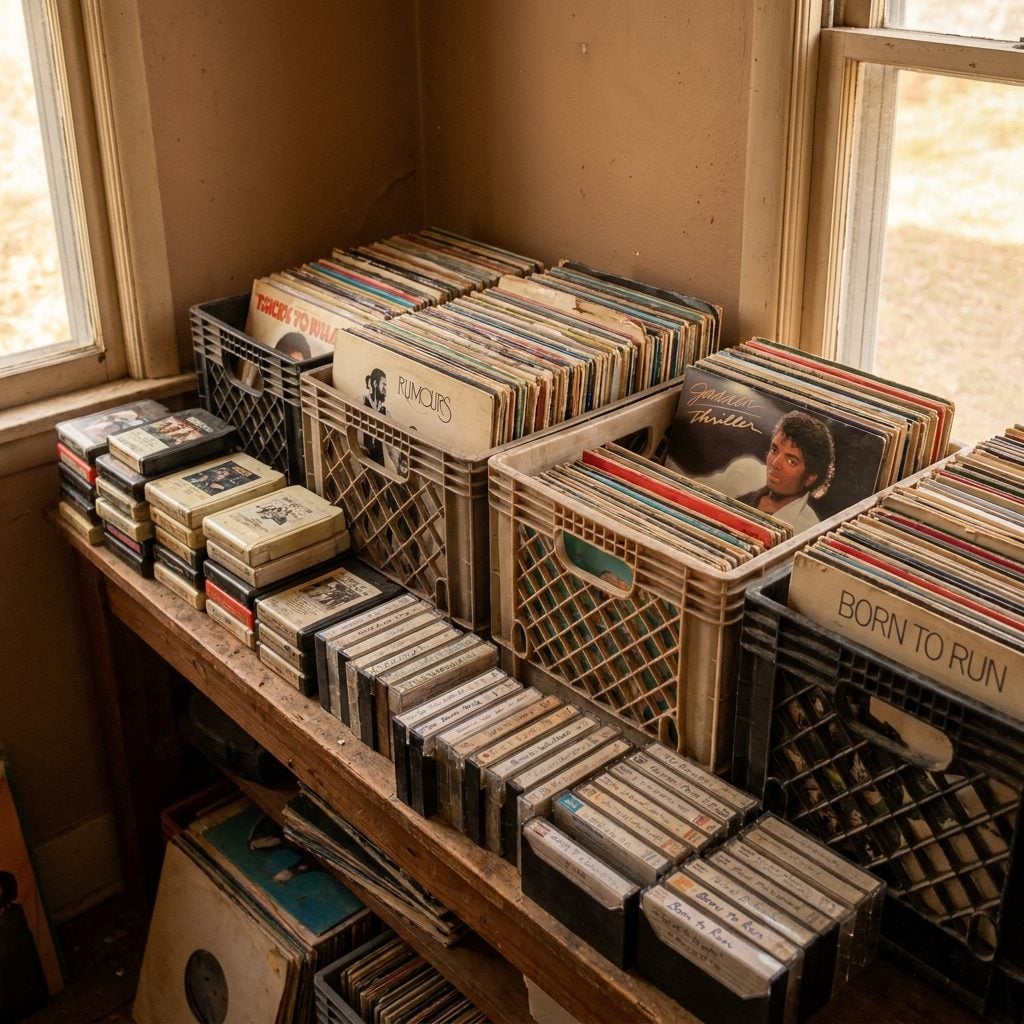
The music collection occupied physical space. LPs leaned upright in crates or low cabinets, their jackets worn at the corners from being thumbed through. Eight-tracks stood in racks. Cassettes accumulated in cases and shoeboxes, half of them labeled in somebody’s handwriting.
Choosing something meant crouching down and browsing. Your taste was visible before a note played.
Digital libraries are vastly more convenient, but a wall of records told a visitor something about the household before anybody introduced themselves.
14. Earth Tones Made Almost Everything in the Room Agree
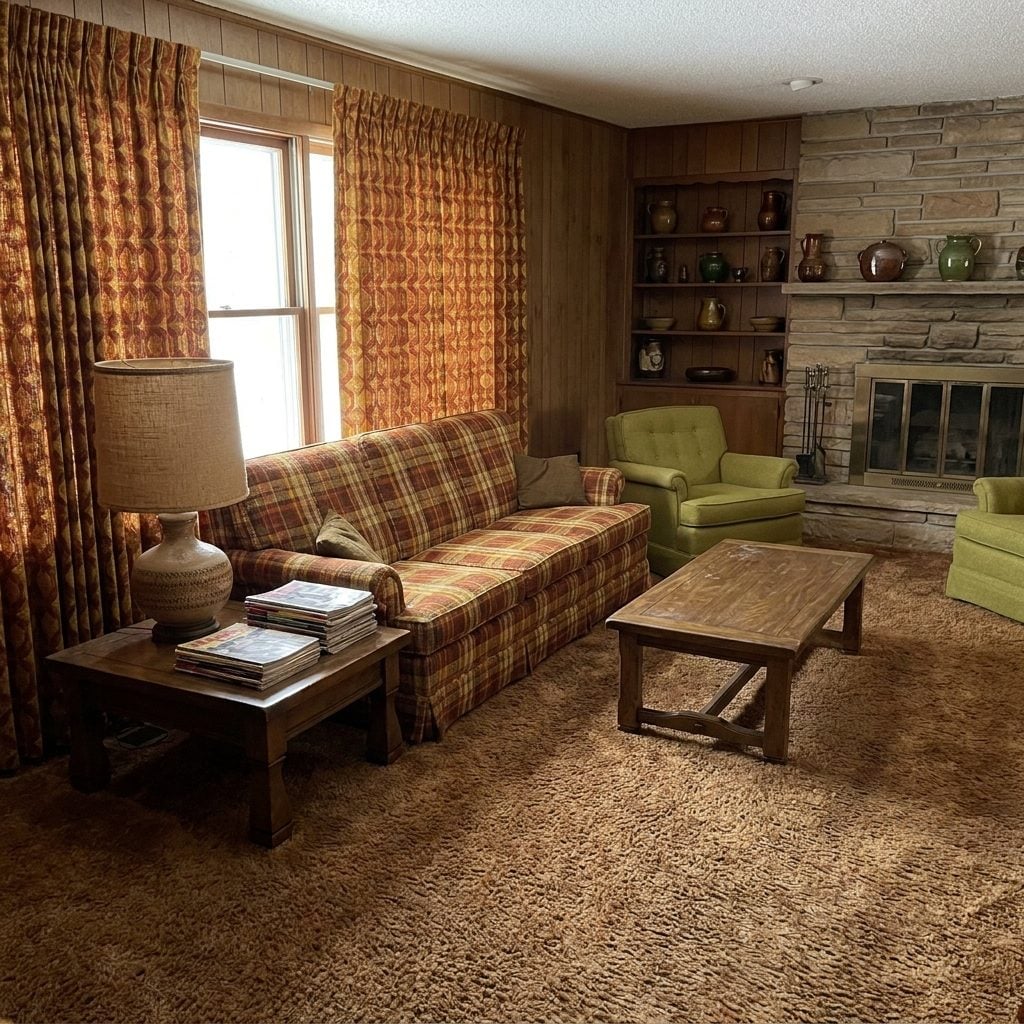
Rust. Harvest gold. Chocolate. Avocado. Burnt orange. The palette did not arrive as one polite accent pillow. It took the room.
A rust velvet sofa could sit on gold carpet against brown paneling beneath amber light, and somehow everybody involved signed the same treaty.
Compared with a pale beige sitting room, the difference is immediate. These rooms traded brightness for saturation and enclosure.
13. The Chunky Coffee Table Expected Bad Behavior
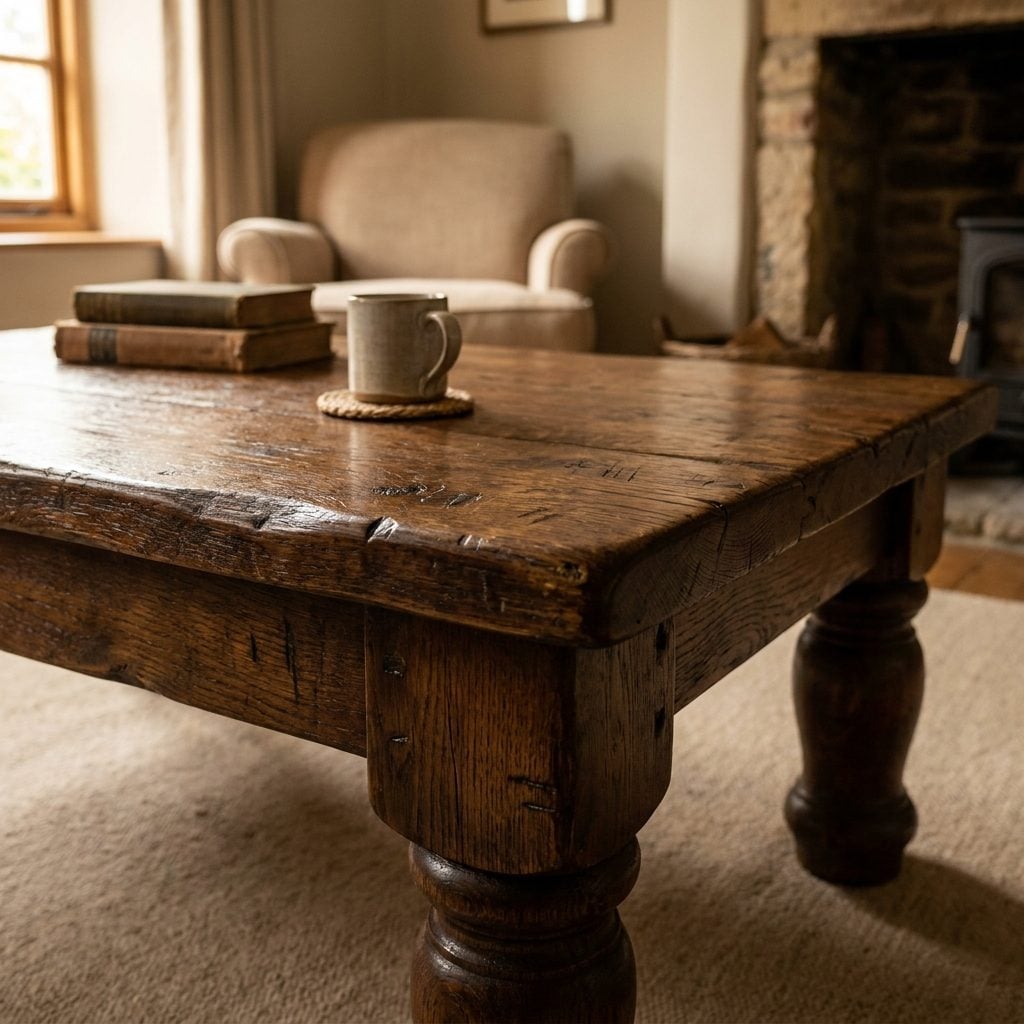
The coffee table looked capable of surviving a minor collision with a station wagon. Thick oak or pine, broad top, serious legs, and a finish that acquired new rings and scratches without anybody calling an emergency meeting.
Board games happened on it. Feet landed on it. Kids climbed around it. A casserole dish might appear without a coaster and civilization continued.
The oak coffee table wasn’t precious because the room itself wasn’t precious. Furniture existed to take the day.
12. The Board-Game Cabinet Was Always One Box From Collapse
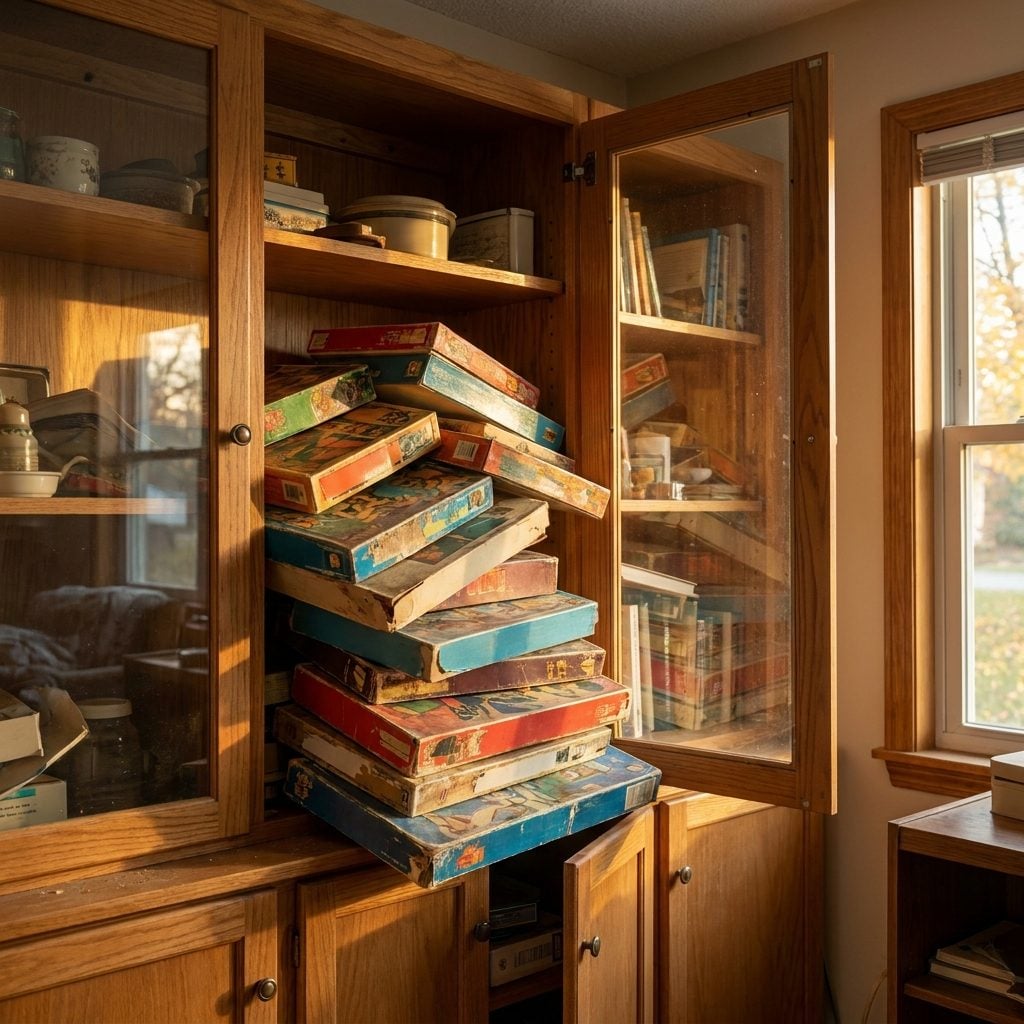
The cabinet door never quite shut. Monopoly sat under Risk, somebody had crushed the corner of Clue, and at least one box survived solely because a rubber band had assumed structural responsibility.
Friday night lived in that stack. Pull out a box, clear the coffee table, discover the missing piece, accuse somebody of cheating, continue anyway.
The important part wasn’t the storage. It was that the entertainment was already in the room waiting for people to use it together.
11. The Wood-Burning Stove Turned Winter Into a Household Ritual
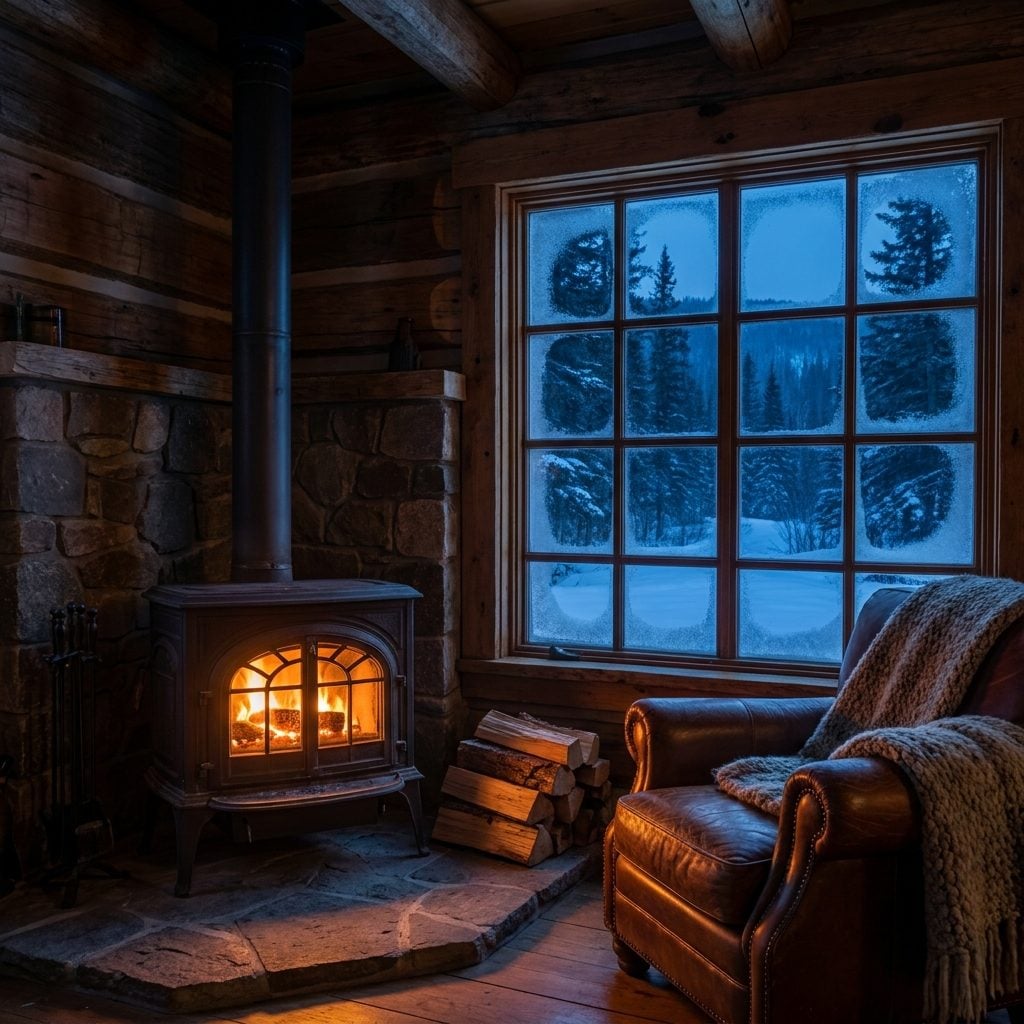
In colder regions, a wood stove could be much more than rustic scenery. The energy crises of the 1970s helped revive interest in wood heat as households looked for alternatives or supplements to oil and other fuels.
But the stove changed the room socially as much as thermally. Someone carried wood. Someone banked the fire for the night. Someone coaxed the coals back in the morning.
A kettle on top could add a little moisture to dry heated air. Chairs inevitably migrated toward the stove as winter deepened.
Heat had a location, so people did too.
10. The Shelves Became a Biography Nobody Had to Write
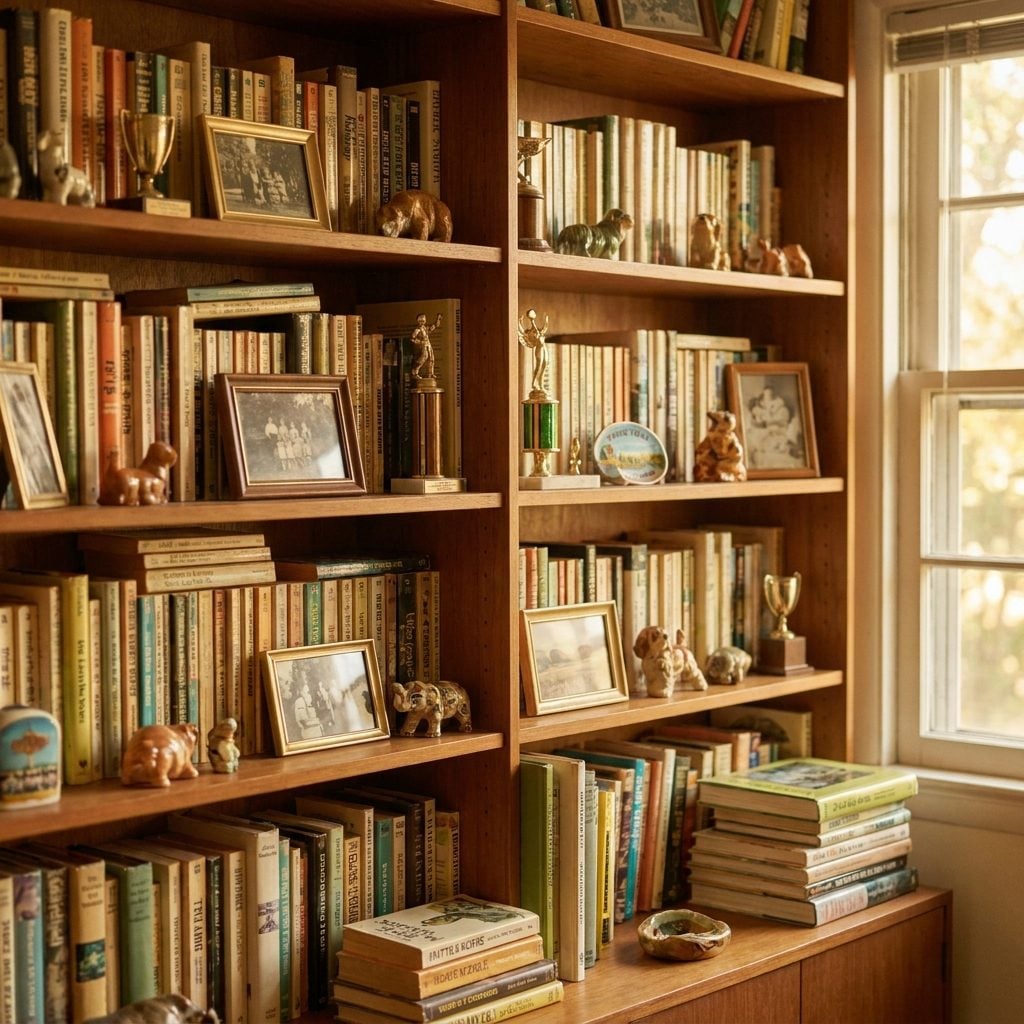
Nobody called the shelves curated. They simply filled.
The World Book encyclopedia sat beside dog-eared novels. A bowling trophy shared space with a school picture. A chipped ceramic dog survived three furniture rearrangements for reasons nobody remembered.
The built-ins were the architecture. This was the evidence.
Walk into the room and you could begin figuring out who lived there before anybody said a word.
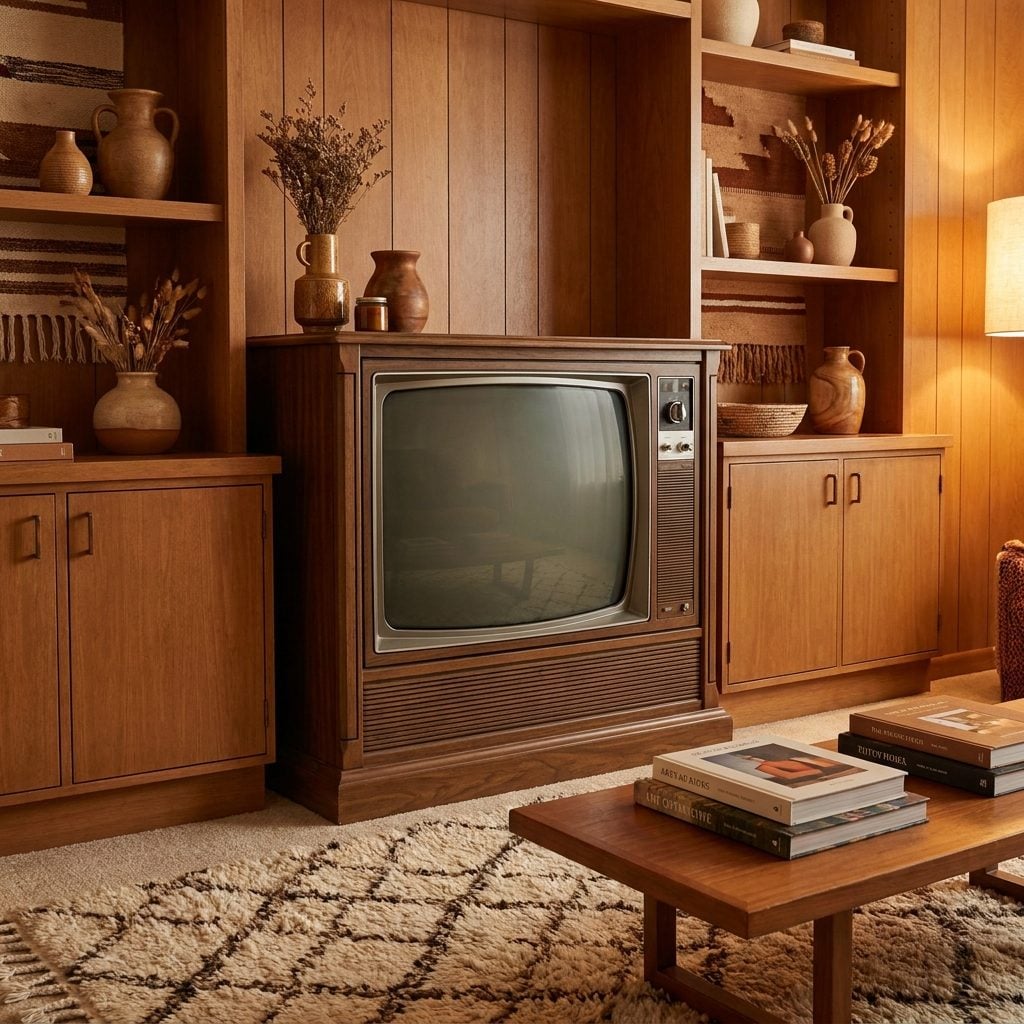
9. The Television Could Disappear Behind Cabinet Doors
🔥 Would you like to save this?
The earlier console TV was a machine built into furniture. This version took the idea one step further: give the screen doors and let it vanish when the program ended.
That changed the room whenever the television was off. Close the cabinet and the large dark rectangle disappeared into the woodwork, leaving the fireplace, bookshelves, windows, and furniture to resume negotiations over who was actually in charge.
The modern wall-mounted TV is honest about what it is. The old cabinet TV was polite enough to leave the room occasionally.
One design celebrates the screen. The other gave it closing hours.
8. Folding TV Trays Made Dinner in Front of the Set Official
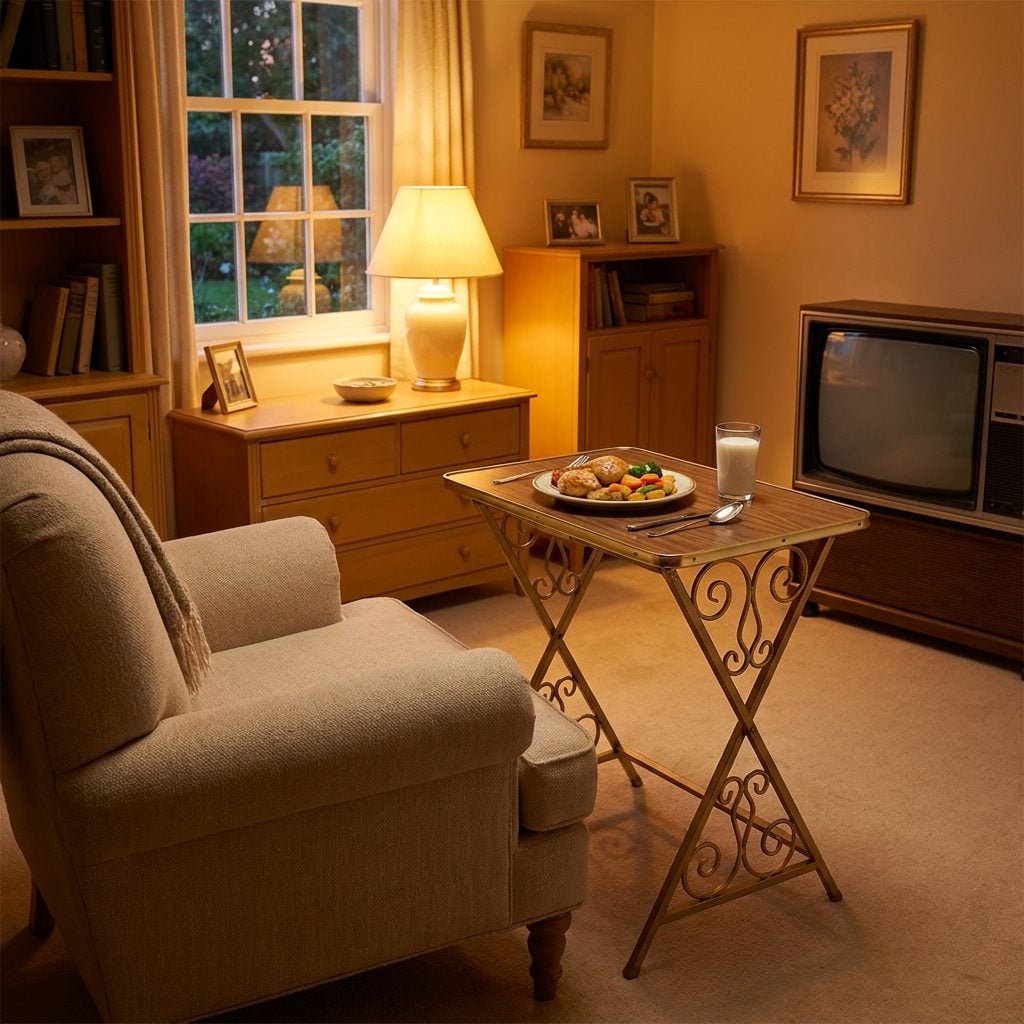
The legs opened with a metallic snap. The faux wood-grain top wobbled slightly. Four trays lived on a matching stand waiting for the night somebody announced dinner was happening in front of the television.
That was the thrill. Nobody mistook a TV tray for fine furniture. Its entire reason for existing was to suspend the normal dining-room rules for an evening.
Everybody faced the same direction, plates balanced in front of them, watching whatever was on because whatever was on was what everybody got.
7. The Giant Entertainment Center Gave the 1980s an Entire Wall
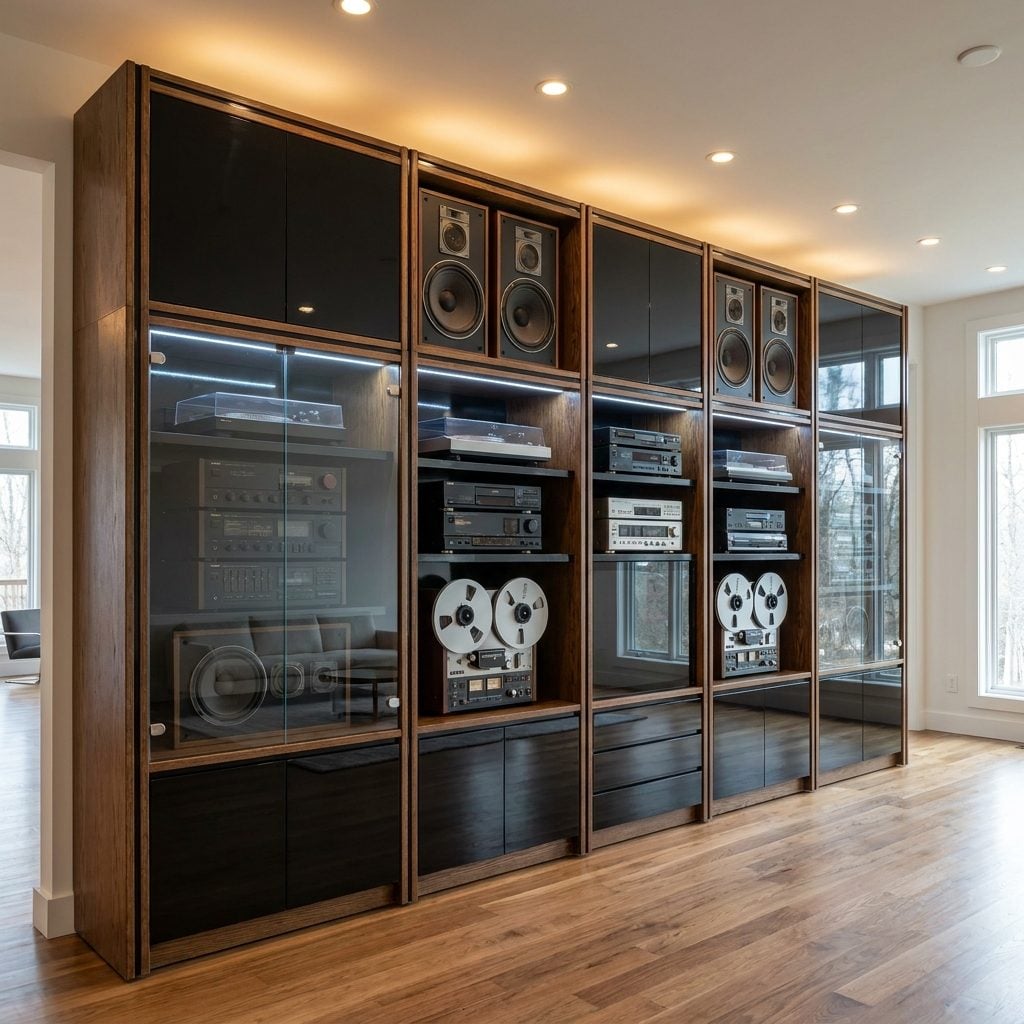
By the 1980s, the television had acquired staff.
The VCR needed a shelf. VHS tapes needed dozens more. Cable boxes appeared. Stereo components migrated nearby. Cabinets, glass doors, cubbies, and display shelves expanded outward until the television no longer occupied a piece of furniture. It occupied a wall system.
Assembly could consume a Saturday and several relationships, but once the thing stood, every electronic object in the room finally had somewhere to go.
6. The End Table Functioned as the Family Room’s Open Junk Drawer
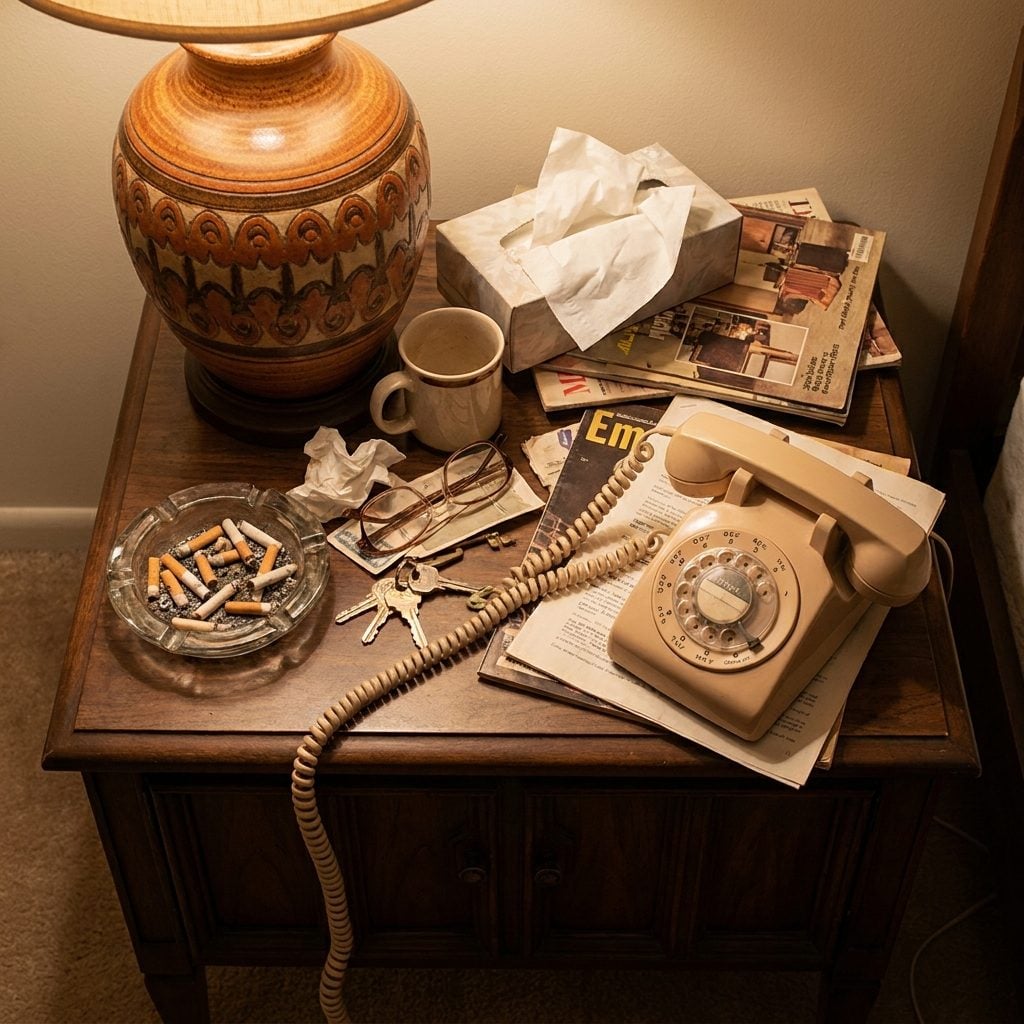
Look at the end table and the whole household starts appearing.
Lamp. Telephone. Ashtray. TV Guide. Loose change. Half-used coaster. Pen that may or may not work. Somebody’s retainer case waiting to become an archaeological find.
The surface wasn’t styled. It was logistical.
A modern beige sitting room might put one vase there and call it finished. The old end table was never finished because Tuesday wasn’t finished.
5. The Basement Rec Room Removed the Last Requirement to Impress Anyone
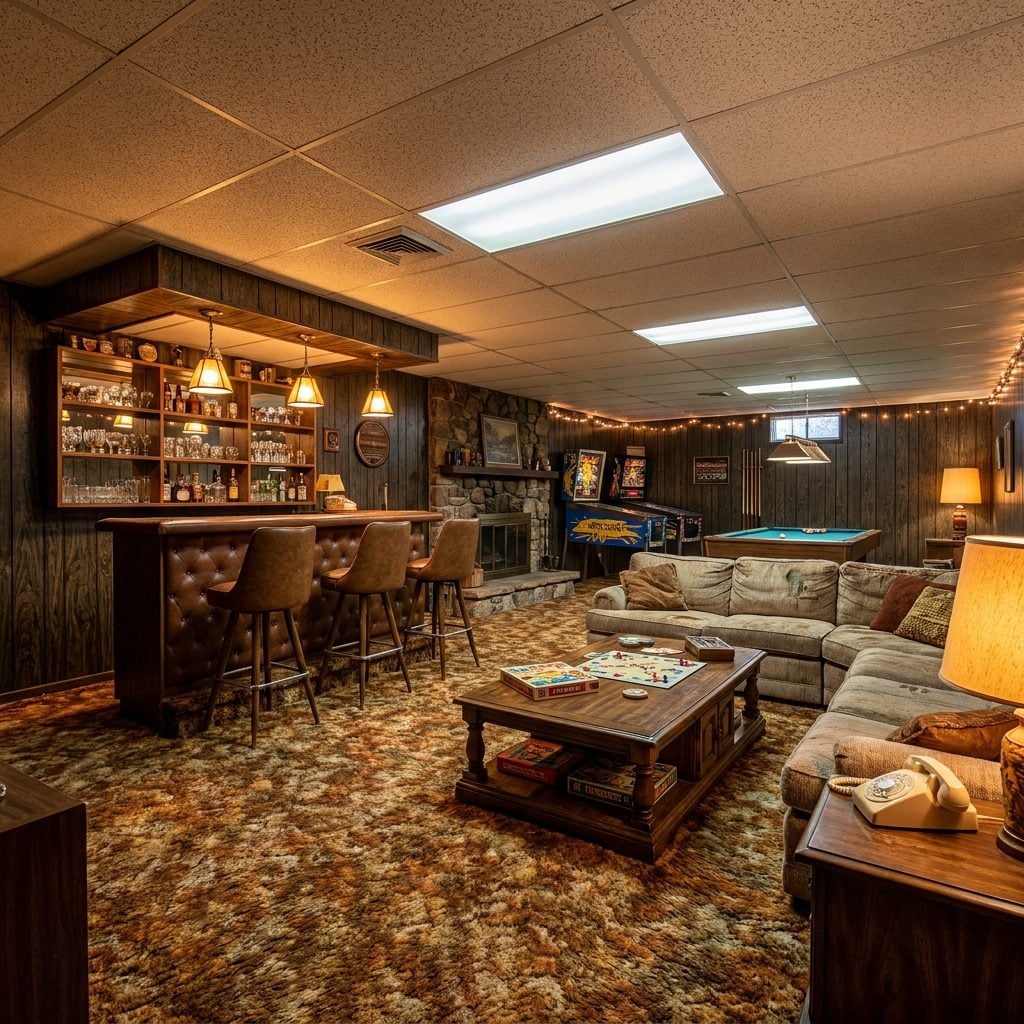
Down the stairs, past the utility room, was where the family could finally stop behaving.
Wood-grain paneling. Indoor-outdoor carpet. Plaid sectional polished shiny at the arms. Console television. Maybe a wet bar somebody built over two weekends. Maybe a dartboard surrounded by a much larger informal dartboard made entirely of holes in drywall.
The rec room’s great advantage was low stakes. Nobody worried about damaging the good sofa because the good sofa was upstairs waiting for company.
Down here, comfort didn’t have to negotiate with presentation.
4. The Raised Hearth Became the Best Overflow Seat in the House
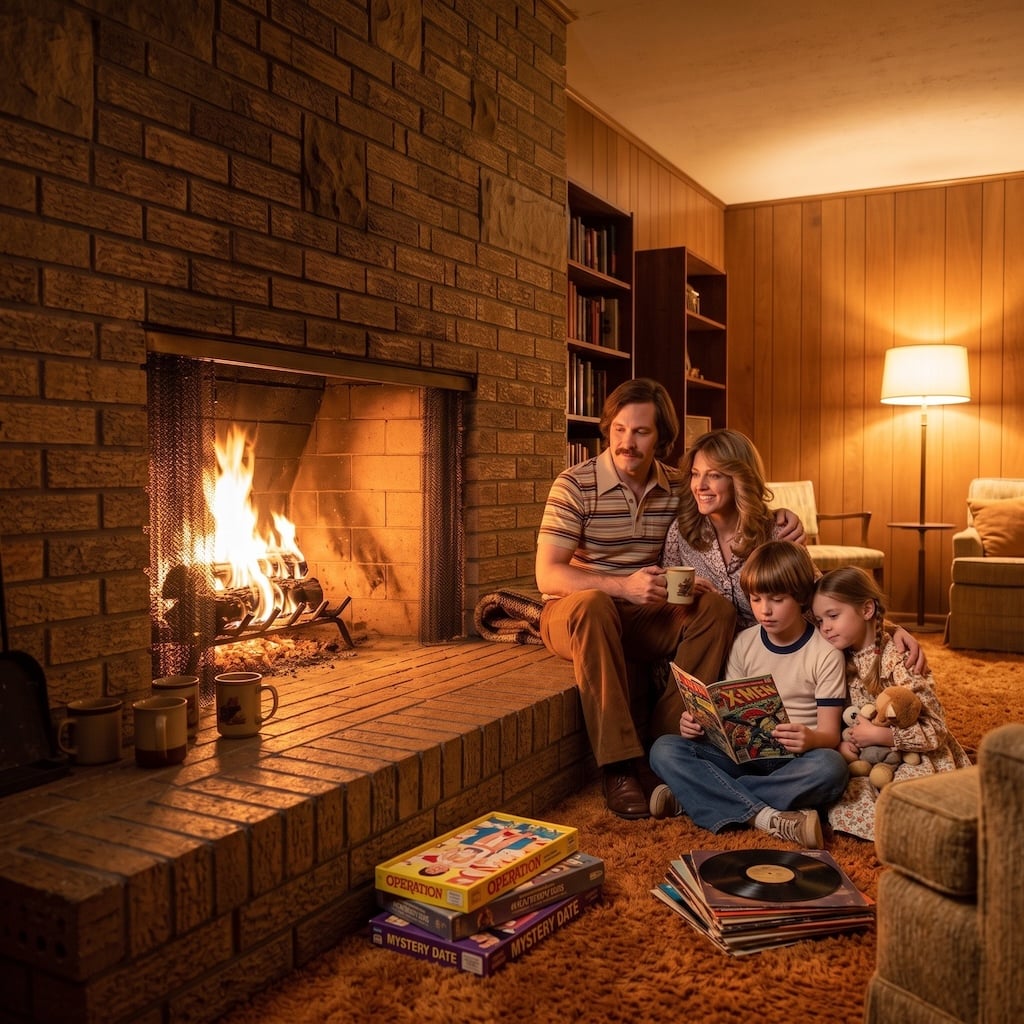
When the sofa filled up, the hearth quietly joined the furniture plan. Kids sat there during movies, visitors landed there during parties, and somebody inevitably set a plant on it during the months nobody needed the fire.
The genius wasn’t that masonry makes perfect seating. It doesn’t. The genius was that a permanent architectural feature became useful in more than one way.
On a crowded night, nobody had to drag in a folding chair. The room already had another bench hiding in plain sight.
3. Kids’ Toys Were Allowed to Admit That Kids Lived There
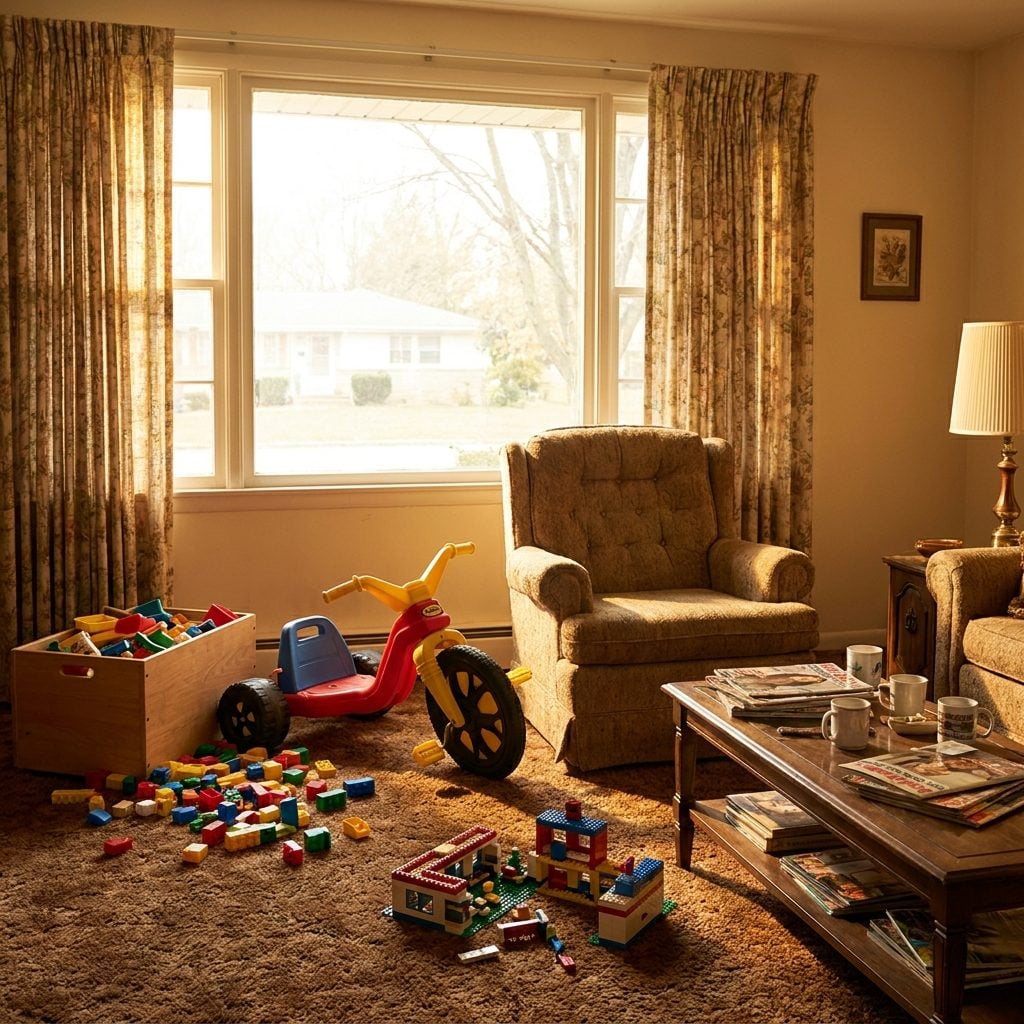
A Big Wheel beside the armchair. A toy box that wouldn’t close. Blocks under the coffee table. Lego pieces patiently waiting to attack a bare foot after dark.
The family room didn’t pretend children lived somewhere else. Their things mixed with the adults’ things because the people mixed too.
There was no design emergency every time a truck appeared under a chair. The room belonged to the household, not an imaginary future photographer.
That’s an idea worth stealing even if the Big Wheel stays in the garage.
2. Family Photos Covered the Walls Because Everybody Made the Cut
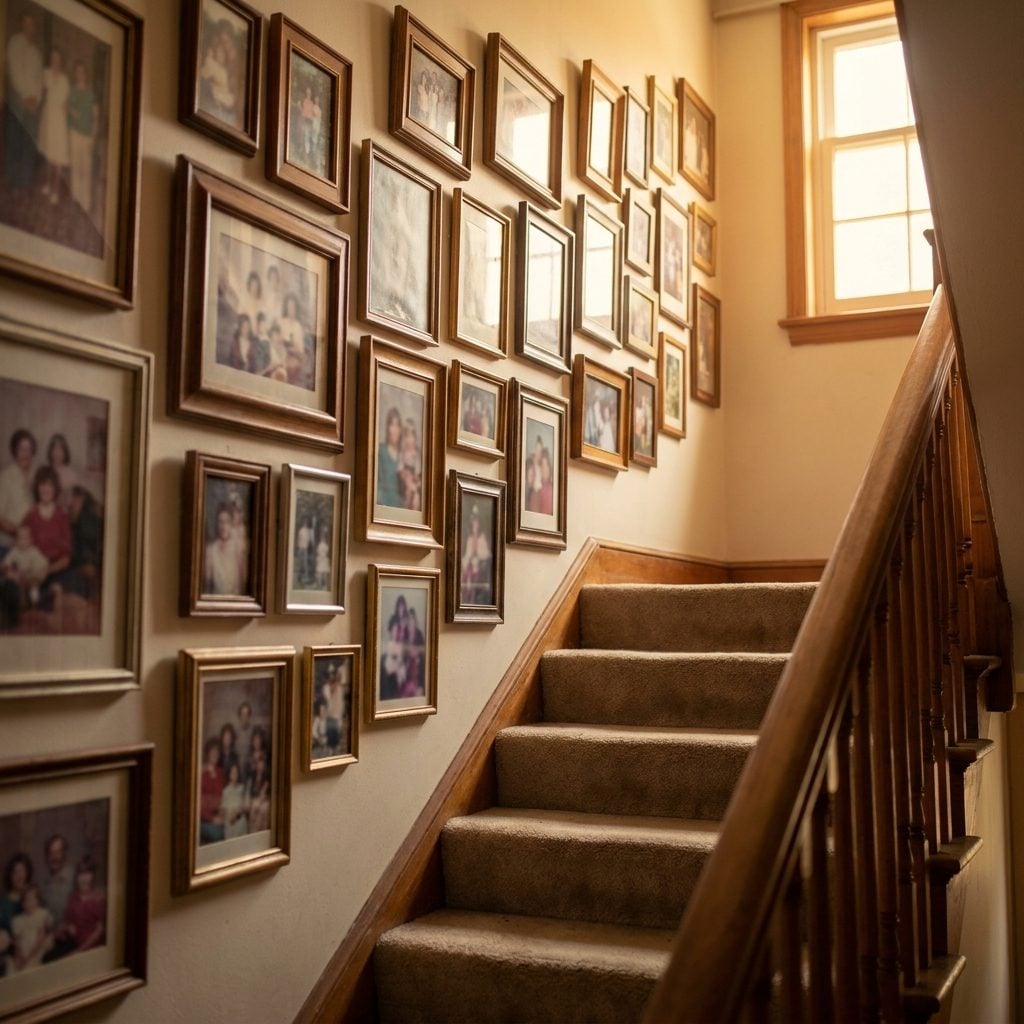
The wall by the stairs had twenty frames and nineteen different opinions about alignment.
School portraits. Weddings. Vacation pictures taken directly into the sun. Babies. Grandparents. Somebody in a graduation gown. Brass frame, wood frame, silver frame, whatever the drugstore had that year.
Nobody was composing a gallery wall. They were trying to include everybody.
A living room makeover can reproduce paneling, upholstery, lamps, and furniture. This is harder to fake. The photographs accumulated because the family did.
1. The Separate Family Room Was the Trick That Made Everything Else Possible
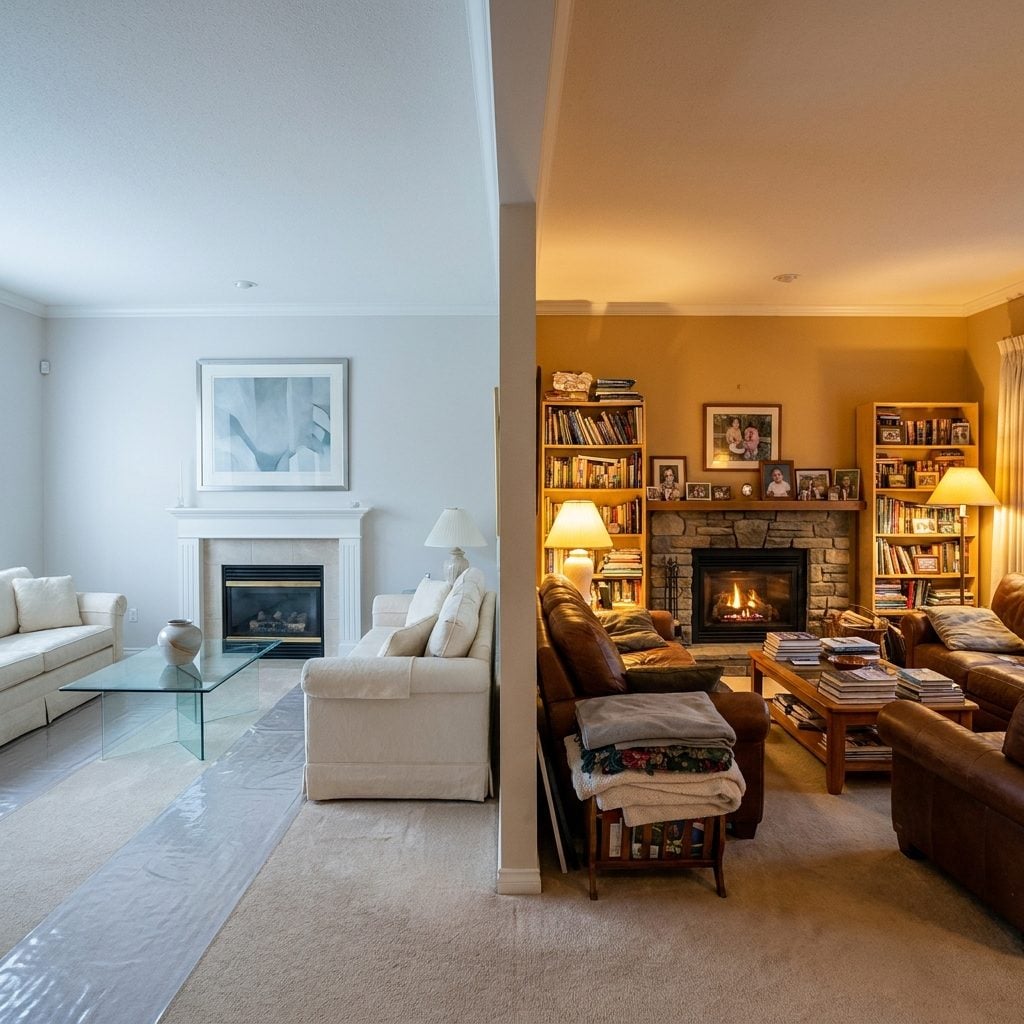
And here is the architectural secret underneath almost everything else on this list.
Many houses had a formal living room near the front door and a family room farther inside. The living room got the better furniture, the cleaner carpet, and the expectation that nobody touch anything unless company was coming. The family room absorbed the opposite assignment.
It could have toys on the floor because guests weren’t being received there. The afghan could stay crumpled. The board game could remain half-finished. The recliner could look lived in. The television could stay on. Nobody had to clear away all the evidence of Tuesday night before Tuesday night was over.
The formal living room was for people you wanted to impress. The family room was for people who already knew everything about you.
Open plans eventually asked one great room to do both jobs: look presentable and absorb daily life at exactly the same time. The old arrangement was less efficient on paper, but it gave one room permission to be gloriously off duty.
That may be what made it cozy. Not shag. Not paneling. Not avocado green. The room was allowed to look like the people who used it had been there five minutes ago — and were coming back in five more.