
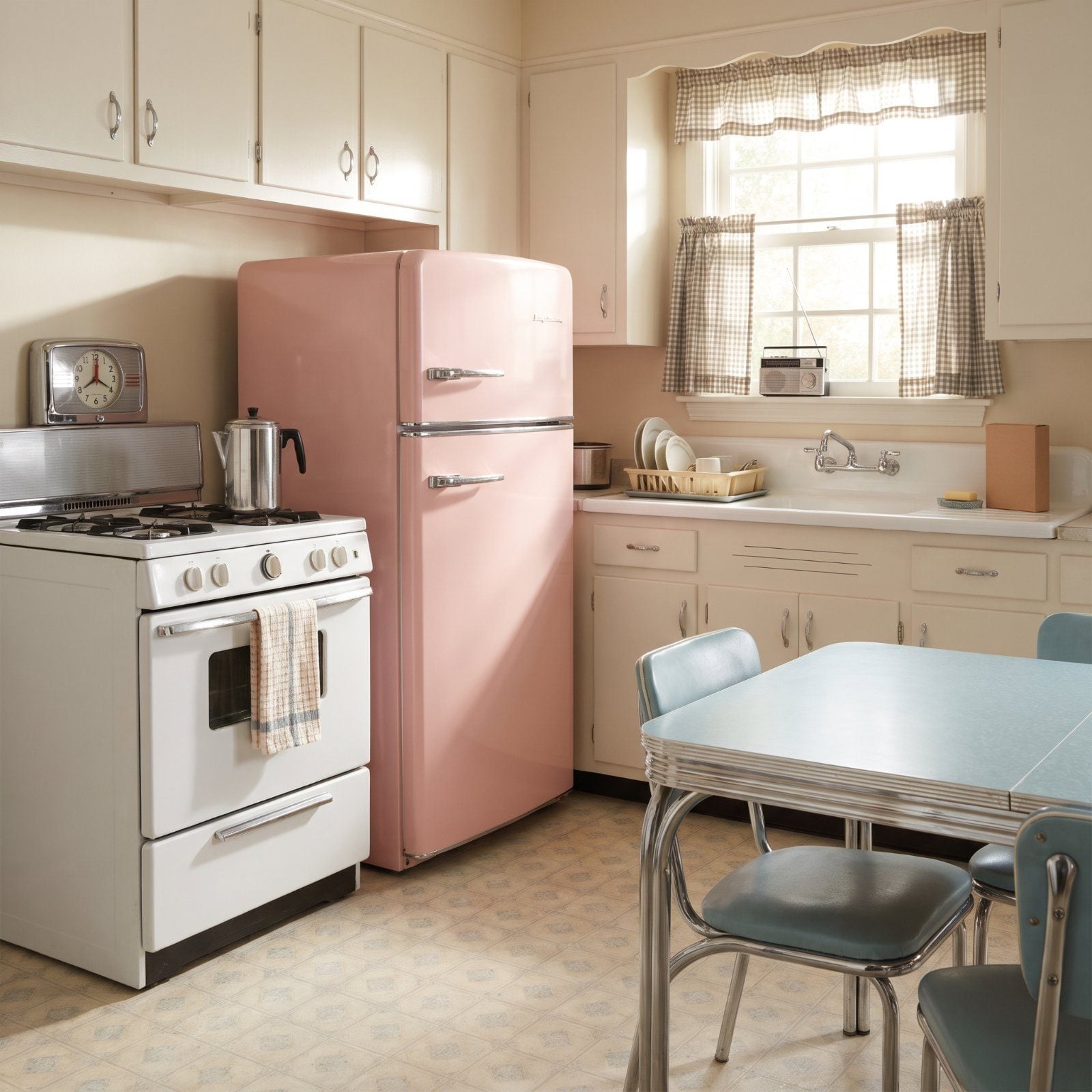
The radio was on before the coffee finished percolating. Windows cranked open to let the night air out of the bedrooms. A dish towel over one shoulder, slippers on, the whole house waiting to be put right before anyone else was awake.
The housekeeping manuals promised order and the magazines promised ease, but real kitchens were stickier than either let on. Here’s how the week actually ran, from the first made bed to the Monday laundry that smelled like bluing and bleach.
In order to come up with the very specific design ideas, we create most designs with the assistance of state-of-the-art AI interior design software. Also, assume links that take you off the site are affiliate links such as links to Amazon. this means we may earn a commission if you buy something.
29. Every Day: Air the Bedrooms and Make Every Bed First Thing

Before the house woke up, the bedroom windows went up. The manuals were firm about this. Pull back the covers, open the window wide, let the mattress and bedding breathe for twenty minutes while breakfast got started. Stale night air out, fresh air in — half hygiene, half ritual.
Then came the bed. Flat sheet, blanket, chenille spread smoothed with the flat of the hand, pillows plumped and squared. Good Housekeeping treated an unmade bed as a small moral failing. In real life? Plenty of beds got a quick pull-up and a smooth, and nobody was hospital-cornering anything on a Tuesday.
28. Every Day: Wash the Breakfast Dishes and Scour the Sink Bright
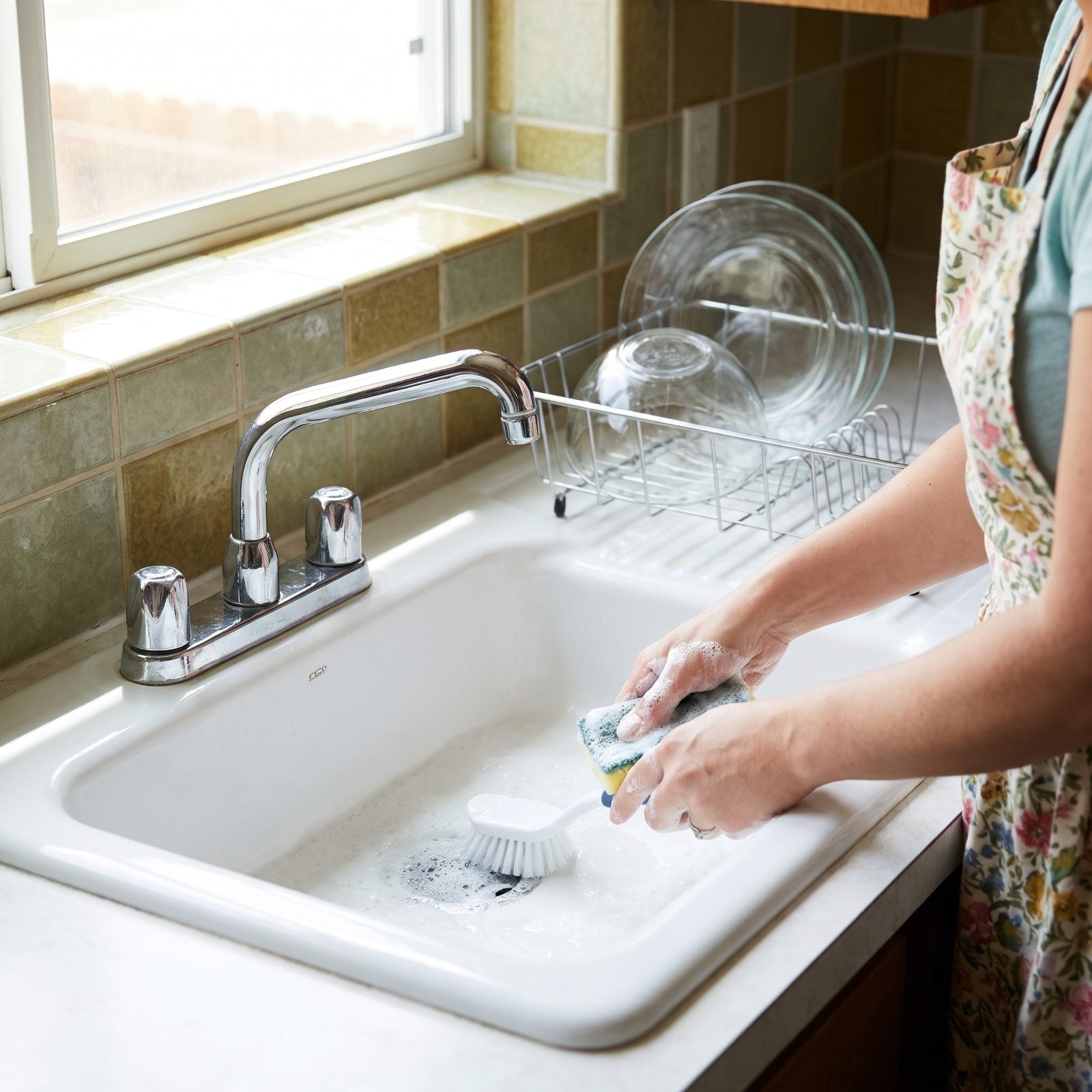
No dishwasher in most houses yet, so the breakfast dishes got done by hand while the sink was still warm. Scrape, soak, wash, rinse, drain. Cups and plates stacked in the chrome rack by the window.
But the sink was the real event. After the dishes came the scour — Bon Ami or Comet, a damp cloth, elbow grease on the enamel until it shone white and the chrome faucet threw back the light. A gleaming sink meant a kitchen you’d finished. A dull one meant you weren’t done yet.
The chrome rack has competition now: in our reader polls, 42% would buy a roll-up dish rack, 32% a countertop one and 19% an over-sink model.
27. Every Day: Sweep Crumbs From the Kitchen and Dinette Floor
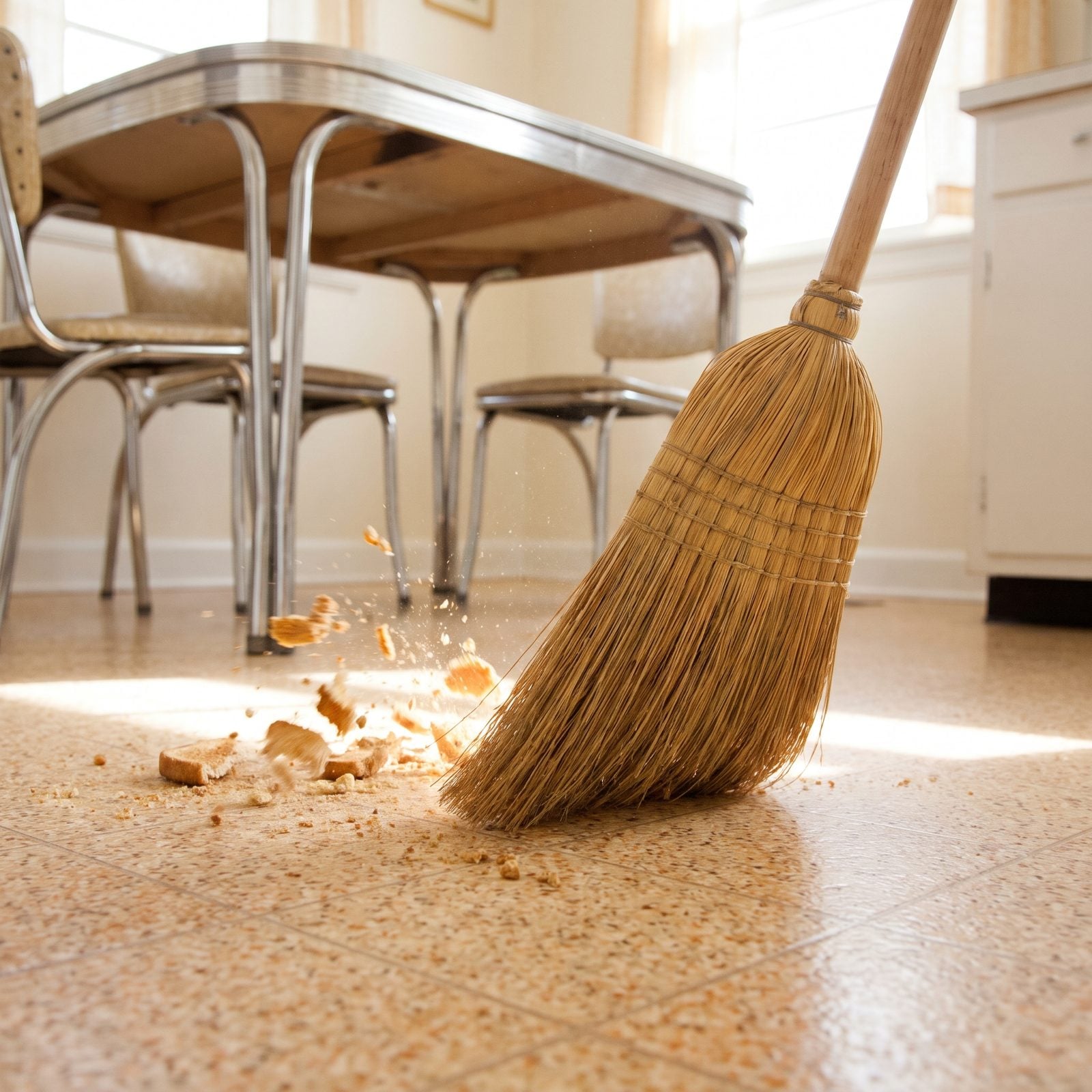
Toast makes crumbs. Kids make more. So the broom came out after every meal, straw bristles over the linoleum, crumbs chased into a pile and swept into the dustpan.
The dinette caught the worst of it, under the table where small feet swung and dropped things, and a quick damp wipe of the Formica top finished the job. No deep clean here — just keeping the floor walkable until the real mopping day came around.
26. Every Day: Straighten the Living Room and Plump Every Cushion
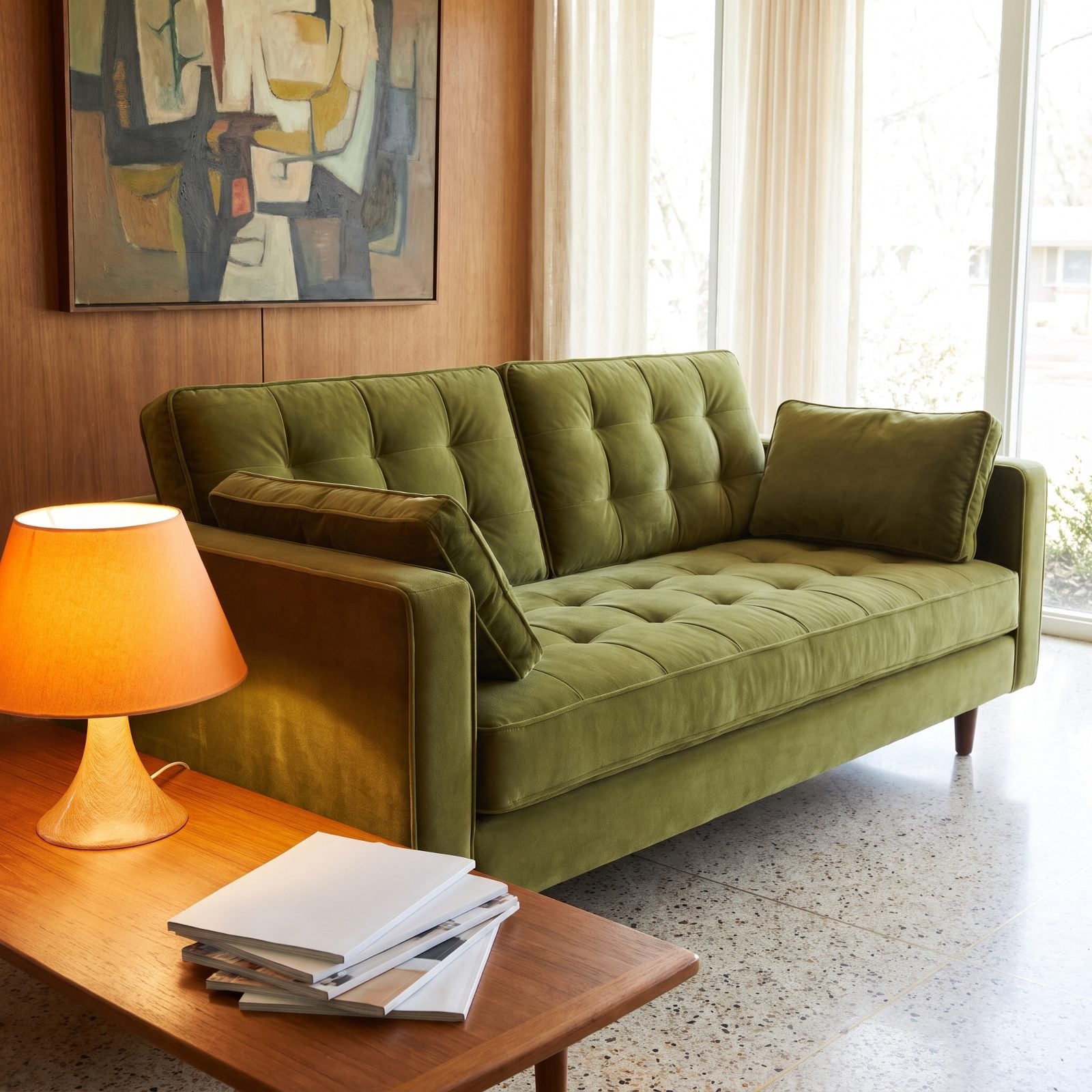
The living room got a once-over every day whether it needed it or not, because this was the room company saw. Magazines squared on the coffee table. Newspaper folded and set aside. Throw pillows karate-chopped and stood on their corners.
The cushions got the real attention — pulled out, fluffed, flipped, patted back into shape so the couch looked like nobody had been living on it. A straightened living room was a signal more than a chore. The house was ready to be seen.
25. Every Day: Wipe the Bathroom Basin and the Toilet Rim
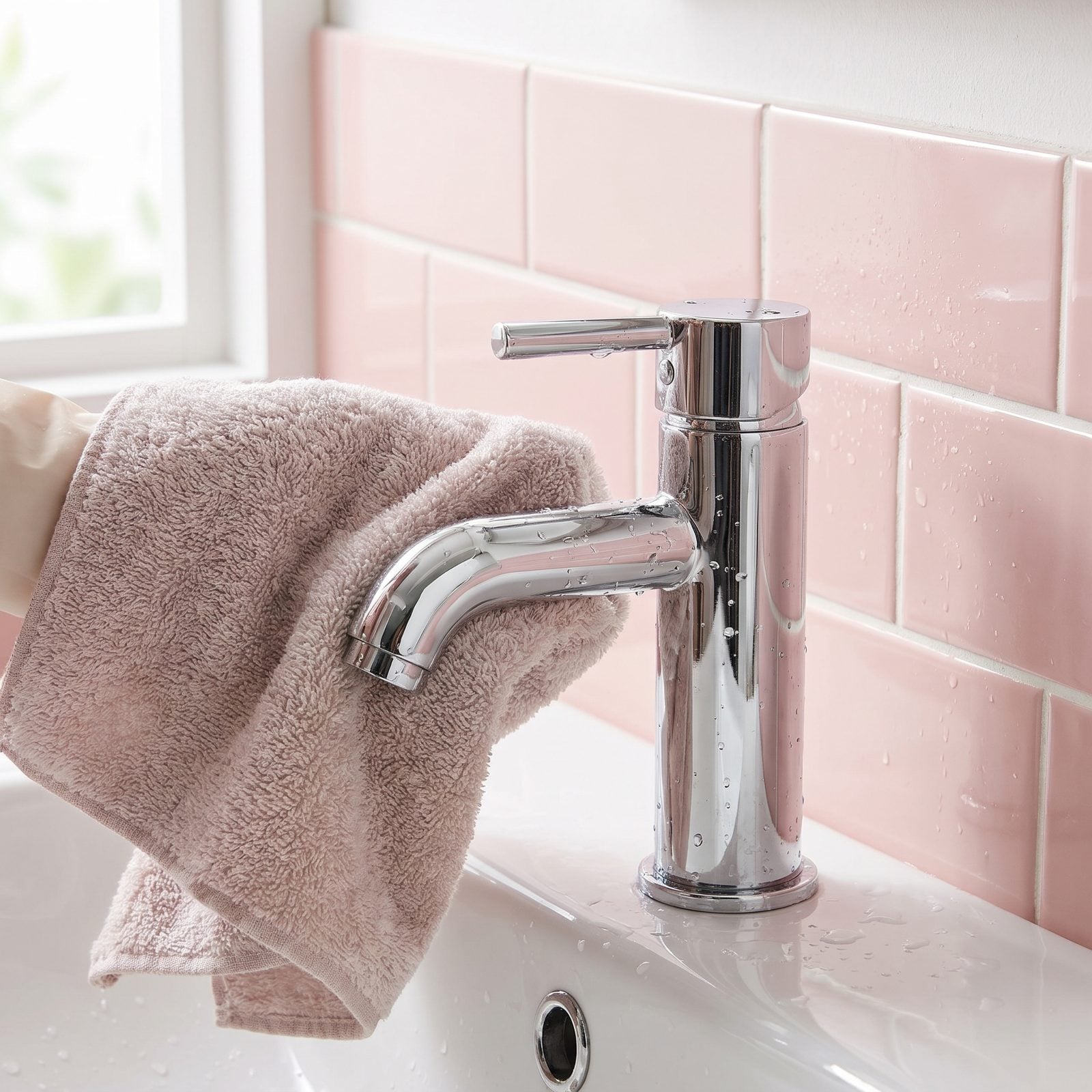
The bathroom got the fast daily version, not the Friday scrub. A cloth around the basin, a wipe of the chrome fixtures until the water spots were gone, a swipe of the toilet rim and seat with disinfectant.
Comet or Sani-Flush for the bowl, a quick pass with the brush if it needed it, a fresh hand towel hung straight. The whole thing took five minutes and kept the room company-ready between the deeper weekend cleaning. Nobody loved it. Everybody did it.
24. Every Day: Wash the Supper Dishes and Degrease the Range Top
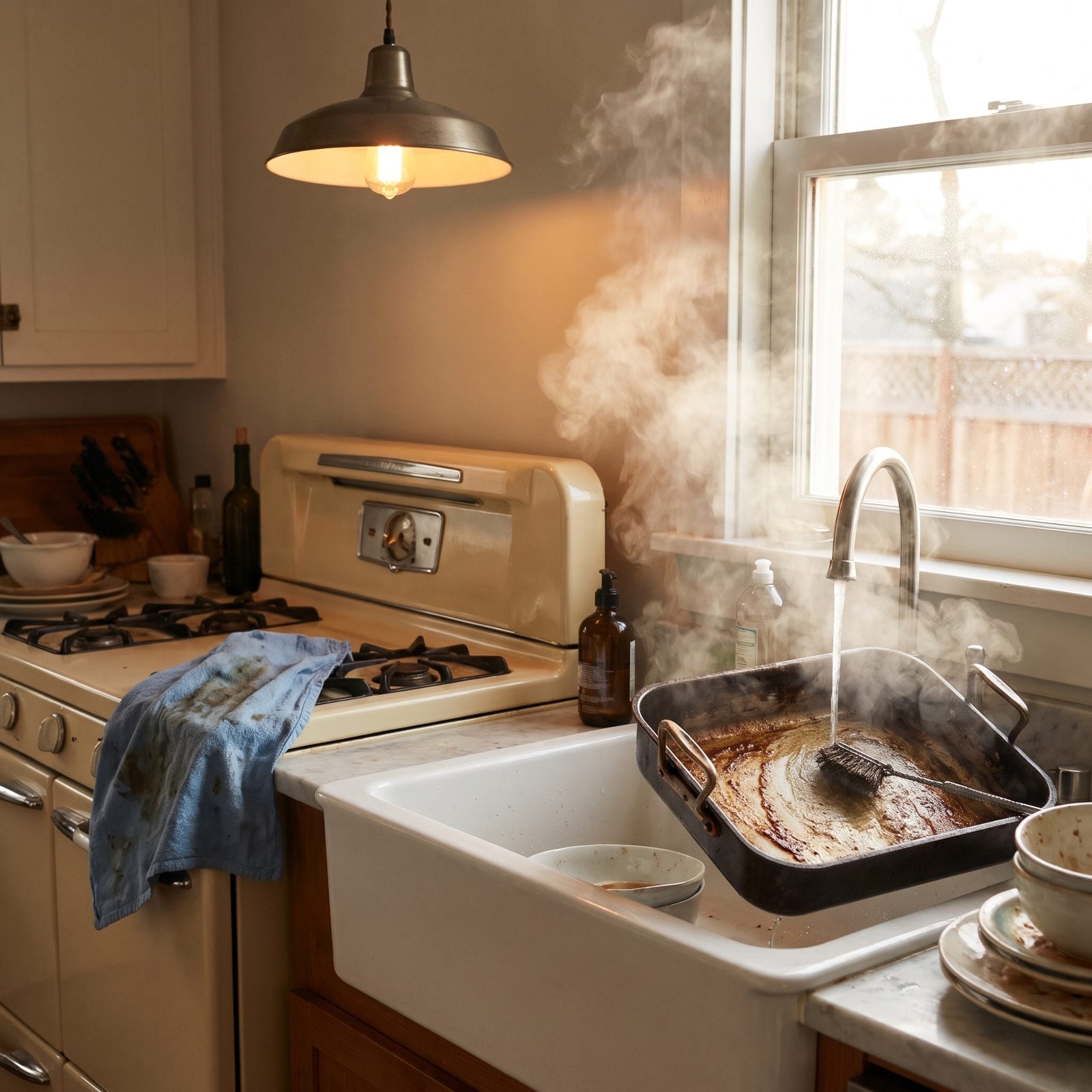
Supper dishes were the bigger job: pots, pans, the roasting dish, grease that didn’t want to let go. Hot water, dish liquid, and a good scrub while the radio or the early TV played in the next room.
Then the range top. Spattered grease wiped down with a soapy cloth, burner grates lifted and rinsed, the chrome edges polished so the stove didn’t carry the evidence of dinner into the next morning. A clean range meant you could walk into the kitchen tomorrow and start fresh instead of facing last night’s mess.
23. Monday: Strip Every Bed and Swap Out the Used Towels
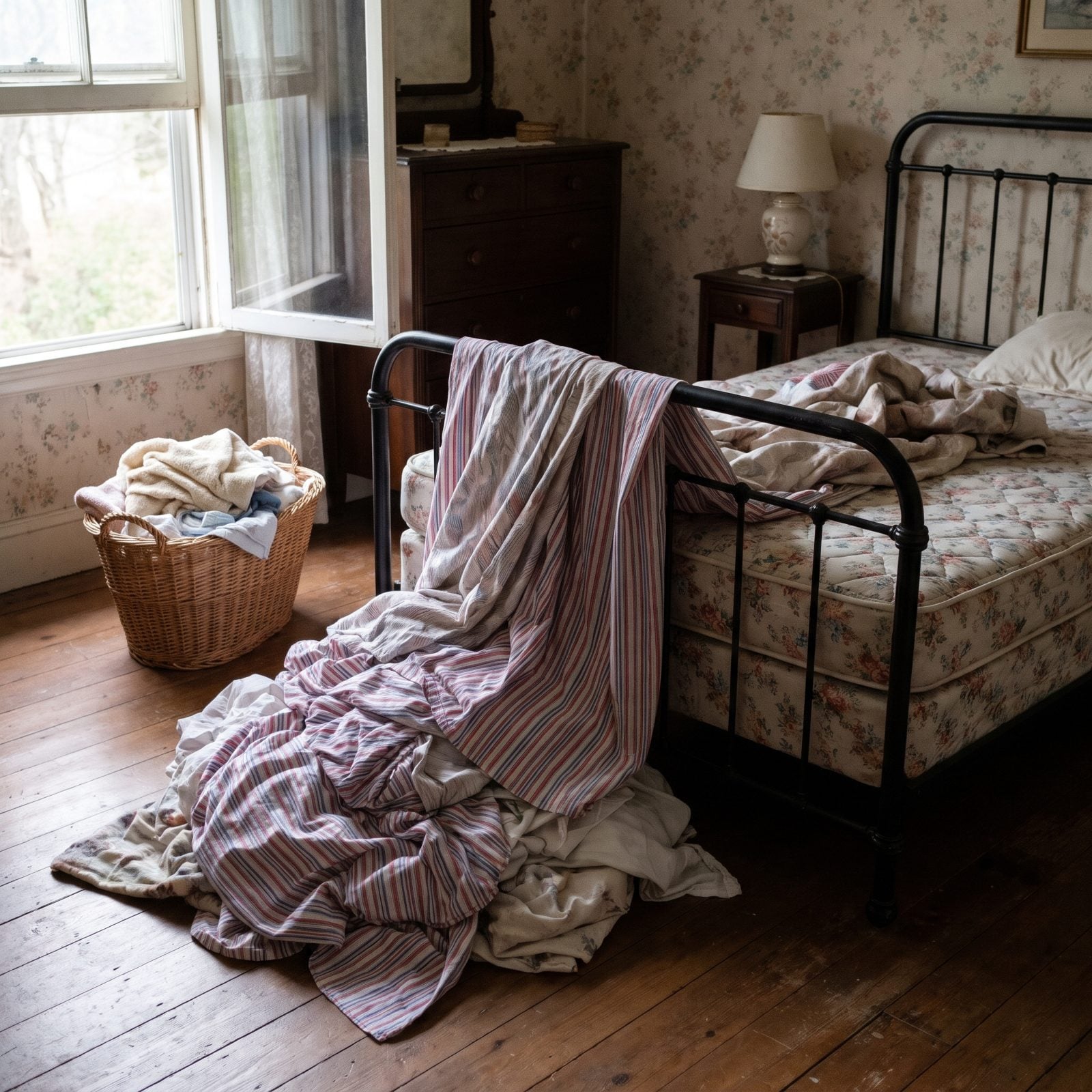
Monday was wash day, and it started by stripping every bed in the house. Sheets, pillowcases, the works, piled in the hall or hauled straight to the basement. Clean sets went on, folded and waiting, carrying that faintly starchy smell of linens dried the week before.
Bathroom towels got swapped out the same morning — used ones tossed on the laundry pile, fresh ones hung on the bars. Monday wash day was so standard it was practically a national schedule. You hung laundry Monday, you ironed Tuesday, and your neighbor did the same.
What Our Readers Say
- Asked which sheets they would buy to sleep on, 56% of Home Stratosphere readers chose crisp percale, well ahead of sateen at 27% and linen at 15%.
From Home Stratosphere reader polls and votes.
22. Monday: Run the Family Wash and the Household Linens
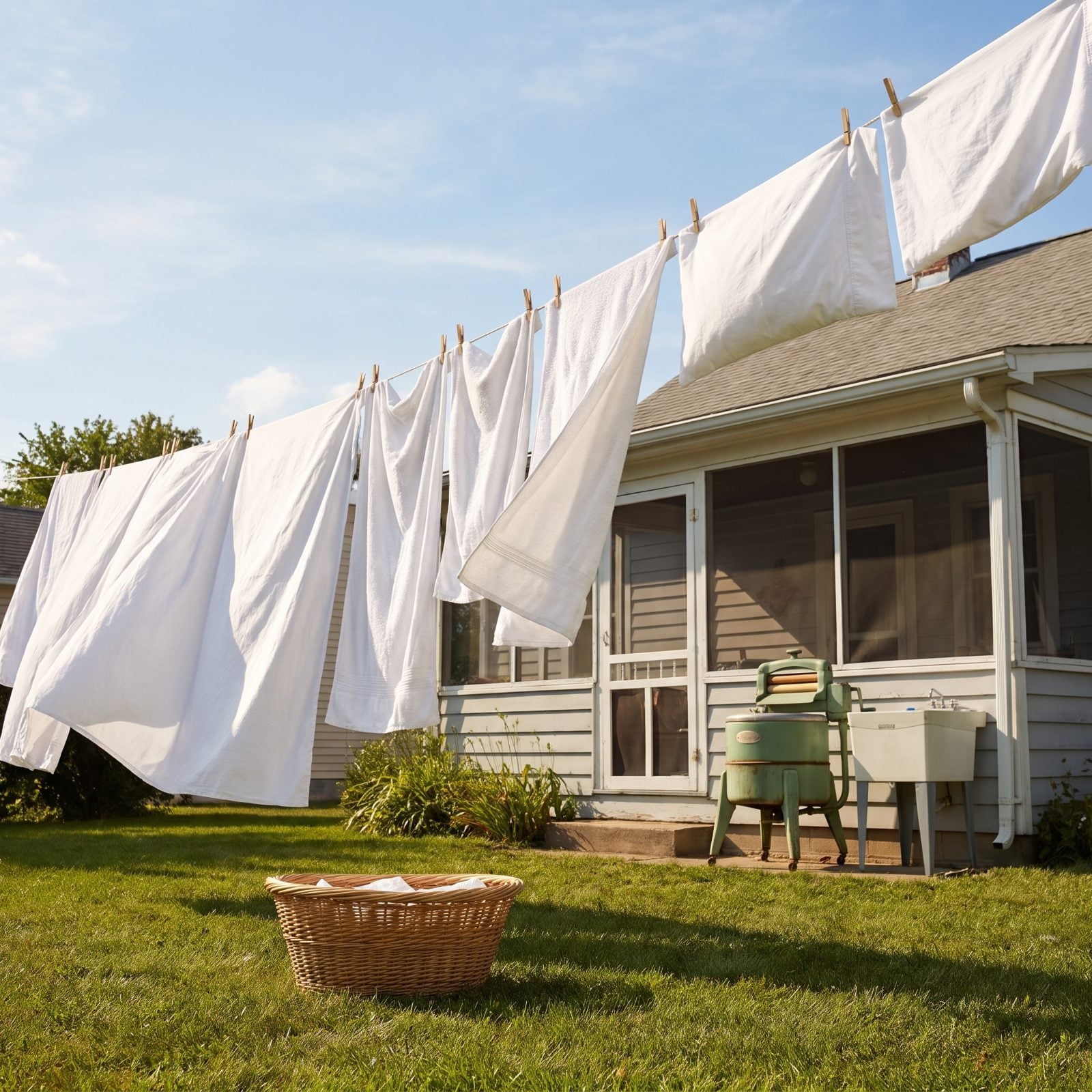
This was the all-day job. Whites first in the hottest water, then lights, then darks, then the really dirty work clothes last. Soap powder measured out, a splash of bluing for the whites, bleach where it was needed, load after load through the morning and into the afternoon.
The manuals laid out the sorting rules like a science. Real laundry rooms ran on feel and whatever the machine could handle before the kids got home. Then came the hanging — on the line if the weather cooperated, strung across the basement if it didn’t, wooden pins down the row.
21. Monday: Clean the Washer, Wipe the Laundry Tubs, and Empty the Lint Trap
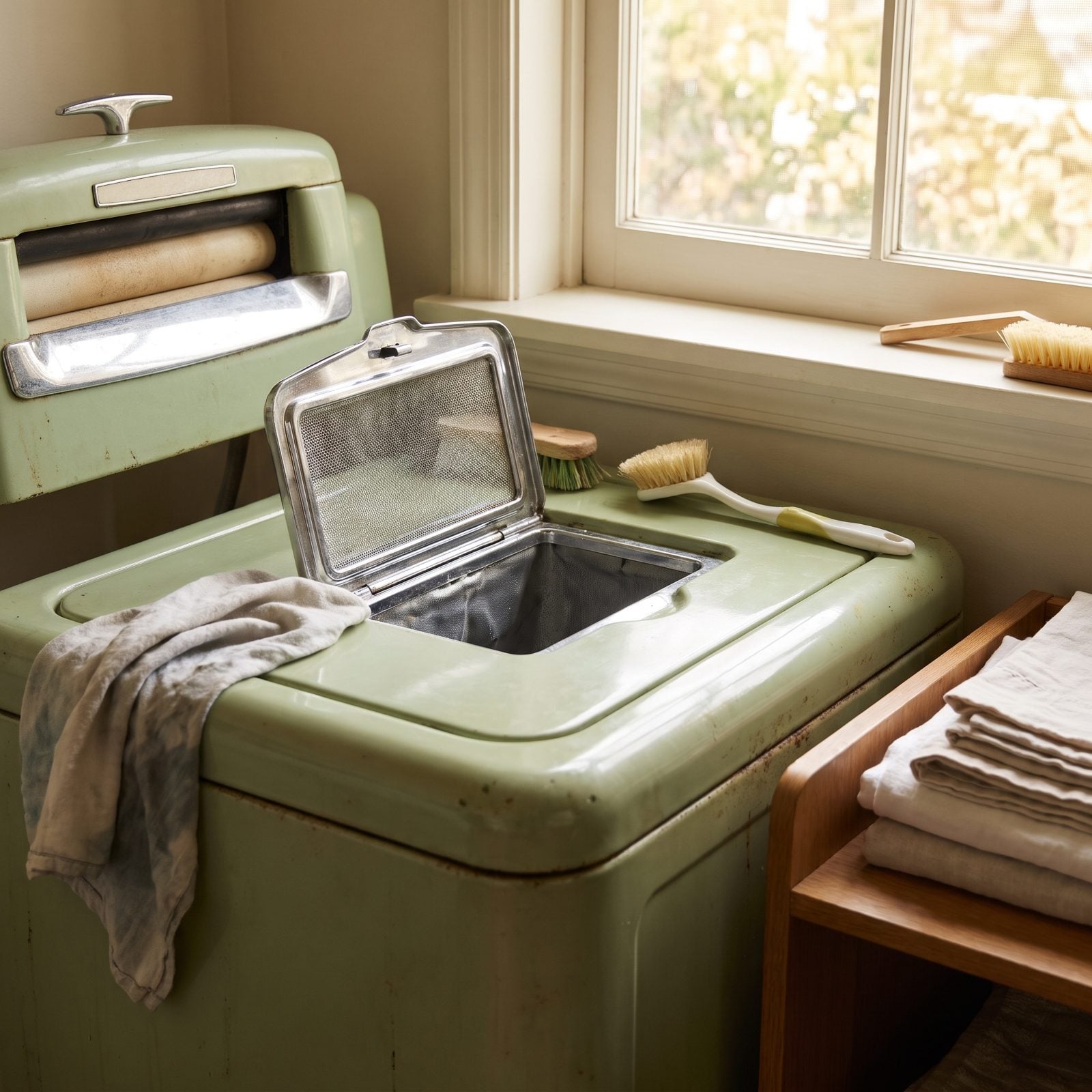
The last chore of wash day was cleaning the thing that did the washing. Wipe down the machine, the lid, the rim where soap scum collected. Rinse the laundry tubs, swab out the grit and lint that settled in the bottom.
Then the lint trap — that soft grey wad pulled free and tossed. Housekeeping manuals pushed this hard because a cared-for machine lasted, and a new washer was a serious expense. By the time the tubs were dry and the soap boxes squared on the shelf, the washing was finally done, though the starching and sprinkling for Tuesday’s ironing still waited.
20. Monday: Starch and Dampen the Clothes for Tuesday’s Ironing
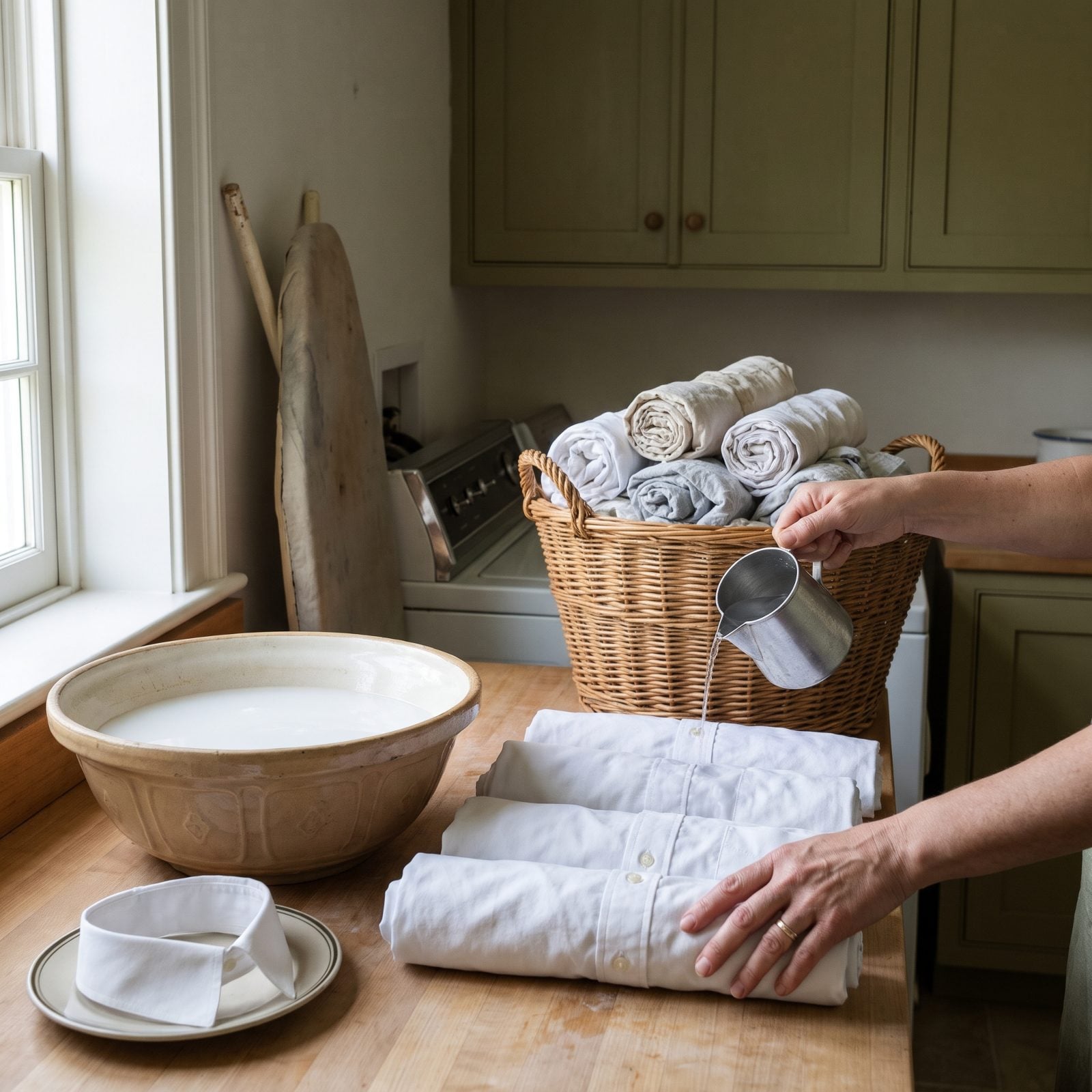
Once the lines came down, the work wasn’t over. Collars, cuffs, aprons, and the good cotton tablecloths went through a basin of cooked starch, the kind stirred up from powder on the stove until it turned glassy. Shirts got a stiffer dip than pillowcases. Everything was wrung out and dried again.
Then came the sprinkling. A small metal pitcher of water, a thin stream poured over each piece, and every item rolled up tight and packed into a basket or a plastic bag overnight. Plenty of homemakers tucked the bundle into the refrigerator so it wouldn’t sour or mildew before morning. Evenly damp cotton ironed smooth. Bone-dry cotton fought back.
Describing her mother’s dampening-down routine before ironing, a writer recalling 1950s childhood says “She lays each item flat on the kitchen table, then sprinkles each one lightly with water by hand, from a bowl.”
19. Tuesday: Ironing Day, When Shirts, Dresses, Sheets, and Table Linens All Came Due
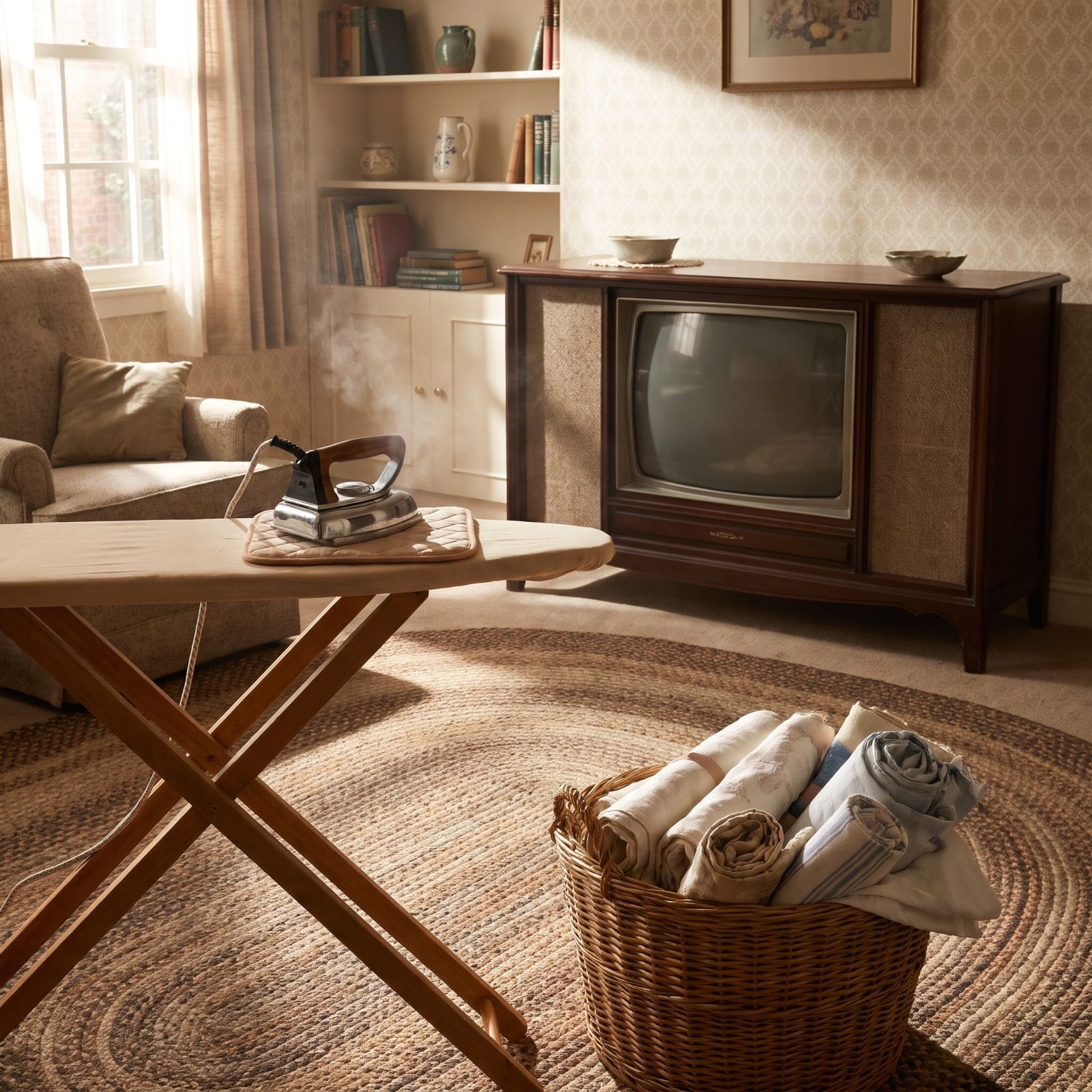
Tuesday belonged to the ironing board. It went up in the kitchen or in front of the television, the basket of rolled, dampened clothes beside it, and the iron got hot and stayed hot for hours. Men’s dress shirts came first while the arms were fresh: collar, cuffs, yoke, sleeves, then the body. Then the dresses, the children’s school clothes, the blouses.
And it didn’t stop at clothes. Pillowcases, handkerchiefs, napkins, tablecloths, and in many homes the sheets themselves got pressed and folded into crisp squares. The manuals made it sound methodical. In practice, a stack of things never got reached and simply waited for next week.
18. Tuesday: Mending the Tears, Darning the Socks, and Sewing On the Lost Buttons
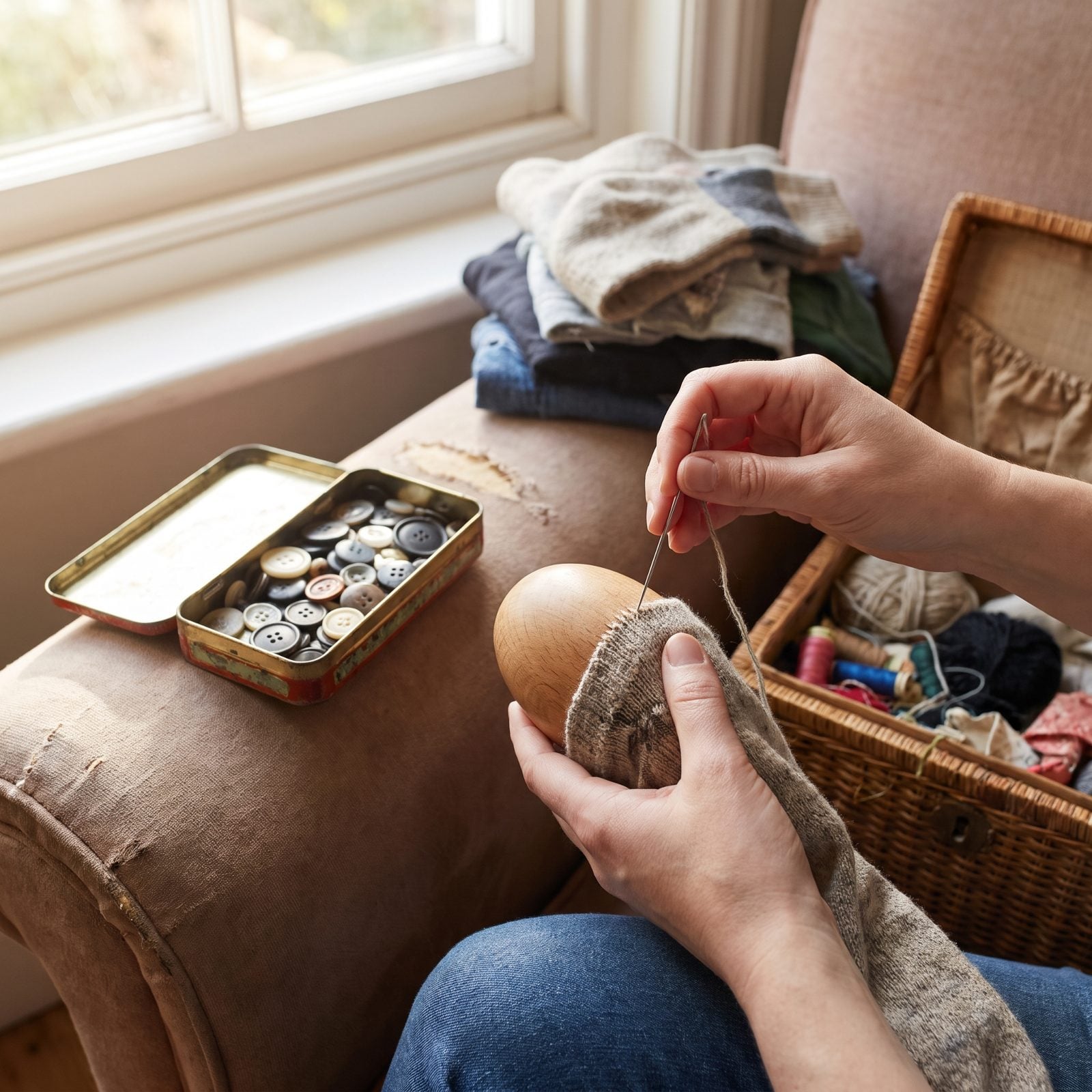
Anything that came off the line with a problem landed in the mending pile, and Tuesday afternoon was when the sewing basket came out. Split seams on pants, a hem coming down on a school dress, a torn pocket, the button that went missing from a shirt cuff sometime last week.
Socks were their own category. Wool and cotton socks wore through at the heel and toe, and instead of tossing them, they got slipped over a wooden darning egg and woven closed with matching yarn. Iron-on patches handled the knees of little boys’ jeans. Throwing clothes away early felt wasteful, so a needle and thread kept the family wardrobe going a lot longer.
17. Tuesday: Brushing Down Coats and Suits Before They Went Back in the Closet

Wool coats, suits, and good skirts weren’t washed every week. They were dry-cleaned now and then and brushed in between. So Tuesday meant a stiff clothes brush run down each garment in firm strokes, lifting lint, dust, and the dried mud off a trouser cuff before it set in.
Pockets got emptied, a quick press touched up any wilting lapels, and everything went back on proper wooden hangers with room to breathe. Closets often smelled faintly of cedar or mothballs, because a single moth hole in a winter coat was a real loss. A brushed suit simply lasted longer, and the household budget noticed.
16. Wednesday: Dusting the Bedroom Furniture, the Trim, and Every Last Baseboard
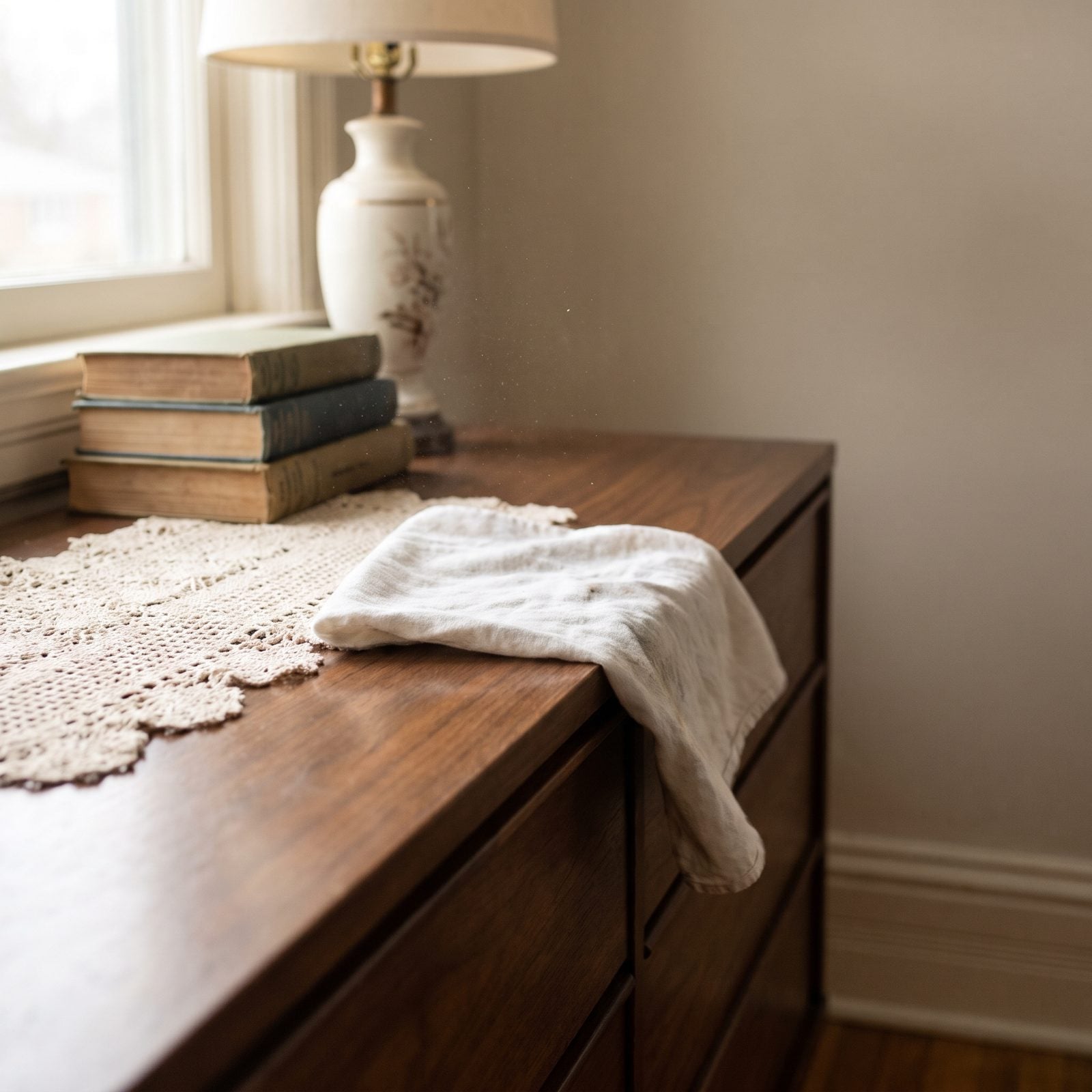
Midweek was for the bedrooms, and dusting started high and worked down. Tops of the dresser and chest of drawers first, then the headboard, nightstands, lamp bases, and picture frames. A soft cloth, sometimes lightly treated with furniture polish, caught the dust instead of tossing it into the air.
Then the woodwork: window sills, door frames, and finally the baseboards, which meant getting down on your knees and working along the whole room. Dust that settled on the trim was the first thing a visiting mother-in-law would spot. Whether the corners behind the dresser got the same attention every week is another story.
15. Wednesday: Vacuuming the Rugs and Getting the Hose Under the Beds
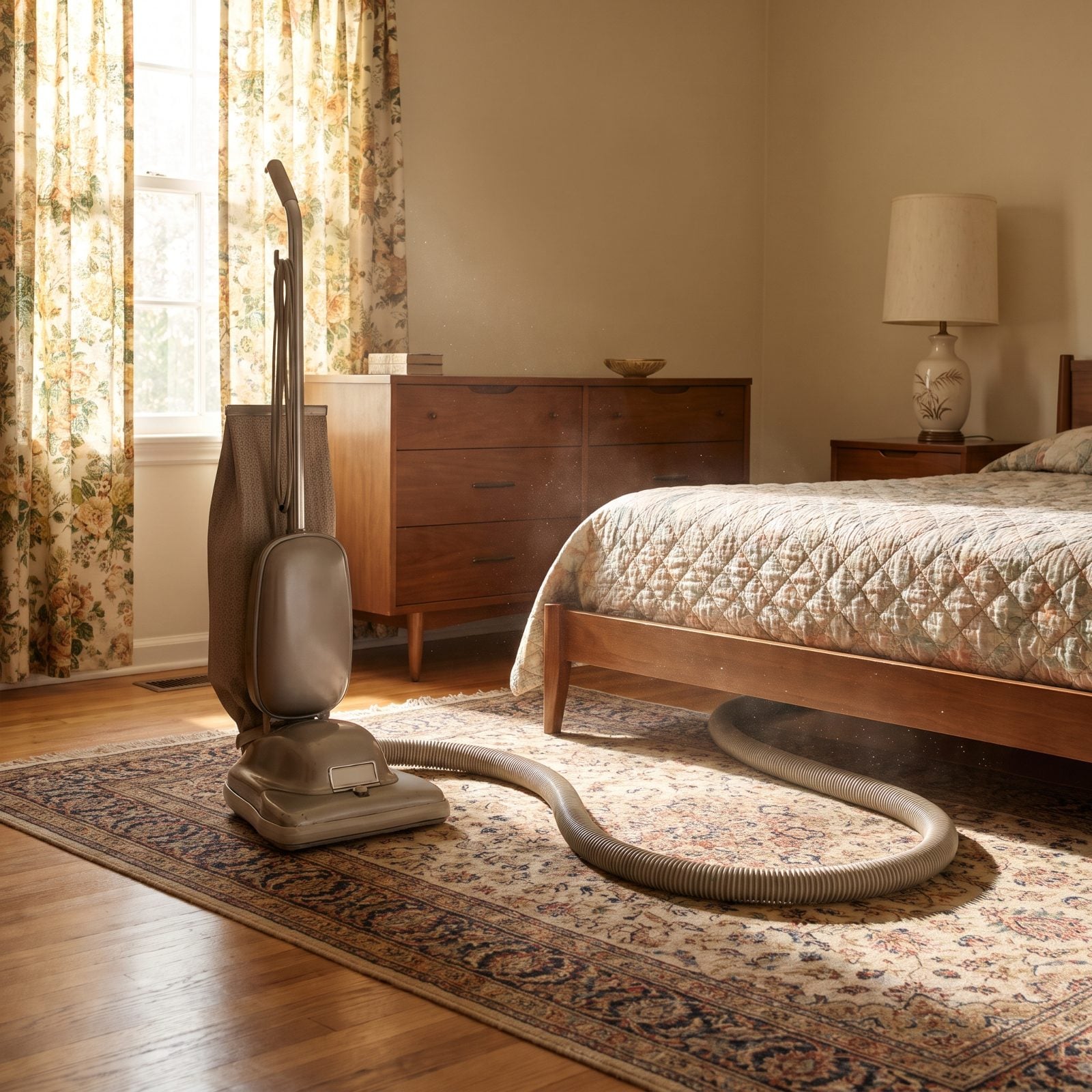
Once the dusting had settled onto the floor, the vacuum came out. Upright for the rugs and the open carpet, back and forth in overlapping rows. A long ribbed hose with its attachments was the tool for everywhere the upright couldn’t reach.
Under the beds was the main event. Dust collected there in thick drifts, along with lost socks, stray toys, and the occasional comic book. The crevice tool went along the edges of the carpet and behind the bedroom door. It was noisy, sweaty work, and it was the job that made the bedrooms feel truly clean rather than just tidy.
14. Wednesday: Airing and Turning the Mattresses, Pillows, and Bedcovers
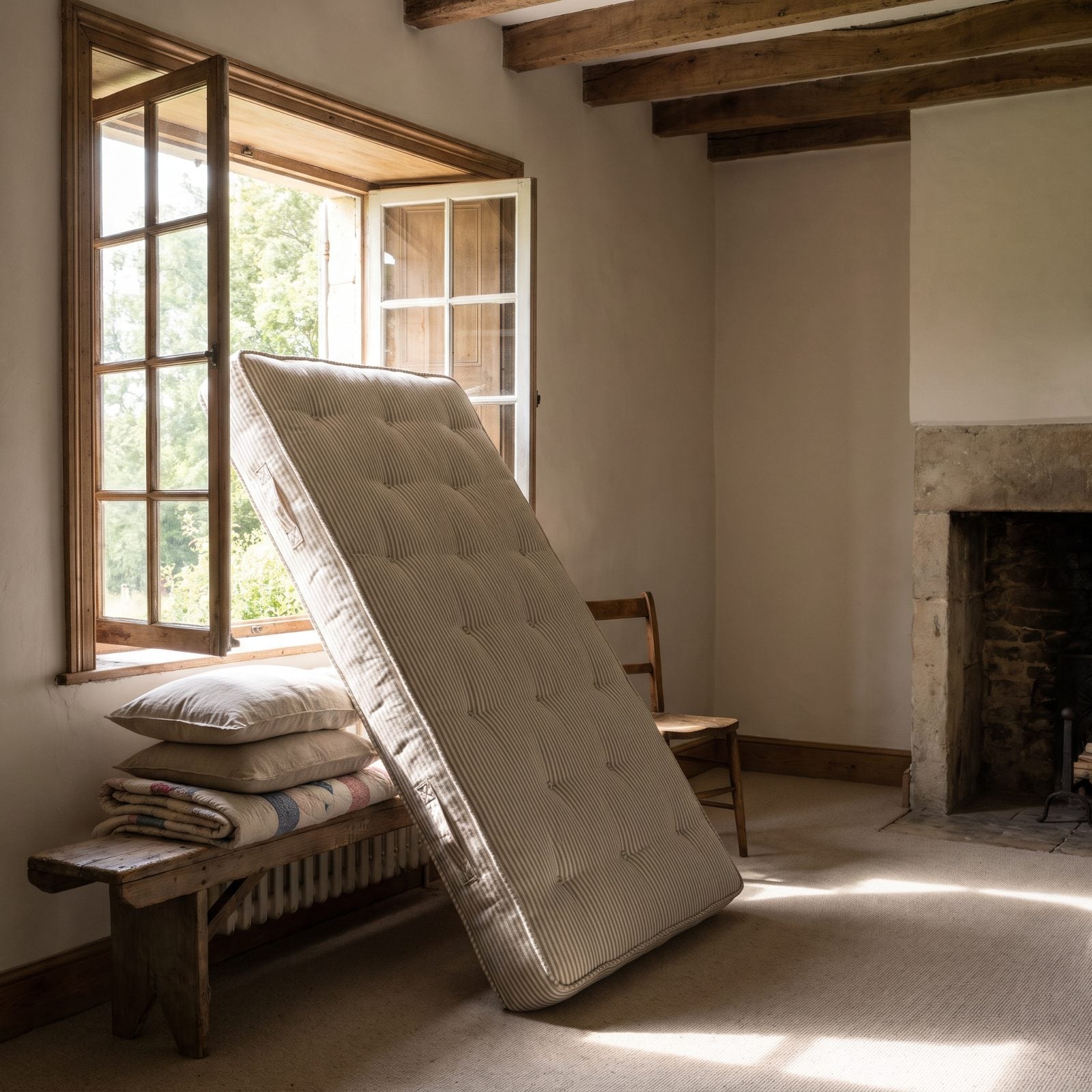
Innerspring mattresses in the 1960s were usually two-sided, and the housekeeping advice was to turn them regularly so they wore evenly and didn’t develop a sag where everyone slept. Flip it over one time, spin it end to end the next. It was awkward, heavy work, and often waited until someone else was home to grab the other end.
Pillows went over the windowsill or onto the line for an airing in the sun, and blankets and bedspreads got a hard shake outdoors. With the bed stripped back down to the ticking, it was also a chance to check for stains and loose buttons on the mattress tufting.
13. Wednesday: Polishing the Mirrors, Vanities, and Dressing Tables
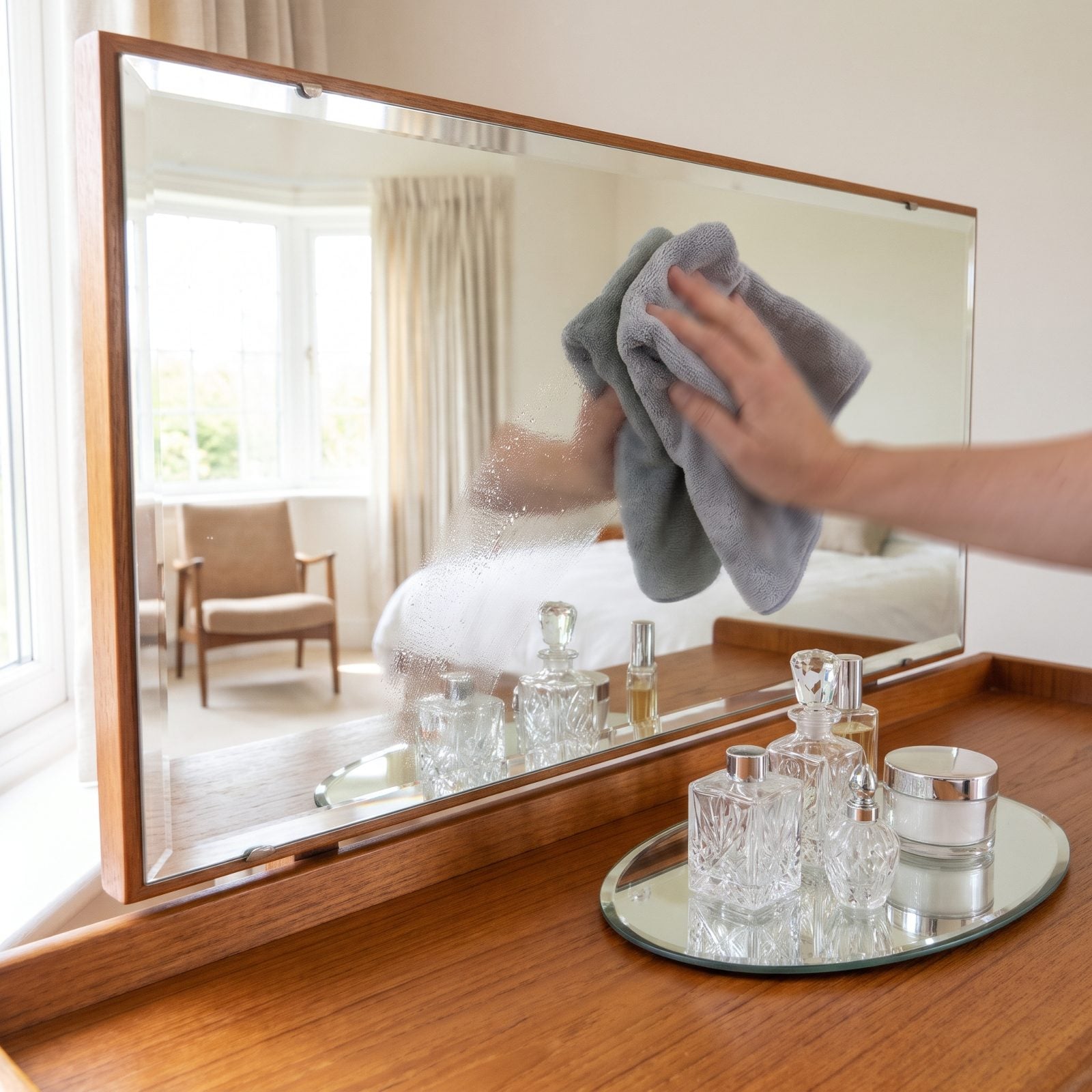
The bedroom wasn’t done until the glass was. Dresser mirrors, the vanity mirror, the full-length one on the back of the closet door — every one got cleaned until there wasn’t a streak or a fingerprint. Window cleaner from a spray bottle did the job, and a lot of households swore by vinegar water wiped dry with crumpled newspaper.
Dressing tables needed sorting as much as cleaning. Perfume bottles, powder compacts, and lipsticks were lifted off, the glass tray or tabletop wiped down, everything set back in place. Wood vanities got a light polish. It was the most satisfying ten minutes of the whole Wednesday.
12. Thursday: Wiping the Pantry Shelves and Taking Stock of the Supplies
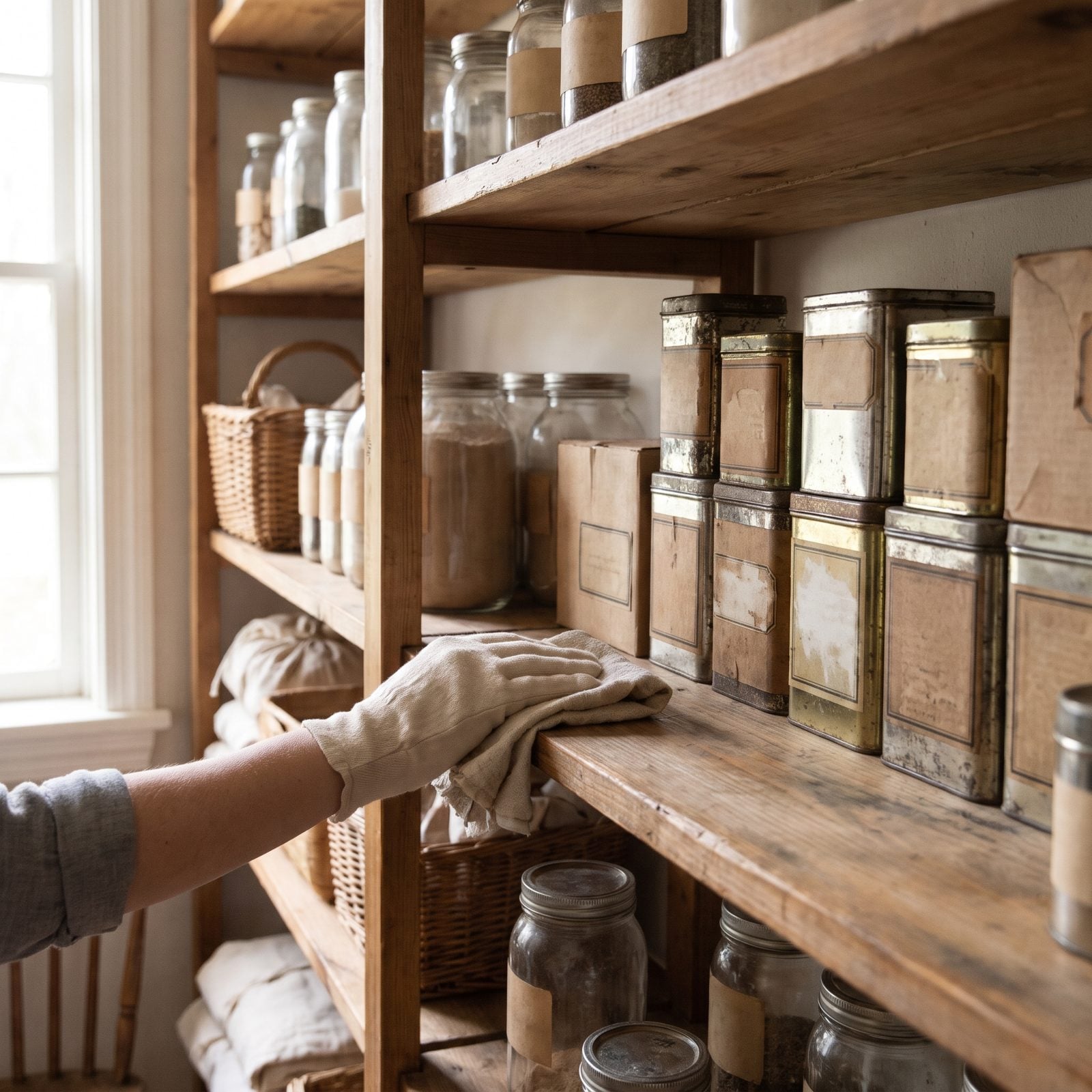
With the refrigerator sorted, the pantry was next. Cans, boxes, and jars came off the shelves, and the shelves got wiped down to catch spilled flour, sugar, and the occasional sticky ring from a syrup bottle. Worn shelf paper got replaced, and contact paper was a popular upgrade.
Everything went back in rows, older cans to the front, and that’s when the list got made. Low on coffee, out of cake flour, one can of soup left. Thursday stocktaking set up the weekend grocery trip, so nobody found themselves halfway through a recipe with an empty shelf.
11. Thursday: Clean the Range, Drip Pans, and Oven
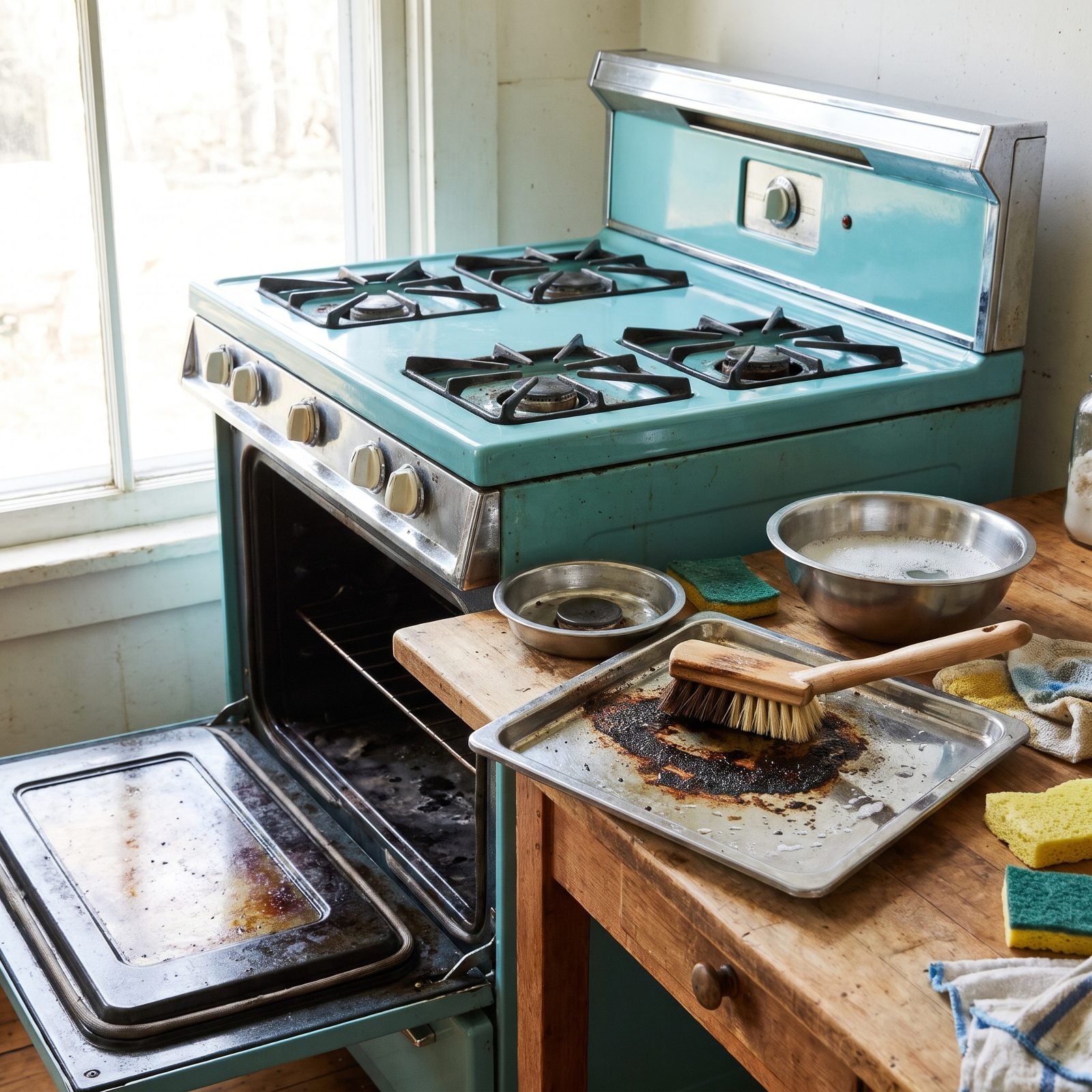
Thursday was the kitchen’s turn, and the range took the brunt of it. The chrome drip pans came out from under the burners, crusted with a week of boil-overs, and went into hot soapy water to soak. Then a steel wool pad, Brillo or S.O.S., and plenty of elbow grease until they shone again.
The oven was the job everybody dreaded. A can of Easy-Off, rubber gloves, the kitchen window cracked open against the fumes. Some homemakers swore by the old trick of leaving a dish of ammonia in a closed oven overnight to loosen the grime. Either way, it ended with someone on their knees, head halfway inside, scraping.
The first step hasn’t changed, says a professional house cleaner: “Carefully remove the drip pans from the stove and check for visible damage or stubborn stains”
10. Friday: Scrub the Bathtub, Toilet, Tile, and Bathroom Floor
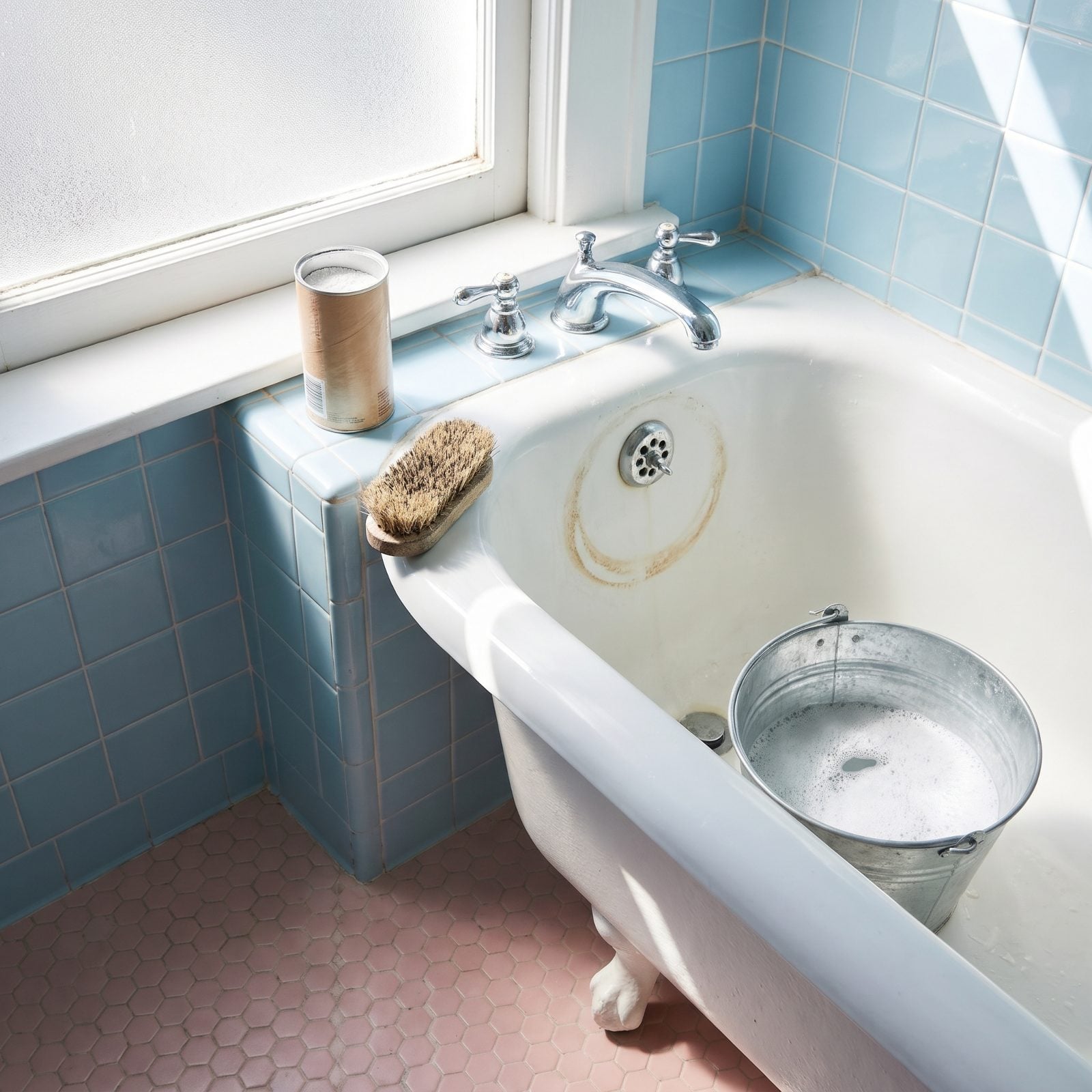
This was the real bathroom clean, the one the daily wipe-down only put off. The tub ring came first, scrubbed out with Comet, Ajax, or Bon Ami and a stiff brush. Then the toilet, inside and out, down to the base and the bolts nobody looks at until company does.
The pastel tile, all that pink and mint green and powder blue, got washed wall to wall, with an old toothbrush run along the grout lines where mildew liked to settle. The shower curtain was wiped or tossed in the wash, and the floor got done last, on hands and knees across those little hexagon tiles. It was miserable work. The room sparkled for about a day.
9. Friday: Dust and Polish the Living Room Furniture
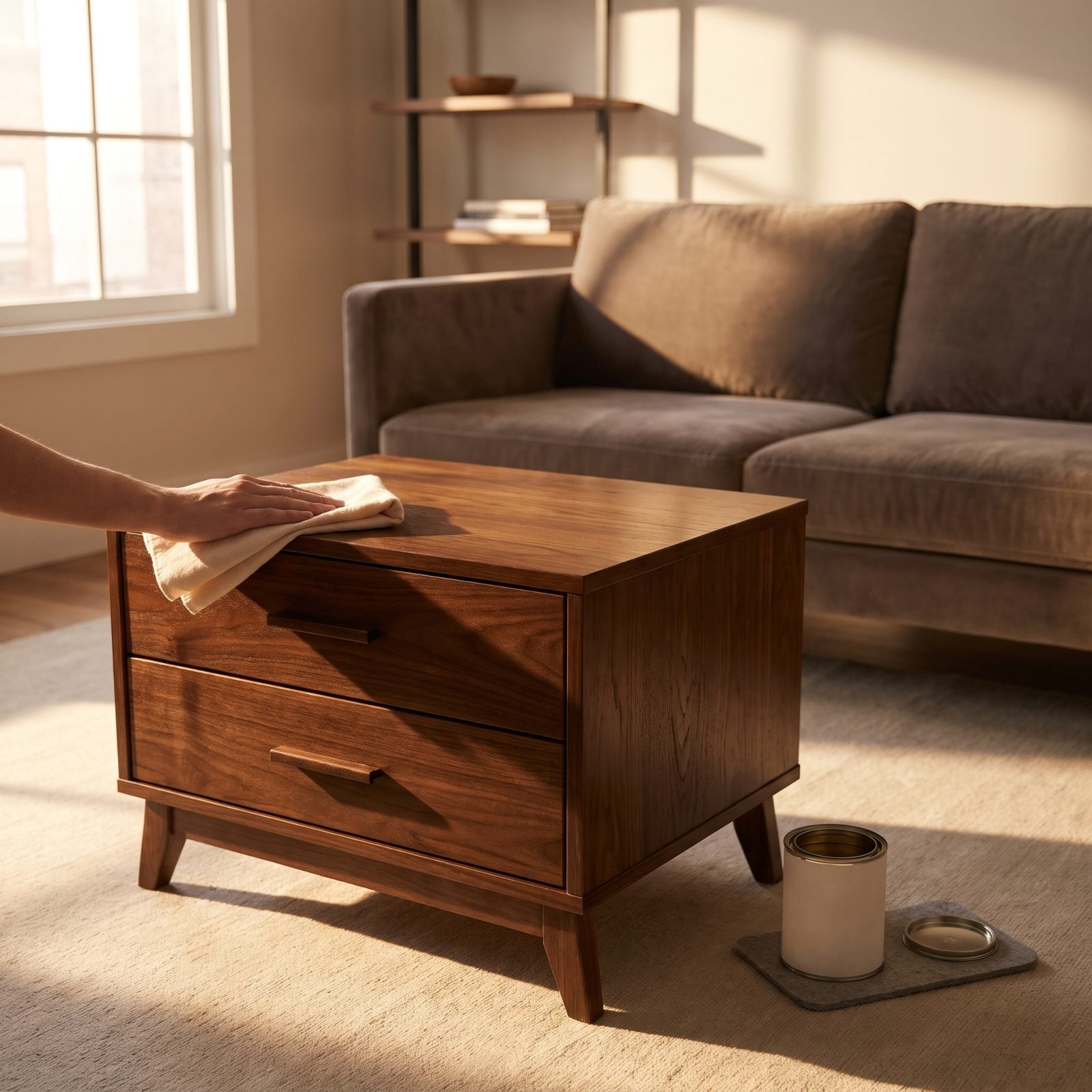
The living room was where guests sat, so it got the full treatment before the weekend. Every surface cleared, dusted, and polished: the coffee table, the end tables, the console television, the hi-fi cabinet that doubled as a display shelf. A can of Pledge and a soft cloth made the walnut veneer gleam.
Then came the fiddly part. Lamp bases and shades, picture frames, the knickknack shelf with its figurines and souvenir ashtrays, each piece lifted, dusted, and set back in its spot. The manuals said to do it all. In practice, the things at eye level got the attention and the top of the bookcase waited for spring.
8. Friday: Vacuum the Carpets, Rugs, and Upholstered Furniture
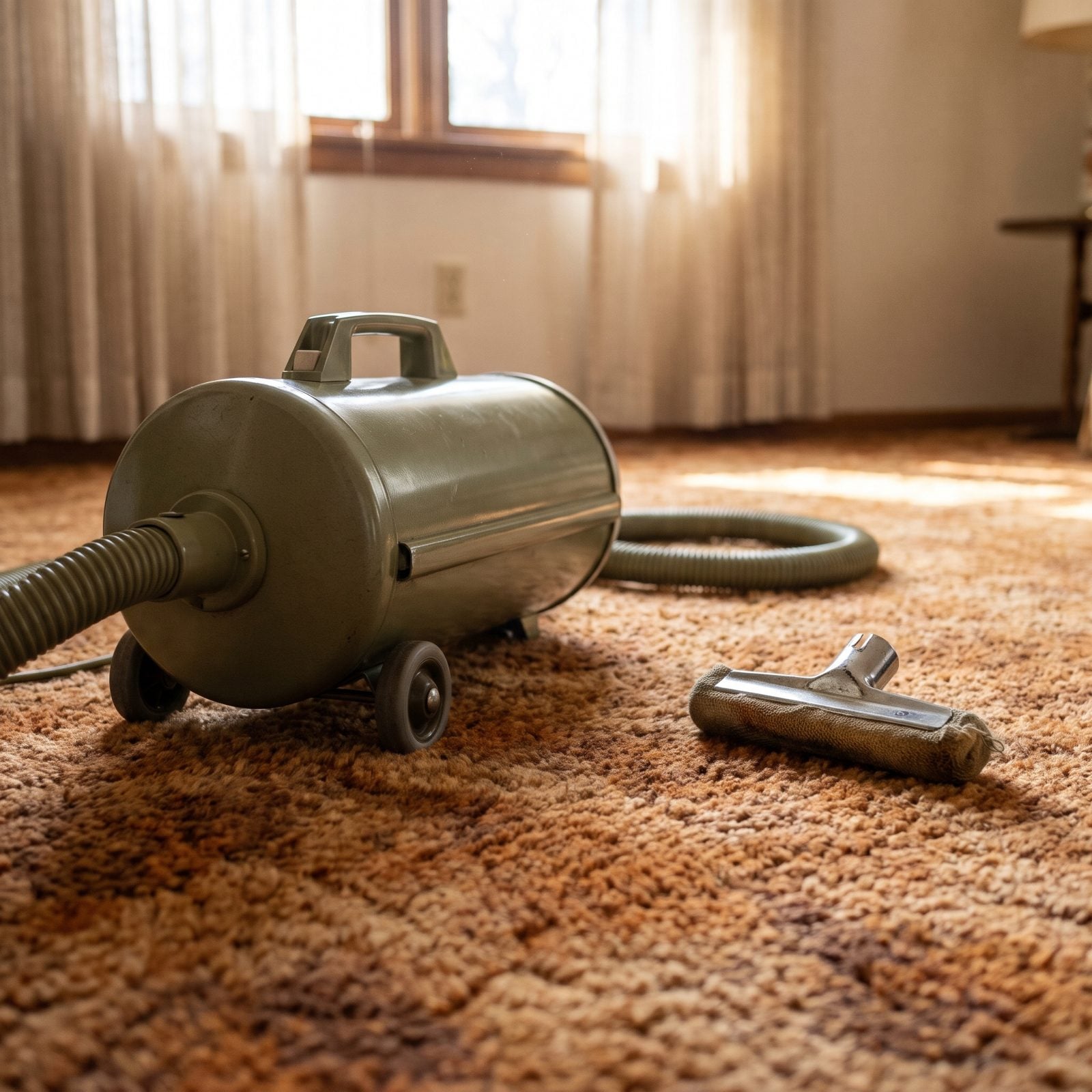
Out came the vacuum, an upright Hoover or a canister model rolling behind you on its little wheels. Wall-to-wall carpet was the pride of plenty of 1960s living rooms, and it showed every footprint and dropped popcorn kernel. Long overlapping passes, furniture shifted where you could manage it, the edges finished with the crevice tool.
Then the attachments went on for the upholstery. Sofa cushions lifted and vacuumed underneath, where coins and crumbs and the occasional lost toy collected. Armchairs and the seams of the davenport got a pass with the brush head. Furniture wearing slipcovers or plastic covers got off easy that week.
7. Friday: Clean the Dining Room and Polish the Serving Pieces
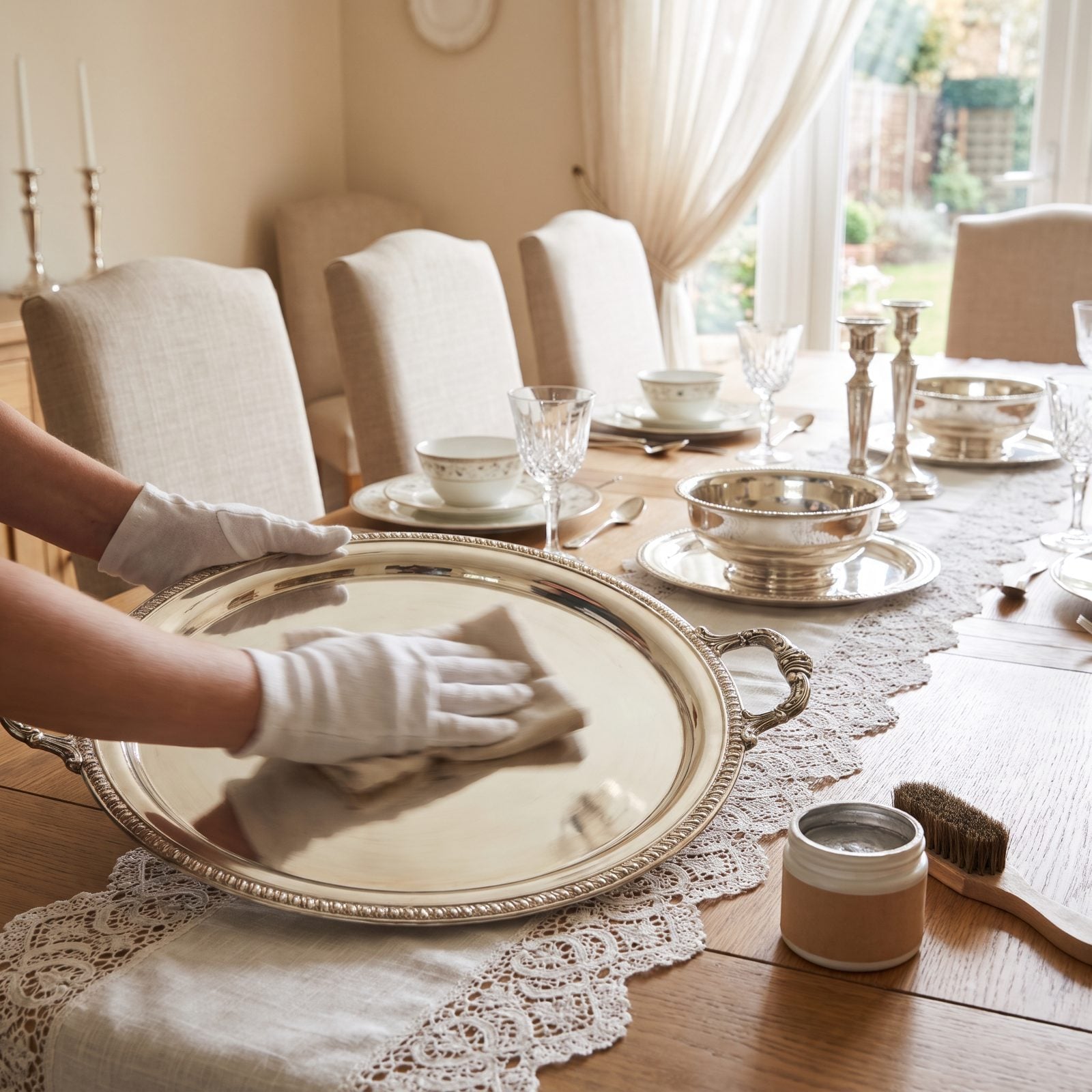
The dining room might sit empty all week, but Sunday dinner was coming. The table got dusted and polished, the chairs wiped down rung by rung, and the buffet or sideboard cleared and shined. A fresh tablecloth, pressed on Tuesday, waited folded in the drawer.
Then the silver. Serving spoons, the gravy boat, candlesticks, maybe a tea service from the wedding, all rubbed with silver polish and a soft cloth until the gray-black tarnish came off on the rag. It was slow, finger-blackening work, and it was often done at the kitchen table with the radio on.
6. Friday: Mop the Kitchen and Other Hard-Surface Floors
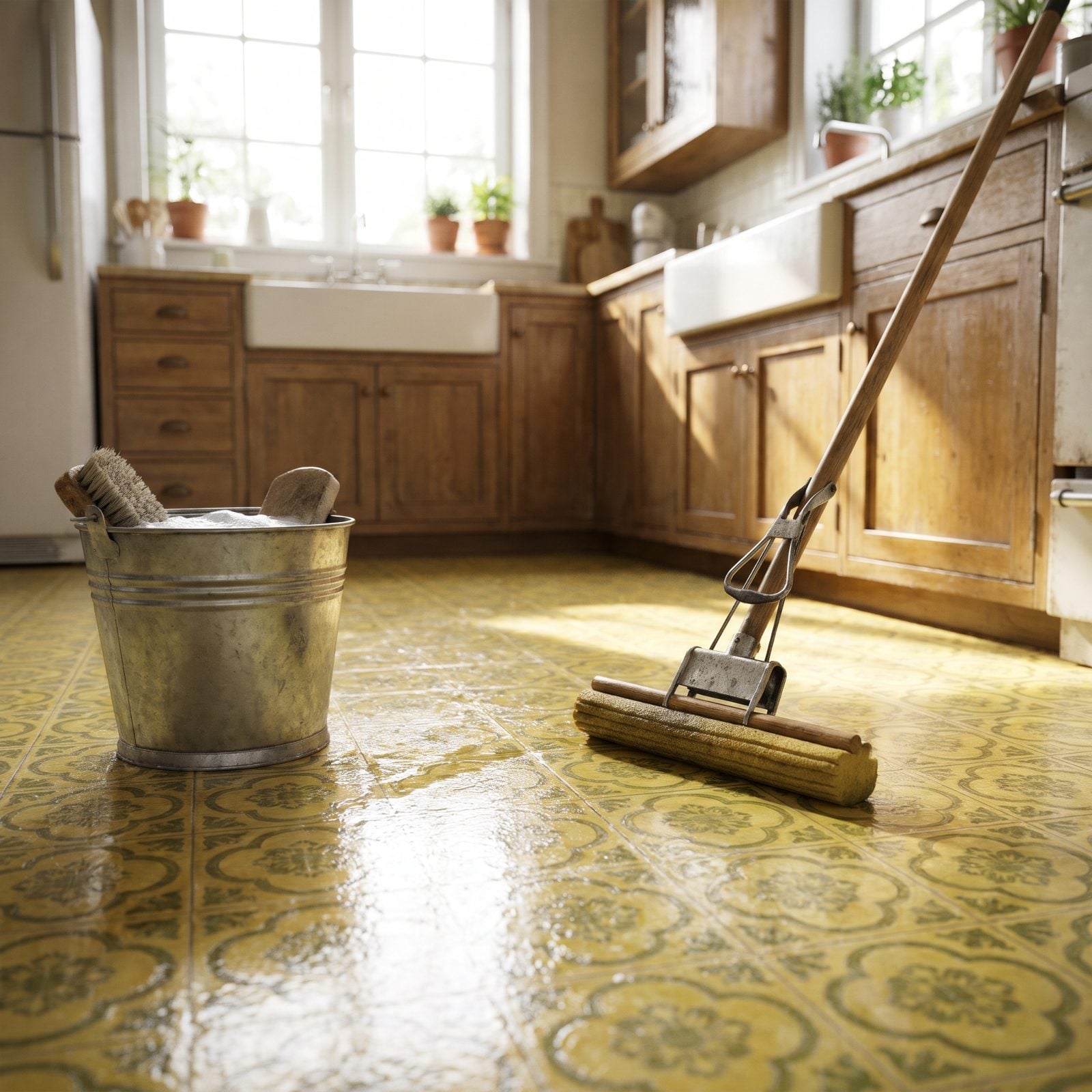
Friday ended where the daily sweeping never quite reached: the full mop. Kitchen, back hall, laundry room, any linoleum or vinyl tile in the house. A real sweep first, then a bucket of hot water and Spic and Span, the sponge mop pushed into corners and along the base of the cabinets.
Many homes followed it with a coat of floor wax, spread thin and left to dry while everyone was shooed out of the kitchen. The shine looked wonderful. The buildup over months did not, which meant an eventual afternoon on hands and knees stripping the old wax off and starting over.
5. Saturday: Sweep the Porch, Steps, and Front Walk
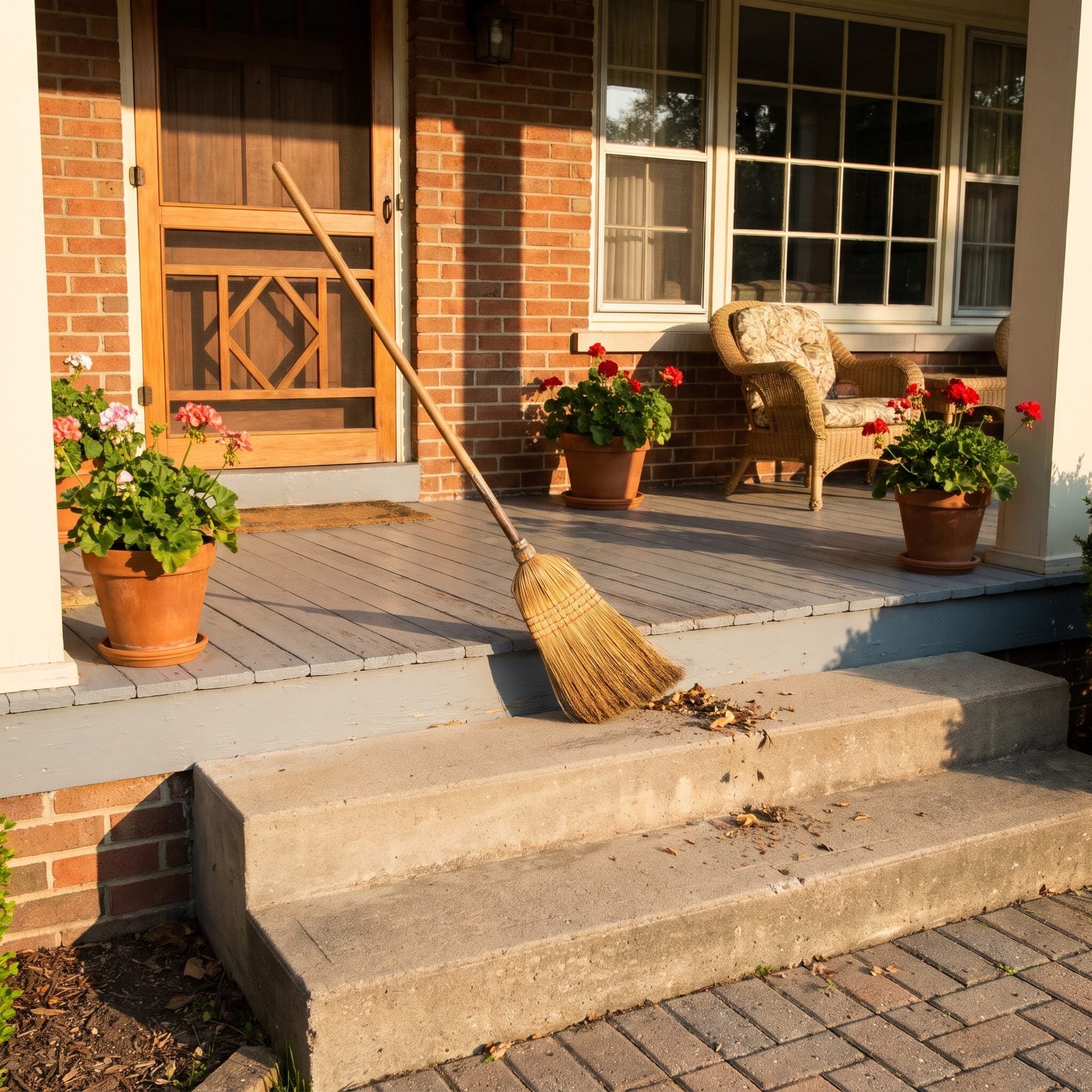
Saturday turned outward. The front of the house was what the neighbors saw, so the porch got swept with the stiff corn broom, every step brushed down, the front walk cleared of leaves, grass clippings, and whatever the paperboy’s bike had tracked in.
Cobwebs came down from the porch light and the eaves with a broom held overhead. In warm weather, plenty of households finished by hosing the concrete clean and letting it dry in the sun. It took twenty minutes and made the whole house look cared for from the curb.
4. Saturday: Shake the Doormats and Clean the Entryway
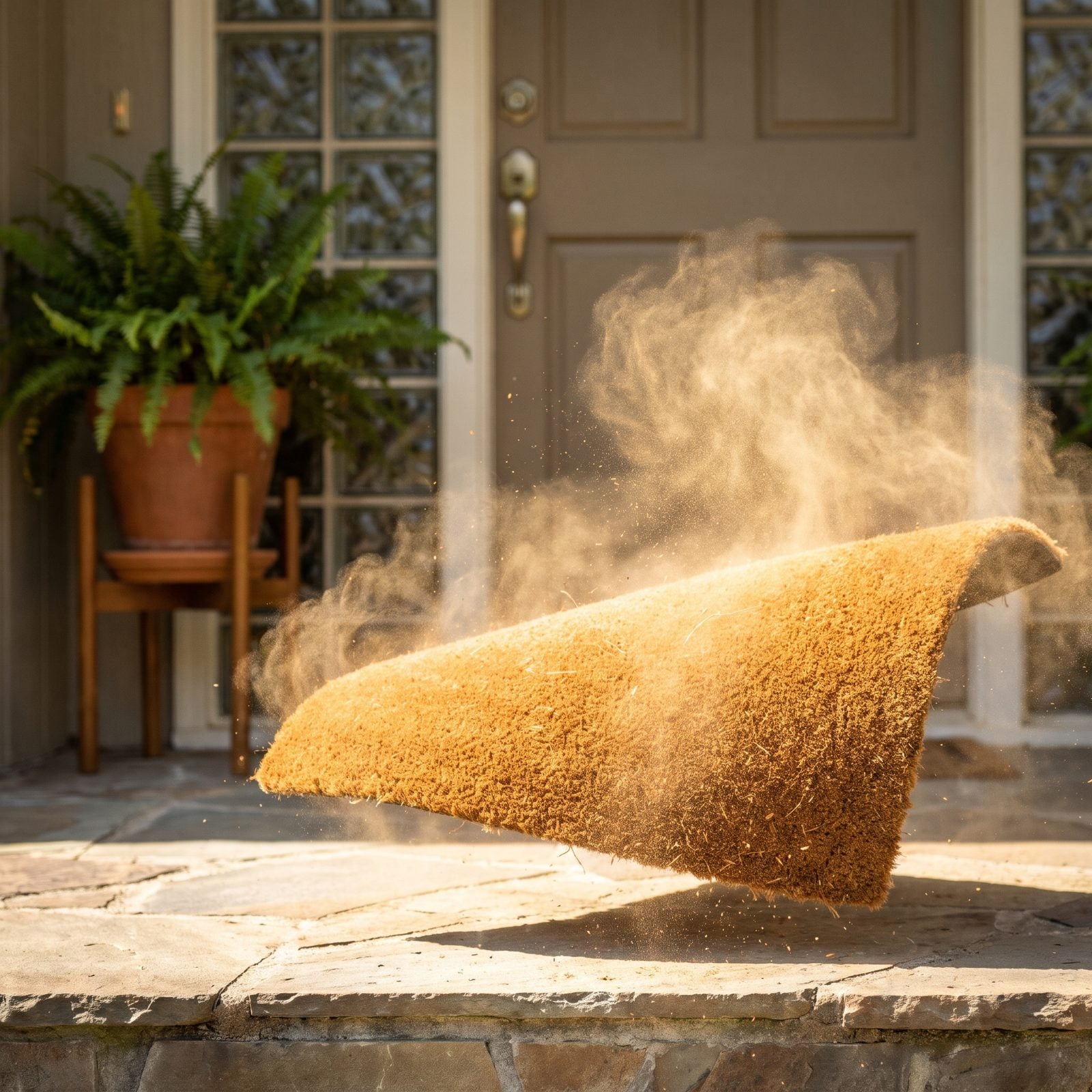
The doormats had caught a week of dirt so it wouldn’t reach the carpet. Now they paid for it. Each one was carried out and shaken hard over the porch rail, or slapped against the steps until the dust stopped flying. The rubber mats got hosed off.
Inside, the entryway got its own once-over. The floor swept and mopped, the front door wiped down, the storm door glass cleaned of nose prints from kids and dogs. The brass knocker or kick plate got a rub if there was one, and the coat closet was straightened so guests’ coats had somewhere to go.
3. Saturday: Supervise a Full Pickup of the Children’s Rooms
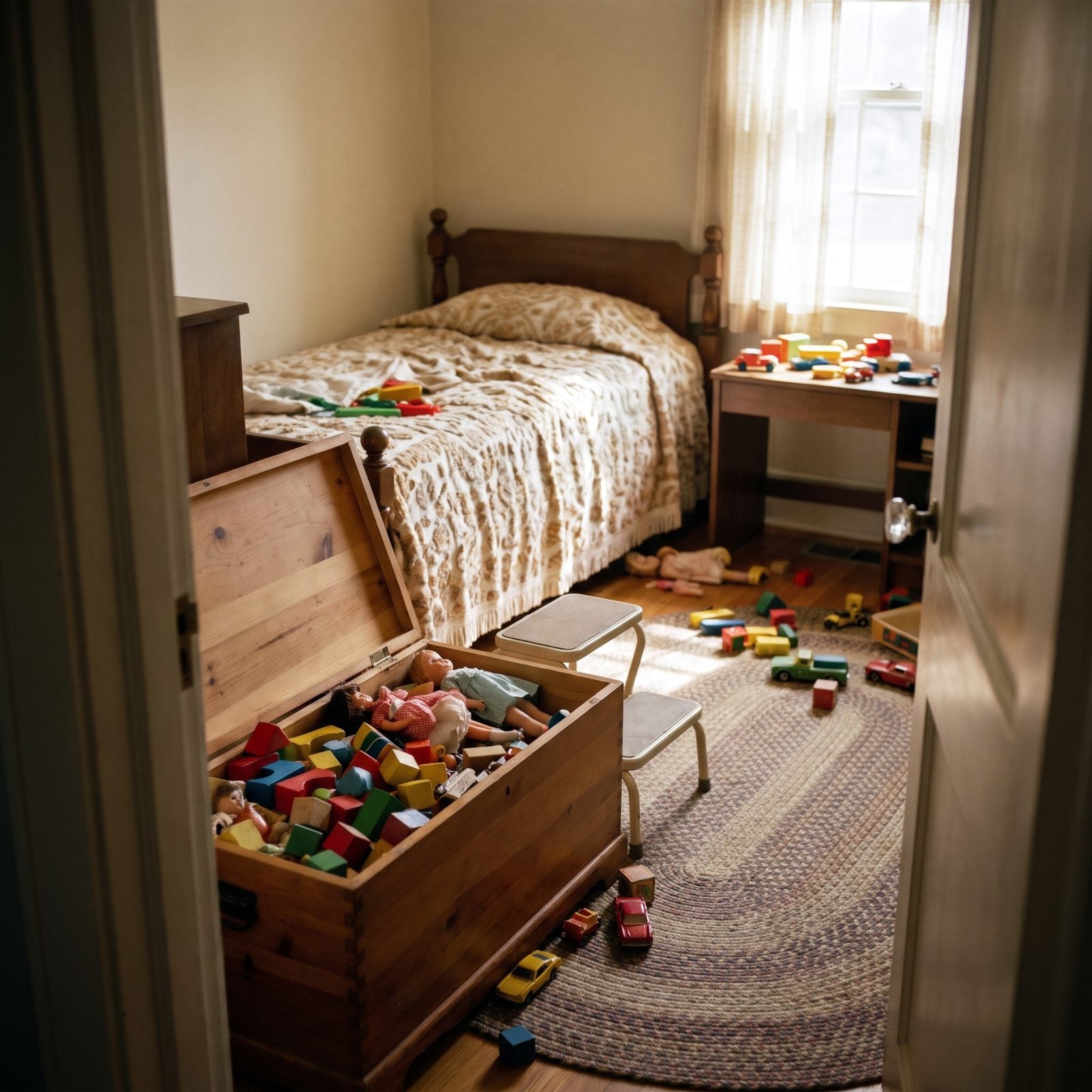
The kids did the picking up. You did the inspecting. Toys went back in the toy box, books onto the shelf, dirty clothes into the hamper instead of under the bed. And yes, someone checked under the bed, because that was where everything ended up.
Plenty of households tied this to the weekly allowance, and the chore chart on the refrigerator kept score. Once the floor was clear, the room could be dusted and vacuumed properly. The manuals pictured cheerful children tidying on their own. Real Saturday mornings involved more reminders than that.
2. Saturday: The Fingerprint Patrol Around Doors and Light Switches
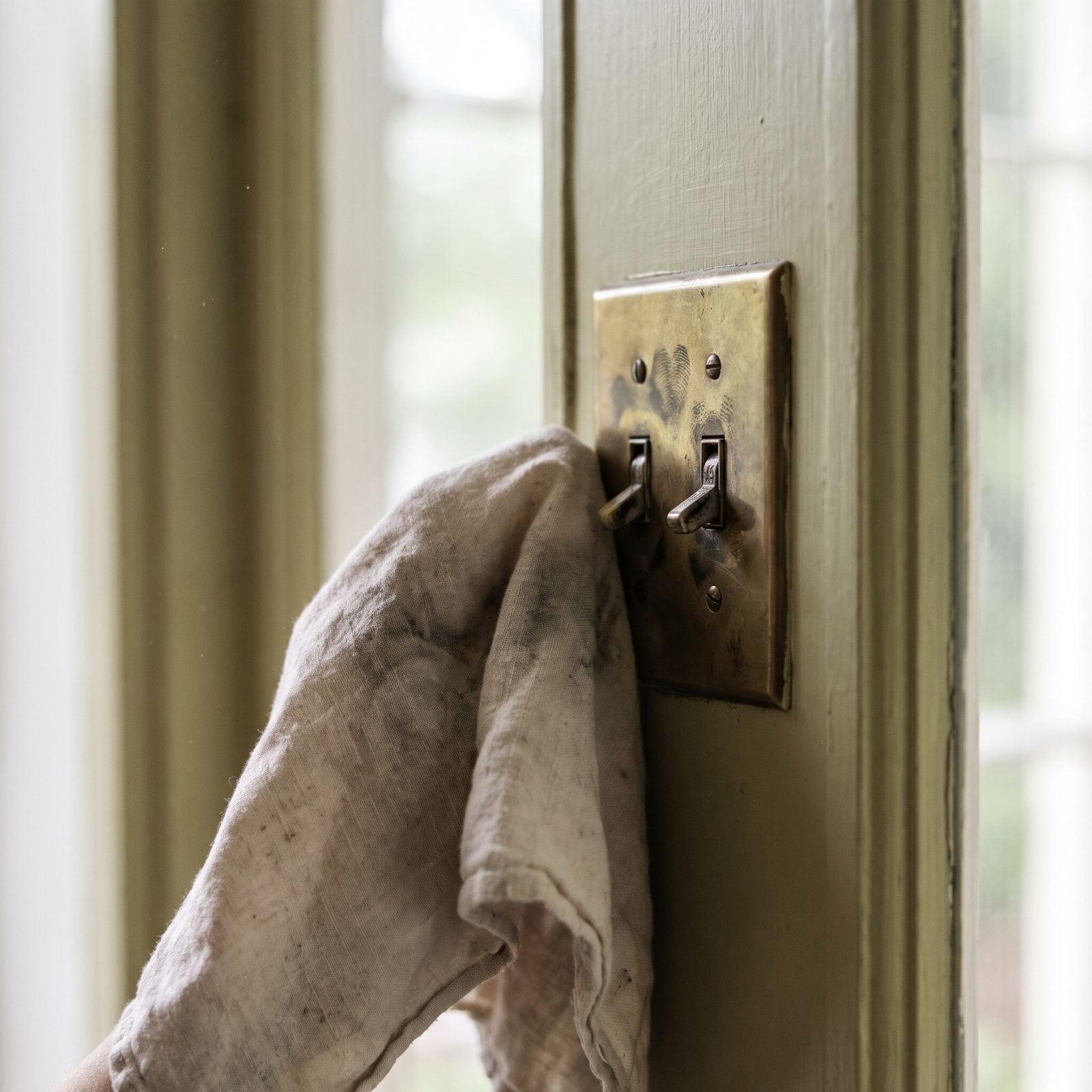
Saturday was the day you noticed what the whole house had been quietly accumulating all week: greasy little ghost prints clustered around every doorknob, light switch, and the swinging door into the kitchen. Right at kid-height, naturally. The manuals called it “spot work,” which sounds a lot gentler than crouching in a hallway with a damp rag and a tin of paste.
Period housekeeping guides treated painted woodwork and switch plates as a weekly must. The reality? Most homemakers hit the worst offenders and left the rest, because nobody was wiping down every plate in the house every single Saturday, no matter what the Good Housekeeping columns implied.
Writing about the most-touched surfaces in a house, a home inspector notes “Regular cleaning prevents the build-up of smudges, fingerprints, and grime, keeping doorknobs, handles, and switches looking shiny and new.”
1. Sunday: Just the Essential Dishes and a Light Tidy Before Monday Landed
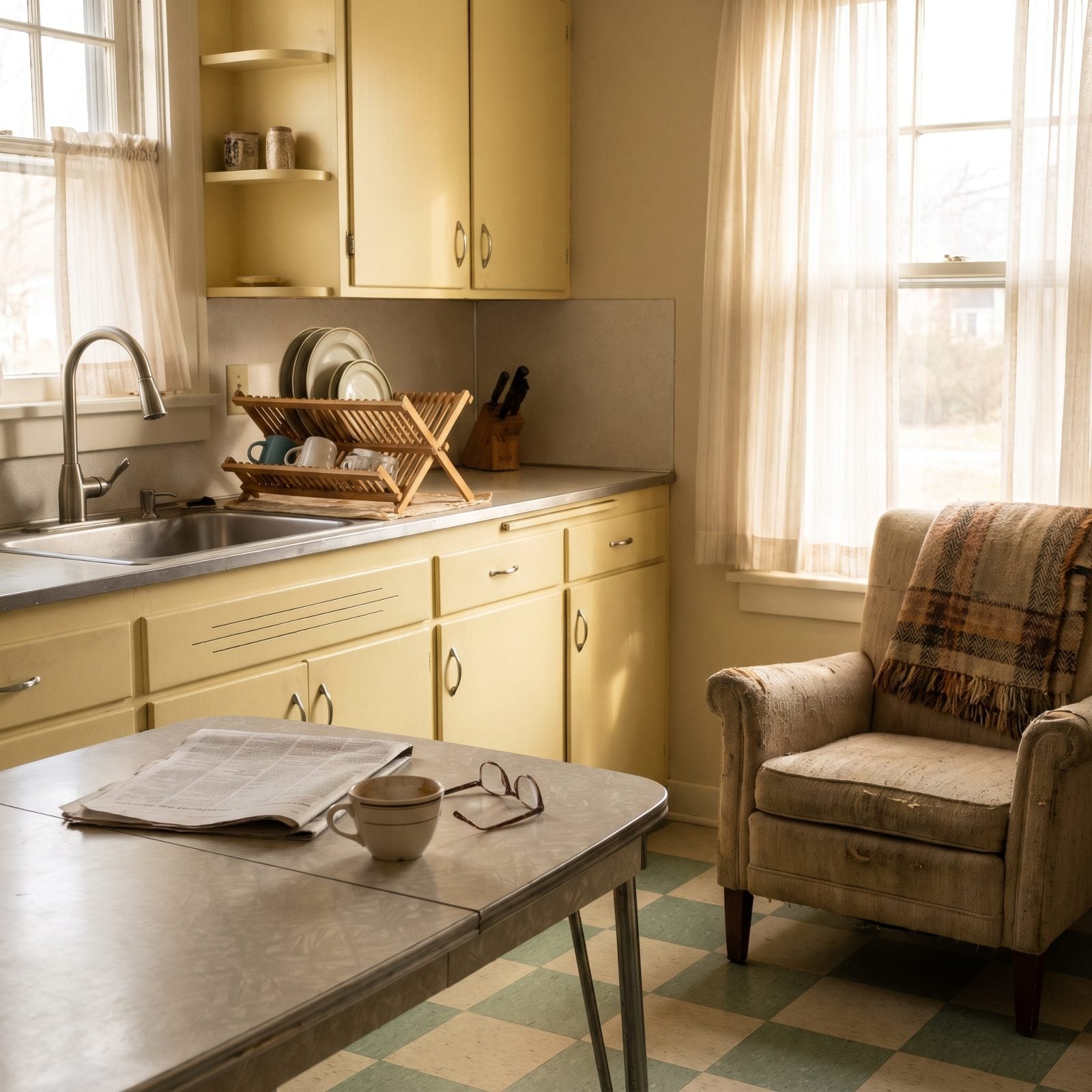
By Sunday the energy was gone, and so was the pretense. That scrub-every-baseboard ambition from the weekly plan surrendered to a quieter truth: wash what you have to, straighten what people will see, and for heaven’s sake sit down for once.
Housekeeping manuals framed Sunday as a “day of rest,” then listed a surprising amount of prep for it. Set out Monday’s clothes. Get the roast ready. Leave the kitchen “company-clean.” Firsthand accounts tell a looser story, where the supper dishes got done because they had to be, the rest was a lick-and-a-promise tidy, and the whole aim was walking into Monday without a sink full of grease.
The ideal said rest. The routine said get just far enough ahead that Monday wouldn’t bury you.
That gap between the printed schedule and the lived one is the whole story of this era. The magazines sold a spotless, systematic home. The actual kitchen ran on good-enough and done-for-now, warm and dim in the last of the Sunday light. And honestly? Good-enough was usually plenty.