🔥 Would you like to save this?
In order to come up with the very specific design ideas, we create most designs with the assistance of state-of-the-art AI interior design software. Also, assume links that take you off the site are affiliate links such as links to Amazon. this means we may earn a commission if you buy something.
A stone fireplace commands attention like no other architectural element, transforming ordinary living rooms into spaces of gravitas and warmth. These natural features tap into our primal connection to fire and shelter, creating what I call “anchored sanctuaries”—rooms where the eye instinctively finds rest and the body relaxes. The psychological pull of stone combined with flame creates an unmistakable focal point that grounds contemporary living spaces in timeless appeal, making these nineteen examples masterclasses in centered design.
Floor-to-Ceiling Stone Fireplace in Modern Minimalist Living Room
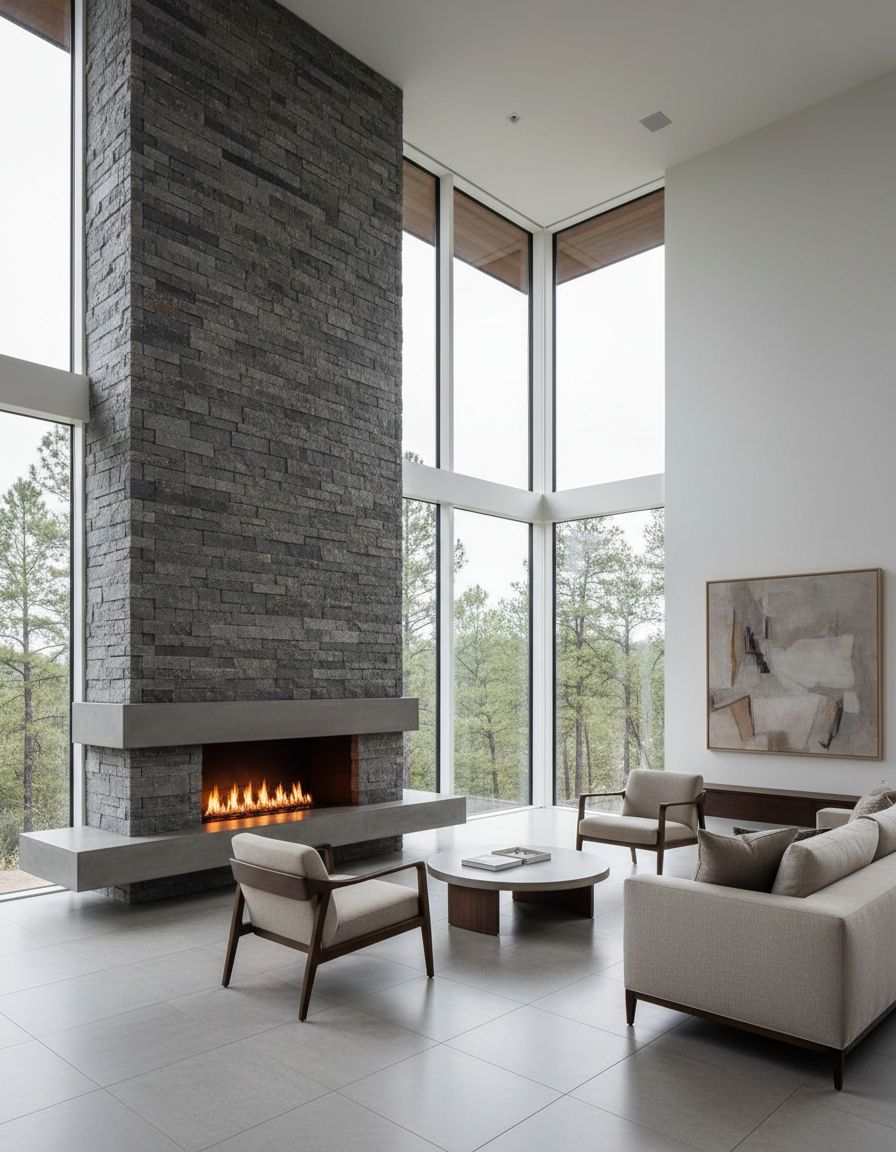
The vertical drama of a floor-to-ceiling stone installation creates what I term “skyward grounding”—simultaneously elevating the eye while anchoring the space. In minimalist contexts, the organic texture of stone provides essential visual warmth against sleek surfaces and neutral palettes.
This design choice transforms the fireplace into a living sculpture that commands the room without competing for attention. The uninterrupted stone column draws the gaze upward, making ceilings feel higher while maintaining the cozy intimacy fire naturally provides, perfectly balancing minimalism’s cool restraint with nature’s raw authenticity.
Rustic Stacked Stone Fireplace with Reclaimed Wood Mantel
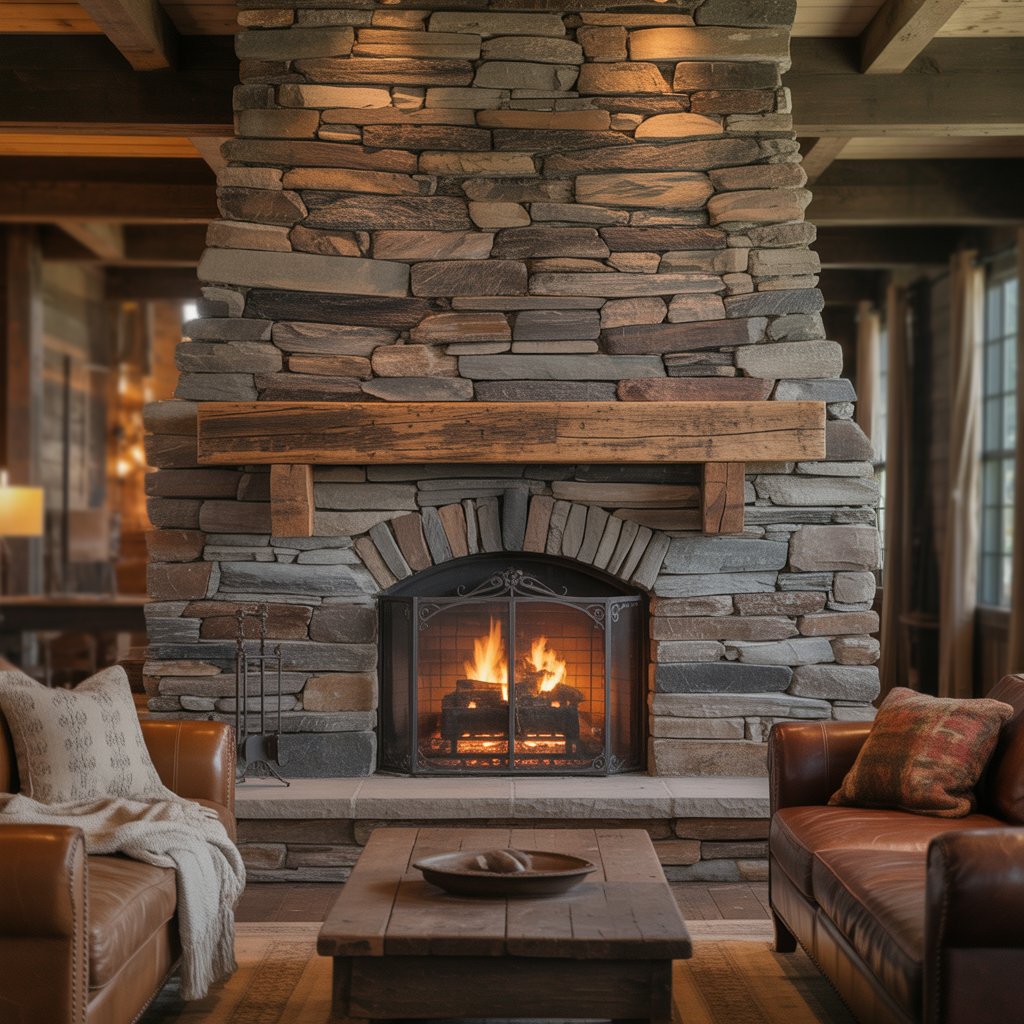
Layered textures create depth psychology—our minds instinctively read complexity as richness and history. The irregular surfaces of stacked stone paired with weathered wood tell stories of time and craftsmanship, establishing what I describe as “textural nostalgia.” This combination speaks to our desire for authenticity in an increasingly manufactured world.
The mantel provides a horizontal counterpoint to vertical stone stacking, creating visual balance while offering a stage for personal artifacts. This design approach doesn’t merely decorate; it evokes emotional connections to heritage, craftsmanship, and the enduring beauty of imperfection.
White-Washed Stone Fireplace in Coastal Living Room
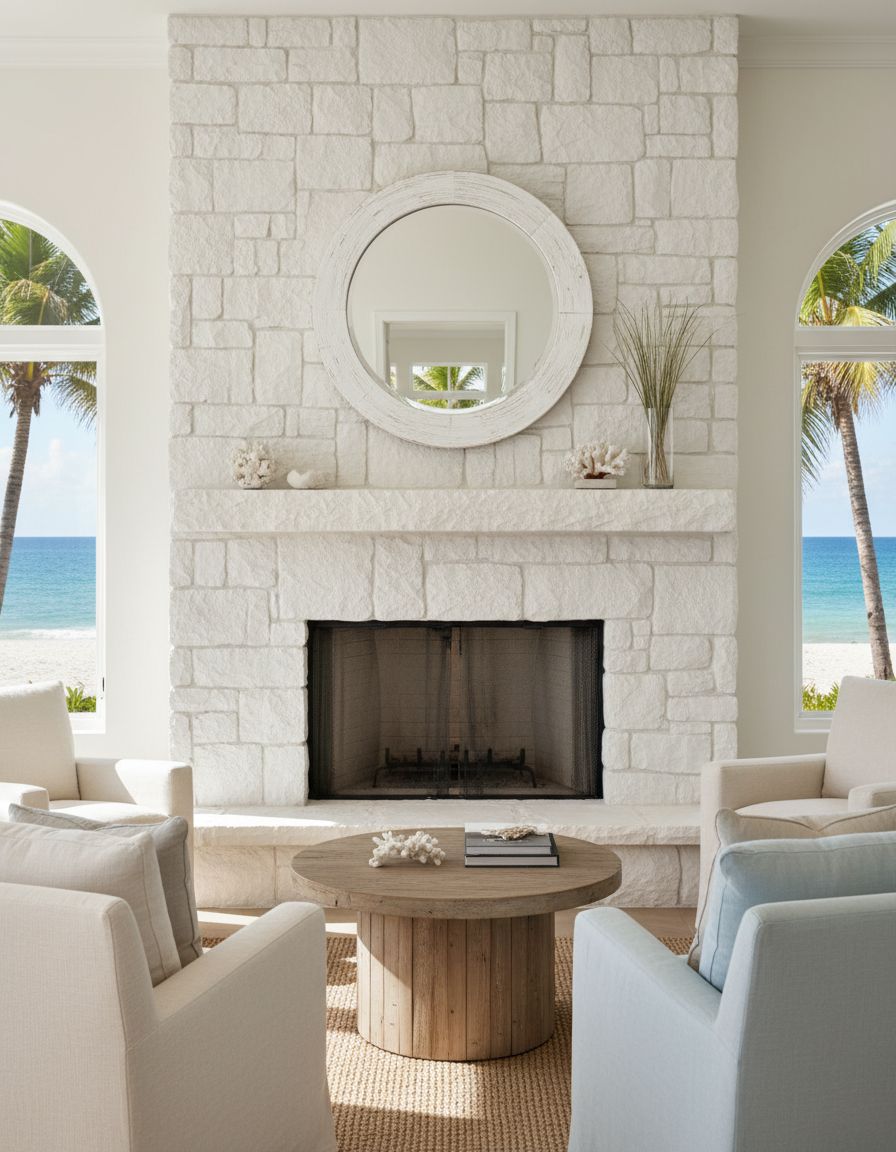
Lightening stone through white-washing creates an intriguing paradox—maintaining textural weight while achieving visual airiness. This technique exemplifies “softened permanence,” where the fireplace retains its commanding presence without overwhelming breezy coastal aesthetics.
The whitened surface reflects natural light beautifully, amplifying the sun-drenched quality essential to seaside living while the stone’s inherent texture prevents the space from feeling sterile. This approach bridges the gap between substantial architecture and the effortless lightness coastal design demands, proving that focal points can anchor without heaviness when treated with thoughtful restraint.
Dark Charcoal Stone Fireplace with Contemporary Furniture
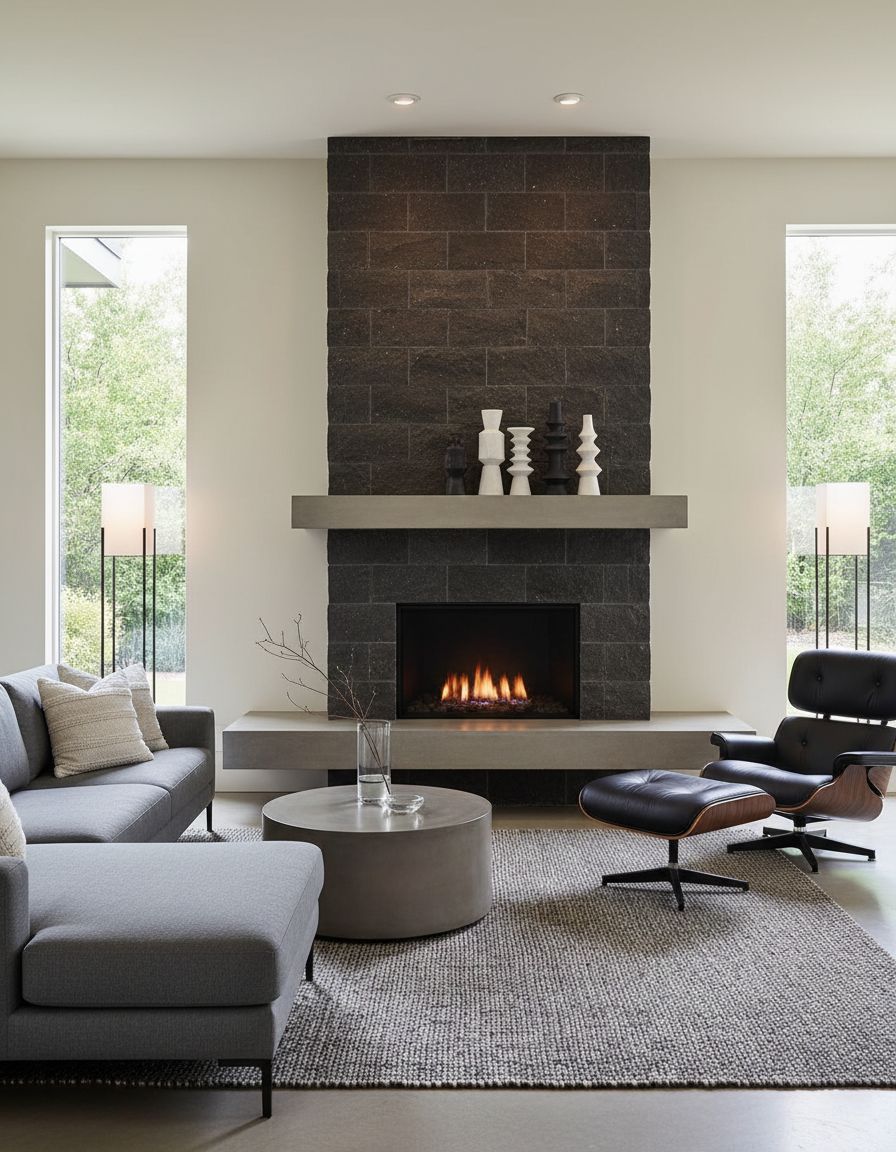
Deep charcoal stone creates sophisticated contrast that demonstrates “bold restraint”—making a powerful statement through controlled color rather than elaborate ornamentation. Against contemporary furnishings, the dark fireplace becomes a graphic element, almost architectural art that grounds modern pieces in organic materiality.
This darkness absorbs light strategically, creating visual weight that prevents contemporary spaces from feeling untethered or cold. The psychological effect is profound: dark stone suggests mystery and depth, inviting contemplation while contemporary furniture maintains practicality, achieving the delicate balance between drama and livability that defines successful modern interiors.
River Rock Stone Fireplace in Mountain Retreat Living Room
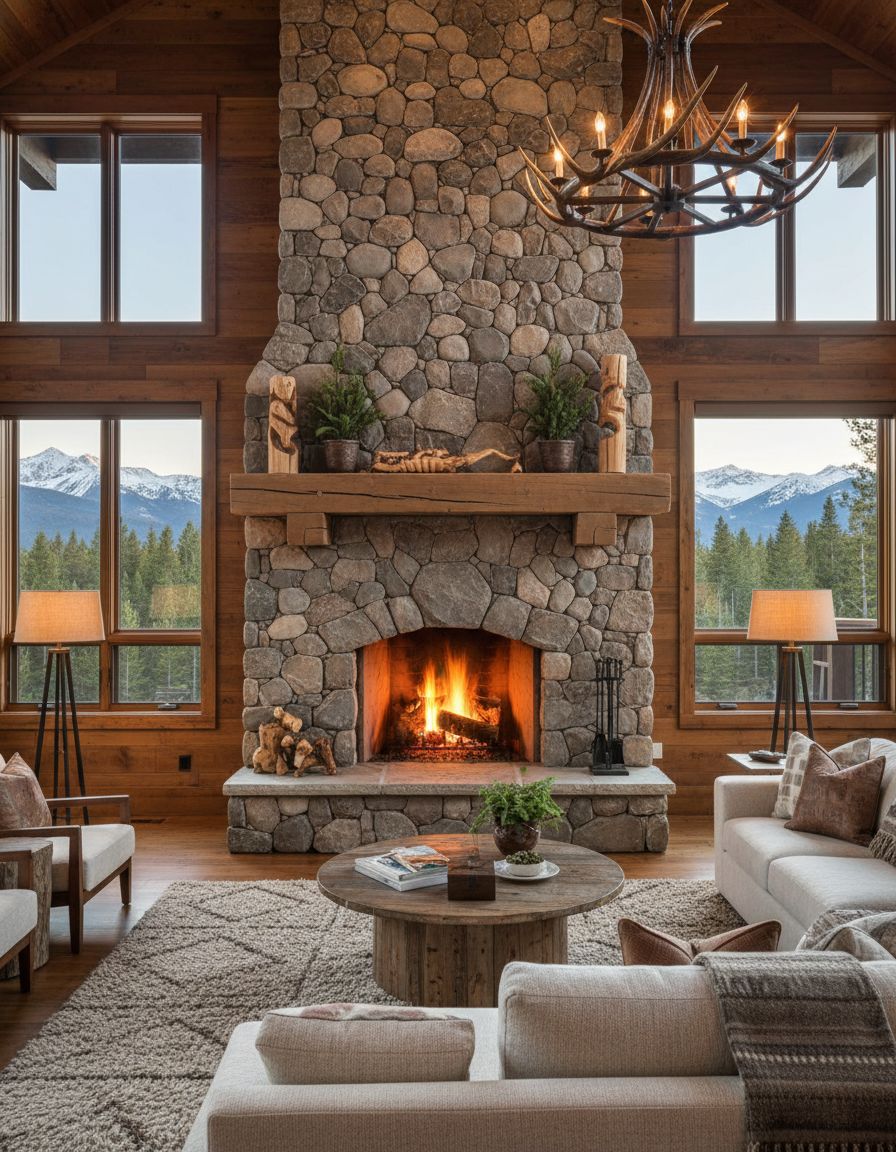
River rocks embedded in fireplace design create what I call “captured geology”—bringing the exterior landscape directly into the interior narrative. Each smooth stone tells a story of water and time, their rounded forms creating a softer, more organic focal point than angular alternatives.
In mountain settings, this design choice establishes continuity between home and habitat, psychologically extending the living space into surrounding wilderness. The varied tones and sizes create visual interest without pattern, offering the eye endless exploration. This approach transforms the fireplace into a meditation on place, grounding inhabitants in their geographical context.
Limestone Statement Fireplace in Transitional Living Space
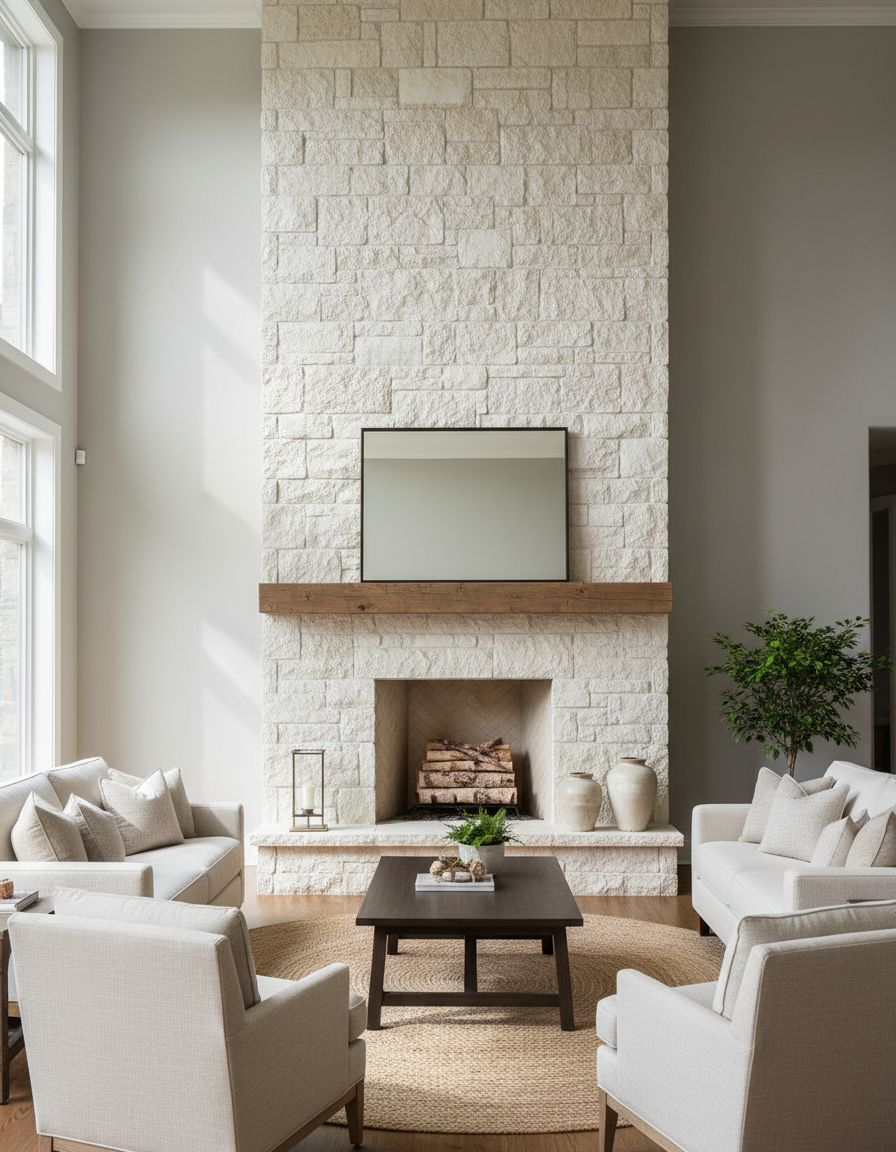
Limestone’s subtle elegance embodies “quiet luxury”—refinement that whispers rather than shouts. Its naturally lighter tones and smooth texture create a sophisticated focal point that bridges traditional and contemporary sensibilities perfectly. In transitional spaces, limestone provides necessary visual weight without committing to either rustic or ultra-modern extremes.
The stone’s inherent variations offer organic interest while maintaining overall uniformity, satisfying our simultaneous desires for consistency and natural variation. This material choice demonstrates restraint and confidence, proving that statement pieces need not scream for attention when they possess inherent quality and proper proportions.
Split-Face Stone Fireplace with Built-In Shelving
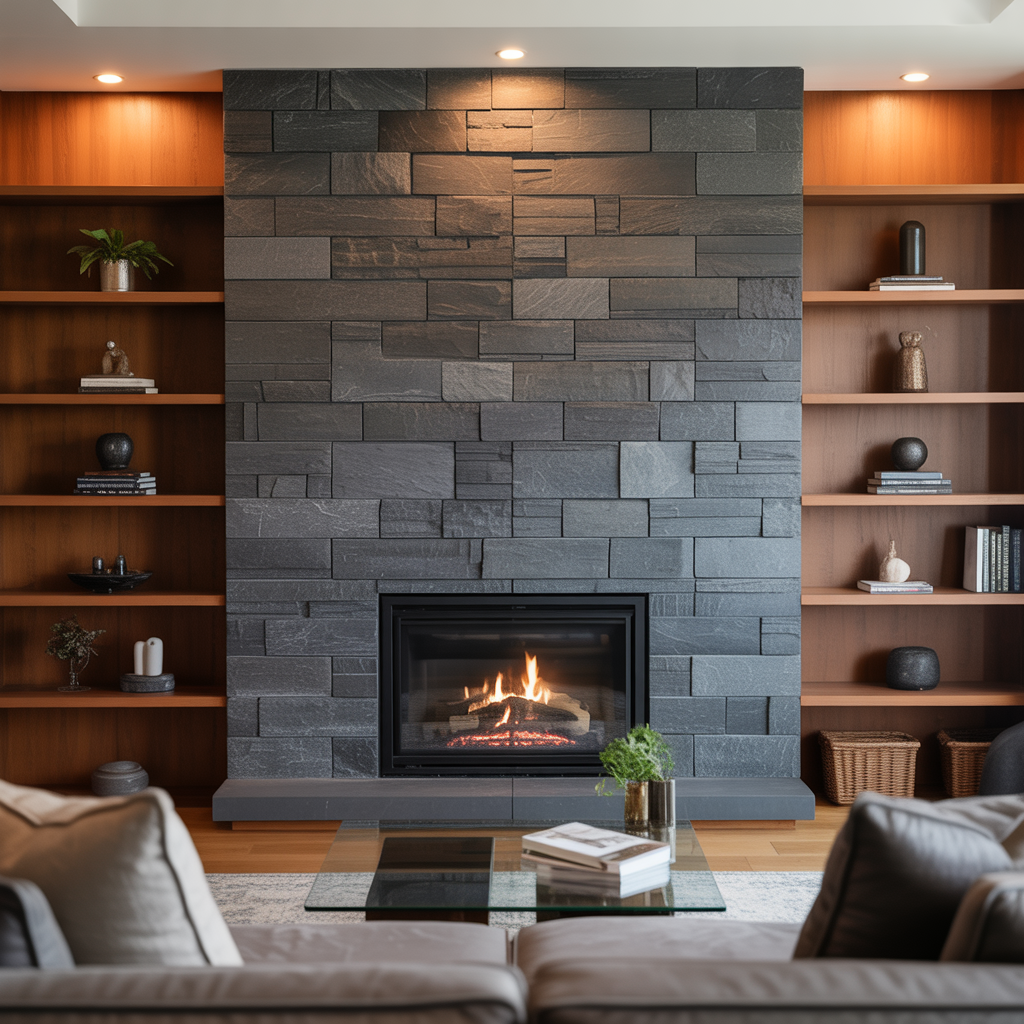
Integrating shelving with split-face stone demonstrates “functional sculpture”—where practical storage enhances rather than diminishes architectural drama. The rough, three-dimensional texture of split-face stone creates captivating shadow play throughout the day, transforming static architecture into dynamic experience.
Built-in shelving flanking the fireplace extends its visual weight horizontally while providing curated display opportunities that personalize the space. This design approach acknowledges modern needs for storage and display while maintaining the fireplace’s dominance, proving that focal points can share their stage strategically without losing impact or creating visual competition.
Dramatic Black Stone Fireplace in Monochromatic Living Room
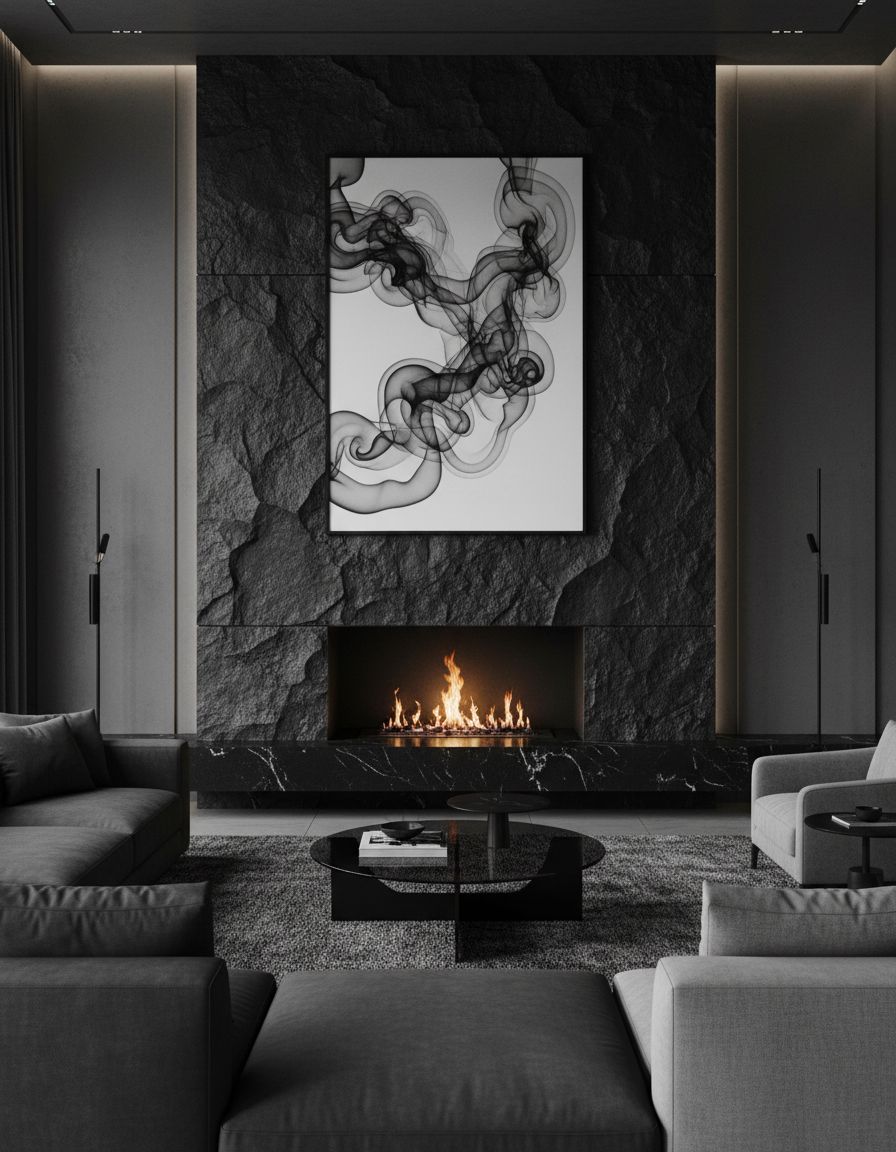
Black stone in monochromatic schemes creates “tonal drama”—proving color restriction intensifies rather than limits visual interest. The fireplace becomes a study in texture, reflection, and depth, with stone variations providing all necessary complexity within a single hue. This approach appeals to our psychological appreciation for coherence while satisfying our need for focal emphasis.
The darkness draws the eye magnetically while absorbing distractions, creating a meditative quality that encourages presence and relaxation. In monochromatic contexts, the stone’s texture becomes paramount, demonstrating how material quality transcends color when properly showcased.
Corner Stone Fireplace with Vaulted Ceiling Design
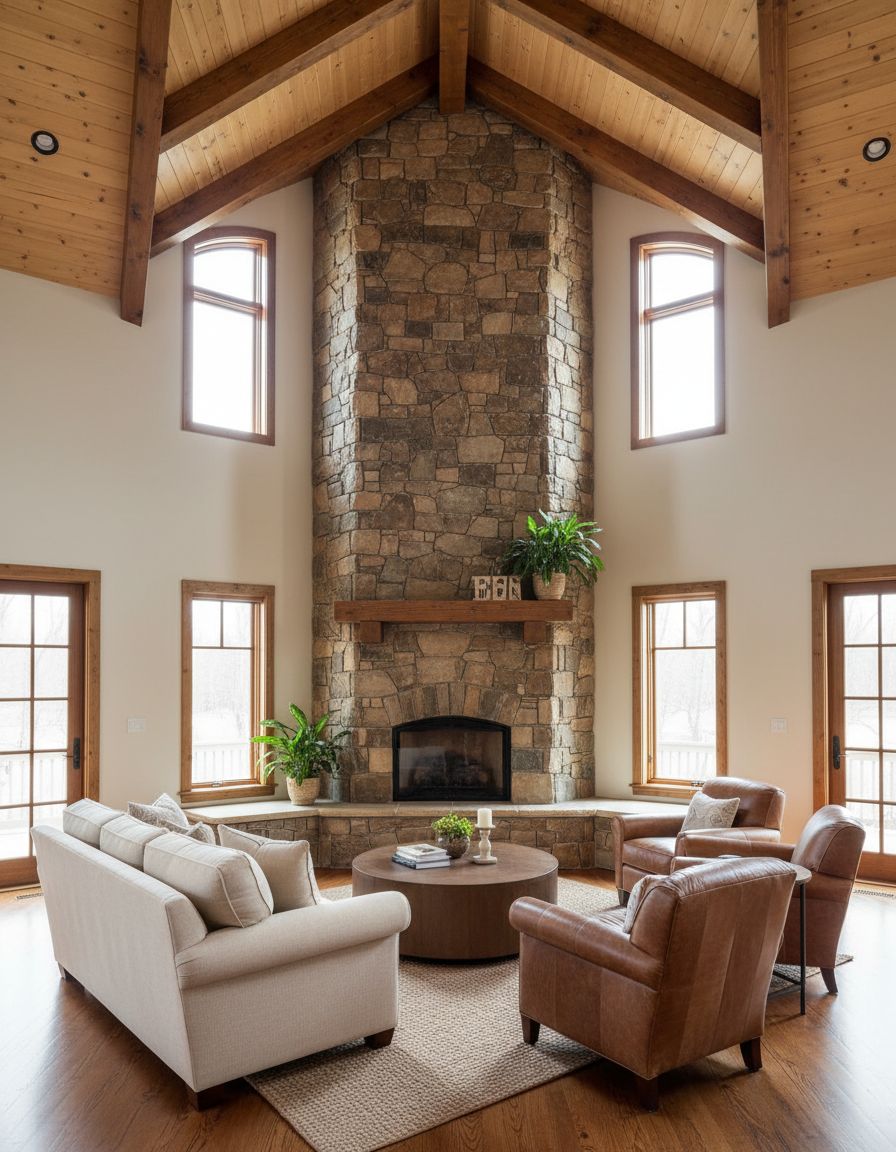
Corner placement challenges conventional focal point thinking, creating what I term “angular intimacy”—maximizing space efficiency while maintaining commanding presence. The stone extends upward into vaulted architecture, creating a dramatic vertical element that emphasizes ceiling height while anchoring the room’s corner.
This unconventional positioning encourages furniture arrangements that foster conversation and connection rather than television-centric layouts. The psychological effect is remarkable: corner fireplaces feel simultaneously grand and cozy, exploiting spatial dynamics that central fireplaces cannot achieve. This design proves that breaking traditional rules often yields the most memorable and functional results.
Double-Sided Stone Fireplace Dividing Living Spaces
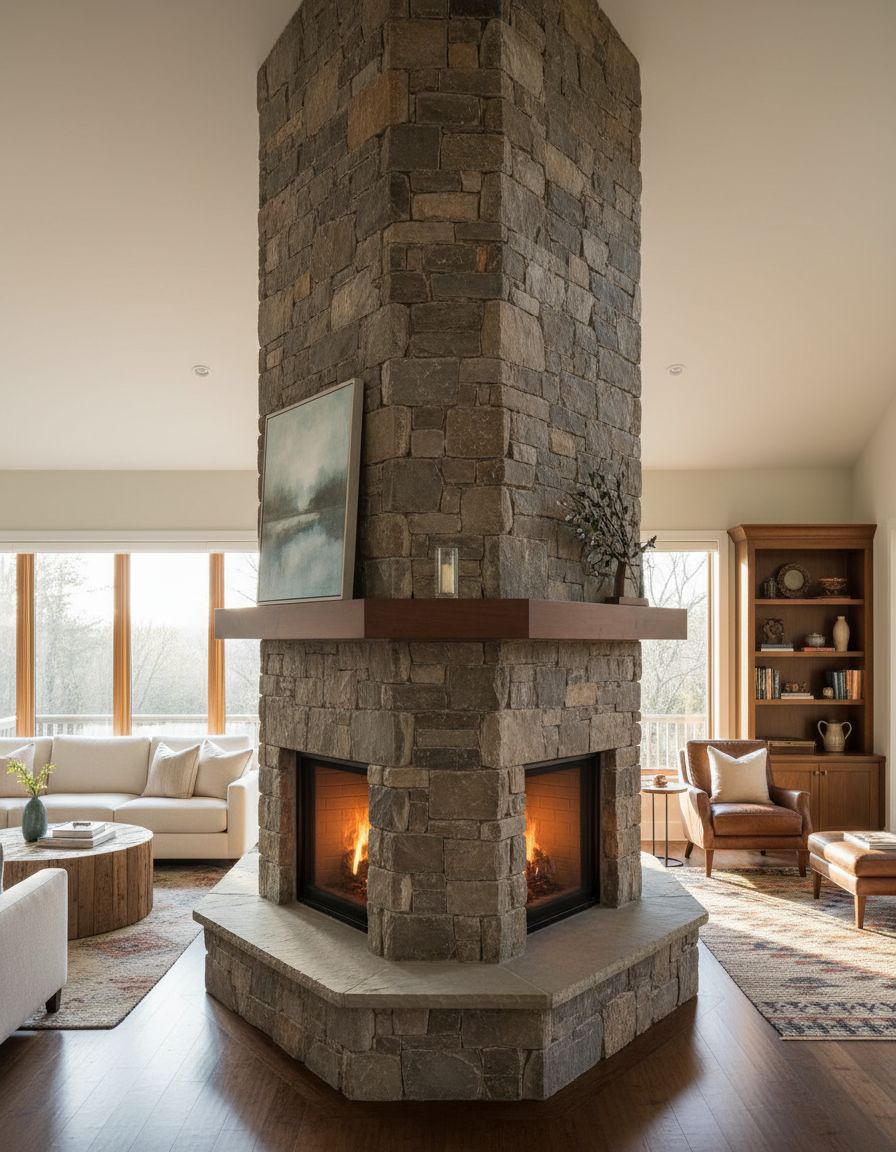
Double-sided fireplaces demonstrate “transparent anchoring”—creating focal presence in multiple spaces simultaneously while maintaining visual and physical connection. Stone on both sides ensures the feature reads as substantial architecture rather than mere partition, psychologically grounding two spaces with singular presence.
This design facilitates open-plan living while providing needed definition between zones, addressing modern desires for both openness and delineation. The shared fire creates communal warmth that reinforces connection between spaces, while the stone mass provides acoustic buffering and visual weight. This approach exemplifies thoughtful space planning where beauty and function unite seamlessly.
Fieldstone Fireplace in Farmhouse Style Living Room
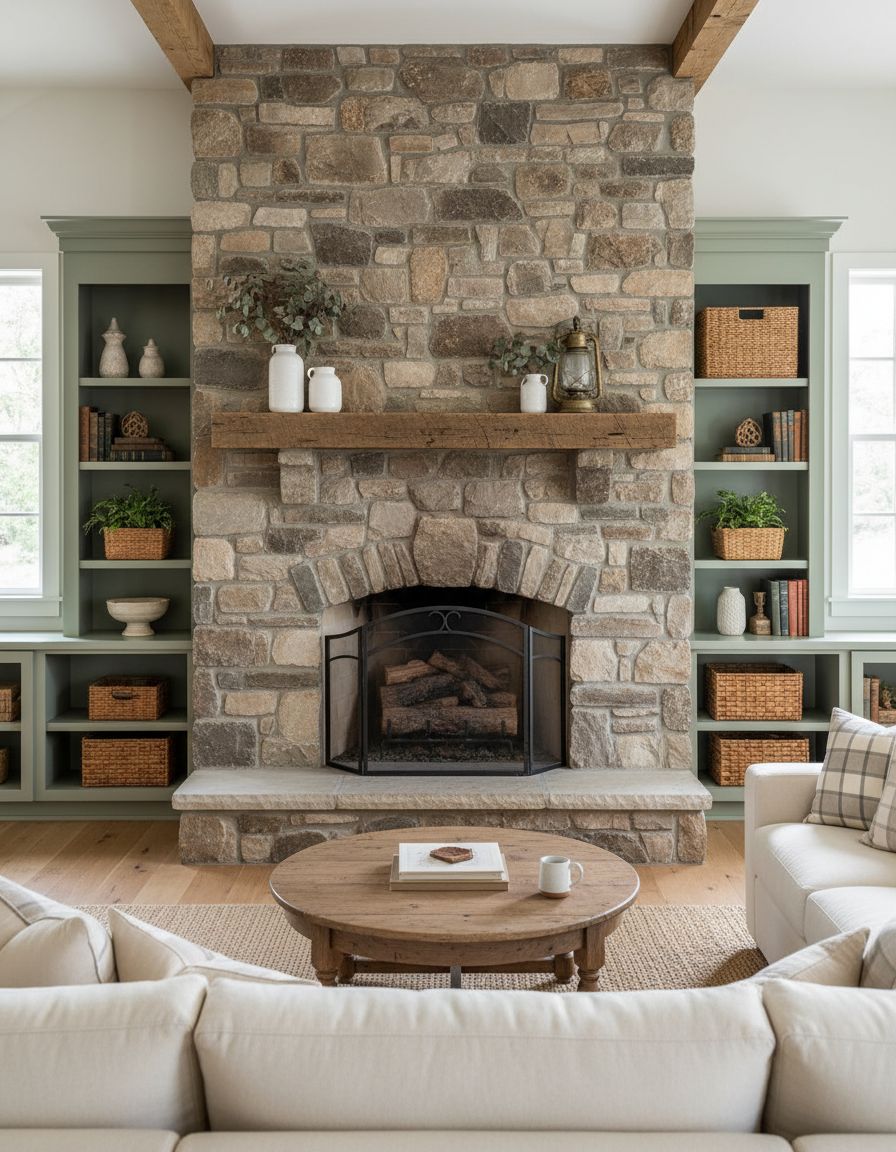
Irregular fieldstone embodies “curated randomness”—carefully composed disorder that reads as authentically rustic. Each uniquely shaped stone contributes to an overall composition that feels discovered rather than designed, appealing to our desire for authenticity and connection to agricultural heritage. In farmhouse contexts, fieldstone provides historical credibility while its substantial mass grounds often-lighter surrounding elements like shiplap and painted furniture.
The varied colors and shapes create endless visual interest, rewarding repeated viewing. This fireplace style doesn’t simply complement farmhouse aesthetics; it validates them, providing the gravitational center that ties disparate vintage and reproduction elements into coherent narrative.
Textured Ledgestone Fireplace with Floating Mantel
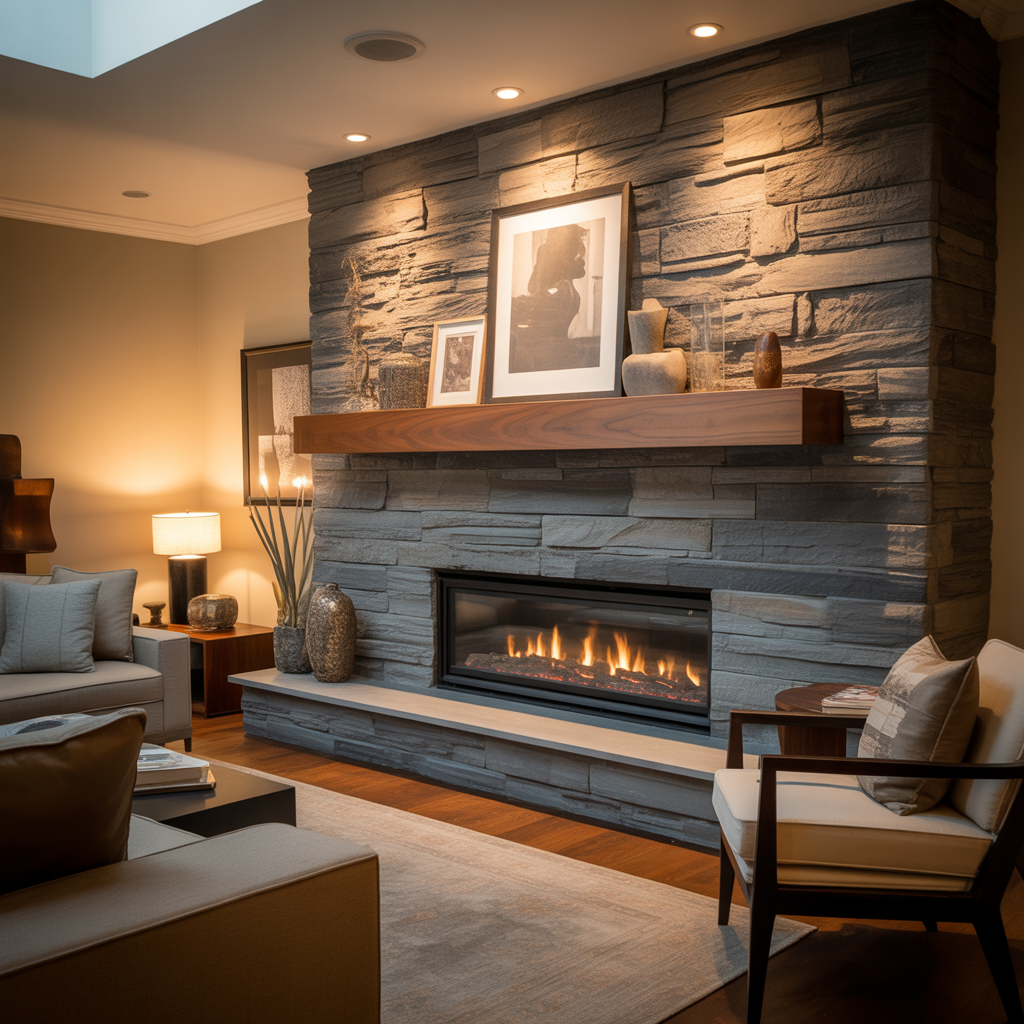
Ledgestone’s horizontal stratification creates “linear organicism”—natural material expressing geometric order that satisfies our psychological preference for pattern within randomness. The stacked horizontal lines guide the eye upward methodically while the floating mantel provides clean interruption, balancing rustic texture with contemporary minimalism.
This combination achieves what I call “refined rusticity,” where natural materials receive modern treatment that honors their character while controlling their visual impact. The floating mantel appears to defy physics, adding an element of surprise that engages viewers and demonstrates that natural stone accommodates contemporary interventions beautifully when approached with respect.
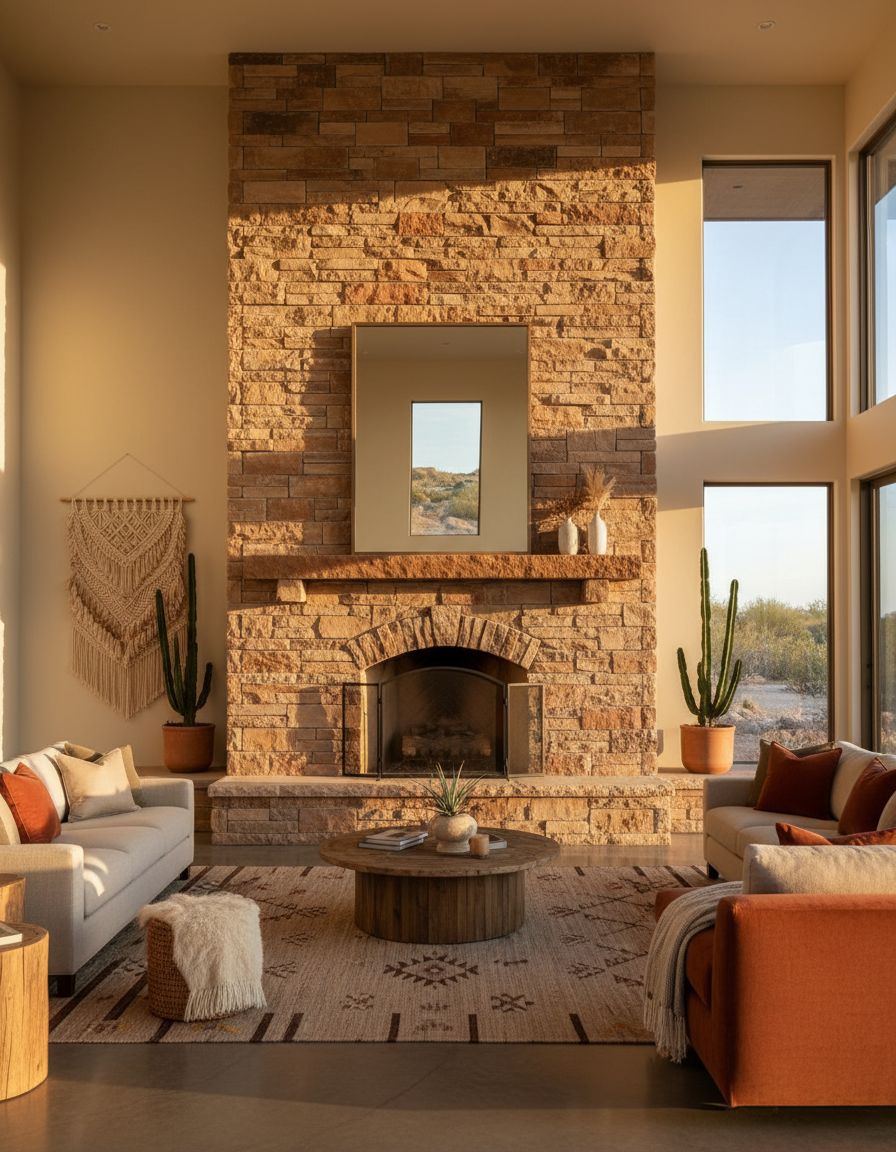
Sandstone Statement Fireplace in Desert-Inspired Living Room
🔥 Would you like to save this?
Warm sandstone tones create “geographical authenticity”—using material that reflects and reinforces environmental context. In desert-inspired interiors, sandstone’s natural earth tones establish immediate connection to surrounding landscape while its substantial mass provides cooling thermal properties.
The stone’s warm, sun-baked appearance brings exterior light quality indoors, creating what feels like captured sunshine even during evening hours. This design choice demonstrates environmental harmony, where interior selections echo exterior reality, psychologically extending living space into the broader landscape. The fireplace becomes more than focal point; it becomes geographical anchor, grounding inhabitants in place and climate.
Brick and Stone Combination Fireplace Feature Wall
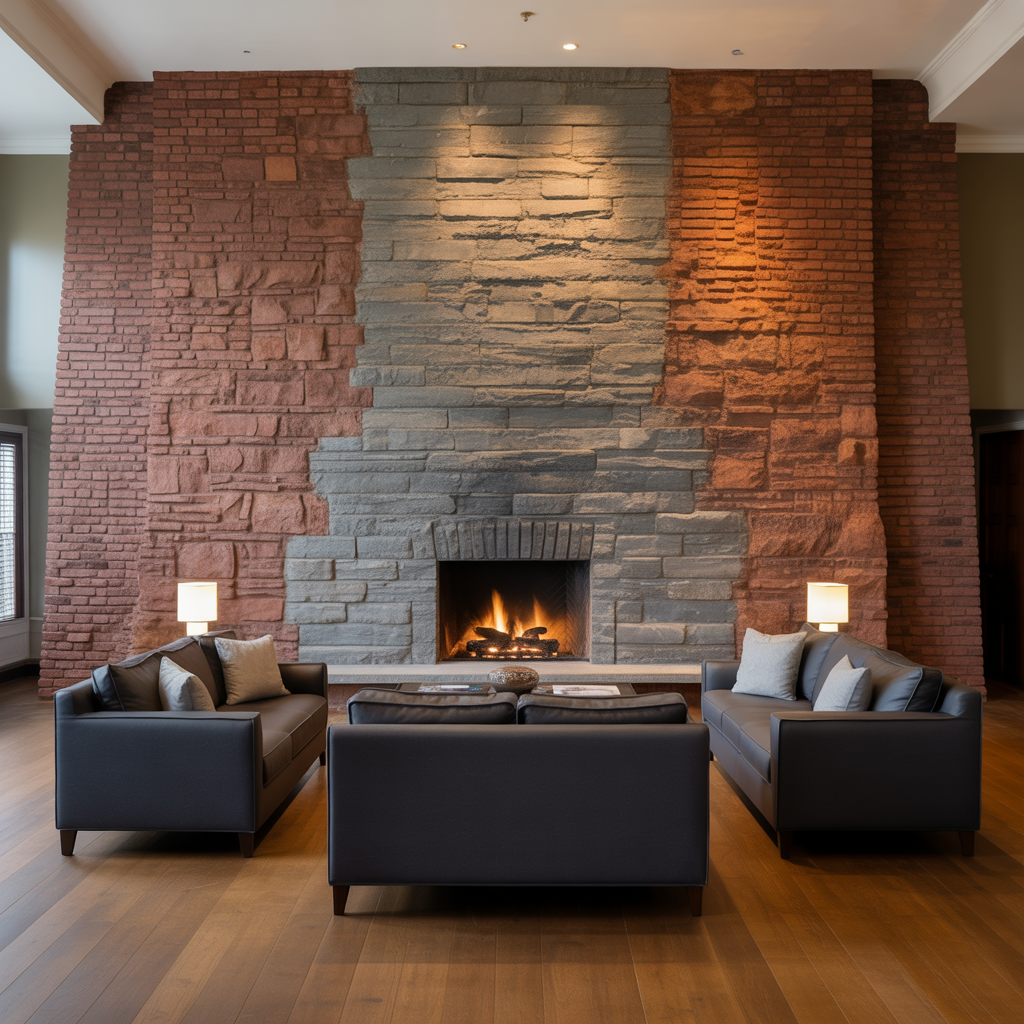
Mixing brick and stone creates “material dialogue”—two related yet distinct textures conversing within single composition. This approach adds complexity and visual interest while maintaining cohesive earthiness that grounds the space.
The combination allows for creative patterning and zoning within the feature wall, with each material bringing distinct characteristics: brick’s regularity and warmth, stone’s organic variation and gravitas. Psychologically, this mixed approach satisfies our appreciation for variety while the shared material family prevents visual chaos. This design strategy demonstrates sophisticated composition skills, proving that focal points can contain multitudes when unified by thoughtful material selection.
Slate Stone Fireplace with Mid-Century Modern Accents
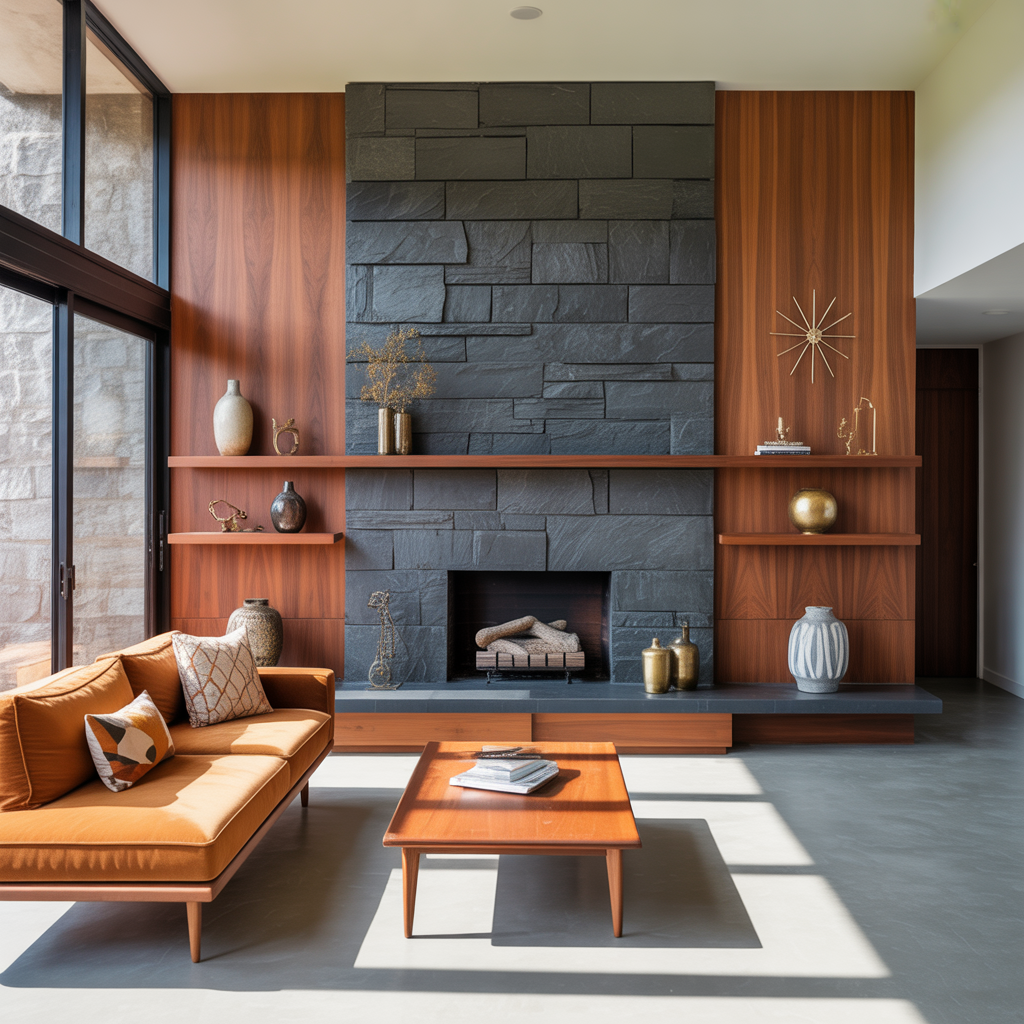
Slate’s sleek planes and subtle sheen create “refined geology”—natural material that feels almost manufactured in its smooth consistency, perfect for mid-century aesthetics. The stone’s naturally occurring straight edges align beautifully with mid-century’s clean lines and geometric preferences while maintaining organic authenticity.
Dark slate provides visual weight that anchors lighter mid-century furniture without competing with their sculptural forms. This pairing demonstrates how natural materials enhance rather than contradict modernist principles when properly selected. The psychological appeal lies in balance: slate’s earthiness warms mid-century’s sometimes-cool intellectualism, creating spaces that feel both thoughtful and inviting.
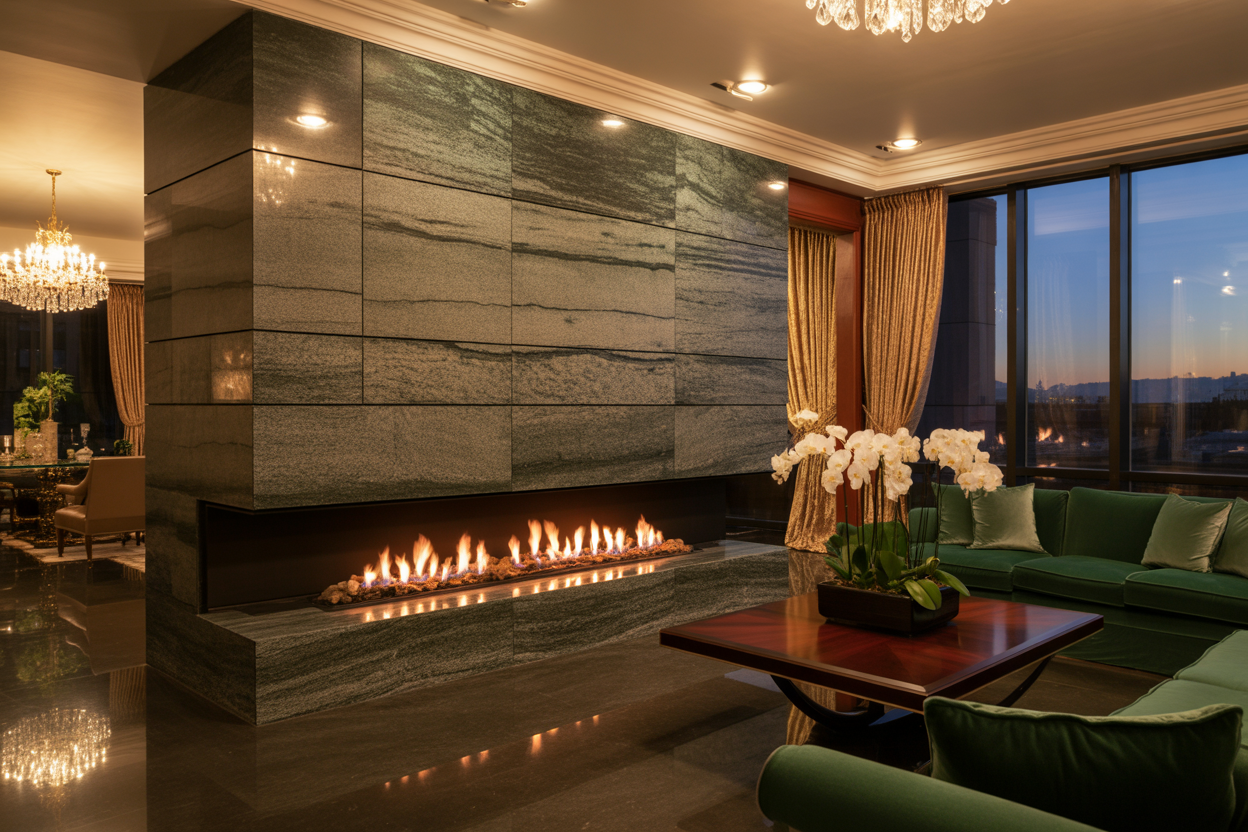
Marble Statement Fireplace in Luxurious Living Room
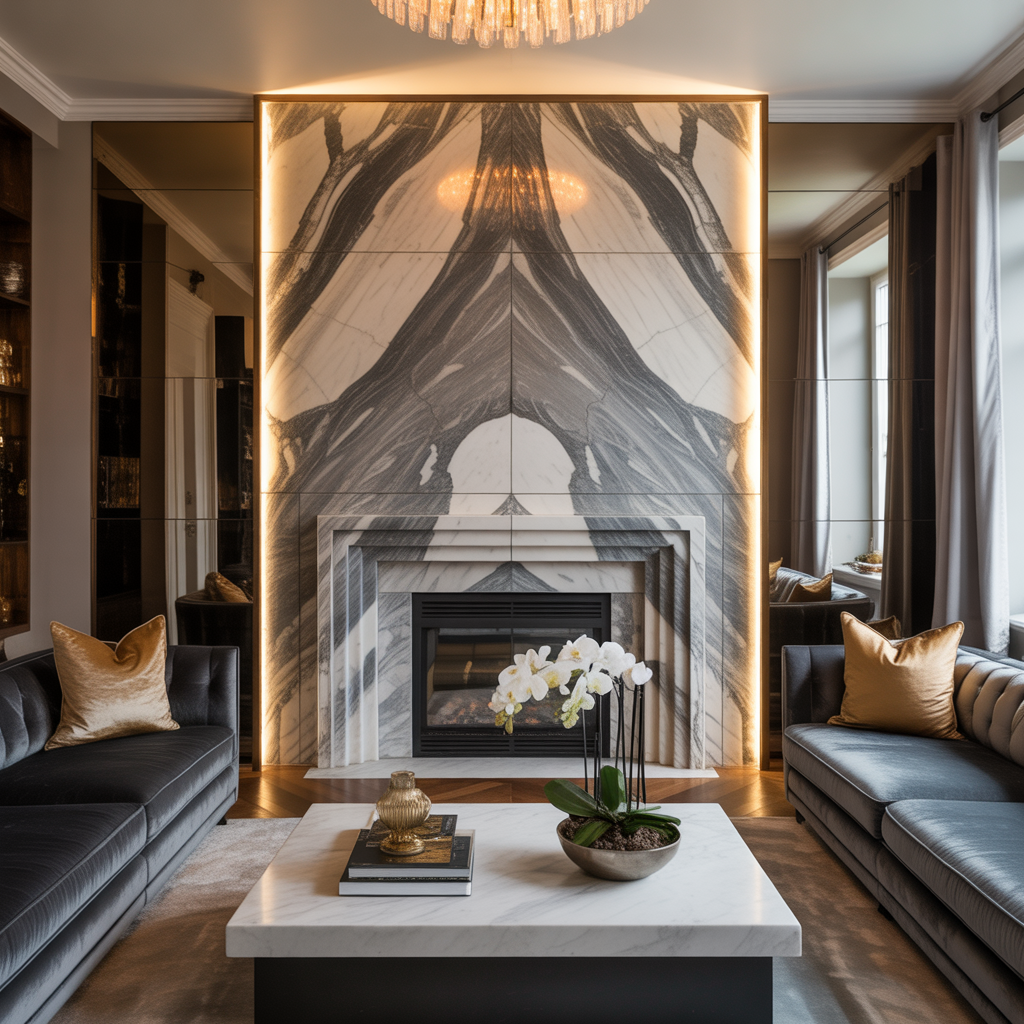
Marble elevates fireplaces into “architectural jewelry”—transforming functional features into luxury statements through material preciousness. The stone’s inherent veining creates natural artistry that commands attention and conveys sophistication, wealth, and refined taste. In luxurious contexts, marble provides the visual richness and exclusivity that defines high-end interiors, its polished surface reflecting light beautifully while its substantial presence anchors elaborate furnishings.
Psychologically, marble triggers associations with classical architecture and timeless elegance, lending gravitas and permanence to contemporary luxury. This material choice doesn’t simply create a focal point; it establishes a hierarchy of value and taste throughout the entire space.
Industrial Concrete Stone Fireplace with Metal Elements
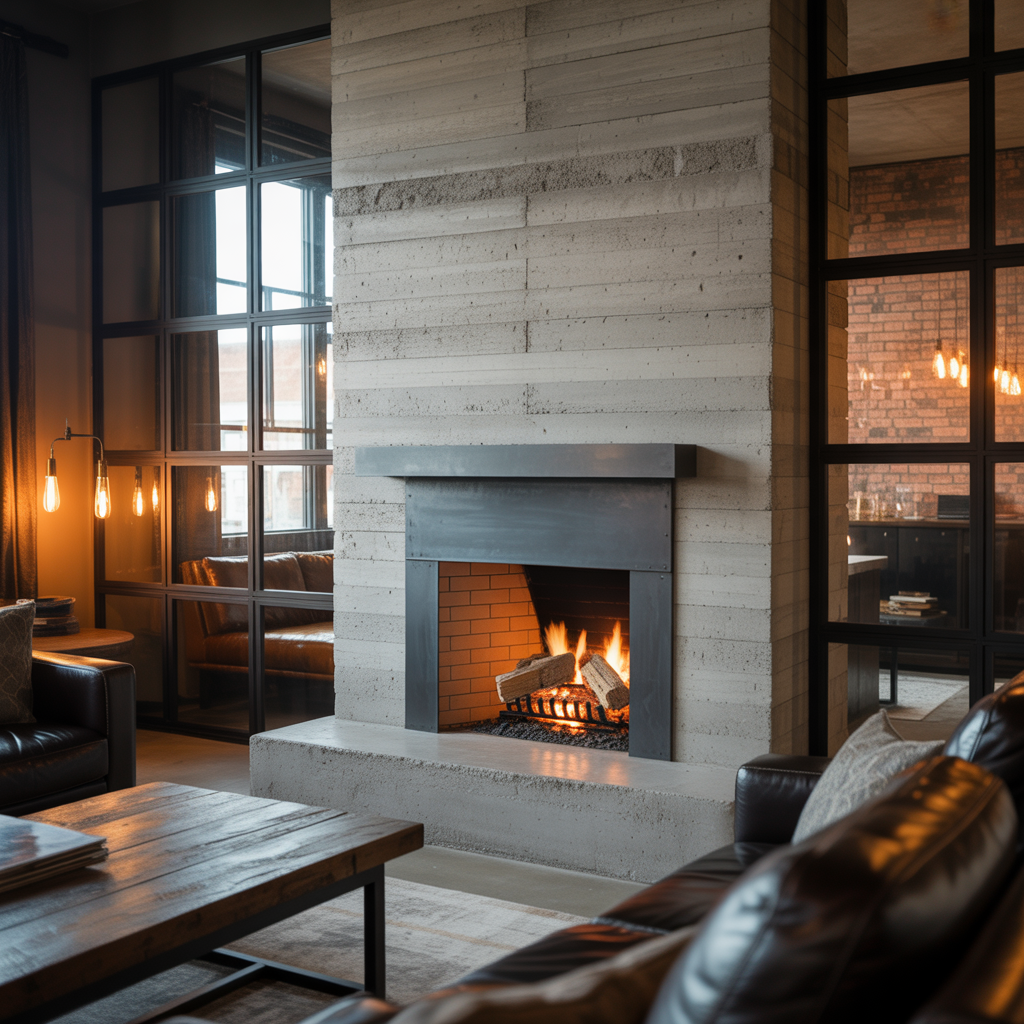
Concrete stone with metal accents embodies “urban organicism”—bringing raw industrial materiality into residential warmth. The combination speaks to adaptive reuse aesthetics, where warehouse bones meet domestic comfort, creating what I call “cultivated roughness.” Metal elements provide linear counterpoints to concrete’s mass while introducing reflective surfaces that catch firelight dynamically.
This aesthetic appeals to those seeking authenticity over polish, valuing material honesty and architectural transparency. The psychological effect is grounding yet edgy, creating spaces that feel both protective and energizing. This approach proves industrial elements can anchor homes beautifully when balanced with warmth-generating features like fire.
Stacked Stone Fireplace with Integrated Television Display
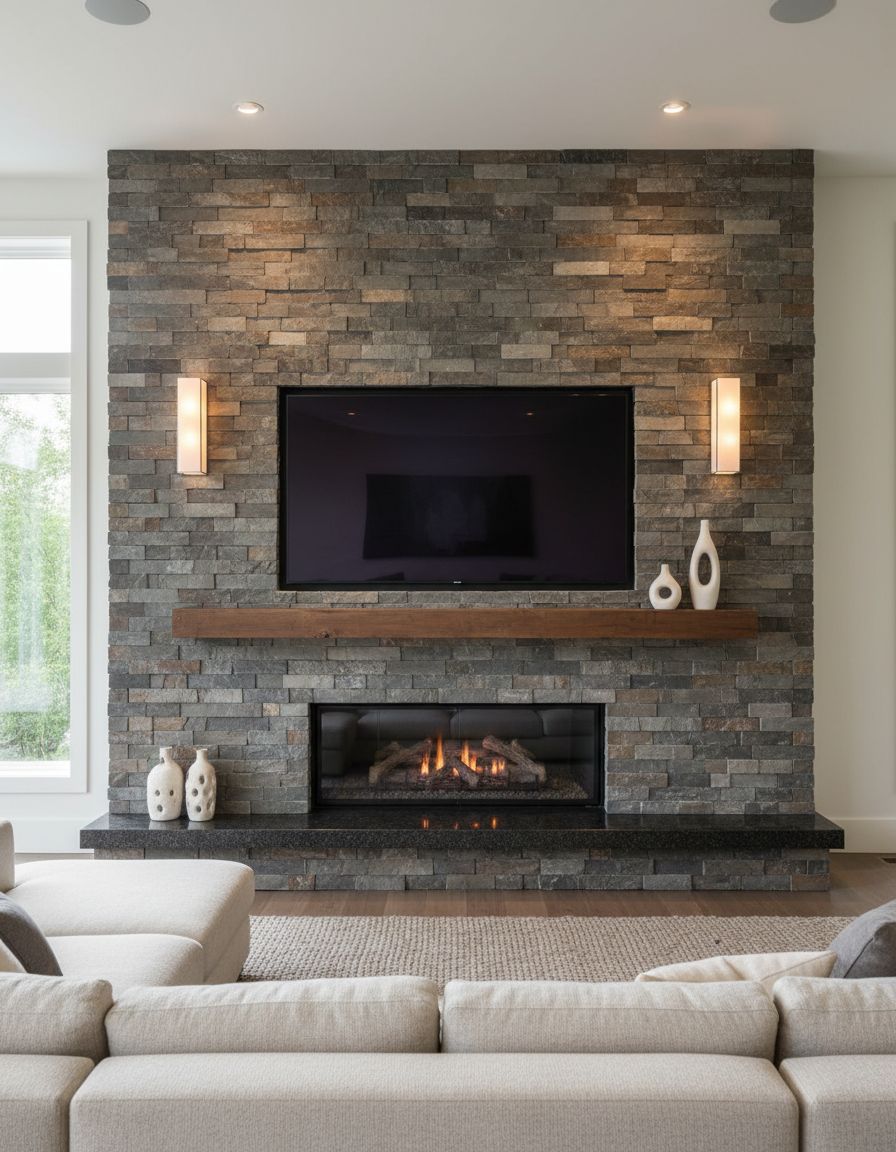
Integrating television with stone fireplace acknowledges contemporary reality while maintaining architectural hierarchy—what I term “technological accommodation.” The stone provides textural richness and natural variation that prevents the flat screen from dominating visually, while the fireplace’s presence below maintains traditional gathering focus.
This pragmatic design addresses modern viewing habits without surrendering to technology’s visual coldness. The stone’s organic texture creates essential contrast against the screen’s perfect rectangle, satisfying our need for natural elements even in technology-centered spaces. This solution demonstrates thoughtful compromise, creating dual focal points that serve different needs without competing destructively.
Weathered Stone Fireplace in Scandinavian Living Room
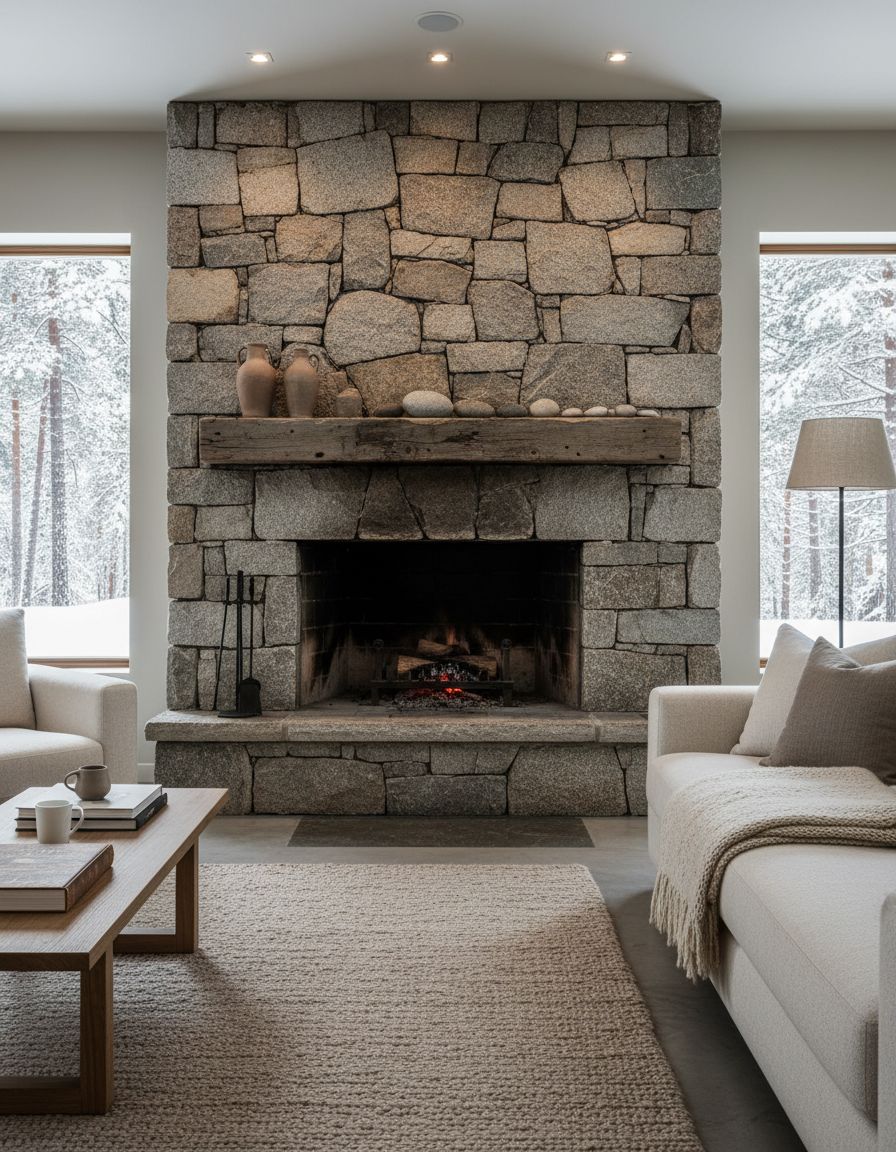
Weathered stone in Scandinavian interiors creates “warm minimalism”—adding essential texture and visual weight to otherwise spare aesthetics. The aged patina provides history and character that prevents minimalism from feeling sterile while maintaining the clean lines and uncluttered sensibility Scandinavian design demands.
Light-colored weathered stone reflects precious natural light while its texture creates shadow play that adds depth to white-dominated palettes. This approach demonstrates how minimalism need not mean coldness when natural materials provide warmth through texture rather than color. The fireplace becomes what Scandinavian design does best: maximum impact through minimal, carefully considered elements.